AP Notes, Outlines, Study Guides, Vocabulary, Practice Exams and more!

AMSCO AP US History Chapter 6 Flashcards

AMSCO United States History 2015 Edition, Chapter 6 The Constitution and the New Republic, 1787-1800

Terms : Hide Images
5368492889James Madison"Father of the Constitution"; wanted a new document; took detailed notes during the convention. (p. 104)0
5368492890Framers of the ConstitutionRich, white, male, educated and most weree heavily involved in state governments. (p. 104)1
5368492891Alexander HamiltonOne of the authors of the Federalist Papers. He favored a strong central government. (p. 106)2
5368492892Gouverneur Morris and John DickinsonLeaders who helped James Madison write the Constitution.3
5368492893FederalistsFavored a strong central government, favored a Constitution to improve on the Articles of Confederation. (p. 107)4
5368492894Anti-FederalistArgued against the Constitution out of fear it created a central government that was too powerful. (p.. 107)5
5368492895Federalists PapersSeries of essays, later published as a book, written by James Madison, Alexander Hamilton, and John Jay. It argued effectively in favor of Constitution. (p. 106)6
5368492896Bill of RightsThe first ten amendments added to protect the rights of individual citizens, adopted in 1781. (p. 108)7
5368492897AmendmentsChanges to the Constitution8
5368492898economic sanctionsEfforts to boycott and other ways to protest the action of England in Intolerable Acts9
5368492899Washington's Farewell AddressGeorge Washington's farewell address written in late 1796. It warned against: making permanent alliances in foreign affairs, not to from political parties, not to fall into sectionalism. (p. 115)10
5368492900permanent alliancesWashington warned against these as things that could obligate us to unnecessary alliances and actions. (p. 115)11
5368492901Alien and Sedition ActsActs by the Federalists which authorized the president to deport dangerous aliens, and detain enemy aliens in wartime. Made it illegal for newspaper editors to criticize the president ofr Congress. (p. 117)12
5368492902Kentucky and Virginia ResolutionsTwo states passed resolutions that argued states had the right to nullify laws passed at the federal level. (p. 117)13
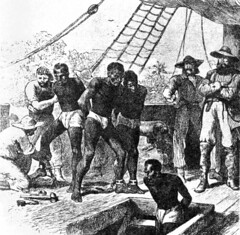
5368492903slave tradeInternational slave trade protected at Constitutional Convention for 20 years, after which Congress could vote to end it. (p. 105)14
5368492904infant industriesTerm for new and developing industries which were supported by placing high tariffs on imported goods. This was part of Alexander Hamilton's economic plan. (p. 110)15
5368492905National bank tariffs; excise tariffsFavored by Federalists in North as way to fund government/protect businesses; opposed by South and farmers16
5368492906Battle of Fallen TimbersIn 1794 the US Army led by General Anthony Wayne defeated the American Indians. (p. 113)17
5368492907Treaty of Greenville/Public Land ActIn this treaty the American Indians surrendered claims to the Ohio Valley and promised to open it to settlement. (p. 113)18
5368492908Mt. Vernon ConferenceIn 1785 George Washington Hosted a conference at his home, It led to the Annapolis Convention. (p. 104)19
5368492909Annapolis ConventionOnly five states sent delegates, but led to Constitutional Convention in May 1787. (p. 104)20
5368492910Constitutional ConventionDelegates from all states but Rhode Island met in Philadelphia in May 178721
5368492911Checks and balancesDesigned to keep one branch of government from dominating the other22
5368492912Virginia Plan"Large state" plan; wanted representation based on state population23
5368492913New Jersey Plan"Small state" plan; called for representation to be equal regardless of size24
5368492914Connecticut Plan/Great CompromiseEst. a bicameral legislature that compromised for small and large states (House and Senate)25
5368492915House of RepresentativesRepresentation in the House would be based on population of each state26
5368492916SenateTwo people per state, regardless of size27
5368492917Three Fifths Compromise3/5's of a state's slave population would be counted for representation purposes28
5368492918Commercial CompromiseAllowed Congress to regulate interstate trade and foreign commerce29
5368492919Electoral college systemProcess by which a President would be elected30
5368492920Legislative branchThis branch of government compromises Congress; it makes laws31
5368492921CongressLegislative branch; House and Senate32
5368492922Executive departmentOrganized by Washington as part of the new departments of the executive branch33
5368492923CabinetTerm for chiefs of departments appointed by Washington34
5368492924Henry KnoxWashington's Secretary of War35
5368492925Edmund RandolphWashington's Attorney General36
5368492926Judiciary ActEstablished a Supreme Court with one chief justice and five associate justices37
5368492927Federal courtsCourts created by the Judiciary Act38
5368492928Supreme CourtUltimate court in the land39
5368492929National debtWas very high at the revolution; Hamilton proposed paying it off at face value40
5368492930Whiskey RebellionFirst real test of the new government; put down when Washington called in forces41
5368492931Federalists EraPeriod in early when Federalists dominated the government42
5368492932Democratic-Republican PartyRival to Federalists; opposed strong central government; led by Jefferson43
5368492933political partiesNot anticipated by founders; Federalists and Democratic-Republicans44
5368492934two-term traditionSet the precedent, until Franklin Delano Roosevelt, of Presidents only staying in office for two terms45
5368492935John AdamsIn 1796 he was a Federalist who was elected as the second president. In 1800 he lost the presidential election to Thomas Jefferson, a Democratic-Republican. (p. 115, 117)46
5368492936Revolution of 1800Election in which Democratic-Republicans peacefully took power from the Federalists.47
5368492937French RevolutionDemocratic-Republican's felt we were obligated to support the French.48
5368492938Proclamation of NeutralityIn 1793 Washington announced us a neutral in the war between England and France49
5368492939"Citizen" GenetSought to gain American support for French; led to criticism of Washington in the US50
5368492940Jay TreatyTreaty that embarrassed US because England did not respect us; US gained very few concession from England51
5368492941Pinckney TreatyBetter deal than Jay's Treaty; Spain agreed to open lower Mississippi River and New Orleans to US trade52
5368492942Right of depositUS gained right to transfer cargoes in New Orleans without Spanish duties53
5368492943XYZ AffairFrench demanded a bribe before we could speak with French leader; led many to call for war against England54

AMSCO AP US History Chapter 7 Flashcards

AMSCO United States History 2015 Edition, Chapter 7 The Age of Jefferson, 1800-1816

Terms : Hide Images
5369045993Thomas JeffersonA prominent statesman, Thomas Jefferson became George Washington's first secretary of state. Along with James Madison, Jefferson took up the cause of strict constructionists and the Republican Party, advocating limited federal government. As the nation's third president from 1801 to 1809, Jefferson organized the national government by Thomas Jefferson Republican ideals, doubled the size of the nation, and struggled to maintain American neutrality0
5369045994Louisiana PurchaseThe U.S., under Jefferson, bought the Louisiana territory from France, under the rule of Napoleon, in 1803. The U.S. paid $15 million for the Louisiana Purchase, and Napoleon gave up his empire in North America. The U.S. gained control of Mississippi trade route and doubled its size.1
5369045995John C. CalhounThe 7th Vice President of the United States and a leading Southern politician from South Carolina during the first half of the 19th century. He was an advocate of slavery, states' rights, limited government, and nullification.2
5369045996John MarshallFederalist Supreme Court justice whose brilliant legal efforts established the principle of judicial review3
5369045997Judicial Reviewthe power of the Supreme Court to declare laws and actions of local, state, or national governments unconstitutional4
5369045998Marbury v. MadisonA Supreme Court case in 1803 where Chief Justice John Marshall ruled that a law passed by Congress was unconstitutional. This established the doctrine of judicial review, where the Supreme Court could overrule actions taken by the legislative and executive branches of the government.5
5369045999strict interpretation of ConstitutionStrict and doctrinal interpretation of the Constitution and its justification. Thomas Jefferson favored a strict interpretation of the Constitution, which he interpreted as forbidding everything it did not expressly permit. In contrast, Hamilton favored a loose interpretation.6
5369046000Napoleon BonaparteOverthrew French Directory in 1799 and became emperor of the French in 1804. Failed to defeat Great Britain and abdicated in 1814. Returned to power briefly in 1815 but was defeated and died in exile. Approved Jefferson's purchase of French territory.7
5369046001Aaron BurrAn American politician and adventurer. He was a formative member of the Democratic-Republican Party in New York and a strong supporter of Governor George Clinton. He is remembered not so much for his tenure as the third Vice President, under Thomas Jefferson, as for his duel with Alexander Hamilton, resulting in Hamilton's death. He is also known for his trial and acquittal on charges of treason. Jefferson's vice-president for his first term; not voted into a second term because of radical ideas and ventures that threatened to break up the Union and resulted in the death of Alexander Hamilton.8
5369046002QuidsRepublicans who criticized the War of 1812 (even though it was started by a Republican president) because it did not follow the traditional Republican idea of limited federal government.9
5369046003Toussaint I'OuvertureHe led a rebellion against French rule on the island of Santo Domingo which resulted in heavy French losses.10
5369046004Barbary PiratesThe name given to several renegade countries on the Mediterranean coast of North Africa who demanded tribute in exchange for refraining from attacking ships in the Mediterranean. From 1795-1801, the U.S. paid the Barbary states for protection against the pirates. Jefferson stopped paying the tribute, and the U.S. fought the Barbary Wars (1801-1805) against the countries of Tripoli and Algeria. The war was inconclusive and the U.S. went back to paying the tribute.11
5369046005Neutralitya position of not taking sides in a conflict12
5369046006ImpressmentBritish practice of taking American sailors from American ships and forcing them into the British navy; a factor in the War of 1812.13
5369046007Chesapeake-Leopard Affairincident in 1807 that brought on a war crisis when the British warship Leopard attacked the American warship Chesapeake; the British demanded to board the American ship to search for deserters from the Royal Navy. When the U.S. commander refused, the British attacked, killing or wounding 20 American sailors. Four alleged deserters were then removed from the Chesapeake and impressed. Many angry and humiliated Americans called for war.14
5369046008Embargo Act (1807)This act issued by Jefferson forbade American trading ships from leaving the U.S. It was meant to force Britain and France to change their policies towards neutral vessels by depriving them of American trade. It was difficult to enforce because it was opposed by merchants and everyone else whose livelihood depended upon international trade. It also hurt the national economy, so it was replaced by the Non-Intercourse Act.15
5369046009James MadisonThe fourth President of the United States (1809-1817). A member of the Continental Congress (1780-1783) and the Constitutional Convention (1787), he strongly supported ratification of the Constitution and was a contributor to The Federalist Papers (1787-1788), which argued the effectiveness of the proposed constitution. His presidency was marked by the War of 1812.16
5369046010Nonintercourse Act (1809)Replaced the Embargo Act. Lifted the stop of trade to foreign countries EXCEPT France and England. Led to the war of 1812.17
5369046011Macon's Bill No. 2 (1810)When economic hardships continued into 1810, Nathaniel Macon, a member of Congress, introduced a bill that restored U.S. trade with both Britain & France. It also provided, however, that if either France or Britain formally agreed to respect neutral rights at sea, then the U.S. would prohibit trade with the foe of that nation.18
5369046012Tecumseh and ProphetThese Shawnee brothers organized a large native confederacy to prevent the American advance westward. (p. 138)19
5369046013William Henry HarrisonGovenor of the Indiana territory, he fought against Tecumseh and Prophet at the Battle of Tippecanoe.20
5369046014Battle of TippecanoeBattle between Americans and Native Americans. Tecumseh and the Prophet attempted to oppress white settlement in the West, but defeated by William Henry Harrison. Led to talk of Canadian invasion and served as a cause to the War of 1812.21
5369046015Lewis and Clark Expedition1804-1806 - Meriwether Lewis and William Clark were commissioned by Jefferson to map and explore the Louisiana Purchase region. Beginning at St. Louis, Missouri, the expedition travelled up the Missouri River to the Great Divide, and then down the Columbia River to the Pacific Ocean. It produced extensive maps of the area and recorded many scientific discoveries, greatly facilitating later settlement of the region and travel to the Pacific coast.22
5369046016War HawksThese were mostly young Republicans who had been imbued with the ideals of the American Revolution as youths, who wanted to take Canada and Florida and deal with the Indian problem. They held a majority in Congress, and were responsible for declaring war in 181223
5369046017Henry ClaySenator who persuaded Congress to accept the Missouri Compromise, which admitted Maine into the Union as a free state, and Missouri as a slave state24
5369046018War of 1812A war between the U.S. and Great Britain caused by American outrage over the impressment of American sailors by the British, the British seizure of American ships, and British aid to the Indians attacking the Americans on the western frontier. Also, a war against Britain gave the U.S. an excuse to seize the British northwest posts and to annex Florida from Britain's ally Spain, and possibly even to seize Canada from Britain. The War Hawks (young westerners led by Henry Clay and John C. Calhoun) argued for war in Congress. The war involved several sea battles and frontier skirmishes. U.S. troops led by Andrew Jackson seized Florida and at one point the British managed to invade and burn Washington, D.C. The Treaty of Ghent (December 1814) restored the status quo and required the U.S. to give back Florida. Two weeks later, Andrew Jackson's troops defeated the British at the Battle of New Orleans, not knowing that a peace treaty had already been signed. The war strengthened American nationalism and encouraged the growth of industry.25
5369046019"Old Ironsides"The nickname for the U.S. warship, Constitution who raised American morale by defeating and sinking a British ship off the coast of Nova Scotia.26
5369046020Battle of Lake ErieU.S. victory in the War of 1812, led by Oliver Hazard Perry; broke Britain's control of Lake Erie.27
5369046021Oliver Hazard Perry"We have me the enemy, and they are ours." Naval hero during the War of 1812. Won battle on Lake Erie against the British. After the battle, he sent William Henry Harrison a note that said this famous quote.28
5369046022Battle of the Thames RiverBattle led by Harrison; broke the British alliance with the Native Americans when Tecumseh was killed29
5369046023Thomas MacdonoughA commander of an American fleet on Lake Champlain that fought near Plattsburgh on floating slaughterhouses; the Americans were nearly defeated, but his nifty techniques forced the British to retreat; this heroic naval battle saved New York from conquest, New England from disaffection, and the Union from dissolution.30
5369046024Battle of Lake ChamplainA battle where the British fleet was defeated and was forced to retreat and to abandon their plans to invade New York and New England after being stoped by Thomas Macdonough. The British began to decide that the war was to costly.31
5369046025Andrew JacksonThe seventh President of the United States (1829-1837), who as a general in the War of 1812 defeated the British at New Orleans (1815). As president he opposed the Bank of America, objected to the right of individual states to nullify disagreeable federal laws, and increased the presidential powers.32
5369046026Battle of Horseshoe BendFought during the War of 1812 in central Alabama. On March 27, 1814, United States forces and Indian allies under General Andrew Jackson defeated the Red Sticks, a part of the Creek Indian tribe inspired by the Shawnee leader Tecumseh, effectively ending the Creek War.33
5369046027Creek NationAmerican Indians originally from the southeastern United States. They were one of the Five Civilized Tribes. They were an important British ally in the war of 1812 until being defeated by Andrew Jackson.34
5369046028Battle of New OrleansAndrew Jackson led a battle that occurred when British troops attacked U.S. soldiers in New Orleans on January 8, 1815; the War of 1812 had officially ended with the signing of the Treaty of Ghent in December, 1814, but word had not yet reached the U.S.35
5369046029Treaty of Ghent (1814)was the peace treaty that ended the War of 1812 between the United States of America and the United Kingdom of Great Britain and Ireland. The treaty largely restored relations between the two nations to status quo ante bellum. Due to the era's slow speed of communication, it took weeks for news of the peace treaty to reach the United States, well after the Battle of New Orleans had begun.36
5369046030Hartford Convention (1814)Massachusetts, Connecticut, and Rhode Island met in 1814 in Hartford, Connecticut for a secret meeting to discuss their disgust of the war and to redress their grievances. The Hartford Convention's final report demanded:-Financial assistance from Washington to compensate for lost trade from embargos; -Constitutional amendments requiring a 2/3 vote in Congress before an embargo could be imposed, new states admitted, or war declared; -The abolition of slavery; -a President could only serve 1 term; -the abolition of the 3/5 clause; -the prohibition of the election of 2 successive Presidents from the same state.The Hartford resolutions marked the death of the Federalist party. The party nominated their last presidential candidate in 1816.37
5369046031Francis Scott Key , "The Star Spangled Banner"Francis Scott Key, who observed the Birtish attack on Fort McHenry, celebrated the American victory by writing a poem that is the national anthem "The Star-Spangled Banner" today.38

AP US History Review Chapter 1-3 Flashcards

Terms : Hide Images
5171464000Europe in the Middle (Dark) AgesLimited exchange of ideas Curiosity and new learning de-emphasized Superstition predominated Travel limited0
5171464001Crusade effectsProducts of Middle East/Far East interests (gold, spices, silver) Cheaper ways of getting products Transportation: water vs land1
5171464002Treaty of TordesillasSpain vs Portugal2
5171464003Materialism- personal wealth Glory- personal fame Religion- conversion of the "heathens" Nationalism- promoting wealth/power of a nation Scientific CuriosityAge of Exploration Motivation3
5171464004New Products Loss of Land Loss of Liberty Diminishing of Culture Diminishing of Numbers (90% death rate) DiseaseEuropean colonization affecting Native Culture4
5171464005Industrial RevolutionMore people wanting more goods (3 times more gold than in Europe) caused inflation because there was more money in people's hands5
5171464006Corn, tomatoes, peppers, chocolate, potatoesTypes of food from the New World6
5171464007Vitamins, anesthetics for surgery, muscle relaxants, poison treatmentTypes of Medicine from the New World7
5171464008Joint-stock colonyGranted to private companies in the hopes of creating profits from colonization8
5171464009Proprietary colonyLand granted to individuals for the purpose of creating colonies; the individuals had the right then to grant land to whomever they chose9
5171464010Royal colonyHeaded by the English crown/government itself10
5171464011VirginiaFirst successful English colony in the New World11
5171464012Joint stockWhat type of colony was granted to the Virginia Company of London?12
5171464013Jamestown 1607First settlement established on James River13
5171464014Climate and Environment Profit Dilemma Predominantly maleDisadvantages of Jamestown14
5171464015Commanded the colony after most settlers didn't survive the first winterWhat did Captain John Smith do?15
5171464016Powhatan IndiansOriginal inhabitants of the James River area (taught settlers how to grow corn)16
5171464017The Starving TimeTime during winter 1609-1610 when population went from 450 to 60 and people were reduced to eating rats, leather and each other17
5171464018Bering Strait in Alaska (approximately 11,000 years ago)During early migration humans used______18
5171464019Stone tools & spearsUsed for hunting to persue large animals19
5171464020Lord de la WarrIn 1609 a man was made the leader of the VA colony and sent hundreds of new settlers and soldiers to the colonies with fresh supplies and also put a new policy plan for Natives to wipe them out of the James River area (Which was mostly achieved by 1624).20
5171464021John RolfeAround 1613 this man would develop a process for curing tobacco that would remove most of its bitterness, making it much more pleasant to smoke (Also would marry Pocahontas)21
5171464022Indentured servitudeMost common source of labor in the early VA colony22
5171464023Indentured servantsomeone whose passage to the colonies was paid for in turn for an agreement to be a source of labor for an agreed period of time (usually 5-7 years)23
5171464024Headright Systemfor every person who paid for someone to come to VA (even if it was himself) that individual, the one that paid, would receive 50 acres of land24
5171464025Headright Systema great advantage for the wealthy as it allowed them to gain very large estates of land (they paid for a bunch of servants to come over); however, the small farmers were pushed to the worst lands while the large landowners had first dibs on the best lands25
5171464026the Virginian House of Burgesses 1619With pressures being placed on the royal governors the VA settlers were granted a representative assembly and was used to work with the governor in running the colony26
5171464027- It would pass its own laws without consulting the governor and act as a sovereign power - It would withhold the governor's pay in order to force him to make the decisions that it wantedThe House of Burgesses would remain in constant conflict with the royal governor...27
5171464028it was dissolved and made into a royal colonyWhat happened to the Virginia Company of London in 1624?28
5171464029MarylandIn 1634 a large area of land just north of Virginia, headed by Lord Baltimore29
5171464030The Calvert familyWho did the king grant Maryland to?30
5171464031Lord Baltimorea Catholic and had long dreamed of a place where English Catholics could worship without fear of prosecution from Protestants31
5171464032Catholic havenWhat was Maryland supposed to be?32
5171464033granted large estates to wealthy English Catholic families, (but many of his settlers were Protestant freemen from Virginia and Protestant indentured servants from England and that caused tension between Catholics and Protestants)How did Lord Baltimore get settlers to Maryland?33
5171464034Maryland Act of TolerationTo solve growing religious disputes, in 1649 this was passed in the Maryland Assembly34
5171464035Granted religious freedom to all ChristiansWhat did the Maryland Act of Toleration do?35
5171464036tobaccoWhat did Maryland and Virginia depend on?36
5171464037as familiesHow did New England Puritans migrate to America?37
5171464038more dispersed population, purer water, & a cooler climate; people shared common valuesWhy did colonists in New England live longer? Why was marriage easy?38
5171464039fundamental family responsibility; towns began to create elementary schools funded with local taxes:How did New England towns regard education?39
5171464040New EnglandWho had the highest literacy rate in America?40
5171464041HarvardIn 1638 what was America's first college?41
5171464042Patriarchal Societythe father was the boss of the family, and society in general and the female was a subservient obedient wife/loving mother42
5171464043endured a strict upbringing through corporal punishment, plentiful chores, and apprenticeships; public educationWhat were the lives of children like in New England?43
5171464044wives & mothers devout church members ran small-scale farms couldn't own/sell property divorce was difficult Did what God ordainedHow did women contribute to society in the colonial era?44
5171464045religion and state were often one and the sameSince most New England colonies were founded on a belief that the colony existed through a 'covenant' with God...45
5171464046Puritan societyLocal town governments ensured the good order of...46
5171464047one's membership in the local churchSuffrage rights and political opportunities commonly depended on what?47
5171464048Puritansfounders of the New England colonies with strict beliefs in predestination and 'visible sainthood'48
5171464049Subsequent generations began losing touch with the churchGrowing education and secularization eroded Puritan beliefs and...49
5171464050Halfway CovenantMembers of the Puritan church who did not visibly attest to their salvation could become 'halfway saints'50
5171464051to become full saints in the Puritan churchThe children of halfway saints would be allowed51
5171464052shipping manufactured rum other goods received from Southern colonies and the Indies, to Africa to be exchanged for slavesWhat did New England colonies profit from in the Triangular Trade?52
5171464053Top: Local gentry of religiously devout families guided town meetings Middle: Large population of yeomen farmers loyal to the local community Bottom: Small population of landless laborers, servants, & poorNew England Churches53
5171464054a mixture of Southern and New England societiesThe Middle Colonies were...54
5171464055Middle coloniesWhere were immigrants most likely to find economic opportunities?55
5171464056Most became farmers, but many also found opportunities to become artisans in rapidly expanding cities such as Philadelphia and New YorkOpportunities were not limited to ethnic background in the diverse Middle Colonies and...56
5171464057Young male indentured servants70-85% of immigrants in the Chesapeake were...57
5171464058average age was 10-20 years lower than NEThere was a high death rate in the Chesapeake with an58
5171464059Scarcity of males; allowed some women to improve their social statusWhy did some women have bargaining power for marriage in Chesapeake Society?59
5171464060sexual exploitation Childbearing was dangerous Chesapeake women died 20 years earlier than women in New EnglandHow were women vulnerable in Chesapeake?60
5171464061these many marriages would allow them to gain large estates, social/legal rights and influence, and wealthDue to the short life spans women were commonly able to marry many times due to the death of husbands61
5171464062Top: The plantation gentry dominated society & the House of Burgesses Second: Free farmers were largest class; Came as indentured servants; most lived on edge of poverty Third: Indentured servants were often mistreated & cheated out of land Bottom: African slavesSocial Hierarchy in Chesapeake62
5171464063the southEducation never became an important issue in...63
5171464064poor freed farmers (former indentured servants) and wealthy plantation ownersThe head right system quickly created a society split between... in southern society64
5171464065indentured servantsOver half the settlers in southern colonies were...65
5171464066Falling tobacco prices due to overproduction Poor land High taxesSmall farmers were kept poor by...66
5171464067Anglican ChurchWhat was established as the religion of the southern reason?67
5171464068North Carolina due to its open policy of granting lands and its open-minded, democratic society Georgia in the 1750's after the cheap lands of the tidewater regions were exhausted in Virginia and South CarolinaScotch-Irish developed a strong presence in...68
5171464069a "need" for labor: -Indians decimated by disease -Indentured servant-pool waned after 1660The importation of African slaves was based on...69
5171464070An estimated 11 million slaves (mostly males)How many slaves were brought to the English American colonies?70
5171464071skin colorBy 1700, slavery was based exclusively on...71
5171464072the growing black population in VA by 1672 prompted stricter slave laws:Slaves were originally treated as indentured servants but...72

AMSCO AP US History Chapter 5 Flashcards

AMSCO United States History 2015 Edition, Chapter 5 The American Revolution and Confederation, 1774-1787

Terms : Hide Images
7338604853First Continental CongressIn September 1774 all of the colonies except Georgia sent delegates to a convention in Philadelphia. The purpose was to determine how the colonies should react to the threat to their rights and liberties caused by Intolerable Acts. (p. 85)0
7338604854Samuel AdamsRadical delegate from Massachusetts to the Continental Congress. He started Committees of Correspondence.1
7338604855Patrick HenryRadical delegate from Virginia to the Continental Congress. (p. 85)2
7338604856John AdamsRadical delegate from Massachusetts to the Continental Congress. He had acted as a lawyer for British soldiers involved in the Boston Massacre.3
7338604857George WashingtonModerate delegate from Virginia to the Continental Congress. He had a position of respect in Colonial army.4
7338604858John DickinsonModerate delegate from Pennsylvania to the Continental Congress. He write "Letters from a Farmer in Pennsylvania".5
7338604859John JayConservative delegate from New York to the Continental Congress.6
7338604860Joseph GallowayConservative delegate from Pennsylvania to the Continental Congress. He proposed a plan that would have reordered relations with Parliament, but the plan lost by one vote.7
7338604861Suffolk ResolvesThe First Continental Congress adopted it. It rejected the Intolerable Acts and called for their repeal; they also urged the colonies to make military preparations and organize boycotts. (p. 86)8
7338604862Declaration for Rights and GrievancesThe First Continental Congress passed this resolutions urging the king to make right colonial grievances and restore colonial rights. (p. 86)9
7338604863economic sanctionsa.k.a boycotts10
7338604864Lexington and ConcordOn April 18, 1775 British soldiers in Boston were sent to this town to seize colonial military supplies. This is where the first shot of the Revolutionary War was fired. The British then moved on to this second town. (p. 86)11
7338604865Paul RevereWarned the militia that the British were coming along with William Dawes at the Battle of Lexington and Concord. (p. 86)12
7338604866William DawesWarned the militia that the British were coming along with Paul Revere at the Battle of Lexington and Concord. (p. 86)13
7338604867MinutemenThe colonial militia. (p. 86)14
7338604868Battle of Bunker HillOn June 17, 1775 a colonial militia lost this battle to British on the outskirts of Boston. However, the British suffered heavy casualties in this first true battle of the war. (p. 87)15
7338604869Second Continental CongressIn May 1775 representatives met in Philadelphia. They adopted the Declaration of the Causes and Necessities for Taking Up Arms. In July 1775 they sent the Olive Branch Petition to King George III. (p. 87)16
7338604870Declaration of the Causes and Necessities for Taking Up ArmsA letter to the world explaining why the colonies were rebelling and that it was necessary.17
7338604871Olive Branch PetitionIn July 1775 the Second Continental Congress tried a last effort for peace. Colonists pledged their loyalty and asked the king to go to Parliament to secure peace and protect their colonial rights. (p. 87)18
7338604872Common SenseIn January 1776 Thomas Paine wrote this pamphlet that argued in clear and forceful language that the colonies should break with Britain. (p. 88)19
7338604873Prohibitory Act (1775)In August 1775 King George III declared the colonies were in rebellion. (p. 87)20
7338604874Declaration of IndependenceThis declaration, written by Thomas Jefferson, declared independence and expressed the basic principles of the revolution. It was ratified on July 4th 1776. (p. 88)21
7338604875Thomas JeffersonWriter of the Declaration of Independence22
7338604876PatriotsMost of these soldiers came from New England or Virginia and wanted freedom for the colonies. (p. 88)23
7338604877ToriesThe pro-British Loyalists, the majority of this group tended to be wealthy and conservative and many were clergy and government officials. (p. 89)24
7338604878Valley ForgeWashington's troops spent the harsh winter of 1777-1778 here after losing Philadelphia to the British. (p. 89)25
7338604879ContinentalsPaper money issued by Congress which was almost worthless due to inflation26
7338604880Battle of SaratogaIn October 1777 General John Burgoyne's British forces were defeated by American Generals Horatio Gates and Benedict Arnolds army. This was a turning point of the war because it led to the French joining the war against Great Britain. (p. 90)27
7338604881George Rogers ClarkIn 1778-1789 he lad the capture of British forts in the Illinois country. (p. 90)28
7338604882absolute monarchAlthough France had this kind of government; King Louis decided to help the colonies succeed in their rebellion in order to weaken the British.29
7338604883Battle of YorktownIn 1781 the last battle of the Revolutionary War was fought. (p. 90)30
7338604884Treaty of Paris (1783)In 1783 this treaty stated that: 1. Britain would recognize the existence of the US. 2. The Mississippi River would be the western border of the US. 3. Americans would have fishing rights off the coast of Canada. 4. Americans would pay debts owed to British merchants and honor Loyalist claims for property confiscated during the war. (p. 91)31
7338604885Articles of ConfederationAdopted by Congress in 1777, it created a central government with limited powers, and it was replaced by the Constitution in 1788. (p. 91)32
7338604886Northwest Ordinance of 1787Created the Northwest Territory (area north of the Ohio River and west of Pennsylvania), established conditions for creating new states. Granted limited self-government and prohibited slavery in the region. (p. 93)33
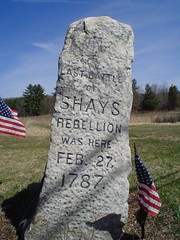
7338604887Shay's RebellionDaniel Shays led other farmers in this uprising against high state taxes, imprisonment for debt, and lack of paper money. (p. 93)34
7338604888Land Ordinance of 1785A policy that established surveying and selling of western lands. Part of the Articles of Confederation. (p. 93)35
7338604889Unicameral LegislatureA legislature which consists of one chamber or house.36
7338604890Mary McCauleyAlso know as Molly Pitcher, she carried water to soldiers during the Battle of Monmouth Court House and took over her husband's gun when he was overcome by heat. (p. 94)37
7338604891Abigail AdamsWife of John Adams. During the Revolutionary War, she wrote letters to her husband describing life on the homefront. She urged her husband to remember America's women in the new government he was helping to create. (p. 94)38
7338604892Deborah SampsonAt the age of 21, she dressed up as a man in order to fight in the war. (p. 94)39

AP US History Flashcards

Terms : Hide Images
10333865420Columbian Exchangethe transfer of plants, animals, and disease between the American and Europe, Asia and Africa0
10333865421John Rolfemarried Pocahontas and started the planting of tobacco in Jamestown1
10333865422Hernan CortesSpanish conquistador who defeated the Aztecs and conquered Mexico (1485-1547)2
10333865487Peter Stuyvesantleader of the Dutch colony New Netherland3
10333865423John Winthrop Jr.First American member of the Royal Society of London4
10333865424Thomas HookerFounder of Connecticut5
10333865425Henry HudsonExplored water around New York City, Hudson Bay & Hudson River.6
10333865426William PennEnglishman and Quaker who founded the colony of Pennsylvania (1644-1718)7
10333865427William BradfordGovernor of Plymouth Colony8
10333865428Samuel de ChamplainFrench explorer in Nova Scotia who established a settlement on the site of modern Quebec (1567-1635)9
10333865429Dutch West India CompanyDutch investment company formed in 1621 to develop colonies for the Netherlands in North America10
10333865430MayflowerThe ship that brought the Pilgrims to America11
10333865431VoyageursAn adventurer who journeyed by canoe from Montréal to the interior to trade with Indians for furs.12
10333865432Lord BaltimoreCatholic owner of the colony of Maryland13
10333865433QuebecFirst permanent French settlement in North America, founded by Samuel de Champlain14
10333865434HuguenotsFrench Protestants influenced by John Calvin15
10333865435ConquistadorsSpanish conquerors16
10333865436Glorious Revolutionthe overthrow of King James II of England17
10333865437Enclosurethe process of taking over and consolidating land formerly shared by peasant farmers18
10333865438Proprietoran owner of a store or other business19
10333865439FranchiseThe right to vote20
10333865440YeomenOwners of small farms, that did not own slaves21
10333865441Massachusetts Bay CompanyA group of wealthy Puritans who were granted a royal charter in 1629 to settle in Massachusetts Bay22
10333865442Indentured ServitudeAn agreement to exchange labor for travel expenses an/or job training for a certain amount of time23
10333865443joint-stock companyA company in which investors buy stock in the company in return for a share of its future profits24
10333865444Virginia CompanyJoint-stock company that established the first permanent English colony (Jamestown) in the Americas.25
10333865445Christopher ColumbusHe mistakenly discovered the Americas in 1492 while searching for a faster route to India.26
10333865446John SmithEnglish explorer who helped found the colony at Jamestown, Virginia27
10333865447PilgrimsEnglish Puritans who founded Plymouth colony in 162028
10333865448Lord BaltimoreCatholic owner of the colony of Maryland29
10333865449Walter RaleighEnglishman who sponsored the failed attempt to establish an English colony at Roanoke.30
10333865450Bartolome de Las CasasDominican priest who spoke out against mistreatment of Native Americans31
10333865451James OglethorpeFounder of the Georgia Colony32
10333865452AcadiansFrench residents of Nova Scotia expelled by the British.33
10333865453squattersomeone who settles on land without right or title34
10333865454MestizoA person of mixed Spanish and Native American ancestry.35
10333865455Great Puritan MigrationMass flight by religious dissidents from the persecutions of Archbishop Laud and Charles I36
10333865456Middle Passagethe voyage that brought enslaved Africans to the West Indies and later to North America37
10333865457Headright SystemIt was used as a way to attract new settlers to the region and address the labor shortage38
10333865458Paxton BoysA mob of Pennsylvania frontiersmen led by the Paxtons who massacred a group of non-hostile Indians.39
10333865459Separatistssub-group of the Puritans who vowed to break completely with the Church of England40
10333865460John CalvinProtestant reformer who believed in predestination41
10333865461Old Lights vs. New LightsThe Congregationalists split, the old who didn't want to reform and the new who did reform.42
10333865462the "elect"Calvinist term that means those who had been destined for eternal bliss.43
10333865463Protestant ReformationA split in the church caused by corruption in the church44
10333865464Halfway CovenantOffered partial membership rights to people who have not yet converted.45
10333865465Anne HutchinsonAmerican colonist (born in England) who was banished from Boston for her religious views (1591-1643)46
10333865466John Cotton/John WinthropPuritan preachers in the Mass. Bay, believed in the calling to do God's work on Earth47
10333865467Visible Saintsaccording to Puritans, only these individuals should be admitted to church membership48
10333865468CovenantAn agreement49
10333865469ConversionWhen your life is changed by giving yourself to God50
10333865470PredestinationCalvin's religious theory that God has already planned out a person's life.51
10333865471AntinomianismThe idea that faith alone, not deeds, is necessary for salvation.52
10333865472QuakersProtestant reformers who believe in the equality of all people53
10333865473CalvinismReligious teachings based on the ideas of the reformer John Calvin54
10333865474PuritansProtestants in England inspired by Calvinist ideas55
10333865475Protestant EthicThe work ethic the Puritans lived by, all work and no play.56
10333865476Institutes of the Christian ReligionThis was the work by John Calvin that described to the world the ideology of John Calvin57
10333865477JeremiadsNew form of sermon at Puritan pulpit that scolded parishioners from their waning piety.58
10333865478The Great AwakeningA revival of religious feeling in the American colonies during the 1730s and 1750s59
10333865479Johnathan EdwardsHelped start great awakening and wrote sinners in the hands of an angry god60
10333865480George WhitefieldCredited with starting the Great Awakening, also a leader of the "New Lights."61
10333865481Phyllis Wheatleyfirst African american poet, sold into slavery, raised and educated in her family, household servant62
10333865482John Peter ZengerNew York publisher who was taken to court for criticizing the governor of New York63
10333865483CrevecoeurThe man who believed that "Americans" have risen out of an ethnically mixed breed.64
10333865484Dominion of New EnglandA huge colony formed by the King of England, which included land from southern Maine to New Jersey65
10333865485Royal Charterused to establish colonies under the control of the crown66
10333865486Spanish ArmadaLarge fleet of ships sent to invade England and restore Catholicism67
10335675788King Phillip's War1675-1676 Native American uprising against the Puritan colonies68
10335675789Queen Anne's WarAmerican phase (1702-1713) of Europe's War of the Spanish Succession69
10335675790King William's War(1689-1697) First conflict between French settlers and British (American) colonists.70
10335675791PrimogenitureA system of inheritance in which the eldest son in a family received all of his father's land.71
10335675792Maryland Act of TolerationA law mandating religious tolerance for all forms of Christianity in Maryland72
10335675793House of BurgessesElected assembly in colonial Virginia, created in 1618.73
10335675794Fundamental Orders1639, constitution of Connecticut in which the regime was democratically controlled by citizens74
10335675795Navigation Lawslaws that restricted American trade with other countries75
10335675796Mayflower CompactA legal contract in which they agreed to have fair laws to protect the general good76
10335675797Bible Commonwealthname for the Massachusetts Bay colony that refers to its tax supported churches and visible saints.77
10335675798New England Confederationthe first significant attempt at political unity among the colonies78
10335675799General CourtRepresentative assembly of Massachusetts Bay79
10335675800Bacon's Rebellioncolonial rebellion against the governor of Virginia80
10335675801Regulator MovementCitizens of rural South Carolina organized to combat lawlessness in the Up Country81
10335675802Molasses ActAttempt by British authorities to squelch colonial trade with French West Indies82
10335675803Edict of Nantesdocument that granted religious freedom to the Huguenots83
10335675804War of Jenkin's Ear(1739) Small scale clash between Britain and Spain in the Caribbean and Georgia.84

AMSCO AP US History Chapter 25 Flashcards

AMSCO United States History 2015 Edition, Chapter 25 Diplomacy and World War II, 1929-1945

Terms : Hide Images
9205463484Good Neighbor PolicyPresident Franklin Roosevelt's foreign policy of promoting better relations with Latin America by using economic influence rather than military force in the region. (p. 523)0
9205463485Pan-American conferencesIn 1933, the United States attended a conference in Montevideo, Uruguay, in which we pledged to never again intervene in the internal affairs of any Latin American country. At a second conference in 1936, the U.S. agreed to the cooperation between the U.S. and Latin American countries to defend the Western Hemisphere against foreign invasion. (p. 523)1
9205463486ManchuriaIn September 1931, Japanese troops invaded this area on China's eastern seaboard. The League of Nations passed a resolution condemning the action but did not take action. (p. 521)2
9205463487Stimson DoctrineIn 1932, Secretary of State Henry Stimson said the United States would not recognize territorial changes resulting from Japan's invasion of Manchuria. (p. 522)3
9205463488fascismA political system in which people glorify their nation and their race through an aggressive show of force. Economic hardships led to the rise of military dictatorships, first in Italy, then in Japan and Germany. (p. 524)4
9205463489FascistsIn 1922, they seized power in Italy. They attracted dissatisfied war veterans, nationalists, and those afraid of rising communism. They marched on Rome and installed Mussolini in power. (p. 524)5
9205463490Benito MussoliniHe founded the Italian Fascist Party, and sided with Hitler and Germany in World War II. In 1945, he was overthrown and assassinated by the Italian Resistance. (p. 524)6
9205463491EthiopiaIn 1935, fascist Italy invaded this African nation. (p. 526)7
9205463492NazisThis party arose in 1920's Germany in reaction to deplorable economic conditions after war and national resentments over the Treaty of Versailles. By 1933, the party under leader Adolph Hitler, had gained control of the German legislature. (p. 524)8
9205463493Adolf HitlerAustrian-born founder of the German Nazi Party and chancellor of the Third Reich (1933-1945). His fascist philosophy, embodied in the book Mein Kampf attracted widespread support, and after 1934 he ruled as an absolute dictator. Hitler's pursuit of aggressive nationalist policies resulted in the invasion of Poland (1939) and the subsequent outbreak of World War II. His regime was infamous for the extermination of millions of people, especially European Jews. He committed suicide in 1945, when the collapse of the Third Reich was imminent. (p. 524)9
9205463494Axis PowersAlliance of Germany, Italy, and Japan during World War II.10
9205463495Spanish Civil WarIn 1936, a rebellion erupted in Spain after a coalition of Republicans, Socialists, and Communists was elected. General Francisco Franco led the rebellion. The revolt quickly became a civil war, by 1939 Franco had established a military dictatorship. This war was essentially a testing ground for much of the technology used by Germany in World War II. (p. 525)11
9205463496Francisco FrancoIn 1936, he plunged Spain into a Civil War. By 1939, Franco's Fascist had established a military dictatorship. (p. 525)12
9205463497RhinelandIn 1936, Adolf Hitler invaded this region. This was in violation of the Treaty of Versailles which had declared the area a demilitarized zone. (p. 526)13
9205463498SudetenlandIn 1938, Hitler insisted Germany had the right to take over an area in western Czechoslovakia. (p. 526)14
9205463499MunichA 1938 conference, at which European leaders attempted to appease Hitler by turning over the Sudetenland to him in exchange for promise that he would not expand Germany's territory any further. (p. 526)15
9205463500appeasementA policy of making concessions to an aggressor in the hopes of avoiding war. In the years 1935 to 1938, a series of military actions by Fascist dictatorships made Britain, France, and the United States nervous, but they did nothing to stop the actions. * 1935 - Italy invades Ethiopia * 1936 - German troops invade the Rhineland * 1937 - Japan invades China * 1938 - Germany takes the Sudetenland (p. 526)16
9205463501PolandOn September 1, 1939, Germany invaded this country using the blitzkrieg tactic. Britain and France then declared war against Germany. (p. 528)17
9205463502BlitzkriegOverwhelming air power and fast-moving tanks; a term of warfare meaning lightning war. (p. 528)18
9205463503isolationismA policy of non-participation in international economic and political relations. A 1934 committee led by Senator Gerald Nye concluded the main reason for participation in World War I was because of the bankers and arm manufacturers greed. This caused the U.S. public to be against any involvement in the early stages of World War II. (p.. 525)19
9205463504Nye CommitteeIn 1934, a Senate committee led by South Dakota Senator Gerald Nye to investigate why America became involved in World War I. They concluded that bankers and arm manufacturers pushed the U.S. into the war so they could profit from selling military arms. This committee's work pushed America toward isolationism for the following years. (p. 525)20
9205463505Neutrality ActsLaws passed by isolationists in the late 1930s, that were designed to keep the United States out of international wars. (p. 525)21
9205463506America First CommitteeIn 1940, after World War II had begun in Asia and Europe, isolationists became alarmed by President Roosevelt's support for Britain. To mobilize American public opinion against the war, they formed this committee. Charles A. Lindbergh was one of it spokesmen. (p. 525)22
9205463507Charles LindberghIn 1927, this U.S. aviator thrilled the world, by making the first nonstop flight from Long Island to Paris. In 1940, he was a speaker for the isolationist America First Committee. (p. 480, 525)23
9205463508Quarantine speechIn 1937, President Franklin D. Roosevelt made this speech after Japan invaded China. He proposed that democracies act together to "quarantine" Japan. Public reaction to the speech by the American public was negative, and the idea was abandoned. (p. 526)24
9205463509cash and carryPolicy adopted by the United States in 1939 to preserve neutrality, while aiding Great Britain. Great Britain could buy U.S. military arms if it paid in full and used its own ships to transport them. (p. 528)25
9205463510Selective Training and Service ActIn 1940, Roosevelt passed this law requiring all males aged 21 to 36 to register for military service. (p. 528)26
9205463511destroyers-for-bases dealIn September 1940, Roosevelt cleverly arranged a trade that would help Great Britain. The United States gave Britain fifty older but still serviceable US destroyers, in exchange the U.S. was given the right to build military bases on British Islands in the Caribbean. (p. 528)27
9205463512Four Freedoms speechA speech by President Franklin Roosevelt on January 6, 1941 that proposed lending money to Britain for the purchase of U.S. military weapons. He argued that the U.S. must help other nations defend "four freedoms" (freedom of speech, freedom of religion, freedom from want, and freedom from fear). (p. 529)28
9205463513Lend-Lease ActIn March 1941, this act permitted Britain to obtain all U.S. arms they needed on credit during World War II. (p. 529)29
9205463514Atlantic CharterIn August 1941, U.S. president Franklin D. Roosevelt and British prime minister Winston Churchill met aboard a ship off the coast of Newfoundland. They created this agreement which outlined the principles for peace after the war. (p. 530)30
9205463515escort convoysIn July 1941, the U.S. began to provide protection for British ship carrying U.S. arms being transported to Britain. (p. 530)31
9205463516oil and steel embargoIn September 1940, Japan joined the Axis powers. The United States responded by prohibiting export of steel and scrap iron to Japan and other countries. In July 1941, when Japan invaded French Indochina, the U.S. cut off Japanese access to many vital materials, including U.S. oil. (p. 530)32
9205463517Pearl HarborOn December 7, 1941, a date that will live in infamy, this U.S. naval base in Honolulu, Hawaii was bombed by Japanese planes. 2,400 Americans were killed and 20 warships were sunk or severely damaged. The next day, the United States declared war on Japan. (p. 531)33
9205463518War Production BoardDuring World War II, President Roosevelt established this agency to allocated scarce materials, limit or stop the production of civilian goods, and distribute contracts among competing manufacturers. (p. 531)34
9205463519Office of Price AdministrationThis World War II federal agency regulated most aspects of civilian lives by freezing prices, wages, and rents and rationing commodities in order to control inflation. (p. 532)35
9205463520Manhattan ProjectCode name for the secret United States project set up in 1942 to develop atomic bombs for use in World War II. (p. 532)36
9205463521Office of War InformationEstablished by the government to promote patriotism and help keep Americans united behind the World War II effort. (p. 533)37
9205463522the Good WarThe term for the unity of Americans supporting the democratic ideals in fighting World War II. (p. 533)38
9205463523Great MigrationDuring World War II, over 1.5 million African-Americans migrated from the South to job opportunities in the North and the West. This is a continuation of the migration patterns that began in World War I. (p. 533)39
9205463524Double VDuring World War II civil rights leaders encouraged African Americans to adopt the this slogan - one V for victory, one V for equality. (p 533)40
9205463525executive order 8802During World War II, President Roosevelt issued an executive order to prohibit discrimination in government and in businesses that received federal contracts. (p. 533)41
9205463526Smith v. AllwrightThis Supreme Court case in 1944 ruled that it was unconstitutional to deny membership in political parties to African Americans as a way of excluding them from voting in primaries. (p. 533)42
9205463527Braceros programA program the American and Mexican governments agreed to, in which contract laborers would be admitted to the United States for a limited time as migrant farm workers (p. 533)43
9205463528Japanese internmentIn 1942, over 100,000 Japanese Americans living on the United States West coast were rounded up and put in internment camps. (p. 534)44
9205463529Korematsu v. U.S.A 1944 Supreme Court case which upheld the order providing for the relocation of Japanese Americans. It was not until 1988 that Congress formally apologized and agreed to pay financial compensation to each survivor. (p. 534)45
9205463530Rosie the RiveterA propaganda character designed to increase production of female workers in industrial jobs in the shipyards and defense plants during World War II. (p. 534)46
9205463531Harry S. TrumanHe became president on April 12, 1945, when President Franklin Roosevelt died suddenly. In August 1945, he order an atomic bomb be dropped on Hiroshima then on Nagasaki, to end the war with Japan. Japan surrendered on September 2, 1945. (p. 537, 538)47
9205463532Battle of the AtlanticThe protracted naval war to control the shipping lanes in the North Atlantic. (p. 535)48
9205463533Dwight EisenhowerThe United States general who commanded the invasion of Normandy (D-Day), Casablanca and the defeat of Nazi Germany. (p. 536)49
9205463534D-DayOn June 6, 1944 the Allies landed in northern France with the largest invasion by sea in history. By the end of August Paris was liberated from the Nazis, and by September Allied troops had crossed the German border. (p. 536)50
9205463535HolocaustA methodical plan, orchestrated by Germany's Adolph Hitler to eliminate Jews, non-conformists, homosexuals, non-Aryans, and mentally and physically disabled. Six million Jews and several million non-Jews would be murdered by the Nazis. (p. 536)51
9205463536island-hoppingThe United States strategy in the Pacific, which called for capturing Japanese-held islands in the Pacific and moving on to others to bring the American military closer and closer to Japan itself. (p. 536)52
9205463537Battle of MidwayOn June 4-7, 1942, the U.S. naval victory over the Japanese fleet at Midway Island. The Japanese lost four of their best aircraft carriers. The battle marked a turning point in the war in the Pacific. (p. 536)53
9205463538Douglas MacArthurUnited States general who served as chief of staff and commanded Allied forces in the South Pacific during World War II. (p. 537)54
9205463539kamikaze attacksJapanese pilots would deliberately crash their planes into American ships, killing themselves, but also inflicting severe damage to the ships. (p. 537)55
9205463540J. Robert OppenheimerAmerican theoretical physicist and professor of physics. He led the top-secret Manhattan Project, which built the world's first atomic bomb. (p. 537)56
9205463541atomic bombA nuclear weapon in which enormous energy is released by nuclear fission. (p. 537)57
9205463542Hiroshima and NagasakiOn August 6, 1945, the United States dropped the first atomic bomb on Hiroshima, Japan. Then on August 9, a second atomic bomb was dropped on Nagasaki. About 250,000 Japanese died as a result. Within a week after the second bomb was dropped, Japan agreed to surrender. (p. 537)58
9205463543Big ThreeThe leaders of the Allies during World War II included: Soviet Union - Joseph Stalin, Great Britain - Winston Churchill, United States - Franklin Roosevelt. (p. 537)59
9205463544Casablanca ConferenceThe conference attended by Roosevelt and Churchill in January 1943, to discuss the strategy to win World War II. The plan called for the invasion of Sicily and Italy by British and American troops. They resolved to accept nothing less than unconditional surrender of Axis powers. (p. 537)60
9205463545unconditional surrenderA surrender with any demands or requests. (p. 538)61
9205463546Tehran, Yalta, PotsdamThe three cities that held conferences for the leaders of the Allied powers, United States, Great Britain, and Soviet Union during World War II. (p. 538)62
9205463547United NationsOn October 24, 1945, this international organization formed after World War II to promote international peace, security, and cooperation. (p. 539)63

AMSCO AP US History Chapter 9 Flashcards

AMSCO United States History 2015 Edition, Chapter 9 Sectionalism, 1820-1860

Terms : Hide Images
7789365590NortheastIn the early 19th century, the area which included New England and the Middle Atlantic states. (p. 173) Rapid Economic growth0
7789365591Old NorthwestIn the early 19th century, the territory which stretched from Ohio to Minnesota. (p. 173) Rapid Economic growth1
7789365592sectionalismLoyalty to a particular region of the country. (p. 173)2
7789365593NativistsNative-born Americans who reacted strongly against the immigrants, they feared the newcomers would take their jobs and weaken the culture of the Protestant and Anglo majority. (p. 176)3
7789365594American partyIn the early 1850s, this party which opposed immigrants, nominated candidates for office. They were also called the Know-Nothing party. (p. 176)4
7789365595Supreme Order of the Star-Spangled BannerA secret anti-foreign society in the 1840s. In the 1850s the society turned to politics by forming the American party. (p. 176)5
7789365596Know-Nothing PartyNativists, also known as the American party. (p. 176)6
7789365597Free African AmericansBy 1860 as many as 250,000 African Americans in the South were free citizens. Most of them lived in the cities where they could own property. However, they were not allowed to vote or work in most skilled professions. (p. 179)7
7789365598plantersThe South's small wealthy elite that owned more than 100 slaves and more than 1000 acres. (p. 180)8
7789365599Codes of ChivalryThe Southern aristocratic planter class ascribed to a code of chivalrous conduct, which included a strong sense of personal honor, defense of womanhood, paternalistic attitudes toward all who were deemed inferior. (p. 180)9
7789365600poor whitesThe term for the three-fourths of the South's white population who owned no slaves. (p. 180)10
7789365601hillbilliesDerisive term for poor white subsistence farmers, they often lived in the hills and farmed less productive land. (p. 180)11
7789365602mountain menIn the 1820s, these were the earliest white people in the Rocky Mountains. They trapped for furs and served as guides for settlers traveling to the West coast. (p. 181)12
7789365603the WestThe term that referred to the new area that was being settled, the location changed as the white settlements moved westward. (p. 181)13
7789365604the frontierThe area that was newly settled in the West, it moved further west over time. (p. 181)14
7789365605Deep SouthThe cotton rich area of the lower Mississippi Valley. (p. 178)15
7789365606American Indian removalBy 1850, most American Indians were living west of the Mississippi River. The Great Plains provide temporary relief from white settlers encroaching on their territory. (p. 181)16
7789365607Great PlainsNative Americans in this area used the horse to hunt buffalo. Tribes such as the Cheyenne and the Sioux, became nomadic hunters following the buffalo herds. (p. 181)17
7789365608white settlersIn the 1840s and 1850s, they settled the Western frontier. They worked hard, lived in log cabins or sod huts. Disease and malnutrition were even greater dangers than attacks by American Indians. (p. 182)18
7789365609urbanizationEarly 19th century urban working class neighborhoods featured crowded housing, poor sanitation, infectious diseases, and high rates of crime. (p. 174)19
7789365610urban lifeThe North's urban population grew from about 5 percent of the population in 1800 to 15 percent by 1850. (p. 174)20
7789365611new citiesAfter 1820, Buffalo, Cleveland, Detroit, Chicago, Cincinnati, and St. Louis developed as transportation points for shipping agricultural products to the East, and receiving manufactured goods from the East. (p. 175)21
7789365612Irish potato famineFrom 1820 to 1860, almost 2 million immigrants came from Ireland. Most of them were tenant farmers driven from their homeland by potato crop failures. (p. 176)22
7789365613Roman CatholicMost of the Irish were this religion and they faced strong discrimination because of it. (p. 176)23
7789365614Tammany HallNew York City's Democratic organization. (p. 176)24
7789365615GermansIn the 1840s and 1850s, because of economic hardship and the failure of democratic revolutions, one million of these people came to the United States. They often established homesteads in the Old Northwest and generally prospered. (p. 176)25
7789365616immigrationFrom the 1830s to the 1850s, four million people came from northern Europe to the United States. (p. 175)26
7789365617King CottonBy the 1850s, this agricultural product was by far the South's most important economic force. (p. 177)27
7789365618Eli WhitneyThe United States inventor of the mechanical cotton gin, which made cotton affordable throughout the world. (p. 178)28
7789365619peculiar institutionA term that referred to slavery because many southern whites were uneasy with the fact that slaves were human beings yet treated so unfairly. Some used historical and religious arguments to support their claim that it was good for both slave and master. (p. 178)29
7789365620Denmark VeseyIn 1822, he led a major slave uprising which was quickly and violently suppressed. However, it gave hope to enslaved African Americans, drove Southern states to tighten already strict slave codes, and demonstrated to many the evils of slavery. (p. 179)30
7789365621Nat TurnerIn 1831, he led a major slave uprising. (p. 179)31
7789365622slave codesIn parts of the Deep South, slaves made up nearly 75 percent of the population. Fearing slave revolts, laws were passed which restricted blacks movements and education. (p. 178)32
7789365623Industrial RevolutionOriginally this revolution was centered in the textile industry, but by the 1830's, northern factories were producing a wide range of goods - everything from farm implements to clocks and shoes. (p. 174)33
7789365624unionsFor a brief period in the 1830s an increasing number of urban workers joined unions and participated in strikes. (p. 174)34
7789365625Commonwealth v. HuntIn 1842, the Massachusetts Supreme Court ruled that peaceful unions had the right to negotiate labor contracts with employers. (p. 174)35
7789365626ten-hour workdayDuring the 1840s and 1850s, most northern state legislatures passed laws establishing a ten-hour workday for industrial workers. (p. 174)36
7789365627Cyrus McCormickUnited States inventor and manufacturer of a mechanical reaper, which made farms more efficient. (p. 175)37
7789365628John DeereUnited States inventor of the steel plow, which made farms more efficient. (p. 175)38
7789365629Daniel WebsterA senator, who warned that sectionalism was dangerous for the United States. (p. 173)39
7789365630environmental damageThis term, described what occurred when settlers cleared forests and exhausted the soil. (p. 182)40
7789365631extinctionThis term, described what trappers and hunters did to the beaver and buffalo populations. (p. 182)41

US History Review Flashcards

Terms : Hide Images
4818626123Joint Stock CompanyEarly settlements were funded by shareholders. These companies maintained the colonies well-being.0
4818626124New EnglandRocky soils, ship-building, fishing. Zero religious tolerance. Puritan religion.1
4818626125Middle ColoniesStaple Crops grown here. Also home to Quakers and other religious groups who broke away from the Puritans2
4818626126Southern ColoniesCash crops grown here (Not cotton yet) Religion was not a settling factor or motive.3
4818626127PuritansLived in New England colonies. Had zero tolerance for other religions4
4818626128QuakerFound throughout the middle colonies. Led by William Penn.5
4818626129Salutary NeglectGreat Britain's way of telling the colonies they could govern themselves as long as they cooperated economically6
4818626130Articles of ConfederationEstablished a very weak central government because of their distrust in a strong central government.7
4818626131Virginia PlanIdea that representatives in the government should be based on population8
4818626132New Jersey PlanIdea that representatives in the governments should be based on equal representation9
4818626133Great CompromiseThe house is represented by population and the senate is represented equally regardless of population10
4818626134FederalistStressed a strong national government and Constitution. (James Madison, Alexander Hamilton)11
4818626135Anti-federalistOpposed Constitution. Favored state government over national government.12
4818626136Marbury v. MadisonCourt case that established judicial review. This allows the courts to decide if a law is unconstitutional or not.13
4818626137Alien and Sedition ActsDuring times of war, individual liberties may be hindered14
4818626138NationalismHaving a strong sense of pride for your country.15
4818626139Louisiana PurchaseLand bought in 1803 for $15 million from France. It double our size and gave America access to the New Orleans port16
4818626140SuffrageVoting rights17
4818626141Indian Removal ActThe law authorized the president to negotiate with southern Indian tribes for their removal to federal territory west of the Mississippi River in exchange for their ancestral homelands.18
4818626142Trail of tearsIn 1838 and 1839, as part of Andrew Jackson's Indian removal policy, the Cherokee nation was forced to give up its lands east of the Mississippi River and to migrate to an area in present-day Oklahoma.19
4818626143NullificationSouth Carolina's response to tariff prices. The Federal Government responded by threatening to send troops, but a they resolved the issue before that.20
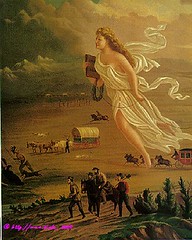
4818626144Manifest DestinyBelief that Americans had the natural right and God given right to settle the entire continental America. From Pacific to Atlantic.21
4818626145Monroe DoctrineDocument that told European nations to stay out of the Western Hemisphere. Anyone who came across the line would be seen as a military aggressor.22
4818626146"54-40 or fight"Land dispute between US and Great Britain. Oregon territory.23
4818626147Annexation of Texas (1845)Texas became a state of the United States.24
4818626148Mexican American War (Result)James K. Polk's belief of manifest destiny ultimately led to war with Mexico25
4818626149Missouri Compromise of 1820Agreement reached where slave states and non-slave states were divided with a line.26
4818626150AbolitionistSomeone who is against slavery27
4818626151Underground RailroadRoute taken by slaves with the aide of others to get them to freedom28
4818626152Mexican Cession29
4818626153Harper's FerryRaided by John Brown in an attempt to begin a slave revolt.30
4818626154Popular SovereigntyThe fact that people can vote and that majority rules31
4818626155Kansas-Nebraska ActRepealed the Missouri Compromise. Allowed Kansas and Nebraska to decide whether or not their state would be a free state or a slave state.32
4818626156Dred Scott DecisionRuled that any African American free or slave could not be an American citizen. Also stated that US Congress had no right to ban slavery in "slave territories"33
4818626157Anaconda PlanNorthern military plan against the Confederates. The idea was to squeeze the resources and ports so that the Confederates would run out of supplies34
4818626158Emancipation ProclamationDocument stating slaves in Confederate territories were now free. (1863)35
4818626159Total WarGeneral Sherman's march through the south destroying everything in his path.36
4818626160Appomattox CourthouseWhere Generals from both the South and North came to agree that the war was over and that the North won.37
4818626161ReconstructionEra in time after the Civil War. Attempted to rebuild the south diplomatically and physically.38
4818626162Black CodesAttempts to limit black participation in society.39
4818626163Freedman's BureauU.S. federal government agency established in 1865 to aid freedmen (freed slaves) in the South during the Reconstruction era of the United States40
4818626164SharecroppingProcess in which many former slaves would share land with land owners in order to have a place to live for them and their family.41
4818626165Plessy v. FergusonEstablished "Separate but equal"42
4818626166Jim Crow LawsState and local laws enforcing racial segregation in the Southern United States. Enacted after the Reconstruction period, these laws continued in force until 1965.43
4818626167Poll Taxes/Literacy TestsWays that tried to prevent African Americans from voting44
4818626168Vocational EducationBooker T. Washington established the vocational training school named Tuskegee. These schools were designed to educate with a more hands on approach.45
4818626169National Association for the Advancement of Colored People (NAACP)The oldest civil rights organization in the United States, founded in 1909. Among their achievements was a lawsuit that resulted in the Supreme Court 's landmark decision in Brown versus Board of Education, in 1954, which declared the segregation of public schools unconstitutional.46
4818626170Transcontinental RailroadCompleted in 1868 at Promontory Point, Utah. This helped establish a National Market as it connected the East Coast to the West Coast.47
4818626171AssimilationWhen one culture is made to transform into another culture. (Native American culture into "White man culture)48
4818626172Wounded KneeLast battle between Native Americans and the United States military.49
4818626173Chinese Exclusion ActIt was one of the most significant restrictions on free immigration in US history, prohibiting all immigration of Chinese laborers.50
4818626174Vertical Integrationthe combination in one company of two or more stages of production normally operated by separate companies.51
4818626175Horizontal Integrationis the process of a company increasing production of goods or services at the same part of the supply chain. A company may do this via internal expansion, acquisition or merger. The process can lead to monopoly if a company captures the vast majority of the market for that good or service.52
4818626176Robber Baronsa derogatory metaphor of social criticism originally applied to certain late 19th-century American businessmen who used unscrupulous methods to get rich.53
4818626177Monopolythe exclusive possession or control of the supply or trade in a commodity or service.54
4818626178Social Darwinism"Survival of the fittest"55
4818626179Laissez-faire capitalismHands off approach to the economy. No government regulations56
4818626180Granger LawsLaws put in place to help famers from the abuses of the railroads and their high prices.57
4818626181Inflationa general increase in prices and fall in the purchasing value of money58
4818626182Strikea work stoppage caused by the mass refusal of employees to work.59
4818626183Nativistsa policy of favoring native inhabitants as opposed to immigrants.60
4818626184Muckrakerone who inquires into and publishes scandal and allegations of corruption among political and business leaders61
4818626185ProhibitionIllegal sale/distribution of alcohol62
4818626186Isolationismprocess in which America remained isolated from foreign affairs63
4818626187Yellow Journalismjournalism that often exaggerated the truth (USS Maine and the Spanish American War)64
4818626188USS MaineBlew up in the Havana Harbor. Yellow Journalists wrote that Spain had blown it up in order to get Americans to want to fight Spain.65
4818626189Sphere of Influencea country or area in which another country has power to affect developments although it has no formal authority.66
4818626190Boxer Rebelliona Chinese secret organization called the Society of the Righteous and Harmonious Fists led an uprising in northern China against the spread of Western and Japanese influence there.67
4818626191Panama CanalWaterway across the Isthmus of Panama. The canal connects the Atlantic Ocean and the Pacific Ocean. The United States built it from 1904 to 1914 on territory leased from Panama.68
4818626192Neutralitythe state of not supporting or helping either side in a conflict, disagreement, etc.; impartiality.69
4818626193U-boatsUnrestricted submarine warfare70
4818626194Zimmerman TelegramMessage from Germany to Mexico asking for their support in attacking America and in return they would get their land back.71
481862619514 pointsPresident Woodrow Wilson proposed a 14-point program for world peace. These points were later taken as the basis for peace negotiations at the end of the war.72
4818626196League of NationsAn international organization established after World War I under the provisions of the Treaty of Versailles. The League, the forerunner of the United Nations, brought about much international cooperation on health, labor problems, refugee affairs, and the like.73
4818626197Red Scareis the promotion of fear of a potential rise of communism or radical leftism.74
4818626198Treaty of VersaillesIt ended the state of war between Germany and the Allied Powers. It was signed on 28 June 1919, exactly five years after the assassination of Archduke Franz Ferdinand.75
4818626199Good Neighbor Policywas the foreign policy of the administration of United States President Franklin Roosevelt towards Latin America.76
4818626200Depressiona sustained, long-term downturn in economic activity in one or more economies. It is a more severe downturn than an economic recession, which is a slowdown in economic activity over the course of a normal business cycle.77
4818626201Flappera fashionable young woman intent on enjoying herself and flouting conventional standards of behavior.78
4818626202Great Migrationmovement of 6 million African-Americans out of the rural Southern United States to the urban Northeast, Midwest, and West that occurred between 1910 and 1970. (Job opportunities and escaping Jim Crow Laws)79
4818626203"Birth of a Nation"Originally called "The Clansmen" this film gave rise to the KKK once again in 1915. Helped reaffirm segregation and white supremacy.80
4818626204XenophobiaFear of foreigners. This phobia struck at the hearts of nativists.81
4818626205Palmer RaidsSeries of raids that deported hundreds of suspected communists in America.82
4818626206Temperance MovementThe abstinence from alcoholic drink.83
4818626207HoovervillesShanty towns formed during the Great Depression.84
4818626208Dust BowlNatural disaster that swept across the Mid-west of America during the 1930s causing farms and everyone to suffer even more.85
4818626209Court PackingFDR's attempt to add more judges to the Supreme Court hoping he could get more legislation passed.86
4818626210Scarce ResourcesDuring WW2 people had to ration these resources so the troops could have what they needed.87
4818626211Cold Warthe state of political hostility that existed between the Soviet bloc countries and the US-led Western powers from 1945 to 1990.88
4818626212D-DayLargest amphibious assault in history. Allied troops stormed the beaches of Normandy, France in order to help establish a 3rd front in the European theater.89
4818626213Battle of the BulgeThe last major offensive for the German forces in WW290
4818626214Island hoppingThe US strategy of regaining territory lost to the Japanese in order to get closer to mainland Japan to set up an assault.91
4818626215Arms RaceThe competition between America and Soviet Union to have the biggest and baddest weapons post WW2.92
4818626216Anti-semitismis hostility, prejudice or discrimination against Jews. A person who holds such positions is called an antisemite.93
4818626217Nuremberg TrialsTrial held to hold German leaders accountable for their actions towards the Jews during the Holocaust.94
4818626218Final solutionHitler's plan to eliminate all of the Jews through death and concentration camps.95
4818626219"Iron Curtain"the "barrier" separating the former Soviet bloc and the West prior to the decline of communism that followed the political events in eastern Europe in 1989.96
4818626220Truman Doctrinethe principle that the US should give support to countries or peoples threatened by Soviet forces or communist insurrection. First expressed in 1947 by US President Truman in a speech to Congress seeking aid for Greece and Turkey, the doctrine was seen by the communists as an open declaration of the Cold War.97
4818626221SputnikThe first satellite launched into orbit. (Russia)98
4818626222Baby Booma temporary marked increase in the birth rate, especially the one following World War II.99
4818626223Brown v. Board of EducationOverturned Plessy v. Ferguson. De-segregated schools and other public places such as restaurants and movie theaters.100
4818626224Montgomery Bus Boycottseminal event in the Civil Rights Movement, was a political and social protest campaign against the policy of racial segregation on the public transit system of Montgomery, Alabama.101
4818626225Sit-inNon-violent protests to end racial discrimination in public places.102
4818626226Freedom Ridesa person who challenged racial laws in the American South in the 1960s, originally by refusing to abide by the laws designating that seating in buses be segregated by race.103
4818626227March on Washingtonwas one of the largest political rallies for human rights in United States history and demanded civil and economic rights for African Americans.104
4818626228Selma Marchtriumphant civil rights demonstrators led by Martin Luther King, Jr. marched into Montgomery, Alabama. It was the culmination of a fifty-mile procession from Selma.105
4818626229Civil Rights Act of 1964is a landmark piece of civil rights legislation in the United States that outlawed discrimination based on race, color, religion, sex, or national origin.106
4818626230Voting Rights Act of 1968popularly known as the Fair Housing Act-prohibited discrimination concerning the sale, rental and financing of housing based on race, religion, national origin and sex.107
4818626231Dixiecratsany of the Southern Democrats who seceded from the party in 1948 in opposition to its policy of extending civil rights.108
4818626232Roe v. WadeCourt case that made it illegal to tell a woman that getting an abortion is illegal.109
4818626233Affirmative Actionstate as a fact; assert strongly and publicly.110
4818626234War on PovertyLyndon Johnson's Great Society was focused on the...111
4818626235HawksAnyone in favor of Vietnam war and defense spending.112
4818626236DovesSomeone against military spending and the Vietnam War.113
4818626237The Pentagon Papersname given to a secret Department of Defense study of U.S. political and military involvement in Vietnam from 1945 to 1967. Would later be connected to the Watergate Scandal.114
4818626238War Powers Actfederal law intended to check the president's power to commit the United States to an armed conflict without the consent of the U.S. Congress.115
4818626239ReaganomicsA popular term used to refer to the economic policies of Ronald Reagan, the 40th U.S. President (1981-1989), which called for widespread tax cuts, decreased social spending, increased military spending, and the deregulation of domestic markets.116
4818626240Deregulationis the reduction or elimination of government power in a particular industry, usually enacted to create more competition within the industry.117
4818626241Globalizationis the tendency of businesses, technologies, or philosophies to spread throughout the world, or the process of making this happen. The global economy is sometimes referred to as a globality, characterized as a totally interconnected marketplace, unhampered by time zones or national boundaries.118
4818626242First Persian Gulf WarUS invasion of Kuwait that kicked out Saddam Hussein and Iraqi forces. Hussein deliberately went against UN policy in his occupation of Kuwait.119

AP US History People to Know Chapter 22 Flashcards

Terms : Hide Images
6172338343Oliver O. Howard (1830-1909)Union General put in charge of the Freedmen's Bureau during Reconstruction. He later founded and served as president of Howard University, an institution aimed at educating African American students.0
6172338344Andrew Johnson (1808-1875)Seventeenth president of the United States, North Carolina-born He assumed the presidency after Lincoln's assassination in 1865. Much to the disgust of Radical Republicans in Congress, He, a Democrat, took a conciliatory approach to the South during Reconstruction, granting sweeping pardons to former Confederates and supporting Southern Black Codes against freedmen. In 1868, He was impeached by the House of Representatives for breaching the Tenure of Office Act. Acquitted by the Senate, he remained in office to serve out his term.1
6172338345Hiram Revels (c. 1827-1901)First African-American Senator, elected in 1870 to the Mississippi seat previously occupied by Jefferson Davis. Born to free black parents in North Carolina, He worked as a minister throughout the South before entering politics. After serving for just one year, he returned to Mississippi to head a college for African American males.2
6172338346William Seward (1801-1872)U.S. Senator and Secretary of State under Abraham Lincoln. An avid opponent of slavery, He was a leading candidate for the Republican nomination in both 1856 and 1860. Later, as one of Lincoln's closest advisers, he helped handle the difficult tasks of keeping European nations out of the Civil War. He is best known, however, for negotiating the purchase of Alaska, dubbed "Seward's Folly" by expansion-weary opponents of the deal.3
6172338347Edwin M. Stanton (1814-1869)Secretary of War under Presidents Lincoln and Johnson, He advocated for stronger measures against the South during Reconstruction, particularly after widespread violence against African Americans erupted in the region. In 1868, Johnson removed him in violation of the 1867 Tenure of Office Act, giving pretence for Radical Republicans in the House to impeach him.4
6172338348Thaddeus Stevens (1792-1868)Pennsylvania congressman who led the Radical Republican faction in the House of Representatives during and after the Civil War, advocating for abolition and later, the extension of civil rights to freed blacks. He also called for land redistribution as a means to break the power of the planter elite and provide African Americans with the economic means to sustain their newfound independence.5
6172338349Benjamin Wade (1800-1878)A founder of the Republican Party and Senator from Ohio from 1851 to 1869. A passionate abolitionist, he pressured President Lincoln throughout the Civil War to pursue harsher policies toward the South. He co-sponsored the Wade-Davis Bill in 1864, which required 50 percent of the registered voters of a southern state to take a loyalty oath as a precondition for restoration to the Union, rather than the 10 percent proposed by Lincoln. As President Pro Tem of the Senate in 1868, he was next in line for the presidency should Andrew Johnson be impeached, and the prospect that someone of such radical views might become president may have contributed to the failure of the effort to impeach Johnson.6

AP US History Period 5 (1844-1877) selected Flashcards

Terms : Hide Images
5896902911Popular SovereigntyNotion that the sovereign people of a given territory should decide whether to allow slavery. Seemingly a compromise, it was largely opposed by Northern abolitionists who feared it would promote the spread of slavery to the territories.0
5896902914Emancipation Proclamation1863. Declared all slaves in rebelling states to be free but did not affect slavery in non-rebelling Border States. The Proclamation closed the door on possible compromise with the South and encouraged thousands of Southern slaves to flee to Union lines.1
5896902915Freedmans' Bureau1865-1872. Created to aid newly emancipated slaves by providing food, clothing, medical care, education, and legal support. Its achievements were never and depended largely on the quality of local administrators.2
5896902916Black Codes1865-1866. Laws passed throughout the South to restrict the rights of emancipated blacks, particularly with respect to negotiating labor contracts. Increased Norhterners' criticisms of President Andrew Johnson's lenient Reconstruction policies.3
5896902917SharecroppingAn agricultural system that emerged after the Civil War in which black and white farmers rented land and residences from a plantation owner in exchange for giving him a certain "share" of each year's crop. Sharecropping was the dominant form of southern agriculture after the Civil War, and landowners manipulated this system to keep tenants in perpetual debt and unable to leave their plantation.4
5896902918Compromise of 1850Admitted California as a free state, opened New Mexico and Utah to popular sovereignty, ended the slave trade (but not slavery itself) in Washington D.C., and introduced a more stringent fugitive slave law. Widely opposed in both the North and South, it did little to settle the escalating dispute over slavery.5
5896902919Kansas-Nebraska Act1854. Proposed that the issue of slavery be decided by popular sovereignty in the Kansas and Nebraska territories, thus revoking the 1820 Missouri Compromise. Introduced by Stephen Douglass in an effort to bring Nebraska into the Union and pave the way for a northern transcontinental railroad.6
5896902921Gettysburg Address1863. Abraham Lincoln's oft-quoted speech, delivered at the dedication of the cemetery at Gettysburg battlefield. In the address, Lincoln framed the war as a means to uphold the values of liberty.7
5896902922Appomattox Court HouseSite (city) where Robert E. Lee surrendered to Ulysses S. Grant in April 1865 after almost a year of brutal fighting throughout Virginia in the "Wilderness Campaign".8
5896902926Wilmot Proviso(1846) Proposal to prohibit slavery in any land acquired in the Mexican War. Never passed by both houses of Congress but helped fan the flame of sectional tension.9
5896902928Treaty of Guadalupe Hidalgo(1848) The Mexican government gave up the area of Texas and offered to sell the provinces of California and New Mexico as a result of its defeat in the Mexican-American War.10
5896902929Bleeding Kansas(1856-1861) A sequence of violent events involving abolitionists and pro-Slavery elements that took place in Kansas-Nebraska Territory. The dispute further strained the relations of the North and South, making civil war imminent.11
5896902931John Brown's Raid on Harper's Ferry(1859) John Brown led a raid on Harper's Ferry. He hoped to start a rebellion against slaveholders by arming enslaved African Americans. Brown was quickly defeated by citizens and federal troops. Brown became a villain to southerners who now thought northerners would use violence to end slavery as well as a martyr to some northerners who saw Brown as someone who sacrificed himself for the ideal of freedom for all.12
5896902932Election of 1860(1860) The United States presidential election of 1860 set the stage for the American Civil War. Hardly more than a month following Lincoln's victory came declarations of secession by South Carolina and other states, which were rejected as illegal by outgoing President James Buchanan and President-elect Lincoln.13
5896902933Thirteenth Amendment(1865) The constitutional amendment ratified after the Civil War that forbade slavery and involuntary servitude.14
5896902934Fourteenth Amendment(1868) Provided equal protection of the law to freed slaves. Representation for any state that withheld voting from African Americans would be reduced.15
5896902936Manifest DestinyA notion held by a nineteenth-century Americans that the United States was destined to rule the continent, from the Atlantic the Pacific.16
5896902939Mexican American War1846 - 1848. President Polk declared war on Mexico over the dispute of land in Texas. At the end, American ended up with 55% of Mexico's land, called the Mexican Cession.17
5896902940Republican Party1854. Established by anti-slavery Whigs and Democrats, "free-soilers" and reformers from the Northwest met and formed party in order to keep slavery out of the territories.18
5896902943secessionFormal withdrawal of states or regions from a nation19
5896902944sectionalismTerm used to describe the growing differences between the regions of the United States, especially the North and South, leading up to the Civil War.20
5896902945Robert E. LeeConfederate general who had opposed secession but did not believe the Union should be held together by force. Military genius whose aggressiveness made him a fearsome opponent throughout the Civil War.21
5896902950Radical ReconstructionName given to the period when Congress, which was controlled by Republicans, took over Reconstruction efforts. When southerners balked at some of the more moderate reforms proposed, more radical republicans started to gain more power and pass more legislation.22
5896902954scalawagA derogatory term for southerners who were working with the North to buy up land from desperate southerners; sometimes used in a general way by southerners criticizing other southerners who had northern sympathies.23
5896902955Nat TurnerA black preacher who in 1831 led a slave revolt Virginia that killed 60 whites. 100+ blacks were executed as a result. The rebellion was significant as it worried southern whites that larger slave rebellions were possible and therefore stricter rules were needed.24
5896902957Frederick DouglassAn escaped slave who spoke publicly for the abolitionist cause. He wrote his autobiography, depicting the harsh realities of Southern slavery. He also looked to politics to help abolish slavery.25
5896902960John C. CalhounSenator who argued for states' rights for the South. He asked for slavery to be left alone, slaves to be returned to the South, and state balance to be kept intact.26
5896902961Henry ClayKnown as the "Great Compromiser"; senator who pushed for compromise between the North and South and worked with Stephen Douglas; major figure in the passing of both the Missouri Compromise (1820) and Compromise of 1850.27
5896902963Charles SumnerSenator who spoke out for black freedom and racial equality post-Civil War. Publicly beaten by Preston Brooks for speaking out against the violence in Kansas, an event that marked increasing tensions between the North and South prior to the Civil War.28
5896902965Jefferson DavisPresident of the Confederate States of America prior to and during the Civil War.29
5896902966Lincoln-Douglas DebatesLincoln challenged Stephen Douglas to debates during the senatorial race of 1858 which became a public referendum on the issue of slavery.30

Pages

Subscribe to CourseNotes RSS

Need Help?

We hope your visit has been a productive one. If you're having any problems, or would like to give some feedback, we'd love to hear from you.

For general help, questions, and suggestions, try our dedicated support forums.

If you need to contact the Course-Notes.Org web experience team, please use our contact form.

Need Notes?

While we strive to provide the most comprehensive notes for as many high school textbooks as possible, there are certainly going to be some that we miss. Drop us a note and let us know which textbooks you need. Be sure to include which edition of the textbook you are using! If we see enough demand, we'll do whatever we can to get those notes up on the site for you!