AP Notes, Outlines, Study Guides, Vocabulary, Practice Exams and more!

AP US History Period 1 (sking) Flashcards

Terms : Hide Images
4761014619ConquistadoresSpanish 'conqueror' or soldier in the New World. They were searching for the 3-G's: gold, God, and glory.0
4761014620Pueblo PeopleSouthwest1
4761014621JamestownThe first permanent English settlement in North America, found in East Virginia.2
4761014622Chesapeake Colonies(Southern Colonies) included Maryland, Virginia, the Carolinas and Georgia. Had a cash crop agriculture, slavery was important, mostly illiterate, Protestant, very isolated, high death rates and unstable families.3
4761014623MarylandCatholic Haven4
4761014624Spanish Treatment of Native AmericansTried to conquer them, and make them into laborers.5
4761014625French Treatment of Native AmericansViewed Native Americans as potential economic allies and traded with them.6
4761014626English Treatment of Native AmericansTried to expel natives, but sometimes cooperated with each other.7
4761014627PuritansA religious group who wanted to purify the Church of England. They came to America for religious freedom and settled Massachusetts Bay.8
4761014628SeparatistsEnglish Protestants who would not accept allegiance in any form to the Church of England. Included the Pilgrims and Quakers.9
4761014629Encomienda Systemsystem in Spanish America that gave settlers the right to tax local Indians or to demand their labor in exchange for protecting them and teaching them skills.10
4761014630House of Burgesses1619 - The Virginia House of Burgesses formed, the first legislative body in colonial America. Later other colonies would adopt houses of burgesses.11
4761014631Mayflower Compact1620 - The first agreement for self-government in America. It was signed by the 41 men on the Mayflower and set up a government for the Plymouth colony.12
4761014632CalvinistsFollowers of John Calvin. Doctrine was similar to that of Lutherans' except Calvinists also believed in *predestination* and the insignificance of humanity.13
4761014633Pope's RebellionAn Indian uprising in 1680 where pueblo rebels in an attempt to resist catholicism and Europeans all together destroyed every catholic church in the province and killed scores of priests and hundreds of spanish settlers.14
4761014634PlymouthColony settled by the Pilgrims. It eventually merged with Massachusetts Bay colony. Established by Separatists.15
4761014635CongregationalistsPuritans who wanted to reform the Anglican church from within.16
4761016254indentured servantmaster paid for the passage over. Servant would be freed after 5-7 years.17

AP US History Chapter 19 - RW Flashcards

Terms : Hide Images
8147534841Uncle Tom's CabinA widely read novel written by Harriet Beecher Stowe in 1853 that dramatized the horrors of slavery. It highly influenced England's view on the American Deep South and slavery. It heightened Northern support for abolition and escalated the sectional conflict.0
8147534842The Impeding Crisis of the SouthWritten by Hinton R. Helper, a non-aristocratic white from North Carolina, hated both slavery and blacks, gave statistics that shareholding whites were the ones who suffered most from the millstone of slavery, didn't leave impression on poor whites who the book was addressed his message, banned1
8147534843New England Emigrant Aid CompanyA group that financed groups of Northern abolitionists who wanted move west into Kansas in order to assure it as a free states2
8147534844Lecompton ConstitutionSupported the existence of slavery in the proposed state and protected rights of slaveholders. It was rejected by Kansas, making Kansas an eventual free state3
8147534845Bleeding Kansas(1856) A series of violent fights between pro-slavery and anti-slavery forces in Kansas who had moved to Kansas to try to influence the decision of whether or not Kansas would a slave state or a free state4
8147534846Dred Scott v. StanfordAn 1856 Supreme Court case in which a slave; Dred Scott, sued unsuccessfully for his freedom because he had been taken to live in territories where slavery was illegal5
8147534847panic of 1857Economic downturn caused by overspeculation of western lands, railroads, gold in California, grain. Mostly affected northerners, who called for higher tariffs and free homesteads6
8147534848Tariff of 1857Lowered duties on imports in response to a high Treasury surplus and pressure from Southern farmers7
8147534849Lincoln-Douglas debates1858 Senate Debate, Lincoln forced Douglas to debate issue of slavery, Douglas supported pop-sovereignty, Lincoln asserted that slavery should not spread to territories, Lincoln emerged as strong Republican candidate8
8147534850Freeport questionIdea that any territory could ban slavery by simply refusing to pass laws supporting it. Asked during the Lincoln-Douglass Debates9
8147534851Freeport DoctrineResponse by Stephen Douglas to the Freeport Question that said the exclusion of slavery in a territory could be determined popular sovereignty10
8147534852Harpers Ferry(JB), 1859 John Brown's scheme to invade the South with armed slaves, backed by sponsoring, northern abolitionists; seized the federal arsenal; Brown and remnants were caught by Robert E. Lee and the US Marines; Brown was hanged11
8147534853Constitutional Union partyAlso known as the "do-nothings" or "Old Gentlemen's" party; 1860 election; it was a middle of the road group that feared for the Union- consisted mostly of Whigs and Know-Nothings, met in Baltimore and nominated John Bell from Tennessee as candidate for presidency-the slogan for this candidate was "The Union, the Constitution, and the Enforcement of the laws."12
8147534855Crittenden amendmentsProposed legislation in 1860; final attempt to appease the South; new states north of the 36° 30' line could choose to be slave or free, southern states would always be slave; killed by Lincoln13
8147534854Confederate States of AmericaSouth Carolina, Texas, Louisiana, Mississippi, Alabama, Florida, and Georgia14
8147534856Harriet Beecher StoweAbolitionist, author of Uncle Tom's Cabin15
8147534857Henry Ward BeecherThis New York minister sent Beecher's Bibles - boxes of guns with bibles packed around them so you couldn't see the guns - to Kansas. His sister's name was Harriet.16
8147534858James BuchananDemocrat President who was criticized for his lack of action as the South was seceding from the Union.17
8147534859Charles SumnerAbolitionist senator whose verbal attack on the South provoked a physical assault that severely injured him18
8147534860Preston S. BrooksSouth Carolina Congressman who beat up Charles Sumner for his speech19
8147534861Dred ScottA black slave, had lived with his master for 5 years in Illinois and Wisconsin Territory. Backed by interested abolitionists, he sued for freedom on the basis of his long residence on free soil. The ruling on the case was that he was a black slave and not a citizen, so he had no rights20
8147534862Roger B. TaneyChief Justice of the Supreme Court when Dred Scott decision was made21
8147534863Stephen A. DouglasSenator from Illinois who ran for president against Abraham Lincoln. Wrote the Kansas-Nebreaska Act and the Freeport Doctrine22
8147534864Abraham LincolnPresident during the Civil War, who was well-known for his debates with Congressman Douglass, the Emancipation Proclamation, winning the Civil War, and the Gettysburg Address23
8147534865John Brown(FP) , Well-known abolitionist. used violence to stop slavery immediately, involved in the Pottawatomie Massacre, he was tried, convicted of treason and hung... he became a martyr24
8147534866John C. BreckinridgeThe South's pro-slavery Democratic candidate in the election of 1860. Completed the split of the Democratic Party by being nominated.25
8147534867John Jordan CrittendenHe thought up and proposed the Crittenden Amendments designed to appease the South. These amendments were rejected by Lincoln and all hope of compromise was evaporated.26

AP US History Period 8 (1945-1980) Flashcards

Terms : Hide Images
9792547635Cold WarA state of political and military tension after World War II between powers in the Western Bloc and powers in the Eastern Bloc. Historians do not fully agree on the dates, but 1947-91 is common.0
9792547636authoritarianA form of government characterized by strong central power and limited political freedoms.1
9792547637communistA political system focused on creating a socioeconomic order structured upon the common ownership of the means of production and the absence of social classes, money, and the state. Purists of the communist movement also advocated for a violent overthrow of the upper class by the lower classes in order to create such a society.2
9792547638free-market economyA system in which the prices for goods and services are set freely by consent between vendors and consumers, in which the laws and forces of supply and demand are free from any intervention by a government, price-setting monopoly, or other authority.3
9792547639collective securityA type of coalition building strategy in which a group of nations agrees not to attack each other and to defend each other against an attack from one of the others, if such an attack is made.4
9792547640DétenteA French term often used in reference to the general easing of the geo-political tensions between the Soviet Union and the United States which began in 1969, as a foreign policy of U.S. presidents Richard Nixon and Gerald Ford called détente; a "thawing out" or "un-freezing" at a period roughly in the middle of the Cold War.5
9792547641ICBMInter-continental Ballistic Missile - a ballistic missile with a minimum range of more than 5,500 kilometers (3,400 mi) primarily designed for nuclear weapons delivery (delivering one or more nuclear warheads).6
9792547642SALT TalksTwo rounds of bilateral conferences and corresponding international treaties involving the United States and the Soviet Union—the Cold War superpowers—on the issue of armament control. The two rounds of talks and agreements were SALT I and SALT II.7
9792547643Tet OffensiveOne of the largest military campaigns of the Vietnam War, launched on January 30, 1968, by forces of the Viet Cong and North Vietnamese People's Army of Vietnam against the forces of the South Vietnamese Army of the Republic of Vietnam, the United States, and their allies. A campaign of surprise attacks against military and civilian commands and control centers throughout South Vietnam8
9792547644Students for a Democratic Society (SDS)A student activist movement in the United States that was one of the main representations of the New Left. The organization developed and expanded rapidly in the mid-1960s before dissolving at its last convention in 1969.9
9792547645Martin Luther King, Jr.An American Baptist minister, activist, humanitarian, and leader in the African-American Civil Rights Movement.10
9792547646nonviolent resistanceThe practice of achieving goals such as social change through symbolic protests, civil disobedience, economic or political noncooperation, satyagraha, or other methods, without using violence. Common examples: Boycotts, Sit-ins11
9792547647boycottTo withdraw from commercial or social relations with (a country, organization, or person) as a punishment or protest.12
9792547648sit-InA form of direct action that involves one or more people occupying an area for a protest, often to promote political, social, or economic change.13
9792547649Executive Order 9981Issued by President Harry S. Truman on July 26, 1948. It abolished racial discrimination in the United States Armed Forces and eventually led to the end of segregation in the services.14
9792547650Brown v. Board of Education of Topeka, Kansas (1954, Warren)Unanimous decision declaring the "separate but equal" clause of the Plessy v. Ferguson ruling unconstitutional.15
9792547651Civil Rights Act of 1964A landmark piece of civil rights legislation in the United States[5] that outlawed discrimination based on race, color, religion, sex, or national origin.16
9792547652The Great SocietyA set of domestic programs in the United States launched by Democratic President Lyndon B. Johnson in 1964-65. The main goal was the elimination of poverty and racial injustice.17
9792547653The Baby Boom(1946-1964) The period of time when the number of annual births exceeded 2 per 100 women (or approximately 1% of the total population size) in the United States.18
9792547654social mobilityThe movement of individuals, families, households, or other categories of people within or between layers or tiers in an open system of social stratification.19
9792547655suburbA residential area or a mixed use area, either existing as part of a city or urban area or as a separate residential community within commuting distance of a city.20
9792547656Sun BeltA region of the United States generally considered to stretch across the Southeast and Southwest (the geographic southern United States). Another rough boundary of the region is the area south of the 36th parallel, north latitude.21
9792547657CountercultureA subculture whose values and norms of behavior differ substantially from those of mainstream society, often in opposition to mainstream cultural mores. Such opinions became more visible and popular, especially in the 1960s and early 1970s in response to the Vietnam War.22
9792547658Gideon v. Wainwright (1963)Extends to the defendant the right of counsel in all state and federal criminal trials regardless of their ability to pay.23
9792547659Escobedo v. Illinois (1964)Ruled that a defendant must be allowed access to a lawyer before questioning by police.24
9792547660Miranda v. Arizona (1966)The court ruled that those subjected to in-custody interrogation be advised of their constitutional right to an attorney and their right to remain silent.25
9792547661Roe v. Wade (1973)The court legalized abortion by ruling that state laws could not restrict it during the first three months of pregnancy. Based on 4th Amendment rights of a person to be secure in their persons.26
9792547662Dwight D. EisenhowerA World War II hero and former supreme commander of NATO who became U.S. president in 1953 after easily defeating Democratic opponent Adlai E. Stevenson.27
9792547663DixiecratsConservative southern Democrats who objected to President Truman's strong push for civil-rights legislation. Southern Democrats who broke from the party in 1948 over the issue of civil rights and ran a presidential ticket as the States' Rights Democrats with J. Strom Thurmond of South Carolina as a canidate.28
9792547664Truman DoctrinePresident Truman's policy of providing economic and military aid to any country threatened by communism or totalitarian ideology; mainly helped Greece and Turkey.29
9792547665Marshall PlanA plan that the US came up with to revive war-torn economies of Europe and encourage loyalty and friendliness to the United States and democracy (instead of influence from the Soviet Union). This plan offered $13 billion in aid to western and Southern Europe.30
9792547666Joseph McCarthyThe senator of Wisconsin; he charged 205 State Department employees, and accused them of being communist party members, but they were never proven. Eventually he came across as a bully, and his popularity plunged.31
9792547667Soviet UnionA Communist nation, consisting of Russia and 14 other states, that existed from 1922 to 1991.32
9792547668ContainmentA U.S. foreign policy adopted by President Harry Truman in the late 1940s, in which the United States tried to stop the spread of communism by creating alliances and helping weak countries to resist Soviet advances.33
9792547669NSC-68A National Security Council document, approved by President Truman in 1950, developed in response to the Soviet Union's growing influence and nuclear capability; it called for an increase in the US conventional and nuclear forces to carry out the policy of containment.34
9792547670Domino TheoryA theory that if one nation comes under Communist control, then neighboring nations will also come under Communist control.35
9792547671Martin Luther King, Jr.U.S. Baptist minister and civil rights leader. A noted orator, he opposed discrimination against blacks by organizing nonviolent resistance and peaceful mass demonstrations. He was assassinated in Memphis, Tennessee. Nobel Peace Prize (1964)36
9792547672Malcolm XMinister of the Nation of Islam, urged blacks to claim their rights by any means necessary, more radical than other civil rights leaders of the time.37
9792547673Little Rock NineIn September 1957 the school board in Little rock, Arkansas, won a court order to admit nine African American students to Central High a school with 2,000 white students. The governor ordered troops from Arkansas National Guard to prevent the nine from entering the school. The next day as the National Guard troops surrounded the school, an angry white mob joined the troops to protest the integration plan and to intimidate the AA students trying to register. The mob violence pushed Eisenhower's patience to the breaking point. He immediately ordered the US Army to send troops to Little Rock to protect and escort them for the full school year.38
9792547674Voting Rights Act of 1965A law designed to help end formal and informal barriers to African American suffrage. Under the law, hundreds of thousands of African Americans were registered and the number of African American elected officials increased dramatically.39
9792547675SputnikFirst artificial Earth satellite, it was launched by Moscow in 1957 and sparked U.S. fears of Soviet dominance in technology and outer space. It led to the creation of NASA and the space race.40
9792547676John F. Kennedy35th President of the United States 35th President of the United States; only president to have won a Pulitzer Prize; events during his administration include the Bay of Pigs Invasion, the Cuban Missile Crisis, the building of the Berlin Wall, the Space Race, the African American Civil Rights Movement and early events of the Vietnam War; assassinated in Dallas, TX in 196341
9792547677Election of 1960Brought about the era of political television. Between Kennedy and Nixon. Issues centered around the Cold War and economy. Kennedy argued that the nation faces serious threats from the soviets. Nixon countered that the US was on the right track under the current administration. Kennedy won by a narrow margin.42
9792547678Kent State ShootingsIncident in which National Guard troops fired at a group of students during an antiwar protest at Kent State University in Ohio, killing four people.43
9792547679Golf of Tonkin ResolutionBill passed in 1964 that gave President Johnson authority to take "all necessary measures to repel any armed attack against forces of the U.S." after an alleged attack on a naval vessel off the coast of Vietnam. It gave Johnson the ability to send over a large amount of combat troops to Vietnam.44
9792547680War Powers Act1973. A resolution of Congress that stated the President can only send troops into action abroad by authorization of Congress or if America is already under attack or serious threat.45
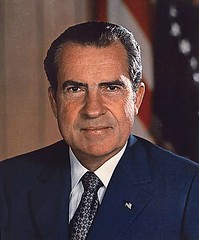
9792547681Richard NixonElected President in 1968 and 1972 representing the Republican party. He was responsible for getting the United States out of the Vietnam War by using "Vietnamization", which was the withdrawal of 540,000 troops from South Vietnam for an extended period. He was responsible for the Nixon Doctrine. Was the first President to ever resign, due to the Watergate scandal.46
9792547682New ConservatismThis mostly republican political movement started as a reaction to the New Deal policies of the 1930's. Its goal was to reduce the role of government.47
9792547683Iron CurtainA term popularized by British Prime Minister Winston Churchill to describe the Soviet Union's policy of isolation during the Cold War. The barrier isolated Eastern Europe from the rest of the world.48
9792547684Fair DealAn economic extension of the New Deal proposed by Harry Truman that called for higher minimum wage, housing and full employment. It led only to the Housing Act of 1949 and the Social Security Act of 1950 due to opposition in congress.49
9792547685Rosenberg TrialThe controversial 1951 trial of two Americans, Ethel and Julius Rosenberg, charged with passing atomic secrets to the Soviet Union; the two were sentenced to death and executed in 1953, making them the only American civilians to be put to death for spying during the Cold War.50
9792547686RollbackA strategy that called for liberating countries that were under Soviet dominion.51
9792547687House Un-American Activities CommitteeThe House of Representatives established the Committee on Un-American Activities, popularly known as "HUAC," in order to investigate "subversion." Represented the political group associated with McCarthy's anti-communism.52
9792547688Interstate ActThe largest public works project in the US history in acted during the Eisenhower administration it was designed for military and economic purposes.53
9792547689Suez CrisisNasser took over the Suez Canal to show separation of Egypt from the West, but Israel, the British, Iraq, and France were all against Nasser's action. The U.S. stepped in before too much serious fighting began.54
9792547690Massive RetaliationThe "new look" defense policy of the Eisenhower administration of the 1950's was to threaten "massive retaliation" with nuclear weapons in response to any act of aggression by a potential enemy.55
9792547691U-2 IncidentThe incident when an American U-2 spy plane was shot down over the Soviet Union. The U.S. denied the true purpose of the plane at first, but was forced to when the U.S.S.R. produced the living pilot and the largely intact plane to validate their claim of being spied on aerially. The incident worsened East-West relations during the Cold War and was a great embarrassment for the United States.56
9792547692LevvitownPost-WWII Suburban areas that were practically factory made and then put together which each house look the same.57
9792547693Operation WetbackProgram which apprehended and returned some one million illegal immigrants to Mexico - end of the Braceros program started during WWII.58
9792547694Affluent SocietyTerm used by economist John Kenneth Galbraith to describe the American economy in the 1950s, during which time many Americans joined the middle class and became enraptured with appliances and homes in the suburbs.59
9792547695BeatsYoung people, many of whom were writers and artists, who discussed their dissatisfaction with the American society of the 1950s.60
9792547696HippiesMembers of the youthful counterculture that dominated many college campuses in the 1960s; rather than promoting a political agenda, they challenged conventional sexual standards, rejected traditional economic values, and encouraged the use of drugs.61
9792547697Betty FriedenAuthor of The Feminine Mystique (1963) she spoke out against women seeking fulfillment solely as wives and mothers and wanted women to "establish goals that will permit them to find their own identity."62
9792547698Warren CourtThe Supreme Court during the period when Earl Warren was chief justice, noted for its activism in the areas of civil rights and free speech.63
9792547699CORECongress of Racial Equality, and organization founded in 1942 that worked for black civil rights.64
9792547700NAACPNational Association for the Advancement of Colored People, founded in 1909 to abolish segregation and discrimination, to oppose racism and to gain civil rights for African Americans, got Supreme Court to declare grandfather clause unconstitutional.65
9792547701SCLCThe Southern Christian Leadership Conference is an African-American civil rights organization. SCLC, which is closely associated with its first president, Dr. Martin Luther King, Jr., had a large role in the American Civil Rights Movement.66
9792547702Freedom rides1961 event organized by CORE and SNCC in which an interracial group of civil rights activists tested southern states' compliance to the Supreme Court ban of segregation on interstate buses.67
9792547703SNCC(Student Non-Violent Coordinating Committee) a group established in 1960 to promote and use non-violent means to protest racial discrimination; they were the ones primarily responsible for creating the sit-in movement.68
9792547704March on WashingtonIn August 1963, civil rights leaders organized a massive rally in Washington to urge passage of President Kennedy's civil rights bill. The high point came when MLK Jr., gave his "I Have a Dream" speech to more than 200,000 marchers in front of the Lincoln Memorial.69
9792547705Black PowerA slogan used to reflect solidarity and racial consciousness, used by Malcolm X. It meant that equality could not be given, but had to be seized by a powerful, organized Black community.70
9792547706Black PanthersA black political organization that was against peaceful protest and for violence if needed. The organization marked a shift in policy of the black movement, favoring militant ideals rather than peaceful protest.71
9792547707Cesar ChavezNon-violent leader of the United Farm Workers from 1963-1970. Organized laborers in California and in the Southwest to strike against fruit and vegetable growers. Unionized Mexican-American farm workers.72
9792547708Elvis Presley1950s; a symbol of the rock-and-roll movement of the 50s when teenagers began to form their own subculture, dismaying to conservative parents; created a youth culture that ridiculed phony and pretentious middle-class Americans, celebrated uninhibited sexuality and spontaneity; foreshadowed the coming counterculture of the 1960s.73
9792547709Equal Rights AmendmentA constitutional amendment originally introduced in Congress in 1923 and passed by Congress in 1972, stating that "equality of rights under the law shall not be denied or abridged by the United States or by any state on account of sex." Despite public support, the amendment failed to acquire the necessary support from three-fourths of the state legislatures.74
9792547710Silent SpringA book written (Rachel Carson) to voice the concerns of environmentalists. Launched the environmentalist movement by pointing out the effects of civilization development.75

Colonies AP US History Flashcards

Terms : Hide Images
6751663999Virginia•joint stock company •Chief Powhatan •John Smith •Promise of free land after 7 years of labor •tobacco •John Rolfe •indentured servants •William Berkeley0
6751664000Maryland•first propriety colony •Lord Baltimore (Cecilius Calvert) •tobacco1
6751664001Plymouth•Pilgrims/Separatists •William Bradford •Mayflower Compact2
6751664002Massachusetts Bay•John Winthrop •refuge for persecuted Christians •the trading company became the gov3
6751664003Rhode Island•Roger Williams •Anne Hutchinson •religious refuge •separation of church and state4
6751664004Connecticut•Thomas Hooker •self-governing •fundamental orders of commonwealth •Christian commonwealth, but voting wasn't limited to church members5
6751664005New Hampshire•John Mason •became a royal colony6
6751664006Maine•Fernando Gorges •taken over by Massachusetts (its proprietor)7
6751664007The Carolinas•Fundamental Constitutions of Carolina •encourage practice of large land grants •SC became royal •NC remained under proprietors' rule8
6751664008New Netherland (New York)•profit-making enterprise •Peter Minuit •religious pluralism9
6751664009New Jersey•George Carteret •originally east and west jersey10
6751664010Pennsylvania•Quakers •William Penn •religious tolerance •proprietary gov11
6751664011Georgia•James Oglethorpe •royal colony •effective gov12

AMSCO AP US History Chapter 10 Flashcards

AMSCO United States History 2015 Edition, Chapter 10 The Age of Jackson, 1824-1844

Terms : Hide Images
9894333652Indian Removal ActIn 1830, this act forced the resettlement of thousands of Native Americans west of the Mississippi. (p. 195)0
9894333653Cherokee Nation v. GeorgiaIn 1831, this Supreme Court case ruled that the Cherokees were not a foreign nation with the right to sue in a federal court. (p. 195)1
9894333654Worcester v. GeorgiaIn 1832, this Supreme Court case ruled that the laws of Georgia had no force within the Cherokee territory. However, President Jackson sided with Georgia and the decision could not be enforced without Jackson's support. (p 196)2
9894333655Cherokee trail of tearsIn 1838, the U.S. Army forced 15,000 Cherokees to leave Georgia and march to Oklahoma. 4,000 Cherokees died on the trip. (p. 196)3
9894333656Bank of the United StatesIn 1832, President Andrew Jackson vetoed this bank's recharter bill, denouncing the bank as a private monopoly that enriched the wealthy and foreigners. (p. 197)4
9894333657Nicholas BiddleDuring the 1830s, he was president of the Bank of the United States. (p. 197)5
9894333658Roger TaneyHe was Andrew Jackson's secretary of Treasury. In an attempt to destroy the Bank of the United States, he transferred funds from the national bank to various state banks. (p. 198)6
9894333659pet banksA term for the state banks. President Andrew Jackson was trying to destroy the Bank of the United States, so he transferred federal funds to these state banks. (p. 198)7
9894333660Specie CircularTo check inflationary, President Andrew Jackson issued a presidential order that required all future purchases of federal lands be made with gold or silver rather than paper bank notes. (p. 198)8
9894333661Panic of 1837Just as Martin Van Buren became the president, the country suffered a financial panic as many banks closed their doors. (p. 199)9
9894333662Martin Van BurenHe won the 1836 presidential election as a Democratic. He had been Andrew Jackson's vice president. (p. 198)10
9894333663common manBetween 1824 and 1840, the middle and lower classes became more involved in politics. Several factors contributed to this including new suffrage laws, changes in political parties and campaigns, improved education, and increased newspaper circulation. (p. 192)11
9894333664universal white male sufferageIn the 1810s, new Western states adopted state constitutions that allowed all white males to vote and hold office. Most Eastern states soon followed suit. Voting for president rose from about 350,000 in 1824 to 2.4 million in 1840. (p. 192)12
9894333665party nominating conventionIn the 1830s, caucuses were replaced by this public process of nominating candidates in a large hall. (p. 192)13
9894333666King CaucusA closed door meeting of a political party's leaders in Congress which nominated candidates. (p. 192)14
9894333667popular election of presidentIn the 1832 presidential election, all states except South Carolina, allowed voters to choose their state's slate of presidential electors. (p. 192)15
9894333668Anti-Masonic PartyA political party, that attacked the secret societies of Masons and accused them of belonging to a privileged, anti democratic elite. (p. 192)16
9894333669Workingmen's PartyA political third party that was not as large as the Democrat or Whig party. (p. 192)17
9894333670popular campaigningCampaigns of the 1830s and 1840s featured parades and large rallies with free food and drink. (p. 193)18
9894333671spoils systemPresident Andrew Jackson appointed people to federal jobs strictly according to whether they had campaigned for the Democratic party. Previous office holders were fired and replaced with a loyal Democrat. (p. 193)19
9894333672rotation in officePresident Andrew Jackson's policy of limiting a person to one term in office so he could then appoint a Democrat to replace them. (p. 193)20
9894333673Henry ClayHe was secretary of state under President John Quincy Adams. He was President Andrew Jackson's chief opponent. In 1832, he challenged Jackson by persuading Congress to pass a bank-recharter bill. (p. 197)21
9894333674corrupt bargainThe term that President Andrew Jackson and followers called the Adams and Clay deal of the 1824 election. The House of Representatives had to choose the president and Henry Clay used his influence have John Quincy Adams elected. (p. 194)22
9894333675John Quincy AdamsIn 1824, he was elected president. Henry Clay used his influence in the House of Representatives to provide him with enough votes to win the election. Clay was made secretary of state. (p. 194)23
9894333676Tariff of 1828; tariff of abominationsIn 1828, during President John Quincy Adams' term, Congress created a new tariff law which pleased northern manufacturers, but alienated southern planters. (p. 194)24
9894333677Revolution of 1828In the 1828 election, Andrew Jackson became president after a mudslinging campaign. Jackson was a champion of the working class and middle class (common man). p. 195)25
9894333678Andrew JacksonHe won the 1828 presidential election easily, winning every state west of the Appalachians. He was know as "Old Hickory" and presented himself as a comman man. (p. 195)26
9894333679role of the presidentPresident Andrew Jackson presented himself as the representative of all the people and the protector of the common man against abused of power by the rich and privileged. He thought this was the role he should play. (p. 195)27
9894333680Peggy Eaton affairWhen President Andrew Jackson's secretary of war's wife was the target of malicious gossip by other cabinet wives, Jackson supported her. The majority of cabinet resign because Jackson tried to force the wives to accept Peggy Eaton. (p. 195)28
9894333681states' rightsPresident Andrew Jackson favored this form of power for the state governments. (p. 196)29
9894333682nullification crisisIn 1832, South Carolina passed a resolution forbidding the collection of tariffs in the state, which was nullifying a federal law at the state level. President Jackson threatened South Carolina with the use of federal troops and a compromise was reached. (p. 197)30
9894333683Webster-Hayne debateIn 1830, Daniel Webster of Massachusetts, debated Robert Hayne of South Carolina on the nature of the federal union under the Constitution. Daniel Webster declared that a state could not defy or leave the union. (p. 196)31
9894333684John C. CalhounHe was Andrew Jackson's vice president, but he opposed Jackson on nullification theory. He advanced the theory that a state had the right to declare a federal law null and void. (p. 196)32
9894333685Proclamation to the People of South CarolinaPresident Andrew Jackson's edict stating nullification and disunion were treason. (p. 197)33
9894333686two-party systemThis system developed in the 1820s. Supporters of Andrew Jackson were Democrats, while supporters of Henry Clay were Whigs. (p. 197)34
9894333687DemocratsIn the 1820s, this party was led by President Andrew Jackson. It harked back to the old Republican party of Thomas Jefferson. (p. 197)35
9894333688WhigsIn the 1820s, this party was led by Henry Clay. It was similar to the old Federalist party of Alexander Hamilton. (p. 197)36
9894333689log cabin and hard cider campaignThe term for the 1840 presidential campaign. Popular war hero, William Henry Harrison was the Whig candidate. He used log cabins and hard cider to portray his down-home heritage. He attacked Martin Van Buren as an aristocrat. Harrison and John Tyler won the election. (p. 199)37

AMSCO AP US History Chapter 12 Flashcards

AMSCO United States History 2015 Edition, Chapter 12 Territorial and Economic Expansion, 1830-1860

Terms : Hide Images
9894342526manifest destinyThe belief that the United States had a divine mission to extend its power and civilization across the breadth of North America. (p. 230)0
9894342527industrial technologyAfter 1840, industrialization spread rapidly throughout most of the Northeast. New factories produced shoes, sewing machines, ready-to-wear clothing, firearms, precision tools, and iron products for railroads and other new products. (p. 238)1
9894342528Elias HoweThe U.S. inventor of the sewing machine, which moved much of clothing production from homes to factories. (p. 238)2
9894342529Samuel F. B. MorseIn 1844, he invented the electric telegraph which allowed communication over longer distances. (p. 238)3
9894342564railroadsIn the 1840s and the 1850s, this industry expanded very quickly and would become America's largest industry. It required immense amounts of capital and labor and gave rise to complex business organizations. Local and state governments gave the industry tax breaks and special loans to finance growth. (p. 238)4
9894342530Panic of 1857Financial crash which sharply lowered Midwest farmers prices and caused unemployment in the Northern cities. The South was not affected as much because cotton prices remained high. (p. 239)5
9894342531Great American DesertIn the 1850s and 1860s, the arid area between the Mississippi River and the Pacific Coast, was known by this name. (p. 236)6
9894342532mountain menThe first non-native people to open the Far West. These fur trappers and explorers included James Beckwourth, Jim Bridger, Kit Carson, and Jedediah Smith. (p. 237)7
9894342565Far WestIn the 1820s, the Rocky Mountains were known by this name. (p. 237)8
9894342533overland trailsThe wagon train trails that led from Missouri or Iowa to the west coast. They traveled only 15 miles per day and followed the river valleys through the Great Plains. Months later, the wagon trains would finally reach the foothills of the Rockies or face the hardships of the southwestern deserts. The final challenge was to reach the mountain passes before the first heavy snows. Disease was even a greater threat than Indian attack. (p. 237)9
9894342534mining frontierThe discovery of gold in California in 1848 caused the first flood of newcomers to the West. A series of gold strikes and silver strikes in what became the states of Colorado, Nevada, Idaho, Montana, Arizona, and South Dakota kept a steady flow of hopeful young prospectors pushing into the West. (p. 237)10
9894342566gold rushCalifornia's population soared from 14,000 in 1848 to 380,000 in 1860, primarily because of this event. (p. 237)11
9894342567silver rushThe discovery of silver in Colorado, Nevada, the Black Hills of the Dakotas, and other western territories, created a mining boom. (p 237)12
9894342535farming frontierIn the 1830s and 1840s pioneer families moved west to start homesteads and begin farming. Government programs allowed settlers to purchase inexpensive parcels of land. (p. 237)13
9894342536urban frontierWestern cities that arose as a result of railroads, mineral wealth, and farming. They included San Francisco, Denver, and Salt Lake City. (p. 238)14
9894342537federal land grantsIn 1850, the U.S. government gave 2.6 million acres of federal land to build the Illinois Central railroad from Lake Michigan to Gulf of Mexico. (p. 238)15
9894342538John TylerHe was elected Vice President, then he became the tenth president (1841-1845) when Benjamin Harrison died. He was responsible for the annexation of Mexico after receiving a mandate from Polk. He opposed many parts of the Whig program for economic recovery. (p. 231)16
9894342539Oregon territoryThis was a vast territory on the Pacific coast that stretched as far north as the Alaskan border. Originally the United States was interested in all the territory, but in 1846 Britain and the U.S. agreed to divide the territory at the 49th Parallel, today's border between Canada and the United States. (p. 232)17
9894342540Fifty-four Forty or FightThe slogan of James K. Polk's plan for the Oregon Territory. They wanted the border of the territory to be on 54' 40° latitude (near present-day Alaska) and were willing to fight Britain over it. Eventually, 49 degrees latitude was adopted as the northern border of the United States, and there was no violence. (p. 232)18
9894342541James K. PolkThe eleventh U.S. president from 1845 to 1849. He was a slave owning southerner dedicated to Democratic party. In 1844, he was a "dark horse" candidate for president, and a protege of Andrew Jackson. He favored American expansion, especially advocating the annexation of Texas, California, and Oregon. (p. 232)19
9894342542Wilmot ProvisoIn 1846, the first year of the Mexican War, this bill would forbid slavery in any of the new territories acquired from Mexico. the bill passed the House twice, but was defeated in the Senate. (p. 234)20
9894342543Franklin PierceIn 1852, he was elected the fourteenth president of the United States. (p. 236)21
9894342544Ostend ManifestoThe United States offered to purchase Cuba from Spain. When the plan leaked to the press in the United States, it provoked an angry reaction from antislavery members of Congress, forcing President Franklin Pierce to drop the plan. (p. 235)22
9894342545TexasIn 1823, Texas won its national independence from Spain. The annexation of this state was by a joint resolution of Congress, supported by President-elect James Polk. This annexation contributed to the Mexican War because the border with Mexico was in dispute. Land from the Republic of Texas later became parts of New Mexico, Colorado, Oklahoma, Kansas, and Wyoming. (p. 233)23
9894342546Stephen AustinIn the 1820s, his father had obtained and large land grant in Texas. He brought 300 families from Missouri to settle in Texas. (p. 231)24
9894342547Antonio Lopez de Santa AnnaIn 1834, he established himself as dictator of Mexico and attempted to enforce Mexico's laws in Texas. In March 1836 a group of American settlers revolted and declared Texas to be an independent republic. He then led an army which attacked the Alamo in San Antonio, killing all the American defenders. Shortly after that, Sam Houston led an army that captured him and he was forced to sign a treaty that recognized the independence of Texas. (p. 231)25
9894342548Sam HoustonIn March 1836, he led a group of American settlers that revolted against Mexico and declared Texas to be an independent republic. He led an army that captured Santa Anna and forced him to sign a treaty that recognized Texas as an independent republic. As the first president of the Republic of Texas, he applied to the U.S. government for Texas to be added as a new state. It was many years before the U.S. would act to add Texas as a state. (p. 231)26
9894342549AlamoThe mission and fort that was the site of a siege and battle during the Texas Revolution, which resulted in the massacre of all its defenders. The event helped galvanize the Texas rebels and led to their victory at the Battle of San Jacinto. Eventually Texas would join the United States. (p. 231)27
9894342550Aroostook WarIn the early 1840s, there was a dispute over the the British North America (Canada) and Maine border. Open fighting broke out between rival groups of lumbermen. The conflict was soon resolved by the Webster-Ashburton Treaty of 1842. (p. 231)28
9894342551Webster-Ashburton TreatyIn this 1842 treaty US Secretary of State Daniel Webster and British ambassador Lord Alexander Ashburton created a treaty splitting New Brunswick territory into Maine and British Canada. It also settled the boundary of the Minnesota territory. (p. 232)29
9894342568Rio Grande; Nueces RiverIn the 1840s the United States believed the southern Texas border was the Rio Grande River. Mexico believed the border was further north on the Nueces River. (p. 233)30
9894342552Mexican War (1846-1847)A war between the United States and Mexico from 1846 to 1848. President James Polk attempted to purchase California and the New Mexico territories and resolve the disputed Mexico-Texas border. Fighting broke out before the negotiations were complete and the war lasted about two years, ending when the United States troops invaded Mexico City. (p. 233-235)31
9894342553Zachary TaylorIn 1845, this U.S. general, moved his troops into disputed territory in Texas, between the Nueces and Rio Grande Rivers. Eleven of his soldiers were killed by Mexican troops and President James Polk used the incident to justify starting the Mexican War. He used of force of 6,000 to invade northern Mexico and won a major victory at Buena Vista. In 1848, he was elected president. (p. 233, 234)32
9894342554Winfield ScottThis U.S. general invaded central Mexico with an army of 14,000. They took the coastal city of Vera Cruz and then captured Mexico City in September 1847. (p. 234)33
9894342555Stephen KearneyThis U.S. general led a small army of less than 1,500 that succeeded in taking Santa Fe, the New Mexico territory, and southern California during the Mexican War. (p. 234)34
9894342556John C. FremontIn June 1846, he overthrew Mexican rule in northern California and proclaimed California to be an independent republic, the Bear Flag Republic. (p. 234)35
9894342557California; Bear Flag RepublicIn June 1846, John C. Fremont quickly overthrew Mexican rule in Northern California to create this independent republic. (p. 234)36
9894342558Treaty of Guadalupe HidalgoIn 1848, this treaty ended the Mexican War. Under its terms, Mexico recognized the Rio Grande as the border with Texas, Mexico ceded the California and New Mexico territories to the United States. The United States agreed to pay Mexico $15 million and assumed responsibility for any claims of American citizens against Mexico. (p. 234)37
9894342559Mexican CessionHistorical name for the former Mexican provinces of California and New Mexico that were ceded to the U.S. by Mexico in 1848 under the Treaty of Guadalupe Hidalgo. (p 234)38
9894342560Walker ExpeditionAn expedition by a Southern adventurer who unsuccessfully tried to take Baja California from Mexico in 1853. He took over Nicaragua in 1855 to develop a proslavery empire. His scheme collapsed when a coalition of Central American countries invaded and defeated him, and he was executed. (p. 236)39
9894342561Clayton-Bulwer TreatyAn 1850 treaty between the U.S. and Great Britain agreeing that neither country would attempt to take exclusive control of any future canal route in Central America. (p. 236)40
9894342562Gadsden PurchaseIn 1853, the U.S. acquired land (present day southern New Mexico and Arizona) from Mexico for $10 million. (p. 236)41
9894342569foreign commerceIn the mid-1800s, the growth in manufactured goods as well as in agriculture products (Western grains and Southern cotton) caused a significant growth of exports and imports. (p. 238, 239)42
9894342570exports and importsIn the mid-1800s, the U.S. was exporting primarily manufactured goods and agriculture products such as Western grains and Southern cotton. Imports also increased during this period. (p. 238, 239)43
9894342563Matthew C. Perry; JapanCommodore of the U.S. Navy who was sent to force Japan to open up its ports to trade with the U.S. (p. 239)44

AMSCO AP US History Chapter 11 Flashcards

AMSCO United States History 2015 Edition, Chapter 11 Society, Culture, and Reform, 1820-1860

Terms : Hide Images
9894337975utopian communitiesOver one hundred of these experimental communities were started in the 1820s to 1860s period. (p. 210)0
9894337976ShakersThis early religious communal movement held property in common and separated men and women. (p. 210)1
9894338040Amana ColoniesA German religious communal movement in Ohio which emphasized simple living. (p. 210)2
9894338041Robert OwenA Welsh industrialist and reformer who founded the New Harmony community. (p. 210)3
9894338042New HarmonyNonreligious experimental socialist community founded to solve problems of inequity and alienation caused by the Industrial Revolution. (p. 210)4
9894338043Joseph Humphrey NoyesHe started a cooperative community in Oneida, New York. (p. 210)5
9894337977Oneida communityThis community, started in 1848, was dedicated to social and economic equality. They shared property and spouses, and prospered by manufacturing silverware. (p. 210)6
9894337978Charles Fourier phalanxesIn the 1840s, this French socialist, advocated that people share working and living arrangements in communities. He wanted to solve problems of competitive society, but Americans were too individualistic. (p. 210)7
9894337979Horace MannHe was the leading advocate of the public school movement. (p. 213)8
9894337980temperanceReformers targeted alcohol as the cause of social ills. The movement started by using moral exhortation, then shifted to political action. Business leaders and politicians supported it because it improved productivity of industrial workers. (p. 212)9
9894337981American Temperance SocietyFounded in 1826, by Protestant ministers and others, they encouraged total alcohol abstinence. (p. 212)10
9894337982WashingtoniansA temperance movement which argued that alcoholism was a disease that need practical helpful treatment. (p. 212)11
9894337983Women's Christian Temperance UnionIn the late 1870s, this women's organization was part of the temperance movement. (p. 212)12
9894337984asylum movementIn the 1820s and 1830s, this movement sought to improve the conditions for criminals, emotionally disturbed people, and paupers. They proposed setting up state-supported prisons, mental hospitals, and poorhouses. (p. 212)13
9894337985Dorothea DixA reformer who was responsible for improving conditions in jails, poorhouses and insane asylums throughout the U.S. and Canada. She succeeded in persuading many states to assume responsibility for the care of the mentally ill. (p. 212)14
9894337986Thomas GallaudetHe started a school for the deaf. (p. 213)15
9894337987Samuel Gridley HoweHe started a school for the blind. (p. 213)16
9894337988penitentiariesThese institutions took the place of crude jails. They believed that structure and discipline would bring about moral reform. (p. 213)17
9894337989Auburn systemA prison system in New York which enforced rigid rules of discipline, while also providing moral instruction and work programs. (p. 213)18
9894337990public school movementIn the 1840s, this movement to provide free education for all children spread rapidly throughout the nation. (p. 213)19
9894337991McGuffey readersElementary school textbooks that encouraged hard work, punctuality, and sobriety. (p. 213)20
9894337992American Peace SocietyFounded in 1828, this society want to abolish war. (p. 216)21
9894337993American Colonization SocietyFounded in 1817, this organization transported free black people to an African colony. This appealed to moderates, racists, and politicians. However, only 12,000 people were actually settled in Africa. (p. 215)22
9894337994American Antislavery SocietyThe organization was founded in 1833 by William Lloyd Garrison and others. They advocated the immediate abolition of all slavery in every state. (p. 215)23
9894337995abolitionism William Lloyd Garrison; The LiberatorIn 1831, he started the radical abolitionist movement with the "The Liberator" newspaper. He advocated the immediate abolition of all slavery in every state. (p. 215)24
9894337996Liberty partyIn 1840, this political party was formed in reaction to the radical abolitionists. They pledged to bring an end to slavery by political and legal means. (p. 215)25
9894337997Frederick Douglass; The North StarIn 1847, this former slave started the antislavery journal, "The North Star". (p. 215)26
9894337998Harriet TubmanFamous abolitionist, born a slave, she assisted fugitive slaves to escape to free territory. (p. 215)27
9894337999David RugglesAn African American leader who assisted fugitive slaves to escape to free territory. (p. 215)28
9894338000Sojourner TruthA United States abolitionist and feminist who was freed from slavery and became a leading advocate for the abolition of slavery and the rights of women. (p. 215)29
9894338001William StillAn African American leader, who assisted fugitive slaves to escape to free territory. (p. 215)30
9894338002David WalkerAn African American who advocated the most radical solution to the slavery question. He argued, that slaves should take action themselves by rising up in revolt against their owners. (p. 215)31
9894338003Henry Highland GarnetAn African American, who advocated the most radical solution to the slavery question. He argued that slaves should take action themselves by rising up in revolt against their owners. (p. 215)32
9894338004Nat TurnerIn 1831, he led the largest slave rebellion in which 55 whites were killed. (p. 215)33
9894338005antebellum periodThe period before the Civil War started in 1861. (p. 207)34
9894338006romantic movementIn early 19th century Europe, art and literature emphasized intuition and feelings, individual acts of heroism, and the study of nature. In America, similar themes were expressed by the transcendentalists. (p. 209)35
9894338007transcendentalistsThey questioned the doctrines of established churches and business practices of the merchant class. They encouraged a mystical and intuitive way of thinking to discover the inner self and look for essence of God in nature. Artistic expression was more important than pursuit of wealth. They valued individualism and supported the antislavery movement. (p. 209)36
9894338008Ralph Waldo Emerson, "The American Scholar"The best known transcendentalist, his essays and lectures expressed the individualistic and nationalistic spirit of Americans. He urged self-reliance, and independent thinking. (p. 209)37
9894338009Henry David Thoreau, "Walden", "On Civil Disobedience"A pioneer ecologist and conservationist. He was an advocate of nonviolent protest against unjust laws. (p. 209)38
9894338010Brook FarmAn attempted communal experiment in Massachusetts to achieve a more natural union between intellectual and manual labor. (p. 207)39
9894338044George RipleyThis Protestant minister started a communal experiment at Brook Farm in Massachusetts to live out the transcendentalist ideals. (p. 207)40
9894338011feministsThe term for advocates of women's rights. (p. 214)41
9894338012Margaret FullerA feminist, writer, and editor in the women's movement. (p. 210)42
9894338013Theodore ParkerA theologian and radical reformer. (p. 210)43
9894338014George Caleb BinghamAn American realist artist, whose paintings depicted life on the frontier. (p. 211)44
9894338015William S. MountContemporary of the Hudson River school. He began as a painter of history but moved to depicting scenes from everyday life. (p. 211)45
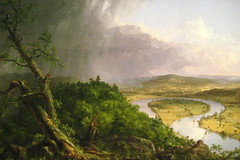
9894338016Thomas ColeFounder of the Hudson River school, famous for his landscape paintings. (p. 211)46
9894338017Frederick ChurchCentral figure in the Hudson River School and pupil of Thomas Cole. He is known for his landscapes and for painting colossal views of exotic places. (p. 211)47
9894338018Hudson River schoolIn the 1830s, this genre of painting founded in the Hudson River area, portrayed everyday life of ordinary people in the natural world. (p. 211)48
9894338019Washington IrvingThis author wrote fiction using American settings. (p. 211)49
9894338020James Fenimore CooperThis author wrote novels that glorified the frontiersman as nature's nobleman. (p. 211)50
9894338021Nathaniel HawthorneAuthor of "The Scarlet Letter", which questioned the intolerance and conformity in American life. (p. 211)51
9894338022Sylvester GrahamAn American dietary reformer who advocated whole wheat bread and graham crackers to promote good digestion. (p. 216)52
9894338023Amelia BloomerShe urged women to wear pantalettes instead of long skirts. (p. 216)53
9894338024Second Great AwakeningA religious movement that occurred during the antebellum period. It was a reaction against rationalism (belief in human reason). It offered the opportunity of salvation to all. (p. 207)54
9894338025Timothy DwightPresident of Yale College, he helped initiate the Second Great Awakening. His campus revivals inspired many young men to become evangelical preachers. (p. 207)55
9894338026revivalism; revival camp meetingsIn the early 1800s, this movement was a reaction against the rationalism of the Enlightenment. Successful preachers were audience-centered and easily understood by the uneducated. (p. 207)56
9894338027millennialismIn the early 1800s, this popular belief, that the world was about to end with the second coming of Jesus Christ. (p. 208)57
9894338028Church of Jesus Christ of Latter-Day Saints; MormonsFounded by Joseph Smith in 1830. It was based on the Book of Mormon which traced a connection between the American Indians and the lost tribes of Israel. After Joseph Smith was murdered, Brigham Young led the religious group to establish the New Zion on the Great Salt Lake in Utah. (p. 208)58
9894338045Joseph SmithFounded the Church of Jesus Christ of the Latter-Day Saints in New York in 1830. The church moved to Ohio, Missouri, Illinois, then finally to Utah. (p. 208)59
9894338029Brigham YoungAfter Joseph Smith was killed, he led the Mormon followers to Utah. (p. 208)60
9894338030New ZionThis was the religious community established by the Mormons on the banks of the Great Salt Lake in Utah. (p. 208)61
9894338031women's rights movementWomen started this movement because they resented the way men relegated them to secondary roles in the reform movements. (p. 214)62
9894338032cult of domesticityAfter industrialization occurred women became the moral leaders in the home and educators of children. Men were responsible for economic and political affairs. (p. 214)63
9894338033Sarah Grimke, Angelina GrimkeTwo sisters, born in South Carolina, they objected to male opposition to their antislavery activities. (p. 214)64
9894338034Letter of the Condition of Women and the Equality of the SexesWritten by Angelina and Sarah Grimke, it protested males opposition to their abolitionist work. (p. 214)65
9894338035Lucretia MottA women's rights reformer who was not allowed to speak at an antislavery convention. (p. 214)66
9894338036Elizabeth Cady StantonA women's rights reformer who was not allowed to speak at an antislavery convention. (p. 214)67
9894338037Seneca Falls ConventionIn 1848, this was the first women's rights convention in U.S. history. They wrote a "Declaration of Sentiments", modeled after the Declaration of Independence, which declared all men and women equal and listed grievances. (p. 214)68
9894338038Susan B. AnthonySocial reformer who campaigned for womens rights, the temperance, and was an abolitionist. She helped form the National Woman Suffrage Association. (p. 214)69

AMSCO AP US History Chapter 19 Flashcards

AMSCO United States History 2015 Edition, Chapter 19 The Politics of the Gilded Age, 1877-1900

Terms : Hide Images
9894382334laissez-faire economics and politicsThe idea that government should do little to interfer with the free market. (p. 380)0
9894382335divided electorateIn the late 1800s, Republicans kept memories of the Civil War alive to remind war veterans of the pain caused by the Southern Democrats. Democrats could count on winning every former Confederate state. (p. 381)1
9894382336identity politicsPolitical activity and ideas based on the shared experiences of an ethnic, religious, or social group emphasizing gaining power and benefits for the group rather than pursuing ideological goals. (p. 381)2
9894382337"Rum, Romanism, and Rebellion"In the 1884 election, the Democratic party was labeled with this phrase. (p. 383)3
9894382338close electionsNational elections between 1856 and 1912, were very evenly matched. The objective was to get out the vote and not alienate voters on the issues. (p. 381)4
9894382339divided governmentGovernance divided between the parties, as when one party holds the presidency and the other party controls one or both houses of Congress. (p. 381)5
9894382340weak presidentsThe Gilded Age presidents were not memorable and only served one term. (p. 380)6
9894382341patronage politicsThe use of government resources to reward individuals for their electoral support. (p. 381)7
9894382342corrupt politiciansParty patronage, the process of providing jobs to faithful party members was more important than policy issues during the Gilded Age. (p. 381)8
9894382343Union veterans, "bloody shirt"A form of politics that involved reminding Union veterans of how the Southern Democrats had caused the Civil War. (p. 381)9
9894382344Whig past, pro-businessRepublicans followed the tradition of Hamilton and the Whigs, supporting a pro-business economic program of high protective tariffs. (p. 381)10
9894382345Hamiltonian traditionThe Hamilton tradition supported a strong central government. (p. 381)11
9894382346social reformers, temperanceThe core of Republican support came from middle-class Anglo-Saxon Protestants who supported temperance or prohibition, along with business men. (p. 381)12
9894382347Anglo-Saxon heritageMost supported Republicans and temperance or prohibition. (p. 381)13
9894382348Protestant religionThese religious groups usually supported Republicans. (p. 381)14
9894382349African AmericansAround 1890, a bill to protect voting rights of African Americans passed the House but was defeated in the Senate. (p. 386)15
9894382350former Confederacy, "Solid South"From 1877 until the 1950s, the Democrats could count on winning every election here. (p. 381)16
9894382351states rights, limited governmentDemocrats of the Gilded Age were in favor of these ideas. (p. 381)17
9894382352Jeffersonian traditionDemocrats of the Gilded Age followed this tradition, which included states rights and limited government. (p. 381)18
9894382353big-city political machinesIn the North, one source of Democratic strength came from big-city political machines. (p. 381)19
9894382354immigrant voteIn the North, one source of Democratic strength came from the immigrant vote. (p. 381)20
9894382355against prohibitionThe Catholics, Lutherans, and Jews were generally against this policy. (p. 381)21
9894382356Catholics, Luterans, JewsDemocrats were usually from these religions and they were against temperance and prohibition campaigns. (p. 381)22
9894382357federal government jobsDuring the Gilded Age, these jobs were given to those who were loyal their political party. (p. 381)23
9894382358Stalwarts, Halfbreeds, and MugwumpsGroups which competed for lucrative jobs in the patronage system. (p. 381)24
9894382359Election of 1880In 1880, James A. Garfield was elected president in a very close election. His vice president was Chester A. Arthur. (p. 382)25
9894382360assassination of James GarfieldPresident James Garfield was shot while preparing to board a train. He died after an 11 week struggle. (p. 383)26
9894382361Chester A. ArthurHe became president after James Garfield died of a gun shot wound. (p. 383)27
9894382362Pendleton Act of 1881Set up by the Civil Service Commission, it created a system where federal jobs were awarded based on competitive exams. (p. 384)28
9894382363civil service reformPublic outrage over the assassination of President Garfield pushed Congress to remove some jobs from control of party patronage. (p. 384)29
9894382364election of 1884Grover Cleveland won the 1884 presidential election. (p. 383)30
9894382365Grover ClevelandIn 1884, he was elected president of the United States. He was the first Democratic president since 1856. (p. 383)31
9894382366high tariffIn the 1890s, tariffs provided more than half of the federal revenue. Some Democrats objected to the tariffs because the raised the price on consumer goods and made it for difficult for farmers to sell to export because foreign countries enacted their own tariffs. (p. 385)32
9894382367business vs. consumersSome people objected to the high tariffs because the raised the prices on consumer goods. (p. 385)33
9894382368Cleveland threatens lower tariffToward the end of Grover Cleveland's first term he urged Congress to lower the tariff rates. (p. 385)34
9894382369McKinley Tariff of 1890In 1890, this tariff raised the tax on foreign products to a peacetime high of 48 percent. (p 386)35
9894382370Wilson-Gorman Tariff of 1894This tariff provided a moderate reduction in tariff rates and levied a 2 percent income tax. (p. 388)36
9894382371Dingley Tariff of 1897Increased the tariff rate to more than 46 percent and made gold the official standard of U.S. currency. (p. 390)37
9894382372"hard" money vs. "soft" moneyMoney backed by gold vs. paper money not backed by specie (gold or silver). (p. 384)38
9894382373banks, creditors vs. debtorsDebtors wanted more "easy, soft" money in circulation. On the opposite side creditors stood for "hard, sound" money - meaning currency backed by gold. (p. 384)39
9894382374Panic of 1873, "Crime of 73"Congress stopped making silver coins. (p. 385)40
9894382375Specie Resumption Act of 1875Congress sided with creditors and investors when it passed this act which withdrew all greenbacks (paper money not backed by gold or silver) from circulation. (p. 385)41
9894382376Greenback partyThis political party was formed by supporters of paper money not backed by gold or silver. (p. 384)42
9894382377James B. WeaverIn 1892, he was the Populist candidate for president. He is one of the few third party candidates in history to have ever won any electoral votes. (p. 387)43
9894382378Bland-Allison Act of 1878In 1878, this act allowed a limited coinage of silver each month at the standard silver-to-gold ratio of 16 to 1. (p. 385)44
9894382379Sherman Silver Purchase Act of 1890This act increased the coinage of silver but it was not enough to satisfy the farmers and miners. (p. 386)45
9894382380run on gold reserves, J.P. Morgan bail outA decline in silver prices encouraged investors to trade their silver dollars for gold dollars. The gold reserve fell dangerously low and President Grover Cleveland was forced to repeal the Sherman Silver Purchase Act of 1890. The president then turned to J.P. Morgan to borrow $65 million in gold to support the dollar and the gold standard. (p. 387)46
9894382381repeal of Sherman Silver Purchase ActA decline in silver prices encouraged investors to trade their silver dollars for gold dollars. The gold reserve fell dangerously low and President Grover Cleveland was forced to repeal the Sherman Silver Purchase Act of 1890. (p. 387)47
9894382382election of 1888, Harrison "Billion Dollar Congress"In 1888, the Republican Benjamin Harrison became the president and the Republicans controlled Congress. They passed the first billion dollar budget in U.S. history. (p. 386)48
9894382383rise of the Populist PartyIn 1892, delegates met in Omaha, Nebraska to draft a political platform that would reduce the power of trusts and bankers. They nominated James Weaver as their candidate for president. (p. 386)49
9894382384Farmers' Alliances in South and WestIn 1890, this group of discontented farmers elected senators, representatives, governors, and majorities in state legislatures in the West. (p. 386)50
9894382385Alliance of whites and blacks in SouthThe Populist party tried to form a political alliance with these poor farmers. (p. 387)51
9894382386Thomas WatsonHe was from Georgia and he appealed to poor farmers of both races to join the Populists party. (p. 387)52
9894382387reformers vs. rasism in SouthIn the presidential election of 1892, Southern Democrats feared the Populist party and used every technique possible to keep blacks from voting. (p. 387)53
9894382388Omaha PlatformIn 1892, the Populist party met in Omaha, Nebraska to draft this political platform and nominate a presidential candidate. (p 386)54
9894382389government regulation and ownershipThe Populist movement attacked laissez-faire capitalism and attempted to form a political alliance between poor whites and poor blacks. (p. 387)55
9894382390election of 1892, Cleveland returnsThe 1892 presidential election was between President Benjamin Harrison and former president Grover Cleveland. Cleveland became the only president to win a presidential election after having left the office. (p. 387)56
9894382391Panic of 1893In 1893, the stock market crashed as a result of speculation in railroad companies. One of the worst and longest depressions in U.S. history. (p. 387)57
9894382392Coxey's Army, March on WashingtonIn 1894, Populist Jacob A. Coxey led a march to Washington to demand that the federal government spend $500 million on public works programs. (p. 388)58
9894382393Coin's Financial SchoolIn 1894, this book taught Americans that unlimited silver coining would end the economic problems. (p. 388)59
9894382394William Jennings BryanThe 1896 Democratic nominee for president. (p. 388)60
9894382395"Cross of Gold" SpeechWilliam Jennings Bryan gave this speech at the 1896 Democratic convention. The prosilver and anti-gold speech assured him of the nomination. (p. 389)61
9894382396fusion of Democrats and PopulistsIn the 1896 presidential election the Democrats and Populists both nominated William Jennings Bryan for president in fused campaign. (p. 389)62
9894382397unlimited coinage of silver at 16 to 1In 1896, the Democrats favored silver coinage at this traditional but inflationary rate. (p. 389)63
9894382398"Gold Bug" DemoratsDemocrats who favored gold. (p. 389)64
9894382399Mark Hanna, Money and mass mediaA master of high-finance politics, he managed William McKinley's winning presidential campaign by focusing on getting favorable publicity in newspapers. (p. 390)65
9894382400McKinley victoryWilliam McKinley won the presidential election of 1896 by carrying the all the Northeast and the upper Midwest. (p. 389)66
9894382401gold standard and higher tariffIn 1897, William McKinley became president just as gold discoveries in Alaska increased the money supply under the gold standard. The Dingley Tariff increased the tariff rate to 46 percent. (p. 390)67
9894382402rise of modern urban industrial societyThe 1896 election was a victory for big business, urban centers, conservative economics, and moderate middle-class values. Rural America lost its dominance of American politics. (p. 390)68
9894382403decline of traditional rural-agricultualThe 1896 election marked the point of decline of rural America's power in national politics. (p. 390)69
9894382404start of the modern presidencyWilliam McKinley emerged as the first modern president, he would make America an important country in international affairs. (p. 390)70
9894382405era of Republican dominanceThe election of McKinley in 1896 started an era of Republican dominance of the presidency (seven of next nine elections) and Congress. (p. 390)71

Pages

Subscribe to CourseNotes RSS

Need Help?

We hope your visit has been a productive one. If you're having any problems, or would like to give some feedback, we'd love to hear from you.

For general help, questions, and suggestions, try our dedicated support forums.

If you need to contact the Course-Notes.Org web experience team, please use our contact form.

Need Notes?

While we strive to provide the most comprehensive notes for as many high school textbooks as possible, there are certainly going to be some that we miss. Drop us a note and let us know which textbooks you need. Be sure to include which edition of the textbook you are using! If we see enough demand, we'll do whatever we can to get those notes up on the site for you!