AP Notes, Outlines, Study Guides, Vocabulary, Practice Exams and more!

The Classical Era - AP World History Flashcards

Terms : Hide Images
5780541871BuddhismBelief system that started in India in the 500s BCE. Happiness can be achieved through removal of one's desires. Believers seek enlightenment and the overcoming of suffering. A path of practice and spiritual development leading to Insight into the true nature of reality.0
5780541872600 BCE - 600 CEClassical Era Time Period1
5780541873JudaismA religion that originated in the Middle East, founded by Moses. They believe that there is one God whom they covenant. A common symbol for this religion is David's Star.2
5780541874ChristianityA religion based on the life and teachings of Jesus3
5780541875HinduismMost prevalent religion in India, that integrates spiritual beliefs with daily practices and official institutions such as the caste system.4
5780541876ConfucianismEmphasized education, family, peace, and justice5
5780541877Daoism (Taoism)Philosophy based on the ideas of the Chinese thinker Laozi, Who taught that people should be guided by a universal force called the Dao.6
5780541878ZoroastrianismA religion originating in ancient Iran. It centered on a single benevolent deity-Ahura Mazda, Emphasizing truth-telling, purity, and reverence for nature, the religion demanded that humans choose sides between good and evil7
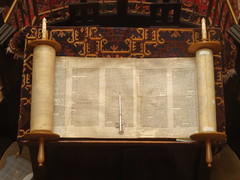
5780541879TorahSacred Book for the Jewish & Judaism8
5780541880Synagoguesthe building where a Jewish assembly or congregation meets for religious worship and instruction9
5780541881Siddhartha GautamaThe founder of Buddhism10
5780541882VedasReligious texts that were passed down from generation to generation of Aryans in the form of hymns, songs, prayers and rituals honoring the Aryan gods11
5780541883ReincarnationThe rebirth of a soul after the body dies12
5780541884NirvanaUnion with the universal spirit; can be reached through the four noble truths and eightfold paths13
5780541885Pax Romanathe period of peace that existed between nationalities within the Roman Empire14
5780541886Law of Twelve Tablesthe earliest code of Roman civil, criminal, and religious law15
5780541887Punic warsa series of three wars fought between Rome and Carthage from 264 BC to 146 BC. At the time, they were probably the largest wars that had ever taken place.16
5780541888Constantinewas Roman Emperor from 377 - 306BC, he was the first emperor to profess Christianity and turned Rome in a Christian State17
5780541889DiasporaScattering of Hebrews because of conquerers that spread them to other parts of the earth18
5780541890KarmaA destiny that has been shaped by years of cause and effect, that is outwardly revealed by and individuals caste or station life19
5780541891Eightfold pathComposed of eight steps that must be mastered one at a time20
5780541892MahabharataWorlds longest poem that contains Hindu beliefs21
5780541893DharmaSet of duties that the individual must fulfill22
5780541894ShivaA supreme deity, the preserver23
5780541895RamayanaA poem that demonstrates the fulfillment of Dharma24
5780541896VishnuA supreme deity, the destroyer25
5780541897PaulOne of the twelve men to follow Jesus and the most responsible for the rapid growth of Christianity. Was a key Christian leader who was initially a Jewish rabbi and hostile towards Christians, but became an ardent follower.26
5780541898Great Wall of ChinaWall began in the Qin Dynasty27
5780541899BrahminPriests who compiled the Vedas28
5780541900Kshatriyawarriors and officials (caste system)29
5780541901Vaishyamerchants, artisans, and landowners (caste system)30
5780541902Shudrapeasants and laborers (caste system)31
5780541903Vedic AgeLasted from 1500 to 500 BCE, time period after the collapse of the Indus River Valley Civilization, contained the Vedas, which are religious texts32
5780541904Mauryan Empire(321-184BC) The first united Indian state, founded by Chandragupta Maurya in 324 BCE, after Alexander's defeat of weakened India; it lasted for more than 100 years, before it declined, and fell in 183 BCE.33
5780541905Gupta Empire320BC-550CE, located in northern India34
5780541906Persian EmpireIndo-Europeans who settled in present-day Iran. Defeated the Babylonians and created the largest empire in the world up to 500 BC. It stretched across Africa, the Mediterranean, Turkey, Greece, and Afghanistan. Persia was later conquered by Alexander the Great.35
5780541907Qin DynastyIron weapons helped army defeat other states until it controlled China, King declared himself "First Emperor" or Shi Huangdi (ruled 221 - 210 BCE. The dynasty didn't last long but is significant in regard to the development of the Chinese state, and developed bureaucracy (it also made the Great Wall of China)36
5780541908Han DynastyDynasty that lasted from 206-220BC and began the official establishment of the Silk Road.37
5780541909Byzantine EmpireThe eastern half of the Roman Empire, which survived after the fall of the Western Empire at the end of the 5th century C.E. Its capital was Constantinople, named after the Emperor Constantine.38
5780541910Mayan CivilizationCivilization of the Americas located in Central America that saw its height from 200-900 CE.39
5780541911Hellenistic SynthesisHellenistic culture mixed with other cultures, creating cosmopolitan societies connected by trade and Greek culture40
5780541912Athens and Spartatwo main city-states of Greek Empire41
5780541913LegalismChinese philosophy developed by Han Feizi; taught that humans are naturally evil and therefore need to be ruled by harsh laws.42
5780541914Mandate of HeavenAncient Chinese belief/theory and philosophical idea that tiān (heaven) granted emperors the right to rule based on their ability to govern well, appropriately and fairly.43
5780541915AristotleA Greek philosopher and scientist who was interested in practically every field of human endeavor.44
5780541916SocratesFirst philosopher to focus on ethical questions and truth-seeking regarding human nature, understandings and relationships45
5780541917MarathonBattle in 490 BCE Greeks defeat Persia46
5780541918Peloponnesian war431-404 BCE) between Athens and Sparta. With Sparta winning, both were still majorly weakened, they were conquered by Macedonia47
5780541919TriumvirateRule of three men holding power (in ancient Rome) Ex: the unofficial coalition of Julius Caesar, Pompey, and Crassus in 60 BC48
5780541920Four noble truths・all of life is suffering ・all suffering is caused by desire for things that ultimately won't fulfill us ・desire can only be overcome by ending all desire ・desire can only be ended by following the eighthfold path49
5780541921BoddhisatvaA person who had taken the the eightfold path and reached perfection but had delayed entering nirvana in order to help others along the way50
5780541922Alexander The GreatBetween 334 and 323 B.C.E. he conquered the Persian Empire, reached the Indus Valley, founded many Greek-style cities, and spread Greek culture across the Middle East.51
5780541923BureaucracyA system of government in which most of the important decisions are made by state officials rather than by elected representatives52
5780541924AshokaLeader of the Mauryan dynasty of India who conquered most of India but eventually gave up violence and converted to Buddhism53
5780541925Chandragupta MauryaFounder of the Mauryan Empire, first emperor to unify most of India54
5780541926Chandra GuptaFounder of the Gupta Empire55
5780541927Caste SystemA Hindu social class system that controlled every aspect of daily life56
5780541928AthensA democratic Greek polis who accomplished many cultural achievements, and who were constantly at war with Sparta.57
5780541929SpartaA powerful Greek military polis that was often at war with Athens. Used slaves known as helots to provide agricultural labor.58
5780541930Shi HuangdiFounder of the short-lived Qin dynasty and creator of the Chinese Empire (r. 221-210 B.C.E.). He is remembered for his ruthless conquests of rival states and standardization.59
5780541931AnalectsCollection of moral and social teachings of Confucius, including the concept of the Five Relationships.60
5780541932Confucius(551-479 BCE?) Chinese philosopher and writer of The Analects, a collection of moral and social teachings, including the concept of the Five Relationships. Also known as Kong Fu Zi.61
5780541933Teotihuacan(200 BCE - 750 CE) Highland Mexico, largest city, obsidian, more than 5000 structures, pop 125-200k people, large pyramids, no ball courts, no writing, city of the gods, evidence for large fires.62
5780541934ZoroasterFounder of Zoroastrianism, a religion unique to Persia.63
5780541935Royal RoadCreated by King Darius, a system of roads in the Persian empire stretching over 1,600 miles. It connected the vast empire and helped with communication and transportation64
5780541936Mayan2000 BCE - 1500 CE, located in Southern Mexico, and was divided into city-states each with their own kind, rural area for farming, and city area temples. They also had a fair legal system with laws and courts.65
5780541937QuranSacred religious texts for Islam66
5780541938Cyrus the GreatExtended territory from India to the Mediterranean Sea, Reached its height under Darius I (into Egypt and Macedonia) and established law code based on earlier Mesopotamian codes.67

AP World History Review Game Questions- Final Flashcards

Terms : Hide Images
5590293736These types of societies organize in to small political unitsHunter-gathering0
5590293737First brought distinct religious ideas to IndiaAryans1
5590293738Means "full union with divine essence"Nirvana2
5590293739Lowest standing in Chinese hierarchyMerchants3
5590293740Chinese emperors used to legitimize their ruleMandate of heaven4
5590293741Largest territory of the classical Indian dynastiesMauryan5
5590293742Most famous example of cultural diffusion in early Chinese historySpread and adoption of Buddhism6
5590293743A river valley civilization destroyed by natural disastersIndus7
5590293744Produced first written law code (eye for an eye)Summarian/ Babylonians8
5590293745Ruler responsible for first written law codeHamarambi9
5590293746Term used to deserve periodic change of leadership in classical ChinaDynastic cycle10
5590293747Highest caste in classical IndiaBrahmans11
5590293748Paleolithic means ___________Old stone age12
5590293749Genius of Mediterranean politicsGreeks13
5590293750Shintoism developed in _____Japan14
5590293751Hellenism = wide spread of what cultureGreek15
5590293752After 200 C.E. faiths with characteristics of __________ emergedMonotheism16
5590293753Why did nomadic invaders have a military advantage over empires?Horsemanship17
5590293754Christianity, Hinduism, BuddhismAll believed in the after life18
5590293755Founded BuddhismSiddhartha Guatma19
5590293756Developed monasticism in ItalyBenedict20
5590293757Punic wars were between who?Rome and Carthage21
5590293758Roman senate represent what social group?Aristocrats22
5590293759Method= importance of questioningSocratic method23
5590293760Cite of first universities in IndiaNaranda24
5590293761In Chin, rise and fall of living eliteDynastic cycle25
55902937622 things Chinese views on nature emphasizeBalance and harmony26
5590293763Confucianism lowest rankingMerchants27
5590293764By 600 C.E. civilization developed inCentral America28
5590293765Fictional account of life at the court of caliph al-RashidThousand and One Nights29
5590293766Group responsible for slaughter of men in Umayyad dynastyAbbasids30
5590293767The Seljuk Turks were of what religionSunni31
5590293768Captured Jerusalem in 1099Christian crusaders32
5590293769Later Abbasid court used ______ written languagePersian33
5590293770Last crusader strong-hold that fell in 1291Acre34
5590293771Title of written history of PersiaSha-Nama35
5590293772Muslim leader responsible for the conquest of the crusade areasSaladin36
5590293773Clan responsible for the foundation of MeccaUmayyad37
5590293774Religious shrine that was the focus of an annual truceKa'ba38
5590293775Clan that Muhammad was born intoBanu-Hashim39
5590293776Wars that defeat rival prophets and restore unity in IslamRidda wards40
5590293777Office at Muhammad's successorCaliph41
5590293778Vessel that made Muslim trade easierDhows42
5590293779Charity tax all Muslims are obliged to payZakat43
5590293780Pilgrimage to MeccaHajj44
5590293781Political center under the UmayyadsDamascus45
5590293782Religion that played a key role in Chinese civilization in JapanBuddhism46
5590293783Hang-Zhou is the southern capital of which dynasty?Song47
5590293784During which two centuries was Chinese influence peaked in Japan?7th and 8th48
5590293785Reforms intended to incorporate Chinese culture into which Japan societyTaika49
5590293786Tang ruler that wanted Buddhism recognized as a state religionEmpress Wu50
5590293787Dynasty that controlled a larger geographical areaTang51
5590293788At the end of song era, this practice diminished the independence of Chinese womenFoot binding52
5590293789Group responsible for the fall of the southern song dynastyMongols53
5590293790Name the most prominent poet of the Tang dynastyLi Bo54
5590293791Japanese novel that described life in the imperial court at high endThe Tale of Genji55
5590293792Mountain troops owing loyalty to the military elite of JapanSamurais56
5590293793Title given to the military leader of the Bakufu at KamakuraShogun57
5590293794Group that threatened security of the Japanese imperial court so much that they moved citiesBuddhist monks58
5590293795Leaders in the 10th century Japan that lived on countryside and lead their areas in small fortressesBushi59
5590293796Ritual suicide committed by disgraced samuraiSeppuku60
5590293797Who wrote the tale of Genji?Lady Nurasaki61
5650690310After the death of Chinggis Khan, how many groups was the empire divided into?Four62
5650718335Wo stopped the westward advance of the MongolsMamluks63
5650726272Name of the shrine that Beduins worshipped once a month a year prior to IslamKa'ba64
5650730435Muslim leader responsible for re-conquering most of the Christian Crusade areaSaladin65
5650745817Church built in Constantinople by JustinianHagia Sophia66
5650750272Member of military elite who receives land in return for military service to a greater lordVassal67
5650755548New architectural style with pointed arches and flying buttress's in the 11th centuryGothic68
5650761954Succeeded the Toltecs as rulers of Central MexicoAztecs69
5650761955Mongol ruler of Yuan ChinaKubliai Khan70
5650768880Kubliai Khan's closest advisorChabi71
5650780769Mongol militar under Chinggis Khan was divided into these groupsTumens72
5650783874How many soldiers were in each Tumen?10,000 soldiers73
5650787863Leading figure in the synthesis of classical rational philosophy with Christian theologyThomas Aquinas74
5650796759Post classical period in Western history between fall of Rome and 15th century is referred to asMiddle ages75
5650812422Clan responsible for foundation of MeccaUmayyads76
5650816648Obligatory tax of charity for MuslimsZakat77
5650819630Primary written laugh of the later Abbasid courtPersian78
5650827961African societies organized around kinship or other forms of obligation and lacking concentration of political powerStateless societies79
5650831760Periodic way stations on Incan roadsTambos80
5650842913One of the most permanent features of Aztec society is the organization into clans orCalpulli81
5650855417System described economic and political relations between land lords and their laborersManorialism82
5650860680System described economic and political relations between kings/vassals and their laborersFeudalism83
5650866902One of the two missionaries responsible for the creation of the written slavic languageCyral84

AP World History Chapter 11 Flashcards

Terms : Hide Images
8035979340Black DeathName later given to the massive plague pandemic that swept through Eurasia beginning in 1331; it is usually regarded as an outbreak of bubonic plague.0
8035983456Chinggis KhanTitle meaning "universal ruler" that was given to the Mongol leader Temujin in 1206 after he united the Mongols.1
8035983532"fictive kinship"Common form of tribal bonding in nomadic societies in which allies are designated and treated as blood relatives.2
8035990031Ghazan KhanIl-khan (subordinate khan) of Persia who ruled from 1295 to 1304; he is noted for his efforts to repair the Mongol damage to Persia.3
8035990032Hulegu KhanGrandson of Chinggis Khan (ca. 1217-1265) who became the first il-khan (subordinate khan) of Persia.4
8035997280KarakorumCapital of the Mongol Empire.5
8035997281khaganSupreme ruler of a Turkic nomadic confederation.6
8035997282KhanbalikThe "city of the khan," founded as a new capital city for the Mongols after their conquest of China; now the city of Beijing.7
8036009024Khubilai KhanGrandson of Chinggis Khan who ruled China from 1271 to 1294.8
8036009025Kipchak KhanateName given to Russia by the Mongols after they conquered it and incorporated it into the Mongol Empire in the mid-thirteenth century; known to Russians as the "Khanate of the Golden Horde."9
8036012472MasaiNomadic cattle-keeping people of what is now Kenya and Tanzania.10
8036012473ModunGreat ruler of the Xiongnu Empire (r.210-174B.C.E.) who created a centralized and hierarchical political system.11
8036015470pastoralismWay of life in which people depend on the herding of domesticated animals for their food.12
8036017833TurksTurkic speakers from Central Asia, originally nomads, who spread westward into the Near East and into India; they created a series of nomadic empires between 552 and 965 C.E. but had a more lasting impact on world history when they became dominant in the Islamic heartland and founded a series of states and empires there.13
8036017834XiongnuPeople of the Mongolian steppe lands north of China who formed a large-scale nomadic empire in the third and second centuries B.C.E.14
8036017835Yuan dynastyMongol dynasty that ruled China from 1271 to 1368; its name means "great beginnings.15

AP World History Chapter 16 Flashcards

Terms : Hide Images
8012091865Buzurg ibn Shahriyar Theme: InteractionA muslim storytelling mariner who came from the emporium of Siraf on the Persian Gulf to tell about his story0
8012102372Harsha Theme: PoliticalIndian ruler that united India, then declined after his death in 6461
8012103583Mahmud of Ghazni Theme: Politicalled well trained Turkish armies into India in 1,000 A.D. to receive riches2
8012130544Harihara and Bukka Theme: Interactionthey started the Vijayanagar empire3
8012134970Shankara Theme: CultureWrote Hindu scripture trying to harmonize the writing4
8012136995Raminuja Theme: CultureBrahmin philosopher who did not agree with Shankara wanted to live in peace5
8012142883Guru Kabir Theme: CultureTaught about one deity that the others came from, one of the most famous bhakti teachers6
8012145097Sind Theme: PoliticalIndius river valley7
8012146928Sultanate of Dehli Theme: PoliticalIslamic state started by Mahmud's successors, conquered most Hindu kingdoms, ruled northern India8
8012150079Chola Kingdom Theme: PoliticalSouthern India Hindu kingdom9
8012151205Vijayanagar Theme: PoliticalUnited Southern India after the Chola Kingdom10
8012154076Monsoons Theme: Politicalis traditionally defined as a seasonal reversing wind accompanied by corresponding changes in precipitation, but is now used to describe seasonal changes in atmospheric circulation and precipitation11
8012155816Dhows Theme: CultureTraditional boats12
8012157901Junks Theme: InteractionAncient Chinese ships equipped with watertight bulkheads13
8012159166Kingdom of Axum Theme: CultureChristian kingdom in Ethiopia, lots trade between Rome and India14
8012168517Vishnu Theme: PoliticalHindu god, preserved the world15
8012170235Shiva Theme: CultureHindu god who was the "destroyer" who took lives depending the season16
8012175805Sufis Theme:CultureA group, who encouraged the conversion to Islam17
8012181505Bhakti Theme:CultureDedication and devotion towards for a god18
8012187860Ramayana Theme:CultureAncient Indian poem detailing Rama's mission to save his wife from the demon king19
8012192507Funan Theme:CultureKingdom in Mekong river who adopted many Indian practices20
8012194606Srivijaya Theme: PoliticalPowerful navy, ports for sea trade; came after the Funan fell21
8012197870Angkor Theme:PoliticalTemple, originally Hindu but transformed to Buddhist22
8012200176Melaka Theme:CultureBecame the leading power in the Malay Peninsula due to its location on the route of the spice trade23

AP world history Flashcards

Terms : Hide Images
7817089553CATCities , Argiculture,Trade0
7817089554TREETrade, Religion, Empires ,Expansion1
7817089555PERSIAPolitical, Economic, Religion, Social, Intellectual, Art2
7817089556ShangOracle bones3
7817089557ZhouConfucianism4
7817089558QinTerra cotta soldiers5
7817089559HanSilk Road6
7817089560SuiGrand canal7
7817089561TangPoetry8
7817089562SongPaper money9
7817089563YuanMongols10

AP World History Religion Flashcards

Terms : Hide Images
8084195116ChristianityFounded by Jesus of Nazareth Follows the old testament and the Gospels. Teaches the 10 commandments where punishment is fair. Messiah prophesied that Jesus would come Male dominated religion. Spread through commerce, conquest and conversion.0
8084195117JainismBelieves in nonviolence Has influence in the Gupta Empire. (India) Moved dirt around so they wouldn't crush any bugs (all life is precious)1
8084195118BuddhismFour noble truths as well as the 8 fold path which explains how to reach nirvana or enlightenment. Founded by the buddha, a prince who meditated/fasted to reach an answer. Women were considered inferior, spread through the silk road.2
8084195119HinduismMore of a life style, developed from brahmanism. Reincarnation is based off of good deeds or karma. Vedas Men and women are supposed to be equal, spread through trade and commerce.3
8084195120PolytheismBelief of multiple gods.4
8084195121ZoroastrianismThe cosmic order between the struggle of good and evil. House of Songs (Good/Heaven) House of Lies (Bad/Hell) In the afterlife you cross a bridge and if you see an angel, you go to the House of Songs and if you see a witch you go to the House of Lies Polytheistic religion.5
8084195122DaoismAlmost seems lazy People go with what happens, Yin and yang, opposites. Restore central order through disengagement. Spread through school teachings and migration.6
8084195123ConfucianismThe belief that there is good in everyone. The order of the family (Elders in the highest rank) line up with the state. Aristocratic roots Women show obedience, loyal to men. Filial piety, respect of everyone, especially the elders. Avoided religion, politics and ethics were focused on. Spread through schools.7
8084195124LegalismBelieved everything was ethically wrong Ruled with strict laws and punishment.8
8084195125JudaismWorship the Torah and the Exodus. Founded by Abraham They can only worship Yahweh First monotheistic religion. People (And women) are treated equally Women could be rabbi. Spread through diaspora.9

AP World History Unit 1 (Part 2) Flashcards

Found this to be very resourceful for the unit one test.

Terms : Hide Images
7208292857SumerSumer was the first known civilization which existed in the southern half of mesopatamia0
7208292858Semitic MigrantsPeople of Semitic families who spoke semitic languages such as Akkadian, Aramaic, Hebrew, and Phoenician.1
7208292859Sumerian City-StatesSumer's cities which became states to prevent conflicts and and oversee and control their agriculture2
7208292860Sargon of AkkadThe creator of empire in Mesopatamia. ( a city near Kish and Babylon)3
7208292861Hammurabi and the Babylonian EmpireKing of the Babylonian Empire (1792-1750 B.C.E.) who further organized their government by implementing laws and taxes4
7208292862Hammurabi's LawsA complete set of laws compiled from those of previous rulers that was implemented during Hammurabi's reign5
7208292863The Assyrian EmpireThe empire proceeding the Babylonian Empire which was in northern Mesopotamia that used newly invented iron weapons6
7208292864Nebuchadnezzar and the New Babylonian EmpireNext king of the Babylonian Empire who lavished wealth in his capital city7
7208292865Bronze MetallurgyAn advancement of metalworking by Mesopotamian metalworkers in order to create stronger tools and weapons (400 B.C.E.)8
7208292866Iron MetallurgyThe further advancement of metalworking by creating stronger tools using iron9
7208292867The WheelThis invention brought the advancement of transportation on land10
7208292868ShipbuildingThis technology/craft improved marine transportation to increase long distance trade11
7208292869Trade NetworksRoutes, at the time usually traveled by donkey caravan used to trade items or send messages over long or even short, local distances12
7208292870Social ClassesThis was primarily developed based on one's wealth even in the neolithic time period13
7208292871Temple CommunitiesThese were inhabited by priests and priestesses who received offerings such as food, drinks, and clothing for their interaction with the gods and goddesses14
7208292872SlavesThese were mainly prisoners of war, men or women who were in debt and criminals. They mostly served as house servants but some worked in fields and temple communities15
7208292873Patriarchal SocietyBecause of this most men in Mesopotamia ruled above all women. They were in charge of all important matters and were always in charge of their family16
7208292874Women's RolesAlthough they weren't stripped entirely of all power, women still served important roles in their society such as advising kings becoming priestesses, working as scribes but very rarely having great power17
7208292875Cuneiform WritingA a picture based writing system18
7208292876EducationUnlike today education in Mesopotamia was based on a specific craft the individual wanted to pursue such as architecture. The system was almost entirely vocal and had little written instruction19
7208292877Astronomy and MathematicsThis helped create accurate calendars and improve agricultural cylcles20
7208292878The Epic of GilgameshLiterature of Mesopotamia about a greedy king and a companion21
7208292879The Early HebrewsHebrew nomads who inhabited land between Mesopotamia and egypt22
7208292880Migrations and Settlement in PalestineSome Hebrews emigrated from Palestine into Egypt around 1800 B.C.E. At around 1300 B.C.E. the ones who moved back were know as Israelite23
7208292881Moses and MonotheismMoses believed that there was only one god named Yaweh and all other gods were just figments of their imaginations24
7208292882Assyrian and Babylonian ConquestsA series of conquest where the Assyrians and Babylonians juggle for power25
7208292883The Early Jewish CommunityA a group of small states proceeding the conquest of the Babylonian empire26
7208292884The Early PhoeniciansExisted solely as small city-states along the Mediterranean coast27
7208292885Phoenician Trade NetworksAt the time trade was primarily what they were known for. Early on they traded with neighbors through land but then added maritime trading to their main sources of income and fuel of their economy28
7208292886Alphabetic WritingThe Phoenicians developed a 22 character based alphabetic system that made written communication much easier compared with cuneiform writing29
7208292887Indo-European LanguagesMany languages that contain various similarities in vocabulary and grammatical structure.30
7208292888The Indo-European HomelandA region located in modern day Ukraine and South Russia. It was home to the beginning of the Indo-European languages31
7208292889HorsesWere first used as a source of food but after domesticated they were used for riding/travel32
7208292890The Nature of Indo-European MigrationsThe Indo-Europeans expanded very far out throughout the continent with the help of horses allowing quick transportation and diffusion of culture33
7208292891The HittitesA group of ancient Indo-Europeans who took over Anatolia34
7208292892War ChariotsA technological advancement to make battle easier35
7208292893Iron MetallurgyThe refinement of metalworking by the hitittes36
7208292894Indo-European Migrations to the EastMigrations of indo european speakers to the east37
7208292895Indo-European Migrations to the WestMigrations of indo european speakers to the south38
7208292896Indo-European Migrations to the SouthMigrations of indo european speakers to the east39
7208292897Early Sudanic AgricultureConsisted of cattle, sorghum , yams, goats and sheep40
7208292898Climatic ChangeA fluctuation of climate in northern Africa. (became much hotter)41
7208292899The Nile River ValleyA river that runs through East Africa that has served greatly in the development of several cultures and the trade of goods42
7208292900Early Agriculture in the Nile ValleyCrops in the Nile Valley mostly consisted of grains and animals included donkeys and cattle43
7208292901Political OrganizationThis served as a very important structure for the development and support for the large society that existed at the time44
7208292902MenesAn Egyptian conqueror/ruler45
7208292903The Archaic Period and the Old KingdomThe archaic period existed between (3100-2660 B.C.E.) and the Old Kingdom existed between (2660-2160 B.C.E.)46
7208292904Relations between Egypt and NubiaA competitive relationship between two empires one north and one south of each other, fighting for resources and control of the Nile river47
7208292905The Early Kingdom of KushA powerful African kingdom south of Egypt48
7208292906The Middle KingdomA.K.A. the Period of Reunification The period in the history of ancient Egypt between 2000 B.C.E. and 1700 B.C.E.49
7208292907The Hyhsos"Foreign Rulers" •Little information left •Horse Riding nomads •Military advantage over Egyptians from horse drawn chariots50
7208292908The New Kingdom•Prosperous and productive society •Agriculture surpluses supported a population of 4 million •Divided responsibilities and offices51
7208292909Egyptian ImperialismAfter expelling the hyhsos, Egyptians sought to prevent new invasions by seizing control of the regions that pose threats in the future52
7208292910The Revived Kingdom of KushAfter expelling the Hyhsos, Egyptians sought to prevent new invasions by seizing control of regions that pose threats in the future53
7208292911Cities of the Nile ValleyIn the Nile Valley, popultation clustered mostly in agricultural villages to trade with neighbors up and down the river. Cities emerged54
7208292912Social ClassesAncient cities were center of wealth, made the development of social distinctions. Anyone could attain high positions55
7208292913Patriarchal SocietyVested authority over public and private affairs in their men56
7208292914Bronze MetallurgyHyhsos relied on bronze weapons to impose their authority on the Nile Delta57
7208292915Iron MetallurgySouthern Nile societies mad up for their lack of bronze with the large scale production of iron58
7208292916TransportationCurrent take boats upper to lower Egypt on the Nile, while the winds can take boats from lower to upper Egypt59
7208292917Trade NetworksEfficient Transport = long distance trade60
7208292918Hieroglyphic WritingEgyptians supplemented pictographs with symbols representing sounds and ideas61
7208292919EducationFormal education & literacy brought handsome rewards in ancient Egypt62
7208292920Meroitic WritingNubian borrowed Egyptian hieroglyphs but usd them to rep. sounds63
7208292921Amon and ReAmon- associated with sun, creation, fertility, repoduce forces Re- sun god worshipped at Heliopolis64
7208292922Aten and MonotheismAten was the preferred monotheistic god by the Pharoh Amenhtep IV65
7208292923MummificationThe yearning for immortality explains the Egytian practice of mummifying the dead66
7208292924Cult f OsirisAccording to myths, Osiris' evil brother Seth murdered him and scattered his dismembered parts throughout the land but the victim's loyal wife, Isis , retrieved his parts and gave him a proper burial. Impressed by her devotion, the gods restored Osiris to life, but to an existence as god of the underworld.67
7208292925Nubian Religious BeliefsVery little written infromation survives. Lion- god apedemak- served as god of war for the kingdom of kush68
7208292926The BantuAmong the most influential people of Saharan Africa in ancient time were those who spoke Bantu languages69
7208292927Bantu MigrationsBy 3000 B.C.E. they were slowly spreading south into the west African forest, and after 2000 B.C.E. the expanded rapidly to the south toward the Congo River Basin and East toward the Great Lakes70
7208292928Iron and MigrationAfter about 1000 B.C.E., the pace of Bantu migrations quickened, as Bantu people began to produce iron tools weapons71
7208292929Spread of AgricultureBetween 1000 and 500 B.C.E., cultivators extended the cultivation of yams and grains deep into east and south aftica72
7208292930Religious BeliefsMonotheistic by 5000 B.C.E. Divine force good & evil spirits Nyamba "God"73
7208292931The Indus RiverWater form rain & melted snow carried silt unpredictable agriculture suppliment to the harrapan society74
7208292932Political OrganizationThere is little to no evidence left of political structure in in Harrapa75
7208292933Harappan and Mohenjo-DaroTwo main cities in the Harrapan societies that were well structured76
7208292934Specialized Labor & TradeAgriculture economy traded domestic and foreign pottery, tools, decorations, god,silver, copper traded by ships77
7208292935Social DistinctionsSocial distinctions rather than being based on roles wear based on wealth78
7208292936Fertility CultsHad a strong concern for fertility in women. They honored a fertility goddess79
7208292937Harappan DeclineAfter 1900 B.C.E. ecological Degradation deforestation erosion, less rain and other environmental issues80
7208292938The Early AryansThe Aryans strayed from an agricultural society and used horses and other pastoral animals as transportations81
7208292939The VedasNumerous Poems collection of religious works that spoke of the Aryan gods82
7208292940Vedic AgeMainly a term that identifies a time period where Aryans were in conflict with many indigenous Indian societies83
7208292941Aryan Migrations in IndiaDuring the early centuries of the Vedic age, Aryan groups settled in punjab84
7208292942Changing Political OrganizationAs the Aryans settled into permanent communities and began to rely more on agriculture than herding, they evolved more formal political institutions85
7208292943Caste & VarnaCaste identities developed gradually as the Aryans established settlements throughout India. Varna means color to refer to the major social classes86
7208292944Social Distinctions in the Late Vedic AgeThe 4 main varnas are priests, warriors, artisans and merchants, landless peasants and serfs87
7208292945Subcastes and JatiThe subcastes that you are put in depending on your occupation.88
7208292946Caste and Social MobilityThe social mobility in the caste system means that it is flexible .89
7208292947Lawbook of ManuProper moral behavior social relationships sex and gender relationships90
7208292948SatiPractice where a widow sacrifices herself to her dead husband to join him in the afterlife91
7208292949Aryan GodsMany gods for different natural environmental factors such as fire, dawn, the sky and the sun92
7208292950Ritual SacrificesMinor aspect of religion when people killed animals for their gods.93
7208292951SpiritualityAryans believed in the world, gods, and human beings. They were deep rooted in faith and sought to teach others94
7208292952The UpanshadsMeans "Sitting in front of" and is when disciples discuss religious and sacred problems95
7208292953Brahman, The Universal SoulFoundation for all things that exist96
7208292954Teachings of UpanishadsSouls temporarily go to heaven and are then reincarnated97
7208292955Religion and Vedic SocietyJust as Brahman theories about the origins of varna distinctions reflected Aryan society about 1000 B.C.E.98
7208292956The Yellow RiverThe Yellow River is a river that begins in east china that carries yellow silt. It has been a very influential river in the development of Chinese dynasties and civilizations.99

AP World History Period 4 Flashcards

Terms : Hide Images
8375934534Absolutism0
8375934535Divine right1
8375934536Plantations2
8375934537Astrolabe3
8375934538Encomienda4
8375934539Predominance5
8375934540balance of power6
8375934541Enlightenment7
8375934542Protestantism8
8375934543Biological diffusion9
8375934544HaciendaReformation10
8375934545Boyars11
8375934546harem12
8375934547Repartimiento13
8375934548Cash crops14
8375934549Indentured servitude15
8375934550Royal chartered monopoly companies16
8375934551codices17
8375934552Janissaries18
8375934553Scientific Revolution19
8375934554Colonization20
8375934555Land-based empires21
8375934556Sikhism22
8375934557colonial administrations23
8375934558Literacy24
8375934559Social contract25
8375934560commodity26
8375934561Local resistance27
8375934562Soil depletion28
8375934563Conduits29
8375934564Manila galleons30
8375934565Syncretic belief systems31
8375934566Conquistadores32
8375934567Maritime empires33
8375934568trading-post empire34
8375934569Creoles/Criollos35
8375934570Maroon36
8375934571Triangular trade37
8375934572Domesticated animals38
8375934573Mestizo39
8375934574Viceroys40
8375934575Debt Peonage41
8375934576modernization42
8375934577Vodun43
8375934578deforestation44
8375934579Mulattoes45
8375934580Westernization46
8375934581Devshirme47
8375934582Middle passage48
8375934583Zen49
8375934584Dhimmi50
8375934585Peninsulares51
8375934586Columbian voyage52
8375934587Cannons53
8375934588Silver from the Americas54
8375934589Mercantilism55
8375934590Mughal empire56
8375934591Joint-Stock Companies57
8375934592Ottoman empire58
8375934593Columbian Exchange59
8375934594Russian empire60
8375934595Smallpox61
8375934596Portuguese empire62
8375934597Measles63
8375934598Spanish empire64
8375934599Influenza65
8375934600Dutch empire66
8375934601Little Ice Age67
8375934602French empire68
8375934603Transatlantic slave trade69
8375934604British empire70
8375934605Gunpowder71
8375944023Manchu empire72

AP World History "-Isms" Flashcards

Terms : Hide Images
8458636573Social DarwinismThe application of ideas about evolution and "survival of the fittest" to human societies - particularly as a justification for their imperialist expansion.0
8458636574Socialisma theory or system of social organization that advocates the vesting of the ownership and control of the means of production and distribution, of capital, land, etc., in the community as a whole.1
8458636582ImperialismA policy in which a strong nation seeks to dominate other countries poitically, socially, and economically.2
8458636583ImpressionismMajor Western artistic style that gained prominence in the second half of the 1800s and into the 1900s.Against Realism, visual impression of a moment, style that seeks to capture a feeling or experience, often very colorful.3
8458636586MannerismArtistic movement against the Renaissance ideals of symetry, balance, and simplicity; went against the perfection the High Renaissance created in art. Used elongated proportions, twisted poese and compression of space.4
8458636588Mercantilisman economic system (Europe in 18th C) to increase a nation's wealth by government regulation of all of the nation's commercial interests5
8458636590Modernismpractices typical of contemporary life or thought6
8458636591Nationalismlove of country and willingness to sacrifice for it7
8458636593DaoismChinese philosophy based on the teachings of Laozi; taught that people should turn to nature and give up their worldly concerns8
8458636594Confucianismthe system of ethics, education, and statesmanship taught by Confucius and his disciples, stressing love for humanity, ancestor worship, reverence for parents, and harmony in thought and conduct9
8458636595LegalismIn China, a political philosophy that emphasized the unruliness of human nature and justified state coercion and control. The Qin ruling class invoked it to validate the authoritarian nature of their regime10
8458636596AnimismBelief that objects, such as plants and stones, or natural events, like thunderstorms and earthquakes, have a discrete spirit and conscious life.11
8458636597ZoroastrianismA religion originating in ancient Iran. It centered on a single benevolent deity-Ahuramazda, Emphasizing truth-telling, purity, and reverence for nature, the religion demanded that humans choose sides between good and evil12
8458636598FederalismA system of government in which a written constitution divides power between a central, or national, government and several regional governments13
8458636600FeudalismA political system in which nobles are granted the use of lands that legally belong to their king, in exchange for their loyalty, military service, and protection of the people who live on the land14
8458636601ManorialismAn economic system based on the manor and lands including a village and surrounding acreage which were administered by a lord. It developed during the Middle Ages to increase agricultural production.15

Pages

Subscribe to CourseNotes RSS

Need Help?

We hope your visit has been a productive one. If you're having any problems, or would like to give some feedback, we'd love to hear from you.

For general help, questions, and suggestions, try our dedicated support forums.

If you need to contact the Course-Notes.Org web experience team, please use our contact form.

Need Notes?

While we strive to provide the most comprehensive notes for as many high school textbooks as possible, there are certainly going to be some that we miss. Drop us a note and let us know which textbooks you need. Be sure to include which edition of the textbook you are using! If we see enough demand, we'll do whatever we can to get those notes up on the site for you!