

AP US History Period 8 (1945-1980) Flashcards
Terms : Hide Images
| 6712088500 | Lend Lease | Legislation proposed by FDR and adopted by congress, stating that the U.S could either sell or lease arms and other equipment to any country whose security was vital to America's interest -> military equipment to help Britain war effort was shipped from U.S |  | 0 |
| 6712088501 | Cash and Carry Policy | 1939. Law passed by Congress which allowed a nation at war to purchase goods and arms in US as long as they paid cash and carried merchandise on their own ships. This benefited the Allies, because Britain was dominant naval power. |  | 1 |
| 6712088502 | Neutrality Act | 4 laws passed in the late 1930s that were designed to keep the US out of international incidents. Originally designed to avoid American involvement in World War II by preventing loans to those countries taking part in the conflict; they were later modified in 1939 to allow aid to Great Britain and other Allied nations. |  | 2 |
| 6712088503 | Pearl Harbor | 7:50-10:00 AM, December 7, 1941 - Surprise attack by the Japanese on the main U.S. Pacific Fleet harbored in Pearl Harbor, Hawaii destroyed 18 U.S. ships and 200 aircraft. American losses were 3000, Japanese losses less than 100. In response, the U.S. declared war on Japan and Germany, entering World War II. |  | 3 |
| 6712088504 | Midway | 1942, An important battle in the Asian part of the war, the Americans sank 4 Japanese aircraft carriers |  | 4 |
| 6712088505 | Mobilization | Act of assembling and putting into readiness for war or other emergency: "mobilization of the troops" |  | 5 |
| 6712088506 | Victory Gardens | Backyard gardens; Americans were encouraged to grow their own vegetables to support the war effort |  | 6 |
| 6712088507 | Rationing | A system of allocating scarce goods and services using criteria other than price |  | 7 |
| 6712088508 | D-Day | (FDR) , June 6, 1944, 160,000 Allied troops landed along a 50-mile stretch of heavily-fortified French coastline to fight Nazi Germany on the beaches of Normandy, France. General Dwight D. Eisenhower called the operation a crusade in which "we will accept nothing less than full victory." More than 5,000 Ships and 13,000 aircraft supported the D-Day invasion, and by day's end on June 6, the Allies gained a foot- hold in Normandy. |  | 8 |
| 6712088509 | Battle of the Bulge | December, 1944-January, 1945 - After recapturing France, the Allied advance became stalled along the German border. In the winter of 1944, Germany staged a massive counterattack in Belgium and Luxembourg which pushed a 30 mile "bulge" into the Allied lines. The Allies stopped the German advance and threw them back across the Rhine with heavy losses. |  | 9 |
| 6712088510 | Manhattan Project | Code name for the U.S. effort during World War II to produce the atomic bomb. Much of the early research was done in New York City by refugee physicists in the United States. |  | 10 |
| 6712088511 | Hiroshima | City in Japan, the first to be destroyed by an atomic bomb, on August 6, 1945. The bombing hastened the end of World War II. |  | 11 |
| 6712088512 | Island Hopping | A military strategy used during World War II that involved selectively attacking specific enemy-held islands and bypassing others |  | 12 |
| 6712088513 | Iwo Jima | a bloody and prolonged operation on the island of Iwo Jima in which American marines landed and defeated Japanese defenders (February and March 1945) |  | 13 |
| 6712088514 | United Nations | An international organization whose stated aims are to facilitate co-operation in international law, international security, economic development, social progress and human rights issues. It was founded in 1945 at the signing of the United Nations Charter by 50 countries, replacing the League of Nations, founded in 1919. | 14 | |
| 6712088515 | Yalta Conference | FDR, Churchill and Stalin met at Yalta. Russia agreed to declare war on Japan after the surrender of Germany and in return FDR and Churchill promised the USSR concession in Manchuria and the territories that it had lost in the Russo-Japanese War |  | 15 |
| 6712088516 | Potsdam Conference | July 26, 1945 - Allied leaders Truman, Stalin and Churchill met in Germany to set up zones of control and to inform the Japanese that if they refused to surrender at once, they would face total destruction. |  | 16 |
| 6712088517 | Rosie the Riveter | A propaganda character designed to increase production of female workers in the factories. It became a rallying symbol for women to do their part. |  | 17 |
| 6712088518 | Levittown | In 1947, William Levitt used mass production techniques to build inexpensive homes in surburban New York to help relieve the postwar housing shortage. Levittown became a symbol of the movement to the suburbs in the years after WWII. |  | 18 |
| 6712088519 | Iron Curtain | A political barrier that isolated the peoples of Eastern Europe after WWII, restricting their ability to travel outside the region | 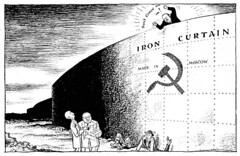 | 19 |
| 6712088520 | Truman Doctrine | 1947, President Truman's policy of providing economic and military aid to any country threatened by communism or totalitarian ideology, mainly helped Greece and Turkey |  | 20 |
| 6712088521 | Marshall Plan | A United States program of economic aid for the reconstruction of Europe (1948-1952) |  | 21 |
| 6712088522 | Berlin Blockade | The blockade was a Soviet attempt to starve out the allies in Berlin in order to gain supremacy. The blockade was a high point in the Cold War, and it led to the Berlin Airlift. |  | 22 |
| 6712088523 | Korean War | The conflict between Communist North Korea and Non-Communist South Korea. The United Nations (led by the United States) helped South Korea. |  | 23 |
| 6712088524 | McCarthyism | The term associated with Senator Joseph McCarthy who led the search for communists in America during the early 1950s through his leadership in the House Un-American Activities Committee. |  | 24 |
| 6712088525 | Brown v Board of Education, 1954 | 1954 - The Supreme Court overruled Plessy v. Ferguson, declared that racially segregated facilities are inherently unequal and ordered all public schools desegregated. |  | 25 |
| 6712088526 | Montgomery Bus Boycott | In 1955, after Rosa Parks was arrested for refusing to give up her seat on a city bus, Dr. Martin L. King led a boycott of city busses. After 11 months the Supreme Court ruled that segregation of public transportation was illegal. |  | 26 |
| 6712088527 | Interstate Highway Act | 1956 law that authorized the spending of $32 billion to build 41,000 miles of highway |  | 27 |
| 6712088528 | Little Rock Arkansas | Incident where President Eisenhower sent federal troops to allow black students into the high school. |  | 28 |
| 6712088529 | Sputnik | First artificial Earth satellite, it was launched by Moscow in 1957 and sparked U.S. fears of Soviet dominance in technology and outer space. It led to the creation of NASA and the space race. Led the US to focus on Math & Science in American schools. |  | 29 |
| 6712088530 | Sit ins | Protests by black college students, 1960-1961, who took seats at "whites only" lunch counters and refused to leave until served; in 1960 over 50,000 participated in sit-ins across the South. Their success prompted the formation of the Student Non-Violent Coordinating Committee. |  | 30 |
| 6712088531 | NASA | The National Aeronautics and Space Administration (NASA) is the United States government agency responsible for the civilian space program as well as aeronautics and aerospace research. |  | 31 |
| 6712088532 | Berlin Wall | A fortified wall surrounding West Berlin, Germany, built in 1961 to prevent East German citizens from traveling to the West. Its demolition in 1989 symbolized the end of the Cold War. This wall was both a deterrent to individuals trying to escape and a symbol of repression to the free world. |  | 32 |
| 6712088533 | Bay of Pigs | In April 1961, a group of Cuban exiles organized and supported by the U.S. Central Intelligence Agency landed on the southern coast of Cuba in an effort to overthrow Fidel Castro. When the invasion ended in disaster, President Kennedy took full responsibility for the failure. |  | 33 |
| 6712088534 | Freedom Rides | 1961 event organized by CORE and SNCC in which an interracial group of civil rights activists tested southern states' compliance to the Supreme Court ban of segregation on interstate buses |  | 34 |
| 6712088535 | Cuban Missile Crisis | An international crisis in October 1962, the closest approach to nuclear war at any time between the U.S. and the USSR. When the U.S. discovered Soviet nuclear missiles on Cuba, President John F. Kennedy demanded their removal and announced a naval blockade of the island; the Soviet leader Khrushchev acceded to the U.S. demands a week later, on condition that US doesn't invade Cuba |  | 35 |
| 6712088536 | Rachel Carson | United States biologist remembered for her opposition to the use of pesticides that were hazardous to wildlife (1907-1964) in her book Silent Spring. Considered the birth of environmentalism |  | 36 |
| 6712088537 | March on Washington | Held in 1963 to show support for the Civil Rights Bill in Congress. Martin Luther King gave his famous "I have a dream..." speech. 250,000 people attended the rally |  | 37 |
| 6712088538 | JFK Assassinated | November 1963, President John F Kennedy was assassinated in Dallas, Texas. |  | 38 |
| 6712088539 | Civil Rights Act of 1964 | 1964; banned discrimination in public acomodations, prohibited discrimination in any federally assisted program, outlawed discrimination in most employment; enlarged federal powers to protect voting rights and to speed school desegregation; this and the voting rights act helped to give African-Americans equality on paper, and more federally-protected power so that social equality was a more realistic goal |  | 39 |
| 6712088540 | Voting Rights Act of 1965 | 1965; invalidated the use of any test or device to deny the vote and authorized federal examiners to register voters in states that had disenfranchised blacks; as more blacks became politically active and elected black representatives, it rboguth jobs, contracts, and facilities and services for the black community, encouraging greater social equality and decreasing the wealth and education gap |  | 40 |
| 6712088541 | Gulf of Tonkin Resolution | 1964 Congressional resolution that authorized President Johnson to commit US troops to south vietnam and fight a war against north Vietnam |  | 41 |
| 6712088542 | Cesar Chavez | 1927-1993. Farm worker, labor leader, and civil-rights activist who helped form the National Farm Workers Association, later the United Farm Workers. |  | 42 |
| 6712088543 | Malcolm X | 1952; renamed himself X to signify the loss of his African heritage; converted to Nation of Islam in jail in the 50s, became Black Muslims' most dynamic street orator and recruiter; his beliefs were the basis of a lot of the Black Power movement built on seperationist and nationalist impulses to achieve true independence and equality. Assassinated in 1965 by the Nation of Islam. |  | 43 |
| 6712088544 | Stonewall Riot | In New York City, 1969 - Triggered activist protests among gays and lesbians - police raided gay bar - people fought back - became symbol of oppression of gays, began the gay pride movement |  | 44 |
| 6712088545 | Woodstock | A free music festival that attracted more than 400,000 young people to a farm in upstate New York in August 1969 |  | 45 |
| 6712088546 | Earth Day | A holiday conceived of by environmental activist and Senator Gaylord Nelson to encourage support for and increase awareness of environmental concerns; first celebrated on March 22, 1970 | 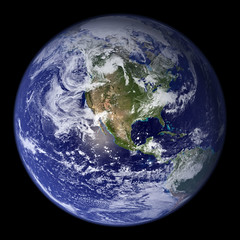 | 46 |
| 6712088547 | Kent State Massacre | Protests to the war that lead to National Guard being called in and shot students because they burned the ROTC building. Three students were killed, 1970. | 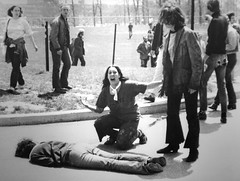 | 47 |
| 6712088548 | Nixon in China | February 21, 1972 - Nixon visited for a week to meet with Chairman Mao Tse-Tung for improved relations with China, Called "ping-pong diplomacy" because Nixon played ping pong with Mao during his visit. Nixon agreed to support China's admission to the United Nations. |  | 48 |
| 6712088549 | SALT I Treaty | A five-year agreement between the U.S. and the Soviet Union, sighned in 1972, that limited the nations' numbers of intercontinental ballistic missiles and submarine-launched missiles. |  | 49 |
| 6712088550 | Roe v Wade | Established national abortion guidelines; trimester guidelines; no state The 1973 Supreme Court decision holding that a state ban on all abortions was unconstitutional. The decision forbade state control over abortions during the first trimester of pregnancy, permitted states to limit abortions to protect the mother's health in the second trimester, and permitted states to protect the fetus during the third trimester. |  | 50 |
| 6712088551 | Watergate | 1972; Nixon feared loss so he approved the Commission to Re-Elect the President to spy on and espionage the Democrats. A security gaurd foiled an attempt to bug the Democratic National Committe Headquarters, exposing the scandal. Seemingly contained, after the election Nixon was impeached and stepped down |  | 51 |
| 6712088552 | Jimmy Carter | (1977-1981), Created the Department of Energy and the Depatment of Education. He was criticized for his return of the Panama Canal Zone, and because of the Soviet war in Afghanistan, he enacted an embargo on grain shipments to USSR and boycotted the 1980 Olympics in Moscow and his last year in office was marked by the takeover of the American embassy in Iran, fuel shortages, and the Soviet Invasion of Afghanistan, which caused him to lose to Ronald Regan in the next election. |  | 52 |
| 6712088553 | Camp David Accords | (1978) were negotiated at the presidential retreat of Camp David by Egypt's Anwar Sadat and Israel Menachem Begin; they were brokered by U.S. President Jimmy Carter. They led to a peace treaty the next year that returned the Sinai Peninsula to Egypt, guaranteed Israeli access to the Red Sea and Suez Canal, and more-or-less normalized diplomatic and economic relations between the two countries. This isolated Egypt from the other Arab countries and led to Sadat's assassination in 1981. |  | 53 |
| 6712088554 | Iran Hostage Crisis | In November 1979, revolutionaries stormed the American embassy in Tehran and held 52 Americans hostage. The Carter administration tried unsuccessfully to negotiate for the hostages release. On January 20, 1981, the day Carter left office, Iran released the Americans, ending their 444 days in captivity. |  | 54 |
| 6712088555 | Salt II Treaty | This treaty was a controversial experiment of negotiations between Jimmy Carter and Leonid Brezhnev from 1977 to 1979 between the U.S. and the Soviet Union, which sought to curtail the manufacture of strategic nuclear weapons. |  | 55 |
Period 2: 1607-1754 AP US History Flashcards
Terms : Hide Images
| 7480050473 | congregationalism | Church and town organization independent (no state control) and non-hierarchical; Citizenship = church membership (covenant); New England and Middle colonies; Puritans, Quakers, Baptists, etc. | 0 | |
| 7480050474 | covenant | Agreement between church members to form an independent church congregation; Membership was tied to citizenship. | 1 | |
| 7480050475 | Richard Hakluyt | English writer who extravagantly exhorted his countrymen to undertake the colonization of the New World after defeat of the Spanish Armada. | 2 | |
| 7480050476 | Sir Francis Drake | The most famous of the "sea dogs" (English Privateers); Plundered his way all around the planet; Financially supported by Queen Elizabeth; Knighted by queen because defying Spanish protest. |  | 3 |
| 7480050477 | Destruction of the Spanish Armada | 16th century England vs. Spain naval war; Marked the beginning of the end of the Spanish Empire and opened the path for the British Empire to flourish. |  | 4 |
| 7480050478 | Calvinism | A major branch of Protestantism; The credo of many American foundational settlers including English Puritans, Scottish Presbyterians, French Hugenots, and Dutch Reformed Church in America | 5 | |
| 7480050479 | Barbados | located in Caribbean; where the settlers in Carolina come from |  | 6 |
| 7480050480 | Joint Stock Company | A commercial venture in which multiple shareholders invest and spread risk; e.g. Hudson's Bay Company, Virginia Company, Dutch West India Company | 7 | |
| 7480050481 | Hudson's Bay Company | one of the Joint-stock companies founded in England for the purpose of trapping and fur trading. |  | 8 |
| 7480050482 | Navigation Acts | A series of economic regulations set by England starting in 1651 in order to gain control over its' colonies; Inspired by merchantilist policies |  | 9 |
| 7480050483 | Queen Elizabeth | A.K.A. Virginia, the "virgin" queen; An ambitious ruler, she secured the Protestant Reformtation in England and reigned during the destruction of the Spanish Armada, Drake's circumnavigation, the English Renaissance (Shakespeare!), and the beginning of the British Empire. |  | 10 |
| 7480050484 | Sir Walter Raleigh | A dashing courtier favored by Queen Elizabeth; Launched the first English colony in the New World in 1585 on Roanoke Island, off the coast of Virginia (present day North Carolina); The colony was a failure due to England's preoccupation with war with Spain. |  | 11 |
| 7480050485 | Roanoke colony | Located in present day North Carolina; Known as "The Lost colony" established by Sir Walter Raleigh in 1585, disappeared during the first Anglo-Spanish War. |  | 12 |
| 7480050486 | Virginia Company of London | A joint-stock company that established the first enduring English colony in the New World at Jamestown. |  | 13 |
| 7480050487 | Plantation economy | large scale agriculture worked by slaves, especially sugar and tobacco plantation. |  | 14 |
| 7480050488 | Chesapeake Bay | Large estuary between Maryland and Virginia; Site of both Jamestown and St. Marys. |  | 15 |
| 7480050489 | Jamestown | The first permanent English settlement in North America; Founded in 1607 as a joint-venture of the Virginia Company. | 16 | |
| 7480050490 | Maryland | Proprietary colony established on the Chesapeake Bay; George Calvert and Lord Baltimore were its proprietors; Established as a Catholic haven in the largely Protestant British Americas. |  | 17 |
| 7480050491 | Powhatan confederacy | A group of native American tribes in 17th century that settled in Virginia and came into conflict with the Virginia colonists. | 18 | |
| 7480050492 | Lord De La Warr | Governor of Jamestown; "he shall not work shall not eat" | 19 | |
| 7480050493 | Anglo-Powhatan Wars | 1614-1644; Series of wars between English Virginia Company settlers and local Indian tribes; "Irish tactics" used; Settled by Marriage of Pocahontas and John Rolfe; Led to the banishment of Chesapeake Indians and English encroachment of land. | 20 | |
| 7480050494 | "starving time" | Jamestown winter of 1609 to 1610; Only 60 of the 400 colonists survived because they didn't found plants or the methods to grow crops; Most colonists were gentlemen "adventurers" who refused to work or didn't know how to grow crops. |  | 21 |
| 7480050495 | House of Burgesses | The first representative legislative body formed in 1619 in Virginia; Evolved into a "planter oligarchy" that represented the wealthy plantation owners, and a competitor to the Parliament in London. | 22 | |
| 7480050496 | Maryland Acts of Toleration | In 1649, passed in Maryland, guaranteeing rights to Christians of all denominations; A measure to protect Maryland's Catholics. | 23 | |
| 7480050497 | Headright System | New immigrants were enticed to come to the New World with the offer of 50 arces (1 arce= 4047m2) | 24 | |
| 7480050498 | Bacon's Rebellion | 1676 rebellion of discontent landless servants in Virginia; Exposed the weakness of the indentured servant system to the ruling planter oligarchy, who thereafter relied more and more on African slaves. | 25 | |
| 7480050499 | Lord Baltimore | Catholic proprietor of the colony of Maryland; Permitted religious freedom to all Christian colonists in a mesure to protect Catholics. | 26 | |
| 7480050500 | John Rolfe | Virginia "father of tobacco"; Husband of Pocahontas. | 27 | |
| 7480050501 | Indentured servant | Potential England immigrants sign a contact with wealthy Virginians to work for a certain years in the New World in exchange of the passage over the Atlantic. | 28 | |
| 7480050502 | Virginia | The first colony of the British Empire; Established during the rule of Queen Elizabeth I. | 29 | |
| 7480050503 | Quebec | French major colony in Canada. |  | 30 |
| 7480050504 | Jesuit | "Society of Jesus"; Catholic missionaries. | 31 | |
| 7480050505 | Huguenots | French Protestants | 32 | |
| 7480050506 | Metis People | Descendant of French and indigenous people | 33 | |
| 7480050507 | Fundamental Orders of Connecticut | First written constitution in the New World (and all of Western Tradition); established townhall style of government similar to much of Puritan New England. | 34 | |
| 7480050508 | Pilgrims | Traveler on a holy journey; Puritan separatists who first settled Plymouth in New England |  | 35 |
| 7480050509 | Puritans | A group of English Reformed Protestants who sought to "purify" the Church of England | 36 | |
| 7480050510 | Protestantism | The "reformed" Christian faith that emerged from Martin Luther's 16th century protests against the corruption and control of the Catholic Church; A major religious and political force in the English colonies of the New World. | 37 | |
| 7480050511 | Town hall meeting | A form of direct democratic rule, used principally in New England where most or all the members of a community come together to participate in direct democratic government. | 38 | |
| 7480050512 | Congregational church | Protestant churches practicing congregationalist church governance; The independence of each congregation in New England mirrored the independence of each town and its political organization. | 39 | |
| 7480050513 | Royal charter | A formal document issued by a monarch as letters patent, granting a right or power to an individual or a body corporate. | 40 | |
| 7480050514 | Charter | The grant of authority or rights, stating that the granter formally recognizes the prerogative of the recipient to exercise the rights specified; 3 types: Royal, Commercial, Proprietary. | 41 | |
| 7480050515 | Plymouth colony | Founded by a group of Separatists who came to be known as the Pilgrims; the first sizable permanent English settlement in the New England region,https://o.quizlet.com/YWD0OaZqPqntAaSERr.dQA_m.jpg | 42 | |
| 7480050516 | Roger Williams | A Puritan, an early proponent of religious freedom and separation of church and state; he was expelled from the colony of Massachusetts and began the colony of Providence Plantation. | 43 | |
| 7480050517 | Providence | Colony established by the puritan dissenter Roger Williams; Later merged with Portsmouth to form the colony of Rhode Island. | 44 | |
| 7480050518 | Anne Hutchinson | An important participant in the Antinomian Controversy; banished from the Massachusetts Bay Colony and formed Portsmouth (later merged into Rhode Island). |  | 45 |
| 7480050519 | John Winthrop | One of the leading figures in the founding of the Massachusetts Bay Colony; his vision of the colony as a Puritan "city upon a hill" dominated New England colonial development. |  | 46 |
| 7480050520 | Mayflower | The ship that transported the first English Separatists—Pilgrims—in 1620. | 47 | |
| 7480050521 | Separatist | Puritans who felt needed to separate from the Church of England. | 48 | |
| 7480050522 | "city upon a hill" | In the 1630 sermon "A Model of Christian Charity" preached by Puritan John Winthrop. Winthrop admonished the future Massachusetts Bay colonists that their new community would be "as a city upon a hill", the ideal community, watched by the world. | 49 | |
| 7480050523 | Mayflower Compact | The first governing document of Plymouth Colony, written by the male passengers of the Mayflower, consisting of separatist Congregationalists. |  | 50 |
| 7480050524 | Salem Witch Trials | A series of hearings and prosecutions of people accused of witchcraft in colonial Massachusetts between February 1692 and May 1693; Religious fear that resulted from unrest in the colonies. | 51 | |
| 7480050525 | slave codes | Series of laws in southern plantation colonies that established Africans as lifelong slaves and a cornerstone of the plantation economy. | 52 | |
| 7480050526 | King Philip's War | AKA Metacom's War; Savage conflict between New England colonists and local Indian tribes; Both sides resorted to brutal massacre tactics; Defeat of Indians resulted in white land expansion. |  | 53 |
| 7480050527 | Middle Colonies | New York, New Jersey, Pennsylvania, Delaware; Dominated by Quakers. | 54 | |
| 7480050528 | Supreme gonverner of Anglican Church | The Supreme Governor of the Church of England is a title held by the British monarch that signifies titular leadership over the Church of England; Since the English Reformation under the Tudors, the monarch has been the head of the church; One of the major problems Puritans, Quakers, and other groups had with the Anglican church. | 55 | |
| 7480050529 | Jamaica | An island in Caribbean sea. Visited by Columbus in 1494 and Colonized by Spanish who enslaved or killed the Natives. Became a major sugar colony of the British Empire in the 17th century. |  | 56 |
| 7480050530 | South Carolina | Plantation colony established by the eight nobles (lords proprietor) after the restoration of King Charles II; Mostly rural plantations, but has primary settlement at Charles Town. |  | 57 |
| 7480050531 | "buffer colony" | A colony established to serve primarily as a defensive boundary against a competing colonial power; California and Georgia, for example. | 58 | |
| 7480050532 | North Carolina | A relatively poor and underdeveloped colony settled by landless squatters from Virginia |  | 59 |
| 7480050533 | "holy experiment" | William Penn's term for the ideal government that would uphold religious freedom and attract virtuous settlers; Largely a Quaker ideal; Its failure was apparent after Penn's death when settlers came into conflict with natives and Quakers lost political power for advocating nonviolence in the face of Indian and competing colonial power threat. | 60 | |
| 7480050534 | Philadelphia | "The city of brotherly love" established by William Penn; It was by far the largest and most important city in the English colonies on the eve of the Revolution. | 61 | |
| 7480050535 | mercantilism | The driving economic philosophy of the colonial powers in the 17th and 18th centuries; Colonial competition was a zero-sum game; Trade imbalances (more imports than exports) were evil; Colonies served the mother country and were not allowed to compete economically. | 62 | |
| 7480050536 | New Netherland | Dutch colony in Northern America; Established as a trading center; Later taken by the English and renamed New York. | 63 | |
| 7480050537 | Gullah culture | Black people off the coast of South Carolina; Speak an English-based creole language containing many African loanwords and grammar; Their isolation is an example of how many Africans held onto their traditional culture despite enslavement and Christianization. | 64 |
Flashcards
Flashcards
Flashcards
AP US History Period 2 (1607-1754) Flashcards
Important vocabulary of the colonization of North America in the 17th century.
Terms : Hide Images
| 7095980904 | Jamestown | 1st permanent English settlement in North America in 1607. |  | 0 |
| 7095980905 | John Smith | A captain famous for world travel. As a young man, he took control in Jamestown. He organized the colony and saved many people from death the next winter and coined the phrase "he who shall not work, shall not eat". He also initiated attacks on Natives. |  | 1 |
| 7095980906 | John Rolfe | He was one of the English settlers at Jamestown (and he married Pocahontas). He discovered how to successfully grow tobacco in Virginia and cure it for export, which made Virginia an economically successful colony. Eventually, he was killed in a Pequot attack. |  | 2 |
| 7095980907 | Pocohontas | An American Indian princess who saved the life of John Smith and helped form more peaceful relations with the Powhatan when she married John Rolfe but died of smallpox in England on a visit to Rolfe's family. Her remains are still there as the English government refuses to send her remains back to North America. |  | 3 |
| 7095980908 | Mayflower Compact | 1620 - The first agreement for self-government in America. It was signed by the 41 men on the Mayflower and set up a government for the Plymouth colony |  | 4 |
| 7095980909 | John Winthrop | As governor of Massachusetts Bay Colony, Winthrop (1588-1649) was instrumental in forming the colony's government and shaping its legislative policy. He envisioned the colony, centered in present-day Boston, as a "city upon a hill" from which Puritans would spread religious righteousness throughout the world. |  | 5 |
| 7095980910 | Puritans | A religious group who wanted to purify the Church of England. They came to America for religious freedom and settled Massachusetts Bay. |  | 6 |
| 7095980911 | Pilgrims | English Puritans who founded Plymouth colony in 1620 |  | 7 |
| 7095980912 | Massachusetts Charter | Allowed Puritans to take a charter with them and establish their own government in the New World. |  | 8 |
| 7095980913 | Loss of Massachusetts Charter | Revoking of Mass. Charter by King George II due to the colonists refusal to obey by the Navigation Acts leading to anti-British feeling in the New England region. | 9 | |
| 7095980914 | New Amsterdam | A settlement established by the Dutch near the mouth of Hudson River and the southern end of Manhattan Island as a trade port for the Dutch trade empire. |  | 10 |
| 7095980915 | Great Migration of Puritans | 1630s- 70,000 refugees left England for New World increasing population of New England. |  | 11 |
| 7095980916 | New York | It was founded by the Dutch for trade and furs and became an English Colony in 1664, when the English were determined to end Dutch trade dominance, and took over the colony by invading New Amsterdam without having to fire a shot. |  | 12 |
| 7095980917 | Peter Stuyvesant | The governor of the Dutch colony of New Amsterdam, hated by the colonists. They surrendered the colony to the English on Sept. 8, 1664. |  | 13 |
| 7095980918 | House of Burgesses | 1619 - The Virginia House of Burgesses formed, the first legislative body in colonial America. It was made up of two representatives from teach town voted on by men who owned property. Later other colonies would adopt the Houses of Burgesses concept creating self-governing bodies in the colonies. |  | 14 |
| 7095980919 | Headright system | Headrights were parcels of land consisting of about 50 acres which were given to colonists who brought indentured servants into America. They were used by the Virginia Company to attract more colonists. |  | 15 |
| 7095980920 | Indentured servants | Colonists who received free passage to North America in exchange for working without pay for a certain number of years |  | 16 |
| 7095980921 | Bacon's Rebellion | 1676 - Nathaniel Bacon and other western Virginia settlers were angry at Virginia Governor Berkley for trying to appease the Doeg Indians after the Doegs attacked the western settlements. The frontiersmen formed an army, with Bacon as its leader, which defeated the Indians and then marched on Jamestown and burned the city. The rebellion ended suddenly when Bacon died of an illness. |  | 17 |
| 7095980922 | King Phillip's War | Under the leadership of Metacom, or King Phillip, the Wampanoag destroyed colonial towns, the colonists destroyed native farms, leading to the most deadly of Indian Wars. The war was disastrous for the natives leading to few surviving the war, and those that did left New England. |  | 18 |
| 7095980923 | royal colony | A colony ruled by governors appointed by a king |  | 19 |
| 7095980924 | proprietary colony | English colony in which the king gave land to proprietors in exchange for a yearly payment |  | 20 |
| 7095980925 | town meetings | A purely democratic form of government common in the colonies, and the most prevalent form of local government in New England. In general, the town's voting population would meet once a year to elect officers, levy taxes, and pass laws. |  | 21 |
| 7095980926 | Salem Witch Trials | 1629 outbreak of witchcraft accusations in a Puritan village marked by an atmosphere of fear, hysteria, and unfounded accusations in courts with Puritan ministers who served as judges. 19 women were executed. |  | 22 |
| 7095980927 | Roger Williams | A dissenter who clashed with the Massachusetts Puritans over separation of church and state and was banished in 1636, after which he founded the colony of Rhode Island to the south. |  | 23 |
| 7095980928 | Intolerant | Not willing to accept ways of thinking different from one's own. The expansion of colonies in New England was a direct result of Puritan intolerance as dissenters were exiled and created new settlements. | 24 | |
| 7095980929 | Anne Hutcheson | One of the dissenters in Puritan Massachusetts held bible studies at her house and believed in a personal relationship with god. She moved to New Hampshire where she died along with her children from an Indian attack. |  | 25 |
| 7095980930 | Thomas Hooker | A Puritan minister who led about 100 settlers out of Massachusetts Bay to Connecticut because he believed that the governor and other officials had too much power. He wanted to set up a colony in Connecticut with strict limits on government. He wrote the first written constitution "The Fundamental Orders of Connecticut". This would become a cherished ideal of the colonial settlers that laws were written not arbitrary. |  | 26 |
| 7095980931 | Sir William Berkeley | The royal governor of Virginia. Adopted policies that favored large planters and neglected the needs of recent settlers in the "backcountry." One reason was that he had fur trade deals with the natives in the region. His shortcomings led to Bacon's Rebellion |  | 27 |
| 7095980932 | William Penn | Established the colony of Pennsylvania as a "holy experiment". Freemen had the right to vote, provided leadership for self- government based on personal virtues and Quaker religious beliefs. His colony was religiously tolerant leading to diversity in the region. |  | 28 |
| 7095980933 | James Oglethorpe | Founded colony of Georgia as a chance for poor immigrants who were in debt to have a second chance at a comfortable life |  | 29 |
| 7095980934 | Lord Baltimore | 1694- He was the founder of Maryland, a colony which offered religious freedom, and a refuge for the persecuted Roman Catholics. |  | 30 |
| 7095980935 | Fundamental Orders of Connecticut | It has the features of a written constitution, and is considered by some as the first written Constitution. The Fundamental Orders of Connecticut is a short document, but contains some principles that were later applied in creating the United States government. Government is based in the rights of an individual, and the orders spell out some of those rights, as well as how they are ensured by the government. It provides that all free men share in electing their magistrates, and uses secret, paper ballots. It states the powers of the government, and some limits within which that power is exercised. |  | 31 |
| 7095980936 | Halfway Covenant | A Puritan church document; In 1662, the Halfway Covenant allowed partial membership rights to persons not yet converted into the Puritan church; It lessened the difference between the "elect" members of the church from the regular members; Women soon made up a larger portion of Puritan congregations. |  | 32 |
| 7095980937 | Dominion of New England | 1686 - The British government combined the colonies of Massachusetts, Rhode Island, New Hampshire, and Connecticut into a single province headed by a royal governor (Edmund Andros). The Dominion ended in 1692, when the colonists revolted and drove out Governor Andros. |  | 33 |
| 7095980938 | Acts of Trade and Navigation | Three acts that regulated colonial trade: 1st act: closed the colonies to all trade except that from English ships, and required the colonists to export certain goods, such as tobacco, to only English territories, 2nd act: (1663) demanded that everything being shipped from Europe to the colonies had to pass through England so they could tax the goods. 3rd act: 1673, was a reaction to the general disregard of the first two laws; it forced duties on the coastal trade among the colonies and supplied customs officials to enforce the Navigation Acts. |  | 34 |
| 7095980939 | Mercantilism | An economic policy under which nations sought to increase their wealth and power by obtaining large amounts of gold and silver and by selling more goods than they bought. |  | 35 |
| 7095980940 | Triangular Slave Trade | A practice, primarily during the eighteenth century, in which European ships transported slaves from Africa to Caribbean islands, molasses from the Caribbean to Europe, and trade goods from Europe to Africa. |  | 36 |
| 7095980941 | Middle Passage | A voyage that brought enslaved Africans across the Atlantic Ocean to North America and the West Indies. The conditions on the ships from Africa to the west led to the loss of hundreds of thousands of lives. |  | 37 |
| 7095980942 | Social mobility | Movement of individuals or groups from one position in a society's stratification system to another | 38 | |
| 7095980943 | Ben Franklin | A colonial businessman and scientist who was an example of American social mobility and individualism. He was a delegate from Pennsylvania in colonial meetings, and proposed the "Albany Plan of the Union" as a way to strengthen the colonies in the French and Indian War. He was a leading figure in the movement toward revolution, and as a diplomat to France to get help during the American Revolution |  | 39 |
| 7095980944 | Great Awakening | (1730s and 1740s) Religious movement characterized by emotional preaching (Jonathan Edwards & George Whitefield). It established American religious precedents such as camp meetings, revivals, and a "born again" philosophy. The first cultural movement to unite the thirteen colonies. It was associated with the democratization of religion, and a challenge to existing authorities and was an influence leading to the American Revolution. |  | 40 |
| 7095980945 | Jonathan Edwards | A leading minister during the Great Awakening, he delivered the famous sermon "Sinners in the Hands of an Angry God" promising that evildoers would pay a price on judgement day. |  | 41 |
| 7095980946 | African American Culture | Slave communities were rich with music, dance, basket-weaving, and pottery-making. Enslaved Africans brought them the arts and crafts skills of their various tribes. |  | 42 |
| 7095980947 | George Whitfield | English preacher who led the Great Awakening by traveling through the colonies |  | 43 |
| 7095980948 | French & Indian War | 1754 - 1763; conflict between France and Great Britain over land in North America in the Ohio River Valley. |  | 44 |
| 7095980949 | Ohio River Valley | Controversial land that led to the French and Indian War; British win war and claim this land; region where British fur traders went; rich soil for farming. | 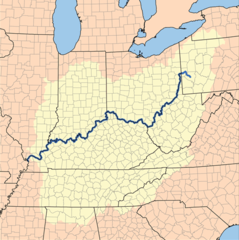 | 45 |
| 7095980950 | Battle of Quebec | (1759) British victory over French forces on the outskirts of Quebec. The surrender of Quebec marked the beginning of the end of French rule in North America. The battle was won when General James Wolfe scouts followed wash women up the cliffs on a secret passageway. |  | 46 |
| 7095980951 | General James Wolfe | Commander of a British fleet sailed to Quebec and defeated French Troops that were defending the city, British seized Quebec and took control of New France. He died in the battle and became a hero of English military. |  | 47 |
| 7095980952 | Join or Die | Famous cartoon drawn by Ben Franklin which encouraged the colonies to join in fighting the British during the French and Indian War | 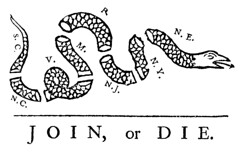 | 48 |
| 7095980953 | Albany Plan of Union, 1754 | Plan proposed by Benjamin Franklin that sought to unite the 13 colonies for trade, military, and other purposes; the plan was turned down by the colonies & the Crown. |  | 49 |
Flashcards
Flashcards
Flashcards
Pages

Need Help?
We hope your visit has been a productive one. If you're having any problems, or would like to give some feedback, we'd love to hear from you.
For general help, questions, and suggestions, try our dedicated support forums.
If you need to contact the Course-Notes.Org web experience team, please use our contact form.
Need Notes?
While we strive to provide the most comprehensive notes for as many high school textbooks as possible, there are certainly going to be some that we miss. Drop us a note and let us know which textbooks you need. Be sure to include which edition of the textbook you are using! If we see enough demand, we'll do whatever we can to get those notes up on the site for you!
