AP Notes, Outlines, Study Guides, Vocabulary, Practice Exams and more!

AP US History Period 2 (1607-1754) Flashcards

Important vocabulary of the colonization of North America in the 17th century.

Terms : Hide Images
5637213758Jamestown1st permanent English settlement in North America in 1607.0
5637213759John SmithA captain famous for world travel. As a young man, he took control in Jamestown. He organized the colony and saved many people from death the next winter and coined the phrase "he who shall not work, shall not eat". He also initiated attacks on Natives.1
5637213760John RolfeHe was one of the English settlers at Jamestown (and he married Pocahontas). He discovered how to successfully grow tobacco in Virginia and cure it for export, which made Virginia an economically successful colony. Eventually, he was killed in a Pequot attack.2
5637213761PocohontasAn American Indian princess who saved the life of John Smith and helped form more peaceful relations with the Powhatan when she married John Rolfe but died of smallpox in England on a visit to Rolfe's family. Her remains are still there as the English government refuses to send her remains back to North America.3
5637213762Mayflower Compact1620 - The first agreement for self-government in America. It was signed by the 41 men on the Mayflower and set up a government for the Plymouth colony4
5637213763John WinthropAs governor of Massachusetts Bay Colony, Winthrop (1588-1649) was instrumental in forming the colony's government and shaping its legislative policy. He envisioned the colony, centered in present-day Boston, as a "city upon a hill" from which Puritans would spread religious righteousness throughout the world.5
5637213764PuritansA religious group who wanted to purify the Church of England. They came to America for religious freedom and settled Massachusetts Bay.6
5637213765PilgrimsEnglish Puritans who founded Plymouth colony in 16207
5637213768New AmsterdamA settlement established by the Dutch near the mouth of Hudson River and the southern end of Manhattan Island as a trade port for the Dutch trade empire.8
5637213769Great Migration of Puritans1630s- 70,000 refugees left England for New World increasing population of New England.9
5637213770New YorkIt was founded by the Dutch for trade and furs and became an English Colony in 1664, when the English were determined to end Dutch trade dominance, and took over the colony by invading New Amsterdam without having to fire a shot.10
5637213772House of Burgesses1619 - The Virginia House of Burgesses formed, the first legislative body in colonial America. It was made up of two representatives from teach town voted on by men who owned property. Later other colonies would adopt the Houses of Burgesses concept creating self-governing bodies in the colonies.11
5637213773Headright systemHeadrights were parcels of land consisting of about 50 acres which were given to colonists who brought indentured servants into America. They were used by the Virginia Company to attract more colonists.12
5637213774Indentured servantsColonists who received free passage to North America in exchange for working without pay for a certain number of years13
5637213775Bacon's Rebellion1676 - Nathaniel Bacon and other western Virginia settlers were angry at Virginia Governor Berkley for trying to appease the Doeg Indians after the Doegs attacked the western settlements. The frontiersmen formed an army, with Bacon as its leader, which defeated the Indians and then marched on Jamestown and burned the city. The rebellion ended suddenly when Bacon died of an illness.14
5637213776King Phillip's WarUnder the leadership of Metacom, or King Phillip, the Wampanoag destroyed colonial towns, the colonists destroyed native farms, leading to the most deadly of Indian Wars. The war was disastrous for the natives leading to few surviving the war, and those that did left New England.15
5637213777royal colonyA colony ruled by governors appointed by a king16
5637213778proprietary colonyEnglish colony in which the king gave land to proprietors in exchange for a yearly payment17
5637213780Salem Witch Trials1629 outbreak of witchcraft accusations in a Puritan village marked by an atmosphere of fear, hysteria, and unfounded accusations in courts with Puritan ministers who served as judges. 19 women were executed.18
5637213783Anne HutchesonOne of the dissenters in Puritan Massachusetts held bible studies at her house and believed in a personal relationship with god. She moved to New Hampshire where she died along with her children from an Indian attack.19
5637213786William PennEstablished the colony of Pennsylvania as a "holy experiment". Freemen had the right to vote, provided leadership for self- government based on personal virtues and Quaker religious beliefs. His colony was religiously tolerant leading to diversity in the region.20
5637213787James OglethorpeFounded colony of Georgia as a chance for poor immigrants who were in debt to have a second chance at a comfortable life21
5637213791Dominion of New England1686 - The British government combined the colonies of Massachusetts, Rhode Island, New Hampshire, and Connecticut into a single province headed by a royal governor (Edmund Andros). The Dominion ended in 1692, when the colonists revolted and drove out Governor Andros.22
5637213792Acts of Trade and NavigationThree acts that regulated colonial trade and benefited England23
5637213793MercantilismAn economic policy under which nations sought to increase their wealth and power by obtaining large amounts of gold and silver and by selling more goods than they bought.24
5637213794Triangular Slave TradeA practice, primarily during the eighteenth century, in which European ships transported slaves from Africa to Caribbean islands, molasses from the Caribbean to Europe, and trade goods from Europe to Africa.25
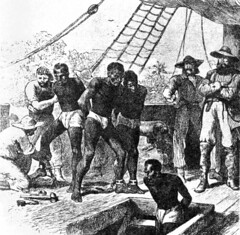
5637213795Middle PassageA voyage that brought enslaved Africans across the Atlantic Ocean to North America and the West Indies. The conditions on the ships from Africa to the west led to the loss of hundreds of thousands of lives.26
5637213796Social mobilityMovement of individuals or groups from one position in a society's stratification system to another27
5637213798Great Awakening(1730s and 1740s) Religious movement characterized by emotional preaching. It established American religious precedents such as camp meetings, revivals, and a "born again" philosophy.28
5637213802French & Indian War1754 - 1763; conflict between France and Great Britain over land in North America in the Ohio River Valley.29
5637213804Battle of Quebec(1759) British victory over French forces on the outskirts of Quebec.30
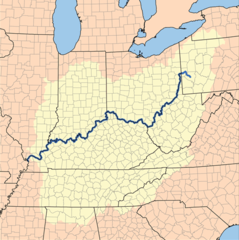
5637213803Ohio River ValleyControversial land that led to the French and Indian War; British win war and claim this land; region where British fur traders went; rich soil for farming.31
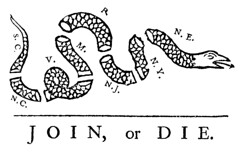
5637213806Join or DieFamous cartoon drawn by Ben Franklin which encouraged the colonies to join in fighting the British during the French and Indian War32
5637213807Albany Plan of Union, 1754Plan proposed by Benjamin Franklin that sought to unite the 13 colonies for trade, military, and other purposes; the plan was turned down by the colonies & the Crown.33

AMSCO AP US History Chapter 02A Flashcards

AMSCO United States History 2015 Edition, Chapter 2 The Thirteen Colonies and the British Empire, 1607-1754

Terms : Hide Images
7424984257Cecil Calvert, Second Lord BaltimoreIn 1634, Cecil Calvert (Second Lord Baltimore) was the son of George Calvert (First Lord Baltimore). Cecil Calvert set about making his father's dream of a Maryland colony that would be a haven for Catholics in America. (p. 27)0
7424984258Act of TolerationThe first colonial statue granting religious freedom to all Christians, but it called for death of all non-Christians. It was created to provide a safe haven for Catholics. (p.27)1
7424984259Roger WilliamsA respected Puritan minister who believed that the individual's conscience was beyond the control of any civil or church authority. He was banished from the Bay colony for his beliefs. In 1636, he founded the settlement of Providence. (p. 29)2
7424984260ProvidenceThis settlement has founded in 1636 by Roger Williams. (p. 29)3
7424984261Anne HutchinsonThis Puritan believed in antinomianism and was banished from the Bay colony because of her beliefs. In 1638, she founded the colony of Portsmouth. (p. 29)4
7424984262antinomianismThe idea that faith alone, not deeds, is necessary for salvation. (p. 29)5
7424984263Rhode IslandIn 1644, Parliament granted Roger Williams a charter, joining Providence and Portsmouth into a single colony, Rhode Island. (p. 30)6
7424984264Halfway covenantIn the 1660s, people could now take part in church services and activities without making a formal commitment to Christ. It was created because the next generation of colonists were less committed to religious faith, but churches still needed members. (p. 31)7
7424984265QuakersMembers of the Religious Society of Friends who believed in the equality of men and women, nonviolence, and resistance to military service. (p. 34)8
7424984266William PennIn 1861, the royal family paid a large debt by granting his family a large parcel of American land. This Quaker, formed a colony that he named Pennsylvania. (p. 34)9
7424984267Holy ExperimentWilliam Penn put his Quaker beliefs to the test in his colony, Pennsylvania. He wanted the colony to provide a religious refuge for Quakers and other persecuted people, enact liberal ideas in government, and generate income and profits for himself. (p. 34)10
7424984268Charter of LibertiesIn 1701, the Pennsylvania colony created this written constitution which guaranteed freedom of worship for all and unrestricted immigration. (p. 34)11
7424984269rice plantationsThese plantations required a loarge land area and many slaves. (p. 37)12
7424984270tobacco farmsAs Tobacco prices fell, rice and indigo became the most profitable crops. (p. 37)13
7424984271John CabotFirst Englishman to explore lands in North America which England would later settle in the early 1600's. (p. 25)14
7424984272JamestownIn 1607, the first permanent English colony in America was founded at this location. The Virginia Company, was a a joint-stock company chartered by England's King James I. (p. 25)15
7424984273Captain John SmithBecause of his forceful leadership, Jamestown barely survived its first five years. (p. 25)16
7424984274John RolfeHe helped Jamestown develop a new variety of tobacco which became popular in Europe and became a profitable crop. (p. 25)17
7424984275PocahontasShe was the American Indian wife of John Rolfe in early settlement days in Jamestown. (p. 25)18
7424984276PuritansGroup of dissenters that wanted to purify the Church of England. In 1630 they founded the Massachusetts Bay Colony at Boston. (p. 26)19
7424984277SeparatistsRadical dissenters to the Church of England, they were known by this name because they wanted to organized a completely separate church that was independent of royal control. They became known as Pilgrims, because of the travels. (p. 26)20
7424984278PilgrimsThey were radical dissenters to the Church of England. They moved to Holland, then in 1620, they sailed to America on the Mayflower in search of religious freedom. They established a new colony at Plymouth on the Massachusetts coast. (p. 26)21
7424984279MayflowerIn 1620, the boat that the Pilgrims sailed to Plymouth. (p. 26)22
7424984280Plymouth ColonyThis colony was started by the Pilgrims at Plymouth (Massechusetts). In the first winter nearly half of them perished. They were helped by friendly American Indians and celebrated the first Thanksgiving in 1621. (p. 26)23
7424984281John WinthropIn 1630, he led about a thousand Puritans to America and and founded Boston and several other towns. (p. 26)24
7424984282Great MigrationThis movement started because of a civil war in England. Nearly 15,000 settlers came to the Massachusetts Bay Colony. (p. 26)25
7424984283VirginiaSir William Berkeley, the royal governor of Virginia use dictatorial powers to govern on behalf of the large planters. (p. 29)26
7424984284Thomas HookerIn 1636, he led a large group of Boston Puritans dissatisfied with the Massachusetts Bay colony to found Hartford, which is now Connecticut. In 1639 they drew up the first written constitution in American history. (p. 30)27
7424984285John DavenportIn 1637, he founded a settlement south of Hartford, by the name of New Haven. (p. 30)28
7424984286ConnecticutIn 1665, New Haven and Hartford joined to form the colony of Connecticut under a royal charter. (p. 30)29
7424984287New HampshireHoping to increase royal control in the colonies, King Charles II separated New Hampshire from Massachusetts in 1679 and made it a royal colony. (p. 31)30
7424984288The CarolinasIn 1663, King Charles II granted eight nobles the Carolinas. In 1729, the Carolinas were split into two royal colonies. In South Carolina, the economy was based on the fur trade and growing food for the West Indies, which led to many plantations. In North Carolina, there were many small tobacco farms and fewer plantations. (p. 32)31
7424984289New YorkIn 1664, King Charles II granted his brother, the Duke of York (future King James II) the land now known as New York. James took control of the Dutch colony that was located there, but the Dutch were treated fairly. James was unpopular because of his taxes and refusal to institute a representative government. Finally in 1683, he agreed to grant broad civil and political rights to the colony. (p. 33)32
7424984290New JerseyThe territory of New York was split. In 1674, land was granted to Lord John Berkeley and Sir George Carteret. Eventually they sold to the Quakers. In 1702, the two Jerseys were combined into a single royal colony, New Jersey. (p. 33)33
7424984291PennsylvaniaIn 1861, the royal family paid a large debt by granting William Penn's father a large parcel of American land. He then formed a colony from the land. (p. 34)34
7424984292DelawareIn 1702, William Penn granted the lower three colonies of Pennsylvania their own assembly. In effect, Delaware became a separate colony, even though its governor was the same as Pennsylvaniaá until the American revolution. (p. 34)35
7424984293GeorgiaIn 1732, Georgia was formed to provide a buffer between wealthy Georgia and Spanish controlled Florida, and to provide a place for the many debtors of England to begin again. (p. 34)36
7424984294James OglethorpeFounder of Georgia's first settlement, Savannah, in 1733. He acted as governor of Georgia and had strict laws which included a ban on rum and slavery. (p. 35)37
7424984295WampanoagsAn American Indian tribe led by Metacom. (p. 31)38
7424984296MetacomThis American Indian chief was known to the colonists as King Philip. He joined together the Native American tribes to fight the colonists in King Philip's War, a war that lasted from 1675 to 1676. (p. 31)39
7424984297King Philip's WarFrom 1675 to 1676, the American Indian chief Metacom (King Philip), waged a vicious war against the English settlers in southern New England. (p. 31)40
7424984298Mayflower CompactIn 1620, while they were sailing to America on the Mayflower, the Pilgrims created this document that pledged them to make decisions by the will of the majority. It was a rudimentary written constitution. (p. 27)41
7424984299Virginia House of BurgessesIn 1619, just 12 years after the founding of Jamestown, Virginia's colonists organized the first representative assembly in America, the Virginia House of Burgesses. (p. 27)42
7424984300Sir William BerkeleyRoyal Governor of Virginia who favored large plantation owners and did not support or protect smaller farms from Indian raids. He put down Bacon's rebellion in 1676. (p. 29)43
7424984301Bacon's RebellionIn 1676, Nathaniel Bacon led a group of army volunteers that raided Native American villages, fought the governor's forces, and set fire to Jamestown. The rebellion lost momentum when Bacon died of dysentery. The rebellion was caused by the Governor's unfair favoritism of large plantation owners and refusal to protect small farms from Native American raids. (p. 29)44
7424984302Fundamental Orders of ConnecticutIn 1639, the Hartford settlers drew up the first written constitution in America. It established a representative government made up of a legislature elected by the people and a governor chosen by the legislature. (p. 30)45
7424984303New England ConfederationIn 1643, Plymouth, Massachusetts Bay, Connecticut, and New Haven colonies formed a military alliance to deal with the threat from the Native Americans. It lasted until 1684. (p. 31)46
7424984304Frame of Government (1682)In 1682-1683, William Penn provided the Pennsylvania colony with a Frame of Government which guaranteed a representative assembly elected by landowners and a written constitution. (p. 34)47
7424984305corporate coloniesColonies operated by joint-stock companies during the early years of the colonies, such as Jamestown. (p. 24)48
7424984306royal coloniesColonies under the direct authority and rule of the king's government, such as Virginia after 1624. (p. 24)49
7424984307proprietary coloniesColonies under the authority of individuals granted charters of ownership by the king, such as Maryland and Massachusetts. (p. 24)50
7424984308Chesapeake ColoniesIn 1632, the area once known as the Virginia colony, has divided into the Virginia and Maryland colony. Maryland became the first proprietary colony. (p. 27)51
7424984309joint-stock companyCorporate colonies, such as Jamestown, were operated by joint-stock companies, at least during the colony's early years. (p. 24)52
7424984310Virginia CompanyEngland's King James I chartered the Virginia Company, a joint-stock company that founded the first permanent English colony in America at Jamestown in 1607. (p. 25)53
7424984311mercantilismAn economic policy in which the colonies were to provide raw materials to the parent country of growth and profit of the parent country. (p. 35)54
7424984312Navigation ActsBetween 1650 and 1673 England passed a series of acts which establish rules for colonial trade. * Trade to and from the colonies could be carried only by English or colonial-built ships, which could be operated only by English or colonial crews. * All goods imported in the colonies, except some perishables, had to pass through the ports in England. * Specified goods from the colonies could be exported only to England. (p. 35)55
7424984313Dominion of New EnglandJames II wanted to increase royal control in the colonies, so he combined them into larger units and abolished their representative assemblies. The Dominion of New England was combined New York, New Jersey, and the other New England colonies into a single unit. (p. 36)56
7424984314Sir Edmund AndrosIn 1686, King James II combined New York, New Jersey, and additional New England colonies into a single unit called the Dominion of New England. He was sent England to govern the dominion. he was very unpopular by levying new taxes, limiting town meetings, and revoking land titles. (p. 36)57
7424984315Glorious RevolutionIn 1688, King James II was deposed and replaced with William and Mary. This brought the end to the Dominion of New England, and the colonies operated under their previous structure. (p. 37)58
7424984316indentured servantsYoung people from England under contract with a master who paid for their passage. Worked for a specified period for room and board, then they were free. (p. 28)59
7424984317headright systemA method for attracting immigrants, Virginia offered 50 acres of land to each immigrant who paid for passage to America and to any plantation owner who paid for an immigrants passage. (p. 28)60
7424984318slaveryThe first slaves arrived in the colonies in 1619, they were not slaves for life, but worked for a period of time, like an indentured servant. Then discriminatory laws were passed, slaves and their offspring were kept in permanent bondage. (p. 28)61
7424984319triangular tradeMerchants traded colonist rum for African slaves, African slaves for West Indies sugar cane, and sugar cane was brought back to the colonies to make rum. (p. 37)62
7424984320Middle PassageVoyage from West Africa to the West Indies. It was miserable for the slaves transported and many died. (p. 38) the voyage that brought enslaved Africans to the West Indies and later to North America63

AMSCO AP US History Chapter 12 Flashcards

AMSCO United States History 2015 Edition, Chapter 12 Territorial and Economic Expansion, 1830-1860

Terms : Hide Images
8011890791manifest destinyThe belief that the United States had a divine mission to extend its power and civilization across the breadth of North America. (p. 230)0
8011890793Elias HoweThe U.S. inventor of the sewing machine, which moved much of clothing production from homes to factories. (p. 238)1
8011890794Samuel F. B. MorseIn 1844, he invented the electric telegraph which allowed communication over longer distances. (p. 238)2
8011890795railroadsIn the 1840s and the 1850s, this industry expanded very quickly and would become America's largest industry. It required immense amounts of capital and labor and gave rise to complex business organizations. Local and state governments gave the industry tax breaks and special loans to finance growth. (p. 238)3
8011890798mountain menThe first non-native people to open the Far West. These fur trappers and explorers included James Beckwourth, Jim Bridger, Kit Carson, and Jedediah Smith. (p. 237)4
8011890799Far WestIn the 1820s, the Rocky Mountains were known by this name. (p. 237)5
8011890800overland trailsThe wagon train trails that led from Missouri or Iowa to the west coast. They traveled only 15 miles per day and followed the river valleys through the Great Plains. Months later, the wagon trains would finally reach the foothills of the Rockies or face the hardships of the southwestern deserts. The final challenge was to reach the mountain passes before the first heavy snows. Disease was even a greater threat than Indian attack. (p. 237)6
8011890802gold rushCalifornia's population soared from 14,000 in 1848 to 380,000 in 1860, primarily because of this event. (p. 237)7
8011890807John TylerHe was elected Vice President, then he became the tenth president (1841-1845) when President Harrison died. He was responsible for the annexation of Mexico after receiving a mandate from Polk. He opposed many parts of the Whig program for economic recovery. (p. 231)8
8011890808Oregon territoryThis was a vast territory on the Pacific coast that stretched as far north as the Alaskan border. Originally the United States was interested in all the territory, but in 1846 Britain and the U.S. agreed to divide the territory at the 49th Parallel, today's border between Canada and the United States. (p. 232)9
8011890809Fifty-four Forty or FightThe slogan of James K. Polk's plan for the Oregon Territory. They wanted the border of the territory to be on 54' 40° latitude (near present-day Alaska) and were willing to fight Britain over it. Eventually, 49 degrees latitude was adopted as the northern border of the United States, and there was no violence. (p. 232)10
8011890810James K. PolkThe eleventh U.S. president from 1845 to 1849. He was a slave owning southerner dedicated to Democratic party. In 1844, he was a "dark horse" candidate for president, and a protege of Andrew Jackson. He favored American expansion, especially advocating the annexation of Texas, California, and Oregon. (p. 232)11
8011890811Wilmot ProvisoIn 1846, the first year of the Mexican War, this bill would forbid slavery in any of the new territories acquired from Mexico. the bill passed the House twice, but was defeated in the Senate. (p. 234)12
8011890812Franklin PierceIn 1852, he was elected the fourteenth president of the United States. (p. 236)13
8011890813Ostend ManifestoThe United States offered to purchase Cuba from Spain. When the plan leaked to the press in the United States, it provoked an angry reaction from antislavery members of Congress, forcing President Franklin Pierce to drop the plan. (p. 235)14
8011890814TexasIn 1823, Texas won its national independence from Mexico. The annexation of this state was by a joint resolution of Congress, supported by President-elect James Polk. This annexation contributed to the Mexican War because the border with Mexico was in dispute. Land from the Republic of Texas later became parts of New Mexico, Colorado, Oklahoma, Kansas, and Wyoming. (p. 233)15
8011890815Stephen AustinIn the 1820s, his father had obtained and large land grant in Texas. He brought 300 families from Missouri to settle in Texas. (p. 231)16
8011890816Antonio Lopez de Santa AnnaIn 1834, he established himself as dictator of Mexico and attempted to enforce Mexico's laws in Texas. In March 1836 a group of American settlers revolted and declared Texas to be an independent republic. He then led an army which attacked the Alamo in San Antonio, killing all the American defenders. Shortly after that, Sam Houston led an army that captured him and he was forced to sign a treaty that recognized the independence of Texas. (p. 231)17
8011890817Sam HoustonIn March 1836, he led a group of American settlers that revolted against Mexico and declared Texas to be an independent republic. He led an army that captured Santa Anna and forced him to sign a treaty that recognized Texas as an independent republic. As the first president of the Republic of Texas, he applied to the U.S. government for Texas to be added as a new state. It was many years before the U.S. would act to add Texas as a state. (p. 231)18
8011890818AlamoThe mission and fort that was the site of a siege and battle during the Texas Revolution, which resulted in the massacre of all its defenders. The event helped galvanize the Texas rebels and led to their victory at the Battle of San Jacinto. Eventually Texas would join the United States. (p. 231)19
8011890821Rio Grande; Nueces RiverIn the 1840s the United States believed the southern Texas border was the Rio Grande River. Mexico believed the border was further north on the Nueces River. (p. 233)20
8011890822Mexican War (1846-1847)A war between the United States and Mexico from 1846 to 1848. President James Polk attempted to purchase California and the New Mexico territories and resolve the disputed Mexico-Texas border. Fighting broke out before the negotiations were complete and the war lasted about two years, ending when the United States troops invaded Mexico City. (p. 233-235)21
8011890823Zachary TaylorIn 1845, this U.S. general, moved his troops into disputed territory in Texas, between the Nueces and Rio Grande Rivers. Eleven of his soldiers were killed by Mexican troops and President James Polk used the incident to justify starting the Mexican War. He used of force of 6,000 to invade northern Mexico and won a major victory at Buena Vista. In 1848, he was elected president. (p. 233, 234)22
8011890824Winfield ScottThis U.S. general invaded central Mexico with an army of 14,000. They took the coastal city of Vera Cruz and then captured Mexico City in September 1847. (p. 234)23
8011890828Treaty of Guadalupe HidalgoIn 1848, this treaty ended the Mexican War. Under its terms, Mexico recognized the Rio Grande as the border with Texas, Mexico ceded the California and New Mexico territories to the United States. The United States agreed to pay Mexico $15 million and assumed responsibility for any claims of American citizens against Mexico. (p. 234)24
8011890829Mexican CessionHistorical name for the former Mexican provinces of California and New Mexico that were ceded to the U.S. by Mexico in 1848 under the Treaty of Guadalupe Hidalgo. (p 234)25
8011890832Gadsden PurchaseIn 1853, the U.S. acquired land (present day southern New Mexico and Arizona) from Mexico for $10 million. the land was used to complete a transcontinental railroad (p. 236)26
8011890835Matthew C. PerryCommodore of the U.S. Navy who was sent to force Japan to open up its ports to trade with the U.S. (p. 239)27

AMSCO AP US History Chapter 7 Flashcards

AMSCO United States History 2015 Edition, Chapter 7 The Age of Jefferson, 1800-1816

Terms : Hide Images
5672225779Thomas JeffersonHe was George Washington's first secretary of state. A Democrat-Republican, he was the nation's third president from 1801 to 1809. He stressed the basic principles of constitutional government and limited central government. He appeased the Federalists by maintaining the national bank and debt repayment plan of Hamilton, and carried on the neutrality policies of Washington and Adams. He reduced the size of the military, eliminated some federal jobs, repealed excise taxes, and lowered the national debt. In 1803, he made the Louisiana Purchase from France. He was torn over purchase because he believed in a strict construction/interpretation of the constitution which did not explicitly give the president the power to acquire territory. (p. 131)0
5672225780Louisiana PurchaseIn 1803, Jefferson purchased the Louisiana territory from France for $15 million. The purchase more that doubled the size of the United States, removed a European presence from the nation's borders, and extended the western frontier well beyond the Mississippi River. The initial interest in the land was the river for transporting goods. Americans had the "right of deposit" from Pinckney Treaty but Spanish officials cut off access. (p. 132-133)1
5672225781war hawksThe 1810 congressional election brought a group of young Democratic-Republicans to Congress. Led by Henry Clay and John C. Calhoun they gained influence in the House of Representatives. They argued that war with Britain was the only way to defend American honor, gain Canada, and destroy American Indian resistance on the frontier. (p. 139)2
5672225782Henry ClayIn 1810, he was a Kentucky member of the House of Representatives. He was a war hawk who argued for war with Britain. (p. 139)3
5672225783John C. CalhounIn 1810, he was a South Carolina member of the House of Representatives. He was a war hawk who argued for war with Britain. (p. 139)4
5672225784TecumsehThis Shawnee warrior, who along with his brother, attempted to unite all American Indian tribes east of the Mississippi River. (p. 138)5
5672225785ProphetThis Shawnee religious leader, who along with his brother, attempted to unite all American Indian tribes east of the Mississippi River. (p. 138)6
5672225786William Henry HarrisonIn 1811, this governor of the Indiana Territory, destroyed Shanee headquarters and put an end to Tecumseh's efforts to form an American Indian confederacy. (p. 138)7
5672225787Battle of TippecanoeAn 1811 battle between William Henry Harrison U.S. troops and American Indians led by Tecumseh. (p. 138)8
5672225788strict interpretation of ConstitutionPresident Thomas Jefferson was committed to a strict interpretation of the Constitution and rejected Alexander Hamilton's argument that certain powers were implied. When Jefferson made the Louisiana Purchase he was troubled because the Constitution did not state explicitly that a president could purchase foreign land. He finally argued that the president's powers to make treaties allowed for the purchase. (p. 133)9
5672225789John MarshallThis Federalist Chief Justice of the Supreme Court served in the position for 34 years. His decisions in landmark cases generally strengthened the federal government, often at the expense of states rights. (p. 134)10
5672225790judicial reviewIn 1803, Marbury v. Madison case, the Marshall court established the doctrine of judicial review by ruling that a law passed by Congress was unconstitutional. From this point on, the Supreme Court could overrule the legislative or executive branches if they believed a law was unconstituional. (p. 134)11
5672225791Marbury v. MadisonA Supreme Court case in 1803 where Chief Justice John Marshall ruled that a law passed by Congress was unconstitutional. This established the doctrine of judicial review, where the Supreme Court could overrule actions taken by the legislative and executive branches of the government. (p. 134)12
5672225792Aaron BurrHe was Thomas Jefferson's vice president from 1801 to 1804. A new vice president was chosen for Jefferson's second term. He then organised a failed conspiracy, attempting to unite New England states and secede from the United States. He killed Alexander Hamilton in a duel. In 1806 was tried for treason because of a plan to capture Mexico and possibly unite it with Louisiana. He was acquitted of the charge. (p. 135)13
5672225793QuidsIn 1812, they were "Old" Democratic-Republicans who criticized the War of 1812 because it violated the classic Democratic-Republican commitment to limited federal power and the maintenance of peace. (p. 140)14
5672225794Hartford Convention (1814)In December 1814, a special convention of Federalists was held in Hartford, Connecticut. Bitterly opposed to the the War of 1812, some radical Federalist in the Northeast wanted to secede from the United States, but it was rejected. However, to limit the power of the Democratic-Republicans they adopted a proposal that a two-thirds vote of both houses would be required for any future declaration of war. (p. 141)15
5672225795Napoleon BonaparteIn the War of 1812 the United States based their hope for victory on Napoleon successfully fighting the British in Europe. However, in the spring of 1814, Napoleon's losses enabled the British to increase their forces in North America. (p. 141)16
5672225796Toussaint I'OuvertureHe led a rebellion against French rule on the island of Santo Domingo which resulted in heavy French losses. (p. 132)17
5672225797Barbary piratesThe United States had been paying the Barbary states on the North African coast in exchange for safe passage of U.S. ships in the Mediterranean. President Jefferson stopped paying the tribute, and the U.S. fought the Barbary Wars from 1801 to 1805. There was no decisive victory but it did offer some protection to U.S. ships in the region. (p. 136)18
5672225798neutralityAround 1804, the Napoleonic wars dominated Europe. Britain was seizing U.S. ships, confiscating the cargo and forcing sailors to join the British navy. This made it difficult for President Jefferson to maintain a position of not taking sides in the conflict. (p. 136)19
5672225799impressmentThe British practice of taking American sailors from American ships and forcing them to serve in the British navy. (p. 136)20
5672225800Chesapeake-Leopard affairIn 1807, the British warship Leopard attacked the American warship Chesapeake. Three U.S. sailors were killed and four were taken captive. Many Americans demanded war but Jefferson used diplomacy and economic pressure in response. (p. 136)21
5672225801Embargo Act (1807)In 1807, this act prohibited American trading ships from sailing to any foreign port. It was meant to force Britain and France to change their policies towards neutral vessels, by depriving them of American trade. The embargo backfired and brought greater economic hardship to the United States than Britain, especially in New England. In 1809 it was repealed. (p 136)22
5672225802James MadisonThe fourth President of the United States from 1809 to 1817. A Democrat-Republican and a close friend of Thomas Jefferson. A member of the Continental Congress and the Constitutional Convention, he strongly supported ratification of the Constitution. He was a contributor to The Federalist Papers. His presidency was marked by the War of 1812. (p. 137)23
5672225803Nonintercourse Act (1809)In 1809, this act provided that America could now trade with all nations except Britain and France. repealed the Embargo Act (p. 137)24
5672225804Macon's Bill No. 2 (1810)When economic hardships continued into 1810, Nathaniel Macon, a member of Congress, introduced a bill that restored U.S. trade with both Britain & France. It also provided that if either France or Britain formally agreed to respect neutral rights at sea, then the U.S. would prohibit trade with the foe of that nation. Repealed the Nonintercourse Act (p. 138)25
5672225805War of 1812A war between the United States and Great Britain caused by American outrage over the impressment of American sailors by the British (continued violation of US neutral rights at sea) and British aid to the Indians attacking the Americans on the western frontier. The War Hawks (young westerners led by Henry Clay and John C. Calhoun) argued for war in Congress. American troops attempted an invasion of Canada, but it was repulsed by British defenders. Numerous naval battles occurred and at one point the British marched through Washington, D.C. and burned the White House. In December 1814 the Treaty of Ghent was reached and territory was returned to the pre-war status. Two weeks later, Andrew Jackson's troops defeated the British at the Battle of New Orleans, not knowing that a peace treaty had already been signed. (p. 138)26
5672416969invasion of Canadamilitary strategy for beating the British poorly equipped American army easily repulsed by British27
5672225806Old IronsidesThe nickname for the U.S. warship, Constitution. In 1812, it raised American morale by sinking a British ship off the coast of Nova Scotia. (p. 140)28
5672225812Andrew JacksonIn the War of 1812 this U.S. general defeated the Creek nation at the Battle of Horseshoe Bend. The British were trying to control the Mississippi River and he defeated them at the Battle of New Orleans. He would later become the seventh president of the United States. (p. 141)29
5672225814Creek NationThis American Indian tribe was an important British ally in the War of 1812 until being defeated by Andrew Jackson. (p. 141)30
5672225815Battle of New OrleansOn January 8, 1815, General Andrew Jackson led U.S. troops that defeated the British at New Orleans. At that time communications were much slower and the armies did not know that the Treaty of Ghent had ended the war two weeks earlier. (p. 141)31
5672225816Treaty of Ghent (1814)The peace treaty that ended the War of 1812. The terms halted fighting, returned all conquered territory to the prewar claimant, and recognized the pre war boundary between Canada and the United States. no concessions for prewar grievances (p. 141)32
5672225817Lewis and Clark ExpeditionIn 1804, Captain Meriwether Lewis and Lieutenant William Clark left St. Louis, Missouri on an expedition to the Pacific coast. They travelled up the Missouri River to the Great Divide, and then down the Columbia River to the Pacific Ocean. the expedition provided greater scientific knowledge of the region, stronger claims to the Oregon Territory, better relationships with the American Indians, and more accurate maps. (p. 134)33
5672225818Francis Scott KeyHe wrote our national anthem while observing the British attack on Fort McHenry in Baltimore. (p. 141)34
5672225819The Star Spangled BannerThe United States national anthem composed by Francis Scott Key in 1814. (p. 141)35
5672464562Legacy of the War of 18121. US gained respect of other nations 2. US accepted Canada as part of the British empire 3. the Federalist Party came to an end as a national force after being labeled as unpatriotic following the Hartford Convention 4. talk of nullification and secession in New England set a precedent that would later be used by the South 5. American Indians, abandoned by the British, were forced to cede lands to white settlers 6. US factories and industry developed because of British blockades 7. war heroes becomes a new generation of political leaders 8. nationalism grew36

AP US History - US Presidents Flashcards

Terms : Hide Images
9961340669George Washington1789-1797 Federalist Whiskey Rebellion; Judiciary Act; Neutrality; Farewell Address0
9961340670John Adams1797-1801 Federalist XYZ Affair; Alien and Sedition Acts1
9961340671Thomas Jefferson1801-1809 Democratic-Republican Marbury v. Madison; Louisiana Purchase; Embargo of 18072
9961340672James Madison1809-1817 Democratic-Republican War of 1812; First Protective Tariff3
9961340673James Monroe1817-1825 Democratic-Republican Missouri Compromise of 1820; Monroe Doctrine4
9961340674John Quincy Adams1825-1829 Democratic-Republican "Corrupt Bargain"; "Tariff of Abominations"5
9961340675Andrew Jackson1829-1837 Democrat Nullification Crisis; Bank War; Indian Removal Act6
9961340676Martin Van Buren1837-1841 Democrat Trail of Tears; Specie Circular; Panic of 18377
9961340677William Henry Harrison1841 Whig "Tippecanoe and Tyler too!"; First Whig President8
9961340678John Tyler1841-1845 Whig "His Accidency"; Webster-Ashburton Treaty9
9961340679James Polk1845-1849 Democrat Texas annexation; Mexican War10
9961340680Zachary Taylor1849-1850 Whig Mexican War hero and staunch Unionist11
9961340681Millard Fillmore1850-1853 Whig Compromise of 185012
9961340682Franklin Pierce1853-1857 Democrat Kansas-Nebraska Act; Gadsden Purchase13
9961340683James Buchanan1857-1861 Democrat Dred Scott decision; Harpers Ferry raid14
9961340684Abraham Lincoln1861-1865 Republican Secession and Civil War; Emancipation Proclamation15
9961340685Andrew Johnson1865-1869 Democrat 13th and 14th amendments; Radical Reconstruction; Impeachment16
9961340686Ulysses Grant1869-1877 Republican 15th amendment; Panic of 187317
9961340687Rutherford Hayes1877-1881 Republican Compromise of 1877; labor unions and strikes18
9961340688James Garfield1881, Republican Brief resurgence of presidential authority; Increase in American naval power; Purge corruption in the Post Office19
9961340689Chester Arthur1881-1885 Republican Standard Oil trust created Edison lights up New York City20
9961340690Grover Cleveland1885-1889 (1st term), 1893-1897 (2nd term) Democrat Interstate Commerce Act; Dawes Act; Panic of 1893; Pullman Strike21
9961340691Benjamin Harrison1889-1893 Republican Sherman Anti-Trust Act; Closure of the frontier22
9961340692William McKinley1897-1901 Republican Spanish-American War; Open Door policy23
9961340693Theodore Roosevelt1901-1909 Republican Progressivism; Square Deal; Big Stick Diplomacy24
9961340694William Howard Taft1909-1913 Republican Dollar diplomacy NAACP founded25
9961340695Woodrow Wilson1913-1921 Democrat WWI; League of Nations; 18th and 19th amendments; Segregation of federal offices; First Red Scare26
9961340696Warren Harding1921-1923 Republican "Return to normalcy", return to isolationism; Tea Pot Dome scandal; Prohibition27
9961340697Calvin Coolidge1923-1929 Republican Small-government (laissez-faire) conservative28
9961340698Herbert Hoover1929-1933 Republican "American individualism"; Stock Market Crash; Dust Bowl; Hawley-Smoot Tariff29
9961340699Franklin Delano Roosevelt1933-1945 Democrat New Deal; WWII; Japanese Internment; "Fireside Chats"30
9961340700Harry Truman1945-1953 Democrat A-bomb; Marshall Plan; Korean War; United Nations31
9961340701Dwight Eisenhower1953-1961 Republican Brown v. Board of Education; Second Red Scare; Highway Act and suburbanization ("white flight"); Farewell Address warning of the military industrial complex32
9961340702John Kennedy1961-1963 Democrat Camelot; Bay of Pigs; Cuban Missile Crisis; Space program; Peace Corps33
9961340703Lyndon Johnson1963-1969 Democrat Civil and Voting Rights acts; Gulf of Tonkin Resolution; Great Society34
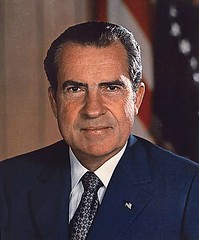
9961340704Richard Nixon1969-1974 Republican Environmental Protection Act; China visit; Moon Landing; Watergate35
9961340705Gerald Ford1974-1977 Republican Pardoning of Nixon; OPEC crisis36
9961340706Jimmy Carter1977-1981 Democrat stagflation / energy crisis; Iran hostage crisis; Camp David Accords37
9961340707Ronald Reagan1981-1989 Republican Conservative revolution; Iran-Contra scandal38
9961340708George H. W. Bush1989-1993 Republican Persian Gulf War39
9961340709Bill Clinton1993-2001 Democrat NAFTA; Lewinsky scandal and impreachment40
9961340710George W. Bush2001-2008 Republican War on terrorism; Patriot Act; Tax cuts; "No Child Left Behind"41
9961340711Barack Obama2008-2017 Democrat Affordable Care Act42
9961340712Donald Trump2017-? Republican "Make America Great Again"43

AMSCO AP US History Chapter 4 Flashcards

AMSCO United States History 2015 Edition, Chapter 4 Imperial Wars and Colonial Protest, 1754-1774

Terms : Hide Images
4972575518Patrick HenryYoung Virginian lawyer who coined the phrase "No taxation without representation" in his speech to the House of Burgesses. (p. 73)0
4972575519Stamp Act CongressRepresentatives from nine colonies met in New York in 1765 and decided that only their own elected representatives had the power to approve taxes. (p. 73)1
4972575520Sons and Daughters of LibertySecret society organized to intimidated tax agents. Sometimes they destroyed revenue stamps and tarred and feathered tax collectors. (p. 73)2
4972575524John Dickinson; Letters from a Farmer in PennsylvaniaIn 1767 and 1768, he argued that the idea of no taxation without representation, was an essential principle of English law. (p. 74)3
4972575525Samuel AdamsIn 1768, he was one of the authors of the the Massachusetts Circular Letter which urged colonies to petition Parliament to repeal the Townshend Acts. (p. 74)4
5571706900James OtisIn 1768, he was one of the authors of the the Massachusetts Circular Letter which urged colonies to petition Parliament to repeal the Townshend Acts. (p. 74)5
5571715086Massachusetts Circular LetterIn 1768, this document was distributed to every colonial legislature. It urged the colonies to petition Parliament to repeal the Townshend Acts. (p. 74)6
4972575531Committees of CorrespondenceInitiated by Samuel Adams in 1772, these letters spread news of suspicious or threatening acts by the British throughout the colonies. (p. 74)7
4972575535Intolerable ActsColonist name for the Coercive Acts of 1774, a series of acts created to punish the colonists for the Boston Tea Party. (p. 75)8
4972575510George IIIIn the 1760s, he was the King of England. (p. 71)9
4972575511WhigsIn the 1760s, this was the dominant political party in Parliament that wanted the American colonies to bear more of the cost of maintaining the British empire. (p. 71)10
4972575512ParliamentThe legislative house of Great Britain. (p. 71)11
4972575509salutary neglectGreat Britain had exercised little direct control over the colonies and did not enforce its navigation laws. This changed after the French and Indian War, as the British adopted more forceful policies for taking control of the colonies. (p. 71)12
4972575528Lord Frederick NorthNew prime minister of Britain who convinced Parliament to repeal the Townshend Acts in 1770. (p. 74)13
4972575513Pontiac's RebellionIn 1763, American Indian chief Pontiac led a major attack against the colonial settlements on the western frontier. The British did not rely on colonial forces, but instead sent their army to deal with the rebellion. This led to the creation of the Proclamation of 1763. (p. 72)14
4972575514Proclamation Act of 1763This proclamation prohibited colonists from settling west of the Appalachian Mountains. The British hoped it would prevent violence between Native Americans and colonists. The colonists were angry and disobeyed the law, moving to the west of the imaginary boundary in large numbers. (p. 72)15
4972575504Seven Years' War (French and Indian War)War fought in the colonies from 1754 to 1763 between the English and the French for possession of the Ohio River Valley area. The English won the war and the Peace of Paris was negotiated in 1763. (p. 70)16
4972575507Albany Plan of UnionThe British government called for representatives from several colonies to meet in Albany, New York in 1754, to provide for an inter-colonial government to recruit troops and collect taxes. Each colony was too jealous of its own taxation powers to accept the plan. (p. 70)17
4972575506Edward BraddockIn 1755, this general led an army from colonial Virginia, to attack the French near Ft. Duquesne. More than 2,000 of his British and colonial troops were defeated by a smaller force of French and American Indians. (p. 70)18
4972575505George WashingtonHe led a small militia from the Virginia colony, to halt the completion of the French fort in the Ohio River Valley, Fort Duquesne. In July 1974, he was forced to surrender to a superior force of Frenchmen and their American Indian allies. This was the beginning of the French and Indian War. (p. 70)19
4972575508Peace of ParisPeace treaty signed to end the French and Indian War (The Seven Years' War) in 1763. Great Britain gained French Canada and Spanish Florida. France gave Spain its western territory. (p. 71)20
4972575515Sugar ActA 1764 British act which placed duties on foreign sugar and other luxuries. Its primary purpose was to raise money for the English Crown. (p. 72)21
4973084571Quartering ACTThis 1765 act required the colonists to provide food and living quarters for British soldiers. (p. 72)22
4972575517Stamp ActThis 1765 act required that revenue stamps be placed on almost all printed paper, such as legal documents, newspapers, and pamphlets. This was the first tax paid directly by the colonists, rather than merchants. Boycotts were effective in repealing this act. (p. 72)23
4972575521Declaratory ActIn 1766, Parliament declared that it had the right to tax and make laws for the colonies in all cases whatsoever. (p. 73)24
4972575522Townshend ActsIn 1767, Parliament enacted new taxes to be collected on imports of tea, glass, and paper. It also created the writs of assistance, which was a general license to search for smuggled goods anywhere. (p. 73)25
5572011156Writs of AssistanceA general license to search anywhere. (p. 73)26
4972575533Tea ActIn 1773, Parliament passed this act which taxed imported tea. The result was that British tea was even cheaper than smuggled Dutch tea. (p. 75)27
5571803095Coercive ActsIn 1774, after the Boston Tea Party, Great Britain created four Coercive Acts to punish the people of Boston and Massachusetts. (p. 75)28
4972575537Port ActOne of the Coercive Acts, which closed the port of Boston, prohibiting trade in and out of the harbor until the destroyed tea was paid for. (p. 75)29
4972575538Massachusetts Government ActOne of the Coercive Acts, which reduced the power of the Massachusetts legislature while increasing the power of the royal governor. (p. 75)30
4972575539Administration of Justice ActOne of the Coercive Acts, which allowed royal officials accused of crimes to be tried in England instead of the colonies. (p. 75)31
4972575541Quebec ActIn 1774, this act organized the Canadian lands gained from France (Quebec). It established Roman Catholicism as the official religion, set up a government without a representative assembly, and set the Quebec border further south, at the Ohio River. (p. 75)32
4972575542EnlightenmentA European movement in literature and philosophy; used human reasoning to solve problems. (p. 76)33
4972575543DeismBelieve that God established natural laws in creating the universe, but that the role of divine intervention in human affairs was minimal. (p. 77)34
4972575544RationalismTrusted human reason to solve the many problems of life and society; emphasized reason, science, and respect for humanity. (p. 77)35
4972575545John LockeEnglish philosopher who said that all people have rights, simply because they are human and that people have a right and a responsibility to revolt against any government that failed to protect their rights. (p. 77)36
4972575546Jean-Jacques RousseauFrench philosopher who had a profound influence on educated Americans in the 1760s and 1770s. (p. 77)37

AP US History Period 1 (1491-1607) Flashcards

Terms : Hide Images
6451553867A land bridge from AsiaHow early Americans reached North and South America0
6451553868Nomadic; following food and herdsThe lifestyle that encouraged Indians to cross the land bridge1
6451553869Mayan, Inca and AztecsThe most complex Indian communities living in South America2
6451553870MaizeThis crop transformed nomadic hunter-gatherer societies into settled farm communities3
6451553871Silk, Spices, Oils/PerfumesItems desired from Persia & China4
6451553872God, Gold & Glory3 motives for Spanish Exploration5
6451553873HispaniolaThe area in which Columbus landed6
6451553874Treaty of TordesillasThe agreement settling the dispute between Spain & Portugal for land in the Americas.7
6451553875Semi-permanent settlementsMost people in the Americas lived in this type of settlement by the time of Christopher Columbus.8
6451553876Anasazi; PuebloTribes that settled in the Southwest; had culture based on farming & irrigation systems with permanent buildings9
6451553877Northwest IndiansLived in permanent longhouses that had a rich diet based on hunting & fishing10
6451553878Great Plains IndiansTribe that was nomadic OR farmers/traders; hunted buffalo, raised maize, beans & squash11
6451553879What did the Treaty of Tordesillas say?Divided the trade routes to Asia: Spain gets the route across the Atlantic and Portugal gets the route around Africa. Also, Spain got a lot of land in the New World and Portugal got present-day Brazil.12
6451553880CortesConquered the Aztecs13
6451553881PizzaroConquered the Incas14
6451553882Bartolome de las CasasMan who stood up for the rights on the natives.15
6451553883RenaissanceTime period that allowed for the invention of gunpowder, the compass and advanced shipbuilding and mapmaking16
6451553886Christopher ColumbusExplorer who won the backing of Queen Isabella & King Ferdinand of Spain to sail west from Europe to the "Indies."17
6451553889Columbian ExchangeExchange of plants, animals, and diseases (beans, corn, potatoes, tomatoes & tobacco) between Old World and New World after the time of Columbus.18
6451553890Corn, beans, potatoes3 crops from the Americas ended up being staple crops in Europe?19
6451553891HorsesAnimal introduced by the Spanish that changed the lifestyle of the Native American20
6451553892Smallpox, malaria, yellow fever, influenzaDiseases from the Old World and went to the New World21
6451553893SyphillisDisease from the New World to the Old World22
6451553895EncomiendaA grant of land made by Spain to a settler in the Americas, including the right to use Native Americans as laborers on it; essentially set up slavery for Native Americans23
6451553896Atlantic slave tradeLasted from 16th century until the 19th century. Trade of African peoples from Western Africa to the Americas. 98% of Africans were sent to the Caribbean, South and Central America.24
6451553897IroquoisA later native group to the eastern woodlands. They blended agriculture and hunting living in common villages constructed from the trees and bark of the forests25
6451553898CherokeeAre a Native American people historically settled in the Southeastern United States (principally Georgia, the Carolinas and Eastern Tennessee). Linguistically, they are part of the Iroquoian-language family.26
6451553899InuitA member of a people inhabiting the Arctic (northern Canada or Greenland or Alaska or eastern Siberia)27
6451553900MayaMesoamerican civilization concentrated in Mexico's Yucatan Peninsula and in Guatemala and Honduras but never unified into a single empire. Major contributions were in mathematics, astronomy, and development of the calendar.28
6451553901Aztec(1200-1521) 1300, they settled in the valley of Mexico. Grew corn. Engaged in frequent warfare to conquer others of the region. Worshipped many gods (polytheistic). Believed the sun god needed human blood to continue his journeys across the sky.29
6451553902IncaTheir empire stretched from what is today Ecuador to central Chili in the Andes Mountain region of South America. Called the Children of the Sun.30
6451553903TenochtitlanCapital of the Aztec Empire, located on an island in Lake Texcoco. Its population was about 150,000 on the eve of Spanish conquest. Mexico City was constructed on its ruins.31
6451553904NomadEarly, simplistic man that migrated across the land bridge.32
6451553909MestizoPeople with mixed Indian & European heritage33
6451553911Pope's Rebellion/Pueblo Revolt1680 conflict that lead to death of hundreds of Spanish colonists and destruction of Catholic churches in the area34
6451553913MercantilismEconomic system in which the colonies exist to enrich the Mother country; attempt to export to colonies more than they import35

Pages

Subscribe to CourseNotes RSS

Need Help?

We hope your visit has been a productive one. If you're having any problems, or would like to give some feedback, we'd love to hear from you.

For general help, questions, and suggestions, try our dedicated support forums.

If you need to contact the Course-Notes.Org web experience team, please use our contact form.

Need Notes?

While we strive to provide the most comprehensive notes for as many high school textbooks as possible, there are certainly going to be some that we miss. Drop us a note and let us know which textbooks you need. Be sure to include which edition of the textbook you are using! If we see enough demand, we'll do whatever we can to get those notes up on the site for you!