

AMSCO AP US History Chapter 6 Flashcards
AMSCO United States History 2015 Edition, Chapter 6 The Constitution and the New Republic, 1787-1800
Terms : Hide Images
| 6652727746 | James Madison | He is one of the people who wrote the Constitution, and he is known as the Father of the Constitution. He was later elected president in 1808, and served for two terms. (p. 104) |  | 0 |
| 6652727747 | Alexander Hamilton | One of the authors of the Federalist Papers. He favored a strong central government. He was George Washington's secretary of the treasury. (p. 106) |  | 1 |
| 6652727748 | Framers of the Constitution | In the summer of 1787, 55 delegates met in Philadelphia to create a federal constitution. As a group they were wealthy, white, male, educated and most were heavily involved in state governments. (p. 104) |  | 2 |
| 6652727749 | Gouverneur Morris | Leader who helped write the Constitution. (p. 105) |  | 3 |
| 6652727750 | John Dickinson | Leader who helped write the Constitution. (p. 105) |  | 4 |
| 6652727751 | Federalists | Favored a strong central government, and a Constitution to improve on the Articles of Confederation. They were most common along the Atlantic coast and in the large cities. (p. 106) |  | 5 |
| 6652727752 | Anti-Federalist | Argued that the proposed Constitution contained no protection of individual rights, and that it gave the federal government too much power. They tended to be small farmers and settlers on the western frontier. (p. 106) |  | 6 |
| 6652727753 | The Federalist Papers | Series of essays, later published as a book, written by James Madison, Alexander Hamilton, and John Jay. It argued effectively in favor of Constitution. (p. 106) |  | 7 |
| 6652727754 | Bill of Rights; amendments | The first ten amendments to the Constitution, added to protect the rights of individual citizens, and adopted in 1781. (p. 108) |  | 8 |
| 6652727755 | Washington's Farewell Address | In late 1796, George Washington wrote this address for publication in newspapers. It warned Americans: not to get involved in European affairs, not to make permanent alliances in foreign affairs, not to from political parties, and not to fall into sectionalism. (p. 115) |  | 9 |
| 6652727756 | permanent alliances | George Washington's farewell address warned against in having permanent alliances in foreign affairs. (p. 115) |  | 10 |
| 6652727757 | Alien and Sedition Acts | Acts by the Federalists, which authorized the president to deport dangerous aliens, and detain enemy aliens in wartime. Made it illegal for newspaper editors to criticize the president or Congress. (p. 117) |  | 11 |
| 6652727758 | Kentucky and Virginia Resolutions | In 1799, two states passed resolutions that argued states had the right to nullify laws passed at the federal level. (p. 117) |  | 12 |
| 6652727759 | slave trade | At the Constitutional Convention it was agreed that the slaves could be imported for twenty more years, until 1808. At that time, Congress could vote to abolish the practice. (p. 105) | 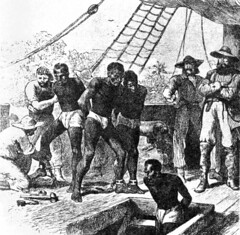 | 13 |
| 6652727760 | infant industries | This was part of Federalist Alexander Hamilton's economic plan. The term for new and developing industries, which were supported by placing high tariffs on imported goods. (p. 110) |  | 14 |
| 6652727761 | national bank | This was part of Federalist Alexander Hamilton's economic plan. He favored a bank for depositing government funds and printing banknotes that could provide the basis for a stable U.S. currency. (p. 110) |  | 15 |
| 6652727762 | tariffs; excise taxes | This was part of Federalist Alexander Hamilton's economic plan. High tariffs were placed on imported goods to help new and developing industries. (p. 110) |  | 16 |
| 6652727763 | Battle of Fallen Timbers | In 1794, the U.S. Army led by General Anthony Wayne defeated the American Indians at this battle in northwestern Ohio. (p. 113) |  | 17 |
| 6652727764 | Treaty of Greenville | In this treaty in 1795, the American Indians surrendered claims to the Ohio Valley and promised to open it to settlement. (p. 113) |  | 18 |
| 6652727765 | Public Land Act (1796) | In 1796, this act established orderly procedures for dividing and selling federal lands at reasonable prices. (p. 113) |  | 19 |
| 6652727766 | Mt. Vernon Conference | In 1785, George Washington hosted a conference at his home, in Mt. Vernon, Virginia. It led to the Annapolis Convention of 1786. (p. 104) |  | 20 |
| 6652727767 | Annapolis Convention | In 1786, only five states sent delegates to this convention. However, it led to Constitutional Convention of 1787. (p. 104) |  | 21 |
| 6652727768 | Constitutional Convention | In the summer of 1787, 55 delegates from the thirteen states, excluding Rhode Island, met in Philadelphia, Pennsylvania. The purpose was to create the Constitution, which would replace the Articles of Confederation. (p. 104) | | 22 |
| 6652727769 | checks and balances | So that one one branch of government could not dominate, the Constitution divided the government into three branches: 1) executive branch led by the president, 2) legislative branch consisting of the Senate and the House of Representatives 3) judicial branch lead by the Supreme Court (p. 109) |  | 23 |
| 6652727770 | Virginia Plan | James Madison's proposal at the Constitutional Convention, which favored the large states. (p. 105) |  | 24 |
| 6652727771 | New Jersey Plan | The counter proposal to the Virginia plan at the Constitutional Convention, it favored the small states. (p 105) |  | 25 |
| 6652727772 | Connecticut Plan; Great Compromise | The compromise solution that was adopted at the Constitutional Convention. It was created by Roger Sherman of Connecticut, it provided for a two house Congress. In the Senate, states would have two senators each, but in the House of Representatives, each state would be represented according to the size of its population. (p. 105) |  | 26 |
| 6652727773 | House of Representatives | Part of the legislative branch, representation would be based on population of each state. (p. 105) |  | 27 |
| 6652727774 | Senate | Part of the legislative branch, there would be two senators from each state. (p. 105) |  | 28 |
| 6652727775 | Three Fifths Compromise | At the Constitutional Convention it was agreed that each slave would be counted as three-fifths of a person for the purpose of determining a state's level of taxation and representation. (p. 105) |  | 29 |
| 6652727776 | Commercial Compromise | At the Constitutional Convention Congress was allowed to regulate interstate and foreign commerce, including placing tariffs on foreign imports but prohibited for placing taxes on exports. (p. 105) |  | 30 |
| 6652727777 | electoral college system | This system would determine the president of the United States. Each state was given a number of electors equal to the total of their number of representatives and senators. These electors would then vote to determine the president. (p. 106) |  | 31 |
| 6652727778 | Legislative branch | The branch of the federal government that makes the laws, consisting of the Senate and the House of Representatives. (p. 105) |  | 32 |
| 6652727779 | Congress | The legislative branch consisting of the Senate and the House of Representatives. (p. 105) |  | 33 |
| 6652727780 | executive departments; cabinet | George Washington organized new departments of the executive (law-enforcing) branch. These appointments had to be confirmed by the Senate. The term for the heads of the executive departments appointed by the president. (p. 110) |  | 34 |
| 6652727781 | Henry Knox | President George Washington's secretary of war. (p. 110) |  | 35 |
| 6652727782 | Edmund Randolph | President George Washington's attorney general. (p. 110) |  | 36 |
| 6652727783 | Judiciary Act (1789) | In 1789, this act established a Supreme Court with one chief justice and five associate justices. The Supreme Court was able to rule on the constitutionality of state courts. It provided for a system of thirteen district courts and three courts of appeals. (p. 110) |  | 37 |
| 6652727784 | federal courts | Thirteen district courts and three courts of appeals created by the Judiciary Act. (p. 110) |  | 38 |
| 6652727785 | Supreme Court | The only court mentioned in the Constitution. Although, other federal courts were created. (p. 110) |  | 39 |
| 6652727786 | national debt | This was part of Federalist Alexander Hamilton's economic plan. He insisted that the federal government assume the war debts of the states and pay off the national debt at face value. (p. 110) |  | 40 |
| 6652727787 | Whiskey Rebellion | In 1794, a group of farmers in western Pennsylvania, refused to pay a federal excise tax (tax on a specific product) on whiskey they were producing. President Washington responded by using 15,000 militiamen to stop the rebellion with almost no bloodshed. (p. 113) |  | 41 |
| 6652727788 | Federalists era | The period of U.S. history in the 1790s when Federalists, led by Alexander Hamilton, dominated the government. (p. 114) |  | 42 |
| 6652727789 | Democratic-Republican Party | Political party that were against the Federalists. They opposed strong central government and favored states rights. They were led by Thomas Jefferson. (p. 114) |  | 43 |
| 6652727790 | political parties | Not anticipated by founders of the United States. However, buy 1787, the Federalists and Democratic-Republicans parties were forming to push their agendas. (p. 113) |  | 44 |
| 6652727791 | two-term tradition | In 1796, George Washington decided to step down after two terms (four years per term) as president. This set the precedent, until Franklin Delano Roosevelt won four elections. In 1951, the 22nd amendment made two-term limit part of the Constitution. (p. 115) |  | 45 |
| 6652727792 | John Adams | In 1796, this Federalist, was elected as the second president of the United States. In 1800, he lost the presidential election to Thomas Jefferson, a Democratic-Republican. (p. 115, 117) |  | 46 |
| 6652727793 | Revolution of 1800 | In the 1800 election, Democratic-Republicans came into power in both the executive and legislative branches of government. They defeated the Federalists and peacefully took power, which was an uncommon event at that time in history. (p. 118) |  | 47 |
| 6652727794 | French Revolution | Americans generally supported the French people's aspiration to establish a republic, but many were horrified by the reports of mob hysteria and mass executions. Thomas Jefferson and his supporters argued that the U.S. should join France in its defensive war against Britain. However, George Washington believed that the U.S. was too young a nation and not strong enough to engage in a European war. (p. 111) |  | 48 |
| 6652727795 | Proclamation of Neutrality (1793) | In 1793, President George Washington issued a proclamation the U.S. would remain neutral in the war between Britain and France. (p. 111) |  | 49 |
| 6652727796 | "Citizen" Genet | Edmund Gent, the French minister to the United States, objected to Washington's neutrality in the war between Britain and France. He appealed directly to the American people to support the French cause. France removed him from his position at the United States's request. (p. 111) |  | 50 |
| 6652727797 | Jay Treaty (1794) | In 1794, this treaty with Britain, was negotiated by Chief Justice John Jay. The U.S. wanted Britain to stop seizing U.S. ships and impressing our sailors. However, the treaty said nothing about ship seizures, and Britain only agreed to evacuate posts on the U.S. frontier. (p. 111) |  | 51 |
| 6652727798 | Pinckney Treaty (1795) | In 1795, Thomas Pinckney, the U.S. minister to Spain, negotiated this treaty with Spain. Spain agreed to open the lower Mississippi and New Orleans to trade. The right of deposit was granted to Americans so they could transfer cargos in New Orleans without paying duties. It was agreed that Spain would only control area south of the 31st parallel. (p 112) |  | 52 |
| 6652727799 | Right of deposit | United States ships gained right to transfer cargoes in New Orleans without Spanish duties. (p. 112) |  | 53 |
| 6652727800 | XYZ Affair | President John Adams sent a delegation to Paris to negotiate over U.S. merchant ships being attacked by French ships. French ministers, known as X, Y, and Z, because there names were never revealed, requested bribes. President Adams resisted a call for war, by sending a new delegation to France. (p. 116) |  | 54 |
Flashcards
Flashcards
Flashcards
AP US History Period 2 (1607-1754) Flashcards
Important vocabulary of the colonization of North America in the 17th century.
Terms : Hide Images
| 6633550069 | Jamestown | 1st permanent English settlement in North America in 1607. |  | 0 |
| 6633550070 | John Smith | A captain famous for world travel. As a young man, he took control in Jamestown. He organized the colony and saved many people from death the next winter and coined the phrase "he who shall not work, shall not eat". He also initiated attacks on Natives. |  | 1 |
| 6633550071 | John Rolfe | He was one of the English settlers at Jamestown (and he married Pocahontas). He discovered how to successfully grow tobacco in Virginia and cure it for export, which made Virginia an economically successful colony. Eventually, he was killed in a Pequot attack. |  | 2 |
| 6633550072 | Pocohontas | An American Indian princess who saved the life of John Smith and helped form more peaceful relations with the Powhatan when she married John Rolfe but died of smallpox in England on a visit to Rolfe's family. Her remains are still there as the English government refuses to send her remains back to North America. |  | 3 |
| 6633550073 | Mayflower Compact | 1620 - The first agreement for self-government in America. It was signed by the 41 men on the Mayflower and set up a government for the Plymouth colony |  | 4 |
| 6633550074 | John Winthrop | As governor of Massachusetts Bay Colony, Winthrop (1588-1649) was instrumental in forming the colony's government and shaping its legislative policy. He envisioned the colony, centered in present-day Boston, as a "city upon a hill" from which Puritans would spread religious righteousness throughout the world. |  | 5 |
| 6633550075 | Puritans | A religious group who wanted to purify the Church of England. They came to America for religious freedom and settled Massachusetts Bay. |  | 6 |
| 6633550076 | Pilgrims | English Puritans who founded Plymouth colony in 1620 |  | 7 |
| 6633550077 | Massachusetts Charter | Allowed Puritans to take a charter with them and establish their own government in the New World. |  | 8 |
| 6633550078 | Loss of Massachusetts Charter | Revoking of Mass. Charter by King George II due to the colonists refusal to obey by the Navigation Acts leading to anti-British feeling in the New England region. | 9 | |
| 6633550079 | New Amsterdam | A settlement established by the Dutch near the mouth of Hudson River and the southern end of Manhattan Island as a trade port for the Dutch trade empire. |  | 10 |
| 6633550080 | Great Migration of Puritans | 1630s- 70,000 refugees left England for New World increasing population of New England. |  | 11 |
| 6633550081 | New York | It was founded by the Dutch for trade and furs and became an English Colony in 1664, when the English were determined to end Dutch trade dominance, and took over the colony by invading New Amsterdam without having to fire a shot. |  | 12 |
| 6633550083 | House of Burgesses | 1619 - The Virginia House of Burgesses formed, the first legislative body in colonial America. It was made up of two representatives from teach town voted on by men who owned property. Later other colonies would adopt the Houses of Burgesses concept creating self-governing bodies in the colonies. |  | 13 |
| 6633550084 | Headright system | Headrights were parcels of land consisting of about 50 acres which were given to colonists who brought indentured servants into America. They were used by the Virginia Company to attract more colonists. |  | 14 |
| 6633550085 | Indentured servants | Colonists who received free passage to North America in exchange for working without pay for a certain number of years |  | 15 |
| 6633550086 | Bacon's Rebellion | 1676 - Nathaniel Bacon and other western Virginia settlers were angry at Virginia Governor Berkley for trying to appease the Doeg Indians after the Doegs attacked the western settlements. The frontiersmen formed an army, with Bacon as its leader, which defeated the Indians and then marched on Jamestown and burned the city. The rebellion ended suddenly when Bacon died of an illness. |  | 16 |
| 6633550087 | King Phillip's War | Under the leadership of Metacom, or King Phillip, the Wampanoag destroyed colonial towns, the colonists destroyed native farms, leading to the most deadly of Indian Wars. The war was disastrous for the natives leading to few surviving the war, and those that did left New England. |  | 17 |
| 6633550088 | royal colony | A colony ruled by governors appointed by a king |  | 18 |
| 6633550089 | proprietary colony | English colony in which the king gave land to proprietors in exchange for a yearly payment |  | 19 |
| 6633550090 | town meetings | A purely democratic form of government common in the colonies, and the most prevalent form of local government in New England. In general, the town's voting population would meet once a year to elect officers, levy taxes, and pass laws. |  | 20 |
| 6633550091 | Salem Witch Trials | 1629 outbreak of witchcraft accusations in a Puritan village marked by an atmosphere of fear, hysteria, and unfounded accusations in courts with Puritan ministers who served as judges. 19 women were executed. |  | 21 |
| 6633550092 | Roger Williams | A dissenter who clashed with the Massachusetts Puritans over separation of church and state and was banished in 1636, after which he founded the colony of Rhode Island to the south. |  | 22 |
| 6633550093 | Intolerant | Not willing to accept ways of thinking different from one's own. The expansion of colonies in New England was a direct result of Puritan intolerance as dissenters were exiled and created new settlements. | 23 | |
| 6633550094 | Anne Hutcheson | One of the dissenters in Puritan Massachusetts held bible studies at her house and believed in a personal relationship with god. She moved to New Hampshire where she died along with her children from an Indian attack. |  | 24 |
| 6633550095 | Thomas Hooker | A Puritan minister who led about 100 settlers out of Massachusetts Bay to Connecticut because he believed that the governor and other officials had too much power. He wanted to set up a colony in Connecticut with strict limits on government. He wrote the first written constitution "The Fundamental Orders of Connecticut". This would become a cherished ideal of the colonial settlers that laws were written not arbitrary. |  | 25 |
| 6633550096 | Sir William Berkeley | The royal governor of Virginia. Adopted policies that favored large planters and neglected the needs of recent settlers in the "backcountry." One reason was that he had fur trade deals with the natives in the region. His shortcomings led to Bacon's Rebellion |  | 26 |
| 6633550097 | William Penn | Established the colony of Pennsylvania as a "holy experiment". Freemen had the right to vote, provided leadership for self- government based on personal virtues and Quaker religious beliefs. His colony was religiously tolerant leading to diversity in the region. |  | 27 |
| 6633550098 | James Oglethorpe | Founded colony of Georgia as a chance for poor immigrants who were in debt to have a second chance at a comfortable life |  | 28 |
| 6633550099 | Lord Baltimore | 1694- He was the founder of Maryland, a colony which offered religious freedom, and a refuge for the persecuted Roman Catholics. |  | 29 |
| 6633550100 | Fundamental Orders of Connecticut | It has the features of a written constitution, and is considered by some as the first written Constitution. The Fundamental Orders of Connecticut is a short document, but contains some principles that were later applied in creating the United States government. Government is based in the rights of an individual, and the orders spell out some of those rights, as well as how they are ensured by the government. It provides that all free men share in electing their magistrates, and uses secret, paper ballots. It states the powers of the government, and some limits within which that power is exercised. |  | 30 |
| 6633550101 | Halfway Covenant | A Puritan church document; In 1662, the Halfway Covenant allowed partial membership rights to persons not yet converted into the Puritan church; It lessened the difference between the "elect" members of the church from the regular members; Women soon made up a larger portion of Puritan congregations. |  | 31 |
| 6633550102 | Dominion of New England | 1686 - The British government combined the colonies of Massachusetts, Rhode Island, New Hampshire, and Connecticut into a single province headed by a royal governor (Edmund Andros). The Dominion ended in 1692, when the colonists revolted and drove out Governor Andros. |  | 32 |
| 6633550103 | Acts of Trade and Navigation | Three acts that regulated colonial trade: 1st act: closed the colonies to all trade except that from English ships, and required the colonists to export certain goods, such as tobacco, to only English territories, 2nd act: (1663) demanded that everything being shipped from Europe to the colonies had to pass through England so they could tax the goods. 3rd act: 1673, was a reaction to the general disregard of the first two laws; it forced duties on the coastal trade among the colonies and supplied customs officials to enforce the Navigation Acts. |  | 33 |
| 6633550104 | Mercantilism | An economic policy under which nations sought to increase their wealth and power by obtaining large amounts of gold and silver and by selling more goods than they bought. |  | 34 |
| 6633550105 | Triangular Slave Trade | A practice, primarily during the eighteenth century, in which European ships transported slaves from Africa to Caribbean islands, molasses from the Caribbean to Europe, and trade goods from Europe to Africa. |  | 35 |
| 6633550106 | Middle Passage | A voyage that brought enslaved Africans across the Atlantic Ocean to North America and the West Indies. The conditions on the ships from Africa to the west led to the loss of hundreds of thousands of lives. |  | 36 |
| 6633550107 | Social mobility | Movement of individuals or groups from one position in a society's stratification system to another | 37 | |
| 6633550108 | Ben Franklin | A colonial businessman and scientist who was an example of American social mobility and individualism. He was a delegate from Pennsylvania in colonial meetings, and proposed the "Albany Plan of the Union" as a way to strengthen the colonies in the French and Indian War. He was a leading figure in the movement toward revolution, and as a diplomat to France to get help during the American Revolution |  | 38 |
| 6633550109 | Great Awakening | (1730s and 1740s) Religious movement characterized by emotional preaching (Jonathan Edwards & George Whitefield). It established American religious precedents such as camp meetings, revivals, and a "born again" philosophy. The first cultural movement to unite the thirteen colonies. It was associated with the democratization of religion, and a challenge to existing authorities and was an influence leading to the American Revolution. |  | 39 |
| 6633550110 | Jonathan Edwards | A leading minister during the Great Awakening, he delivered the famous sermon "Sinners in the Hands of an Angry God" promising that evildoers would pay a price on judgement day. |  | 40 |
| 6633550111 | African American Culture | Slave communities were rich with music, dance, basket-weaving, and pottery-making. Enslaved Africans brought them the arts and crafts skills of their various tribes. |  | 41 |
| 6633550112 | George Whitfield | English preacher who led the Great Awakening by traveling through the colonies |  | 42 |
| 6633550113 | French & Indian War | 1754 - 1763; conflict between France and Great Britain over land in North America in the Ohio River Valley. |  | 43 |
| 6633550114 | Ohio River Valley | Controversial land that led to the French and Indian War; British win war and claim this land; region where British fur traders went; rich soil for farming. | 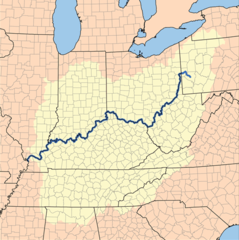 | 44 |
| 6633550117 | Join or Die | Famous cartoon drawn by Ben Franklin which encouraged the colonies to join in fighting the British during the French and Indian War | 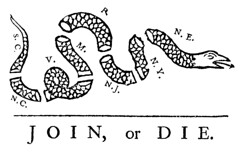 | 45 |
| 6633550118 | Albany Plan of Union, 1754 | Plan proposed by Benjamin Franklin that sought to unite the 13 colonies for trade, military, and other purposes; the plan was turned down by the colonies & the Crown. |  | 46 |
AP US History Vocabulary Flashcards
Terms : Hide Images
| 5915735771 | Jamestown | The first successful English colony. Founded in 1607. | 0 | |
| 5915735774 | Virginia House of Burgesses | 1619 - the first legislative body in colonial America. Later other colonies would adopt the same system. | 1 | |
| 5915735775 | Mayflower Compact | 1620 - The first agreement for self-government in America. It was signed by the 41 men on the Mayflower and set up a government for the Plymouth colony. | 2 | |
| 5915735778 | Massachusetts Bay Colony | 1629 - King Charles gave the Puritans a right to settle and govern this area. The Puritans established political freedom and a representative government. | 3 | |
| 5915735785 | Bacon's Rebellion | 1676 - A protest against the government of Virginia, in particular Governor Berkley, for not allowing a full-fledged war on the Native Americans. These frontiersmen first defeated the Indians and then burned Jamestown. | 4 | |
| 5915735792 | Indentured servants | In exchange for paying for a passage to the American colonies, this person would serve for a set length of time (usually seven years) and then would be free. | 5 | |
| 5915735793 | mercantilism | The economic policy of Europe in the 1500s through 1700s. The government exercised control over industry and trade with the idea that national strength and economic security comes from exporting more than is imported. | 6 | |
| 5915735795 | The Great Awakening | (1739-1744) This was a sudden outbreak of religious fervor that swept through the colonies. One of the first events to unify the colonies. | 7 | |
| 5915735801 | French and Indian War | (1756-1763) Part of the Seven Years' War in Europe. Britain and France fought for control of the Ohio Valley and Canada. Britain eventually won, and gained control of all of the remaining French possessions in Canada. | 8 | |
| 5915735802 | Proclamation of 1763 | (1756-1763) Part of the Seven Years' War in Europe. Britain and France fought for control of the Ohio Valley and Canada. Britain eventually won, and gained control of all of the remaining French possessions in Canada. | 9 | |
| 5915735804 | Stamp Act of 1765 | British legislation passed which required that all legal or official documents used in the colonies, such as wills, deeds and contracts, had to be written on special, taxed British paper. | 10 | |
| 5915735808 | "Common Sense" | Published on January 1, 1776, this document encouraged the colonies to seek independence. It spoke out against the unfair treatment of the colonies by the British government and was instrumental in turning public opinion in favor of the Revolution. | 11 | |
| 5915735811 | The Northwest Ordinance | Set up the framework of a government for the unorganized territory in the 1780s. This provided that the Territory would be divided into 3 to 5 states, outlawed slavery in the Territory, and set 60,000 as the minimum population for statehood. | 12 | |
| 5915735812 | Shay's Rebellion | (1786-87) Poor, indebted landowners in Mass achusetts rebelled against the state gov't to avoid paying taxes. The federal governme nt was too weak to help, a sign that the Articles of Confederation we ren't working effectively. | 13 | |
| 5915735813 | The Constitution | The document which established the present federal government of the United States and outlined its powers. It can be changed through amendments. | 14 | |
| 5915735816 | The Federalist Papers | This collection of essays by John Jay, Alexander Hamilton, and James Madison, explained the importance of a strong cen tral government. It was published to convince New York to ratify the Constitution. | 15 | |
| 5915735823 | Whiskey Rebellion | In 1794, rebel farmers in Pennsylvania rebelled against Hamilton's excise tax on whiskey, and were quickly stopped by the US army. The incident showed that the new government under the Constitution could react swiftly and effectively to such a problem. | 16 | |
| 5915735824 | XYZ affair | Three French agents told American delegates that they could meet with the French foreign minister only in exchange for a very large bribe. The Americans did not pay the bribe, and in 1798 Adams made this incident public. | 17 | |
| 5915735825 | Alien and Sedition Acts | The Federalist laws created in the interest of the nation's security and to stifle Democratic-Republican criticism. | 18 | |
| 5915735826 | Kentucky and Virginia Resolutions | Written anonymously by Jefferson and Madison in response to the Alien and Sedition Acts, they declared that states could nullify federal laws that the states considered unconstitutional. | 19 | |
| 5915735827 | Revolution of 1800 | Jefferson's election changed the direction of the government from Federalist to Democratic- Republican, so it was called a "revolution." | 20 | |
| 5915735828 | Marbury v. Madison | The Supreme Court decision that established the power of the judicial review, which allows the Supreme Court to declare laws unconstitutional. | 21 | |
| 5915735832 | Clay's American System | Proposed after the War of 1812, it included using federal money for internal improvements (roads, bridges, industrial improvements, etc.), enacting a protective tariff to foster the growth of American industries, and strengthening the national bank. | 22 | |
| 5915735834 | Monroe Doctrine | (1823) Declared that Europe should not interfere in the affairs of the Western Hemisphere and that any attempt at interference by a European power would be seen as a threat to the U.S. | 23 | |
| 5915735841 | Lowell System | Representative of the earliest forms of industrialization in the U.S., this manufacturing setup hired mainly farm girls to work in their factories. | 24 | |
| 5915735842 | "Tariff of Abominations" | (1828) This raised the tax on imported manufactured goods. It protected the North but harmed the South; South said that the tax was economically discriminatory and unconstitutional because it violated state's rights. | 25 | |
| 5915735850 | Nat Turner's Rebellion | (1831) The largest slave uprising in American history. Occurred in Virginia and left 55 white southerners dead. | 26 | |
| 5915735851 | Whig Party | Political party with policies that included policies included support of industry, protective tariffs, and Clay's American System. People in this party include Henry Clay, Daniel Webster, and, for a while, Calhoun. | 27 | |
| 5915735852 | Seneca Falls | (1848) - Site of the first modern women's right convention. At the gathering, Elizabeth Cady Staton read a Declaration of Sentiment listing the many discriminations against women. | 28 | |
| 5915735853 | Manifest Destiny | The theory that Americans were given the divine right to settle from coast to coast across the North American continent. | 29 | |
| 5915735854 | Treaty of Guadalupe Hidalgo | This treaty required Mexico to cede the American Southwest, including New Mexico, Colorado, Utah, Arizona, Nevada and California, to the U.S. U.S. gave Mexico $15 million in exchange. | 30 | |
| 5915735857 | Popular sovereignty | The theory that the people of the new territories should determine the fate of slavery, not the federal Congress. | 31 | |
| 5915735858 | Harriet Beecher Stowe | She wrote the abolitionist book, Uncle Tom's Cabin. It has been called the greatest American propaganda novel ever written, and helped to bring about the Civil War. | 32 | |
| 5915735859 | Kansas-Nebraska Act | 1854 - This act repealed the Missouri Compromise. Popular sovereignty would determine whether these territories would be slave or free states. | 33 | |
| 5915735861 | 91. Know Nothing Party | A nativist political party that opposed immigration and Catholics. It was founded in the 1840s and was also known as the American Party. | 34 | |
| 5915735862 | Dred Scott decision | A Missouri slave sued for his freedom, claiming that his four year stay in the northern portion of the Louisiana Territory made free land by the Missouri Compromise had made him a free man. The U.S. Supreme Court decided he couldn't sue in federal court because he was property, not a citizen. | 35 | |
| 5915735863 | John Brown | A radical abolitionist who believed he had been ordained by God to put a stop to the institution of slavery in the U.S. Led the Pottawatomie Creek massacre and the raid on Harper's Ferry. | 36 | |
| 5915735864 | Emancipation Proclamation | With this Lincoln freed all slaves in the states that had seceded. It was released after the Northern victory at the Battle of Antietam. Lincoln had no power to enforce the law. | 37 | |
| 5915735869 | Freedman's Bureau | (1865) Agency set up to aid former slaves in adjusting themselves to freedom. It furnished food and clothing to needy blacks and helped them get jobs. | 38 | |
| 5915735870 | 13th Amendment | (1865) Freed all slaves, abolished slavery. | 39 | |
| 5915735871 | 14th Amendment | (1866, ratified 1868) This granted in the Constitution full citizenship to all nativeborn or naturalized Americans, including former slaves and immigrants. | 40 | |
| 5915735872 | 15th Amendment | (Ratified 1870) No one could be denied the right to vote on account of race, color or having been a slave. It was to prevent states from amending their constitutions to deny black suffrage. | 41 | |
| 5915735874 | 104. Compromise of 1877 | Deal struck between the Democrats and Republicans that allowed Hayes to become President and for Reconstruction in the South to come to an end. | 42 | |
| 5915735879 | Social Darwinism | Applied the theory of natural selection and "survival of the fittest" to human society - - the poor are poor because they are not as fit to survive. Used as an argument against social reforms to help the poor. | 43 | |
| 5915735884 | Sherman Anti-Trust Act | (1890) A federal law that committed the American government to opposing monopolies; it prohibits contracts, combinations and conspiracies in restraint of trade. | 44 | |
| 5915735889 | Chinese Exclusion Act | (1882) This race-based law was supported by American workers who worried about losing their jobs to immigrants who would work for less pay. | 45 | |
| 5915735892 | cult of domesticity | The idea that one of a woman's duties is to foster an artistic and educational environment in her "sphere", the home. | 46 | |
| 5915735893 | Jane Addams | Social reformer who worked to improve the lives of the working class. In 1889 she founded Hull House in Chicago. | 47 | |
| 5915735894 | Populist Party | Founded in 1891, this party's platform called for free coinage of silver and paper money; national income tax; direct election of senators; regulation of railroads; and other government reforms to help farmers. | 48 | |
| 5915735898 | Muckrackers | Journalists who searched for and publicized real or alleged acts of corruption of public officials, businessmen, etc. Name coined by Teddy Roosevelt in 1906. | 49 | |
| 5915735899 | Pure Food and Drug Act | This legislation forbade the manufacture or sale of mislabeled or adulterated food or drugs. Still in existence as the FDA. | 50 | |
| 5915735910 | 140. Espionage and Sedition Acts | These pieces of legislation were designed to prevent "disloyal, profane, scurrilous, or abusive language" to be used against the government during WWI. | 51 | |
| 5915735913 | 19th Amendment | Granted women's suffrage. | 52 | |
| 5915735917 | Sacco & Vanzetti case | This event culminated in the execution of two immigrants. Convicted on circumstantial evidence, many believed they had been framed for the crime because of their anarchist and pro-union activities. | 53 | |
| 5915735923 | Lend-lease | After repealing the Neutrality Acts, the U.S. adopted this system of aiding the Allied forces without actually sending troops to fight. | 54 | |
| 5915735928 | containment | Foreign policy established by George Kennan which stated that the best way to keep Communism out of Europe was to confront the Russians wherever they tried to spread their power. | 55 | |
| 5915735929 | Truman Doctrine | Established in 1947, this policy established that the U.S. would support any nation threatened by Communism. | 56 | |
| 5915735930 | Marshall Plan | Introduced by Secretary of State in 1947, he proposed massive and systematic American economic aid to Europe to revitalize the European economies after WWII and help prevent the spread of Communism. | 57 | |
| 5915735936 | 174. Brown v. Board of Education of Topeka | (1954) The Supreme Court overruled Plessy v. Ferguson, declared that racially segregated facilities are inherently unequal and ordered all public schools desegregated. | 58 | |
| 5915735937 | 175. Little Rock "9" | (1957) Governor Faubus sent the Arkansas National Guard to prevent black students from entering Central High School. Eisenhower sent in U.S. paratroopers to ensure the students could attend class. | 59 | |
| 5915735939 | Cuban Missile Crisis | (October 14-28, 1962) After two weeks of confrontation that led to the brink of nuclear war, Khrushchev backed down and agreed to dismantle nuclear launch sites ninety-miles off of US soil. | 60 | |
| 5915735947 | Gulf of Tonkin Resolution | (August, 1964) - After the U.S. Navy ship Maddox reportedly was fired on, the U.S. Congress passed this which gave the president power to send troops to Vietnam to protect against further North Vietnamese aggression. | 61 | |
| 5915735956 | . Kent State | (May 4, 1970) National Guardsmen opened fire on a group of students protesting the Vietnam War. | 62 | |
| 5915735957 | Vietnamization | The effort to build up South Vietnamese troops while withdrawing American troops, it was an attempt to turn the war over to the Vietnamese. | 63 | |
| 5915735958 | Strategic Arms Limitation Treaty (SALT) I | (May 1972) Signed by Nixon and Brezhnev in Moscow. Limited the production of nuclear weapons in certain categories. | 64 | |
| 5915735959 | Détente | A lessening of tensions between U.S. and Soviet Union during the Nixon administration. | 65 | |
| 5915735960 | Watergate | (June 17, 1972) Five men arrested for breaking into the Democratic National Committee's executive quarters in the Watergate Hotel. The ensuing cover-up eventually led to Nixon's resignation. | 66 | |
| 5915735961 | War Powers Act | Gave any president the power to go to war under certain circumstances, but required that he could only do so for 90 days before being required to officially bring the matter before Congress. | 67 | |
| 5915735962 | Camp David Accords | Peace talks between Egypt and Israel mediated by President Carter. | 68 | |
| 5915735963 | Reaganomics | The economic theory that if you cut taxes, it will spur the growth of public spending and improve the economy. It included tax breaks for the rich, "supply-side economics," and "trickle down" theory. | 69 |
AP US History Period 8 (1945-1980) Flashcards
Terms : Hide Images
| 6704926779 | Levittown | In 1947, a builder used mass production techniques to build inexpensive homes in surburban New York |  | 0 |
| 6704926780 | Iron Curtain | A political barrier that isolated the peoples of Eastern Europe after WWII. | 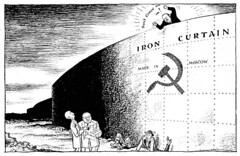 | 1 |
| 6704926781 | Truman Doctrine | 1947, policy of providing economic and military aid to any country threatened by communism |  | 2 |
| 6704926782 | Marshall Plan | A U.S. program of economic aid for war-torn Europe (1948-1952) |  | 3 |
| 6704926783 | Berlin Blockade | a Soviet attempt to starve out the allies in Berlin in order to gain supremacy. |  | 4 |
| 6704926784 | Korean War | The conflict between Communist North Korea and Non-Communist South Korea. |  | 5 |
| 6704926785 | McCarthyism | The term associated with a senator who led the search for communists in America during the early 1950s. |  | 6 |
| 6704926786 | Interstate Highway Act | 1956 law that authorized the spending of $32 billion to build 41,000 miles of highway |  | 7 |
| 6704926787 | Sputnik | First satellite launched into space. |  | 8 |
| 6704926788 | NASA | The United States government agency responsible for the civilian space program. |  | 9 |
| 6704926790 | Bay of Pigs | In April 1961, a group of Cuban exiles organized and supported by the U.S. CIA landed on Cuban coast in an effort to overthrow Fidel Castro. |  | 10 |
| 6704926791 | Freedom Rides | 1961 event organized by CORE and SNCC to test southern states' compliance to integration. |  | 11 |
| 6704926792 | Cuban Missile Crisis | U.S. discovered Soviet nuclear missiles on Cuba, President JFK demanded their removal and announced a naval blockade of the island |  | 12 |
| 6704926793 | Rachel Carson | United States biologist remembered for her opposition to the use of pesticides. Silent Spring |  | 13 |
| 6704926794 | Civil Rights Act of 1964 | Banned discrimination in public acomodations |  | 14 |
| 6704926795 | Voting Rights Act of 1965 | Banned the use of any test or device to deny suffrage. |  | 15 |
| 6704926796 | Gulf of Tonkin Resolution | Authorized President Johnson to commit US troops to South Vietnam and fight a war against north Vietnam |  | 16 |
| 6704926797 | Cesar Chavez | 1927-1993. Farm worker, labor leader, and civil-rights activist who helped migrant farm workers. |  | 17 |
| 6704926798 | Malcolm X | 1952, converted to Nation of Islam in jail in the 50s. |  | 18 |
| 6704926800 | Woodstock | A free music festival that attracted more than 400,000 young people to upstate New York 1969 |  | 19 |
| 6704926801 | Earth Day | A holiday conceived of by environmental activist and Senator Gaylord Nelson | 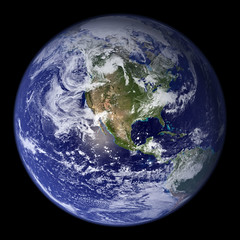 | 20 |
| 6704926802 | Kent State Massacre | Protests to the war that lead to National Guard being called in and shot students because they burned the ROTC building. | 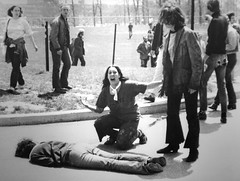 | 21 |
| 6704926805 | Roe v Wade | Established national abortion guidelines. |  | 22 |
| 6704926806 | Watergate | 1972, A security gaurd foiled an attempt to bug the Democratic National Committe Headquarters, exposing the Republican scandal. |  | 23 |
AP US History Period 5 (1844-1877) Flashcards
Terms : Hide Images
| 5928198478 | Popular Sovereignty | Notion that the sovereign people of a given territory should decide whether to allow slavery. Seemingly a compromise, it was largely opposed by Northern abolitionists who feared it would promote the spread of slavery to the territories. |  | 0 |
| 5928198479 | Fugitive Slave Law | Passed as part of the Compromise of 1850, it set high penalties for anyone who aided escaped slaves and compelled all law enforcement officers to participate in retrieving runaways. Strengthened the antislavery cause in the North. |  | 1 |
| 5928198480 | Uncle Tom's Cabin | Harriet Beecher Stowe's widely read novel that dramatized the horrors of slavery. It heightened Northern support for abolitions and escalated the sectional conflict. |  | 2 |
| 5928198481 | New York Draft Riots | Uprisings during the Civil War (1863), mostly of working-class Irish-Americans, in protest of the draft. Rioters were particularly incensed by the ability of the rich to hire substitutes or purchase exemptions. |  | 3 |
| 5928198482 | Emancipation Proclamation | 1863. Declared all slaves in rebelling states to be free but did not affect slavery in non-rebelling Border States. The Proclamation closed the door on possible compromise with the South and encouraged thousands of Southern slaves to flee to Union lines. |  | 4 |
| 5928198483 | Sherman's March to the Sea | 1864-1865. Union General William Tecumseh Sherman's destructive march through Georgia. An early instance of "total war", purposely targeting infrastructure and civilian property to diminish morale and undercut the Confederate War effort. |  | 5 |
| 5928198484 | Freedmans' Bureau | 1865-1872. Created to aid newly emancipated slaves by providing food, clothing, medical care, education, and legal support. Its achievements were never and depended largely on the quality of local administrators. |  | 6 |
| 5928198485 | Black Codes | 1865-1866. Laws passed throughout the South to restrict the rights of emancipated blacks, particularly with respect to negotiating labor contracts. Increased Norhterners' criticisms of President Andrew Johnson's lenient Reconstruction policies. |  | 7 |
| 5928198486 | KKK (Ku Klux Klan) | An extremist, paramilitary, right-wing secret society founded in the mid-nineteenth century and revived during the 1920s. It was anti-foreign, anti-black, anti-Jewish, anti-pacifist, anti-Communist, anti-internationalist, anti-evolutionist, and anti-bootlegger, but pro-Anglo-Saxon and pro-Protestant. Its members, cloaked in sheets to conceal their identities, terrorized freedmen and sympathetic whites throughout the South after the Civil War. By the 1890s, Klan-style violence and Democratic legislation succeeded in virtually disenfranchising all Southern blacks. |  | 8 |
| 5928198487 | Sharecropping | An agricultural system that emerged after the Civil War in which black and white farmers rented land and residences from a plantation owner in exchange for giving him a certain "share" of each year's crop. Sharecropping was the dominant form of southern agriculture after the Civil War, and landowners manipulated this system to keep tenants in perpetual debt and unable to leave their plantation. |  | 9 |
| 5928198488 | Hayes-Tilden Election | The South conceded to let Hayes win the presidency because he agreed to pull out the troops. |  | 10 |
| 5928198489 | Compromise of 1850 | Admitted California as a free state, opened New Mexico and Utah to popular sovereignty, ended the slave trade (but not slavery itself) in Washington D.C., and introduced a more stringent fugitive slave law. Widely opposed in both the North and South, it did little to settle the escalating dispute over slavery. |  | 11 |
| 5928198490 | Kansas-Nebraska Act | 1854. Proposed that the issue of slavery be decided by popular sovereignty in the Kansas and Nebraska territories, thus revoking the 1820 Missouri Compromise. Introduced by Stephen Douglass in an effort to bring Nebraska into the Union and pave the way for a northern transcontinental railroad. |  | 12 |
| 5928198491 | Homestead Act | 1862. A federal law that gave settlers 160 acres of land for about $30 if they lived on it for five years and improved it by, for instance, building a house on it. The act helped make land accessible to hundreds of thousands of westward-moving settlers, but many people also found disappointment when their land was infertile or they saw speculators grabbing up the best land. |  | 13 |
| 5928198492 | Gettysburg Address | 1863. Abraham Lincoln's oft-quoted speech, delivered at the dedication of the cemetery at Gettysburg battlefield. In the address, Lincoln framed the war as a means to uphold the values of liberty. |  | 14 |
| 5928198493 | Appomattox Court House | Site (city) where Robert E. Lee surrendered to Ulysses S. Grant in April 1865 after almost a year of brutal fighting throughout Virginia in the "Wilderness Campaign". |  | 15 |
| 5928198494 | 10% Reconstruction Plan | 1863. Introduced by President Lincoln, it proposed that a state be readmitted to the Union once 10 percent of its voters had pledged loyalty to the United States and promised to honor emancipation of slaves. |  | 16 |
| 5928198495 | 13th, 14th, 15th Amendments (Reconstruction Amendments) | 13th: Abolished slavery except for criminal punishment. 14th: Gave equal rights and government protection to all men. 15th: Secured suffrage for men. |  | 17 |
| 5928198496 | Radical Republicans | Most liberal part of the Republican Party. Desired political, economic, and social equality for African Americans. Wanted harsh punishment for the South after the Civil War. Became much more powerful after Andrew Johnson's impeachment. |  | 18 |
| 5928198497 | Election of Lincoln | Angered many people in the south who owned slaves because he wanted to end slavery. Won the election of 1860 but did not win the popular vote. South Carolina was happy at the outcome of the election because now it had a reason to secede.11 states in the south seceded and made themselves the Confederacy after the election. |  | 19 |
| 5928198498 | Abolitionist Movement | The movement to end the practice of slavery within the entirety of the United States. |  | 20 |
| 5928198499 | Anaconda Plan | Union war plan by Winfield Scott, called for blockade of southern coast, capture of Richmond, capture of the Mississippi River, and to take an army through heart of south. |  | 21 |
| 5928198500 | The American Party (The Know-Nothing Party) | (1840s-1850s) This political party carried anti-immigrant sentiments against the Catholic and the Irish and saw some electoral success. |  | 22 |
| 5928198501 | Wilmot Proviso | (1846) Proposal to prohibit slavery in any land acquired in the Mexican War. Never passed by both houses of Congress but helped fan the flame of sectional tension. |  | 23 |
| 5928198502 | Free-Soil Party | (1848) Political party dedicated to stopping the expansion of slavery into new territories. |  | 24 |
| 5928198503 | Treaty of Guadalupe Hidalgo | (1848) The Mexican government gave up the area of Texas and offered to sell the provinces of California and New Mexico as a result of its defeat in the Mexican-American War. |  | 25 |
| 5928198504 | Treaty of Fort Laramie | (1851) The US government and the Plains Indians came to an agreement stating that the Indians would become confined to the Black Hills reservation in exchange for no more land being taken. In the future, this treaty was violated once gold was discovered in the Black Hills. |  | 26 |
| 5928198505 | Gadsden Purchase | (1853) Agreement w/ Mexico that gave the US parts of present-day New Mexico & Arizona in exchange for $10 million; all but completed the continental expansion envisioned by those who believed in Manifest Destiny. |  | 27 |
| 5928198506 | Ostend Manifesto | (1854) A declaration issued from Ostend, Belgium, by the U.S. ministers to England, France, and Spain, stating that the U.S. would be justified in seizing Cuba if Spain did not sell it to the U.S. |  | 28 |
| 5928198507 | Bleeding Kansas | (1856-1861) A sequence of violent events involving abolitionists and pro-Slavery elements that took place in Kansas-Nebraska Territory. The dispute further strained the relations of the North and South, making civil war imminent. |  | 29 |
| 5928198508 | Dred Scott v. Sanford | (1857) Supreme Court case that decided US Congress did not have the power to prohibit slavery in federal territories and slaves, as private property, could not be taken away without due process. Invalidated the Missouri Compromise. |  | 30 |
| 5928198509 | John Brown's Raid on Harper's Ferry | (1859) John Brown led a raid on Harper's Ferry. He hoped to start a rebellion against slaveholders by arming enslaved African Americans. Brown was quickly defeated by citizens and federal troops. Brown became a villain to southerners who now thought northerners would use violence to end slavery as well as a martyr to some northerners who saw Brown as someone who sacrificed himself for the ideal of freedom for all. |  | 31 |
| 5928198510 | Election of 1860 | (1860) The United States presidential election of 1860 set the stage for the American Civil War. Hardly more than a month following Lincoln's victory came declarations of secession by South Carolina and other states, which were rejected as illegal by outgoing President James Buchanan and President-elect Lincoln. |  | 32 |
| 5928198511 | The Sand Creek Massacre | (1864) US officials force the Cheyenne warriors to give up claims that had been promised to them. In retaliation, Chief Black Kettle led Cheyenne warriors in several raids on mining camps and local settlements. US forces responded by surprising 500 Cheyenne at Sand Creek -massacre left 270 Natives, mostly women and children, dead. |  | 33 |
| 5928198512 | Civil Rights Act of 1867 | (1867) Banned discrimination in public accommodations, prohibited discrimination in any federally assisted program, outlawed discrimination in most employment; enlarged federal powers to protect voting rights and to speed school desegregation. |  | 34 |
| 5928198513 | Thirteenth Amendment | (1865) The constitutional amendment ratified after the Civil War that forbade slavery and involuntary servitude. | 35 | |
| 5928198514 | Fourteenth Amendment | (1868) Provided equal protection of the law to freed slaves. Representation for any state that withheld voting from African Americans would be reduced. |  | 36 |
| 5928198515 | Fifteenth Amendment | (1870) Prohibited any state from denying citizens the right to vote on the grounds of race, color, or previous condition of servitude. |  | 37 |
| 5928198516 | Compromise of 1877 | (1877) It withdrew federal soldiers from their remaining position in the South, enacted federal legislation that would spur industrialization in the South, appointed Democrats to patronage positions in the south, appointed a Democrat to the president's cabinet, and allowed Rutherford B. Hayes to win the election. Marked the end of reconstruction. |  | 38 |
| 5928198517 | Manifest Destiny | A notion held by a nineteenth-century Americans that the United States was destined to rule the continent, from the Atlantic the Pacific. | 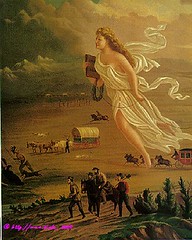 | 39 |
| 5928198518 | Louis O'Sullivan | Coined the term Manifest Destiny in a newspaper article. | | 40 |
| 5928198519 | Texas Annexation | 1845. Originally refused in 1837, as the U.S. Government believed that the annexation would lead to war with Mexico. Texas remained a sovereign nation. Annexed via a joint resolution through Congress, supported by President-elect Polk, and approved in 1845. Land from the Republic of Texas later became parts of NM, CO, OK, KS, and WY. |  | 41 |
| 5928198520 | "Fifty-Four Forty or Fight" | The phrase used in James K Polk's 1844 presidential election dealing with the Oregon Territory. Polk's campaign used the phrase as a rallying cry for the United States to obtain all of Oregon Territory, including land claimed by the English, up through Northern Canada. |  | 42 |
| 5928198521 | Oregon Trail | 2000 mile long path along which thousands of Americans journeyed to the Willamette Valley in the 1840's. | 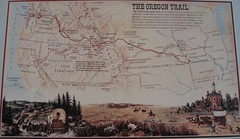 | 43 |
| 5928198522 | Mountain Men | Fur trappers of the northwest who paved the way for continuous settlement of the great west |  | 44 |
| 5928198523 | California Gold Rush | 1849. Gold discovered in California attracted a rush of people all over the country and world to San Francisco; arrival of the Chinese; increased pressure on federal government to establish a stable government |  | 45 |
| 5928198524 | Mexican American War | 1846 - 1848. President Polk declared war on Mexico over the dispute of land in Texas. At the end, American ended up with 55% of Mexico's land, called the Mexican Cession. |  | 46 |
| 5928198525 | Republican Party | 1854. Established by anti-slavery Whigs and Democrats, "free-soilers" and reformers from the Northwest met and formed party in order to keep slavery out of the territories. |  | 47 |
| 5928198526 | Stephen A. Douglas | Senator from Illinois who ran for president against Abraham Lincoln and was a leading voice in the debates over slavery and its expansion before the Civil War. Wrote the Kansas-Nebraska Act and the Freeport Doctrine. |  | 48 |
| 5928198527 | Freeport Doctrine | Stated that exclusion of slavery in a territory (where it was legal) could be accomplished by the refusal of the voters to enact any laws that would protect slave property. Stated by Stephen Douglass during the Lincoln-Douglass debates, eventually contributed to his loss in the 1860 presidential election as Democrats believed he had walked back the gains made with the Dred Scott v. Sanford decision. |  | 49 |
| 5928198528 | Abraham Lincoln | 16th President of the United States saved the Union during the Civil War and emancipated the slaves; was assassinated by Booth (1809-1865) | | 50 |
| 5928198529 | secession | Formal withdrawal of states or regions from a nation |  | 51 |
| 5928198530 | habeas corpus | Petition requiring law enforcement officers to present detained individuals before the court to examine the legality of the arrest. Protects individuals from arbitrary state action. Suspended by Lincoln during the Civil War. |  | 52 |
| 5928198531 | sectionalism | Term used to describe the growing differences between the regions of the United States, especially the North and South, leading up to the Civil War. |  | 53 |
| 5928198532 | Robert E. Lee | Confederate general who had opposed secession but did not believe the Union should be held together by force. Military genius whose aggressiveness made him a fearsome opponent throughout the Civil War. |  | 54 |
| 5928198533 | Fort Sumter | Federal fort in the harbor of Charleston, South Carolina; the confederate attack on the fort marked the start of the Civil War. |  | 55 |
| 5928198534 | Battle of Antietam | A battle near a sluggish little creek, it proved to be the bloodiest single day battle in American History with over 26,000 lives lost in that single day. Prevented an Confederate invasion of Maryland. |  | 56 |
| 5928198535 | Battle of Vicksburg | Grant besieged the city from May 18 to July 4, 1863, until it surrendered, yielding command of the Mississippi River to the Union effectively splitting the South in two. |  | 57 |
| 5928198536 | Battle of Gettysburg | A large battle in the American Civil War, took place in southern Pennsylvania from July 1 to July 3, 1863. Union General George G. Meade led an army of about 90,000 men to victory against General Robert E. Lee's Confederate army of about 75,000. Proved to be a significant turning point in the war because of the loss of about 1/3 of Lee's army. |  | 58 |
| 5928198537 | Ulysses S. Grant | An American general and the eighteenth President of the United States (1869-1877). He achieved international fame as the leading Union general in the American Civil War. |  | 59 |
| 5928198538 | William Tecumseh Sherman | Union General who destroyed South during "march to the sea" from Atlanta to Savannah; example of total war and "scorched-earth" military tactics. |  | 60 |
| 5928198539 | Thomas "Stonewall" Jackson | He was a confederate general who was known for his fearlessness in leading rapid marches, bold flanking movements, and furious assaults. He earned his nickname at the battle of first bull run for standing courageously against union fire. During the battle of Chancellorsville his own men accidently mortally wounded him. |  | 61 |
| 5928198540 | martial law | Rule by the army instead of the elected government (such as in the South as a result of the Military Reconstruction Act) |  | 62 |
| 5928198541 | emergency powers | Wide-ranging powers a president may exercise during times of crisis or those powers permitted the president by Congress for a limited time. |  | 63 |
| 5928198542 | Radical Reconstruction | Name given to the period when Congress, which was controlled by Republicans, took over Reconstruction efforts. When southerners balked at some of the more moderate reforms proposed, more radical republicans started to gain more power and pass more legislation. |  | 64 |
| 5928198543 | Military Reconstruction Act | 1867. Divided the South into five districts and placed them under military rule; required Southern States to ratify the 14th amendment; guaranteed freedmen the right to vote in convention to write new state constitutions | | 65 |
| 5928198544 | Freedmen's Bureau | 1865. Organization (turned government agency) run by the army to care for and protect southern Blacks after the Civil War, sometimes including settling them on confiscated confederate lands. |  | 66 |
| 5928198545 | Election of 1876 | Ended reconstruction because neither candidate had an electoral majority. The Democrat Sam Tilden loses the election to Rutherford B Hayes, Republican, was elected, and then ended reconstruction as he secretly promised. | | 67 |
| 5928198546 | carpetbagger | A northerner who went to the South immediately after the Civil War; especially one who tried to gain political advantage or other advantages from the disorganized situation in southern states (as viewed from the southern perspective). |  | 68 |
| 5928198547 | scalawag | A derogatory term for southerners who were working with the North to buy up land from desperate southerners; sometimes used in a general way by southerners criticizing other southerners who had northern sympathies. |  | 69 |
| 5928198548 | Nat Turner | A black preacher who in 1831 led a slave revolt Virginia that killed 60 whites. 100+ blacks were executed as a result. The rebellion was significant as it worried southern whites that larger slave rebellions were possible and therefore stricter rules were needed. |  | 70 |
| 5928198549 | Sojourner Truth | A freed black woman who became a leader in the fight for black emancipation and women's rights. |  | 71 |
| 5928198550 | Frederick Douglass | An escaped slave who spoke publicly for the abolitionist cause. He wrote his autobiography, depicting the harsh realities of Southern slavery. He also looked to politics to help abolish slavery. |  | 72 |
| 5928198551 | Cotton Kingdom | Areas in the south where cotton farming developed because of the high demand for cotton and soon dominated the economy. |  | 73 |
| 5928198552 | Gag Resolution | Strict rule passed by pro-southern Congressmen in 1836 to prohibit all discussion of slavery in the House of Representatives |  | 74 |
| 5928198553 | American Colonization Society | Created in 1817 and supported by some blacks and whites, its purpose was to transport African Americans back to Africa once they had been freed from slavery. Idea was based on the idea that whites and blacks could not live as equals in America, even if slavery were abolished. |  | 75 |
| 5928198554 | James K. Polk | Democratic president after John Tyler who was best known for policies that promoted Manifest Destiny and expansionism. | | 76 |
| 5928198555 | John C. Fremont | An American military officer, explorer, the first candidate of the Republican Party for the office of President of the United States (1856), and the first presidential candidate of a major party to run on a platform in opposition to slavery. |  | 77 |
| 5928198556 | Bear Flag Revolt | (1846) a revolt that took place during the Mexican-American War when 500 Americans (Anglos) in Mexican California took the city of Sonoma, CA in the spirit of Manifest Destiny and declared California to be an independent nation. |  | 78 |
| 5928198557 | Liberty Party | A former political party in the United States; formed in 1839 to oppose the practice of slavery; merged with the Free Soil Party in 1848. |  | 79 |
| 5928198558 | John C. Calhoun | Senator who argued for states' rights for the South. He asked for slavery to be left alone, slaves to be returned to the South, and state balance to be kept intact. |  | 80 |
| 5928198559 | William H. Seward | Congressman of the "Young Guard" who fiercely opposed slavery and argued that Americans should follow a "higher law" (God's law) over the Constitution when it came to the issue of slavery. |  | 81 |
| 5928198560 | Henry Clay | Known as the "Great Compromiser"; senator who pushed for compromise between the North and South and worked with Stephen Douglas; major figure in the passing of both the Missouri Compromise (1820) and Compromise of 1850. |  | 82 |
| 5928198561 | Underground Railroad | Secret system of safe houses along a route that led many slaves to freedom in the North and eventually Canada. |  | 83 |
| 5928198562 | "Fire Eaters" | Refers to a group of extremist pro-slavery politicians from the South who urged the cessation of southern states. | | 84 |
| 5928198563 | Charles Sumner | Senator who spoke out for black freedom and racial equality post-Civil War. Publicly beaten by Preston Brooks for speaking out against the violence in Kansas, an event that marked increasing tensions between the North and South prior to the Civil War. |  | 85 |
| 5928198564 | Roger Taney | Chief Justice of the Supreme Court who wrote an opinion in the 1857 Dred Scott case that declared the Missouri compromise unconstitutional, thereby legally preventing Congress from prohibiting slavery in new territories (and made Popular Sovereignty illegal). |  | 86 |
| 5928198565 | Jefferson Davis | President of the Confederate States of America prior to and during the Civil War. |  | 87 |
| 5928198566 | self-determination | The ability of a people/government to determine their own course or future using their own free will. |  | 88 |
| 5928198567 | Pottawatomie Creek Massacre | In reaction to the sacking of Lawrence by pro-slavery forces, John Brown and a band of abolitionist settlers killed five pro-slavery settlers north of Pottawatomie Creek in Franklin County, Kansas. |  | 89 |
| 5928198568 | Lecompton Constitution | Supported the existence of slavery in the proposed state and protected rights of slaveholders. It was rejected by Kansas, making Kansas an eventual free state (and was a factor in spurring violence there). |  | 90 |
| 5928198569 | Lincoln-Douglas Debates | Lincoln challenged Stephen Douglas to debates during the senatorial race of 1858 which became a public referendum on the issue of slavery. |  | 91 |
| 5928198570 | Clara Barton | Launched the American Red Cross in 1881. An "angel" in the Civil War, she was a hospital nurse that treated the wounded in the field. |  | 92 |
| 5928198571 | Border States | Southern states that never chose secession and joined the Confederacy during the Civil War (Missouri, Kentucky, Maryland, and Deleware). |  | 93 |
| 5928198572 | Andrew Johnson | 17th President of the United States, A Southerner form Tennessee, as V.P. when Lincoln was killed, he became president. He opposed radical Republicans who passed Reconstruction Acts over his veto. The first U.S. president to be impeached, he survived the Senate removal by only one vote. |  | 94 |
| 5928198573 | John Wilkes Booth | Southerner who assasinated Abraham Lincoln on April 14, 1865 |  | 95 |
| 5928198574 | George B. McClellan | First commander of the Army of the Potomac; well-known for being a master at training an army; was replaced several times by President Lincoln during the Civil War because of his timidness and sometimes outright refusal to send his army into battle. |  | 96 |
| 5928198575 | Merrimack (the Virginia) v. Monitor | A battle between for first "ironclad" naval vessels, marking a new age in naval warfare. |  | 97 |
| 5928198576 | Copperheads | Nickname for Northerners who were pro-Confederacy. |  | 98 |
| 5928198577 | First Battle of Bull Run (Battle of Manassas) | (July 1861) first major conflict of the Civil War. Southern victory led to overconfidence. |  | 99 |
| 5928198578 | Thaddeus Stevens | Radical Republican congressman from Pennsylvania who defended runaway slaves in court for free and insisted on being buried in a black cemetery; hated white Southerners. Leading figure on the Joint Committee on Reconstruction and for the social equality of African Americans. | | 100 |
| 5928198579 | "Exodusters" | Name for the 25,000 blacks who migrated from Louisiana, Texas and Mississippi to Kansas from 1878 to 1880. Migration was stemmed when steamboat captains refused to transport more blacks over the Mississippi River. |  | 101 |
| 5928198580 | Wade-Davis Bill | Bill pushed by Congress in 1864 that required 50 percent of a state's voters take the oath of allegiance and demanded stronger safe-guards for emancipation than proposed in Lincoln's 10 percent plan. Pocket-vetoed by Lincoln. |  | 102 |
| 5928198581 | 10 Percent Plan | Lincoln's plan for re-admitting the Southern states into the Union: a state could be reintegrated into the Union when 10 percent of its voters in the presidential election of 1860 had taken an oath of allegiance to the United States and pledged to abide by emancipation. |  | 103 |
| 5928198582 | Civil Rights Act (1866) | A Reconstruction bill which gave which granted citizenship to African Americans and weakened the poliferation of Black Codes in the South. |  | 104 |
| 5928198583 | Redeemers | Largely former slave owners who were the bitterest opponents of the Republican program in the South. Staged a major counterrevolution to "redeem" the south by taking back southern state governments. Their foundation rested on the idea of racism and white supremacy. |  | 105 |
| 5928198584 | Ku Klux Klan | The "Invisible Empire of the South", founded in Tennessee in 1866, made up of embittered white Southerners who resented the success and ability of Black legislators. They would terrorize, mutilate, and even murder "upstart" blacks or their supporters to "keep them in their place". |  | 106 |
| 5928198585 | "Seward's Folly" | Refers to the United States' Secretary of State William Seward's decision to purchase the Alaskan territory from Russia in 1867. At the time, Seward's decision to buy the land was regarded as a terrible one by many critics in the United States. |  | 107 |
AMSCO AP US History Chapter 23 Flashcards
AMSCO United States History 2015 Edition, Chapter 23 The Modern Era of the 1920s
Terms : Hide Images
| 7563308202 | Warren Harding | In November 1920, he was elected the 29th president of the United States. He was a Republican whose slogan was: "Return to Normalcy". His term was marked by scandals and corruption, although he was never implicated in any of the scandals. In August 1923, he died while traveling in the West. (p. 475-476) |  | 0 |
| 7563308203 | Charles Evans Hughes | A former presidential candidate and Supreme Court justice who was appointed secretary of state by President Warren G. Harding. (p. 476) |  | 1 |
| 7563308204 | Andrew Mellon | A Pittsburgh industrialist and millionaire who was appointed secretary of the treasury by President Harding in 1921 and served under Coolidge and Hoover. (p. 476) |  | 2 |
| 7563308205 | Harry Daugherty | Attorney General under President Harding who accepted bribes for agreeing not to prosecute certain criminal suspects. (p. 476) |  | 3 |
| 7563308206 | Albert Fall | Secretary of the Interior during Harding's administration. He was convicted of accepting bribes for granting oil leases near Teapot Dome, Wyoming. (p. 476) |  | 4 |
| 7563308207 | Teapot Dome | A government scandal involving a former United States Navy oil reserve in Wyoming that was secretly leased to a private oil company in 1921. (p. 476) |  | 5 |
| 7563308208 | Fordney-McCumber Tariff Act | This tariff passed in 1922, raised tariffs on foreign manufactured goods by 25 percent. It helped domestic manufacturers, but limited foreign trade, and was one cause of the Great Depression of 1929. (p. 476, 488) |  | 6 |
| 7563308209 | Bureau of the Budget | Formed in 1921, this bureau created procedures for all government expenditures to be placed in a single budget for Congress to annually review and vote on. (p. 476) |  | 7 |
| 7563308210 | Calvin Coolidge | As vice president, he became president when Warren Harding died in August 1923. He won the presidential election of 1924, but declined to run in 1928. He was a Republican who believed in limited government. He summarized his presidency and his era with the phrase: "The business of America is business". (p. 477) |  | 8 |
| 7563308211 | Herbert Hoover | When Calvin Coolidge decide not to run for president in 1928, he was the Republican presidential nominee. He promised to extend "Coolidge Prosperity", and won the election. (p. 477) |  | 9 |
| 7563308212 | Alfred E. Smith | He was the Democratic presidential candidate in the 1928 presidential election. He was the former governor of New York and his opponent in the presidential race was Republican Herbert Hoover. As a Roman Catholic and opponent of Prohibition, he appealed to immigrant urban voters. (p. 477) |  | 10 |
| 7563308213 | business prosperity | From 1919 to 1929, manufacturing output rose a spectacular 64 percent due to increased productivity, energy technologies, and governmental policy which favored the growth of big business. (p. 478) |  | 11 |
| 7563308214 | standard of living | During the 1920s, the standard of living (physical things that make life more enjoyable) improved significantly for most Americans. Indoor plumbing and central heating became commonplace. By 1930, two-thirds of all homes had electricity. (p. 477) |  | 12 |
| 7563308215 | scientific management | A system of industrial management created and promoted in the early twentieth century by Frederick W. Taylor. It emphasized time-and-motion studies to improve factory performance. (p. 478) |  | 13 |
| 7563308216 | Henry Ford | By 1914, he had perfected a system for manufacturing automobiles using an assembly line. (p. 478) |  | 14 |
| 7563308217 | assembly line | In a factory, an arrangement where a product is moved from worker to worker, with each person performing a single task in the making of the product. (p. 478) |  | 15 |
| 7563308218 | open shop | A company with a labor agreement under which union membership cannot be required as a condition of employment. (p. 479) |  | 16 |
| 7563308219 | welfare capitalism | An approach to labor relations in which companies voluntarily offer their employees improved benefits and higher wages in order to reduce their interest in joining unions. (p. 479) |  | 17 |
| 7563308220 | consumerism | In the 1920s, consumerism was fueled by: homes with electricity, electrical appliances, affordable automobiles, increased advertising, and purchasing on credit. (p. 478) |  | 18 |
| 7563308221 | electric appliances | In the 1920s, refrigerators, stoves, vacuum cleaners, and washing machines became very popular as prices dropped due to reduced production costs and as electrical power to run them became more available. (p. 478) |  | 19 |
| 7563308222 | impact of the automobile | In the 1920s, this product had the largest impact on society. It caused a growth of cities and suburbs, and workers no longer needed to live near their factories. It provided job opportunities and was a much more efficient way of transportation. (p. 479) |  | 20 |
| 7563308223 | jazz age | Name for the 1920s, because of the popularity of jazz, a new type of American music that combined African rhythms, blues, and ragtime. (p. 480) |  | 21 |
| 7563308224 | radio, phonographs | Allowed mostly young people to listen to recorded music. The first radio station went on the air in 1920. Previously, newspapers had been the only form of mass communications. (p. 480) |  | 22 |
| 7563308225 | national networks | Nationwide radio networks enabled people all over the country to listen to the same news, sports, soap operas, quiz shows and comedies. (p. 480) |  | 23 |
| 7563308226 | Hollywood | The movie industry was centered here. The industry grew rapidly in the 1920s. Sound was introduced to movies in 1927. By 1929 over 80 million movie tickets were sold each week. (p. 480) |  | 24 |
| 7563308227 | movie stars | In the 1920s, sexy and glamorous movie stars such as Greta Garbo and Rudolf Valentino we idolized by millions. (p. 480) |  | 25 |
| 7563308228 | popular heroes | Americans shifted role models from politicians to sports heroes and movie stars. Sports heros included Jack Dempsey, Jim Thorpe, Babe Ruth, and Bobby Jones. However, the most celebrated was Charles Lindbergh who flew from Long Island to Paris in 1927. (p. 480) |  | 26 |
| 7563308229 | movie palaces | Ornate, lavish single-screen movie theaters that emerged in the 1910s in the United States. (p. 480) |  | 27 |
| 7563308230 | role of women | In the 1920s, the traditional separation of labor between men and women continued. Most middle-class women expected to spend their lives as homemakers and mothers. (p. 480) |  | 28 |
| 7563308231 | Sigmund Freud | Austrian psychiatrist who originated psychoanalysis. (p. 481) | 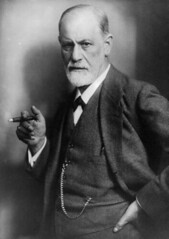 | 29 |
| 7563308232 | morals and fashions | In the 1920s, movies, novels, automobiles, and new dances encouraged greater promiscuity. Young women shocked their elders by wearing dresses hemmed at the knee (flapper look), cutting their hair short, smoking cigarettes, and driving cars. (p. 481) |  | 30 |
| 7563308233 | Margaret Sanger | She founded American Birth Control League; which became Planned Parenthood in the 1940s. She advocated birth control awareness. (p. 481) |  | 31 |
| 7563308234 | high school education | In the 1920s, universal high school education became a new American goal. By 1930, the number of high school graduates had doubled to over 25 percent of school-age adults. (p. 481) |  | 32 |
| 7563308235 | consumer culture | In the 1920s, many writers were disillusioned with the materialism of the business oriented culture. (p. 481) |  | 33 |
| 7563308236 | Frederick Lewis Allen | In 1931, he wrote "Only Yesterday", a popular history book that portrayed the 1920s as a period of narrow-minded materialism. (p. 489) |  | 34 |
| 7563308237 | Only Yesterday | A 1931 history book that portrayed the 1920s as a period of narrow-minded materialism in which the middle class abandoned Progressive reforms, embraced conservative Republican policies, and either supported or condoned nativism, racism, and fundamentalism. (p. 489) |  | 35 |
| 7563308238 | Gertrude Stein | American writer of experimental novels, poetry, essays, operas, and plays. She called the disillusioned writers of the 1920s, a "lost generation". (p. 481) |  | 36 |
| 7563308239 | Lost Generation | Group of writers in 1920s, who shared the belief that they were lost in a greedy and materialistic world that lacked moral values. Many of them moved to Europe. (p. 481) |  | 37 |
| 7563308240 | F. Scott Fitzgerald | A novelist and chronicler of the jazz age. His wife, Zelda and he were the "couple" of the decade. His novel, "The Great Gatsby" is considered a masterpiece about a gangster's pursuit of an unattainable rich girl. (p. 481) |  | 38 |
| 7563308241 | Ernest Hemingway | One of the most popular writers of the 1920s, he wrote "A Farewell to Arms". (p. 481) |  | 39 |
| 7563308242 | Sinclair Lewis | American writer of the 1920s. He became the first American to receive a Nobel Prize in Literature. (p. 481) |  | 40 |
| 7563308243 | Ezra Pound | Expatriate American poet and critic of the 1920s. (p. 481) |  | 41 |
| 7563308244 | T. S. Eliot | Thomas Stearns Eliot was an essayist, publisher, playwright, literary and social critic, and one of the twentieth century's major poets. (p. 481) |  | 42 |
| 7563308245 | Eugene O'Neill | An American playwright of the 1920s. (p. 481) |  | 43 |
| 7563308246 | industrial design | The fusion of art and technology during the 1920s and 1930s created the new profession of industrial design. (p. 482) |  | 44 |
| 7563308247 | Art Deco | The 1920's modernistic art style that captured modernistic simplification of forms, while using machine age materials. (p. 482) |  | 45 |
| 7563308248 | Edward Hopper | A twentieth-century American painter, whose stark realistic paintings often convey a mood of solitude and isolation in common urban settings. (p. 482) |  | 46 |
| 7563308249 | regional artists | Thomas Benton and Grant Wood celebrated the rural people and scenes of the American heartland. (p. 482) |  | 47 |
| 7563308250 | Grant Wood | An American Regional artist who focused on rural scenes in Iowa. He is best known for his painting "American Gothic". (p. 482) |  | 48 |
| 7563308251 | George Gershwin | He was the son of Russian-Jewish immigrants. He blended jazz and classical music to produce "Rhapsody in Blue" and folk opera "Porgy and Bess". (p. 482) |  | 49 |
| 7563308252 | northern migration | By 1930, almost 20 percent of African Americans out of the Southern United States to the North. (p. 482) |  | 50 |
| 7563308253 | Harlem Renaissance | The largest African American community of almost 200,000 developed in the Harlem section of New York City. It became famous in the 1920s for its talented actors, artists, musicians, and writers. This term describes this period. (p. 483) |  | 51 |
| 7563308254 | Countee Cullen | A leading 1920s African American poet from Harlem. (p. 483) |  | 52 |
| 7563308255 | Langston Hughes | A leading 1920s African American poet from Harlem. (p. 483) |  | 53 |
| 7563308256 | James Weldon Johnson | A leading 1920s African American author from Harlem. (p. 483) |  | 54 |
| 7563308257 | Claude McKay | A leading 1920s African American poet from Harlem. (p. 483) |  | 55 |
| 7563308258 | Duke Ellington | A leading 1920s African American jazz great from Harlem. (p. 483) |  | 56 |
| 7563308259 | Louis Armstrong | A leading 1920s African American jazz trumpeter from Harlem. (p. 483) |  | 57 |
| 7563308260 | Bessie Smith | A leading 1920s African American blues singer from Harlem. (p. 483) |  | 58 |
| 7563308261 | Paul Robeson | A leading 1920s African American singer from Harlem. (p. 483) |  | 59 |
| 7563308262 | Back to Africa movement | Encouraged those of African descent to return to Africa. (p. 483) |  | 60 |
| 7563308263 | Marcus Garvey | African American leader during the 1920s who founded the Universal Negro Improvement Association and advocated mass migration of African Americans back to Africa. He was deported to Jamaica and his movement collapsed. (p. 483) |  | 61 |
| 7563308264 | black pride | Many African American leaders agreed with Marcus Garvey's ideas on racial pride and self-respect. This influenced another generation in the 1960s. (p. 483) |  | 62 |
| 7563308265 | modernism | They took a historical and critical view of certain Bible passages and believed that they could accept Darwin's theory of evolution without abandoning their religion. (p. 483) |  | 63 |
| 7563308266 | fundamentalism | A Protestant Christian movement emphasizing the literal truth of the Bible and opposing religious modernism (p. 483) |  | 64 |
| 7563308267 | revivalists: Billy Sunday, Aimee Semple McPherson | Leading radio evangelists such as Billy Sunday and Aimee Semple McPherson preached a fundamentalist message. (p 484) |  | 65 |
| 7563308268 | Scopes trial | A 1925 Tennessee court case in which Clarence Darrow and William Jennings Bryan argued the issue of teaching evolution in public schools. (p. 484) |  | 66 |
| 7563308269 | Clarence Darrow | A famed criminal defense lawyer, he defended John Scopes, a teacher who taught evolution in his Tennessee classroom. (p. 484) |  | 67 |
| 7563308270 | Volstead Act | The federal law of 1919 that established criminal penalties for manufacturing, transporting, or possessing alcohol. (p. 484) |  | 68 |
| 7563308271 | rural vs. urban | In the 1920s, in the urban areas it was common to ignore the law and drink liquor in clubs or bars known as speakeasies. (p 484) |  | 69 |
| 7563308272 | organized crime | In the 1920s, organized crime became big business, as bootleggers transported and sold liquor to many customers. (p. 484) |  | 70 |
| 7563308273 | Al Capone | A famous Chicago gangster who fought for control of the lucrative bootlegging (liquor) trade. (p. 484) |  | 71 |
| 7563308274 | 21st Amendment | The amendment which ended the prohibition of alcohol in the United States, it repealed the 18th amendment. (p. 485) |  | 72 |
| 7563308275 | quota laws of 1921 and 1924 | Laws passed to limit immigration. (p. 485) |  | 73 |
| 7563308276 | Sacco and Vanzetti Case | A criminal case of two Italian men who were convicted of murder in 1921. They were prosecuted because they were Italians, atheists, and anarchists. After 6 years of appeals they were executed in 1927. (p. 485) |  | 74 |
| 7563308277 | Ku Klux Klan | A secret society created by white southerners in 1866. They used terror and violence to keep African Americans from exercising their civil rights. (p. 486) |  | 75 |
| 7563308278 | Birth of a Nation | A popular silent film, which portrayed the KKK during Reconstruction as heros. (p. 486) |  | 76 |
| 7563308279 | blacks, Catholics and Jews | The KKK directed hostility toward these groups in the North. (p. 486) |  | 77 |
| 7563308280 | foreigners and Communists | During the 1920s, widespread disillusionment with World War I, communism in the Soviet Union, and Europe's post war problems made Americans fearful of being pulled into another foreign war. (p. 486) |  | 78 |
| 7563308281 | disarmament | Republican presidents of the 1920s tried to promote peace and also to scale back defense expenditures by arranging disarmament treaties (reduction in military equipment). (p. 486) |  | 79 |
| 7563308282 | Washington Conference | A 1921 conference that placed limits on naval powers, respect of territory in the Pacific, and continued the Open Door policy in China. (p. 487) |  | 80 |
| 7563308283 | Five-Power Naval Treaty | A 1922 treaty resulting from the Washington Armaments Conference that limited to a specific ratio the carrier and battleship tonnage of each nation. The five countries involved were: United States, Great Britain, Japan, France, and Italy. (p. 487) |  | 81 |
| 7563308284 | Nine-Power China Treaty | A 1922 treaty affirming the sovereignty and territorial integrity of China as previously stated in the Open Door Policy. (p. 487) |  | 82 |
| 7563308285 | Kellogg-Briand Treaty | This treaty of 1928 renounced the use of force to achieve national ends. It was signed by Frank Kellogg of the United States and Aristide Briand of France, and most other nations. The international agreement proved ineffective. (p. 487) |  | 83 |
| 7563308286 | Latin America policy | In 1927, the United States signed an agreement with Mexico protecting U.S. interests in Mexico. (p. 487) |  | 84 |
| 7563308287 | war debts | During World War I the United States had loaned more than $10 billion to the Allies. After the war, the United States insisted that they pay back all the debt. Great Britain and France objected because they suffered much greater losses during the war than the United States. (p. 488) |  | 85 |
| 7563308288 | reparations | As part of the Treaty of Versailles, Germany was ordered to pay $30 billion in reparations to the Allies. (p. 488) |  | 86 |
| 7563308289 | Dawes Plan | A 1924 plan, created by Charles Dawes in which the United States banks would lend large sums to Germany. Germany would use the money to rebuild its economy and pay reparations to Great Britain and France. Then Great Britain and France would pay their war debts to the United States. After the 1929 stock market crash, the loans to Germany stopped. (p. 488) |  | 87 |
Pages

Need Help?
We hope your visit has been a productive one. If you're having any problems, or would like to give some feedback, we'd love to hear from you.
For general help, questions, and suggestions, try our dedicated support forums.
If you need to contact the Course-Notes.Org web experience team, please use our contact form.
Need Notes?
While we strive to provide the most comprehensive notes for as many high school textbooks as possible, there are certainly going to be some that we miss. Drop us a note and let us know which textbooks you need. Be sure to include which edition of the textbook you are using! If we see enough demand, we'll do whatever we can to get those notes up on the site for you!
