AP Notes, Outlines, Study Guides, Vocabulary, Practice Exams and more!

AP US History American Pageant Chapter 9 Flashcards

Terms : Hide Images
8001604067AntifederalistsOpponents of the 1787 Constitution, they cast the document as antidemocratic, objected to the subordination of the states to the central government, and feared encroachment on individuals' liberties in the absence of a bill of rights.0
8001604068Articles of ConfederationFirst American constitution that established the United States as a loose confederation of states under a weak national Congress, which was not granted the power to regulate commerce or collect taxes. It was replaced by a more efficient Constitution in 1789.1
8001604069Civic VirtueWillingness on the part of citizens to sacrifice personal self-interest for the public good. Deemed a necessary component of a successful republic.2
8001604070Civil LawBody of written law enacted through legislative statutes or constitutional provisions. In countries where it prevails, judges must apply the statutes precisely as written.3
8001604071Common LawLaws that originate from court rulings and customs, as opposed to legislative statutes. The United States Constitution grew out of the Anglo-American tradition and thus provided only a general organizational framework for the new federal government.4
8001604073FederalistsProponents of the 1787 Constitution, they favored a strong national government, arguing that the checks and balances in the new Constitution would safeguard the people's liberties.5
8001604074Great CompromisePopular term for the measure which reconciled the New Jersey and Virginia plans at the constitutional convention, giving states proportional representation in the House and equal representation in the Senate. This broke the stalemate at the convention and paved the way for subsequent compromises over slavery and the Electoral College.6
8001604075Land Ordinance of 1785Provided for the sale of land in the Old Northwest and earmarked the proceeds toward repaying the national debt.7
8001604076New Jersey Plan"Small-state plan" put forth at the Philadelphia convention, proposing equal representation by state, regardless of population, in a unicameral legislature. Small states feared that the more populous states would dominate the agenda under a proportional system.8
8001604077Northwest Ordinance of 1787Created a policy for administering the newly acquired land. It included a path to statehood and forbade the expansion of slavery into the territories.9
8001604078Old NorthwestTerritories acquired by the federal government from the states, encompassing land northwest of the Ohio River, east of the Mississippi River and south of the Great Lakes. The well-organized management and sale of the land in the territories under the land ordinances of 1785 and 1787 established a precedent for handling future land acquisitions.10
8001604079Shays's RebellionArmed uprising of western Massachusetts debtors seeking lower taxes and an end to property foreclosures. Though quickly put down, the insurrection inspired fears of "mob rule" among leading Revolutionaries.11
8001604081The Federalist PapersCollection of essays written by John Jay, James Madison and Alexander Hamilton and published during the ratification debate in New York to lay out the arguments in favor of the new Constitution. Since their publication, these influential essays have served as an important source for constitutional interpretation.12
8001604082Three-Fifths CompromiseDetermined that each slave would be counted as a portion of a person for the purpose of apportioning taxes and representation. The compromise granted disproportionate political power to Southern slave states.13
8001604083Virginia Plan"Large state" proposal for the new constitution, calling for proportional representation in both houses of a bicameral Congress. The plan favored larger states and thus prompted smaller states to come back with their own plan for apportioning representation.14
8001604086Daniel ShaysHead of Rebellion; he and several other angry farmers violently protested against debtor's jail; eventually crushed; aided in the creation of constitution because land owners now wanted to preserve what was theirs from "mobocracy."15
8001604087Patrick HenryA leader of the American Revolution and a famous orator who spoke out against British rule of the American colonies.16

AP US History Period 2 (1607-1754) Flashcards

Important vocabulary of the colonization of North America in the 17th century.

Terms : Hide Images
6674859496Jamestown1st permanent English settlement in North America in 1607.0
6674859497John SmithA captain famous for world travel. As a young man, he took control in Jamestown. He organized the colony and saved many people from death the next winter and coined the phrase "he who shall not work, shall not eat". He also initiated attacks on Natives.1
6674859498John RolfeHe was one of the English settlers at Jamestown (and he married Pocahontas). He discovered how to successfully grow tobacco in Virginia and cure it for export, which made Virginia an economically successful colony. Eventually, he was killed in a Pequot attack.2
6674859499PocohontasAn American Indian princess who saved the life of John Smith and helped form more peaceful relations with the Powhatan when she married John Rolfe but died of smallpox in England on a visit to Rolfe's family. Her remains are still there as the English government refuses to send her remains back to North America.3
6674859500Mayflower Compact1620 - The first agreement for self-government in America. It was signed by the 41 men on the Mayflower and set up a government for the Plymouth colony4
6674859501John WinthropAs governor of Massachusetts Bay Colony, Winthrop (1588-1649) was instrumental in forming the colony's government and shaping its legislative policy. He envisioned the colony, centered in present-day Boston, as a "city upon a hill" from which Puritans would spread religious righteousness throughout the world.5
6674859502PuritansA religious group who wanted to purify the Church of England. They came to America for religious freedom and settled Massachusetts Bay.6
6674859503PilgrimsEnglish Puritans who founded Plymouth colony in 16207
6674859504Massachusetts CharterAllowed Puritans to take a charter with them and establish their own government in the New World.8
6674859505Loss of Massachusetts CharterRevoking of Mass. Charter by King George II due to the colonists refusal to obey by the Navigation Acts leading to anti-British feeling in the New England region.9
6674859506New AmsterdamA settlement established by the Dutch near the mouth of Hudson River and the southern end of Manhattan Island as a trade port for the Dutch trade empire.10
6674859507New YorkIt was founded by the Dutch for trade and furs and became an English Colony in 1664, when the English were determined to end Dutch trade dominance, and took over the colony by invading New Amsterdam without having to fire a shot.11
6674859508Peter StuyvesantThe governor of the Dutch colony of New Amsterdam, hated by the colonists. They surrendered the colony to the English on Sept. 8, 1664.12
6674859509House of Burgesses1619 - The Virginia House of Burgesses formed, the first legislative body in colonial America. It was made up of two representatives from teach town voted on by men who owned property. Later other colonies would adopt the Houses of Burgesses concept creating self-governing bodies in the colonies.13
6674859510Headright systemHeadrights were parcels of land consisting of about 50 acres which were given to colonists who brought indentured servants into America. They were used by the Virginia Company to attract more colonists.14
6674859511Indentured servantsColonists who received free passage to North America in exchange for working without pay for a certain number of years15
6674859512Bacon's Rebellion1676 - Nathaniel Bacon and other western Virginia settlers were angry at Virginia Governor Berkley for trying to appease the Doeg Indians after the Doegs attacked the western settlements. The frontiersmen formed an army, with Bacon as its leader, which defeated the Indians and then marched on Jamestown and burned the city. The rebellion ended suddenly when Bacon died of an illness.16
6674859513King Phillip's WarUnder the leadership of Metacom, or King Phillip, the Wampanoag destroyed colonial towns, the colonists destroyed native farms, leading to the most deadly of Indian Wars. The war was disastrous for the natives leading to few surviving the war, and those that did left New England.17
6674859514royal colonyA colony ruled by governors appointed by a king18
6674859515proprietary colonyEnglish colony in which the king gave land to proprietors in exchange for a yearly payment19
6674859516town meetingsA purely democratic form of government common in the colonies, and the most prevalent form of local government in New England. In general, the town's voting population would meet once a year to elect officers, levy taxes, and pass laws.20
6674859517Salem Witch Trials1629 outbreak of witchcraft accusations in a Puritan village marked by an atmosphere of fear, hysteria, and unfounded accusations in courts with Puritan ministers who served as judges. 19 women were executed.21
6674859518Roger WilliamsA dissenter who clashed with the Massachusetts Puritans over separation of church and state and was banished in 1636, after which he founded the colony of Rhode Island to the south.22
6674859519IntolerantNot willing to accept ways of thinking different from one's own. The expansion of colonies in New England was a direct result of Puritan intolerance as dissenters were exiled and created new settlements.23
6674859520Anne HutchesonOne of the dissenters in Puritan Massachusetts held bible studies at her house and believed in a personal relationship with god. She moved to New Hampshire where she died along with her children from an Indian attack.24
6674859521Sir William BerkeleyThe royal governor of Virginia. Adopted policies that favored large planters and neglected the needs of recent settlers in the "backcountry." One reason was that he had fur trade deals with the natives in the region. His shortcomings led to Bacon's Rebellion25
6674859522William PennEstablished the colony of Pennsylvania as a "holy experiment". Freemen had the right to vote, provided leadership for self- government based on personal virtues and Quaker religious beliefs. His colony was religiously tolerant leading to diversity in the region.26
6674859523James OglethorpeFounded colony of Georgia as a chance for poor immigrants who were in debt to have a second chance at a comfortable life27
6674859524Lord Baltimore1694- He was the founder of Maryland, a colony which offered religious freedom, and a refuge for the persecuted Roman Catholics.28
6674859525Halfway CovenantA Puritan church document; In 1662, the Halfway Covenant allowed partial membership rights to persons not yet converted into the Puritan church; It lessened the difference between the "elect" members of the church from the regular members; Women soon made up a larger portion of Puritan congregations.29
6674859526Dominion of New England1686 - The British government combined the colonies of Massachusetts, Rhode Island, New Hampshire, and Connecticut into a single province headed by a royal governor (Edmund Andros). The Dominion ended in 1692, when the colonists revolted and drove out Governor Andros.30
6674859527Acts of Trade and NavigationThree acts that regulated colonial trade: 1st act: closed the colonies to all trade except that from English ships, and required the colonists to export certain goods, such as tobacco, to only English territories, 2nd act: (1663) demanded that everything being shipped from Europe to the colonies had to pass through England so they could tax the goods. 3rd act: 1673, was a reaction to the general disregard of the first two laws; it forced duties on the coastal trade among the colonies and supplied customs officials to enforce the Navigation Acts.31
6674859528MercantilismAn economic policy under which nations sought to increase their wealth and power by obtaining large amounts of gold and silver and by selling more goods than they bought.32
6674859529Triangular Slave TradeA practice, primarily during the eighteenth century, in which European ships transported slaves from Africa to Caribbean islands, molasses from the Caribbean to Europe, and trade goods from Europe to Africa.33
6674859530Middle PassageA voyage that brought enslaved Africans across the Atlantic Ocean to North America and the West Indies. The conditions on the ships from Africa to the west led to the loss of hundreds of thousands of lives.34
6674859531Social mobilityMovement of individuals or groups from one position in a society's stratification system to another35
6674859532Ben FranklinA colonial businessman and scientist who was an example of American social mobility and individualism. He was a delegate from Pennsylvania in colonial meetings, and proposed the "Albany Plan of the Union" as a way to strengthen the colonies in the French and Indian War. He was a leading figure in the movement toward revolution, and as a diplomat to France to get help during the American Revolution36
6674859533Great Awakening(1730s and 1740s) Religious movement characterized by emotional preaching (Jonathan Edwards & George Whitefield). It established American religious precedents such as camp meetings, revivals, and a "born again" philosophy. The first cultural movement to unite the thirteen colonies. It was associated with the democratization of religion, and a challenge to existing authorities and was an influence leading to the American Revolution.37
6674859534Jonathan EdwardsA leading minister during the Great Awakening, he delivered the famous sermon "Sinners in the Hands of an Angry God" promising that evildoers would pay a price on judgement day.38
6674859535African American CultureSlave communities were rich with music, dance, basket-weaving, and pottery-making. Enslaved Africans brought them the arts and crafts skills of their various tribes.39
6674859538George WhitfieldEnglish preacher who led the Great Awakening by traveling through the colonies40

1920s (AP US History Flashcards

Terms : Hide Images
5560865557Treaty of VersaillesTreaty created during the Paris Peace Conference that demanded Germany pay for the war and create the League of Nations, US Senate rejected treaty & US involvment in the League0
5560865558BolschevismCommunist sentiment, related to the Bolshevik Revolution in Russia that overthrew the government1
5560865559First Red ScareFear that communism would spread to the United States in the 1920s.2
5560865562Many Americans feared that labor strikes were being instigated by communist sympathizers.What was the link between labor unions and the Red Scare?3
5560865563Wilson had angered many by spending six months at the Paris Peace Conference, many felt that democrats' policies had pulled us into a war that was not our fight, desired a return to isolationism.What factors led to the political shift from Democrat to Republican during the election of 1920?4
5560865567A. Mitchell PalmerUS Attorney General who appointed J. Edgar Hoover to lead an investigation into radicalism in the United States.5
5560865569Palmer RaidsInvestigation led by J. Edgar Hoover of more than 150,000 people for ties to communism, anarchism, and radicalism. More than 10,000 detained and/or deported6
5560865570Sacco & VanzettiNicola Sacco & Bartolomeo Vanzetti charged with killing two in suburb of Boston, accused of being radicals, draft dodgers, and anarchists during the trial. Found guilty, but many felt trial was unjust. Resulted in wide-spread public and international outcry, but they were ultimately electrocuted despite demands for new trial7
5560865574Emergency Quota Act (1921)Ended open immigration by placing a strict quota on the number of people allowed into the United States (only 3% of the population)8
5560865575Immigration Act of 1924Extended the Emergency Quota Act and further cut allowable immigration from 3% to 2% of US population based on the 1890 Census, Asians banned completely, aimed primarily at Eastern Europeans, Latin Americans and Canadians not banned at all.9
5560865577Scopes Money Trial (1925) (Scopes v. Tennessee)Tennessee bans the teaching of evolution, TN high school biology teachers, John Scopes, indicted for teaching evolution. Noted lawyer, Clarence Darrow, defends Scopes and William Jennings Bryan was the lawyer for the prosecution. Seen as putting religion versus science on trial. Huge public interest in the trial. Scopes found guilty.10
5560865578Butler ActTennessee law that outlawed the teaching of any scientific theory that contradicted the divine creation of man as is taught in the Bible. Led to the Scopes Monkey Trial (11
556086557918th AmendmentOutlawed the sells, distribution , and consumption of alcoholic drink12
5560865580Felt it led to violence against women and children, encouraged laziness, and led to the moral decay of society. Prohibition was supported by religious conservatives and womenWhy was alcohol prohibited?13
5560865581Did not have wide-spread public support, Led to increase in crime, alcohol was easily manufactured at home, huge profits could be made from bootlegging, many local governments and police refused to enforce it, led to organized crimeWhat were the key problems of the 18th Amendment?14
5560865585What was the main idea behind Harding's campaign?A return to normalcy15
5560865586NativismAnti-immigration sentiment16
5560865587Feelings that immigration help pull US into WWI, post-war economic recession, fear that immigrants were taking American jobs, dissatisfaction of returning war vets, fear of the rise of communism and anarchyWhat fueled nativism in the 1920s?17
5560865589Sedition Act of 1918Act that outlawed speech that opposed the US involvement in WWI and the US war effort18
5560865590"Reds"Communist sympathizers19
5560865592The Klan of the 1920's focused on "Americanism" and opposed Catholics, Jews, immigrants, labor unions, socialist, as well as African Americans.What was "new" about the Ku Klux Klan of the 1920s?20
5560865593Increased nativist sentiment, fear of the spread of communism and anarchy, the political and economic unrest of 1919, their support for prohibition, and leadership could profit by selling Klan regalia to new members resulting in wide-spread active recruitment campaignsWhat helped the Ku Klux Klan gain in membership during the 1920s?21
5560865595Washington Naval Conference (1921)Meeting of nine nations in Washington DC to discuss disarming large naval powers. Resulted in the Five Power (5-5-3) Treaty22
5560865596Five Power TreatyTreaty agreed to in the Washington Naval Conference to limit naval forces to 500,000 tons for US & Great Britain and 300,000 tons for Japan23
5560865597Fordeny-McCumber TariffProposed to increase tariff on imported goods to 60% to protect American industry. Ultimately hurt the global economy because it hurt European trade24
5560865598Dawes PlanPlan to allow Germany to take out low-cost loans from several nations, including the US, in order to pay back war reparations. Angered Great Britain and France25
5560865599Kellogg-Briand PactA Republican push to get nations to agree to not use war as an instrument of national policy. Signed by 61 nations, had no enforcement plan26
5560865601Teapot Dome ScandalHarding's Sec of the Interior, Albert Fall, illegally leased two naval oil reserves (Teapot Dome, WY and Elk Grove, CA), then sold the reserves to oilman Harry Sinclair pocketing the money for himself. Senate investigated, found Fall and Sinclair guilty of wrongdoing. Fall and Sinclair sentenced to prison.27
5560865602What happens to Warren G. Harding?Harding suffers bout of influenza in 1923 after a trip to Alaska leaving him weakened. Dies of a heart attack August 1923 in San Francisco28
5560865603How was Coolidge as a President?Supported pro-business and industry policies, continued high tariffs to protect American industry, wanted to give businesses tax credits to spur growth (similar to Reagan's "Trickle-Down" Theory, tended to be quiet and introspective29
5560865607Henry FordIntroduced mass-production technique for automobiles, making them affordable30
5560865608Why was the Model T importantIt was able to be mass produced and affordable car. By 1925, producing more than 9000 cars per day, cost for a Model T was $300. Marketed that every man could own a car31
5560865609"Welfare Capitalism"Industrialists belief that by providing benefits and higher wages, they could stop the spread of labor unions32
5560865610What was the impact of "Welfare Capitalism"People were earning higher wages, had a reduced work day, and better working conditions, decreased absenteeism and employee turnover, decreased the influence of labor unions.33
5560865611What were the positive effects of the automobile?Created jobs, fostered tourism industry, gave people a sense of freedom, allowed people in rural areas to connect, helped create suburbs, encouraged pavement of roads34
5560865612What were the negative effects of the automobile?Decreased construction of public transportation, increased accidents, traffic congestion, air pollution35
5560865613ConsumerismRising demands for consumer goods, especially luxury items and appliances36
5560865614What were the causes of consumerism?Increase wages, mass production of goods, relatively low cost of living, increasing access to electricity, people could buy on credit (installment payments)37
5560865615How does advertising change in the 1920s?Technology enables wide-spread color print ads. Advertising became a BIG business. Companies sponsored radio programs and advertisements (Soap Operas Serials)38
5560931153Harlem RenaissanceThe name given to the cultural, social, and artistic explosion that took place in Harlem between the end of World War I and the middle of the 1930s. During this period Harlem was a cultural center, drawing black writers, artists, musicians, photographers, poets, and scholars.39
5560936607The Great MigrationThe movement of 6 million African-Americans out of the rural Southern United States to the urban Northeast, Midwest, and West that occurred between 1910 and 1970.40
556095039019th AmendmentAmendment that gave women the right to vote41

AP US History Period 4 (1800-1848) Flashcards

Key events and terms for mastery of the time period 1800-1848

Terms : Hide Images
7879565823Era of Good FeelingsA name for President Monroe's two terms, a period of strong nationalism, economic growth, and territorial expansion. Since the Federalist party dissolved after the War of 1812, there was only one political party and no partisan conflicts.0
7879565824SectionalismDifferent parts of the country developing unique and separate cultures (as the North, South and West).1
7879565825Tariff of "Abominations"designed to protect industry in the northern United States.2
7879565826American SystemAn economic regime pioneered by Henry Clay which created a high tariff to support internal improvements such as road-building. This approach was intended to allow the United States to grow and prosper by themselves This would eventually help America industrialize and become an economic power.3
7879565827The Bank WarAndrew Jackson vetoed the recharter bill of the Second Bank of the United States on July 10, 1832, which was a blow against monopolies, "New England aristocrats", and foreign domination, but a victory for labor. Jackson created pet banks and destabilized the national currency.4
7879565828Panic of 18191st economic depression (under US Constitution); marked the end of economic expansion and featured deflation (value of US money going down), depression, bank failures, foreclosures on western farms, unemployment, a slump in agriculture and manufacturing, and overcrowded debtor's prisons. Caused by the National Bank's tightening of its credit lending policies, aimed at stopping risky lending practices and over speculation on lands in west, forcing state and local banks to foreclose mortgages on farms resulting in bankruptcies.5
7879565829Marbury v Madison(1803) Marbury was a midnight appointee of the Adams administration and sued Madison for commission. Chief Justice Marshall said the law that gave the courts the power to rule over this issue was unconstitutional. established judicial review6
7879565830McCulloch v MarylandMaryland was trying to tax the national bank and Supreme Court ruled that federal law was stronger than the state law7
7879565831Worcester v GeorgiaA case in which the United States Supreme Court vacated the conviction of Samuel Worcester and held that the Georgia criminal statute that prohibited non-Indians from being present on Indian lands without a license from the state was unconstitutional; led to the removal of Cherokee from their native lands.8
7879565832Missouri Compromise of 1820Allowed Missouri to enter the union as a slave state, Maine to enter the union as a free state, prohibited slavery north of latitude 36˚ 30' within the Louisiana Territory9
7879565833Rush-Bagot Treatybetween the U.S. and Great Britain (which controlled Canada) provided for the mutual disarmament of the Great Lakes. This was later expanded into an unarmed Canada/U.S. border.10
7879565834Adams Onis TreatyU.S. gained Florida in exchange for $5 million and renounced any claims on Texas and settled boundary between two countries to the Pacific Ocean.11
7879565835Monroe DoctrineDeclared that Europe should not interfere in the affairs of the Western Hemisphere and that any attempt at interference by a European power would be seen as a threat to the U.S.12
7879565836National RoadFirst national road building project funded by Congress. It made travel and transportation of goods much easier because it was one continuous road that was in good condition.13
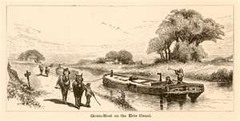
7879565837Erie CanalA canal between the New York cities of Albany and Buffalo, completed in 1825. The canal, considered a marvel of the modern world at the time, allowed western farmers to ship surplus crops to sell in the North and allowed northern manufacturers to ship finished goods to sell in the West. Connected Great Lakes farms and western markets with New York City leading to its rise as a center of trade and commerce.14
7879565838Eli WhitneyAn American inventor who developed the cotton gin. Also contributed to the concept of interchangeable parts that were exactly alike and easily assembled or exchanged15
7879565839Lowell SystemDeveloped in textile mills in Lowell, Massachusetts, during the 1820s, where few skilled workers were needed, labor was done mostly by single young farm women, who worked for a few years and then returned home to be housewives.16
7879565840Market RevolutionDramatic increase between 1820 and 1850 in the exchange of goods and services in market transactions. Resulted from the increased output of farms and factories, the entrepreneurial activities of traders and merchants, and the development of a transportation network of roads, canals and railroads.17
7879565841Embargo Act of 1807Meant to force Britain and France to change their policies towards neutral vessels by depriving them of American trade; difficult to enforce because it was opposed by merchants and it hurt the national economy; replaced by the Non-Intercourse Act.18
7879565842War of 1812between the United States and England caused by impressment of American sailors, British aid to Indians in the west with firearms, War Hawks desire to invade Canada, and continued British interference with trade.19
7879565843Battle of New OrleansA battle during the War of 1812 where the British army attempted to take New Orleans. Due to the foolish frontal attack, Jackson defeated them, which gave him an enormous popularity boost.20
7879565844Treaty of GhentDecember 24, 1814 - Ended the War of 1812 and restored the status quo. For the most part, territory captured in the war was returned to the original owner. It also set up a commission to determine the disputed Canada/U.S. border. The important result of the War of 1812 was that the US maintained its independence from Great Britain.21
7879565845Lewis and ClarkSent on an expedition by Jefferson to gather information on the United States' new land and map a route to the Pacific. They kept very careful maps and records of this new land acquired from the Louisiana Purchase.22
7879565846Louisiana PurchaseMade by Jefferson, this doubled the size of the US.23
7879565847Revolution of 1800represented a return to what Jefferson considered the original spirit of the Revolution, restoring the republican experiment, checking the growth of government power, and halting the decay of virtue that had set in under Federalist rule.24
7879565848Barbary Pirate WarsAt issue was the demand of tribute from American merchant vessels in the Mediterranean Sea. American naval power attacked North African cities and extracted concessions of fair passage from their rulers.25
7879565849TecumsehA Shawnee chief who, along with his brother, Tenskwatawa (known as The Prophet) worked to unite the Northwestern Indian tribes, which was defeated by an American army led by William Henry Harrison at the Battle of Tippecanoe in 1811.26
7879565850Hartford Conventiona meeting of Federalists at Hartford, Connecticut, to protest the War of 1812; New England states threatened to leave the union if the war continued27
7879565851"Corrupt Bargain"what Jackson and followers called the Clay/Adams deal that kept him from election in 1824.28
7879565852Jacksonian Democracyan expansion of voting rights to ensure majority rule during 1820's/30s29
7879565853Nullification CrisisConflict that resulted when South Carolina voided federal tariffs and threatened to secede30
7879565854Trail of TearsThe removal of Cherokee Indians from Georgia to Indian Territory in 1838 and 183931
7879565855Whig partyPolitical party formed by Henry clay, Daniel Webster, and other Jackson opponents32
7879565856Webster-Hayne Debateseries of speeches in the Senate, during which South Carolina interpreted the Constitution as little more than a treaty between sovereign states, while Massachusetts expressed the concept of the United States as one nation.33
7879565857Samuel SlaterFather of the Factory system-memorized the ideas of Britain's factory system34
7879565858Steam Poweran efficient power source for machines in factories and trains35
7879565859Second Great Awakeningreligious revival that swept the country and helped inspire reform movements, especially the abolitionist movement36
7879565860Cult of Domesticitya belief that married women should restrict their activities to their home and family37
7879565861Hudson River SchoolAmerican artistic movement that produced romantic renditions of local landscapes.38
7879565862Dorothea DixReformer who was a pioneer in the movement for better treatment of prisoners and the mentally ill39
7879565863Seneca Falls Conventionthe first organized public meeting about women's rights held in the United States40
7879565864Utopian SocietiesSmall societies dedicated to perfection in social and political conditions41
7879565865Transcendentalismthe belief that people could transcend, or rise above, material things in life.42
7879565866Nat Turner's Rebellionthe largest and deadliest slave uprising in U.S. history; resulted in new laws (South) prohibiting education of slaves and free black people, restricting rights of assembly and other civil rights for free black people, and requiring white ministers to be present at all worship services.43
787956586754-40 or fightPopular slogan that led Polk's to victory, reflecting popular sentiment towards expansion that included Texas, California, and the entire Oregon territory.44
7879565868Mexican-American WarInstigated by the US with the intent of gaining California, but led to the conquest of over 500,000 square miles of land in the Southwest45
7879565869Wilmot Proviso1846 proposal that outlawed slavery in any territory gained from the War with Mexico46
7879565870Treaty of Guadalupe HidalgoA treaty that ended the Mexican War and gave the U.S. much of Mexico's northern territory47
7879565871Free Soil PartyPolitical party formed to oppose extending slavery in the territories48
7879565872Know-Nothing PartyPolitical party of the 1850s that was anti-Catholic and anti-immigrant49
7879565873Manifest Destinythe belief by Americans that they were destined to spread out across the continent50
7879565874Mormonsmembers of the Church of Jesus Christ of Latter-Day Saints founded by Joseph Smith in 1830; Relocated to Utah to escape religious persecution, settling in Salt Lake City, Utah51

AMSCO AP US History Chapter 14 Flashcards

AMSCO United States History 2015 Edition Chapter 14 The Civil War, 1861-1865

Terms : Hide Images
5064929863border statesDuring the Civil War the term for the the states of Delaware, Maryland, Kentucky and Missouri. Keeping these states in the Union was a primary political and military goal of President Lincoln. They were slave states, but did not secede. (p. 269)0
5064929864Confederate States of AmericaIn February 1861, representatives of South Carolina, Georgia, Florida, Alabama, Mississippi, Louisiana, and Texas met in Montgomery, Alabama to form this new country. After the attack on Fort Sumter, the states of Virginia, North Carolina, Tennessee, Arkansas also seceded and joined the Confederacy. The Confederate capital was moved to Richmond, Virginia. The Confederate Constitution was modeled after the U.S. Constitution, except that it provided a single six-year term for the president and gave the president an item veto (power to veto part of a bill). (p. 269, 270)1
5064929865Jefferson DavisHe served as President of the Confederate States during the Civil War. (p. 270)2
5064929866Alexander H. StephensHe served as vice president of the Confederate States of America during the Civil War. He acted in defense of states' rights, and even urged the secession of Georgia in response to the "despotic" actions of the Confederate government. (p. 270)3
5066265510Second American RevolutionA term sometimes used for the Civil War. (p. 282)4
5064929891greenbacksName given to paper money issued by the Union government during the Civil War. They bills were not redeemable for gold, which contributed to creeping inflation. (p. 280)5
5064929892Morrill Tariff ActIn 1861, this tariff act raised rates to increase revenue and protect American manufacturers. (p. 281)6
5064929894Morrill Land Grant ActIn 1862, this act encouraged states to use the sale of federal land grants to maintain agricultural and technical colleges. (p. 281)7
5064929895Pacific Railway ActIn 1862, this act authorized the building of a transcontinental railroad over a northern route in order to link the economies of California and the western territories to the eastern states. (p. 281)8
5064929893Homestead ActIn 1862, this act promoted settlement of the Great Plains by offering parcels of 160 acres of public land free to any person or family that farmed that land for at least five years. (p. 281)9
5064929861Fort SumterA federal fort in the harbor of Charleston, South Carolina. It was cut off from vital supplies because the South controlled the harbor. President Lincoln announced that he was sending provisions to the Union fort. On April 12, 1861, Carolina guns opened on the Union, and the Civil War began. (p. 269)10
5064929867Bull RunIn July 1861, 30,000 federal troops marched from Washington D.C. to attack Confederate forces near Bull Run Creek at Manassas Junction, Virginia. In the first major battle of the Civil War, Union forces seemed close to victory, but then Confederate reinforcements counterattacked and sent the inexperienced Union troops in retreat. (p. 271)11
5064929868Thomas (Stonewall) JacksonIn July 1861, at the First Battle of Bull Run, this Confederate general counterattacked the Union and sent their troops in a retreat back to Washington D.C. (p. 271)12
5066296733Winfield ScottHe was the Union General-in-Chief at the start of the Civil War. (p. 271)13
5064929869Anaconda PlanThe Union's Civil War plan, created by General Winfield Scott. It called for the U.S. Navy to blockade Southern ports cutting off essential supplies from reaching the Confederacy. (p. 271)14
5064929870George McClellanThe commander of the Union army in the East. After extensive training of his army, he invaded Virginia in March 1862. The Union army was stopped as a result of brilliant tactical moves by the Confederate army. After five months he was forced to retreat to the Potomac, and was replaced by General John Pope. (p. 271)15
5064929871Robert E. LeeConfederate general who defeated the Union at the Second Battle of Bull Run. At the Battle of Antietam (in Maryland) he was unable to break through the Union line and had to retreat back to Virginia. At Fredericksburg, Virginia his army suffered 5,000 casualties compared to 12,000 casualties for the Union army. His army was finally defeated and he surrendered to Union General Grant at Appomattox Court House on April 9, 1865. (p. 272 273, 277, 278)16
5064929872AntietamThis battle took place in September 1862, when Confederate General Robert E. Lee moved his troops into Union territory in Maryland. The Union army met them at Antietam Creek, in Sharpsburg, Maryland. It was the bloodiest single-day battle in American history, with more than 22,000 killed or wounded. Unable to break through the Union lines the Confederate army retreated to Virginia. The win was important because it stopped the Confederate invasion of the North and gave Lincoln the victory he was waiting for. He could now act against slavery. (p. 273)17
5064929873FredericksburgOn December 13, 1862, General Ambrose Burnside launched a frontal attack on General Lee's strong position at this Virginia city. The Union army suffered 12,000 casualties (dead or wounded), while the Confederates only 5,000 casualties. (p. 273)18
5064929874Monitor vs. MerrimacFirst engagement ever between two iron-clad naval vessels. On March 9, 1862, the two ships battled for five hours, ending in a draw. This marked a turning point in naval warfare, wooden ships would be replaced by ironclad ones. (p. 273)19
5064929875Ulysses S. GrantIn early 1862, this Union general led his troops from Illinois to capture Fort Henry and Fort Donelson on the Cumberland River (branch of the Mississippi). These victoires opened up the state of Mississippi to attack by the Union. A Confederate army surprised him at Shiloh, Tennessee, but the his army held its ground and finally forced the Confederates to retreat after 23,000 total casualties. In July 1863, he captured Vicksburg, Mississippi and the Union now controlled the Mississippi River. In early 1864 Lincoln made him commander of all the Union armies. As General Robert E. Lee tried to flee to mountains with army of less than 30,000 men he cut off his army and forced them to surrender at Appomattox Court House. (p. 273, 274, 277, 278)20
5064929876ShilohMajor battle in the American Civil War, fought in 1862, in southwestern Tennessee. Confederate forces led by Albert Johnston launched a surprise attack against the Union army led by General Ulysses S. Grant. The Union army held its ground and finally forced the Confederates to retreat after 23,000 casualties (dead and wounded) on both sides. (p. 274)21
5064929877David FarragutHe led the Union navy when they captured New Orleans, in April 1862. (p. 274)22
5064929882GettysburgOn July 1, 1863, General Robert E. Lee led a Confederate army into Pennsylvania. He surprised the Union troops, and started the most crucial and bloodiest battle of the war. There were 50,000 casualties, but the Confederate army eventually retreated to Virginia, never to regain the offensive. (p. 277)23
5064929883VicksburgIn May 1863, Union General Ulysses S. Grant began an artillery bombardment of this Mississippi city, which last for seven weeks. On July 4, 1863, the Confederates finally surrendered the city, along with 29,000 soldiers. The Union now controlled the full length of the Mississippi River. (p. 277)24
5064929884Sherman's MarchUnion General William Tecumseh Sherman led a force of 100,000 troops on a destructive march through Georgia. Destroying everything in their path, they captured Atlanta, Georgia in September 1864, then marched into Savannah by that December, then they captured and burned Columbia, South Carolina in February 1865. (p. 277)25
5064929886Appomattox Court HouseSite of the surrender of the Confederate army led by Robert E. Lee to Union commander Ulysses S. Grant, on April 9, 1865. (p. 278)26
5066323322executive powerDuring the Civil War, President Abraham Lincoln acted in unprecedented ways, often without the approval of Congress. He called for 75,000 volunteers to stop the Confederacy, authorized spending for the war, and suspended habeas corpus. (p. 270)27
5064929862habeas corpusThis is the term for the constitutional right to be informed of charges and to be given a fair trial. During the Civil War Abraham Lincoln suspended this right, and arrested an estimated 13,000 people on suspicion of aiding the Confederates. (p. 279)28
5066325093insurrectionA term President Lincoln used, to describe the Confederacy actions at the start of the Civil War. (p. 269)29
5064929879Confiscation actsSeries of acts passed by the Union government, designed to liberate slaves in Confederate states. The second act in July 1862, freed slaves from anyone engaged in rebellion against the United States (Union). (p. 275)30
5064929880Emancipation ProclamationAfter the Battle of Antietam, on September 22, 1862, President Lincoln warned that enslaved people in all states still in rebellion on January 1, 1863 would be freed. He also urged the border states to draft plans for emancipation of slaves in their states. On January 1, 1863, Lincoln as promised issued this famous proclamation. This led to slaves joining the Union army and increased Union support from Europe. (p. 276)31
506492988113th AmendmentThis constitutional amendment, ratified in December 1865, forbade slavery and involuntary servitude in all states. (p. 276)32
5064929889Ex Parte MilliganIn 1866, the Supreme Court ruled that the government had acted improperly in Indiana where, certain civilians had been subject to a military trial during the war. The Court ruled that such trials could be used only when regular civilian courts were unavailable. (p. 279)33
5064929890draft riotsIn July 1863 riots against the draft erupted in New York City. Some 117 people were killed before federal troops and a temporary suspension of the draft restored order. (p. 280)34
5064929888CopperheadsNorthern Democrats who opposed the Civil War and wanted a negotiated peace. (p. 279)35
5064929885election of 1864In this presidential election, the Democrats nominated the popular General George McClellan. The Republicans renamed to the Unionist party, nominated President Abraham Lincoln. Abraham Lincoln won the election, however McClellan did win 45 percent of the popular vote. (p. 278)36
5064929878Trent AffairIn 1861, the Confederacy sent diplomats to Britain on a British steamer, to gain recognition for their government. A Union ship captured both men and took them as prisoners of war. The British threatened war if they were not released, and Lincoln gave into their demands. However, the diplomats were not able to get recognition for the Confederacy, from Britain or France. (p. 274)37
5066344335AlabamaA Confederate war ship purchased from Britain. It captured more than 60 Union merchant ships before being sunk off the coast of France. (p. 274)38
5066344336Laird ramsThese ships with iron rams could have been used against the Union's naval blockade. However, the Union persuaded the British government to cancel the sale of these ships to the Confederacy, rather than risk war with the Union. (p. 274)39
5064929887John Wilkes BoothAn American stage actor who, as part of a conspiracy plot, assassinated President Abraham Lincoln at Ford's Theatre in Washington, D.C., on April 14, 1865. (p. 278)40
5066347360segregated black troopsAlmost 200,000 African Americans joined the Union army during the Civil War. (p. 276)41
5066350802Massachusetts 54th RegimentAn all black regiment in the Civil War. (p. 276)42
5066350803women in the workplaceAs men went off to battle in the Civil War, women stepped into the labor vacuum, operated farms and took factory jobs customarily held by men. (p. 282)43
5066353890women in nursingDuring the Civil War women played a critical role as military nurses. (p. 282)44
5066353891war's long term effectsThe Civil War had long term effects on women. The field of nursing was now open to women for the first time. The enormous responsibilities undertaken by women gave impetus to the movement to obtain equal voting rights for women. (p. 282)45
50663563074 million freedmenWith the passage of the thirteenth amendment in 1865, 4 million African Americans were now free. (p. 282)46

Period 1: 1491-1607 AP US History Flashcards

Terms : Hide Images
7267185474Bering StraitPlace where Siberian tribes crossed into present-day Alaska and the Americas approximately 20,000 years ago0
7267185475Three-sister farmingmaize, squash, and beans1
7267185476CahokiaLarge settlement in the Mississippi Valley; Site of sedentary agriculture cultivators2
7267185477PuebloSpanish for "village"; Indians in the Southwest who built fortified settlements3
7267185478Iroquois ConfederacyFive Indian tribes form an alliance and control trade east of the Great Lakes4
7267185479Algonquian IndiansMajor native group distributed in the Northeast and along the Atlantic seaboard who cultivated three sisters. Notably included the Powhatan Confederacy of the Chesapeake Bay and Wampanoag of New England, both of which clashed with English settlers).5
7267185480Sioux IndiansGreat Plains Indians; Hunter-gatherers; Buffalo hunters6
7267185481Shoshone IndiansSocieties in the Northwest and present-day California who supported themselves by hunting and gathering, and in some areas developed settled communities supported by the vast resources of the ocean.7
7267185482Catholic ChurchThe most powerful organization in history; Controlled mostly all of Europe during the Middle Ages8
7267185483caravelnaval technology developed by the Purtuguese and used by Henry the Navigator along the African Coast, Vasco de Gama to India, and Christopher Columbus to the New World9
7267185484capitalismPrivate property; Market prices; Investment in ventures10
7267185485Renaissance"Rebirth"; Humanism11
7267185486Protestant ReformationMartin Luther's demand that the Catholic Church reform. When the church refused, he started a competing church, the Protestant (Reformed) church.12
7267185487Ferdinand and Isabella"The Catholic Monarchs"; United Spain, reconquered Spain (Reconquista), and commissioned Columbus13
7267185488ReconquistaFerdinand and Isabella's successful campaign to expel Muslim Moors (and Jews) from the Iberian Peninsula and unify Spain Under the Spanish crown and Catholic religion.14
7267185489Doctrine of Discovery (1493)A.K.A. Inter caetera; Papal Bull that declared all non-Christian land "discoverable" by Christian powers.15
7267185490Treaty of Tordesillas (1494)Divides America between Portugal and Spain for exploration16
7267185491Colombian ExchangeThe trade of biological elements, ideas, and goods; Transformed mostly all of the world as a result.17
7267185492Middle PassageThe route in the Triangular Trade where slaves passed from West Africa to the New World18
7267185493conquistadoresHernan Cortez and Francisco Pizarro, for example; agents of both the Reconquista and the conquest of the New World19
7267185494EncomiendaSpanish labor system; included a caste system with Peninsulares at the top20
7267185495casta systemThe Spanish developed a caste system that incorporated, and carefully defined the status of, the diverse population of Europeans, Africans, and Native Americans in their empire.21
7267185496MestizosMixed blood Spanish and Indian; Result of lack of Spanish ladies in the New World22
7267185497San Diego (Est. 1769)First and southernmost Spanish mission in California; Established to "civilize" the Indians and create a buffer between New Spain and competing colonial powers.23
7267185498San Francisco (Est. 1776)Last and northernmost Spanish mission in California; Established to "civilize" the Indians and create a buffer between New Spain and competing colonial powers.24
7267185499Spanish missionEstablished in the New World, especially in California, to "civilize" the Indians and create a buffer between New Spain and competing colonial powers.25
7267185500Bartolome de Las CasasIndian apologist who preached against the cruel treatment of the Indians; His writings and activities led to the "Black Legend"26
7267185501Juan Gines de SepulvedaSaw the Indians as uncivilized and barbaric27
7267185502"Black Legend"The (historically debatable) reputation that the Spanish destroyed the Indians through slavery and disease28
7267185503St. Augustine (Est. 1565)First enduring European settlement in North America; Established by the Spanish in modern-day Florida.29
7267185504Pueblo Revolt (1680)Rebellion of Pueblo Indians against Spanish rule in New Mexico; Led by the Indian Popé.30

Period 3 (1754-1800) AP US History Flashcards

Terms : Hide Images
8663793952Benjamin FranklinPostmaster of the colonies; Author of the Albany Plan; A significant Enlightenment figure and one of the most important scientists of the 18th century; Editor of the Declaration of Independence and ambassador to France during the Revolution.0
8663793953George WashingtonAs a land surveyor and wealthy Virginia planter he sparked the French and Indian war; As Commander of the Continental Army during the Revolutionary War he helped the colonies win independence; As first President of the US he was the de facto head of the federalists.1
8663793954French and Indian WarAmerican theater of the Seven Years war; Began in 1754 when territorial claims between the French and British in North America sparked violence; Sometimes called the first global war.2
8663793955Albany Plan of Union (1754)Plan proposed by Benjamin Franklin that sought to unite the 13 colonies for trade, military, and other purposes; the plan was turned down by the colonies & the Crown.3
8663793956Treaty of Paris (1763)Ended French and Indian War; France lost Canada and all land east of the Mississippi to the British.4
8663793957Proclamation Line of 1763British limit for colonial American settlements; Nothing west of the Appalachian mountains allowed.5
8663793958Pontiac's Rebellion (1763)An Indian uprising after the French and Indian War, led by an Ottowa chief; They opposed British expansion into the western Ohio Valley and began destroying British forts in the area.6
8663793959loyalistscolonists who remained loyal to the British Empire in the years leading up to and during the Revolutionary War7
8663793960patriotscolonists who rebelled against the British Empire, seeking reprieve for unfair British treatment of the colonies or independence from the British Empire8
8663793961Sugar Act (1764)The first act that Parliament passed that raised taxes on the colonies. Indirect tax on imported goods from the West Indies.9
8663793962Stamp Act (1765)Parliaments put a tax on all printed material. ex. newspapers, legal documents, playing cards.10
8663793963Stamp Act Congress (1765)A meeting of delegations from many of the colonies, the congress was formed to protest the newly passed Stamp Act It adopted a declaration of rights as well as sent letters of complaints to the king and parliament, and it showed signs of colonial unity and organized resistance.11
8663793964Quartering Act (1765)Required the colonials to provide food, lodging, and supplies for the British troops in the colonies.12
8663793965Boston Massacre (1770)The first bloodshed of American resistance, as British guards at the Boston Customs House opened fire on a crowd killing five Americans.13
8663793966Tea Act (1773)Granted the British East India Company Tea a monopoly on tea sales in the American colonies. A catalyst of the Boston Tea Party.14
8663793967Boston Tea Party (1773)A protest against British taxes in which Boston patriots disguised as Indians dumped valuable tea into Boston Harbor.15
8663793968Intolerable Acts (1774)In response to Boston's resistence to British Customs; Declared (1) The port of Boston closed, (2) the suspension of town meetings, (3) British officials accused of crimes will stand trial in Britain rather than America, and (4) a new Quartering Act.16
8663793969Olive Branch Petitionpetition adopted by the 2nd Continental Congress on July 5, 1775 to prevent an armed conflict between the Thirteen Congress and Great Britain; Ignored by the king.17
8663793970Lexington and Concord (1775)The first military engagements of the revolutionary war; Took place in two Massachusetts towns where weapons were stockpiled.18
8663793971Common Sense (1775)A pamphlet written by Thomas Paine that claimed the colonies had a right to be independent. He claimed that monarchy was bad government, no island should rule a continent, and that economic self-interest of Britain was not in economic interest of the colonists.19
8663793972Thomas PaineAuthor of Common Sense20
8663793973Continental Congressa convention of delegates from the Thirteen Colonies which met from 1775 to 178121
8663793974Declaration of Independence (1776)Statement issued by the Second Continental Congress, explaining why the colonies wanted independence from Britain.22
8663793975Thomas JeffersonDelegate from Virginia at the Second Continental Congress and author of the Declaration of Independence. He later orchestrated the antifederalist "Revolution of 1800", becoming the third President of the United States.23
8663793976Articles of ConfederationFirst constitution of the U.S. 1781-1788; Unified the newly independent states, creating a central government with limited power. After the Revolution, difficulties over international trade, finances, interstate commerce, foreign relations, and internal unrest led to calls for a stronger central government.24
8663793977Battle of Saratoga (1777)A battle that took place in New York where the Continental Army defeated the British. It proved to be the turning point of the war. Convinced France to openly support the colonies with military forces in addition to the supplies and money already being sent.25
8663793978Valley ForgePlace where Washington's army spent the winter of 1777-1778; 1/4 of troops died here from disease and malnutrition, Baron von Steuben along with Marquis de Lafayette comes and train troops and turn the army into a professionally trained army.26
8663793979Battle of Yorktown (1781)Final battle of the revolution, resulting in British surrender.27
8663793980Treaty of Paris (1783)Ended the Revolutionary War; Recognized the independence of the American colonies; Granted the colonies the territory from the southern border of Canada to the northern border of Florida, and from the Atlantic coast to the Mississippi River28
8663793981Virginia Statute for Religious Freedom (1786)Authored by Thomas Jefferson and passed by the Virginia General Assembly; A statement about both freedom of conscience and the principle of separation of church and state; The forerunner of the first amendment (Constitution) protections for religious freedom.29
8663793982Shays' Rebellion (1786)Led by farmers and revolutionary war veterans in western Massachusetts who protested perceived economic and civil rights injustices; Highlighted the need for a strong national government and a reform of the Articles of Confederation.30
8663793983Debate over ratifying the ConstitutionAnti-Federalists opposing ratification battled with Federalists, whose principals were articulated in the Federalist Papers (primarily written by Alexander Hamilton and James Madison). Federalists ensured the ratification of the Constitution by promising the addition of a Bill of Rights that enumerated individual rights and explicitly restricted the powers of the federal government.31
8663793984Constitutional Convention (1787)Delegates from the states participated, and through negotiation, collaboration, and compromise proposed a constitution that created a limited but dynamic central government embodying federalism and providing for a separation of powers between its three branches.32
8663793985slavery compromisesConcessions given to slave states during the Constitutional Convention: (1) Three-fifths compromise, (2) slave trade compromise, (3) fugitive slave clause.33
8663793986U.S. Constitution (1787)Replaced the Articles of Confederation and established a functioning government. Established (1) federalist system, (2) separation of powers, (3) checks and balances, (4) Bill of Rights.34
8663793987ratificationthe action of signing or giving formal consent to a treaty, contract, or agreement, making it officially valid; E.g. U.S. Constitution. Verb form: ratify.35
8663793988checks and balancesPrinciple established in the Constitution and US government in which each of the three branches of government is given certain powers to compete and override other branches in an attempt to prevent one branch from becoming too powerful.36
8663793989Northwest OrdinancesBills passed in 1784, 1785, and 1787 that authorized the sale of lands in the Northwest Territory to raise money for the federal government; these bills also carefully laid out the procedures for eventual statehood for Wisconsin, Michigan, Ohio, Indiana, and Illinois.37
8663793990Federalist PapersA collection of 85 articles written by Alexander Hamilton, John Jay, and James Madison under the name "Publius" to defend the Constitution in detail.38
8663793991Bill of RightsFirst ten amendments to the Constitution; Enumerated individual rights and explicitly restricted the powers of the federal government.39
8663793992John AdamsA Boston lawyer and patriot; Edited the Declaration of Independence; First US ambassador to Britain; Federalist and 2nd president of the United States.40
8663793993Hamilton's financial planDuring Washington's administration; The government would take the debt of the nations and the states debt, make a national bank, and tax higher (which was the only one that did not pass thru congress)41
8663793994EnlightenmentA 18th century European intellectual movement that introduced the idea of republicanism (among other ideas); Influenced many of the founders, e.g. Franklin, Jefferson, and Madison, and had a major impact on the founding documents, e.g. Declaration of Independence, Constitution.42
8663793995Abigail AdamsWife of John Adams (2nd president) and mother of John Quincy Adams (6th president); Advocate of married women's property rights and more economic opportunities for women.43
8663793996Electoral CollegeThe institution that elects the President and Vice President of the United States every four years.44
8663793997first party systemPolitical leaders in the 1790s took a variety of positions on issues such as the relationship between the national government and the states, economic policy, foreign policy, and the balance between liberty and order. This led to the formation of political parties — most significantly the Federalists, led by Alexander Hamilton, and the Democratic-Republican Party, led by Thomas Jefferson and James Madison.45
8663793998FederalistsFaction that supported ideas straight from the Constitution; Called for a strong national government that promoted economic growth and fostered friendly relationships with Great Britain, as well as opposition to revolutionary France; Notable figures: Washington, John Adams, Alexander Hamilton.46
8663793999Democratic-Republican PartyFaction that advocated limited federal power in exchange for stronger states power; Opposed Hamilton's financial plan and National Bank; Opposed relations with Great Britain and advocated supporting revolutionary France. Notable figures: Jefferson, Madison.47
8663794000Washington administration (1789-1797)Formation of the first parties; Hamilton's financial plan enacted; Whisky rebellion; Farewell Address.48
8663794001Washington's Farewell Addressa letter written by Washington towards the end of his presidency; a classic statement of republicanism, warning Americans of the political dangers they can and must avoid if they are to remain true to their values.49
8663794002Whiskey Rebellion (1794)Farmers in Pennsylvania rebelled against Hamilton's excise tax on whiskey; Washington puts down rebellion; Showed that the new government under the Constitution could react swiftly and effectively to such a problem, in contrast to the inability of the government under the Articles of Confederation to deal with Shay's Rebellion.50
8663794003national bankChartered 1791; Part of Hamilton's financial plan; Opposed by Democrat-Republicans.51
8663794004Adams administration (1797-1801)Alien and Sedition Acts; Move of federal capital to Washington, D.C.; XYZ Affair; Quasi War with France (but avoided!); "midnight appointments" of federalists.52
8663794005Washington, D.C.Established as the federal capital 1790. Formed from land donated by the states of Maryland and Virginia.53
8663794006Alien & Sedition ActsActs passed by federalists giving the government power to imprison or deport foreign citizens and prosecute critics of the government passed by Adams in response to Democratic-Republican criticism of his policies, who were led by Thomas Jefferson.54
8663794007Kentucky and Virginia ResolutionsPolitical declarations in favor of states' rights, written by Thomas Jefferson and James Madison, in opposition to the Alien and Sedition acts. Introduced the controversial theory of nullification wherein individual states could nullify federal legislation they regarded as unconstitutional.55
8663794008XYZ Affair (1798)French officials demanded a bribe from U.S. diplomats56
8663794009"Revolution of 1800"Electoral defeat of Adams; Orchestrated by Jefferson and the Democrat-Republicans; Established the principle of peaceful transition of power from one party to another.57

Pages

Subscribe to CourseNotes RSS

Need Help?

We hope your visit has been a productive one. If you're having any problems, or would like to give some feedback, we'd love to hear from you.

For general help, questions, and suggestions, try our dedicated support forums.

If you need to contact the Course-Notes.Org web experience team, please use our contact form.

Need Notes?

While we strive to provide the most comprehensive notes for as many high school textbooks as possible, there are certainly going to be some that we miss. Drop us a note and let us know which textbooks you need. Be sure to include which edition of the textbook you are using! If we see enough demand, we'll do whatever we can to get those notes up on the site for you!