AP Notes, Outlines, Study Guides, Vocabulary, Practice Exams and more!

AMSCO AP US History Chapter 13 Flashcards

AMSCO United States History 2015 Edition, Chapter 13 The Union in Peril, 1848-1861

Terms : Hide Images
7563272389free-soil movementThis movement did not oppose slavery in the South, but they did not want the Western states to allow slavery. (p. 247)0
7563272390Free-Soil partyIn 1848, Northerns organized this party to advocate that the new Western states not allow slavery and provide free homesteads. Their slogan was, "free soil, free labor, free men". (p. 248)1
7563272391conscience WhigsWhigs that opposed slavery. (p. 248)2
7563272392barnburnersAntislavery Democrats, whose defection threatened to destroy the the Democratic party. (p 248)3
7563272393New England Emigrant Aid CompanyNorthern abolitionist and Free-Soilers set up this company to pay for the transportation of antislavery settlers to the Kansas Territory. They did this to shift the balance of power against slavery in this new territory. (p. 253)4
7563272394bleeding KansasAfter 1854, the conflicts between antislavery and proslavery forces exploded in the Kansas Territory. (p. 252)5
7563272395Pottawatomie CreekIn 1856, abolitionist John Brown and his sons attacked this proslavery farm settlement and killed five settlers. (p. 253)6
7563272396Lecompton constitutionIn 1857, President James Buchanan asked that Congress accept this document and admit Kansas as a slave state. Congress did not accept it. (p. 255)7
7563272397popular sovereigntyAround 1850, this term referred to the idea that each new territory could determine by vote whether or not to allow slavery would be allowed in that region. (p. 248)8
7563272398Lewis CassThis Democratic senator from Michigan, proposed popular sovereignty as the solution to the slavery question in the territories. (p. 248)9
7563272399Henry ClayHe proposed the Compromise of 1850. (p. 249)10
7563272400Zachary TaylorThe twelfth president of the United States from 1849 to 1850. He was a general and hero in the Mexican War. He was elected to the presidency in 1848, representing the Whig party. He died suddenly in 1850 and Millard Fillmore became the president. (p 248, 249)11
7563272401Compromise of 1850Henry Clay proposed and it was signed into law by President Millard Fillmore. It proposed: * Admit California to the Union as a free state * Divide the remainder of the Mexican Cession into New Mexico and Utah (popular sovereignty) * Give land in dispute between Texas and New Mexico to federal government in return for paying Texas' public debt of 10 million * Ban slave trade in D. C., but permit slaveholding * New Fugitive Slave Law to be enforced (p. 249)12
7563272402Stephen A. DouglasIn 1854, he devised the Kansas-Nebraska Act, which in effect overturned the Missouri Compromise, and allowed the South the opportunity to expand slavery. In 1858, he debated Abraham Lincoln in a famous series of seven debates in the campaign for the Illinois senate seat. He won the campaign for reelection to the Senate, but he alienated Southern Democrats. In 1860, he won the Democratic presidential nomination, but Southern Democrats nominated their own candidate, John Breckinridge. He was easily defeated by Abraham Lincoln in the presidential election that year. (p. 252, 256, 258)13
7563272403Millard FillmoreThe thirteenth president of the United States, serving from 1850 until 1853, and the last member of the Whig Party to hold that office. He was the second Vice President to become president upon the death of a sitting President, when he succeeded Zachary Taylor. As vice president he helped pass the Compromise of 1850. (p. 249, 255)14
7563272404Kansas-Nebraska ActThis 1854 act, sponsored by Senator Stephen A Douglas, would build a transcontinental railroad through the central United States. In order gain approval in the South, it would divide the Nebraska territory into Nebraska and Kansas and allow voting to decide whether to allow slavery. This increased regional tensions because it effectively repealed the Missouri Compromise, which had already determined that this area would not allow slavery. (p. 252)15
7563272405Crittenden compromiseIn the winter of 1860-1861, Senator John Crittenden proposed a constitutional amendment to appease the South. He proposed that slavery would be allowed in all areas south of the 36 30 line. The Republicans rejected the proposal because it would allow extension of slavery into the new territories. (p. 260)16
7563272406Franklin PierceThe fourteenth President of the United States from 1853 to 1857. A Democrat from New Hampshire, he was acceptable to Southern Democrats because he supported the Fugitive Slave Law. (p. 252)17
7563272407Know-Nothing partyThis political party started in the mid-1850s. Also known as the American party, they were mostly native-born Protestant Americans. Their core issue was opposition to Catholics and immigrants who were entering Northern cities in large numbers. (p. 254)18
7563272408Republican partyThis political party formed in 1854, in response to the passage of the Kansas-Nebraska Act. It was composed of a coalition of Free-Soilers, antislavery Whigs, and Democrats. Although not abolitionist, it sought to block the spread of slavery in the territories. (p. 254)19
7563272409John C. FremontIn the presidential election of 1856, this California senator was the Republican nominee. The Republican platform called for no expansion of slavery, free homesteads, and a probusiness protective tariff. He lost the election to James Buchanan, but won 11 of the 16 free states, which foreshadowed the emergence of a powerful Republican party. (p. 255)20
7563272410James BuchananThe fifteenth President of the United States from 1857 to 1861. He tried to maintain a balance between proslavery and antislavery factions, but his moderate views angered radicals in both North and South, and he was unable to forestall the secession of South Carolina to December 20, 1860. During his term: "Bleeding Kansas" (1856), Caning of Senator Sumner (1856), Lecompton Constitution (1857), Dred Scott case (1857) (p. 255)21
7563272411election of 1860In this presidential election, the Republican candidate, Abraham Lincoln won. Lincoln won all the northern states, while John C. Breckinridge, a South Democrat, won all the southern states. The South felt like it no longer had a voice in national politics and a number of states soon seceded from the Union. (p. 258)22
7563272412sucessionThe election of Abraham Lincoln was the final event that caused the southern states to leave the Union. In December 1860, South Carolina voted unanimously to secede. Within the next six weeks Georgia, Florida, Alabama, Mississippi, Louisiana, and Texas had all seceded. In February 1861, representatives of seven states met in Montgomery, Alabama to create the Confederate States of America. (p. 259)23
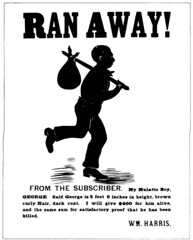
7563272413Fugitive Slave LawCongress passed a second version of this law in 1850. The law's chief purpose was to track down runaway slaves who had escaped to a Northern state, capture them, and return them to their Southern owners. Enforcement of the law in the North was sometimes opposed even though there were penalties for hiding a runaway slave or obstructing enforcement of the law. (p. 250)24
7563272414Underground RailroadA network of people who helped thousands of enslaved people escape to the North by providing transportation and hiding places. (p. 250)25
7563272415Harriet TubmanBorn a slave, she escaped to the North and became the most renowned conductor on the Underground Railroad, leading more than 300 slaves to freedom. (p. 250)26
7563272416Dred Scott v. SandfordAn 1857 Supreme Court case, in which Chief Justice Roger Taney ruled that African Americans (free or slave), were not citizens of the United States, that Congress could not exclude slavery from any federal territory, and that the Missouri Compromise was unconstitutional. The ruling delighted Southern Democrats and infuriated Northern Republicans. (p. 255)27
7563272417Roger TaneyHe was a Southern Democrat and chief justice of the Supreme Court during the Dred Scott v. Sandford case. (p. 255)28
7563272418Abraham LincolnHe was elected president of the United States in 1860. He was a Republican, who ran on a platform that appealed to those in the North and the West. It called for the exclusion of slavery in the new territories, a protective tariff for industry, free land for homesteaders, and a railroad to the Pacific. (p. 258)29
7563272419Lincoln-Douglas debatesIn 1858, Stephen Douglas and Abraham Lincoln had seven debates in the campaign for the Illinois senate seat. Lincoln was not an abolitionist, but he attacked Douglas's seeming indifference to slavery as a moral issue. Although Lincoln lost the election to Douglas, he emerged as a national figure and leading contender for the Republican nomination for president. (p. 256)30
7563272420house-divided speechThe speech given by Abraham Lincoln when accepting the Republican nomination for the Illinois senate seat. He said, "This government cannot endure permanently half slave and half free". (p. 256)31
7563272421Freeport DoctrineDoctrine developed by Stephen Douglas that said slavery could not exist in a community if the local citizens did not pass laws (slave codes) maintaining it. This angered Southern Democrats. (p. 257)32
7563272422Sumner-Brooks incidentThis incident took place in 1856, when Congressman Preston Brooks severely beat Massachusetts Senator Charles Sumner. The attack occurred in the Senate chamber, after Sumner gave a vitriolic speech, "The Crime Against Kansas". (p. 254)33
7563272423John BrownHe led his four sons and some former slaves, in an attack on the federal arsenal, called the Harpers Ferry raid. (p. 257)34
7563272424Harpers Ferry raidIn October 1859, John Brown led his four sons and some former slaves, in an attack on the federal arsenal at Harpers Ferry. His impractical plan was to obtain guns to arm Virginia's slaves, whom he hoped would rise up in a general revolt. He and six of his followers were captured and hanged. Southern whites saw the raid as proof of the north's true intentions - to use slave revolts to destroy the South. (p. 257)35
7563272425Harriet Beecher Stowe, Uncle Tom's CabinIn 1852, she wrote this influential book about the conflict between a slave named Tom, and a brutal white slave owner, Simon Legree. It caused a generation of Northerners and many Europeans to regard all slave owners as cruel and inhuman. Southerners believed it to be proof of Northern prejudice against the Southern way of life. (p. 250)36
7563272426Hinton R. Helper, Impending Crisis of the SouthIn 1857, he wrote this nonfiction book, that attacked slavery using statistics to demonstrate to fellow Southerners that slavery weakened the South's economy. Southern states banned the book, but it was widely read in the North. (p. 250)37
7563272427George Fitzhugh, Sociology of the SouthIn 1854, he wrote this proslavery book which argued that slavery was a positive good for slave and master alike. He was the boldest and most well known of proslavery authors. He questioned the principle of equal rights for unequal men and attacked the capitalist wage system as worse than slavery. (p. 251)38

AP US History Chapter 7-9 Flashcards

Key events and terms for mastery of the time period 1800-1848

Terms : Hide Images
7743453082Era of Good FeelingsA name for President Monroe's two terms, a period of strong nationalism, economic growth, and territorial expansion. Since the Federalist party dissolved after the War of 1812, there was only one political party and no partisan conflicts.0
7743453083SectionalismDifferent parts of the country developing unique and separate cultures (as the North, South and West). This can lead to conflict.1
7743453084James MonroeThe fifth president of the United States. His administration was marked by the acquisition of Florida (1819); the Missouri Compromise (1820), in which Missouri was declared a slave state; and the profession of the Monroe Doctrine (1823), declaring U.S. opposition to European interference in the Americas.2
7743453085NationalismA devotion to the interests and culture of one's nation.3
7743453086tariffA tax on imported goods4
7743453088Henry ClaySenator who persuaded Congress to accept the Missouri Compromise, which admitted Maine into the Union as a free state, and Missouri as a slave state.5
7743453089American SystemAn economic regime pioneered by Henry Clay which created a high tariff to support internal improvements such as road-building. This approach was intended to allow the United States to grow and prosper by themselves This would eventually help America industrialize and become an economic power.6
7743453090Second Bank of the USStates resent the main role of banks (present a state's bank notes for redemption that can easily ruin a bank). Thought banks didn't agree with local needs. Nicholas Biddle was president.7
7743453092John Marshall1755-1835. U.S. Chief Supreme Court Justice. Oversaw over 1000 decisions, including Marbury v Madison and McCulloch v. Maryland.8
7743453093Marbury v Madison(1803) Marbury was a midnight appointee of the Adams administration and sued Madison for commission. Chief Justice Marshall said the law that gave the courts the power to rule over this issue was unconstitutional. established judicial review9
7743453094McCulloch v MarylandMaryland was trying to tax the national bank and Supreme Court ruled that federal law was stronger than the state law10
7743453096Worcester v GeorgiaA case in which the United States Supreme Court vacated the conviction of Samuel Worcester and held that the Georgia criminal statute that prohibited non-Indians from being present on Indian lands without a license from the state was unconstitutional.11
7743453099Missouri Compromise of 1820Allowed Missouri to enter the union as a slave state, Maine to enter the union as a free state, prohibited slavery north of latitude 36˚ 30' within the Louisiana Territory12
7743453100Rush-Bagot Treaty1817 - This treaty between the U.S. and Great Britain (which controlled Canada) provided for the mutual disarmament of the Great Lakes. This was later expanded into an unarmed Canada/U.S. border.13
7743453102Adams Onis Treaty1819. Settled land dispute between Spain and United States as a result of tensions brought on by weakening Spanish power in the New World. U.S. gained Florida in exchange for $5 million and renounced any claims on Texas and settled boundary between two countries to the Pacific Ocean.14
7743453103Monroe Doctrine1823, 1823 - Declared that Europe should not interfere in the affairs of the Western Hemisphere and that any attempt at interference by a European power would be seen as a threat to the U.S. It also declared that a New World colony which has gained independence may not be recolonized by Europe. (It was written at a time when many South American nations were gaining independence). Only England, in particular George Canning, supported the Monroe Doctrine. Mostly just a show of nationalism, the doctrine had no major impact until later in the 1800s.15
7743453104National RoadFirst national road building project funded by Congress. It made travel and transportation of goods much easier because it was one continuous road that was in good condition.16
7743453106Erie CanalA canal between the New York cities of Albany and Buffalo, completed in 1825. The canal, considered a marvel of the modern world at the time, allowed western farmers to ship surplus crops to sell in the North and allowed northern manufacturers to ship finished goods to sell in the West. Connected Great Lakes farms and western markets with New York City leading to its rise as a center of trade and commerce.17
7743453107SteamboatA boat powered by a steam engine that turns a large paddle wheel.18
7743453108Eli WhitneyAn American inventor who developed the cotton gin. Also contributed to the concept of interchangeable parts that were exactly alike and easily assembled or exchanged19
7743453109Interchangeable parts1799-1800 - Eli Whitney developed a manufacturing system which uses standardized parts which are all identical and thus, interchangeable. Before this, each part of a given device had been designed only for that one device; if a single piece of the device broke, it was difficult or impossible to replace. With standardized parts, it was easy to get a replacement part from the manufacturer. Whitney first put used standardized parts to make muskets for the U.S. government.20
7743453113Market RevolutionDramatic increase between 1820 and 1850 in the exchange of goods and services in market transactions. Resulted from thee combo impact of the increased output of farms and factories, the entrepreneurial activities of traders and merchants, and the development of a transportation network of roads, canals and railroads.21
7743453114Thomas JeffersonVirginian, architect, author, governor, and president. Lived at Monticello. Wrote the Declaration of Independence. Second governor of Virginia. Third president of the United States. Designed the buildings of the University of Virginia. Purchased Louisiana for the US even though the purchase was outside of his belief in strict construction of the Constitution.22
7743453115Embargo Act of 1807This act issued by Jefferson forbade American trading ships from leaving the U.S. It was meant to force Britain and France to change their policies towards neutral vessels by depriving them of American trade. It was difficult to enforce because it was opposed by merchants and everyone else whose livelihood depended upon international trade. It also hurt the national economy, so it was replaced by the Non-Intercourse Act.23
7743453116War of 1812A war (1812-1814) between the United States and England which was trying to interfere with American trade with France. Caused by impressment of American sailors, British aid to Indians in the west with firearms, War Hawk Congressman wanted to invade Canada, and continued British interference with trade.24
7743453117Battle of New OrleansA battle during the War of 1812 where the British army attempted to take New Orleans. Due to the foolish frontal attack, Jackson defeated them, which gave him an enormous popularity boost.25
7743453118Treaty of GhentDecember 24, 1814 - Ended the War of 1812 and restored the status quo. For the most part, territory captured in the war was returned to the original owner. It also set up a commission to determine the disputed Canada/U.S. border. The important result of the War of 1812 was that the US maintained its independence from Great Britain.26
7743453119Lewis and ClarkSent on an expedition by Jefferson to gather information on the United States' new land and map a route to the Pacific. They kept very careful maps and records of this new land acquired from the Louisiana Purchase.27
7743453120SacajaweaThe Native American woman who was the personal guide and translator for Lewis and Clark and their expedition in northern Louisiana Territory28
7743453121Louisiana PurchaseIn 1803, the purchase of the Louisiana territory from France. Made by Jefferson, this doubled the size of the US.29
7743453122James Madison(1809-1813) and (1813-1817) The War of 1812, the US declares war on Great Britain. In 1814, the British (technically the Canadians) set fire to the Capitol. The Treaty of Ghent ends the war in 1814., The fourth President of the United States (1809-1817). A member of the Continental Congress (1780-1783) and the Constitutional Convention (1787), he strongly supported ratification of the Constitution and was a contributor to The Federalist Papers (1787-1788), which argued the effectiveness of the proposed constitution. Favored strict interpretation of the Constitution.30
7743453123Non-Intercourse Act1809 - Replaced the Embargo of 1807. Unlike the Embargo, which forbade American trade with all foreign nations, this act only forbade trade with France and Britain. It did not succeed in changing British or French policy towards neutral ships, so it was replaced by Macon's Bill No. 2.31
7743453126Haitian RevolutionA major influence of the Latin American revolutions because of its success; the only successful slave revolt in history; it is led by Toussaint L'Overture.32
7743453127Revolution of 1800Jefferson's view of his election to presidency. Jefferson claimed that the election of 1800 represented a return to what he considered the original spirit of the Revolution. Jefferson's goals for his revolution were to restore the republican experiment, check the growth of government power, and to halt the decay of virtue that had set in under Federalist rule.33
7743453128Barbary Pirate WarsThe Barbary Wars (or Tripolitan Wars) were two wars between the United States of America and Barbary States in North Africa in the early 19th century. At issue was the pirates' demand of tribute from American merchant vessels in the Mediterranean Sea. American naval power attacked the pirate cities and extracted concessions of fair passage from their rulers.34
7743453129TecumsehA Shawnee chief who, along with his brother, Tenskwatawa, a religious leader known as The Prophet, worked to unite the Northwestern Indian tribes. The league of tribes was defeated by an American army led by William Henry Harrison at the Battle of Tippecanoe in 1811. Tecumseh was killed fighting for the British during the War of 1812 at the Battle of the Thames in 1813.35

AMSCO AP US History Chapter 4 Flashcards

AMSCO United States History 2015 Edition, Chapter 4 Imperial Wars and Colonial Protest, 1754-1774

Terms : Hide Images
5522660064French and Indian WarWar fought in the colonies from 1754 to 1763 between the English and the French for possession of the Ohio River Valley area. The English won the war and the Peace of Paris was negotiated in 1763. (p. 70)0
5522660065George WashingtonLed a small militia from Virginia to stop work on French Fort Duquesne. Was forced to surrender on July 3rd, 1754.1
5522660066Edward BraddockGeneral who led an army from Virginia, but was defeated (1755)2
5522660067Albany Plan of UnionBritish government called for representatives from several colonies to meet in Albany, NY in 1754, to provide for an inter-colonial government to recruit troops and collect taxes. Set a precedent for other revolutionary meetings. Plan failed due to it never taking effect, and not having the power to enforce colonial citizens to pay taxes. (p. 70)3
5522660068Peace of Paris (1763)Peace treaty signed to end the French and Indian War (The Seven Years' War) in 1763. Great Britain gained French Canada and Spanish Florida. France gave Spain its western territory. (p. 71)4
5522660069salutary neglectBritain had exercised little direct control over the colonies and did not enforce its navigation laws This changed after the French and Indian War.5
5522660070George III; crownKing of England and member of the Whig party6
5522660071WhigsDominant political party in Parliament who wanted to solve England's financial problems through the colonies7
5522660072ParlimentLegislative house of Great Britain8
5522660073Pontiac's RebellionIndian chief Pontiac led a major attack against the colonies in 1763. The British did not rely on colonial forces, but instead sent their army to deal with the rebellion. Pontiac rebelled due to the westward expansion of colonist, this lead to the creation of the Proclamation of 1763. (p. 72)9
5522660074Proclamation Act of 1763Prohibited colonists from settling west of the Appalachian Mountains. British hoped it would prevent violence between Native Americans and colonists. The colonists were angry and disobeyed the law, moving to the west of the mountains in large numbers. (p. 72)10
5522660075Sugar ActPlaced taxes on goods such as foreign sugar and other luxuries. Created to help raise money for the English Crown and pay a debt (1764).11
5522660076Quartering ACTRequired the colonists to provide food and living quarters for British soldiers. (1765)12
5522660077Stamp ActRequired that revenue stamps be placed on almost all printed paper. First direct tax paid by the people. Boycotts were effective in repealing this Act (1765).13
5522660078Patrick HenryYoung Virginian lawyer who coined the phrase "No taxation without representation" in his speech to the House of Burgesses.14
5522660079Stamp Act CongressRepresentatives from nine colonies met in New York in 1765 and decided that only their own elected representatives had the power to approve taxes. (p. 73)15
5522660080Sons and Daughters of LibertySecret society who intimidated tax agents; tarred and feathered some tax collectors16
5522660081Declaratory ActIn 1766 Parliament declared that it had the right to tax and make laws for the colonies in all cases whatsoever. (p. 73)17
5522660082Townshend Acts (1767)In 1767 Parliament enacted new taxes to be collected on imports of tea, glass, and paper. Also created the writs of assistance which was a general license to search for smuggled goods anywhere.18
5522660083John Dickinson: Letters from a Farmer in PennsylvaniaWork of literature in which Dickinson argued that no taxation without representation was an important principle of English law. (p. 74)19
5522660084Samuel Adams and James OtisIn 1768, they wrote the Massachusetts Circular Letter which urged colonies to petition Parliament to repeal the Townshend Acts. (p. 74)20
5522660085Lord Frederick NorthNew prime minister of Britain who convinced Parliament to repeal the Townshend Acts in 1770. (p. 74)21
5522660086Boston MassacreIn March 1777 on a snowy day in Boston British guards, harassed by colonists, fire into a crowd. Five people were killed.22
5522660087Committees of CorrespondenceInitiated by Samuel Adams in 1772, these letters spread news of suspicious or threatening acts by the British throughout the colonies. (p. 74)23
5522660088Gaspee incidentBritish customs ship, which had caught many smugglers, ran aground, The colonists dressed as Indians drove everyone off the boat, then burned it.24
5522660089Tea ActParliament passed this act in 1773 which continued the tax on tea and lowered the price of British tea so it was even cheaper than smuggled Dutch tea. (p. 75)25
5522660090Boston Tea PartyIn December 1773, colonists dressed as Indians threw 342 chests of imported tea into the harbor.26
5522660091Intolerable ActsColonist name for the Coercive Acts of 1774, a series of acts made to punish the colonists for the Boston Tea Party.27
5522660092Port ActOne of the Coercive ACTS, which closed the port of Boston, prohibiting trade in and out ot the harbor until the destroyed tea was paid for.28
5522660093Massachusetts Government ActOne of the Coercive ACTS, which reduced the power of the Massachusetts legislature while increasing the power of the royal governor.29
5522660094Administration of Justice ActOne of the Coercive ACTS, which allowed royal officials accused of crimes to be tried in England instead of the colonies.30
5522660095Quartering Act ExpansionOne of the Coercive ACTS, this expanded the previous Quartering ACT, which forced colonists to provide food and living quarters for British soldiers.31
5522660096Quebec ActIn 1774 this act established Roman Catholicism as the official religion of Quebec, set up a government for Quebec and set the border at the Ohio River.32
5522660097EnlightenmentA European movement in literature and philosophy; used human reasoning to solve problems. (p. 76)33
5522660098DeismBelieve that God established natural laws in creating the universe, but that the role of divine intervention in human affairs was minimal. (p. 77)34
5522660099RationalismTrusted human reason to solve the many problems of life and society; emphasized reason, science, and respect for humanity. (p. 77)35
5522660100John LockeEnglish philosopher who said that all people have rights, simply because they are human and that people have a right and a responsibility to revolt against any government that failed to protect their rights. (p. 77)36
5522660101Jean-Jacques RousseauFrench philosopher who had a profound influence on educated Americans in the 1760s and 1770s. (p. 77)37

AMSCO AP US History Chapter 14 Flashcards

AMSCO United States History 2015 Edition Chapter 14 The Civil War, 1861-1865

Terms : Hide Images
8070857286border statesDuring the Civil War the term for the the states of Delaware, Maryland, Kentucky and Missouri. Keeping these states in the Union was a primary political and military goal of President Lincoln. They were slave states, but did not secede. (p. 269)0
8070857287Confederate States of AmericaIn February 1861, representatives of South Carolina, Georgia, Florida, Alabama, Mississippi, Louisiana, and Texas met in Montgomery, Alabama to form this new country. After the attack on Fort Sumter, the states of Virginia, North Carolina, Tennessee, Arkansas also seceded and joined the Confederacy. The Confederate capital was moved to Richmond, Virginia. The Confederate Constitution was modeled after the U.S. Constitution, except that it provided a single six-year term for the president and gave the president an item veto (power to veto part of a bill). (p. 269, 270)1
8070857288Jefferson DavisHe served as President of the Confederate States during the Civil War. (p. 270)2
8070857289Alexander H. StephensHe served as vice president of the Confederate States of America during the Civil War. He acted in defense of states' rights, and even urged the secession of Georgia in response to the "despotic" actions of the Confederate government. (p. 270)3
8070857290Second American RevolutionA term sometimes used for the Civil War. (p. 282)4
8070857291greenbacksName given to paper money issued by the Union government during the Civil War. They bills were not redeemable for gold, which contributed to creeping inflation. (p. 280)5
8070857292Morrill Tariff ActIn 1861, this tariff act raised rates to increase revenue and protect American manufacturers. (p. 281)6
8070857293Morrill Land Grant ActIn 1862, this act encouraged states to use the sale of federal land grants to maintain agricultural and technical colleges. (p. 281)7
8070857294Pacific Railway ActIn 1862, this act authorized the building of a transcontinental railroad over a northern route in order to link the economies of California and the western territories to the eastern states. (p. 281)8
8070857295Homestead ActIn 1862, this act promoted settlement of the Great Plains by offering parcels of 160 acres of public land free to any person or family that farmed that land for at least five years. (p. 281)9
8070857296Fort SumterA federal fort in the harbor of Charleston, South Carolina. It was cut off from vital supplies because the South controlled the harbor. President Lincoln announced that he was sending provisions to the Union fort. On April 12, 1861, Carolina guns opened on the Union, and the Civil War began. (p. 269)10
8070857297Bull RunIn July 1861, 30,000 federal troops marched from Washington D.C. to attack Confederate forces near Bull Run Creek at Manassas Junction, Virginia. In the first major battle of the Civil War, Union forces seemed close to victory, but then Confederate reinforcements counterattacked and sent the inexperienced Union troops in retreat. (p. 271)11
8070857298Thomas (Stonewall) JacksonIn July 1861, at the First Battle of Bull Run, this Confederate general counterattacked the Union and sent their troops in a retreat back to Washington D.C. (p. 271)12
8070857299Winfield ScottHe was the Union General-in-Chief at the start of the Civil War. (p. 271)13
8070857300Anaconda PlanThe Union's Civil War plan, created by General Winfield Scott. It called for the U.S. Navy to blockade Southern ports cutting off essential supplies from reaching the Confederacy. (p. 271)14
8070857301George McClellanThe commander of the Union army in the East. After extensive training of his army, he invaded Virginia in March 1862. The Union army was stopped as a result of brilliant tactical moves by the Confederate army. After five months he was forced to retreat to the Potomac, and was replaced by General John Pope. (p. 271)15
8070857302Robert E. LeeConfederate general who defeated the Union at the Second Battle of Bull Run. At the Battle of Antietam (in Maryland) he was unable to break through the Union line and had to retreat back to Virginia. At Fredericksburg, Virginia his army suffered 5,000 casualties compared to 12,000 casualties for the Union army. His army was finally defeated and he surrendered to Union General Grant at Appomattox Court House on April 9, 1865. (p. 272 273, 277, 278)16
8070857303AntietamThis battle took place in September 1862, when Confederate General Robert E. Lee moved his troops into Union territory in Maryland. The Union army met them at Antietam Creek, in Sharpsburg, Maryland. It was the bloodiest single-day battle in American history, with more than 22,000 killed or wounded. Unable to break through the Union lines the Confederate army retreated to Virginia. The win was important because it stopped the Confederate invasion of the North and gave Lincoln the victory he was waiting for. He could now act against slavery. (p. 273)17
8070857304FredericksburgOn December 13, 1862, General Ambrose Burnside launched a frontal attack on General Lee's strong position at this Virginia city. The Union army suffered 12,000 casualties (dead or wounded), while the Confederates only 5,000 casualties. (p. 273)18
8070857305Monitor vs. MerrimacFirst engagement ever between two iron-clad naval vessels. On March 9, 1862, the two ships battled for five hours, ending in a draw. This marked a turning point in naval warfare, wooden ships would be replaced by ironclad ones. (p. 273)19
8070857306Ulysses S. GrantIn early 1862, this Union general led his troops from Illinois to capture Fort Henry and Fort Donelson on the Cumberland River (branch of the Mississippi). These victoires opened up the state of Mississippi to attack by the Union. A Confederate army surprised him at Shiloh, Tennessee, but the his army held its ground and finally forced the Confederates to retreat after 23,000 total casualties. In July 1863, he captured Vicksburg, Mississippi and the Union now controlled the Mississippi River. In early 1864 Lincoln made him commander of all the Union armies. As General Robert E. Lee tried to flee to mountains with army of less than 30,000 men he cut off his army and forced them to surrender at Appomattox Court House. (p. 273, 274, 277, 278)20
8070857307ShilohMajor battle in the American Civil War, fought in 1862, in southwestern Tennessee. Confederate forces led by Albert Johnston launched a surprise attack against the Union army led by General Ulysses S. Grant. The Union army held its ground and finally forced the Confederates to retreat after 23,000 casualties (dead and wounded) on both sides. (p. 274)21
8070857308David FarragutHe led the Union navy when they captured New Orleans, in April 1862. (p. 274)22
8070857309GettysburgOn July 1, 1863, General Robert E. Lee led a Confederate army into Pennsylvania. He surprised the Union troops, and started the most crucial and bloodiest battle of the war. There were 50,000 casualties, but the Confederate army eventually retreated to Virginia, never to regain the offensive. (p. 277)23
8070857310VicksburgIn May 1863, Union General Ulysses S. Grant began an artillery bombardment of this Mississippi city, which last for seven weeks. On July 4, 1863, the Confederates finally surrendered the city, along with 29,000 soldiers. The Union now controlled the full length of the Mississippi River. (p. 277)24
8070857311Sherman's MarchUnion General William Tecumseh Sherman led a force of 100,000 troops on a destructive march through Georgia. Destroying everything in their path, they captured Atlanta, Georgia in September 1864, then marched into Savannah by that December, then they captured and burned Columbia, South Carolina in February 1865. (p. 277)25
8070857312Appomattox Court HouseSite of the surrender of the Confederate army led by Robert E. Lee to Union commander Ulysses S. Grant, on April 9, 1865. (p. 278)26
8070857313executive powerDuring the Civil War, President Abraham Lincoln acted in unprecedented ways, often without the approval of Congress. He called for 75,000 volunteers to stop the Confederacy, authorized spending for the war, and suspended habeas corpus. (p. 270)27
8070857314habeas corpusThis is the term for the constitutional right to be informed of charges and to be given a fair trial. During the Civil War Abraham Lincoln suspended this right, and arrested an estimated 13,000 people on suspicion of aiding the Confederates. (p. 279)28
8070857315insurrectionA term President Lincoln used, to describe the Confederacy actions at the start of the Civil War. (p. 269)29
8070857316Confiscation actsSeries of acts passed by the Union government, designed to liberate slaves in Confederate states. The second act in July 1862, freed slaves from anyone engaged in rebellion against the United States (Union). (p. 275)30
8070857317Emancipation ProclamationAfter the Battle of Antietam, on September 22, 1862, President Lincoln warned that enslaved people in all states still in rebellion on January 1, 1863 would be freed. He also urged the border states to draft plans for emancipation of slaves in their states. On January 1, 1863, Lincoln as promised issued this famous proclamation. This led to slaves joining the Union army and increased Union support from Europe. (p. 276)31
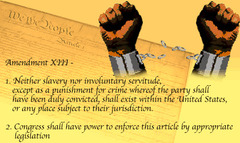
807085731813th AmendmentThis constitutional amendment, ratified in December 1865, forbade slavery and involuntary servitude in all states. (p. 276)32
8070857319Ex Parte MilliganIn 1866, the Supreme Court ruled that the government had acted improperly in Indiana where, certain civilians had been subject to a military trial during the war. The Court ruled that such trials could be used only when regular civilian courts were unavailable. (p. 279)33
8070857320draft riotsIn July 1863 riots against the draft erupted in New York City. Some 117 people were killed before federal troops and a temporary suspension of the draft restored order. (p. 280)34
8070857321CopperheadsNorthern Democrats who opposed the Civil War and wanted a negotiated peace. (p. 279)35
8070857322election of 1864In this presidential election, the Democrats nominated the popular General George McClellan. The Republicans renamed to the Unionist party, nominated President Abraham Lincoln. Abraham Lincoln won the election, however McClellan did win 45 percent of the popular vote. (p. 278)36
8070857323Trent AffairIn 1861, the Confederacy sent diplomats to Britain on a British steamer, to gain recognition for their government. A Union ship captured both men and took them as prisoners of war. The British threatened war if they were not released, and Lincoln gave into their demands. However, the diplomats were not able to get recognition for the Confederacy, from Britain or France. (p. 274)37
8070857324AlabamaA Confederate war ship purchased from Britain. It captured more than 60 Union merchant ships before being sunk off the coast of France. (p. 274)38
8070857325Laird ramsThese ships with iron rams could have been used against the Union's naval blockade. However, the Union persuaded the British government to cancel the sale of these ships to the Confederacy, rather than risk war with the Union. (p. 274)39
8070857326John Wilkes BoothAn American stage actor who, as part of a conspiracy plot, assassinated President Abraham Lincoln at Ford's Theatre in Washington, D.C., on April 14, 1865. (p. 278)40
8070857327segregated black troopsAlmost 200,000 African Americans joined the Union army during the Civil War. (p. 276)41
8070857328Massachusetts 54th RegimentAn all black regiment in the Civil War. (p. 276)42
8070857329women in the workplaceAs men went off to battle in the Civil War, women stepped into the labor vacuum, operated farms and took factory jobs customarily held by men. (p. 282)43
8070857330women in nursingDuring the Civil War women played a critical role as military nurses. (p. 282)44
8070857331war's long term effectsThe Civil War had long term effects on women. The field of nursing was now open to women for the first time. The enormous responsibilities undertaken by women gave impetus to the movement to obtain equal voting rights for women. (p. 282)45
80708573324 million freedmenWith the passage of the thirteenth amendment in 1865, 4 million African Americans were now free. (p. 282)46

AMSCO AP US History Chapter 29 Flashcards

AMSCO United States History 2015 Edition, Chapter 29 Limits of a Superpower, 1969-1980

Terms : Hide Images
6772236542Henry KissingerNixon's national security adviser, he later become secretary of state during Nixon's second term. He helped Nixon to fashion a realistic foreign policy that generally succeeded in reducing the tensions of the Cold War. (p. 625)0
6772236543VietnamizationPresident Nixon announced that he would gradually withdraw U.S. troops from Vietnam and give the South Vietnamese the money, the weapons, and the training that they needed to take over the full conduct of the war. Under this policy, U.S. troops in South Vietnam went from over 540,000 in 1969 to under 30,000 in 1972. (p. 626)1
6772236544Nixon DoctrineThis doctrine declared that Asian allies would receive U.S. support but without the extensive use of U.S. ground forces. (p. 626)2
6772236545Kent StateIn April 1970, President Nixon expanded the war by using U.S. forces to invade Cambodia. A nationwide protest against this action on U.S. college campuses resulted in the killing of four youths by National Guard troops at Kent State in Ohio. (p. 626)3
6772236546My LaiThe American public was shocked to learn about a 1968 massacre of women and children by U.S. troops in the Vietnamese village of My Lai. (p. 626)4
6772236547Pentagon PapersThe New York Times published the Pentagon Papers, a secret government history documenting the mistakes and deceptions of government policy-makers in dealing with Vietnam. (p. 626)5
6772236548Paris Accords of 1973In January 1973, the North Vietnamese agreed to an armistice, in which the United States would withdraw the last of its troops and get back over 500 prisoners of war (POWs). The agreement also promised a cease-fire and free elections. However, the armistice did not end the war, but it allowed the United States to extricate itself. (p. 627)6
6772236549detentePresident Nixon and Kissinger strengthened the U.S. position in the world by taking advantage of the rivalry between the two Communist giants, China and the Soviet Union. Their diplomacy was praised for bringing about detente, a reduction of Cold War tensions. (p. 627)7
6772236550China visitAfter a series of secret negotiations with Chinese leaders, in February of 1972 Nixon astonished the world by traveling to Beijing to meet with Mao Zedong, the leader of Communist China. His visit initiated diplomatic exchanges that ultimately led to U.S. recognition of the Communist government. (p. 627)8
6772236551antiballistic missilesPresident Nixon used his new relationship with China to put pressure on the Soviets to agree to a treaty limiting antiballistic missiles (ABMs). (p. 627)9
6772236552Strategic Arms Limitation TalksPresident Nixon used his new relationship with China to put pressure on the Soviets to agree to a treaty limiting antiballistic missiles (ABMs), a new technology that would have expanded the arms race. After the first round of Strategic Arms Limitations Talks (SALT I), U.S. diplomats secured Soviet consent to a freeze on the number of ballistic missiles carrying nuclear warheads. While this agreement did not end the arms race, it was a significant step toward reducing Cold War tensions and bringing about detente. (p. 627)10
6772236553Middle East War (1973)On October 6, 1973, the Syrians and Egyptians launched a surprise attack on Israel in an attempt to recover the lands lost in the Six-Day War of 1967. President Nixon ordered the U.S. nuclear forces on alert and airlifted almost $2 billion in arms to Israel to stem their retreat. The tide of battle quickly shifted in favor of the Israelis. (p. 631)11
6772236554OPEC; oil embargoAfter October 1973 Arab Israel War, the Arab members of the Organization of Petroleum Exporting Countries (OPEC) placed an embargo on oil sold to Israel's supporters. The embargo caused a worldwide oil shortage and long lines at gas stations in the United States. (p. 631)12
6772236555New FederalismIn a program known as revenue sharing, or the New Federalism, Congress approved giving local governments $30 billion in block grants over five years to address local needs as they saw fit. Republicans hoped revenue sharing would check the growth of the federal government and return responsibility to the states, where it had rested before the New Deal. (p. 628)13
6772236556stagflationThe U.S. economy in the 1970s faced an unusual combination of economic slowdown and high inflation. To slow inflation, President Nixon at first tried to cut federal spending. When this policy contributed to a recession and unemployment, he adopted Keynesian economics and deficit spending. He surprised the nation by imposing a 90-day wage and price freeze. Next, he took the dollar off the gold standard, which helped to devalue it relative to foreign currencies. (p. 628)14
6772236557southern strategyHaving received just 43 percent of the popular vote in 1968, President Nixon was well aware of being a minority president. To win over the South, he asked the federal courts in that region to delay integration plans and busing orders. He also nominated two southern conservatives to the Supreme Court. The Senate refused to confirm them, and the courts rejected his requests for delayed integration. Nevertheless, his strategy played well with southern white voters. (p. 629)15
6772236558wage and price controlsIn 1971, President Nixon imposed a 90-day wage and price freeze to slow inflation. (p. 628)16
6772236559off the gold standardIn 1971, President Nixon took the U.S. off the gold standard, which helped to devalue the U.S. dollar relative to foreign currencies. (p. 628)17
6772236560cost of living indexedIn 1972, Congress approved automatic increases for Social Security benefits based on the rise in the cost of living. (p. 628)18
6772236561Title IXIn 1972, Congress passed this statue to end sex discrimination in schools that received federal funding. (p. 628)19
6772236562Burger CourtIn 1969, President Nixon appointed Warren E. Burger of Minnesota as chief justice to succeed the retiring Earl Warren. The Burger Court was more conservative than the Warren Court, but some of its decisions angered conservatives. (p. 629)20
6772236563Roe v. WadeIn 1973, the Supreme Court struck down many state laws prohibiting abortions as a violation of a women's right to privacy. (p. 629)21
6772236564election of 1972In the 1972 presidential election Richard Nixon easily won a second term by defeating Democratic Senator George McGovern of South Dakota. Nixon won every state except Massachusetts. (p. 629)22
6772236565George McGovernIn 1972, this Democratic Senator from South Dakota was a very liberal, antiwar, antiestablishment candidate for president. He was defeated easily by Richard Nixon. (p. 629)23
6772236566Watergate cover-upIn June 1972, a group of men hired by Nixon's reelection committee were caught breaking into the offices of the Democratic national headquarters in the Watergate complex. This break-in and attempted bugging were only part of a series of illegal activities. No proof demonstrated that Nixon had ordered the illegal activities. However, it was shown that Nixon participated in the illegal cover up of the scandal. (p. 630)24
6772236567plumbersThe president's aides created this group to stop leaks to the press as well as to discredit opponents. (p. 630)25
6772236568enemies listThe White House created this list of prominent Americans who opposed Nixon or the Vietnam War. (p. 630)26
6772236569United States v. NixonIn the last days of the Watergate scandal, the court denied Nixon's claims to executive privilege and ordering him to turn over the Watergate tapes. (p. 629)27
6772236570War Powers ActIt was found that President Nixon had authorized 3,500 secret bombing raids in Cambodia, a neutral county. In November 1973, after a long struggle, Congress finally passed this act over Nixon's veto. This law required Nixon and any future president to report to Congress within 48 hours after taking military action and to obtain Congressional approval for any military action lasting more than 60 days. (p. 631)28
6772236571impeachment and resignationThe start of impeachment hearings in the House forced Nixon to eventually turn over the Watergate tapes, tape recordings of Nixon in his office. The tapes clearly implicated Nixon in the cover-up. The House Judiciary Committee voted three articles of impeachment: (1) obstruction of justice, (2) abuse of power, and (3) contempt of Congress. On August 9, 1974 Nixon resigned. (p. 632)29
6772236572imperial presidencyCold War presidents had used national security, secrecy, executive privileged, and the mystique of the office to concentrate power into the White House. (p. 640)30
6772236573Gerald FordAs vice president, he became president when Richard Nixon resigned on August 1, 1974. He was a likeable and unpretentious man, but his ability to be president was questioned by many in the media. (p. 632)31
6772236574pardon of NixonIn his first month in office President Gerald Ford granted Richard Nixon a full and unconditional pardon for any crime he might have committed in office. (p. 632)32
6772236575reform of CIAFormer Congressman George H. W. Bush was appointed by President Ford to reform this agency after it had been accused of assassinating foreign leaders. (p. 633)33
6772236576fall of SaigonIn April 1975, the U.S supported government in Saigon fell and Vietnam became one country under Communist rule. (p. 633)34
6772236577Cambodia genocideIn 1975, the U.S. supported government in Cambodia fell to the Khmer Rouge, a radical Communist faction that killed over one million of its people in an effort to rid the country of western influence. (p 633)35
6772236578battle over inflationIn 1979-1980, inflation seemed completely out of control and reached the unheard of rate of 13 percent. (p. 636)36
6772236579BicentennialIn 1976 the United States celebrated its 200th birthday. (p. 633)37
6772236580election of 1976In 1976 presidential election Democrat James Earl (Jimmy) Carter won a close election by defeating Gerald Ford. He was helped by running as an outsider and the voters memory of Watergate. (p. 634)38
6772236581James Earl (Jimmy) CarterHe was elected president in 1976. He was a former Democratic governor of Georgia. (p. 634)39
6772236582human rightsPresident Carter championed the cause of human rights around the world. He opposed the all-white oppressive governments of South Africa and Rhodesia. He cut aid to Argentina and Chile for their human rights violations. (p. 634)40
6772236583Panama Canal TreatyIn 1978, the Senate ratified a treaty that would gradually transfer control of the Panama Canal from the U.S. to Panama. (p. 634)41
6772236584Camp David AccordsIn September 1978, President Carter arranged for leader of Egypt and Israel to met at the Camp David presidential retreat to provide a framework for a peace settlement between the two countries. (p. 635)42
6772236585Iranian hostage crisisIn November 1979, Iranian militants seized the U.S. embassy in Tehran, Iran and held more than 50 of the U.S. staff as hostages. The hostage crisis dragged on for the rest of Carter's presidency. (p. 635)43
6772236586recognition of ChinaIn 1979, the U.S. ended its official recognition of the Chinese government in Taiwan and completed an exchange of ambassadors with the People's Republic of China. (p. 635)44
6772236587Soviet Afghanistan invasionIn December 1979, Soviet troops invaded Afghanistan, an action that ended a decade of improving U.S.-Soviet relations. (p. 635)45
6772236588Paul Volcker, high interest ratesIn 1980, the chairman of the Federal Reserve Board pushed interest rates to 20 percent in order to combat inflation. (p. 636)46
6772236589malaise speechIn 1979, President Jimmy Carter gave a speech in which he blamed the U.S. problems on a "moral and spiritual crisis". (p. 636)47
6772236590cultural pluralismThe U.S. population became more racial diverse and diverse ethnic and cultural groups strove to celebrate their unique traditions. (p. 637)48
6772236591impact of 1965 immigration lawThe end of ethnic quotas favoring Europeans opened the United States to immigrants from all parts of the world. (p. 637)49
6772236592Immigration Reform and Control Act of 1986This act penalize employers for hiring immigrants who had entered the country illegally or had overstayed their visas, while granting amnesty to undocumented immigrants arriving by 1982. (p. 637)50
6772236593Hispanic AmericansIn 2000, they became the country's largest minority group. (p. 637)51
6772236594Cesar ChavezIn 1975, as leader of the United Farm Workers Organization he organized boycotts and eventually gained collective bargaining rights for farm workers. (p. 637)52
6772236595American Indian MovementTo achieve American Indian self-determination and revival of tribal traditions this organization was founded in 1968. (p. 638)53
6772236596Indian Self-Determination ActIn 1975, this act gave American Indian reservations and tribal lands greater control over internal programs, education, and law enforcement. (p. 638)54
6772236597gaming casinosThe American Indians attacked widespread unemployment and poverty on reservations by building these facilities. (p. 638)55
6772236598Asian AmericansIn the 1980s, this group became the fastest growing minority population. (p. 639)56
6772236599gay liberation movementBy the mid 1970s, homosexuality was no longer classified as a mental illness and the federal Civil Service ended its ban on unemployment of homosexuals. (p. 639)57
6772236600Earth DayIn 1970, this annual celebration day, was created to show concerns about pollution and the destruction of the natural environment. (p. 639)58
6772236601Exxon Valdez accidentIn 1989, this oil tanker ran aground and created a massive oil spill off the coast of Alaska. (p. 639)59
6772236602Three Mile IslandIn 1979, this nuclear power plant accident in Pennsylvania turned public opinion against nuclear power. (p. 639)60
6772236603Chernobyl meltdownIn 1986, this nuclear plant in the Soviet Union exploded killing many people. (p. 639)61
6772236604Clean Air ActIn 1970, Congress passed this act to protect the air. (p. 639)62
6772236605Environmental Protection Agency (EPA)In 1970, Congress created this agency to protect the environment. (p. 639)63
6772236606Clean Water ActIn 1972, Congress passed this act to protect the water. (p. 639)64
6772236607Environmental SuperfundIn 1980, Congress created this fun to clean up toxic dumps, such as Love Canal in New York state. (p. 639)65
6772236608Endangered Species ActIn 1973, Congress passed this act to protect endangered species. (p. 639)66

AMSCO AP US History Chapter 20 Flashcards

AMSCO United States History 2015 Edition, Chapter 20 Becoming a World Power, 1898-1917

Terms : Hide Images
6748839181William SewardSecretary of State who was responsible for purchasing Alaskan Territory from Russia. By purchasing Alaska, he expanded the territory of the country at a reasonable price. (p. 409)0
6748839182Monroe DoctrineThis doctrine stated that European powers could not interfere in the Western Hemisphere. In 1895 and 1896, the U.S. applied this doctrine to push Great Britain to arbitrate a boundary dispute between Venezuela and British colony of Guiana. (p. 412)1
6748839183French in MexicoIn 1865, Secretary of State William Seward invoked the Monroe Doctrine when Napoleon III sent French troops to occupy Mexico. He threatened U.S. military action unless France withdrew their troops, and they did. (p. 410)2
6748839184Alaska PurchaseIn 1867, Secretary of State William Seward bought Alaska from Russia for $7.2 Million ("Seward's Folly"). (p. 410)3
6748839185Pan-American Conference (1889)In 1889, this conference was called by Secretary of State James G. Blaine. It created an organization of cooperation between the United States and Latin American countries. (p. 412)4
6748839186James BlaineIn 1889, as secretary of state he arranged the first Pan-American Conference in Washington D.C. Various nations in the Western Hemisphere met to discuss trade and other issues. (p. 412)5
6748839187Venezuela boundary disputeAn issue between Venezuela and the neighbouring territory, the British colony of Guiana. The United States convince Great Britain to arbitrate the dispute. (p. 412)6
6748839188Cleveland and OlneyIn 1895 and 1896, President Grover Cleveland and Secretary of State Richard Olney insisted that Great Britain agree to arbitrate the border dispute between Venezuela and the British colony of Guiana. (p. 412)7
6748839189HawaiiIn 1893, American settlers aided in the overthrow of Queen Liliuokalani. President McKinley completed the annexation of Hawaii in 1898. (p. 415)8
6748839190Queen LiliuokalaniThe Hawaiian queen who was forced out of power by a revolution started by American business interests. (p. 414)9
6748839191Cleveland blocks annexationIn 1893, President Grover Cleveland block the annexation of Hawaii because he opposed imperalism. However, in 1898, President McKinley did annex Hawaii. (p. 414)10
6748839192international DarwinismDarwin's concept of the survival of the fittest was applied not only to competition in the business world but also to competition among nations. Therefore, expansionist wanted the U.S. to demonstrate its strength by acquiring territories overseas. (p. 410)11
6748839193business and imperialists competitorsThe United States was not alone in pursuing imperialism, which meant acquiring territory or gaining control over the political or economic life of other countries. Great Britain, France, Germany, Russia, and Japan tried to influence or possess weaker countries around the world. (p. 410)12
6748839194spreading religion and scienceSome Protestant Americans believed that the United States had a religious duty to colonize other lands in order to spread Christianity and our superior science technology. (p. 411)13
6748839195Josiah StrongThis reverend believed that Protestant American had a religious duty to colonize other lands in order to spread Christianity and the benefits of their superior civilization . (p. 411)14
6748839196expansionist politiciansRepublican politicians generally endorsed the use of foreign affairs to search for new markets. (p. 411)15
6748839197steel and steam navyBy 1900, The United States had the third largest navy in the world. (p. 411)16
6748839198Alfred Thayer MahanHe was a U.S. Navy captain whose ideas on naval warfare and the importance of seapower changed how America viewed its navy. (p. 411)17
6748839199nationalist mediaNewspapers and magazines published printed stories about ]distant and exotic places. This increased public interest and stimulated demands for a larger U.S. role in world affairs. (p. 411)18
6748839200Cuban revoltIn 1895, Cuban nationalists sabotaged and laid waste to Cuban plantations. Spain sent General Valeriano Weyler who put civilians into armed camps where many died. (p. 413)19
6748839201Valeriano WeylerA general sent by Spain to stop the Cuban revolt. He forced civilians into armed camps, where tens of thousands died of starvation and disease. (p. 413)20
6748839202jingoismAn intense form of nationalism calling for an aggressive foreign policy. (p. 412)21
6748839203yellow journalismJournalism that exploits, distorts, or exaggerates the news to create sensations and attract readers. (p. 413)22
6748839204De Lome LetterSpanish Ambassador's letter that was leaked to the press and and published by American newspapers. It criticized President McKinley in insulting terms. Many considered it an official Spanish insult against U.S. national honor. (p. 413)23
6748839205sinking of the MaineOn February 15, 1898, the USS Maine battleship exploded in Havana Harbor. The yellow press accused Spain of blowing up the ship even though experts later concluded that the explosion was probably an accident. (p. 413)24
6748839206Teller AmendmentA resolution authorizing war, but it promised the U.S. would not annex Cuba after winning the Spanish-American war. (p. 414)25
6748839207a splendid little warThe ambassador to England wrote to his friend, Teddy Roosevelt, with these words because of low casualties in the war against Spain. (p. 414)26
6748839208invade the PhilippinesCommodore George Dewey led a U.S. fleet to the Philippines where he defeated Spain. (p. 414)27
6748839209George DeweyA United States naval officer remembered for his victory at Manila Bay, Philippines in the Spanish-American War. (p. 414)28
6748839210Rough RidersVolunteer regiment of U.S. Cavalry led by Teddy Roosevelt during the Spanish American War. (p. 414)29
6748839211Theodore RooseveltHe became that 26th President in 1901. He as an expansionist who increased the size of Navy, "Great White Fleet". He added the Roosevelt Corollary to Monroe Doctrine. His motto was to "speak softly and carry a big stick". He received the Nobel Peace Prize for mediation of end of Russo-Japanese war. Later arbitrated split of Morocco between Germany and France. (p. 417)30
6748839212Treaty of Paris: Puerto RicoThis treaty was signed on December 10, 1898 with Spain. It provided for: 1) Cuban independence, 2) Purchase of Puerto Rico and Guam, 3) Purchase of the Philippines. (p. 415)31
6748839213Guam and PhilippinesOn December 10, 1898, the Spanish-American War treaty was signed in Paris. Under the treaty the U.S. acquired Guam and also the Philippines. (p. 415)32
6748839214Emilio AguinaldoFilipino nationalist leader who led guerrilla fighters in a three year war against U.S. control of the Philippines. (p. 415)33
6748839215Anti-Imperialist LeagueLead by William Jennings Bryan, they opposed further expansion in the Pacific. (p. 415)34
6748839216Insular casesA series of Supreme Court cases from 1901 to 1903 which arose when the United States acquired the Philippines and Puerto Rico. The court ruled that constitutional rights were not automatically extended to territorial possessions and that the power to decide whether or not to grant such rights belonged to Congress. (p. 416)35
6748839217Platt AmendmentA 1901 amendment to an army appropriations bill that said Cuba would make no treaties that compromised its independence, permit the U.S. to maintain law and order in Cuba, and allow the U.S. to maintain naval bases in Cuba. (p 416)36
6748839218spheres of influenceThe term when countries came to dominate trade and investment within a particular region and shut out competitors. In the 1890s, Russia, Japan, Great Britain, France, and Germany were all establishing close ties with China that disturbed the United States. (p. 417)37
6748839219John HayIn 1899, as William McKinley's secretary of state, he sent a note to all the major countries involved in trade with China. He asked them to accept the concept of an Open Door, by which all nations would have equal trading privileges in China. The replies that he got were evasive, so he declared that all nations had accepted the Open Door policy. (p. 416)38
6748839220Open Door PolicyA policy proposed by the U.S. in 1899, under which all nations would have equal opportunities to trade in China. (p. 416)39
6748839221Boxer RebellionA 1900 rebellion in Beijing, China that was started by a secret society of Chinese who opposed the "foreign devils". An international force marched into Beijing and crushed the rebellion. (p. 417)40
6748839222U.S. joined international forceTo protect American lives and property, U.S. troops participated in an international force that marched into Peking (Beijing) and quickly crushed the rebellion of the Boxers. (p. 417)41
6748839223Second Hay NoteIn 1900, the U.S. was fearful that the international force sent to Beijing might try to occupy China. A second note was written to all the major imperialist countries, stating that China's territory must be preserved and that equal and impartial trade with all parts of China must be maintained. (p. 417)42
6748839224big-stick policyTheodore Roosevelt's foreign policy motto was to "speak softly and carry a big stick". By acting boldly and decisively in a number of situation, Roosevelt attempt to build the reputation of the United States as a world power. (p. 417)43
6748839225TR supports Panama revoltIn 1903, President Theodore Roosevelt orchestrated a revolt for Panama's independence from Columbia. The revolt succeeded quickly and with little bloodshed. (p. 418)44
6748839226Hay-Bunau-Varilla Treaty (1903)In 1903, the Panama government signed this treaty with the United States. It granted the U.S. all rights to the 51 mile long and 10 mile wide Canal Zone, in exchange for U.S. protection. (p. 418)45
6748839227building the Panama CanalThis canal was started in 1904 and completed 10 years later. The building of this large canal was important because it would benefit American commerce and military capability. (p. 418)46
6748839228George GoethalsUnited States army officer and engineer who supervised the construction of the Panama Canal. (p. 418)47
6748839229William GorgasArmy physician who helped eradicate yellow fever and malaria from Panama, so work on the Panama Canal could proceed. (p. 418)48
6748839230Roosevelt CorollaryTheodore Roosevelt's 1904 extension of the Monroe Doctrine. It stated that the United States would intervene in the Americas, on the behalf of European interests. (p. 418)49
6748839231Santo DomingoThe capital of the Dominican Republic. In 1904, European powers were ready to use military power here in order to force debt payments. (p. 418)50
6748839232Russo-Japanese WarIn 1904, Russia and Japan went to war over imperial possessions in the region. In 1905, President Theodore Roosevelt arranged a successful treaty conference for the two foes at Portsmouth, New Hampshire. (p. 419)51
6748839233Treaty of Portsmouth (1905)In 1905, the United States mediated the end of the Russo-Japanese War. Negotiating the treaty in the U.S. increased U.S. prestige. Roosevelt received a Nobel Peace Prize for the mediation. (p. 419)52
6748839234Nobel Peace PrizeFor his work in settling the Russo-Japanese War, President Theodore Roosevelt was awarded the Nobel Peace Prize in 1906. (p. 420)53
6748839235segregation in San Francisco schoolsIn the early 20th century San Francisco schools required that Japanese American students attend segregated schools. In 1908, President Roosevelt worked out a "gentleman's agreement" with Japan, Japanese American students would be allowed to attend normal schools and Japan would restrict the emigration of Japanese workers to the United States. (p. 420)54
6748839236gentlemen's agreementIn 1908, an informal agreement between the United States and Japan. President Roosevelt agreed that Japanese American students would be allowed to attend normal schools in San Francisco and Japan agreed to curb the number of workers coming to the U.S. (p. 420)55
6748839237Great White FleetSixteen United States battleships, painted white, were sent around the world to display American naval power. (p. 419 )56
6748839238Algeciras ConferenceIn 1906, this conference held after the First Moroccan Crisis in which the dispute between Germany and France over control of Morocco was settled. (p. 420)57
6748839239Hague ConferenceIn 1907, the Second International Peace Conference at the Hague discussed rules for limiting warfare. (p. 420)58
6748839240Root-Takahira AgreementIn 1908, this executive agreement between the United States and Japan pledged mutual respect for each nation's possessions in the Pacific region and support for the Open Door policy in China. (p. 419)59
6748839241William Howard TaftThe 27th President of the United States, from 1909 to 1913. He adopted a foreign policy that was mildly expansionist but depended more on investors' dollars than on the military. His policy of promoting U.S. trade by supporting American business abroad was known as dollar diplomacy. (p. 420)60
6748839242role of American moneyPresident Taft believed that private U.S. investment in China and Central America would lead to greater stability there. His policy, was thwarted by growing anti-imperliasm both in the U.S. and overseas. (p. 420)61
6748839243railroads in ChinaIn 1911, President Taft succeeded in securing American participation in agreement to invest in railroads in China along with Germany and France. (p. 420)62
6748839244Manchurian problemIn 1911, the U.S. was excluded from investing in railroads in Manchuria because of a joint agreement between Russia and Japan, which was in direct defiance of the Open Door Policy. (p. 420)63
6748839245intervention in NicaraguaIn 1912, President Taft sent military troops here when a civil war broke out. (p. 420)64
6748839246Henry Cabot LodgeA Republican senator, he was in favor building U.S. power through global expansion. He introduced the Lodge Corollary to the Monroe Doctrine. (p. 411)65
6748839247Lodge CorollaryIn 1912, the Senate passed this resolution as an addition to the Monroe Doctrine. It stated that non-European powers (such as Japan) would be excluded from owning territory in Western Hemisphere. (p. 420)66
6748839248Woodrow WilsonThe 28th president of the United States from 1913 to 1921. This Democrats is known for his leadership during World War I, creating the Federal Reserve, Federal Trade Commission, Clayton Antitrust Act, progressive income tax, lower tariffs, women's suffrage (reluctantly), Treaty of Versailles, sought 14 points post-war plan, League of Nations (but failed to win U.S. ratification). He won the Nobel Peace Prize. (p. 421)67
6748839249anti-imperialismPresident Woodrow Wilson differed from his Republican presidential predecessors. He believed that the U.S. should not expand its territory overseas. (p. 421)68
6748839250William Jennings BryanIn 1913, he was Woodrow Wilson's secretary of state. He tried to demonstrate that the U.S. respected other nations' rights and would support the spread of democracy. (p. 421)69
6748839251Jones ActIn 1916, this act granted the Philippines full territorial status, guaranteed a bill of rights and universal male suffrage to Filipinos, and promised independence for the Philippines as soon as a stable government was established. (p. 422)70
6748839252Puerto Rico citizenshipIn 1917, an act of Congress granted U.S. citizenship and limited self government for this island. (p. 422)71
6748839253Conciliation treatiesWilson's commitment to democracy was shared by Secretary of State William Jennings Bryan. Bryan negotiated treaties in which nations pledged to submit disputes to international commissions and observe a one-year cooling-off period before taking military action. Thirty of these treaties were negotiated. (p. 422)72
6748839254military interventionPresident Woodrow Wilson used military action to influence Mexico, Central America, and the Caribbean. (p. 423)73
6748839255Mexican civil warPresident Wilson's moral approach to foreign affairs was severely tested by a revolution and civil war in Mexico. He refused to recognize the military dictatorship of General Victoriano Huerta, who had seized power in Mexico in 1913 by arranging to assassinate the democratically elected president. (p. 423)74
6748839256General HuertaIn 1913, this Mexican revolutionary seized power in Mexico by killing the democratically elected president. (p. 423)75
6748839257Tampico incidentIn April 1914, some U.S. sailors were arrested in Tampico, Mexico. President Wilson used the incident to send U.S. troops into northern Mexico. His real intent was to unseat the Huerta government there. After the Niagara Falls Conference, Huerta abdicated and the confrontation ended. (p. 423)76
6748839258ABC powersThe South American countries of Argentina, Brazil, and Chile, which attempted to mediate a dispute between Mexico and the United States in 1914. (p. 423)77
6748839259Pancho VillaThis Mexican leader led raids across the U.S.-Mexican border and murdered several people in Texas and New Mexico. (p. 423)78
6748839260expeditionary forceThe name given to the group sent to capture Pancho Villa in Mexico. (p. 423)79
6748839261John J. PershingThe U.S. general who chased Pancho Villa over 300 miles into Mexico but didn't capture him. (p. 423)80

Pages

Subscribe to CourseNotes RSS

Need Help?

We hope your visit has been a productive one. If you're having any problems, or would like to give some feedback, we'd love to hear from you.

For general help, questions, and suggestions, try our dedicated support forums.

If you need to contact the Course-Notes.Org web experience team, please use our contact form.

Need Notes?

While we strive to provide the most comprehensive notes for as many high school textbooks as possible, there are certainly going to be some that we miss. Drop us a note and let us know which textbooks you need. Be sure to include which edition of the textbook you are using! If we see enough demand, we'll do whatever we can to get those notes up on the site for you!