AP Notes, Outlines, Study Guides, Vocabulary, Practice Exams and more!

AP World History Unit 2 Flashcards

Terms : Hide Images
5346462788Caste Systema class structure that is determined by birth. Loosely, it means that in some societies, if your parents are poor, you're going to be poor, too. Same goes for being rich0
5346462789PatriarchyA male dominated society1
5346462790MatriarchalA female dominated society2
5346462791Mandate of Heavenan ancient Chinese belief and philosophical idea that tiān (heaven) granted emperors the right to rule based on their ability to govern well and fairly.3
5346462792Silk Roadan ancient network of trade and cultural transmission routes that were central to cultural interaction through regions of the Asian continent connecting the West and East by merchants, pilgrims, monks, soldiers, nomads, and urban dwellers from China and India to the Mediterranean Sea4
5346462793Social Heirarchyhow individuals and groups are arranged in a relatively linear ladder5
5346462794Reincarnationthe rebirth of a soul in a new body.6
5346462795AssimilationThe process by which a person or persons acquire the social and psychological characteristics of a group7
5346462796MonotheisticThe belief in only one god8
5346462797Eightfold Paththe path to nirvana, comprising eight aspects in which an aspirant must become practiced: right views, intention, speech, action, livelihood, effort, mindfulness, and concentration.9
5346462798Zoroanstrianismone of the world's oldest monotheistic religions. It was founded by the Prophet Zoroaster in ancient Iran approximately 3500 years ago.10
5346462799PolytheisticThe belief in many gods11
5346462800Legalismstrict adherence, or the principle of strict adherence, to law or prescription, especially to the letter rather than the spirit.12
5346462801Confucianisma system of philosophical and ethical teachings founded by Confucius and developed by Mencius.13
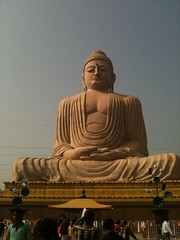
5346462802Buddhismis a nontheistic religion or philosophy (Sanskrit: dharma; Pali: धम्म dhamma) that encompasses a variety of traditions, beliefs and spiritual practices largely based on teachings attributed to Gautama Buddha, commonly known as the Buddha ("the awakened one").14
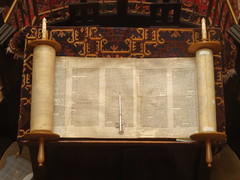
5346462803Judaisman ancient monotheistic religion, with the Torah as its foundational text (part of the larger text known as the Tanakh or Hebrew Bible), and supplemental oral tradition represented by later texts such as the Midrash and the Talmud.15
5346462804Christianitythe religion based on the person and teachings of Jesus of Nazareth, or its beliefs and practices.16
5346462805Daoisma philosophical, ethical or religious tradition of Chinese origin, or faith of Chinese exemplification, that emphasizes living in harmony with the Tao.17
5346462806Han Dynastyan empire in ancient China, that lasted from 206 b.c.e- 24 c.e.18
5346462807Persiaan empire located in modern day Iran but stretched as far as Egypt and Iraq.19
5346462808Guptaan empire located in northern India that lasted from 320-550 c.e.20
5346462809Roman empirelocated in modern day Italy but expanded to outlying countries throughout its reign, it lasted from 201 b.c.e- 476 c.e.21
5346462810Empirean extensive group of states or countries under a single supreme authority.22
5346462811Hebrew ScripturesTorah, Old Testament23
5346462812HinduismA religion and philosophy developed in ancient India, characterized by a belief in reincarnation and a supreme being who takes many forms24
5346462813Mauryan Empire(321-185 BCE) This was the first centralized empire of India whose founder was Chandragupta Maurya.25
5346462814AshokaLeader of the Mauryan dynasty of India who conquered most of India but eventually gave up violence and converted to Buddhism.26
5346462815The BuddhaMeans "Enlightened One." He is said to have renounced his worldly possessions and taught of a way to overcome suffering.27
5346462816Emperor ConstantineFounded Constantinople; best known for being the first Christian Roman Emperor; issued the Edit of Milan in 313, granting religious toleration throughout the empire.28
5346462817Gupta Empire(320-550 CE) The decentralized empire that emerged after the Mauryan Empire, and whose founder is Chandra Gupta.29
5346462818AqueductA structure that carries water over long distances30
5346462819ColosseumA large stadium in ancient Rome where athletic events took place31
5346462820Indian Ocean Maritime SystemThe Indian Ocean Maritime had been made possible by transactions between the Mediterranean Basin and the Indian Ocean Basin. The Indian Ocean Maritime allowed for cheaper transportation and the increased abundance of products that could be shipped.32
5346462822filial pietyIn Confucian thought, one of the virtues to be cultivated, a love and respect for one's parents and ancestors.33
5346462823ancestor venerationVeneration of the dead or ancestor reverence is based on the beliefs that the dead have a continued existence, and may possess the ability to influence the fortune of the living, the worship of deceased ancestors34
5346462824Persian EmpireGreatest empire in the world up to 500 BCE. Spoke an Indo-European language. A multi-ethnic and multi-religious empire. Fell to Alexander the Great.35
5346462825Qin Dynastythe Chinese dynasty (from 246 BC to 206 BC) that established the first centralized imperial government and built much of the Great Wall36
5346462826HellenisticOf or influenced by the Greek Empire. A type of culture typically referred to after the conquests of Alexander the Great.37
5346462827PersepolisA complex of palaces, reception halls, and treasury buildings erected by the Persian kings Darius I and Xerxes in the Persian homeland. It is believed that the New Year's festival was celebrated here, as well as the coronations, weddings, and funerals of the Persian kings, who were buried in cliff-tombs nearby.38
5346462828CarthageCity located in present-day Tunisia, founded by Phoenicians ca. 800 B.C.E. It became a major commercial center and naval power in the western Mediterranean until defeated by the expanding Roman Republic in the third century B.C.E.39
5346462829ConstantinopleA large and wealthy city that was the imperial capital of the Byzantine empire and later the Ottoman empire, now known as Istanbul40
5346462830Qanat Systema traditional system of gravity-fed irrigation that uses gently sloping tunnels to capture groundwater and direct it to low-lying fields41
5346462831Jesus of Nazaretha teacher and prophet born in Bethlehem and active in Nazareth; his life and sermons form the basis for Christianity.42
5346462832Paul of TarsusA Pharisaic Jew who persecuted the Early Christian community; later, he had an experience of the Risen Christ and became the "Apostle to the Gentiles" writing numerous letters to the Christian communities.43

AP World History Chapter 19 Flashcards

Terms : Hide Images
5768391318In the late 1200s, Marco Polo visited the court ofKhubilai Khan0
5768391319What problem did the late Byzantine empire not face?the inability of leaders to get the population to practice Christianity1
5768391320In 962 C.E., Pope John XII presented the imperial crown toOtto of Saxony2
5768391321In the high middle ages, the state that seemed to have the most potential to re-create centralized, imperial rule wasthe Holy Roman Empire3
5768391322The single biggest obstacle to the rise of a powerful Holy Roman Empire wasan ongoing conflict with the papacy4
5768391323The quip that the Holy Roman Empire was "neither holy, nor Roman, nor an empire" is attributed toVoltaire5
5768391324In 987, the French nobles chose which of the following men as their king?Hugh Capet6
5768391325Hugh Capet was crowned King of France in 987but it took centuries for the French kings to build a powerful, centralized stated7
5768391326Which of the following states developed the most centralized political structure in its early stages?England8
5768391327In 1066, William of Normandy conqueredEngland9
5768391328In Italy, the political structure was marked bya series of city-states and principalities10
5768391329The reconquest of land from the Muslims occurred inthe Iberian peninsula11
5768391330Which of hte following factors does NOT help explain the increased agricultural production of the high middle ages?government financial support12
5768391331By the year 1300, the population of Europe had rise to around79 million13
5768391332The high middle ages witnesseda resurgance of urbanization14
5768391333The revival of urban sociey was most pronounced inItaly15
5768391334The Hanseatic League was a trading network that operated in theNorth Sea and Baltic Sea16
5768391335The phrase usually associated with the medieval social structure is"those who pray, those who fight, and those who work"17
5768391336The guilds of the high middle agesalmost always admitted women as members18
5768391337Central to the philosophy of the high middle ages was the rediscovery ofAristotle19
5768391338St. Thomas Aquinasbelieved that it was possible to prove rationally that God exists20
5768391339During the high middle ages, the most popular saint wasthe Virgin Mary21
5768391340The Dominicans and Franciscansattacked materialism and allowed no personal possessions22
5768391341Who founded the orders of mendicants?St. Francis and St. Dominic23
5768391342The Waldensiansadvocated modest and simple lives24
5768391343Newfoundland was discovered around the year 1000 C.E. by the Scandinavian seafarerLeif Ericsson25
5768391344The 'reonquista' occured inSpain26
5768391345Wich of the following was NOT a crusading order?Franciscians27
5768391346During the 11th century, which of the following locations was captured by the Muslims?Sicily28
5768391347The last surviving Islamic outpost in Spain wasGranada29
5768391348Pope UrbanIIlaunched the crusades in 109530
5768391349The only crusade that recaptured Jerusalem was the1st Crusade31
5768391350Jerusalem was captured in 1187 bySaladin32
5768391351Which of the following was a consequence of the 4th Crusade?a new spirit of cooperation between Constantinople and western Europe33
5768391352Which of the following fell to the Turks in 1144?Edessa34
5768391353The crusadesincreased trade between the eastern and western Mediterranean35

AP World History Period 4_Warden Flashcards

Terms : Hide Images
6624538780Absolute MonarchA system of government in which the head of state is a hereditary position and the king or queen has almost complete power. To a 17th and 18th century ruler complete sovereignty meant that a ruler could make law, dispense justice, create and direct a bureaucracy, declare war and levy taxation without needing the approval of any other authorities. James I in England was a known advocate of the Divine Right of Kings, which argued for this system. His son, Charles I of England, was executed after Charles had dismissed Parliament, an act justified with the Divine Right of Kings political theory.0
6624538782CapitalismAn economic system in which investment in and ownership of the means of production, distribution, and exchange of wealth is made and maintained chiefly by private individuals or corporations, esp. as contrasted to cooperatively or state-owned means of wealth.1
6624538783ContinuitySomething that continues unchanged across a period of history. Can be contrasted with a "Change", in which a turning point occurs. Students are required to identify what a political, economic or cultural situation was, then identify the turning point, then the new situation after the change, which begins a new continuity through time.2
6624538784DeistsInfluenced by the spirit of rationalism in the Age of Enlightenment, this group believed that God, like a celestial clockmaker, had created a perfect universe and then had stepped back to let it operate according to natural laws.3
6624538785DemographyThe scientific study of population characteristics. Such as birth rate and infant mortality rate.4
6624538786Divine RightBelief that a rulers authority comes directly from a divine deity. God established kings and through them reigned over all the peoples of the world. Since kings received their authority from God that authority was absolute. Similar to the Mandate of Heaven in East Asian political culture.5
6624538787MercantilismAn economic policy under which nations sought to increase their wealth and power by obtaining large amounts of gold and silver and by selling more goods (exports) than they bought (imports). They also implemented protectionist trade policies such as putting tariffs on other countries' goods (imports) and outlawed trading between their colonies and other countries. Colonies were valued as sources of raw materials and markets for finished goods.6
6624538788MonasticA way of life in which men and women withdraw from the rest of the world in order to devote themselves to their faith7
6624538789MonopolyA market in which there is only one seller for a product or service. This enables the seller to raises prices since there is no competition with other sellers. When European countries gained colonies the monarchies would sometimes grant sellers from only their countries licenses to sell products in the colonies, often with no legal competition. This would often create a black market for goods from other countries.8
6624538790ParliamentA body of government that makes laws for a nation. In England, it started as an advisory council that had certain control over tax decisions.9
6624538791UtopiaAn ideal society with perfect qualities. The word was used by Sir Thomas More in a famous book.10
6624538792Akbar the Great (Mughal India)(1542 - 1605) was the third Mughal Emperor. He became emperor at age 13. He is considered to be one of the greatest rulers of India. He was known as much for his inclusive leadership style as for his war mongering. He began a time of religious tolerance and appreciation for the arts.11
6624538793CalvinismProtestant sect that emphasized a strong moral code and believed in predestination (the idea that God decided whether or not a person would be saved as soon as they were born). This type of Protestantism agreed with Luther's ideas but made far more of the idea of predestination, and as a severe critic of human nature it felt that the number of the saved (called them "the elect") were few. The founder wrote Institutes of the Christian Religion in 1536, which was written in the international language of Latin and addressed to the all the world. Institutes expressed a coherent set of protestant ideas that people could apply to their own local circumstances. As a result his version of Protestantism spread widely and was the dominant form in the 16th century. Whereas Luther was an emotionally volatile personality who responded to theological problems as they arose, he was an analytical legalist that set forth the principles of Protestantism comprehensively, logically, and systematically.12
6624538794Columbian ExchangeAn exchange of goods, ideas and skills from the Old World (Europe, Asia and Africa) to the New World (North and South America) and vice versa. To the colonial American societies Europeans and Africans brought their germs, which caused the Great Dying and their people as well as wheat, rice, sugarcane, grapes, and many garden vegetables. Also horses, pigs, cattle goats, and sheep, which made possible ranching and cowboy culture. From the Americas went corn, potatoes, and cassava, which facilitated immense population growth.13
6624538795Dutch East India CompanyA company founded by the Dutch in the early 17th century to establish and direct trade throughout Asia. Richer and more powerful than England's company, they drove out the English and Established dominance over the region. It ended up going bankrupt and being bought out by the British14
6624538797Elizabeth I of EnglandTudor Queen of England. Succeeded Mary I in 1558 and ruled until 1603. In addition to leading the defeat of the Spanish Armada and developing England into a world power, she strengthened Protestantism. Daughter of Henry VIII.15
6624538798English Bill of RightsKing William and Queen Mary accepted this document in 1689. It guaranteed certain rights to English citizens and declared that elections for Parliament would happen frequently. By accepting this document, they supported a limited monarchy, a system in which they shared their power with Parliament and the people.16
6624538799Gutenberg's Printing PressDeveloped during the Renaissance, the printing press helped ideas spread faster to different places and was one of the reasons Martin Luther was so successful during the Reformation. Developed by Johannes Gutenberg.17
6624538800Henry TudorAbolished private English armies to end the War of the Roses; strengthened English royal government; got support by lightening taxes (1457-1509)18
6624538801Heliocentric TheoryIs the idea that the Earth and other planets revolve around the Sun, which is the center of the solar system. Nicolaus Copernicus was the first to think of good reasons why it is true. This was the beginning of modern astronomy.19
6624538802Martin Luther16th century German monk and professor who is considered to be the person who started the Protestant Reformation; he began by criticizing Church practices (mainly indulgences) and ultimately broke with the Catholic Church to form his own new religious faith20
6624538803Louis XIV (France)This French monarch, called the sun king, epitomized royal absolutism, he even declared that he is the State, "l'etat, c'est moi." He centralized power like his father, constructed the lavish palace "Versailles," which was the largest building in Europe with 1400 fountains. He gained power over the nobility in France by inviting them to live in the palace, offering them luxury in exchange for absolute power. He started many wars of expansion and left France bankrupt. He did not rely on "Estates General" which was basically France's Parliament. He had foreign colonies for benefits, mercantilism by Colbert.21
6624538804Qing Dynasty(1644-1911 CE), meant "pure." The last imperial dynasty of China which was overthrown by revolutionaries; was ruled by the Manchu people, which had been a mostly pastoral people from the north of Korea (although many had turned to agriculture by 1644.) An ambitious chieftain named Nurhaci unified the Manchu tribes into a centralized state, enforced a law code, and organized a powerful military. They took Beijing in 1644 due to Manchu military strength and to the fact that many Ming dynasty generals deserted the Mings because of their corruption at the Forbidden Palace. Manchu ruling elites were schooled in Confucian thought, and they earned the respect of the scholar-bureaucrats more so than the Ming emperor at that time. These Manchu leaders kept their ethnic and cultural identity distinct from the Chinese, and they forced Chinese men to shave the front of their heads, a sign of submission to the dynasty. Manchu Emperors organized flood-control and irrigation projects in keeping with the Confucian idea that a leader should look after the welfare of their subjects. They also generously funded Confucian schools. This Dynasty also was known for military expansion, conquering Taiwan, Mongolia, and parts of central Asia. Also they imposed a Chinese protectorate over Tibet, and made Vietnam, Burma, and Nepal vassal states. As it was in the Ming dynasty, these emperors were called "sons of heaven" who lived in the Forbidden City with hundreds of concubines and thousands of eunuchs to look after the emperors every desire. The day to day governance fell to scholar-bureaucrats who passed rigorous civil service exams and appointed by the emperor.22
6624538805Peter the Great(1672-1725) Russian tsar (r. 1689-1725). He enthusiastically introduced Western languages and technologies to the Russian elite, moving the capital from Moscow to the new city of St. Petersburg.23
6624538806Potosi Silver MineThe largest silver mine in Peru, located in the city of Potosi in upper Peru (modern day Bolivia). Provided 80% of all Peruvian silver. Spanish had started to mine silver in Peru and Mexico between 1545 and 1565. Potosi became a mining center with a luxurious way of life and opulent churches, but the work was done by American Indian slaves and encomienda workers. After 1580, mercury was used to extract the silver. This silver was the same silver used in China during the Silver or Single Whip System.24
6624538807Protestant ReformationA religious movement of the 16th century that began as an attempt to reform the Roman Catholic Church and resulted in the creation of Protestant churches.25
6624538808Renaissance"Rebirth"; following the Middle Ages, a movement that centered on the revival of interest in the classical learning of Greece and Rome.26
6624538809Scientific RevolutionA major change in European thought, starting in the mid-1500s, in which the study of the natural world began to be characterized by careful observation and the questioning of accepted beliefs.27
6624538811Thirty Years War (1618-1648)This was the last major war of religion; the conflict was over religion (Catholic vs. Protestant), territory, and power. Eventually France won; the war ended with the Peace of Westphalia. Destroyed mostly German land.28
6624538812Tokugawa Shogunate(1603-1867) Feudal Warlord rulers of Japan. Responsible for closing Japan off from the rest of the world. Overthrown during the Meiji Restoration.29
6624538813Treaty of Westphalia (1648)Ended the thirty years war. It gave Calvinists legal recognition, allowed German Princes to determine the official religion of their kingdoms, and it led to French dominance of Europe. It was also a turning point in European history because after this there would be no more wars of religion, instead wars were fought for territory and political power.30
6624538814Zheng He(1405 - 1433) He undertook the largest maritime expeditions the world had ever seen. Ming Emperor Yongle commissioned this fleet of 300 ships with 27,000 crew members, which went on 7 expeditions to establish China's contacts through various parts of the world. Goals include to enroll distant peoples in the Chinese Tribute system whereby rulers where brought back to China to present tribute, perform rituals of submission and in return receive trading opportunities. Also, these expeditions established Chinese control over Indian Ocean trade, but they did not seek to conquer or set up colonies. When Yongle died this captain is fired and the navy is disbanded and his log books are destroyed due to the Mandarins who had long believed that it was too expensive and as the self-sufficient "middle kingdom, China had everything it needed.31
6670155552Ming DynastyMeant "brilliant." The ruling dynasty of China from 1368 to 1644. It was the last ethnic Han-led dynasty in China - vast navy and army were built. Over 100,000 tons of iron per year were produced in North China (roughly 1 kg per inhabitant), and many books were printed using movable type. Emperor Yongle sponsored the navel Expeditions by Zheng He. They made an effort to eliminate all cultural signs of foreign and especially mongol rule, discouraging mongol names and dress, while promoting Confucian learning. Emperor Yongle sponsored an Encyclopedia of some 11,000 volumes, and brought back the civil service exam. They also brought new land under cultivation and planted a billion trees to reforest China. Yongle also moved the capital to Beijing and build the Forbidden City.32

AP World History #1 Flashcards

Terms : Hide Images
7586655414civilizationsocieties distinguished by reliance on sedentary agriculture, ability to produce food surpluses, and existence of nonfarming elites, as well as merchant and manufacturing groups.0
7586658229MesopotamiaLiterally "between the rivers"; the civilization that arose in the alluvial plain of the Tigris and Euphrates river valleys1
7586664965SumeriansPeople who migrated into Mesopotamia C. 4000 B.C.E.; created first civilization within region; organized area into city-states.2
7586676151cuneiforma form of writing developed by the Sumerians using a wedge-shaped stylus and clay tablets3
7586792722zigguratsMassive towers usually associated with Mesopotamia temple complexes4
7586797646city-statea form of political organization typical of Mesopotamia civilizations; consisted of agricultural hinterlands ruled by an urban-based king5
7586799779BabyloniansUnified all of Mesopotamia C. 1800 B.C.E; empire collapsed due foreign invasion C. 1600 B.C.E.6
7586808790HammurabiThe most important ruler of the Babylonian empire; responsible for codification of law.7
7586891433pharaohtitle of kings of ancient Egypt8
7586896616pyramidsmonumental architecture typical of Old Kingdom Egypt; used as burial sites for pharaohs9
7586927671Kushan African state that developed along the upper reaches of the Nile C. 1000 B.C.E.; conquered Egypt and ruled it for several centuries.10
7586980946Indus RiverRiver sources in Himalayas to mouth in Arabian Sea; location of Harappa civilization11
7586983092Harappaalong with Mohenjo-Daro, major urban complex of the Harappan civilization; laid out on planned grid pattern.12
7586992023AryansIndo-European nomadic pastoralists who replaced Harappan civilization; militarized society13
7586992024VedasAryan hymns originally transmitted orally but written down in sacred books from the 6th century B.C.E.14
7587163101MahabharataIndia epic of war, princely honor, love, and social duty; written down in the last centuries B.C.E; previously handed down in oral form15
7587171291Ramayanaone of the great epic tales from classical India; traces adventures of King Rama and his wife, Sita; written 4th to 2nd centuries B.C.E16
7587178024UpanishadsLater books of the Vedas; contained sophisticated and sublime philosophical ideas; utilized by Brahmans to restore religious authority.17
7587182260Yellow Riveralso known as the Huanghe, site of development of sedentary agriculture in china.18
7587191274ideographspictographic characters grouped together to create new concepts; typical of Chinese writing19
7587207420ShangFirst Chinese dynasty for which archeological evidence exists; capital located in Ordos bulge of the Huanghe; flourished 1600 to 1046 B.C.E20
7587486465OlmecsPeople of a cultural tradition that arose at San Lorenzo and La Venta in Mexico c. 1200 B.C.E; featured irrigated agriculture, urbanism, elaborate religion, beginnings of calendrical and writing systems21
7587550186Chavin de HuantarChavin culture appeared in highlands of Andes between 1800 and 1200 BCE typified by ceremonial centers with large stone buildings; greatest ceremonial center was Chavin de Huantar; characterized by artistic motifs.22
7587614505monotheism23

AP World History- Period 6 Flashcards

Original from MrsBHatchTEACHER

Terms : Hide Images
6820848168African National CongressANC; South African political party formed in 1912; strongly opposed to apartheid0
6820848169apartheid"separateness"; a series of laws initiated by the Afrikaner National Party in South Africa which was designed to divide South African society by skin color and ethnicity; this system also reserved South Africa's resources for whites1
6820848171Big Bang theorytheory which suggests that at some moment all matter in the universe was contained in a single point, which is considered the beginning of the universe2
6820848172Vladimir Leninborn Vladimir Ilyich Ulyanov; lived from 1870 to 1924; the leader of the Russian Soviet Federative Socialist Republic and premier of the Soviet Union3
6820848173Central Powersone of the two warring factions in World War I; composed of Germany, Austria-Hungary, the Ottoman Empire and Bulgaria; also known as the Quadruple Alliance4
6820848176Chiang Kai-sheklived from 1887 to 1975; Chinese military officer who was leader of the Guomindang; fled to Taiwan after the Chinese Communist Party came to power in China5
6820848177Chinese Revolutionprolonged communist movement in China and lasted from 1946 to 1950; resulted in the communist takeover of mainland China6
6820848178Cold Wara sustained state of political and military tension between members of NATO and members of the Warsaw Pact; dissolution of the Soviet Union was the end of this "conflict"7
6820848179collectivizationalso known as collective farming and communal farming; system in which the holdings of several farmers are run collectively as a unit; imposed by the government in the Soviet Union8
6820848181containmentthe United States policy to prevent the spread of communism abroad during the Cold War; a response to a series of moves by the Soviet Union to enlarge communist influence in Eastern Europe, China, Korea, Africa, and Vietnam9
6820848182Cuban missile crisisa 13-day confrontation in October 1962 between the Soviet Union and the United States; Soviet missiles moved to Cuban soil in an agreement by Fidel Castro and Nikita Khrushchev; U.S. responds by blockading Cuba; Khrushchev and U.S. President John F. Kennedy reach an agreement in which the Soviets would remove their missiles from Cuba in return for an American promise not to invade Cuba10
6820848183cultural imperialismthe practice of promoting or imposing one's culture on another, usually between powerful societies and less-powerful ones11
6820848184Cultural Revolutionalso known as the Great Proletarian Cultural Revolution; launched by Mao in the late 1960's; aimed to combat the capitalist tendencies he believed had penetrated even the highest ranks of the communist party itself; involved new policies to bring health care and education to the countryside and reinvigorate earlier efforts at rural industrialization under local control12
6820848185decolonizationthe process of the dissolution of colonial territories and the establishment of independent nations13
6820848186Deng Xiaopinglived from 1904 to 1997; successor to Mao Zedong; reformist who sought to incorporate The People's Republic of China into the world economy; dismantled collectivized farming, state enterprises given greater authority, welcomed foreign investment; crushed democracy movement in Beijing's Tiananmen Square14
6820848187environmentalismideology which regards the environmental concerns15
6820848189Fascismpolitical ideology which was intensely nationalistic; celebrated action and placed faith in charismatic leaders; and condemned individualism, liberalism, feminism, parliamentary democracy, and communism; adopted by Italy, Germany, and Japan in the years following World War I16
6820848191fundamentalismideology which demands strict adherence to orthodox theological doctrines17
6820848193UN General Assemblyone of the six principal organs of the United Nations and the only one in which all member nations have equal representation; oversee the budget of the United Nations, appoint the non-permanent members to the Security Council, receive reports from other parts of the United Nations and make recommendations in the form of General Assembly Resolutions18
6820848194genocidethe systematic destruction of all or part of a racial, ethnic, religious or national group19
6820848196global warmingterm which refers to the continuing rise in the average temperature of Earth's climate system; viewed as a result of human emissions of greenhouse gases20
6820848197globalization of democracythe spread of democracy throughout the world21
6820848198Great Depressioneconomic depression as a result of the crash of the American stock market; lasted from 1929 until World War II; causes drop in world trade, loss of investment, and businesses unable to make profit; countries or colonies tied to exporting one or two products hardhit as the West consumed less; conditions resulting in the Great Depression led to widespread unemployment and social tensions22
6820848199Great Leap Forwardlasted from 1958 to 1960; marked Mao's response to distortions of Chinese socialism; promoted smallscale industrialization in rural areas; tried to foster widespread and practical technological education for all rather than relying on a small elite of highly trained technical experts; envisioned an immediate transition to full communism in the "people's communes" rather than waiting for industrial development to provide the material basis for that transition; massive famine which followed temporarily discredited Mao's radicalism23
6820848200Great Purgesalso known as the Terror; period of immense paranoia in the Soviet Union of the late 1930's in which communist members accused each other being corrupted by capitalist ideals; enveloped tens of thousands of prominent communists, including all of Lenin's top associates, and millions more of ordinary peoples; based on suspicious associations in the past, denunciations by colleagues, connections to foreign countries, or bad luck; such people were arrested in the middle of the night, then tried and sentenced to either death or long harsh years in remote labor camps known as gulags; close to 1 million peoples executed between 1936 and 1941; additional 4 to 5 million people sent to the gulag, where they were forced to work in horrendous conditions and died in appalling numbers24
6820848201Green Revolutiona series of research, and development, and technology transfer initiatives, occurring between the 1940s and the late 1960s, that increased agriculture production worldwide, particularly in the developing world25
6820848202Adolf Hitlerlived from 1889 to 1945; leader of the Nazi party in Germany; chancellor of Germany from 1933 to 1945; dictator of Nazi Germany from 1934 to 194526
6820848203Ho Chi Minhlived from 1890 to 1969; Vietnamese communist revolutionary leader; was prime minister (from 1945 to 1955) and president (from 1945 to 1969) of the Democratic Republic of Vietnam27
6820848204Holocaustthe mass murder of approximately six million Jews during World War II; a program of systematic state-sponsored murder by Nazi Germany; led by Adolf Hitler and the Nazi Party28
6820848205International Monetary FundIMF; established in 1944 by the Bretton Woods Conference in New Hampshire; sought to promote market economies, free trade, and high growth rates29
6820848206Indian National CongressINC; organization established in 1885; gave expression to the idea of India as a single nation; played a major role in India's independence movement from British colonial rule30
6820848207Iranian Cultural Revolutionlasted from 1980 to 198; a period following the Iranian Revolution where intellectuals of Iran were purged of Western and non-Islamic influences to bring it in line with Shia Islam; closed universities between 1980 and 1983, banned many books, and purged thousands of students and lecturers from schools31
6820848208iron curtainthe heavily fortified border between Eastern and Western Europe32
6820848209Islamic renewalalso referred to as Islamic revival; refers to a renewing of the Islamic religion throughout the Islamic world, that began roughly sometime in 1970s; sought greater religious piety and a growing adoption of Islamic culture33
6820848210Jawaharlal Nehrulived from 1889 to 1964; first Prime Minister of India and was a leading figure in the independence movement against British rule over India34
6820848211League of Arab Statesa regional organization of Arab countries in and around North Africa, the Horn of Africa, and Southwest Asia; formed in Cairo in 1945 with six members: Egypt, Iraq, Transjordan (Jordan), Lebanon, Saudi Arabia and Syria; currently has 22 members35
6820848212League of Nationsinternational peacekeeping organization founded as a result of the First World World; proposed by US president Woodrow Wilson; committed to the principle of "collective security" and intended to avoid the repetition of war36
6820848213Mahatma Gandhilived from 1869 to 1948; leader of the Indian nationalist movement during British control over India; used nonviolent civil disobedience, such as hunger strikes37
6820848214Mao Zedonglived from 1893 to 1976; Chinese communist revolutionary and leader of the People's Republic of China from its establishment 1949 to his death in 197638
6820848215Marshall Planplan which sought to rebuild and reshape devastated European economies; funneled Europe some $12 billion with numerous advisers and technicians; motivated by combination of humanitarian concern, a desire to prevent a new depression by creating overseas customers for American goods, and interest in undermining the growing appeal of European communist parties; required European nations to cooperate with one another39
6820848216Mikhail Gorbachevborn in 1931; last general secretary of the Soviet Union (1985 to 1991); passed reforms such as perestroika and policies such as glasnost which led to the dissolution of the Soviet Union40
6820848217military-industrial complexthe policy and monetary relationships which exist between legislators, national armed forces, and the military industrial base that supports them; include political contributions, political approval for military spending, lobbying to support bureaucracies, and oversight of the industry; most often used in reference to the system behind the military of the United States41
6820848218Muhammad Ali Jinnahlived from 1876 to 1948; founder of Pakistan and the leader of the All-India Muslim League until Pakistan's independence42
6820848219Munich Conferencea conference in Munich which permitted Nazi Germany's annexation of portions of Czechoslovakia along German borders mainly inhabited by German speakers; territory now known as "Sudetenland"; widely regarded as a failed act of appeasement toward Germany; agreement was signed in the early hours of 30 September 1938; agreement was signed by Germany, France, the United Kingdom, and Italy; Czechoslovakia not invited to the conference43
6820848220Benito Mussolinilived from 1883 to 1945; leader of the Italian National Fascist Party; prime minister of Italy from 1922 to 194344
6820848222North American Free Trade AgreementNAFTA; regional alliance founded in 1993 and consists of Canada, Mexico, and the United States; the world's second largest free-trade zone45
6820848223North Atlantic Treaty OrganizationNATO; a military alliance based on the North Atlantic Treaty which was signed in 1949; alliance in which its member states agree to mutual defense in response to an attack by any external party; consists of 28 member states across North America and Europe46
6820848224Nazi Germanya.k.a the Third Reich; lasted from 1933 to 1945; Germany under the leadership of Adolf Hitler and the Nazi Party47
6820848225Nelson Mandelalived from 1918 to 2013; South African anti-apartheid revolutionary and politician; President of South Africa from 1994 to 1999; served as President of the African National Congress from 1991 to 199748
6820848226New Deala series of reforms proposed by United States President Woodrow Wilson; lasted from 1933 to 1942; experimental combination of reforms seeking to restart economic growth and prevent similar failures in the future; reflected the thinking of British economist John Maynard Keynes; argued that government actions and spending programs could moderate recessions and depressions; consisted of immediate programs of public spending (for dams, highways, bridges, and parks) and long-term reforms, such as the Social Security system, minimum wage, and various relief and welfare programs49
6820848227non-governmental organizationNGO; an organization that is neither a part of a government nor a conventional for-profit business50
6820848228Nikita Khrushchevlived from 1894 to 1971; leader of the Soviet Union from 1953 to 1964; responsible for the de-Stalinization of the Soviet Union and backing of the Soviet space program51
6820848229Osama bin Ladenlived from 1957 to 2011; Islamic militant who was the leader of the terrorist group al-Qaeda; mastermind behind the 9/11 attacks; played a key role in the US-backed effort to aid mujahideen who fought Soviet forces in Afghanistan52
6820848230al-Qaeda"the base"; terrorist organization formerly headed by Osama bin Laden; behind the 9/11 attacks53
6820848231Palestinian Liberation OrganizationPLO; an organization founded in 1964 with the purpose of creating an independent State of Palestine54
6820848232Pan-Arabisman ideology proposing the unification of the countries of North Africa and West Asia from the Atlantic Ocean to the Arabian Sea, referred to as the Arab World55
6820848233Pan-Africanisman ideology which encourages the unity of Africans worldwide56
6820848234HIV/AIDS epidemicepidemic which was first discovered in 1981 among homosexual men and intravenous drug users in New York and San Francisco; eventually became widespread around the world, particularly sub-Saharan Africa; virus attacks and destroys the immune system, which causes a fatal disorder in the immune system; spread through sexual contact with an infected person, contact with contaminated blood, and transmission from mother to child during pregnancy and breastfeeding57
6820848235ebola epidemican epidemic caused by the Ebola virus; symptoms include fever, throat and muscle pains, headaches, nausea, vomiting and diarrhea, and decreased functioning of the liver and kidneys; an 2014 outbreak in West Africa has led to a reported 142 deaths58
6820848236influenza epidemican epidemic caused by the H1N1 influenza virus; lasted from 1918 to 1920; resulted in 50 to 100 million deaths, ranking it one of the most deadliest natural disasters in human history59
6820848239post-modernisma late 20th Century movement in the arts, architecture, and criticism; includes skeptical interpretations of culture, literature, art, philosophy, history, economics, architecture, fiction, and literary criticism60
68208482421917 Russian Revolutiona collective term for the series of revolutions in 1917 which ousted Tsar Nicholas II and the tsarist autocracy and replaced it with the communist Bolshiveks61
6820848243second-wave feminisma period of feminist activity that first began in the United States in the early 1960s and eventually spread throughout the Western world; later became a worldwide movement that was strong in Europe and parts of Asia, such as Turkey and Israel; focused on sexuality, family, the workplace, reproductive rights, and various legal and de facto inequalities62
6820848244UN Security Councilone of the six principal organs of the United Nations; in charge of the maintenance of international peace and security; this body is able to establish peacekeeping operations, establish international sanctions, and authorize military action through resolutions; the only UN body with the authority to issue binding resolutions to member states63
6820848245space racelasted from 1955 to 1972; a competition between the Soviet Union and the United States for supremacy in spaceflight capability; pioneered advancements such as artificial satellites, as well as manned and unmanned missions into outer space64
6820848247Joseph Stalinlived from 1878 to 1953; the leader of the Soviet Union from 1922 to 1952; implemented a highly centralized command economy, which resulted in the transformation of Russian society from agrarian to industrialized; imprisoned millions in labor camps and deported many to remote areas; issued the Great Purges, in which hundreds of thousands, including many prominent communists, were executed65
6820848249Third Worldterm which describes the countries that did not align with the Soviet Union or the United States66
6820848250total warwar which requires the mobilization of each country's entire populations67
6820848251transnational corporationsa.k.a multi-national corporation; an organization that owns or controls production or services facilities in one or more countries other than its home country68
6820848252Treaty of Versaillestreaty which formally concluded the World War I in 1919; established the conditions for a World War II; Germany losses colonial empire and 15% of its European territory, required to pay heavy reparations to the winners, had its military forces severely restricted, and had to accept sole responsibility for the war; immense German resentment created from the treaty69
6820848253trench warfaretype of warfare using occupied fighting lines consisting largely of trenches, in which troops are significantly protected from the enemy's small arms fire and are substantially sheltered from artillery; resulted in enormous casualties while gaining or losing a few yards of ground during World War I70
6820848254Truman Doctrinean international relations policy set by the U.S. President Harry Truman in a speech on March 12, 1947; stated that the U.S. would support Greece and Turkey with economic and military aid to prevent them from falling into the Soviet sphere; often referred to as the beginning of the US policy of containment71
6820848255United Nationsorganization established in 1945 as a successor to the League of Nations; attempts to find solutions to global problems and deal with virtually any matter of concern to humanity72
6820848256Vietnam Warwar which occurred in Vietnam, Laos, and Cambodia from 1956 to 1975; U.S. entered the war to prevent South Vietnam from becoming communist, as a result of its containment policy; Soviet Union backed Northern Vietnamese forces in an attempt to spread communism to Southeast Asia; resulted in the unification of Vietnam under a communist government and the spread of communism to Cambodia and Laos73
6820848257Weimar Republicthe federal republic and semi-presidential representative democracy established in 1919 in Germany to replace the imperial form of government after World War I; lasted until the Nazi Party rose to power in 1933; faced numerous problems, including hyperinflation, political extremists and continuing contentious relationships with the victors of World War I74
6820848258Winston Churchilllived from 1874 to 1965; British politician; Prime Minister of the United Kingdom from 1940 to 1945 and from 1951 to 195575
6820848259weapon of mass destructionWMD; a weapon which has the capability to kill large numbers of people and decimate large swaths of land76
6820848260Woodrow Wilsonlived from 1856 to 1924; 28th President of the United States (1913-1921); leader of the Progressive Movement; famous for his Fourteen Points, which sought to avoid another worldwide conflict77
6820848261Fourteen Pointsa statement given on January 8, 1918 by United States President Woodrow Wilson declaring that World War I was being fought for a moral cause and called for postwar peace in Europe78
6820848262World Banka United Nations international financial institution that provides loans to developing countries for capital programs; its primary goal is to reduce poverty79
6820848263World War Iwar which lasted from 1914 to 1918; also known as the Great War; pitted the Allies (United Kingdom, France, Russia, Italy, Japan, and the United States) and the Central Powers (Germany, Austria-Hungary, the Ottoman Empire, and Bulgaria); resulted in an Allied victory and Treaty of Versailles, which set the stage for another world war80
6820848264World War IIwar which lasted from 1939 to 1945; pitted the Allied Powers (Soviet Union, United Kingdom, United States, China and France) against the Axis Powers (Germany, Japan, and Italy); resulted in an Allied victory, the creation of the United Nations, and set the stage for the Cold War81
6820848265World Trade OrganizationWTO; established in 1994 by the 123 members of GATT; took over GATT activities in 1995; developed into a forum for settling international trade disputes82
6820848266Yalta Conferenceconference which lasted from February 4 to February 11, 1945; meeting attended by President Franklin D. Roosevelt, Prime Minister Winston Churchill and Premier Joseph Stalin for the purpose of discussing Europe's post-war reorganization; convened in the Livadia Palace near Yalta in Crimea83
6820848267Zionist Movementthe national movement of Jews and Jewish culture that supports the creation of a Jewish homeland in the territory defined as the Land of Israel84
6820848268Brazilian SolutionCombination of dictatorship, violent repression, and gov't promotion of industrialization in South American countries85
6820848269Universal Declaration of Human RightsA 1946 United Nations covenant binding signatory nations to the observance of specified rights.86
6820848271Tiananmen SquareSite in Beijing where Chinese students and workers gathered to demand greater political openness in 1989. The demonstration was crushed by Chinese military with great loss of life.87
6820848274NATOAn international organization created in 1949 by the North Atlantic Treaty for purposes of collective security.88
6820848275Warsaw PactAn alliance between the Soviet Union and other Eastern European nations. This was in response to the NATO89

AP world history midterm Flashcards

Terms : Hide Images
2907202456Hunting and gathering societiesorganize rather small groups into political units0
2907202457the paleolithic age refers tothe period in which simple stone tools were developed1
2907202458a characteristic of the human species before the advent of civilizationthe ability to spread to various geographic settings and climate zones2
2907202459the development of agriculture cause important changes in all the following exceptthe tendency to believe in many gods3
2907202460The neolithic revolution occurred first inthe middle east4
2907202461why did the original inhabitants of australia not develop agriculture?They were too isolated to learn of developments elsewhere until recently5
2907202462once developed, metal tools were preferred over stone tools for all the following reasons exceptthey were easier for ordinary people to make at home6
2907202463a society is almost certainly a civilization ifit practices sedentary agriculture7
2907202464the development of writinghelps explain why governments could become more formal and bureaucratic8
2907202465the earliest know writing in a civilization first developed inthe middle east9
2907202466one difference between classical civilizations and river valley civilizations was that in classical civilizationspolitical organization was more elaborate10
2907202467one difference between classical China and the earlier Huanghe river valley civilization was thathuman sacrifices were suppressed11
2907202468"dynasty" in Chinese history wasa family that passed the imperial title from generation to generation12
2907202469The "Son of heaven" concept was designed to promote all of the following except:priests' control over the state13
2907202470the Qin dynasty differed from the Zhou in thatit was more centralized14
2907202471all of the following constituted a function of government in Han China exceptschools for peasant boys15
2907202472chinese views on nature emphasizedharmony and balance16
2907202473Which of the following is a confucian beliefa good society has a heirarchy in both family and state17
2907202474ceremony became an important part if upper-class chinese life beacusethe chinese believed it would help unify society and prevent greed18
2907202475Daoists would agree with Confucianists on all the following exceptthe importance of political activity19
2907202476Whic of the following does not help to explain why India was more often invaded than Chinahostility to warfare20
2907202477The aryan conquerers brought to indiadistinctive religious ideas21
2907202478the mauryan dynasty differed from the gupta dynasty in thatit ruled larger territory22
2907202479India's political traditionstressed teh importance of regional and local units23
2907202480The Indian caste system served to an extent as a politcal institution byenforcing rules about social behavior24
2907202481Confucian and Hindu valueshelped justify and preserve social inequality25
2907202482Hindu ethics involvedemphasis on an individual carrying out the obligations of life26
2907202483Hinduism urged thatall living creatures participated in divine essence27
2907202484Buddhism differed from hinduism by not believingin the caste system28
2907202485"Nirvana" meantsfull union with the divine essence29
2907202486If the greek genius was politics, then the roman genius wasengineering30
2907202487the two mediterranean powers fighting during the punic wars wereCarthage and Rome31
2907202488Compared to modern american ideas about democracy, athenian democracy was distinctive inurging that all citizens participate directly in lawmaking and policymaking32
2907202489Greek politics resembled Indian politics inthe tendency of regional fragmentation33
2907202490from a confucian viewpoint, the roman empire might have been criticized for putting too much emphasis onlaws rather than trained officials34
2907202491republican romans and democratic athens would have agreed that all of the following were politically important exceptdivision of powers within the state35
2907202492the senate of republican rome particularily representedthe landed aristocracy36
2907202493roman emperors tried to prevent population disorders byorganizing food supplies and distribution37
2907202494the roman empiretolerated local political and religious diversity38
2907202495the socratic method emphasized the importance ofquestioning39
2907202496the first kingdoms in eastern africa below the Sahara showed the influence ofEgypt and Hellenism40
2907202497nomadic invaders often had military advantages over armies of empires becausethey were more skilled as horsemen41
2907202498by 600 c.e and early civilizations was beginning to take shape inCentral America42
2907202499Japan developed a religion calledShintoism43
2907202500The end of the gupta empire differed from the decline of Rome in that it did not involvethe introduction of a new religion for the majority44
2907202501which of the following best survived the Hun Invasions of India?Hindu beliefs45
2907202502One important early symptom of Rome's decline wasthe drop in population due to a series of plagues46
2907202503the "lessons" of late Han china and the late Roman Empire are that the decline of civilization, whether temporary or permanentis not simple the result of attack of outside invaders47
2907202504The eastern portion of the Roman Empire experienced less decline than the west for all of the following reasons exceptthe east resisted the spread of christianity48
2907202505after 200. c.e an increasing number of people in Asia, Europe, and North Africa began to adapt to faiths characterized bymonotheism49
2907202506Islam meanssubmission50
2907202507The arabic camel nomads were referred to asBedouin51
2907202508Which of the following cultures found in the Arabian peninsula was most significant in shaping the development of Islam?Bedouin52
2907202509Which of the following regions was Not affected by Islam during its early history ( prior to 750 c.e)South America53
2907202510Which of the following statements concerning bedouin society is NOT accurateClans were commonly congregated together in larger tribal groupings54
2907202511Leader of Bedouin clans were calledshaykhs55
2907202512Which of the following groups was Not a component of bedouin societyartisans56
2907202513Which of the following statements about interclan relationships is most accurateinter-clan violence over control of water and pasturage was common57
2907202514What was the result of inter-clan rivalriesit tended to weaken the bedouin in comparison to neighboring people and empires58
2907202515what clan was responsible for the founding of Mecca?Ummayyad59
2907202516Which of the following is NOT a reason for the decline of the abbasid dynasty by the ninth century A.D.?the collapse of cities in the islamic heartland60
2907202517which of the following groups did not revolt against the abbasid rule?slaves61
2907202518what was the result of the civil wars following the death of al-rashidsuccession disputes led to the build up of personal armies, often of slave soldiers62
2907202519which of the following statements concerning the mercenaries armies of the later abbasid era is NOT accuratedespite their tendency toward random violence, the loyally defended the abbasid caliphs63
2907202520what accounts for the disruption of the agricultural economy of the abbasid empirespiraling taxation, the destruction of the irrigation works and pillaging by mercenary armies led to destruction of and abandonment of many villages64
2907202521what changes occurred during the abbasid period with respect to womenthe establishment of the harem65
2907202522between 800-1500 as the frequency and intensity of contact with the outside world increased, which of the following had the most significant impact on sub-saharan africa?the arrival of Islam66
2907202523What was one major difference between african civilization and other post classical societies?african civilizations were built somewhat less clearly on prior precedent than was the case in other post-classical societies67
2907202524which of the following statements concerning political and religious universality in africa is most accurate?neither universal states nor religion characterize africa but both christianity and islam did find adherents68
2907202525african societies organized around kinship or other forms of obligation and lacking the concentration o political power and authority were referred to asstateless69
2907202526what was the function of secret societies in africa?because their membership cut across lineage divisions, they acted to maintain stability within the community and diminish clan feuds70
2907202527which of the following statements best describes the indigenous religion of much of sub-saharan africaanimistic religion, belief in the power of natural forces personified deities71
2907202528which of the following statements concerning africa's economy is untruemuch of the region lacked a market economy and was based on self-sufficient agricultural units72
2907202529Which of the following was not a belief shared by practitioners of many indigenous african religionsa moral code based on a supreme god73
2907202530what region of africa was first converted to islam by 700 c.enorth africa74
2907202531the puritanical reform movements of the almovorads and almohadis arose among what groups of people in africathe berbers, native desert dwellers of north africa75
2907202532which of the following is most correctly seen as a direct continuation of the roman empire?Byzantine empire76
2907202533the byzantine empire lasted approzimately500 - 145077
2907202534which of the following territories was always part of the byzantine empire?balkan peninsula78
2907202535the significance of the byzantine empire included all the following exceptthe empire's conquest of the ottoman empire and its inclusion of of all the middle east79
2907202536what was the most important "stepchild" of the byzantine empire?russia80
2907202537which of the following does not represent a similarity between the spread of civilization in eastern and western europe?northern kingdom dominated both areas81
2907202538which of the following represents a difference between the spread of civilization in eastern and western europethey produced different versions of christianity, culturally as well and organizationally separate82
2907202539the capital of the byzantine empire and its commercial center was located atconstantinople83
2907202540the emperor responsible for a surge in construction in constantinople wasconstantine84
2907202541what was the difference in the military organization of Byzantine and western roman empires?the byzantine empire recruited armies from the middle east85
2907202542the post classical period in western history between the fall of roman empire and the 15th century is referred to asmiddle ages86
2907202543which of the following statements concerning the impact of christianity on polytheistic religion in western europe is most accuratethe process of conversion produced a religious blend in which beliefs in magic and supernatural spirits coexisted with christianity87
2907202544following the fall of rome, where was the center of the post-classical westthe central plains in northern europe88
2907202545who were the scandinavian invaders who disrupted the development of durable political institutions in the medieval west until the 10th centuryvikings89
2907202546which of the following statements concerning intellectual activity of the medieval west prior to the 8th centurywith the few literate people concentrated in monasteries, little was achieved other than copying older manuscripts90
2907202547the system that was described economic and political relations between landlords and their peasant laborers was calledmanorialism91
2907202548agricultural laborers under the jurisdiction of the aristocratic landowners were calledserfs92
2907202549which of the following statements concerning the agricultural laborers of the medieval west is not truethey could be bought and sold by their landlors93
2907202550the moldboard wasa technological innovation, a plow that allowed deeper turning of the soil94
2907202551which of the following statements about the manorial system is not trueit was technologically unsophisticated95
2907202552during the post classical period, societies in the americasremained entirely separate from those of the old west96
2907202553which of the following was not characteristic of american civilization during the post classical periodmonotheistic practices97
2907202554the northern nomadic people who entered central mexico following the decline of teotihuacan were thetoltecs98
2907202555the toltec capital was established atTula99
2907202556what was the relationship between the toltecs and their predecessors in central mexicothe toltecs adopted many cultural features from their predecessors to which they added a strong military ethic and human sacrifice100
2907202557how did aztecs view the cultural achievements of the toltecsas the givers of civilization101
2907202558the toltec empire lasted until1150102
2907202559after the sack of tula, the center of population and political power in mexico shifted tothe valley of mexico and the shores of chain of lakes in that basin103
2907202560the people who succeeded the toltecs were theaztecs104
2907202561around what year did the aztecs migrate to the central valley of mexico?1325105
2907202562the period of political disorder and chaotic warfare that followed the Qin-han era is referred to as theera of division106
2907202563what was the capital of the southern song dynastyhangzhou107
2907202564which of the following statements concerning urbanization in china during the tang song era is most accuratechinese urbanization mushroomed during the the tang-song era with higher proportion of population living in cities108
2907202565the dynasty that ended the period of political chaos after the fall of the qin-han was theSui109
2907202566the made possible the rapid revival of empire under the Tang?the rebuilding of the bureaucracy using confucian ideology110
2907202567the man responsible for the creation of the sui dynasty wasWendi111
2907202568which kingdom was conquered by Wendi in 589?Chen112
2907202569what made the reunification of China under the first sui emperor possible?the support of the nomadic warrior elite113
2907202570what was the primary reform enacted during the reign of the first sui emperorthe creation of graineries to relieve the threat of famine114
2907202571unlike his father, the second sui emperor favoredthe confucian scholar gentry class115
2907202572what regions of Asia were most drawn to chinese cultural and political modelsthe agrarian societies in the east and south116
2907202573when did the chinese influence on japan peak7th and 8th century b.c.e.117
2907202574what is the name of the nature spirits of japan?Kami118
2907202575what religion played a key role in the transmission of chinese civilization to japanBuddhism119
2907202576in which of the following japanese periods was chinese cultural influence most significant?Taika120
2907202577what were the reforms enacted in 646 that intended to thoroughly incorporate chinese culture and political structure in japanese societytaika121
2907202578what was the central purpose of the reforms of 646 in japanto remake the japanese monarch into an absolutist chines-style emperor122
2907202579what group so threatened the security of the japanese imperial family that they in the 8th century moved to heian?buddhist monks123
2907202580what was the immediate impact of the imperial move to heian?the aristocracy was restored to counterbalance the power of the buddhist monasteries and took over most of the positions in the central government124
2907202581what was the military organization of the heian government in japanlocal members of the aristocracy were ordered to organize militia forces125
2907202582during what period did the nomads of central asia impact the other global civilizations of the eastern hemispheres?1200 to 1400126
2907202583in most ways, the mongols epitomized what type of society and culture?nomadic127
2907202584what was the basic unit of mongol societythe tribe128
2907202585which of the following statements concerning leadership in mongol society is most correctleaders were elected by free males and held office for as long as they could keep it129
2907202586in the early 12th century, the qin kingdom of northern china was defeated by a mongol confederation under teh leadership ofkublai khan130
2907202587which of the following statements concerning chiggis khan's early life is most accurate?following his father's death, he was abandoned by many followers and captured by a rival tribe131
2907202588chinggis khan was elected khagan (supreme ruler) of the mongol tribes in what year1206132
2907202589the mongol military forces wereentirely calvary133
2907202590mongol armies were divided into units calledtumens134
2907202591which of the following weapons was NOT part of the arsenal of the mongol army under chingiss khanchain mail135
2907202592which of the following was not a symptom of the decline in the arabic caliphate by 1400the decline of the sufis136
2907202593by what date had the arabs been virtually excluded from european trade1100137
2907202594which of the following statements concerning arab trade after 1100 is most accuratealthough arabic trade was reduced, muslims remained active in world markets138
2907202595which of the following statements about the political fragmentation of the arabic world in the 1400s is the most accurateafter the fall of the abbasid caliphate, the emerging ottoman empire soon mastered most of the lands of the old caliphate plus the byzantine corner139
2907202596which of the following statements concerning the ottoman empire is most accuratethe expansionist power of the ottoman empire was very real but the focus was on conquest and administration overshadowed wider commercial ambitions140
2907202597what area represented a new conquest for the ottoman empire in the late 1400s?southeastern europe141
2907202598which of the following statements concerning teh ottoman empire is most accurateturkish rulers did not promote maritime trade as vigorously as the arabs142
2907202599which of the following civilizations first attempted to fill the commercial vacuum created by the decline in arabic tradechina143
2907202600what chinese dynasty succeeded the mongol yuan dynasty in chinaMing144
2907202601what was the innovation launched by the ming dynasty?mounting huge state sponsored trading expeditions throughout asia and beyond145

Pages

Subscribe to CourseNotes RSS

Need Help?

We hope your visit has been a productive one. If you're having any problems, or would like to give some feedback, we'd love to hear from you.

For general help, questions, and suggestions, try our dedicated support forums.

If you need to contact the Course-Notes.Org web experience team, please use our contact form.

Need Notes?

While we strive to provide the most comprehensive notes for as many high school textbooks as possible, there are certainly going to be some that we miss. Drop us a note and let us know which textbooks you need. Be sure to include which edition of the textbook you are using! If we see enough demand, we'll do whatever we can to get those notes up on the site for you!