

world history Flashcards
Terms : Hide Images
| 3079863946 | The capital of the Eastern Roman Empire was | Constantinople | 0 | |
| 3079869503 | Who established the city that was to later become the capital of the Eastern Roman Empire | Constantine | 1 | |
| 3079873963 | Which religion became the strongest rival of Christianity in the Mediterranean area | Islam | 2 | |
| 3079878956 | Which was an achievement of the byzantine | preserving greek&roman | 3 | |
| 3079884911 | As compared to the cities of Western Europe Constantinople during the Early Middle Ages | enjoyed prospertity | 4 | |
| 3079889365 | The area of which modern country was never a part of the byzantine | france | 5 | |
| 3079895939 | The Justinian code is important because it was the collection of the | laws of roman empire | 6 | |
| 3079899899 | What language became the major language of the byzantine | greek | 7 | |
| 3079904624 | What service did the Byzantine Empire perform for European civilization | held back muslims | 8 | |
| 3079912101 | What statement correctly describes the connection between the government and the church in the Byzantine Empire | the emperor controlled both | 9 | |
| 3079915385 | What issue is the most important cause of the split between | whether the pope should be supreme burrito | 10 | |
| 3079920940 | The Byzantine Empire was finally destroyed by the | turks | 11 | |
| 3079926101 | why did diocletian divided the Roman empire into eastern and western sections in 285 ad | Civil Wars and foreign invasions show that the Empire had become too large to be ruled by one person | 12 | |
| 3079934182 | Three of the following are reasons why the emperor Constantine selected the ancient town of Byzantium as the site for his new capital of Constantinople which is not | nearness to rome | 13 | |
| 3079940889 | One reason the Byzantine Empire outlived the Western Roman Empire was that | navy control seas | 14 | |
| 3079947395 | What important change occurred in the Byzantine Empire after the fall of the Roman Empire in the West | greek replaced latin | 15 | |
| 3079951858 | Which of the following control the economy of the Byzantine Empire | emperor | 16 | |
| 3079957181 | What role did the Empress Theodora play in the Nika revolt against the emperor Justinian | convinced justinian | 17 | |
| 3079969184 | Which of the following is a principle contained in the code of Justinian | Imperial judges can interpret the laws of the empire | 18 | |
| 3079980299 | All of the following groups became threats to Byzantine Empire after the death of Justinian | muslims | 19 | |
| 3079985836 | The iconoclastic controversy that arose during the 8th Century in the Byzantine Empire involved a conflict | statues and religion | 20 | |
| 3079999346 | Three of the following were strengths which enabled the Byzantine Empire to last for over a thousand years | The provision for an orderly succession to the throne prevented Civil Wars | 21 | |
| 3080015690 | What was a result of the conquest of Asia Minor by the seljuk turks in the 11h century | pope call crusade | 22 | |
| 3080023502 | What was a basic cause of the final split between the Catholic and Orthodox churches in 1054 | NOT ACCEPt of the Pope | 23 | |
| 3080030649 | During which century was Justinian I ruler of the Byzantine Empire | 6 | 24 | |
| 3080035449 | During which two centuries did the iconoclastic controversy occur | 8 & 9 | 25 | |
| 3080038308 | Which of the following events in the history of the Byzantine Empire occurred last in 1453 | capture of constantilopepe | 26 | |
| 3080054046 | In Roman times people mostly lived in small cities while during the Middle Ages most people lived in the countryside all of the following are reasons for this change except | People fled the urban centers because they | 27 |
AP World History Unit 3 Flashcards
Terms : Hide Images
| 3004607878 | Bantu Migration | -proto-Bantu homeland was near modern boundary between Nigeria and Cameroon -Bantu migrated across Africa spreading language and iron smelting -massive transfer of Bantu traditions and practices southwards, eastword, and westwards from 500 BCE to 1000 CE | 0 | |
| 3004607879 | Swahili | ... | 1 | |
| 3004609875 | Polynesian Voyages | -Polynesians originated in Asia -travel in Pacific Ocean -developed larger, more sea-worthy canoes and improved navigational skills that allowed large distance voyages after centuries of island-hopping migrations -migrated to Marquesas, the Hawaiian Islands, the Americas, and even as far as New Zealand | 2 | |
| 3004615975 | Muhammad | -Arab prophet; founder of religion of Islam -Born in Mecca 570 CE -Engaged in trade and married a rich widow, Khadija | 3 | |
| 3004615976 | Islam | Religion expounded by the Prophet Muhammad on the basis of his reception of divine revelations, which were collected after his death into the Quran. In the tradition of Judaism and Christianity, and sharing much of their lore, Islam calls on all people to recognize one creator god--Allah--who rewards or punishes believers after death according to how they lived their lives | 4 | |
| 3004615977 | Dar al-Islam | ... | 5 | |
| 3004615978 | Mecca | City in Western Arabia; birthplace of the Prophet Muhammad and ritual center of the Islamic religion. A late-blooming caravan city occupying a barren mountain valley halfway between Yemen and Syria and somewhat inland from the Red Sea | 6 | |
| 3004615979 | Umma | The community of all Muslims. A major innovation against the background of 7th-century Arabia, where traditionally kinship rather than faith had determined membership in a community | 7 | |
| 3004617971 | Quran | Book composed of divine revelations made to the Prophet Muhammad between ca. 610 and his death in 642; the sacred text of the religion of Islam. Viewed not as the words of Muhammad but as the unalterable word of God. | 8 | |
| 3004617972 | Sunnis | Muslims belonging to branch of Islam believing that the community should select it's own leadership. The majority religion in most Islamic countries | 9 | |
| 3004617973 | Shi'ites | .Muslims belonging to the branch of Islam believing that God vests leadership of the community in a descendent of Muhammad's son-in-law Ali. Shi'ism is the state religion of Iran | 10 | |
| 3004619754 | Expansion of Islam | -conquests outside of Arabia began under second caliph, Umar (r. 634-644) -wrenched Syria (636) and Egypt (639-643) away from Byzantine Empire and defeated last Sasanid shah, Yazdigird III (r.632-651) -Tunisia fell and became governing center (711) -Spain conquered by army of Barbers from North Africa -Sind (southern Indus Valley) invaded by Iraqians -India and Anatolia experienced some invasion -sub-Saharan Africa and other regions saw peaceful expansion through trade and conversion | 11 | |
| 3004619755 | Decline of Abbasids | -Held onto caliphate until 1258 when mongol invaders killed the last of them in Baghdad but decline was evident in second half of the 9th century -revolts targeting Arab or Muslim domination gave way to movements within Islamic community concentrating on seizure of territory and formation of principalities -cut off tax flow to Baghdad. -out of distrust for generals and troops from outlying areas, they purchased mamluks for military -mamluks rebelled when they could not be payed | 12 | |
| 3004619783 | Abbasid Caliphate | Descendants of the Prophet Muhammad's uncle, al-Abbas, the Abbas ids overthrew the Umayyad Caliphate and ruled an Islamic empire from their capital in Baghdad from 750 to 1258 | 13 | |
| 3004622274 | Persian influence in Islamic World | -Abbasid Caliphate adopted the ceremonies and customs of the Sasanid shahs -as more non-Arabs converted to Islam, the ruling elite became more cosmopolitan -Greek, Iranian, Central Asian, and African cultural currents met in the capital and gave rise to an abundance of literary works, facilitated by papermaking from China -Arab poets neglected the traditional odes extolling life in the desert and wrote instead wine songs or poems in praise of their patrons -refinement of Baghdad culture only slowly made its way into provinces -early Abbasid period sometimes called a "golden age" | 14 | |
| 3004622275 | Mamluks | Under the Islamic system of military slavery, Turkish military slaves who formed an important part of the armed forces of the Abbas id Caliphate of the 9th and 10th centuries. Mamluks eventually founded their own state, ruling Egypt and Syria (1250-1517) | 15 | |
| 3004622276 | Turks | -dominated Samarra without interference from an unruly Baghdad populace that regarded them as rude and highhanded -money and effort that went into the huge city (occupied from 835 to 892) further sapped the caliphs' financial strength and deflected labor from more productive pursuits | 16 | |
| 3004622277 | Caliphates | Office established in succession to the Prophet Muhammad, to rule the Islamic empire; also the name of that empire | 17 | |
| 3004622323 | Caliph | The successor of Muhammad to leadership. Leader of the caliphate. | 18 | |
| 3004626729 | Women in the Islamic World | Women seldom travelled. Those living in rural areas worked in the fields and tended animals. Urban women, particularly members of the elite, lived in seclusion and did not leave their homes without covering themselves. Though they sometimes became literate and studied with relatives, they did so away from the gaze of unrelated men. While they played important roles in family, public roles were generally barred. A man could have sexuall relationships with as many slave concubines as he pleased and could marry as many as four wives. Women fared better under Islamic law than Christian and Jewish women under their respective religious codes. | 19 | |
| 3004626730 | Cities in the Islamic world | The Arab military settlement tsir of Kuna and Basra blossomed into cities and became important centers for Muslim cultural activities. As conversion rapidly spread, urbanization accelerated in other areas, most notably Iran. In Iran, major cities are Baghdad, Mosul, Kufa, and Basra. In Syria, Aleppo and Damascus. Fustat in Egypt developed into Cairo. The christian patriarchal cities of Jerusalem, Antioch, and Alexandria shrank and stagnated. | 20 | |
| 3004626731 | Ibn Buttuta | ... | 21 | |
| 3004626732 | Hadith | A tradition relating to the words or deeds of the Prophet Muhammad; next to the Quran, the most important basis for Islamic law | 22 | |
| 3004628037 | Shari'a | The law of Islam that provides the foundation of Islamic civilization. Every Muslim ruler was expected to abide by and enforce the religious law. The Shari'a proved an important basis for an urban lifestyle that varied surprisingly little from Morocco to India | 23 | |
| 3004628038 | Impact of Conversion | -converts did not know much about Islam because they couldn't read Arabic -converts migrated to Arab governing systems to both learn more about the religion and escape discrimination in their home communities -migration both averted discrimination and took advantage of the economic opportunities opened up by tax revenues flowing into Arab governing centers | 24 | |
| 3004630327 | Science and technology in the Islamic World | Building on Hellen I stick traditions and their own observations and experience, Muslim doctors and astronomers developed skills and theories far in advance of their European counterparts. In 11th century Egypt, Ibn al-Haytham determined that the Milky Way lies far beyond the earth's atmosphere, proved that light travels from a seen object to the eye and not the reverse, and explained why the sun and the moon appear larger on the horizon than overhead | 25 | |
| 3004630328 | Sufi | ... | 26 | |
| 3004634204 | Timbuktu | ... | 27 | |
| 3004634205 | Medieval Trans-Saharan Trade | ... | 28 | |
| 3004635823 | Islam of Sub-Saharan Africa | -Islam's spread was gradual and peaceful -most Africans found meaning and benefit in the teachings of Islam -Takrur in the far western Sudan became the first sub-Saharan African state to adopt the new faith around 1030 | 29 | |
| 3004635824 | Mali | Empire created by indigenous Muslims in Western Sudan of West Africa from the 13th to 15th centuries. It was famous for its role in the trans-Saharan gold trade. | 30 | |
| 3004642820 | Swahili | ... | 31 | |
| 3004639767 | Medieval Indian Ocean Basin Trade | ... | 32 | |
| 3004639768 | Spices | ... | 33 | |
| 3004639769 | Ships navigation in the Indian Ocean | ... | 34 | |
| 3004642751 | Swahili Coast | ... | 35 | |
| 3004646970 | Ibn Battuta | ... | 36 | |
| 3004648941 | Medieval Europe | ... | 37 | |
| 3004648942 | Feudalism | ... | 38 | |
| 3004648943 | Invasions of Medieval Europe | ... | 39 | |
| 3004650374 | Papacy | ... | 40 | |
| 3004650375 | The Black Death | ... | 41 | |
| 3004650376 | Wat Tyler | ... | 42 | |
| 3004653714 | The Little Ice Age | *include dates!!! | 43 | |
| 3004656282 | Medieval European Agriculture | ... | 44 | |
| 3004660032 | Japanese Feudalism | ... | 45 | |
| 3004662160 | Byzantine Peasants | ... | 46 | |
| 3004662161 | The Crusades | ... | 47 | |
| 3004663569 | Crusader States | ... | 48 | |
| 3004665046 | Genoa | ... | 49 | |
| 3004665047 | City-State | ... | 50 | |
| 3004665968 | Italian Trading States | ... | 51 | |
| 3004665969 | Mediterranean Trade | ... | 52 | |
| 3004667247 | Sui Dynasty | ... | 53 | |
| 3004685928 | Grand Canal | ... | 54 | |
| 3004685961 | Tang Dynasty | ... | 55 | |
| 3004688287 | Tang Cross-cultural exchange | ... | 56 | |
| 3004688288 | Tang Economy | ... | 57 | |
| 3004688289 | Chang'an | ... | 58 | |
| 3004691205 | Song Dynasty | ... | 59 | |
| 3004691206 | paper Money in China | ... | 60 | |
| 3004691207 | Song Technology | ... | 61 | |
| 3004692441 | Song Industry | ... | 62 | |
| 3004692442 | Foot Binding | ... | 63 | |
| 3004694143 | The Rise of the Mongols | ... | 64 | |
| 3004694144 | Genghis Khan | ... | 65 | |
| 3004694145 | Mongol Society | ... | 66 | |
| 3004694146 | Mongol Government | ... | 67 | |
| 3004696377 | Mongol Warfare | ... | 68 | |
| 3004696378 | Il-khan | ... | 69 | |
| 3004698537 | Bubonic Plague | ... | 70 | |
| 3004698538 | Mongols & Trade | ... | 71 | |
| 3004698539 | Golden HOrde | ... | 72 | |
| 3004701470 | Intellectual Development of the Il-Khan | ... | 73 | |
| 3004706199 | Mongol Yoke | ... | 74 | |
| 3004706200 | Political Consequences of Golden Horde | ... | 75 | |
| 3004707897 | Yuan China Society | ... | 76 | |
| 3004707898 | Yuan Government | ... | 77 | |
| 3004707899 | Yuan Economy | ... | 78 | |
| 3004710498 | Ming China | ... | 79 | |
| 3004710499 | Zheng He | ... | 80 | |
| 3004710500 | Changes from Mongols to Ming | ... | 81 | |
| 3004712237 | Gunpowder | *include everything!!! | 82 | |
| 3004713893 | Moveable Type | ... | 83 | |
| 3004713894 | Ming Agriculture | ... | 84 | |
| 3004715621 | Mongol Impact on Korea and Japan | ... | 85 | |
| 3004715622 | Zen Buddhism | ... | 86 | |
| 3004717667 | Revival of Medieval Western Europe | ... | 87 | |
| 3004717668 | Horse Collar | ... | 88 | |
| 3004719603 | Guilds | ... | 89 | |
| 3004719604 | Urban Revival | ... | 90 | |
| 3004721335 | Climate in the 12th & 13th | ... | 91 | |
| 3004725508 | Mayan Government | ... | 92 | |
| 3004725509 | Mayan Trade | ... | 93 | |
| 3004725510 | Mayan Society | ... | 94 | |
| 3004727196 | Mexica | ... | 95 | |
| 3004727197 | Mexica Government | ... | 96 | |
| 3004727198 | Mexica Society | ... | 97 | |
| 3004727199 | Mexica Economy | ... | 98 | |
| 3004729065 | Inca Empire | ... | 99 | |
| 3004729066 | Ayllu | ... | 100 | |
| 3004730549 | Mita | ... | 101 | |
| 3004730550 | Trade in the Andes | ... | 102 |
Flashcards
AP World History Period 2 Flashcards
Terms : Hide Images
| 5134129691 | Ahura Mazda | In Zoroastrianism, the good god who rules the world. | 0 | |
| 5134129692 | Alexander the Great | Alexander III of Macedon (356-323 B.C.E.), conqueror of the Persian Empire and part of northwest India. | 1 | |
| 5134129693 | Aryans | Indo-European pastoralists who moved into India about the time of the collapse of the Indus Valley civilization; their role in causing this collapse is still debated by historians. | 2 | |
| 5134129694 | Ashoka | The most famous ruler of the Mauryan Empire (r. 268-232 B.C.E.), who converted to Buddhism and tried to rule peacefully and with tolerance. | 3 | |
| 5134129695 | Athenian democracy | A radical form of direct democracy in which much of the free male population of Athens had the franchise and officeholders were chosen by citizens. | 4 | |
| 5134129696 | Caesar Augustus | The great-nephew and adopted son of Julius Caesar who emerged as sole ruler of the Roman state at the end of an extended period of civil war (r. 31 B.C.E.-14 C.E.). | 5 | |
| 5134129698 | Darius I | Great king of Persia (r. 522-486 B.C.E.) following the upheavals after Cyrus's death; completed the establishment of the Persian Empire. | 6 | |
| 5134129699 | Greco-Persian Wars | Two major Persian invasions of Greece, in 490 B.C.E. and 480 B.C.E., in which the Persians were defeated on both land and sea. | 7 | |
| 5134129700 | Gupta Empire | The final Classical Empire to fall; a centralized empire of India (320-550 C.E.). | 8 | |
| 5134129701 | Han dynasty | Dynasty that ruled China from 206 B.C.E. to 220 C.E., creating a durable state based on Shihuangdi's state-building achievement of the Qin Dynasty. | 9 | |
| 5134129702 | Hellenistic era | The period from 323 to 30 B.C.E. in which Greek culture spread widely in Eurasia in the kingdoms ruled by Alexander the Great and his political successors. | 10 | |
| 5134129703 | Herodotus | Greek historian known as the "father of history" (ca. 484-ca. 425 B.C.E.). His Histories enunciated the Greek view of a fundamental divide between East and West, culminating in the Greco-Persian Wars of 490-480 B.C.E. | 11 | |
| 5134129704 | hoplite | A heavily armed Greek infantryman. Over time, the ability to afford a hoplite panoply and to fight for the city came to define Greek citizenship. | 12 | |
| 5134129706 | Mandate of Heaven | The ideological underpinning of Chinese emperors, this was the belief that a ruler held authority by command of divine force as long as he ruled morally and benevolently. | 13 | |
| 5134129708 | Mauryan Empire | A major, centralized empire (322-185 B.C.E.) that encompassed most of India. It's most impactful leader was Ashoka. No other leader will ever unify India to the extent that Ashoka did. | 14 | |
| 5134129709 | Olympic Games | Greek religious festival and athletic competition in honor of Zeus; founded in 776B.C.E. and celebrated every four years. | 15 | |
| 5134129710 | Patricians | Wealthy, privileged Romans who dominated early Roman society. | 16 | |
| 5134129711 | Pax Romana | The "Roman peace," a term typically used to denote the stability and prosperity of the early Roman Empire, especially in the first and second centuries C.E. | 17 | |
| 5134129712 | Peloponnesian War | Great war between Athens (and allies) and Sparta (and allies), lasting from 431 to 404 B.C.E. The conflict ended in the defeat of Athens and the closing of Athens's Golden Age. | 18 | |
| 5134129714 | Persian Empire | A major empire that expanded from the Iranian plateau to incorporate the Middle East from Egypt to India; flourished from around 550 to 330 B.C.E. | 19 | |
| 5134129715 | Plebians | Poorer, less privileged Romans who gradually won a role in Roman politics. | 20 | |
| 5134129716 | Punic Wars | Three major wars between Rome and Carthage in North Africa, fought between 264 and 146 B.C.E., that culminated in Roman victory and control of the western Mediterranean. These wars illustrate Rome as an empire. | 21 | |
| 5134129717 | Qin Dynasty | A short-lived (221-206 B.C.E.) but highly influential Chinese dynasty that succeeded in reuniting China at the end of the Warring States period. Adopted legalism and a merit based bureaucracy. | 22 | |
| 5134129718 | Qin Shihuangdi | Literally "first emperor" (r. 221-210 B.C.E.) forcibly reunited China and established a strong and repressive state. | 23 | |
| 5134129720 | Wudi | Han emperor (r. 141-86 B.C.E.) who began the Chinese civil service system by establishing an academy to train imperial bureaucrats. | 24 | |
| 5134129721 | Xiongnu | Nomadic peoples to the north of the Great Wall of China who were a frequent threat to the stability of the Chinese state. | 25 | |
| 5134129722 | Yellow Turban Rebellion | A major Chinese peasant revolt that began in 184 C.E. and helped cause the fall of the Han dynasty. | 26 | |
| 5134129724 | Aristotle | A Greek polymath philosopher (384-322 B.C.E.); student of Plato and teacher of Alexander the Great. | 27 | |
| 5134129726 | Ban Zhao | A major female Confucian author of Han dynasty China (45-116 C.E.) whose works give insight into the implication of Confucian thinking for women. | 28 | |
| 5134129727 | Bhagavad Gita | A great Hindu epic text, part of the much larger Mahabharata, which affirms the performance of caste duties as a path to religious liberation. | 29 | |
| 5134129730 | Brahmins | The priestly caste of India. | 30 | |
| 5134129731 | Buddhism | The cultural/religious tradition first enunciated by Siddhartha Gautama. Aided in its spread by Ashoka and was very popular among lower classes. It rejected the Caste System and spread easily to East Asia. | 31 | |
| 5134129732 | Confucianism | The Chinese philosophy first enunciated by Confucius, advocating relationships as a moral example of superiors being the key element of social order. | 32 | |
| 5134129733 | Confucius | The founder of Confucianism (551-479 B.C.E.); an aristocrat of northern China who proved to be the greatest influence on Chinese culture in its history. | 33 | |
| 5134129734 | Constantine | Roman emperor (r. 306-337 C.E.) whose conversion to Christianity paved the way for the triumph of Christianity in Europe. | 34 | |
| 5134129735 | Daodejing | The central text of Daoism; translated as The Way and Its Power. | 35 | |
| 5134129736 | Daoism | A Chinese philosophy/popular religion that advocates simplicity and understanding of the world of nature, founded by the legendary figure Laozi. | 36 | |
| 5134129737 | Filial piety | The honoring of one's ancestors and parents, a key element of Confucianism. | 37 | |
| 5134129739 | Hinduism | A word derived from outsiders to describe the vast diversity of indigenous Indian religious traditions. A polytheistic religion that reinforced the Caste System. | 38 | |
| 5134129741 | Isiaih | One of the most important prophets of Judaism, whose teachings show the transformation of the religion in favor of compassion and social justice (eighth century B.C.E.). | 39 | |
| 5134129742 | Jesus of Nazareth | The prophet/god of Christianity(ca. 4 B.C.E.-ca. 30 C.E.). | 40 | |
| 5134129744 | Karma | In Hinduism, the determining factor of the level at which the individual is reincarnated, based on purity of action and fulfillment of duty in the prior existence. | 41 | |
| 5134129745 | Laozi | A legendary Chinese philosopher of the sixth century B.C.E.; regarded as the founder of Daoism. | 42 | |
| 5134129746 | Legalism | A Chinese philosophy distinguished by an adherence to clear laws with vigorous punishments. | 43 | |
| 5134129749 | Nirvana | The end goal of Buddhism, in which individual identity is "extinguished" into a state of serenity and great compassion. | 44 | |
| 5134129751 | Pythagoras | A major Greek philosopher (ca. 560-ca. 480 B.C.E.) who believed that an unchanging mathematical order underlies the apparent chaos of the world. | 45 | |
| 5134129752 | Saint Paul | The first great popularizer of Christianity (10-65 C.E.). | 46 | |
| 5134129753 | Siddhartha Gautama (the Buddha) | The Indian prince turned ascetic (ca. 566-ca. 486 B.C.E.) who founded Buddhism. | 47 | |
| 5134129754 | Socrates | The first great Greek philosopher to turn rationalism toward questions of human existence (469-399 B.C.E.). | 48 | |
| 5134129757 | Upanishads | Indian mystical and philosophical works, written between 800 and 400 B.C.E. | 49 | |
| 5134129758 | Vedas | The earliest religious texts of India, a collection of ancient poems, hymns, and rituals that were transmitted orally before being written down ca. 600 B.C.E. | 50 | |
| 5134129759 | Warring States Period | Period in China preceding the Qin Dynasty from 403 to 221 B.C.E. that was typified by disorder and political chaos. | 51 | |
| 5134129760 | Yin and Yang | Expression of the Chinese belief in the unity of opposites. | 52 | |
| 5134129761 | Zarathustra | A Persian prophet, traditionally dated to the sixth or seventh century B.C.E. (but perhaps much older), who founded Zoroastrianism. | 53 | |
| 5134129762 | Zoroastrianism | Persian monotheistic religion founded by the prophet Zarathustra. Represents the ideas of good and evil. | 54 | |
| 5134129763 | caste as varna and jati | The system of social organization in India that has evolved over millennia; it is based on an original division of the populace into four inherited classes, with the addition of thousands of social distinctions based on occupation, which became the main cell of social life in India. | 55 | |
| 5134129764 | dharma | In Indian belief, performance of the duties appropriate to an individual's caste; good performance will lead to rebirth in a higher caste. | 56 | |
| 5134129765 | helots | The dependent, semi-enslaved class of ancient Sparta whose social discontent prompted the militarization of Spartan society. | 57 | |
| 5134129767 | Ksatriya | The Indian social class of warriors and rulers. | 58 | |
| 5134129768 | latifundia | Huge estates operated by slave labor that flourished in parts of the Roman Empire | 59 | |
| 5134129770 | "ritual purity" in Indian social practice | In India, the idea that members of higher castes must adhere to strict regulations limiting or forbidding their contact with objects and members of lower castes to preserve their own caste standing and their relationship with the gods. | 60 | |
| 5134129771 | scholar-gentry class | A term used to describe members of China's landowning families, reflecting their wealth from the land and the privilege that they derived as government officials. | 61 | |
| 5134129772 | Sudra | The lowest Indian social class of varna; regarded as servants of their social betters; eventually included peasant farmers | 62 | |
| 5134129773 | the "three obediences" | In Chinese Confucian thought, the notion that a woman is permanently subordinate to male control: first that of her father, then of her husband, and finally of her son. | 63 | |
| 5134129774 | Untouchables | An Indian social class that emerged below the Sudras and whose members performed the most unclean and polluting work. | 64 | |
| 5134129775 | Vaisya | The Indian social class that was originally defined as farmers but eventually comprised merchants. | 65 | |
| 5134129776 | Wang Mang | A Han court official who usurped the throne and ruled from 8 C.E. to 23 C.E.; noted for his reform movement that included the breakup of large estates. | 66 | |
| 5134129777 | Empress Wu | The only female "emperor" in Chinese history (r. 690-705 C.E.); patronized scholarship, worked to elevate the position of women, and provoked a backlash of Confucian misogynist invective. | 67 | |
| 5134129784 | Chavin | Andean town that was the center of a large Peruvian religious movement from around 900 to 200 B.C.E. | 68 | |
| 5134129788 | Maya | The major classical civilization of Mesoamerica; flourished from 250 to 900 C.E.; descendants of the Olmec and practiced human sacrifice. | 69 | |
| 5134129789 | Moche | An important regional civilization of Peru, governed by warrior-priests; flourished from around 100 to 800 C.E. | 70 | |
| 5134129795 | Teotihuacán | The largest city of pre-Columbian America, with a population between 100,000 and 200,000; seemingly built to a plan in the Valley of Mexico, flourished between 300 and 600 C.E., during which time it governed or influenced much of the surrounding region. The name is an Aztec term meaning "city of the gods." | 71 |
Periodization of AP World History Flashcards
Terms : Hide Images
| 7110165786 | to c. 600 BCE | Technological and Environmental Transformations | 0 | |
| 7110165787 | c. 600 BCE - c. 600 CE | Organization and Reorganization of Human Societies | 1 | |
| 7110166602 | c. 600 CE - c. 1450 CE | Regional and Transregional Interactions | 2 | |
| 7110166603 | c. 1450 - c. 1750 | Global Interactions | 3 | |
| 7110167356 | c. 1750 - c. 1900 | Industrialization and Global Integration | 4 | |
| 7110167357 | c. 1900-present | Accelerating Global Change and Realignments | 5 |
AP World History- Period 6 Flashcards
Terms : Hide Images
| 6541798806 | African National Congress | ANC; South African political party formed in 1912; strongly opposed to apartheid | 0 | |
| 6541798807 | apartheid | "separateness"; a series of laws initiated by the Afrikaner National Party in South Africa which was designed to divide South African society by skin color and ethnicity; this system also reserved South Africa's resources for whites |  | 1 |
| 6541798808 | Ayatollah Ruholla Khomeini | lived from 1900 to 1989; religious leader of the Islamic Republic of Iran | 2 | |
| 6541798809 | Big Bang theory | theory which suggests that at some moment all matter in the universe was contained in a single point, which is considered the beginning of the universe | 3 | |
| 6541798810 | Vladimir Lenin | born Vladimir Ilyich Ulyanov; lived from 1870 to 1924; the leader of the Russian Soviet Federative Socialist Republic and premier of the Soviet Union |  | 4 |
| 6541798811 | Central Powers | one of the two warring factions in World War I; composed of Germany, Austria-Hungary, the Ottoman Empire and Bulgaria; also known as the Quadruple Alliance | 5 | |
| 6541798812 | Charles de Gaulle | lived from 1890 to 1970; French general and statesman who led French forces in World War II; served as the president of France from 1959 to 1969 |  | 6 |
| 6541798813 | Che Guevara | lived from 1928 to 1967; Argentine marxist revolutionary who was a major figure in the Cuban Revolution |  | 7 |
| 6541798814 | Chiang Kai-shek | lived from 1887 to 1975; Chinese military officer who was leader of the Guomindang; fled to Taiwan after the Chinese Communist Party came to power in China |  | 8 |
| 6541798815 | Chinese Revolution | prolonged communist movement in China and lasted from 1946 to 1950; resulted in the communist takeover of mainland China |  | 9 |
| 6541798816 | Cold War | a sustained state of political and military tension between members of NATO and members of the Warsaw Pact; dissolution of the Soviet Union was the end of this "conflict" | 10 | |
| 6541798817 | collectivization | also known as collective farming and communal farming; system in which the holdings of several farmers are run collectively as a unit; imposed by the government in the Soviet Union | 11 | |
| 6541798818 | command economy | a.k.a planned economy; the economic system in which decisions regarding production and investment are embodied in a plan formulated by a central authority, usually by a public body such as a government agency | 12 | |
| 6541798819 | containment | the United States policy to prevent the spread of communism abroad during the Cold War; a response to a series of moves by the Soviet Union to enlarge communist influence in Eastern Europe, China, Korea, Africa, and Vietnam | 13 | |
| 6541798820 | Cuban missile crisis | a 13-day confrontation in October 1962 between the Soviet Union and the United States; Soviet missiles moved to Cuban soil in an agreement by Fidel Castro and Nikita Khrushchev; U.S. responds by blockading Cuba; Khrushchev and U.S. President John F. Kennedy reach an agreement in which the Soviets would remove their missiles from Cuba in return for an American promise not to invade Cuba |  | 14 |
| 6541798821 | cultural imperialism | the practice of promoting or imposing one's culture on another, usually between powerful societies and less-powerful ones | 15 | |
| 6541798822 | Cultural Revolution | also known as the Great Proletarian Cultural Revolution; launched by Mao in the late 1960's; aimed to combat the capitalist tendencies he believed had penetrated even the highest ranks of the communist party itself; involved new policies to bring health care and education to the countryside and reinvigorate earlier efforts at rural industrialization under local control | 16 | |
| 6541798823 | decolonization | the process of the dissolution of colonial territories and the establishment of independent nations | 17 | |
| 6541798824 | Deng Xiaoping | lived from 1904 to 1997; successor to Mao Zedong; reformist who sought to incorporate The People's Republic of China into the world economy; dismantled collectivized farming, state enterprises given greater authority, welcomed foreign investment; crushed democracy movement in Beijing's Tiananmen Square |  | 18 |
| 6541798825 | environmentalism | ideology which regards the environmental concerns | 19 | |
| 6541798826 | European Economic Community | EEC; also known as the Common Market; founded in 1957; originally consisted of Italy, France, West Germany, Belgium, the Netherlands, and Luxembourg; expanded membership to almost all of Europe, including former communist states; renamed the European Union in 1994 | 20 | |
| 6541798827 | Fascism | political ideology which was intensely nationalistic; celebrated action and placed faith in charismatic leaders; and condemned individualism, liberalism, feminism, parliamentary democracy, and communism; adopted by Italy, Germany, and Japan in the years following World War I | 21 | |
| 6541798828 | Five Year Plan | a planned economy in which a committee came together to determine rations | 22 | |
| 6541798829 | fundamentalism | ideology which demands strict adherence to orthodox theological doctrines | 23 | |
| 6541798830 | Gamel Abdel Nasser | lived from 1918 to 1970; second President of Egypt from 1956 to 1970; planned the overthrow of the monarchy and sought to nationalize the Suez Canal | 24 | |
| 6541798831 | UN General Assembly | one of the six principal organs of the United Nations and the only one in which all member nations have equal representation; oversee the budget of the United Nations, appoint the non-permanent members to the Security Council, receive reports from other parts of the United Nations and make recommendations in the form of General Assembly Resolutions |  | 25 |
| 6541798832 | genocide | the systematic destruction of all or part of a racial, ethnic, religious or national group | 26 | |
| 6541798833 | Getulio Vargas | lived from 1882 to 1954; ruled Brazil from 1930 to 1945; discrediting of established export elites during the Great Depression leads to his dictatorship; supported the military; took steps to modernize Brazil's urban industrial sector | 27 | |
| 6541798834 | global warming | term which refers to the continuing rise in the average temperature of Earth's climate system; viewed as a result of human emissions of greenhouse gases | 28 | |
| 6541798835 | globalization of democracy | the spread of democracy throughout the world | 29 | |
| 6541798836 | Great Depression | economic depression as a result of the crash of the American stock market; lasted from 1929 until World War II; causes drop in world trade, loss of investment, and businesses unable to make profit; countries or colonies tied to exporting one or two products hardhit as the West consumed less; conditions resulting in the Great Depression led to widespread unemployment and social tensions | 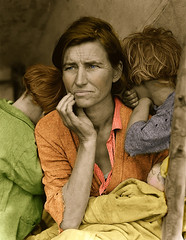 | 30 |
| 6541798837 | Great Leap Forward | lasted from 1958 to 1960; marked Mao's response to distortions of Chinese socialism; promoted smallscale industrialization in rural areas; tried to foster widespread and practical technological education for all rather than relying on a small elite of highly trained technical experts; envisioned an immediate transition to full communism in the "people's communes" rather than waiting for industrial development to provide the material basis for that transition; massive famine which followed temporarily discredited Mao's radicalism | 31 | |
| 6541798838 | Great Purges | also known as the Terror; period of immense paranoia in the Soviet Union of the late 1930's in which communist members accused each other being corrupted by capitalist ideals; enveloped tens of thousands of prominent communists, including all of Lenin's top associates, and millions more of ordinary peoples; based on suspicious associations in the past, denunciations by colleagues, connections to foreign countries, or bad luck; such people were arrested in the middle of the night, then tried and sentenced to either death or long harsh years in remote labor camps known as gulags; close to 1 million peoples executed between 1936 and 1941; additional 4 to 5 million people sent to the gulag, where they were forced to work in horrendous conditions and died in appalling numbers | 32 | |
| 6541798839 | Green Revolution | a series of research, and development, and technology transfer initiatives, occurring between the 1940s and the late 1960s, that increased agriculture production worldwide, particularly in the developing world | 33 | |
| 6541798840 | Adolf Hitler | lived from 1889 to 1945; leader of the Nazi party in Germany; chancellor of Germany from 1933 to 1945; dictator of Nazi Germany from 1934 to 1945 |  | 34 |
| 6541798841 | Ho Chi Minh | lived from 1890 to 1969; Vietnamese communist revolutionary leader; was prime minister (from 1945 to 1955) and president (from 1945 to 1969) of the Democratic Republic of Vietnam |  | 35 |
| 6541798842 | Holocaust | the mass murder of approximately six million Jews during World War II; a program of systematic state-sponsored murder by Nazi Germany; led by Adolf Hitler and the Nazi Party | 36 | |
| 6541798843 | International Monetary Fund | IMF; established in 1944 by the Bretton Woods Conference in New Hampshire; sought to promote market economies, free trade, and high growth rates | 37 | |
| 6541798844 | Indian National Congress | INC; organization established in 1885; gave expression to the idea of India as a single nation; played a major role in India's independence movement from British colonial rule | 38 | |
| 6541798845 | Iranian Cultural Revolution | lasted from 1980 to 198; a period following the Iranian Revolution where intellectuals of Iran were purged of Western and non-Islamic influences to bring it in line with Shia Islam; closed universities between 1980 and 1983, banned many books, and purged thousands of students and lecturers from schools | 39 | |
| 6541798846 | iron curtain | the heavily fortified border between Eastern and Western Europe | 40 | |
| 6541798847 | Islamic renewal | also referred to as Islamic revival; refers to a renewing of the Islamic religion throughout the Islamic world, that began roughly sometime in 1970s; sought greater religious piety and a growing adoption of Islamic culture | 41 | |
| 6541798848 | Jawaharlal Nehru | lived from 1889 to 1964; first Prime Minister of India and was a leading figure in the independence movement against British rule over India |  | 42 |
| 6541798849 | League of Arab States | a regional organization of Arab countries in and around North Africa, the Horn of Africa, and Southwest Asia; formed in Cairo in 1945 with six members: Egypt, Iraq, Transjordan (Jordan), Lebanon, Saudi Arabia and Syria; currently has 22 members | 43 | |
| 6541798850 | League of Nations | international peacekeeping organization founded as a result of the First World World; proposed by US president Woodrow Wilson; committed to the principle of "collective security" and intended to avoid the repetition of war | 44 | |
| 6541798851 | Mahatma Gandhi | lived from 1869 to 1948; leader of the Indian nationalist movement during British control over India; used nonviolent civil disobedience, such as hunger strikes |  | 45 |
| 6541798852 | Mao Zedong | lived from 1893 to 1976; Chinese communist revolutionary and leader of the People's Republic of China from its establishment 1949 to his death in 1976 |  | 46 |
| 6541798853 | Marshall Plan | plan which sought to rebuild and reshape devastated European economies; funneled Europe some $12 billion with numerous advisers and technicians; motivated by combination of humanitarian concern, a desire to prevent a new depression by creating overseas customers for American goods, and interest in undermining the growing appeal of European communist parties; required European nations to cooperate with one another |  | 47 |
| 6541798854 | Mikhail Gorbachev | born in 1931; last general secretary of the Soviet Union (1985 to 1991); passed reforms such as perestroika and policies such as glasnost which led to the dissolution of the Soviet Union |  | 48 |
| 6541798855 | military-industrial complex | the policy and monetary relationships which exist between legislators, national armed forces, and the military industrial base that supports them; include political contributions, political approval for military spending, lobbying to support bureaucracies, and oversight of the industry; most often used in reference to the system behind the military of the United States | 49 | |
| 6541798856 | Muhammad Ali Jinnah | lived from 1876 to 1948; founder of Pakistan and the leader of the All-India Muslim League until Pakistan's independence |  | 50 |
| 6541798857 | Munich Conference | a conference in Munich which permitted Nazi Germany's annexation of portions of Czechoslovakia along German borders mainly inhabited by German speakers; territory now known as "Sudetenland"; widely regarded as a failed act of appeasement toward Germany; agreement was signed in the early hours of 30 September 1938; agreement was signed by Germany, France, the United Kingdom, and Italy; Czechoslovakia not invited to the conference | 51 | |
| 6541798858 | Benito Mussolini | lived from 1883 to 1945; leader of the Italian National Fascist Party; prime minister of Italy from 1922 to 1943 |  | 52 |
| 6541798859 | Mustafa Kemal Ataturk | lived from 1881 to 1938; founder and the first President of the Republic of Turkey; passed a series of reforms to transform the former Ottoman Empire into a modern, secular, and democratic nation | 53 | |
| 6541798860 | North American Free Trade Agreement | NAFTA; regional alliance founded in 1993 and consists of Canada, Mexico, and the United States; the world's second largest free-trade zone | 54 | |
| 6541798861 | North Atlantic Treaty Organization | NATO; a military alliance based on the North Atlantic Treaty which was signed in 1949; alliance in which its member states agree to mutual defense in response to an attack by any external party; consists of 28 member states across North America and Europe |  | 55 |
| 6541798862 | Nazi Germany | a.k.a the Third Reich; lasted from 1933 to 1945; Germany under the leadership of Adolf Hitler and the Nazi Party | 56 | |
| 6541798863 | Nelson Mandela | lived from 1918 to 2013; South African anti-apartheid revolutionary and politician; President of South Africa from 1994 to 1999; served as President of the African National Congress from 1991 to 1997 |  | 57 |
| 6541798864 | New Deal | a series of reforms proposed by United States President Woodrow Wilson; lasted from 1933 to 1942; experimental combination of reforms seeking to restart economic growth and prevent similar failures in the future; reflected the thinking of British economist John Maynard Keynes; argued that government actions and spending programs could moderate recessions and depressions; consisted of immediate programs of public spending (for dams, highways, bridges, and parks) and long-term reforms, such as the Social Security system, minimum wage, and various relief and welfare programs | 58 | |
| 6541798865 | non-governmental organization | NGO; an organization that is neither a part of a government nor a conventional for-profit business | 59 | |
| 6541798866 | Nikita Khrushchev | lived from 1894 to 1971; leader of the Soviet Union from 1953 to 1964; responsible for the de-Stalinization of the Soviet Union and backing of the Soviet space program |  | 60 |
| 6541798867 | Osama bin Laden | lived from 1957 to 2011; Islamic militant who was the leader of the terrorist group al-Qaeda; mastermind behind the 9/11 attacks; played a key role in the US-backed effort to aid mujahideen who fought Soviet forces in Afghanistan |  | 61 |
| 6541798868 | al-Qaeda | "the base"; terrorist organization formerly headed by Osama bin Laden; behind the 9/11 attacks | 62 | |
| 6541798869 | Palestinian Liberation Organization | PLO; an organization founded in 1964 with the purpose of creating an independent State of Palestine | 63 | |
| 6541798870 | Pan-Arabism | an ideology proposing the unification of the countries of North Africa and West Asia from the Atlantic Ocean to the Arabian Sea, referred to as the Arab World | 64 | |
| 6541798871 | Pan-Africanism | an ideology which encourages the unity of Africans worldwide | 65 | |
| 6541798872 | HIV/AIDS epidemic | epidemic which was first discovered in 1981 among homosexual men and intravenous drug users in New York and San Francisco; eventually became widespread around the world, particularly sub-Saharan Africa; virus attacks and destroys the immune system, which causes a fatal disorder in the immune system; spread through sexual contact with an infected person, contact with contaminated blood, and transmission from mother to child during pregnancy and breastfeeding | 66 | |
| 6541798873 | ebola epidemic | an epidemic caused by the Ebola virus; symptoms include fever, throat and muscle pains, headaches, nausea, vomiting and diarrhea, and decreased functioning of the liver and kidneys; an 2014 outbreak in West Africa has led to a reported 142 deaths | 67 | |
| 6541798874 | influenza epidemic | an epidemic caused by the H1N1 influenza virus; lasted from 1918 to 1920; resulted in 50 to 100 million deaths, ranking it one of the most deadliest natural disasters in human history | 68 | |
| 6541798875 | perestroika | an economic program launched by Soviet leader Mikhail Gorbachev which freed state enterprises from government regulation, permitted small-scale private businesses, offered opportunities for private farming, and welcomed foreign investment in joint enterprises | 69 | |
| 6541798876 | glasnost | a Soviet policy established by Mikhail Gorbachev which permitted cultural and intellectual freedoms | 70 | |
| 6541798877 | post-modernism | a late 20th Century movement in the arts, architecture, and criticism; includes skeptical interpretations of culture, literature, art, philosophy, history, economics, architecture, fiction, and literary criticism | 71 | |
| 6541798878 | Potsdam Conference | a conference which was held from July 17 to August 2, 1945; participants include the Soviet Union, the United Kingdom, and the United States; gathered to decide how to punish Nazi Germany, sought to establish a post-war order, address peace treaty issues, and counter the effects of World War II | 72 | |
| 6541798879 | Prague Spring | a period of political liberalization in Czechoslovakia during the era of Soviet domination; began on January 5, 1968, when reformist Alexander Dubček was elected First Secretary of the Communist Party of Czechoslovakia, and continued until August 21 when the Soviet Union and other members of the Warsaw Pact invaded the country to halt the reforms | 73 | |
| 6541798880 | 1917 Russian Revolution | a collective term for the series of revolutions in 1917 which ousted Tsar Nicholas II and the tsarist autocracy and replaced it with the communist Bolshiveks | 74 | |
| 6541798881 | second-wave feminism | a period of feminist activity that first began in the United States in the early 1960s and eventually spread throughout the Western world; later became a worldwide movement that was strong in Europe and parts of Asia, such as Turkey and Israel; focused on sexuality, family, the workplace, reproductive rights, and various legal and de facto inequalities | 75 | |
| 6541798882 | UN Security Council | one of the six principal organs of the United Nations; in charge of the maintenance of international peace and security; this body is able to establish peacekeeping operations, establish international sanctions, and authorize military action through resolutions; the only UN body with the authority to issue binding resolutions to member states | 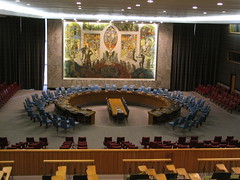 | 76 |
| 6541798883 | space race | lasted from 1955 to 1972; a competition between the Soviet Union and the United States for supremacy in spaceflight capability; pioneered advancements such as artificial satellites, as well as manned and unmanned missions into outer space | 77 | |
| 6541798884 | sphere of influence | a concept in which a state or organization has a level of cultural, economic, military, or political exclusivity, accommodating to the interests of powers outside the sphere; examples include European "semi-colony" of China | 78 | |
| 6541798885 | Joseph Stalin | lived from 1878 to 1953; the leader of the Soviet Union from 1922 to 1952; implemented a highly centralized command economy, which resulted in the transformation of Russian society from agrarian to industrialized; imprisoned millions in labor camps and deported many to remote areas; issued the Great Purges, in which hundreds of thousands, including many prominent communists, were executed |  | 79 |
| 6541798886 | theory of relativity | theory which is composed of special relativity and general relativity; proposed by Albert Einstein; proposes that measurements of various quantities are relative to the velocities of observers, space and time should be considered together and in relation to each other (Spacetime), and the speed of light is constant | 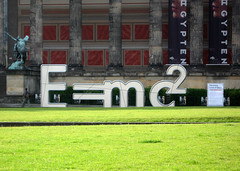 | 80 |
| 6541798887 | Third World | term which describes the countries that did not align with the Soviet Union or the United States | 81 | |
| 6541798888 | total war | war which requires the mobilization of each country's entire populations | 82 | |
| 6541798889 | transnational corporations | a.k.a multi-national corporation; an organization that owns or controls production or services facilities in one or more countries other than its home country | 83 | |
| 6541798890 | Treaty of Versailles | treaty which formally concluded the World War I in 1919; established the conditions for a World War II; Germany losses colonial empire and 15% of its European territory, required to pay heavy reparations to the winners, had its military forces severely restricted, and had to accept sole responsibility for the war; immense German resentment created from the treaty |  | 84 |
| 6541798891 | trench warfare | type of warfare using occupied fighting lines consisting largely of trenches, in which troops are significantly protected from the enemy's small arms fire and are substantially sheltered from artillery; resulted in enormous casualties while gaining or losing a few yards of ground during World War I |  | 85 |
| 6541798892 | Truman Doctrine | an international relations policy set by the U.S. President Harry Truman in a speech on March 12, 1947; stated that the U.S. would support Greece and Turkey with economic and military aid to prevent them from falling into the Soviet sphere; often referred to as the beginning of the US policy of containment |  | 86 |
| 6541798893 | United Nations | organization established in 1945 as a successor to the League of Nations; attempts to find solutions to global problems and deal with virtually any matter of concern to humanity |  | 87 |
| 6541798894 | Vietnam War | war which occurred in Vietnam, Laos, and Cambodia from 1956 to 1975; U.S. entered the war to prevent South Vietnam from becoming communist, as a result of its containment policy; Soviet Union backed Northern Vietnamese forces in an attempt to spread communism to Southeast Asia; resulted in the unification of Vietnam under a communist government and the spread of communism to Cambodia and Laos |  | 88 |
| 6541798895 | Weimar Republic | the federal republic and semi-presidential representative democracy established in 1919 in Germany to replace the imperial form of government after World War I; lasted until the Nazi Party rose to power in 1933; faced numerous problems, including hyperinflation, political extremists and continuing contentious relationships with the victors of World War I | 89 | |
| 6541798896 | Winston Churchill | lived from 1874 to 1965; British politician; Prime Minister of the United Kingdom from 1940 to 1945 and from 1951 to 1955 |  | 90 |
| 6541798897 | weapon of mass destruction | WMD; a weapon which has the capability to kill large numbers of people and decimate large swaths of land | 91 | |
| 6541798898 | Woodrow Wilson | lived from 1856 to 1924; 28th President of the United States (1913-1921); leader of the Progressive Movement; famous for his Fourteen Points, which sought to avoid another worldwide conflict |  | 92 |
| 6541798899 | Fourteen Points | a statement given on January 8, 1918 by United States President Woodrow Wilson declaring that World War I was being fought for a moral cause and called for postwar peace in Europe | 93 | |
| 6541798900 | World Bank | a United Nations international financial institution that provides loans to developing countries for capital programs; its primary goal is to reduce poverty | 94 | |
| 6541798901 | World War I | war which lasted from 1914 to 1918; also known as the Great War; pitted the Allies (United Kingdom, France, Russia, Italy, Japan, and the United States) and the Central Powers (Germany, Austria-Hungary, the Ottoman Empire, and Bulgaria); resulted in an Allied victory and Treaty of Versailles, which set the stage for another world war |  | 95 |
| 6541798902 | World War II | war which lasted from 1939 to 1945; pitted the Allied Powers (Soviet Union, United Kingdom, United States, China and France) against the Axis Powers (Germany, Japan, and Italy); resulted in an Allied victory, the creation of the United Nations, and set the stage for the Cold War |  | 96 |
| 6541798903 | World Trade Organization | WTO; established in 1994 by the 123 members of GATT; took over GATT activities in 1995; developed into a forum for settling international trade disputes | 97 | |
| 6541798904 | Yalta Conference | conference which lasted from February 4 to February 11, 1945; meeting attended by President Franklin D. Roosevelt, Prime Minister Winston Churchill and Premier Joseph Stalin for the purpose of discussing Europe's post-war reorganization; convened in the Livadia Palace near Yalta in Crimea |  | 98 |
| 6541798905 | Zionist Movement | the national movement of Jews and Jewish culture that supports the creation of a Jewish homeland in the territory defined as the Land of Israel |  | 99 |
| 6541798906 | Brazilian Solution | Combination of dictatorship, violent repression, and gov't promotion of industrialization in South American countries | 100 | |
| 6541798907 | Universal Declaration of Human Rights | A 1946 United Nations covenant binding signatory nations to the observance of specified rights. | 101 | |
| 6541798908 | nongovernmental organizations | Organizations that are not established or associated with any specific organizations. They may be recognized, however, they run on their own. Examples are Green Peace and Amnesty International. | 102 | |
| 6541798909 | Tiananmen Square | Site in Beijing where Chinese students and workers gathered to demand greater political openness in 1989. The demonstration was crushed by Chinese military with great loss of life. | 103 | |
| 6541798910 | keiretsu | Japanese business groups after the post-WWII dismantling of the zaibatsu. They are Alliances of corporations each often centered around a bank. They dominate the post-WWII Japanese economy. | 104 | |
| 6541798911 | Salvador Allende | The first Marxist politician elected president in the Americas. He was elected president of Chile in 1970 and overthrown by a US-backed military coup in 1973. | 105 | |
| 6541798912 | NATO | An international organization created in 1949 by the North Atlantic Treaty for purposes of collective security. | 106 | |
| 6541798913 | Warsaw Pact | An alliance between the Soviet Union and other Eastern European nations. This was in response to the NATO | 107 |
AP World History Flashcards
Terms : Hide Images
| 3712341591 | Motives for European Exploration | the crusades, demand for luxury items, to break italian and muslim monopolies, fuedalism over adventure, curiosty, to spraad christianity, and to find alternate routes to asia. | 0 | |
| 3712341592 | Technology of European Exploration | Better maps, better ships, magnetic compasses, sextants, astrolabes, quadrants, rudders, and the caravel ship | 1 | |
| 3712341593 | European Explorers | Christopher Columbus, Ferdinand Magellan, Prince Henry, Fernao Gomes, Bartolomeau Dias, Vasco da Gama, and Pedro Cabral | 2 | |
| 3712341594 | Christopher Columbus | 1492-1502 He sailed west to find the east and discovered America without knowing it. later took 4 voyages to come back to America and became the governor of a colony | 3 | |
| 3712341595 | European Exploration of Pacific | During the 1400s and 1500s European explorers, inspired by greed, gold, glory, curiosity, and many previously unknown lands | 4 | |
| 3712341596 | Commercial Revolution | Inflation began because of too many gold coins, and capitalists and entrepreneurs take advantage | 5 | |
| 3712341597 | Mercantilism | the economic system with the government encouraging trade through establishment colonies for raw materials and markets, gold, maintenance of s favorable balance of trade, export more than import, and use of tariffs. wealth is fixed so countries want to buy low and sell high to get a bigger cut | 6 | |
| 3712341598 | Trading Post Empires | Began in the 16th century by the Portuguese. instead of conquering an entire nation, European stated would establish these in an attempt to force merchant vessels to call at fortified trading sites and pay duties there | 7 | |
| 3712341599 | Joint-stock Company | A voluntary association of individuals for profit, having its capital divided intro transferable shares, the ownership of which is the condition of membership. | 8 | |
| 3712341600 | Spanish Conquest of Americas | Cortes conquered the Aztecs, and Pizarro kills the Incas leader and captured them, then the Spanish conquered the Muslims and forced them into their way of living and treated the native very badly, but the one place that they couldn't get was Brazil, which the Portuguese got instead | 9 | |
| 3712341601 | Spanish Conquest of Manila | Legaspl sends an expedition under the leadership of the Martin De Goiti to Manila. Manila is ruled by Rajah Suliman, who waged war against the Spanish and then loses to their leader, De Gioti | 10 | |
| 3712341602 | Colombian Exchange | The value of gold and silver from Spanish America rises from 1516-1596 then went down again. from South America to Eurasia was given tomatoes, potatoes, maize, and syphilis. Eurasia to Africa was guns, liquor, and trinkets. then from Africa to South America was coffee beans, sugar cane, horses, smallpox, Malaria, measles, Tyhus, Flu, Whooping Cough, and Diptheria | 11 | |
| 3712341603 | Spanish Colonial Empire in the Americas | one of the first global empires lasted over 300 years, it extended across most of the Americas and into Asia by the 16th century | 12 | |
| 3712341604 | Christianity in the Americas | introduced to North America as it was colonized by Europeans beginning in the 16th and 17th centuries. because the Spanish were the first Europeans to establish settlements on the mainland of the North America, the earliest Christians in the territory which would eventually become the United States were Roman Catholics | 13 | |
| 3712341605 | Colonial North America | Indian population was the majority, population growth of the British Colonies their push westward was the main concern. | 14 | |
| 3712341606 | Seven Years War | 1755-1764 essentially comprised two struggles. one centered on the maritime and colonial conflict between Britain and its Bourbon enemies, France and Spain; the second, on the conflict between Fredrick II (the great) of Prussia and his opponents: Austria, France, Russia, and Sweden | 15 | |
| 3715177401 | Encomiendo System | a dependency relation system, that started in Spain during the Roman Empire, where the stronger people protected the weakest in exchange for a service. It was later used during the Spanish colonization of the Americas | 16 | |
| 3715177402 | Haciendas | large estates or plantations with a dwelling house, originating with Spanish colonization in the 16th century | 17 | |
| 3715177403 | Repartimiento System | Instated to substitute the Encomienda system that had come to be seen as abusive and promoting unethical behavior. it wasn't slavery, but being free in various respects other than in the dispensation of his or her labor, and the work was intermittent | 18 | |
| 3715177404 | sugar in Colonial Latin America | Native Americans and Africans were enslaved to work on sugar cane plantation, and they were in terrible conditions that shortened their lifespans greatly. it started as cane, boiled into syrup and then crystallized to be turned into rum. Spain benefited greatly from this production | 19 | |
| 3715177405 | Silver in Colonial Latin America | Was the single product most responsible for the beginning of world trade. discovered in the Americas, and made the Spanish powerful and able to buy long term debt. Mita system developed which forced labor into silver, gold, and Mercury mines | 20 | |
| 3754642082 | Indentured Labor | contracted people to work for periods of time in exchange for travel, shelter, and food. some volunteered, criminals forced, and kidnapped children did it | 21 | |
| 3754642083 | Songhai Empire | Sunni Ali, Muhammad Toure, and Askia Dourd were all leaders of this empire that lasted from 1461-1591 and was one of the last and largest of the Sundanese empires. Eventually failed to adapt to the changing political atmosphere, and was defeated by Morocco | 22 | |
| 3754642084 | Timbuktu | the legendary city of gold from the 11th century, was conquered by Mali and then became an important link between West and East Africa. Flourished because of its trade of salt, gold, ivory, and slaves | 23 | |
| 3754642085 | Kingdom of Kongo | centralized state, military, judicial, and financial affairs. textiles, weapons, advisors and artisans brought in exchange for gold and copper. kings appealed for limits on slaves, and converted to Christianity. | 24 | |
| 3754642086 | Slavery in Africa | In west Africa the slavery system resembled feudalism, and were used as a resource not a trade commodity. Islamic traders exported slaves through the 8th-11th century. slaves were carried to America and used in triangular trade, and the middle passage | 25 | |
| 3754642087 | Atlantic Slave Trade | slave trade had been established but now expanded dramatically. the triangular trade route took place as well as use of the middle passage | 26 | |
| 3793537139 | Impact of Atlantic slave trade in Africa | some states were hit very hard, while others escaped it through resistance and geography. other societies benefited from selling slaves, trading and operating exports | 27 | |
| 3793537140 | African diaspora | refers to the communities throughout the world that are descended from the historic movement of the people's from Africa, predominately to the Americas, Europe, Asia, and the Middle East, among other areas around the globe. | 28 | |
| 3793537141 | abolition of slavery | a major part in this was the Underground Railroad that Africans traveled to get away from slavery. the south had a high disposition to the abolition of slavery. the civil war was fought mainly over slavery, and it ended with president Abraham Lincoln | 29 | |
| 3793537142 | Martin Luther | was the leader got the anti-segregation movement and made many speeches and boycotts against it. he was an inspiration and eventually got a Nobel Peace price for all his work and then got shot and killed by James Earl Gray | 30 | |
| 3805757745 | Protestant Reformation | the religious reform movement that divided the church into Catholic and Protestant groups. Erasmus laid the egg that Luther hatched. Commoners believed that upper levels of the church were wealthy and oppressive. | 31 | |
| 3805757746 | Counter-reformation | an advance by the church to get back the loyalty from the church members. it extended from the 1530s to the end of the 16th century bathe council of Trent did many things and banned stuff during this time because they were suspicious of the church musicians. | 32 | |
| 3805757747 | Holy Roman Empire | a country that existed from 800 to 1806 and played an important role in Central European politics while having an allegiance with the Catholic Church. eventually lost their imperial cities to the French, Turkish, then lost the rest | 33 | |
| 3805757748 | thirty years war | initially a religious war fought in Europe. Germany was devastated. occurred because Ferdinand II tried to curtail the religious activities which sparked the Protestant rebellion. Europe, Sweden, France, Austria, the superpowers, were a part of it | 34 | |
| 3805757749 | European balance of power | railroads and steamboats are prominent in 1850 and continue to be. steel, chemical and technology industries are grown, and dynamite is invented. world trade grows significantly and population increases. labor unions and movement comes up | 35 | |
| 3805757750 | absolution | in the Christian religion, w pronouncement of remission of sins to the penitent. in Roman Catholicism, penance is a sacrament and the power to absolve lies with the priest, who can grant release from the guilt of sin to the sinner who is truly contrite, confesses his sin, and promises to perform satisfaction to God. | 36 | |
| 3805757751 | King Henry VIII of England | ruled England after his father and older brother died. wanted to control France and Scotland, so he went to war but didn't win. had six different wives, but was obese and became ill of different things and died at age of 56 | 37 | |
| 3805757752 | King Louis XIV of France | had the palace of Versailles as a monument of his power. his expensive ears and lifestyle left little in the bank treasury. he was the model for the absolute monarchs and the patron for art | 38 | |
| 3805757753 | English Civil War: Causes | had money problems because of their debt from wars with Spain, and the English monarchs had to deal with puritans who did not want to be apart of the church | 39 | |
| 3805757754 | English Civil War: Results | it was afterwards written into law that no state can leave the union; the south was virtually destroyed; the vast majority of slaves were freed (those who were in the confederate states); afterwards blacks were awarded citizenship; the south became industrialized after the war with the arrival of the Yankee carpetbaggers; and the old antebellum, plantation based south was essentially wiped off the map. the federal government now ranked supreme, and put an end to the idea of secession. the federal government could now override southern legislation | 40 | |
| 3805757755 | scientific revolution: causes | beginning in the 17th century, scientists began to challenge the validity of classical ideas, the questioning spirit of the renaissance and the reformation reflected the growing secularization of the European society. throughout the Middle Ages, geocentrism was supported by the church and then in mid 1500s Copernicus proved heliocentrism. his work inspired many | 41 | |
| 3805757756 | Scientific Revolution: scientists | Galileo: math/astronomy, improved the telescope and helped prove heliocentrism. Newton: math, made theory of gravity. Descartes: math, philosopher, scientist, and focused on reason | 42 | |
| 3805757757 | Deism | belief system that recognizes that a powerful God played a role in the creation of the universe. emerged in the wake of the scientific revolution and has a clear focus on an orderly universe based on nature and reason. late 17th century, w: Thomas Jefferson | 43 | |
| 3805757758 | the enlightenment | aka the age of reason. the application of natural laws and reasoning led to new thinking in regard to human behavior. in Europe in the 17/18th centuries, thinkers began to reject classic ideas to government. John Locke, baron de Montesquieu, Voltaire were important. made people question government and absolutism | 44 | |
| 3805757759 | enlightenment thinkers | John Locke: believed in consent of the governed, and government should protect personal rights. Baron de Montesquieu believed in checks, in balance, and 3 branches of government. Voltaire believed in freedom of speech/religious toleration. Jean-Jacques Rousseau: French philosopher believed that while firming governments people must give up their own interest for the good of all | 45 | |
| 3805757760 | Impact of enlightenment | enlightenment ideas were unpopular w/ government people. Maria Theresa of Austria and Catherine the Great of Russia used their power to make political changes (building hospitals, schools) late 18th and early 19th century enlightenment ideas played an important role in the American and French Revolutions. the the Latin American wars for independence | 46 | |
| 3805757761 | Matteo Ricci | a Jesuit scholar from Europe who went to the Ming court in the late 1500s was the representative of western efforts to bring Christianity to the east and the hopes of missionaries to win the approval of the Chinese emperors. missionaries brought new scientific/math to the imperial court. Ming emperors generally welcomed missionaries, and they were successful at converting people | 47 | |
| 3808747655 | Ming dynasty: social snd cultural changes | the revival of civil service exams encouraged the creation of an extensive scholar-bureaucrat class (was responsible for governing the empire). restoration of Confucian traditions encouraged the subordination of women (making their lives more tightly controlled) widows were discouraged from remarrying, and foot binding became more popular for lower class. the Chinese novels gain in popularity led to an increase of literacy. | 48 | |
| 3808747656 | Ming economic growth | 49 | ||
| 3808747657 | single whip tax system | policy put forth by the Ming in 1570s requiring a single national tax and that all taxes be paid in the form of silver, including taxes from tributary states. this made global implications and demand for silver. silver came from Japan and the Americas, making profits for Spain and Japan | 50 | |
| 3808747658 | the great wall | built in the 14th through the 17th centuries A.D., during the Ming dynasty (1368-1644). originally conceived by emperor Qin Shi Huang (c. 259-210) in the third century B.C. as a means of preventing incursions from barbarian nomads into the Chinese empire | 51 | |
| 3808747659 | forbidden city | imperial palace which was the home to twenty-four Chinese emperors over 491 years between 1420 and 1911. the forbidden city is now known as the palace museum. surrounded by a moat 3,800 meters long and 53 meters wife. intruders were discouraged by guards in watchtowers and bow and arrows. | 52 | |
| 3808747660 | Qing Dynasty | called the empire of the great Qing, or the Manchu dynasty, was the last imperial dynasty of China. ruling from 1644-1912 with a brief, abortive restoration in 1917. under the corrupt ruling of the later rulers, various rebellions and uprisings broke out. in 1840 when the Opium War broke out the Qing court was faced with troubles at home and aggression from abroad. during that period, measures were adopted by imperial rulers and some radical peasants to bolster their power | 53 | |
| 3808747661 | Tokugawa period: isolation | the Portuguese arrived in Japan, 1453 and made a commercial relationship w/ 2 nations. new products were introduced to Japan sword were no match for the new firearms. Christian missionaries came in mid 1500s hoping to convert the Japanese. the shoguns banned guns and swords and began to restrict contact w/ foreigners. a series of seclusion acts were passed to ban missionary activities and the religion. by the 1640s foreign trade was forbidden except for some Dutch and Chinese trade. Japanese were forbidden to travel abroad and no one was let in. was relatively peaceful time and was known as pax Tokugawa | 54 | |
| 3808747662 | Tokugawa period: political change | the unification of Japan in the late 1500s left it the establishment of a military government led by shogun which brought nearly 300 years of peace and stability policies promoted isolation and regulated contact w/ foreigners. shoguns tried to centralize their authority and stability. shoguns took power away from the daimyo daimyo estates were broken up, court appearances were mandatory they needed permission to marry or repair their castles | 55 | |
| 3808747663 | Tokugawa period: social and economic changes | peace/stability in this period brought great changes. the samurai and daimyo classes concentrated in wealth, new endeavors and art. new crops led to population increase. as cities and trade grew, merchant class benefitted cities were centers of new cultural traditions. including the new kabuki theater | 56 | |
| 3808747664 | Ottoman Empire: rise and exploration | by the 1400s the Byzantine empire had been in decline for 2 centuries and faced a threat from the ottomans ( a nomadic group who migrated from Central Asia to Asia Minor) in 1453 the ottomans surrounded Constantinople and after a 2 month siege they won the city. they expanded and by the 1500s had made the largest empire in the Middle East and Europe. suleiman the great ruled from 1520-1566 this time was considered a golden age | 57 | |
| 3808747665 | suleiman the magnificent | as sultan of the Ottoman Empire from 1520/-1566 he expanded the empire into Southern Europe and created and efficient centralized bureaucracy. modernized the emote am known as the lawgiver for improving the legal system the laws were based on sharia, Islamic law. he was a great patron of the arts and was known for his religious tolerance | 58 | |
| 3808747666 | Millet system | developed to protect the rights g the tolerated clients of the Muslim community as Ahl al-dhimmi as designated people of the book in Quran and institutionalize dagger the fall of Constantinople by sultan Mehmet II in 1453 the great expanse of the Ottoman Empire also leaves room for each community geographically and culturally to inexpert and implement the rules and regulations of the empire differently if they were respected at all this applies not only to the term but to the millet system as well | 59 | |
| 3808747667 | janissaries | ottoman infantry division, forcibly conscripted as young boys became military slaves used military strength to influence politics inhibited ottoman reform | 60 | |
| 3808747668 | Safavid empire | 1500-1722 one of the three great Islamic empires of the 16th and 17th centuries, based in today's Iran, important capital city of Isfahan shi'ism became a state religion under the Safavid empire and remains so to this day | 61 | |
| 3808747669 | Mughal empire | located in India kingdom center was Delphi established by Muslim Turks, both Hindu and Islamic civilizations, Muslim rulers, Hindu subjects, built the Taj Mahal new religion created called divine faith introduced the dome and arch, brought porcelain paper and gunpowder from China to India | 62 | |
| 3808747670 | Akbar the great | ruled the Mughal empire his accomplishments include bringing peace and order to Indian encouraging religious rolerance with Hindu and Muslims created divine faith religion which combined Hindu Christian and Islamic beliefs and he repealed taxes on Hindus | 63 | |
| 3808747671 | Taj Mahal | built by Mughal emperor shah Jahan in India was made as a mausoleum for his 3rd wife | 64 | |
| 3808747672 | British economic interests in India | they wanted financial gains to civilize the savages and to spread Christianity with missionaries they wanted to create monopolies on trade trade goods so they set up factories for manufacture of goods they won power and wealth by assisting Indian leaders with their armed forces wanted to give the people of India a stable and liberal government that was up to European standards | 65 | |
| 3808747673 | Russian empire | after breaking free of the Mongol control in the late 1400s, muscovite princes began to take control over much of Russia eliminating the authority of local princes Ivan III a grand prince of Moscow developed a policy that encouraged Cossacks peasants to settle in the lands that he had conquered Niven centralized his authority claimed divine right to rule and named Hines czar Moscow was established as the capital of the new Russian empire | 66 | |
| 3808747674 | Ivan the terrible | crowned as the first tsar of russiavhe controlled the largest nation on earth but in his later years, executed thousands and in rage killed his own son | 67 | |
| 3808747675 | the romanovs | they ruled for 300 years they were a constitutional monarch Rasputin and Anastasia | 68 | |
| 3808747676 | westernization | includes industrialization urbanization technically rational modes of though mass education mass communication a centralized nation state impact included development of method means of transportation industrialized of economy unemployment increase spread of scientific and technical education and more mobilization and less institutionalize for | 69 | |
| 3808747677 | Peter the great | he introduced new western technologies to Russia was successful in battle against the rules and the great northern war against Sweden he implemented several internal reforms modified government policies and enforced them increased Russia's territory and built st. Petersburg | 70 | |
| 3808747678 | St. Petersburg | located on the Baltic Sea it was established as the capital of the Russian empire by Peter the great served as a visible symbol of Russia's efforts to modernize as well as of the absolute authority of the czar also known as the window to the west the city welcomed Western Europeans and their knowledge of science and technology | 71 | |
| 3808747679 | Catherine the great | a Russian Czarina 1764-1796 whe continued Peter the greats policy of modernization while ensuring the absolute authority of the monarch continuing to expand the empire she gained land from the Ottoman Empire and took control of Alaska gained access to a warm water port a goal never realized by Pepe and took control of Portland known as sm enlightened despot she built schools and hospitals and was tolerant of the different religions | 72 | |
| 3808747680 | serfdom in Russia | as the result of unpaid debts many peasants were forced into serfdom serfdom provided s labor force for the agrarian based economy serfs we laborers who were tied to the land and although not slaves they could be sold. czars passed laws limiting the fights of serfs in large part to gain the favor of nobility | 73 | |
| 3808747681 | caravels | larger, stronger and faster ships built by the Portuguese | 74 | |
| 3808747682 | printing press | Impact information spread faster bibles were spread more people practice religion and questioning church | 75 |
Flashcards
Flashcards
Pages

Need Help?
We hope your visit has been a productive one. If you're having any problems, or would like to give some feedback, we'd love to hear from you.
For general help, questions, and suggestions, try our dedicated support forums.
If you need to contact the Course-Notes.Org web experience team, please use our contact form.
Need Notes?
While we strive to provide the most comprehensive notes for as many high school textbooks as possible, there are certainly going to be some that we miss. Drop us a note and let us know which textbooks you need. Be sure to include which edition of the textbook you are using! If we see enough demand, we'll do whatever we can to get those notes up on the site for you!
