

AP Language and Composition Terms Flashcards
Terms : Hide Images
| 6519478246 | Zeugma | A figure of speech in which a single word, usually a verb, applies to more than one thing | 0 | |
| 6519478247 | Trope | Used to express meanings of words differently than their literal meanings ex: hyperbole, metaphor, personification, simile, metonymy, and synecdoche | 1 | |
| 6519478248 | Tone | The attitude or emotion of a writer towards their subject or audience | 2 | |
| 6519481392 | Parallelism | A similarity in structure in a pair or series of related words, phrases, or clauses | 3 | |
| 6519484310 | Satire | the use of humor, irony, exaggeration, or ridicule to expose and criticize people | 4 | |
| 6519484311 | Rhetorical Question | a question asked in order to create a dramatic effect, to make a point, or to make people think rather than to get an answer | 5 |
AP Lang Vocabulary List 6 Flashcards
Terms : Hide Images
| 9094128323 | anomaly | Something that's unusual or unexpected. | 0 | |
| 9094128324 | capitulate | To surrender, give up. | 1 | |
| 9094128325 | charlatan | Someone who pretends to know something in order to trick people; a quack. | 2 | |
| 9094128326 | heretic | An iconoclast; someone who goes against accepted beliefs, usually religious ones. | 3 | |
| 9094128327 | immutable | Not mutable, not changing; inflexible. | 4 | |
| 9094128328 | insipid | Dull, boring, inane. | 5 | |
| 9094128329 | intrepid | Brave; fearless. | 6 | |
| 9094128330 | lucid | Easy to understand, clear; well-lit. | 7 | |
| 9094128331 | mundane | Ordinary. | 8 | |
| 9094128332 | obdurate | Refusing to change one's opinion or way of doing something; unfeeling, coldhearted. | 9 | |
| 9094128333 | partisan | Showing blind allegiance to a group, especially a political party. | 10 | |
| 9094128334 | penury | Extreme poverty. | 11 | |
| 9094128335 | surreptitious | Secret, sneaky, clandestine. | 12 | |
| 9094128336 | tenacious | Persistent, determined; not easily stopped or pulled apart. | 13 | |
| 9094128337 | vindicate | To show that someone is not guilty; to justify. | 14 |
AP Language 8 Flashcards
Terms : Hide Images
| 5819960513 | Harangue pos | Noun and verb | 0 | |
| 5819960514 | Immutable pos | Adj | 1 | |
| 5819960515 | Prodigy pos | Noun | 2 | |
| 5819960516 | Sully pos | Verb | 3 | |
| 5819960517 | Vehement pos | Adj | 4 | |
| 5819960518 | Banality pos | Noun | 5 | |
| 5819960519 | Conciliatory pos | Adj | 6 | |
| 5819960520 | Convergence pos | Noun | 7 | |
| 5819960521 | Demonize | Verb | 8 | |
| 5819960522 | Embezzle | Verb | 9 | |
| 5819960523 | Banality | Cliché | 10 | |
| 5819960524 | Conciliatory | To win over or gain goodwill by pleasing | 11 | |
| 5819960525 | Convergence | Coming together or intersection | 12 | |
| 5819960526 | Demonize | Turn into demon or describe as evil | 13 | |
| 5819960527 | Embezzle | Misappropriate or slip money into own account | 14 | |
| 5819960528 | Harangue | Ranting speech lecture | 15 | |
| 5819960529 | Immutable | Unchangeable | 16 | |
| 5819960530 | Prodigy | Highly talented | 17 | |
| 5819960531 | Sully | To soil or stain | 18 | |
| 5819960532 | Vehement | Emotional, powerful,violent | 19 |
AP Language Week 1 Words Flashcards
Terms : Hide Images
| 7309134647 | accusatory | indicating or suggesting that one believes a person has done something wrong. | 0 | |
| 7309143177 | abstract language | language expressing a quality apart from a specific object or event; opposite of concrete language | 1 | |
| 7309144647 | ad hominem | "against the man"; attacking the arguer rather than the argument or issue | 2 | |
| 7309150035 | ad populum | "to the people"; playing on the prejudices of the audience | 3 | |
| 7309153520 | analogy | a comparison in which a thing is inferred to be similar to another thing in a certain way because it is similar to the thing in other ways | 4 |
Ap Language Flashcards
Terms : Hide Images
| 7193738449 | ad hominem argument | attacking the person not the arguement | 0 | |
| 7193738450 | Either/or fallacy | reducing an argument or issue to two polar opposites and ignoring possible middle ground | 1 | |
| 7193738451 | post hoc argument | cites an unrelated event that occured earlier as the cause of a current situation | 2 | |
| 7193738452 | Metonymy | use of an aspect of something to represent the whole | 3 | |
| 7193738453 | Antithesis | Parallel structure that juxtaposes contrasting ideas | 4 | |
| 7193738454 | authority | A reliable, respected source—someone with knowledge. | 5 | |
| 7193738455 | Assertion | An emphatic statement; declaration. An assertion supported by evidence becomes an argument | 6 | |
| 7193738456 | imperative sentence | A sentence that requests or commands. | 7 | |
| 7193738457 | rhetorical modes | patterns of organization developed to achieve a specific purpose | 8 | |
| 7193738458 | simple sentence | a sentence containg a subject and a predicate, an ind. clause | 9 | |
| 7193738459 | Colloquialism | An informal or conversational use of language. | 10 | |
| 7193738460 | cumulative sentence | an independent clause followed by subordinate clauses or phrases. | 11 | |
| 7193738461 | Polysendeton | the deliberate use of a series of conjunctions | 12 | |
| 7193738462 | Syllogism | a form of deductive reasoning conclusion is supported by the major and minor premise | 13 | |
| 7193738463 | Understatement | Lack of emphasis in a statement or point. | 14 | |
| 7193738464 | 15 |
Flashcards
Flashcards
AP Language & Composition, 9/11 Flashcards
Terms : Hide Images
| 7360089497 | allusion | a reference to a well-known person, place, event, literary work, or work of art | 0 | |
| 7360093042 | anadiplosis | repetition of the last word of one clause at the beginning of the next clause | 1 | |
| 7360095065 | anaphora | the repetition of a word or phrase at the beginning of successive clauses | 2 | |
| 7360097360 | antimetabole | repetition of words in reverse order | 3 | |
| 7360098236 | chiasmus | a reversal in the order of words in two otherwise parallel phrases | 4 | |
| 7360099895 | antithesis | a person or thing that is the direct opposite of someone or something else | 5 | |
| 7360103621 | Aristotelian Triangle | rhetorical triangle | 6 | |
| 7360105372 | asyndeton | omission of conjunctions between coordinate phrases, clauses, or words | 7 | |
| 7360107346 | conduplicatio | repetition of one or more words in successive clauses | 8 | |
| 7360108576 | diction | a writer's or speaker's choice of words | 9 | |
| 7360109376 | epithet | descriptive name | 10 |
AP World History Chapter 15 Flashcards
Terms : Hide Images
| 8268737010 | Catholic Counter-Reformation | An internal reform of the Catholic Church in the sixteenth century; thanks especially to the work of the Council of Trent (1545-1563), Catholic leaders clarified doctrine, corrected abuses and corruption, and put a new emphasis on education and accountability |  | 0 |
| 8268737011 | Condorcet and the ideas of progress | The Marquis de Condorcet (1743-1794) was a French philosopher and political scientist who argued that human affairs were moving into an era of near-infinite improbability, with slavery, racism, tyranny, and other human trials swept abay by the triumph of reason |  | 1 |
| 8268737012 | Nicolaus Copericus | Polish mathematician and astronomer (1473-1543) who was the first to argue for the existence of a heliocentric cosmos |  | 2 |
| 8268737013 | European Enlightenment | European intellectual movement of the eighteenth century that applied the lessons of the Scientific Revolution to human affairs and was noted for its commitment to open-mindedness and inquiry and the belief that knowledge could transform human society |  | 3 |
| 8268737014 | Jesuits in China | Series of Jesuit missionaries in the late sixteenth and seventeenth centuries who, inspired by the work of Matteo Ricci, made extraordinary efforts to understand and become a part of Chinese culture in their efforts to convert Chinese elite, although with limited success |  | 4 |
| 8268737015 | Kaozheng | Literally, "research based on evidence," Chinese intellectual movement whose practitioners emphasized the importance of evidence and analysis, applied especially to historical documents |  | 5 |
| 8268737016 | Mirabai | One of India's most beloved bhakti poets (1498-1547), she helped break down the barriers of caste and tradition |  | 6 |
| 8268737017 | Issac Newton | English natural scientist (1643-1727) whose foundation of the laws of motion and mechanics is regarded as the culmination of the Scientific Revolution |  | 7 |
| 8268737018 | Protestant Reformation | Massive schism within Christianity that had its formal beginning in 1517 with the German priest Martin Luther; while the leaders of the movement claimed that they sought to "reform" a Church that had fallen from biblical practice, in reality the movement was radically innovated in its challenges to Church authority and its endorsement of salvation "by faith alone" |  | 8 |
| 8268737019 | Sikhism | Religious tradition of northern India founded by Guru Nanak ca.1500; combines elements of Hinduism and Islam and proclaims the brotherhood of all humans and the equality of men and women |  | 9 |
| 8268737020 | Taki Onqoy | Literally, "dancing sickness;" a religious revivial movement in central Peru in the 1560s whose members preached the imminent destruction of Christianity and of the Europeans in favor of a renewed Andean golden age |  | 10 |
| 8268737021 | Ursula de Jesus | Slave and later religious Laywoman at the Peruvian Convent of Santa Claus (1606-1666), a lucky escape inspired her to pursue a pious life of mortification and good works gaining a reputation as a women of extraordinary devotion and humility as well as a visionary and mystic |  | 11 |
| 8268737022 | Voltaire | Pen name of the French Philosopher Francois-Marie Arouet (1694-1778), whose work is often taken as a model of enlightenment questioning on traditional values and attitudes; noted for his dream and his criticism of traditional religion |  | 12 |
| 8268737023 | Wahhabi Islam | Major Islamic movement led by Muslim theologian Abd al-Wahhab (1703-1792) that advocated as austere lifestyle and strict adherence to Islamic law |  | 13 |
| 8268737024 | Bhakti | Hindu devotional movement that flourished in the early modern era, emphasizing music, dance, poetry, and rituals as means by which to achieve direct union with the divine |  | 14 |
| 8268737025 | Council of Trent | The main instrument of the Catholic Counter-Reformation (1545-1563), at which the Catholic Church clarified doctrine and corrected abuses |  | 15 |
| 8268737026 | Charles Darwin | Highly influential English biologist (1809-1882) whose theory of natural selection continues to be seen as a threat to revealed religious truth |  | 16 |
| 8268737027 | Desim | Belief in a divine being who created the cosmos but who does not intervene directly to human affairs |  | 17 |
| 8268737028 | Edict of Nantes | 1598 edict issued by French king Henry IV that granted considerable religious toleration to French Protestants and ended the French Wars on Religion |  | 18 |
| 8268737029 | Sigmund Freud | Austrian doctor and the father of modern psychoanalysis (1856-1939); his theories about the operation of the human mind and emotions remain influential today | 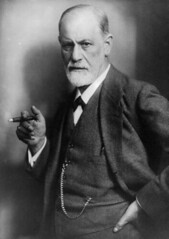 | 19 |
| 8268737030 | Galileo Galilei | Italian astronomer (1564-1642) who further developed the ideas of Copernicus and whose work was eventually suppressed by the Catholic Church |  | 20 |
| 8268737031 | Huacas | Local gods of the Andes |  | 21 |
| 8268737032 | Huguenots | The Protestant minority in France |  | 22 |
| 8268737033 | Martin Luther | German priest and theologian (1483-1546) who inaugurated the Protestant Reformation movement in Europe |  | 23 |
| 8268737034 | Guru Nanak | Founder of Sikhism (1469-1539) |  | 24 |
| 8268737035 | Ninety-five Theses | List of ninety-five debating points about the abuses of the Church, posted by Martin Luther on the door of a church in Wittenberg in 1517; the Church's strong reaction eventually drove Luther to separate from Catholic Christianity |  | 25 |
| 8268737036 | Matteo Ricci | The most famous Jesuit missionary in China in the early modern period; active in China from 1582 to 1610 |  | 26 |
| 8268737037 | Scientific Revolution | Great European intellectual and cultural transformation that was based on the principles of the scientific method |  | 27 |
| 8268737038 | Society of Jesus | Also called "Jesuits," this Catholic religious society was founded to encourage the renewal of Catholicism through education and preaching; it soon became a leading Catholic missionary order beyond the borders of Europe |  | 28 |
| 8268737039 | Thirty Years' War | Highly destructive war (1618-1648) that eventually included most of Europe; fought for the most part between Protestants and Catholics, the conflict ended with Peace of Westphalia (1648) |  | 29 |
| 8268737040 | Wang Yangmin | Prominent Chinese philosopher (1472-1529) who argued that it was possible to achieve a virtuous life by introspection, without the extensive education of traditional Confucianism |  | 30 |
Pages

Need Help?
We hope your visit has been a productive one. If you're having any problems, or would like to give some feedback, we'd love to hear from you.
For general help, questions, and suggestions, try our dedicated support forums.
If you need to contact the Course-Notes.Org web experience team, please use our contact form.
Need Notes?
While we strive to provide the most comprehensive notes for as many high school textbooks as possible, there are certainly going to be some that we miss. Drop us a note and let us know which textbooks you need. Be sure to include which edition of the textbook you are using! If we see enough demand, we'll do whatever we can to get those notes up on the site for you!
