AP Notes, Outlines, Study Guides, Vocabulary, Practice Exams and more!

Biochemistry Flashcards

CP Bio

Terms : Hide Images
8718599780Polar moleculeA molecule with possible charges on possible ends.0
8718599781HydrophilicWater-loving.1
8718599782HydrophobicWater-fearing.2
8718599783Hydrogen bondHydrogen ion is attracted to a negatively charged atom on a neighboring molecule.3
8718599784CohesionThe attraction of water molecules to each other.4
8718599785Surface tensionCohesive forces are strong enough to make water act as though there is a thin "skin" on its surface.5
8718599786AdhesionThe attraction between particles of different substances.6
8718599787CarbohydratesMolecules that provide a source of quick energy or short-term stored energy.7
8718599788LipidsMolecules that provide a source of long-term energy, insulation, and hormones.8
8718599789Saturated fatty acidLong carbon-hydrogen chains with all single bonds between carbon atoms.9
8718599790Unsaturated fatLong carbon-hydrogen chains with at least one double bond between carbon atoms.10
8718599791Glycerol and fatty acidsMake up lipids.11
8718599792Fats, oils, and waxesExamples of lipids.12
8718599793PolysaccharidePolymer of carbohydrates13
8718599794Monosaccharidemonomer of carbohydrates14
8718599795Lipid structure15
8718599796Monosaccharide structure16
8718599797Polysaccharide structure17
8718599798Phospholipid structure18
8718599799Covalent bondsharing electrons between two atoms19
8718599800Low density as a solidsolid H2O (ice) is able to float on liquid H2O (water)20
8718599801High heat capacity/specific heatwater requires a lot of energy gain/loss in order to change temperature21
8718599802Examples of polysaccharidescellulose, glycogen, starch22
8718599803Examples of monosaccharidesglucose, fructose, galactose23
8718599804Disaccharidea carb made of two monosaccharides (ex: glucose + galactose = lactose)24
8718599805Disaccharide structure25
8718599806Dehydration synthesisremoving a water molecule to build polymers26
8718599807Hydrolysisadding a water molecule to break down polymers27
8718599808Monomersmallest unit of a macromolecule; building blocks28
8718599809Polymermany small units bonded together; large molecule29

Biochemistry Flashcards

Terms : Hide Images
8728859227ADP(adenosine diphosphate) The compound that remains when a phosphate group is removed from ATP, releasing energy0
8728859228ATP(adenosine triphosphate) main energy source that cells use for most of their work1
8728859229adenine (A)a purine base. One of four nitrogen-containing bases in nucleotides composing the structure of RNA and DNA. Bonds with thymine.2
8728859230amino acidmonomer of proteins3
8728859231bufferA solution that minimizes changes in pH when acids or bases are added to the solution.4
8728859232carbohydrateClass of nutrients that includes sugars and starches5
8728859233celluloseCarbohydrate component of plant cell walls.6
8728859234cytosine (C)a pyrimidine base. One of four nitrogen-containing bases in nucleotides composing the structure of RNA and DNA. Bonds with guanine.7
8728859235condensation reactionA chemical reaction in which two molecules covalently bond to each other with the removal of a water molecule.8
8728859236denaturationA process in which a protein unravels, losing its specific structure and hence function; can be caused by changes in pH or salt concentration or by high temperature. Also refers to the separation of the two strands of the DNA double helix, caused by similar factors.9
8728859237disaccharideA double sugar molecule made of two monosaccharides bonded together through a condensation reaction.10
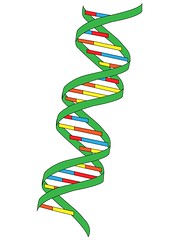
8728859238DNADeoxyribonucleic acid. A double-stranded, helical nucleic acid molecule capable of replicating and determining the inherited structure of a cell's proteins.11
8728859239double helixThe form of native DNA, referring to its two adjacent polynucleotide strands wound into a spiral shape.12
8728859240emulsificationphysical process of breaking up large fat globules into smaller globules, thereby increasing the surface area that enzymes can use to digest the fat13
8728859241enzymeA type of protein that speeds up a chemical reaction in a living thing14
8728859242fatA large lipid molecule made from glycerol and three fatty acids; a triglyceride. Most function as energy-storage molecules.15
8728859243fatty acidMonomer of lipids, along with glycerol16
8728859244functional groupthe portion of a molecule that is active in a chemical reaction and that determines the properties of many organic compounds17
8728859245glucoseC6H12O618
8728859246glycogenAn extensively branched glucose storage polysaccharide found in the liver and muscle of animals; the animal equivalent of starch.19
8728859247guanine (G)a purine base. One of four nitrogen-containing bases in nucleotides composing the structure of RNA and DNA. Bonds with cytosine.20
8728859248hexoseA six carbon sugar molecule21
8728859249hydrogen bondA type of weak chemical bond formed when the slightly positive region in one molecule is attracted to the slightly negative region in another molecule.22
8728859250hydrolysis reactionA chemical reaction that breaks apart a larger molecule by adding a molecule of water23
8728859251hydrophilicWater loving24
8728859252hydrophobicWater fearing25
8728859253inorganic moleculeMolecules that do not contain the element carbon (in most cases)26
8728859254ionA particle that is electrically charged (positive or negative)27
8728859255atomSmallest unit of matter that still retains the properties of an element28
8728859256lipidEnergy-rich organic compounds, such as fats, oils, and waxes, that are made of carbon, hydrogen, and oxygen.29
8728859257moleculeA group of atoms held together by covalent bonds.30
8728859258monomerA simple compound whose molecules can join together to form polymers31
8728859259monosaccharideA single sugar molecule such as glucose or fructose, the simplest type of sugar.32
8728859260nucleotideA building block of DNA, consisting of a five-carbon sugar covalently bonded to a nitrogenous base and a phosphate group.33
8728859261oilTriglyceride, usually of plant origin that is liquid form34
8728859262organic moleculeA molecule containing carbon that is a part of or produced by living systems.35
8728859263pentoseA five carbon sugar molecule36
8728859264peptide bondThe chemical bond that forms between the carboxyl group of one amino acid and the amino group of another amino acid37
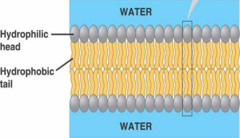
8728859265phospholipidA lipid made up of a glyerol joined to two fatty acids and a phosphate group; has two hydrophobic tails and a polar, hydrophilic head38
8728859266pH scalemeasurement system used to indicate the concentration of hydrogen ions (H+) in solution; ranges from 0 to 1439
8728859267polymerA long molecule consisting of many similar or identical monomers linked together.40
8728859268polypeptideA polymer (chain) of many amino acids linked together by peptide bonds.41
8728859269polysaccharideCarbohydrates that are made up of more than two monosaccharides42
8728859270proteinA three dimensional polymer made of monomers of amino acids.43
8728859271purinea nitrogenous base that has a double-ring structure; such as adenine or guanine; when joined with sugar or phosphate, a component of nucleotides and nucleic acids44
8728859272pyrimidinea nitrogenous base that has a single-ring structure; one of the two general categories of nitrogenous bases found in DNA and RNA; thymine, cytosine, or uracil45
8728859273RNARibonucleic acid. A type of nucleic acid consisting of nucleotide monomers with a ribose sugar and the nitrogenous bases adenine (A), cytosine (C), guanine (G), and uracil (U); usually single-stranded; functions in protein synthesis and as the genome of some viruses.46
8728859274saturated fatty acidA fatty acid in which all carbons in the hydrocarbon tail are connected by single bonds, thus maximizing the number of hydrogen atoms that can attach to the carbon skeleton.47
8728859275soluteA substance that is dissolved in a solution.48
8728859276solventA liquid substance capable of dissolving other substances49
8728859277starchA storage polysaccharide in plants consisting entirely of glucose.50
8728859278thymine (T)a pyrimidine base. One of four nitrogen-containing bases in nucleotides composing the structure of DNA. Bonds with adenine.51
8728859279trigycerideThe form of fat storage in adipose cells; consists of a molecule of glycerol joined with three fatty acids.52
8728859280unsaturated fatty acidA fatty acid possessing one or more double bonds between the carbons in the hydrocarbon tail. Such bonding reduces the number of hydrogen atoms attached to the carbon skeleton.53
8728859281uracil (U)a pyrimidine base. One of four nitrogen-containing bases in nucleotides composing the structure of RNA. Bonds with adenine.54

B12 Flashcards

Terms : Hide Images
7564168076Other name of B12Cobalamin0
7564171386Moieties of cobalaminCorrin ring (4 bonded pyrrole rings with cobalt in the middle. 4 rings make the shape) Cobalt (in the center of four pyyrole rings comprising the corrin structure)1
7564197257What are the two synthetic forms of cyanocobalamin ?-Cyanide in synthetic pill form2
7564208572What makes up members of the family called cobalamins?Corrin ring and Cobalt3
7564223132What are the vitamers of B12?These have cobalimin in their name but carry different groups: -Nitritocobalamin (carries NO group) -Cyanocobalamin (carries Cn aka cyanide group which is the synthetic) -Hydroxocobalamin (carries OH group) -Aquocobalamin or hydrocobalamin (H2O group) carries water *some of these vitamers can be used to make 2 coenzymes4
7564245413Coenzymes of B12:Two coenzyme forms are taken from some of the vitamers and converted into coenzyme form -*Methylcobalamin (CH3 group) reminder: cobalamin+CH3___>*methylcobalamin *5-methylTHF -*Adenosylcobalamin5
7564323928How can we take one of the vitamers and covert it to one of the coenzymes?-Hydroxocobalamin+H+ + ATP____>*adenosylcobalamin Hydro modified to get one of the coenzymes -Hydroxocobalamin+CH3___>*methylcobalamin -Cyanocobalamin___> *methylcobalamin or *adenosylcobalamin two coenzymes form made from cyanocobalamin, shows interconversion to get coenzymes6
7564360606Sources of cobalaminPlant sources: cant make it ONLY FROM MICROBIAL SYNTHESIS/FORTIFICATION Animal sources: cant make it *Can make some from our colon because we have microbes that can make it If we get it from chicken, beef, fish, soy, eggs it's because the microbes in the animals make the vitamin, the animals themself did not have them Plants can be fortified with B12 as well as cereals7
7564382599Types of supplementsCyanocobalamin and Hydroxocobalamin8
7564391627B12 in foods?Really tightly bound to protein. High affinity, vitamin tightly bound to food and there needs to be a way to liberate the vitamin in stomach from the food protein. HCL and Pepsin help by taking it apart and we get free vitamin in stomach, otherwise we wouldn't get it, now you have free vitamin B12 in the stomach but it needs to be bound to a protein carrier in stomach (aka R protein: trans cobalamin 1) cobalamin+ food protein___>cobalamin-protein complex(in food) cobalamin-protein complex__>free cobalamin + protein HCL and pepsin9
7564426601MouthSaliva contains carrier proteins that attach to B12 in the stomach to protect B12 from destruction by stomach acids10
7564436904True or False No trouble processing from B12 from pillTrue11
7564438955DuodenumB12 attaches to Intrinsic Factor (IF)12
7564487287Transcobalamin 1 and Intrinsic Factor (IF)B12-R protein complex___>free B12 + AA+peptides pancreatic proteases (digest protein, hydrolize tans co 1) 1. In stomach, it is released and vitamin B12 gets attached to transcobalamin 1, this is how it gets out of stomach and into duodenum. Transcobalin 1 protect B12 so microbes can't get it 2. In duodenum, transcobalamin 1 gets hydrolyzed (absorbed) into AA. Leaves B12 without carrier. Cobalamin released from carrier in duodenom and now it is alone but we cant leave it alone. Intrinsic Factor: 3. Once Transcobolin 1 digested, it's left on its own, that's when it gets picked up in duodenum. Has to travel to ileum free B12+IF___>B12-IF complex B12 has to constantly be bound to something (ex: IF)13
7564606740Implications for persons with genetic mutationsHave trouble getting B12 from stomach to ileum. Ex: Genetic problems14
7564614955Where is IF synthesized??????????????????????????15
7564617513What type of molecule is IF?Glycoprotein (has carbohydrates in its structure)16
7564625759Where is the site of interaction of IF with B12?Duodenum17
7564636690Factors that can interfere with cobalamin digestion and travel:If you don't produce enough pepsin or HCL in stomach, you'll have trouble releasing B12 If producing too much acid you can denature IF. Proteins that don't do well in a lot of acid could destroy IF or cobalamin 1. Insufficient production will interfere with travel from stomach.18
7564648847Absorption of cobalaminIleum19
7564651248Primary site of cobalamin absorptionilem20
7564653898Role and composition of cuban receptorWhen the vitamin reaches ileum, it's still attached to IF, when B12 complex reaches ileum, forms physical attachment between brush border cells of ileum because that's how absorption happens. There is a physical attachment between the vitamin complex and attachment cells. They find receptor for receiving IF B12 complex. Located outside of cell like a lock. Receptor is a lock made to fit to one another. B12 complex is the key. B12 complex gets through, the receptor is called cubam21
7564772040What does cubam stand forCubilin Aminoless Megalin=Cuban receptor on brush boarder of ileum22
7564784800What is the name of the receptor that accepts IF B12 complex at the brush border of the illeumcubam23
7564786719Which is a part of the cubilin receptorAmnionless24
7564813462If you get B12 from food, we use______________-active transport25
7564830577Absorptive mechanism with physiological intakesDamage could be mutation or damage of gene and person could experience malabsorption26
7564836040Absorptive mechanism with pharmacological intakes -B12 malabsorption could happen if person has celiac or chromes disease or brush border get or vili damage=inadequate absorption27
7564853669Factors that can decrease B12 absorption at the distal ileum =It can't be absorbed at ileum. Condition called atrophic gastritus - certain cells of stomach get destroyed, antibodies destroying If your'e not eating enough B12 you won't absorb enough Removing distal part of ileum where absorption takes place28
7564867841Atrophic Gastritus-Certain stomach cells destroyed and inflammed. Autommune condition, antibodies destroy partial cells of stomach. Less travel and absorption, leads to decrease reduction of intrinsic factor less B12=Pernicious Anemia29
7564890320Zoolinger Elsen-LOOK IN BOOK make too much stomach acid30
7564904408Transporters inside the enterocytes-ABC drug transporter -Transporter II transporter Enterocytes always have to keep some. Some B12 stay in enterocyte, some carry to basal lateral membrane to get into blood.31
7564909951ABC drug transporterInside enterocyte, picks up vitamin and takes to basal lateral membrane so B12 can get out32
7564913640Transcobalamin II transporter-Located at basal lateral membrane, backdoor. Takes vitamin into blood First stop liver33
7564935508What mechanism does the body use to protect you from a B12 deficiency ?Recycling one way nature has of protecting from B12 deficiency Absorb B12 from food or pills Some vitamin when get into liver are dumped into bile and goes to galbladder, when vitamin reaches small intestine it meets up with intrinsic factor and goes to ilieum and is recycled34
7564956312If you get Vitamin B12 from food-we use active transport for IF B12 complex to get in cell35
7564957461Glove-endosome, Vitamin IF released from endosome end up at lysosome, digested and B12 released36
7564977538If you consume vitamin from normal doses from food___-mechanism of absorption is endocytoses if consumed in big doses, happens with passive diffusion37
7564982873Two most abundant vitamers of B12 in portal bloodthe coenzyme forms -Adenosylcobalamin -Methylcobalamin These travel through the blood and are absorbed and get i blood as coenzyme form, food form38
7565010398Other forms of B12 in portal blood-Hydroxl and cyamical, synthetic forms that end up in blood39
7565032575Protein carriers for B12 in portal bloodneeds carrier TCI TCII TCIII40
7565034906TCII-Takes B12 in blood, carries 20% of vitamin in blood. Located on basal lateral membrane, gives up some share to TCI a protein41
7565040358TCI-found in stomach and blood, 80% carries vitamin through blood, carries more than TCII a protein42
7565044221TCIIIspecial case, distributes B12 from liver to tissue in need, send some B12 out of liver to needy areas like a first responder43
7565064871TCII receptors on plasma cell membranes-Receptors for TC1 & II. Carriers are key. Receptors are lock Outer membrance makes glove around TCI or II and bring in vitamin, endosome makes its way over lysosomes, TCI and II destroyed releasing vitamin then vitamin can go out. Once protein released in cytosome it gets escorted to wherever it needs to go like mitochondria or nucleus44
7565085501What happens to a persons B12 status if there were a mutation in the gene that encodes for the TCII carrier proteinLess carriers available Things won't go well unless you bypass small intestine with injections, bypass GI tract to blood45
7565110850What is a possible health consequence of low blood B12 concentrations?High homocysteine levels, CVD risk and stroke46
7565113627B12 storage in tissues and organsBody does not want to give it up, we dont store a lot but we store in liver, muscle, kidney, brain, spleen, heart47
7565127317Primary B12 vitamer in body tissues and organsAdenosylcobalamin (the coenzyme form)48
7565135295Primary B12 vitamer in bloodMethylcobalamin49
7565196149Metabolism or Cobalamin: Interconversion of B12 vitamers in body cells-Hydroxocobalamin+CH3>*methylcobalamin (pill form) -Hydroxocobalamin+H+ + ATP> *adenosylcobalamin need ATP because its donor of adenosyl group for adenosylcobalamin ATP was donor -cyanocobalamin>aquocobalamin decyanase -cyanocobalamin > hydroxocobalamin+CN decyanase hydroxo can give methyl or adenosyl cyano and hydroxo are 2 pill forms50
7565280588Methyllcobalamin and (Met) Metabolism The Cycle *methylcobalamin and the coenzyme *5-methyl THF of folate catalyze the reactions that lower blood homocysteine levels and regenerate MET from homocyteine1. B12 coenzyme 2. Folate coenzyme51
7565348312Roles of folate and B12 in regenerating Methionine from homocysteineStep 1: Formation of homocysteine from Met SAM can leave here because the cycle keeps myelin sheath healthy, dontes methyl group Step 2: Formation of s-adenosyl homocysteine (SAH) Step 3: Formation of homocysteine Step 4: Regeneration of methionine from homocysteine Homocysteine+ *methylcobalamin>Met+cobalamin Methionine synthase52
7565408672a B12 deficiency could lead toMet since this vitamin is needed to regenerate Met from homocysteine53
7565425992*Adenosylcobalamin and Succinyl-CoA SynthesisPart of TCA cycle Won't be able to get as much energy from macronutrients If we don't have enough of we can't make enough Adenosylcobalamin Succinyl CoA and TCA cycle will show and won't be able to get as much nutrients54
7565489295Reactions that generate succinyl-CoAStep 1: Methionine or Isoleucine or Thrionine> propionyl-CoA Step 2: propionyl-CoA>methylmalonyl-CoA Step 3: methylmalonyl-CoA>succinyl-CoA methylmalonyl-CoA mutase and * adenosylcobalamin P M S requires adenosyclcobalin55
7566100120what compounds would accumulate in the blood of someone with B12 deficiency or a mutation in the gene that codes for methylmalonyl-CoA mutaseRxn wont move well, we wont make as much succinyl CoA and low on energy methylmalonyl-CoA___>methylmalonic acid a consequence is we will accumulate these in blood and spill out in urine, not suppose to excrete a lot of meth acid methylmalonic acid is a derriviate of methylmalonyl CoA and builds up high and spills in urine56
7566127951Treatment of the genertic disorder methylmalonic acidemiaif you take high doses it can be useful and faster and better. People can absorb it better at the ileum57
7566132923Unsubstainable claims for uses of B12 in pharmacological dosesHelp lose weight, If high doses taken meth CoA will work faster and better so more Suc CoA made and TCA cycle works better. People can absorb by passive diffusion with pills58
7566139041The folate trap in the liverFolate gets stuck in liver as 5 methyl THF If you dont have enough B12, folate gets trapped, can't make as much as other coenzymes. Less material to make other CoA. Need B12 to take methyl away from SMTHF, loses methyl to become THF=vitamin dependent of eachother59
7566152386Primary route of B12 excretionDoes not get excreted much Bile, but we can get most back, recycled, 75 percent gets reabsorbed60
7566179706reabsorption of B12 excreted in bilelose some but get back a lot61
7566182220Frequency of occurrence of B12 toxicityrare62
7566185472Has UL been set for B12no because toxicity is rare63
7566186839Cobalamin Deficiency2 categories: 1. Neurological - Brain and CNS. Symptoms because of myelin sheath, maintained by compounds like SAM to donate methyl groups to mylein sheath to maintain it 2. Hemotological - anemia. macrocytic and megoloblastic. person given folate but balance messed up tingling numbness and lack of coordination64
7566203038Primary cause of B12 deficiency in USAbsorption problem, small pills, easy to take but hard to absorb65
7566207047Name of the B12 deficiency condition and its symptomPern anemia, refers to what happened, what was cause of the deficiency? pern as cause of anemia is rare66
7566210769stages of B12 deficiency and their featuresblood level can be normal but tissues down 1. Initial stage- 1st blood levels go down but not always good indicators cant always tell whats happening in tissues 2. Second stage- 3. Third Stage- Homocystein high meth acid high. Folate traked. If folate and B12 deficient thats when you get damage to RBC. If you don't have B12 can't regenerate methronine, homo stays high meth low w/o meth inadequate sam whole cycle messed up. Sam and meth low67
7566231271Urinary methylmalonic acid concentrationSuppose to be small FIND THE NUMBER goes up in urine in B12 def68
7566233276the schilling testuse radiation for B12 measure the amount in the urine FIND THE POINT AND WHAT THEY LOOK FOR69

Unit 12 (A&B) Flashcards

Terms : Hide Images
8154169254Aesthetic(adj.) pertaining to beauty; sensitive or responsive to beauty S: artistic0
8168049954Conjecturea guess, tentative theory; to make a guess, surmise1
8154169255Defunct(adj.) no longer in existence or functioning, dead S: extinct, nonexistent A: alive, extant2
8154169256Discomfit(v.) to frustrate, thwart, or defeat; to confuse, perplex, or embarrass S: nonplus, disconcert, foil3
8154169257Espouse(v.) to take up and support; to become attached to, adopt; to marry S: embrace, wed A: repudiate, disavow, renounce4
8154169258Fetish(n.) an object believed to have magical powers; an object of unreasoning devotion or reverence S: charm, talisman, obsession5
8154169259Gregarious(adj.) living together in a herd or group; sociable, seeking the company of others S: outgoing, extroverted A: aloof, introverted, reclusive6
8154169260Hapless(adj.) marked by a persistent absence of good luck S: unlucky, ill-starred, unfortunate A: lucky, charmed, fortunate7
8154169261Impeccable(adj.) faultless, beyond criticism or blame S: flawless, spotless, immaculate A: grimy, soiled, spotted, sullied8
8154169262Importune(v.) to trouble with demands; to beg for insistently S: implore, entreat, dun, tax9
8154169263Interpolate(v.) to insert between other parts or things; to present as an addition or correction S: inject, interpose, introduce10
8154169264Irreparable(adj.) incapable of being repaired or rectified S: irremediable A: remediable, fixable, reversible11
8154169265Laconic(adj.) concise, using few words S: terse, succinct, pithy, compact A: garrulous, prolix, loquacious, verbose12
8154169266Languish(v.) to become weak, feeble, or dull; to droop; to be depressed or dispirited; to suffer neglect S: flag, wilt, fade, pine13
8154169267Mendacious(adj.) given to lying or deception; untrue S: untruthful, false A: truthful, veracious14
8154169268Nadir(n.) the lowest point S: rock bottom A: apex, pinnacle, zenith15
8154169269Omnipresent(adj.) present in all places at all times S: ubiquitous, ever-present16
8154169270Perfunctory(adj.) done in a superficial or halfhearted manner; without interest or enthusiasm S: slapdash, cursory, shallow A: through, assiduous, diligent, meticulous17
8154169271Plaintive(adj.) expressive of sorrow or woe, melancholy S: sad, doleful, lugubrious A: cheerful, blithe, joyous, merry18
8154169272Requite(v.) to make suitable repayment, as for a kindness, service, or favor; to make retaliation, as for an injury or wrong; to reciprocate S: reimburse, recompense, avenge19
8154169273Tantamount(adj.) equivalent, having the same meaning, value, or effect S: indistinguishable form20
8168068981Unregeneratepersisting in holding obstinately to old ideas or habits; unrepentant, unreformed21

Vocabulary Achieve Level D Unit 12 (B) Flashcards

Terms : Hide Images
8557993911appreciable(adj) sufficient to be noticed or measured0
8557993912blanch(v) to remove the color from; to make or turn pale; to parboil1
8557993913brawny(adj) strong, muscular2
8557993914contend(v) to fight, struggle; to compete; to argue3
8557993915humane(adj) kind, merciful4
8557993916illustrious(adj) very famous, distinguished5
8557993917lithe(adj) bending easily, limber6
8557993918temperate(adj) mild, moderate7
8557993919venomous(adj) poisonous; spiteful, mean8
8557993920wily(adj) sly, shrewd, cunning9

08/12/2016 - B Friday Flashcards

Terms : Hide Images
4749547348bacillus (n.)1877, medical Latin, from Late Latin bacillus "wand," literally "little staff," diminutive of baculum "a stick," from PIE root *bak- "staff" (also source of Greek bakterion; see bacteria) + instrumentive suffix -culo. Introduced as a term in bacteriology 1853 by German botanist Ferdinand Cohn (1828-1898). [a rod-shaped bacterium.]0
4749559059backless (adj.)1926, in reference to women's clothing, from back (n.) + -less. [(of a woman's garment) cut low at the back.]1
4749534113backache (n.)a prolonged pain in one's back.2
4749534336backbite (v.)to say mean or spiteful things about someone who is absent.3
4749547932backboard (n.)a board placed at or serving as the back of something.4
4749535222backbone (n.)"spine," early 14c., from back (n.) + bone (n.). Figurative sense of "strength of character" is attested from 1843. [the series of vertebrae extending from the skull to the pelvis; the spine.]5
4749547933backdrop (n.)1913, in U.S. theatrical argot, from back (adj.) + drop (n.). [a painted cloth hung at the back of a theater stage as part of the scenery.]6
4749539076backfield (n.)the football players whose positions are behind the line.7
4749548148backfire (n.) (v.)1839, American English, originally "a fire deliberately lit ahead of an advancing prairie fire to deprive it of fuel," from back (adj.) + fire (n.). As a verb in this sense, recorded from 1886. The meaning "premature ignition in an internal-combustion engine" is first recorded 1897. Of schemes, plans, etc., "to affect the initiator rather than the intended object" it is attested from 1912, a figurative use from the accidental back-firing of firearms. [a loud noise caused by the improperly timed explosion of fired in the cylinder of an internal combustion engine; (of a plan or action) rebound adversely on the originator; have the opposite effect to what was intended.]8
4749539327backflip (n.)a backward somersault done in the air with the arms and legs stretched out straight.9
4749548149backgammon (n.)the area of play behind either the offensive or defensive line.10
4749539328background (n.)the scenery behind something; the setting within which something takes place11
4749540699backhand (n.)as a tennis stroke, 1650s, from back (adv.) + hand. As a verb, by 1935. The figurative adjectival sense of "indirect" is from c. 1800. Related: Backhanded; backhanding. [(in tennis and other racket sports) a stroke played with the back of the hand facing in the direction of the stroke, typically starting with the arm crossing the body.]12
4749548154backhoe (n.)by 1928, from back (n. or adj.) + hoe (n.). [an excavating machine having a bucket that is drawn toward the machine.]13
4749540700backing (n.)1590s, "support;" 1640s, "retreat;" verbal noun from back (v.). Physical sense of "anything forming a backing to something else" is from 1793. Meaning "musical accompaniment" is recorded from 1940. [support.]14
4749549050backlash (n.)1815, of machinery, from back (adj.) + lash (n.). In metaphoric sense, it is attested from 1955. [a strong and adverse reaction by a large number of people, especially to a social or political development.]15
4749540701backlog (n.)1680s, "large log placed at the back of a fire," from back (adj.) + log (n.1). Figurative sense of "something stored up for later use" is first attested 1883, but this and the meaning "arrears of unfulfilled orders" (1932) might be from, or suggested by, log (n.2).[large log placed at the back of a fire; an accumulation of something, especially uncompleted work or matters that need to be dealt with.]16
4749540941back order (n.)a business order yet to be fulfilled because stock in unavailable.17
4749549345backpack (n.)1914 as a noun, 1916 as a verb, from back (n.) + pack (n.). Related: Backpacked; backpacking. [a bag with shoulder straps that allow it to be carried on one's back.]18
4749541126backpedal (n.)move the pedals of a bicycle backward in order to brake.19
4749549346backrest (n.)a support for a person's back when the person is seated.20
4749541127backside (n.)c. 1400, from back (adj.) + side (n.). In the specific sense of "rump, buttocks" it is first recorded c. 1500. [a person's buttocks or rump.]21
4749541128backslide (v.)in the religious sense, 1580s, from back (adj.) + slide (v.). Related: Backslider; backsliding (1550s). [relapse into bad ways or error.]22
4749541357backspin (n.)a backward rotary motion of a ball.23
4749549066backstage (n.)the area in a theater out of view of the audience, especially in the wings or dressing rooms.24
4749542424backstairs (n.)stairs at the back or side of a building; secret.25
4749549067backstop (n.)1819, in cricket, from back (adj.) + stop (n.). In U.S. baseball, from 1889, "fence behind the catcher;" figurative extension to "catcher on a baseball team" is from 1890. The verb is attested from 1956 in the sense of "support." Related: Backstopped; backstopping. [a person or thing placed at the rear of or behind something as a barrier, support, or reinforcement.]26
4749542425backstory (n.)a story that tells what led up to the main story or plot (as of a film)27
4749542839backstroke (n.)1670s, "counter-punch," from back (adj.) + stroke (n.). From 1876 in swimming, from back (n.). [a swimming stroke executed on the back.]28
4749549069back talk (n.)impudent, insolent, or argumentative replies.29
4749543023backtrack (v.)"retrace one's steps," figuratively, by 1896, from literal sense, with reference to hunted foxes, from back (adv.) + track (v.). Related: Backtracked; backtracking. ["retrace one's steps,"]30
4749549070backup (n.)help or support; the procedure for making extra copies of data in case the original is lost or damaged.31
4749549051backwash (n.)1876, "motion of a receeding wave," from back (adj.) + wash (n.).32
4749543274backwater (n.)late 14c., "water behind a dam," from back (adj.) + water (n.1). Hence flat water without a current near a flowing river, as in a mill race (1820); figurative use of this for any flat, dull place is from 1899. [a part of a river not reached by the current, where the water is stagnant.]33
4749549052backwoods (n.)wooded or partly cleared areas far grin cuties.34
4749543275bacon (n.)early 14c., "meat from the back and sides of a pig" (originally either fresh or cured, but especially cured), from Old French bacon, from Proto-Germanic *bakkon "back meat" (source also of Old High German bahho, Old Dutch baken "bacon"). Slang phrase bring home the bacon first recorded 1908; bacon formerly being the staple meat of the working class. [salted and smoked meat from the sides of back of a pig.]35
4749549053bacterium (n.) / bacteria (n. plural)1847, plural of Modern Latin bacterium, from Greek bakterion "small staff," diminutive of baktron "stick, rod," from PIE *bak- "staff used for support" (also source of Latin baculum "rod, walking stick"). So called because the first ones observed were rod-shaped. Introduced as a scientific word 1838 by German naturalist Christian Gottfried Ehrenberg (1795-1876). [a member of a large group of unicellular microorganisms that have cell walls but lack organelles and an organized nucleus, including some that can cause disease.]36
4749543724bactericidal (adj.) / bactericide (v.)a substance that kills bacteria.37
4749549054bacteriology (n.)1884, from German; see bacteria + -ology. Related: Bacteriological (1886). Bacteriological warfare is from 1924. [the study of bacteria.]38
4749543871bacteriophage (n.)1921, from French bactériophage (1917), from bacterio-, comb. form of bacteria, + -phage. "-phage"; word-forming element meaning "eater," from stem of Greek phagein "to eat" (see -phagous). [a virus that parasitizes a bacterium by infecting it and reproducing inside it.]39
4749543872bacterial (adj.)bacteria definition. sing. bacterium.40
4749544079badge (n.)mid-14c., perhaps from Anglo-French bage or from Anglo-Latin bagis, plural of bagia "emblem," all of unknown origin. [a distinctive emblem worn as a mark of office, membership, achievement, licensed employment, etc.]41
4749549057badger (n.)1520s, perhaps from bage "badge" (see badge) + -ard "one who carries some action or possesses some quality," suffix related to Middle High German -hart "bold" (see -ard). If so, the central notion is the badge-like white blaze on the animal's forehead (as in French blaireau "badger," from Old French blarel, from bler "marked with a white spot;" also obsolete Middle English bauson "badger," from Old French bauzan, literally "black-and-white spotted"). But blaze (n.2) was the usual word for this. [a heavily built omnivorous nocturnal mammal of the weasel family, typically having a gray and black coat.]42
4749544080badinage (n.)"light railery," 1650s, from French badinage "playfulness, jesting," from badiner (v.) "to jest, joke," from badin "silly, jesting," from Old Provençal badar "to yawn, gape," from Late Latin badare "to gape," from *bat-, the root of abash. [playful talk back and forth; banter.]43
4749549058badland (n.)"arid, highly eroded regions of the western U.S.," 1852, from bad + land (n.). Applied to urban districts of crime and vice since 1892 (originally with reference to Chicago). [extensive tracts of heavily eroded, uncultivable land with little vegetation.]44
4749549216backspace (n.)to move back space in a text with the press of a key45

B12 Flashcards

Terms : Hide Images
8847822515Necrosistissue destruction necrotic tissues, cellular debris, and fluid accumulate in the form of pus0
8847826288accessaccumulation of puss in enclosed space1
8847829586enhanced circulationcarries away toxins and wastes2
8847831417regenerationbegins where injury and infection cleaned up3
8847833334fibroblastmove into necrotic area, lay down collagenous fibers new cells produced by mesenchymal cells migrate to area4
8847842723These tissues can regenerate wellepithelial, connective, smooth5
8847844694cannot regenerate wellother muscle tissue and neural tissue6

LLC-B3L12-Vocabulary Flashcards

Terms : Hide Images
9268035329打字type0
9268035330(measure word for sentences)1
9268035331teach2
9268035332蠟燭candle3
9268035333氣球balloon4
9268035334生日快樂Happy Birthday5
9268035335收到receive6
9268035336特別special7
9268035337圖案pattern(design)8
9268035338應該should9
9268035339wish10
9268035340祝福wish well / bless11

Campell Biology Chapter 5 Flashcards

Terms : Hide Images
5932436750MacromoleculesVery large polymers formed by the joining of smaller monomers0
5932436751Types of Macromolecules1. Carbohydrates 2. Nucleic Acids 3. Proteins 4. Lipids1
5932436752CarbohyrdatesA cabohydrate is a biological molecule sonsistion of C, H and O atoms. Made up of Monosaccharides (single sugars), which can be joined together to polysachharides Used as energy, cell walls and plant structure. (Potatoes,Cellulose)2
5932436753Nucleic AcidsMade up of Nucleotides, and contain genetic info, energy and are responsible for energy tranfer process (DNA,RNA,ATP)3
5932436754ProteinsMade up of Amino Acids, and they are for support structure, and as a catalysts(Enzymes, skin) Enzymes, defense, storage, transport, hormonal regulation, receptors, contractile and motor support. Diverse as proteins are, they are all unbranched polymers constructed from the same set of 20 amino acids. Polymers of amino acids are called polypeptides. A protein is a biologically functional molecule that consists of one or more polypeptides, each folded and coiled into a specific three-dimensional structure.4
5932436755LipidsMade up of Glycerol and Fatty Acids. Used for energy storage, and cell membrane. (Wax, oil, fat) Do NOT form "true" polymers5
5932436756Dehydration ReactionAlso called a condensation reaction; reaction in which two molecules are covalenty bonded to each other, with the loss of a water molecule. This reaction is repeated, which creates a polymer.6
5932436757HydrolysisHydro= water lyse= dissolve Polymers are dissasembled in H2O to monomers by hydrolysis, a process that is the reverse of the dehydration reaction.7
5932436758Monosaccharides1 sugar unit; simple carbohydrates. They taste sweet and are soluble in water, classified by location of carboxyl group(-OH), 1st carbon is a aldose, ketose if at the 2nd carbon, and the number of carbons. Form rings while in water, serve as major fuel cells and raw material for building.8
5932436759TriosesGlyceraldehyde, Dihydroxyacetone9
5932436760PentosesRibose, Ribulose and Deoxyribose10
5932436761HexosesGlucose, Galactose and Fructose11
5932436762SucroseGlucose + Fructuse, used as a transport sugar used in plants, harvested for use in food12
5932436763LactoseGlucose + galactose, present in milk13
5932436764Disacchardides2 sugar units bonded by a Glycosidic Linkage14
5932436765PolysaccharidesStraight or branched chain of 100's and 100's of monosaccharides15
5932436766StarchPlant storage form of energy, unbranched coiled chains, easily hydrolized into glucose units16
5932436767CelluloseFiberlike structural material in plant cell walls, tough and invisible.17
5932436768GlycogenHighly branced chain used by animals to store energy in muscles and the liver18
5932436769ChitinA specialized polysaccharide with Nitrogen attached to glucose units, structurial material in arthropod exoskeltons and fungal cell walls19
5932436770MaltoseGlucose + glucose, present in germinating seeeds20
5932436771Fatty Acid'sLong chains of Carbon, 16-18, and Hydrogen with a COOH (Carboxyl) group at one end21
5932436772FatsA lipid, mainly used for energy storage.22
5932436773Adipose CellsTissues that the fat is stored in, used to cusion vital organs and insulate the body23
5932436774Saturated Fatty AcidsThe maximum number of hydrogen atoms possible and no double bonds, hence *saturated* with Hydrogen. SF is solid at room temperature cause the carbonskeletons of the s.fatty acid pack closely together.24
5932436775Unsaturated Fattty Acidshave one or more double bonds, formed by the removal of H atoms from C skeleton. Wherever there is a cis = in the hydrocarbon chain the structure will have a kink. The kink is respsible for the unsat.F not being able to pack tightly to gether as a SF. UFare called unsaturated fats or oils, and are liquid at room temperature. Plant fats and fish fats are usually unsaturated.25
5932436776HydrogenationThe process of converting unsaturated fats to saturated fats by adding hydrogen. Hydrogenating vegetable oils also creates unsaturated fats with trans double bonds. These trans fats may contribute more than saturated fats to cardiovascular disease.26
5932436777Essential Fatty acidsCertain unsaturated fatty acids are not synthesized in the human body. These must be supplied in the diet. These essential fatty acids include the omega-3 fatty acids, required for normal growth, and thought to provide protection against cardiovascular disease.27
5932436778PhospholipidsConsist of 2 fatty acids, 1 glycerol, and 1 small polar Phosphate group. Produces a hydrophillic head and 2 hydropobic tails. Spontaneously form micelles or lipid bilayers, the basis of biological membranes28
5932436779WaxesWater repellant coatings, formed by long chain fatty acids to long chain alchohols. Plant and animal coverings29
5932436780SteroidsLipids characterized by a carbon skeleton consisting of four fused rings. Incudes cholesterol, vitamin D, and sex hormones30
5932436781CholesterolAn important steroid, is a componet in animal cell membranes31
5932436782EnzymesBiological catalysts32
5932436783Amino AcidsSmall organic molecules with an amino group(NH2), a carboxyl group(Cooh), and one of 20 varying R groups. There are 20 different amino acids, these common amino acids are grouped into five classes based on side groups; nonpolar amino acids, polar amino acids, charged amino acids.33
5932436784Peptide BondIs formed when Dehydration Reaction between the carboxyl group (-) of one AA is positioned to adjacent to the amino group (+) of the other. Through repition of this process a polypeptid is formed. At one end of the PP - chain is a carboxyl end (C- terminus) and at the other end a (N- terminus)34
5932436785Functional ProteinA functional protein consists of one or more polypeptides precisely twisted, folded, and coiled into a unique shape.35
5932436786Protein DenaturationHigh temperature or changes in PH can cause a loss of protein's normal 3-D shape, normal function is lost, which is often irreversible.36
5932436787ChaperoninsProtein molecules that promote and assist the proper folding of other proteins.37
5932436788NucleotidesMonomers of Nucleic acids38
5932436789PolynucleotidesPolymers of nucleic acids39
5932436790Nucleic AcidsTwo types DNA and RNA.40
5932436791DNAA double stranded polynucleotide helix carrying encoded hereditary instructions. Sugar is deoxyribose, Nitrogenous bases AGCT. Bases are held together by hydrogen bonds and van der Waals interactions between the stacked bases. Provides directions for the replication of itself and RNA, using mrna.41
5932436792RNAA single stranded polynucleotide chain which functions in translating the code to build proteins. Sugar is ribose, Nitrogenous bases - AGCU, Single Strand42
5932436793Nucletotide StructureA 5-carbon sugar (ribose or deoxyribose), a nitrogen base, and one or more phosphate groups. The portion of a nucleotide without a phosphate group is called a nuceloside.43
5932437363Lipidsare a diverse group of hydrophobic molecules, that does not include TRUE polymers.44
5932440569What is the hydrophobic behavior of Lipids based on?They may have som polar bonds, but consist mostly of hydrocarbonregions45
5932445362What is a Glycerol?is an alcohol (-OH = hydroxyl group)46
5932449876What are hydrogen bonds?a weak bond between two molecules resulting from an electrostatic attraction between a proton in one molecule and an electronegative atom in the other.47
5932485764Hydrogen bond closerA special type of dipole-dipole force arises between molecules that have an H atom bonded to a small, highly electronegative atom with lone electron pairs, specifically N, O, or F. The H¬N, H¬O, and H¬F bonds are very polar. When the partially positive H of one molecule is attracted to the partially negative lone pair on the N, O, or F of another molecule, a hydrogen bond (H bond) forms48
5944804425What is a Glycosidic bondn chemistry, a glycosidic bond or glycosidic linkage is a type of covalent bond that joins a carbohydrate (sugar) molecule to another group, which may or may not be another carbohydrate.49
5944959908antibodyability to recognize and bind to antigen (exogenous ones or endogenous ones; Some antigens start out as exogenous, and later become endogenous for example, intracellular viruses). Antibody binds to antigen and marks for destruction.50
5944989923protein structureprimary, secondary, tertiary, (quartenary)51
5944991514primary structureunique sequence of amino acids.52
5945004450secondary structurethe result of hydrogen bonds vetween the repeating constitutents of the polypeptide backbone. Both O and N atoms of the BB areelectronegative, with partial negative charges. Individually these H-bonds are weak, but since they are repeated many times, over a relatively long region of the polypeptide chain, they cna support a particular shape for that part of the protein.53
5945040160tertiary structureis the overall shape of a polypeptide resulting from interactions between the side chains: R-GROUPS54
5945048790hydrophobic interactionas PP flods into its functional shape, AA with hydrophobic (=nonpolar) side chains usually end up in clusters at the core of the protein (out of contact with the water). Van der Waals interactions help hold the nonpolar amino acid side chains close together.55
5945055098disulfide bridgesForm where two cystein monomers, amino acids with sylfhydryl groups (-SH) ong their side chains, are brought close together by the folding of the protein.56
5945069749quartenary structureis the overall structure of these polypeptides.57
5946767131DenaturationDenaturation in proteins is a process in which a protein unravels, losing its specific structure and function; can be caused by high temperature, changes in pH or salt concentration. The term also referes to the separation of the two strands of the DNA 2helix caused by similar factors.58
5946811600most proteins denaturate ifheat, ph change, salt concentration, or if they are transferred from an queous environment to an organic solvent, such as ether or chloroform.59
5946828736renaturationif the denatured protein remains dissolved, it can often renature when the chemical and physical aspects of its environment are restored to normal.60
5946834090example of denaturationwhite of an egg becomes opaque during cooking because the denatured proteins are insoluble and solidify.61
5946891952chaperoninA hollow multy protein complex molecule that keeps the new polypeptid segregated from "bad influences" in the cytoplasmic environment while it folds spontaneously. (do NOT specify the final structure of a polypeptid!)62
5947086660Why does a denatured protein no longer function normally?The function of a protein is a consequence of its specific shape, which is lost when a protein becomes denatured.63
5947116553What parts of a polypeptid chain participate in that hold together the 2dary str? 3ry str?2dry: involves hydrogen bonds between atoms of the polypeptide backbone. 3ry involves bonding between atoms of the R groups of the amino acid subunits64
5947153273What if genetic mutation changes primary structure, how might it destroy the protein´s function?Primary structure, the amino acid sequence, affects the secondary structure (if any). In short, the amino acid sequence affects the shape of the protein. Because the function of a protein depends on its shape, a change in primary structure can destroy a protein´s function.65
5947191900protein synthesis1. synthesis of mRNA in the nucleus 2. mRNA moves via nuclear pore into cytoplasm 3. Synthesis of protein on ribosome66
5947270824proc. cells protein synthese`?lack nucley but still use RNA to convey a message from the DNA to ribosomes and other cellular equipment that translate the coded information into amino acid sequences...67
5947288209cytosine68
5947302512adenine69
5947293090thymine70
5947359529guanin71
5947392869polynucleotids are also callednucleic acids.72
5947403630a polynucleotide consists ofthree parts: 1. nitrogenous base, 2. pentose, 3. phosphate group73
5947422199nucleosideonly 1 and 2 (nitrogenous base and pentose)74
5947430765families of nigrogenous bases:1. pyrimidines- 6-membered ring of C and N atoms: CTU 2. purines: are larger with a 6-membered ring fused to a 5-membered ring AG75
5947461842thymineonly found in DNA76
5947465513uracilurNa ;)77

Pages

Subscribe to CourseNotes RSS

Need Help?

We hope your visit has been a productive one. If you're having any problems, or would like to give some feedback, we'd love to hear from you.

For general help, questions, and suggestions, try our dedicated support forums.

If you need to contact the Course-Notes.Org web experience team, please use our contact form.

Need Notes?

While we strive to provide the most comprehensive notes for as many high school textbooks as possible, there are certainly going to be some that we miss. Drop us a note and let us know which textbooks you need. Be sure to include which edition of the textbook you are using! If we see enough demand, we'll do whatever we can to get those notes up on the site for you!