AP Notes, Outlines, Study Guides, Vocabulary, Practice Exams and more!

AP World History Chapter 19 Flashcards

Terms : Hide Images
6258872616Sultan Abd al-Hamid IIOttoman sultan, 1876-1909, who accepted a reform constitution but then quickly suppressed it, ruling as a reactionary autocrat for the rest of his long reign0
6258872618Boxer Uprisingrising of Chinese militia organizations from 1898 to 1901 in which large numbers of Europeans and Chinese Christians were killed1
6258872619Chinese Revolution of 1911the collapse of China's imperial order, officially at the hands of organized revolutionaries but for the most part under the weight of the troubles that had overwhelmed the government for the previous half-century2
6258872622Hong XiuquanChinese religious leader, 1814-1867, who sparked the Taiping Uprising and won millions to his unique form of Christianity, according to which he himself was the younger brother of Jesus, sent to establish a "heavenly kingdom of great peace" on earth3
6258872623Informal Empireterm commonly used to describe areas that were dominated by Western powers in the 19th century but that retained their own governments and a measure of independence (Latin America & China)4
6258872625Meiji Restorationthe overthrow of the tokugawa shogunate of Japan in 1868, restoring power at long last to the emperor Meiji and establishing a new government commited to saving Japan from foreign domination by drawing upon what the modern West had to offer to transform Japanese society5
6258872627Perry, MatthewU.S. navy commodore who in 1853 presented the ultimatum that led Japan to open itself to more normal relations with the outside world6
6258872628Opium Warstwo wars fought between Western powers and China(1839-1842 and 1856-1858) after China tred to restrict the importation of foreign goods, especially opium; China lost both wars and was forced to make major concessions7
6258872629Russo-Japanese War, 1904-1905ending in a Japanese victory, this war established Japan as a formidable military competitor in East Asia and precipitated the Russian Revolution of 19058
6258872631Self-strengthening movementChina's program of internal reform in the 1860s, and 1870s, based on vigorous application of Confucian principles and limited borrowing from the West9
6258872632Selim IIIOttoman sultan, 1789-1807, who attempted significant reforms of his empire, including the implementation of new military and administrative structures10
6258872633"Sick man of Europe"Western Europe's unkind nickname for the Ottoman Empire in the 19th and early 20th centuries, a name based on the sultan's inablility to prevent Western takeover of many regions and to deal with internal problems; it fails to recognize serious efforts in Ottoman state during this period11
6258872635Taiping UprisingMassive Chinese rebellion that devastated much of the country between 1850 and 1864; it was based on the millenarian teachings of Hong Xiuquan12
6258872636Tanzimat reformsimportant reform measures undertaken in the Ottoman Empire beginning in 1839; the term "Tanzimat" means "reorganization"13
6258872639unequal treatiesseries of 19th century treaties in which China made major concessions to Western powers14
6258872640Young Ottomansgroup of Turkish military and civilian elites that developed ca. 1900, eventually bringing down the Ottoman Empire15
6258872641Young Turksmovment of Turkish military and civilian elites that developed in 1900, eventually bringing down the Ottoman Empire16
6258899028Social DarwinismA theory of society that views society, like nature, to be a survival of the fittest.17

AP World History Themes Flashcards

Terms : Hide Images
2681452465Interaction Between Humans & the Environmentdemography, disease, migration/settlement, technology, patterns of settlement0
2681462318Development & Interaction of Cultures & Societiesbelief systems, ideologies, science/technology, art/lit/architecture1
2681470459State Building, Expansion, & Conflictgovernments, empires, nations/states, rebellion, regional structures, global structures2
2681477779Trade & Economic Systemsagricultural/pastoral, trade networks, trade goods currency, labor systems, econ ideologies3
2681485378Social Structuresgender roles, family organization, race & ethnicity, class structures4

AP World History Period 2 Flashcards

Terms : Hide Images
5857924840Ahura MazdaIn Zoroastrianism, the good god who rules the world.0
5857924841Alexander the GreatAlexander III of Macedon (356-323 B.C.E.), conqueror of the Persian Empire and part of northwest India.1
5857924842AryansIndo-European pastoralists who moved into India about the time of the collapse of the Indus Valley civilization; their role in causing this collapse is still debated by historians.2
5857924843AshokaThe most famous ruler of the Mauryan Empire (r. 268-232 B.C.E.), who converted to Buddhism and tried to rule peacefully and with tolerance.3
5857924844Athenian democracyA radical form of direct democracy in which much of the free male population of Athens had the franchise and officeholders were chosen by lot.4
5857924845Caesar AugustusThe great-nephew and adopted son of Julius Caesar who emerged as sole ruler of the Roman state at the end of an extended period of civil war (r. 31 B.C.E.-14 C.E.).5
5857924846Cyrus (the Great)Founder of the Persian Empire (r. 557-530 B.C.E.); a ruler noted for his conquests, religious tolerance, and political moderation.6
5857924847Darius IGreat king of Persia (r. 522-486 B.C.E.) following the upheavals after Cyrus's death; completed the establishment of the Persian Empire.7
5857924848Greco-Persian WarsTwo major Persian invasions of Greece, in 490 B.C.E. and 480 B.C.E., in which the Persians were defeated on both land and sea.8
5857924849Gupta EmpireAn empire of India (320-550 C.E.).9
5857924850Han dynastyDynasty that ruled China from 206 B.C.E. to 220 C.E., creating a durable state based on Shihuangdi's state-building achievement.10
5857924851Hellenistic eraThe period from 323 to 30 B.C.E. in which Greek culture spread widely in Eurasia in the kingdoms ruled by Alexander's political successors.11
5857924852HerodotusGreek historian known as the "father of history" (ca. 484-ca. 425 B.C.E.). His Histories enunciated the Greek view of a fundamental divide between East and West, culminating in the Greco-Persian Wars of 490-480 B.C.E.12
5857924853hopliteA heavily armed Greek infantryman. Over time, the ability to afford a hoplite panoply and to fight for the city came to define Greek citizenship.13
5857924854IoniaThe territory of Greek settlements on the coast of Anatolia; the main bone of contention between the Greeks and the Persian Empire.14
5857924855Mandate of HeavenThe ideological underpinning of Chinese emperors, this was the belief that a ruler held authority by command of divine force as long as he ruled morally and benevolently.15
5857924856Battle of MarathonAthenian victory over a Persian invasion in 490 B.C.E.16
5857924857Mauryan EmpireA major empire (322-185 B.C.E.) that encompassed most of India.17
5857924858Olympic GamesGreek religious festival and athletic competition in honor of Zeus; founded in 776B.C.E. and celebrated every four years.18
5857924859PatriciansWealthy, privileged Romans who dominated early Roman society.19
5857924860Pax RomanaThe "Roman peace," a term typically used to denote the stability and prosperity of the early Roman Empire, especially in the first and second centuries C.E.20
5857924861Peloponnesian WarGreat war between Athens (and allies) and Sparta (and allies), lasting from 431 to 404 B.C.E. The conflict ended in the defeat of Athens and the closing of Athens's Golden Age.21
5857924862PersepolisThe capital and greatest palace-city of the Persian Empire, destroyed by Alexander the Great.22
5857924863Persian EmpireA major empire that expanded from the Iranian plateau to incorporate the Middle East from Egypt to India; flourished from around 550 to 330 B.C.E.23
5857924864PlebiansPoorer, less privileged Romans who gradually won a role in Roman politics.24
5857924865Punic WarsThree major wars between Rome and Carthage in North Africa, fought between 264 and 146 B.C.E., that culminated in Roman victory and control of the western Mediterranean.25
5857924866Qin DynastyA short-lived (221-206 B.C.E.) but highly influential Chinese dynasty that succeeded in reuniting China at the end of the Warring States period.26
5857924867Qin ShihuangdiLiterally "first emperor" (r. 221-210 B.C.E.) forcibly reunited China and established a strong and repressive state.27
5857924868SolonAthenian statesman and lawmaker (fl. 594-560 B.C.E.) whose reforms led the Athenians toward democracy.28
5857924869WudiHan emperor (r. 141-86 B.C.E.) who began the Chinese civil service system by establishing an academy to train imperial bureaucrats.29
5857924870XiongnuNomadic peoples to the north of the Great Wall of China who were a frequent threat to the stability of the Chinese state.30
5857924871Yellow Turban RebellionA major Chinese peasant revolt that began in 184 C.E. and helped cause the fall of the Han dynasty.31
5857924872Angra MainyuIn Zoroastrianism, the evil god, engaged in a cosmic struggle with Ahura Mazda.32
5857924873AristotleA Greek polymath philosopher (384-322 B.C.E.); student of Plato and teacher of Alexander the Great.33
5857924874AtmanThe human soul, which in classic Hindu belief seeks union with Brahman.34
5857924875Ban ZhaoA major female Confucian author of Han dynasty China (45-116 C.E.) whose works give insight into the implication of Confucian thinking for women.35
5857924876Bhagavad GitaA great Hindu epic text, part of the much larger Mahabharata, which affirms the performance of caste duties as a path to religious liberation.36
5857924877bhakti movementAn immensely popular development in Hinduism, advocating intense devotion toward a particular deity.37
5857924878BrahmanThe "World Soul" or final reality in upanishadic Hindu belief.38
5857924879BrahminsThe priestly caste of India.39
5857924880BuddhismThe cultural/religious tradition first enunciated by Siddhartha Gautama40
5857924881ConfucianismThe Chinese philosophy first enunciated by Confucius, advocating the moral example of superiors as the key element of social order.41
5857924882ConfuciusThe founder of Confucianism (551-479 B.C.E.); an aristocrat of northern China who proved to be the greatest influence on Chinese culture in its history.42
5857924883ConstantineRoman emperor (r. 306-337 C.E.) whose conversion to Christianity paved the way for the triumph of Christianity in Europe.43
5857924884DaodejingThe central text of Daoism; translated as The Way and Its Power.44
5857924885DaoismA Chinese philosophy/popular religion that advocates simplicity and understanding of the world of nature, founded by the legendary figure Laozi.45
5857924886Filial pietyThe honoring of one's ancestors and parents, a key element of Confucianism.46
5857924887Greek rationalismA secularizing system of scientific and philosophic thought that developed in classical Greece in the period 600 to 300 B.C.E.; it emphasized the power of education and human reason to understand the world in nonreligious terms.47
5857924888HinduismA word derived from outsiders to describe the vast diversity of indigenous Indian religious traditions.48
5857924889HippocratesA very influential Greek medical theorist (ca. 460-ca. 370 B.C.E.); regarded as the father of medicine.49
5857924890IsiaihOne of the most important prophets of Judaism, whose teachings show the transformation of the religion in favor of compassion and social justice (eighth century B.C.E.).50
5857924891Jesus of NazarethThe prophet/god of Christianity(ca. 4 B.C.E.-ca. 30 C.E.).51
5857924892YahwehThe monotheistic religion developed by the Hebrews, emphasizing a sole personal god (Yahweh) with concerns for social justice.52
5857924893KarmaIn Hinduism, the determining factor of the level at which the individual is reincarnated, based on purity of action and fulfillment of duty in the prior existence.53
5857924894LaoziA legendary Chinese philosopher of the sixth century B.C.E.; regarded as the founder of Daoism.54
5857924895LegalismA Chinese philosophy distinguished by an adherence to clear laws with vigorous punishments.55
5857924896Mahayana"Great Vehicle," the popular development of Buddhism in the early centuries of the Common Era, which gives a much greater role to supernatural beings and proved to be more popular than original (Theravada) Buddhism.56
5857924897MokshaIn Hindu belief, liberation from separate existence and union with Brahman.57
5857924898NirvanaThe end goal of Buddhism, in which individual identity is "extinguished" into a state of serenity and great compassion.58
5857924899PlatoA disciple of Socrates whose Dialogues convey the teachings of his master while going beyond them to express Plato's own philosophy; lived from 429 to 348 B.C.E.59
5857924900PythagorasA major Greek philosopher (ca. 560-ca. 480 B.C.E.) who believed that an unchanging mathematical order underlies the apparent chaos of the world.60
5857924901Saint PaulThe first great popularizer of Christianity (10-65 C.E.).61
5857924902Siddhartha Gautama (the Buddha)The Indian prince turned ascetic (ca. 566-ca. 486 B.C.E.) who founded Buddhism.62
5857924903SocratesThe first great Greek philosopher to turn rationalism toward questions of human existence (469-399 B.C.E.).63
5857924904TheodosiusRoman emperor (r. 379-395 C.E.) who made Christianity the official religion of the Roman state, banning all polytheistic rituals.64
5857924905Theravada"The Teaching of the Elders," the early form of Buddhism according to which the Buddha as a wise teacher but not divine and which emphasizes practices rather than beliefs.65
5857924906UpanishadsIndian mystical and philosophical works, written between 800 and 400 B.C.E.66
5857924907VedasThe earliest religious texts of India, a collection of ancient poems, hymns, and rituals that were transmitted orally before being written down ca. 600 B.C.E.67
5857924908Warring States PeriodPeriod in China from 403 to 221 B.C.E. that was typified by disorder and political chaos.68
5857924909Yin and YangExpression of the Chinese belief in the unity of opposites.69
5857924910ZarathustraA Persian prophet, traditionally dated to the sixth or seventh century B.C.E. (but perhaps much older), who founded Zoroastrianism.70
5857924911ZoroastrianismPersian monotheistic religion founded by the prophet Zarathustra.71
5857924912caste as varna and jatiThe system of social organization in India that has evolved over millennia; it is based on an original division of the populace into four inherited classes, with the addition of thousands of social distinctions based on occupation, which became the main cell of social life in India.72
5857924913dharmaIn Indian belief, performance of the duties appropriate to an individual's caste; good performance will lead to rebirth in a higher caste.73
5857924914helotsThe dependent, semi-enslaved class of ancient Sparta whose social discontent prompted the militarization of Spartan society.74
5857924915karmaIn Indian belief, the force generated by one's behavior in a previous life that decides the level at which an individual will be reborn.75
5857924916KsatriyaThe Indian social class of warriors and rulers.76
5857924917latifundiaHuge estates operated by slave labor that flourished in parts of the Roman Empire77
5857924918PericlesA prominent and influential statesman of ancient Athens (ca. 495-429 B.C.E.); presided over Athens's Golden Age.78
5857924919"ritual purity" in Indian social practiceIn India, the idea that members of higher castes must adhere to strict regulations limiting or forbidding their contact with objects and members of lower castes to preserve their own caste standing and their relationship with the gods.79
5857924920scholar-gentry classA term used to describe members of China's landowning families, reflecting their wealth from the land and the privilege that they derived as government officials.80
5857924921SudraThe lowest Indian social class of varna; regarded as servants of their social betters; eventually included peasant farmers81
5857924922the "three obediences"In Chinese Confucian thought, the notion that a woman is permanently subordinate to male control: first that of her father, then of her husband, and finally of her son.82
5857924923UntouchablesAn Indian social class that emerged below the Sudras and whose members performed the most unclean and polluting work.83
5857924924VaisyaThe Indian social class that was originally defined as farmers but eventually comprised merchants.84
5857924925Wang MangA Han court official who usurped the throne and ruled from 8 C.E. to 23 C.E.; noted for his reform movement that included the breakup of large estates.85
5857924926Empress WuThe only female "emperor" in Chinese history (r. 690-705 C.E.); patronized scholarship, worked to elevate the position of women, and provoked a backlash of Confucian misogynist invective.86
5857924927Ancestral PuebloFormerly known as the Anasazi, this people established a mixed agricultural and gathering/hunting society in the southwestern part of North America.87
5857924928AxumClassical-era kingdom of East Africa, in present-day Eritrea and northern Ethiopia; flourished from 100 to 600 C.E.88
5857924929Bantu expansionGradual migration of peoples from their homeland in what is now southern Nigeria and the Cameroons into most of eastern and southern Africa, a process that began around 3000 B.C.E. and continued for several millennia. The agricultural techniques and ironworking technology of thesefarmers gave them an advantage over the gathering and hunting peoples they encountered.89
5857924930BatwaForest-dwelling people of Central Africa who adopted some of the ways of their Bantu neighbors while retaining distinctive features of their own culture; also known as "Pygmies."90
5857924931CahokiaThe dominant center of an important Mississippi valley mound-building culture, located near present-day St. Louis, Missouri; flourished from about 900 to 1250 C.E.91
5857924932Chaco PhenomenonName given to a major process of settlement and societal organization that occurred in the period 860-1130 C.E. among the peoples of Chaco canyon, in what is now northwestern New Mexico; the society formed is notable for its settlement in large pueblos and for the building of hundreds of miles of roads (the purpose of which is not known).92
5857924933ChavinAndean town that was the center of a large Peruvian religious movement from around 900 to 200 B.C.E.93
5857924934Coptic ChristianityThe Egyptian variety of Christianity, distinctive in its belief that Christ has only a single, divine nature.94
5857924935Hopewell CultureNamed from its most important site (in present-day Ohio), this is the most elaborate and widespread of the North American mound building cultures; flourished from 200 B.C.E. to 400 C.E.95
5857924936Jenne-jenoLargest and most fully studied of the cities of the Niger Valley civilization96
5857924937MayaThe major classical civilization of Mesoamerica; flourished from 250 to 900 C.E.97
5857924938MocheAn important regional civilization of Peru, governed by warrior-priests; flourished from around 100 to 800 C.E.98
5857924939Mound BuildersMembers of any of a number of cultures that developed east of the Mississippi River in what is now the United States and that are distinguished by their large earthen mounds, built during the period 2000 B.C.E.-1250 C.E.99
5857924940NazcaA civilization of southern coastal Peru, the Nazca became famous for their underground irrigation channels and their gigantic and mysterious lines in the desert in the form of monkeys, birds, spiders, and other designs.100
5857924941Niger Valley CivilizationDistinctive city-based civilization that flourished from about 300 B.C.E. to about 900 C.E. in the floodplain of the middle Niger and that included major cities like Jenne-jeno; the Niger Valley civilization is particularly noteworthy for its apparent lack of centralized state structures, having been organized instead in clusters of economically specialized settlements.101
5857924942Pueblo"Great house" of the Ancestral Pueblo people; a large, apartment building-like structure that could house hundreds of people.102
5857924943Semi-sedentaryTerm frequently used to describe the peoples of the eastern woodlands of the United States, Central America, the Amazon basin, and the Caribbean islands who combined partial reliance on agriculture with gathering and hunting.103
5857924944TeotihuacánThe largest city of pre-Columbian America, with a population between 100,000 and 200,000; seemingly built to a plan in the Valley of Mexico, flourished between 300 and 600 C.E., during which time it governed or influenced much of the surrounding region. The name is an Aztec term meaning "city of the gods."104
5857924945TikalMajor Maya city, with a population of perhaps 50,000 people.105

AP Language Flashcards

Terms : Hide Images
701177473Acumenkeen insight0
1129885066Adamentunyielding, absolutely firm1
1129885067Anomalyout of the ordinary, a deviation from the usual2
693865694Antipathydislike of, hatred for, aversion to3
693865695Apathylack of feeling, absence of emotion4
536936440Assiduousconstant, persistent5
1670548156Autonomousself-governing, independent of outside control6
1383779193Banaltrite, commonplace, uninspired7
1183166124Candorfrankness, outspokenenss8
822867273Caprisewhim, unmotivated decision9
1512378040Castigateseverely critcised10
1033328029Chicanerytrickery, subterfuge11
1462995725Depravedincorrigibly evil12
95504289Discursiverambling, digressive13
478374584Dissonancediscord, unharmonious effects14
814164321Doursour, sulen, gloomy15
1703958000Ebullientfull of enthusiasm, bubbling with energy16
1264765553Ecstaticoverpowered with delight17
901379570Enervatedeprive of nervous energy, weaken18
219064084Engendercause, produce19
1380560818Ephermeralshort-lived, fleeting20
359530285Esoterichidden, secret21
359530286Expiateatone for, make amends for22
433680958Fiascocomplete, utter failure23
431072771Flaccidflabby, weak24
862171562Laconicbrief, terse25
572407472Latentunrevealed, unused26
1063600781Lethargicsluggish, drowsily lazy27
1900008675Lugubriousridiculously sorrowful, mournful28
515893556Moribunddying, ending29
1457436968Myopicnear-sighted30
1457436969Obstreperousboisterous, unruly31
344948022Parsimoniousextremely frugal, penny-pinching32
842835952Perfidioustraitorous, treacherous33
95730565Perfunctorymechanical, indifferent34
730897103Perspicuityclearness, lucidity35
1668999156Polemiccontroversy, argumentative debate36
1515632903Procrastinateto put off, postpone, delay37
1874308798Prototypemodel, pattern38
964353059Regressivegoing backward39
964354226Sagacitywisdom40
843706401Sentiteniousfull of old sayings, maxims, or proverbs41
219643740Tacitunexpressed, but understood42
1787982557Tenuousthin, unsubstantial, flimsy43
1466934168Turgidswollen, bombastic44
466504684Ubiquitouseverywhere at the same time45
675585745Unctuousoily, overly suave, brown-nosing46
696192868Vapiddull, empty47
106705601Voluptuoussensual, pleasure loving and giving48
1309883073Wryindirect, twisted49

Period 3 - AP World History Flashcards

The Post-Classical World, 500-1450

Terms : Hide Images
5608038836MeccaArabian commercial center; dominated by the Quraysh; the home of Muhammad and the future center of Islam0
5608038837Medinatown northeast of Mecca; asked Muhammad to resolve its intergroup differences; Muhammad's flight to Medina, the hijra, in 622 began the Muslim calendar1
5608038838Umayyadclan of the Quraysh that dominated Mecca; later an Islamic dynasty2
5608038839Muhammad(570-632); prophet of Allah; originally a merchant of the Quraysh3
5608038840Qur'anthe word of god as revealed through Muhammad; made into the holy book of Islam4
5608038841Ummacommunity of the faithful within Islam5
5608038842Five Pillarsthe obligatory religious duties for all Muslims; confession of faith, prayer, fasting during Ramadan, zakat, and hajj (pilgrimage to Mecca)6
5608038843Caliphthe successor to Muhammad as head of the Islamic community7
5608038844Alicousin and son-in-law of Muhammad; one of the orthodox caliphs; focus for the development of shi'ism8
5608038845Abu Bakrsucceeded Muhammad as the first caliph9
5608038846JihadIslamic holy war10
5608038847Sunnisfollowers of the majority interpretation within Islam; included the Umayyads11
5608038848Shi'afollowers of Ali's interpretation of Islam12
5608038850Abbasidsdynasty that succeeded the Umayyads in 750; their capital was at Baghdad13
5608038851Hadiths"traditions" of the prophet Muhammad; added to the Qur'an, form the essential writings of Islam14
5608038852DhowsArab sailing vessels; equipped with lateen sails; used by Arab merchants15
5608038853Seljuk Turksnomadic invaders from central Asia; staunch Sunnis; ruled from the 11th c. in the name of the Abbasids16
5608038856SufisIslamic mystics; spread Islam to many Afro-Asian regions17
5608038860Arabic numeralsIndian numerical notation brought by the Arabs to the West18
5608038861Shrivijayatrading empire based on the Malacca straits; its Buddhist government resisted Muslim missionaries; when it fell, southeastern Asia was opened to Islam19
5608038864Ibn BattutaArab traveler throughout the Muslim world20
5608038894Grand Canalgreat canal system begun by Yangdi; joined Yellow River region to the Yangtze basin21
5608038895JunksChinese ships equipped with watertight bulkheads, stern-post rudders, compasses, and bamboo fenders; dominant force in Asian seas east of the Malayan peninsula22
5608038896Footbindingmale imposed practice to mutilate women's feet in order to reduce size; produced pain and restricted movement; helped to confine women to the household; seen as beautiful to the elite.23
5608038897Fujiwaramid-9th c Japanese aristocratic family; exercised exceptional influence over imperial affairs; aided in decline of imperial power24
5608038898Samuraimounted troops of the bushi; loyal to local lords, not the emperor25
5608038899Seppukuritual suicide in Japan; also known as hari-kiri; demonstrated courage and was a means to restore family honor26
5608038900Shogunsmilitary leaders of the bakufu27
5608038901Daimyoswarlord rulers of small states following Onin war and disruption of Ashikaga shogunate; holding consolidated into unified and bounded mini-states28
5608038914Silk Road Trade system29
5608038917Important continuity in social structure of states and empires 600-1450land holding aristocracies, patriarchies, peasant systems still in place30
5608038918Champa Ricetributary gift from Vietnam to China, led to population increase31
5608038920Effect of Muslim conquestscollapse of other empires, mass conversion32
5608038921Tang Dynastyfollowed Sui, established tributary states in Vietnam and Korea, influence Japan, Established strong Buddhist and Confucian presence33
5608038923Indian Ocean Maritime Trade34

AP World History: Ancient World Flashcards

First set of words in the AP World History book by the Princeton Review.

Terms : Hide Images
4864727024AgricultureThe deliberate effort to modify a portion of Earth's surface through the cultivation of crops and the raising of livestock for sustenance or economic gain.0
4864727025Agrarianpertaining to land or its cultivation; Ex. agrarian reform, agrarian society1
4864727026Bands/ Clansextended family groups that generally lived together2
4864727029Civilizationa society in an advanced state of social development (e.g., with complex legal and political and religious organizations)3
4864727030City-Statesdifferent sections of land owned by the same country but ruled by different rulers (e.g. Greece)4
4864727032Domesticationprocess of changing plants or animals to make them more useful to humans5
4864727033Economysystem by which goods and services are produced and distributed to meet people's needs6
4864727034Egalitariana person who believes in the equality of all people7
4864727038Foragingthe process of scavenging for food8
4864727039Hierarchya series of ordered groupings of people or things within a system9
4864727041Hunter-GathererA hunter-gatherer society is one whose primary subsistence method involves the direct procurement of edible plants and animals from the wild, foraging and hunting without significant recourse to the domestication of either plants nor animals10
4864727042Irrigationsupplying dry land with water by means of ditches, sprinklers, etc.11
4864727043Monarchya government in which power is in the hands of a single person who usually inherits their power12
4864727044Monotheismbelief in a single God13
4864727045NeolithicThe New Stone Age from circa 8500 to 4500 BCE: The period of the Stone Age associated with the ancient Agricultural Revolution(s)14
4864727046Nomadic(of groups of people) tending to travel and change settlements frequently15
4864727047Pastoralrelating to shepherds or herdsmen or devoted to raising sheep or cattle (e.g. pastoral peoples)16
4864727048PaleolithicThe Old Stone Age from circa 750,00 to 500,000 years BCE to 8,500 years BCE: The period of the Stone Age associated with the evolution of humans and the development of minor tools17
4864727049Philosophythe rational investigation of questions about existence, knowledge, and ethics18
4864727050Polytheismbelief in multiple Gods19
4864727051River Valleythe fertile land surrounding a river- the first civilizations arose near them20
4864727052Sedentaryremaining in one place21
4864727053Settlementthe act of colonizing or a small group of people in a sedentary position22
4864727054Subsistencethe necessities of life, the resources of survival23
4864727055Surplusa quantity much larger than is needed24
4864727056Sustenancethe act of sustaining life by food or providing a means of subsistence25
4864727057Theocracygovernment run by religious leaders26
4864727058Traditionalconsisting of or derived from tradition; customary practices27
4864727059Urbanizationthe social process whereby cities grow and societies become more urban28
4864727063Bronze Agea period between the Stone and Iron ages, characterized by the manufacture and use of bronze tools and weapons29
4864727065Code of Hammurabithe set of laws drawn up by Babylonian king Hammurabi dating to the 18th century BC, the earliest legal code known in its entirety30
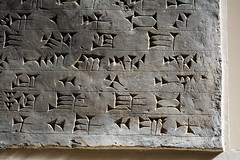
4864727066CuneiformOne of the first written languages known: A system of writing in which wedge-shaped symbols represented words or syllables. It originated in Mesopotamia and was used initially for Sumerian and Akkadian but later was adapted to represent other languages of western Asia.31
4864727067Democracya political system in which the supreme power lies in a body of citizens who can elect people to represent them32
4864727076Iron Agethe period following the Bronze Age; characterized by rapid spread of iron tools and weapons33
4864727080PyramidsHuge stone tombs with four triangle-shaped walls that met in a point on top34
4864727083Shang CivilizationChina's first dynasty almost 2000 BCE35
4864727089Zigguratsa temple or tomb of the ancient Assyrians, Sumerians, or Babylonians, having the form of a terraced pyramid of successively receding stories36
4864727094Trans Saharanroute across the sahara desert. Major trade route that traded for gold and salt, created caravan routes, economic benefit for controlling dessert, camels played a huge role in the trading37
4864727095MonsoonsMajor winds in the Indian Ocean that blew into India for half the year, and blew away from India for the other half. Helped facilitate trade in the Indian Ocean.38
4864727096Sumerianspeople who dominated Southern Mesopotamia through the end of the 3rd Millennium BCE. Responsible for the creation of irrigation technology, cuneiform, and religious conceptions.39
4864727097Indo-EuropeansGroups of people who came from the area north of the Caucasus mountains, which are between the Black and Caspian seas. Herded multiple animals. Rode into battle on chariots. The Indo-European language of Sanskrit, by the Aryans, are the basis of many languages today. Often accepted and adapted aspects of technology, religions, and social order of those with whom they came in contact.40
4864727098Before agriculture, men and women are believed to have a greater degree of equality. But after the rise of agriculture, most human societies became ________ as a result of greater male strength.Patriarchal41
4864727099caste systema set of rigid social categories that determined not only a person's occupation and economic potential, but also his or her position in society, there was virtually no social mobility42
4864727100Paleolithic(Old Stone Age) a long period of human development before the development of agriculture43
4864727101CarthageThis city has existed for nearly 3,000 years, developing from a Phoenician colony of the 1st millennium BC into the capital of the Carthaginian Empire. Controlled commerce in the Mediterranean prior to the rise of Roman Power. The expanding Roman Republic took control of many of its outposts after the two Punic Wars.44

AP language Flashcards

Terms : Hide Images
2956295481dictionword choice0
2956297295didactica term used to describe fiction, nonfiction or poetry that teaches a specific lesson1
2956302412ellipsis. . . (the cutting out of unneeded parts)2
2956307229inductionthe process of reasoning from premises that constitute good (opposite of deduction)3
2956313579inference/inferto draw a reasonable conclusion from information presented4
2956317241invectivean emotionally violent verbal denunciation or attack (swearing)5
2956324714imperative sentenceissuing a command (kick the ball now!)6
2956327761juxtapositionplacing things side by side for purpose of comparison7
2956330416metaphora figure os speech using implied comparison of seemingly unlike things8
2956335734passive voicethe subject of the sentence receives the action9
2956339022personathe fictional mask or narrator that tells a story10
2956342388personificationa type of figurative language which attributes human qualities to non human things11
2956349196predicate adjectiveadjective follows linking verb, describes first word12
2956353651predicate nominativenoun follows linking verb, renames the first word13
2956357685refutationwhen writer musters relevant opposing arguments14
3014154671abstract languagelanguage that describes ideas and qualities rather then people and things15
3014162506active voicethe subject of the sentence performes that action (jeff kicked the ball)16
3014166933ad hominem"against the man" when writer acts person rather then their work17
3014171673allegorya story in which characters, things, and events that represent qualities or concepts18
3014186711alliterationthe rep. of initial identical consonant sounds19
3014191655allusionreference to something with which the readers is supposed to be familiar with (allude to)20
3014198967ambiguityan event or situation that may be interpreted in more than one way21
3014205154analogya comparison to a directly parallel case22
3014211359anaphorarep. of a word, phase, or clause- debilrate23
3014216961anecdotea brief recounting of a relevant episode (short personal story)24
3014223282concrete languagelanguage that describes specific observable things, people or places rather then ideas of qualities25
3014235442connotationimplied meaning rather then dictionary meaning26
3014244654consonancerep. of constant sound27
3014246811deduction2 moving from general statements we accept as true28
3014253331denotationto signify or stand as a name for/ explicit meaning of a word29

AP English Language Mythological Allusions Flashcards

Allusions to learn

Terms : Hide Images
2276346658Achilles' heelMEANING: one spot that is most vulnerable; one weakness a person may have ORIGIN: Achilles was invulnerable except for his heel (Achilles tendon).0
2276346659AdonisMEANING: a handsome young man ORIGIN: Aphrodite loved him and he was handsome and young1
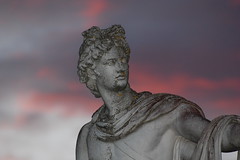
2276346660ApolloMEANING: a physically perfect male ORIGIN: the God of music and light; known for his physical beauty2
2276346661AtlanteanMEANING: strong like Atlas ORIGIN: Atlas carried the globe (world) on his shoulders3
2276346662AuroraMEANING: early morning or sunrise ORIGIN: from the Roman personification of Dawn or Eos4
2276346663BacchanalianMEANING: pertaining to a wild, drunken party or celebration ORIGIN: from the Roman god of wine, Bacchus5
2276346664GorgonMEANING: a very ugly or terrible person, especially a repulsive woman ORIGIN: Medusa, one of three sisters who have snakes for hair and faces so horrible that anyone who looked at them turned to stone6
2276346665HarpyMEANING: a predatory person or nagging woman ORIGIN: from harpy, a foul creature that was part woman, part bird7
2276346666HerculeanMEANING: very strong or of extraordinary power ORIGIN: from Hercules, Hera's glory8
2276346667MedeaMEANING: sorceress or enchantress ORIGIN: from Medea who helped Jason and the Argonauts capture the Golden Fleece; known for her revenge against Jason when he spurned her for the princess of Corinth and so murdered her own children by him.9
2276346668museMEANING: some creature of inspiration ORIGIN: the daughters of Mnemosyne and Zeus, divine singers that presided over thought in all its forms10
2276346669narcissismMEANING: being in love with our own self-image ORIGIN: named for Narcissus, a handsome young man who despised love. Echo, a nymph who was in love with him, was rejected and decreed, "Let he who loves not others, love himself." Hearing this, he fell in love with his image, while gazing in a pond, and drowned himself trying to capture it.11
2276346670OdysseyMEANING: a long journey ORIGIN: named for Odysseus, the character in The Odyssey, by Homer. Odysseus makes his long journey back from the Trojan War, encountering several obstacles along the way only to return and find his wife Penelope accepting suitors.12
2276346671OlympianMEANING: majestic in manner, superior to mundane affairs ORIGIN: any participant in the ancient or modern Olympic games; named after 12 gods that were supposed to reside on Mt. Olympus.13
2276346672Pandora's BoxMEANING: Something that opens the door for bad occurrences, opened by someone known for curiosity ORIGIN: named for Pandora who was the first mortal, sent by Zeus, to punish man for Prometheus' theft of fire. For her curiosity in opening the box, Zeus gave her all human ills in the world, leaving only hope at the bottom.14
2276346673PhoenixMEANING: a symbol of immortality or rebirth ORIGIN: named after the Egyptian Mythology phoenix, a long bird which lived in the Arabian desert and then consumed itself in fire, rising renewed from the flame to start another long life.15
2276346674PlutocracyMEANING: a government by the wealthy ORIGIN: named after Pluton, the "Rich Man," a ritual tile of Hades. He was originally the god of the fields because the ground was the source of all wealth, ores and jewels.16
2276346675PrometheanMEANING: life-bringing, creative, or courageously original ORIGIN: named after a Titan who brought man the use of fire which he had stolen from heaven for their benefit.17
2276346676ProteanMEANING: taking many forms, versatile ORIGIN: named after Proteus, a god of the sea, charged with tending the flocks of the sea creatures belonging to Poseidon. He had the ability to change himself into whatever form he desired, using this power particularly when he wanted to elude those asking him questions.18
2276346677psycheMEANING: the human soul, self, the mind ORIGIN: named after Psyche, a maiden who, after undergoing many hardships due to Aphrodite's jealousy, reunited with Cupid and was made immortal by Jupiter; she personifies the soul joined to the heart of love.19
2276346678PygmalionMEANING: someone (usually a male) who tries to fashion someone into the person he desires ORIGIN: from a myth adapted into a play by George Bernard Shaw; a woman-hating sculptor who makes a female figure of ivory who Aphrodite brings to life for him.20
2276346679SisypheanMEANING: greedy and avaricious ORIGIN: from the shrewd and greedy king of Corinth, Sisyphus, who was doomed forever in Hades to roll uphill a heavy stone, which always rolled down again.21
2276346680ZeusMEANING: a powerful man ORIGIN: king of the gods, ruler of Mt. Olympus, vengeful hurler of thunderbolts.22
2276346681Riddle of the SphinxMEANING: a riddle or question that is difficult to answer and without an answer, one may result in a terrible fate ORIGIN: A sphinx is a mythical creature with, as a minimum, the body of a lion and a human head. In Greek tradition, it has the haunches of a lion, the wings of a great bird, and the face of a woman. She is mythicised as treacherous and merciless. Those who cannot answer her riddle suffer a fate typical in such mythological stories, as they are killed and eaten by this ravenous monster.23
2276346682song of the sirensMEANING: listening to the call of something that could result in death or destruction ORIGIN: dangerous and beautiful creatures, portrayed as femme fatales who lured nearby sailors with their enchanting music and voices to shipwreck on the rocky coast of their island.24
2276346683Oedipus complexMEANING: a person's unconscious desire to mate with others who possess the traits of their opposite sex parent ORIGIN: in Greek mythology, Oedipus murders his father and marries his mother25

AP World History Flashcards

Terms : Hide Images
5878154616Paleolithic EraAn era of few humans who hunted and gathered. Made tools from stone and wood. Started religious practices. (c. 250,000 BCE -c. 8000 BCE)0
5878154617PastoralismNomadic people who here'd domesticated animals. Did not participate in agriculture.1
5878154618DomesticationThe taming of wild animals for food, protection, and help in the hunt.2
5878154619Neolithic RevolutionMore people. Begin to plant crops . Begin of end to the hunting and gathering. Did not occur globally all at once. Animals were domesticated, and disease spread. New technology. Specialization of labor. (c. 8000 BCE)3
5878154620Bronze AgeEnd of the Neolithic Age humans began to use metals to make tools and weapons4
5878154621MesopotamiaBetween the Tigris and Euphrates rivers. Religious buildings built here were called Ziggurats. Among first cities. Epic of Gilgamesh. Cuneiform used.5
5878154622Fertile CrescentAnother name for Mesopotamia, one of the hearths of civilization6
5878154623Shang DynastyFirst civilization in East China. Between Yellow and Yangtze Rivers. Brought writing on oracle bones and bronze. (1766-1122 BCE)7
5878154624Zhou DynastyFollowed Shang Dynasty. East China between Yellow and Yangtze rivers. Brought Mandate of Heaven and iron. (1122-256 BCE)8
5878154625Mohenjo-DaroLarge settlement in the Indus River valley. (c. 2500 BCE) ritual and religious sacrifice9
5878154626Olmec(c. 1200 BCE). Along the Gulf of Mexico. Brought mound building, artistic styles, urban planning, a game played with a rubber ball, ritual sacrifices and bloodletting by rulers.10
5878154627ZigguratsLarge religious temples in Mesopotamia used to preform rituals11
5878154628CuneiformFirst form of writing originating with the Sumerians of Mesopotamia.12
5878154629HieroglyphicsForm of writing used by Egyptians. Pictures.13
5878154630QuipoUsed by the Inca. Counting device. Strings with knots used to record things like accounting.14
5878154631Hammurabis CodeBabylonian empire. Set of laws and rules for society and punishments that were very strict. Laws on social hierarchy, money, etc.15
5878154632HebrewsEarly Jews. Kept in captivity by Babylonian empire. Instituted by Abraham. Lived by Israel.16
5878154633Hebrew ScripturesReligious texts of the Hebrew people17
5878154634SanskritA form of writing used in South Asia18
5878154635Vedic ReligionPreceded Hinduism. Religions that took its teaching from the Vedas19
5878154636PhoeniciansBrought the roots of the English alphabet. Southwest Asia.20
5878154637ZoroastrianismCentral Asia. Monotheist religion.21
5878154638PatriarchyThe idea that women are lesser than and in submission to men22
5878154639HittitesMigrated from Mesopotamia. Masters of metallurgy. In modern day Turkey23
5878154640Mandate of HeavenIn ancient China, it was a belief that rulers were chosen to rule or fall by the gods.24
5878154641Aryan MigrationsFrom present day Turkey to everywhere else. Brought Hinduism to India25
5878154642Bantu MigrationNeolithic people. From Cameroon to subsanaran Africa. They influenced the Bantu language, shared agricultural knowledge, and mastered metallurgy, and where monotheistic26
5878154643Book of the deadFrom Egypt. Sought to explain the destiny of humans after this life ends.27
5878154644Oracle bonesBones of dead animals are carved and written on in hopes to communicate with the spiritual realm28
5878154645ShamanismThe belief that human spirit guides are contacts between this world and the spiritual world29
5878154646AnimismBelief that the natural world itself has spiritual powers.30
5878154647Ancestor VenerationBelief that descended ancestors continue to live on, and thus those living must honor them.31
5878154648Norte ChicoSmaller than those of Mesopotamia. Economy based on fishing industry. Unusually self contained.32
5878154649Caste systemSocially classified people in Southern Asia. Especially encouraged by Hinduism.33
5878154650ReincarnationThe belief that you were reborn again and again. What life you were placed in was based on your past kharma because of dharma34
5878154651Ritual purityMarrying and speaking to only people in you caste to keep the castes the same35
5878154652BuddhismBegan c. 500 BCE. Founded by Buddha. Stated that all could reach nirvana. Main teachings are found in the four bible truths and the eight-fold path36
5878154653MissionariesPeople who traveled and spread their religion at the same time.37
5878154654MerchantsPeople who sell things as they are traded38
5878154655DaoismDeveloped c. 500 CE. East Asia. Taught that there were close connections between humans and nature. Deep respect for ancestors. Proper balance in life. Encouraged people to look away from human creations and into nature39
5878154656ConfucianismStarted by Confucius. Included: Filial Piety, created moral code for family and gender roles, political governance, and patriarchy40
5878154657Filial pietyUtmost respect for parents and obedience to those in political control41
5878154658MonasticismA practice in which one renounces world pursuit ps to devote themselves to god and spiritual work42
5878154659JesusGod of Christianity.43
5878154660Apostles/DisciplesFollowers of Jesus44
5878154661Athenian democracyFree males over 18 were citizens, all citizens voted on every issue (direct democracy), council members appointed.45
5878154662Greek philosophersAristotle, Sócrates, Plato emphasized absolute truth and reason46
5878154663Hellenistic EraBlend of Greek and Persian culture. Emotional and dramatic. Brought by Alexander that great.47
5878154664Alexander the GreatConquered Persia, Greek, (c. 333 BCE) brought Hellenism, spread Greek cultures by spreading his empire48
5878154665Persian EmpireNoteworthy for their size and organization. Centered in the Middle East. Used satraps. Worlds first highway system. (c. 550BCE-330BCE)49
5878154666SatrapiesRulers of regional provinces that reported back to the king50
5878154667Qanat systemPersian empire, water systems that channel waters down the mountains.51
5878154668Twelve tablesEarliest roman law binding patricians and plebeians.52
5878154669Pax romanaPeaceful time in Rome when everything flourished (c.27BCE-180CE)53
5878154670Shi HuangdiQin Dynasty. Strong Army bc of iron. Built canals, standardized language, built the Great Wall of China.54
5878154671Han Empire(c.206-BCE-220CE) East Asia. Began building the Great Wall. Began canal digging projects.55
5878154672Mauryan empire(c.321-185BCE) Ruler was Ashoka. Brought Buddhism.56
5878154673AshokaSouth Asia. Established bureaucracy and law codes. Brought Buddhism. Unified India.57
5878154674Ashokas pillarsLaw code by Ashoka58
5878154675TeotihuacanCity-states that the mayans traded with59
5878154676Mayan city statesMade complex math calculations, studied the stars, and developed a writing system. In Mesoamerica. Built religious temples called Ziggurats. Human Sacrifice. (c. 100-900 CE)60
5878154677Silk roadsRoads that connected Europe and Asia that were used as trade routes. Named after a pricey item called silk.61
5878154678Lateen sails/dhow shipsShip technology that was used in Indian Ocean trade62
5878154679Ghana and maliMajor cities of commerce and culture in West Africa63
5878154680TimbuktuCity to where Islam diffused. Became a big center of trade64
5878154681CaravanseraiUsed camels to transport goods across the Saharan Desert65
5878154682Trans-Saharan tradeTrade routes through Africa where good like gold, salt and ivory were traded from the Interior of Africa66
5878154683Mansa musaKing that brought Islam to West Africa67
5878154684BerbersMines salt from the interior of Africa to trade68
5878154685Iban battutaTraveler from Morocco. Wrote about his travels that started with pilgrimages to Mecca69
5878154686Swahili civilizationLinked goods from interior of Africa to Indian Ocean trade and the Middle East. Not governed by a country, made rules based on trading.70
5878154687BushidoCode of conduct for samurai71
5878154689Silla DynastyKorean Dynasty. Temporarily associated with China and Chinese culture.72
5878154690Song Dynasty(c. 960-1279) East Asia. Followed the Tang Dynasty. Represented China's golden age. Neoconfucianism and footbinding. Reduction of women's roles73
5878154691Tang Dynasty(c. 618-907) East Asia. Represented chinas golden age. Capital was Chang'an. Confucianism. Highest population of the time.74
5878154692HangzhouCapital in China during the golden age75
5878154693Tribute systemChina controlled neighboring lands and made them present gifts and submit to their authority.76
5878154694Grand canalConnected new urban centers and provided transportation for goods.77
5878154695NeoconfucianismAdapted the traditional, orderly patriarchal rules from its originator with influences from Buddhism and Daoism.78
5878154696FootbindingGirls feet were folded in half, bones were broken, and feet wrapped to create a small foot, seen as attractive. Made it difficult for women to walk forcing them into submission79
5878154697XiongnuNomads that exchanged cultural ideas with China.80
5878154698Marco poloTraveler from Venice that wrote about his travels81
5878154699Indian Ocean tradeTrade routes in the Indian Ocean where common goods like grain and timber could be traded in bulk. Used predictable monsoon winds to create trading seasons82
5878154700Byzantine empireEaster portion of the Roman Empire. Capital city was Constantinople. Fell to the Ottomans.83
5878154701Eastern orthodoxBranch of Christianity. Developed on the eastern side of the Roman Empire. Eventually separated to dominate Eastern Europe84
5878154702Roman CatholicWestern European branch of christianity. Slowly defined itself from Eastern Orthodox85
5878154703CrusadesReligious wars by Europeans in the Byzantine empire to capture Jerusalem from Islamic rule.86
5878154704FeudalismPolitical system based on holding land. Form of social hierarchy87
5878154705SamuraiJapanese soldiers88
5878154706ManoralismFeudalistic. A lord of a manor would have people work on his land in exchange for food and a place to stay.89
5878154707Hanseatic league/guildsOrganization of cities in northern Germany and southern Scandinavia for the purpose of encouraging trade and other commercial activity90
5878154708VikingsSkilled sailors who raided and pillaged many coasts along European borders. Also traded with Northern Europe and the Mediterranean. Independent farmers. Ruled by chiefs91
5878154709Holy roman empireFounded by Otto, the Germanic nomadic people settled and called themselves this after their success92
5878154710Bubonic plagueBad sickness that killed 1/3 of Europe's population. Also called the back death93
5878154711IconoclasmDeliberate destruction within a culture. Destroys religious icons, symbols, monuments. Usually for religious or political movements.94
5878154712ConstantineRoman emperor from 306-337 CE. Made Christianity the religion of Rome95
5878154713Abbasid caliphate(c. 750CE-1250CE) Centered in Baghdad. In a time seen as the Islamic Golden Age. Participated a great deal in cultural borrowing.96
5878154714Bedouin arabsNomads in the Arabian peninsula. Before Islam took off, they were decentralized and polytheistic97
5878154715MeccaHoly city to where the pilgrimage is made, has the Kaaba98
5878154727AstrolabeA device used when sailing. Brought by China. Helped in Indian Ocean trade new technology that helped sailors know their position when sailing.99
5878154728IslamA religion from the Middle East dedicated to praising Allah and living by the Quran.100
5878154729Sharia lawLaw inspired by the Quran that was adopted by all governments in the Islamic state101
5878154730SikhismBlend of Islam with Indian traditions102
5878154731Sunni/shiaTwo branches for Islam. Sunnis believed that the leader should be elected. Shiite believed that leader should be a descendant of Muhammad103
5878154732SufisMissionaries of Islam. Believed in incorporation of nature.104
5878154733UmmaMuslim community of believers that transcends ethnicity105

AP WORLD HISTORY DATES Flashcards

Terms : Hide Images
5836033913476Fall of Rome0
5836033914550-610Grand Canal built in China1
5836033915610Mohammed receives revelations2
5836033916622Hijira3
58360339171096First Crusade4
58360339181100Invention of gunpowder5
58360339191260Kublai Khan conquers China6
58360339201324Mansa Musa pilgrimage7
58360339211350Plague strikes Europe8
58360339221405Zenghe Ho expeditions; Ming Dynasty9
58360339231453Fall of Constantinople by Ottomans; Italian Renaissance10
58360339241492Reconquista of Iberia; Columbus sails11
58360339251500-1600Commercial Revolution in Europe; 1600 Br. E. India Co.12
58360339261526-1757Mughal Empire13
58360339271517Martin Luther posts 95 theses14
58360339281545-1565Council of Trent - Catholic Reformation15
58360339291571Battle of Lepanto16
58360339301648Treaty of Westphalia ends the Thirty Year War17
58360339311640-1853Japanese Isolation18
58360339321690-1776Enlightenment - Locke to Adam Smith19
58360339331644Manchus (Qing) Dynasty20
58360339341763Treaty of Paris21
58360339351776Am. Revolution; Adam Smith 'Wealth of Nations'22
58360339361789French Revolution23
58360339371792Haitian Revolution24
58360339381848Communist Manifesto; Revolutions in Europe25
58360339391869Suez Canal built26

Pages

Subscribe to CourseNotes RSS

Need Help?

We hope your visit has been a productive one. If you're having any problems, or would like to give some feedback, we'd love to hear from you.

For general help, questions, and suggestions, try our dedicated support forums.

If you need to contact the Course-Notes.Org web experience team, please use our contact form.

Need Notes?

While we strive to provide the most comprehensive notes for as many high school textbooks as possible, there are certainly going to be some that we miss. Drop us a note and let us know which textbooks you need. Be sure to include which edition of the textbook you are using! If we see enough demand, we'll do whatever we can to get those notes up on the site for you!