AP Notes, Outlines, Study Guides, Vocabulary, Practice Exams and more!

AP Language Set E Flashcards

Terms : Hide Images
862553173POSTHUMOUSoccurring after a person's death0
862553174POSTULATEto assume without proof, or as self-evident1
862553175ICONOCLASTa person who attacks and seeks to overthrow popular ideas or institutions2
862553176ONUSa difficult obligation, task, burden, responsibility3
862553177DEPRECATEto verbally disapprove of4
862553178PEJORATIVEhaving a disparaging or belittling effect5
862553179IMMUTABLEunchangeable6
862553180OPULENTwealthy or affluent7
862553181PRECIPITOUSextremely or impassably steep8
862553182MAELSTROM1. a powerful or violent whirlpool 2. disordered state of affairs9
862553183RECAPITULATEsummarize briefly10
862553184CAPITULATEto surrender; to give up resistance11
862553185ACQUIESCEsubmit or comply silently or without protest12
862553186PREEMINENTsuperior; surpassing; above or before others13
862553187SARDONICmocking; cynical; sneering14
862553188PRETENTIOUSassumption of dignity or importance, usually when exaggerated or underserved15
862553189OSTENTATIOUSshowy in an attempt to impress others16
862553190PRESUMPTUOUSunwarrantedly or impertinently bold; forward17
862553191PROPENSITYa natural inclination or tendency18
862553192PENCHANTa strong inclination or tendency19

I for Isobel deeper meaning for quotes- Chapter 1- The Birthday Present Flashcards

Terms : Hide Images
5199018228No birthday presents this year - Mrs. Callaghan (3)Deliberate cruelty and injustice - the family are on summer holiday, so they obviously have some money, making their decision not to buy Isobel a present particularly unnecessary and nasty.0
5199023258Every year at this time she said this; every year Isobel chose not to believe it...experience told her there would be no present - Isobel (3)Isobel has been mistreated for many years1
5199027034Whenever she found a new argument against birthday presents for Isobel, a strange look of relief would appear on her face... (4)Mrs. Callaghan derives a perverse pleasure in making Isobel unhappy - Isobel refers to this very idea later on p. 35.2
5199029292Last year, she had disgraced the family, that was true...[Isobel was] not allowed to go out in case she disgraced the family again...(5)Isobel has been made to feel as though her pleasure is shameful, and that anything she enjoys is 'bad behaviour'. This haunts her throughout her life, but she finds new tolerance for the person she was on p.166.3
5199032780Her father said, sounding tired...her father was eating, paying no attention. (pp.6 and 12)Mr. Callaghan is worn by his own experiences with Mrs. Callaghan and no longer fights back. This is who Isobel will become if she cannot find a way to escape / rebel.4
5199036196She was by nature timid, anxious only to know what was required of her so as to keep out of trouble, but she didn't think she could do that. (6)Isobel is desperate to do the right thing but has been made to feel that no matter what she does, it is not good enough (because Mrs. Callaghan keeps changing what is acceptable). She longs for rules again on p.41 and realises, eventually, that there are no rules on p.172.5
5199041965...that was a step towards the kind of person she longed to be but did not have the words to describe - someone sage behind a wall of her own building. (6)This may be effective in childhood, but ultimately, Isobel's decision to protect herself behind these walls isolates her from others - it is not them who isolate her. In part, whether initially necessary or not, she causes her own unhappiness.6
5199048286The Adventures of Sherlock Holmes: A Case of Identity...'life is infinitely stranger than anything which the mind of man could invent'...Birthdays, injustices, parents all vanished...What a lucky thing that she had found this new place in time to spend the birthday there. (7)It is ironic that the title of the first book that offers Isobel comfort is about identity, yet in reading, Isobel both finds and loses her own ('the birthday', not her birthday or my birthday). In this book, Isobel's 'strangeness' is 'normal' and thus she feels as though she belongs in the world of books - the pleasure counteracts the pain of real life.7
5199052427Caroline and Joanne Mansell would come asking her to play with them, or Margaret would want her to go for a swim...After tea she had to play Snap with Margaret and the Mansell girls while she thought about Holmes and Watson and longed to go to bed and read. (9)This shows that there are people around Isobel who want to include her in the social world, but she chooses to isolate herself from them. Margaret even lets Isobel keep the light on later one night (p.8), but Isobel, as she does throughout her life, does not acknowledge this support. Isobel is, to some extent, responsible for her own suffering.8
5199057300'Besides,' went on Miss Halwood, 'it would be a shame to check her when she is so advanced. I only wish some of my pupils read so well...remarkable advanced for her age.' (12)Again, Miss Halwood is another advocate for Isobel. This also gives Isobel motivation to keep reading as it not only offers her escape, but also praise.9
5199067916Isobel was living in two worlds. Miss Halwood's, where she belonged and things were solid and predictable, and the other one, where she was exulting at making her mother uncomfortable...Meanwhile there was the world of Sherlock Holmes, which was better than both of them. (13)This reinforces Isobel's psychological motivation for reading - she is praised and has self-esteem, and it also allows her some power over her mother. It is interesting that she only identifies as living in two worlds when there are actually three (1. Where she belongs 2. Reality 3. Books) and already, her preference for books over reality is obvious.10
5199072171'I want you to go down to the shop and buy me a small writing pad...You may keep the change because it is your birthday.' He handed her the kack-coloured insult...You couldn't make yourself safe, no matter how you tried. They could always surprise you. She wanted to hurl the coin into the water but she knew she mustn't express any feeling at all...As for the repulsive half-penny, she wanted to do something wicked and outrageous with it, but she lacked knowledge of the suitable curse. (pp.13-14)This establishes a metaphor that extends throughout the novel. It is ironic that her mother destroys Isobel's identity with the very object that would define her - a writing pad. Isobel now associates the writing pad (and everything it offers) with vulnerability and suffering, rather than potential and creativity. Rather than feeling valued when finally receiving a present, the half-penny represents Isobel's self-worth and her mother's deliberate cruelty, and reinforces Isobel's decision to escape the pain of the real world by reading. The writing pad metaphor is explored again on p.178.11
5199078162A harsh loud voice came out of her mouth, saying 'Is that thing mine?' (14)Isobel appears ungrateful but her response highlights the treatment she has received in the past, thinking only to label the gift as a 'thing' that does not belong to her.12
5199084989It was a present for a real girl. (15)This suggests that Isobel has not previously existed - the gift has brought her to life (literary allusion to Pinocchio?)13
5199089605She lifted it out of the box, set it on the lid and read it like a book while she ate her lunch. (15)Isobel now 'reads' life, she does not experience it.14
5199092194There was a disturbance...all the grown-ups were turning on her mother the same glare of indignation, except Mr. Mansell, who was looking at Isobel herself with a bright, soft look that puzzled her, and her pale father, who was going steadily on with his task of cutting, chewing and swallowing...Isobel felt an ache of sympathy, knowing how it felt to be the last chosen, or even left out of the game. (16)Isobel does not hate her mother, and at this point, is able to feel some connection to her in that they are both 'different'. As readers, we can see that Mrs. Callaghan obviously has her own demons, although Isobel is not able to properly comprehend the difference between her mother's abusive behaviour and the nurturing qualities of the other adults (who's looks of concern puzzle her). She does not hate her mother but also does not understand the extent of her abuse and the impact it will have on her.15
5199098657...retribution was coming, as her mother advanced with set face and luminous glare and began to slap her... 'Don't you dare cry. Ungrateful little bitch...You little swine, thankless little swine, you couldn't say thank you, couldn't even say thank you.' (16)Obviously, Mrs. Callaghan's abuse is awful and demonstrates the physical assault to which Isobel is subjected (not just verbal); however, the fact that Isobel did not say thank you to Mr. Mansell is again evidence that she is not able (or willing) to acknowledge the support of those around her.16
5199101549There was not much to cry about, for her mother's intentions were far more violent than her blows. Her hands flapped weakly as if she was fighting against a cage of air. (16)Her mother's intentions are to make Isobel feel worthless ('swine', 'bitch', 'idiot') and it shows both the verbal and physical abuse Isobel endures. Her blows are weak though, suggesting that her abuse is in response to her own embarrassment.17
5199115423...you bring disgrace on us wherever we go. Words are wasted on you, gawping there like an idiot.' (pp.16-17)Ironic as words actually define Isobel. This establishes Isobel's lack of self-awareness, believing that perhaps her own words, as would be used to be a writer, are insufficient and 'wasted'. This corresponds with the idea that anything she finds pleasurable is shameful. In saying this, Mrs. Callaghan has taken Isobel's identity and make her words / love of reading seem worthless, therefore, the chapter is about more than a lack of birthday present - that is not the worst thing that happens to Isobel in her childhood.18
5199119581'Give me that, you don't deserve to have it. Come on, give it to me.' Why hadn't she said them? Could it be that there were things her mother couldn't do? (17)Isobel realises that the brooch gives her some power over her mother - she cannot take it, because the other adults would know - and thus finding ways to gain control over Mrs. Callaghan is something for which Isobel constantly strives (reading, brooch, grace etc.) It is therefore confronting for Isobel when Mrs. Callaghan dies, because it does not set her free as she assumed it would.19
5199122487It was hers now, all right. She went and looked at it in the glass and stood admiring it. In one way or another, she would be wearing it all her life. (17)This can be interpreted in two ways: 1. Isobel triumphed over her mother and in a small way, she could wear this 'badge of honour' throughout her life to remind her that power over Mrs. Callaghan (and other obstacles in her life) is possible. 2. Isobel is 'scarred' and cannot enjoy the pleasures in her life because they are always connected to pain, suffering and inadequacy.20

Psychology Flashcards

Terms : Hide Images
5465174077StructuralismAn early school of psychology that used introspection to explore the structural elements of the human mind.0
5465174078Introspectionthe examination or observation of one's own mental and emotional processes.1
5465174079FunctionalismA school of psychology that focused on how our mental and behavioral processes function-how they enable us to adapt, survive, and flourish.2
5465174080BehaviorismThe view that psychology (1) should be an objective science that (2) studies behavior without reference to mental processes. Most research psychologists today agree with (1) but not with (2)3
5465174081Humanistic PsychologyHistorically significant perspective that emphasized the growth potential of healthy people and the individuals potential for personal growth.4
5465174082Cognitive NeuroscienceThe inter-disciplinary study of the brain activity linked with cognition (including perception,thinking,memory,and language)5
5465174083Cognitionthe mental action or process of acquiring knowledge and understanding through thought, experience, and the senses.6
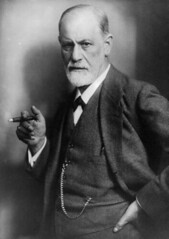
5465174084Sigmund FreudThe controversial ideas of this framed personality theorist and therapist have influenced humanity self-understanding.7
5465174085Wilhelm WundtWundt established the first psychology laboratory at the university of Leipzig, Germany.8
5465174086Edward Bradford TitchenerTitchener used introspection to search for the minds structural elements.9
5465174087William James and Mary Whiton CalkinsJames, legendary teacher-writer, mentioned Calkins, who became a pioneering memory researcher and the first woman to be president of the American Psychological Association.10
5465174088Margaret Floy WashburnThe first woman to receive a psychology Ph.D, Washburn synthesized animal behavior research in The Animal Mind.11
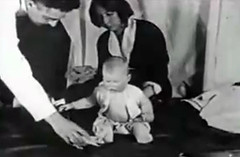
5465174089John B. Watson and Rosalie RaynerWorking with Rayner, Watson championed psychology as the science of behavior and demonstrated conditioned responses on a baby who became famous as "Little Albert"12
5465174090Conditioned Responseis a behavior that does not come naturally, but must be learned by the individual by pairing a neutral stimulus with a potent stimulus.13
5465174091Neutral Stimulusis a stimulus which initially produces no specific response other than focusing attention. In classical conditioning, when used together with an unconditioned stimulus, the neutral stimulus becomes a conditioned stimulus.14
5465174092Potent stimulussomething that incites to action or exertion or quickens action, feeling, thought, etc.: The approval of others is a potent stimulus.15
5465174093PsychologyThe science of behavior and mental processes.16
5465174094Nature-Nurture issueThe longstanding controversy over the relative contributions that genes and experience make to the development of psychological traits and behaviors. Today's science sees traits and behaviors arising from the interaction of nature and nurture.17
5465174095Natural SelectionThe principle that among the range of inherited trait variations, those contributing to reproduction and survival will most likely be passed on to succeeding generations.18
5465174096B.F SkinnerA leading behaviorist, Skinner rejected introspection and studied how consequences shape behavior.19
5465174097Charles DarwinDarwin argued that natural selection shapes behaviors as well as bodies.20
5465174098NeuroscienceHow the body and brain enable emotions, memories, and sensory experiences.21
5465174099EvolutionaryHow the natural selection of traits promoted the survival of genes.22
5465174100Behavior geneticsHow much of our genes and our environment influence our individual differences.23
5465174101PsychodynamicHow behavior springs from unconscious drives and conflicts.24
5465174102BehavioralHow we learn observable responses.25
5465174103Social-culturalHow behavior and thinking vary across situations and cultures.26
5465174104Levels of analysisThe differing complementary views, from biological to psychological to social-cultural,for analyzing any given situation.27
5465174105Biopsychosogical approachAn integrated approach that incorporates biological,psychological, and social-cultural levels of analysis.28
5465174106Basic researchPure science that aims to increase the scientific knowledge base.29
5465174107Applied ResearchScientific study that aims to solve practical problems.30
5465174108Counseling PsychologyA branch of psychology that assits people with problems in living (school,work,or marriage) and in achieving greater well-being.31
5465174109PsychiatryA branch of medicine dealing with psychological disorders; practiced by physicians who sometimes provide medical treatments as well as psychological therapy.32
5465174110When and how did psychological science begin?Psychological science had its modern beginning with the first psychological laboratory, founded in 1879 by German philosopher and physiologist Wilhelm Wundt, and from later work of other scholars from several disciplines and many countries.33
5465174111How did psychology continue to develop from the 1920s through today?Having begun as a "science of mental life", psychology evolved in the 1920s into the "scientific study of observable behavior." After rediscovering the mind, psychology since the 1960s has been widely defined as the science of behavior and mental processes.34
5465174112What is psychology's historic big issue?Psychology's biggest and most enduring issue concerns the relative contributions and interplay between the influences of nature (genes) and nurture (all other influences from conception to death). Today's science emphasizes the interaction of genes and experiences in specific environment.35
5465174113Hindsight BiasThe tendency to believe, after learning an outcome, that one would have foreseen it. (Also known as the I-knew-It-all-along phenomenon.)36
5465174114Empirical Approachbased on evidence. Empirical data is produced by experiment and observation.37
5465174115Critical ThinkingThinking that does not blindly accept arguments and conclusions. Rather, it examines assumptions, discerns hidden values, evaluates evidence,and assesses conclusions.38
5465174116Operational definitionA statement of the procedures (operations) used to define research variables. For example, human intelligence may be operationally defined as what an intelligence test measures.39
5465174117Case studyAn observation technique in which one person is studied in depth in the hope of revealing universal principles.40
5465174118Random SampleA sample that fairly represents a population because each member has an equal chance of inclusion.41
5465174119Naturalistic ObservationObserving and recording behavior in naturally occurring situations without trying to manipulate and control the situation.42
5465174120Correlation CoefficientA statistical index of the relationship between two things (from -1 to +1).43
5465174121ScatterplotsA graphed cluster of dots, each of which represents the values of two variables. The slope of the points suggests the direction of the relationship between the two variables. The amount of scatter suggests the strength of the correlation.44
5465174122Variablenot consistent or having a fixed pattern; liable to change.45
5465174123Illusory correlationis the phenomenon of perceiving a relationship between variables (typically people, events, or behaviors) even when no such relationship exists.46
5465174124Double-blind procedureAn experimental procedure in which both of the research participants and the research staff are ignorant (blind) about whether the research participants have received the treatment or a placebo. Commonly used in drug-evaluation studies.47
5465174125Placeboa fake treatment, an inactive substance like sugar, distilled water, or saline solution -- can sometimes improve a patient's condition simply because the person has the expectation that it will be helpful.48
5465174126Experimental groupis the group in an experiment that receives the variable being tested. One variable is tested at a time. The experimental group is compared to a control group, which does not receive the test variable. In this way, experimental groups are used to find answers in an experiment.49
5465174127independent variableexperiment that is manipulated or changed. For example, in an experiment looking at the effects of studying on test scores, studying would be the independent variable.50
5465174128Control groupis composed of participants who do not receive the experimental treatment. When conducting an experiment, these people are randomly selected to be in this group. They also closely resemble the participants who are in the experimental group, or the individuals who receive the treatment.51
5465174129Dependent Variableis the variable that is being measured in an experiment. For example, in a study looking at how tutoring impacts test scores, the dependent variable would be the participants' test scores.52
5465174130MeanThe arithmetic average of a distribution, obtained by adding the scores and then dividing by the number of scores.53
5465174131MedianThe middle score in a distribution; half the scores are above it and half are below it.54
5465174132ModeThe frequently occurring scores in a distribution.55
5465174133RangeThe difference between the highest and lowest scores in a distribution.56
5465174134Standard DeviationA computer measure of how much scores vary around the mean score.57
5465174135Normal CurveA symmetrical, bell-shaped curve that describes the distribution of many types of data; most scores fall near the mean and fewer and fewer near the extremes.58
5465174136Statistical SignificanceA statistical statement of how likely it is that an obtained result occurred by chance.59
5465174137Neurona specialized cell transmitting nerve impulses; a nerve cell.60
5465174138Sensory NeuronsNeurons that carry incoming information from sensory receptors to the brain and spinal cord.61
5465174139Interneuronsa neuron that transmits impulses between other neurons, especially as part of a reflex arc.62
5465174140Dendritea short branched extension of a nerve cell, along which impulses received from other cells at synapses are transmitted to the cell body.63
5465174141Axonthe long threadlike part of a nerve cell along which impulses are conducted from the cell body to other cells.64
5465174142Myelina mixture of proteins and phospholipids forming a whitish insulating sheath around many nerve fibers, increasing the speed at which impulses are conducted.65
5465174143Action potentialthreshold in a neuron is the point of depolarization at which the neuron fires, transmitting information to another neuron. Psychologists use the concept of action potential threshold to explain how neurons send information to each other.66
5465174144ThresholdThe level of stimulation required to trigger a neural impulse.67
5465174145SynapseThe junction between the axon tip of the sending neuron and the dendrite or cell body of the receiving neuron. The tiny gap at this junction is called the synaptic gap or the synaptic cleft.68
5465174146Neurotransmittersis a chemical messenger that carries, boosts, and modulates signals between neurons and other cells in the body. In most cases, a neurotransmitter is released from the axon terminal after an action potential has reached the synapse.69
5465174147ReuptakeA neurotransmitters re-absorption by the sending neuron.70
5465174148Nervous systemthe network of nerve cells and fibers that transmits nerve impulses between parts of the body.71
5465174149Central Nervous Systemthe complex of nerve tissues that controls the activities of the body. In vertebrates it comprises the brain and spinal cord.72
5465174150Peripheral nervous systemthe nervous system outside the brain and spinal cord.73
5465174151Somatic Nervous Systemdeals with our voluntary control of muscles and our five senses.74
5465174152Autonomic Nervous Systemthe part of the nervous system responsible for control of the bodily functions not consciously directed, such as breathing, the heartbeat, and digestive processes.75
5465174153Sympathetic Nervous SystemThe division of the autonomic nervous system that arouses the body, mobilizing its energy in stressful situations.76
5465174154Parasympathetic Nervous systemThe division of the autonomic nervous system that calms the body, conserving its energy.77
5465174155AdrenalA pair of endocrine glands just above the kidneys.78
5465174156Pituitary glandthe major endocrine gland. A pea-sized body attached to the base of the brain, the pituitary is important in controlling growth and development and the functioning of the other endocrine glands.79
5465174157EndocrineThe body's "slow" chemical communication system; a set of glands that secrete hormones into the bloodstream.80
5465174158Lesiona region in an organ or tissue that has suffered damage through injury or disease, such as a wound, ulcer, abscess, tumor, etc.81
5465174159Electroencephalogram (EEG)is a recording of the electrical waves of activity that occur in the brain, and across its surface. Electrodes are placed on different areas of a person's scalp, filled with a conductive gel, and then plugged into a recording device.82
5465174160Positron emission tomographywhich is similar to the MRI, is a scanning method that enables psychologists and doctors to study the brain (or any other living tissue) without surgery. PET scans use radioactive glucose (instead of a strong magnetic field) to help study activity and locate structures in the body.83
5465174161fMRI (functional MRI)is a functional neuroimaging procedure using MRI technology that measures brain activity by detecting changes associated with blood flow.84
5465174162MRI (magnetic resonance imaging)is a brain imaging technique that detects magnetic changes in the brain's blood flow patterns.85
5465174163Brainstemcontrols the flow of messages between the brain and the rest of the body, and it also controls basic body functions such as breathing, swallowing, heart rate, blood pressure, consciousness, and whether one is awake or sleepy. The brain stem consists of the midbrain, pons, and medulla oblongata.86
5465174164Medullais a section of the brain located in the brainstem which is responsible for automatic functions like breathing, blood pressure, circulation and heart functions, and digestion. It is also the area responsible for many reflexes like swallowing, vomiting, coughing, and sneezing.87
5465174165Reticular Formationis a portion of the brain that is located in the central core of the brain stem. It passes through the medulla, pons, and stops in the midbrain. Its functions can be classified into 4 categories: motor control, sensory control, visceral control, and control of consciousness. It controls arousal.88
5465174166Limbic Systema complex system of nerves and networks in the brain, involving several areas near the edge of the cortex concerned with instinct and mood. It controls the basic emotions (fear, pleasure, anger) and drives (hunger, sex, dominance, care of offspring).89
5465174167Amygdalaa roughly almond-shaped mass of gray matter inside each cerebral hemisphere, involved with the experiencing of emotions.90
5465174168HypothalamusThe area of the brain that secretes substances that influence pituitary and other gland function and is involved in the control of body temperature, hunger, thirst, and other processes that regulate body equilibrium.91
5465174169Cerebral Cortexis the most important part of our brain (at least in the field of psychology) because it is what makes us human. The cerebral cortex (sometimes referred to as called "gray matter", is actually densely packed neurons. Its the information processing center.92
5465174170Glial Cells (glia)surround neurons and provide support for and insulation between them. Glial cells are the most abundant cell types in the central nervous system. Types of glial cells include oligodendrocytes, astrocytes, ependymal cells, Schwann cells, microglia, and satellite cells.93
5465174171Frontal lobeseach of the paired lobes of the brain lying immediately behind the forehead, including areas concerned with behavior, learning, personality, and voluntary movement.94
5465174172Parientalportion of the cerebral cortex lying at the top of the head and toward the rear; receives sensory input for touch and body position.95
5465174173Occiputalportion of the cerebral cortex lying at the back of the head; includes areas that receive information from the visual fields.96
5465174174Temporal Lobeseach of the paired lobes of the brain lying beneath the temples, including areas concerned with the understanding of speech.97
5465174175Motor Cortexan area at the rear of the frontal lobes that controls voluntary movements.98
5465174176Sensory cortexis an umbrella term that encompasses all the senses: sight, sound, touch, taste, and smell.99
5465174177Association areasa region of the cortex of the brain that connects sensory and motor areas, and that is thought to be concerned with higher mental activities.100
5465174178PlasticityThe brains ability to change, especially during childhood, by reorganizing after damage or by building new pathways based on experience.101
5465174179Corpus Callosuma broad band of nerve fibers joining the two hemispheres of the brain.102
5465174180Split braina condition resulting from surgery that isolates the brains two hemispheres by cutting the fibers connecting them.103
5465174181Neurogensisthe formation of new neurons.104
5465174182Cognitive NeuroscienceThe interdisciplinary study of the brain activity linked with cognition (including perception,thinking,memory, and language).105
5465174183Dual Processingthe principle that information is often simultaneously processed on separate conscious and unconscious tracks.106
5465174184Selective attentionThe focusing of conscious awareness on a particular stimulus.107
5465174185Inattentional blindnessfailing to see visible objects when our attention is directed elsewhere.108
5465174186Change blindnessfailing to notice changes in the environment.109
5465174187Circadian RhythmOften referred to as the "body clock", the circadian rhythm is a 24-hour cycle that tells our bodies when to sleep and regulates many other physiological processes. This internal body clock is affected by environmental cues, like sunlight and temperature.110
5465174188REM sleepis the stage of sleep associated with quick, darting eye movements, the paralysis of major voluntary muscles, increased and irregular heart rate and breathing, and a high level of brain activity (comparable to brain activity when awake).111
5465174189Alpha wavesare a type of brain wave that occur when a person is relaxed, but still awake.112
5465174190Delta wavesthe large, slow brain waves associated with deep sleep.113
5465174191Narcolepsya condition characterized by an extreme tendency to fall asleep whenever in relaxing surroundings.114
5465174192Sleep apneais a serious sleep disorder that occurs when a person's breathing is interrupted during sleep. People with untreated sleep apnea stop breathing repeatedly during their sleep, sometimes hundreds of times. This means the brain -- and the rest of the body -- may not get enough oxygen.115
5465174193Manifest Contentaccording to Freud, the remembered story line of a dream (as distinct from its latent, or hidden content).116
5465174194Latent contentaccording to freud, the underlying meaning of a dream (from manifest content).117
5465174195Who wrote the textbook "Principles of Psychology"?William James118
5465174196What was William James' theory in psychology?Functionalism119
5465174197Functionalismwas a philosophy opposing the prevailing structuralism of psychology of the late 19th century. Edward Titchener, the main structuralist, gave psychology its first definition as a science of the study of mental experience, of consciousness, to be studied by trained introspection.120
5465174198What is the name of the psychological theory that allows people to adapt to their surroundings in the real world?Functionalism121
5465174199What is the theory in psychology that believes that "The whole is greater than the sum of its parts"?Gestalt Psychology122
5465174200Gestalt Psychologythe study of perception and behavior from the standpoint of an individual's response to configurational wholes with stress on the uniformity of psychological and physiological events and rejection of analysis into discrete events of stimulus, percept, and response.123
5465174201What theory is Gestalt Psychology a part of currently?Cognitive Psychology124
5465174202What does the theory of psychoanalysis focus on?The Unconcious125
5465174203According to psychoanalysis, when is the personality developed?Within the first 6 years of life126
5465174204What current theory of psychology was based off of psychoanalysis?Psychotherapy127
5465174205What was the study done under John Watson's watch that had to do with fear?Little Albert128
5465174206Who created the theory of behaviorism?John Watson129
5465174207What theory focuses on learned behaviors and was based on Pavlov's experiment?Behaviorism130
5465174208What was Edward Titchener's area of specialization?Structuralism131
5465174209What was William James's area of specialization?Functionalism132
5465174210What is the first criteria for critical thinking?There are very few truths that do not need to be tested.133
5465174211Which of the seven modern perspectives focuses on the way people act when they are alone vs when they're with family, friends, classmates, etc.?Sociocultural Perspective134
5465174212Which of the seven modern perspectives focuses on the part biological processes play on the mind?Biopsychological Perspective135
5465174213Which of the seven modern perspectives focuses on the biological bases for universal mental characteristics that all humans share?Evolutionary Perspective136
5465174214Which of the seven modern perspectives focuses on people's abilities to direct their own lives, have free will, and strive for self-actualization?Humanistic Perspective137
5465174215Which of the seven modern perspectives stemmed from Watson's behaviorism but was taken over by BF Skinner?Behavioral Perspective138
5465174216Which of the seven modern perspectives stemmed from Freud's psychoanalysis?Psychodynamic Perspective139
5465174217What main goal of psychology involves changing a behavior from an undesirable one to a desirable one?Control140
5465174218What are the four main goals of psychology?Description, Explanation, Prediction, and Control141
5465174219What does a double-blind experiment control?The Experimenter Effect142
5465174220What is the measure of the relationship between two variables?Correlation143
5465174221What are the strongest correlation coefficients you can have?1 and -1144
5465174222All-or-none responsea neuron's reaction of either firing with a full-strength response or not firing.145
5465174223social neuroscientistthese people study processes such as attachment and attitudes146
5465174224cognitive neuroscientistthese people explore biological foundations of consciousness, perception, memory, and language147
5465174225Voluntary Movementis the expression of thought through action. Virtually all areas of the central nervous system are involved in this process. The main flow of information may begin in cognitive cortical areas in the frontal lobe, or in sensory cortical areas in the occipital, parietal and temporal lobes.148
5465174226Absolute refractory periodThe period during which a neuron lies dormant after an action potential has been completed.149
5465174227Absolute thresholdThe minimum amount of stimulation needed for a person to detect the stimulus 50 percent of the time.150
5465174228AccommodationThe process by which the shape of an eye's lens adjusts to focus light from objects nearby or far away. Also: the modification of a schema as new information is incorporated.151
5465174229AcetylcholineA neurotransmitter involved in muscle movement, attention, arousal, memory, and emotion.152
5465174230Achievement motiveAn impulse to master challenges and reach a high standard of excellence.153
5465174231154

American Pageant 13th Edition Ch. 28 Flashcards

Terms : Hide Images
356226870The Populist party was made up of what kind of people?Farmers0
356226871The Progressive Party was made up of what kind of people?Middle-Class Urban Dwellers1
356226872Who created the income tax?Wilson2
356226873What was the purpose of the income tax?To compensate for low income.3
356226874How did TR respond to the mining strike?He threatened to send in troops to control the mines4
356226875What did the Federal Trade Commission do?It monitored business practices that might lead to monopoly5
356226876What did the book "The Jungle" lead to?The Meat Inspection Act6
356226877What were some of the planks of the Populist party?Shorter work hours; Better working conditions; Higher wages; Graduated Income Tax; Direct election of senators7
356226878What is the oldest type of city government?Mayor/ City Counsel8
356226879How did female progressive reformers justify their reformist political activities?They believed they were just an extension of women's roles as wives and mothers9
356226880What were the political roots of the Progressive party?Greenback Labor/ Populist10
356226881Progressives generally believe there was too much what?Social Injustice, Business Monopoly, and Political Corruption11
356226882What were political reforms sought by Progressives?Referendum, Women's Suffrage, Direct Election of Senators12
356226883What were the states where Progressivism gained great influence?California, Oregon, and Wisconsin13
356226884What were the two areas of reform where TR's progressivism made headway?Conservation and Consumer Legislation14
356226885What was the Triple Wall of Privilege?Trusts, Tariffs, and Banks15
356226886Who did Wilson's progressive policies NOT aid?the Blacks16
356226887What was the main goal of WCTU?Getting rid of alcohol17
356226888Who was Eugene Debs?A social candidate in the 1912 election18
356226889What was initiative?It allowed citizens to launch/ pass a bill19
356226890What did the Federal Reserve Act get rid of?Flexible Banking System20
356226891What did the Clayton AntiTrust Act do?It strengthened the Sherman AntiTrust Act21
356226892Who gave the "Cross of Gold" speech?William Jennings Bryan22
356226893Who promoted New Nationalism?Teddy Roosevelt23
356226894Who promoted New Freedom?Wilson24
356226895What were Muckrakers?Writers who dramatize the need to reform25
356226896What was the 17th Amendment?Allowed direct election of senators26
356226897Which Amendment granted women's suffrage?The 19th Amendment27
356226898Which amendment allowed graduated income tax?The 16th Amendment28
356226899What book did Upton Sinclair write?"The Jungle"29
356226900What was the result of the triangle shirtwaist fire?Restrictions of female employment in clothing factories and workers' compensation law30
356226901What did the 1903 Muller vs. Oregon case provide?Limited work hours for women31
356226902What did the Elkins Act do?Allowed government authority to set and limit shipping cost32
356226903What was "rational use"?It suggested that forests be preserved for public use33
356226904What did David G. Phillips target?US Senate34
356226905What did Ida Tarbell target?Standard Oil Company35
356226906What did Lincoln Steffens target?City Governments36
356226907What did Ray Stannard Baker target?Conditions of Blacks37
356226908What type of businesses did TR support?Powerful Corporations who did business fairly38
356226909What did Taft do in his administration?He brought Lawsuits against corporations (trustbuster)39
356226910Which president tried to lower tariffs on imported goods to benefit the workers?Wilson40
356226911Why did the Banking system need to be reformed?Because there was no central authority to supervise the banks41
356226912Was McKinley a Gold Bug?Yes42
356410606What was the animal that represented the Progressive party?The Bull Moose43
356419628What is referendum?Giving farmers the ability to reject objectionable laws44
356419629What was the Secret Ballot also called?The Australian Ballot45
356419630Who ran in the election of 1896?Bryan and McKinley46
356419631What sections of the United States did McKinley win in the election of 1896?East & Northeast (industry)47
356419632What sections of the United States did Bryan win in the election of 1896?West and South (agriculture)48
356419633Who organized the first national farm organization?Oliver Hudson Kelley49
356419634What was another name for the first national farm organization?Patrons of Husbandry50
356419635What party was McKinley in the election of 1896?Republican51
356419636What party was Bryan in the election of 1896?Democrat52
356419637What was the major issue in the election of 1896?Which metal would be the basis of the nation's monetary system53
356419638Who won the election of 1896?McKinley54
356419639What is recall?It allowed voters to hold an election remove an official before the term expires55
356428656What is populism?A movement of the people56
356428657Who did the populists support in the election of 1986?Bryan57
356447762What event led to the end of the Progressive Era?WW158

Unit 2 AP World History Flashcards

Terms : Hide Images
2124996446Warring States Time of disunity for China (403-221 B.C.E.); many independent states adopted Legalist philosophies as the basis for their rule. Legalism helped the State of Qin to gain control and unify China. Development of three significant schools of thought -Confucianism, Legalism, Daoism. This period is also referred to as the Hundred Schools of Thought.0
2124997696OlmecsOlmecs (means "rubber people") are named after trees from the region in which they flourished. Authoritarian rule led to the creation of extensive public work projects, including altars, temples, pyramids, and tombs. Famous sculpture: gigantic human heads.1
2124999145Mayan Civilization Society located in present-day southern Mexico, Guatemala, Belize, Honduras, and El Salvador; classical Maya ruled from c. 300-900 C.E. Terrace farming was developed to capture rainwater and silt to increase soil fertility and hence agricultural production: cotton, maize, cacao. Achievements: elaborate system of writing, accurate calendar (365.242 days), and the concept of zero. Solar year (365 days) set agricultural patterns, ritual year (260 days) set daily activities and divided the year into 13 months with 20 days each.2
2125002097Mayan Culture Built eighty large ceremonial centers, which included pyramids, palaces, and temples; large centers included Palenque, Chichén Itzá, and Tikal, the latter with a population of approximately 40,000 people and the Temple of the Jaguar. Approximately 800 C.E. people abandoned their cities, possibly as a result of civil war, internal divisions, invasions, or natural disasters.3
2125002976Teotihuacán City built in central Mexico because of the abundant supplies of fish; developed agriculture by 500 B.C.E., rapid expansion after 200 B.C.E. At height (approximately 400-600 C.E.) 200,000 people. Two most important monuments: colossal pyramids of the sun and the moon.4
2125004307Achaemenid Empire Included the Medes and the Persians, both people of sizable military power and equestrian skills, Cyrus, an Achaemenid (reigned 558-530 B.C.E.), founded Persian imperial empire - at height, it spread from India to the borders of Egypt. Darius (reigned 521-486 B.C.E.), younger kinsmen of Cyrus, extended the empire from the Indus River in the east to the Aegean Sea in the west, from Armenia in the north to the fist waterfall of the Nile River in the south. Darius was more important as an administrator than a conqueror because of the size of the empire he managed. He also established a new capital, Persepolis, which became the center of the Persian Empire.5
2125004796Achaemenid Administration Government relied on a balance between central administration and locally appointed governors. Darius divided the empire into twenty-three satrapies - administrative and taxation districts governed by satraps - in which he regularized tax levies and standardized laws (he did not push direct rule on the subjects). To ensure local provinces did not become too powerful, each satrapy was assigned a group of military officers and tax collectors who checked the satrap's power and independence; imperial spies, trained as watchdogs for the king, conducted surprise audits. Darius built extensive roads: Persian Royal Road (1,600 miles) -from Ephesus on the Aegean to Sardis in Anatolia to Susa in Iran-facilitated trade. Organized a courier service and built postal stations approximately every 25-30 miles the Royal Road.6
2125005150Persian Wars Fought between Greeks and Achaemenids (500-479 B.C.E.) - led to demise of the empire; began when Ionian Greeks cities revolted against their governors. Greeks believed the Persians were uncivilized. Herodotus (born c. 484 B.C.E.), the great source of knowledge of the history of the wars. Persian use if unlimited manpower and resources earned then the reputation as one of the greatest militaries in history. Delian League (led by Athens) formed to discourage future Persian aggression. Darius put down rebellions and reasserted Achaemenid power but ultimately lost to the Athenian army of 10,000 men at Battle of Marathon (490 B.C.E.).7
2125006557Society in Classical Persia In the cities the free classes include priests, priestesses, artisans, craftsmen, merchants, and low-ranking civil servants. Women worked in textile production and received rations of wine, beer, and sometimes meant for their labor. Slaves were acquired through one of two sources: prisoners of war or civilians who tried to rebel against the imperial government. Either way, slave status deprived individual of personal freedom.8
2125009279Government in Classical Persia Sophisticated government led to the development of a new class of educated bureaucrats who played an important role in the daily affairs of the empire. State owned slaves provided labor for large-scale construction projects: roads, irrigation systems, city walls, and palaces9
2125010032Economics of Classical Persia Agriculture was the foundation of the Persian economy-surpluses were necessary to support military forces, government administrators, and residents in the cities Empire controlled fertile land in Mesopotamia, Egypt, Anatolia, and northern India Imperial court consumed almost 800,000 liters of grain per year, in addition to vegetables, fruits, meat, poultry, fish, oil, beer, wine, and textiles Persian Royal Road and sea routes through the Red Sea, Persian Gulf, and Arabian Sea assisted in trade throughout the empire Markets in large cities, such as Babylon, also housed banks and companies that invested capital in commercial ventures10
2125015389Zoroastrianism A religion based on the teachings of Zarathustra, who left his family at the age of twenty in search of wisdom; after ten years he proclaimed that visions revealed to him the supreme god, who he called Ahura Mazda ("wise lord"); this supreme being had chosen him to be his prophet and spread his message Major belief: the material world is a blessing; teachings of Ahura Mazda allow enjoyment of everything the world has to offer (wealth, sexual pleasure, and social status)-but in moderation Influence of Zoroastrian religion can be found in Judaism and Christianity; for example, the concept of good and evil and the concept of Heaven and Hell as reward or punishment11
2125018130Confucius Lived in China during the Warring States period and sought to restore order to China A strong-willed man, he often disagreed with the Chinese government Left province of Lu in search of a chance at promotion, traveled for ten years; returned fruitless and died five years later An educator and a political adviser Students recorded his teachings in the Analects, which has had a large impact on Chinese government and culture Believed in five constant relationships-between ruler and subject, father and son, husband and wife, older brother and younger brother, and friend and friend. Each person in the relationship had a responsibility to the other; one was superior and the other inferior12
2125018571Confucianism One of the major philosophies that emerged from the Hundred Schools of Thought, it attempts to create social order through loyalty and respect Does not address philosophical or religious questions or the structure of the state. Just wanted to end the Warring States period by finding a balance The best way to promote good government is to hire people who are well-educated and conscientious-focused on the formation of Junzi ("superior individuals"); Junzi looks at public affairs from many different angles with unclouded judgment and, thereby, would be able to bring order and stability to society According to Confucius, Junzi possessed personal qualities such as ren, li, and xiao Ren- courteousness, respectfulness, diligence, loyalty; li-a sense of propriety, traditionally appropriate behavior; and xiao-filial piety, respect by children for parents and other elders Learning was important, but Confucius also stressed the importance of moral integrity and fair judgment13
2125026749Daoism Daoism came up with an alternative solution to end the Warring States period-contrary to Confucian beliefs, Daoists reflected on natural principles that govern the world to achieve harmony with nature Central concept; dao ("the way" or "the way of nature" or "the way of the cosmos")-like water, it is soft yet can also erode the strongest rocks Humans should stop trying to achieve personal goals and live very simply in order to achieve harmony with nature Wuwei: Important moral trait whereby people remove themselves from worldly affairs-translates in political affairs as "less is more" Ideal societal structure would consist of tiny, self-sufficient communities14
2125047362Legalism One of the major philosophies that emerged from the Hundred Schools of Thought during the Warring States period Based on the goal of expanding and strengthening the state at all costs-it is described as ruthless and efficient Strict laws with harsh punishments lessen the number and severity of crimes Notable people: Shang Yang (contributor to The Book of Lord Shang) and Han Feizi Government strength lies in its agriculture and military-therefore, these two areas demand the highest number of recruits; government should discourage other career paths (merchants, educators, poets, philosophers) Community has a collective responsibility for the law-people should watch each other closely Used by the Qin dynasty, led by Shi Huangdi, to end Warring States period15
2125048465Qin Dynasty Used Legalist philosophy to restore order and stability to China and end the Warring States period Gave peasants land rights to farm remote territories, a practice that weakened traditional social hierarchy Centralized bureaucracy ruled the state Qin empire expands, attacking one province at a time and unifying China Great achievements: standardized weights and measures, scriptwriting Short-lived because of strict laws and harsh punishments16
2125049433Shi HuangdiSelf-proclaimed "first emperor" of China-reigned fourteen years; established centralized rule through large-scale political organization Central bureaucracy-run fro capital at Xianyang-was divided into administrative provinces and districts, each headed by and officer appointed by the emperor To centralize power, disarmed local military forces; built roads to enhance and expedite communication and movement of armies; standardized laws, currencies, weights and measures, and Chinese script; and built defensive walls, including linking sections of the Great Wall Executed anyone who criticized his regime-burned 460 Confucian scholars alive for their critical comments Forced millions of laborers to work on public works projects, including palaces, roads, bridges, irrigation systems, defensive walls, and a tomb for himself17
2125054797Early Han Dynasty Claiming the "mandate of heaven," Liu Bang centralized rule using persistence and methodical planning; started the longest lasting Chinese dynasty-the Han (206 B.C.E.-220 C.E.) Emperors ruled from Chang'an, with its imperial palace, busy markets, and parks Han Wudi, the "martial emperor," ruled the Han from 141 to 87 B.E.C. with two goals: to centralize governmental power and to expand the empire. He used Legalist principles as the guidelines for his government Wudi appointed imperial officers in provinces to enforce laws and levy taxes on agriculture, trade, and craft industries Demand for Chinese silk in India, Persia, Mesopotamia, and the Roman Empire led to development of trade routes (the silk roads) Wudi exercised tremendous government control over the building of roads and canals to increase trade and communication. Government also controlled production of essential goods: iron, salt, and liquor18
2125056723Emperor Wudi Han emperor who had a problem recruiting qualified people for government posts because there was no uniform system of public education Established an imperial university to educate government officials in 124 B.C.E Although the government was based on Legalists principles, the university focused its instruction on Confucianism out of necessity-it was the only Chinese belief system developed enough to establish a curriculum Enrollment began at 3,000 students and rode to more than 30,000 students during the later Han Dynasty Policy of imperial expansion led to invasions of northern Vietnam and Korea (which then had to pay tribute to Han China) and battles with the Xiongnu, nomads from Asia The Han conquered everyone they challenged19
2125057500Later Han Dynasty Separated from the former Han, as a result of a temporary loss of power from 9 to 23 C.E., the later Han lasted from 25 to 220 C.E. Moved capital from Chang'an east to Luoyang. Ignoring the problem of inequitable land distribution led to increased banditry and rebellions led by disgruntled peasants. In the Yellow Turban uprising (rebels wore yellow headgear), government used the military to suppress rebellions but the collective efforts of peasants weakened the Han dynasty- factions developed in courts that affected the central government. This internal weakness led to the downfall of the empire, which was divided into several large kingdoms.20
2125062276Fall of Han Dynasty Divisions within the ruling elite limited the effectiveness of the government, leading to its collapse. Issues: land distribution, private armies, unrest, and economic decline. Rise in epidemics in late 2ndand early 3rd centuries led to the Yellow Turban Rebellion (rebels' yellow turbans represented their peasants status and their ties to the earth). Dynasty formally ended in 220 C.E. Invasion led to the final fall of the dynasty21
2125068548Mauryan Dynasty Flourished during the late 320s B.C.E, when Chandragupta Maurya took over and laid the foundations for a centralized, unified government that included all of India from the Indus to the Ganges rivers. Ashoka (ruled 268-232 B.C.E) conquered the kingdom of Kalinga through bloody battles, uniting the entire subcontinent; better known as a governor than a conqueror. Ashoka built irrigation systems for agriculture, constructed roads for trade and travel, supported Buddhism, and encouraged religious tolerance. Ashoka's death led to decline of empire.22
2125071546Gupta Dynasty Chandra Gupta laid foundations for empire by making alliances with powerful families in the Ganges; he conquered many, while others chose to form tributary alliances with the Guptas. Government, both policy and administration, was left to the locals; Gupta did not impose uniform laws; brought stability and prosperity. Decline caused by invasions by the White Huns (nomadic people from central Asia)- dynasty continued in name only.23
2125074610Jainism Indian belief system popularized by Vardhamana Maharvira ('the great hero"). Disciples referred to Mahavira as Jina ("the conqueror") and called themselves Jains. Practiced ahmisa- nonviolence to living things or their souls (belief later impacted Hinduism and Buddhism). Extremists swept ground as they walked to avoid harming insects (souls). Not practical, but attractive- because if all living things possessed a soul, there should not be rigid social classes (belief especially popular among lower classes).24
2125078861Buddhism About 537 B.C.E Siddhartha Gautama, a Hindu of the Kshatriyan caste, left his family to live as a holy man. After meditating 49 days under the bo tree, said he understood the problem of suffering and how to eliminate it; became the Buddha ('the enlightened one"). Dharma is the principle of law that orders the universe according to the teachings and methods of the Buddha. Four Noble Truths: nothing is permanent; all of life involves suffering; desire causes suffering- eliminate desire and you will eliminate suffering. Follow the Eightfold Path, the fourth Noble Truth: right belief, right resolve, right speech, right behavior, right occupation, right effort, right contemplation, right meditation. Goal: to achieve Nirvana (a state of spiritual independence). Appealed to lower castes because it de-emphasized class distinctions. Cultural diffusion responsible for spread of ideas- in Japan developed into Zen Buddhism; in China, Mahayan Buddhism; in northern India, Theravedic Buddhism.25
2125080730Hinduism Worlds' oldest organized religion, originated in India. Spoke to needs and interests of average people. Bhagavad Gita ('Song of the Lord"), a brief poem composed by many unidentified authors, outlines what Hinduism expects of individuals and the path to salvation. Salvation is achieved by individuals who meet responsibilities by obeying laws of their caste, not material success. Hindu ethics: dharma- righteousness (obey religious and moral laws), artha-wealth (to uphold dharma and provide for family and society), kama- desire (take pleasure in social, physical, and sexual activities), moksha- salvation of the soul. A person in reincarnated on the basis of behavior into one of four castes (and later a fifth, untouchables). Limited spread beyond India.26
2125082624Mycenaeans Language combined Greek and Minoan. Built impressive stone fortresses and palaces. Palaces dominated Mycenaean cities, as was the case in Minoan Crete (Palace of Knossos); however, their design tended to be more centripetal and individualistic than those of the Minoans which were more centrifugal. By 1200 B.C.E., the great citadels possessed impressive fortifications. Most likely a king ruled over a small area from each palace. Their conflict with Troy was presented by Homer in the Iliad.27
2125084008Polis A Greek word meaning a city, city-states, and body of citizens. Attracted large populations because it offered safety; became center of trade. Levied taxes; took farming surplus from countryside to feed inhabitants. Political models could include, but were not limited to, monarchies and tyrannical rulers.28
2125084651Sparta A city-state in classical Greece- conquered neighbors and forced them into servitude. Helots-bound to land; role-to provide food; outnumbered Spartans ten to one. Spartans were characteristically simple, frugal, and austere. Known for military talent; from age seven all boys lived in barracks and trained; served in military at age 20. Women exercised regularly- physical fitness was associated with bearing strong children.29
2125087331Athens A city-state in classical Greece whose government was based on democratic principles. However, only free male adults could participate in government. Debt forced many poor farmers into slavery; gap between rich and poor widened. Aristocrat Solon became a great mediator between the classes: aristocrats kept land, canceled debts, and forbade debt slavery for poor. Pericles encouraged democracy, public works, and the development of science, philosophy, poetry, and the arts. World's first democracy (women and slaves, however, could not vote- only approximately 40,000 of the 450,000 inhabitants of the polis were eligible to vote); had a great impact on the development of later governments.30
2125090690Macedonian Empire Supplied Greeks with grain, timber, and natural resources in exchange for olives, wine, and finished products. Alexander led an army of approximately 37,000 to invade the Persian Empire. By 331 B.C.E, Alexander controlled Ionia, Anatolia, Syria, Palestine, Egypt, and Mesopotamia. When Alexander died, the empire was divided among his top three generals.31
2125091792Hellenistic Empire The period during the reign of Alexander the Great and the subsequent division into three large states is known as the Hellenistic age (after Greece, or Hellas). Greek culture spread to areas from Greece to India and affected them politically, socially, and economically. Egypt (under Ptolemy), the wealthiest of the colonies, maintained organized agriculture (irrigation0, industry, tax collection. Capital of empire, Alexandria, with a pivotal location on the Mediterranean, could harbor 1,200 ships; home of world's largest library. The Hellenistic Empire was built on the former Persian Empire (led by Seleucus), impressive because of its size - reaching to the Indus River -its common law and trade practices, and its culture.32
2125093159Olympics Most famous of Pan-Hellenic festivals. Trade between Greek poleis (cities; see card #58) fostered a stronger sense of community and shared (gods, language, and games). Different areas, including Crete, claimed they were responsible for the inception of the games, but the first written records of the games were from 776 B.C.E. All parts of Greece sent their best athletes to compete in contests of speed, strength, skill. Events included foot races, long jump, boxing, wrestling, javelin tossing, and discus throwing; they took place every four years for more than 100 years and then disappeared. Winners received olive wreaths at the games and hero status at home.33
2125099070Greek Philosophy: Socrates Socrates developed a method of questioning aimed at exposing ethic and morality through a series of increasingly difficulty questions; his student Plato recorded his thoughts in a series of writings called dialogues. Socrates suggested that honor was more important than wealth and fame and stressed the importance of personal integrity: "The unexamined life is not worth living." Charged with encouraging immorality, Socrates was tried by Athenian citizens in 399 B.C.E. He was sentenced to death and chose to drink hemlock, a poison.34
2125101356Greek Philosophy: Plato Plato believed that everything was based on ideal forms, or ideas. In reality, definitions were not absolute because virtue, honesty, courage, truth, and beauty all meant different things in different situations. Had an impact on the development of the Republic of Rome. Aristotle, a disciple of Plate (teacher of Aristotle), rejected the theory of forms and ideas; he believed people could depend on their senses and the reason to answer the mysteries of the world. Taught Alexander the Great, a Macedon.35
2125103521Hellenistic Philosophies (I) Epicureans suggested that individual needs could be met through reflection. Epicureans said pleasure is greatest good; they defined as an inner peace that could protect them from the world's pressures.36
2125106414Hellenistis Philosophies (II) Skeptics doubted the existence of absolute certain knowledge and so did not espouse strong political, social, or moral beliefs. They taught that people should abandon their search for certain answers and find an inner peace. Stoics believed human beings were part of a universal family; people must help each other through difficulties and deal with stress and anxiety by finding inner peace.37
2125107446Roman Republic Republic- a form of government whose head of state is usually a president In 509 B.C.E, an aristocratic republic replaced the Roman monarchy; built Roman forum, a political and civic center housing temples and public buildings for government business A republican constitution gave executive (civil and military) duties and power to two consuls elected for one-year terms by an assembly dominated by the aristocracy (patricians); a senate dominated the decision-making process Tension developed as interests of the lower class (plebeians) were not represented. This led to the development of tribunes (consisting of officials elected by plebeians), which had the right to intervene in all political affairs and veto unjust laws. During time of civil or military crisis, a dictator was appointed with absolute power for a six-month term to restore peace and stability- elongating the viability of the republic38
2125110041Rome: From Republic to Empire 87 B.C.E: invasion and subsequent occupation of Rome led by Marius until his death Sulla took over, labeling state enemies and encouraging slaughter ; civil war and a reign of terror ensued, which lasted five years and resulted in over 10,000 deaths Sulla died in 78 BCE and left as his legacy a conservative legislature that weakened the power of the lower classes and returned power to the wealthy Latifunda- land conquered by the Roman Empire, controlled by wealthy elites, and organized into plantations- increased tensions between rich and poor39
2125111064Julius Caesar Named himself dictator of the Roman Empire (for life, not six months as was the past precedent) Sought to build a sense of community in Rome after civil war; spent large sums of money on gladiators, huge armies, and large-scale building projects employed Roman citizens; extended Roman citizenship to outreaches of empire (Gaul); and consolidated government Aristocratic conspirators, upset by loss of power and wealth, plotted to execute Caesar in 44 BCE in an attempt to restore the republic. Thirteen years of civil conflict followed Octavian (later called Augustus) defeated Mark Anthony and became sole ruler. He ruled as an emperor while retaining republican forms40
2125112124Expansion of Roman Empire During the republic, the empire included Italy, Greece, Syria, Gaul, most of the Iberian Peninsula, and outposts in North Africa and Anatolia; Augustus added most of southwestern Europe and most of North Africa and increased control in Anatolia and southwestern Asia; at its height, the empire included Britain and all of the land surrounding the northern and southern coast of the Mediterranean from Iberia to Mesopotamia As Roman soldiers, diplomats, governors, and merchants settled throughout the empire, Roman culture spread, encouraging the development of local politics and economies; cities such as Paris, Lyons, Cologne, Mainz, London, Toledo, and Segovia sprang up Augustus' rule brought up a period known as the pax romana (Roman Peace), which lasted for two and a half centuries and allowed the empire to experience a golden age.41
2125119122Roman Roads Roman engineers developed an intricate process for building roads-they prepared a deep bed, edged roads with curbs, provided for drainage, and topped roads with large flat paving stones Main roads were 20 to 26 feet wide-allowing for two-way traffic; narrow roads through mountains were on average 6 to 10 feet wide to enable trade, travel and military passage Milestones were placed along the road to facilitate the imperial postal system Linked in all parts of the empire: one highway stretched over 1554 miles connected the Black Sea to the North Sea: another stretched over 2983 miles and ran parallel to the coast of North Africa, with many run-offs to transport supplies, goods, and soldiers father into Africa Linked with the Silk Roads to create an intricate trade network, Roman roads connected western Europe to the Far East42
2125121806Roman Law Roman law was first recorded c. 450 B.C.E. The Twelve Tables were meant to provide a standardized system of law throughout the early empire Jurists worked together to standardize interpretations of the laws and develop a definition of justice Established basic rights of defendants: They were innocent until proven guilty and could challenge their accusers in court Power ultimately rested in the hands of the judge, who had the authority to set aside laws deemed to be unfair43
2125125369Trade in the Mediterranean Grain from latifundia in North Africa, Egypt, and Sicily supported large cities in the empire and was also used for trade with Greece (for olives and vines) and with Syria and Palestine (for fruits, nuts, and wool fabrics); trade facilitated crop specialization throughout the climatically diverse empire The sea supported trade from the ports in Syria and Palestine to Spain and North Africa The Roman army and navy kept the seas safe for transportation of goods- Romans called the Mediterranean mare nostrum (our sea) Merchants were also responsible for promoting cultural diffusion and a sense of community throughout the empire44
2125130145Jesus Jewish prophet and teacher whose major teachings were proper worship of God and love for fellow man His message "The kingdom of God is at hand" challenged Roman civic life because it did not allow for worship of Roman gods After the Crucifixion, devotion to Jesus grew rapidly; he was called the Christ (Greek for Messiah, or "the anointed one"), and his followers were called Christians45
2125132605Early Christianity Generally defined as the time between the crucifixion of Jesus (c. 30 C.E) and the First Council of Nicaea ( 325 C.E) Christians would not worship Roman gods Worshipped a single God Appealed to the lower classes (urban dweller and women) Encouraged men and women to lead faithful lives that would, in turn, lead to there salvation.46
2125135295Silk Roads Trade route that connected the Han and Roman Empires in classical times Facilitated the exchange of goods, ideas, and disease Southeastern Asia, China, and India traded silk and spices west to consumers in central Asia, Iran, Arabia, and the Roman Empire Spices were important because they had numerous purposes (food preservation, flavoring, and pharmaceutical) Central Asia traded horses, jade, and magic potions west Following the fall of the Han and Roman Empires, the route was revived in post-classical times, first by the Tang and Song and later by the Mongols47
2125136136Fall of Roman Empire Problems: internal opposition, power struggle (26 people claimed the throne in just 50 years), generals struggled for power and died violently; empire was simply too large, epidemics Diocletian dived the empire into two districts: eastern (Anatolia, Syria, Egypt, and Greece) and western (Italy, Gaul, Spain, Britain, and North Africa) Germans, migrating from the north, attacked the western half; especially powerful were the Visigoths Hun invasions, led by Attila, pressured other Germanic tribes to invade: Ostrogoths, Vandals, and Franks In 476 C.E., a German general defeated the last Roman emperor48
2125137594Germanic Invasions Ended imperial Roman power in western Europe by 476 C.E.; power later shifts to Byzantium in the east Nomadic Germanic tribes-Visigoths, Huns (led by Attila), Ostrogoths, Vandals, and Franks- encountered little effective resistance Controlled the western half of the Roman empire: Italy, Gaul, Spain, Britain, and North Africa Led to decentralized rule and to the establishment of the feudal system49
2125145936Early Byzantine Empire Emperor Constantine accepted Christianity in 313 C.E. He then relocated the capital of the Roman Empire to Constantinople in east because the eastern Mediterranean was wealthier and the move allowed him to spy on enemies in the east With the fall of the Western Roman Empire, the eastern half became known as the Byzantine Empire and included lands in Greece, the Balkans, Anatolia, Syria, Palestine, Egypt, and northeastern Africa The young empire boasted roads and communication systems Emperors were above the law, claiming divine rights Emperors used political power to sway public opinion regarding religious issues50
2125148818Justinian's Code Justinian (reigned 527-565 C.E.) was a very important emperor during the early Byzantine Empire; his wife, Theodora, advised him on political, religious, and diplomatic issues Great public works built, including the Hagia Sophia, a cathedral that became a mosque following the Ottoman Turks' conquest of Constantinople; exemplified architecture past and present After a systematic review of all laws of the republic, Justinian codified Roman law, keeping legal principles of ancient Rome Published Corpus iuris civilis (Body of the Civil Law) Justinian's Code has remained an inspiration for civil law codes51
2125151160Byzantine Economy and Society Lower Danube region was the breadbasket of the empire Byzantine government prevented wealthy classes from seizing peasants' lands. The wealthy could buy exemptions from taxes Craftsmen were highly respected for their handiwork in the areas of glassware, gems, jewelry (including gold and silver), and mosaics (used to decorate churches) Agricultural gems- Hagia Sophia (first a church, later a mosque) Byzantine government recognized the importance of the silk industry (a trade borrowed from the Chinese) and, subsequently, closely supervised silk production and sale Trade was very important to the empire as a direct result of its location; merchants were especially respected52
2125151785Legacy of Classical Greece Greek replaced Latin as the official language of the Byzantine Empire Modeled after Greece's, the empire's government-organized school system offered basic reading, writing, and grammar, followed by classical Greek literature, philosophy, and science, providing an educated workforce for the bureaucracy Byzantine scholars, like the Greeks, focused on literature, history, and philosophy; their legacy was the preservation of Greek culture Byzantine preservation of Greek culture was transmitted back to western Europe during the Crusades53
2125153566Fall of Byzantine Empire Turks invaded from the east and conquered Constantinople (later remained Istanbul) in 1453 In 1071, the Byzantines lost most of Anatolia (their breadbasket), which led to their ultimate demise (they had no food source)54
2125156113Byzantium and Russia Russia created several trading centers, including Kiev along the Dnieper River In 989 C.E., Prince Vladimir of Kiev converted to Orthodox Christianity as a result of his exposure to Byzantium; his subjects followed Other Byzantine influences included the Cyrillic alphabet, writing, codified laws, and art and architecture (for example, onion domes) After Constantinople fell, Russia named Moscow the world's third Rome-insinuating that they had inherited the imperial power, as the Byzantines had inherited it from the Romans Center of Orthodox Christianity shifts northward from Constantinople to Moscow55
2125156567Long Distance Trade Specialized labor and efficient means of transportation encouraged trade between groups such as the Mesopotamians and the Egyptians as early as 3500 B.C.E Sumerians, who needed natural resources, traded regularly with the Harappan society by 2300 B.C.E Sumerians shipped woolen textiles, leather goods, sesame oil, and jewelry to India in exchange for copper, ivory, pearls, and semiprecious stones Egyptian pharaohs imported cedar, a sign of wealth, for tombs56
2125159873Spread of Epidemic Diseases Smallpox and measles were the most pervasive; bubonic plague also broke out Problem: epidemics devastated communities because they had no immunities and no medicines to fight against them Smallpox devastated the Roman Empire-reduced population by approximately one-quarter during the 2nd century B.C.E. The bubonic plague or Black Death, started in China and spread to Europe along trade routes in the early 1330s. it killed an estimated 25 million people, or one-third of Europe's population Epidemics led to social change; trade declined, and people learned to be self-sufficient57
2125163485Lateen Sails A triangular-shaped sail that improved upon the traditional square sail By the 500s C.E., the lateen sails had extensively replaced the square sail The sail was easily maneuverable due to its ability to "catch" wind on the sides, as well as from behind It can be traced to the early Roman Empire and was used in the Mediterranean Sea Knowledge of the sail spread to Southeast Asia and India in the 100s C.E.; the sail was used in Indian Ocean basin trade This technology played a key role in European exploration58
2125166117Sternpost Rudder A rudder is used to steer a ship The Chinese mounted rudders on the sterns of their boats beginning in the 1st century C.E. The sue of the sternpost rudder spread across the Indian Ocean Europeans began to use the sternpost rudder in the 1100s (C.E.) This technology played a key role in European exploration59
2125167345Dhows Sailing vessels with lateen sails Lateen sails were used on the ships and were most often made of palm leaves or cotton Origin is hard to date, but records of their construction exist in the Roman Empire These boats were used extensively by Arab sailors in the Arabian Sea and later, during the post-classical era, in the Indian Ocean by India, Arab, and Persian sailors; helped spread Islam They functioned as both cargo and passenger ships were constructed of sewn planks60
2125173989Magnetic Compass A navigational tool that determines direction; the magnetic compass does this by using the magnetic poles of Earth Its origin is hard to date, but it is certainly a Chinese invention that was in wide use during the time of the Song dynasty (960 C.E.-1279 C.E.) The Chinese used a magnetic needle floating in water Knowledge of the compass spread from China across the Indian Ocean; used by Arab and Persian sailors in the 100s (C.E.) Europeans began using the magnetic compass in the 1100s (C.E.) This technology played a key role in European exploration61
2125175167Muhammed About 610 C.E., Muhammad had a transformational spiritual experience and traveled through the Arabian Peninsula proclaiming that he was the last prophet of Allah He believed in one God (Allah) Allah's words were given to Muhammad and collected by his followers and compiled in the Qur'an The Hadith, a record of the sayings attributed to Muhammad ad accounts of the prophet's deeds, serves as a guide for interpretation of the Qur'an and for social and legal customs; the Hadith lays out the concepts of the five pillars, tenets central to Islam Muhammad's journey to Mecca became a symbolic starting point of the official Islamic calendar and a religious pilgrimage for the followers of Islam He was the last prophet; both Moses and Jesus were considered prophets before him62

AP Language Vocabulary words Flashcards

Terms : Hide Images
4748663548AllegoryThe device of using character and/or story elements symbolically to represent an abstraction in addition the the literal meaning.0
4748671415AlliterationThe repetition of sounds, especially initial consonant sounds in two or more neighboring words.1
4748673226Allusiona direct or indirect reference to something which is presumably commonly known, such as an event, book, myth, place, or work of art.2
4748675358Ambiguitythe multiple meanings, either intentional or unintentional, of a word, phrase, sentence, or passage.3
4748679892AnadiplosisThe repetition of the last word of one clause at the beginning of the following clause.4
4748680973AnalogyA similarity or comparison between two different things or the relationship between them.5
4748683104AnaphoraOne of the devices of repetition, in which the same expression is repeated at the beginning of two or more lines, clauses, or sentences.6
4748687126AnecdoteA short narrative detailing particulars of an interesting episode or event.7
4748688623antecedentthe word, phrase, or clause referred to by a pronoun.8
4748691003aphorisma brief statement of known authorship which expresses a general truth or a moral principle.9
4748694060Apostrophea figure of speech that directly addresses an absent or imaginary person or a personified abstraction, such as liberty or love10
4748705304atmospherethe emotional mood created by the entirety of a literary work, established partly by the setting and partly by the author's choice of objects that are described.11
4748711761Clausea grammatical unit that contains both a subject and a verb12
4748714689colloquialthe use of slang or informalities in speech or writing13
4748723078coherencea principle demanding that the parts of any composition be arranged so that the meaning of the whole may be immediately clear and intelligible14
4748725670conceita fanciful expression, usually in the form of an extended metaphor or surprising analogy between seemingly dissimilar objects15
4748728336connotationThe nonliteral, associative meaning of a word; the implied, suggested meaning16
4770448012DenotationThe strict, literal, dictionary definition of a word, devoid of any emotion, attitude, or color17
4770448816DictionRelated to style, refers to the writer's word choices, especially with regard to their correctness, clearness, or effectiveness.18
4770449647Didacticliterally means "teaching." It has the primary aim of teaching or instructing, especially the teaching of moral or ethical principles.19
4770449648Epistropherepetition at the end of successive clauses. "They saw no evil, they spoke no evil, and they heard no evil."20
4770449649Euphemism"good speech," Is a more agreeable or less offensive substitute for a generally unpleasant word or concept.21
4770449901ExpositionThe purpose of it is to explain something. It is the introductory material, which creates the tone, gives the setting, and introduces the characters and conflict.22
4770449920Extended metaphorA metaphor developed at great length, occurring frequently in or throughout a work23
4770450217Figurative Languagewriting or speech that is not intended to carry literal meaning and is usually meant to be imaginative and vivid24
4770455651Figure of SpeechA device used to produce figurative language. Many compare dissimilar things.25
4770455652Generic Conventionstraditions for each genre. These help to define each genre26
4770455908GenreThe major category into which a literary work fits.27
4770455909HomilyThis term literally means "sermon," but more informally, it can include any serious talk, speech, or lecture involving moral or spiritual advice.28
4808243144hyperbolea figure of speech using deliberate exaggeration or overstatement. Produce irony.29
4808244796ImageryThe sensory details or figurative language used to describe, arouse emotion, or represent abstractions. terms related to five senses.30
4808416483inference/inferto draw a reasonable conclusion from the information presented.31
4808421265invectivean emotionally violent, verbal denunciation or attack using strong, abusive language32
4808426500irony/ironicThe contrast between what is stated explicitly and what is really meant. The difference between what appears to be and what actually is true.33
4808584660loose sentenceA type of sentence in which the main idea comes first, followed by dependent grammatical units such as phrases and clauses ; relaxed and conversational.34
4808596265metaphora figure of speech using implied comparison of seemingly unlike things or the substation of one for the other, suggesting some similarity. More vivid language.35
4808598549Metonymya term from the greek meaning "changed label" or "substitute name". Figure of speech in which the name of one object is substituted for that of another closely associated with it.36
4808598550moodGrammatical and deals with verbal units and a speaker's attitude. Literary, meaning the prevailing atmosphere or emotional aura of a work.37
4808598551narrativeThe telling of a story or an account of an event or series of events38
4808598552onomatopoeiaA figure of speech in which natural sounds are imitated in the sounds of words.39
4808600002oxymoron"Pointedly foolish", figure of speech wherein the author groups apparently contradictory terms to suggest a paradox40
4808600003paradoxa statement that appears to be self-contradictory or opposed to common sense but upon closer inspection contains some degree of truth or validity.41
4808600004parallelism"beside one another", grammatical or rhetorical framing of words, phrases, sentences, or paragraphs to give structural similarity.42
4864499788parodya work that closely imitates the style or content of another with the specific aim of comic effect and/or ridicule.43
4864499789pedantican adjective that describes words, phrases, or general tone that is overly scholarly, academic, or bookish44
4864501436periodic sentenceA sentence that presents its central meaning in a main clause at the end. This independent clause is preceded by a phrase or clause that cannot stand alone.45
4864501437personificationA figure of speech in which the author presents or describes concepts, animals, or inanimate objects by endowing them with human attributes or emotions.46
4864504090point of viewthe perspective from which a story is told.47
4864504091predicate adjectiveOne type of subject complement--an adjective, group of adjectives, or adjective clause that follows a linking verb.48
4864506281predicate nominativeone type of subject complement -- a noun, group of nouns, or noun clause that renames the subject.49
4864506282proseOne of the major divisions of genre, refers to fiction and nonfiction, including all its forms .50
4864506283repetitionThe duplication, either exact or approximate, of any element of language, such as a sound, word, phrase, clause, sentence, or grammatical pattern.51
4864507607rhetorThe speaker who uses elements of rhetoric effectively in oral or written test.52
4864507608rhetoricFrom the Greek for "orator," this term describes the principles governing the art of writing effectively, eloquently, and persuasively.53
4864507804rhetorical modesThis flexible term describes the variety, the conventions, and the purposes of the major kinds of writing.54
4864510448sarcasmbitter, caustic language that is meant to hurt or ridicule someone or something.55
4896226952satireA work that targets human vices and follies or social institutions and conventions for reform or ridicule; style of writing56
4896234254semanticsThe branch of linguistics that studies the meaning of words, their historical and psychological development, their connotations, and their relation to one another.57
4896236576stylean evaluation of the sum of the choices an author makes in blending literary devices; Classification of authors to a group and comparison of an author to similar authors.58
4896252691subject complementThe word or clauses that follows a linking verb and describes the sentence59
4896257522subordinate clausethis word group contains both a subject and a verb but this cannot stand alone; it does not express a complete thought.60
4896273213syllogismFrom the Greek for "reckoning together," a deductive system of formal logic that presents two premises that inevitably lead to a sound conclusion.61
4896279287symbol/symbolismGenerally, anything that represents itself and stands for something else; represents something more abstract62
4896281428syntaxThe way an author chooses to join words into phrases, clauses, and sentences.63
4896281429themeThe central idea or message of a work, the insight it offers into life.64
4896281430thesisthe sentence or group of sentences that directly expresses the author's opinion, purpose, meaning, or position.65
4896281431tonedescribes the author's attitude toward his material, the audience, or both ; more in spoken language than written66
4896284400transitionA word or phrase that links different ideas.67
4896284401tropean artful variation from expected modes of expression of thoughts and ideas68
4896284402understatementThe ironic minimizing of fact, it presents something as less significant than it is.69
4896284403undertonean attitude that may lie under the ostensible tone of the piece70
4896286788unreliable narratorAn untrustworthy or naïve commentator on events and characters in a story.71
4896286789witintellectually amusing language that surprises and delights. this statement is humorous, while suggesting the speaker's verbal power in creating ingenious and perceptive remarks.72
4896286790zeugmaone word governs two other words not related in meaning. "He maintained a business and his innocence." trope73

AP Language & Composition: Syntax Flashcards

Syntax- the arrangement of words and the order of grammatical elements in a sentence.

Terms : Hide Images
2373812457DeclarativeA sentence that makes a statement.0
2373812458ImperativeA sentence that gives a command.1
2373812459InterrogativeA sentence that asks a question2
2373812460ExclamatoryA sentence that provides emphasis or expresses strong emotion.3
2373812461Simple SentenceContains one independent clause4
2373812462Compound SentenceContains two independent clauses joined by a coordinating conjunction or by a semicolon.5
2373812463Complex SentenceContains and independent clause and one or more subordinate clauses6
2373812464Compound- Complex Sentencecontains two or more independent clauses and one or more subordinate clauses.7
2373812465Cumulative SentenceMakes complete sense if brought to a close before the actual ending. The sentence could end before the modifying phrases without losing its coherence.8
2373812466Periodic SentenceMakes sense fully only when the end of the sentence is reached.9
2373812467InversionConstructing a sentence o the predicate comes before the subject. This is a device in which typical sentence patterns are reversed to create an emphatic or rhythmic affect.10
2373812468JuxtapositionPlacing two elements sibe by side to present a comparison or contrast., The arrangement of two or more ideas, characters, actions, settings, phrases, or words side-by-side or in similar narrative moments for the purpose of comparison, contrast, rhetorical effect, suspense, or character development.11
2373812469Parallel StructureThe repetition of phrases, clauses, or sentences that have the same grammatical structure12
2373812470RepetitionThe repeated use of the same word or word pattern as a rhetorical device13
2373812471Rhetorical QuestionA statement that is formulated as a question but that is not supposed to be answered14
2373812472AnaphoraThe repetition of words or phrases at the beginning of consecutive lines or sentences15
2373812473AsyndetonA construction in which elements are presented in a series without conjunctions16
2373812474ChiasmusA sentence strategy in which the arrangement of ideas in a second clause is a reversal of the first.17
2373812475Polysyndetonusing several conjunctions in close succession, especially where some might be omitted (as in 'he ran and jumped and laughed for joy')18
2373812476Zeugmause of a word to govern two or more words though appropriate to only one19
2373812477Words that describe style and syntaxPlain, spare, austere, unadorned Ornate, elaborate, flowery Jumbled, chaotic, obfuscating Erudite, esoteric Journalistic, terse, laconic Harsh, grating Mellifluous, musical lilting, lyrical20

Collins Quiz Flashcards

Terms : Hide Images
2207293906Betty FriedanFounder and first prez of NOW. Wrote the feminine mystique0
2207293907Helen Gurley BrownEditor in chief of cosmo for 32 years. Wrote "sex and the single girl"1
2207293908Edith GreenHelped pass title 9 - equal opportunity in education act oregonian congresswoman - proposed and passed equal pay act2
2207293909Martha GriffithsCongresswoman from Michigan - irst elected lt. Governor. Helped write anti discrimination part of 64 civil rights act3
2207293910Sarah PalinGov alaska, first vice presidential nom.4
2207293911Marguerite RawaltLawyer - first female president of federal BAR association. First NOW legal council5
2207293912Pauli murrayFirst black woman episcopal priest. Rosa parks in the 30s in a restaurant. Jane crow laws6
2207293913Barbara JordanFirst african american elected to texas senate after reconstruction.first black women to give keynote at DNC7
2207293914Daniel Patrick Moynihan8
2207293915Howard SmithVirginia senator who favored racial segregation and womens rights, included sex discrimination in civil rights bill9
2207293916Lorena weeksWeeks v southern bell, denied application and promotion cause she was woman. Weeks eventually won case10
2207293917Estelle GriswoldGriswold v Connecticut , legalized contraception for married couples in CT11
2207293918Ella BakerCivil rights activist - Naacp, sncc,12
2207293919Fannie Lou HamerVoting rights activist, organized Mississippi freedom summer . Vice chair of Mississippi freedom democratic party13
2207293920Robin MorganWrote "sisterhood is powerful" that helped sparked second wave of feminism. New york radical women, WITCH and feminist women's health network14
2207293921Gloria SteinmenFounder of Ms. Magazine. Wrote After black power, women's liberation. Co founded womens media center15
2207293922Phyliss SchlaflyAnti feminist and opposed to equal rights ammendment16
2207293923Anita BryantOklahoma beauty paegant winner, anti LGBT activist, singer17
2207293924Sherri FinkbineActress who accidentally took pills to cause her baby to deform, caused abortion controversy. Had to go to Sweden to get abortion. Shifted public opinion on abortion18
2207293925Mary Tyler MoorePopular actress with liberal/moderate reputation in 70s but moved more centrist as she got older. Recruited by gloria steinem19
2207293926Billie Jean KingTennis player who competed against riggs in battle of the sexes20
2207293927Jane FondaPopular actress and stout vietnam war protestor. Photographed in vietcong bomber.21
2207293928Bella AbsugAmerican lawyer and congresswoman and leader of womens movement. Founder of womens political caucus22
2207293929Sandra Day O'Connor23
2207293930Anita HillAccused clarence thomas of sexual harassment24
2207293931Lily LedbetterPlantiff in employment discrimination case against goodyear25
2207293932Hillary ClintonFirst woman senator from new york26

Pages

Subscribe to CourseNotes RSS

Need Help?

We hope your visit has been a productive one. If you're having any problems, or would like to give some feedback, we'd love to hear from you.

For general help, questions, and suggestions, try our dedicated support forums.

If you need to contact the Course-Notes.Org web experience team, please use our contact form.

Need Notes?

While we strive to provide the most comprehensive notes for as many high school textbooks as possible, there are certainly going to be some that we miss. Drop us a note and let us know which textbooks you need. Be sure to include which edition of the textbook you are using! If we see enough demand, we'll do whatever we can to get those notes up on the site for you!