AP Notes, Outlines, Study Guides, Vocabulary, Practice Exams and more!

American Pageant Chapter 17 Key Terms/People to Know Flashcards

Terms : Hide Images
3636160786Aroostook War (began 1839)Series of clashes between American and Canadian lumberjacks in the disputed territory of northern Maine, resolved when a permanent boundary was agreed upon in 1842.0
3636160787Battle of Buena Vista (1847)Key American victory against Mexican forces in the Mexican-American War. Elevated General Zachary Taylor to national prominence and helped secure his success in the 1848 presidential election.1
3636160788California Bear Flag Republic (1846)Short-lived California republic, established by local American settlers who revolted against Mexico. Once news of the war with Mexico reached the Americans, they abandoned the Republic in favor of joining the United States.2
3636160789Caroline (1837)Diplomatic row between the United States and Britain. Developed after British troops set fire to an American steamer carrying supplies across the Niagara River to Canadian insurgents, during Canada's short-lived insurrection.3
3636160790Conscience Whigs (1840s and 1850s)Northern Whigs who opposed slavery on moral grounds. They sought to prevent the annexation of Texas as a slave state, fearing that the new slave territory would only serve to buttress the Southern "slave power".4
3636160791Creole (1841)American ship captured by a group of rebelling Virginia slaves. The slaves successfully sought asylum in the Bahamas, raising fears among Southern planters that the British West Indies would become a safe haven for runaway slaves.5
3636160792"Fifty-four forty or fight" (1846)Slogan adopted by mid-nineteenth century expansionists who advocated the occupation of Oregon territory, jointly held by Britain and the United States. Though President Polk had pledged to seize all of Oregon, to 54° 40', he settled on the forty-ninth parallel as a compromise with the British.6
3636160793Treaty of Guadalupe Hidalgo (1848)Ended the war with Mexico. Mexico agreed to cede territory reaching northwest from Texas to Oregon in exchange for $18.25 million in cash and assumed debts.7
3636160794Liberty party (1840-1848)Antislavery party that ran candidates in the 1840 and 1844 elections before merging with the Free Soil party. Supporters of the this party sought the eventual abolition of slavery, but in the short term hoped to halt the expansion of slavery into the territories and abolish the domestic slave trade.8
3636160795Manifest Destiny (1840s and 1850s)Belief that the United States was destined by God to spread its "empire of liberty" across North America. Served as a justification for mid-nineteenth century expansionism.9
3636160796spot resolutions (1846)Measures introduced by Illinois congressman Abraham Lincoln, questioning President James K. Polk's justification for war with Mexico. Lincoln requested that Polk clarify precisely where Mexican forces had attacked American troops.10
3636160797Tariff of 1842Protective measure passed by Congressional Whigs, raising tariffs to pre-Compromise of 1833 rates.11
3636160798Walker Tariff (1846)Revenue-enhancing measure that lowered tariffs from 1842 levels thereby fueling trade and increasing Treasury receipts.12
3636160799Wilmot Proviso (1846)Amendment that sought to prohibit slavery from territories acquired from Mexico. Introduced by Pennsylvania congressman David Wilmot, the failed amendment ratcheted up tensions between North and South over the issue of slavery.13
3636160800William Henry HarrisonGovernor of the Indiana Territories who became a national hero after the Battle of Tippecanoe. The last Whig President, he was also the first president to die in office (pneumonia). He was the 9th president in 1841, he won the election because of his military success and his lack of a public stand on key issues.14
3636160801John Tylerelected Vice President and became the 10th President of the United States when Harrison died 1841-1845, President responsible for annexation of Mexico after receiving mandate from Polk, opposed many parts of the Whig program for economic recovery15
3636160802Zachary TaylorGeneral that was a military leader in Mexican-American War and 12th president of the United States. Sent by president Polk to lead the American Army against Mexico at Rio Grande, but defeated.16
3636160803James K. Polkpresident in March 1845. wanted to settle Oregon boundary dispute with Britain. wanted to acquire California. wanted to incorporate Texas into union.17
3636160804Santa AnnaMexican general who tried to crush the Texas revolt and who lost battles to Winfield Scott and Zachary Taylor in the Mexican War (1795-1876)18
3636160805Stephen KearneyThis Colonel, under the direction of Polk, led a small army that captured Santa Fe with no opposition. He then proceeded to California where he joined a conflict already in progress that was being staged jointly by American settlers.19
3636160806John FremontAmerican military officer, explorer, the first candidate of the United States Republican Party for the office of President of the United States. First Presidential candidate of a major party to run on a platform of opposition to slavery (lost election of 1856).20
3636160807Winfield ScottUnited States general who was a hero of the War of 1812 and who defeated Santa Anna in the Mexican War (1786-1866)21
3636160808Nicolas TristChief clerk of the State Department, 1848; arranged armistice with Santa Anna; signed Treaty of Guadeloupe Hidalgo; secured Texas and other land as American territories.22

AP Language Midterm Flashcards

Terms : Hide Images
5751191123alliterationwords used in quick succession and begin with letters belonging to the same sound group; a repetition of similar sounds/letters in the sentence. (Wicked witch of the west went her own way.)0
5751191124allusiona passing reference to a commonly-known historical, cultural, religious, literary, or mythical person, place, event, or work of art, whereby the reader must make the connection within the current text.1
5751191125anaphoraRepetition of the same word or group of words at the beginning of successive clauses, sentences, or lines. Example: "Then the bull will turn like a cat and get somebody who has been acting very brave about ten feet behind him. Then he will toss a man over the fence. Then he picks out one man and follows him..."2
5751191127antecedentword, phrase, or clause that is replaced by a pronoun3
5751191128antithesisJuxtaposition of contrasting words or ideas (often, although not always, in parallel structure). Example: We want healthy food, not garbage.4
5751191129anastropheDeparture from normal word order for the sake of emphasis. Example: Twinkling the stars led us north. (versus: The twinkling stars led us north.)5
5751191130appositivea renaming of a noun or noun phrase immediately after first stating the noun6
5751191131asyndetonThe omission of conjunctions between clauses, often resulting in a hurried rhythm or vehement effect. Example: We arrived, it rained, no one was happy.7
5751191132connotationassociations people make with words that go beyond the literal or dictionary definition8
5751191133contextThe parts before or after a word or statement that influence its meaning9
5751191134cumulative sentencea sentence in which the main independent clause is elaborated by the successive addition of modifying clauses or phrases10
5751191135denotationDictionary definition of a word; literal meaning11
5751191136dictionA writer's or speaker's choice of words12
5751191137ellipsisin a sentence, the omission of a word or words replaced by three periods ...13
5751191138ethosOne of the fundamental strategies of argumentation identified by Aristotle. Ethos is basically an appeal to credibility. The writer is seeking to convince you that he or she has the background, history, skills, and/or expertise to speak on the issue.14
5751191139foreshadowingForeshadowing is used to suggest an upcoming outcome to the story; builds suspense/anxiety15
5751191140hyperboleA figure of speech using deliberate exaggeration or overstatement. (The literal Greek meaning is "overshoot.") Hyperboles often have a comic effect; however, a serious effect is also possible. Often, hyperbole produces irony.16
5751191141imageryuse of words and phrases to create "mental images" for the reader; helps the reader visualize more realistically the author's writings through the usage of metaphors, allusions, descriptive words and similes17
5751191142imperative sentencesCommands or tells or orders someone to do something, and is usually followed by a period: Wait for the bus.18
5751191143inversionA sentence in which the verb precedes the subject.19
5751191144verbal ironySarcasm; what is said is the opposite of what is meant20
5751191145juxtapositionplacing an idea next to its opposite to emphasize contrast and comparison21
5751191146Litotesan understatement in which an affirmative is expressed by negating its opposite. Ex: "Not bad" looking22
5751191147logosAn appeal to reason. one of the fundamental strategies of argumentation identified by Aristotle. It occurs when a writer tries to convince you of the logic of his argument. writers may use inductive argumentation or deductive argumentation, but they clearly have examples and generally rational tome to their language. The problem with is that is can appear reasonable until you dissect the argument and then find fallacies that defeat the viability of the argument on the reader's eyes. Of course, that presupposes that the readers is able to identify the fallacies.23
5751191148metaphorA figurative comparison of two unlike things without using the word like or as24
5751191149moodFeeling or atmosphere that a writer creates for the reader; using specific diction, description, setting, and characterization to create the atmosphere25
5751191150motifA recurring theme, subject or idea26
5751191151narrativea fiction, nonfiction, poetic, or dramatic story, actual or fictional, expressed orally or in text.27
5751191156paradoxA statement or proposition that seems self-contradictory or absurd but in reality expresses a possible truth.28
5751191157parallel structurerepetition of the same pattern of words or phrases within a sentence or passage to show that two or more ideas have the same level of importance.29
5751191160pathosAn appeal to emotion. This is one of the fundamental strategies of argumentation identified by Aristotle. Typically, pathos arguments may use loaded words to make you feel guilty, lonely, worried, insecure, or confused.30
5751191161periodic sentenceThe opposite of loose sentence, a sentence that presents its central meaning in a main clause at the end. This independent clause is preceded by a phrase or clause that cannot stand alone. The effect of a periodic sentence is to add emphasis and structural variety. It is also a much stronger sentence than the loose sentence. (Example: After a long, bumpy flight and multiple delays, I arrived at the San Diego airport.)31
5751191163personificationauthor presents or describes concepts, animals, or inanimate objects by endowing them with human attributes or emotions.32
5751191164point of viewPerspective from which a story is told; omniscient point of view= the person telling the story or narrator knows everything that's going on in the story; first- person point of view the narrator is a character in the story; limited third-person point of view the narrator is outside the story- like an omniscient narrator- but tells the story from the vantage point of one character."33
5751191168purposeOne's intention or objective in a speech or piece of writing.34
5751191170repetitionThe duplication, either exact or approximate, of any element of language, such as a sound, word, phrase, clause, sentence, or grammatical pattern. When repetition is poorly done, it bores, but when it's well done, it links and emphasizes ideas while allowing the reader the comfort of recognizing something familiar.35
5751191171rhetoricFrom the Greek for "orator," this term describes the principles governing the art of writing effectively, eloquently, and persuasively.36
5751191172rhetorical appealsRhetorical techniques used to persuade an audience by emphasizing what they find most important or compelling. The three major appeals are to ethos (character), logos (reason), and pathos (emotion).37
5751191173rhetorical questionA question whose answer is assumed; a rhetorical question is designed to force the reader to respond in a predetermined manner and to propel an argument emotionally.38
5751191174rhetorical triangleA diagram that represents a rhetorical situation as the relationship among the speaker, the subject, and the audience ex:Aristotelian triangle39
5751191175satireA work that reveals a critical attitude toward some element of human behavior by portraying it in an extreme way. It doesn't simply abuse (as in invective) or get personal (as in sarcasm). It targets groups or large concepts rather than individuals.40
5751191176simileA comparison of two things using like or as41
5751191177soliloquyA dramatic or literary form of discourse in which a character talks to himself or herself or reveals his or her thoughts without addressing a listener.42
5751191178symbolismAn ordinary object with an extraordinary significance43
5751191179synecdocheA figure of speech in which a part is used for the whole (as hand for sailor), the whole for a part (as the law for police officer), the specific for the general (as cutthroat for assassin), the general for the specific (as thief for pickpocket), or the material for the thing made from it (as steel for sword).44
5751191180syllogismA form of deductive reasoning consisting of a major premise, a minor premise, and a conclusion.45
5751191181syntaxLanguage rules that govern how words can be combined to form meaningful phrases and sentences46
5751191182thesisFocus statement of an essay; premise statement upon which the point of view or discussion in the essay is based.47
5751191183toneA writer's attitude toward his or her subject matter revealed through diction, figurative language, and organization on the sentence and global levels.48
5751191184transitionA word or phrase that links one idea to the next and carries the reader from sentence to sentence, paragraph to paragraph49
5751191185voiceIn grammar, a term for the relationship between a verb and a noun (active or passive voice). In rhetoric, a distinctive quality in the style and tone of writing.50
5751198038InterrogativeAsks questions; followed by a question mark: Are we there yet?51
5751200553DeclarativeMakes or affirms a statement or fact, and is followed by a period: Edgar Allan Poe died in Baltimore.52
5751202778ExclamatoryExpresses strong feelings or emphasizes a point; is followed by an exclamation point; these are often interjections: I said no! 53
5751235224Anecdoteshort and interesting story or an amusing event often proposed to support or demonstrate some point and make readers and listeners laugh; Anecdotes can include an extensive range of tales and stories54
5751296877StyleThe consideration of style has two purposes. (1) An evaluation the sum of the choices an author makes in blending diction, syntax, figurative language, and other literary devices. Some authors' styles are so idiosyncratic that we can quickly recognize works by the same author (or a writer emulating that author's style). Compare, for example, Jonathan Swift to George Orwell or William Faulkner to Ernest Hemingway. We can analyze and describe an author's personal style and make judgments on how appropriate it is to the author's purpose. Styles can be called flowery explicit, succinct, rambling, bombastic, commonplace, incisive, or laconic, to name only a few examples. (2) Classification of authors to a group and comparison of an author to similar authors. By means of such classification and comparison, on can see how an author's style reflects and helps to define a historical period, such as Renaissance or the Victorian period, or a literary movement, such as the romantic, transcendental, or realist movement.55
5751302575DictionDiction: Related to style, diction refers to the writer's word choices, especially with regard to their correctness, clearness, or effectiveness. For the AP exam, you should be able to describe an author's diction (for example, formal or informal, ornate or plain) and understand the ways in which diction can complement the author's purpose. Diction, combined with syntax, figurative language, literary devices, etc., creates an author's style.56
5751309068GenreType of writing (i.e., personal narrative, descriptive, persuasive, research, fiction, etc.)57
5751311025PolysyndetonEmploying many conjunctions between clauses, often slowing the tempo or rhythm. Example: We arrived and we hit the ball with great power and we scored runs and the crowd screamed and we felt like we were the best.58
5751312101AppositionAddition of an adjacent, coordinate, explanatory or descriptive element. Example: He lived on the diamond, his home.59
5751313895PerenthesisInsertion of a verbal unit that interrupts normal syntactical flow. Example: The teacher, wild-eyed and crazed, shouted at the interloper.60
5751322703IsocolonA series of similarly structured elements having the same length. A kind of parallelism. Example: I read, I loved, and I laughed.61
5751623914AssonanceRepetition of similar vowel sounds, preceded and followed by different consonants, in the stressed syllables of adjacent words. Example: E.T. stole foam.62
5751628594Transitive Verbsexpress an action in which a subject performs an action on an object.63
5751631586Intransitive Verbsconvey a state of being or condition of the grammatical subject. Intransitive verbs do not have direct objects (transitive verbs do have direct objects). Instead, intransitive verbs may be followed by adjectives, adverbs, or nouns (including prepositional phrases functioning as adjectival, adverbial, or noun phrases) that further define the condition or state of being described by the verb. She will rise to the occasion. She is resting peacefully.64
5751633284AnadiplosisThe repetition of the last word (or phrase) from the previous line, clause, or sentence at the beginning of the next. Example: I have not encountered in years such a tasty jam. The jam could delight even the biggest detractor.65
5751636414EpistropheEnding a series of lines, phrases, clauses, or sentences with the same word or words. Example: Today it rained, like yesterday it rained, and probably tomorrow it will rain.66
5751639378ParallelismSimilarity of structure in a pair or series of related words, phrases, or clauses. Example: We had never met such a kind man, such a caring father, and such a gentle human.67
5751640850ThemeThe central idea or message of a work, the insight it offers into life. Usually, theme is unstated in fictional works, but in nonfiction, the theme may be directly stated, especially in expository or argumentative writing.68
5751640851IronyThe contrast between what is stated explicitly and what is really meant. The difference between what appears to be and what actually is true. In general, there are three major types of irony used in language: (1) In verbal irony, the words literally state the opposite of the writer's (or speaker's) true meaning. (2) In situational irony, events turn out the opposite of what was expected. What the characters and readers think ought to happen. (3) In dramatic irony, facts or events are unknown to a character in a play or piece of fiction but known to the reader, audience, or other characters in the work. Irony is used for many reasons, but frequently, it's used to create poignancy or humor.69
5751642830ParenthesisInsertion of a verbal unit that interrupts normal syntactical flow. Example: The teacher, wild-eyed and crazed, shouted at the interloper.70
5751645751Clauseare groups of words that contain a subject and verb.71
5751645752Phraseare groups of words that do not contain a subject, verb, or both. Most often, they are modifiers. Example: At the airport; running free; slipping on the ice.72
5751652775Context and CultureWhat triggers the writing and the environment in which you are writing Considerations (per Purdue / Owl): Time period or timing Location Current events Cultural significance73
5751678294Independent Clausecontains a subject and a verb and completes a thought: with terminal punctuation, it stands on its own. Example: We waited. Subj. Verb74
5751679446Dependent Clausecontains a subject and a verb but does not complete a thought. A dependent clause must be attached to an independent clause to become complete. Without an independent clause, it becomes a sentence fragment. Example: While we waited. Subj. Verb75
5751686825Simple Sentencecontain one independent clause and have one subject and verb, either of which can be compound. My cat is fierce. Subj. Verb76
5751690440Compound Sentencecontain two or more independent clauses and a method of coordination. My cat is fierce, and it hunts lizards. Subj. Verb Subj. Verb77
5751692607Complex Sentencecontain one independent clause and at least one dependent clause. Dependent clauses are usually attached to the independent clause by a subordinate conjunction or relative pronoun. Although we run regularly, we are still in bad shape.78
5751695165Compound Complex Sentencescontain at least two independent clauses and one dependent clause. While we waited for the plane, we tried to read, but the TVs were too loud.79
5751738579EllipsisOmission of a word or short phrase easily understood in context. Example: He hugged his mom, and she him.80
5751766844Loose SentenceA type of sentence in which the main idea (independent clause) comes first, followed by dependent grammatical units such as phrases and clauses. If a period were placed at the end of the independent clauses, the clause would be a complete sentence. A work containing many loose sentences often seems informal, relaxed, and conversational81

AP Spanish Language: El Tiempo Flashcards

Terms : Hide Images
695857078el climathe climate0
695857079el cielothe sky1
695857080(está) despejadoclear2
695857081la estrella fugazthe shooting star3
695857082el meteoritothe meteorite4
695857083derretirse (i)to thaw5
695857084el díathe day6
695857085el amanecerdawn7
695857086el anochecernightfall8
695857087el crepúsculotwilight9
695857088la madrugadadawn (m)10
695857089el frente fríocold front11
695857090el frente cálidowarm front12
695857091el eclipse solarsolar eclipse13
695857092el eclipse lunarlunar eclipse14
695857093las estacionesthe seasons15
695857094la primaveraspring16
695857095el veranosummer17
695857096el otoñofall, autumn18
695857097el inviernowinter19
695857098la lluviarain20
695857099el aguacerothe downpour21
695857100el arco iristhe rainbow22
695857101el charcothe puddle23
695857102el chubascothe (heavy) shower24
695857103la gotathe drop25
695857104el granizohail26
695857105el huracánthe hurricane27
695857106la inundaciónthe flood28
695857107llover (ue)to rain29
695857108llover a cántarosto rain cats and dogs30
695857109la lloviznadrizzle31
695857110la lluvia heladafreezing rain32
695857111el lodomud33
695857112la precipitaciónprecipitation34
695857113el relámpagolightning35
695857114la tempestadthe storm (temp)36
695857115tempestuosostormy37
695857116el temporalthe storm (tem)38
695857117la tormentathe storm (tor)39
695857118el truenothunder40
695857119llueveit's raining (verb)41
695857120está lloviendoIt's raining (progressive)42
695857121truenait's thundering (verb)43
695857122está tronandoIt's thundering (progressive)44
695857123la neblinafog45
695857124la marea altahigh tide46
695857125la marea bajalow tide47
695857126la nievesnow48
695857127la bola de nievethe snowball49
695857128el copo de nievethe snowflake50
695857129helar (ie)to freeze51
695857130la nevadathe snowfall52
695857131nevar (ie)to snow53
695857132nievait's snowing (verb)54
695857133está nevandoIt's snowing (progressive)55
695857134la nubethe cloud56
695857135está cubiertoit's overcast57
695857136está nubladoit's cloudy58
695857137está poso nubosoit's partly cloudy59
695857138pronosticarto forecast, to predict60
695857139el pronóstico del tiempothe weather forecast61
695857140la sequíathe drought62
695857141el solthe sun63
695857142brillarto shine64
695857143ponerse el solto set65
695857144la puesta del solthe sunset66
695857145salir el solto rise67
695857146la salida del solsunrise68
695857147soleadosunny69
695857148hace solit's sunny (hacer)70
695857149hay solit's sunny (haber)71
695857150la temperaturathe temperature72
695857151el calorheat73
695857152agobianteoppressive74
695857153agradablepleasant75
695857154bajo cerobelow zero76
695857155bochornososultry77
695857156calurosohot78
695857157centígradocentigrade79
695857158el fríothe cold80
695857159el gradothe degree81
695857160húmedohumid82
695857161hace buen tiempothe weather's nice83
695857162hace mal tiempothe weather's bad84
695857163hace (mucho) calorit's (really) hot85
695857164hace frescoit's cool86
695857165hace (mucho ) fríoit's (really) cold87
695857166el terremotothe earthquake88
695857167el vientothe wind89
695857168la brisathe breeze90
695857169levelight91
695857170la ráfagathe gust92
695857171soplarto blow93
695857172hace (mucho) vientoit's (really) windy94

WHS AP Language Quiz 1 Flashcards

Terms : Hide Images
2732577321Abaseto lower in rank0
2732577491Abstrusedifficult to understand1
2732577667Acumenkeenness of judgment or insight2
2732577826Adroitdexterous3
2732577979Aestheticappreciation of beauty4
2732578100Alleviateto ease pain5
2732578139Altruismselflessness6
2732578364Amalgama mixture (combination of diverse elements)7
2732578533Ambiguousmore than one meaning8
2732578746Ambivalentuncertain9
2732579141Apatheticfeeling or showing little emotion10
2732579381Arcaneunderstood by only a few11
2732579420Ascertainto find out through experimentation12
2732579664Assimilateto make similar13
2732579665Astuteclever14
2732580050Auralrelated to the sense of hearing (musicians prefer aural to visual learning)15
2732580208Autonomyindependence16
2732580219Belieto misrepresent or disguise; to represent falsely17
2732580583Beneficialhelpful18
2732580591Bombasticpompous19

Chapter 3 AP World History Flashcards

Terms : Hide Images
4796582250Code of Hammurabi Theme: development and transformation of social structuresDefinition:well-preserved Babylonian law code of ancient Mesopotamia, dating back to about 1754 BC. It is one of the oldest deciphered writings of significant length in the world. Key Concept: 2.1 The development and codification of religious and cultural traditions Sig: One of the first law codes made that depicted Hammurabi and Shamash and it showed that they developed a writing system.0
4796582884Harappa Theme: Interaction between humans and the environmentDefinition:archaeological site in Punjab, Pakistan, about 24 km west of Sahiwal. The site takes its name from a modern village located near the former course of the Ravi River. Key Concept: 1.3 The development and interactions of early agricultural, pastoral and urban societies. Sig: Archaeologists must have found valuable information in this site.1
4796583360Hieroglyphs Theme: development and interaction of culturesDefinition: designating or pertaining to a pictographic script, particularly that of the ancient Egyptians, in which many of the symbols are conventionalized, recognizable pictures of the things represented. Key Concept: 2.1: the development and codification of religious and cultural traditions Sig: This was one of the first writing systems created in early times.2
4796584004Mohenjo Daro Theme: state building, expansion, and conflictDefinition: built in the 26th century BCE. It was one of the largest cities of the ancient Indus Valley Civilization, also known as the Harappan Civilization, which developed around 3000 BCE from the prehistoric Indus culture. Key Concept 2.2:The development of states and empires Sig: This civilization must have contributed something important to history and us.3
4796592132Patriarchy Theme: development and transformation of social structuresDefinition:a system of society or government in which the father or eldest male is head of the family and descent is traced through the male line. Key Concept: 1.3: the development and interactions of ealy agricultural, pastoral and urban societies Sig: Patriarchy was a sexes life style that was practiced a lot throughout history.4
4796592545Salinization Theme: Interaction between humans and the environmentDefinition:refers to a build up of salts in soil, eventually to toxic levels for plants. (3,000 - 6,000 ppm salt results in trouble for most cultivated plants.) Salt in soils decreases the osmotic potential of the soil so that plants can't take up water from it. Key Concept: 1.3: the development and interactions of early agricultural, pastoral and urban societies. Sig: Humans must have contributed in salinization as they started to grow crops.5
4796592655Uruk Theme: development and interaction of culturesDefinition:ancient city of Sumer and later Babylonia, situated east of the present bed of the Euphrates river, on the dried-up, ancient channel of the Euphrates River, some 30 km east of modern As-Samawah, Al-Muthannā, Iraq. Key Concept 1.3: the development and interactions of early agricultural, pastoral, and urban societies. Sig: Uruk probably had a stable source of water but mnau floods and it must have influenced other cities.6
4796593701Cuneiform Theme: development and interaction of culturesDefinition:system of writing first developed by the ancient Sumerians of Mesopotamia c. 3500-3000 BCE. Key Concept 1.3: the development and interactions of early agricultural, pastoral, and urban societies Sig: This ancient writing system must have influenced for other writing systems to be created.7
4796594102Hatshepsut Theme: development and transformation of social structuresDefinition:fifth pharaoh of the Eighteenth Dynasty of Egypt. She was the second historically confirmed female pharaoh and came to the throne of Egypt in 1478 BC. Key concept 1.3: the development and interactions of early agricultural, pastoral, and urban societies sig: A very strong and brave female leader8
4796600580Hyksos Theme: development and interaction of culturesDefinition:people of mixed Semitic and Asian descent who invaded Egypt and settled in the Nile delta circa 1640 BC. They formed the 15th and 16th dynasties of Egypt and ruled a large part of the country until driven out circa 1532 BC. Key concept: 1.3: the development and interactions of early agricultural, pastoral and urban societies Sig: They must have declined because of internal and external struggles.9
4796594182Nubia Theme:interaction between humans and the environmentDefinition:region along the Nile river located in what is today northern Sudan and southern Egypt. Key Concept 1.3: the development and interactions of early and agricultural, pastoral and urban societies Sig: This region must have been used a lot by humans and a place where some even settled in.10
4796594347Phoenicians Theme: development and interaction of culturesDefinition:member of a Semitic people inhabiting ancient Phoenicia and its colonies. The Phoenicians prospered from trade and manufacturing until the capital, Tyre, was sacked by Alexander the Great in 332 BC. Key concept 1.3: the development and interactions of early agricultural, pastoral and urban societies Sig: They must have had weak defenses and were unprepared when they were sacked.11
4796594849Shang dynasty Theme: state building, expansion, and conflictDefinition:according to traditional historiography, ruled in the Yellow River valley in the second millennium BC, succeeding the Xia dynasty and followed by the Zhou dynasty. Key concept 1.3: the development and interactions of early agricultural, pastoral and urban societies. Sig: The Shang dynasty must have done mistakes and the dynasties that followed tried to not make those as well.12
4796595102Ziggurat Theme: development and interaction of culturesDefinition:were a form of temple common to the Sumerians, Babylonians and Assyrians of ancient Mesopotamia Key concept 1.3: the development and interactions of early agricultural, pastoral and urban societies Sig: Later temples and perhaps pyramids were probably influenced by ziggurats.13
4796595612Epic of Gilgamesh Theme: development and interaction of culturesDefinition:an epic poem from ancient Mesopotamia. Dating from the Third Dynasty of Ur (circa 2100 BC), it is often regarded as the earliest surviving great work of literature. The literary history of Gilgamesh begins with five Sumerian poems about 'Bilgamesh' (Sumerian for 'Gilgamesh'), king of Uruk. Key concept 1.3: the development and interactions of early agricultural, pastoral and early societies Sig: more than likely only high class people were able to read it or have access to it and this poem probably influenced for others to be made.14
4796596750Hebrews Theme: development and interaction of culturesDefinition:member of an ancient people living in what is now Israel and Palestine and, according to biblical tradition, descended from the patriarch Jacob, grandson of Abraham. Key concept 1.3: the development and interactions of early agricultural, pastoral and urban societies Sig: They must have had a more developed tradition and beliefs.15
4796598922Mandate of Heaven Theme: development and interaction of culturesDefinition:an ancient Chinese belief/theory and philosophical idea that tiān (heaven) granted emperors the right to rule based on their ability to govern well, appropriately and fairly. Key Concept 1.3: the development and interactions of early and agricultural, pastoral and urban societies Sig: Because of this belief, maybe these "granted" emperors felt superior towards others, making them corrupt.16
4796599125Oracle Bones Theme: development and interaction of culturesDefinition:pieces of ox scapula or turtle plastron, which were used for pyromancy - a form of divination - in ancient China, mainly during the late Shang dynasty. Key Concept 1.3: the development and interactions of early and agricultural, pastoral and urban societies. Sig: This must have influenced for others to use other animal parts for other things such as spiritual/religious.17
4796599403Quipu Theme: development and interaction of culturesDefinition:sometimes known as khipus or talking knots, were recording devices historically used in the region of Andean South America. A quipu usually consisted of colored, spun, and plied thread or strings made from cotton or camelid fiber. Key Concept 1.3: the development and interactions of early and agricultural, pastoral and urban societies. sig: These devices must have been very useful for the people who used them.18
4796600366Teotihuacan Theme: interaction between humans and the environmentDefinition:a vast Mexican archaeological complex northeast of Mexico City. Key Concept 1.3: the development and interactions of early and agricultural, pastoral and urban societies Sig: This city was home to the Toltecs and others who came later on.19

AP World History Review Flashcards

Terms : Hide Images
5072102268Describe the earliest form of writing in China and explain how it was used.China's first form of writing is Oracle Bones, they were used to predict the future.0
5072108423Explain the role of ancestor worship in during the Shang Dynasty.They believed in it and it existed during the Shang Dynasty.1
5072113764Explain the Mandate of Heaven and its relationship to the Dynastic Cycle.The Mandate of Heaven set up the Dynastic Cycle. The Dynastic Cycle is the rise and fall of different dynasties that are then taken over by other dynasties. The Mandate of Heaven can sometimes be the factor which starts the cycle, this is because when one leader is thought to not be following the Mandate of Heaven people will revolt or lose respect for the leader and then the dynasty falls to a new group.2
5072119095Explain the philosophical underpinnings of Confucianism, including its goals, and explain how the events of the Warring States period influenced his beliefs.The Warring States period led to the beginning of new philosophies one of which being Confucianism. Confucius believed in the nature of relationship and that every relationship has a inferior and superior. He also has a collection of sayings called the Analects.3
5072122401Describe the goals of Daoism and Legalism and contrast the fundamental ideas that define each.Daoism believes that people should retreat from society and find oneness with nature. It also believed that man's problems could be answered by studying nature, and that men create more problems by trying to control nature. Legalisms goal was to enhance the power and wealth of the state and to create strict laws that allow for social harmony.4
5072126790What challenges did China face during the Warring States period? What was the ultimate result?The challenges that China faced during the Warring State period include they didn't have a centralized government and during this time they didn't have really any kind of government and the regional lords were fighting for power. The ultimate result was the establishment of many small kingdoms ruled by former vassals and the intellectual formation of new concepts of political and social organization.5
5072131599Identify the ways in which Shi Huangdi consolidated power.He tolerated no hindrance to his establishment of an absolutist state, regional aristocracies and their forts were destroyed, 36 provinces were created, standardized scripts coinage weights and measures were developed by the central government.6
5072136227Identify the innovations of the Han Dynasty.Some of the innovations of the Han Dynasty were technological innovations (brush pen, paper, water mills for grinding, rudders, compasses) commercial advancements, and integration of Confucian ideas.7
5072140496Identify the factors that contributed to the collapse of the Han Dynasty.A factor that contributed to the collapse of the Han Dynasty include that they had a child emperor which was why they got overthrown by Wang Mang.8

AP World History semester 1 final Flashcards

Terms : Hide Images
605261657diffusionthe spread of social institutions (and myths and skills) from one society to another0
605261658free market economyCapitalism, private ownership law of supply and demand1
605261659neolithicNew stone age2
605261660supply and demandan economic concept that states that the price of a good rises and falls depending on how many people want it (demand) and depending on how much of the good is available (supply)3
605261661innovationthe act of starting something for the first time4
605261662ziggurata rectangular tiered temple or terraced mound erected by the ancient Assyrians and Babylonians5
605261663pictogramA pictorial symbol or sign representing an object or concept6
605261664cuneiforman ancient wedge-shaped script used in Mesopotamia and Persia7
605261665ideogramin written language, a character or symbol that represents an idea or thing8
605261666polisA city-state in ancient Greece9
605261667hegemonythe domination of one state or group over its allies10
605261668dominancethe state that exists when one person or group has power over another11
605261669balance of powerdistribution of military and economic power that prevents any one nation from becoming too strong12
605261670pax ramonaroman peace;long period of relatve peace and minimalexpansion by military force experienced by the roman empire in the first and second centuries AD, 207 years13
605261671republica political system in which the supreme power lies in a body of citizens who can elect people to represent them14
605261672legalismIn China, a political philosophy that emphasized the unruliness of human nature and justified state coercion and control. The Qin ruling class invoked it to validate the authoritarian nature of their regime. (p.52)15
605261673assimilationthe social process of absorbing one cultural group into harmony with another16
605261674patron client relationshipIn ancient Rome, a fundamental social relationship in which the patron—a wealthy and powerful individual—provided legal and economic protection and assistance to clients, men of lesser status and means, and in return the clients supported the political careers and economic interests of their patron.17
605261675janapadaThe extended word for Jana that warriors called themselves when they settled in the Ganga Valleys.18
605261676guildsbusiness associations that dominated medieval towns; they passed laws, levied taxes, built protective walls for the city, etc. Each guild represented workers in one occupation such as weavers, bakers, brewers, sword makers, etc.19
605261677tribalsThe aboriginal peoples of the Indian sub-continent, who are outside the caste system and live seperately from society20
606475231trans saharan traderoute across the sahara desert. Major trade route that traded for gold and salt, created caravan routes, economic benefit for controlling dessert, camels played a huge role in the trading21
606475232lateen sailtriangular sail that made it possible to sail against the wind; used in the Indian Ocean trade22
606475233humanismthe doctrine that people's duty is to promote human welfare23
606475234pax mongolicaEra of relative peace and stability created by the Mongol Empire24
606475235capitalisman economic system based on private ownership of capital25
606475236mercantilisman economic policy under which nations sought to increase their wealth and power by obtaining large amounts of gold and silver and by selling more goods than they bought26
606475237renaissanceThe great period of rebirth in art, literature, and learning in the 14th-16th centuries, which marked the transition into the modern periods of European history27
606475238printing pressinvented by Johann Gutenberg in 1454; first book was Gutenberg Bible; changed private and public lives of Europeans; used for war declarations, battle accounts, treaties, propaganda; laid basis for formation of distinct political parties; enhanced literacy, people sought books on all subjects28
606475239laissez-fairethe doctrine that government should not interfere in commercial affairs29
606475240encomienda systemIndians were required to work a certain number of days for a land owner, but had their own land to work as well., system in Spanish America that gave settlers the right to tax local Indians or to demand their labor in exchange for protecting them and teaching them skills.30
606475241repartmientoforced slavery upon the natives31
606475242mitain the Incan empire, the requirement that all able-bodied subjects work for the state a certain number of days each year.32
606475243enlightened despotismsystem of government in which absolute monarchs ruled according to the principles of the Enlightenment33
606475244indentured serventlaborer who agreed to work without pay for a certain period of time in exchange for passage to America34
606475245Atlantic slave tradeLasted from 16th century until the 19th century. Trade of African peoples from Western Africa to the Americas. One part of a three-part economical system known as the MIddle Passage of the Triangular Trade.35
606475246hieroglyphspictures, characters, or symbols standing for words, ideas, or sounds; ancient Egyptians used instead of an alphabet like ours36
606475247old kingdom2700 BC - 2200 BC. Upper and Lower Egypt kept separate kingdoms, but later built unified government. Developed basic features of its civilization. BUILT THE PYRAMIDS: an eternal resting place for their god-kings.37
606475248Middle Kingdom2050 BC. - 1800 BC.: A new dynasty reunited Egypt. Moved the capital to Thebes. Built irrigation projects and canal between NIle and Red Sea so Egytian ships could trade along coasts of Arabian Penninsula and East Africa. Expanded Egyptian territory:Nubia, Syria.38
606475249ZimbabwesThe fortified stone-built administrative centers between the Zambezi and Limpopo Rivers in the Great Rift Valley in Eastern Africa that were centers of trade are called39
606475250Alexander the Greatson of Philip II; received military training in Macedonian army and was a student of Aristotle; great leader; conquered much land in Asia Minor, Syria, Egypt, and Mesopotamia; goal was to conquer the known world40
606475251AshokaThird ruler of the Mauryan Empire in India (r. 270-232 B.C.E.). He converted to Buddhism and broadcast his precepts on inscribed stones and pillars, the earliest surviving Indian writing.41
606475252ConfucianismThe system of ethics, education, and statesmanship taught by Confucius and his disciples, stressing love for humanity, ancestor worship, reverence for parents, and harmony in thought and conduct.42
606475253ConstantineEmperor of Rome who adopted the Christian faith and stopped the persecution of Christians (280-337)43
606475254ConsulsTwo officials from the patrician class were appointed each year of the Roman Republic to supervise the government and command the armies44
606475255Gupta EmpireGolden Age of India; ruled through central government but allowed village power; restored Hinduism45
606475256Hellenistic synthesisThe blending of Greek and local cultures on the territories conquered by Alexander the Great's armies; as a result a distinct new culture emerged46
606475257LegalismIn China, a political philosophy that emphasized the unruliness of human nature and justified state coercion and control. The Qin ruling class invoked it to validate the authoritarian nature of their regime.47
606475258Qin DynastyThe dynasty that replaced the Zhou dynasty and employed Legalist ideas in order to control warring states and unify the country.48
606475259Shi HuangdiFounder of the short-lived Qin dynasty and creator of the Chinese Empire (r. 221-210 B.C.E.). He is remembered for his ruthless conquests of rival states and standardization. (163)49
606475260tribunesAn officer of ancient Rome elected by the plebeians to protect their rights from arbitrary acts of the patrician magistrates.50
606475261Triumviratea group of three men responsible for public administration or civil authority51
606475262Warring States Periodtime of warfare between regional lords following the decline of the Zhou dynasty in the 8th century B.C.E.52
606475263Mandate of Heavena political theory of ancient China in which those in power were given the right to rule from a divine source53
606475264Byzantine Empirea continuation of the Roman Empire in the Middle East after its division in 39554
606475265feudalisma political and social system that developed during the Middle Ages; nobles offered protection and land in return for service55
606475266Hanseatic LeagueAn economic and defensive alliance of the free towns in northern Germany, founded about 1241 and most powerful in the fourteenth century.56
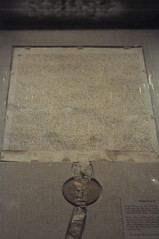
606475267Magna CartaThis document was signed by King John in 1215. It was the first document that limited the power of the government.57
606475268Enlightenmenta movement in the 18th century that advocated the use of reason in the reappraisal of accepted ideas and social institutions58
606475269Gunpowder EmpiresMuslim empires of the Ottomans, Safavids, and the Mughals that employed cannonry and gunpowder to advance their military causes.59
606475270Columbian ExchangeThe exchange of plants, animals, diseases, and technologies between the Americas and the rest of the world following Columbus's voyages.60
606475271Middle Passagethe route in between the western ports of Africa to the Caribbean and southern U.S. that carried the slave trade61

Ch.16 and 17 AP World History (The World Economy and Transformation of the West) Flashcards

Apparenty The World SHRINKS!!!!
But seriously, The Early Modern Period, 1450-1750: The World Shrinks
Ch.16 and 17( One of the 2 chapter sets)
Ch.16 The World Economy
Ch.17 The Transformation of the West

Terms : Hide Images
3449344413Magna CartaThis document, signed by King John of England in 1215, is the cornerstone of English justice and law. It declared that the king and government were bound by the same laws as other citizens of England. It contained the antecedents of the ideas of due process and the right to a fair and speedy trial that are included in the protection offered by the U.S. Bill of Rights0
3449344415Christopher ColumbusGenoese captain in service of king and queen of Castile and Aragon(Ferdinand and Isabella); successfully sailed to New World and returned in 1492; initiated European discoveries in Americas.1
3449344416World EconomyEstablished by Europeans by the late 16th century; based on control of seas including the Atlantic and Pacific; created an international exchange of foods, diseases, and manufactured products. Early on was based on SILVER not gold.2
3449344417EncyclopedieWas an encyclopedia published in France between 1751 and 1766 by some of the most prominent philosophers. It originally consisted of 28 volumes and covered everything then known about the sciences, technology, & history. It criticized the Church and government and praised religious tolerance, Collection of works compiled during the Enlightenment; explained many aspects of society; compiled by Denis Diderot3
3449344422Cape of Good HopeSouthern tip of Africa; first circumnavigated in 1488 by Portuguese in search of direct route to India.4
3449344423Ferdinand MagellanPortuguese explorer who found a sea route to the Spice Island by sailing around the American continent. His crew was the first to circumnavigate the world. Hired by Spain to sail to the Indies in 1519, The same year Charles V became empreor, he wa skilled in the Philippines in 1521, but one of his ships returned to Spain in 1522 completing the first circumnavigation of the globe.5
3449344424Strait of MagellanThe strait separating South America from Tierra del Fuego and other islands south of the continent, found by Magellan at the tip of South America during his voyage around the globe6
3449344425Tierra del FuegoThe large island, maybe archipelago whose name means "Land of Fire". it is located near the southern tip of Chile, but administered by Argentina and Chile.7
3449344426Charles VHoly Roman emperor and king of Spain as Charles I . He summoned the Diet of Worms (and the Council of Trent, He was a supporter of Catholicism and tried to crush the Reformation by use of the Counter-Reformation.8
3449344427Diet of WormsAssembly of the estates of the empire, called by Holy Roman Emperor Charles V in 1521. Luther was ordered to recant but he refused. Charles V declared Luther an outlaw.9
3449344428Council of TrentThe congress of learned Roman Catholic authorities that met intermittently from 1545 to 1563 to reform abusive church practices and reconcile with the Protestants.10
3449344429Spanish ArmadaThe Spanish fleet that attempted to invade England, ending in disaster, due to the raging storm in the English Channel as well as the smaller and better English navy led by Francis Drake. This is viewed as the decline of Spains Golden Age, and the rise of England as a world naval power.11
3449344430Francis DrakeEnglish explorer and admiral who was the first Englishman to circumnavigate the globe and who helped to defeat the Spanish Armada12
3449344431Dutch East India CompanyJoint stock company that obtained government monopoly over trade in Asia; acted as virtually independent government in regions it claimed until the British took over.13
3449344432British East India CompanyA joint stock company that controlled most of India during the period of imperialism. This company controlled the political, social, and economic life in India for more than 200 years.14
3449344433Battle of LepantoA battle in which Spain defeated the Turkish navy off the coast of Greece-ended Ottoman threat in Mediterranean, Turkish sea power was destroyed in 1571 by a league of Christian nations organized by the Pope, loss of large international routes for Muslims.15
3449344434MacaoOne of two ports in which Europeans were permitted to trade in China during the Ming dynasty, controlled by the Porteguese.16
3449344435Core NationsNations, usually European, that enjoyed profit from world economy; controlled international banking and commercial services such as shipping; exported manufactured goods for raw materials.17
3449344436MercantilismEconomic theory that stressed governments' promotion of limitation of imports from other nations and internal economies in order to improve tax revenues; popular during 17th and 18th centuries in Europe.18
3449344437MestizosA person of mixed Native American and European ancestory19
3449344438Northwest PassageThis is the passage that many European explorers attempted but never succeeded to navigate to reach other nations more quickly, the Engish thought they might have found it by discovering the St. Lawrence River, but alas it was but a foolish dream.20
3449344440Mughal Empirean Islamic imperial power that ruled a large portion of Indian subcontinent which began in 1526, invaded and ruled most of Hindustan (South Asia) by the late 17th and early 18th centuries, and ended in the mid-19th century.21
3449344441Vasco de BalboaFirst Spanish captain to begin settlement on the mainland of Mesoamerica in 1509; initial settlement eventually led to conquest of Aztec and Inca empires by other captains. He also led an expedition across Panama and "discovered" the Pacific Ocean.22
3449344442Francisco PizarroThe Spanish conquistador who crushed the Inca civilization in Peru; took gold, silver and enslaved the Incas in 1532., Double crossed Indian people. He captured their chief, Atahualpa, and promised to release him if they paid a huge ransom which they agreed to pay, yet he killed the chief anyways. Then he made the Inca empire under Spanish rule.23
3449344446New FranceFrench colonies in Canada and elsewhere; extended along the St. Lawrence River and Great Lakes and down into the Mississippi River valley system, had capital in Quebec, founded 1608. Fell to the British in 1763. Under King Louis the 14th(Sun King).24
3449344447Seven Years WarFought both in continental Europe and also in overseas colonies between 1756 and 1763; resulted in Prussian seizures of land from Austria, English seizures of colonies in India and North America, loss of New France at the Treaty of Paris of 1763 to the British,However France did gain back a lot of sugar colonies,25
3449344448Treaty of Paris of 1763Treaty between Britain, France, and Spain, which ended the Seven Years War (and the French and Indian War). France lost Canada, the land east of the Mississippi, some Caribbean islands and India to Britain. France also gave New Orleans and the land west of the Mississippi to Spain, to compensate it for ceeding Florida to the British. However France did gain back a lot of sugar colonies,26
3449344449John LockeWrote Two Treatises on Government as justification of Glorious Revolution and end of absolutism in England. He argued that man is born good and has rights to life, liberty, and property. To protect these rights, people enter social contract to create government with limited powers. If a government did not protect these rights or exceeded its authority, the people have the right to revolt. The ideas of consent of the governed, social contract, and right of revolution influenced the United States Declaration of Independence and the U.S. Constitution. He also laid the foundations for criticism of absolute monarchy in France.27
3449344450Glorious RevolutionA reference to the political events of 1688-1689, when James II abdicated his throne and was replaced by his daughter Mary and her husband, Prince William of Orange.28
3449344451John WhiteRoanoke's colony leader who returned to England for more food and tools--when he finally returned to Roanoke the colony had vanished--the only clue he found of Roanoke or the "Lost colony" was the native american tribes name "CROATAN"29
3449344452RoanokeEstablished in 1587. Called the Lost Colony. It was financed by Sir Walter Raleigh, and its leader in the New World was John White. All the settlers disappeared, and historians still don't know what became of them.30
3449344453Sir Walter RaleighEnglish courtier, navigator, colonizer, and writer. A favorite of Elizabeth I, he introduced tobacco and the potato to Europe. Convicted of treason by James I, he was released for another expedition to Guiana and executed after its failure.31
3449344454Cape ColonyDutch colony established at Cape of Good Hope in 1652 initially to provide a coastal station for the Dutch seaborne empire; by 1770 settlements had expanded sufficiently to come into conflict with Bantus.32
3449344455BoersDutch descended colonist living in South Africa. Also called Afrikaners.33
3449344456CalcuttaHeadquarters of British East India Company in Bengal in Indian subcontinent; located on Ganges; captured in 1756 during early part of Seven Years' War; later became administrative center for all of Bengal.34
3449344460The PrinceA short political treatise about political power how the ruler should gain, maintain, and increase it. Machiavelli explores the problems of human nature and concludes that human beings are selfish and out to advance their own interests35
3449344461Niccolo MachiavelliItalian Renaissance writer, described government(practically) in the way it actually worked (ruthless). He wrote The Prince (the end justifies the mean).Florentine statesman and historian, was reacting against Humanist of the time who only seemed to write in LATIN. Wanted a internally reunified Italy.36
3449344463HumanismFocus on humankind as center of intellectual and artistic endeavor; method of study that emphasized the superiority of classical forms over medieval styles, in particular the study of ancient languages, Renaissance.37
3449344464Leonardo da VinciItalian painter, engineer, musician, and scientist. The most versatile genius of the Renaissance, Filled notebooks with engineering and scientific observations that were in some cases centuries ahead of their time. As a painter he is best known for The Last Supper (c. 1495) and Mona Lisa (c. 1503).38
3449344465Northern RenaissanceCultural and intellectual movement of northern Europe; influenced by earlier Italian Renaissance; centered in France, the Low Countries, England, and Germany; featured greater emphasis on religion than in Italy, Christian Humanism criticizing the church & society, Painting/ Woodcuts/Literature39
3449344469Francis IKing of France in the 16th century; regarded as Renaissance monarch; patron of arts; imposed new controls on Catholic church; ally of Ottoman sultan against Holy Roman emperor in order to distract his main rival the Hapsburg ruler of Austria and Spain. Illustrated the increasing abandonment of religious and feudal justifications of the previous era.40
3449344470CervantesSpanish writer best remembered for 'Don Quixote' which satirizes chivalry and influenced the development of the novel form41
3449344471Don QuixoteThe main character in Miguel de Cervantes' book about the changing times in the early 1600's. He was a man who did not like how the Middle Ages were ending and people were becoming more materialistic, so he set of to become a knight and bring back chivalry to Spain42
3449344472Johannes GutenbergGerman goldsmith and printer who is credited with inventing movable printing type in Europe abround 1439. Created the 42-line Gutenberg Bible, noted for its high aesthetic and technical quality. His printing technology was a key factor in the European Renaissance, and is considered on of the most important inventions of all time.43
3449344473European Style FamilyOriginated in 15th century among peasants and artisans of western Europe, featuring late marriage age, emphasis on the nuclear family, and a large minority who never married.44
3449344474Martin LutherGerman monk; initiated Protestant Reformation in 1517 by nailing 95 theses to door of Wittenberg church; emphasized primacy of faith over works stressed in Catholic church; accepted state control of church, also he was excommunicated by Catholic Church in 1521 after dispute with Charles V. Translated the Bible into German, and this contributed to the further development of the German language45
3449344475Augsburg ConfessionCodification in 1530 of Luther's doctrines as established since time of Diet of Worms and subsequent confinement at Wartburg, 1521-22. Included priesthood of all believers, two sacraments, authority of the bible, justification by faith alone, end to monasticism and celibacy, consubstantiation. Luther's friend, Philip Melancthon, worked on this codification with him.46
3449344476Wittenberg churchThe church on which Luther posted his 95 theses47
3449344478ProtestanismGeneral wave of religious dissent against the Catholic church; generally held to have begun with Martin Luther's attack on Catholic beliefs in 1517; included many many MANY varieties of religious belief48
3449344479Anglican ChurchForm of Protestantism set up in England after 1534; established by Henry VIII with himself as head, at least in part to obtain a divorce from his first wife; became increasingly Protestant following Henry's death49
3449344480Henry VIIIKing of England from 1509 to 1547; his desire to annul his marriage led to a conflict with the pope, break with the Roman Catholic Church, and its embrace of Protestantism. Henry established the Church of England(Anglican Church) in 1532.50
3449344481Elizabeth IThis queen of England chose a religion between the Puritans and Catholics and required her subjects to attend church or face a fine. She also required uniformity and conformity to the Church of England, was the daughter of Henry the 8th.51
3449344482Jean CalvinFrench Protestant (16th century) who stressed doctrine of predestination; established center of his group at Swiss canton of Geneva; encouraged ideas of wider access to government, wider public education; Calvinism spread from Switzerland to northern Europe and North America52
3449344483Predestinationdoctrine of John Calvin that adhered to the idea that each person's fate is predetermined by god(COMPLETELY Retarded to Think about)53
3449344484Catholic ReformationRestatement of traditional Catholic beliefs in response to Protestant Reformation (16th century); established councils(Like council of Trent) that revived Catholic doctrine and refuted Protestant beliefs.54
3449344485JesuitsMembers of the Society of Jesus, a Roman Catholic order founded by Ignatius Loyola in 1534. They played an important part in the Catholic Reformation and helped create conduits of trade and knowledge between Asia and Europe.55
3449344486Ignatius LoyolaFounded the Society of Jesus, resisted the spread of Protestantism, wrote Spiritual Exercises.Was a Spanish soldier whose leg had been shattered fighting from Charles V against the French. He said that salvation could be achieved by self-discipline and by doing good deeds56
3449344487Edict of NantesA decree promulgated at Nantes by King Henry IV to restore internal peace in France, which had been torn by the Wars of Religion; the edict defined the rights of the French Protestants57
3449344488Thirty Years WarWar within the Holy Roman Empire between German Protestants and their allies (Sweden, Denmark, France) and the emperor and his ally, Spain; ended in 1648 after great destruction with Treaty of Westphalia, destroyed 60 % of population of Germany in some areas and stagnated it for the next hundred years.58
3449344489Treaty of WestphaliaEnded thirty years war in 1648; granted right to individual rulers within the holy roman empire to choose their own religion-either protestant or catholic59
3449344490English civil warConflict from 1640 to 1660; featured religious disputes mixed with constitutional issues concerning the powers of the monarchy; ended with restoration of the monarchy in 1660 following execution of previous king, Think King Charles I >>>> Oliver Cromwell etc etc.60
3449344491Henry IVThe irst Bourbon king-most important kings in French history-rise to power ended French Civil Wars-gradual course to absolutism-politique-converted to Catholicism to gain loyalty of Paris, also devised Edict of Nantes.61
3449344492King Charles IThe English monarch who was beheaded by Puritans (see English Civil War) who then established their own short-lived government ruled by Oliver Cromwell (Mid 1600s).62
3449344493Oliver CromwellEnglish military, political, and religious figure who led the Parliamentarian victory in the English Civil War (1642-1649) and called for the execution of Charles I. As lord protector of England (1653-1658) he ruled as a virtual dictator.63
3449344496Witchcraft PersecutionsReflected resentment against the poor, uncertainties about religious truth; resulted in death of over 100,000 Europeans b/w 1590 and 1650; particularly common in Protestant areas64
3449344497Scientific RevolutionCulminated in the 17th century; period of empirical advances associated with the development of wider theoretical generalizations; resulted in change in traditional beliefs of Middle Ages, was initially associated with planetary motion and other aspects of physics but by the seventeenth century had laid the groundwork for modern science.65
3449344498CopernicusPolish astronomer who was the first to formulate a scientifically based heliocentric cosmology that displaced the earth from the center of the universe. This theory is considered the epiphany that began the Scientific Revolution. Wrote "On the Revolutions of the Heavenly Spheres "66
3449344499On the Revolutions of the Heavenly SpheresCopernicus published his book the year of his death fearing ridicule, Destroyed the notion for believing in crystal spheres capable of moving the stars around the earth.67
3449344500Johannes KeplerAssistant to Brahe; used Brahe's data to prove that the earth moved in an elliptical, not circular, orbit; Wrote 3 laws of planetary motion based on mechanical relationships and accurately predicted movements of planets in a sun-centered universe; Demolished old systems of Aristotle and Ptolemy68
3449344501Tycho BraheInfluenced by Copernicus; Built observatory and collected data on the locations of stars and planets for over 20 years; His limited knowledge of mathematics prevented him from making much sense out of the data.Kepler was one of his assistants69
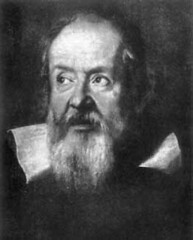
3449344502GalileoPublicized Copernicus's findings; used the telescope to study moon and planets; added discoveries concerning the laws of gravity; condemned by the Catholic church for his work.70
3449344503William HarveyDiscovered the circulation of blood and the role of the heart in propelling it. Developed an accurate theory of how the heart and circulatory system operated. He speculated that humans and animals reproduced through the joining of an egg.71
3449344504Francis BaconEnglish politician and writer, advocated that new knowledge was acquired through an inductive reasoning process (using specific examples to prove or draw conclusion from a general point) called empiricism; rejected Medieval view of knowledge based on tradition, believed it's necessary to collect data, observe, and draw conclusions. This was the foundation of the scientific method72
3449344505Renes DescartesHe developed analytical geometry; relied on math and logic; he believed that everything should be doubted until proven by reason; believed that scientists needed to reject old assumptions and teachings, Cogito Ergo Sum73
3449344508Issac NewtonEnglish scientist during the 17th century; author of Principia; drew the various astronomical and physical observations and wider theories together in a neat framework of natural laws; established principles of motion; defined forces of gravity74
3449344510DeismThe religion of the Enlightenment. Followers believed that God existed and had created the world, but that afterwards He left it to run by its own natural laws. Denied that God communicated to man or in any way influenced his life. Locke, maybe (Paine, but not likely ) etc etc.75
3449344511VersaillesThis enormous, ostentatious monument to the power of the French Monarchy, built by Louis XIV over a long period of time, served as a manifestation of the power of absolute monarchy. Meant to impress and scare nobility, foreigners, and commoners alike, this palace was where Louis XIV moved his court in order to keep them under his control and away from the uncontrollable social scene in Paris.76
3449344512King Louis XIVRuled with an iron fist for 60 years as the self proclaimed "Sun King" of France, and always wanted war. Believed in Divine Right of Kings, in which God chose him to rule over the masses and that anyone who challenged him would be challenging God. Thought that an absolute monarchy was the best form of government, and that men couldn't be trusted to govern themselves. Also built the magnificent palace at Versailles. He said " I am the State".77
3449344513absolute monarchyConcept of government developed during rise of nation-states in western Europe during the 17th century; featured monarchs who passed laws without parliaments, appointed professionalized armies and bureaucracies, established state churches, imposed state economic policies, think of the Sun King.78
3449344514Parliamentary MonarchyOriginated in England(Glorious Revolution) and Holland, 17th century, with kings partially checked by significant legislative powers in parliaments.79
3449344515Fredrick the GreatPrussian king of the 18th century; attempted to introduce Enlightenment reforms into Germany; built on military and bureaucratic foundations of his predecessors; introduced freedom of religion; increased state control of economy, abolished the use of torture except in treason and murder cases. He also granted limited freedom of speech and press, as well as greater religious toleration.80
3449344516EnlightenmentIntellectual movement centered in France during the 18th century; argued for scientific advance, the application of scientific methods to study human society; believed that rational laws could describe social behavior.81
3449344517Adam SmithEstablished liberal economics (Wealth of Nations, 1776); argued that government should avoid regulation of economy in favor of the operation of market forces82
3449344518The Wealth of NationsA book written by Scottish economist Adam Smith, promoted laissez-faire, free-market economy, and supply-and-demand economics83
3449344519Denis DiderotFrench philosopher who was a leading figure of the Enlightenment in France, encyclopedia which was banned by the French king and pope.84
3449344520Catherine the GreatThis was the empress of Russia who continued Peter's goal to Westernizing Russia, created a new law code, and greatly expanded Russia,encouraged science, art, lierature, Russia became one of Europe's most powerful nations, gave appearance of enlightened rule; accepted Western cultural influence; maintained nobility as service aristocracy by granting them new power over peasantry85
3449344521Mary WollstonecraftEnglish writer and early feminist who denied male supremacy and advocated equal education for women, mother of Mary Shelly(* Yeah the one that you are thinking about), she also wrote a "Vindication of the Rights of Women"86
3449344522Edmund BurkeA conservative leader who was deeply troubled by the aroused spirit of reform. In 1790, he published "Reforms on The Revolution in France", one of the greatest intellectual defenses of European conservatism. He defended inherited privileges in general and those of the English monarchy and aristocracy. Glorified unrepresentitive Parliament and predicted reform would lead to much chaos/tyranny.87
3449344523mass consumerismrefers to the spread of deep interest in acquiring material goods and services spreading below elite levels, along with a growing economy capacity to afford some of these goods, can be found in several premodern societies, it developed most clearly, beginning in western Europe, from the 18th century onward.88
3449344524Jean Jacques RousseauFrench philosopher and writer born in Switzerland; believed that the natural goodness of man was warped by society; ideas influenced the French Revolution Wrote "The Social Contract"; Emile.89
3449344525Vindication of the Rights of WomenMary Wollstonecraft's treatise of 1792, in which she argued that reason was the basis of moral behavior in all human beings, not just in men. She concluded that women should have equal rights with men in education, politics, and economics. Also attacked Edmund Burke90
3449344526Reforms on The Revolution in FranceA treatise by Edmund Burke which largely defended inherited thrones, the aristocracy, while condemning revolutions as radical, dangerous and useless, was very conservative. Attacked by Rousseau, Wollstonecraft, and Paine.91
3449344527Vindication of the Rights of ManA political pamphlet, written by the 18th-century British feminist Mary Wollstonecraft, which attacks aristocracy and advocates republicanism. Wollstonecraft's was the first response in a pamphlet war sparked by the publication of Edmund Burke's Reflections on the Revolution in France (1790), a defence of constitutional monarchy, aristocracy, and the Church of England.92
3449344530Encyclopaedia BritannicaA Compilation of scientific and philosophical findings that was popularized during the enlightenment and found a wide audience.93
3449344534noble savageThe notion, often associated with Rousseau, that non-Western or "primitive" people are actually happier and more virtuous than Westerners. Based on the idea that humans are free and equal in "a state of nature" but that social institutions deprive them of that freedom and equality.94
3449344535MediciThe family members were wealthy politicians, businessmen, and patrons of the arts who influenced both individuals and the bigger picture, in Florence and all of Europe. Cosimo de Medici ruled Florence for five years after strategically getting himself elected, used his grandson Lorenzo as a diplomat to get aquainted with other leaders of Europe, and became a great patron of the arts, like other members of his family, and helped many artists such as Michelangelo Used diplomatic prowess to end a war against Naples and the Papacy in 1479, but shortly after his death, wars tore apart Italy and lowered it from its status of the center of European civilization.95
3449344536Lorenzo MediciItalian statesman and scholar who supported many artists and humanists including Michelangelo and Leonardo and Botticelli (1449-1492)96
3449344537Cosimo de MediciA wealthy Florentine and an astute statesman, who brought power back to Florence in 1434 when he ascended to power; controlled the city behind the scenes, He skillfully manipulated the constitution and influencing elections; through his informal, cordial relations with the electoral committee, and was able to keep councilors loyal to him in the Signoria (the governing body of Florence, composed of 8 councilors); as head of the Office of Public Debt, He was the grandfather of Lorenzo the Magnificent97

American Pageant Chapter 13 Key Terms/People to Know Flashcards

Terms : Hide Images
3636149450AlamoFortress in Texas where four hundred American volunteers were slain by Santa Anna in 1836. "Remember the Alamo" became a battle cry in support of Texan independence.0
3636149451Anti-Masonic Party (established c. 1826)First founded in New York, it gained considerable influence in New England and the mid-Atlantic during the 1832 election, campaigning against the politically influential Masonic order, a secret society. They opposed Andrew Jackson, a Mason, and drew much of their support from evangelical Protestants.1
3636149452Bank War (1832)Battle between President Andrew Jackson and Congressional supporters of the Bank of the United States over the bank's renewal in 1832. Jackson vetoed the Bank Bill, arguing that the bank favored moneyed interests at the expense of western farmers.2
3636149453Black Hawk War (1832)Series of clashes in Illinois and Wisconsin between American forces and Indian chief Black Hawk of the Sauk and Fox tribes, who unsuccessfully tried to reclaim territory lost under the 1830 Indian Removal Act.3
3636149454compromise Tariff of 1833Passed as a measure to resolve the nullification crisis, it provided that tariffs be lowered gradually, over a period of ten years, to 1816 levels.4
3636149455corrupt bargainAlleged deal between presidential candidates John Quincy Adams and Henry Clay to throw the election, to be decided by the House of Representatives, in Adams' favor. Though never proven, the accusation became the rallying cry for supporters of Andrew Jackson, who had actually garnered a plurality of the popular vote in 1824.5
3636149456Force Bill (1833)Passed by Congress alongside the Compromise Tariff, it authorized the president to use the military to collect federal tariff duties.6
3636149457GoliadTexas outpost where American volunteers, having laid down their arms and surrendered, were massacred by Mexican forces in 1836. The incident, along with the slaughter at the Alamo, fueled American support for Texan independence.7
3636149458Indian Removal Act (1830)Ordered the removal of Indian Tribes still residing east of the Mississippi to newly established Indian Territory west of Arkansas and Missouri. Tribes resisting eviction were forcibly removed by American forces, often after prolonged legal or military battles.8
3636149459Nullification Crisis (1832-1833)Showdown between President Andrew Jackson and the South Carolina legislature, which declared the 1832 tariff null and void in the state and threatened secession if the federal government tried to collect duties. It was resolved by a compromise negotiated by Henry Clay in 1833.9
3636149460panic of 1837Economic crisis triggered by bank failures, elevated grain prices, and Andrew Jackson's efforts to curb overspeculation on western lands and transportation improvements. In response, President Martin Van Buren proposed the "Divorce Bill", which pulled treasury funds out of the banking system altogether, contracting the credit supply.10
3636149461pet banksPopular term for pro-Jackson state banks that received the bulk of federal deposits when Andrew Jackson moved to dismantle the Bank of the United States in 1833.11
3636149462Battle of San Jacinto (1836)Resulted in the capture of Mexican dictator Santa Anna, who was forced to withdraw his troops from Texas and recognize the Rio Grande as Texas's Southwestern border.12
3636149463Specie Circular (1836)U.S. Treasury decree requiring that all public lands be purchased with "hard", or metallic, currency. Issued after small state banks flooded the market with unreliable paper currency, fueling land speculation in the West.13
3636149464spoils systemPolicy of rewarding political supporters with public office, first widely employed at the federal level by Andrew Jackson. The practice was widely abused by unscrupulous office seekers, but it also helped cement party loyalty in the emerging two-party system.14
3636149465Tariff of Abominations (1828)Noteworthy for its unprecedentedly high duties on imports. Southerners vehemently opposed the Tariff, arguing that it hurt Southern farmers, who did not enjoy the protection of tariffs, but were forced to pay higher prices for manufactures.15
3636149466Trail of Tears (1838-1839)Forced march of 15,000 Cherokee Indians from their Georgia and Alabama homes to Indian Territory. Some 4,000 Cherokee died on the arduous journey.16
3636149467John Q. Adams (1825-1829)The sixth president of the United States, who was not well-liked by citizens and accused of making a corrupt bargain to win the election. He mainly focused on the economy during his presidency.17
3636149468Andrew JacksonThe seventh President of the United States (1829-1837), who as a general in the War of 1812 defeated the British at New Orleans (1815). As president he opposed the Bank of America, objected to the right of individual states to nullify disagreeable federal laws, and increased the presidential powers.18
3636149469Denmark VeseyAmerican insurrectionist. A freed slave in South Carolina, he was implicated in the planning of a large uprising of slaves and was subsequently hanged. The event led to more stringent slave codes in many Southern states.19
3636149470John C. CalhounThe 7th Vice President of the United States and a leading Southern politician from South Carolina during the first half of the 19th century. He was an advocate of slavery, states' rights, limited government, and nullification.20
3636149471Black HawkSauk leader who in 1832 led Fox and Sauk warriors against the United States21
3636149472Nicholas BiddleThe brilliant but arrogant president of the Second Bank of the United States. Many people believed he held an unconstitutional amount of power over the nation's financial affairs. The power struggle between Biddle and Jackson led to Jackson depositing a large amount of investments into his pet banks.22
3636149473Daniel Websternoted orator, constitutional lawyer, senator, secretary of state, and major spokesman for nationalism and the union in the 1830s, 1840s, and 1850s.23
3636149474Henry ClayDistinguished senator from Kentucky, who ran for president five times until his death in 1852. He was a strong supporter of the American System, a war hawk for the War of 1812, Speaker of the House of Representatives, and known as "The Great Compromiser." Outlined the Compromise of 1850 with five main points. Died before it was passed however.24
3636149475Martin Van BurenServed as secretary of state during Andrew Jackson's first term, vice president during Jackson's second term, and won the presidency in 183625
3636149476Stephen AustinThe son of Moses Austin and also known as the "Father of Texas" he lead "the old 300" into Texas after his father died of pneumonia. Mexico granted him land on the condition that there would be Roan Catholicism, the learning of Spanish, and no slavery.26
3636149477Sam HoustonUnited States politician and military leader who fought to gain independence for Texas from Mexico and to make it a part of the United States (1793-1863), First president of the Republic of Texas27
3636149478Santa AnnaMexican general who tried to crush the Texas revolt and who lost battles to Winfield Scott and Zachary Taylor in the Mexican War (1795-1876)28
3636149479William Henry Harrisonwas an American military leader, politician, the ninth President of the United States, and the first President to die in office. Led US forces in the Battle of Tippecanoe.29

Pages

Subscribe to CourseNotes RSS

Need Help?

We hope your visit has been a productive one. If you're having any problems, or would like to give some feedback, we'd love to hear from you.

For general help, questions, and suggestions, try our dedicated support forums.

If you need to contact the Course-Notes.Org web experience team, please use our contact form.

Need Notes?

While we strive to provide the most comprehensive notes for as many high school textbooks as possible, there are certainly going to be some that we miss. Drop us a note and let us know which textbooks you need. Be sure to include which edition of the textbook you are using! If we see enough demand, we'll do whatever we can to get those notes up on the site for you!