

Flashcards
AP World History Period 3 Flashcards
Terms : Hide Images
| 6761856405 | Kingdom of Ghana | West African empire from 700s to 1076, grew wealthy and powerful by controlling gold-salt trade. | 0 | |
| 6761856406 | Kingdom of Mali | a huge territorial empire that flourished in west Africa during the thirteenth and fourteenth centuries. Its capital was Timbuktu, which became a center of Islamic learning (see Islam). The empire controlled trade routes that stretched from the edge of the Sahara in the north to forests in the south and that carried gold and other luxuries | 1 | |
| 6761856407 | Kingdom of Songhai | last and final great empire of West Africa. a very big trading city back then where many people would trade things like gold for salt | 2 | |
| 6761856408 | Trans-Saharan Trade | route across the sahara desert. Major trade route that traded for gold and salt, created caravan routes, economic benefit for controlling dessert, camels played a huge role in the trading | 3 | |
| 6761856409 | Gold-Salt-Slaves | major commodities in medieval Africa | 4 | |
| 6761856410 | Islam | major cultrual and religous in North Africa arived about 634 and by 750 followers of _______ controlled most of North Africa | 5 | |
| 6761856411 | Timbuktu | City on the Niger River in the modern country of Mali. It was founded by the Tuareg as a seasonal camp sometime after 1000. As part of the Mali empire, it became a major major terminus of the trans-Saharan trade and a center of Islamic learning | 6 | |
| 6761856412 | Mansa Musa | Emperor of the kingdom of Mali in Africa. He made a famous pilgrimage to Mecca and established trade routes to the Middle East. | 7 | |
| 6761856413 | Swahili Coast | East African shores of the Indian Ocean between the Horn of Africa and the Zambezi River; from the Arabic sawahil, meaning "shores." | 8 | |
| 6761856414 | Great Zimbabwe | City, now in ruins whose many stone structures were built between about 1250 and 1450, when it was a trading center and the capital of a large state. | 9 | |
| 6761856415 | Indian Ocean Basin | The most important maritime trade network during the postclassical period. It involved trade between Arab, Persian, Turkish, Indian, African, Chinese, and Europe merchants. | 10 | |
| 6761856416 | Monsoons | warm, moisture-laden winds from the southwest that bring most of India's rainfall during the spring and summer. | 11 | |
| 6761856417 | Nomads | Cattle-and sheep-herding societies normally found on the fringes of civilized societies; commonly referred to as "barbarian" by civilized societies | 12 | |
| 6761856418 | Bantu Migration | The movement of the Bantu peoples southward throughout Africa, spreading their language and culture, from around 500 b.c. to around A.D 1000 | 13 | |
| 6761856419 | City-States | Cities with political and economic control over the surrounding countryside; found in Aztec society | 14 | |
| 6761856420 | Tenochtitlan | An ancient Aztec capital on the site of present-day Mexico City. Founded c. 1325, it was destroyed by the Spanish in 1521. | 15 | |
| 6761856421 | "Triple Alliance" | 1428 agreement between the Mexica (Tenochtitlan) and two other nearby city-states (Texcoco, Tlacopan)that launched the Aztec Empire | 16 | |
| 6761856422 | Tribute System | A system in which defeated peoples were forced to pay a tax in the form of goods and labor. This forced transfer of food, cloth, and other goods subsidized the development of large cities. An important component of the Aztec and Inca economies. | 17 | |
| 6761856423 | Human Sacrifice | Killing of humans for a purpose like worshiping a god, practiced widely by the Aztecs and a little by the Incas | 18 | |
| 6761856424 | Chinampas | Artificial gardens on floating islands/farms that surrounded Tenochtitlan. Built because of lack of available farmland | 19 | |
| 6761856425 | Hernán Cortés | 1485-1547, Spanish conquistador who defeated the Aztecs and conquered Mexico | 20 | |
| 6761856426 | Class System | (AZETEC) Emperor, Nobles, Commoners (Farmers, Traders, Artisans-skilled workers), Unskilled workers, and enslaved people. An act of bravery could move you up in the class system and you were given land--warriors could become nobles | 21 | |
| 6761856427 | Andes | A large system of mountain ranges located along the Pacific coast of Central and South America | 22 | |
| 6761856428 | Mita | In the Incan empire, the requirement that all able-bodied subjects work for the state a certain number of days each year. | 23 | |
| 6761856429 | Terraces | found in Inca and Aztec civilizations; A new form of agriculture in Aksum where stepped ridges constructed on mountain slopes help retain water and reduce erosion | 24 | |
| 6761856430 | Machu Pichu | a city built by the Inca people on a mountaintop in the Andes Mountains in present-day Peru--- Means "great peak" | 25 | |
| 6761856431 | Charlemange | King of the Franks 768 to 814 from the Carolingian line. Ruled over 40 years. Most important leader of the Franks because he unified nearly all Christian lands of Europe into a single empire. | 26 | |
| 6761856432 | Crusades | A series of holy wars from 1096-1270 AD undertaken by European Christians to free the Holy Land from Muslim rule. | 27 | |
| 6761856433 | Feudalism | A political system in which nobles are granted the use of lands that legally belong to their king, in exchange for their loyalty, military service, and protection of the people who live on the land | 28 | |
| 6761856434 | Vassal | (in the feudal system) a person granted the use of land, in return for rendering homage, fealty, and usually military service or its equivalent to a lord or other superior; feudal tenant. | 29 | |
| 6761856435 | Holy Roman Empire | A Germanic empire located chiefly in central Europe that began with the coronation of Charlemagne as Roman emperor in a.d. 800 (or, according to some historians, with the coronation of Otto the Great, king of Germany, in a.d. 962) and ended with the renunciation of the Roman imperial title by Francis II in 1806, and was regarded theoretically as the continuation of the Western Empire and as the temporal form of a universal dominion whose spiritual head was the pope. | 30 | |
| 6761856436 | Franks | A Germanic people who settled in the Roman province of Gaul (roughly the area now occupied by France) and restored order after the collapse of the Roman empire by establishing their own centralized state (empire) | 31 | |
| 6761856437 | Battle of Hastings (1066) | led by William the conquerer, the Normands invaded and conquered England | 32 | |
| 6761856438 | Pope | Bishop of Rome who claimed authority over all other bishop; Becomes head of the Roman Catholic Church; Very powerful during the Middle Ages; | 33 | |
| 6761856439 | Vikings | Came from Scandanavia, also called Northmen or Norsemen, and Danes. Sea warriors, they built amazing ships that held 300 warriors, could hold 30 tons. Raided villages and monastaries. Also traded and farmed. Journeyed to Russia and Constantinople. | 34 | |
| 6761856440 | Longboats | Boats with shallow bows and trademark dragons or scary faces on the tip of the ship that were used by the Vikings | 35 | |
| 6761856441 | Newfoundland | An island of Canada that is off the east coast of mainland Canada; first explored by Lief Ericson (Viking) | 36 | |
| 6761856442 | Chivalry | Code of conduct for knight and nobles during European feudalism. | 37 | |
| 6761856443 | Parliament | A governing body during the Middle Ages that represented the privileged groups including the nobles and the church was called ____. | 38 | |
| 6761856444 | Hundred Years' War | (1337-1453) Series of campaigns over control of the throne of France, involving English and French royal families and French noble families. | 39 | |
| 6761856445 | Scholasticism | A philosophical and theological system, associated with Thomas Aquinas, devised to reconcile Aristotelian philosophy and Roman Catholic theology in the thirteenth century. | 40 | |
| 6761856446 | Vernacular Language | The common speech of the masses. They were the alternative to Latin, the language of the learned. The late Middle Ages saw the rise of this form of literature which began to flourish in the 14th century as is exemplified by the works of Petrarch (1304-74), Boccaccio (1313-75). and Chaucer (1342-1400). Though Latin remained the universal tongue of scholarship, politics, and the Church in Western Europe until after the Middle Ages and the Reformation. | 41 | |
| 6761856447 | Guild System | A system for specialized workers in the medieval times. It would set regulations for price and other factors to eliminate competition in the town, kept the number of people in a specific job limited, had to go through apprenticeship -> journey man ->master | 42 | |
| 6761856448 | Middle Class | A social and economic level between the wealthy and the poor. | 43 | |
| 6761856449 | Great Schism (1378) | A division in Church- rival claimants to the papacy existed in Rome and Avignon. later a 3rd pope was elected in Pisa | 44 | |
| 6761856450 | Black Death | A deadly plague that swept through Europe between 1347 and 1351; Bubonic Plague | 45 | |
| 6761856451 | Khan | Mongol ruler | 46 | |
| 6761856452 | Khanate | four divisions of the Mongol world - Chaghadai, Persia, Kipchak (Golden Horde), and Yuan dynasty in China | 47 | |
| 6761856453 | Nomads | (of groups of people) tending to travel and change settlements frequently (MONGOLS) | 48 | |
| 6761856454 | Steppes | Treeless plains, especially the high, flat expanses of northern Eurasia, which usually have little rain and are covered with coarse grass. They are good lands for nomads and their herds. Good for breeding horses: essential to Mongol military | 49 | |
| 6761856455 | Silk Road | An ancient trade route between China and the Mediterranean Sea extending some 6,440 km (4,000 mi) and linking China with the Roman Empire. Marco Polo followed the route on his journey to Cathay. | 50 | |
| 6761856456 | Yuan Dynasty | 1271-1368 CE. Established when the Mongols conquered the Chinese Song Dynasty. Mongol reign short-lived, ending when the Mongols were driven from China in the 1300s. | 51 | |
| 6761856457 | Khanate of the Golden Horde | The official name for the Mongolian empire over Russia. Kiev fell to the Mongols and then they controlled southern Russia for 200 years. The capitol of the area was in Sarai. Western most part of the Mongol Empire | 52 | |
| 6761856458 | Central Asia | the core region of the Asian Continent and stretches from the Caspian Sea in the West to China in the East and from Afghanistan in the South to Russia in the North; w/ Muslims, poeple from here ranked just below Mongols in Yuan Dynasty |  | 53 |
| 6761856459 | Persia | area conquered by Ghinggis Khan; in Asia Minor |  | 54 |
| 6761856460 | Religious Tolerance | Willingness to let others practice their own beliefs; practiced by Mongols | 55 | |
| 6761856461 | Buddhism | the teaching of Buddha that life is permeated with suffering caused by desire, that suffering ceases when desire ceases, and that enlightenment obtained through right conduct and wisdom and meditation releases one from desire and suffering and rebirth; mahayana, pure land school (nembutsu, mappo) in Japan | 56 | |
| 6761856462 | Confucianism | A philosophy that adheres to the teachings of the Chinese philosopher Confucius. It shows the way to ensure a stable government and an orderly society in the present world and stresses a moral code of conduct; spread to Japan | 57 | |
| 6761856463 | Feudalism (Japan) | Four class system laid down with marriage restrictions and to members of the same class. 1-emporer and shogun. 2- dayimo. 3- samurai 4- artisans, commoners, merchants | 58 | |
| 6761856464 | foot binding | Male imposed practice to mutilate a women's feet in order to reduce size; produced pain and restricted movement; helped confine women to the household; seen as beautiful to the elite | 59 | |
| 6761856465 | flying money | Chinese credit instrument that provided vouchers to merchants to be redeemed at the end of a venture; reduced danger of robbery; an early form of currency | 60 | |
| 6761856466 | Neo-Confucianism | term that describes the resurgence of Confucianism and the influence of Confucian scholars during the Tang Dynasty; a unification of Daoist or Buddhist metaphysics with Confucian pragmatism | 61 | |
| 6761856467 | Sui Dynasty | (589-618 CE) The Chinese dynasty that was like the Qin Dynasty in imposing tight political discipline; this dynasty built the Grand Canal which helped transport the rice in the south to the north. | 62 | |
| 6761856468 | Grand Canal | The 1,100-mile (1,700-kilometer) waterway linking the Yellow and the Yangzi Rivers. It was begun in the Han period and completed during the Sui Empire. | 63 | |
| 6761856469 | Tang Dynasty | (618-907 CE) The Chinese dynasty that was much like the Han, who used Confucianism. This dynasty had the equal-field system, a bureaucracy based on merit, and a Confucian education system. | 64 | |
| 6761856470 | Song Dynasty | (960-1279 C.E.) Did not last long due to a large expensive bureaucracy and a weak military. Will fall to the Mongols in 1279. | 65 | |
| 6761856471 | Five Pillars | true Muslims were expected to follow (principle of Salvation): belief in Allah, pray 5 times a day, giving of alms, fasting during Ramadan, pilgrimage to Mecca once in a lifetime | 66 | |
| 6761856472 | Hajj | A pilgrimage to Mecca, performed as a duty by Muslims | 67 | |
| 6761856473 | Qur'an | Book composed of divine revelations made to the Prophet Muhammad between ca. 610 and his death in 632; the sacred text of the religion of Islam. | 68 | |
| 6761856474 | Shari'ah | All-encompassing system of laws, regulations and advice that tell a Muslim how to live his or her life. Deals with a person's obligations to God. A blue print for righteous living. Implemented by the Caliphs. Influenced was gradually reduced by Western rulers and powers, Eventually disposed of and replaced with concepts from Europe. Both Iran and Saudi Arabia practice it to this day, | 69 | |
| 6761856475 | Mecca | City in western Arabia; birthplace of the Prophet Muhammad, and ritual center of the Islamic religion. | 70 | |
| 6761856476 | Medina | City in western Arabia to which the Prophet Muhammad and his followers emigrated in 622 to escape persecution in Mecca | 71 | |
| 6761856477 | Muslim | "One who has submitted"; followers of Islam | 72 | |
| 6761856478 | Islam | means "submission," signifying obedience to the rule and will of Allah. | 73 | |
| 6761856479 | Muhammad | Arab prophet and founder of Islam. In c.610, in Mecca, he received the first of a series of revelations that, as the Qur'an, became the doctrinal and legislative basis of Islam | 74 | |
| 6761856480 | Caliphs | "Successor to the Prophet"; Islamic head of state (both political and religious leader) | 75 | |
| 6761856481 | Sunni | A branch of Islam whose members acknowledge the first four caliphs as the rightful successors of Muhammad | 76 | |
| 6761856482 | Sufism | An Islamic mystical tradition that desired a personal union with God--divine love through intuition rather than through rational deduction and study of the shari'a. Followed an ascetic routine (denial of physical desire to gain a spiritual goal), dedicating themselves to fasting, prayer, meditation on the Qur'an, and the avoidance of sin. | 77 | |
| 6761856483 | Abbasid Caliphate | (750-1258 CE) The caliphate, after the Umayyads, who focused more on administration than conquering. Had a bureaucracy that any Muslim could be a part of. | 78 | |
| 6761856484 | Umayyad Caliphate | First hereditary dynasty of Muslim caliphs (661 to 750). From their capital at Damascus, ruled one of the largest empires in history that extended from Spain to India. | 79 | |
| 6761856485 | Sultan | Military and political leader with absolute authority over a Muslim country | 80 | |
| 6761856486 | Seljuk Turks | nomadic Turks from Asia who conquered Baghdad in 1055 and allowed the caliph to remain only as a religious leader. they governed strictly | 81 | |
| 6761856487 | Mosque | A Muslim place of worship | 82 | |
| 6761856488 | Slavs | Ancient cultures from around 500 AD that came to Northern Russia. Many lived in Novgorod and Kiev | 83 | |
| 6761856489 | Kievan Rus | State that emerged around the city of Kiev in the Ninth century CE; a culturally diverse region that included Vikings as well as Finnic and Baltic peoples. The conversion of Vladimir, the grand price of Kiev, to Orthodox Christianity in 988 had long-term implications for Russia | 84 | |
| 6761856490 | Novgorod | Rurik founded city; first important Russian city; modern day Estonia | 85 | |
| 6761856491 | Grand Prince of Kiev | Vladimir | 86 | |
| 6761856492 | Feudalism | A political system in which nobles are granted the use of lands that legally belong to their king, in exchange for their loyalty, military service, and protection of the people who live on the land | 87 | |
| 6761856493 | Russian Orthodox Church | The religion adopted by the Russian Princes in Kiev. Moscow will become known as the Third Rome, the cultural and religious guide of Christianity (after fall of Rome and Constantinople) | 88 | |
| 6761856494 | Mongol Invasion | of Russia in 1240 kept it occupied and under domination for about 250 years. Finally in 1480 Ivan III, a grand duke of Muscovy, able to repel the Mongols. During the time of Mongol domination Russia was very isolated and lost pace with the West. Influenced by Greek Orthodox Church so Constantinople was cultural/religious center, not Rome. Renaissance passed Russia by. | 89 | |
| 6761856495 | Ottoman Empire | Centered in Constantinople, the Turkish imperial state that conquered large amounts of land in the Middle East, North Africa, and the Balkans, and fell after World War I. | 90 | |
| 6761856496 | Eastern Orthodox Christianity | A branch of Christianity that developed in the Byzantine Empire and that did not recognize the pope as it's supreme leader; brought to Russia by Grand Prince Vladimir | 91 | |
| 6761856497 | Constantinople | A large and wealthy city that was the imperial capital of the Byzantine empire and later the Ottoman empire, now known as Istanbul | 92 | |
| 6761856498 | Hagia Sophia | Most famous example of Byzantine architecture, it was built under Justinian I and is considered one of the most perfect buildings in the world. | 93 | |
| 6761856499 | Great Schism- 1054 C.E. | split between Eastern and Western Christian Churches turning into the Eastern Orthodox and the Roman Catholic Churches | 94 | |
| 6761856500 | Black Sea | Through this body of water Northern Europe was connected to the Mediterranean Area and Silk Road | 95 | |
| 6761856501 | Celibacy | The state of one who has chosen to remain unmarried for the sake of the Kingdom of Heaven in order to give himself entirely to God and to the service of his people; value in Byzantine Empire | 96 |
AP World History Islam Flashcards
Terms : Hide Images
| 11279896315 | Islam | the religion of Muslims collectively which governs their civilization and way of life | 0 | |
| 11279896316 | Muslim | a believer or follower of Islam | 1 | |
| 11279896317 | Arab | ethnic group that dominates the Middle East and northern Africa; doesn't necessarily follow Islam | 2 | |
| 11279896318 | Mecca | the holiest city of Islam; Muhammad's birthplace | 3 | |
| 11279896319 | Medina | the second holiest city; where Muhammad lived after fleeing Mecca | 4 | |
| 11279896320 | Koran | the holy text of Islam | 5 | |
| 11279896321 | House of Wisdom | Combination library, academy, and translation center in Baghdad established in the 800s | 6 | |
| 11279896322 | Muhammad | Islam's prophet; the man who heard the words of Allah | 7 | |
| 11279896323 | Gabriel | According to Muslims, was an angel who told Muhammed he was a messenger of Allah | 8 | |
| 11279896324 | Five pillars of Islam | Declaration of faith, 5 prayers, charity, fasting, and pilgrimage to Mecca once in a life | 9 | |
| 11279896325 | Mosque | A Muslim place of worship | 10 | |
| 11279896326 | Conquest of Spain | 711-788; Umayyad took over Spain | 11 | |
| 11279896327 | Caliph | Successor to Muhammad | 12 | |
| 11279896328 | Umayyad Caliphate | 661-750 CE; First hereditary dynasty of Muslim caliphs | 13 | |
| 11279896329 | Abbasid Caliphate | 750-1258 CE | 14 | |
| 11279896330 | Byzantine Caliphate | Eastern Rome; broke off when Rome began to fall; 476 AD; syncretism from Greece, Christianity, Persians, Romans, and more | 15 | |
| 11279896331 | Justinian | Byzantine emperor who held the eastern frontier of his empire against the Persians | 16 | |
| 11279896332 | Justinian's Code | An organized collection and explanation of roman laws for use by the byzantine empire | 17 | |
| 11279896333 | Belisarius | General of Justinian I who led the Byzantine forces to defeat the Vandals and the Ostrogoths | 18 | |
| 11279896334 | Damascus, Syria | Capital of Umayyad Dynasty; Highly centralized rule | 19 | |
| 11279896335 | Monotheisum | the belief that there is only one God | 20 | |
| 11279896336 | Allah | the Islamic God | 21 | |
| 11279896337 | Cave of Hira | Where Mohammad first received revelations from Gabriel; beginning in 610 | 22 | |
| 11279896338 | Hijrah | Muhammad's migration from Mecca to Medina | 23 | |
| 11279896339 | Suras | chapters of the Qur'an | 24 | |
| 11279896340 | Arabic | Language in which the Qur'an is written; used by muslims | 25 | |
| 11279896341 | Minarets | towers attached to the outside of a mosque, from where a crier calls Muslims to worship | 26 | |
| 11279896342 | Ramadan | (Islam) a fast (held from sunrise to sunset) that is carried out during the Islamic month of Ramadan | 27 | |
| 11279896343 | Hajj | A pilgrimage to Mecca, performed as a duty by Muslims; 5 pillars of faith | 28 | |
| 11279896344 | Dar Al-Islam | the empire of Islam that grew between 7th and 10th centuries; house of Islam | 29 | |
| 11279896345 | Sharia | Islamic law; a combination of the Quran and the Hadith | 30 | |
| 11279896346 | Great Wall of China | protection, trade, transportation; made by slaves |  | 31 |
| 11279896347 | Great Buddhas | southern China; face of nirvana; the religion was originally treated well but then they question the emperors authority and he mistreats them |  | 32 |
| 11279896348 | Colosseum | Rome; gladiatorial combat and theater; free in order to keep the people happy; Christians ended it |  | 33 |
| 11279896349 | Roman Aquaducts | France; served the needs of the people;brought water to and away from a city |  | 34 |
| 11279896350 | Altar of Peace | Augustus; participate gives more power to the emperor |  | 35 |
| 11279896351 | Arch of Septimius Severus | Rome; memorialize battle losses; foreigner gained a high rank in Roman government |  | 36 |
| 11279896352 | Dome of the Rock | Jerusalem; Muhammad heard Allah's words; pair, school, hospital |  | 37 |
| 11279896353 | Qu'ran (Koran) | "to recite"; more people became literate |  | 38 |
| 11279896354 | Mud Mosque | West Africa; biggest mud building in the world; Muhammad was a merchant |  | 39 |
| 11279896355 | Hagia Sofia (Church of Wisdom) | Islamic-minarets; Roman-domes; Christian-crosses inside; mosque because Turks conquered it |  | 40 |
AP World History Chapter 20 Terms Flashcards
Terms : Hide Images
| 10933673872 | Manchu | Federation of Northeast Asian peoples who founded the Qing Empire. | 0 | |
| 10933690469 | daimyo | Literally, great name(s). Japanese warlords and great landowners, whose armed samurai gave them control of the Japanese islands from the eighth to the later nineteenth century. Under the Tokugawa Shogunate they were subordinated to the imperial government. | 1 | |
| 10933703902 | samurai | Literally "those who serve," the hereditary military elite of the Tokugawa Shogunate. | 2 | |
| 10933732976 | Tokugawa Shogunate | The last of the three shogunates of Japan. | 3 | |
| 10933739856 | Ming Empire | Empire based in China that Zhu Yuanzhang established after the overthrow of the Yuan Empire. The emperor Yongle sponsored the building of the Forbidden City and the voyages of Zheng He. The later years of this dynasty saw a slowdown in technological development and economic decline. | 4 | |
| 10933884335 | Qing Empire | Empire established in China by Manchus who overthrew the Ming Empire in 1644. At various times they also controlled Manchuria, Mongolia, Turkestan, and Tibet. The last emperor of this dynasty was overthrown in 1911 by nationalists. | 5 | |
| 10933897969 | Kangxi | Qing emperor (r. 1662-1722). He oversaw the greatest expansion of the Qing Empire. | 6 | |
| 10933952632 | Amur River | This river valley was a contested frontier between northern China and eastern Russia until the settlement arranged in Treaty of Nerchinsk (1689). | 7 | |
| 10933962693 | Macartney Mission | The unsuccessful attempt by the British Empire to establish diplomatic relations with the Qing Empire in 1793. | 8 | |
| 10933962694 | Muscovy | Russian principality that emerged gradually during the era of Mongol domination. This dynasty ruled without interruption from 1276 to 1598. | 9 | |
| 10933976537 | Ural Mountains | This north-south range separates Siberia from the rest of Russia. It is commonly considered the boundary between the continents of Europe and Asia. | 10 | |
| 10934003256 | Tsar (Czar) | From Latin caesar, this Russian title for a monarch was first used in the 16th century. | 11 | |
| 10934016638 | Siberia | The extreme northeastern sector of Asia, including the Kamchatka Peninsula and the present Russian coast of the Arctic Ocean, the Bering Strait, and the Sea of Okhotsk. | 12 | |
| 10934021732 | Cossacks | Peoples of the Russian Empire who lived outside the farming villages, often as herders, mercenaries, or outlaws. They led the conquest of Siberia in the sixteenth and seventeenth centuries. | 13 | |
| 10934042388 | Serf | In medieval Europe, an agricultural laborer legally bound to a lord's property and obligated to perform set services for the lord. In Russia some of them worked as artisans and in factories; in Russia it was not abolished until 1861. | 14 | |
| 10934073420 | Peter the Great | Russian tsar (r. 1689-1725). He enthusiastically introduced Western languages and technologies to the Russian elite, moving the capital from Moscow to the new city of St. Petersburg. | 15 |
Flashcards
Strayer AP World History Chapter 23 Flashcards
Terms : Hide Images
| 6543678174 | How was the dissolution of European empires different from the dissolution of previous empires in world history? a. It took place only in Africa. b. It generated a mass of new nation-states. c. It happened suddenly. d. It happened peacefully. | b | 0 | |
| 6543678175 | What was the "fatal flaw" of European colonialism? a. Its double standard of freedom and sovereignty for itself but not its colonies b. Its inability to extract resources from its colonies c. Its squeamishness at using force to rule its colonies d. Its promotion of nationalist ideology | a | 1 | |
| 6543678176 | Which of the following social groups in the colonies did NOT stand to benefit from national independence for African and Asian colonies? a. Western-educated African and Asian elites b. small-scale traders c. urban workers d. white landowners | d | 2 | |
| 6543678177 | Which of the following best characterizes the initial aims of the Indian National Congress (INC)? a. A violent revolution against the British rule b. Promoting loyal obedience to the British rule c. Gaining position of influence in British India to protect Indian interests d. Writing a constitution for a newly independent India | c | 3 | |
| 6543678178 | Which of the following best characterizes Gandhi's philosophy of satyagraha ("truth force")? a. Building a base of support in the countryside among peasants from which to launch guerilla attacks on the British b. Confronting the British Empire nonviolently, choosing to suffer the consequences without surrendering one's ideals c. Throwing off British rule by any means necessary, and then conquering new lands as the British had done for a new Indian Empire d. Making India totally and permanently Hindu | b | 4 | |
| 6543678179 | What was Gandhi's attitude toward the prospect of a modern, industrial future for India? a. He was opposed to it. b. He actively supported it. c. He was not concerned with the future of India, only the present. d. He initially was opposed, but when he saw the beautiful factories in England, he changed his mind. | a | 5 | |
| 6543678180 | What was the most serious split that formed within the Indian independence movement? a. Between upper castes and lower castes b. Between Sikhs and Hindus c. Between followers of Gandhi and followers of Nehru d. Between Muslims and Hindus | d | 6 | |
| 6543678181 | What best describes the experience of India's partition into Muslim Pakistan and Hindu India after independence in 1947? a. It was a mostly peaceful transition. b. It caused massive displacement of people, but no real violence. c. It happened in a carefully controlled way over a long period of time. d. It was horrendously violent and traumatic. | d | 7 | |
| 6543678182 | Why did white rule last almost 50 years longer in South Africa than it did in India (1994 versus 1947)? a. Blacks in South Africa were much better treated than Indians in British India. b. Blacks chose the path of violence, which was futile, as opposed to nonviolence, which the Indians used to great effect. c. A sizeable and powerful community of permanent white settlers in South Africa, but not in India, controlled the country. d. Gandhi never spent time in South Africa. | c | 8 | |
| 6543678183 | What kind of external pressure was put on South Africa's white leadership to end Apartheid and allow blacks to vote and have equal rights? a. NATO threatened to invade South Africa. b. Other independent African countries threatened to invade South Africa. c. The U.S. government loudly denounced the immorality of Apartheid and broke off diplomatic relations with the racist government. d. Sporting events, entertainers, and many large businesses boycotted South Africa, isolating it culturally and economically from much of the world. | d | 9 | |
| 6543678184 | What was the fate of many of the political parties that had led the movements for independence in Africa after independence was achieved? a. Most were soon swept away by military coups. b. Most remained popular for decades. c. Most splintered into different factions which gave rise to a vibrant democracy. d. In formerly British colonies, democratic systems remained, but in French, Belgian, and Portuguese colonies, military regimes quickly took power. | a | 10 | |
| 6543678185 | Which of the following is NOT an explanation offered by historians and scholars as to why democracy failed in so many African countries after independence? a. Africa's traditional culture is based on consensus and thus not compatible with multiparty democracy. b. Trying to take on immense economic development at the same time as a huge political transition to democracy is simply too much for any society to manage. c. They lacked natural resources. d. Unrealistic expectations for the future were followed by widespread disillusionment. | c | 11 | |
| 6543678186 | Why did many of the military regimes in Africa give way to a resurgence of Western-style democracy between 1980 and 2008? a. Most of the military leaders got too old to rule any longer. b. Most of the military governments also failed on their promise to bring about prosperity and peace. c. The military regimes could not get access to enough weapons or money to keep their power. d. The U.S. government actively funded any popular movement that sought to overthrow military dictators and replace them with freedom and democracy. | b | 12 | |
| 6543678187 | Which of the following is NOT a reason that most developing nations abandoned the state-run approach to building up their economies in favor of a privatized, free market approach, in the last decade of the twentieth century? a. The collapse of the Soviet Union b. The influence of international organizations like the World Trade Organization (WTO) c. The clearly demonstrated benefits for the poorest segments of these countries d. The corruption and mismanagement of state-run corporations | c | 13 | |
| 6543678188 | Which group of developing countries have been the most successful in stimulating economic growth and industrialization? a. East Asian countries b. Middle Eastern countries c. African countries d. Central Asian countries | a | 14 | |
| 6543678189 | How did Mustafa Kemal Ataturk, the founder of modern Turkey, view the role of Islam in the state? a. He based his ideas of the state on Islamic principles. b. He saw the public or political role of Islam as an obstacle to modernizing Turkey. c. He disliked the influence of Islam, but knew he was powerless to diminish it. d. He was determined to use the state to wipe out all traces of Islam. | b | 15 | |
| 6543678190 | In what way did Ataturk's modern Turkey show clear continuity with the past Ottoman Empire? a. Its leaders continued to wear tradition Ottoman dress. b. The use of Arabic as the official language was retained. c. Turkey's foreign policy once again focused its hostility on Europe. d. Modern Turkey remained for the most part a dictatorship with little political freedom. | d | 16 | |
| 6543678191 | What effect did the Westernizing influences under the Shah of Iran have? a. Iran became a well-functioning democracy. b. Iran was too traditional to be impacted by Westernization. c. It provoked an intense backlash leading to the Islamic revolution in 1979. d. It led to a bloody civil war between Sunni and Shiite Muslims in Iran. | c | 17 | |
| 6543678192 | Which of the following was NOT part of the transformation of Iran enforced by the new Islamic rulers? a. Reverting back to a traditional economy b. Closing cinemas, bars, and discos c. Requiring all women to wear veils and loose-fitting dresses to hide their figures d. Patrolling public places with religious police to enforce Islamic law | a | 18 | |
| 6543678193 | What happened to the living standards in most of Africa between 1980 and 2000? a. They rose. b. They remained steady. c. They fell. d. They rose in some countries, but fell in others. | c | 19 |
Flashcards
AP World History- Period 6 Flashcards
Original from MrsBHatchTEACHER
Terms : Hide Images
| 10607718231 | African National Congress | ANC; South African political party formed in 1912; strongly opposed to apartheid |  | 0 |
| 10607718232 | apartheid | "separateness"; a series of laws initiated by the Afrikaner National Party in South Africa which was designed to divide South African society by skin color and ethnicity; this system also reserved South Africa's resources for whites |  | 1 |
| 10607718233 | Ayatollah Ruholla Khomeini | lived from 1900 to 1989; religious leader of the Islamic Republic of Iran |  | 2 |
| 10607718234 | Big Bang theory | theory which suggests that at some moment all matter in the universe was contained in a single point, which is considered the beginning of the universe | 3 | |
| 10607718235 | Vladimir Lenin | born Vladimir Ilyich Ulyanov; lived from 1870 to 1924; the leader of the Russian Soviet Federative Socialist Republic and premier of the Soviet Union |  | 4 |
| 10607718236 | Central Powers | one of the two warring factions in World War I; composed of Germany, Austria-Hungary, the Ottoman Empire and Bulgaria; also known as the Quadruple Alliance |  | 5 |
| 10607718237 | Charles de Gaulle | lived from 1890 to 1970; French general and statesman who led French forces in World War II; served as the president of France from 1959 to 1969 |  | 6 |
| 10607718238 | Che Guevara | lived from 1928 to 1967; Argentine marxist revolutionary who was a major figure in the Cuban Revolution |  | 7 |
| 10607718239 | Chiang Kai-shek | lived from 1887 to 1975; Chinese military officer who was leader of the Guomindang; fled to Taiwan after the Chinese Communist Party came to power in China |  | 8 |
| 10607718240 | Chinese Revolution | prolonged communist movement in China and lasted from 1946 to 1950; resulted in the communist takeover of mainland China |  | 9 |
| 10607718241 | Cold War | a sustained state of political and military tension between members of NATO and members of the Warsaw Pact; dissolution of the Soviet Union was the end of this "conflict" |  | 10 |
| 10607718242 | collectivization | also known as collective farming and communal farming; system in which the holdings of several farmers are run collectively as a unit; imposed by the government in the Soviet Union | 11 | |
| 10607718243 | command economy | a.k.a planned economy; the economic system in which decisions regarding production and investment are embodied in a plan formulated by a central authority, usually by a public body such as a government agency | 12 | |
| 10607718244 | containment | the United States policy to prevent the spread of communism abroad during the Cold War; a response to a series of moves by the Soviet Union to enlarge communist influence in Eastern Europe, China, Korea, Africa, and Vietnam |  | 13 |
| 10607718245 | Cuban missile crisis | a 13-day confrontation in October 1962 between the Soviet Union and the United States; Soviet missiles moved to Cuban soil in an agreement by Fidel Castro and Nikita Khrushchev; U.S. responds by blockading Cuba; Khrushchev and U.S. President John F. Kennedy reach an agreement in which the Soviets would remove their missiles from Cuba in return for an American promise not to invade Cuba |  | 14 |
| 10607718246 | cultural imperialism | the practice of promoting or imposing one's culture on another, usually between powerful societies and less-powerful ones |  | 15 |
| 10607718247 | Cultural Revolution | also known as the Great Proletarian Cultural Revolution; launched by Mao in the late 1960's; aimed to combat the capitalist tendencies he believed had penetrated even the highest ranks of the communist party itself; involved new policies to bring health care and education to the countryside and reinvigorate earlier efforts at rural industrialization under local control |  | 16 |
| 10607718248 | decolonization | the process of the dissolution of colonial territories and the establishment of independent nations |  | 17 |
| 10607718249 | Deng Xiaoping | lived from 1904 to 1997; successor to Mao Zedong; reformist who sought to incorporate The People's Republic of China into the world economy; dismantled collectivized farming, state enterprises given greater authority, welcomed foreign investment; crushed democracy movement in Beijing's Tiananmen Square |  | 18 |
| 10607718250 | environmentalism | ideology which regards the environmental concerns | 19 | |
| 10607718251 | European Economic Community | EEC; also known as the Common Market; founded in 1957; originally consisted of Italy, France, West Germany, Belgium, the Netherlands, and Luxembourg; expanded membership to almost all of Europe, including former communist states; renamed the European Union in 1994 | 20 | |
| 10607718252 | Fascism | political ideology which was intensely nationalistic; celebrated action and placed faith in charismatic leaders; and condemned individualism, liberalism, feminism, parliamentary democracy, and communism; adopted by Italy, Germany, and Japan in the years following World War I |  | 21 |
| 10607718253 | Five Year Plan | a planned economy in which a committee came together to determine rations |  | 22 |
| 10607718254 | fundamentalism | ideology which demands strict adherence to orthodox theological doctrines | 23 | |
| 10607718255 | Gamel Abdel Nasser | lived from 1918 to 1970; second President of Egypt from 1956 to 1970; planned the overthrow of the monarchy and sought to nationalize the Suez Canal |  | 24 |
| 10607718256 | UN General Assembly | one of the six principal organs of the United Nations and the only one in which all member nations have equal representation; oversee the budget of the United Nations, appoint the non-permanent members to the Security Council, receive reports from other parts of the United Nations and make recommendations in the form of General Assembly Resolutions |  | 25 |
| 10607718257 | genocide | the systematic destruction of all or part of a racial, ethnic, religious or national group | 26 | |
| 10607718258 | Getulio Vargas | lived from 1882 to 1954; ruled Brazil from 1930 to 1945; discrediting of established export elites during the Great Depression leads to his dictatorship; supported the military; took steps to modernize Brazil's urban industrial sector | 27 | |
| 10607718259 | global warming | term which refers to the continuing rise in the average temperature of Earth's climate system; viewed as a result of human emissions of greenhouse gases | 28 | |
| 10607718260 | globalization of democracy | the spread of democracy throughout the world | 29 | |
| 10607718261 | Great Depression | economic depression as a result of the crash of the American stock market; lasted from 1929 until World War II; causes drop in world trade, loss of investment, and businesses unable to make profit; countries or colonies tied to exporting one or two products hardhit as the West consumed less; conditions resulting in the Great Depression led to widespread unemployment and social tensions | 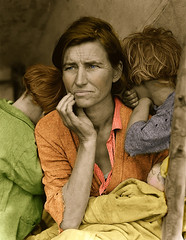 | 30 |
| 10607718262 | Great Leap Forward | lasted from 1958 to 1960; transition to full communism in the "people's communes" rather than waiting for industrial development to provide the material basis for that transition; massive famine which followed temporarily discredited Mao's radicalism |  | 31 |
| 10607718263 | Great Purges | also known as the Terror; period of immense paranoia in the Soviet Union of the late 1930's in which Stalin killed or removed those who opposed him |  | 32 |
| 10607718264 | Green Revolution | a series of research, and development, and technology transfer initiatives, occurring between the 1940s and the late 1960s, that increased agriculture production worldwide, particularly in the developing world |  | 33 |
| 10607718265 | Adolf Hitler | lived from 1889 to 1945; leader of the Nazi party in Germany; chancellor of Germany from 1933 to 1945; dictator of Nazi Germany from 1934 to 1945 |  | 34 |
| 10607718266 | Ho Chi Minh | lived from 1890 to 1969; Vietnamese communist revolutionary leader; was prime minister (from 1945 to 1955) and president (from 1945 to 1969) of the Democratic Republic of Vietnam |  | 35 |
| 10607718267 | Holocaust | the mass murder of approximately six million Jews during World War II; a program of systematic state-sponsored murder by Nazi Germany; led by Adolf Hitler and the Nazi Party | 36 | |
| 10607718268 | International Monetary Fund | IMF; established in 1944 by the Bretton Woods Conference in New Hampshire; sought to promote market economies, free trade, and high growth rates | 37 | |
| 10607718269 | Indian National Congress | INC; organization established in 1885; gave expression to the idea of India as a single nation; played a major role in India's independence movement from British colonial rule |  | 38 |
| 10607718270 | Iranian Cultural Revolution | a period following the Iranian Revolution where intellectuals of Iran were purged of Western and non-Islamic influences to bring it in line with Shia Islam; banned many books, and purged thousands of students and lecturers from schools | 39 | |
| 10607718271 | iron curtain | the heavily fortified border between Eastern and Western Europe |  | 40 |
| 10607718272 | Islamic renewal | also referred to as Islamic revival; refers to a renewing of the Islamic religion throughout the Islamic world, that began roughly sometime in 1970s; sought greater religious piety and a growing adoption of Islamic culture | 41 | |
| 10607718273 | Jawaharlal Nehru | lived from 1889 to 1964; first Prime Minister of India and was a leading figure in the independence movement against British rule over India |  | 42 |
| 10607718274 | League of Arab States | a regional organization of Arab countries in and around North Africa, the Horn of Africa, and Southwest Asia; formed in Cairo in 1945 with six members: Egypt, Iraq, Transjordan (Jordan), Lebanon, Saudi Arabia and Syria; currently has 22 members |  | 43 |
| 10607718275 | League of Nations | international peacekeeping organization founded as a result of the First World World; proposed by US president Woodrow Wilson; committed to the principle of "collective security" and intended to avoid the repetition of war |  | 44 |
| 10607718276 | Mahatma Gandhi | lived from 1869 to 1948; leader of the Indian nationalist movement during British control over India; used nonviolent civil disobedience, such as hunger strikes |  | 45 |
| 10607718277 | Mao Zedong | lived from 1893 to 1976; Chinese communist revolutionary and leader of the People's Republic of China from its establishment 1949 to his death in 1976 |  | 46 |
| 10607718278 | Marshall Plan | U.S. plan which sought to rebuild and reshape devastated European economies; funneled Europe some $12 billion with the interest in undermining the growing appeal of European communist parties |  | 47 |
| 10607718279 | Mikhail Gorbachev | born in 1931; last general secretary of the Soviet Union (1985 to 1991); passed reforms such as perestroika and policies such as glasnost which led to the dissolution of the Soviet Union |  | 48 |
| 10607718280 | military-industrial complex | the policy and monetary relationships which exist between legislators, national armed forces, and the military industrial base that supports them; include political contributions, political approval for military spending, lobbying to support bureaucracies, and oversight of the industry; most often used in reference to the system behind the military of the United States |  | 49 |
| 10607718281 | Muhammad Ali Jinnah | lived from 1876 to 1948; founder of Pakistan and the leader of the All-India Muslim League until Pakistan's independence |  | 50 |
| 10607718282 | Munich Conference | a conference in Munich which permitted Nazi Germany's annexation of portions of Czechoslovakia; widely regarded as a failed act of appeasement toward Germany |  | 51 |
| 10607718283 | Benito Mussolini | lived from 1883 to 1945; leader of the Italian National Fascist Party; prime minister of Italy from 1922 to 1943 |  | 52 |
| 10607718284 | Mustafa Kemal Ataturk | lived from 1881 to 1938; founder and the first President of the Republic of Turkey; passed a series of reforms to transform the former Ottoman Empire into a modern, secular, and democratic nation |  | 53 |
| 10607718285 | North American Free Trade Agreement | NAFTA; regional alliance founded in 1993 and consists of Canada, Mexico, and the United States; the world's second largest free-trade zone |  | 54 |
| 10607718286 | North Atlantic Treaty Organization | NATO; a military alliance based on the North Atlantic Treaty which was signed in 1949; alliance in which its member states agree to mutual defense in response to an attack by any external party; created to defend against Soviet aggression |  | 55 |
| 10607718287 | Nazi Germany | a.k.a the Third Reich; lasted from 1933 to 1945; Germany under the leadership of Adolf Hitler and the Nazi Party | 56 | |
| 10607718288 | Nelson Mandela | lived from 1918 to 2013; South African anti-apartheid revolutionary and politician; President of South Africa from 1994 to 1999; served as President of the African National Congress from 1991 to 1997 |  | 57 |
| 10607718289 | New Deal | a series of reforms proposed by United States President Franklin Roosevelt; lasted from 1933 to 1942; experimental combination of reforms seeking to restart economic growth and prevent similar failures in the future; reflected the thinking of British economist John Maynard Keynes; included Social Security system, minimum wage, and various relief and welfare programs |  | 58 |
| 10607718290 | non-governmental organization | NGO; an organization that is neither a part of a government nor a conventional for-profit business | 59 | |
| 10607718291 | Nikita Khrushchev | lived from 1894 to 1971; leader of the Soviet Union from 1953 to 1964; responsible for the de-Stalinization of the Soviet Union and backing of the Soviet space program |  | 60 |
| 10607718292 | Osama bin Laden | lived from 1957 to 2011; Islamic militant who was the leader of the terrorist group al-Qaeda; mastermind behind the 9/11 attacks; played a key role in the US-backed effort to aid mujahideen who fought Soviet forces in Afghanistan |  | 61 |
| 10607718293 | al-Qaeda | "the base"; terrorist organization formerly headed by Osama bin Laden; behind the 9/11 attacks | 62 | |
| 10607718294 | Palestinian Liberation Organization | PLO; an organization founded in 1964 with the purpose of creating an independent State of Palestine | 63 | |
| 10607718295 | Pan-Arabism | an ideology proposing the unification of the countries of North Africa and West Asia from the Atlantic Ocean to the Arabian Sea, referred to as the Arab World | 64 | |
| 10607718296 | Pan-Africanism | an ideology which encourages the unity of Africans worldwide | 65 | |
| 10607718297 | HIV/AIDS epidemic | epidemic which was first discovered in 1981 among homosexual men and intravenous drug users in New York and San Francisco; eventually became widespread around the world, particularly sub-Saharan Africa; | 66 | |
| 10607718298 | ebola epidemic | an epidemic caused by the Ebola virus; symptoms include fever, throat and muscle pains, headaches, nausea, vomiting and diarrhea, and decreased functioning of the liver and kidneys; an 2014 outbreak in West Africa has led to a reported 142 deaths | 67 | |
| 10607718299 | influenza epidemic | an epidemic caused by the H1N1 influenza virus; lasted from 1918 to 1920; resulted in 50 to 100 million deaths, ranking it one of the most deadliest natural disasters in human history | 68 | |
| 10607718300 | perestroika | an economic program launched by Soviet leader Mikhail Gorbachev which freed state enterprises from government regulation, permitted small-scale private businesses, offered opportunities for private farming, and welcomed foreign investment in joint enterprises |  | 69 |
| 10607718301 | glasnost | a Soviet policy established by Mikhail Gorbachev which permitted cultural and intellectual freedoms | 70 | |
| 10607718302 | post-modernism | a late 20th Century movement in the arts, architecture, and criticism; includes skeptical interpretations of culture, literature, art, philosophy, history, economics, architecture, fiction, and literary criticism | 71 | |
| 10607718303 | Potsdam Conference | a conference which was held from July 17 to August 2, 1945; participants include the Soviet Union, the United Kingdom, and the United States; gathered to decide how to punish Nazi Germany, sought to establish a post-war order, address peace treaty issues, and counter the effects of World War II |  | 72 |
| 10607718304 | Prague Spring | a period of political liberalization in Czechoslovakia during the era of Soviet domination; the Soviet Union and other members of the Warsaw Pact invaded the country to halt the reforms |  | 73 |
| 10607718305 | 1917 Russian Revolution | a collective term for the series of revolutions in 1917 which ousted Tsar Nicholas II and the tsarist autocracy and replaced it with the communist Bolshiveks |  | 74 |
| 10607718306 | second-wave feminism | a period of feminist activity that first began in the United States in the early 1960s and eventually spread throughout the Western world; later became a worldwide movement that was strong in Europe and parts of Asia, such as Turkey and Israel; focused on sexuality, family, the workplace, reproductive rights, and various legal and de facto inequalities |  | 75 |
| 10607718307 | UN Security Council | in charge of the maintenance of international peace and security; this body is able to establish peacekeeping operations, establish international sanctions, and authorize military action through resolutions; the only UN body with the authority to issue binding resolutions to member states | 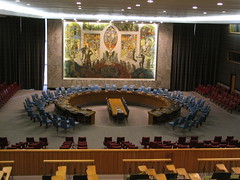 | 76 |
| 10607718308 | space race | lasted from 1955 to 1972; a competition between the Soviet Union and the United States for supremacy in spaceflight capability; pioneered advancements such as artificial satellites, as well as manned and unmanned missions into outer space |  | 77 |
| 10607718309 | sphere of influence | a concept in which a state or organization has a level of cultural, economic, military, or political exclusivity, accommodating to the interests of powers outside the sphere; examples include European "semi-colony" of China |  | 78 |
| 10607718310 | Joseph Stalin | lived from 1878 to 1953; the leader of the Soviet Union from 1922 to 1952; implemented a highly centralized command economy, which resulted in the transformation of Russian society from agrarian to industrialized; imprisoned millions in labor camps and deported many to remote areas; issued the Great Purges, in which hundreds of thousands, including many prominent communists, were executed |  | 79 |
| 10607718311 | theory of relativity | theory which is composed of special relativity and general relativity; proposed by Albert Einstein; proposes that measurements of various quantities are relative to the velocities of observers, space and time should be considered together and in relation to each other (Spacetime), and the speed of light is constant | 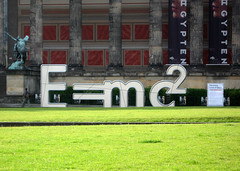 | 80 |
| 10607718312 | Third World | term which describes countries that were less economically developed than the US/Western Europe or the Communist nations. |  | 81 |
| 10607718313 | total war | war which requires the mobilization of each country's entire populations | 82 | |
| 10607718314 | transnational corporations | a.k.a multi-national corporation; an organization that owns or controls production or services facilities in one or more countries other than its home country | 83 | |
| 10607718315 | Treaty of Versailles | treaty which formally concluded the World War I in 1919; established the conditions for a World War II; Germany losses colonial empire and 15% of its European territory, required to pay heavy reparations to the winners, had its military forces severely restricted, and had to accept sole responsibility for the war; immense German resentment created from the treaty |  | 84 |
| 10607718316 | trench warfare | type of warfare using occupied fighting lines consisting largely of trenches, in which troops are significantly protected from the enemy's small arms fire and are substantially sheltered from artillery; resulted in enormous casualties while gaining or losing a few yards of ground during World War I |  | 85 |
| 10607718317 | Truman Doctrine | an international relations policy set by the U.S. President Harry Truman in a speech on March 12, 1947; stated that the U.S. would support Greece and Turkey with economic and military aid to prevent them from falling into the Soviet sphere; often referred to as the beginning of the US policy of containment |  | 86 |
| 10607718318 | United Nations | organization established in 1945 as a successor to the League of Nations; attempts to find solutions to global problems and deal with virtually any matter of concern to humanity |  | 87 |
| 10607718319 | Vietnam War | war which occurred in Vietnam, Laos, and Cambodia from 1956 to 1975; U.S. entered the war to prevent South Vietnam from becoming communist, as a result of its containment policy; resulted in the unification of Vietnam under a communist government and the spread of communism to Cambodia and Laos |  | 88 |
| 10607718320 | Weimar Republic | the federal republic and semi-presidential representative democracy established in 1919 in Germany to replace the imperial form of government after World War I; lasted until the Nazi Party rose to power in 1933; faced numerous problems, including hyperinflation, political extremists and continuing contentious relationships with the victors of World War I |  | 89 |
| 10607718321 | Winston Churchill | lived from 1874 to 1965; British politician; Prime Minister of the United Kingdom from 1940 to 1945 and from 1951 to 1955 |  | 90 |
| 10607718322 | weapon of mass destruction | WMD; a weapon which has the capability to kill large numbers of people and decimate large swaths of land | 91 | |
| 10607718323 | Woodrow Wilson | lived from 1856 to 1924; 28th President of the United States (1913-1921); leader of the Progressive Movement; famous for his Fourteen Points, which sought to avoid another worldwide conflict |  | 92 |
| 10607718324 | Fourteen Points | a statement given on January 8, 1918 by United States President Woodrow Wilson declaring that World War I was being fought for a moral cause and called for postwar peace in Europe | 93 | |
| 10607718325 | World Bank | a United Nations international financial institution that provides loans to developing countries for capital programs; its primary goal is to reduce poverty | 94 | |
| 10607718326 | World War I | war which lasted from 1914 to 1918; also known as the Great War; pitted the Allies (United Kingdom, France, Russia, Italy, Japan, and the United States) and the Central Powers (Germany, Austria-Hungary, the Ottoman Empire, and Bulgaria); resulted in an Allied victory and Treaty of Versailles, which set the stage for another world war |  | 95 |
| 10607718327 | World War II | war which lasted from 1939 to 1945; pitted the Allied Powers (Soviet Union, United Kingdom, United States, China and France) against the Axis Powers (Germany, Japan, and Italy); resulted in an Allied victory, the creation of the United Nations, and set the stage for the Cold War |  | 96 |
| 10607718328 | World Trade Organization | WTO; established in 1994 by the 123 members of GATT; took over GATT activities in 1995; developed into a forum for settling international trade disputes | 97 | |
| 10607718329 | Yalta Conference | conference which lasted from February 4 to February 11, 1945; meeting attended by President Franklin D. Roosevelt, Prime Minister Winston Churchill and Premier Joseph Stalin for the purpose of discussing Europe's post-war reorganization; convened in the Livadia Palace near Yalta in Crimea |  | 98 |
| 10607718330 | Zionist Movement | the national movement of Jews and Jewish culture that supports the creation of a Jewish homeland in the territory defined as the Land of Israel |  | 99 |
| 10607718331 | Brazilian Solution | Combination of dictatorship, violent repression, and gov't promotion of industrialization in South American countries | 100 | |
| 10607718332 | Universal Declaration of Human Rights | A 1946 United Nations covenant binding signatory nations to the observance of specified rights. | 101 | |
| 10607718333 | nongovernmental organizations | Organizations that are not established or associated with any specific organizations. They may be recognized, however, they run on their own. Examples are Green Peace and Amnesty International. | 102 | |
| 10607718334 | Tiananmen Square | Site in Beijing where Chinese students and workers gathered to demand greater political openness in 1989. The demonstration was crushed by Chinese military with great loss of life. |  | 103 |
| 10607718335 | keiretsu | Japanese business groups after the post-WWII dismantling of the zaibatsu. They are Alliances of corporations each often centered around a bank. They dominate the post-WWII Japanese economy. | 104 | |
| 10607718336 | Salvador Allende | The first Marxist politician elected president in the Americas. He was elected president of Chile in 1970 and overthrown by a US-backed military coup in 1973. | 105 | |
| 10607718337 | Warsaw Pact | An alliance between the Soviet Union and other Eastern European nations. This was in response to the NATO |  | 106 |
AP WORLD HISTORY GEOGRAPHY Flashcards
Terms : Hide Images
| 10701989228 | North America |  | 0 | |
| 10701989229 | South America |  | 1 | |
| 10701989230 | Australia |  | 2 | |
| 10701989231 | Europe |  | 3 | |
| 10701989232 | Antartica |  | 4 | |
| 10701989233 | Asia |  | 5 | |
| 10701989234 | Africa |  | 6 | |
| 10701989235 | Gobi Desert |  | 7 | |
| 10701989236 | Kalahari Desert |  | 8 | |
| 10701989237 | Sahara Desert |  | 9 | |
| 10701989238 | Arabian Desert |  | 10 | |
| 10701989239 | Himalayas |  | 11 | |
| 10701989240 | Hindu Kush |  | 12 | |
| 10701989241 | Andes |  | 13 | |
| 10701989242 | Alps |  | 14 | |
| 10701989243 | Appalachians |  | 15 | |
| 10701989244 | Rocky Mountains |  | 16 | |
| 10701989245 | Balkans |  | 17 | |
| 10701989246 | Pyrenees Mountains |  | 18 | |
| 10701989247 | Ural Mountains |  | 19 | |
| 10701989248 | Nile River |  | 20 | |
| 10701989249 | Tigris River |  | 21 | |
| 10701989250 | Euphrates River |  | 22 | |
| 10701989251 | Amazon River |  | 23 | |
| 10701989252 | Indus River |  | 24 | |
| 10701989253 | Yellow (Huang He) River |  | 25 | |
| 10701989254 | Yangtze River |  | 26 | |
| 10701989255 | Ganges River |  | 27 | |
| 10701989256 | Mekong River |  | 28 | |
| 10701989257 | Danube River |  | 29 | |
| 10701989258 | Congo River |  | 30 | |
| 10701989259 | Niger River |  | 31 | |
| 10701989260 | Rhine River |  | 32 | |
| 10701989261 | Bosporus Strait |  | 33 | |
| 10701989262 | Strait of Magellan |  | 34 | |
| 10701989263 | Strait of Gibraltar |  | 35 | |
| 10701989264 | Strait of Malacca |  | 36 | |
| 10701989265 | Atlantic Ocean |  | 37 | |
| 10701989266 | Pacific Ocean |  | 38 | |
| 10701989267 | Indian Ocean |  | 39 | |
| 10701989268 | Arctic Ocean |  | 40 | |
| 10701989269 | North Sea |  | 41 | |
| 10701989270 | Baltic Sea |  | 42 | |
| 10701989271 | English Channel |  | 43 | |
| 10701989272 | Mediterranean Sea |  | 44 | |
| 10701989273 | Adriatic Sea |  | 45 | |
| 10701989274 | Aegean Sea |  | 46 | |
| 10701989275 | Black Sea |  | 47 | |
| 10701989276 | Caspian Sea |  | 48 | |
| 10701989277 | Red Sea |  | 49 | |
| 10701989278 | Persian Gulf |  | 50 | |
| 10701989279 | Arabian Sea |  | 51 | |
| 10701989280 | South China Sea |  | 52 | |
| 10701989281 | Sea of Japan |  | 53 | |
| 10701989282 | Caribbean Sea |  | 54 | |
| 10701989283 | Gulf of Mexico |  | 55 | |
| 10701989284 | Arabian Peninsula |  | 56 | |
| 10701989285 | Balkan Peninsula | | 57 | |
| 10701989286 | Crimean Peninsula |  | 58 | |
| 10701989287 | Horn of Africa |  | 59 | |
| 10701989288 | Iberian Peninsula |  | 60 | |
| 10701989289 | Yucatan Peninsula |  | 61 | |
| 10701989290 | Great Rift Valley |  | 62 | |
| 10701989291 | Asian Steppe |  | 63 | |
| 10701989292 | Sinai Peninsula |  | 64 |
Pages

Need Help?
We hope your visit has been a productive one. If you're having any problems, or would like to give some feedback, we'd love to hear from you.
For general help, questions, and suggestions, try our dedicated support forums.
If you need to contact the Course-Notes.Org web experience team, please use our contact form.
Need Notes?
While we strive to provide the most comprehensive notes for as many high school textbooks as possible, there are certainly going to be some that we miss. Drop us a note and let us know which textbooks you need. Be sure to include which edition of the textbook you are using! If we see enough demand, we'll do whatever we can to get those notes up on the site for you!
