

Flashcards
AP World History (Chapter 1-6 Review) Flashcards
Terms : Hide Images
| 5362263031 | (1)Hunting and gathering societies | organize rather small groups into political units | 0 | |
| 5362263032 | (1)The paleolithic age refers to | The period in which simple stone tools were developed | 1 | |
| 5362263033 | (1)A characteristic of the human species before the sdvent of civilization was | the ability to spread to various geographic settings and climate zones | 2 | |
| 5362263034 | (1)The development of agriculture caused important changes in all of the following EXCEPT | The tendancy to believe in many gods | 3 | |
| 5362263035 | (1)The neolithic revolution occured first in | the middle east | 4 | |
| 5362263036 | (1)Why did the origional inhabitants of austrailia not develop agriculture? | They were too isolated to learn of developments elsewhere until recently | 5 | |
| 5362263037 | (1)once developed, metal tools were preferred over stone tools for all of the following EXCEPT | they were easier for ordinary people to make at home. | 6 | |
| 5362263038 | (1)A society is almost certainly a civilization if | it practices sedintary agriculture | 7 | |
| 5362263039 | (1)The development of writing | helps explain why governments could become more formal and bureaucratic | 8 | |
| 5362263040 | (1)Sumerian civilization produced the first | written law code | 9 | |
| 5362263041 | (1)Egypt differed from mesopotamian civilization by stressing | well-organized, durable empires | 10 | |
| 5362263042 | (1)Which river valley civilization was most completely destroyed by natural disasters such as climate change? | Indus | 11 | |
| 5362263043 | (1)among the early river civilizations | The Huanghe culture in china was the most isolated | 12 | |
| 5362263044 | (1)Jewish monotheism | emphasized the power and abstraction of god. | 13 | |
| 5362263045 | (1)which of the following areas was NOT one of the earliest civilizations to develop? | West Africa | 14 | |
| 5362263046 | (2)Chinese views of nature emphasized | Harmony and balance | 15 | |
| 5362263047 | (2)which of the following groups was considered "low standing" in official chinese social hierarchy? | Merchants | 16 | |
| 5362263048 | (2)Women in Han chinese society | Sometimes become quite powerful in a household | 17 | |
| 5362263049 | (2)The Qin dynasty differed from the Zhou in that | it was more centralized | 18 | |
| 5362263050 | (2)A famous example of "cultural diffusion" in early chinese history was | The introduction and spread of Buddhism from India | 19 | |
| 5362263051 | (2)The chinese government accepted Daoism for all of the following reasons EXCEPT | Daoists believed that nobles were holier than peasants | 20 | |
| 5362263052 | (2)Chinese art featured | careful craftsmanship and detail work | 21 | |
| 5362263053 | (2)A "dynasty" in chinese history was | a family that passed the imperial title from generation to generation | 22 | |
| 5362263054 | (2)One difference between classical china and the earlier huanghe river valley civilization was what | human sacrifices were suppressed | 23 | |
| 5362263055 | (2)One of chinas key economic strengths was | high levels of technological innovation | 24 | |
| 5362263056 | (2)All of the following constituted a function of government in Han china EXCEPT | schools for peasant boys | 25 | |
| 5362263057 | (2) ceremony became an important part of upper-class chinese life because | the chinese believed that it would help unify society and prevent greed. | 26 | |
| 5362263058 | (2)One difference between classical civilizations and river valley civilizations was that in classical civilizations | Political organizations were more elaborate | 27 | |
| 5362263059 | (2)Which of the following was a confucian belief? | A good society has a hierarchy both in family and state | 28 | |
| 5362263060 | (2)The "son of Heaven" concept was designed to promote all of the following EXCEPT | priests control of the state | 29 | |
| 5362263061 | (2)Daoists would agree with confucianists on all of the following EXCEPT | the importance of political activity | 30 | |
| 5362263062 | (3)Hinduism urged that | all living creatures participated in the divine essence | 31 | |
| 5362263063 | (3)Compared to china, Indian social and economic structure | gave a stronger role to merchants | 32 | |
| 5362263064 | (3)In the classical period, both china and india | showed considerable tolerance for different religions | 33 | |
| 5362263065 | (3)Confucian and Hindu values both | Helped justify and preserve social inequality. | 34 | |
| 5362263066 | (3)In contrast to china, the social values that developed in classical India | encouraged greater emotional spontaneity | 35 | |
| 5362263067 | (3)Nalanda became famous for | its university that attracted students from all over Asia | 36 | |
| 5362263068 | (3)Indias trading network involved direct contact with all of the following EXCEPT | Russia | 37 | |
| 5362263069 | (3)Indias political tradition | Stressed the importance of regional and local units | 38 | |
| 5362263070 | (3)The mauryan dynasty differed from the gupta dynasty in that | it ruled a larger territory | 39 | |
| 5362263071 | (3)Compared to china, India | had greater contact with other societies and civilizations | 40 | |
| 5362263072 | (3)The indian caste system served to an extent as a political institution by | enforcing rules about social behavior | 41 | |
| 5362263073 | (3)Buddhism differed from Hinduism by not believing | in the caste system | 42 | |
| 5362263074 | (3)The aryan conquerors brought to india | distinctive religious ideas | 43 | |
| 5362263075 | (3)"Nirvana" meant | full union with the divine essence | 44 | |
| 5362263076 | (3)Hindu ethics involved | emphasis on an individual carrying out the obligations of life. | 45 | |
| 5362263077 | (4)If the greek genius was politics, the roman genius was | engineering | 46 | |
| 5362263078 | (4)The two mediterranean powers fighting in the punic wars were | carthage and rome | 47 | |
| 5362263079 | (4)Compared to modern american ideas about democracy, athenian democracy was distinctive in | Urging that all citizens participate directly in lawmaking and policymaking | 48 | |
| 5362263080 | (4)Greek politics resembled indian politics in | the tendency of regional fragmentation | 49 | |
| 5362263081 | (4)From a confucian viewpoint, the roman empire might have been criticized for placing too much confidence in | laws rather than trained officials | 50 | |
| 5362263082 | (4)Republical romans and democratic athenians would have agreed that all of the following were politically important | division of powers within the state | 51 | |
| 5362263083 | (4)the senate of republican rome particularly represented | the landed aristocracy | 52 | |
| 5362263084 | (4)roman emperors tried to prevent popular disorder by | organizing food supplies and distribution | 53 | |
| 5362263085 | (4)The roman empire | tolerated local political and religious diversity | 54 | |
| 5362263086 | (4)The socratic method emphasized the importance of | questioning | 55 | |
| 5362263087 | (4)The greek and Hellenistic approach in science | used mathematics to try and explain natures patterns | 56 | |
| 5362263088 | (4)Hellenistic society was known for its advances in | medicine and geometry | 57 | |
| 5362263089 | (4)Compared to chinese architecture, Greek and roman architecture | featured monumental styles | 58 | |
| 5362263090 | (4)Greek and roman agriculture | tended to develop large, commercial estates. | 59 | |
| 5362263091 | (4)Both rome and the ancient greeks depended on slavery. one result of this was | both groups lagged in technological advances when compared to the chinese or the indians. | 60 | |
| 5362263092 | (5)One important early symptom of romes decline was | the drop in population due to a series of plagues | 61 | |
| 5362263093 | (5)Everywhere it spread, Buddhism stressed | meditation and ethical behavior | 62 | |
| 5362263094 | (5)Compared to Hinduism and Buddhism, all of the following constitute distinctive features of late-roman christianity EXCEPT | non-believers cannot join the church | 63 | |
| 5362263095 | (5)The end of the gupta empire differed from the decline of rome in that it did not involve | the introduction of a new religion for the majority | 64 | |
| 5362263096 | (5)Monasticism first developed in italy under the leadership of | socrates | 65 | |
| 5362263097 | (5)after 200 C.E., an increasing number of people in asia, europe and north africa began to adapt faiths characterized by | animism | 66 | |
| 5362263098 | (5)Despite major differences, christianity, hinduism, and buddhism all show interest in | life after death | 67 | |
| 5362263099 | (5)By 600 C.E., an early civilization was beginning to take shape in | brazil | 68 | |
| 5362263100 | (5)Nomadic invaders often had military advantages over the armies of empires because | they were more skilled as hoursemen | 69 | |
| 5362263101 | (5)Compared to Hinduism, Christians are more likely to | see humans as superior to the rest of nature | 70 | |
| 5362263102 | (5)Japan developed a religion called | Shintoism | 71 | |
| 5362263103 | (5)The "lessons" of late han china and the late roman empire are that the decline of a civilization, whether temporary or permanent | is not simply the result of attack by outside invaders | 72 | |
| 5362263104 | (5)The first kingdoms in eastern Africa below the sahara showed the influence of | egypt and hellenism | 73 | |
| 5362263105 | (5)the eastern portion of the roman empire experienced less decline than the west for all of the following EXCEPT | the east resisted the spread of christianity | 74 | |
| 5362263106 | (5)Which of the following best srvived the hun invasions in india? | hindu beliefs | 75 | |
| 5362263107 | (6)Wich of the following cultures found in the arabian peninsula was most significant in shaping the development of islam? | Bedouin | 76 | |
| 5362263108 | (6)Which of the following statements concerning bedouin society is NOT accurate? | Clans were commonly congregated together in larger tribal groupings | 77 | |
| 5362263109 | (6)What was the Ka'ba? | The religious shrine that was the focus of an annual truce | 78 | |
| 5362263110 | (6)What was the major difference between medina and mecca? | Political dominance in medina was contested between a number of jewish and bedouin tribes. | 79 | |
| 5362263111 | (6)What was the nature of the material culture of bedouin society? | Except in the sedentary agricultural communities of the south, there was little art or archetecture and the chief focus of cultural creativity was oral poetry, | 80 | |
| 5362263112 | (6)What was the initial response of the umayyads to muhammads new faith? | They regarded him as a threat to their wealth and power as he questioned the traditional gods of the ka'ba | 81 | |
| 5362263113 | (6)Which of the following statements concerning muhammads flight to medina is NOT correct? | Muhammad fled from mecca with nearly one quarter of the citys population. | 82 | |
| 5362263114 | (6)What was the principle advantage of the islamic concept of the ummah? | it transcended old tribal boundaries and made possible political unity among arab clans. | 83 | |
| 5362263115 | (6)Which of the following is NOT among the "five pillars" of Islam? | Pilgrimage to medina | 84 | |
| 5362263116 | (6)The office of the political and religious successor of muhammad was called | caliph | 85 | |
| 5362263117 | (6)What was the result of the first civil war between ali and the umayyads? | Despite early successes, Alis faction disintegrated leading to an umayyas victory and alis assassination. | 86 | |
| 5362263118 | (6)The political and theological faction within islam that recognized only ali and the descendants of the family of muhammad as rightful rulers was called | Shi'is | 87 | |
| 5362263119 | (6)What was the umayyad attitude to other religions? | the umayyads displayed tolerance towards the religions of dhimmi peoples | 88 | |
| 5362263120 | (6)What was the most significant of the transormations brought about by the abbasids rise to power? | The mawali were admitted as full members of the islamic community. | 89 | |
| 5362263121 | (6)What was the nature of slavery within the abbasid social system? | Slavery was limited to the non- arab converts to islam, and died out during the period of the abbasid empire. | 90 |
AP World History Chapter 16: The World Economy Flashcards
Terms : Hide Images
| 5772123861 | Vasco De Gama | Explorer who made it to India in 1497. | 0 | |
| 5772123863 | Christopher Columbus | Italian explorer who after getting denied by Portugal, his expeditions were funded by Ferdinand and Isabella of Spain. First sailed to the New World in 1492, and traveled to the west indies, killed thousands of the native people. | 1 | |
| 5772123864 | Ferdinand Magellan | Searched for a passage to the Pacific Ocean, initiated the first circumnavigation of the world, but died on the voyage though his crew finished the trip. | 2 | |
| 5772123868 | Core Nations | Nations typically European that controlled trade all aspects of trade and enjoyed the profits. Ex. Spain made sugar from the west indies be brought back to Spain so they could monitor which nation would receive the sugar (368). | 3 | |
| 5772123869 | Mercantilism | Idea that there was finite wealth, and that sell/export=good, but import=bad, colonies=raw materials to export, and heavy state control (368). | 4 | |
| 5772123870 | Mestizos | People of mixed European and Native American blood who were exposed to major work loads because of estate management systems. | 5 | |
| 5772123872 | Vasco De Balboa | Explorer who went across Panama, first Spaniard to begin a settlement in Mesoamerica that led to conquest the Aztec and Inca empires. | 6 | |
| 5772123873 | Francisco Pizarro | Spanish explorer who conquered the Inca with the help of of smallpox, guns, and metal weapons. | 7 | |
| 5772123874 | New France | French colonies in North America from the St. Lawrence River to along the Great Lakes and down the Mississippi river. Heavily influenced by the Catholic Church. | 8 | |
| 5772123875 | Seven Years' War | War between France and England that took place both in the colonies and in Europe. Between 1756-1763 (373). | 9 | |
| 5772123876 | Treaty of Paris | 1763, after seven year's war, New France went under England control in return for a French sugar island in the Caribbean (373). | 10 | |
| 5772123877 | Cape Colony | Colony established in the Cape of Good Hope, Africa by the Dutch, their settlement led to conflicts with the Bantus. (376). | 11 | |
| 5772123878 | Boers | Name for Dutch Settlers in Cape Colony, Southern Africa (376). | 12 | |
| 5772129534 | Cape of Good Hope | Southern tip of Africa; first circumnavigated in 1488 by Portuguese in search of direct route to India. | 13 | |
| 5772139352 | Prince Henry | Portuguese prince who sponsored navigation, school for study or maritime technology | 14 | |
| 5772144341 | Goa | Indian city developed by the Portuguese as a major Indian Ocean base; developed an important Indo-European population. | 15 | |
| 5772188015 | Calcutta | British East India Company headquarters in Bengal; captured in 1756 by Indians; later became administrative center for populous Bengal | 16 | |
| 5772188016 | Astrolabe | An elaborate inclinometer, historically used by astronomers and navigators, to measure the inclined position in the sky of a celestial body, day or night | 17 | |
| 5772188017 | Cash Crops | A crop produced for its commercial value rather than for use by the grower | 18 | |
| 5772188018 | Okra | Known in many English-speaking countries as ladies' fingers, ochro or gumbo, is a flowering plant in the mallow family | 19 | |
| 5772189205 | Macao | A Portuguese overseas territory in S China, in the delta of the Zhu Jiang River and including two small adjacent islands | 20 | |
| 5772189206 | Colombian Exchange | Interaction between Europe and the Americas; millions of Native Americans died of new diseases; new world crops spread to other world regions; European and Asian animals came to the Americas | 21 | |
| 5772192191 | East India Companies | British, French, and Dutch trading companies that obtained government monopolies of trade to India and Asia; acted independently in their regions | 22 | |
| 5772194299 | Coercive Labor Exchange | A system where the workers were forced to work based on threats, pressure, or intimidation | 23 | |
| 5772197669 | Hernando Cortez | Spanish Conquistador who led an expedition that caused the fall of the Aztec Empire | 24 |
Flashcards
AP World History Isms Flashcards
Terms : Hide Images
| 6019646574 | Socialism | Sharing | 0 | |
| 6019646575 | Liberalism | Progressive change | 1 | |
| 6019648120 | Conservatism | Traditional values | 2 | |
| 6019648121 | Romanticism | Emotions over logic | 3 | |
| 6019649771 | Nationalism | Super patriotism | 4 | |
| 6019649772 | Feminism | Gender Equality | 5 | |
| 6019651629 | Existentialism | Life is meaningless but you have complete free will | 6 | |
| 6019651630 | 8000 BCE | Neolithic Revolution/Agriculture | 7 | |
| 6019653233 | 0 | Jesus | 8 | |
| 6019654769 | 476 CE | Fall of the Roman Empire | 9 | |
| 6019654770 | 622 CE | Muhammad starts Islam | 10 | |
| 6019657025 | 1206 CE | Genghis Khan starts the Mongol Empire | 11 | |
| 6019657026 | 1492 CE | Columbus sailed the ocean blue | 12 | |
| 6019659269 | 1850 CE | Industrial Revolution | 13 | |
| 6019659268 | 1776 CE | The Declaration of Independence, American Revolution | 14 | |
| 6019662896 | 1884 CE | Colonial powers scramble for Africa, height of Imperialism | 15 | |
| 6019730007 | Imperialism | Invasion and conquering | 16 | |
| 6019735001 | Deism | God created the world and then stopped giving a shit | 17 | |
| 6019738055 | Social Darwinism | "Scientific" racism | 18 | |
| 6019740155 | Militarism | Strong military devotion | 19 | |
| 6019743551 | Orientalism | It's impossible to understand the exotic | 20 |
AP World History Vocabulary Flashcards
Terms : Hide Images
| 7961365294 | anachronism | a person or thing that is chronologically out of place | 0 | |
| 7961365295 | apocryphal | not accepted as genuine or authentic | 1 | |
| 7961374655 | assimilate | to absorb a minority or conquered culture into the majority or conquering culture, at times so completely that the absorbed culture ceases to exist | 2 | |
| 7961374656 | dogmatic | expressing personal opinions or beliefs as if they are unquestionably correct and can not be doubted | 3 | |
| 7961378836 | ecclesiastical | relating to a church or religious organization | 4 | |
| 7961389291 | eclectic | selected from different doctrines methods or styles | 5 | |
| 7961389292 | epiphany | a moment of sudden insight or understanding | 6 | |
| 7961393061 | euphemism | a nice or socially acceptable way of saying something unpleasant, harsh, demeaning or crude | 7 | |
| 7961393062 | arbitrary | a random decision or act not based on law or logic and often associated with a tyrannical exercise of power | 8 | |
| 7961400416 | exacerbate | to make a bad situation worse | 9 | |
| 7961403940 | hubris | arrogant conceit, confidence, and pride | 10 | |
| 7961403941 | iconoclast | one who attacks and seeks to disprove cherished traditions or popular beliefs and ideas' a skeptic, renegade, cultural rebel | 11 | |
| 7961403942 | mystical | a spiritual, religious or supernatural meaning or occurrence that can not be known, verified or experienced though the physical senses | 12 | |
| 7961407702 | ostentatious | showy display of wealth or power | 13 | |
| 7961411824 | ironic | happening in the opposite way of what is expected often with an element of mockery or bemusement from an observer's viewpoint | 14 | |
| 7961411825 | secular | not related to religion or a church; worldly | 15 | |
| 7961414845 | substantiate | to prove or verify | 16 | |
| 7961414846 | tenable | capable of being defended | 17 | |
| 7961419452 | virulent | extremely harmful, poisonous, deadly; bitterly vicious and hostile | 18 | |
| 7961419453 | xenophobia | fear and hatered of foreigners, strangers or anything from outside one's own village or region | 19 |
AP World History: Ch. 2 Key Terms Flashcards
Terms : Hide Images
| 9878544640 | Norte Chico | A region along the coast of Peru that possessed a highly-developed urban culture as early as 2500 B.C.E. Characterized by massive stepped pyramids and extensive use of cotton. |  | 0 |
| 9878544641 | Indus Valley | 3rd millennium BC, Elaborately planned cities, standardized measures, irrigated agriculture, written language, no temples kings etc., had a lot of land, no political hierarchy, was abandoned because of mass deforestation, low crop yields, famine, environmental deterioration, etc. their influence continued even to this day (i.e. yoga). Important because it shows how we developed in our cities and economy. |  | 1 |
| 9878544642 | Central Asian/Oxus Civilization | Present day Afgainistan. Large gates and walls. Social hierarchy. focal point for a "Eurasian-wide system of intellectual and commercial exchange. |  | 2 |
| 9878544643 | Olmec Civilization | earliest known American civilization, located in southern Mexico and known for its pyramids and huge stone heads |  | 3 |
| 9878544644 | Uruk | an ancient Sumerian city in Southern Iraq, near the Euphrates, important before 2000 b.c. : exclusive archaeological excavations, notably of a ziggurat and of tablets with very early Sumerian script. |  | 4 |
| 9878544645 | Mohenjo-Daro / Harappa | the two main cities of india, know as twin capitals and both 3 miles in circumference |  | 5 |
| 9878544646 | Epic of Gilgemesh | Mesopotamian flood story that includes legends and myths, the friendship of Gilgamesh and Enkidu |  | 6 |
| 9878544647 | Code of Hammurabi | A collection of 282 laws which were enforced under Hammurabi's Rule. One of the first examples of written law in the ancient civilizations. |  | 7 |
| 9878544648 | Patriarchy | A form of social organization in which a male is the family head and title is traced through the male line |  | 8 |
| 9878544649 | Rise of the State | A process of centralization that took place in the First Civilizations, growing out of the greater complexity or urban life in recognition of the need for coordination, regulation, adjudication, and military leadership |  | 9 |
| 9878544650 | Egypt: "the gift of the Nile" | provided annual and predictable flooding that benefited and provided a sustainable lifestyle for this civilization, also gave them a stable and positive worldview, proved unty and independence and security | 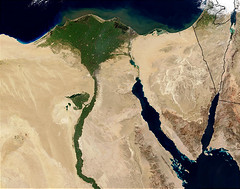 | 10 |
| 9878544651 | Nubia | A civilization to the south of Egypt in the Nile Valley, noted for development of an alphabetic writing system and a major iron working industry by 500 BCE |  | 11 |
| 9878544652 | Paneb | Egyptian criminal. His story is a good example of the darker underside of Egypt. How reliable it is is under question because almost all of the information we have comes from his rival. |  | 12 |
AP World History: Ch. 5 Key Terms Flashcards
Terms : Hide Images
| 9878832434 | China's Scholar-Gentry Class | lived luxuriously, benefited from wealth and from power and prestige, located in both rural and urban areas, had multi-storied houses, fine silk clothes etc |  | 0 |
| 9878832435 | Wang Mang | a high court official of the Han Dynasty who usurped the emperor's throne in 8 c.e. and immediately launched a series of startling reforms |  | 1 |
| 9878832436 | Ge Hong | person born in an aristocratic family who studied Daoism seeing the disorder and disturbances in Chinese daily life, later held several military positions, yearned for solitary and interior life and spend his latest years thinking about legalism Daoism and Confucianism | 2 | |
| 9878832437 | Yellow Turban Rebellion | A peasant revolt starting in 184 c.e. named for the yellow scarves the peasants wore on their head, unifying ideology of Daoism, goal of "Great Peace" a golden age of equality and harmony |  | 3 |
| 9878832438 | Varna | four social classes in India, relating to Caste system |  | 4 |
| 9878832439 | Jati | divisions within the varna, groups of similar people, sub-caste |  | 5 |
| 9878832440 | Ritual Purity | In Indian social practice, the idea that members of higher castes must adhere to strict regulations limiting or forbidding their contact with objects and members of lower castes to preserve their own caste standing and their relationship with the gods. |  | 6 |
| 9878832441 | Greek and Roman Slavery | In the Greek and Roman world, slaves were captives from war and piracy (and their descendants), abandoned children, and the victims of long-distance trade; manumission was common. Among the Greeks, household service was the most common form of slavery, but in parts of the Roman state, thousands of slaves were employed under brutal conditions in the mines and on great plantations. |  | 7 |
| 9878832442 | Spartacus | A Roman gladiator who led the most serious slave revolt in Roman history from 73 to 71 B.C.E.) |  | 8 |
| 9878832443 | The Three obediences | In Chinese Confucian thought, the notion that a woman is permanently subordinate to male control: first to her father, then to her husband, and finally to her son |  | 9 |
| 9878832444 | Patriarchy | a form of social organization in which a male is the family head and title is traced through the male line, |  | 10 |
| 9878832445 | Empress Wu | The only female "emperor" in Chinese history (r. 690-705 C.E.), Empress Wu patronized scholarship, worked to elevate the position of women, and provoked a backlash of Confucian misogynist invective. |  | 11 |
| 9878832446 | Aspasia | A foreign woman resident in Athens (ca. 470-400 B.C.E.) and partner of the statesman Pericles who was famed for her learning and wit. |  | 12 |
| 9878832447 | Pericles | A prominent and influential statesman of ancient Athens (ca. 495-429 B.C.E.), he presided over Athens's Golden Age | 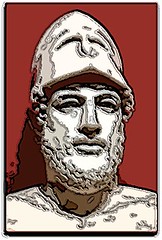 | 13 |
| 9878832448 | Helots | The dependent, semi-enslaved class of ancient Sparta whose social discontent prompted the militarization of Spartan society |  | 14 |
AP World History: Period 2 Key Terms Flashcards
Terms : Hide Images
| 9878883736 | Persian Empire | *Definition:* Major empire that expanded over "world" and was the largest, most impressive empire of its time. *Significance:* The largest empire of its time. Assimilated the conquered and allowed freedom of religion. Centralized government that unified everyone. |  | 0 |
| 9878883737 | Athenian Democracy | *Definition:* Direct democracy (limited to wealthy men) instead of representative. *Significance:* First sound democracy that allowed voting collectively on any matters. Moved away from norm and allowed the future civilizations to build off this idea. |  | 1 |
| 9878883738 | Greco-Persian Wars | *Definition:* Ionian greeks revolted against Persia and Persia declared war on all Greeks. Greeks unified to fight back. *Significance:* Since Persians lost, Greeks gained confidence. Won "freedom" in the voting, citizenship of lowerclassmen. West and East divide viewpoint began. Philosophy spread. Civil war from too much pride. |  | 2 |
| 9878883739 | Hellenistic Era | *Definition:* Alexander the Great's expansion of the Greek World. *Significance:* Advancement in science, math, language. Spread of culture and mixing of cultures. Greeks dominate and their ways spread. |  | 3 |
| 9878883740 | Alexander the Great | *Definition:* King of Macedonia, conquered Persian Empire, founded many Greek settlements. *Significance:* Spread Greek culture in ethnic mixing. Encouraged assimilations and advancement in science and new ways of thinking. |  | 4 |
| 9878883741 | Augustus | *Definition:* First emperor of the Roman Empire (Octavian). *Significance:* Maintained senate and people's opinion. Rules as "First man" and for the "power of the Roman people". Kept peace during transition of Republic to Empire. | 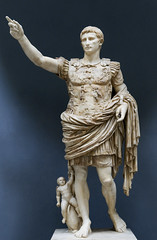 | 5 |
| 9878883742 | Pax Romana | *Definition:* "Roman Peace". The stability and prosperity of early Roman Empire. *Significance:* Imperial Rome's greatest extent and authority. "Perfect" era of Rome. Things got done and advancements happened! |  | 6 |
| 9878883743 | Qin Shihuangdi | *Definition:* "The 1st Emperor from Qin". Forcibly reunited China and established a strong and repressive state. *Significance:* Regrouping of China to an Empire. 10 years = success. Political success and military success and increase in population. |  | 7 |
| 9878883744 | Trung Trac | *Definition:* Vietnamese nationalist and hero. *Significance:* Raised an Army that drove out Chinese for a short period of time. REVOLUTIONARY! avenged country, Hung lineage, and husband. |  | 8 |
| 9878883745 | Han Dynasty | *Definition:* Centralized government focused on Confucianism and education. *Significance:* The "Golden Age of China". Advanced morals, laws, and education of everyone. Civil Service system, work/jobs/government based on merit of the people. Not on social class. |  | 9 |
| 9878883746 | Mauryan Empire | *Definition:* The first state to unify most of India (1st Empire). *Significance:* Unified India, had large military, and impressive political system. The closest "great empire" like Romans and Chinese as they got. Sought to govern with Religious values and teachings. |  | 10 |
| 9878883747 | Ashoka | *Definition:* Emperor of Mauryan India. *Significance:* Conversion to Buddhism. Governance to be enlightened leader. Sought to govern in accord with religious values and moral teachings. |  | 11 |
| 9878883748 | Kushan Empire | *Definition:* A syncretic empire, formed by Yuezhi, in the Bactrian territories in the early 1st century. *Significance:* Allowed for the great flowering of trans-Eurasian mercantile and cultural exchange along the silk road. Reached into northwest India, Pakistan, Afghanistan, and Tajikistan it was a remarkably cosmopolitan place illustrating the mixing and blending of many cultural traditions. | 12 | |
| 9878883785 | Legalism | A Chinese philosophy distinguished by an adherence to clear laws with vigorous punishments. |  | 13 |
| 9878883786 | Confucius (Kong Fuzi) | The founder of Confucianism (551-479 B.C.E.); an aristocrat of northern China who proved to be the greatest influence on Chinese culture in its history; a philosopher and teacher of ethics. |  | 14 |
| 9878883787 | Daoism | A Chinese philosophy/popular religion that advocates simplicity and understanding of the world of nature, as 'the way', the force that moves through all; founded by the legendary figure Laozi. |  | 15 |
| 9878883788 | Upanishads | Indian mystical and philosophical works, written between 800 and 400 B.C.E. |  | 16 |
| 9878883789 | Vedas | The earliest religious texts of India, a collection of ancient poems, hymns, and rituals that were transmitted orally before being written down ca. 600 B.C.E. |  | 17 |
| 9878883790 | Aristotle | A Greek polymath philosopher (384-322 B.C.E.); student of Plato and teacher of Alexander the Great who profoundly influenced Western Thought. |  | 18 |
| 9878883791 | Theravada | "The Teaching of the Elders," the early form of Buddhism according to which the Buddha was a wise teacher but not divine and which emphasizes practices rather than beliefs. |  | 19 |
| 9878883792 | Buddhism | a religion, originated in India that believes life is full of suffering caused by desire and that the way to end this suffering is through enlightenment |  | 20 |
| 9878883793 | Siddhartha Gautama (the Buddha) | The Indian prince who turned ascetic (ca. 566-486 B.C.E.) who founded Buddhism. |  | 21 |
| 9878883794 | Mahayana | "Great Vehicle," the popular development of Buddhism in the early centuries of the Common Era, which gives a much greater role to supernatural beings and proved to be more popular than original (Theravada) Buddhism. |  | 22 |
| 9878883795 | Nirvana | The end goal of Buddhism, in which individual identity is "extinguished" into a state of serenity & great compassion. |  | 23 |
| 9878883796 | Bhagavad Gita | A great Hindu epic text, part of the much larger Mahabharata, which affirms the performance of caste duties as a path to religious liberation. |  | 24 |
| 9878883797 | Judaism | The monotheistic religion developed by the Hebrews, emphasizing a sole personal god (Yahweh/YHWH) with concerns with social justice. |  | 25 |
| 9878883798 | Isaiah | One of the most important prophets of Judaism, whose teachings show the transformation of the religion in favor of compassion and social justice (eighth century B.C.E.) |  | 26 |
| 9878883799 | Greek rationalism | A secularizing system of scientific and philosophic thought that developed in Classical Greece in the period 600 to 300 B.C.E.; it emphasized the power of education and human reason to understand the world in nonreligious terms. |  | 27 |
| 9878883800 | Socrates | The first great Greek philosopher to turn rationalism toward questions of human existence (469-399 B.C.E.) |  | 28 |
| 9878883801 | Plato | A disciple of Socrates whose Dialogues convey the teachings of his master while going beyond them to express Plato's own philosophy; lived from 429 to 348 B.C.E. |  | 29 |
| 9878883802 | Constantine | Roman emperor (r. 306-337 C.E.) whose conversion to Christianity paved the way for the triumph of Christianity in Europe. |  | 30 |
| 9878883803 | Paul of Tarsus (Saint Paul) | Early Christian missionary and teacher; along with the Apostle Peter, one of the foremost leaders of the early Christian Church. The New Testament includes his many epistles (letters) to the early Christian communities. |  | 31 |
| 9878883804 | Jesus of Nazareth | The founder of Christianity believed to be the Son of God and Jewish Messiah (Anointed One) by his followers (ca. 4 B.C.E.-30 B.C.E.) whose death and resurrection made possible forgiveness of sins. |  | 32 |
| 9878883749 | Hinduism | A religion and philosophy developed in ancient India, characterized by a belief in reincarnation, a multiplicity of gods, and the caste system |  | 33 |
| 9878883750 | Monotheism | belief in one God emerging from Judaism and spread by Christianity and Islam over the past 2000 years. |  | 34 |
| 9878883751 | China's Scholar-Gentry Class | lived luxuriously, benefited from wealth and from power and prestige, located in both rural and urban areas, had multi-storied houses, fine silk clothes etc | | 35 |
| 9878883752 | Wang Mang | a high court official of the Han Dynasty who usurped the emperor's throne in 8 c.e. and immediately launched a series of startling reforms | | 36 |
| 9878883753 | Ge Hong | person born in an aristocratic family who studied Daoism seeing the disorder and disturbances in Chinese daily life, later held several military positions, yearned for solitary and interior life and spend his latest years thinking about legalism Daoism and Confucianism | 37 | |
| 9878883754 | Yellow Turban Rebellion | A peasant revolt starting in 184 c.e. named for the yellow scarves the peasants wore on their head, unifying ideology of Daoism, goal of "Great Peace" a golden age of equality and harmony | | 38 |
| 9878883755 | Varna | four social classes in India, relating to Caste system | | 39 |
| 9878883756 | Jati | divisions within the varna, groups of similar people, sub-caste | | 40 |
| 9878883757 | Ritual Purity | In Indian social practice, the idea that members of higher castes must adhere to strict regulations limiting or forbidding their contact with objects and members of lower castes to preserve their own caste standing and their relationship with the gods. | | 41 |
| 9878883758 | Greek and Roman Slavery | In the Greek and Roman world, slaves were captives from war and piracy (and their descendants), abandoned children, and the victims of long-distance trade; manumission was common. Among the Greeks, household service was the most common form of slavery, but in parts of the Roman state, thousands of slaves were employed under brutal conditions in the mines and on great plantations. | | 42 |
| 9878883759 | Spartacus | A Roman gladiator who led the most serious slave revolt in Roman history from 73 to 71 B.C.E.) | | 43 |
| 9878883760 | The Three obediences | In Chinese Confucian thought, the notion that a woman is permanently subordinate to male control: first to her father, then to her husband, and finally to her son | | 44 |
| 9878883761 | Patriarchy | a form of social organization in which a male is the family head and title is traced through the male line, | | 45 |
| 9878883762 | Empress Wu | The only female "emperor" in Chinese history (r. 690-705 C.E.), Empress Wu patronized scholarship, worked to elevate the position of women, and provoked a backlash of Confucian misogynist invective. | | 46 |
| 9878883763 | Aspasia | A foreign woman resident in Athens (ca. 470-400 B.C.E.) and partner of the statesman Pericles who was famed for her learning and wit. | | 47 |
| 9878883764 | Pericles | A prominent and influential statesman of ancient Athens (ca. 495-429 B.C.E.), he presided over Athens's Golden Age | | 48 |
| 9878883765 | Helots | The dependent, semi-enslaved class of ancient Sparta whose social discontent prompted the militarization of Spartan society | | 49 |
| 9878883766 | Meroe | Capital of a flourishing kingdom in southern Nubia from the 300 BCE to 100 CE. In this period Nubian culture shows more independence from Egypt and the influence of sub-Saharan Africa. Deforestation contributed to its decline. | 50 | |
| 9878883767 | Piye | A Kushite ruler who conquered Egypt, declaring himself the "living image of Axum". He thoroughly assimilated to Egyptian culture, and reluctantly went to war while paying respects to the gods. After becoming master of all of Egypt, he departed. | 51 | |
| 9878883768 | Axum | An African empire located in what is now Eritrea & Ethiopia c. 50 CE that was a naval and trading power; Christianity became the kingdom's religion. Brought down by environmental problems. | 52 | |
| 9878883769 | Niger valley civilization | This civilization formed as people flooded from the Sahara in search of water. It had no complete state structure, and existed in clusters of economically specialized settlements. | 53 | |
| 9878883770 | Maya civilization | A well-known Mesoamerican civilization which led to the concept of zero in mathematics and the most elaborate writing system of the Americas. Many achievements took place without a central authority. The civilization collapsed with completeness, but not uniformity. | 54 | |
| 9878883771 | Teotihuacan | The first major metropolis in Mesoamerica in what is today Mexico; collapsed around 800 CE. It is most remembered for the gigantic "pyramid of the sun". | 55 | |
| 9878883772 | Chavin | The first major urban civilization in South America (900-250 BCE). Its capital was located high in the Andes Mountains of what is today called Peru. | 56 | |
| 9878883773 | Moche | A civilization of the north coast of Peru (200-700 C.E.). An important Andean civilization that built extensive irrigation networks as well as impressive urban centers dominated by brick temples. Farmed maize, beans, and squash adopted from Mesoamerica. | 57 | |
| 9878883774 | Wari and Tiwanaku | Interior empires which provided a measure of political integration and cultural commonality for the Andean region, without controlling a continuous band of territory. They differed in economic structure but had no conflicts. | 58 | |
| 9878883775 | Bantu expansion | A major African language family famous for migrations throughout central and southern Africa. | 59 | |
| 9878883776 | Chaco Phenomenon | Encompassing 25,000 square miles, this linked outlying settlements to a center while maintaining a small population. | 60 | |
| 9878883777 | Mound Builders | Native american civilizations of the eastern region of north america that created distinctive earthen works that served as elaborate burial places. | 61 | |
| 9878883778 | Cahokia | A commercial center for regional and long-distance trade in North America located near modern St. Louis. Its hinterlands produced staples for urban consumers. In return, its crafts were exported inland by porters and to North American markets in canoes. | 62 | |
| 9878883779 | Pohnpei | A Micronesian island where a stone and coral urban complex was a ceremonial, administrative and burial center of the Saudeleur dynasty. This demonstrated an example of social complexity | 63 | |
| 9878883780 | Tonga | A Polynesian island displaying social complexity through rulers, known as Tu'i Tonga, and their royal court. They displayed early practice of socialism. | 64 | |
| 9878883781 | mana | A spiritual energy or power, associated primarily with chiefs and demonstrated by success. | 65 | |
| 9878883782 | tapu | To maintain the purity of mana, this concept of ritual restriction or prohibitions elevated someone or something above the ordinary. | 66 | |
| 9878883783 | Yap | An island involving trade of commodities as a set of tributary relationships. Tributes would be given to high-ranking people who would give in return something worth more. The whole system was supported by a fear of sorcery. | 67 |
Pages

Need Help?
We hope your visit has been a productive one. If you're having any problems, or would like to give some feedback, we'd love to hear from you.
For general help, questions, and suggestions, try our dedicated support forums.
If you need to contact the Course-Notes.Org web experience team, please use our contact form.
Need Notes?
While we strive to provide the most comprehensive notes for as many high school textbooks as possible, there are certainly going to be some that we miss. Drop us a note and let us know which textbooks you need. Be sure to include which edition of the textbook you are using! If we see enough demand, we'll do whatever we can to get those notes up on the site for you!
