| 7570519767 | African National Congress | ANC; South African political party formed in 1912; strongly opposed to apartheid | | 0 |
| 7570519768 | apartheid | "separateness"; a series of laws initiated by the Afrikaner National Party in South Africa which was designed to divide South African society by skin color and ethnicity; this system also reserved South Africa's resources for whites |  | 1 |
| 7570519769 | Ayatollah Ruholla Khomeini | lived from 1900 to 1989; religious leader of the Islamic Republic of Iran | | 2 |
| 7570519770 | Big Bang theory | theory which suggests that at some moment all matter in the universe was contained in a single point, which is considered the beginning of the universe | | 3 |
| 7570519771 | Vladimir Lenin | born Vladimir Ilyich Ulyanov; lived from 1870 to 1924; the leader of the Russian Soviet Federative Socialist Republic and premier of the Soviet Union |  | 4 |
| 7570519772 | Central Powers | one of the two warring factions in World War I; composed of Germany, Austria-Hungary, the Ottoman Empire and Bulgaria; also known as the Quadruple Alliance | | 5 |
| 7570519773 | Charles de Gaulle | lived from 1890 to 1970; French general and statesman who led French forces in World War II; served as the president of France from 1959 to 1969 |  | 6 |
| 7570519774 | Che Guevara | lived from 1928 to 1967; Argentine marxist revolutionary who was a major figure in the Cuban Revolution |  | 7 |
| 7570519775 | Chiang Kai-shek | lived from 1887 to 1975; Chinese military officer who was leader of the Guomindang; fled to Taiwan after the Chinese Communist Party came to power in China |  | 8 |
| 7570519776 | Chinese Revolution | prolonged communist movement in China and lasted from 1946 to 1950; resulted in the communist takeover of mainland China |  | 9 |
| 7570519777 | Cold War | a sustained state of political and military tension between members of NATO and members of the Warsaw Pact; dissolution of the Soviet Union was the end of this "conflict" | | 10 |
| 7570519778 | collectivization | also known as collective farming and communal farming; system in which the holdings of several farmers are run collectively as a unit; imposed by the government in the Soviet Union | | 11 |
| 7570519779 | command economy | a.k.a planned economy; the economic system in which decisions regarding production and investment are embodied in a plan formulated by a central authority, usually by a public body such as a government agency | | 12 |
| 7570519780 | containment | the United States policy to prevent the spread of communism abroad during the Cold War; a response to a series of moves by the Soviet Union to enlarge communist influence in Eastern Europe, China, Korea, Africa, and Vietnam | | 13 |
| 7570519781 | Cuban missile crisis | a 13-day confrontation in October 1962 between the Soviet Union and the United States; Soviet missiles moved to Cuban soil in an agreement by Fidel Castro and Nikita Khrushchev; U.S. responds by blockading Cuba; Khrushchev and U.S. President John F. Kennedy reach an agreement in which the Soviets would remove their missiles from Cuba in return for an American promise not to invade Cuba |  | 14 |
| 7570519782 | cultural imperialism | the practice of promoting or imposing one's culture on another, usually between powerful societies and less-powerful ones | | 15 |
| 7570519783 | Cultural Revolution | also known as the Great Proletarian Cultural Revolution; launched by Mao in the late 1960's; aimed to combat the capitalist tendencies he believed had penetrated even the highest ranks of the communist party itself; involved new policies to bring health care and education to the countryside and reinvigorate earlier efforts at rural industrialization under local control | | 16 |
| 7570519784 | decolonization | the process of the dissolution of colonial territories and the establishment of independent nations | | 17 |
| 7570519785 | Deng Xiaoping | lived from 1904 to 1997; successor to Mao Zedong; reformist who sought to incorporate The People's Republic of China into the world economy; dismantled collectivized farming, state enterprises given greater authority, welcomed foreign investment; crushed democracy movement in Beijing's Tiananmen Square |  | 18 |
| 7570519786 | environmentalism | ideology which regards the environmental concerns | | 19 |
| 7570519787 | European Economic Community | EEC; also known as the Common Market; founded in 1957; originally consisted of Italy, France, West Germany, Belgium, the Netherlands, and Luxembourg; expanded membership to almost all of Europe, including former communist states; renamed the European Union in 1994 | | 20 |
| 7570519788 | Fascism | political ideology which was intensely nationalistic; celebrated action and placed faith in charismatic leaders; and condemned individualism, liberalism, feminism, parliamentary democracy, and communism; adopted by Italy, Germany, and Japan in the years following World War I | | 21 |
| 7570519789 | Five Year Plan | a planned economy in which a committee came together to determine rations | | 22 |
| 7570519790 | fundamentalism | ideology which demands strict adherence to orthodox theological doctrines | | 23 |
| 7570519791 | Gamel Abdel Nasser | lived from 1918 to 1970; second President of Egypt from 1956 to 1970; planned the overthrow of the monarchy and sought to nationalize the Suez Canal | | 24 |
| 7570519792 | UN General Assembly | one of the six principal organs of the United Nations and the only one in which all member nations have equal representation; oversee the budget of the United Nations, appoint the non-permanent members to the Security Council, receive reports from other parts of the United Nations and make recommendations in the form of General Assembly Resolutions |  | 25 |
| 7570519793 | genocide | the systematic destruction of all or part of a racial, ethnic, religious or national group | | 26 |
| 7570519794 | Getulio Vargas | lived from 1882 to 1954; ruled Brazil from 1930 to 1945; discrediting of established export elites during the Great Depression leads to his dictatorship; supported the military; took steps to modernize Brazil's urban industrial sector | | 27 |
| 7570519795 | global warming | term which refers to the continuing rise in the average temperature of Earth's climate system; viewed as a result of human emissions of greenhouse gases | | 28 |
| 7570519796 | globalization of democracy | the spread of democracy throughout the world | | 29 |
| 7570519797 | Great Depression | economic depression as a result of the crash of the American stock market; lasted from 1929 until World War II; causes drop in world trade, loss of investment, and businesses unable to make profit; countries or colonies tied to exporting one or two products hardhit as the West consumed less; conditions resulting in the Great Depression led to widespread unemployment and social tensions | 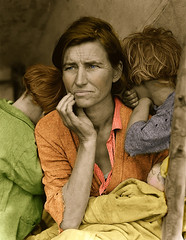 | 30 |
| 7570519798 | Great Leap Forward | lasted from 1958 to 1960; marked Mao's response to distortions of Chinese socialism; promoted smallscale industrialization in rural areas; tried to foster widespread and practical technological education for all rather than relying on a small elite of highly trained technical experts; envisioned an immediate transition to full communism in the "people's communes" rather than waiting for industrial development to provide the material basis for that transition; massive famine which followed temporarily discredited Mao's radicalism | | 31 |
| 7570519799 | Great Purges | also known as the Terror; period of immense paranoia in the Soviet Union of the late 1930's in which communist members accused each other being corrupted by capitalist ideals; enveloped tens of thousands of prominent communists, including all of Lenin's top associates, and millions more of ordinary peoples; based on suspicious associations in the past, denunciations by colleagues, connections to foreign countries, or bad luck; such people were arrested in the middle of the night, then tried and sentenced to either death or long harsh years in remote labor camps known as gulags; close to 1 million peoples executed between 1936 and 1941; additional 4 to 5 million people sent to the gulag, where they were forced to work in horrendous conditions and died in appalling numbers | | 32 |
| 7570519800 | Green Revolution | a series of research, and development, and technology transfer initiatives, occurring between the 1940s and the late 1960s, that increased agriculture production worldwide, particularly in the developing world | | 33 |
| 7570519801 | Adolf Hitler | lived from 1889 to 1945; leader of the Nazi party in Germany; chancellor of Germany from 1933 to 1945; dictator of Nazi Germany from 1934 to 1945 |  | 34 |
| 7570519802 | Ho Chi Minh | lived from 1890 to 1969; Vietnamese communist revolutionary leader; was prime minister (from 1945 to 1955) and president (from 1945 to 1969) of the Democratic Republic of Vietnam |  | 35 |
| 7570519803 | Holocaust | the mass murder of approximately six million Jews during World War II; a program of systematic state-sponsored murder by Nazi Germany; led by Adolf Hitler and the Nazi Party | | 36 |
| 7570519804 | International Monetary Fund | IMF; established in 1944 by the Bretton Woods Conference in New Hampshire; sought to promote market economies, free trade, and high growth rates | | 37 |
| 7570519805 | Indian National Congress | INC; organization established in 1885; gave expression to the idea of India as a single nation; played a major role in India's independence movement from British colonial rule | | 38 |
| 7570519806 | Iranian Cultural Revolution | lasted from 1980 to 198; a period following the Iranian Revolution where intellectuals of Iran were purged of Western and non-Islamic influences to bring it in line with Shia Islam; closed universities between 1980 and 1983, banned many books, and purged thousands of students and lecturers from schools | | 39 |
| 7570519807 | iron curtain | the heavily fortified border between Eastern and Western Europe | | 40 |
| 7570519808 | Islamic renewal | also referred to as Islamic revival; refers to a renewing of the Islamic religion throughout the Islamic world, that began roughly sometime in 1970s; sought greater religious piety and a growing adoption of Islamic culture | | 41 |
| 7570519809 | Jawaharlal Nehru | lived from 1889 to 1964; first Prime Minister of India and was a leading figure in the independence movement against British rule over India |  | 42 |
| 7570519810 | League of Arab States | a regional organization of Arab countries in and around North Africa, the Horn of Africa, and Southwest Asia; formed in Cairo in 1945 with six members: Egypt, Iraq, Transjordan (Jordan), Lebanon, Saudi Arabia and Syria; currently has 22 members | | 43 |
| 7570519811 | League of Nations | international peacekeeping organization founded as a result of the First World World; proposed by US president Woodrow Wilson; committed to the principle of "collective security" and intended to avoid the repetition of war | | 44 |
| 7570519812 | Mahatma Gandhi | lived from 1869 to 1948; leader of the Indian nationalist movement during British control over India; used nonviolent civil disobedience, such as hunger strikes |  | 45 |
| 7570519813 | Mao Zedong | lived from 1893 to 1976; Chinese communist revolutionary and leader of the People's Republic of China from its establishment 1949 to his death in 1976 |  | 46 |
| 7570519814 | Marshall Plan | plan which sought to rebuild and reshape devastated European economies; funneled Europe some $12 billion with numerous advisers and technicians; motivated by combination of humanitarian concern, a desire to prevent a new depression by creating overseas customers for American goods, and interest in undermining the growing appeal of European communist parties; required European nations to cooperate with one another |  | 47 |
| 7570519815 | Mikhail Gorbachev | born in 1931; last general secretary of the Soviet Union (1985 to 1991); passed reforms such as perestroika and policies such as glasnost which led to the dissolution of the Soviet Union |  | 48 |
| 7570519816 | military-industrial complex | the policy and monetary relationships which exist between legislators, national armed forces, and the military industrial base that supports them; include political contributions, political approval for military spending, lobbying to support bureaucracies, and oversight of the industry; most often used in reference to the system behind the military of the United States | | 49 |
| 7570519817 | Muhammad Ali Jinnah | lived from 1876 to 1948; founder of Pakistan and the leader of the All-India Muslim League until Pakistan's independence |  | 50 |
| 7570519818 | Munich Conference | a conference in Munich which permitted Nazi Germany's annexation of portions of Czechoslovakia along German borders mainly inhabited by German speakers; territory now known as "Sudetenland"; widely regarded as a failed act of appeasement toward Germany; agreement was signed in the early hours of 30 September 1938; agreement was signed by Germany, France, the United Kingdom, and Italy; Czechoslovakia not invited to the conference | | 51 |
| 7570519819 | Benito Mussolini | lived from 1883 to 1945; leader of the Italian National Fascist Party; prime minister of Italy from 1922 to 1943 |  | 52 |
| 7570519820 | Mustafa Kemal Ataturk | lived from 1881 to 1938; founder and the first President of the Republic of Turkey; passed a series of reforms to transform the former Ottoman Empire into a modern, secular, and democratic nation | | 53 |
| 7570519821 | North American Free Trade Agreement | NAFTA; regional alliance founded in 1993 and consists of Canada, Mexico, and the United States; the world's second largest free-trade zone | | 54 |
| 7570519822 | North Atlantic Treaty Organization | NATO; a military alliance based on the North Atlantic Treaty which was signed in 1949; alliance in which its member states agree to mutual defense in response to an attack by any external party; consists of 28 member states across North America and Europe |  | 55 |
| 7570519823 | Nazi Germany | a.k.a the Third Reich; lasted from 1933 to 1945; Germany under the leadership of Adolf Hitler and the Nazi Party | | 56 |
| 7570519824 | Nelson Mandela | lived from 1918 to 2013; South African anti-apartheid revolutionary and politician; President of South Africa from 1994 to 1999; served as President of the African National Congress from 1991 to 1997 |  | 57 |
| 7570519825 | New Deal | a series of reforms proposed by United States President Woodrow Wilson; lasted from 1933 to 1942; experimental combination of reforms seeking to restart economic growth and prevent similar failures in the future; reflected the thinking of British economist John Maynard Keynes; argued that government actions and spending programs could moderate recessions and depressions; consisted of immediate programs of public spending (for dams, highways, bridges, and parks) and long-term reforms, such as the Social Security system, minimum wage, and various relief and welfare programs | | 58 |
| 7570519826 | non-governmental organization | NGO; an organization that is neither a part of a government nor a conventional for-profit business | | 59 |
| 7570519827 | Nikita Khrushchev | lived from 1894 to 1971; leader of the Soviet Union from 1953 to 1964; responsible for the de-Stalinization of the Soviet Union and backing of the Soviet space program |  | 60 |
| 7570519828 | Osama bin Laden | lived from 1957 to 2011; Islamic militant who was the leader of the terrorist group al-Qaeda; mastermind behind the 9/11 attacks; played a key role in the US-backed effort to aid mujahideen who fought Soviet forces in Afghanistan |  | 61 |
| 7570519829 | al-Qaeda | "the base"; terrorist organization formerly headed by Osama bin Laden; behind the 9/11 attacks | | 62 |
| 7570519830 | Palestinian Liberation Organization | PLO; an organization founded in 1964 with the purpose of creating an independent State of Palestine | | 63 |
| 7570519831 | Pan-Arabism | an ideology proposing the unification of the countries of North Africa and West Asia from the Atlantic Ocean to the Arabian Sea, referred to as the Arab World | | 64 |
| 7570519832 | Pan-Africanism | an ideology which encourages the unity of Africans worldwide | | 65 |
| 7570519833 | HIV/AIDS epidemic | epidemic which was first discovered in 1981 among homosexual men and intravenous drug users in New York and San Francisco; eventually became widespread around the world, particularly sub-Saharan Africa; virus attacks and destroys the immune system, which causes a fatal disorder in the immune system; spread through sexual contact with an infected person, contact with contaminated blood, and transmission from mother to child
during pregnancy and breastfeeding | | 66 |
| 7570519834 | ebola epidemic | an epidemic caused by the Ebola virus; symptoms include fever, throat and muscle pains, headaches, nausea, vomiting and diarrhea, and decreased functioning of the liver and kidneys; an 2014 outbreak in West Africa has led to a reported 142 deaths | | 67 |
| 7570519835 | influenza epidemic | an epidemic caused by the H1N1 influenza virus; lasted from 1918 to 1920; resulted in 50 to 100 million deaths, ranking it one of the most deadliest natural disasters in human history | | 68 |
| 7570519836 | perestroika | an economic program launched by Soviet leader Mikhail Gorbachev which freed state enterprises from government regulation, permitted small-scale private businesses, offered opportunities for private farming, and welcomed foreign investment in joint enterprises | | 69 |
| 7570519837 | glasnost | a Soviet policy established by Mikhail Gorbachev which permitted cultural and intellectual freedoms | | 70 |
| 7570519838 | post-modernism | a late 20th Century movement in the arts, architecture, and criticism; includes skeptical interpretations of culture, literature, art, philosophy, history, economics, architecture, fiction, and literary criticism | | 71 |
| 7570519839 | Potsdam Conference | a conference which was held from July 17 to August 2, 1945; participants include the Soviet Union, the United Kingdom, and the United States; gathered to decide how to punish Nazi Germany, sought to establish a post-war order, address peace treaty issues, and counter the effects of World War II | | 72 |
| 7570519840 | Prague Spring | a period of political liberalization in Czechoslovakia during the era of Soviet domination; began on January 5, 1968, when reformist Alexander Dubček was elected First Secretary of the Communist Party of Czechoslovakia, and continued until August 21 when the Soviet Union and other members of the Warsaw Pact invaded the country to halt the reforms | | 73 |
| 7570519841 | 1917 Russian Revolution | a collective term for the series of revolutions in 1917 which ousted Tsar Nicholas II and the tsarist autocracy and replaced it with the communist Bolshiveks | | 74 |
| 7570519842 | second-wave feminism | a period of feminist activity that first began in the United States in the early 1960s and eventually spread throughout the Western world; later became a worldwide movement that was strong in Europe and parts of Asia, such as Turkey and Israel; focused on sexuality, family, the workplace, reproductive rights, and various legal and de facto inequalities | | 75 |
| 7570519843 | UN Security Council | one of the six principal organs of the United Nations; in charge of the maintenance of international peace and security; this body is able to establish peacekeeping operations, establish international sanctions, and authorize military action through resolutions; the only UN body with the authority to issue binding resolutions to member states | 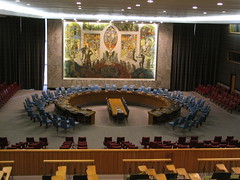 | 76 |
| 7570519844 | space race | lasted from 1955 to 1972; a competition between the Soviet Union and the United States for supremacy in spaceflight capability; pioneered advancements such as artificial satellites, as well as manned and unmanned missions into outer space | | 77 |
| 7570519845 | sphere of influence | a concept in which a state or organization has a level of cultural, economic, military, or political exclusivity, accommodating to the interests of powers outside the sphere; examples include European "semi-colony" of China | | 78 |
| 7570519846 | Joseph Stalin | lived from 1878 to 1953; the leader of the Soviet Union from 1922 to 1952; implemented a highly centralized command economy, which resulted in the transformation of Russian society from agrarian to industrialized; imprisoned millions in labor camps and deported many to remote areas; issued the Great Purges, in which hundreds of thousands, including many prominent communists, were executed |  | 79 |
| 7570519847 | theory of relativity | theory which is composed of special relativity and general relativity; proposed by Albert Einstein; proposes that measurements of various quantities are relative to the velocities of observers, space and time should be considered together and in relation to each other (Spacetime), and the speed of light is constant | 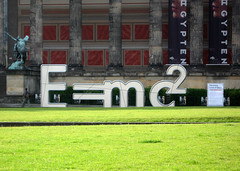 | 80 |
| 7570519848 | Third World | term which describes the countries that did not align with the Soviet Union or the United States | | 81 |
| 7570519849 | total war | war which requires the mobilization of each country's entire populations | | 82 |
| 7570519850 | transnational corporations | a.k.a multi-national corporation; an organization that owns or controls production or services facilities in one or more countries other than its home country | | 83 |
| 7570519851 | Treaty of Versailles | treaty which formally concluded the World War I in 1919; established the conditions for a World War II; Germany losses colonial empire and 15% of its European territory, required to pay heavy reparations to the winners, had its military forces severely restricted, and had to accept sole responsibility for the war; immense German resentment created from the treaty |  | 84 |
| 7570519852 | trench warfare | type of warfare using occupied fighting lines consisting largely of trenches, in which troops are significantly protected from the enemy's small arms fire and are substantially sheltered from artillery; resulted in enormous casualties while gaining or losing a few yards of ground during World War I |  | 85 |
| 7570519853 | Truman Doctrine | an international relations policy set by the U.S. President Harry Truman in a speech on March 12, 1947; stated that the U.S. would support Greece and Turkey with economic and military aid to prevent them from falling into the Soviet sphere; often referred to as the beginning of the US policy of containment |  | 86 |
| 7570519854 | United Nations | organization established in 1945 as a successor to the League of Nations; attempts to find solutions to global problems and deal with virtually any matter of concern to humanity |  | 87 |
| 7570519855 | Vietnam War | war which occurred in Vietnam, Laos, and Cambodia from 1956 to 1975; U.S. entered the war to prevent South Vietnam from becoming communist, as a result of its containment policy; Soviet Union backed Northern Vietnamese forces in an attempt to spread communism to Southeast Asia; resulted in the unification of Vietnam under a communist government and the spread of communism to Cambodia and Laos |  | 88 |
| 7570519856 | Weimar Republic | the federal republic and semi-presidential representative democracy established in 1919 in Germany to replace the imperial form of government after World War I; lasted until the Nazi Party rose to power in 1933; faced numerous problems, including hyperinflation, political extremists and continuing contentious relationships with the victors of World War I | | 89 |
| 7570519857 | Winston Churchill | lived from 1874 to 1965; British politician; Prime Minister of the United Kingdom from 1940 to 1945 and from 1951 to 1955 |  | 90 |
| 7570519858 | weapon of mass destruction | WMD; a weapon which has the capability to kill large numbers of people and decimate large swaths of land | | 91 |
| 7570519859 | Woodrow Wilson | lived from 1856 to 1924; 28th President of the United States (1913-1921); leader of the Progressive Movement; famous for his Fourteen Points, which sought to avoid another worldwide conflict |  | 92 |
| 7570519860 | Fourteen Points | a statement given on January 8, 1918 by United States President Woodrow Wilson declaring that World War I was being fought for a moral cause and called for postwar peace in Europe | | 93 |
| 7570519861 | World Bank | a United Nations international financial institution that provides loans to developing countries for capital programs; its primary goal is to reduce poverty | | 94 |
| 7570519862 | World War I | war which lasted from 1914 to 1918; also known as the Great War; pitted the Allies (United Kingdom, France, Russia, Italy, Japan, and the United States) and the Central Powers (Germany, Austria-Hungary, the Ottoman Empire, and Bulgaria); resulted in an Allied victory and Treaty of Versailles, which set the stage for another world war |  | 95 |
| 7570519863 | World War II | war which lasted from 1939 to 1945; pitted the Allied Powers (Soviet Union, United Kingdom, United States, China and France) against the Axis Powers (Germany, Japan, and Italy); resulted in an Allied victory, the creation of the United Nations, and set the stage for the Cold War |  | 96 |
| 7570519864 | World Trade Organization | WTO; established in 1994 by the 123 members of GATT; took over GATT activities in 1995; developed into a forum for settling international trade disputes | | 97 |
| 7570519865 | Yalta Conference | conference which lasted from February 4 to February 11, 1945; meeting attended by President Franklin D. Roosevelt, Prime Minister Winston Churchill and Premier Joseph Stalin for the purpose of discussing Europe's post-war reorganization; convened in the Livadia Palace near Yalta in Crimea |  | 98 |
| 7570519866 | Zionist Movement | the national movement of Jews and Jewish culture that supports the creation of a Jewish homeland in the territory defined as the Land of Israel |  | 99 |
| 7570519867 | Brazilian Solution | Combination of dictatorship, violent repression, and gov't promotion of industrialization in South American countries | | 100 |
| 7570519868 | Universal Declaration of Human Rights | A 1946 United Nations covenant binding signatory nations to the observance of specified rights. | | 101 |
| 7570519869 | nongovernmental organizations | Organizations that are not established or associated with any specific organizations. They may be recognized, however, they run on their own. Examples are Green Peace and Amnesty International. | | 102 |
| 7570519870 | Tiananmen Square | Site in Beijing where Chinese students and workers gathered to demand greater political openness in 1989. The demonstration was crushed by Chinese military with great loss of life. | | 103 |
| 7570519871 | keiretsu | Japanese business groups after the post-WWII dismantling of the zaibatsu. They are Alliances of corporations each often centered around a bank. They dominate the post-WWII Japanese economy. | | 104 |
| 7570519872 | Salvador Allende | The first Marxist politician elected president in the Americas. He was elected president of Chile in 1970 and overthrown by a US-backed military coup in 1973. | | 105 |
| 7570519873 | NATO | An international organization created in 1949 by the North Atlantic Treaty for purposes of collective security. | | 106 |
| 7570519874 | Warsaw Pact | An alliance between the Soviet Union and other Eastern European nations. This was in response to the NATO | | 107 |