AP Notes, Outlines, Study Guides, Vocabulary, Practice Exams and more!

AP World History Strayer Chapter 3 Flashcards

Chapter 3- Eurasian Empires

Terms : Hide Images
7292152472Alexander the GreatAlexander III of Macedonia, conqueror of the Persian Empire and part of northwestern India.0
7292152473AshokaThe most famous ruler of the Mauryan empire; he converted to Buddhism and tried to rule peacefully and with tolerance.1
7292152474Athenian DemocracyA radical form of direct democracy in which much of the free male population of Athens had the franchise and officeholders were chosen by lot.2
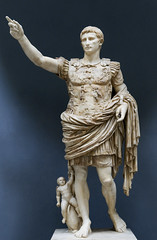
7292152475Caesar AugustusThe great-nephew and adopted son of Julius Caesar who emerged as sole ruler of the Roman state at the end of an extended period of civil war.3
7292152476Greco Persian WarTwo major Persian invasions of Greece, in which the Persians were defeated on both land and sea each time.4
7292152477Han DynastyDynasty that ruled China, creating a durable state based on Shihuangdi's state-building acheivement.5
7292152478Hellenistic EraThe period in which Greek culture spread widely into Eurasia in the kingdoms ruled by Alexander's political successors.6
7292152479Mauryan EmpireA major empire founded by Chandragupta that encompassed most of India and unified the Indian subcontinent.7
7292152480pax RomanaThe "Roman Peace," a term typically used to denote the stability and prosperity of the early Roman Empire.8
7292152481Persian EmpireA major empire that expanded from the Iranian plateau to incorporate the Middle East from Egypt to India.9
7292152482Qin ShihuangdiFirst emperor from the Qin that forcibly reunited China and established a strong and repressive state.10
7292152483Trung TracThe older of two sisters that lead the Vietnamese Revolution. She lived from 12 - 43 C.E and rather than being captured in war after her troops were badly defeated, legend says she committed suicide in honor of her family.11
7292152484Kushan EmpireAn empire located in Northern India and Central Asia. They maintained the Silk Road and they were one of the first emerging territories from Bactria.12
7292152485EmpireStates, political systems that exercise coercive power; often multi-national, aggressive, and often conquer, rule and extract resources from other states.13
7292152486Imperial StateA state that imposes its will on other states politically, economically and socially.14
7292152487Cyrus, Darius, XerxesRulers of the Persian Empire15
7292152488Solon, Cleisthenes, and PericlesThe fathers of democracy, statesmen, and politicians16
7292152489Civil Service ExamTest to see if you are able to work for the government17
7292152490Liu BangFounder and first emperor of Han Dynasty18
7292152491Han Wudi7th emperor of Han Dynasty, Longest reigning emperor (54 years)19
7292152492Wang MangEmperor of Han Dynasty who seized the rule from the Liu family, and then founded the Xin Dynasty20
7292152493Julius CaesarRoman politician and general who eventually led to the demise of the Roman Republic and gave rise to the Roman Empire21

Unit 1 (AP WORLD HISTORY) Flashcards

Terms : Hide Images
8566631786Palaeoanthropologistthe study of the origins and predecessors of the present human species, using fossils and other remains0
8566654107mytha traditional or legendary story1
8566658376Homo sapiensWise man; humankind2
8566693055evolutiona process of development3
8566701078ice ageA glacial epoch4
8566706886agricultural villagefarming village5
8566716442fertile crescentfertile land in Middle East6
8566723319NeolithicThe last phase of the Stone Age where animals are domesticated, pottery manufactured, and agriculture developed7
8566735959Mesopotapialocated in Middle East where the wheel, writing, and Hammurabi's Code was created8
8566752271draft animalsan animal used to pull heavy loads9
8566756456pack animalan animal used to carry heavy loads10
8566761382pastoralista land-holder raising animals on large scales11
8566777055Sargon of AkkadMesopotamian ruler whose empire extended to the Gulf of the Mediterranean12
8566785779Sumerancient region in southern Mesopotamia that consist of many city-states13
8566794630city-statea state that consist of a city14
8566801767Gilgamesha legendary Sumerian King that is the hero in an Epic15
8566809843ziggurata Sumerian temple16
8566814721Uran ancient Sumerian city17
8566819495pictogramsprehistoric symbols representing objects and stuff18
8566827025cuneiformBabylonian writing19
8566840440Code of Hammurabifirst organized law that had ideas like an eye for an eye20
8566843702Nile Rivera river in Egypt that floods yearly21
8566847285pharaohthe leader of Egypt who is believed to be 2/3 god22
8566853770mummificationthe process of preserving bodies that is used in Egypt23
8566859366pyramida burial site for pharaohs and people of Egypt that are triangular in shape24
8566871974Old Kingdomearlier ancient Egypt25
8566874609Middle Kingdommiddle of ancient Egypt26
8566878245New Kingdomlater years of ancient Egypt27
8566884485Hyksosnomadic people who ruled ancient Egypt28
8566894233Indus Valley civilizationancient civilization in Northwest India29
8566904873Harappaa site of successive cities of Indus Valley civilization30
8566918496Mohenjo-Darosite in Indus Valley where six successive ancient cities were built31
8566930084Aryansa member of descendant of the prehistoric people who spoke Indo-European32
8566938002caste systema rigid Hindu system of social classes33
8566941728Xia Dynastyfirst dynasty in traditional Chinese history34
8566957746Shang Dynastydynasty after Xia that ruled in Yellow River Valley35
8566960643Zhou Dynastydynasty after Shang that ruled in Yellow River Valley36
8566968557Yellow Rivera river in China that yearly floods37
8566972321oracle bonesox scapula or turtle plastron which where used as paper in China38
8566989842sage kingsthree ideal rulers of China39
8567000063Mandate of Heavena political idea in China that those in power were given the right to rule from a divine source40
8567010499Olmeca Mesoamerican civilization along the Gulf of Mexico known for agriculture, dating systems, long-distant trade, and ceremonial centers41
8567035151Chavinan archaeological site42

AP World History Period 1 Flashcards

From Hunting and Gathering to Civilizations, 2.5 million-1000 B.C.E.: Origins
Original from MrsBHatchTEACHER

Terms : Hide Images
7556133131hunting and gatheringMeans of obtaining subsistence by humans before the mastery of sedentary agriculture; normally typical of tribal social organization0
7556133132civilizationSocieties with reliance on sedentary agriculture, ability to produce food surpluses, and existence of nonfarming elites, along with merchant and manufacturing groups1
7556133133neolithicThe New Stone Age between 8000 and 5000 B.C.E.; period in which adaptation of sedentary agriculture occurred; domestication of plants and animals accomplished2
7556133134nomadic societieslivestock hearding societies that do not have a permanent settlement. normally found on the fringes of civilized (urban) societies; commonly referred to as "barbarian" by civilized societies3
7556133135cultureCombination of ideas, objects, and patterns of behavior that result from human social interaction4
7556133136agrarian revolutionOccurred between 8000 and 5000 B.C.E.; transition from hunting and gathering to sedentary agriculture5
7556133137pastoralismA nomadic agricultural lifestyle based on herding domesticated animals; tended to produce independent people capable of challenging sedentary agricultural societies6
7556133138Catal HuyukEarly urban culture/civiization based on sedentary agriculture; located in modern southern Turkey; larger in population than Jericho, had greater degree of social stratification7
7556133139Bronze AgeFrom 4000 to 3000 B.C.E.; increased use of plow, metalworking; development of wheeled vehicles, writing8
7556133140MesopotamiaLiterally "between the rivers"; the civilization that arose in the alluvial plain of the Tigris-Euphrates river valleys9
7556133141potter's wheelA technological advance in pottery making; invented circa 6000 B.C.E.; encouraged faster and higher-quality ceramic pottery products10
7556133142SumeriansPeople who migrated into Mesopotamia circa 4000 B.C.E.; created the first civilization within the region; organized area into city-states11
7556133143cuneiformA form of writing developed by the Sumerians using a wedge-shaped stylus and clay tablets12
7556133144city-stateA form of political organization typical of Mesopotamian civilization; consisted of agricultural hinterlands ruled by an urban-based king13
7556133145ziggurata massive tower building usually associated with Mesopotamian temple connections14
7556133146Babylonian EmpireUnified all of Mesopotamia circa 1800 B.C.E.; collapsed due to foreign invasion circa 1600 B.C.E.15
7556133147HammurabiThe most important Babylonian ruler; responsible for codification of the law16
7556133148PharaohThe term used to denote the kings of ancient Egypt; the term, "great house" refers to the palace of the pharaohs17
7556133149pyramidsMonumental architecture typical of Old Kingdom Egypt; used as burial sites for pharaohs18
7556133150hieroglyphsForm of writing developed in ancient Egypt; more pictorial than Mesopotamian cuneiform19
7556133151KushAfrican state that developed along the upper reaches of the Nile circa 1000 B.C.E.; conquered Egypt and ruled it for several centuries20
7556133152monotheismThe exclusive worship of one god; introduced by Jews into Middle Eastern civilization21
7556133153PhoeniciansSeafaring civilization located on the shores of the eastern Mediterranean; established colonies throughout the Mediterranean22
7556133154Harappa and Mohenjo DaroMajor urban complexes of Harappan civilization; laid out on planned grid pattern23
7556133155AryansIndo-European nomadic, warlike, pastorialists who replaced Harappan civilization24
7556133156Huanghe (Yellow) River BasinSite of the development of sedentary agriculture in China25
7556133157Shang1st Chinese dynasty (after the legendary Xia)26
7556133158OraclesShamans or priests in Chinese society who foretold the future through interpreting animal bones cracked by heat; inscriptions on bones led to Chinese writing27
7556133159ideographic writingPictograph characters grouped together to create new concepts; typical of Chinese writing28
7556133160Big GeographyA term that draws attention to the global nature of world history.29
7556133161PaleolithicThe period that ended about 3,000 years after the end of the last Ice Age, it lasted until about 10,000 years ago. (Old Stone Age) The period of the Stone Age associated with the evolution of humans. It predates the Neolithic period.30
7556133162Human migration during Paleolithic eramovement of humans from Africa to Eurasia, Australia, and the Americas31
7556133163eglitarianequality among people (no social levels)32
7556133164toolsHumans developed a wider range of ____ specially adapted to different environments from tropics to tundra33
7556133165Neolithic Revolutionperiod of change from hunter-gatherer lifesyle to agricultural lifestyles associated with domestication, farming, and settlement34
7556133166patriarchyfather based/male dominated society35
7556133167climatic changePermanent agricultural villages emerged first in the lands of the eastern Mediterranean, possibly as a response to what?36
7556133168weaponsPastoralists were often the developers and disseminators of of ____ and forms of transportation that transformed warfare in agrarian civilizations37
7556133169horsesname one mode of new transportation by the pastoralists38
7556133170artElites, both political and religious, promoted ____.39
7556133171record-keeping systems___ arose independently in all early civilization sand subsequently were diffused40
7556133172Nile RiverThis river flooded regularly.41
7556133173Tigris RiverThis river's floods were unpredictable.42
7556133174MesopotamianUnpredictable weather patterns affected the development of the _____ civilization.43
7556133175Egyptian_______art demonstrated little change for nearly 1000 years.44
7556133176Nubia and KushKingdoms upriver from Egypt.45
7556133177Standard of Ur46
7556133178Harappan King or Priest Figure47
7556133179JerichoOne of the earliest cities: located in modern Israel.48
7556133180Catal-HyoukOne of the earliest cities: located in modern Turkey.49

AP World History: Types of Government Flashcards

Terms : Hide Images
6459410461AnarchyA condition of lawlessness or political disorder brought about by the absence of governmental authority.0
6459415083CommonwealthA nation, state, or other political entity founded on law and united by a compact of the people for the common good.1
6459420401CommunismA system of government in which the state plans and controls the economy and a single -often authoritarian- Party holds power; state controls are imposed with the elimination of private ownership of property or capital while claiming to make progress towards a higher social order in which all goods are equally shared by the people (i. e., a classless society).2
6459438744Confederacy (Confederation)A union by compact or treaty between states, provinces, or territories, that creates a central government with limited powers; the constituent entities retain supreme authority over all matters except those delegated to the central government.3
6459449187ConstitutionalA government by or operating under an authoritative document (constitution) that sets forth the system of fundamental laws and principles that determines the nature, functions, and limits of that government.4
6459455851Constitutional DemocracyA form of government in which the sovereign power of the people is spelled out in a governing constitution.5
6459508429Constitutional MonarchyA system of government in which a monarch is guided by a constitution whereby his/her rights, duties, and responsibilities are spelled out in written law or by custom.6
6459511918Democracya form of government in which the supreme power is retained by the people, but which is usually exercised indirectly through a system of representation and delegated authority periodically renewed.7
6459515260Democratic Republica state in which the supreme power rests in the body of citizens entitled to vote for officers and representatives responsible to them.8
6459518873Dictatorshipa form of government in which a ruler or small clique wield absolute power (not restricted by a constitution or laws). Also, a system in which the citizens do not possess the right to choose their own leaders.9
6459521030Ecclesiasticala government administrated by a church.10
6459525135Empirea major political unit having a territory of great extent or a number of territories or peoples under a single sovereign authority; especially : one having an emperor as chief of state.11
6459527169Federal (Federative)a form of government in which sovereign power is formally divided - usually by means of a constitution - between a central authority and a number of constituent regions (states, colonies, or provinces) so that each region retains some management of its internal affairs; differs from a confederacy in that the central government exerts influence directly upon both individuals as well as upon the regional units.12
6459528342Federal Republica state in which the powers of the central government are restricted and in which the component parts (states, colonies, or provinces) retain a degree of self- government; ultimate sovereign power rests with the voters who chose their governmental representatives.13
6459528343Maoismthe theory and practice of Marxism-Leninism developed in China by Mao Zedong (Mao Tse-tung), which states that a continuous revolution is necessary if the leaders of a communist state are to keep in touch with the people.14
6459529813Marxismthe political, economic, and social principles espoused by 19th century economist Karl Marx; he viewed the struggle of workers as a progression of historical forces that would proceed from a class struggle of the proletariat (workers) exploited by capitalists (business owners), to a socialist "dictatorship of the proletariat," to, finally, a classless society - communism.15
6459529814Marxism-Leninisman expanded form of communism developed by Lenin from doctrines of Karl Marx; Lenin saw imperialism as the final stage of capitalism and shifted the focus of workers' struggle from developed to underdeveloped countries.16
6459531865Monarchya government in which the supreme power is lodged in the hands of a monarch who reigns over a state or territory, usually for life and by hereditary right; the monarch may be either a sole absolute ruler or a sovereign - such as a king, queen, or prince - with constitutionally limited authority.17
6459533528Oligarchya government in which control is exercised by a small group of individuals whose authority generally is based on wealth or power.18
6459536180Parliamentary Democracya political system in which the legislature (parliament) selects the government - a prime minister, premier, or chancellor along with the cabinet ministers - according to party strength as expressed in elections; by this system, the government acquires a dual responsibility: to the people as well as to the parliament.19
6459539112Parliamentary Government (Cabinet-Parliamentary government)a government in which members of an executive branch (the cabinet and its leader - a prime minister, premier, or chancellor) are nominated to their positions by a legislature or parliament, and are directly responsible to it; this type of government can be dissolved at will by the parliament (legislature) by means of a no confidence vote or the leader of the cabinet may dissolve the parliament if it can no longer function.20
6459541245Parliamentary monarchya state headed by a monarch who is not actively involved in policy formation or implementation (i.e., the exercise of sovereign powers by a monarch in a ceremonial capacity); true governmental leadership is carried out by a cabinet and its head - a prime minister, premier, or chancellor - who are drawn from a legislature (parliament).21
6459546839Republica representative democracy in which the people's elected deputies (representatives), not the people themselves, vote on legislation.22
6459546840Statea politically organized body of people usually occupying a definite territory; especially : one that is sovereign23
6459546841Socialisma government in which the means of planning, producing, and distributing goods is controlled by a central government that theoretically seeks a more just and equitable distribution of property and labor; in actuality, most socialist governments have ended up being no more than dictatorships over workers by a ruling elite.24
6459548724Sultanatesimilar to a monarchy, but a government in which the supreme power is in the hands of a sultan (the head of a Muslim state); the sultan may be an absolute ruler or a sovereign with constitutionally limited authority.25
6459548725Theocracya form of government in which a Deity is recognized as the supreme civil ruler, but the Deity's laws are interpreted by ecclesiastical authorities (bishops, mullahs, etc.); a government subject to religious authority.26
6459579250Totalitariana government that seeks to subordinate the individual to the state by controlling not only all political and economic matters, but also the attitudes, values, and beliefs of its population.27

AP World History Period 4 Flashcards

Terms : Hide Images
9972067364Renaissance1400-16000
9972067365American Revolution1775-17831
9972067366Reign of Akbar1556-16052
9972067367Beginning of Atlantic slave trade14413
9972067368Brazil runaway slave community16904
9972067369British/Dutch East India Company1600-16025
9972067370Heliocentral view15436
9972067371Jamestown16077
9972067372Mughal Empire1526-17078
9972067373Protestant reformation15179
9972067374Russian expansion into Siberia155010
9972067375Safavid Empire1501-172211
9972067376Songhai Empire1464-159112
9972067377Spanish conquest of Aztecs1519-152113
9972067378Spanish conquest of Incas1532-154014
9972067379Thirty Years' War1618-164815
9972067380Tokugawa Japan160316
9972067381African diasporaThe spreading of Africans to many other parts of the world,17
9972067382Akbarthe grandson of Babur, who brought the height of the Mughal empire. Also expanded his empire to control much of the subcontinent.18
9972067383Aurangzebcommonly known as Aurangzeb Alamgir and by his imperial title Alamgir and simply referred to as Aurangzeb was the sixth Mughal Emperor and ruled over most of the Indian subcontinent during some parts of his reign. His reign lasted for 49 years from 1658 until his death in 1707.19
9972067384BeninNot really a significant player in the slave trade - relied on traditional products, such as ivory, textiles, and their unique bronze castings20
9972067385Bhakti"attachment, participation, devotion to, fondness for, homage, faith or love, worship, piety to (as a religious principle or means of salvation)". Bhakti, in Hinduism, refers to devotion and the love of a personal god or a representational god by a devotee.21
9972067386cartaza naval trade license or pass issued by the Portuguese in the Indian ocean during the sixteenth century (circa 1502-1750), under the rule of the Portuguese empire. It shared similarities with the British navicert system of 1939-45. Its name derives from the portugueses cartas mesinha letter.22
9972067387Catholic Counter-Reformationthe church's actions to revive their reputation and membership roles in 1545 (regained control of most of southern Europe, Austria, Poland, and much of Hungary)23
9972067388Columbian exchangethe global diffusion of crops, other plants, human beings, animals, and distance that took place after the European exploring voyages of the New World24
9972067389conquistadoreswent to search for gold and convert the natives to Christianity in the interior of Mexico25
9972067390Council of TrentThe Council of Trent, held between 1545 and 1563 in Trento and Bologna, northern Italy, was one of the Roman Catholic Church's most important ecumenical councils. Prompted by the Protestant Reformation, it has been described as the embodiment of the Counter-Reformation. Four hundred years later, when Pope John XXIII initiated preparations for the Second Vatican Council, he affirmed the decrees it had issued: "What was, still is."26
9972067391creolescomposed of those born in the new world; a quickly growing class27
9972067392Dahomeya kingdom that used firearms to create its powerbase, in Contrast to the Asante, the Dahomey leaders were authoritarian, and often brutal in forcing compliance to the royal court28
9972067393Daimyopower territorial lords, who held local control of areas. Some Daimyos had more influence than others, but each maintained his own governments and had his own samurai29
9972067394Darwin, Charlesan English naturalist and geologist, best known for his contributions to evolutionary theory. He established that all species of life have descended over time from common ancestors, and in a joint publication with Alfred Russel Wallace introduced his scientific theory that this branching pattern of evolution resulted from a process that he called natural selection, in which the struggle for existence has a similar effect to the artificial selection involved in selective breeding.30
9972067395deismGod built the universe and let it run. Clockmaker theory31
9972067396devshirmea system that required Christian's of the area to contribute young boys to be the sultans slaves32
9972067397Edict of NantesThe granting of tolerance to Protestants through this, which was later revoked by King Louis XIV33
9972067398European Enlightenmentthe emphasis on human abilities and accomplishments and the importance of independent and rational thought34
9972067399Freud, Sigmundan Austrian neurologist and the father of psychoanalysis, a clinical method for treating psychopathology through dialogue between a patient and a psychoanalyst35
9972067400Galilei, Galileoused the first telescope during the Renaissance in 1609, where he made many large discoveries in the solar system, until he was put under house arrest for spreading conflicting ideas36
9972067401Huguenotsa member of a French Protestant denomination with origins in the 16th or 17th centuries. Historically, Huguenots were French Protestants inspired by the writings of John Calvin in the 1530s, who became known by that originally derisive designation by the end of the 16th century. The majority of Huguenots endorsed the Reformed tradition of Protestantism.37
9972067402Jesuits in Chinaa religious order converting people to return to the church (went to Asia + Americas in 1500's)38
9972067403Little Ice Agea period of cooling that occurred after the Medieval Warm Period. While it was not a true ice age, the term was introduced into the scientific literature by François E. Matthes in 1939.39
9972067404Luther, Martina German monk who wrote the 95 theses in 1517, which were 95 propositions that criticized the Catholic Church40
9972067405Manilaships that traveled across the pacific ocean picking up and trading goods, like Asian luxury goods, and silver41
9972067406Karl Marxwas a journalist who wrote on revolutionary socialism and wrote "The Communist Manifesto"42
9972067407mestizocomposed of European and Amerindian children, part of the castas43
9972067408Middle Passagethe first leg of the atlantic circuit, where ships took slaves to the new world44
9972067409Mulattoescomposed of European and African children, also part of the castas45
9972067410Ninety-five Thesesthe theses of Luther against the sale of indulgences in the Roman Catholic Church, posted by him on the door of a church in Wittenberg, October 31, 1517.46
9972067411peninsularesa fading social class in the new world, composed of the people born in the old world47
9972067412Protestant Reformationa religious movement of the 16th century that began as an attempt to reform the Roman Catholic Church and resulted in the creation of Protestant churches48
9972067413Scientific Revolutiona new vision of science developed during the renaissance in the 17th + 18th century49
9972067414settler coloniesa form of colonial formation whereby foreign people move into a region. An imperial power oversees the immigration of these settlers who consent, often only temporarily, to government by that authority.50
9972067415shoguna hereditary commander-in-chief in feudal Japan. Because of the military power concentrated in his hands and the consequent weakness of the nominal head of state (the mikado or emperor), the shogun was generally the real ruler of the country until feudalism was abolished in 1867.51
9972067416Sikhismstarted by Nanuk, who became the first Guru of Sikhism. Sikhism was a following of people who formed a community free of caste divisions52
9972067417silver drainthe concept of how most of the silver in late 1500's to early 1600's ended up in China. The main sources of silver came from the Americas, specifically from Potosi, a mountain containing vastly immense deposits of silver. The Spanish controled Potosi and made many Native American slaves mine the silver for them. From Potosi, the silver was sold to European countries. From there, the silver was then sold to China. China was in desparate need of silver because they had to pay their taxes in silver. Since China was in need for the silver so badly, the price of silver skyrocketed. The Europeans and Japanese would trade the silver in return recieve expensive silks and porcelains. The silver was also used as the standard Spanish coin, also known as a "piece of eight". This series of exchanges is important because it created a global network of exchange.53
9972067422soft gold54
9972067418Thirty Years' WarWar within the Holy Roman Empire between German Protestants and their allies (Sweden, Denmark, France) and the emperor and his ally, Spain; ended in 1648 after great destruction with Treaty of Westphalia55
9972067419trading post empireTrading-post empires are those empires in the earlier centuries (13-15th) which traded vast goods and set up trading posts. Trading posts were built by European traders along the coasts of Africa and Asia as a base for trade with the interior. Trading posts (or 'Factories') were islands of European law and sovereignty, but European authority seldom extended very fat beyond the fortified post.56
9972067420Voltairewrote witty criticisms of the French monarchy and the Roman Catholic Church. He believed both institutions to be despotic and intolerant, limiting freedoms57
9972067423Wahhabi Islam58
9972067421yasaka Turkic word for "tribute" that was used in Imperial Russia to designate fur tribute exacted from the indigenous peoples of Siberia.59

AP World History - Period 3 Flashcards

The Post-Classical World, 500-1450

Terms : Hide Images
9972115244DhowsArab sailing vessels; equipped with lateen sails; used by Arab merchants0
9972115245Seljuk Turksnomadic invaders from central; staunch Sunnis; ruled in the name of the Abbasids1
9972115246Crusadesinvasions of western Christians into Muslim lands, especially Palestine; captured Jerusalem and established Christian kingdoms enduring until 12912
9972115247Mongolscentral Asian nomadic peoples; captured Baghdad in 1258 and killed the last Abbasid caliph3
9972115248Chinggis Khan(1162-1227); Mongol ruler; defeated the Turkish Persian kingdoms4
9972115249Arabic numeralsIndian numerical notation brought by the Arabs to the West5
9972115250Malaccaflourishing trading city in Malaya; established a trading empire after the fall of Shrivijaya6
9972115251Malistate of the Malinke people centered between the Senegal and Niger rivers7
9972115252Mansatitle of the ruler of Mali8
9972115253Ibn BattutaArab traveler throughout the Muslim world9
9972115254Sundiatacreated a unified state that became the Mali empire; died in 126010
9972115255Songhaysuccessor state to Mali; dominated middle reaches of the Niger valley; capital at Gao11
9972115256East African trading portsurbanized commercial centers mixing African and Arab cultures; included Mogadishu, Mombasa, , Kilwa12
9972115257Great Zimbabwewith massive stone buildings and walls, incorporates the greatest early buildings in sub-Saharan Africa13
9972115258Greek FireByzantine weapon consisting of mixture of chemicals that ignited when exposed to water; used to drive back the Arab fleets attacking Constantinople14
9972115259Iconsimages of religious figures venerated by Byzantine Christians15
9972115260Iconoclasmthe breaking of images; religious controversy of the 8th c; Byzantine emperor attempted, but failed, to suppress icon veneration16
9972115261Cyril and MethodiusByzantine missionaries sent to convert eastern Europe and Balkans; responsible for creation of Slavic written script called Cyrillic17
9972115262Kievcommercial city in Ukraine established by Scandinavians in 9th c; became the center for a kingdom that flourished until 12th c18
9972115263Vladmir Iruler of Kiev (980-1015); converted kingdom to Orthodox Christianity19
9972115264Russian OrthodoxyRussian form of Christianity brought from Byzantine Empire20
9972115265Middle Agesthe period in western European history between the fall of Roman Empire and the 15th c21
9972115266Gothican architectural style developed during the 13th and 14th c in western Europe; featured pointed arches and flying buttresses as external support on main walls22
9972115267Vikingsseagoing Scandinavian raiders who disrupted coastal areas of Europe from the 8th to 11th c; pushed across the Atlantic to Iceland, Greenland, and North America; formed permanent territories in Normandy and Sicily23
9972115268Manorialismrural system of reciprocal relations between landlords and their peasant laborers during the Middle Ages; peasants exchanged labor for use of land and protection24
9972115269Serfspeasant agricultural laborers within the manorial system25
9972115270Three-field systempractice of dividing land into thirds, rotating between two different crops and pasturage-- an improvement making use of manure26
9972115271ClovisKing of the Franks; converted to Christianity circa 49627
9972115272Carolingiansroyal house of Franks from 8th c to 10th c28
9972115273Charles Martelfirst Carolingian king of the Franks; defeated Muslims at Tours in 73229
9972115274CharlemagneCarolingian monarch who established large empire in France and Germany circa 80030
9972115275Holy Roman Emperorspolitical heirs to Charlemagne's empire in northern Italy and Germany; claimed title of emperor but failed to develop centralized monarchy31
9972115276Feudalismpersonal relationship during the Middle Ages by which greater lords provided land to lesser lords in return for military service32
9972115277Vassalsmembers of the military elite who received land or a benefice from a lord in return for military service and loyalty33
9972115278William the Conquerorinvaded England from Normandy in 1066; established tight feudal system and centralized monarchy in England34
9972115279Magna CartaGreat charter issued by King John of England in 1215; represented principle of mutual limits and obligations between rulers and feudal aristocracy, and the supremacy of law35
9972115280Parliamentsbodies representing privileged groups; institutionalized the principle that kings ruled with the advice and consent of their subjects36
9972115281Hundred Years Warconflict between England and France over territory (1337-1453) Established a since of Nationalism with each country. Joan of Arc united the French and promoted French patriotism.37
9972115282Pope Urban IIorganized the first Crusade in 1095; appealed to Christians to free the Holy Land from Muslim control38
9972115283Investiturethe practice of appointment of bishops; Pope Gregory attempted to stop lay investiture, leading to a conflict with the Holy Roman Emperor Henry IV39
9972115284Gregory VII11th c pope who attempted to free church from secular control; quarreled with Holy Roman Emperor Henry IV over practice of lay investiture of bishops40
9972115285Thomas Aquinascreator of one of the great syntheses of medieval learning; taught at University of Paris; author of Summas; believed that through reason it was possible to know much about natural order, moral law, and nature of God41
9972115286Scholasticismdominant medieval philosophical approach; so-called because of its base in the schools or universities; based on use of logic to resolve theological problems42
9972115287Hanseatic Leaguean organization of north German and Scandinavian cities for the purpose of establishing a commercial alliance43
9972115288Guildsassociations of workers in the same occupation in a single city; stressed security and mutual control; limited membership, regulated apprenticeships, guaranteed good workmanship; held a privileged place in cities44
9972115289Black Deathbubonic plague that struck Europe in the 14th c; significantly reduced Europe's population; affected social structure; decimated populations in Asia45
9972115290Period of the Six Dynastiesera of continuous warfare (220-589) among the many kingdoms that followed the fall of the Han46
9972115291Sinificationextensive adaptation of Chinese culture in other regions47
9972115292ShamanismMongol beliefs focused on nature spirits48
9972115293Golden Hordeone of four regional subdivisions of the Mongol Empire after death of Chinggis Khan; conquered and ruled Russua during the 13th and 14th c49
9972115294Ilkhan khanateone of four regional subdivisions of the Mongol empire after the death of Chinggis Khan; eventually included much of Abbasid empire50
9972115295Kubilai Khangrandson of Chinggis Khan; conquered China; established Yuan dynasty in 127151
9972115296White Lotus Societysecret religious society dedicated to overthrow of Yuan dynasty52
9972115297Ottoman EmpireTurkish empire established in Asia Minor and eventually extending through the Middle East and the Balkans; conquered Constantinople in 1453 and ended Byzantine Empire53
9972115298Ming Dynastyreplaced Mongal Yuan dynasty in China in 1368; lasted until 1644; initially mounted large trade expeditions to southern Asia and Africa; later concentrated on internal development within China54
9972115299Ethnocentrismjudging foreigners by the standards of one's own group; leads to problems in interpreting world history55
9972115300Inca and Rome both hadextensive road systems56
9972115301Important continuity in social structure of states and empires 600-1450land holding aristocracies, patriarchies, peasant systems still in place57
9972115302Trans Saharan tradeDominated my Muslims in 13th century after rise of Islamic caliphates..58
9972115307Indian Ocean Maritime Trade59
9972115303Cities that rose during this time due to increased tradeNovgorod, Constantinople, Timbuktu60
9972115304Timbuktutrade center of Mali, cosmopolitan city that saw the blending of many different cultures and people61
9972115305New forms of monetizationChecks, Bills of Exchange62
9972115308Bantu Migrations63
9972115306Marco Polotraveler/merchant from Europe who spend 17 years at court of Kublai Khan64

AP World History Chapter 9 Terms Flashcards

Terms : Hide Images
7180248186MudraA hand gesture with specific meaning or significance in Indian classical sculpture and dance. One specific mudras, for example, indicates teaching, another fearlessness, another revelation, etc.0
7180250969NirvanaIn Theravada Buddhism, the blissful nothingness into which a soul which had lived properly entered after death, and from which there would be no further rebirths. (Compare nirvana among Jains, p. 291.) In Mahayana Buddhism, nirvana became an abode of more active bliss, a kind of heaven filled with heavenly activities1
7180283552BodhistattvaA "being of wisdom" worthy of entering nirvana, but who chooses to stay on earth, or be reborn, in order to help others2
7180287013MantraA formula of utterances of words and sounds that are believed to possess spiritual power, a practice of both Hinduism and Buddhism3
7180289619MandalaA symbolic circular diagram of complex geometric design used as an instrument of meditation or in the performance of sacred rites in Hinduism and Buddhism4
7180295930SyllabaryA writing system in which each symbol represents in syllable of a word (cf. ideogram)5
7180297981Ideogram(alternative ideograph) A character or figure in a writing system in which the idea of a thing is represented rather than its name6
7882285967The caste system in India:is officially sanctioned by the Rigveda7
7882285968Currently, the religion with the second-highest number of adherentsIslam8
7882285969The Hindu culture developed before which of the following religious cultures?Islamic9
7882285970The Rigveda:offers no definitive answers to the question of how the world was created10
7882285971Lord Krishna:is depicted with blue or black skin11
7882285972The oldest religion still in practice is:Hinduism12
7882285973Hinduism absorbed the gods of many local tribes.True13
7882285974The dance of this god symbolizes the cycle of creation and destructionShiva14
7895723305In the Bhagavad-Gita:Arjun learns that he should follow his dharma, whether he wants to or not15
7895723306Buddhism:had an order of monks16
7895723307Which is the most accurate statement regarding Hinduism?Brahmin priests often supported local rulers17
7895723308The Buddha was:a wandering ascetic for several years18
7895723309For the Buddha, the source of unhappiness in the world was:desire19
7895723310While sitting under a tree at Bodh Gaya, the Buddha:attained enlightenment20
7895723311The Mahabharata presents:moral conflicts, the dilemma of taking sides, and the necessity of acting decisively21
7895723312The Puranas focus least on:the deep philosophical concepts of Hinduism22
7895723313According to the Upanishads, the time for "forest wandering," or reflection, is the:third stage of life23
7895723314Outside the Indian subcontinent, Hinduism historically gained the most new converts in:Southeast Asia24
7895723315Which of the following statements drawn from the teachings of the Upanishads is NOT correct?In the last stage of life one should be a brahmacharya25
7906834028One of the key areas of difference between Buddhism and Confucianism was the attitude toward government control.True26
7906834029Over time, Hinduism won out over Buddhism in this region:India27
7906834030Mahayana Buddhism:believed in the bodhisattva concept28
7906834031Chan/Zen Buddhism stresses the importance of meditationTrue29
7906834032Buddhism in China:developed a sect called Chan, which later became Zen in Japan30
7906834033Which of these is NOT one of Buddha's Four Noble Truths?A being of wisdom is worthy to enter nirvana.31
7906834034Some Hindus consider Jainism a branch of Hinduism, but Jains disagreeTrue32
7906834035Jainism rejects the caste system and embraces nonviolence.True33
7933933588According to the Upanishads, the time for "forest wandering," or reflection, is the:third stage of life34
7933933589Which form of Buddhism advocated magic rituals?tantric Buddhism35
7933933590The Sangha:advocated celibacy for monks36
7933933591Shingon Buddhism:believes in the recitation of mantras37
7933933592Hinduism and Buddhism were similar in all of the followingthe degree of respect they gave to brahmins38
7933933593Buddhism in China:developed a sect called Chan, which later became Zen in Japan39
7933933594Shinto beliefs:found spirits inherent in nature40

AP World History - Chapter 13 Flashcards

Terms : Hide Images
8272982008Aztec EmpireMajor state that developed in what is now Mexico in the fourteenth and fifteenth centuries; dominated by the seminomadic Mexica, who had migrated into the region from northern Mexico.0
8272982009Benin (pron. be-NEEN)Territorial state that emerged by the fifteenth century in the region that is now southern Nigeria; ruled by a warrior king who consolidated his state through widespread conquest.1
8272982010"chosen women"Among the Incas, girls who were removed from their homes at a young age, trained in Inca ideology, and set to producing corn beer and textiles; they later were given as wives to distinguished men or sent to serve as priestesses.2
8272982011Christopher ColumbusGenoese mariner (1451-1506) commissioned by Spain to search for a new trading route to Asia; in 1492 he found America instead.3
8272982012Seizure/Siege of Constantinople (1453)Constantinople, the capital and almost the only outpost left of the Byzantine Empire, fell to the army of the Ottoman sultan Mehmed II "the Conqueror" in 1453, an event that marked the end of Christian Byzantium.4
8272982013"firestick farming"A manipulation of their environment by the Paleolithic peoples of Australia that involved controlled burns to clear underbrush.5
8272982014Fulbe (pron. FULL-bay)West Africa's largest pastoral society, whose members gradually adopted Islam and took on a religious leadership role that led to the creation of a number of new states.6
8272982015Vasco da Gama (pron.VAS-coe dah GAHM-ah)Portuguese explorer (ca. 1460-1524) whose 1497-1498 voyage was the first European venture to reach India by circling the tip of South Africa.7
8272982016Huitzilopochtli (pron. wheat-zeel-oh-POSHT-lee)Patron deity of the Aztec empire, associated with the sun.8
8272982017Hundred Years' WarMajor conflict between France and England (1337-1453) over rival claims to territory in France; the two states' need to finance the war helped encourage their administrative development.9
8272982018Igbo (pron. EE-boh)People whose lands were east of the Niger River in what is now southern Nigeria in West Africa; they built a complex society that rejected kingship and centralized statehood and relied on other institutions to provide social coherence.10
8272982019Inca EmpireThe Western Hemisphere's largest imperial state in the fifteenth and early sixteenth centuries; built by a relatively small community of Quechua-speaking people (the Inca), the empire stretched some 2,500 miles along the Andes Mountains, which run nearly the entire length of the west coast of South America, and contained perhaps 10 million subjects.11
8272982020Iroquois League of Five Nations (pron. IR-oh-kwoy)Confederation of five Iroquois peoples in what is now New York State; the loose alliance was based on the Great Law of Peace, an agreement to settle disputes peacefully through a council of clan leaders.12
8272982021Malacca (pron. mah-LAH-kah)Muslim port city that came to prominence on the waterway between Sumatra and Malaya in the fifteenth century C.E.; it was the springboard for the spread of a syncretic form of Islam throughout the region.13
8272982022Mexica (pron. meh-SHE-ca)Seminomadic people of northern Mexico who by 1325 had established themselves on a small island in Lake Texcoco, where they built their capital city, Tenochtitlán; the Mexica were the central architects of the Aztec Empire.14
8272982023Ming dynasty (pron. MEEng)Chinese dynasty (1368-1644) that succeeded the Yuan dynasty of the Mongols; noted for its return to traditional Chinese ways and restoration of the land after the destructiveness of the Mongols.15
8272982024Mughal Empire (pron. MOOguhl)One of the most successful empires of India, a state founded by an Islamized Turkic group that invaded India in 1526; the Mughals' rule was noted for their efforts to create partnerships between Hindus and Muslims.16
8272982025Nezahualcoyotl (pron. nes-ah-wahl-koh-YOHT-l)A poet and king of the city-state of Texcoco, which was part of the Aztec Empire (1402-1472).17
8272982026Ottoman EmpireMajor Islamic state centered on Anatolia that came to include the Balkans, the Near East, and much of North Africa.18
8272982027Paleolithic persistenceThe continuance of gathering and hunting societies in substantial areas of the world despite millennia of agricultural advance.19
8272982028pochteca (pron. poch-TAYkah)Professional merchants in the Aztec Empire whose wealth often elevated them to elite status.20
8272982029European RenaissanceA "rebirth" of classical learning that is most often associated with the cultural blossoming of Italy in the period 1350-1500 and that included not just a rediscovery of Greek learning but also major developments in art, as well as growing secularism in society.21
8272982030Safavid Empire (pron. SAH-fah-vid)Major Turkic empire of Persia founded in the early sixteenth century, notable for it efforts to convert its populace to Shia Islam.22
8272982031Songhay Empire (pron. songGAH-ee)Major Islamic state of West Africa that formed in the second half of the fifteenth century.23
8272982032Tenochtitlán (pron. thenoch-TIT-lan)The metropolitan capital of the Aztec Empire, with a population of 150,000-200,000 people.24
8272982033Timbuktu (pron. tim-buk-TOO)Great city of West Africa, noted in the fourteenth-sixteenth centuries as a center of Islamic scholarship.25
8272982034Timur (pron. tem-EER)Turkic warrior (1336-1405), also known as Tamerlane, whose efforts to restore the Mongol Empire devastated much of Persia, Russia, and India.26
8272982035Triple Alliance1428 agreement between the Mexica and two other nearby city-states that launched the Aztec Empire.27
8272982036Yongle (pron. yoeng-luh)Chinese emperor (r. 1402-1422) during the Ming dynasty who was a key figure in the restoration of China to greatness and who commissioned an enormous fleet to spread awareness of Chinese superiority to much of Asia and eastern Africa.28
8272982037Zheng He (pron. zhuhng huh)Great Chinese admiral (1371-1433) who commanded a fleet of more than 300 ships in a series of voyages of contact and exploration that began in 1405.29

Pages

Subscribe to CourseNotes RSS

Need Help?

We hope your visit has been a productive one. If you're having any problems, or would like to give some feedback, we'd love to hear from you.

For general help, questions, and suggestions, try our dedicated support forums.

If you need to contact the Course-Notes.Org web experience team, please use our contact form.

Need Notes?

While we strive to provide the most comprehensive notes for as many high school textbooks as possible, there are certainly going to be some that we miss. Drop us a note and let us know which textbooks you need. Be sure to include which edition of the textbook you are using! If we see enough demand, we'll do whatever we can to get those notes up on the site for you!