AP Notes, Outlines, Study Guides, Vocabulary, Practice Exams and more!

AP US History 3 Flashcards

Terms : Hide Images
4835739656Albany PlanBenjamin Franklin submitted the Albany Plan during the Fr. and Ind. War on 1754 gathering of colonial delegates in Albany, New York. The plan called for the colonies to unify in the face of French and Native American threats. The delegates approved the plan, but the colonies rejected it for fear of losing too much power. The Crown did not support the plan either, as it was wary of too much cooperation between the colonies.0
4835739657Alexander HamiltonHamilton emerged as a major political figure during the debate over the Constitution, as the outspoken leader of the Federalists and one of the authors of the Federalist Papers. Later, as secretary of treasury under Washington, Alexander Hamilton spearheaded the government's Federalist initiatives, most notably through the creation of the Bank of the United States.1
4835739658Alfred (Thayer) MahanNavy officer whose ideas on naval warfare and the importance of sea-power changed how America viewed its navy2
4835739659Alien and Sedition ActsA series of laws that sought to restrict the activities of people who opposed Federalist policies (1798)3
4835739660American Federation of LaborThe first federation of labor unions in the United States. Founded by Samuel Gompers in 18864
4835739661Andrew CarnegieBuilt a steel mill empire; US STEEL5
4835739662Annapolis ConventionOriginally planning to discuss the promotion of interstate commerce, delegates from five states met at Annapolis in September 1786 and ended up suggesting a convention to amend the Articles of Confederation6
4835739663Anne HutchinsonAnne Hutchinson was a dissenter in the Massachusetts Bay Colony who caused a schism in the Puritan community. Eventually, Hutchinson's faction lost out in a power struggle for the governorship. She was expelled from the colony in 1673 and traveled southward with a number of her followers, establishing the settlement of Portsmouth, Rhode Island7
4835739664Antebellumphrase meaning before the civil war8
4835739665Anthracite Coal StrikeLarge strike by coal miners led by Miner's Union president George F. Baer9
4835739666Anti-FederalistsAnti-Federalists rose up as the opponents of the Constitution during the period of ratification. They opposed the Constitution's powerful centralized government, arguing that the Constitution gave too much political, economic, and military control. They instead advocated a decentralized governmental structure that granted most power to the states10
4835739667Article XPart of the Treaty of Versaille that created the League of Nations11
4835739668Articles of ConfederationAdopted in 1777 during the Revolutionary War, the Articles established the United States of America. The Articles granted limited powers to the central government, reserving most powers for the states. The result was a poorly defined national state that couldn't govern the country's finances or maintain stability. The Constitution replaced them in 178912
4835739669Atlanta CompromiseMajor speech on race-relations given by Booker T. Washington addressing black labor opportunities, and the peril of whites ignoring black injustice13
4835739670Atlantic Charterproduct of a secret by FDR and Churchill; discussed post war aims and goals; advocated self determination of peoples14
4835739671Bacon's RebellionIn 1676, Nathaniel Bacon, a Virginia planter, led a group of 300 settlers in a war against the local Native Americans. When Virginia's royal governor questioned Bacon's actions, Bacon and his men looted and burned Jamestown. Bacon's Rebellion manifested the increasing hostility between the poor and wealthy in the Chesapeake region.15
4835739672Ballinger-Pinchot AffairTaft cabinet members who had fought over conservation efforts and how much effort and money should be put into conserving national resources16
4835739673Barbary piratesPlundering pirates off the Mediterranean coast of Africa; President Thomas Jefferson's refusal to pay them tribute to protect American ships sparked an undeclared naval war with North African nations17
4835739674Battles of Lexington and ConcordThe battles of Lexington and Concord initiated the Revolutionary War between the American colonists and the British. British governor Thomas Gage sent troops to Concord to stop the colonists who were loading arms. The next day, on April 19, 1775, the first shots were fired in Lexington, starting the war. The battles resulted in a British retreat to Boston18
4835739675Benjamin FranklinDuring the Revolutionary War, Benjamin Franklin served as an ambassador to France. Franklin was the oldest delegate to the Constitutional Convention and his advice proved crucial in the drafting of the Constitution. Franklin has often been held up as the paradigm of Enlightenment throughout in Colonial America because of his contributions to the fields of science and philosophy19
4835739676Big Stick PolicyRoosevelt's philosophy - In international affairs, ask first but bring along a big army to help convince them. Threaten to use force, act as international policemen20
4835739677Bill Of RightsAlthough the Anti-Federalists failed to block the ratification of the Constitution, they did ensure that the Bill of Rights would be created to protect individuals from government interference and possible tyranny. The Bill of Rights, drafted by a group led by James Madison, consisted of the first ten amendments to the Constitution, which guaranteed the civil rights of American citizens.21
4835739678Bland-Allison Act1878 - Authorized coinage of a limited number of silver dollars and "silver certificate" paper money. First of several government subsidies to silver producers in depression periods. Required government to buy between $2 and $4 million worth of silver. Created a partial dual coinage system referred to as "limping bimetallism." Repealed in 1900.22
4835739679Bleeding KansasMissouri border ruffians crossed into the Kansas to vote against slavery (led by John Brown) - severely divided the fledgling state23
4835739680Booker T. WashingtonInfluential black educator and leader. Said black could be social separated with whites, but together on other issues.24
4835739681Boss TweedMost famous political boss - HQed in NYC25
4835739682Boston MassacreIn March 1770, a crowd of colonists protested against British customs agents and the presence of British troops in Boston. Violence flared and five colonists were killed.26
4835739683Boston Tea PartyBoston patriots organized the Boston Tea Party to protest the 1773 Tea Act. In December 1773, Samuel Adams warned Boston residents of the consequences of the Tea Act. Boston was boycotting the tea in protest of the Tea Act and would not let the ships bring the tea ashore. Finally, on the night of December 16, 1773, colonials disguised as Indians boarded the ships and threw the tea overboard. They did so because they were afraid that Governor Hutchinson would secretly unload the tea because he owned a share in the cargo.27
4835739684Boxer Rebellion1900 - Nativist rebellion in China - tried to get rid of all of the foreigners28
4835739685Brigham YoungLeader of Mormons29
4835739686Browder v. Gayle(1956) Ended segregation in the public transportation system after the Montgomery Bus Boycott30
4835739687Brown v. Board of Education1954) Court ruled that seperate facilities were not equal. Instructed integration. Overruled Plessy v. Furgeson31
4835739688Bull Moose PartyTeddy Roosevelt's party in the election of 181232
4835739689cash and carrycountries such as Britain and France would have to pay for American goods in cash and provide transportation for them. This would keep US ships out of the war zone and eliminate the need for war loans33
4835739690Charles River Bridge v. Warren Bridge1837) interest of community are above corporate rights case settled a dispute over the constitutional clause regarding obligation of contract34
4835739691Chatauqua MovementAmerican Adult educational movement which was popular through the 19th and 20th movements - brought people into communities to lecture35
4835739692Cherokee Nation v. Georgia(1831) The Cherokees argued that they were a seperate nation and therefore not under Georgia's jurisdiction. Marshall said they were not, but rather had "special status"36
4835739693Chinese Exclusion Act1882 - Chinese immigrants had to be examined, and all convicts, polygamists, prostitutes, anarchists, persons suffering from loathsome or contagious diseases, and persons liable to become public disturbances and problems were all excluded form the U.S37
4835739694Citizen GenetFrench minister to the US, broke rules of diplomacy by appealing directly to Americans38
4835739695Civil Rights Act of 1866Gave more rights to Blacks after Civil War39
4835739696Clayton Anti-trust Ac1914 - Extended the Sherman Antitrust Act of 1890 to give it more power against trusts and big business. It outlawed practices that had a dangerous likelihood of creating a monopoly, even if no unlawful agreement was involved40
4835739697Committee on Public InformationOrganization also known as the Creel Commision which was responsible for rallying American's around the war effort through propaganda41
4835739698Committees of CorrespondenceCommittees of Correspondence, organized by patriot leader Samuel Adams, was a system of communication between patriot leaders in New England and throughout the colonies. They provided the organization necessary to unite the colonies in opposition to Parliament. The committees sent delegates to the First Continental Congress.42
4835739699Compromise of 1850Devised by Clay - California was free state, stricter Fugitive Slave Law, ended Slave Trade in DC43
4835739700Compromise of 1877Unwritten deal that settled the 1876 presidential election contest between Rutherford Hayes (Rep) and Samuel Tilden (Dem.) Hayes was awarded the presidency in exchange for the permanent removal of federal troops from the South.44
4835739701Coxey's ArmyProtest march of unemployed workers led by Jacob Coxey. Marched on Washington in 1894.45
4835739702Credit Moblier Scandal1872 - Union Pacific Railway created a ficticious construction company and hired itself to work (using government funds) - scandal broke loose and leaders attempted to bribe Congress with Union Pacific stock46
4835739703Creel CommitteeHeaded by George Creel, this committee was in charge of propaganda for WWI (1917-1919). He depicted the U.S. as a champion of justice and liberty47
4835739704Crittenden Compromise1860 - attempt to prevent Civil War by Senator Crittenden - offered a Constitutional amendment recognizing slavery in the territories south of the 36º30' line, noninterference by Congress with existing slavery, and compensation to the owners of fugitive slaves - defeated by Republicans48
4835739705Crop Lien SystemSystem that allowed farmers to get more credit. They used harvested crops to pay back their loans.49
4835739706Cult of DomesticityBelief in Middle and Upper Classes in US and Britain - women embodied perfect virtues in all senses50
4835739707Cyrus McCormickInvented mechanical reaper51
4835739708Dawes ActAn act that removed Indian land from tribal possesion, redivided it, and distributed it among individual Indian families. Designed to break tribal mentalities and promote individualism.52
4835739709Declaratory ActPassed in 1766 just after the repeal of the Stamp Act, the Declaratory Act stated that Parliament could legislate for the colonies in all cases. Most colonists interpreted the act as a face-saving mechanism and nothing more. Parliament, however, continually interpreted the act in its broadest sense in order to legislate in and control the colonies.53
4835739710DeistsInfluenced by the spirit of rationalism, Desists believed that God, like a celestial clockmaker, had created a perfect universe and then had stepped back to let it operate according to natural laws.54
4835739711Democrats 1836-1850TRADITION, opposed banks and corporations as state legislated economic privilege, anti state legistlaed reforms and preferred individual freedom of choice, TJ agrarians, expansion, progress thru external growth, SOUTH55
4835739712Dollar DiplomacyForiegn Policy idea by Taft to make countries dependant on the U.S. by heavily investing in their economies56
4835739713Dorothea DixRights activist on behalf of mentally ill patients - created first wave of US mental asylums57
4835739714Dred Scott v SanfordSupreme Court case that decided US Congress did not have the power to prohibit slavery in federal territories and slaves, as private property, could not be taken away without due process - basically slaves would remain slaves in non-slave states and slaves could not sue because they were not citizens58
4835739715Elkins Act(1903) gave the Interstate Commerce Commission more power to control railroads from giving preferences to certain customers59
4835739716Embargo ActIn response to impressment, this bill halted all foreign trade with disastrous economic consequences (1807)60
4835739717Emilio AguinaldoFilipino General - helped US take Philipines during Spanish-American war - helped Philippines gain freedom from US61
4835739718Eugene V. DebsSupreme Court case that upheld state restrictions on the working hours of women62
4835739719Farmer's Alliance1880s - Organized farming economic system - tried to raise commedy prices by collective action of individual farmers63
4835739720Federal Reserve System1913 - central banking system of the US - created by the Federal Reserve Act - quasi public system64
4835739721Federal Trade CommisionA government agency established in 1914 to prevent unfair business practices and help maintain a competitive economy65
4835739722FederalistsLed by Alexander Hamilton, the Federalists believed in a strong central government, loose interpretation, and encouraged commerce and manufacturing. They were staunch supporters of the Constitution during ratification and were a political force during the early years of the United States. The Federalist influence declined after the election of Republican Thomas Jefferson to the presidency and disappeared completely after the Hartford Convention.66
4835739723First Continental CongressThe First Continental Congress convened on September 5, 1774, to protest the Intolerable Acts. The congress endorsed the Suffolk Resolves, voted for a boycott of British imports, and sent a petition to King George III, conceding to Parliament the power of regulation of commerce but stringently objecting to its arbitrary taxation and unfair judicial system.67
4835739724First Great AwakeningThe First Great Awakening was a time of religious fervor during the 1730s and 1740s. The movement arose in reaction to the rise of skepticism and the waning of religious faith brought about by the Enlightenment. Protestant ministers held revivals throughout the English colonies in America, stressing the need for individuals to repent and urging a personal understanding of truth.68
4835739725Food AdministrationCreated by Wilson during WWI - Led by Herbert Hoover - set up ration system to save food for soldiers69
4835739726Force ActPassed after civil war - protected voting rights of blacks70
4835739727Forty Acres and a mulefailed attempt to help freed blacks during reconstruction - had promised blacks forty acres of land and a mule to plow with71
4835739728Four FreedomsFreedom of Speech, Religion, Want, from Fear; used by FDR to justify a loan for Britain, if the loan was made, the protection of these freedoms would be ensured72
4835739729Fourteen PointsSpeech delivered by Woodrow Wilson at a Joint Session of Congress - gave reasons US should engage in WWI73
4835739730Free SoilersPeople who opposed expansion of slavery into western territories74
4835739731Freedmen's Bureau1865 - Agency set up to aid former slaves in adjusting themselves to freedom. It furnished food and clothing to needy blacks and helped them get jobs75
4835739732Freeport DoctrineStated that exclusion of slavery in a territory could be determined by the refusal of the voters to enact any laws that would protect slave property76
4835739733Fugitive Slave LawEnacted by Congress in 1793 and 1850, these laws provided for the return of escaped slaves to their owners. The North was lax about enforcing the 1793 law, with irritated the South no end. The 1850 law was tougher and was aimed at eliminating the underground railroad.77
4835739734Gag Rule1835-1844 - stopped any anti-slavery discussion in Congress78
4835739735Gentlemen's AgreementIn 1907 Theodore Roosevelt arranged with Japan that Japan would voluntarily restrict the emmigration of its nationals to the U.S.79
4835739736Gilded AgeLate 1800s to Early 1900s - time of large increase in wealth caused by industrialization80
4835739737Great White Fleet1907-1909 - Roosevelt sent the Navy on a world tour to show the world the U.S. naval power. Also to pressure Japan into the "Gentlemen's Agreement."81
4835739738Harriet Beecher StoweShe wrote the abolitionist book, Uncle Tom's Cabin. It helped to crystallize the rift between the North and South. It has been called the greatest American propaganda novel ever written, and helped to bring about the Civil War.82
4835739739Hartford ConventionMeeting by Federalists dissatisfied with the war to draft a new Constitution; resulted in seemingly traitorous Federalist party's collapse83
4835739740Hay-Bunau-Varilla TreatyU.S. garantee of independence for newly created Republic of Panama84
4835739741Haymarket IncidentWorker rally in Chicago at which a bomb was detonated killing policemen - workers were immigrants so incident led to anti-immigration feelings85
4835739742Henry Cabot LodgeChairman of the Senate Foreign Relations Committee, he was a leader in the fight against participation in the League of Nations86
4835739743Henry Clay's American SystemPlan for economic growth: establish a protective tariff, establish a national bank, and improve the country's transporation system87
4835739744Hepburn Act(1906) allowed ICC to regulate shipping prices of railroads [pro farmer]88
4835739745WhigsThe Whigs were originally colonists supporting independence. In the mid 1830s, the Whig Party opposed Jackson's strong-armed leadership style and policies. The Whigs promoted protective tariffs, federal funding for internal improvements, and other measures that strengthened the central government. Reaching its height of popularity in the 1830s, the Whigs disappeared from the national political scene by the 1850s.89
4835739746Homestead Act1862 - provided free land in the west as long as the person would settle there and make improvements in five years90
4835739747Horace MannSecretary of Massachusetts Board of Education - created public school system in MASS - became model for nation91
4835739748Horatio AlgerWriter of novels stressing rags to riches stories of boys92
4835739749Indian removal actThis act granted the president funds and authority to remove Native Americans (1830)93
4835739750Insular CasesDetermined that inhabitants of U.S. territories had some, but not all, of the rights of U.S. citizens.94
4835739751Interstate Commerce ActEstablished the ICC (Interstate Commerce Commission) - monitors the business operation of carriers transporting goods and people between states - created to regulate railroad prices95
4835739752Intolerable ActsIntolerable Acts, passed in 1774, were the combination of the four Coercive Acts, meant to punish the colonists after the 1773, Boston Tea Party and the unrelated Quebec Act. The Intolerable Acts were seen by American colonists as a blueprint for a British plan to deny the Americans representative government. They were the impetus for the convening of the First Continental Congress.96
4835739753IrreconcilablesSenators who voted against the League of Nations with or without reservations97
4835739754J.P. MorganBusiness man -refinanced railroads during depression of 1893 - built intersystem alliance by buying stock in competeing railroads - marketed US governemnt securities on large scale98
4835739755Jacob RiisEarly 1900's muckraker who exposed social and political evils in the U.S. with his novel "How The Other Half Lives"; exposed the poor conditions of the poor tenements in NYC and Hell's Kitchen99
4835739756James K. PolkPolk was a slave owning southerner dedicated to Democratic party. In 1844, he was a "dark horse" candidate for president, and he won the election. Polk favored American expansion, especially advocating the annexation of Texas, California, and Oregon. He was a friend and follower of Andrew Jackson. He opposed Clay's American System, instead advocating lower tariff, separation the treasury and the federal government from the banking system. He was a nationalist who believed in Manifest Destiny.100
4835739757John C CalhounSouth Carolina Senator - advocate for state's rights, limited government, and nullification101
4835739758John D. RockefellerAmerican businessman - founder of Standard Oil Co. (major monopoly)102
4835739759John SlidellSent by Polk to Mexico to negotiate Texas independence and purchase of California and New Mexico - was ignored by Mexican Government103
4835739760John WinthropAs governor of Massachusetts Bay Colony, Winthrop (1588-1649) was instrumental in forming the colony's government and shaping its legislative policy. He envisioned the colony, centered in present-day Boston, as a "city upon a hill" from which Puritans would spread religious righteousness throughout the world.104
4835739761Judiciary Act of 1789established a Supreme Court and district courts (1789)105
4835739762Kansas-Nebraska Actcreated the territories of Kansas and Nebraska, opened new lands, repealed the Missouri Compromise of 1820, and allowed the settlers to decide whether or not to have slavery within those territories106
4835739763Keating-Owen Child Labor ActProhibited the sale of interstate commerce goods produced by children107
4835739764Kentucky and Virginia ResolutionsJefferson and Madison's response to Alien and Sedition Acts. Promoted states' right to nullify federal laws considered unconstitutional (1799)108
4835739765Knights of Labor1869 - established in Philidalphia - suppose to be a secrete faternal order - first union to allow all laborers109
4835739766Know Nothing1850s - Nativist movement - against Irish Immigrants110
4835739767Korematsu v. United States(1944) Japanese American was convicted of not reporting to internment camp. Court upheld the president's power to intern probable threats during wartime111
4835739768Lecompton Constitutionpro-slavery constitution suggested for Kansas' admission to the union - rejected112
4835739769Lend Lease Actreplaced cash and carry; allowed Britain to borrow US war materials113
4835739770Lincoln-Douglass DebatesSeven debates between Lincoln and Douglass before election of 1860 - mostly over issues of slavery114
4835739771Elizabeth Cady StantonA prominent advocate of women's rights, Stanton organized the 1848 Seneca Falls Convention with Lucretia Mott115
4835739772Lochner V. New YorkSupreme Court case that decided against setting up an 8 hour work day for bakers116
4835739773Lucretia MottEarly 1800s - Feminist - helped organize SenThe Mason and Dixon Line was created in the 1760s to set the boundary between the colonial charters of William Penn and Lord Baltimoreeca Falls117
4835739774LusitaniaMay 7, 1915 - British passenger ships were regularly sunk by German subs - had Americans aboard and brought the U.S. into the war. Germany promised to stop submarine warfare.118
4835739775Mann-Elkin Act1910, gave the Interstate Comerce Commission the power to suspend new railroad rates, along with oversee telephone and cable companie; included communications119
4835739776Marbury v. Madison(1803) Marbury was a midnight appointee of the Adams administration and sued Madison for commission. Chief Justice Marshall said the law that gave the courts the power to rule over this issue was unconstitutional. established judicial review120
4835739777Mason and Dixon LineThe Mason and Dixon line was perceived as a divider between free and slave states before the Civil War121
4835739778Missouri CompromiseAllowed Missouri to enter the union as a slave state, Maine to enter the union as a free state, prohibited slavery north of latitude 36˚ 30' within the Louisiana Territory (1820)122
4835739779Molasses Act of 1733British legislation which had taxed all molasses, rum, and sugar which the colonies imported from countries other than Britain and her colonies. The act angered the New England colonies, which imported a lot of molasses from the Caribbean as part of the Triangular Trade. The British had difficulty enforcing the tax; most colonial merchants did not pay it.123
4835739780Muckrakers1906 - Journalists who searched for corruption in politics and big business124
4835739781Muller v Oregon1908 - Supreme Court upheld Oregon state restrictions on the working hours of women as justified by the special state interest in protecting women's health125
4835739782Munn V. Illinois(1877) United States Supreme Court Case that ended up allowing states to regulate business within their borders, including railroads126
4835739783Nashville ConventionMeeting twice in 1850, its purpose was to protect the slave property in the South.127
4835739784National Banking Act1863 - Established system of national charters for banks128
4835739785National Labor Union1866 - established by William Sylvis - wanted 8hr work days, banking reform, and an end to conviction labor - attempt to unite all laborers129
4835739786New England ConfederationNew England colonists formed the New England Confederation in 1643 as a defense against local Native American tribes and encroaching Dutch. The colonists formed the alliance without the English crown's authorization.130
4835739787New FreedomWoodrow Wilson's philosphy - trusts were busted so government must now regulate business131
4835739788New NationalismTheo Roosevelt's system in which the government would cordinate economic activity - government would regulate business132
4835739789Niagara MovementA group of black and white reformers who organized the NAACP in 1909133
4835739790Nonintercourse Act of 1809Provided that Americans could trade with all nations except Britain and France (1809)134
4835739791Northwest OrdinanceThe 1787 Northwest Ordinance defined the process by which new states could be admitted into the Union from the Northwest Territory. He ordinance forbade slavery in the territory but allowed citizens to vote on the legality of slavery once statehood had been established. The Northwest Ordinance was the most lasting measure of the national government under the Articles of Confederation135
4835739792Nullification crisisSoutherners declared federal protective tariffs null and void, Jackson responded with Force bill and suggested compromising over tariff; John C Calhoun was a big advocate136
4835739793Open Door PolicyForeign policy that stated all countries should have equal commercial and industrial trade rights137
4835739794Ostend ManifestoAttempt to buy Cuba from Spain for $20 million - not carried out138
4835739795Peggy Eaton affairCalhoun's wife slandered Peggy Eaton, causing a heated debate between Jackson and Calhoun139
4835739796Pendleton Civil Service Act(1883): Did away with the "spoils system" and made the hiring of federal employees merit based.140
4835739797Platt AmendmentSpecified when the US could interviene in Cuban affairs141
4835739798Plessy v. Ferguson(1896) Plessy was made to sit in the black train car because he was an octoroon (1/8 black). Railroad company was on his side because they paid too much to maintain seperate cars. Established "seperate but equal" clause142
4835739799Pontiac's RebellionAfter the French and Indian War, colonists began moving westward and settling on Indian land. This migration led to Pontiac's Rebellion in 1763, when a large number of Indian tribes banded together under the Ottawa chief Pontiac to keep the colonists from taking over their land. Pontiac's Rebellion led to Britain's Proclamation of 1763, which stated that colonists could not settle west of the Appalachian Mountains.143
4835739800Populist PartyFounded 1891 - called for free coinage of silver and paper money, national income tax, direct election of senators, regulation of railroads, and other government reforms to help farmers144
4835739801Progressive Movement(1901 -1917Formed by Midwestern Farmers, Socialists, and Labor Organizers -attacked monopolies, and wanted other reforms, such as bimetallism, transportation regulation, the 8-hour work day, and income tax145
4835739802Pullman Strike1894 - nonviolent strike (brought down the railway system in most of the West) at the Pullman Palace Car Co. over wages - Prez. Cleveland shut it down because it was interfering with mail delivery146
4835739803Pure Food and Drug ActForbade the manufacture or sale of mislabeled or adulterated food or drugs, it gave the government broad powers to ensure the safety and efficacy of drugs in order to abolish the "patent" drug trade. Still in existence as the FDA.147
4835739804Radical ReconstructionReconstruction strategy that was based on severely punishing South for causing war148
4835739805Redemption (redeemers)When the south was returned to Conservative Democratic rule after the Radical Republicans of Reconstruction149
4835739806Republicans 1780-1801States' rights, strict interpretation, encouraged agriculture and rural life, South and West, France, Civil liberties and trust in people150
4835739807ReservationistsSenators who pledged to vote in favor of the Treaty of Versailles if certain changes were made - led by Henry Cabot Lodge151
4835739808Robert LaFolletteRepublican Senator from Wisconsin - ran for president under the Progressive Party - proponent of Progressivism and a vocal opponent of railroad trusts, bossism, World War I, and the League of Nations152
4835739809Roe v. Wade(1973) legalized abortion on the basis of a woman's right to privacy153
4835739810Roger WilliamsA dissenter, Roger Williams clashed with Massachusetts Puritans over the issue of separation of church and state. After being banished from Massachusetts in 1636, he traveled south, where he founded the colony of Rhode Island, which granted full religious freedom to its inhabitants.154
4835739811Russo-Japanese WarWar between two foriegn powers that Roosevelt helped negiotate a peace treaty for, and recieved a Nobel Peacy Prize for his work155
4835739812Salutary NeglectThroughout the late seventeenth and early eighteenth centuries, the English government did not enforce those trade laws that most harmed the colonial economy. The purpose of salutary neglect was to ensure the loyalty of the colonists in the face of the French territorial and commercial threat in North America. The English ceased practicing salutary neglect following British victory in the French and Indian War.156
4835739813Samuel (Golden Rule) JonesAmerican Political reformer - advanced employee-management relations157
4835739814Samuel AdamsSamuel Adams played a key role in the defense of colonial rights. He had been a leader of the Sons of Liberty and suggested the formation of the Committees of Correspondence. Adams was crucial in spreading the principle of colonial rights throughout New England and is credited with provoking the Boston Tea Party..158
4835739815ScalawagsA derogatory term for Southerners who were working with the North to buy up land from desperate Southerners159
4835739816Second Continental CongressConvened in May 1775, the Congress opposed the drastic move toward complete independence from Britain. In an effort to reach a reconciliation, the Congress offered peace under the conditions that there be a cease-fire in Boston, that the Coercive Acts be repealed, and that negotiations begin immediately. King George III rejected the petition.160
4835739817Second Great AwakeningA series of religious revivals starting in 1801, based on Methodism and Baptism. Stressed a religious philosophy of salvation through good deeds and tolerance for all Protestant sects. The revivals attracted women, Blacks, and Native Americans.161
4835739818Seneca Falls ConventionKicked off the equal-rights-for-women campaign led by Elizabeth Cady Stanton and Susan B. Anthony (1848)162
4835739819Sherman Anti-Trust ActFirst United States law to limit trusts and big business. Said that any trust that was purposefully restraining interstate trade was illegal.163
4835739820Sherman Silver Purchase ActRequired the government to purchase an additional 4.5 million ounces of silver bullion each month for use as currency.164
4835739821Social GospelMovement led by Washington Gladden - taught religion and human dignity would help the middle class over come problems of industrialization165
4835739822Spanish-American War1898 - America wanted Spain to peacefully resolve the Cuaban's fight for independence - the start of the war was due in large part to yellow journalism166
4835739823Specie CircularIssued by Jackson - attempt to stop states from speculating land with money they printed that was not backed by anything - required land speculation in speci; Provided that in payment for public lands, the government would accept only gold or silver167
4835739824Square DealName of TD's programs of reform. Focused on busting trusts, gov't regulation of big biz, fair chance for labor, and environmental conservation168
4835739825Stephen DouglasPolitical who debated Lincoln prior to 1860 election - advocated annexation of Mexico and strong supporter for Compromise of 1850169
4835739826Suffolk ResolvesThe First Continental Congress endorsed Massachusetts's Suffolk Resolves, which declared that the colonies need not obey the 1773 Coercive Acts, since they infringed upon basic liberties.170
4835739827Sumner-brooks Affair1856 - Charles Sumner gave a two day speech on the Senate floor. He denounced the South for crimes against Kansas and singled out Senator Andrew Brooks of South Carolina for extra abuse. Brooks beat Sumner over the head with his cane, severely crippling him.171
4835739828Sussex/Arabic PledgesGermany pledged to stop submarine warfare after sinking of Lusitania172
4835739829Tallmadge AmendmentIn 1819, Representative Tallmadge proposed an amendment to the bill for Missouri's admission to the Union, which the House passed but the Senate blocked. The amendment would have prohibited the further introduction of slaves into Missouri and would have mandated the emancipation of slaves' offspring born after the state was admitted. In 1821, Congress reached a compromise for Missouri's admission known as the Missouri Compromise.173
4835739830Tariff of Abominations1828 - Also called Tariff of 1828, it raised the tariff on imported manufactured goods. The tariff protected the North but harmed the South; South said that the tariff was economically discriminatory and unconstitutional because it violated state's rights.174
4835739831Teller AmendmentApril 1896 - U.S. declared Cuba free from Spain, but this amendment disclaimed any American intention to annex Cuba175
4835739832Tenure of Office Act1866 - enacted by radical congress - forbade president from removing civil officers without senatorial consent - was to prevent Johnson from removing a radical republican from his cabinet176
4835739833The Jay TreatyTreaty in which Britain agreed to evacuate its posts on the US western frontier (1794)177
4835739834The Pinckney TreatyTreaty with Spain which opened trade and redefined Florida boundary (1795)178
4835739835The Whiskey Rebelliongroup of farmers refused to pay federal excise tax on whiskey, Washington responds decisively with troops (1794)179
4835739836The XYZ AffairThree French agents asked for over ten million dollars in tribute before they would begin diplomatic talks with America. When Americans heard the news, they were outraged. Adams decided to strengthen the Navy to show France that America was a force to be reckoned with180
4835739837Thomas JeffersonA prominent statesman, Thomas Jefferson became George Washington's first secretary of state. Along with James Madison, Jefferson took up the cause of strict constructionists and the Republican Party, advocating limited federal government. As the nation's third president from 1801 to 1809, Jefferson organized the national government by Thomas Jefferson Republican ideals, doubled the size of the nation, and struggled to maintain American neutrality181
4835739838ToriesThe Tories were colonists who disagreed with the move for independence and did not support the Revolution.182
4835739839Townshend DutiesPopularly referred to as the Townshend Duties, the Revenue Act of 1767 taxed glass, lead, paper, paint, and tea entering the colonies. The colonists objected to the fact that the act was clearly designed to raise revenue exclusively for England rather than to regulate trade in a manner favorable to the entire British empire.183
4835739840TranscendentalismNew types of literature, religion, culture, and philosophy that emerged in New England - middle 1800s - Ralph Waldo Emmerson, Henry David Thoreau, and Margret Fuller184
4835739841Treaty of Ghent: Treaty that ended the War of 1812 and maintained prewar conditions185
4835739842Treaty Of GrenvilleAfter their defeat at the Battle of the Fallen Timbers in 1794, 12 Native American tribes signed the Treaty of Grenville, which cleared the Ohio territory of tribes and opened it up to U.S. settlement186
4835739843Treaty of Guadalupe-HidalgoEnded Mexican War - US received Texas (with Rio Grande border) and other states - US paid Mexico $15 million dollars187
4835739844Treaty of Paris (1763):The 1763 Treaty of Paris ended the Seven Years War in Europe and the parallel French and Indian War in North America. Under the treaty, Britain won all of Canada and almost all of the modern United States east of the Mississippi.188
4835739845Treaty of Paris (1783)While there have been many Treaties of Paris throughout history. The most important in American History is the treaty signed in September 1783 and ratified by Congress in January 1784, which ended the Revolutionary War and granted the United States its independence. It further granted the U.S. all land east of the Mississippi River. While generally accepted, the Treaty of Paris opened the door to future legislative and economic disputes.189
4835739846Treaty of San LorenzoSigned with Spain in 1795, the Treaty of San Lorenzo - also known as Pinckney's Treaty - gave the U.S. unrestricted access to the Mississippi River and established the border between the U.S. and Spanish Florida.190
4835739847Treaty of Versailles (1919)Treaty that ended World War I - most important part was the forced blame on Germany and other allies191
4835739848Uncle Tom's Cabinabolitionist book by Harriet Beecher Stowe192
4835739849United States v. E.C. Knight Co(1895) Congress wanted to bust a trust because it controled 98% of sugar manufacturing. Supreme court said no because it wasn't interstate commerce which they do have the right to regulate. Severely weakend the Sherman Anti-Trust Act193
4835739850Upton Sinclairauthor who wrote a book about the horrors of food productions in 1906 - wrote The Jungle194
4835739851Virginia PlanThe Virginia Plan was presented to the Constitutional Convention and proposed the creation of a bicameral legislature with representation in both houses proportional to population. The Virginia Plan favored the large states, which would have a much greater voice. In opposition, the small states proposed the New Jersey Plan. In the end, the two sides found common ground through the Connecticut Compromise.195
4835739852Virginia ResolvesIn response to the 1765 Stamp Act, Patrick Henry persuaded the Virginia House of Burgesses to adopt several strongly worded resolutions that denied Parliament's right to tax the colonies. Known as the Virginia Resolves, these resolutions persuaded many other colonial legislatures to adopt similar positions.196
4835739853W.E.B. DuBoisBlack civil rights activist197
4835739854War of 1812Resulted from Britain's support of Indian hostilities along the frontier, interference with American trade, and impressments of American sailors into the British army (1812 - 1815)198
4835739855William Jennings BryanPrinciple figure in Populist Party - served as Sec. of State under Wilson (resigned in protest of WWI) - prosecutor in the Scopes Trial199
4835739856William Lloyd GarrisonWhite Abolitionist - Early 1800s - published The Liberator200
4835739857WIlliam PennPenn, an English Quaker, founded Pennsylvania in 1682, after receiving a charter from King Charles II the year before. He launched the colony as a "holy experiment" based on religious tolerance.201
4835739858William Randolph HearstA leading newspaperman of his times, he ran The New York Journal and helped create and propagate "yellow (sensationalist) journalism."202
4835739859William SewardUS senator who negotiated purchase of Alaska203
4835739860Wilmot ProvisoBill that would ban slavery in the territories acquired after the War with Mexico (1846)204
4835739861Woodrow WilsonAmerican President during WWI - had 14 point plan - key figure in League of Nations205
4835739862Worcester v GeorgiaSupreme Court Decision - Cherokee Indians were entitled to federal protection from the actions of state governments which would infringe on the tribe's sovereignty - Jackson ignored it206
4835739863Zimmerman Note1917 - Germany sent this to Mexico instructing an ambassador to convince Mexico to go to war with the U.S. It was intercepted and caused the U.S. to mobilized against Germany, which had proven it was hostile207

AMSCO AP US History Chapter 14 Flashcards

AMSCO United States History 2015 Edition Chapter 14 The Civil War, 1861-1865

Terms : Hide Images
8466878347Border StatesDuring the Civil War term for the states of Delaware, Maryland, Kentucky and Missouri. Keeping these states in the Union was a primary political and military goal of President Lincoln. They were slave states, but did not secede.0
8466878348Confederate States of AmericaFebruary 1861, representatives of SC, GA, FL, AB, MS LA, and TX met in Montgomery, Alabama to form new country. After attack on Fort Sumter, the states of VA, NC, TN, AS also seceded and joined Confederacy. Capital in Richmond, Virginia. Constitution modeled after the U.S. Constitution, except that it provided a single six-year term for the president and gave the president an item veto (power to veto part of a bill).1
8466878349Jefferson DavisPresident of the Confederate States during the Civil War.2
8466878350Alexander H. StephensVice president of the Confederate States of America during the Civil War. Acted in defense of states' rights, and even urged the secession of Georgia in response to the "despotic" actions of the Confederate government.3
8466878351Second American RevolutionTerm sometimes used for the Civil War.4
8466878352GreenbacksName given to paper money issued by the Union during the Civil War. Were not redeemable for gold, which contributed to creeping inflation.5
8466878353Morrill Tariff Act1861-this tariff act raised rates to increase revenue and protect American manufacturers.6
8466878354Morrill Land Grant Act1862-this act encouraged states to use the sale of federal land grants to maintain agricultural and technical colleges.7
8466878355Pacific Railway Act1862-this act authorized the building of a transcontinental railroad over a northern route to link the economies of California and the western territories to the eastern states.8
8466878356Homestead Act1862-this act promoted settlement of the Great Plains by offering parcels of 160 acres of public land free to any person or family that farmed that land for at least five years.9
8466878357Fort SumterFederal fort in the harbor of Charleston, SC. Was cut off from vital supplies because the South controlled the harbor. President Lincoln announced that he was sending provisions to the Union fort. On April 12, 1861, Carolina guns opened on the Union, and the Civil War began.10
8466878358Bull RunJuly 1861, 30,000 federal troops marched from Washington D.C. to attack Confederate forces near Bull Run Creek at Manassas Junction, VA. 1st major battle of Civil War, Union forces seemed close to victory, but then Confederate reinforcements counterattacked and sent the inexperienced Union troops in retreat.11
8466878359Thomas (Stonewall) JacksonJuly 1861-at 1st Battle of Bull Run, this Confederate general counterattacked the Union and sent their troops in a retreat back to Washington D.C.12
8466878360Winfield ScottUnion General-in-Chief at the start of the Civil War.13
8466878361Anaconda PlanUnion's Civil War plan, created by General Winfield Scott. Called for U.S. Navy to blockade Southern ports cutting off essential supplies from reaching the Confederacy.14
8466878362George McClellanCommander of the Union army in the East. After extensive training of his army, he invaded Virginia in March 1862. Union army was stopped as a result of brilliant tactical moves by the Confederate army. After five months he was forced to retreat to the Potomac, and was replaced by General John Pope.15
8466878363Robert E. LeeConfederate general who defeated the Union at the Second Battle of Bull Run. At the Battle of Antietam (in Maryland) he was unable to break through the Union line and had to retreat back to Virginia. At Fredericksburg, Virginia his army suffered 5,000 casualties compared to 12,000 casualties for the Union army. His army was finally defeated and he surrendered to Union General Grant at Appomattox Court House on April 9, 1865.16
8466878364AntietamSeptember 1862, when General Robert E. Lee moved his troops into Union territory in Maryland. The Union army met them at Antietam Creek, in Sharpsburg, Maryland. Bloodiest single-day battle in American history, with more than 22,000 killed or wounded. Unable to break through Union lines the Confederate army retreated to VA. Win was important b/c it stopped the Confederate invasion of the North and gave Lincoln the victory he was waiting for. He could now act against slavery.17
8466878365FredericksburgDecember 13, 1862-General Ambrose Burnside launched a frontal attack on General Lee's strong position at this Virginia city. The Union army suffered 12,000 casualties (dead or wounded), while the Confederates only 5,000 casualties.18
8466878366Monitor vs. Merrimac1st engagement ever between two iron-clad naval vessels. March 9, 1862, the two ships battled for five hours, ending in a draw. This marked a turning point in naval warfare, wooden ships would be replaced by ironclad ones.19
8466878367Ulysses S. GrantEarly 1862-Union general led troops from Illinois to capture Fort Henry and Fort Donelson on the Cumberland River (branch of the Mississippi). Victories opened up the state of Mississippi to attack by the Union. A Confederate army surprised him at Shiloh, Tennessee, but the his army held its ground and finally forced the Confederates to retreat after 23,000 total casualties. July 1863-captured Vicksburg, Mississippi, Union now controlled the Mississippi River. Early 1864-Lincoln made him commander of all the Union armies. As General Robert E. Lee tried to flee to mountains with army of less than 30,000 men he cut off his army and forced them to surrender at Appomattox Court House.20
8466878368ShilohMajor battle in American Civil War, fought in 1862, in southwestern Tennessee. Confederate forces led by Albert Johnston launched a surprise attack against Union army led by General Grant. Union army held its ground and finally forced the Confederates to retreat after 23,000 casualties (dead and wounded) on both sides.21
8466878369David FarragutLed Union navy when they captured New Orleans, in April 1862.22
8466878370GettysburgJuly 1, 1863-General Lee led a Confederate army into Pennsylvania. Surprised the Union troops, and started the most crucial and bloodiest battle of the war. There were 50,000 casualties, but the Confederate army eventually retreated to Virginia, never to regain the offensive.23
8466878371VicksburgMay 1863-Union General Grant began an artillery bombardment of this Mississippi city, which lasted for seven weeks. On July 4, 1863, Confederates finally surrendered the city, along with 29,000 soldiers. The Union now controlled the full length of the Mississippi River.24
8466878372Sherman's MarchUnion General William Tecumseh Sherman led a force of 100,000 troops on a destructive march through Georgia. Destroying everything in their path, captured Atlanta, Georgia in September 1864, then marched into Savannah by that December, then they captured and burned Columbia, South Carolina in February 1865.25
8466878373Appomattox Court HouseSite of the surrender of the Confederate army led by Robert E. Lee to Union commander Ulysses S. Grant, on April 9, 1865.26
8466878374Executive PowerDuring Civil War, President Abraham Lincoln acted in unprecedented ways, often without the approval of Congress. Called for 75,000 volunteers to stop the Confederacy, authorized spending for the war, and suspended habeas corpus.27
8466878375Habeas CorpusTerm for the constitutional right to be informed of charges and to be given a fair trial. During the Civil War Abraham Lincoln suspended this right, and arrested an estimated 13,000 people on suspicion of aiding the Confederates.28
8466878376InsurrectionTerm President Lincoln used to describe the Confederacy actions at the start of the Civil War.29
8466878377Confiscation ActsSeries of acts passed by the Union government, designed to liberate slaves in Confederate states. The second act in July 1862, freed slaves from anyone engaged in rebellion against the United States (Union).30
8466878378Emancipation ProclamationAfter the Battle of Antietam, on September 22, 1862, President Lincoln warned that enslaved people in all states still in rebellion on January 1, 1863 would be freed. He also urged the border states to draft plans for emancipation of slaves in their states. On January 1, 1863, Lincoln as promised issued this famous proclamation. This led to slaves joining the Union army and increased Union support from Europe.31
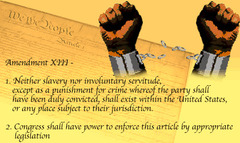
846687837913th AmendmentThis constitutional amendment, ratified in December 1865, forbade slavery and involuntary servitude in all states.32
8466878380Ex Parte Milligan1866-Supreme Court ruled that the government had acted improperly in Indiana where, certain civilians had been subject to a military trial during the war. The Court ruled that such trials could be used only when regular civilian courts were unavailable.33
8466878381Draft RiotsJuly 1863-riots against the draft erupted in NYC. Some 117 people were killed before federal troops and a temporary suspension of the draft restored order.34
8466878382CopperheadsNorthern Democrats who opposed the Civil War and wanted a negotiated peace.35
8466878383Election of 1864In this presidential election, the Democrats nominated the popular General George McClellan. The Republicans (Unionist party), nominated President Abraham Lincoln. Abraham Lincoln won the election, however McClellan did win 45 percent of the popular vote.36
8466878384Trent Affair1861-Confederacy sent diplomats to Britain on a British steamer, to gain recognition for their government. A Union ship captured both men and took them as prisoners of war. The British threatened war if they were not released, and Lincoln gave into their demands. However, the diplomats were not able to get recognition for the Confederacy, from Britain or France.37
8466878385AlabamaConfederate war ship purchased from Britain. Captured more than 60 Union merchant ships before being sunk off the coast of France.38
8466878386Laird ramsShips with iron rams could have been used against the Union's naval blockade. However, the Union persuaded the British gov. to cancel the sale of these ships to the Confederacy, rather than risk war with the Union.39
8466878387John Wilkes BoothAmerican stage actor who, as part of a conspiracy plot, assassinated President Abraham Lincoln at Ford's Theatre in Washington, D.C., on April 14, 1865.40
8466878388Segregated Black TroopsAlmost 200,000 African Americans joined the Union army during the Civil War.41
8466878389Massachusetts 54th RegimentAn all black regiment in the Civil War.42
8466878390Women in the WorkplaceAs men went off to battle in the Civil War, women stepped into the labor vacuum, operated farms and took factory jobs customarily held by men.43
8466878391Women in NursingDuring the Civil War women played a critical role as military nurses.44
8466878392War's Long Term EffectsThe Civil War had long term effects on women. The field of nursing was now open to women for the first time. The enormous responsibilities undertaken by women gave impetus to the movement to obtain equal voting rights for women.45
84668783934 million freedmenWith the passage of the thirteenth amendment in 1865, 4 million African Americans were now free.46

AP US History Eras Flashcards

Terms : Hide Images
5957793940Early Colonial1607-16400
5957803905NE, Middle, Southern Colonies1640-17541
5957808339French/Indian War1754-17632
5957812085Causes of the Revolution1763-17753
5957815164Revolution1775-17834
5957820069Articles of Confederation1781-17895
5957825077Washington/Adams1789-18006
5976642013Jeffersonian Democracy1800-18127
5976642825War of 18121812-18148
5976643965Era of Good Feelings1816-18249
5976644250Jacksonian Demcracy1824-184010
5976645424Reform Movements1820s-40s11
5976646170Expansionism1840s12
5976647248Causes of Civil War1848-186013
5976647552Civil War1861-186514
5976648016Reconstruction1865-187715
5976651924Gilded Age1877-189616
5976652399Progressive Era1890s-191417
5976652912World War I1914-191918
5976653511Roaring 20s1920s19
5976653846Great Depression1930s20
5976654402World War II1941-194521
5976654878Truman/Cold War1945-195222
5976655921Eisenhower/Conformity/Consumerism1950s23
5976656744Counterculture/JFK/LBJ1960s24
5976657347inflation/Nixon/Ford/Carter1970s25
5976657784Reagan/Yuppies1980s26
5976658727Clinton/Moderates1990s27
5976659396Bush/Obama/War of Terror2000s28

AP US History Crash Course: Period Five 1844-1877 Flashcards

Terms : Hide Images
6679048262John O'Sullivancoined the term Manifest Destiny; suggested that God had ordained the United States to expand westward0
6679048263Manifest Destinyused to gain support for the territorial expansion in the Southwest and Mexico1
6679048264Andrew Jacksonopposed the admission of Texas into the Union though he favored territorial expansion2
6679048265Texasdivided over the issue of admitting another slave state into the Union3
6679048266James Polkelection of 1844; "fifty-four forty or fight" - promise to take all of the Oregon land under dispute between the US and Britain4
6679048267Mexican-American WarPolk believed that Mexican troops had illegally crossed into American territory and thus forced American bloodshed5
6679048268Treaty of Guadalupe Hidalgo (1848)ended the Mexican-American War; United States gained California and New Mexico and settled boundary dispute of Texas6
6679048269the Wilmot Provisocalled for prohibition of slavery in lands from Mexico; endorsed by legislatures and symbolized the issue of slavery expansion7
6679048270American Colonization Society (1817)worked to return freed slaves to the west coast of Africa; led by middle-class evangelicals8
6679048271William Lloyd Garrisoneditor of the radical abolitionist newspaper; founder of the American Anti-Slavery Society; wanted the immediate emancipation of slaves9
6679048272Frederick Douglassprominent abolitionist; had his own publication, North Star; championed equal rights for women10
6679048273Sarah Moore Grimkefirst woman to support abolition and equal rights11
6679048274the Compromise of 1850California as a free state; abolition of slavery in DC; passage of more strict Fugitive Slave Act; territorial governments in New Mexico and Utah, immediate decision of slavery12
6679048275popular sovereigntyattempted to settle the question of whether it was legal to establish slavery in the Western territories; determined by those who lived there13
6679048276the Kansas-Nebraska Act (1854)territory of Nebraska would be split into two territories; determination of slavery by inhabitants; repealed the Missouri Compromise; ignited a bloody contest and split the Democratic party14
6679048277the Dred Scott Case (1857)was a slave and could not sue in federal court because slaves were property and could not be taken from their masters15
6679048278John Brown's RaidBrown and followers seized a federal arsenal in Harpers Ferry; wanted to spur a slave revolt; he was executed and became a symbol of the abolitionist movement16
6679048279the Election of 1860led by Lincoln who opposed the expansion of slavery; Democratic party was split; Lincoln won which influenced seven Southern states to succeed17
6679048280advantages of the Northrailroad network; strong industrial base; superior navy; large population and food supply; and established, functioning government18
6679048281disadvantages of the Northshortage of experienced military commanders and a divided population19
6679048282advantages of the Southdefensive war fought on home territory; coastline difficult to blockade; important cash crop (cotton); experienced military commanders; close economic relationship with Britain; and unified war aim20
6679048283disadvantages of the Southsmaller population than the North; smaller industrial base than the North; and lack of diversified economy21
6679048284importance of the border statesstrategic location; important industrial and agricultural resources22
6679048285border statesKentucky, Maryland, Missouri, and Delaware23
6679048286the Battle of the AntietamUnion victory persuaded England and France to remain neutral; allowed Lincoln to issue the Emancipation Proclamation24
6679048287the Emancipation Proclamationdid not want to antagonize slave owners in the border states; strengthened the Union's moral cause of ending slavery; did not free those in the border states, only those in the Confederacy25
6679048288the Transcontinental railroadbuilt by the Union Pacific Railroad and the Central Pacific Railroad26
6679048289Homestead Act of 1862offering cheap land to people who would settle the West and improve their property27
667904829013th Amendmentabolished slavery and involuntary servitude28
667904829114th Amendmentdeclared former slaves as citizens and provided "equal protection of the laws"29
667904829215th Amendmentprovided suffrage for black males; supported by Frederick Douglass and opposed by Susan B. Anthony and Elizabeth Cady Stanton30
6679048293causes of the Radical Reconstructionformer Confederates were elected to Congress; Black Codes enacted; race riots broke out; and attempts in the South to undermine the 14th amendment31
6679048294programs and policies of the Radical Reconstructionmilitary occupation of the South; Confederate leaders became policy; restrictions were placed on Andrew Johnson and impeached him32
6679048295achievements of the Radical RevolutionFreedmen's Bureau and African Americans were elected to the House and Senate33
6679048296freedmanentered sharecropping arrangements with former masters which led to a cycle of debt and depression; did not receive land34
6679048297the Panic of 1873depression35
6679048298Black Codespassed by Southern state legislatures and wanted to limit the opportunities to the blacks36
6679048299election of 1876Tilden v. Hayes37
6679048300the Compromise of 1877Democrats agreed that Hayes would win; ended Reconstruction38

AMSCO AP US History Chapter 3 Flashcards

AMSCO United States History 2015 Edition, Chapter 3 Colonial Society in the 18th Century

Terms : Hide Images
5295493899J. Hector St. John CrevecoeurA Frenchman who wrote , "America is a new man, who acts upon new principles; he must therefore entertain new ideas, and form new opinions. From involuntary idleness, servile dependence, and useless labor, he has passed to toils of a very different nature, rewarded by ample subsistence. This is an American." (1782)0
5295493900immigrantsMany immigrants who came to American were Protestant French, German-speaking, or Scotch-Irish. They were fleeing religious persecution and wars, as well as seeking economic opportunities. Africans were also brought in large numbers to the colonies, albeit unwillingly.1
5295493901English cultural dominationMost of the population of the colonies was English, but Africans and Europeans created some diversity in the culture of the colonies.2
5295493902self-governmentEach colony had a representative assembly that was elected by voters (white, land-owning males). Rhode Island and Connecticut also voted on their governor, but the other colonies had an appointed (by King or proprietor) governor.3
5295493903religious tolerationMassachusetts was the least tolerant in matters of religion, excluding non-Christians and Catholics. Rhode Island and Pennsylvania were the most liberal.4
5295493904hereditary aristocracyThere was no hereditary aristocracy in the colonies. Their class system was based on economics with wealthy landowners at the tope, and craftspeople and common people made up the majority.5
5295493905social mobilityEveryone in colonial society, except African Americans, could improve their status/standard of living with hard work.6
5295493906colonial familiesFamily was very important in the colonies; couples married young and had many children. Most families lived on farms. Men worked, owned land, and dominated politics. Women did housework, educated the children, and worked with her husband.7
5295493907subsistence farmingFarming that provides for the needs of the people on the farm, but nothing else. (New England mainly)8
5295493908established churchChurches that were financed by taxes. (Anglican Church in Virginia/Congregational Church in Massachusetts Bay and Connecticut)9
5295493909Great AwakeningA movement characterized by fervent expressions of religious feeling among masses of people. (1730-1740)10
5295493910Jonathan EdwardsArgued that God was rightfully angry with human sinfulness; people who repented could by saved by God's grace, but those who did nothing would go to Hell. "Sinners in the Hands of an Angry God" (1741) Led to Great Awakening11
5295493911George Whitefield(1739) Stressed that God was all powerful and would save only those who openly professed faith in Christ Jesus. Taught that with sincere faith, ordinary people could understand scripture without ministers. Led to Great Awakening12
5295493912Georgian styleAn architectual style of London, mimicked in the colonies; characterized by symmetrical placement of windows and dormers and a spacious center hall flanked by two fireplaces. Only found on eastern seaboard.13
5295493913Benjamin WestPainter who went to England to acquire the necessary training and financial support to establish himself as a prominent artist along with John Copley14
5295493914John CopleyPainter who went to England to acquire the necessary training and financial support to establish himself as a prominent artist along with Benjamin West15
5295493915Cotton MatherAuthor of several widely read religious tracts; a minister from Massachusetts16
5295493916Benjamin FranklinWriter and scientist; author of Poor Richard's Almanack and inventor of bifocal eyeglasses17
5295493917Poor Richard's AlmanackWritten by Benjamin Franklin, this book written in 1732 contained aphorisms and advice.18
5295493918Phillis WheatleyHer poetry is noteworthy for her triumph over slavery and for it's quality19
5295493919John BartramSelf-taught botanist of Philadelphia20
5295493920sectarian; nonsectarianExisting to promote the doctrines of a specific religion; many colleges were this, except for the College of Philadelphia21
5295493921professions; religion, medicine, lawMinisters, Physicians, and Lawyers (due to legal support of revolution) were all respected careers in the 18th century.22
5295493922John Peter Zenger; libel casePublished a true, but unflattering article about New York's royal governor. He was acquited by the jury. (1735)23
5295493923Andrew HamiltonLawyer for Zenger in the Zenger case. (1735)24
5295493924colonial governorsIn the royal colonies, these were appointed by the King; in the proprietary colonies, these were appointed by the proprietor; in Rhode Island and Connecticut, these were elected by popular vote25
5295493925colonial legislaturesIn every colony the lower of these two houses was elected; this lower house controlled taxes. Only in Rhode Island and Connecticut were the upper houses elected.26
5295493926town meetingsThe dominant form of local government in the New England colonies27
5295493927county governmentIn the South, local government was carried on by a sheriff and other officials who served...28
5295493928limited democracyOnly white, land-owning males could vote, and colonial assemblies mostly represented the elite.29

AP US History Chapter 1 Flashcards

AMSOC, APUSH

Terms : Hide Images
4779461256Henry the NavigatorPortuguese man that sponsored voyages to open trade routes below Africa0
4779461257Christopher Columbus1492 "Discovered" the Americas for European settlement, hired for Ferdinand and Isabella of Spain1
4779461259ConquistadorsGeneral term for Spanish explorers in the New World who sought to conquer the native people, establish dominance over their lands, and prosper from their natural resources, including gold2
4779461260Encomienda systemKing of Spain gave land grants to Spanish Conquistadors in return for the promise to Christianize them. Part of a broader Spanish effort to subdue the native population3
4779461265Hernán de SotoWas a Spanish conquistador who found the Apalachee and Timucua Indians, in a region by the 1540s.4
4779461278PuritansWanted to reform the Anglican Church5
4779482510Aztecsare a group of semi nomadic warrior peoples who invaded the city of Teotihuacán, and the Aztecs created an extensive empire. They were dominant in Mexico until the spanish took over in the 16th century.6
4779484766Hopewell CultureThe Hopewell people of present-day Ohio had increased their food supply by domesticating plants, organized themselves in large villages, and set of a trading network. This network allowed them to trade with places almost all over what is now the United States of America7
4779488721Pueblo PeoplesWere a group of people who built structures, from a special kind clay and dirt, that were called pueblos. They built villages on steep cliffs, and were master architects.8
4779489797Mississippian CultureWas a large scale culture that emerged on the Mississippi river, the peoples of this culture produced an agricultural surplus, that allowed them to live in small, fortified temple cities, where they developed a robust culture.9
4779492293PrimogenitureIs the practice where a father bestows most of their land to their eldest son, which forces many younger children to join the ranks of roaming poor.10
4779493448Roman Catholic ChurchWas a great unifying aspect of western Europe, It was made up of a pope, cardinals, bishops, and priests. Many catholic books helped to preserve latin and the christian religion provided a common understanding of god, the world, and human history.11
4779494382CaravelIs a small extremely fast Portuguese ship that was used from the 15th-17th centuries.12
4779495351African SlaveryPortuguese traders joined African states and Arab merchants in the slave trade. Most slaves worked as agricultural laborers or served in slave armies, most were also treated as property.13
4779496320Ferdinand & IsabellaWere Spanish monarchs, who financed the explorers who discovered the western hemisphere for Europeans. They also expelled or converted thousands of Jews and Muslims, to Christianity.14
4779497497Hernán Corteswas a conquistador from Spain that both conquered and destroyed a civilization. He had a mistress named Malinali, who helped to warn him of a possible attack from the Aztecs and was his translator.15
4779498467Columbian ExchangeIs a process where the food products of the Western hemisphere were transferred to the peoples of other continents, significantly increasing agricultural yields and population growth worldwide.16
4779499193MestizoIs a man of mixed race, the offspring of a Spaniard and American Indian. This is in Latin America.17
4779500155PredestinationIs the divine foretelling of all that will happen, especially with regard to the salvation of some and not others.18
4779506260Church of Englandis Protestant and is governed by bishops, with the king or queen as its official head.19
4779507041Spanish ArmadaWas a Spanish fleet of 130 ships that sailed from A Coruña in August 1588, under the command of the Duke of Medina Sidonia with the purpose of escorting an army from Flanders to invade England.20
4779507541MercantilismA system of state-assisted manufacturing and trade.21
4779508310Price RevolutionThe massive expenditure of american gold and silver by Philip II had doubled the money supply of Europe and sparked a major economic upheaval.22
4779508774Enclosure MovementLaws that allowed owners to fence in the open fields that surrounded may peasant villages and put sheep to graze on them.23
4779509341IndentureIs a contract in which the individual agreed to work without wages for four or five years in exchange for passage to America and room and board for the term of the contract.24

AMSCO AP US History Chapter 18 Flashcards

AMSCO United States History 2015 Edition, Chapter 18 The Growth of Cities and American Culture, 1865-1900

Terms : Hide Images
8754668110Causes of ImmigrationForces in U.S. driving this process were (1) political and religious freedom, (2) economic opportunities in western U.S. and cities, (3) large steamships offered relatively inexpensive transportation.0
8754668111Old ImmigrantsThrough 1880s, came to the U.S. from northern and western Europe. Were mostly Protestant and had high-level of literacy.1
8754668112New ImmigrantsFrom 1890s-1914, came to the U.S. from southern and eastern Europe. Mostly non-Protestant, poor and illiterate.2
8754668113Statue of LibertyBegan in 1870's, by French sculptor Frederic-Auguste Bartholdi. Opened in New York Harbor, in 1886.3
8754668114Chinese Exclusion Act of 1882Was 1st bill regarding immigration. Placed a ban on all new immigrants from China.4
8754668115Immigration Act of 18821882-this act placed restrictions on immigration of undesirable persons (paupers, criminals, convicts, and mentally incompetent)5
8754668116Contract Labor Act of 1885Restricted immigration of temp. workers, to protect American workers.6
8754668117American Protective AssociationNativist society that was prejudiced against Roman Catholics.7
8754668118Ellis Island 1892Immigration center opened in 1892 in NY Harbor.8
8754668119Melting Pot vs. Cultural DiversityHistorian's term, melting pot, refers to immigrants leaving their old-world characteristics and adopting U.S characteristics. Other historians argue that 1st-gen. immigrants maintained cultural identity and only the 2nd and 3rd generations were assimilated in the U.S. society.9
8754668120Cause of MigrationLate 1800s, forces driving Europeans to migrate to the U.S. were (1) Displaced farmworkers by political turmoil and mechanization, (2) Overcrowding due to population boom, (3) Religious persecution.10
8754668121Streetcar CitiesIn these cities, people lived in residences many miles from their jobs and commuted to work by horse-drawn streetcars.11
8754668122Steel-Framed BuildingsSkyscrapers made possible by this type of building. 1st was the Home Insurance Company Building in Chicago. Made possible by a steel skeleton, Otis elevator, and central steam heating system.12
8754668123Tenements, PovertyAs rich people left residences near business district, buildings were often divided into small crowded windowless apartments for the poor.13
8754668124Ethnic NeighborhoodsDifferent immigrant groups created distinct neighborhoods where they could maintain their distinct identity.14
8754668125Residential SuburbsBy 1900, suburbs had grown up around every major U.S. city. the U.S. became world's 1st suburban nation.15
8754668126Political Machines, BossPolitical parties in major cities came under control of tightly organized groups of politicians, known as political machines. Each machine had boss-top politician who gave orders and doled out government jobs.16
8754668127Tammany HallPolitical machine in NYC-developed into a power center.17
8754668128Urban ReformersStated more than 400 settlement houses in cities. Provided services to help poor immigrants.18
8754668129City Beautiful Movement1890s-this movement included plans to remake America's cities with tree-lined boulevards, public parks, and public cultural attractions.19
8754668130Henry GeorgeSan Francisco journalist who authored "Progress and Poverty" in 1879-called to attention the failings of laissez-faire capitalism along with wealth polarization caused by industrialization.20
8754668131Edward Bellamy1888-wrote "Looking Backward", a popular book of social criticism-envisioned future that eliminated poverty, greed, and crime.21
8754668132Jane Addams1889-she started Hull House in Chicago, which was a settlement house that provided help to immigrants.22
8754668133Settlement HousesProvide social services to new immigrants.23
8754668134Social Gospel1880s + 1890s-this movement espoused social justice for the poor based on Christian principles.24
8754668135Walter RauschenbuschLeading figure of Social Gospel movement, and a NYC minister.25
8754668136Cardinal GibbonsRoman Catholic leader-supported organized labor.26
8754668137Dwight MoodyFounded Moody Bible Institute (1889). Helped generations of urban evangelists to adapt traditional Christianity to city life.27
8754668138Salvation ArmyImported from England in 1879, charity provided the basic necessities of life for the homeless and poor while also preaching Christian Gospel.28
8754668139Family Size; DivorceFamily size continued to drop as more people moved from farms to cities. Children were needed to do work on farms, but in city they did not provide that advantage. Divorce rates increased as legal grounds for divorce became more lenient.29
8754668140Susan B. Anthony, NAWSA1890-one of founders of the National American Womens Suffrage Association (NAWSA), which worked to secure voting rights for women.30
8754668141Francis Willard, WCTULeader of Women's Christian Temperance Union (WCTU) which advocated total abstinence from alcohol.31
8754668142Antisaloon League1893-this organization became powerful political force, by 1916 had persuaded 21 states to close down all saloons and bars.32
8754668143Carrie NationShe raided saloons and smashed barrels of beer with a hatchet.33
8754668144KindergartenLate 1800s-practice of sending children to kindergarten became popular.34
8754668145Public High SchoolLate 1800s-growing support for tax-supported public high schools.35
8754668146College Elective SystemLate 1800s, colleges started reducing # of required courses and offered more elective courses. These were courses students could choose, and this increased the # of foreign language and science courses.36
8754668147Johns Hopkins UniversityUniversity was founded in Baltimore in 1876, the 1st to specialize in advanced graduate studies.37
8754668148New Social SciencesNew fields such as psychology, sociology, anthropology, and political science emerged.38
8754668149Richard T. ElyHe attacked laissez-faire economic thought as dogmatic and outdated and used economics to study labor unions and trusts.39
8754668150Oliver Wendell HolmesTaught that law should evolve with the times and not be bound by previous precedents or decisions.40
8754668151Clarence DarrowFamous lawyer, he argued that criminal behavior could be caused by an environment of poverty, neglect, and abuse.41
8754668152W.E.B. Du BoisLeading black intellectual, he advocated for equality for blacks, integrated schools, and equal access to higher education.42
8754668153Realism, NaturalismMark Twain became the 1st realist author and his books often showed the greed, violence, and racism in American society. Authors known for naturalism focused in how emotions and experience shaped human experience.43
8754668154Mark Twain1st great realist author, famous for his classic "The Adventures of Huckleberry Finn".44
8754668155Stephen CraneWrote in the 1890s about human condition. His books included "Maggie: A Girl in the Streets" and the "Red Badge of Courage".45
8754668156Jack LondonWrote about the conflict between man and nature in books such as "The Call of the Wild".46
8754668157Theodore DreiserAuthor of "Sister Carrie". Notable for its naturalism and controversy, as it ran contrary to moral undercurrents of 1900.47
8754668158Winslow HomerForemost American painter of seascapes and watercolors.48
8754668159Thomas EakinsSpecialized in painting of working class and used serial-action photographs to study human anatomy.49
8754668160ImpressionismPainting technique that originating in France.50
8754668161James WhistlerAmerican expat, he painted Arrangement in Grey and Black, popularly known as Whistler's Mother. Was a quintessential example of his study of color rather than subject.51
8754668162Mary CassattAmerican impressionist painter known as a portrait painter. Spent much of her life in France.52
8754668163Ashcan SchoolAround 1900, painted scenes of everyday life in poor urban neighborhoods.53
8754668164Armory ShowNew York painting exhibit in 1913-featured abstract paintings.54
8754668165Abstract ArtNon-representational art, not accepted by Americans until 1950s.55
8754668166Henry Hobson RichardsonArchitectural designs of the 1870s, based on Romanesque style, gave gravity and stateliness to functional commercial buildings.56
8754668167Romanesque styleArchitecture style featured massive stone walls and rounded arches.57
8754668168Louis SullivanRejected historical architecture and focused on tall, steel-framed office buildings. He focused on building a form that followed function. Member of the Chicago School.58
8754668169Form Follows FunctionForm of the building flowed from its function.59
8754668170Frank Lloyd WrightMost famous architect of 20th century, he developed an organic style that made his buildings fit in with their natural surroundings.60
8754668171Organic ArchitectureArchitectural style in which the building was in harmony with its natural surroundings.61
8754668172Frederick Law OlmstedOriginator of landscape architecture, he designed Central Park and grounds of the U.S. Capitol.62
8754668173Growth of Leisure TimeGrowth of leisure time activities was result of the reduction of work hours, improved transportation, advertising, and decline of restrictive values.63
8754668174John Philip SousaWrote series of popular marches played in small town bandstands across the country.64
8754668175Jazz, Blues, RagtimeForm of music that combined African rhythms and western-style instruments and mixed improvisation with a structured band format.65
8754668176Jelly Roll MortonFamous African American jazz musician from New Orleans.66
8754668177Scott JoplinBlack composer notable for his contribution to ragtime. He sold over one million copies of his song "Maple Leaf Rag".67
8754668178Mass Circulation NewspapersLarge circulation newspapers had been around since 1830, but the 1st to exceed 1 million subscribers was Joseph Pulitzer's New York World.68
8754668179Joseph PulitzerEstablished the 1st newspaper to exceed over 1 million in circulation by filling it with sensational stories of crime and disaster.69
8754668180William Randolph HearstNewspaper publisher whose introduction of large headlines and sensational reporting changed American journalism.70
8754668181Ladies Home JournalBy 1880s, advertising and new printing technology lead to this magazine which sold for only 10 cents.71
8754668182Circus TrainsNational rail network made possible traveling circuses.72
8754668183Barnum & Bailey, Greatest Show on EarthTraveling circus that was very popular.73
8754668184Buffalo Bill Wild West ShowWilliam F. Cody brought this show to urban populations.74
8754668185Spectator Sports, Boxing, BaseballIn late 19th century pro. sports started.75
8754668186Amateur Sports, Bicycling, TennisLate 19th century sports of the middle and upper classes.76
8754668187Social Class and DiscriminationLate 19th century, sports such as golf and tennis became popular with wealth members of athletic clubs. Very rich pursued polo and yachting.77
8754668188Country Clubs, Golf, Polo, YachtsLate 19th century sports of the wealthy.78
8754668189Corner Saloon, Pool HallsLate 19th century, young single men often centered their lives around these establishments.79

AMSCO AP US History Chapter 24 Flashcards

AMSCO United States History 2015 Edition, Chapter 24 The Great Depression and the New Deal, 1929-1939

Terms : Hide Images
9157492107stock market crashA boom stock market of 1928 led to a sell off starting in October 1929. Within three years the stock market would decline to one-ninth of its peak. (p. 497)0
9157492108Black TuesdayOn October 29, 1929, millions of panicky investors sold, as the bottom fell out of the stock market. (p. 497)1
9157492109Dow Jones indexThe Wall Street stock market index. In September 1929 the index was at a high of 381, in three months it fell to 198. Three years later, the index would finally hit bottom at 41, less than one-ninth of the peak. (p. 497)2
9157492110buying on marginThis purchase method allowed people to borrow most of the cost of the stock, making down payments as low as 10 percent. Investors depended on the price of the stock increasing so they could repay their loans. (p. 497)3
9157492111uneven income distributionWages had risen relatively little compared to the large increases in productivity and corporate profits. Economic success was not shared by all, as the top 5 percent of the richest Americans received over 33 percent of all income. (p. 497)4
9157492112excessive debtConsumers and businesses believed the economic boom was permanent so they increased borrowing, which later led to loan defaults and bank failures. (p. 498)5
9157492113overproductionBusiness growth, aided by increased productivity and use of credit, had produced a volume of goods that workers with stagnant wages could not continue to purchase. (p. 498)6
9157492114Federal ReserveDuring the Great Depression, the Federal Reserve followed a tight money policy. Instead of trying to stabilize banks, the money supply and prices, they tried to preserve the gold standard. (p. 498)7
9157492115postwar EuropeEurope had not recovered from World War I and the U.S. insistence on loan repayment and tariffs weaken Europe and contributed to the Worldwide depression. (p. 498)8
9157492116debts and high tariffsLeading up to the Great Depression, the United States insisted on full World War I loan repayments and high tariffs on imports. This weakened Europe and contributed to the worldwide depression. (p. 498)9
9157492117Gross National ProductThe value of all the goods and services produced by a nation in one year. In 1929, the United States Gross National Product was $104 billion, but it dropped to $56 billion in 1932. (p. 498)10
9157492118unemploymentBy 1933 25% of the workforce, not including farmers, did not have employment. (p. 498)11
9157492119bank failuresDuring the Great Depression 20 percent of all banks failed. (p. 498)12
9157492120poverty and homelessDuring the Great Depression poverty and homelessness increased. (p. 499)13
9157492121Herbert HooverHe was President of the United States at the time of the stock market crash. He thought that prosperity would soon return. He was slow to call for legislative action and he thought public relief should come from the state and local governments, not the federal government. (p. 500)14
9157492122self-reliancePresident Herbert Hoover did not ask Congress for legislative action on the economy until the summer of 1930. He was concerned that government assistance to individuals would destroy their self-reliance. (p. 500)15
9157492123Hawley-Smoot TariffIn June 1930, President Hoover signed into law the highest tariff rates in history, ranging from 31 to 49 percent. In retaliation, European countries enacted their own tariffs. This reduced trade for all nations and worsened the worldwide depression. (p. 500)16
9157492124debt moratoriumSuspension on the payment of international debts. In 1931, President Hoover proposed a suspension of international debt payments. (p. 500)17
9157492125Farm BoardIt was authorized to help farmers stabilize prices by temporarily holding surplus grain and cotton in storage. (p. 500)18
9157492126Reconstruction Finance CorporationIn 1932, Congress funded this government-owned corporation as a measure for propping up faltering railroads, banks, life insurance companies, and other financial institutions. President Hoover thought that emergency loans would stabilize key business and the benefits would "trickle down" to smaller businesses and ultimately bring recovery. (p. 501)19
9157492127Twentieth AmendmentAlso known as the lame-duck amendment, this amendment shortened the period between the presidential election and inauguration. The new president's term would start on January 20. (p. 502)20
9157492128bonus marchThousands of unemployed World War I veterans marched to Washington, D.C. and set up encampments to demand immediately payment of the bonuses promised to them at a later date. The Army, led by General Douglas MacArthur broke up the encampment. (p. 501)21
9157492129Franklin D. RooseveltThis Democratic candidate won the 1932 presidential election. As a candidate, he promised a "new deal" for the American people, the repeal of Prohibition, aid for the unemployed, and cuts in government spending. (p. 502)22
9157492130Eleanor RooseveltShe was the most active first lady in history, writing a newspaper column, giving speeches, and traveling the country. She served as the president's social conscience and influenced him to support minorities. (p. 502)23
9157492131New DealFranklin D. Roosevelt's plan to help people at the bottom of the economic pyramid. (p. 503)24
9157492132relief, recovery, reformThe New Deal included the three R's: relief for people out of work, recovery for business and the economy, and reform of American economic institutions. (p. 503)25
9157492133Brain TrustFor advice on economic matters, Roosevelt turned to a group of university professors. (p. 503)26
9157492134Frances PerkinsRoosevelt's secretary of labor, she was the first woman to serve in a president's cabinet. (p. 503)27
9157492135Hundred DaysOn March 4, 1933, Franklin Roosevelt started his term and called Congress into a one hundred day session. They passed into law all of Roosevelt's legislation. (p. 503)28
9157492136repeal of ProhibitionIn 1933, the 21st Amendment was passed. It repealed the 18th Amendment. This ended Prohibition. (p. 503)29
9157492137bank holidayPresident Franklin Roosevelt ordered the banks to be closed on March 6, 1933. He made a radio address explaining that the banks would be reopened after allowing enough time for the government to reorganize them on a sound basis. (p. 503)30
9157492138fireside chatsPresident Franklin Roosevelt spoke on the radio to the American people. (p. 504)31
9157492139Federal Deposit Insurance CorporationThis agency guaranteed individual bank deposits. (p. 504)32
9157492140Public Works AdministrationDirected by Secretary of the Interior Harold Ickes, it allotted money to state and local governments for building roads, bridges, dams, and other public works. (p. 504)33
9157492141Harold IckesPresident Franklin D. Roosevelt's secretary of the interior. (p. 504)34
9157492142Civilian Conservation CorpThis organization employed young men for projects on federal lands and paid their families small monthly sums. (p. 504)35
9157492143Tennessee Valley AuthorityA government corporation that hired thousands of people in the Tennessee Valley, to build dams, operate electric power plants, control flooding, and erosion, and manufacture fertilizer. (p. 505)36
9157492144National Recovery AdministrationDirected by Hugh Johnson, this agency attempted to guarantee reasonable profits for business and fair wages and hours for labor. The complex program operated with limited success for two years before the Supreme Court declared it unconstitutional. (p. 505)37
9157492145Schechter v. U.S.In 1935, the Supreme Court declared the National Recovery Administration (NRA) unconstitutional. (p. 505)38
9157492146Securities and Exchange CommissionThis agency was created to regulate the stock market and to place strict limits on the kind of speculative practices that led to the 1929 stock crash. (p. 505)39
9157492147Federal Housing AdministrationIt insured bank loans for building new houses and repairing old ones. (p. 505)40
9157492148Works Progress AdministrationThis agency created in 1935, part of the Second New Deal, it was much more ambitious than earlier efforts. Between 1935 and 1940 up to 3.4 million people were hired to construct bridges, roads, airports, and public buildings. Artists, writers, actors, and photographers were also employed. (p. 506)41
9157492149Harry HopkinsHe headed the Works Progress Administration (WPA) in the 1930s. (p. 506)42
9157492150National Labor Relations (Wagner) ActA 1935 act that guaranteed a worker's right to join a union and a union's right to bargain collectively. It outlawed business practices that were unfair to labor. (p. 507)43
9157492151Social Security ActIn 1935, this act created a federal insurance program based on the automatic collection of taxes from employees and employers throughout people's working careers. Monthly payments would be made to retired people over the age of 65. (p. 507)44
9157492152election of 1936Franklin D. Roosevelt easily defeated the Republican nominee, Alf Landon. (p. 507)45
9157492153New Deal coalitionFrom the 1930s to 1960s, this political coalition consisted of the Solid South, white ethnic groups in cities, midwestern farmers, labor unions, and liberals. (p. 508)46
9157492154John Maynard KeynesBritish economist, whose theory said that in difficult times government needed to spend well above its tax revenues in order to stimulate economic growth. After the 1937 recession, Roosevelt adopted this strategy, which was successful. (p. 511)47
9157492155recession of 1937In the winter of 1937 the economy went into recession again. The new Social Security tax had reduced consumer spending and at the same time Roosevelt had cut back government spending in hopes of balancing the budget. (p. 511)48
9157492156Father Charles CoughlinA Catholic priest who founded the National Union for Social Justice, which called for issuing inflated currency and nationalizing all banks. His radio program attacks on the New Deal were anti-Semitic and Fascist. (p. 508)49
9157492157Francis TownsendHe proposed a simple plan for guaranteeing a secure income for the elderly. He proposed that a 2 percent federal sales tax be used to create a special fund from which every retired person over the age of 60 would receive $200 a month thus stimulating the economy. (p. 509)50
9157492158Huey LongHe proposed a "Share Our Wealth" program that promised a minimum annual income of $5000 for every American family to be paid for by taxing the wealthy. In 1935 he challenged Roosevelt's leadership of the Democratic party by becoming a candidate for president but was soon assassinated. (p. 509)51
9157492159Supreme CourtIn 1935, they declared two of President Roosevelt's recovery programs unconstitutional. (p. 509)52
9157492160reorganization planPresident Franklin Roosevelt proposed a plan that allowed the president to appoint a new Supreme Court justice for each current justice over the age of 70. Congress refused to pass this legislation. (p. 509)53
9157492161conservative coalitionRepublicans and many Democrats were outraged by President Franklin Roosevelt's plan to reorganize the Supreme Court. (p. 509)54
9157492162Congress of Industrial OrganizationsThis labor union concentrated on organizing unskilled workers in the automobile, steel, and southern textile industries. (p. 510)55
9157492163John L. LewisHe was President of the United Mine Workers Union and Leader of the Congress of Industrial Organizations. (p. 510)56
9157492164sit-down strikeIn 1937 workers at the General Motors plant in Flint, Michigan insisted on the right to join a union by sitting down at the assembly line. (p. 510)57
9157492165Fair Labor Standards ActIn 1938 this act established a minimum wage, a maximum standard workweek with extra pay for overtime, and child labor restrictions. (p. 511)58
9157492166minimum wageEstablish minimum pay for workers, initially set at 40 cents per hour. (p. 511)59
9157492167depression mentalityMillions of people who lived through the Great Depression developed an attitude of insecurity and economic concern that remained throughout their lives. (p. 512)60
9157492168drought, dust bowl, OkiesA severe drought in the early 1930s and poor farming practices led to the Oklahoma dust bowl. High winds away large amounts of topsoil. (p. 512)61
9157492169John Steinbeck, "The Grapes of Wrath"A novelist that wrote about hardships in his classic study of economic heartbreak in 1939, "The Grapes of Wrath". (p. 512)62
9157492170Marian AndersonAn African American singer who had been refused the use of Constitution Hall, she performed a special concert at the Lincoln Memorial. (p. 513)63
9157492171Mary McLeod BethuneOne of the African Americans that was appointed to middle-level positions in federal government. She was a leader of efforts for improving education and economic opportunities for women. (p. 513)64
9157492172Fair Employment Practices CommitteeIt was set up to assist minorities in gaining jobs in defense industries. (p. 513)65
9157492173A. Phillip RandolphHead of Railroad Porters Union who threatened a march on Washington D.C. to demand equal job opportunities for African Americans. (p. 513)66
9157492174Indian Reorganization (Wheeler-Howard) ActIn 1934 Congress repealed the Dawes Act of 1887 and replaced it with this act which returned lands to the control of tribes and supported preservation of Indian cultures. (p. 513)67
9157492175Mexican deportationDiscrimination in the New Deal programs and competition for jobs forced thousands of Mexican Americans to return to Mexico. (p. 513)68

AP US History Period 5 civil war Flashcards

Terms : Hide Images
8737298415Popular SovereigntyThe notion that the sovereign people of a given territory should decide whether to allow slavery.0
8737298416Fugitive Slave LawPassed as part of the Compromise of 1850, it set high penalties for anyone who aided escaped slaves and compelled all law enforcement officers to participate in retrieving runaways.1
8737298417Uncle Tom's CabinHarriet Beecher Stowe's widely read novel that dramatized the horrors of slavery.2
8737298418New York Draft RiotsUprisings during the Civil War (1863), mostly of working-class Irish-Americans, in protest of the draft. Rioters were particularly incensed by the ability of the rich to hire substitutes or purchase exemptions.3
8737298419Emancipation Proclamation1863. Declared all slaves in rebelling states to be free but did not affect slavery in non-rebelling Border States.4
8737298420Sherman's March to the Sea1864-1865. Union General William Tecumseh Sherman's destructive march through Georgia. An early instance of "total war", purposely targeting infrastructure and civilian property to diminish morale and undercut the Confederate War effort.5
8737298421Freedmans' Bureau1865-1872. Created to aid newly emancipated slaves by providing food, clothing, medical care, education, and legal support.6
8737298422Black Codes1865-1866. Laws passed throughout the South to restrict the rights of emancipated blacks.7
8737298423KKK (Ku Klux Klan)An extremist, paramilitary, right-wing secret society founded in the mid-nineteenth century and revived during the 1920s. It was anti-foreign, anti-black, anti-Jewish, anti-pacifist, anti-Communist, anti-internationalist, anti-evolutionist, and anti-bootlegger, but pro-Anglo-Saxon and pro-Protestant. Its members, cloaked in sheets to conceal their identities, terrorized freedmen and sympathetic whites throughout the South after the Civil War.8
8737298424SharecroppingAn agricultural system that emerged after the Civil War in which black and white farmers rented land and residences from a plantation owner in exchange for giving him a certain "share" of each year's crop.9
8737298425Hayes-Tilden ElectionThe South conceded to let Hayes win the presidency because he agreed to pull out the troops.10
8737298426Compromise of 1850Admitted California as a free state, opened New Mexico and Utah to popular sovereignty, ended the slave trade (but not slavery itself) in Washington D.C., and introduced a more stringent fugitive slave law. Widely opposed in both the North and South, it did little to settle the escalating dispute over slavery.11
8737298427Kansas-Nebraska Act1854. Proposed that the issue of slavery be decided by popular sovereignty in the Kansas and Nebraska territories, thus revoking the 1820 Missouri Compromise. Introduced by Stephen Douglass in an effort to bring Nebraska into the Union and pave the way for a northern transcontinental railroad.12
8737298428Homestead Act1862. A federal law that gave settlers 160 acres of land for about $30 if they lived on it for five years and improved it by, for instance, building a house on it. The act helped make land accessible to hundreds of thousands of westward-moving settlers.13
8737298429Gettysburg Address1863. Abraham Lincoln's oft-quoted speech, delivered at the dedication of the cemetery at Gettysburg battlefield. In the address, Lincoln framed the war as a means to uphold the values of liberty.14
8737298430Appomattox Court HouseSite (city) where Robert E. Lee surrendered to Ulysses S. Grant in April 1865 after almost a year of brutal fighting throughout Virginia in the "Wilderness Campaign".15
873729843110% Reconstruction Plan1863. Introduced by President Lincoln, it proposed that a state be readmitted to the Union once 10 percent of its voters had pledged loyalty to the United States and promised to honor emancipation of slaves.16
873729843213th, 14th, 15th Amendments (Reconstruction Amendments)13th: Abolished slavery except for criminal punishment. 14th: Gave equal rights and government protection to all men. 15th: Secured suffrage for men.17
8737298433Radical RepublicansMost liberal part of the Republican Party. Desired political, economic, and social equality for African Americans. Wanted harsh punishment for the South after the Civil War.18
8737298434Election of LincolnAngered many people in the south who owned slaves because he wanted to end slavery. Won the election of 1860 but did not win the popular vote. South Carolina was happy at the outcome of the election because now it had a reason to secede.11 states in the south seceded and made themselves the Confederacy after the election.19
8737298435Abolitionist MovementThe movement to end the practice of slavery within the entirety of the United States.20
8737298436Anaconda PlanUnion war plan by Winfield Scott, called for blockade of southern coast, capture of Richmond, capture of the Mississippi River, and to take an army through heart of south.21
8737298437The American Party (The Know-Nothing Party)(1840s-1850s) This political party carried anti-immigrant sentiments against the Catholic and the Irish and saw some electoral success.22
8737298438Wilmot Proviso(1846) Proposal to prohibit slavery in any land acquired in the Mexican War. Never passed by both houses of Congress but helped fan the flame of sectional tension.23
8737298439Free-Soil Party(1848) Political party dedicated to stopping the expansion of slavery into new territories.24
8737298440Treaty of Guadalupe Hidalgo(1848) The Mexican government gave up the area of Texas and offered to sell the provinces of California and New Mexico as a result of its defeat in the Mexican-American War.25
8737298441Gadsden Purchase(1853) Agreement w/ Mexico that gave the US parts of present-day New Mexico & Arizona in exchange for $10 million; all but completed the continental expansion envisioned by those who believed in Manifest Destiny.26
8737298442Ostend Manifesto(1854) A declaration issued from Ostend, Belgium, by the U.S. ministers to England, France, and Spain, stating that the U.S. would be justified in seizing Cuba if Spain did not sell it to the U.S.27
8737298443Bleeding Kansas(1856-1861) A sequence of violent events involving abolitionists and pro-Slavery elements that took place in Kansas-Nebraska Territory. The dispute further strained the relations of the North and South, making civil war imminent.28
8737298444Dred Scott v. Sanford(1857) Supreme Court case that decided US Congress did not have the power to prohibit slavery in federal territories and slaves, as private property, could not be taken away without due process. Invalidated the Missouri Compromise.29
8737298445John Brown's Raid on Harper's Ferry(1859) John Brown led a raid on Harper's Ferry. He hoped to start a rebellion against slaveholders by arming enslaved African Americans. Brown was quickly defeated by citizens and federal troops. Brown became a villain to southerners who now thought northerners would use violence to end slavery as well as a martyr to some northerners who saw Brown as someone who sacrificed himself for the ideal of freedom for all.30
8737298446Election of 1860(1860) The United States presidential election of 1860 set the stage for the American Civil War. Hardly more than a month following Lincoln's victory came declarations of secession by South Carolina and other states, which were rejected as illegal by outgoing President James Buchanan and President-elect Lincoln.31
8737298447Civil Rights Act of 1867(1867) Banned discrimination in public accommodations, prohibited discrimination in any federally assisted program, outlawed discrimination in most employment; enlarged federal powers to protect voting rights and to speed school desegregation.32
8737298448Thirteenth Amendment(1865) The constitutional amendment ratified after the Civil War that forbade slavery and involuntary servitude.33
8737298449Fourteenth Amendment(1868) Provided equal protection of the law to freed slaves. Representation for any state that withheld voting from African Americans would be reduced.34
8737298450Fifteenth Amendment(1870) Prohibited any state from denying citizens the right to vote on the grounds of race, color, or previous condition of servitude.35
8737298451Compromise of 1877(1877) It withdrew federal soldiers from their remaining position in the South, enacted federal legislation that would spur industrialization in the South, appointed Democrats to patronage positions in the south, appointed a Democrat to the president's cabinet, and allowed Rutherford B. Hayes to win the election. Marked the end of reconstruction.36
8737298452Manifest DestinyA notion held by a nineteenth-century Americans that the United States was destined to rule the continent, from the Atlantic the Pacific.37
8737298453Louis O'SullivanCoined the term Manifest Destiny in a newspaper article.38
8737298454Texas Annexation1845. Originally refused in 1837, as the U.S. Government believed that the annexation would lead to war with Mexico. Texas remained a sovereign nation. Annexed via a joint resolution through Congress, supported by President-elect Polk, and approved in 1845. Land from the Republic of Texas later became parts of NM, CO, OK, KS, and WY.39
8737298455"Fifty-Four Forty or Fight"The phrase used in James K Polk's 1844 presidential election dealing with the Oregon Territory. Polk's campaign used the phrase as a rallying cry for the United States to obtain all of Oregon Territory, including land claimed by the English, up through Northern Canada.40
8737298456Oregon Trail2000 mile long path along which thousands of Americans journeyed to the Willamette Valley in the 1840's.41
8737298457California Gold Rush1849. Gold discovered in California attracted a rush of people all over the country and world to San Francisco; arrival of the Chinese; increased pressure on federal government to establish a stable government42
8737298458Mexican American War1846 - 1848. President Polk declared war on Mexico over the dispute of land in Texas. At the end, American ended up with 55% of Mexico's land, called the Mexican Cession.43
8737298459Republican Party1854. Established by anti-slavery Whigs and Democrats, "free-soilers" and reformers from the Northwest met and formed party in order to keep slavery out of the territories.44
8737298460Stephen A. DouglasSenator from Illinois who ran for president against Abraham Lincoln and was a leading voice in the debates over slavery and its expansion before the Civil War. Wrote the Kansas-Nebraska Act and the Freeport Doctrine.45
8737298461Freeport DoctrineStated that exclusion of slavery in a territory (where it was legal) could be accomplished by the refusal of the voters to enact any laws that would protect slave property. Stated by Stephen Douglass during the Lincoln-Douglass debates, eventually contributed to his loss in the 1860 presidential election as Democrats believed he had walked back the gains made with the Dred Scott v. Sanford decision.46
8737298462Abraham Lincoln16th President of the United States saved the Union during the Civil War and emancipated the slaves; was assassinated by Booth (1809-1865)47
8737298463secessionFormal withdrawal of states or regions from a nation48
8737298464habeas corpusPetition requiring law enforcement officers to present detained individuals before the court to examine the legality of the arrest. Protects individuals from arbitrary state action. Suspended by Lincoln during the Civil War.49
8737298465sectionalismTerm used to describe the growing differences between the regions of the United States, especially the North and South, leading up to the Civil War.50
8737298466Robert E. LeeConfederate general who had opposed secession but did not believe the Union should be held together by force. Military genius whose aggressiveness made him a fearsome opponent throughout the Civil War.51
8737298467Fort SumterFederal fort in the harbor of Charleston, South Carolina; the confederate attack on the fort marked the start of the Civil War.52
8737298468Battle of AntietamA battle near a sluggish little creek, it proved to be the bloodiest single day battle in American History with over 26,000 lives lost in that single day. Prevented an Confederate invasion of Maryland.53
8737298469Battle of GettysburgA large battle in the American Civil War, took place in southern Pennsylvania from July 1 to July 3, 1863. Union General George G. Meade led an army of about 90,000 men to victory against General Robert E. Lee's Confederate army of about 75,000. Proved to be a significant turning point in the war because of the loss of about 1/3 of Lee's army.54
8737298470Ulysses S. GrantAn American general and the eighteenth President of the United States (1869-1877). He achieved international fame as the leading Union general in the American Civil War.55
8737298471William Tecumseh ShermanUnion General who destroyed South during "march to the sea" from Atlanta to Savannah; example of total war and "scorched-earth" military tactics.56
8737298472Thomas "Stonewall" JacksonHe was a confederate general who was known for his fearlessness in leading rapid marches, bold flanking movements, and furious assaults. He earned his nickname at the battle of first bull run for standing courageously against union fire. During the battle of Chancellorsville his own men accidently mortally wounded him.57
8737298473martial lawRule by the army instead of the elected government (such as in the South as a result of the Military Reconstruction Act)58
8737298474emergency powersWide-ranging powers a president may exercise during times of crisis or those powers permitted the president by Congress for a limited time.59
8737298475Radical ReconstructionName given to the period when Congress, which was controlled by Republicans, took over Reconstruction efforts. When southerners balked at some of the more moderate reforms proposed, more radical republicans started to gain more power and pass more legislation.60
8737298476Military Reconstruction Act1867. Divided the South into five districts and placed them under military rule; required Southern States to ratify the 14th amendment; guaranteed freedmen the right to vote in convention to write new state constitutions61
8737298477Freedmen's Bureau1865. Organization (turned government agency) run by the army to care for and protect southern Blacks after the Civil War, sometimes including settling them on confiscated confederate lands.62
8737298478Election of 1876Ended reconstruction because neither candidate had an electoral majority. The Democrat Sam Tilden loses the election to Rutherford B Hayes, Republican, was elected, and then ended reconstruction as he secretly promised.63
8737298479carpetbaggerA northerner who went to the South immediately after the Civil War; especially one who tried to gain political advantage or other advantages from the disorganized situation in southern states (as viewed from the southern perspective).64
8737298480scalawagA derogatory term for southerners who were working with the North to buy up land from desperate southerners; sometimes used in a general way by southerners criticizing other southerners who had northern sympathies.65
8737298481Gag ResolutionStrict rule passed by pro-southern Congressmen in 1836 to prohibit all discussion of slavery in the House of Representatives66
8737298482James K. PolkDemocratic president after John Tyler who was best known for policies that promoted Manifest Destiny and expansionism.67
8737298483John C. FremontAn American military officer, explorer, the first candidate of the Republican Party for the office of President of the United States (1856), and the first presidential candidate of a major party to run on a platform in opposition to slavery.68
8737298484Bear Flag Revolt(1846) a revolt that took place during the Mexican-American War when 500 Americans (Anglos) in Mexican California took the city of Sonoma, CA in the spirit of Manifest Destiny and declared California to be an independent nation.69
8737298485Liberty PartyA former political party in the United States; formed in 1839 to oppose the practice of slavery; merged with the Free Soil Party in 1848.70
8737298486John C. CalhounSenator who argued for states' rights for the South. He asked for slavery to be left alone, slaves to be returned to the South, and state balance to be kept intact.71
8737298487William H. SewardCongressman of the "Young Guard" who fiercely opposed slavery and argued that Americans should follow a "higher law" (God's law) over the Constitution when it came to the issue of slavery.72
8737298488Henry ClayKnown as the "Great Compromiser"; senator who pushed for compromise between the North and South and worked with Stephen Douglas; major figure in the passing of both the Missouri Compromise (1820) and Compromise of 1850.73
8737298489Underground RailroadSecret system of safe houses along a route that led many slaves to freedom in the North and eventually Canada.74
8737298490"Fire Eaters"Refers to a group of extremist pro-slavery politicians from the South who urged the cessation of southern states.75
8737298491Charles SumnerSenator who spoke out for black freedom and racial equality post-Civil War. Publicly beaten by Preston Brooks for speaking out against the violence in Kansas, an event that marked increasing tensions between the North and South prior to the Civil War.76
8737298492Jefferson DavisPresident of the Confederate States of America prior to and during the Civil War.77
8737298493self-determinationThe ability of a people/government to determine their own course or future using their own free will.78
8737298494Lecompton ConstitutionSupported the existence of slavery in the proposed state and protected rights of slaveholders. It was rejected by Kansas, making Kansas an eventual free state (and was a factor in spurring violence there).79
8737298495Lincoln-Douglas DebatesLincoln challenged Stephen Douglas to debates during the senatorial race of 1858 which became a public referendum on the issue of slavery.80
8737298496Border StatesSouthern states that never chose secession and joined the Confederacy during the Civil War (Missouri, Kentucky, Maryland, and Deleware).81
8737298497Andrew Johnson17th President of the United States, A Southerner form Tennessee, as V.P. when Lincoln was killed, he became president. He opposed radical Republicans who passed Reconstruction Acts over his veto. The first U.S. president to be impeached, he survived the Senate removal by only one vote.82
8737298498George B. McClellanFirst commander of the Army of the Potomac; well-known for being a master at training an army; was replaced several times by President Lincoln during the Civil War because of his timidness and sometimes outright refusal to send his army into battle.83
8737298499CopperheadsNickname for Northerners who were pro-Confederacy.84
8737298500First Battle of Bull Run (Battle of Manassas)(July 1861) first major conflict of the Civil War. Southern victory led to overconfidence.85
8737298501Thaddeus StevensRadical Republican congressman from Pennsylvania who defended runaway slaves in court for free and insisted on being buried in a black cemetery; hated white Southerners. Leading figure on the Joint Committee on Reconstruction and for the social equality of African Americans.86
8737298502Wade-Davis BillBill pushed by Congress in 1864 that required 50 percent of a state's voters take the oath of allegiance and demanded stronger safe-guards for emancipation than proposed in Lincoln's 10 percent plan. Pocket-vetoed by Lincoln.87
873729850310 Percent PlanLincoln's plan for re-admitting the Southern states into the Union: a state could be reintegrated into the Union when 10 percent of its voters in the presidential election of 1860 had taken an oath of allegiance to the United States and pledged to abide by emancipation.88
8737298504Civil Rights Act (1866)A Reconstruction bill which gave which granted citizenship to African Americans and weakened the poliferation of Black Codes in the South.89
8737298505RedeemersLargely former slave owners who were the bitterest opponents of the Republican program in the South. Staged a major counterrevolution to "redeem" the south by taking back southern state governments. Their foundation rested on the idea of racism and white supremacy.90
8737298506Ku Klux KlanThe "Invisible Empire of the South", founded in Tennessee in 1866, made up of embittered white Southerners who resented the success and ability of Black legislators. They would terrorize, mutilate, and even murder "upstart" blacks or their supporters to "keep them in their place".91
8737298507"Seward's Folly"Refers to the United States' Secretary of State William Seward's decision to purchase the Alaskan territory from Russia in 1867. At the time, Seward's decision to buy the land was regarded as a terrible one by many critics in the United States.92

AMSCO AP US History Chapter 19 Flashcards

AMSCO United States History 2018 Edition, Chapter 19 The Politics of the Gilded Age, 1877-1900

Terms : Hide Images
9162869344laissez-faire economics and politicsThe idea that government should do little to interfer with the free market. (p. 380)0
9162869345weak presidentsThe Gilded Age presidents were not memorable and only served one term. Many avoided problems arising from growth of industry and cities. (p. 380)1
9162869346patronage politicsThe use of government resources to reward individuals for their electoral support. (p. 381)2
9162869347corrupt politiciansParty patronage, the process of providing jobs to faithful party members was more important than policy issues during the Gilded Age. (p. 381)3
9162869348Whig past, pro-businessRepublicans followed the tradition of Hamilton and the Whigs, supporting a pro-business economic program of high protective tariffs. (p. 381)4
9162869349social reformers, temperanceThe core of Republican support came from middle-class Anglo-Saxon Protestants who supported temperance or prohibition, along with business men. (p. 381)5
9162869350Protestant religionThese religious groups usually supported Republicans. (p. 381)6
9162869351African AmericansAround 1890, a bill to protect voting rights of African Americans passed the House but was defeated in the Senate. (p. 386)7
9162869352former Confederacy, "Solid South"From 1877 until the 1950s, the Democrats could count on winning every election here. (p. 381)8
9162869353states rights, limited governmentDemocrats of the Gilded Age were in favor of these ideas; Jeffersonian tradition. (p. 381)9
9162869354big-city political machinesIn the North, one source of Democratic strength came from big-city political machines. (p. 381)10
9162869355immigrant voteIn the North, one source of Democratic strength came from the immigrant vote. (p. 381)11
9162869356against prohibitionThe Catholics, Lutherans, and Jews were generally against this policy. (p. 381)12
9162869357federal government jobsDuring the Gilded Age, these jobs were given to those who were loyal their political party. (p. 381)13
9162869358Stalwarts, Halfbreeds, and MugwumpsGroups which competed for lucrative jobs in the patronage system. (p. 381)14
9162869359Election of 1880In 1880, James A. Garfield was elected president in a very close election. His vice president was Chester A. Arthur. (p. 382)15
9162869360Chester A. ArthurHe became president after James Garfield died of a gun shot wound. (p. 383)16
9162869361Pendleton Act of 1881Set up by the Civil Service Commission, it created a system where federal jobs were awarded based on competitive exams. (p. 384)17
9162869362civil service reformPublic outrage over the assassination of President Garfield pushed Congress to remove some jobs from control of party patronage. (p. 384)18
9162869363Grover ClevelandIn 1884, he was elected president of the United States. He was the first Democratic president since 1856. (p. 383)19
9162869364high tariffIn the 1890s, tariffs provided more than half of the federal revenue. Some Democrats objected to the tariffs because the raised the price on consumer goods and made it for difficult for farmers to sell to export because foreign countries enacted their own tariffs. (p. 385)20
9162869365business vs. consumersSome people objected to the high tariffs because the raised the prices on consumer goods. (p. 385)21
9162869366Cleveland threatens lower tariffToward the end of Grover Cleveland's first term he urged Congress to lower the tariff rates. (p. 385)22
9162869367McKinley Tariff of 1890In 1890, this tariff raised the tax on foreign products to a peacetime high of 48 percent. (p 386)23
9162869368Wilson-Gorman Tariff of 1894This tariff provided a moderate reduction in tariff rates and levied a 2 percent income tax. (p. 388)24
9162869369Dingley Tariff of 1897Increased the tariff rate to more than 46 percent and made gold the official standard of U.S. currency. (p. 390)25
9162869370"hard" money vs. "soft" moneyMoney backed by gold vs. paper money not backed by specie (gold or silver). (p. 384)26
9162869371banks, creditors vs. debtorsDebtors wanted more "easy, soft" money in circulation. On the opposite side creditors stood for "hard, sound" money - meaning currency backed by gold. (p. 384)27
9162869372Panic of 1873, "Crime of 73"Congress stopped making silver coins. (p. 385)28
9162869373Specie Resumption Act of 1875Congress sided with creditors and investors when it passed this act which withdrew all greenbacks (paper money not backed by gold or silver) from circulation. (p. 385)29
9162869374Greenback partyThis political party was formed by supporters of paper money not backed by gold or silver. (p. 384)30
9162869375Bland-Allison Act of 1878In 1878, this act allowed a limited coinage of silver each month at the standard silver-to-gold ratio of 16 to 1. (p. 385)31
9162869376Sherman Silver Purchase Act of 1890This act increased the coinage of silver but it was not enough to satisfy the farmers and miners. (p. 386)32
9162869377run on gold reserves, J.P. Morgan bail outA decline in silver prices encouraged investors to trade their silver dollars for gold dollars. The gold reserve fell dangerously low and President Grover Cleveland was forced to repeal the Sherman Silver Purchase Act of 1890. The president then turned to J.P. Morgan to borrow $65 million in gold to support the dollar and the gold standard. (p. 387)33
9162869378repeal of Sherman Silver Purchase ActA decline in silver prices encouraged investors to trade their silver dollars for gold dollars. The gold reserve fell dangerously low and President Grover Cleveland was forced to repeal the Sherman Silver Purchase Act of 1890. (p. 387)34
9162869379election of 1888, Harrison "Billion Dollar Congress"In 1888, the Republican Benjamin Harrison became the president and the Republicans controlled Congress. They passed the first billion dollar budget in U.S. history. (p. 386)35
9162869380rise of the Populist PartyIn 1892, delegates met in Omaha, Nebraska to draft a political platform that would reduce the power of trusts and bankers. They nominated James Weaver as their candidate for president. (p. 386)36
9162869381Farmers' Alliances in South and WestIn 1890, this group of discontented farmers elected senators, representatives, governors, and majorities in state legislatures in the West. (p. 386)37
9162869382Alliance of whites and blacks in SouthThe Populist party tried to form a political alliance with these poor farmers. (p. 387)38
9162869383reformers vs. rasism in SouthIn the presidential election of 1892, Southern Democrats feared the Populist party and used every technique possible to keep blacks from voting. (p. 387)39
9162869384Omaha PlatformIn 1892, the Populist party met in Omaha, Nebraska to draft this political platform and nominate a presidential candidate. (p 386)40
9162869385election of 1892, Cleveland returnsThe 1892 presidential election was between President Benjamin Harrison and former president Grover Cleveland. Cleveland became the only president to win a presidential election after having left the office. (p. 387)41
9162869386Panic of 1893In 1893, the stock market crashed as a result of speculation in railroad companies. One of the worst and longest depressions in U.S. history. (p. 387)42
9162869387Coxey's Army, March on WashingtonIn 1894, Populist Jacob A. Coxey led a march to Washington to demand that the federal government spend $500 million on public works programs. (p. 388)43
9162869388Coin's Financial SchoolIn 1894, this book taught Americans that unlimited silver coining would end the economic problems. (p. 388)44
9162869389William Jennings BryanThe 1896 Democratic nominee for president. (p. 388)45
9162869390"Cross of Gold" SpeechWilliam Jennings Bryan gave this speech at the 1896 Democratic convention. The prosilver and anti-gold speech assured him of the nomination. (p. 389)46
9162869391fusion of Democrats and PopulistsIn the 1896 presidential election the Democrats and Populists both nominated William Jennings Bryan for president in fused campaign. (p. 389)47
9162869392unlimited coinage of silver at 16 to 1In 1896, the Democrats favored silver coinage at this traditional but inflationary rate. (p. 389)48
9162869393McKinley victoryWilliam McKinley won the presidential election of 1896 by carrying the all the Northeast and the upper Midwest. (p. 389)49
9162869394gold standard and higher tariffIn 1897, William McKinley became president just as gold discoveries in Alaska increased the money supply under the gold standard. The Dingley Tariff increased the tariff rate to 46 percent. (p. 390)50
9162869395rise of modern urban industrial societyThe 1896 election was a victory for big business, urban centers, conservative economics, and moderate middle-class values. Rural America lost its dominance of American politics. (p. 390)51
9162869396decline of traditional rural-agricultualThe 1896 election marked the point of decline of rural America's power in national politics. (p. 390)52
9162869397start of the modern presidencyWilliam McKinley emerged as the first modern president, he would make America an important country in international affairs. (p. 390)53
9162869398era of Republican dominanceThe election of McKinley in 1896 started an era of Republican dominance of the presidency (seven of next nine elections) and Congress. (p. 390)54

Pages

Subscribe to CourseNotes RSS

Need Help?

We hope your visit has been a productive one. If you're having any problems, or would like to give some feedback, we'd love to hear from you.

For general help, questions, and suggestions, try our dedicated support forums.

If you need to contact the Course-Notes.Org web experience team, please use our contact form.

Need Notes?

While we strive to provide the most comprehensive notes for as many high school textbooks as possible, there are certainly going to be some that we miss. Drop us a note and let us know which textbooks you need. Be sure to include which edition of the textbook you are using! If we see enough demand, we'll do whatever we can to get those notes up on the site for you!