AP Notes, Outlines, Study Guides, Vocabulary, Practice Exams and more!

AP US History Chapter 13 Flashcards

Terms : Hide Images
5097462332Maine LawsPassed in 1851; 1st big step in the Temperance Movement - outlawed sale & manufacturing of alcohol except for medical purposes.0
5097462333The Brooks-Sumner AffairSenator Charles Sumner had recently given a speech called "The Crime Against Kansas" on abolishing slavery. Congressman Preston Brooks, who had taken the speech particularly personally attacked Senator Sumner with a walking stick. Brooks, who was accompanied at the time by Congressman Laurence Keitt and Congressman Henry Edmundson, assaulted Sumner.1
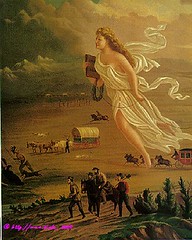
5097468195Manifest DestinyA notion held by a nineteenth-century Americans that the United States was destined to rule the continent, from the Atlantic the Pacific.2
5097468196Stephen LongHe explored Canadian river thinking it was red river, he was a cartographer; who labeled KS and Great Plains the "Great American Desert".3
5097652679The Great American DesertBeginning with Lewis and Clark, most nineteenth-century mapmakers referred to the Great Plains as this. It was the land west of Missouri.4
5097858354Moses AustinFirst American to receive Spanish land grant in Mexico, later Texas. He died and passed land to his son.5
5097865526Stephen AustinOriginal settler of Texas, granted land from Mexico on condition of no slaves, convert to Roman Catholic, and learn Spanish.6
5097869906Peace party/war partyThe peace side was a secret society of Union supporters in North Texas. The war Side that wanted to go to War with Mexico.7
5097881676General Antonio Lopez de Santa AnnaHe seized power in Mexico after the collapse of empire in Mexico in 1824, after brief reign of liberals, seized power in 1835 as caudillo, defeated by Texans in war for independence in 1836, defeated by the United States in the Mexican-American War in 1848, unseated by liberal rebellion in 1854.8
5097909535AlamoA Spanish mission converted into a fort, it was besieged by Mexican troops in 1836. The Texas garrison held out for thirteen days, but in the final battle, all of the Texans were killed by the larger Mexican force.9
5097912036GoliadA site where about 400 defeated, surrounded, and surrendered Americans were slaughtered by Santa Anna. "remember goliad" became a war cry soon thereafter.10
5097983535Sam HoustonCommander of the Texas army at the battle of San Jacinto; later elected president of the Republic of Texas.11
5097985159San JacintoA surprise attack by Texas forces on Santa Ana's camp on April 21, 1836. Santa Ana's men were surprised and overrun in twenty minutes. Santa Ana was taken prisoner and signed an armistice securing Texas independence. Mexicans - 1,500 dead, 1,000 captured. Texans - 4 dead.12
5097985160CaliforniosDescendants of Spanish and Mexican conquerors; Spanish speaking inhabitants of California they were culture of Mexico carried to California.13
509798353654° 40' or fight!It was the famous slogan used over the border dispute with England about the Oregon Territory.14
5098018040James K PolkWas president in March 1845. He wanted to settle the Oregon boundary dispute with Britain. He wanted to acquire California. And he wanted to incorporate Texas into union.15
5098028927Liberty PartyA former political party in the United States; formed in 1839 to oppose the practice of slavery; merged with the Free Soil Party in 1848.16
5098032854Zachary TaylorA Whig president who was a Southern slave holder, and war hero (Mexican-American War). Won the 1848 election. Surprisingly did not address the issue of slavery at all on his platform. He died during his term and his Vice President was Millard Fillmore.17
5098032855John SlidellA diplomat sent by Polk to buy California, New Mexico, and Texas from the Mexicans. Mexico rejected his offer and Polk sent Taylor's army into Mexico.18
5098032856John C. FremontWas an American military officer, explorer, the first candidate of the Republican Party for the office of President of the United States, and the first presidential candidate of a major party to run on a platform in opposition to slavery.19
5098051975Polk's War MessagePolk had been rejected by the previous Mexican government because his credentials said that he was a minister and the government had requested a commissioner. Polk also hoped the problems of holding together a revolutionary government would help keep Paredes concerned with internal problems and push him towards quickly settling the external disputes.20
5107619911Bear Flag RepublicDeclaring independence from Mexican control, this republic was declared in 1846 by American settlers living in California; this political act was part of a larger American political and military strategy to wrest Texas and California from Mexico.21
5107626452Conscience WhigsNorthern Whigs who opposed slavery on moral grounds. Conscience Whigs sought to prevent the annexation of Texas as a slave state, fearing that the new slave territory would only serve to buttress the Southern "slave power".22
5107630642Wilmot Proviso1846 proposal that outlawed slavery in any territory gained from the War with Mexico.23
5107636132Treaty of Guadalupe HidalgoA treaty signed by the U.S. and Mexico that officially ended the Mexican-American War; Mexico had to give up much of its northern territory to the U.S (Mexican Cession); in exchange the U.S. gave Mexico $15 million and said that Mexicans living in the lands of the Mexican Cession would be protected24
5107680297Free Soil PartyFormed in 1847 - 1848, dedicated to opposing slavery in newly acquired territories such as Oregon and ceded Mexican territory.25
5107684567Frederick DouglassAmerican abolitionist and writer, he escaped slavery and became a leading African American spokesman and writer. He published his biography, The Narrative of the Life of Frederick Douglass, and founded the abolitionist newspaper, the North Star.26
5107694270North StarNewspaper founded by Frederick Douglass.27
5107695964Sutter's MillLocation where gold was discovered in California in 1848, setting off the gold rush.28
5107694271"Forty-niners"Speculators who went to northern California following the discovery of gold in 1848; the first of several years of large-scale migration was 1849.29
5107694272Popular SovereigntyNotion that the people of a territory should determine if they want to be a slave state or a free state.30
5107694273Fire EatersRefers to a group of extremist pro-slavery politicians from the South who urged the separation of southern states into a new nation, which became known as the Confederate States of America.31
5107718684Uncle Tom's CabinWritten by Harriet Beecher Stowe in 1853 that highly influenced England's view on the American Deep South and slavery. a novel promoting abolition. intensified sectional conflict.32
5107722312Personal liberty lawsLaws passed by Northern state governments to counteract the provisions of the Fugitive Slave Acts and to protect escaped slaves and free blacks settled in the North, by giving them the right to a jury trial.33
5107720479Ableman v Booth 1857Was a United States Supreme Court case in which the Court held that State courts cannot issue rulings on federal law that contradict the decisions of federal courts, overturning a decision by the Supreme Court of Wisconsin.34
5107720480Gadsden PurchaseAgreement with Mexico that gave the US parts of present-day New Mexico & Arizona in exchange for $10 million; all but completed the continental expansion envisioned by those who believed in Manifest Destiny.35
5107718685Ostend ManifestoA declaration issued from Ostend, Belgium, by the U.S. ministers to England, France, and Spain, stating that the U.S. would be justified in seizing Cuba if Spain did not sell it to the U.S.36
5107718686Senator Stephen A. DouglasThe person behind Kansas Nebraska act.37
5107757959The Kansas Nebraska ActIt would create 2 new territories to allow the government to build a railroad. It split Nebraska into the territories of Nebraska and Kansas and allowed for popular sovereignty there.38
5107760874Republican Party1854 - anti-slavery Whigs and Democrats, Free Soilers and reformers from the Northwest met and formed party in order to keep slavery out of the territories.39
5107772016Know Nothing PartyGroup of prejudice people who formed a political party during the time when the KKK grew. Anti-Catholics and anti-foreign. They were also known as the American Party.40
5107773784Bleeding KansasA sequence of violent events involving abolitionists and pro-Slavery elements that took place in Kansas-Nebraska Territory. The dispute further strained the relations of the North and South, making civil war imminent.41
5107772017John BrownAbolitionist who was hanged after leading an unsuccessful raid at Harper's Ferry, Virginia (1800-1858).42
5107772018Sack of LawrenceAn attack, led by pro-slavery men, on abolitionists living in the city of Lawrence, Kansas; these men were sent to arrest antislavery leaders in Lawrence and in the process, they burned the town, robbed many buildings, and destroyed printing presses used to print abolitionist newspapers.43
5107772019Dred Scot v Sanford 1857Was a landmark decision by the United States Supreme Court on US labor law and constitutional law that held that "a negro, whose ancestors were imported into, and sold as slaves", whether enslaved or free, could not be an American citizen and therefore had no standing to sue in federal court, and that the federal government had no power to regulate slavery in the federal territories acquired after the creation of the United States.44
5107799802Lecompton ConstitutionSupported the existence of slavery in the proposed state and protected rights of slaveholders. It was rejected by Kansas, making Kansas an eventual free state.45
5107803381Abraham Lincoln16th President of the United States saved the Union during the Civil War and emancipated the slaves; was assassinated by Booth.46
5107801586Lincoln Douglas DebatesDuring the race to become Senator, Lincoln asked to have multiple debates with Douglas; certain topics of these debates were slavery, how to deal with slavery, and where slavery should be allowed; although Lincoln lost the election to Douglas, he was known throughout the country because of the debates; Douglas said people could exclude slavery by not enforcing & protecting slave-owner property.47
5107801587House divided speechMade by Abraham Lincoln before he was elected stating that the United States will either be all slave or all free because it can't be half and half and still succeed.48
5107799803Freeport DoctrineDoctrine developed by Stephen Douglas that said the exclusion of slavery in a territory could be determined by the refusal of the voters to enact any laws that would protect slave property. It was unpopular with Southerners, and thus cost him the election.49
5107799804John Brown's raid on Harper's FerryJohn Brown was an abolitionist that had a plan to free slaves and recruited about 20 men who would help John take control of a building in Harpers Ferry Virginia, where the federal government stored weapons He hoped to start a slave uprising by handing out these weapons to slaves50

AP US History Semester Final Review Flashcards

Terms : Hide Images
5729566729maize cultivationThe growing of Indian corn, a staple of many Indians diets, leading many nomadic tribes to settle and develop great civilizations such as the Aztecs incas and Mayans.0
5729566735Cultural autonomyFreedom of a group to express ones own culture without outside control i.g. The Christianization of the natives took away there Cultural autonomy1
5729566736great basinDesert area with no drainage to the ocean2
5729566737agricultural economyeconomy based on the production of crops3
5729566738spanish explorationColonization of the Americas by the conquistadors in search for gold, glory and god4
5729566739encomienda systemA government system where natives were given to colonists to work in return for converting them to Christianity.5
5729566742great plainsThe open plains of the Midwest where the natives adapted to roming the prairies on horseback6
5729566743permanent villagesThe settlements of Indians tribes based on the spread of agriculture7
5729566745slave laborForced labor of people considered property by the people in charge8
5729566748Colombian exchangethe exchange between the new world and the old world consisting of the old world bringing wheat, cows, horses, sheep, pigs, sugar, rice, coffee, smallpox, malaria and yellow fever. while the new world sent gold, silver, corn, potatoes, tobacco, and syphills9
5729566749Manifest DestinyA notion held by a nineteenth-century Americans that the United States was destined to rule the continent, from the Atlantic the Pacific.10
5729566750Louis O'SullivanCoined the term Manifest Destiny in a newspaper article11
5729566755California Gold Rush1849 (San Francisco 49ers) Gold discovered in California attracted a rush of people all over the country and world to San Francisco; arrival of the Chinese; increased pressure on federal government to establish a stable government12
5729566756Mexican American War1846 - 1848 - President Polk declared war on Mexico over the dispute of land in Texas. At the end, American ended up with 55% of Mexico's land.13
5729566757Treaty of Guadalupe Hidalgo(1848) treaty signed by the U.S. and Mexico that officially ended the Mexican-American War; Mexico had to give up much of its northern territory to the U.S (Mexican Cession); in exchange the U.S. gave Mexico $15 million and said that Mexicans living in the lands of the Mexican Cession would be protected14
5729566759popular sovereigntyA belief that ultimate power resides in the people.15
5729566760Kansas Nebraska Act1854 - Created Nebraska and Kansas as states and gave the people in those territories the right to chose to be a free or slave state through popular sovereignty.16
5729566761Free "Soiler"People who opposed expansion of slavery into western territories17
5729566762Republican Party1854 - anti-slavery Whigs and Democrats, Free "Soilers" and reformers from the Northwest met and formed party in order to keep slavery out of the territories18
5729566763Stephen A DouglasSenator from Illinois who ran for president against Abraham Lincoln. Wrote the Kansas-Nebraska Act and the Freeport Doctrine19
5729566764Freeport DoctrineIdea authored by Stephen Douglas that claimed slavery could only exist when popular sovereignty said so20
5729566765Abraham Lincoln16th President of the United States saved the Union during the Civil War and emancipated the slaves; was assassinated by Booth (1809-1865)21
5729566766secessionFormal withdrawal of states or regions from a nation22
5729566767Dred Scott DecisionA Missouri slave sued for his freedom, claiming that his four year stay in the northern portion of the Louisiana Territory made free land by the Missouri Compromise had made him a free man. The U.S, Supreme Court decided he couldn't sue in federal court because he was property, not a citizen.23
5729566768Uncle Tom's CabinWritten by Harriet Beecher Stowe in 1853 that highly influenced England's view on the American Deep South and slavery. A novel promoting abolition. intensified sectional conflict.24
5729566769SectionalismLoyalty to a region25
5729566770John Brown's RaidBegan when he and his men took over the arsenal in Harpers Ferry, Virginia, in hopes of starting a slave rebellion.26
5729566799Second Great AwakeningsBegan in the early decades of the 19th century. Partly a reaction against the rationalism of the Enlightenment and the American Revolution. It affected all sections of the country, but in the northern states it touched off social reform that drove the reform movements of this period. (p. 207)27
5729566800market revolutionStarting in the early 19th century, this revolution produced vast economic growth. Farmers fed the workers in the cities, the cities provided farm families with an array of mass produced goods.28
5729566801Thomas JeffersonHe was George Washington's first secretary of state. A Democrat-Republican, he was the nation's third president from 1801 to 1809. He stressed the basic principles of constitutional government and limited central government. He appeased the Federalists by maintaining the national bank and debt repayment plan of Hamilton, carried on the neutrality policies of Washington and Adams, reduced the size of the military. He eliminated some federal jobs, repealed excise taxes, and lowered the national debt. In 1803, he made the Louisiana Purchase from France.29
5729566807Nullification CrisisIn 1832, South Carolina passed a resolution forbidding the collection of tariffs in the state. This was nullifying a federal law at the state level. President Andrew Jackson threatened use of federal troops against South Carolina and a compromise was reached.30
5729566808Elizabeth Cady StantonA women's rights reformer who was not allowed to speak at an antislavery convention.31
5729566809cotton ginThis machine was invented by Eli Whitney in 1793. It removed seeds from cotton fibers so cotton could be processed quickly and cheaply. As a result more cotton was grown in the South and more slaves were needed to pick cotton in the fields.32
5729566811William Lloyd GarrisonAdvocated the immediate emancipation of slaves without compensation to their owners. He was also the writer of the "Liberator."33
5729566812Lucretia MottEarly feminist who advocated for women's rights and against slavery.34
5729566813Republican Motherhood/Cult of DomesticityAfter industrialization occurred women became the moral leaders in the home and educators of children. Men were responsible for economic and political affairs.35
5729566814Sectionalism: The NorthLargely urban population that worked in factories.36
5729566815Sectionalism: The SouthLargely agricultural, mostly cotton from 1830-1850.37
5729566816Sectionalism: The WestLargely trapping and hunting, citizens lived a secluded life away from others.38
5729566817Democratic-RepublicansFavored the common man, weak central government, hated the National Bank, was pro-immigration, wanted slow and cautious westward expansion.39
5729566819National RepublicansFavored the wealthy and educated, strong central government, supported the National Bank, favored internal improvements.40
5729566820WhigsFavored the wealthy and educated, strong central government, supported the National Bank and Internal Improvements, limited immigration, slow/against westward expansion; above all else HATED Andrew Jackson.41
5729566826Missouri CompromiseAn 1820 compromise crafted by Henry Clay, it consisted of three bills. * Admit Missouri as a slave-holding state * Admit Maine as a free state * Prohibit slavery in the rest of the Louisiana Territory north of latitude 36 30.42
5729566828Nat Turner RebellionIn 1831, this Virginia slave led a revolt in which 55 whites were killed. In retaliation, whites killed hundreds of African American and put down the revolt.43
5729566829Marbury v. MadisonEstablished the Supreme Court's policy of judicial review.44
5729566830American SystemHenry Clay, a leader in the House of Representatives proposed this system to advance the nation's economy. It consisted of: * Protective Tariffs: * National Bank * Internal Improvements45
5729566831The Lowell Mill FactoryThe system that recruited young farm women to work in the textile mills in Lowell, Massachusetts. The were housed in company dormitories near the mills.46
5729566832Seneca Falls ConventionIn 1848, this was the first women's rights convention in U.S. history. They wrote a "Declaration of Sentiments", modeled after the Declaration of Independence, which declared all men and women equal and listed grievances.47
5729566833TranscendentalistsThey questioned the doctrines of established churches and business practices of the merchant class. Mystical and intuitive way of thinking to discover inner self and look for essence of God in nature. Artistic expression was more important than pursuit of wealth. They valued individualism and supported the antislavery movement.48
5729566834Virginia and Kentucky ResolutionsIn 1799, Democratic-Republican leaders passed resolutions in two state legislatures that challenged federal laws enacted by the Federalist party. The states argued that they had the right to nullify laws passed at the federal level.49
5729566835Trail of TearsIn 1838 the U.S. Army forced 15,000 Cherokees to leave Georgia and move to Oklahoma. 4,000 Cherokees died on the march.50
5729566836Hartford Convention (1814)In December 1814, a special convention was held due to opposition to the the War of 1812, some radical Federalist in the Northeast want to secede from the United States, but that it was rejected. However, to limit the power of the Democratic-Republicans they adopted a proposal that a two-thirds vote of both houses would be required for any future declaration of war.51
5729566848Worcester v. GeorgiaSupreme Court case regarding Cherokee rights to land in the United States.52
5729566850The Tariff of 1828Increased taxes on imported goods to almost 50%; which positively effected American manufacturing.53
5729566851Force BillPermitted Andrew Jackson to organize troops to prevent South Carolina from secession.54
5729566853Henry ClayCreated the Tariff of 1833 to solve the Nullification Crisis, developed the American System, Speaker of the House, Secretary of State under JQA, Whig leaders, leader of the War Hawks (face it the most awesome historical figure after the death of GW)55
5729566856AbolitionistA person who strongly favors doing away with slavery56
5729566858Fredrick DouglassAmerican abolitionist and writer, he escaped slavery and became a leading African American spokesman and writer. He published an autobiography, and founded the abolitionist newspaper, the North Star.57
5729566859Horace MannA leader of educational reform, he became the head of the Massachusetts Board Of Education in 1837; he lengthened the school year to six months, doubled teachers' salaries, and improved curriculum and teacher training58
5729566860Harriet TubmanUnited States abolitionist born a slave on a plantation in Maryland and became a famous conductor on the Underground Railroad leading other slaves to freedom in the North (1820-1913)59
5729566863Soujourner TruthFrom her home in New York she waged a constant battle for the abolition of slavery. Former slave, also a prominent figure in the fight for women's rights.60
5729566864SuffrageTerm that refers to the right to vote. The most controversial issue at the Seneca Fall Convention.61
5729566865Susan B. AnthonyA leader in the struggle for women's rights, she advocated equal pay for women, college training for girls, coeducation, and women's right to vote. She continued the suffrage movement until her death in 1906.62
5729566866Temperance movementA crusade that used lectures, pamphlets, and revival-style rallies to warn people of dangers of alcohol63
5729566868Second Great Awakeninga religious revival that started in the early 19th century and ended in the mid 1800s. It inspired social reforms and a change in music, art, and literature.64
5729566869Dorothea DixShe advocated for Asylum reform, rather than placing mentally and physically disabled persons in regular prisons65
5729566870Charles FinneyA leading evangelist of the Second Great Awakening, he preached that each person had capacity for spiritual rebirth and salvation and that through individual effort could be saved. His concept of "utility of benevolence" proposed the reformation of society as well as of individuals.66
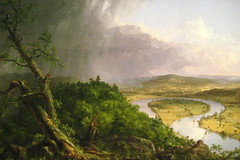
5729566871Hudson River SchoolFounded by Thomas Cole, first native school of landscape painting in the U.S.; attracted artists rebelling against the neoclassical tradition, painted many scenes of New York's Hudson River67
5729566873transcendentalismA philosophy pioneered in the 1830's and 1840's, in which each person has direct communication with God and Nature, and there is no need for organized churches. It incorporated the ideas that mind goes beyond matter, intuition is valuable, that each soul is part of the Great Spirit, and each person is part of a reality where only the invisible is truly real. Promoted individualism, self-reliance, and freedom from social constraints, and emphasized emotions.68
5729566874Ralph Waldo EmersonAmerican transcendentalist who was against slavery and stressed self-reliance, optimism, self-improvement, self-confidence, and freedom; prime example of a transcendentalist; "Nature" & "Self-Reliance"69
5729566875Henry David ThoreauAmerican transcendentalist who was against a government that supported slavery. He wrote down his beliefs in Walden. He started the movement of civil-disobedience when he refused to pay the toll-tax to support him Mexican War.70
5729566877James FortenAn African American business leader and abolitionist who owned a sailmaking company and was active in the Underground Railroad71
5729566878American Colonization SocietyOrganization established with the goal of transporting free blacks to a colony in Africa; founded Liberia in 1821-2272
5729566879Elijah LovejoyAmerican Presbyterian minister, journalist, and news paper editor who was murdered by a mob for his abolitionist views73
5729566880Richard AllenAn African American preacher who helped start the free African society and the African Methodist Episcopal church74
5729566881John Marshallcreated the precedent of judicial review; ruled on many early decisions that gave the federal government more power, especially the Supreme Court. Supported Federalists.75
5729566886National RoadThe first highway built by the federal government. Constructed during 1825-1850, it stretched from Pennsylvania to Illinois. It was a major overland shipping route and an important connection between the North and the West.76
5729566888Washington's farewell addressWarns against sectionalism and foreign affairs, wants everyone to stay strong as a nation. Encourages things written by Hamilton77
5729566889Thomas PaineAmerican Revolutionary leader and pamphleteer (born in England) who supported the American colonist's fight for independence and supported the French Revolution (1737-1809)78
5729566892Republican MotherhoodExpectation that women would instill Republican values in children and be active in families; helped increase education for women79
5729566893French RevolutionThe revolution that began in 1789, overthrew the absolute monarchy of the Bourbons and the system of aristocratic privileges, and ended with Napoleon's overthrow of the Directory and seizure of power in 1799.80
5729566894republican governmentSystem of government in which power is held by the voters and is exercised by elected representatives responsible for promoting the common welfare.81
5729566898Seven Year' WarA war between New France and the British. The reason this war started was because New England wasn't allowed to cross the Allegheny mountains and this made them mad. Also there were small fights at the border but other than those two things there countries were supposed to be at peace.82
5729566901natural rightsthe idea that all humans are born with rights, which include the right to life, liberty, and property83
5729566902American RevolutionThis political revolution began with the Declaration of Independence in 1776 where American colonists sought to balance the power between government and the people and protect the rights of citizens in a democracy.84
5729566908Proclamation of 1763A proclamation from the British government which forbade British colonists from settling west of the Appalachian Mountains, and which required any settlers already living west of the mountains to move back east.85
5729566909mercantilismEconomic policy common to many absolute monarchies. Government control of foreign trade is of paramount importance for ensuring the military security of the country. In particular, it demands a positive balance of trade and desires new sources of gold and silver bullion, thus fueling more colonialism.86
5729566918First Continental CongressThe First Continental Congress convened on September 5, 1774, to protest the Intolerable Acts. The congress endorsed the Suffolk Resolves, voted for a boycott of British imports, and sent a petition to King George III, conceding to Parliament the power of regulation of commerce but stringently objecting to its arbitrary taxation and unfair judicial system.87
5729566920Second Continental CongressConvened in May 1775, the Congress opposed the drastic move toward complete independence from Britain. In an effort to reach a reconciliation, the Congress offered peace under the conditions that there be a cease-fire in Boston, that the Coercive Acts be repealed, and that negotiations begin immediately. King George III rejected the petition.88
5729566921Lexington and ConcordApril 8, 1775: Gage leads 700 soldiers to confiscate colonial weapons and arrest Adam, and Hancock; April 19, 1775: 70 armed militia face British at Lexington (shot heard around the world); British retreat to Boston, suffer nearly 300 casualties along the way (concord)89
5729566922Common Sense1776: a pamphlet written by Thomas Paine that claimed the colonies had a right to be an independent nation90
5729566925Treaty of Paris, 1783agreement signed by British and American leaders that stated the United States of America was a free and independent country91
5729566927state constitutionsStates wrote a new constitution to replace their colonial charters after they declared independence. Most called for bicameral legislature and a governor (usually one year term for elected officials). You had to own property or pay a certain amount of tax to vote. Individual liberties protected people (including freedom of religion), but did not separate church and state.92
5729566928Articles of Confederation1st Constitution of the U.S. 1781-1788 (weaknesses-no executive, no judicial, no power to tax, no power to regulate trade)93
5729566939Bill of RightsAlthough the Anti-Federalists failed to block the ratification of the Constitution, they did ensure that the Bill of Rights would be created to protect individuals from government interference and possible tyranny. The Bill of Rights, drafted by a group led by James Madison, consisted of the first ten amendments to the Constitution, which guaranteed the civil rights of American citizens.94
5729566941Bank of the United StatesProposed by Alexander Hamilton as the basis of his economic plan. He proposed a powerful private institution, in which the government was the major stockholder. This would be a way to collect and amass the various taxes collected. It would also provide a strong and stable national currency. Jefferson vehemently opposed the bank; he thought it was un-constitutional. nevertheless, it was created. This issue brought about the issue of implied powers. It also helped start political parties, this being one of the major issues of the day.95
5729566942strict/loose interpretationstrict interpretation: whatever is not mentioned specifically in the Constitution cannot be done loose interpretation: A broad way of interpreting the Constitution that allows the Federal Government to take actions that the Constitution doesn't forbid it from taking. Favored by Alexander Hamilton as a way of creating the National Bank.96
5729566944Whiskey RebellionIn 1794, farmers in Pennsylvania rebelled against Hamilton's excise tax on whiskey, and several federal officers were killed in the riots caused by their attempts to serve arrest warrants on the offenders. In October, 1794, the army, led by Washington, put down the rebellion. The incident showed that the new government under the Constitution could react swiftly and effectively to such a problem, in contrast to the inability of the government under the Articles of Confederation to deal with Shay's Rebellion.97
5729566945Jay's Treaty, 1794Treaty signed in 1794 between the U.S. And Britain in which Britain sought to improve trade relations and agreed to withdraw from forts in the northwest territory98
5729566947Farewell Address, 17961796 speech by Washington urging US to maintain neutrality and avoid permanent alliances with European nations99
5729566951Jamestown1st permanent English settlement in North America in 1607.100
5729566952John SmithA captain famous for world travel. As a young man, he took control in Jamestown. He organized the colony and saved many people from death the next winter and coined the phrase "he who shall not work, shall not eat". He also initiated attacks on Natives.101
5729566953John RolfeHe was one of the English settlers at Jamestown (and he married Pocahontas). He discovered how to successfully grow tobacco in Virginia and cure it for export, which made Virginia an economically successful colony. Eventually, he was killed in a Pequot attack.102
5729566955Mayflower Compact1620 - The first agreement for self-government in America. It was signed by the 41 men on the Mayflower and set up a government for the Plymouth colony103
5729566956John WinthropAs governor of Massachusetts Bay Colony, Winthrop (1588-1649) was instrumental in forming the colony's government and shaping its legislative policy. He envisioned the colony, centered in present-day Boston, as a "city upon a hill" from which Puritans would spread religious righteousness throughout the world.104
5729566965Headright systemHeadrights were parcels of land consisting of about 50 acres which were given to colonists who brought indentured servants into America. They were used by the Virginia Company to attract more colonists.105
5729566987Ben FranklinA colonial businessman and scientist who was an example of American social mobility and individualism. He was a delegate from Pennsylvania in colonial meetings, and proposed the "Albany Plan of the Union" as a way to strengthen the colonies in the French and Indian War. He was a leading figure in the movement toward revolution, and as a diplomat to France to get help during the American Revolution106
5729566988Great Awakening(1730s and 1740s) Religious movement characterized by emotional preaching (Jonathan Edwards & George Whitefield). It established American religious precedents such as camp meetings, revivals, and a "born again" philosophy. The first cultural movement to unite the thirteen colonies. It was associated with the democratization of religion, and a challenge to existing authorities and was an influence leading to the American Revolution.107
5729566989Jonathan EdwardsA leading minister during the Great Awakening, he delivered the famous sermon "Sinners in the Hands of an Angry God" promising that evildoers would pay a price on judgement day.108
5729566990African American CultureSlave communities were rich with music, dance, basket-weaving, and pottery-making. Enslaved Africans brought them the arts and crafts skills of their various tribes.109
5729566949George WhitfieldEnglish preacher who led the Great Awakening by traveling through the colonies110
5729731136Iroquois confederationAn elaborate organization of the mid-15th century that included at least five nations: Seneca, Cayuga, Onondaga, Oneida and Mohawk. Important because it shows the Indians had a diverse and organized political, social and economic structure and were not savages as the Europeans considered them.111
5729741708Federalist PartyA political party created in the 1790s and influenced by Alexander Hamilton that wanted to strengthen the federal government and promote industry and trade.112

AP US History 1 Chapter 6 Vocabulary Terms Flashcards

Terms : Hide Images
6980043465coureurs de boisFrench-Canadian fur-trappers; literally, "runners of the woods".0
6980043466voyageursFrench-Canadian explorers, adventures, and traders.1
6980043468regularsTrained professional soldiers, as distinct from militia or conscripts.2
6980066117domesticConcerning the internal affairs of a country.3
6980067701ministerIn politics, a person appointed by the head of state to take charge of some department or agency of government.4
6980070561autocraticMarked by strict authoritarian rule, without consent or participation by the populace.5
6980081694peasanta farmer or agricultural laborer, sometimes legally tied to the land.6
6980085205flotillaA fleet of boats, usually smaller vessels.7
6980086214ecologicalConcerning the relations between the biological organisms and their environment.8
6980087805mutinousConcerning revolt by subordinate soldiers or seamen against their commanding officers.9
6980090318strategicConcerning the placement and planned movement of large-scale military forces so as to gain advantage, or usually prior to actual engagement with the enemy.10
6980098447guerilla warfareUnconventional combat waged by small military units using hit-and-run tactics.11
6980101291salliesIn warfare, very rapid military movements, usually by small units against an enemy force or position.12
6980105008commissionsAn official certification granting a commanding rank in the armed forces.13
7058284169HuguenotsFrench Protestants that lived from about 1560 to 1629.14
7058285740Proclamation of 1763An English law enacted after gaining territory from the French at the end of the French and Indian War. It forbade the colonists from settling beyond the Appalachian Mountains.15
7058287561Albany CongressA conference in the colonies from June 19 through July 11, 1754. It advocated a union of the British colonies for their security and defense against French.16

AP US History: Reconstruction Flashcards

Terms : Hide Images
5584011535Ten Percent PlanLincoln's plan that allowed a Southern state to form its own government afetr ten percent of its voters swore an oath of loyalty to the United States0
5584011536Wade-Davis Billan 1864 plan for Reconstruction that denied the right to vote or hold office for anyone who had fought for the Confederacy...Lincoln refused to sign this bill thinking it was too harsh.1
5584011537Black CodesLaws denying most legal rights to newly freed slaves; passed by southern states following the Civil War2
5584011538Freedmen's Bureaucreated by Congress to provide clothing, shelter, education, food, and medicine to former slaves (vetoed by Johnson and overrode by Congress)3
5584011539Civil Rights Act of 1866A federal law that authorized federal action against segregation in public accommodations, public facilities, and employment. (vetoed by Johnson and overrode by Congress)4
5584011540Fourteenth Amendmentguarantees equal protection of the law and rights of citizenship to all people born or naturalized in the USA, including former slaves.5
5584011541Reconstruction Act of 1867Act passed by Congress that abolished previous state governments and set up 5 temporary military districts run by Union generals.6
5584011542Fifteenth Amendmentguaranteed voting rights regardless of race or previous condition of servitude7
5584011546sharecroppingA system used on southern farms after the Civil War in which farmers worked land owned by someone else in return for a small portion of the crops.8
5584011548scalawagsA derogatory term for Southerners who were working with the North to buy up land from desperate Southerners9
5584011549carpetbaggersA derogatory term applied to Northerners who migrated south during the Reconstruction to take advantage of opportunities to advance their own fortunes10
5584011556"Redemption"Southern Democratic term for the end of Reconstruction and the return of white southern Democratic rule to the South.11
5584011557Ku Klux KlanA secret society created by white southerners in 1866 that used terror and violence to keep African Americans from obtaining their civil rights.12
5584011558Enforcement LawsProtected the freedman's rights under the 14th and 15th amendments, authorized military action to suppress terrorist movements13
5584011559Slaughter-House CasesUndercut the power of the Fourteenth Amendment to protect African American rights.14
5584011562Andrew JohnsonUnited States President during Reconstruction; he was impeached by Congress for not agreeing with their plan to reconstruct the South.15
5584011565Ulysses S. GrantPresident who used his authority to fight against the KKK and secure rights for freed slaves; scandals and public opinion slowed his effectiveness16

AMSCO AP US History Chapter 20 Flashcards

AMSCO United States History 2015 Edition, Chapter 20 Becoming a World Power, 1898-1917

Terms : Hide Images
5522603986William SewardSecretary of State who was responsible for purchasing Alaskan Territory from Russia. By purchasing Alaska, he expanded the territory of the country at a reasonable price. (p. 409)0
5522603987Monroe DoctrineIn 1823, a political policy of the United States by President James Monroe that stated the Western Hemisphere was closed to European interference. UPDATE1
5522603988French in MexicoIn 1865, Secretary of State William Seward invoked the Monroe Doctrine when Napoleon III sent French troops to occupy Mexico. He threatened U.S. military action unless France withdrew their troops, and they did. (p. 410)2
5522603989Alaska PurchaseIn 1867, Secretary of State William Seward bought Alaska from Russia for $7.2 Million ("Seward's Folly"). (p. 410)3
5522603990Pan-American Conference (1889)In 1889, this conference was called by Secretary of State James G. Blaine. It created an organization of cooperation between the United States and Latin American countries. (p. 412)4
5522603991James BlaineRepublican nominee for president in 1884, previously a Secretary of State UPDATE5
5522603992Venezuela boundary disputeAn issue between Venezuela and the neighbouring territory, the British colony of Guiana. The United States convince Great Britain to arbitrate the dispute. (p. 412)6
5522603993Cleveland and OlneyIn 1895 and 1896, President Grover Cleveland and Secretary of State Richard Olney insisted that Great Britain agree to arbitrate the border dispute between Venezuela and the British colony of Guiana. (p. 412)7
5522603994HawaiiIn 1893, American settlers aided in the overthrow of Queen Liliuokalani. President McKinley completed the annexation of Hawaii in 1898. (p. 415)8
5522603995Pearl HarborOn December 7, 1941, this United States military base on Hawaii was bombed by Japan, bringing the United States into World War II.9
5522603996Queen LiliuokalaniThe Hawaiian queen who was forced out of power by a revolution started by American business interests. (p. 414)10
5522603997Cleveland blocks annexationIn 1893, President Grover Cleveland block the annexation of Hawaii because he opposed imperalism. However, in 1898, President McKinley did annex Hawaii. (p. 414)11
5522603998international DarwinismDarwin's concept of the survival of the fittest was applied not only to competition in the business world but also to competition among nations. Therefore, in the international arena, the US had to demonstrate its strength by acquiring territories overseas, a sort of continuing of the manifest destiny12
5522603999business and imperialists competitorsUPDATE13
5522604000spreading religion and sciencewhat were the two factors that pushed european nations across the atlantic ocean? UPDATE14
5522604001Josiah StrongThis reverend believed that Protestant American had a religious duty to colonize other lands in order to spread Christianity and the benefits of their superior civilization . (p. 411)15
5522604002expansionist politiciansRepublican politicians generally endorsed the use of foreign affairs to search for new markets. (p. 411)16
5522604003steel and steam navyBy 1900, The United States had the third largest navy in the world. (p. 411)17
5522604004Alfred Thayer MahanHe was a U.S. Navy captain whose ideas on naval warfare and the importance of seapower changed how America viewed its navy. (p. 411)18
5522604005nationalist mediaUPDATE19
5522604006Cuban revoltIn 1895, Cuban nationalists sabotaged and laid waste to Cuban plantations. Spain sent General Valeriano Weyler who put civilians into armed camps where many died. (p. 413)20
5522604007Valeriano WeylerA general sent by Spain to stop the Cuban revolt. He forced civilians into armed camps, where tens of thousands died of starvation and disease. (p. 413)21
5522604008jingoismAn intense form of nationalism calling for an aggressive foreign policy. (p. 412)22
5522604009yellow journalismJournalism that exploits, distorts, or exaggerates the news to create sensations and attract readers. (p. 413)23
5522604010De Lome LetterSpanish Ambassador's letter that was leaked to the press and and published by American newspapers. It criticized President McKinley in insulting terms. Many considered it an official Spanish insult against U.S. national honor. (p. 413)24
5522604011sinking of the MaineOn February 15, 1898, the USS Maine battleship exploded in Havana Harbor. The yellow press accused Spain of blowing up the ship even though experts later concluded that the explosion was probably an accident. (p. 413)25
5522604012Teller AmendmentA resolution authorizing war, but it promised the U.S. would not annex Cuba after winning the Spanish-American war. (p. 414)26
5522604013a splendid little warThe ambassador to England wrote to his friend, Teddy Roosevelt, with these words because of low casualties in the war against Spain. (p. 414)27
5522604014invade the PhilippinesCommodore George Dewey led a U.S. fleet to the Philippines where he defeated Spain. (p. 414)28
5522604015George DeweyA United States naval officer remembered for his victory at Manila Bay, Philippines in the Spanish-American War. (p. 414)29
5522604016Rough RidersVolunteer regiment of U.S. Cavalry led by Teddy Roosevelt during the Spanish American War. (p. 414)30
5522604017Theodore RooseveltHe became that 26th President in 1901. He as an expansionist who increased the size of Navy, "Great White Fleet". He added the Roosevelt Corollary to Monroe Doctrine. His motto was to "speak softly and carry a big stick". He received the Nobel Peace Prize for mediation of end of Russo-Japanese war. Later arbitrated split of Morocco between Germany and France. (p. 417)31
5522604018Treaty of Paris: Puerto RicoThis treaty was signed on December 10, 1898 with Spain. It provided for: 1) Cuban independence, 2) Purchase of Puerto Rico and Guam, 3) Purchase of the Philippines. (p. 415)32
5522604019Guam and PhilippinesUPDATE33
5522604020Emilio AguinaldoFilipino nationalist leader who led guerrilla fighters in a three year war against U.S. control of the Philippines. (p. 415)34
5522604021Anti-Imperialist LeagueLead by William Jennings Bryan, they opposed further expansion in the Pacific. (p. 415)35
5522604022Insular casesA series of Supreme Court cases from 1901 to 1903 which arose when the United States acquired the Philippines and Puerto Rico. The court ruled that constitutional rights were not automatically extended to territorial possessions and that the power to decide whether or not to grant such rights belonged to Congress. (p. 416)36
5522604023Platt AmendmentA 1901 amendment to an army appropriations bill that said Cuba would make no treaties that compromised its independence, permit the U.S. to maintain law and order in Cuba, and allow the U.S. to maintain naval bases in Cuba. (p 416)37
5522604024spheres of influenceThe term when countries came to dominate trade and investment within a particular region and shut out competitors. In the 1890s, Russia, Japan, Great Britain, France, and Germany were all establishing close ties with China that disturbed the United States. (p. 417)38
5522604025John HayIn 1899, as William McKinley's secretary of state, he sent a note to all the major countries involved in trade with China. He asked them to accept the concept of an Open Door, by which all nations would have equal trading privileges in China. The replies that he got were evasive, so he declared that all nations had accepted the Open Door policy. (p. 416)39
5522604026Open Door PolicyA policy proposed by the U.S. in 1899, under which all nations would have equal opportunities to trade in China. (p. 416)40
5522604027Boxer RebellionA 1900 rebellion in Beijing, China that was started by a secret society of Chinese who opposed the "foreign devils". An international force marched into Beijing and crushed the rebellion. (p. 417)41
5522604028U.S. joined international forceTo protect American lives and property, U.S. troops participated in an international force that marched into Peking (Beijing) and quickly crushed the rebellion of the Boxers. (p. 417)42
5522604029Second Hay NoteIn 1900, the U.S. was fearful that the international force sent to Beijing might try to occupy China. A second note was written to all the major imperialist countries, stating that China's territory must be preserved and that equal and impartial trade with all parts of China must be maintained. (p. 417)43
5522604030big-stick policyTheodore Roosevelt's foreign policy motto was to "speak softly and carry a big stick". By acting boldly and decisively in a number of situation, Roosevelt attempt to build the reputation of the United States as a world power. (p. 417)44
5522604031TR supports Panama revoltIn 1903, President Theodore Roosevelt orchestrated a revolt for Panama's independence from Columbia. The revolt succeeded quickly and with little bloodshed. (p. 418)45
5522604032Hay-Bunau-Varilla Treaty (1903)In 1903, the Panama government signed this treaty with the United States. It granted the U.S. all rights to the 51 mile long and 10 mile wide Canal Zone, in exchange for U.S. protection. (p. 418)46
5522604033building the Panama CanalThis canal was started in 1904 and completed 10 years later. The building of this large canal was important because it would benefit American commerce and military capability. (p. 418)47
5522604034George GoethalsUnited States army officer and engineer who supervised the construction of the Panama Canal. (p. 418)48
5522604035William GorgasArmy physician who helped eradicate yellow fever and malaria from Panama, so work on the Panama Canal could proceed. (p. 418)49
5522604036Roosevelt CorollaryTheodore Roosevelt's 1904 extension of the Monroe Doctrine. It stated that the United States would intervene in the Americas, on the behalf of European interests. (p. 418)50
5522604037Santo DomingoThe capital of the Dominican Republic. In 1904, European powers were ready to use military power here in order to force debt payments. (p. 418)51
5522604038Russo-Japanese WarIn 1904, Russia and Japan went to war over imperial possessions in the region. In 1905, President Theodore Roosevelt arranged a successful treaty conference for the two foes at Portsmouth, New Hampshire. (p. 419)52
5522604039Treaty of Portsmouth (1905)In 1905, the United States mediated the end of the Russo-Japanese War. Negotiating the treaty in the U.S. increased U.S. prestige. Roosevelt received a Nobel Peace Prize for the mediation. (p. 419)53
5522604040Nobel Peace PrizeFor his work in settling the Russo-Japanese War, President Theodore Roosevelt was awarded the Nobel Peace Prize in 1906. (p. 420)54
5522604041segregation in San Francisco schoolsIn the early 20th century San Francisco schools required that Japanese American students attend segregated schools. In 1908, President Roosevelt worked out a "gentleman's agreement" with Japan, Japanese American students would be allowed to attend normal schools and Japan would restrict the emigration of Japanese workers to the United States. (p. 420)55
5522604042gentlemen's agreementIn 1908, an informal agreement between the United States and Japan. President Roosevelt agreed that Japanese American students would be allowed to attend normal schools in San Francisco and Japan agreed to curb the number of workers coming to the U.S. (p. 420)56
5522604043Great White FleetSixteen American battleships, painted white were sent around the world to display American naval power. (p. 4 )57
5522604044Algeciras ConferenceIn 1906, this conference held after the First Moroccan Crisis in which the dispute between Germany and France over control of Morocco was settled.58
5522604045Hague ConferenceAn 1899 (first under McKinley) conference at which the Great Powers discussed arms reduction, demonstrated internationalism.59
5522604046Root-Takahira Agreement1908 - Japan / U.S. agreement in which both nations agreed to respect each other's territories in the Pacific and to uphold the Open Door policy in China.60
5522604047William Howard TaftThe 27th President of the United States (1909-1913) and later chief justice of the United States Supreme Court.61
5522604048role of American money62
5522604049railroads in ChinaPresident Taft succeeded in securing American participation in agreement in 1911 to buy railroads in China with Germany and France, US was excluded from buying railroads in Manchuria because of joint agreement between Russia and Japan, direct defiance of Open Door Policy63
5522604050Manchurian problem64
5522604051intervention in NicaraguaTaft sent marines here when a civil war broke out, help in financial affairs, remained until 193365
5522604052Henry Cabot LodgeA Republican senator, he was in favor of the U.S. expanding around the world. He introduced the Lodge Corollary. (p. 411, 420)66
5522604053Lodge CorollaryIn 1912, the Senate passed resolution to Monroe Doctrine. It stated that non-European powers (such as Japan) would be excluded from owning territory in Western Hemisphere. (p. 420)67
5522604054Woodrow WilsonThe 28th president of the United States, known for World War I leadership, created Federal Reserve, Federal Trade Commission, Clayton Antitrust Act, progressive income tax, lower tariffs, women's suffrage (reluctantly), Treaty of Versailles, sought 14 points post-war plan, League of Nations (but failed to win U.S. ratification), won Nobel Peace Prize.68
5522604055anti-imperialismThe belief that the U.S. should not expand its territory overseas and that the U.S. should just be a normal country and leave the other countries alone.69
5522604056William Jennings BryanUnited States lawyer and politician who advocated free silver and prosecuted John Scopes (1925) for teaching evolution in a Tennessee high school (1860-1925)70
5522604057Jones ActIn 1916 this act granted the Philippines territorial status and promised independence as soon as stable government was achieved. (p. 422)71
5522604058Puerto Rico citizenshipIn 1917 an act of Congress granted U.S. citizenship and limited self government for this island. (p. 422)72
5522604059Conciliation treatiesWilson's commitment to democracy was shared by Bryan, project to negotiate treaties in which nations pledged to submit disputes to international commissions and observe a one-year cooling-off period before taking military action73
5522604060military interventionMilitary action undertaken in order to change what is happening or might happen in another country74
5522604061Mexican civil warWilson's moral approach to foreign affairs was severely tested by a revolution and civil war in Mexico. Wanting democracy to triumph there, he refused to recognize the military dictatorship of General Victoriano Huerta, who had seized power in Mexico in 1913 by arranging to assassinate the democratically elected president.75
5522604062General HuertaMexican revolutionary whose bloody regime Wilson reused to recognize and who nearly ended up fighting the United States in 191476
5522604063Tampico incidentIn April 1914, some U.S. sailors were arrested in Tampico, Mexico. President Wilson used the incident to send U.S. troops into northern Mexico. His real intent was to unseat the Huerta government there. After the Niagara Falls Conference, Huerta abdicated and the confrontation ended.77
5522604064ABC powersThe South American countries of Argentina, Brazil, and Chile, which attempted to mediate a dispute between Mexico and the United States in 1914.78
5522604065Pancho VillaMexican revolutionary leader (1877-1923) who did many good things, but killed a lot of people. Wanted to take money from the rich and give it to the poor. (p. 423)79
5522604066expeditionary forceThe name given to the group set out to capture Pancho Villa in Mexico. (p. 423)80
5522604067John J. PershingThe U.S. general who chased Pancho Villa over 300 miles into Mexico but didn't capture him. (p. 423)81

AP US History Unit 2 Flashcards

Terms : Hide Images
5108021080Mercantilismidea that a country's economic wealth could be measured by the amount of gold in its treasury0
5108021081Navigation Lawslaws that regulated trade to benefit England's Mercantilist system- only allowed them to trade with Britain1
5108021082Enumerated Productsproducts tat had to be sent to Britain, even though there might be better prices2
5108021083Monetary Deflationthere wasn't enough money in the colonies- had to print their own3
5108021084Royal VetoBritish right to nullify any legislation passed by the colonial system if it went against Mercantalism4
5108021085Salutary Neglecttime from after King William's War to the French and Indian war where Britain let the colonies run themselves5
5108021086John Hancockrich colonist who made money by smuggling around the Navigation Laws6
5108021088George Grenvillethe Prime Minister of Britain- ordered the navy to enforce the Navigation Acts- created the Sugar Act7
5108021089Sugar Act1st law 1765- passed by Parliament that raised taxes of colonists- on imported sugar8
5108021090Quartering Act1765- required colonists to provide food and shelter to British troops9
5108021091Stamp Act1765- mandated use of stamps that taxed most paper products10
5108021092Admiralty Courtstrial where there is no jury- defendant was assumed to be guilty11
5108021093Virtual Representationrepresentatives in Parliament represented all citizens- colonists didn't believe and wanted their own reprentative12
5108021094Stamp Act Congress1765- brought together 27 delegates from 9 colonies- asked King to repeal Act13
5108021096Sons of Libertyenforced the Nonimportation Agreements- mobs violently ransacked officials' houses14
5108021097Daughters of Libertythe female version of the Sons of Liberty15
5108021098Declaratory ActBritain declares it has complete control over the colonies16
5108021099Charles Townshendpersuaded Parliament to pass the Townshend Acts17
5108021100Townshend Actsact that put light taxes on lead, paper, paint and tea- hated by Americans because the profits were used to pay the government officials18
5108021101Red CoatsBritish soldiers- sent to enforce the Townshend Acts19
5108021103John Adamsdefense attorney of the British troops in the Boston Massacre- future president20
5108021104King George IIIKing who tried to assert the power of the British monarchy21
5108021105Lord NorthGeorge's corrupt prime minister22
5108021106Samuel Adamsorganizer of rebellion- started the committees of correspondence23
5108021107Committees of Correspondenceways for the colonies to comunicated with each other- the future Congresses24
5108021108British East India Companycompany was going to go bankrupt, British government let them sell left over tea to Americans at a cheap price, while still taxing it25
5108021110Boston Tea Partycolonists dressed up as Indians and dumped tea into the Boston Harbor- led to Intolerable Acts26
5108021111Intolerable Actsacts that removed many of the rights of the colonists- Boston Port closes, British officials could be tried in England, the charter of Massachusetts revoked, guaranteed Catholicism to French-Canadians (good law)27
5108021112Boston Port ActBritain closed the harbor as punishment until the damages were paid28
5108021113Quebec ActFrench-Canadians were guaranteed Catholicism29
5108021114First Continental Congress1774- ment in Philadelphia to discuss colony problems- came up with list of grievances (ignored by Britain), and Declaration of Rights, agreed to meet the next year30
5108021115The Associationorganization that wanted a complete boycott of British goods31
5108021116Minutemenname of the colonial militia32
5108021117Lexington8 Americans are killed by Red Coats trying to seize power and capture Sam Adams and John Hancock- the first battle of the Revolutionary war33
5108021118ConcordRed coats pushed on, but were pushed back by colonists- one of the first battles of the war34
5108021119Hessiansprofessional German soldiers hired by the British to fight in the war- not really commited35
5108021120Loyalistscolonists who supported Britian36
5108021121Marquis de LafayetteFrench general- helped fund the war for the Americans37
5108021122Continental Currencymoney printed by the Continental Congress- worthless38
5108021123Valley Forgecold battle in the winter where thecolonists were almost naked39
5108021124Patriotsname for American fighters and supporters40
5108021125Baron von Steubenstern drillmaster- whipped the soldiers into shape41

AP US History Chapter 37 Flashcards

Terms : Hide Images
6969167743The Feminine MystiqueWritten by Betty Friedan, journalist and mother of three children; described the problems of middle-class American women and the fact that women were being denied equality with men; said that women were kept from reaching their full human capacities0
6969167744Rock'n'roll"jungle music" seen as evil/dangerous by adults1
6969167745Checkers SpeechGiven by Richard Nixon on September 23, 1952, when he was the Republican candidate for the Vice Presidency. Said to have saved his career from a campaign contributions scandal2
6969167746McCarthyismThe term associated with Senator Joseph McCarthy who led the search for communists in America during the early 1950s through his leadership in the House Un-American Activities Committee3
6969167747Army-McCarthy HearingThe Trials in which Senator McCarthey accused the U.S. Army of harboring possible communists.These trials were one of the first televised trials in America, and helped show America Senator McCarthey's irresponsibility and meanness4
6969167748Jim CrowLaws designed to enforce segregation of blacks from whites5
6969167749Montgomery Bus boycottIn 1955, after Rosa Parks was arrested for refusing to give up her seat on a city bus, Dr. Martin L. King led a boycott of city busses. After 11 months the Supreme Court ruled that segregation of public transportation was illegal6
6969167750Brown v. Board of Education of Topeka, Kansas1954 - The Supreme Court overruled Plessy v. Ferguson, declared that racially segregated facilities are inherently unequal and ordered all public schools desegregated7
6969167751Student Nonviolent Coordinating Committee (SNCC)Students whose purpose was coordinate a nonviolent attack on segregation and other forms of racism8
6969167752Operation WetbackProgram which apprehended and returned some one million illegal immigrants to Mexico - end of the Bracero program9
6969167753Federal Highway Act of 1956Measure that provided federal funding to build a nationwide system of interstate and defense highways10
6969167754Policy of BoldnessForeign policy that attempted to roll back communist influence around the globe; led to build-up of America's nuclear arsenal to threaten massive retaliation—the Cold War's arms race11
6969167755Hungarian UprisingHungarian nationalists staged huge demonstrations demanding non-communist parties be legalized; turned into armed rebellion and spread throughout the country12
6969167756Battle of Dien Bien PhuThe climactic battle of the First Indochina War between French Union forces of the French Far East Expeditionary Corps, and Vietnamese Viet Minh communist revolutionary forces. The battle occurred between March and May 1954, and culminated in a massive French defeat that effectively ended the war13
6969167757Suez CrisisJuly 26, 1956, Nasser (leader of Egypt) nationalized the Suez Canal, Oct. 29, British, French and Israeli forces attacked Egypt. UN forced British to withdraw; made it clear Britain was no longer a world power14
6969167758Organization of Petroleum Exporting Countries (OPEC)An economic organization consisting primarily of Arab nations that controls the price of oil and the amount of oil its members produce and sell to other nations15
6969167759SputnikFirst artificial Earth satellite, it was launched by Moscow in 1957 and sparked U.S. fears of Soviet dominance in technology and outer space. It led to the creation of NASA and the space race16
6969167760Kitchen DebateDebate between Nixon and Khrushechev. The two men discussed the merits of each of their respective economic systems, capitalism and communism. The debate took place during an escalation of the Cold War, beginning with the launch of Sputnik in 1957, through the U-2 Crisis in 1960. Most Americans believed Nixon won the debate17
6969167761The Eisenhower DoctrineEisenhower proposed and obtained a joint resolution from Congress authorizing the use of U.S. military forces to intervene in any country that appeared likely to fall to communism. Used in the Middle East18
6969167762Richard M. Nixonwas the 37th President of the United States, serving from 1969 to 1974, when he became the only president to resign the office, started and ended US involvement in Veitnam, involved in Watergate Scandal and resigned due to possible impeachment19
6969167763Betty Friedan1921-2006. American feminist, activist and writer. Best known for starting the "Second Wave" of feminism through the writing of her book "The Feminine Mystique".20
6969167764Elvis PresleyUnited States rock singer whose many hit records and flamboyant style greatly influenced American popular music (1935-1977)21
6969167765Joseph McCarthy1950s; Wisconsin senator claimed to have list of communists in American gov't, but no credible evidence; took advantage of fears of communism post WWII to become incredibly influential; "McCarthyism" was the fearful accusation of any dissenters of being communists22
6969167766Rosa Parks(LBJ) , United States civil rights leader who refused to give up her seat on a bus to a white man in Montgomery (Alabama) and so triggered the national civil rights movement23
6969167767Martin Luther King Jr.U.S. Baptist minister and civil rights leader. A noted orator, he opposed discrimination against blacks by organizing nonviolent resistance and peaceful mass demonstrations. He was assassinated in Memphis, Tennessee. Nobel Peace Prize (1964)24
6969167768Earl WarrenChief Justice during the 1950's and 1960's who used a loose interpretation to expand rights for both African-Americans and those accused of crimes25
6969167769John Foster DullesAs Secretary of State. he viewed the struggle against Communism as a classic conflict between good and evil. Believed in containment and the Eisenhower doctrine26
6969167770Nikita KhrushchevAggressive Soviet leader whose failed gamble of putting missiles in Cuba cost him his job27
6969167771Ho Chi Minh1950s and 60s; communist leader of North Vietnam; used guerrilla warfare to fight anti-communist, American-funded attacks under the Truman Doctrine; brilliant strategy drew out war and made it unwinnable28
6969167772Gamal Abdel NasserArab leader, set out to modernize Egypt and end western domination, nationalized the Suez canal29
6969167773Fidel CastroCommunist leader of Cuba, Bay of Pigs30
6969167774John F. Kennedypresident during part of the cold war and especially during the superpower rivalry and the cuban missile crisis. he was the president who went on tv and told the public about hte crisis and allowed the leader of the soviet uinon to withdraw their missiles. other events, which were during his terms was the building of the berlin wall, the space race, and early events of the Vietnamese war31
6969167775Lyndon B. Johnsonsigned the civil rights act of 1964 into law and the voting rights act of 1965. he had a war on poverty in his agenda. in an attempt to win, he set a few goals, including the great society, the economic opportunity act, and other programs that provided food stamps and welfare to needy famillies. he also created a department of housing and urban development. his most important legislation was probably medicare and medicaid32

AMSCO AP US History Chapter 20 Flashcards

AMSCO United States History 2015 Edition, Chapter 20 Becoming a World Power, 1898-1917

Terms : Hide Images
6123898165William SewardSecretary of State who was responsible for purchasing Alaskan Territory from Russia. By purchasing Alaska, he expanded the territory of the country at a reasonable price. (p. 409)0
6123898166Monroe DoctrineThis doctrine stated that European powers could not interfere in the Western Hemisphere. In 1895 and 1896, the U.S. applied this doctrine to push Great Britain to arbitrate a boundary dispute between Venezuela and British colony of Guiana. (p. 412)1
6123898167French in MexicoIn 1865, Secretary of State William Seward invoked the Monroe Doctrine when Napoleon III sent French troops to occupy Mexico. He threatened U.S. military action unless France withdrew their troops, and they did. (p. 410)2
6123898168Alaska PurchaseIn 1867, Secretary of State William Seward bought Alaska from Russia for $7.2 Million ("Seward's Folly"). (p. 410)3
6123898169Pan-American Conference (1889)In 1889, this conference was called by Secretary of State James G. Blaine. It created an organization of cooperation between the United States and Latin American countries. (p. 412)4
6123898170James BlaineIn 1889, as secretary of state he arranged the first Pan-American Conference in Washington D.C. Various nations in the Western Hemisphere met to discuss trade and other issues. (p. 412)5
6123898171Venezuela boundary disputeAn issue between Venezuela and the neighbouring territory, the British colony of Guiana. The United States convince Great Britain to arbitrate the dispute. (p. 412)6
6123898172Cleveland and OlneyIn 1895 and 1896, President Grover Cleveland and Secretary of State Richard Olney insisted that Great Britain agree to arbitrate the border dispute between Venezuela and the British colony of Guiana. (p. 412)7
6123898173HawaiiIn 1893, American settlers aided in the overthrow of Queen Liliuokalani. President McKinley completed the annexation of Hawaii in 1898. (p. 415)8
6123898174Queen LiliuokalaniThe Hawaiian queen who was forced out of power by a revolution started by American business interests. (p. 414)9
6123898175Cleveland blocks annexationIn 1893, President Grover Cleveland block the annexation of Hawaii because he opposed imperalism. However, in 1898, President McKinley did annex Hawaii. (p. 414)10
6123898176international DarwinismDarwin's concept of the survival of the fittest was applied not only to competition in the business world but also to competition among nations. Therefore, expansionist wanted the U.S. to demonstrate its strength by acquiring territories overseas. (p. 410)11
6123898177business and imperialists competitorsThe United States was not alone in pursuing imperialism, which meant acquiring territory or gaining control over the political or economic life of other countries. Great Britain, France, Germany, Russia, and Japan tried to influence or possess weaker countries around the world. (p. 410)12
6123898178spreading religion and scienceSome Protestant Americans believed that the United States had a religious duty to colonize other lands in order to spread Christianity and our superior science technology. (p. 411)13
6123898179Josiah StrongThis reverend believed that Protestant American had a religious duty to colonize other lands in order to spread Christianity and the benefits of their superior civilization . (p. 411)14
6123898180expansionist politiciansRepublican politicians generally endorsed the use of foreign affairs to search for new markets. (p. 411)15
6123898181steel and steam navyBy 1900, The United States had the third largest navy in the world. (p. 411)16
6123898182Alfred Thayer MahanHe was a U.S. Navy captain whose ideas on naval warfare and the importance of seapower changed how America viewed its navy. (p. 411)17
6123898183nationalist mediaNewspapers and magazines published printed stories about ]distant and exotic places. This increased public interest and stimulated demands for a larger U.S. role in world affairs. (p. 411)18
6123898184Cuban revoltIn 1895, Cuban nationalists sabotaged and laid waste to Cuban plantations. Spain sent General Valeriano Weyler who put civilians into armed camps where many died. (p. 413)19
6123898185Valeriano WeylerA general sent by Spain to stop the Cuban revolt. He forced civilians into armed camps, where tens of thousands died of starvation and disease. (p. 413)20
6123898186jingoismAn intense form of nationalism calling for an aggressive foreign policy. (p. 412)21
6123898187yellow journalismJournalism that exploits, distorts, or exaggerates the news to create sensations and attract readers. (p. 413)22
6123898188De Lome LetterSpanish Ambassador's letter that was leaked to the press and and published by American newspapers. It criticized President McKinley in insulting terms. Many considered it an official Spanish insult against U.S. national honor. (p. 413)23
6123898189sinking of the MaineOn February 15, 1898, the USS Maine battleship exploded in Havana Harbor. The yellow press accused Spain of blowing up the ship even though experts later concluded that the explosion was probably an accident. (p. 413)24
6123898190Teller AmendmentA resolution authorizing war, but it promised the U.S. would not annex Cuba after winning the Spanish-American war. (p. 414)25
6123898191a splendid little warThe ambassador to England wrote to his friend, Teddy Roosevelt, with these words because of low casualties in the war against Spain. (p. 414)26
6123898192invade the PhilippinesCommodore George Dewey led a U.S. fleet to the Philippines where he defeated Spain. (p. 414)27
6123898193George DeweyA United States naval officer remembered for his victory at Manila Bay, Philippines in the Spanish-American War. (p. 414)28
6123898194Rough RidersVolunteer regiment of U.S. Cavalry led by Teddy Roosevelt during the Spanish American War. (p. 414)29
6123898195Theodore RooseveltHe became that 26th President in 1901. He as an expansionist who increased the size of Navy, "Great White Fleet". He added the Roosevelt Corollary to Monroe Doctrine. His motto was to "speak softly and carry a big stick". He received the Nobel Peace Prize for mediation of end of Russo-Japanese war. Later arbitrated split of Morocco between Germany and France. (p. 417)30
6123898196Treaty of Paris: Puerto RicoThis treaty was signed on December 10, 1898 with Spain. It provided for: 1) Cuban independence, 2) Purchase of Puerto Rico and Guam, 3) Purchase of the Philippines. (p. 415)31
6123898197Guam and PhilippinesOn December 10, 1898, the Spanish-American War treaty was signed in Paris. Under the treaty the U.S. acquired Guam and also the Philippines. (p. 415)32
6123898198Emilio AguinaldoFilipino nationalist leader who led guerrilla fighters in a three year war against U.S. control of the Philippines. (p. 415)33
6123898199Anti-Imperialist LeagueLead by William Jennings Bryan, they opposed further expansion in the Pacific. (p. 415)34
6123898200Insular casesA series of Supreme Court cases from 1901 to 1903 which arose when the United States acquired the Philippines and Puerto Rico. The court ruled that constitutional rights were not automatically extended to territorial possessions and that the power to decide whether or not to grant such rights belonged to Congress. (p. 416)35
6123898201Platt AmendmentA 1901 amendment to an army appropriations bill that said Cuba would make no treaties that compromised its independence, permit the U.S. to maintain law and order in Cuba, and allow the U.S. to maintain naval bases in Cuba. (p 416)36
6123898202spheres of influenceThe term when countries came to dominate trade and investment within a particular region and shut out competitors. In the 1890s, Russia, Japan, Great Britain, France, and Germany were all establishing close ties with China that disturbed the United States. (p. 417)37
6123898203John HayIn 1899, as William McKinley's secretary of state, he sent a note to all the major countries involved in trade with China. He asked them to accept the concept of an Open Door, by which all nations would have equal trading privileges in China. The replies that he got were evasive, so he declared that all nations had accepted the Open Door policy. (p. 416)38
6123898204Open Door PolicyA policy proposed by the U.S. in 1899, under which all nations would have equal opportunities to trade in China. (p. 416)39
6123898205Boxer RebellionA 1900 rebellion in Beijing, China that was started by a secret society of Chinese who opposed the "foreign devils". An international force marched into Beijing and crushed the rebellion. (p. 417)40
6123898206U.S. joined international forceTo protect American lives and property, U.S. troops participated in an international force that marched into Peking (Beijing) and quickly crushed the rebellion of the Boxers. (p. 417)41
6123898207Second Hay NoteIn 1900, the U.S. was fearful that the international force sent to Beijing might try to occupy China. A second note was written to all the major imperialist countries, stating that China's territory must be preserved and that equal and impartial trade with all parts of China must be maintained. (p. 417)42
6123898208big-stick policyTheodore Roosevelt's foreign policy motto was to "speak softly and carry a big stick". By acting boldly and decisively in a number of situation, Roosevelt attempt to build the reputation of the United States as a world power. (p. 417)43
6123898209TR supports Panama revoltIn 1903, President Theodore Roosevelt orchestrated a revolt for Panama's independence from Columbia. The revolt succeeded quickly and with little bloodshed. (p. 418)44
6123898210Hay-Bunau-Varilla Treaty (1903)In 1903, the Panama government signed this treaty with the United States. It granted the U.S. all rights to the 51 mile long and 10 mile wide Canal Zone, in exchange for U.S. protection. (p. 418)45
6123898211building the Panama CanalThis canal was started in 1904 and completed 10 years later. The building of this large canal was important because it would benefit American commerce and military capability. (p. 418)46
6123898212George GoethalsUnited States army officer and engineer who supervised the construction of the Panama Canal. (p. 418)47
6123898213William GorgasArmy physician who helped eradicate yellow fever and malaria from Panama, so work on the Panama Canal could proceed. (p. 418)48
6123898214Roosevelt CorollaryTheodore Roosevelt's 1904 extension of the Monroe Doctrine. It stated that the United States would intervene in the Americas, on the behalf of European interests. (p. 418)49
6123898215Santo DomingoThe capital of the Dominican Republic. In 1904, European powers were ready to use military power here in order to force debt payments. (p. 418)50
6123898216Russo-Japanese WarIn 1904, Russia and Japan went to war over imperial possessions in the region. In 1905, President Theodore Roosevelt arranged a successful treaty conference for the two foes at Portsmouth, New Hampshire. (p. 419)51
6123898217Treaty of Portsmouth (1905)In 1905, the United States mediated the end of the Russo-Japanese War. Negotiating the treaty in the U.S. increased U.S. prestige. Roosevelt received a Nobel Peace Prize for the mediation. (p. 419)52
6123898218Nobel Peace PrizeFor his work in settling the Russo-Japanese War, President Theodore Roosevelt was awarded the Nobel Peace Prize in 1906. (p. 420)53
6123898219segregation in San Francisco schoolsIn the early 20th century San Francisco schools required that Japanese American students attend segregated schools. In 1908, President Roosevelt worked out a "gentleman's agreement" with Japan, Japanese American students would be allowed to attend normal schools and Japan would restrict the emigration of Japanese workers to the United States. (p. 420)54
6123898220gentlemen's agreementIn 1908, an informal agreement between the United States and Japan. President Roosevelt agreed that Japanese American students would be allowed to attend normal schools in San Francisco and Japan agreed to curb the number of workers coming to the U.S. (p. 420)55
6123898221Great White FleetSixteen United States battleships, painted white, were sent around the world to display American naval power. (p. 419 )56
6123898222Algeciras ConferenceIn 1906, this conference held after the First Moroccan Crisis in which the dispute between Germany and France over control of Morocco was settled. (p. 420)57
6123898223Hague ConferenceIn 1907, the Second International Peace Conference at the Hague discussed rules for limiting warfare. (p. 420)58
6123898224Root-Takahira AgreementIn 1908, this executive agreement between the United States and Japan pledged mutual respect for each nation's possessions in the Pacific region and support for the Open Door policy in China. (p. 419)59
6123898225William Howard TaftThe 27th President of the United States, from 1909 to 1913. He adopted a foreign policy that was mildly expansionist but depended more on investors' dollars than on the military. His policy of promoting U.S. trade by supporting American business abroad was known as dollar diplomacy. (p. 420)60
6123898226role of American moneyPresident Taft believed that private U.S. investment in China and Central America would lead to greater stability there. His policy, was thwarted by growing anti-imperliasm both in the U.S. and overseas. (p. 420)61
6123898227railroads in ChinaIn 1911, President Taft succeeded in securing American participation in agreement to invest in railroads in China along with Germany and France. (p. 420)62
6123898228Manchurian problemIn 1911, the U.S. was excluded from investing in railroads in Manchuria because of a joint agreement between Russia and Japan, which was in direct defiance of the Open Door Policy. (p. 420)63
6123898229intervention in NicaraguaIn 1912, President Taft sent military troops here when a civil war broke out. (p. 420)64
6123898230Henry Cabot LodgeA Republican senator, he was in favor building U.S. power through global expansion. He introduced the Lodge Corollary to the Monroe Doctrine. (p. 411)65
6123898231Lodge CorollaryIn 1912, the Senate passed this resolution as an addition to the Monroe Doctrine. It stated that non-European powers (such as Japan) would be excluded from owning territory in Western Hemisphere. (p. 420)66
6123898232Woodrow WilsonThe 28th president of the United States from 1913 to 1921. This Democrats is known for his leadership during World War I, creating the Federal Reserve, Federal Trade Commission, Clayton Antitrust Act, progressive income tax, lower tariffs, women's suffrage (reluctantly), Treaty of Versailles, sought 14 points post-war plan, League of Nations (but failed to win U.S. ratification). He won the Nobel Peace Prize. (p. 421)67
6123898233anti-imperialismPresident Woodrow Wilson differed from his Republican presidential predecessors. He believed that the U.S. should not expand its territory overseas. (p. 421)68
6123898234William Jennings BryanIn 1913, he was Woodrow Wilson's secretary of state. He tried to demonstrate that the U.S. respected other nations' rights and would support the spread of democracy. (p. 421)69
6123898235Jones ActIn 1916, this act granted the Philippines full territorial status, guaranteed a bill of rights and universal male suffrage to Filipinos, and promised independence for the Philippines as soon as a stable government was established. (p. 422)70
6123898236Puerto Rico citizenshipIn 1917, an act of Congress granted U.S. citizenship and limited self government for this island. (p. 422)71
6123898237Conciliation treatiesWilson's commitment to democracy was shared by Secretary of State William Jennings Bryan. Bryan negotiated treaties in which nations pledged to submit disputes to international commissions and observe a one-year cooling-off period before taking military action. Thirty of these treaties were negotiated. (p. 422)72
6123898238military interventionPresident Woodrow Wilson used military action to influence Mexico, Central America, and the Caribbean. (p. 423)73
6123898239Mexican civil warPresident Wilson's moral approach to foreign affairs was severely tested by a revolution and civil war in Mexico. He refused to recognize the military dictatorship of General Victoriano Huerta, who had seized power in Mexico in 1913 by arranging to assassinate the democratically elected president. (p. 423)74
6123898240General HuertaIn 1913, this Mexican revolutionary seized power in Mexico by killing the democratically elected president. (p. 423)75
6123898241Tampico incidentIn April 1914, some U.S. sailors were arrested in Tampico, Mexico. President Wilson used the incident to send U.S. troops into northern Mexico. His real intent was to unseat the Huerta government there. After the Niagara Falls Conference, Huerta abdicated and the confrontation ended. (p. 423)76
6123898242ABC powersThe South American countries of Argentina, Brazil, and Chile, which attempted to mediate a dispute between Mexico and the United States in 1914. (p. 423)77
6123898243Pancho VillaThis Mexican leader led raids across the U.S.-Mexican border and murdered several people in Texas and New Mexico. (p. 423)78
6123898244expeditionary forceThe name given to the group sent to capture Pancho Villa in Mexico. (p. 423)79
6123898245John J. PershingThe U.S. general who chased Pancho Villa over 300 miles into Mexico but didn't capture him. (p. 423)80

AP US History Chapter 14 Flashcards

Terms : Hide Images
5395203465Self-RelianceRalph Waldo Emerson lecture-essay talks about how frontiers people had to be self reliant0
5395203466RendezvousMeeting of fur trappers1
5395203467Ecological ImperialismAn aggressive and often heedless exploitation of the west. settlers often killed species to the point of extinction, and they farmed the lands dry. it was a hard land to live on, and ecological imperialism was sometimes the only way to survive and make a profit2
5395203468Ancient Order of HiberniansSemisecret Irish organization that became a benevolent society aiding Irish immigrants in America3
5395203469Molly MaguiresA secret Irish organization of coal miners in regions of western Pennsylvania and West Virgina in the mid to late 1800's. The miners worked together to achieve better working conditions, and when demands weren't met, they protested by destroying mining equipment and other activities. They were eventually brought down by a Pinkerton detective, and some alleged members had trials and were hanged4
5395203470Tammany HallA political organization within the Democratic Party in New York city (late 1800's and early 1900's) seeking political control by corruption and bossism5
5395203471Know-Nothing Party (American Party)Political party composed of Nativists that advocated rigid restrictions on immigration and naturalization and for laws authorizing the deportation of alien paupers6
5395203472Awful DisclosuresOne of many sensational, mainly fictional books promoted by nativists in which nuns described the shocking sins they partook in, including the secret burial of babies, written by Maria Monk7
5395203473Cotton GinA machine for cleaning the seeds from cotton fibers, invented by Eli Whitney in 17938
5395203474Patent OfficeFederal government bureau that reviews patent applications. A patent is a legal recognition of a new invention, granting exclusive rights to the inventor for a period of years9
5395203475Limited LiabilityA form of business ownership in which the owners are liable only up to the amount of their individual investments10
5395203476Commonwealth v. Hunt(1842) a landmark ruling of the MA Supreme Court establishing the legality of labor unions and the legality of union workers striking if an employer hired non-union workers11
5395203477Cult of DomesticityIdealized view of women & home; women, self-less caregiver for children, refuge for husbands12
5395203478McCormick ReaperMechanized the harvest of grains, such as wheat, allowing farmers to cultivate larger plots; 1831; fueled the large-scale establishment of commercial agriculture in the Midwest13
5395203479TurnpikeAn expressway on which tolls are collected14
5395203480Clipper ShipsAmerican boats, built during the 1840's in Boston, that were sleek and fast but inefficient in carrying a lot of cargo or passengers. Mainly used to carry high value cargo15
5395203481Pony ExpressA Mail carrying service; ran from 1860-1861; was established to carry mail speedily along the 2000 miles from St. Joseph, Missouri, to Sacramento, California; they could make the trek in 10 days16
5395203482Transportation RevolutionA period of rapid growth in the speed and convenience of travel because of new methods of transportation17
5395203483Market RevolutionChange in the way Americans made, bought, and sold goods. Brought about by the Transportation Revolution18
5395203484Samuel Slater"Father of the Factory System" in America; escaped Britain with the memorized plans for the textile machinery; put into operation the first spinning cotton thread in 179119
5395203485Eli WhitneyAn American inventor who developed the cotton gin. Also contributed to the concept of interchangeable parts that were exactly alike and easily assembled or exchanged20
5395203486Elias HoweAmerican inventor whose sewing machine helped revolutionize garment manufacture in the factory and in the home21
5395203487Isaac SingerAmerican inventor and manufacturer, who made his fortune by improving on Elias Howe's sewing machine. His machine fueled the ready-made clothing industry in New England22
5395203488Samuel F. B. MorseInvented the telegraph and Morse code23
5395203489John DeereAmerican blacksmith that was responsible for inventing the steel plow. This new plow was much stronger than the old iron version; therefore, it made plowing farmland in the west easier, making expansion faster. Helped to commercialize agriculture24
5395203490Cyrus McCormick(1809-1884) American inventor and industrialist, he invented the mechanical reaper and harvesting machine that quickly cut down wheat. Helped to commercialize agriculture25
5395203491Robert FultonAlong with Robert R Livingston, put the first steamboats into service in 180726
5395203492DeWitt ClintonGovernor of New York who started the Erie Canal project. His leadership helped complete the canal, which boosted the economy greatly by cutting time traveled from west New York to the Hudson27
5395203493Cyrus FieldAmerican businessman who laid the first telegraph wire across the Atlantic. This cut down the time it took for a message to be sent from Europe to American and vice-versa28
5395203494John Jacob AstorCreated one of the largest fur businesses, the American Fur Company. He bought skins from western fur traders and trappers who became known as montain men. Astoria was named after him29

AP US History Chapters 3 & 4 Flashcards

Terms : Hide Images
4943870588Martin Luther95 theses bible only source of god's word ppl saved by faith0
4943877850John CalvinCalvinism- predestination1
4943883358King Henry VIIIAnglican Church so he can get a divorce2
4943885978Puritansppl that want to completely modify church of england only visible saints should be admitted to the church3
4943893352King James Iharassed separatists out of England4
4943897281Pilgrims (separatists)come from Holland Sail Mayflower(didn't settle in Plymouth immediately)5
4943902949Myles StandishGreat indian fighter & negotiator6
4943905578Mayflower Compactmodel for future constitutions7
4943909678William BradfordChosen gov Plymouth 30 times fur, fish, lumber8
4943912717franchiseright 2 vote9
4943914256John Winthropgovernor or deputy for 19 yrs helping fur trading, fishing, and shipbuilding10
4943920323John Cottonprominent clergy member immigrate to avoid persecution11
4943925850Anne Hutchinsonantinomianism~ a holy life was no sure sign of salvation and that the truly saved need not bother to obey the law of either God or man.12
4943931898Roger Williamstried 2 completely separate from church of england~ radical idealist hounded his fellow clergymen to make a clean and complete break with the Church of England.13
4943938948Reverend Thomas Hookerled an energetic group of Puritans west into Connecticut.14
49443663921639settlers of the new Connecticut River colony drafted in open meeting a trailblazing document called the Fundamental Orders. It was basically a modern constitution.15
4944368438new haven founded163816
4944374882Squantoa Wampanoag, helped keep relative peace. In 1637, though, after mounting tensions exploded, English settlers and the powerful Pequot tribe fought in the Pequot War,17
4944378465King PhilipMetacom (called King Philip by the English) united neighboring Indians in a last-ditched attack that failed. The King Philip's War slowed the colonial western march, but Metacom was beheaded and quartered and his head was stuck on a sharp pike for all to see, his wife and son sold to slavery.18
4944383572New English Confederation1643, four colonies banded together to form the New England Confederation. It was almost all Puritan. It was weak, but still a notable milestone toward American unity.19
4944387425Dominion of New Englandcreated to bolster the colonial defense against Indians and tying the colonies closer to Britain by enforcing the hated Navigation Acts. The acts forbade American trade with countries other than Britain. As a result, smuggling became common. Head of the Dominion was Sir Edmund Andros. Establishing headquarters in Boston, he openly showed his association with the locally hated Church of England. His soldiers were vile-mouthed and despised by Americans. Andros responded to opposition by curbing town meetings, restricting the courts and the press, and revoking all land titles. He taxed the people without their consent. At the same time, the people of England staged the Glorious Revolution, instating William and Mary to the crown. Resultant, the Dominion of New England collapsed. Massachusetts got a new charter in 1691, but this charter allowed all landowners to vote, as opposed to the previous law of voting belonging only to the church members.20
4944398886Duke of York1664, Charles II granted the area of modern-day New York to his brother, the Duke of York, and that year, British troops landed and defeated the Dutch, kicking them out, without much violence.21
4944403625QuakersQuakers (characteristics) They "quaked" under deep religious emotion. They were offensive to religious and civil rule. They addressed everyone with simple "thee"s and "thou"s and didn't swear oaths because Jesus had said "Swear not at all," this last part creating a problem, since you had to swear a test oath to prove that you weren't Roman Catholic. Though stubborn and unreasonable, they were simple, devoted, democratic people against war and violence.22
4944405766William PennWilliam Penn, a well-born Englishman, embraced the Quaker faith. In 1681, he managed to secure an immense grant of fertile land from the king. It was called Pennsylvania, in honor of Penn, who, being the modest person that he was, had insisted that it be called Sylvania. It was the best advertised of all the colonies.23
4944411092Benjamin FranklinBenjamin Franklin, born in Boston, entered Philadelphia as a seventeen-year-old in 1720 with a loaf of bread under each arm and immediately found a congenial home in the urbane, open atmosphere of the city. Americans began to realize that not only were they surviving, but that they were also thriving.24
4944436889headright systemencouraged growth of the Chesapeake. Under this system, if an aristocrat sponsored an indentured servant's passage to America, the aristocrat earned the right to purchase 50 acres land, undoubtedly at a cheap price. This meant land was being gobbled by the rich, and running out for the poor. Early on, most of the laborers were indentured servants. Life for them was hard, but there was hope at the end of seven years for freedom. Conditions were brutal, and in the later years, owners unwilling to free their servants extended their contracts by years for small mistakes.25
4944438775Nathaniel Baconled a few thousand of these men in a rebellion against the hostile conditions. These people wanted land and were resentful of Virginia governor William Berkeley's friendly policies toward the Indians. Bacon's men murderously attacked Indian settlements after Berkeley refused to retaliate for a series of savage Indian attacks on the26
4944442942slave codesclear up issues on slave ownership, the slave codes made it so that slaves and their children would remain slaves to their masters for life (chattels), unless they were voluntarily freed. Some laws made teaching slaves to read a crime, and not even conversion to Christianity might qualify a slave for freedom.27
4944449578controversy between witch trialss Puritans began to worry about their children and whether or not they would be as loyal and faithful, and new type of sermon came about called "jeremiads." In jeremiads, earnest preachers scolded parishioners for their waning piety in hope to improve faith. Paradoxically, troubled ministers announced a new formula for church membership in 1662, calling it the "Half-Way Covenant." In the Half-Way Covenant, all people could come and participate in the church, even if they fell short of the "visible-saint" status and were somehow only half converted (with the exception of a few extremely hated groups). In the early 1690s, a group of Salem girls claimed to have been bewitched by certain older women. What followed was a hysterical witch-hunt that led to the executions of 20 people (19 of which were hanged, 1 pressed to death) and two dogs. Back in Europe, larger scale witch-hunts were already occurring. Witchcraft hysteria eventually ended in 1693. X. The New England Way of Life Due to the hard New England soil (or lack thereof), New Englanders became great traders. New England was also less ethnically mixed than its neighbors. The climate of New England encouraged diversified agriculture and industry. Black slavery was attempted, but didn't work. It was unnecessary since New England was made of small farms rather than plantations as down South. Rivers were short and rapid. The Europeans in New England chastised the Indians for "wasting" the land, and felt a need to clear as much land for use as possible. Fishing became a very popular industry. It is said New England was built on "God and cod."28

Pages

Subscribe to CourseNotes RSS

Need Help?

We hope your visit has been a productive one. If you're having any problems, or would like to give some feedback, we'd love to hear from you.

For general help, questions, and suggestions, try our dedicated support forums.

If you need to contact the Course-Notes.Org web experience team, please use our contact form.

Need Notes?

While we strive to provide the most comprehensive notes for as many high school textbooks as possible, there are certainly going to be some that we miss. Drop us a note and let us know which textbooks you need. Be sure to include which edition of the textbook you are using! If we see enough demand, we'll do whatever we can to get those notes up on the site for you!