

Flashcards
AP US History, Chapter 40 Flashcards
Terms : Hide Images
| 8572497516 | Democratic Leadership Council (DLC) | Nonprofit organization of centrist Democrats (having moderate political views; new democrats) founded in the mid-1980s. The group attempted to push the Democratic party toward pro-growth, strong defense, and anti-crime policies. Among its most influential early members was Bill Clinton, whom it held up as an example of "third way" politics (tries to reconcile right-wing and left-wing politics by advocating a varying synthesis of right-wing economic and left-wing social policies) | 0 | |
| 8572497517 | "Don't Ask, Don't Tell" | (1993-2010) the policy affecting homosexuals in the military. Compromise bw the standing prohibition against homosexuals in the armed forces & President Clinton's push to allow all citizens to serve regardless of sexual orientation. Military authorities forbidden to ask about a service member's orientation, and gay service personnel could be discharged if they publicly revealed their homosexuality. (At Pres Obama's urging, Congress repealed this in 2010, permitting gays to serve openly in uniform.) | 1 | |
| 8572497518 | Oklahoma City bombing (1995) | Truck-bomb explosion that killed 168 ppl in a federal office building on April 19, 1995. The attack was perpetrated by right-wing and antigovt militant Timothy McVeigh, who was later executed by the US govt for the crime. Vengeance for a standoff in Texas bw federal agents and a fundamentalist sect known as the Branch Davidians. | 2 | |
| 8572497519 | Contract with America (1994) | led by Newt Gingrich to attack Clinton's liberal failures; promised all-out assault on budget deficits/radical reductions in welfare programs; Multipoint program offered by conservative Republican candidates and sitting politicians in the 1994 midterm election. The platform proposed smaller govt, congressional ethics reform, term limits, greater emphasis on personal responsibility, & a general rejection of the Democratic party. This was a blow to the Clinton administration and led to the Republican party's takeover of both houses of Congress for the first time in half a century. | 3 | |
| 8572497520 | Welfare Reform Bill (1996) | Legislation passed by a conservative Congress that made deep cuts in welfare grants and required able-bodied welfare recipients to find employment. Part of Clinton's campaign platform in 1992, the reforms were widely seen by liberals as an abandonment of key New Deal / Great Society provisions to care for the impoverished. | 4 | |
| 8572497521 | North American Free Trade Agreement (NAFTA) | Created a free-trade zone bw Mexico, Canada, & US (eliminated tariffs bw the countries). A symbol of the increased reality of a globalized marketplace, the treaty passed despite opposition from protectionists and labor leaders. | 5 | |
| 8572497522 | World Trade Organization (WTO) (1995) | An international body to promote and supervise liberal trade among nations. Successor to the General Agreement on Tariffs and Trade, it marked a key world trade policy achievement of the Clinton administration | 6 | |
| 8572497523 | Whitewater | Series of sandals during the Clinton administration that stemmed from a failed real estate investment the Clintons were alleged to have illegally profited. The accusations prompted the appointment of a special federal prosecutor, though no charges. | 7 | |
| 8572497524 | Lewinsky affair (1998-1999) | Political sex scandal that resulted in Clinton's impeachment and trial by Congress. In 1998, Clinton gave sworn testimony in a sexual harassment case that he'd never engaged in sexual activity w/ White House intern Monica Lewinsky. Prosecutors discovered evidence Clinton had lied under oath about the affair, to which he admitted, Repubs in Congress began impeachment proceedings. Although Clinton wasn't ultimately convicted by the Senate, the scandal put a lasting blemish on his presidential legacy. | 8 | |
| 8572505702 | William Jefferson ("Bill") Clinton | Forty-second president of the United States. A former Arkansas governor and founding member of the Democratic Leadership Council, he promoted "third way" politics and distanced his policies from traditional Democratic programs. He signed the Welfare Reform Act in 1996 to fulfill a campaign promise to "end welfare as we know it." He was the first Democrat to be reelected since Franklin Roosevelt and first president to be impeached since Andrew Johnson. | 9 | |
| 8572505703 | H. Ross Perot | Texas billionaire businessman who ran populist campaigns for the presidency in 1992 and 1996. In 1992, he garnered 19 percent of the popular vote, probably throwing the election to Bill Clinton. His campaigns represented anti- establishment sentiment and desires for "common sense" governance. | 10 | |
| 8572509374 | Hillary Rodham Clinton | Democratic senator from New York who, in 2008, became the first highly competitive female candidate for president. A lawyer and political activist, she was First Lady from 1993 to 2001, and then became the first former First Lady to serve in elected office when she was elected to the Senate. She tried unsuccessfully to win the Democratic nomination for president in 2008. | 11 | |
| 8572509375 | Newt Gingrich | Republican congressman from Georgia who served as speaker of the house from 1995 to 1999. As the author of the "Contract with America, he led the Republican "revolution" of 1994." | 12 | |
| 8572509376 | Robert Dole | Republican senator from Kansas who ran unsuccessfully against Bill Clinton in 1996. He had previously been the Republican vice-presidential nominee in 1976 and served as senate minority leader during the 1980s and 1990s. | 13 | |
| 8572514829 | Monica Lewinsky | White House intern with whom President Bill Clinton had an extra-marital affair in the late 1990s. She was the center of a protracted scandal during the second Clinton term. | 14 |
AP US History: American Pageant Chapter 13 Flashcards
Terms : Hide Images
| 7596073646 | Andrew Jackson | The seventh President of the United States (1829-1837), who as a general in the War of 1812 defeated the British at New Orleans (1815). As president he opposed the Bank of America, objected to the right of individual states to nullify disagreeable federal laws, and increased the presidential powers. |  | 0 |
| 7596073647 | John C. Calhoun | The writer of The South Carolina Exposition, vice president under both John Quincy Adams and Andrew Jackson; he wrote Exposition and Protest and led the nullification fight in 1832 and 1833. As senator and vice president, he was the leading voice for southern states' rights from 1828 to 1850. |  | 1 |
| 7596073648 | Henry Clay | Influential Speaker of the House who greatly influenced the decision in the election of 1824 Man who composed the Compromise Tariff of 1830 |  | 2 |
| 7596073649 | Martin Van Buren | Jackson's successor, Served as secretary of state during Andrew Jackson's first term, vice president during Jackson's second term, and won the presidency in 1836 |  | 3 |
| 7596073650 | John Quincy Adams | Secretary of State, He served as sixth president under Monroe. In 1819, he drew up the Treaty in which Spain gave the United States Florida in exchange for the United States dropping its claims to Texas. The Monroe Doctrine was mostly his work. |  | 4 |
| 7596073651 | Daniel Webster | Famous American politician and orator. he advocated renewal and opposed the financial policy of Jackson. Many of the principles of finance he spoke about were later incorporated in the Federal Reserve System. Would later push for a strong union. |  | 5 |
| 7596073652 | Nicholas Biddle | President of the Second Bank of the United States; he struggled to keep the bank functioning when President Jackson tried to destroy it. |  | 6 |
| 7596073653 | Osceola | Seminole leader who resisted the removal of his people from Florida in the 1830s. He died under suspicious circumstances after being tricked into surrendering (1837). |  | 7 |
| 7596073654 | Stephen Austin | Man chosen to receive Texas, Original settler of Texas, granted land from Mexico on condition of no slaves, convert to Roman Catholic, and learn Spanish,, the state capitol of Texas was named after him; he was the man the brought the first Americans into Texas because he was granted permission by the Mexicans. Leader of Texas settlers in 1820 |  | 8 |
| 7596073655 | William Henry Harrison | was an American military leader, politician, the ninth President of the United States, and the first President to die in office. His death created a brief constitutional crisis, but ultimately resolved many questions about presidential succession left unanswered by the Constitution until passage of the 25th Amendment. Led US forces in the Battle of Tippecanoe. |  | 9 |
| 7596073656 | Sam Houston | Ex-governor of Tennessee, led the Texas Rebellion, United States politician and military leader who fought to gain independence for Texas from Mexico and to make it a part of the United States (1793-1863) |  | 10 |
| 7596073657 | John Tyler | William H. Harrison's vice president, elected Vice President and became the 10th President of the United States when Harrison died (1790-1862) |  | 11 |
| 7596073658 | Santa Anna | Mexican dictator during the Texas Rebellion, Mexican general who tried to crush the Texas revolt and who lost battles to Winfield Scott and Zachary Taylor in the Mexican War (1795-1876) |  | 12 |
| 7596073659 | Black Hawk | Indian chief who led tribes to resist eviction, Sauk leader who in 1832 led Fox and Sauk warriors against the United States (1767-1838) |  | 13 |
| 7596073660 | William Travis | Commander of the defenders of the Alamo who was only 26 years old. He was determined to hold his position and managed to send messages through Mexican lines asking for assistance, but none came. He was killed in the Battle of the Alamo, and he was important because his death made Texas fight harder for their independence. |  | 14 |
| 7596073661 | Annexation | The adding of a region to the territory of an existing political unit. |  | 15 |
| 7596073662 | antislavery | was a wide spread idea (with most of its supporters being in the New England areas) in the 1800's. the North readily opposed the idea of slavery, because it was abusive and their economy didn't rely on it. But even in the South, in the 1820's, there were numerous antislavery societies. These societies were actually more numerous south of Mason and Dixon's line. |  | 16 |
| 7596073663 | favorite son | candidate that receives the backing of his home state rather than of the national party |  | 17 |
| 7596073664 | common man | a political leader who worked his way up to the top from the bottom. Andrew Jackson was a prime example. He had been orphananed, so he fought in the Revolutionary War at age thirteen. In the War of 1812, he became a hero and launched his political career soon after. He was like the rest of the country, and that's why they liked him so much. |  | 18 |
| 7596073665 | nullification | the states'-rights doctrine that a state can refuse to recognize or to enforce a federal law passed by the United States Congress |  | 19 |
| 7596073666 | spoils system | the system of employing and promoting civil servants who are friends and supporters of the group in power |  | 20 |
| 7596073667 | rotation in office | Jackson's system of periodically replacing officeholders to allow ordinary citizens to play a more prominent role in government |  | 21 |
| 7596073668 | Democratic-Republicans | Political party in the Quincy Adams's presidency that supported the rights of the individual, Led by Thomas Jefferson, believed people should have political power, favored strong STATE governments, emphasized agriculture, strict interpretation of the Constitution, pro-French, opposed National Bank |  | 22 |
| 7596073669 | Anti-Masonic Party | Third party in the race between Jackson and Quincy Adams |  | 23 |
| 7596073670 | Revolution of 1828 | Jackson's election showed shift of political power to "the common man" (1828), when the government changed hands from quincy adams to jackson |  | 24 |
| 7596073671 | Twelfth Amendment | Beginning in 1804, electors would vote separately for President and Vice President |  | 25 |
| 7596073672 | King Mob | Nickname for all the new participants in government that came with Jackson's presidency. This nickname was negative and proposed that Jackson believed in too much democracy, perhaps leading to anarchy |  | 26 |
| 7596073673 | corrupt bargain | In the election of 1824, none of the candidates were able to secure a majority of the electoral vote, thereby putting the outcome in the hands of the House of Representatives, which elected John Quincy Adams over rival Andrew Jackson. Henry Clay was the Speaker of the House at the time, and he convinced Congress to elect Adams. Adams then made Clay his Secretary of State. |  | 27 |
| 7596073674 | Tariff of Abominations | 1828 - Also called Tariff of 1828, it raised the tariff on imported manufactured goods. The tariff protected the North but harmed the South; South said that the tariff was economically discriminatory and unconstitutional because it violated state's rights. | 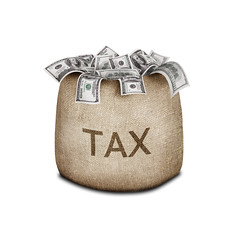 | 28 |
| 7596073675 | South Carolina Exposition | written by John C. Calhoun denouncing the 1828 Tariff as unconstitutional and that the states should declare it null and void |  | 29 |
| 7596073676 | Tariff of 1832 | the tariff that was supposed to abolish the evils of the "Tariff of Abominations" and quiet southern criticism | | 30 |
| 7596073677 | Specie Circular | Order that all new land be bought with metallic money, Issued by Jackson - attempt to stop states from speculating land with money they printed that was not backed by anything - required land speculation in speci; Provided that in payment for public lands, the government would accept only gold or silver |  | 31 |
| 7596073678 | slavocracy | Term the North used to describe the Slaveholding South and its "schemes" to gain more slave-land. |  | 32 |
| 7596073679 | Tariff of 1833 | Tariff proposed to settle the dispute between nullies and Jackson, It was a new tariff proposed by Henry Clay and John Calhoun that gradually lowered the tariff to the level of the tariff of 1816 This compromise avoided civil war and prolonged the union for another 30 years. |  | 33 |
| 7596073680 | Trail of Tears | The Cherokee Indians were forced to leave their lands. They traveled from North Carolina and Georgia through Tennessee, Kentucky, Illinois, Missouri, and Arkansas-more than 800 miles (1,287 km)-to the Indian Territory. More than 4, 00 Cherokees died of cold, disease, and lack of food during the 116-day journey. |  | 34 |
| 7596073681 | panic of 1837 | Ecnomic downturn caused by loose lending practices of stat banks' and overspeculation. Martin Van Buren spent most of his time in office attempting to stablize and lessen the economic situation |  | 35 |
| 7596073682 | Force Bill | Bill that says Congress is authorized to use the military against belligerent states. Is nullified by South Carolina. |  | 36 |
| 7596073683 | Seminole Indians | They lived in Florida as runaways from other tribes. They waged a seven years war against the Americans to try and remain in the east instead of being forcibly removed to the west. |  | 37 |
| 7596073684 | Divorce Bill | A bill passed by Van Buren in 1837, that divorced the government from banking altogether, and established an independent treasury, so the governemtn could lock its money in vaults in several of the larger cities. |  | 38 |
| 7596073685 | Bank of the United States | Hamilton's plan to solve Revolutionary debt, Assumption highly controversial, pushed his plan through Congress, based on loose interpretation of Constitution |  | 39 |
| 7596073686 | Lone Star | texas declared independence in 1836 and Houston forced signed treaty with Santa Anna in 1836 |  | 40 |
| 7596073687 | independent treasury | President Van Buren's plan to keep government funds in its own vaults and do business entirely in hard money rather than keep them in deposits within shaky banks. |  | 41 |
| 7596073688 | Democratic party | political party led by Thomas Jefferson; it feared centralized political power, supported states' rights, opposed Hamilton's financial plan, and supported ties with France. It was heavily influenced by a agrarian interests in the southern states. |  | 42 |
| 7596073689 | pet banks | State banks where Andrew Jackson placed deposits removed from the federal National Bank. |  | 43 |
| 7596073690 | Whig party | An American political party formed in the 1830s to oppose President Andrew Jackson and the Democrats, stood for protective tariffs, national banking, and federal aid for internal improvements |  | 44 |
AP US History Period 8 (1945-1980) Flashcards
Terms : Hide Images
| 6453652821 | Lend Lease | Legislation proposed by FDR and adopted by congress, stating that the U.S could either sell or lease arms and other equipment to any country whose security was vital to America's interest -> military equipment to help Britain war effort was shipped from U.S |  | 0 |
| 6453652822 | Cash and Carry Policy | 1939. Law passed by Congress which allowed a nation at war to purchase goods and arms in US as long as they paid cash and carried merchandise on their own ships. This benefited the Allies, because Britain was dominant naval power. |  | 1 |
| 6453652823 | Neutrality Act | 4 laws passed in the late 1930s that were designed to keep the US out of international incidents. Originally designed to avoid American involvement in World War II by preventing loans to those countries taking part in the conflict; they were later modified in 1939 to allow aid to Great Britain and other Allied nations. |  | 2 |
| 6453652824 | Pearl Harbor | 7:50-10:00 AM, December 7, 1941 - Surprise attack by the Japanese on the main U.S. Pacific Fleet harbored in Pearl Harbor, Hawaii destroyed 18 U.S. ships and 200 aircraft. American losses were 3000, Japanese losses less than 100. In response, the U.S. declared war on Japan and Germany, entering World War II. |  | 3 |
| 6453652825 | Midway | 1942, An important battle in the Asian part of the war, the Americans sank 4 Japanese aircraft carriers |  | 4 |
| 6453652826 | Mobilization | Act of assembling and putting into readiness for war or other emergency: "mobilization of the troops" |  | 5 |
| 6453652827 | Victory Gardens | Backyard gardens; Americans were encouraged to grow their own vegetables to support the war effort |  | 6 |
| 6453652828 | Rationing | A system of allocating scarce goods and services using criteria other than price |  | 7 |
| 6453652829 | D-Day | (FDR) , June 6, 1944, 160,000 Allied troops landed along a 50-mile stretch of heavily-fortified French coastline to fight Nazi Germany on the beaches of Normandy, France. General Dwight D. Eisenhower called the operation a crusade in which "we will accept nothing less than full victory." More than 5,000 Ships and 13,000 aircraft supported the D-Day invasion, and by day's end on June 6, the Allies gained a foot- hold in Normandy. |  | 8 |
| 6453652830 | Battle of the Bulge | December, 1944-January, 1945 - After recapturing France, the Allied advance became stalled along the German border. In the winter of 1944, Germany staged a massive counterattack in Belgium and Luxembourg which pushed a 30 mile "bulge" into the Allied lines. The Allies stopped the German advance and threw them back across the Rhine with heavy losses. |  | 9 |
| 6453652831 | Manhattan Project | Code name for the U.S. effort during World War II to produce the atomic bomb. Much of the early research was done in New York City by refugee physicists in the United States. |  | 10 |
| 6453652832 | Hiroshima | City in Japan, the first to be destroyed by an atomic bomb, on August 6, 1945. The bombing hastened the end of World War II. |  | 11 |
| 6453652833 | Island Hopping | A military strategy used during World War II that involved selectively attacking specific enemy-held islands and bypassing others |  | 12 |
| 6453652834 | Iwo Jima | a bloody and prolonged operation on the island of Iwo Jima in which American marines landed and defeated Japanese defenders (February and March 1945) |  | 13 |
| 6453652835 | United Nations | An international organization whose stated aims are to facilitate co-operation in international law, international security, economic development, social progress and human rights issues. It was founded in 1945 at the signing of the United Nations Charter by 50 countries, replacing the League of Nations, founded in 1919. | 14 | |
| 6453652836 | Yalta Conference | FDR, Churchill and Stalin met at Yalta. Russia agreed to declare war on Japan after the surrender of Germany and in return FDR and Churchill promised the USSR concession in Manchuria and the territories that it had lost in the Russo-Japanese War |  | 15 |
| 6453652837 | Potsdam Conference | July 26, 1945 - Allied leaders Truman, Stalin and Churchill met in Germany to set up zones of control and to inform the Japanese that if they refused to surrender at once, they would face total destruction. |  | 16 |
| 6453652838 | Rosie the Riveter | A propaganda character designed to increase production of female workers in the factories. It became a rallying symbol for women to do their part. |  | 17 |
| 6453652839 | Levittown | In 1947, William Levitt used mass production techniques to build inexpensive homes in surburban New York to help relieve the postwar housing shortage. Levittown became a symbol of the movement to the suburbs in the years after WWII. |  | 18 |
| 6453652840 | Iron Curtain | A political barrier that isolated the peoples of Eastern Europe after WWII, restricting their ability to travel outside the region | 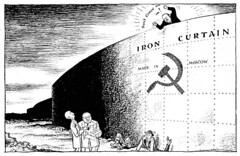 | 19 |
| 6453652841 | Truman Doctrine | 1947, President Truman's policy of providing economic and military aid to any country threatened by communism or totalitarian ideology, mainly helped Greece and Turkey |  | 20 |
| 6453652842 | Marshall Plan | A United States program of economic aid for the reconstruction of Europe (1948-1952) |  | 21 |
| 6453652843 | Berlin Blockade | The blockade was a Soviet attempt to starve out the allies in Berlin in order to gain supremacy. The blockade was a high point in the Cold War, and it led to the Berlin Airlift. |  | 22 |
| 6453652844 | Korean War | The conflict between Communist North Korea and Non-Communist South Korea. The United Nations (led by the United States) helped South Korea. |  | 23 |
| 6453652845 | McCarthyism | The term associated with Senator Joseph McCarthy who led the search for communists in America during the early 1950s through his leadership in the House Un-American Activities Committee. |  | 24 |
| 6453652846 | Brown v Board of Education, 1954 | 1954 - The Supreme Court overruled Plessy v. Ferguson, declared that racially segregated facilities are inherently unequal and ordered all public schools desegregated. |  | 25 |
| 6453652847 | Montgomery Bus Boycott | In 1955, after Rosa Parks was arrested for refusing to give up her seat on a city bus, Dr. Martin L. King led a boycott of city busses. After 11 months the Supreme Court ruled that segregation of public transportation was illegal. |  | 26 |
| 6453652848 | Interstate Highway Act | 1956 law that authorized the spending of $32 billion to build 41,000 miles of highway |  | 27 |
| 6453652849 | Little Rock Arkansas | Incident where President Eisenhower sent federal troops to allow black students into the high school. |  | 28 |
| 6453652850 | Sputnik | First artificial Earth satellite, it was launched by Moscow in 1957 and sparked U.S. fears of Soviet dominance in technology and outer space. It led to the creation of NASA and the space race. Led the US to focus on Math & Science in American schools. |  | 29 |
| 6453652851 | Sit ins | Protests by black college students, 1960-1961, who took seats at "whites only" lunch counters and refused to leave until served; in 1960 over 50,000 participated in sit-ins across the South. Their success prompted the formation of the Student Non-Violent Coordinating Committee. |  | 30 |
| 6453652852 | NASA | The National Aeronautics and Space Administration (NASA) is the United States government agency responsible for the civilian space program as well as aeronautics and aerospace research. |  | 31 |
| 6453652853 | Berlin Wall | A fortified wall surrounding West Berlin, Germany, built in 1961 to prevent East German citizens from traveling to the West. Its demolition in 1989 symbolized the end of the Cold War. This wall was both a deterrent to individuals trying to escape and a symbol of repression to the free world. |  | 32 |
| 6453652854 | Bay of Pigs | In April 1961, a group of Cuban exiles organized and supported by the U.S. Central Intelligence Agency landed on the southern coast of Cuba in an effort to overthrow Fidel Castro. When the invasion ended in disaster, President Kennedy took full responsibility for the failure. |  | 33 |
| 6453652855 | Freedom Rides | 1961 event organized by CORE and SNCC in which an interracial group of civil rights activists tested southern states' compliance to the Supreme Court ban of segregation on interstate buses |  | 34 |
| 6453652856 | Cuban Missile Crisis | An international crisis in October 1962, the closest approach to nuclear war at any time between the U.S. and the USSR. When the U.S. discovered Soviet nuclear missiles on Cuba, President John F. Kennedy demanded their removal and announced a naval blockade of the island; the Soviet leader Khrushchev acceded to the U.S. demands a week later, on condition that US doesn't invade Cuba |  | 35 |
| 6453652857 | Rachel Carson | United States biologist remembered for her opposition to the use of pesticides that were hazardous to wildlife (1907-1964) in her book Silent Spring. Considered the birth of environmentalism |  | 36 |
| 6453652858 | March on Washington | Held in 1963 to show support for the Civil Rights Bill in Congress. Martin Luther King gave his famous "I have a dream..." speech. 250,000 people attended the rally |  | 37 |
| 6453652859 | JFK Assassinated | November 1963, President John F Kennedy was assassinated in Dallas, Texas. |  | 38 |
| 6453652860 | Civil Rights Act of 1964 | 1964; banned discrimination in public acomodations, prohibited discrimination in any federally assisted program, outlawed discrimination in most employment; enlarged federal powers to protect voting rights and to speed school desegregation; this and the voting rights act helped to give African-Americans equality on paper, and more federally-protected power so that social equality was a more realistic goal |  | 39 |
| 6453652861 | Voting Rights Act of 1965 | 1965; invalidated the use of any test or device to deny the vote and authorized federal examiners to register voters in states that had disenfranchised blacks; as more blacks became politically active and elected black representatives, it rboguth jobs, contracts, and facilities and services for the black community, encouraging greater social equality and decreasing the wealth and education gap |  | 40 |
| 6453652862 | Gulf of Tonkin Resolution | 1964 Congressional resolution that authorized President Johnson to commit US troops to south vietnam and fight a war against north Vietnam |  | 41 |
| 6453652863 | Cesar Chavez | 1927-1993. Farm worker, labor leader, and civil-rights activist who helped form the National Farm Workers Association, later the United Farm Workers. |  | 42 |
| 6453652864 | Malcolm X | 1952; renamed himself X to signify the loss of his African heritage; converted to Nation of Islam in jail in the 50s, became Black Muslims' most dynamic street orator and recruiter; his beliefs were the basis of a lot of the Black Power movement built on seperationist and nationalist impulses to achieve true independence and equality. Assassinated in 1965 by the Nation of Islam. |  | 43 |
| 6453652865 | Stonewall Riot | In New York City, 1969 - Triggered activist protests among gays and lesbians - police raided gay bar - people fought back - became symbol of oppression of gays, began the gay pride movement |  | 44 |
| 6453652866 | Woodstock | A free music festival that attracted more than 400,000 young people to a farm in upstate New York in August 1969 |  | 45 |
| 6453652867 | Earth Day | A holiday conceived of by environmental activist and Senator Gaylord Nelson to encourage support for and increase awareness of environmental concerns; first celebrated on March 22, 1970 | 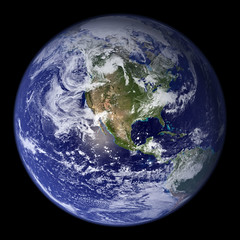 | 46 |
| 6453652868 | Kent State Massacre | Protests to the war that lead to National Guard being called in and shot students because they burned the ROTC building. Three students were killed, 1970. | 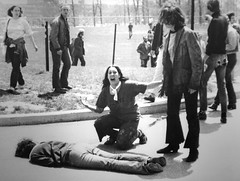 | 47 |
| 6453652869 | Nixon in China | February 21, 1972 - Nixon visited for a week to meet with Chairman Mao Tse-Tung for improved relations with China, Called "ping-pong diplomacy" because Nixon played ping pong with Mao during his visit. Nixon agreed to support China's admission to the United Nations. |  | 48 |
| 6453652870 | SALT I Treaty | A five-year agreement between the U.S. and the Soviet Union, sighned in 1972, that limited the nations' numbers of intercontinental ballistic missiles and submarine-launched missiles. |  | 49 |
| 6453652871 | Roe v Wade | Established national abortion guidelines; trimester guidelines; no state The 1973 Supreme Court decision holding that a state ban on all abortions was unconstitutional. The decision forbade state control over abortions during the first trimester of pregnancy, permitted states to limit abortions to protect the mother's health in the second trimester, and permitted states to protect the fetus during the third trimester. |  | 50 |
| 6453652872 | Watergate | 1972; Nixon feared loss so he approved the Commission to Re-Elect the President to spy on and espionage the Democrats. A security gaurd foiled an attempt to bug the Democratic National Committe Headquarters, exposing the scandal. Seemingly contained, after the election Nixon was impeached and stepped down |  | 51 |
| 6453652873 | Jimmy Carter | (1977-1981), Created the Department of Energy and the Depatment of Education. He was criticized for his return of the Panama Canal Zone, and because of the Soviet war in Afghanistan, he enacted an embargo on grain shipments to USSR and boycotted the 1980 Olympics in Moscow and his last year in office was marked by the takeover of the American embassy in Iran, fuel shortages, and the Soviet Invasion of Afghanistan, which caused him to lose to Ronald Regan in the next election. |  | 52 |
| 6453652874 | Camp David Accords | (1978) were negotiated at the presidential retreat of Camp David by Egypt's Anwar Sadat and Israel Menachem Begin; they were brokered by U.S. President Jimmy Carter. They led to a peace treaty the next year that returned the Sinai Peninsula to Egypt, guaranteed Israeli access to the Red Sea and Suez Canal, and more-or-less normalized diplomatic and economic relations between the two countries. This isolated Egypt from the other Arab countries and led to Sadat's assassination in 1981. |  | 53 |
| 6453652875 | Iran Hostage Crisis | In November 1979, revolutionaries stormed the American embassy in Tehran and held 52 Americans hostage. The Carter administration tried unsuccessfully to negotiate for the hostages release. On January 20, 1981, the day Carter left office, Iran released the Americans, ending their 444 days in captivity. |  | 54 |
| 6453652876 | Salt II Treaty | This treaty was a controversial experiment of negotiations between Jimmy Carter and Leonid Brezhnev from 1977 to 1979 between the U.S. and the Soviet Union, which sought to curtail the manufacture of strategic nuclear weapons. |  | 55 |
Period 1: 1491-1607 AP US History Flashcards
Terms : Hide Images
| 8663757722 | Bering Strait | Place where Siberian tribes crossed into present-day Alaska and the Americas approximately 20,000 years ago |  | 0 |
| 8663757723 | Three-sister farming | maize, squash, and beans | 1 | |
| 8663757724 | Cahokia | Large settlement in the Mississippi Valley; Site of sedentary agriculture cultivators |  | 2 |
| 8663757725 | Pueblo | Spanish for "village"; Indians in the Southwest who built fortified settlements |  | 3 |
| 8663757726 | Iroquois Confederacy | Five Indian tribes form an alliance and control trade east of the Great Lakes | 4 | |
| 8663757727 | Algonquian Indians | Major native group distributed in the Northeast and along the Atlantic seaboard who cultivated three sisters. Notably included the Powhatan Confederacy of the Chesapeake Bay and Wampanoag of New England, both of which clashed with English settlers). | 5 | |
| 8663757728 | Sioux Indians | Great Plains Indians; Hunter-gatherers; Buffalo hunters | 6 | |
| 8663757729 | Shoshone Indians | Societies in the Northwest and present-day California who supported themselves by hunting and gathering, and in some areas developed settled communities supported by the vast resources of the ocean. | 7 | |
| 8663757730 | Catholic Church | The most powerful organization in history; Controlled mostly all of Europe during the Middle Ages | 8 | |
| 8663757731 | caravel | naval technology developed by the Purtuguese and used by Henry the Navigator along the African Coast, Vasco de Gama to India, and Christopher Columbus to the New World |  | 9 |
| 8663757732 | capitalism | Private property; Market prices; Investment in ventures | 10 | |
| 8663757733 | Renaissance | "Rebirth"; Humanism | 11 | |
| 8663757734 | Protestant Reformation | Martin Luther's demand that the Catholic Church reform. When the church refused, he started a competing church, the Protestant (Reformed) church. | 12 | |
| 8663757735 | Ferdinand and Isabella | "The Catholic Monarchs"; United Spain, reconquered Spain (Reconquista), and commissioned Columbus |  | 13 |
| 8663757736 | Reconquista | Ferdinand and Isabella's successful campaign to expel Muslim Moors (and Jews) from the Iberian Peninsula and unify Spain Under the Spanish crown and Catholic religion. |  | 14 |
| 8663757737 | Doctrine of Discovery (1493) | A.K.A. Inter caetera; Papal Bull that declared all non-Christian land "discoverable" by Christian powers. | 15 | |
| 8663757738 | Treaty of Tordesillas (1494) | Divides America between Portugal and Spain for exploration | 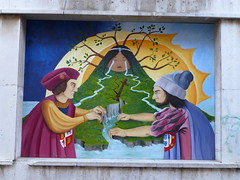 | 16 |
| 8663757739 | Colombian Exchange | The trade of biological elements, ideas, and goods; Transformed mostly all of the world as a result. | 17 | |
| 8663757740 | Middle Passage | The route in the Triangular Trade where slaves passed from West Africa to the New World |  | 18 |
| 8663757741 | conquistadores | Hernan Cortez and Francisco Pizarro, for example; agents of both the Reconquista and the conquest of the New World |  | 19 |
| 8663757742 | Encomienda | Spanish labor system; included a caste system with Peninsulares at the top |  | 20 |
| 8663757743 | casta system | The Spanish developed a caste system that incorporated, and carefully defined the status of, the diverse population of Europeans, Africans, and Native Americans in their empire. | 21 | |
| 8663757744 | Mestizos | Mixed blood Spanish and Indian; Result of lack of Spanish ladies in the New World | 22 | |
| 8663757745 | San Diego (Est. 1769) | First and southernmost Spanish mission in California; Established to "civilize" the Indians and create a buffer between New Spain and competing colonial powers. | 23 | |
| 8663757746 | San Francisco (Est. 1776) | Last and northernmost Spanish mission in California; Established to "civilize" the Indians and create a buffer between New Spain and competing colonial powers. | 24 | |
| 8663757747 | Spanish mission | Established in the New World, especially in California, to "civilize" the Indians and create a buffer between New Spain and competing colonial powers. |  | 25 |
| 8663757748 | Bartolome de Las Casas | Indian apologist who preached against the cruel treatment of the Indians; His writings and activities led to the "Black Legend" |  | 26 |
| 8663757749 | Juan Gines de Sepulveda | Saw the Indians as uncivilized and barbaric | 27 | |
| 8663757750 | "Black Legend" | The (historically debatable) reputation that the Spanish destroyed the Indians through slavery and disease | 28 | |
| 8663757751 | St. Augustine (Est. 1565) | First enduring European settlement in North America; Established by the Spanish in modern-day Florida. | 29 | |
| 8663757752 | Pueblo Revolt (1680) | Rebellion of Pueblo Indians against Spanish rule in New Mexico; Led by the Indian Popé. | 30 |
AP US History - US Presidents Flashcards
Terms : Hide Images
| 6728926200 | George Washington | 1789-1797 Federalist Whiskey Rebellion; Judiciary Act; Farewell Address |  | 0 |
| 6728926201 | John Adams | 1797-1801 Federalist XYZ Affair; Alien and Sedition Acts |  | 1 |
| 6728926202 | Thomas Jefferson | 1801-1809 Democratic-Republican Marbury v. Madison; Louisiana Purchase; Embargo of 1807 |  | 2 |
| 6728926203 | James Madison | 1809-1817 Democratic-Republican War of 1812; First Protective Tariff |  | 3 |
| 6728926204 | James Monroe | 1817-1825 Democratic-Republican Missouri Compromise of 1820; Monroe Doctrine |  | 4 |
| 6728926205 | John Quincy Adams | 1825-1829 Democratic-Republican "Corrupt Bargain"; "Tariff of Abominations" | | 5 |
| 6728926206 | Andrew Jackson | 1829-1837 Democrat Nullification Crisis; Bank War; Indian Removal Act | | 6 |
| 6728926207 | Martin Van Buren | 1837-1841 Democrat Trail of Tears; Specie Circular; Panic of 1837 |  | 7 |
| 6728926208 | William Henry Harrison | 1841 Whig "Tippecanoe and Tyler too!"; First Whig President | | 8 |
| 6728926209 | John Tyler | 1841-1845 Whig "His Accidency"; Webster-Ashburton Treaty |  | 9 |
| 6728926210 | James Polk | 1845-1849 Democrat Texas annexation; Mexican War |  | 10 |
| 6728926211 | Zachary Taylor | 1849-1850 Whig Mexican War hero and staunch Unionist |  | 11 |
| 6728926212 | Millard Fillmore | 1850-1853 Whig Compromise of 1850 |  | 12 |
| 6728926213 | Franklin Pierce | 1853-1857 Democrat Kansas-Nebraska Act; Gadsden Purchase |  | 13 |
| 6728926214 | James Buchanan | 1857-1861 Democrat Dred Scott decision; Harpers Ferry raid |  | 14 |
| 6728926215 | Abraham Lincoln | 1861-1865 Republican Secession and Civil War; Emancipation Proclamation |  | 15 |
| 6728926216 | Andrew Johnson | 1865-1869 Democrat 13th and 14th amendments; Radical Reconstruction; Impeachment |  | 16 |
| 6728926217 | Ulysses Grant | 1869-1877 Republican 15th amendment; Panic of 1873 |  | 17 |
| 6728926218 | Rutherford Hayes | 1877-1881 Republican Compromise of 1877; labor unions and strikes |  | 18 |
| 6728926219 | James Garfield | 1881, Republican Brief resurgence of presidential authority; Increase in American naval power; Purge corruption in the Post Office |  | 19 |
| 6728926220 | Chester Arthur | 1881-1885 Republican Standard Oil trust created Edison lights up New York City |  | 20 |
| 6728926221 | Grover Cleveland | 1885-1889 (1st term), 1893-1897 (2nd term) Democrat Interstate Commerce Act; Dawes Act; Panic of 1893; Pullman Strike |  | 21 |
| 6728926222 | Benjamin Harrison | 1889-1893 Republican Sherman Anti-Trust Act; Closure of the frontier |  | 22 |
| 6728926223 | William McKinley | 1897-1901 Republican Spanish-American War; Open Door policy |  | 23 |
| 6728926224 | Theodore Roosevelt | 1901-1909 Republican Progressivism; Square Deal; Big Stick Diplomacy |  | 24 |
| 6728926225 | William Howard Taft | 1909-1913 Republican Dollar diplomacy NAACP founded |  | 25 |
| 6728926226 | Woodrow Wilson | 1913-1921 Democrat WWI; League of Nations; 18th and 19th amendments; Segregation of federal offices; First Red Scare |  | 26 |
| 6728926227 | Warren Harding | 1921-1923 Republican "Return to normalcy", return to isolationism; Tea Pot Dome scandal; Prohibition |  | 27 |
| 6728926228 | Calvin Coolidge | 1923-1929 Republican Small-government (laissez-faire) conservative |  | 28 |
| 6728926229 | Herbert Hoover | 1929-1933 Republican "American individualism"; Stock Market Crash; Dust Bowl; Hawley-Smoot Tariff |  | 29 |
| 6728926230 | Franklin Delano Roosevelt | 1933-1945 Democrat New Deal; WWII; Japanese Internment; "Fireside Chats" |  | 30 |
| 6728926231 | Harry Truman | 1945-1953 Democrat A-bomb; Marshall Plan; Korean War; United Nations |  | 31 |
| 6728926232 | Dwight Eisenhower | 1953-1961 Republican Brown v. Board of Education; Second Red Scare; Highway Act and suburbanization ("white flight"); Farewell Address warning of the military industrial complex |  | 32 |
| 6728926233 | John Kennedy | 1961-1963 Democrat Camelot; Bay of Pigs; Cuban Missile Crisis; Space program; Peace Corps |  | 33 |
| 6728926234 | Lyndon Johnson | 1963-1969 Democrat Civil and Voting Rights acts; Gulf of Tonkin Resolution; Great Society |  | 34 |
| 6728926235 | Richard Nixon | 1969-1974 Republican Environmental Protection Act; China visit; Moon Landing; Watergate | 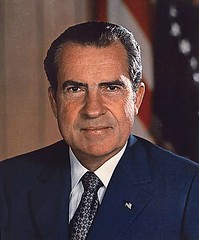 | 35 |
| 6728926236 | Gerald Ford | 1974-1977 Republican Pardoning of Nixon; OPEC crisis |  | 36 |
| 6728926237 | Jimmy Carter | 1977-1981 Democrat stagflation / energy crisis; Iran hostage crisis; Camp David Accords |  | 37 |
| 6728926238 | Ronald Reagan | 1981-1989 Republican Conservative revolution; Iran-Contra scandal |  | 38 |
| 6728926239 | George H. W. Bush | 1989-1993 Republican Persian Gulf War |  | 39 |
| 6728926240 | Bill Clinton | 1993-2001 Democrat NAFTA; Lewinsky scandal and impreachment |  | 40 |
| 6728926241 | George W. Bush | 2001-2008 Republican War on terrorism; Patriot Act; Tax cuts; "No Child Left Behind" |  | 41 |
| 6728926242 | Barack Obama | 2008-2017 Democrat Affordable Care Act | 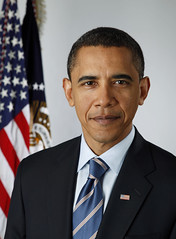 | 42 |
AMSCO AP US History Chapter 25 Flashcards
AMSCO United States History 2015 Edition, Chapter 25 Diplomacy and World War II, 1929-1945
Terms : Hide Images
| 6325423487 | Good Neighbor Policy | President Franklin Roosevelt's foreign policy of promoting better relations with Latin America by using economic influence rather than military force in the region. (p. 523) |  | 0 |
| 6325423488 | Pan-American conferences | In 1933, the United States attended a conference in Montevideo, Uruguay, in which we pledged to never again intervene in the internal affairs of any Latin American country. At a second conference in 1936, the U.S. agreed to the cooperation between the U.S. and Latin American countries to defend the Western Hemisphere against foreign invasion. (p. 523) |  | 1 |
| 6325423489 | Soviet Union recognized | The Republican presidents of the 1920's had refused to grant diplomatic recognition to the Communist regime that ruled the Soviet Union. President Franklin Roosevelt promptly changed this policy by granting recognition in 1933. (p. 524) |  | 2 |
| 6325423490 | Independence for Philippines | In 1934, President Roosevelt persuaded Congress to pass the Tydings-McDuffie Act which provided independence for the Philippines by 1946. (p. 524) |  | 3 |
| 6325423491 | reciprocal trade agreements | In 1934, Congress enacted a plan that would reduce tariffs for nations that reciprocated with comparable reductions for U.S. imports. (p. 524) | | 4 |
| 6325423492 | Japan takes Manchuria | In September 1931, Japanese troops invaded Manchuria, on China's eastern seaboard. The League of Nations passed a resolution condemning the action but did not take action. (p. 521) |  | 5 |
| 6325423493 | Stimson Doctrine | In 1932, Secretary of State Henry Stimson said the United States would not recognize territorial changes resulting from Japan's invasion of Manchuria. (p. 522) |  | 6 |
| 6325423494 | fascism | A political system in which people glorify their nation and their race through an aggressive show of force. Economic hardships led to the rise of military dictatorships, first in Italy, then in Japan and Germany. (p. 524) |  | 7 |
| 6325423495 | Italian Fascist party | In 1922, they seized power in Italy. They attracted dissatisfied war veterans, nationalists, and those afraid of rising communism. They marched on Rome and installed Mussolini in power. (p. 524) |  | 8 |
| 6325423496 | Benito Mussolini | He founded the Italian Fascist Party, and sided with Hitler and Germany in World War II. In 1945, he was overthrown and assassinated by the Italian Resistance. (p. 524) |  | 9 |
| 6325423497 | Ethiopia | In 1935, fascist Italy invaded this African nation. (p. 526) |  | 10 |
| 6325423498 | German Nazi party | This party arose in 1920's Germany in reaction to deplorable economic conditions after war and national resentments over the Treaty of Versailles. By 1933, the party under leader Adolph Hitler, had gained control of the German legislature. (p. 524) |  | 11 |
| 6325423499 | Adolf Hitler | Austrian-born founder of the German Nazi Party and chancellor of the Third Reich (1933-1945). His fascist philosophy, embodied in the book Mein Kampf attracted widespread support, and after 1934 he ruled as an absolute dictator. Hitler's pursuit of aggressive nationalist policies resulted in the invasion of Poland (1939) and the subsequent outbreak of World War II. His regime was infamous for the extermination of millions of people, especially European Jews. He committed suicide in 1945, when the collapse of the Third Reich was imminent. (p. 524) |  | 12 |
| 6325423500 | Axis Powers | Alliance of Germany, Italy, and Japan during World War II. |  | 13 |
| 6325423501 | Spanish Civil War | In 1936, a rebellion erupted in Spain after a coalition of Republicans, Socialists, and Communists was elected. General Francisco Franco led the rebellion. The revolt quickly became a civil war, by 1939 Franco had established a military dictatorship. (p. 525) |  | 14 |
| 6325423502 | Francisco Franco | In 1936, he plunged Spain into a Civil War. By 1939, Franco's Fascist had established a military dictatorship. (p. 525) |  | 15 |
| 6325423503 | Rhineland | In 1936, Adolf Hitler invaded this region. This was in violation of the Treaty of Versailles which had declared the area a demilitarized zone. (p. 526) |  | 16 |
| 6325423504 | Sudetenland | In 1938, Hitler insisted Germany had the right to take over an area in western Czechoslovakia. (p. 526) |  | 17 |
| 6325423505 | Munich | A 1938 conference, at which European leaders attempted to appease Hitler by turning over the Sudetenland to him in exchange for promise that he would not expand Germany's territory any further. (p. 526) |  | 18 |
| 6325423506 | appeasement | A policy of making concessions to an aggressor in the hopes of avoiding war. In the years 1935 to 1938, a series of military actions by Fascist dictatorships made Britain, France, and the United States nervous, but they did nothing to stop the actions. * 1935 - Italy invades Ethiopia * 1936 - German troops invade the Rhineland * 1937 - Japan invades China * 1938 - Germany takes the Sudetenland (p. 526) |  | 19 |
| 6325423507 | Poland; blitzkrieg | On September 1, 1939, Germany invaded this country using overwhelming air power and fast-moving tanks, a term of warfare called lightning war. Britain and France then declared war against Germany. (p. 528) |  | 20 |
| 6325423508 | isolationism | A policy of non-participation in international economic and political relations. A 1934 committee led by Senator Gerald Nye concluded the main reason for participation in World War I was because of the bankers and arm manufacturers greed. This caused the U.S. public to be against any involvement in the early stages of World War II. (p.. 525) |  | 21 |
| 6325423509 | Nye Committee | In 1934, a Senate committee led by South Dakota Senator Gerald Nye to investigate why America became involved in World War I. They concluded that bankers and arm manufacturers pushed the U.S. into the war so they could profit from selling military arms. This committee's work pushed America toward isolationism for the following years. (p. 525) |  | 22 |
| 6325423510 | Neutrality Acts | Laws passed by isolationists in the late 1930s, that were designed to keep the United States out of international wars. (p. 525) |  | 23 |
| 6325423511 | America First Committee | In 1940, after World War II had begun in Asia and Europe, isolationists became alarmed by President Roosevelt's support for Britain. To mobilize American public opinion against the war, they formed this committee. Charles A. Lindbergh was one of it spokesmen. (p. 525) |  | 24 |
| 6325423512 | Charles Lindbergh | In 1927, this U.S. aviator thrilled the world, by making the first nonstop flight from Long Island to Paris. In 1940, he was a speaker for the isolationist America First Committee. (p. 480, 525) |  | 25 |
| 6325423513 | Quarantine speech | In 1937, President Franklin D. Roosevelt made this speech after Japan invaded China. He proposed that democracies act together to "quarantine" Japan. Public reaction to the speech by the American public was negative, and the idea was abandoned. (p. 526) |  | 26 |
| 6325423514 | cash and carry | Policy adopted by the United States in 1939 to preserve neutrality, while aiding Great Britain. Great Britain could buy U.S. military arms if it paid in full and used its own ships to transport them. (p. 528) | | 27 |
| 6325423515 | Selective Training and Service Act | In 1940, Roosevelt passed this law requiring all males aged 21 to 36 to register for military service. (p. 528) |  | 28 |
| 6325423516 | destroyers-for-bases deal | In September 1940, Roosevelt cleverly arranged a trade that would help Great Britain. The United States gave Britain fifty older but still serviceable US destroyers, in exchange the U.S. was given the right to build military bases on British Islands in the Caribbean. (p. 528) |  | 29 |
| 6325423517 | FDR, third term | In the 1940 presidential election, Franklin D. Roosevelt won a third term in office. (p. 529) |  | 30 |
| 6325423518 | Wendell Willkie | Franklin Roosevelt's Republican opponent in the 1940 Presidential election. (p. 529) |  | 31 |
| 6325423519 | Four Freedoms speech | A speech by President Franklin Roosevelt on January 6, 1941 that proposed lending money to Britain for the purchase of U.S. military weapons. He argued that the U.S. must help other nations defend "four freedoms" (freedom of speech, freedom of religion, freedom from want, and freedom from fear). (p. 529) |  | 32 |
| 6325423520 | Lend-Lease Act | In March 1941, this act permitted Britain to obtain all U.S. arms they needed on credit during World War II. (p. 529) |  | 33 |
| 6325423521 | Atlantic Charter | In August 1941, U.S. president Franklin D. Roosevelt and British prime minister Winston Churchill met aboard a ship off the coast of Newfoundland. They created this agreement which outlined the principles for peace after the war. (p. 530) |  | 34 |
| 6325423522 | escort convoys | In July 1941, the U.S. began to provide protection for British ship carrying U.S. arms being transported to Britain. (p. 530) |  | 35 |
| 6325423523 | oil and steel embargo | In September 1940, Japan joined the Axis powers. The United States responded by prohibiting export of steel and scrap iron to Japan and other countries. In July 1941, when Japan invaded French Indochina, the U.S. cut off Japanese access to many vital materials, including U.S. oil. (p. 530) |  | 36 |
| 6325423524 | Pearl Harbor | On December 7, 1941, a date that will live in infamy, this U.S. naval base in Honolulu, Hawaii was bombed by Japanese planes. 2,400 Americans were killed and 20 warships were sunk or severely damaged. The next day, the United States declared war on Japan. (p. 531) | | 37 |
| 6325423525 | War Production Board | During World War II, President Roosevelt established this agency to allocated scarce materials, limit or stop the production of civilian goods, and distribute contracts among competing manufacturers. (p. 531) |  | 38 |
| 6325423526 | Office of Price Administration | This World War II federal agency regulated most aspects of civilian lives by freezing prices, wages, and rents and rationing commodities in order to control inflation. (p. 532) |  | 39 |
| 6325423527 | government spending, debt | During World War II federal spending increased 1000 percent between 1939 and 1945, and the gross national product grew by 15 percent or more each year. By the war's end, the national debt was $250 billion, five times what it had been in 1941. (p. 532) |  | 40 |
| 6325423528 | role of large corporations | During World War II, the 100 largest corporations accounted for 70 percent of wartime manufacturing. (p. 532) |  | 41 |
| 6325423529 | research and development | The United States government worked closely with industrial companies, universities, and research labs to create and improve technologies that could be used to defeat the enemy. (p. 532) |  | 42 |
| 6325423530 | Manhattan Project | Code name for the secret United States project set up in 1942 to develop atomic bombs for use in World War II. (p. 532) |  | 43 |
| 6325423531 | Office of War Information | Established by the government to promote patriotism and help keep Americans united behind the World War II effort. (p. 533) |  | 44 |
| 6325423532 | the Good War | The term for the unity of Americans supporting the democratic ideals in fighting World War II. (p. 533) |  | 45 |
| 6325423533 | wartime migration | During World War II, over 1.5 million African-Americans migrated from the South to job opportunities in the North and the West. (p. 533) |  | 46 |
| 6325423534 | civil rights, Double V | During World War II civil rights leaders encouraged African Americans to adopt the Double V slogan - one for victory, one for equality. (p 533) |  | 47 |
| 6325423535 | executive order on jobs | During World War II, President Roosevelt issued an executive order to prohibit discrimination in government and in businesses that received federal contracts. (p. 533) |  | 48 |
| 6325423536 | Smith v. Allwright | This Supreme Court case in 1944 ruled that it was unconstitutional to deny membership in political parties to African Americans as a way of excluding them from voting in primaries. (p. 533) |  | 49 |
| 6325423537 | Braceros program | A program the American and Mexican governments agreed to, in which contract laborers would be admitted to the United States for a limited time as migrant farm workers (p. 533) |  | 50 |
| 6325423538 | Japanese internment | In 1942, over 100,000 Japanese Americans living on the United States West coast were rounded up and put in internment camps. (p. 534) |  | 51 |
| 6325423539 | Korematsu v. U.S. | A 1944 Supreme Court case which upheld the order providing for the relocation of Japanese Americans. It was not until 1988 that Congress formally apologized and agreed to pay financial compensation to each survivor. (p. 534) |  | 52 |
| 6325423540 | Rosie the Riveter | A propaganda character designed to increase production of female workers in industrial jobs in the shipyards and defense plants during World War II. (p. 534) |  | 53 |
| 6325423541 | wartime solidarity | The New Deal helped immigrant groups feel more included, and serving together in combat or working together in defense plants helped to reduce prejudices. (p. 534) |  | 54 |
| 6325423542 | election of 1944 | In this presidential election, Franklin D. Roosevelt replaced his vice president with Harry S. Truman, as they ran against Republican Thomas Dewey. Roosevelt won an unprecedented fourth term, but he died within three months. (p. 534) |  | 55 |
| 6325423543 | Harry S. Truman | He became president on April 12, 1945, when President Franklin Roosevelt died suddenly. In August 1945, he order an atomic bomb be dropped on Hiroshima then on Nagasaki, to end the war with Japan. Japan surrendered on September 2, 1945. (p. 537, 538) |  | 56 |
| 6325423544 | Battle of the Atlantic | The protracted naval war to control the shipping lanes in the North Atlantic. (p. 535) |  | 57 |
| 6325423545 | strategic bombing | United States bomber carried out daylight bombing raids on military targets in Europe, but the lines between military and civilian targets became blurred as war went on. (p. 535) |  | 58 |
| 6325423546 | Dwight Eisenhower | The United States general who commanded the invasion of Normandy (D-Day), Casablanca and the defeat of Nazi Germany. (p. 536) |  | 59 |
| 6325423547 | D-Day | On June 6, 1944 the Allies landed in northern France with the largest invasion by sea in history. By the end of August Paris was liberated from the Nazis, and by September Allied troops had crossed the German border. (p. 536) | | 60 |
| 6325423548 | Holocaust | A methodical plan, orchestrated by Germany's Adolph Hitler to eliminate Jews, non-conformists, homosexuals, non-Aryans, and mentally and physically disabled. Six million Jews and several million non-Jews would be murdered by the Nazis. (p. 536) |  | 61 |
| 6325423549 | island-hopping | The United States strategy in the Pacific, which called for capturing Japanese-held islands in the Pacific and moving on to others to bring the American military closer and closer to Japan itself. (p. 536) | | 62 |
| 6325423550 | Battle of Midway | On June 4-7, 1942, the U.S. naval victory over the Japanese fleet at Midway Island. The Japanese lost four of their best aircraft carriers. The battle marked a turning point in the war in the Pacific. (p. 536) |  | 63 |
| 6325423551 | Douglas MacArthur | United States general who served as chief of staff and commanded Allied forces in the South Pacific during World War II. (p. 537) |  | 64 |
| 6325423552 | kamikaze attacks | Japanese pilots would deliberately crash their planes into American ships, killing themselves, but also inflicting severe damage to the ships. (p. 537) |  | 65 |
| 6325423553 | J. Robert Oppenheimer | American theoretical physicist and professor of physics. He led the top-secret Manhattan Project, which built the world's first atomic bomb. (p. 537) |  | 66 |
| 6325423554 | atomic bomb | A nuclear weapon in which enormous energy is released by nuclear fission. (p. 537) |  | 67 |
| 6325423555 | Hiroshima; Nagasaki | On August 6, 1945, the United States dropped the first atomic bomb on Hiroshima, Japan. Then on August 9, a second atomic bomb was dropped on Nagasaki. About 250,000 Japanese died as a result. Within a week after the second bomb was dropped, Japan agreed to surrender. (p. 537) |  | 68 |
| 6325423556 | Big Three | The leaders of the Allies during World War II included: Soviet Union - Joseph Stalin, Great Britain - Winston Churchill, United States - Franklin Roosevelt. (p. 537) |  | 69 |
| 6325423557 | Casablanca Conference | The conference attended by Roosevelt and Churchill in January 1943, to discuss the strategy to win World War II. The plan called for the invasion of Sicily and Italy by British and American troops. They resolved to accept nothing less than unconditional surrender of Axis powers. (p. 537) |  | 70 |
| 6325423558 | unconditional surrender | A surrender with any demands or requests. (p. 538) |  | 71 |
| 6325423559 | Tehran, Yalta, Potsdam | The three cities that held conferences for the leaders of the Allied powers, United States, Great Britain, and Soviet Union during World War II. (p. 538) |  | 72 |
| 6325423560 | United Nations | On October 24, 1945, this international organization formed after World War II to promote international peace, security, and cooperation. (p. 539) |  | 73 |
AP US History Final (Elections) Flashcards
Terms : Hide Images
| 6963730524 | 1789 | George Washington | 0 | |
| 6963743713 | 1792 | George Washington | 1 | |
| 6963747851 | 1796 | John Adams (Federalist) | 2 | |
| 6963749392 | 1800 | Thomas Jefferson (Dem-Rep) | 3 | |
| 6963755586 | 1804 | Thomas Jefferson (Dem-Rep) | 4 | |
| 6963757410 | 1808 | James Maddison (Dem-Rep) | 5 | |
| 6963768492 | 1812 | James Madison ( Dem-Rep) | 6 | |
| 6963770046 | 1816 | James Monroe (Dem-Rep) | 7 | |
| 6963771171 | 1820 | James Monroe (Dem-Rep) | 8 | |
| 6963774940 | 1824 | John Q. Adams (Dem-Rep) | 9 | |
| 6963778575 | 1828 | Andrew Jackson (Democratic) | 10 | |
| 6963811248 | 1832 | Andrew Jackson (Democratic) | 11 | |
| 6963821164 | 1836 | Martin Van Buren (Democratic) | 12 | |
| 6963832895 | 1840 | William Henry Harrison (Whig) John Tyler Became president when Harrison died in office in 1841 | 13 | |
| 6963837962 | 1844 | James K. Polk (Democratic) | 14 | |
| 6963847949 | 1848 | Zachary Taylor (Whig) Millard Fillmore became President when Taylor died in office in 1850 | 15 | |
| 6963853310 | 1852 | Franklin Pierce (Democratic) | 16 | |
| 6963860783 | 1856 | James Buchanan (D) | 17 | |
| 6963865140 | 1860 | Abraham Lincoln (R) | 18 | |
| 6963870744 | 1864 | Abraham Lincoln (R) Andrew Jackson became president after Lincoln was shot in 1865 | 19 | |
| 6963875999 | 1868 | Ulysses S. Grant (R) | 20 | |
| 6963886232 | 1872 | Ulysses S. Grant (R) | 21 | |
| 6963895619 | 1876 | Rutherford B. Hayes (R) | 22 | |
| 6963897782 | 1880 | James Garfield (R) Chester A. Arthur Became President when Garfield was shot in 1881 | 23 | |
| 6963906755 | 1884 | Grover Cleveland (D) | 24 | |
| 6963915400 | 1888 | Benjamin Harrison (R) | 25 | |
| 6963915416 | 1892 | Grover Cleveland (D) | 26 | |
| 6963926327 | 1896 | William McKinley (R) | 27 | |
| 6963930778 | 1900 | William McKinley (R) Theodore Roosevelt became President when McKinley was shot in 1901 | 28 | |
| 6963933476 | 1904 | Theodore Roosevelt (R) | 29 | |
| 6963939907 | 1908 | William Howard Taft (R) | 30 | |
| 6963944849 | 1912 | Woodrow Wilson (D) | 31 | |
| 6963995675 | 1916 | Woodrow Wilson (D) | 32 | |
| 6964004033 | 1920 | Warren G. Harding (R) Calvin Coolidge became president when Harding died in office in 1923 | 33 | |
| 6964005978 | 1924 | Calvin Coolidge (R) | 34 | |
| 6964008885 | 1928 | Herbert Hoover (R) | 35 | |
| 6964011006 | 1932 | Franklin D. Roosevelt (D) | 36 | |
| 6964013304 | 1936 | Franklin D. Roosevelt (D) | 37 | |
| 6964017557 | 1940 | Franklin D. Roosevelt (D) | 38 | |
| 6964019356 | 1944 | Franklin D. Roosevelt (D) Harry S. Truman became president when FDR died in office in 1945 | 39 | |
| 6964068918 | 1948 | Harry S. Truman (D) | 40 | |
| 6964074593 | 1952 | Dwight D. Eisenhower (R) | 41 | |
| 6964076373 | 1956 | Dwight D. Eisenhower (R) | 42 | |
| 6964078853 | 1960 | John F. Kennedy (D) Lyndon B. Johnson became President when Kennedy was shot 1963 | 43 | |
| 6964105507 | 1964 | Lyndon B. Johnson (D) | 44 | |
| 6964106750 | 1968 | Richard Nixon (R) | 45 | |
| 6964108057 | 1972 | Richard Nixon (R) | 46 | |
| 6964109864 | 1976 | Jimmy Carter(D) | 47 | |
| 6964111289 | 1980 | Ronald Regan (R) | 48 | |
| 6964112790 | 1984 | Ronald Regan (R) | 49 | |
| 6964116912 | 1988 | George H. W. Bush (R) | 50 | |
| 6964120108 | 1992 | Bill Clinton (D) | 51 | |
| 6964121561 | 1996 | Bill Clinton (D) | 52 | |
| 6964135187 | 2000 | George W. Bush (R) | 53 | |
| 6964136935 | 2004 | George W. Bush (R) | 54 | |
| 6964138891 | 2008 | Barack Obama (D) | 55 | |
| 6964145198 | 2012 | Barack Obama (D) | 56 | |
| 6964150231 | 2016 | Donald Trump (R) | 57 |
AP US History, Chapter 41 Flashcards
Terms : Hide Images
| 8572612220 | weapons of mass destruction (WMD) | Refers to weapons - nuclear, biological, and chemical - that can kill large numbers of people and do great damage to the built and natural environment. The term was used to refer to nuclear weapons during the Cold War. The Bush administration's claims that Saddam Hussein had developed WMD provided the rationale for the United States' invasion of Iraq in 2003. These weapons were never found after the invasion. | 0 | |
| 8572612221 | Kyoto Treaty | International treaty to limit greenhouse gas emissions. It was negotiated and opened for signatories in 1997 and took effect in 2005. Although it was signed by 169 out of 192 countries, the Bush administration rejected the plan as too costly in 2001. | 1 | |
| 8572612222 | 9/11 | 2001; Common shorthand for the terrorist attacks that occurred on September 11, 2001, in which nineteen militant Islamist men hijacked and crashed four commercial aircraft. Two planes hit the twin towers of the World trade Center in New York City, causing them to collapse. One plane crashed into the Pentagon in Washington DC, and the fourth, overtaken by passengers, crashed into a field in rural Pennsylvania. Nearly three thousand people were killed in the worst case of domestic terrorism in American history. | 2 | |
| 8572612223 | Al Qaeda | Arabic for "The Base," an international alliance of anti-Western Islamic Fundamentalist terrorist organizations founded in the late 1980s by veterans of the Afghan struggle against the Soviet Union. The group was headed by Osama bin Laden and has taken responsibility for numerous terrorist attacks, especially after the late 1990s. Al Qaeda organized the attacks of September 11, 2001, in the United States from its headquarters in Taliban-controlled Afghanistan. Since the US-led invasion of Afghanistan in 2001 and the launch of the "global war on terror," the group has been weakened but still poses significant threats around the world. | 3 | |
| 8572612224 | USA Patriot Act | 2001; Legislation passed shortly after the terrorist attacks of September 11, 2001, that granted broad surveillance and detention authority to the government. | 4 | |
| 8572612225 | Department of Homeland Security | Cabinet-level agency created in 2003 to unify and coordinate public safety and antiterrorism operations within the federal government. | 5 | |
| 8572612226 | Guantánamo Detention Camp | Controversial prison facility constructed after the US-led invasion of Afghanistan in 2001. Located on territory occupied by the US military, but not technically part of the United States, the facility serves as an extra-legal holding area for suspected terrorists. | 6 | |
| 8572612227 | Abu Ghraib prison | A detention facility near Baghdad, Iraq. Under Saddam Hussein, the prison was the site of infamous torturing and execution of political dissidents. In 2004, during the US occupation of Iraq, the prison became the focal point of a prisoner-abuse and torture scandal after photographs surfaced of American soldiers mistreating, torturing, and degrading Iraqi war prisoners and suspected terrorists. The scandal was one of the several dark spots on the image of the Iraq War and led to increased criticism of Secretary of Defense Donald Rumsfeld. | 7 | |
| 8572612228 | No Child Left Behind Act | 2001; An education bill created and signed by the George W. Bush administration. Designed to increase accountability standards for primary and secondary schools, the law authorized several federal programs to monitor those standards and increased choices for parents in selecting schools for their children. The program was highly controversial, in large part because it linked results on standardized tests to federal funding for schools and school districts. | 8 | |
| 8572612229 | Hurricane Katrina | 2005; The costliest and one of the deadliest hurricanes in the history of the United States, which killed nearly two thousand Americans. The storm ravaged the Gulf Coast, especially the city of New Orleans, in late August 2005. In new Orleans, high winds and rain caused the city's levees to break, leading to catastrophic flooding, particularly in the city's most impoverished wards. A tardy and feeble response by local and federal authorities exacerbated the damage and led to widespread criticism of the Federal Emergency Management Agency (FEMA). | 9 | |
| 8572612230 | deleveraging | The inverse of "leveraging," whereby businesses increase their financial power by borrowing money (debt) in addition to their own assets (equity). In times of uncertainty or credit tightening, the same businesses seek to improve their debt-to-equity ratios by shedding debt through the sale of assets purchased with borrowed money. | 10 | |
| 8572612231 | American Recovery and Reinvestment Act | 2009; Among the earliest initiatives of the Obama administration to combat the Great Recession. It was based on the economic theories of John Maynard Keynes that called for increased government spending to offset decreased private spending in times of economic downturn. The act was controversial from the outset, passing with no Republican votes in the House and only three in the Senate, and helping to foster the "Tea Party" movement to curb government deficits, even while critics on the left argued that the act's $787 billion appropriation was not enough to turn the economy around. | 11 | |
| 8572612232 | Patient Protection and Affordable Care Act (ACA) | 2010; Also known as "Obamacare," the act extended healthcare insurance to some 30 million Americans, marking a major step toward achieving the century-old goal of providing universal healthcare coverage. | 12 | |
| 8572612233 | Wall Street Reform and Consumer Protection Act | 2010; Also known as the Dodd-Frank Act, after its Democratic sponsors, Connecticut senator Christopher Dodd and Massachusetts representative Barney Frank. In an effort to avoid another financial crisis like the Great Recession, the act updated many federal regulations affecting the financial and banking systems and created some new agencies, such as the Bureau of Consumer Financial Protection. | 13 | |
| 8572612234 | Tea Party | A grassroots conservative political movement mobilized in opposition to Barack Obama's fiscal, economic, and healthcare policies. Named after the Boston Tea Party of the Revolutionary Era, Tea Party protestors first demonstrated in early 2009, and they grew steadily in visibility and power as a pressuring force within the Republican Party through the 2010 midterm election and beyond. | 14 | |
| 8572612235 | Occupy Wall Street | Name of the original protest that launched the populist, anti-Wall Street "Occupy" movement in late 2010 and early 2011. Youthful radicals pitched tents and occupied Zuccotti Park in New York's financial district beginning in September 2010 to protest inequality and corporate political power. This demonstration inspired similar occupations in many other cities. | 15 | |
| 8572612236 | John McCain | Arizona senator and war hero who was runner up to George W. Bush for the GOP presidential nomination in 2000 and was the nominee in 2008 | 16 | |
| 8572612237 | Sarah Palin | An American politician, commentator, and author who served as the ninth Governor of Alaska, from 2006 to 2009. | 17 | |
| 8572612238 | George W. Bush | An American politician and businessman who served as the 43rd President of the United States from 2001 to 2009, and the 46th Governor of Texas from 1995 to 2000. | 18 | |
| 8572612239 | Richard Cheney | An American politician and businessman who was the 46th Vice President of the United States from 2001 to 2009, under President George W. Bush. | 19 | |
| 8572612240 | Nancy Pelosi | Minority Leader of the United States House of Representatives and served as the 60th Speaker of the United States House of Representatives from 2007 to 2011. | 20 | |
| 8572612241 | Barack Obama | The 44th and most recent President of the United States before the literal antichrist was elected, and the first African American to hold the office. | 21 | |
| 8572612242 | Joseph R. Joe Biden | 47th and most recent Vice President of the United States before the P.O.S. gay-hating white man was elected, jointly elected with President Barack Obama, the love of my life. | 22 |
Pages

Need Help?
We hope your visit has been a productive one. If you're having any problems, or would like to give some feedback, we'd love to hear from you.
For general help, questions, and suggestions, try our dedicated support forums.
If you need to contact the Course-Notes.Org web experience team, please use our contact form.
Need Notes?
While we strive to provide the most comprehensive notes for as many high school textbooks as possible, there are certainly going to be some that we miss. Drop us a note and let us know which textbooks you need. Be sure to include which edition of the textbook you are using! If we see enough demand, we'll do whatever we can to get those notes up on the site for you!
