

AP US History (Workbook #1, Vocab #2) Flashcards
Terms : Hide Images
| 7315533012 | Powhatan | A member of an American Indian people of eastern Virginia. (Father of Pocahontas) | 0 | |
| 7315533013 | John Rolfe | Early English settler in North America, credited with the first cultivation of Tobacco (which became a very successful crop) as an export crop in the Colony of Virginia. (Also know as the husband of Pocahontas/Tobacco guy) | 1 | |
| 7315533014 | James Oglethorpe | British general, Member of Parliament and philanthropist, established the Georgia Colony and recruited settlers from England. (Made Georgia Colony) | 2 | |
| 7315533015 | John Smith | English soldier, sailor, and author. Mainly remembered for his role in establishing the first permanent English settlement, in Jamestown, Virginia. But was also leader of the Virginia colony (based at Jamestown), and led explorations along the rivers of Virginia and the Chesapeake Bay. (Pocahontas fling guy) | 3 | |
| 7315533016 | Joint-stock Company | A company whose stock is owned jointly by the shareholders - used to fund commercial enterprises. (Investing company) | 4 | |
| 7315533017 | House of Burgesses | The first elected legislative assembly in the New World established in the colony of Virginia (in 1619). A predecessor to government in other English Colonies. (Basically pre gov.) | 5 | |
| 7315533018 | Protestant Reformation | The 16th-century religious, political, intellectual and cultural upheaval that splintered Catholic Europe, set in place structures and beliefs that would define the continent in the modern era. (People turned against the corrupt church dicks, Elisabeth rose to throne - got most England protestants) | 6 | |
| 7315533019 | Virginia Company | A Joint-stock company that was chartered by King James on April 1606 to try to establish settlements on the coast of North America (England poor, rich people combine to make a profit through a colony) | 7 |
unit 7 AP US history Flashcards
Terms : Hide Images
| 6607635717 | communism | - far left, future focused, people centered - all goods collectively owned and equal distributed to ppl - goal: no gov't - solves economic problems | 0 | |
| 6607637568 | facism | - far right, past focused, nation centered - each person must put nation before themselves - leader is considered embodiment of nation - goal: restore past glory and economic prosperity to nation | 1 | |
| 6607641026 | Pre WWII: Italy | - Benito Mussolini, fascist - began expanding to libya, ethiopia, somalia in 1930s and mediterranean sea | 2 | |
| 6607644941 | Pre WWII: Japan | - Emperor Hirohito, Hideki Tojo - monarchy - invaded manchuria to gain resources - dominated most of pacific islands - wanted to reduce import (bc it's an island) | 3 | |
| 6607650017 | Pre WWII: Germany | - Adolf Hitler, fascist - blamed minorities for loss of WWI and established Nuremberg Laws - broke treaty of versailles (built army w U-boats, rhineland, helped spain win spanish civil war, annexed austria, annexed sudetenland - appeasement: neville chamberlain (PM GB, hated) told hitler to stop, but could keep what he had as long as he didn't invade anywhere else | 4 | |
| 6607663471 | Good Neighbor Policy | - put in effect by FDR in 1930s - repudiated monroe doctrine and roosevelt corollary - withdrew troops from haiti and dominican republic, conceded mexico's oil - turned away St. Louis which had jews (all died) | 5 | |
| 6607668415 | the platt amendment | - made cuba territory of US in 1901 - FDR renounced it - made Fulgencio Batista new dictator bc he's loyal to US | 6 | |
| 6607672572 | Reasons for isolationism | - internal issues (great depression) - avoid conflicts not on our continent - WWI was a mistake | 7 | |
| 6607675649 | neutrality acts | - 1935: embargo on trading arms and war materials w nations at war. US citizens on warring ships at their own risk - 1936: renewed 1935 and forbade loans/credits to warring nations - 1937: extended others to civil wars, no more traveling to warring nations, "cash and carry" we could trade as long as they paid immediately. - 1939: renewed 'cash and carry'. 1936 and 1937 repealed. no citizen enters designated war zones | 8 | |
| 6607684005 | the axis powers | - germany, italy and japan - by 1940 all of mainland europe conquered | 9 | |
| 6607685514 | the allies | - britain (winston churchill PM, heavily bombed by germany) - France: conquered 1939 | 10 | |
| 6607688574 | Nazi-Soviet Non-Aggression Pact (1939) | - germany and USSR would not invade each other, would split poland in half - britain and france then declared war on germany - hitler broke the pact in 1941 (wanted world domination, europe was done, hated USSR anyways, they had a lot of jews) | 11 | |
| 6607692798 | Bases for Destroyers | - churchill and FDR exchanged british naval bases for US destroyers 1941 | 12 | |
| 6607694376 | FDR's 4 freedoms | - 1941 state of the union - every human has the right to: freedom of speech, freedom of worship, freedom from want, freedom from fear | 13 | |
| 6607696854 | Lend-Lease Act | - gave FDR authority to direct material aid (ammo, tanks, food, etc) to allies for later payment | 14 | |
| 6607698821 | selective service and training act | - first peacetime draft - increase in spending and rearmament | 15 | |
| 6607700401 | atlantic charter | - FDR and churchill met up on coast of newfoundland 1941 - condemned international aggression - affirmed national self-determination - agreed on free trade disarmament, collective security | 16 | |
| 6607704314 | sinking of Reuben James | - german U-boats killed 115 american soldiers | 17 | |
| 6607706582 | america first | - anti-intervention society - led by charles lindbergh and henry ford - very popular til Pearl Harbor, disbanded in 48 hours | 18 | |
| 6607708079 | 1936 olympics | - jesse owens won 4 gold medals and broke world records - joe louis ko'ed german in boxing | 19 | |
| 6607713398 | Pearl Harbor | - december 7, 1941 - killed 2,403 americans, injured 1000 - sank/damaged every navy ship in pacific - forced US into WWII | 20 | |
| 6607716010 | why did Japan do pearl harbor | - thought US would repeat WWI - US against aggression towards china - US was supporting allies - US issued embargo against japanese for exports of oil and steal - froze japanese stocks and bank accounts | 21 | |
| 6607748791 | mobilization | - funds (revenue act 1942, keynesian economics) - war powers act - office of price administration (mandatory rationing) - 24/7 production of war necessities - armed forces and war industries/factories - propaganda - collected scrap metal, aluminum and rubber for army - office of strategic services (OSS, spy, pre CIA) - science | 22 | |
| 6607756904 | War Powers Act | - gave prez authority over all actions of war - war production board - national war labor board - war manpower commision - smith-connally war labor disputes act | 23 | |
| 6607760285 | production of war necessities | - 33% of economy was war production by 1942 - banned car production --> tanks, planes, boats, submarines - prefabrication (cut time of making ships) - cost plus contracts (gov't guaranteed buyer) - food and war bonds | 24 | |
| 6607764850 | war industries/factories | - 17 million armed forces jobs created, 15 million men enter draft - farmer became profitable or joined factories/army - 19 million women entered factory jobs, became 1/3 of work force - 'rosie the riveter' - industrial capacity increased 40% in sun belt | 25 | |
| 6607769532 | propaganda | - office of censorship - hollywood promoted war bonds and donating - newsreels in movie theaters showed horrors of enemies - FDR had weekly radio show - gov't printing office published armed services editions of books | 26 | |
| 6607776597 | science | - office of scientific research and development (OSRD) - new computers (IBM's Mark 1 and ENIAC) - medical care | 27 | |
| 6607778800 | casablanca | - 1943 conference - FDR and Churchill in Morocco - attack italy before france - reduce soviet mistrust bc of second front misunderstanding - fight till 'unconditional surrender' of axis | 28 | |
| 6607782154 | cairo | - 1943 conference - churchill, chiang kai-shek, FDR - return manchuria and taiwan to china - free korea | 29 | |
| 6607783901 | tehran | - 1943 conference - stalin, churchill, FDR - set invasions for france - agreed to divide germany into zones of occupation - stalin pledged to enter war against japan after hitler's defeat | 30 | |
| 6607786888 | battle of stalingrad | - turning point of war - soviets stopped nazis advance, they retreated - huge losses suffered both sides - russian war machines restarted | 31 | |
| 6607788883 | america's strategy | - defeat germany, then japan - germany = more immediate threat to democracy and allies (british trapped, soviets invaded, china not our best friend) - wanted to take over north africa and italy (operation torch), then open france and take germany | 32 | |
| 6607793653 | general Dwight D Eisenhower | - 'ike' - named supreme allied commander over all forces | 33 | |
| 6607794567 | D-Day | - june 6th, 1944 - largest naval invasion in history - had to get over Hitler's Atlantic Wall (took over 12 hours, but we did it!!) | 34 | |
| 6607800425 | why d-day? | - didn't want communists to take all of europe - stalin was bad for human rights (it's up to us) - saved france from nazis - created 3 front war, surrounding nazis | 35 | |
| 6607803918 | 3 fronts | - east: US and GB from D-Day - north: US from operation torch - west: Soviets from stalingrad | 36 | |
| 6607807086 | battle of the bulge | - december 1944-january 1945 - border of france, luxemburg, and belgium - germany's last effort - tres cold, couldn't light fire - allied victory: clear path into germany | 37 | |
| 6607811707 | yalta conference | - the big three: FDR, Churchill and Stalin - decided post VE: soviets enter pacific war in 3 months, 'declaration of liberated europe', germany and berlin became peacekeeping zones, world peace organization created | 38 | |
| 6607815390 | battle of berlin | - americans and soviets closed in - US gave berlin and hitler to soviets (didn't need it) - hitler and associates killed themselves - May 8, 1945 = VE day | 39 | |
| 6607821334 | the holocaust | - 6 million jews murdered, 5 million other minorities murdered - concentration camps (extermination camps located not in germany) - 'genocide' invented | 40 | |
| 6607824392 | America and the Holocaust | - US knew when soviets found Auschwitz, but we didn't believe them - US began finding concentration camps in germany - war refugee board, 1944 used negotiations and funding to rescue ppl from imminent death | 41 | |
| 6607827767 | WWII's impact on minorites | - more integration, especially natives and latinos in military - country more unified - everyone had to help each other in war effort, so couldn't waste time fighting each other | 42 | |
| 6607864999 | japanese internment during WWII | - executive order 9066 (1941): allowed creation of military zones in US, made west coast a war zone - set up the war relocation Authority (removed 120,000 japanese to 10 internment camps, FDR claimed it was for their own safety) - clear that pearl harbor had changed US - asian relations (japanese bad, chinese better) | 43 | |
| 6607871750 | life in internment camps | - looked similar to concentration camps - camps were surrounded by barbed wire to keep them in - kept for 4 years - housed looted when they returned | 44 | |
| 6607874942 | korematsu v US | - protested incarceration of Japanese-Americans - korematsu lost the case - supreme court wouldn't make decision based on wartime action bc of military necessity - cont'd security over rights | 45 | |
| 6607878863 | island hopping | - going from island to island and conquering those before going to japanese home islands - general MacArthur --> army - Admiral Nimitz --> Navy - allowed forces to ease into war - avoided mass casualties | 46 | |
| 6607887896 | conditions in pacific | - every day like d-day - atlantic wall on every island - disease - natural hazards | 47 | |
| 6607889141 | midway island | - stopped japanese advance | 48 | |
| 6607890667 | guadalcanal | - first island invasion | 49 | |
| 6607891417 | iwo jima | - japanese hollowed out mount suribachi - US conquered their first japanese home island | 50 | |
| 6607892571 | potsdam conference (1945) | - new big three (Harry S Truman, Clement Attlee, Joseph Stalin) - cont'd yalta discussions - discussed nuremburg war crimes trials - truman told churchill abt atomic bomb (stalin already knew but truman didn't know that) - truman told japan to surrender or else 'utter destruction' - japan did not surrender | 51 | |
| 6607898344 | the atomic bombs | - manhattan project finished 1945 (figured out how to split atom) - tested bomb NM - US is the only country to use bomb on humans - japanese surrender: September 2, 1945 | 52 | |
| 6607905393 | hiroshima | - august 6, 1845 - 70,000 instant killed - 70,000 by end of year | 53 | |
| 6607906772 | nagasaki | - august 9, 1945 - 40,000 instantly killed - 40,000 by end of years | 54 |
AMSCO AP US History Chapter 8 Flashcards
AMSCO United States History 2015 Edition Chapter 8 Nationalism and Economic Development, 1816-1848
Terms : Hide Images
| 8440284303 | Era of Good Feelings | Term to describe James Monroe's period as president (1817-1825). The Democratic-Republicans party dominated politics. Feelings of nationalism, optimism, and goodwill prevailed. On the surface everything looked fine, however there were conflicts over tariffs, the national bank, internal improvements, and public land sales. (p. 150) |  | 0 |
| 8440284304 | sectionalism | The Era of Good Feelings was damaged by the sectional controversy of the Missouri Compromise. Sectionalist tension over slavery became apparent during that time. Sectionalism will help develop the two party system (p. 150, 157) |  | 1 |
| 8440284305 | James Monroe | The fifth President of the United States (1817-1825). His administration was marked by the Tariff of 1816, Rush-Bagot Agreement with Britain (1817), acquisition of Florida (1819), the Missouri Compromise (1820), and the profession of the Monroe Doctrine (1823). (p 151) |  | 2 |
| 8440284306 | cultural nationalism | A new generation was interested in expanding west, had little interest in European politics, and patriotic themes were everywhere in society, art, schoolbooks, etc. Expanding schools used Noah Webster's blue backed speller which promoted patriotism. (p. 151) |  | 3 |
| 8440284307 | economic nationalism | Political movement to subsidize internal improvements such as roads and canals. Also the protecting of US industries from European competition. (p. 151) |  | 4 |
| 8440284308 | Tariff of 1816 | The first protective tariff in U.S. history. Previous tariffs had purpose of raising revenue. It helped protect American industry from British competition by placing a tax on imported British manufactured goods. (p. 151) |  | 5 |
| 8440284309 | protective tariff | A tax on imported goods that is intended to protect a nation's businesses from foreign competition. (p. 151) |  | 6 |
| 8440284310 | Henry Clay; American System | His proposed plan for advancing the nation's economic growth consisted of three parts: 1) protective tariffs, 2) a national bank, and 3) internal improvements. The internal improvements, to be funded by the national government, were not approved because James Monroe felt that the Constitution did not allow it. (p. 152) |  | 7 |
| 8440284311 | Second Bank of the United States | This institution was chartered in 1816 under President James Madison and became a depository for federal funds and a creditor for (loaning money to) state banks. It became unpopular after being blamed for the Panic of 1819. Suspicion of corruption and mismanagement haunted it, until its charter expired in 1836. (p. 152) |  | 8 |
| 8440284312 | Panic of 1819 | In 1819, this was the first major financial panic since the Constitution had been ratified. Many state banks closed, and unemployment, bankruptcies, and imprisonment for debt increased sharply. the depression was most severe in the West, where many people had speculated on land. Largely blamed on the Second Bank of the US and its tight money policies to control inflation. (p. 153) |  | 9 |
| 8440284313 | Changes in the Democratic-Republican Party | some like John Randolph clung to old ideas of limited govt and strict constitutional interpretation most adopted old Federalist ideas such as large army and navy and support for national bank some revised views like Daniel Webster who opposed tariffs before he supported them some reversed positions such as John C. Calhoun--states' rights advocate after 1828 Election of 1824 splits party | 10 | |
| 8440284314 | Lancaster Turnpike | Built in the 1790s, this first highway was developed in response to the ineffectiveness of slow water transportation and uncertain road transportation. It stretched from Philadelphia to Lancaster and inspired many other turnpike projects. (p. 161) |  | 11 |
| 8440284315 | National (Cumberland) Road | A paved highway that extended more than a thousand miles from Maryland to Illinois. It was built using state and federal money over many years (1811-1852). One of the few roads crossing state boundaries. (p. 161) |  | 12 |
| 8440284316 | Erie Canal | A New York canal, completed in 1825, that linked the economies of western and eastern cities. It lead to more canal building, lower food prices in the East, more settlers in the West, and stronger economic ties between the regions. (p. 161) | 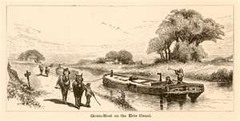 | 13 |
| 8440284317 | Robert Fulton; steamboats | In 1807, he built a boat powered by a steam engine. Commercial steamboat lines soon made river shipping faster and cheaper. (p. 161) |  | 14 |
| 8440284318 | railroads | A major economic development of the 1820s. By the 1830s they were competing directly competing with canals as a method for carrying passengers and freight. Towns such as Cleveland, Cincinnati, Detroit, and Chicago soon became booming commercial centers. (p. 161) |  | 15 |
| 8440284319 | Eli Whitney; interchangeable parts | In 1793, he built the first cotton gin, which would have a huge impact on the Southern economy. During the War of 1812 he devised a system to make rifles with mass produced interchangeable parts. (p. 162) |  | 16 |
| 8440284320 | corporations | In 1811, New York state passed a law that made it easier for business to incorporate and raise capital by selling shares of stock. Owners of a corporation only risked the money they had invested in a venture. This allowed large sums of money to be raised to build factories, canals, and railroads. (p. 162) |  | 17 |
| 8440284321 | Samuel Slater | British-born textile producer and one of the first industrialists in America. In 1791, he helped establish the nation's first factory using cotton spinning machine technology. (p. 162) |  | 18 |
| 8440284322 | factory system | In the 1820s, New England emerged as the country's leading manufacturing center because of abundant water power to drive machinery and seaports to ship goods. (p. 162) |  | 19 |
| 8440284323 | Lowell System; textile mills | The system that recruited young farm women to work in textile mills and house them in company dormitories. (p. 163) |  | 20 |
| 8440284324 | industrialization | Caused a shift from farming economy to using manufacturing machines in a factory economy. (p. 164) | | 21 |
| 8440284325 | specialization | Farmers produced food, workers in the cities produced manufactured goods. (p. 164) |  | 22 |
| 8440284326 | unions | Trade unions were organized as early as the 1790s when the factory system started to take hold. A prime goal of the early unions was a 10 hour workday. (p. 163) |  | 23 |
| 8440284327 | cotton gin | In 1793, this machine was invented by Eli Whitney. It removed seeds from cotton fibers so cotton could be processed quickly and cheaply. As a result more cotton was grown in the South and more slaves were needed in the cotton fields. (p. 162) |  | 24 |
| 8440284328 | market revolution | This revolution was a result of specialization on the farm, growth of the cities/urbanization, industrialization, and the development of modern capitalism. It brought the end of self-sufficient households and a growing interdependence among people. Effects: women--work and family life changed--those seeking jobs in towns usually had two options: domestic service or teaching; most working women were single; more control over lives economic and social mobility--real wages improved; gap between rich and poor increases; great opportunity for social mobility than Europe. slavery--rapid growth of textile industry and profitability of cotton increased institution (p. 164) |  | 25 |
| 8440284329 | John Marshall | Chief Justice of the Supreme Court from 1801 to 1835. A Federalist, whose decisions favored the central government and the rights of property against advocates of state's rights. Several of his decisions became landmark ruling that defined the relationship between the central government and the states. (p. 153) |  | 26 |
| 8440284330 | Fletcher v. Peck | An 1810 Supreme Court case, in which Georgia tried to revoke a land grant on the grounds that it had been obtained by corruption. The Supreme Court ruled that a state cannot arbitrarily interfere with a person's property rights. Since the land grant was a legal contract, it could not be repealed. This was the first time that the Supreme Court declared a state law to be unconstitutional and invalid. (p. 154) |  | 27 |
| 8440284331 | McCulloch v. Maryland | This 1819 Supreme Court case, ruled that states could not tax a federal institution, the Bank of the United States. The court ruled that, even though no clause in the Constitution specifically mentions a national bank, the Constitution gives the federal government the implied power to create one. It also solidified the supremacy of the national government over the states (p. 154) |  | 28 |
| 8440284332 | Dartmouth College v. Woodward | An 1819 Supreme Court case, in which New Hampshire attempted to change Dartmouth College from a private college into a public institution. The court struck down the state law as unconstitutional, arguing that a contract for a private corporation could not be altered by the state. (p. 154) |  | 29 |
| 8440284333 | Gibbons v. Ogden | This 1821 Supreme Court case ruled that New York state could not grant a monopoly to a steamboat company. This case established the federal government's control of interstate commerce. (p. 154) |  | 30 |
| 8440284334 | implied powers | Even though a power is not specifically stated in the Constitution, it may be possible for the federal government to exercise a power. (p. 154) |  | 31 |
| 8440284335 | Tallmadge Amendment | Proposed solution to Missouri becoming a state. It forbade slavery in Missouri and said that all black children would be free after the age of 25. It did not pass in the Senate and angered the South. (p. 156) |  | 32 |
| 8440284336 | Missouri Compromise | An 1820 compromise, that allowed Missouri to join the Union as a slave state, and Maine to join as a free state. It also established a line across the southern border of Missouri (36°,30') stating that except for the state of Missouri, all states north of that line must be states without slavery. (p. 157) |  | 33 |
| 8440284337 | Rush-Bagot Agreement | An 1817 disarmament pact between U.S. and Britain, it strictly limited Naval armament on the Great Lakes. The agreement was extended to place limits on U.S. and Canadian border fortifications. (p. 157) |  | 34 |
| 8440284338 | Treaty of 1818 | Treaty between U.S. and Britain which 1) shared fishing rights off the coast of Newfoundland, 2) joint occupation of the Oregon Territory for ten years, 3) set the northern limits of the Louisiana Territory at the 49th parallel. (p. 157) |  | 35 |
| 8440284339 | Andrew Jackson | In 1817, this general lead a militia force to Florida where he destroyed Seminole villages and hung Seminole sympathizers. He would later become president. (p. 158) |  | 36 |
| 8440284340 | Florida Purchase Treaty/ Adams-Onis Treaty | An 1819 treaty, in which Spain turned over Florida and the Oregon Territory to the United States. The U.S. agree to assume $5 million debt and give up any claims in Texas. (p. 158) |  | 37 |
| 8440284341 | Monroe Doctrine | An 1823 doctrine by President James Monroe, warning European powers to refrain from seeking any new territories in the Americas. The United States largely lacked the power to back up the pronouncement, which was actually enforced by the British, who sought unfettered access to Latin American markets. (p. 158) |  | 38 |
AP US History 1 Chapter 5 Vocabulary Terms Flashcards
Terms : Hide Images
| 6979926795 | new lights | Ministers who took part in the revivalist, emotive religious tradition pioneered by George Whitefield during the Great Awakening. | 0 | |
| 6979926794 | royal colonies | Colonies where governors were appointed directly by the King. | 1 | |
| 6979926797 | regulator movement | Eventually violent uprising of backcountry settlers in North Carolina against unfair taxation and the control of colonial affairs by the seaboard elite. | 2 | |
| 6979926798 | old lights | Orthodox clergymen who rejected the emotionalism of the Great Awakening in favor of a more rational spirituality. | 3 | |
| 6979926799 | proprietary colonies | Colonies under the control of local proprietors, who appointed colonial governors. | 4 | |
| 6979948310 | melting pot | The mingling of diverse ethnic groups in America, including the idea that these groups are or should be "melting" into a single culture or people. | 5 | |
| 6979953372 | sect | A small religious group that has broken away from some larger mainstream church, often claiming superior or exclusive possession of religious truth. | 6 | |
| 6979959480 | agitators | Those who seek to excite or persuade the public on some issue. | 7 | |
| 6979961959 | stratification | The visible arrangement of society into a hierarchical pattern, with distinct social groups layered one on top of the other. | 8 | |
| 6979970160 | mobility | The capacity to pass readily from one social or economic condition to another. | 9 | |
| 6979971889 | elite | The smaller group at the top of a society or institution, usually possessing wealth, power, or special privileges. | 10 | |
| 6979974820 | almshouse | a home for the poor, supported by charity or public funds. | 11 | |
| 6979976411 | gentry | Landowners of substantial property, social standing, and leisure, but not titled nobility. | 12 | |
| 6979978501 | tenant farmer | One who rents rather than owns land. | 13 | |
| 6979979436 | penal code | The body of criminal laws specifying offenses and prescribing punishments. | 14 | |
| 6979982316 | veto | The executive power to prevent acts passed by the legislature from becoming law. | 15 | |
| 6979984892 | apprentice | A person who works under a master to acquire instruction in a trade or profession. | 16 | |
| 6979988489 | speculation | Buying land or anything else in the hope of profiting by an expected rise in price. | 17 | |
| 6979994155 | revival | In religion, a movement of renewed enthusiasm and commitment often accompanied by special meetings or evangelical activity. | 18 | |
| 6980015088 | secular | Belonging to the worldly sphere rather than to the specifically sacred or churchly. | 19 | |
| 7056988243 | Great Awakening | a religious revival occurring in the 1730's and 1740's to motivate the souls of colonial America. | 20 |
AP US History 1 Chapter 9 Vocabulary Terms Flashcards
Terms : Hide Images
| 7109912781 | federation | This is a two-level government, the state and national (federal) levels, with the national government holding the most power. This involved the yielding by the states of their sovereignty to a completely new federal government. This would give the states freedom to control their local affairs. | 0 | |
| 7109915329 | checks & balances | This was the principle of government under which separate branches are employed to prevent actions by the other branches and are induced to share power. | 1 | |
| 7109919578 | sovereignty | Supreme and independent power or authority in government as possessed or claimed by a state. | 2 | |
| 7109925506 | mobocracy | Rule or domination by the masses. | 3 | |
| 7109928866 | consent of the governed | A condition urged by many as a requirement for legitimate government. | 4 | |
| 7109932141 | states' rights | The rights and powers held by individual US states rather than by the federal government. | 5 | |
| 7109934522 | anarchy | A state of disorder due to absence or nonrecognition of authority. | 6 | |
| 7109937810 | Society of the Cincinnati | a hereditary society with branches in the United States and France, founded in 1783, to preserve the ideals and fellowship of officers of the Continental Army who served in the Revolutionary War. | 7 | |
| 7261822499 | large-state plan | It was the plan purposed by Virginia to set up Congress where the number of representatives per state would be based on population, giving the larger states an advantage. | 8 | |
| 7261826739 | Great Compromise | Resolved that there would be representation by population in the House of Representatives, and equal representation would exist in the Senate. Each state, regardless of size, would have 2 Senators. | 9 | |
| 7261833734 | Articles of Confederation | The first "constitution" governing the Untied States after the revolution. It was ratified in 1781 and provided for a "firm league of friendship." | 10 | |
| 7261839768 | Electoral College | A group of electors chosen by the people to elect the president of the United States in every election year. | 11 | |
| 7261843638 | Three-Fifths Compromise. | A compromise where a black slave was counted as three-fifths of a person when they were counting the population. | 12 | |
| 7261847049 | Land Ordinance of 1785 | A law which stated that the disputed land of the Old Northwest (today's Midwest) was to be equally divided into townships (6 miles by 6 miles) and sold for federal income. It also promoted education (by reserving section #16 for schools) and ended confusing legal disagreements over land. | 13 | |
| 7261850716 | Northwest Ordinance | Stated that sections of land were similar to colonies for a while, and under the control of the federal government. Once a territory was inhabited by 60,000 people, then Congress would review its constitution and admit it as a state. Slavery was prohibited in the area. | 14 | |
| 7261857252 | Anti-Federalists | People who disagreed with the Constitution because they believed people's rights were being taken away without a Bill of Rights. They were angered by dropping annual elections, the non existence of God in the government, a standing army, and basically the strengthening of the federal government. | 15 | |
| 7261864091 | Shay's Rebellion | An uprising that flared up in western Massachusetts. Impoverished back country farmers, many of them Revolutionary War veterans, were losing their farms through mortgage foreclosures and tax delinquencies. They demanded cheap paper money, lighter taxes, and a suspension of mortgage foreclosures. | 16 | |
| 7261870264 | Federalists | A political party consisting of the wealthier, more educated, more respectable citizens of the time. They believed in advocating a strong federal government and fought for the adoption of the United States Constitution | 17 | |
| 7261874638 | Constitution of the United State | The foundation of our country's national government. It was drafted in Philadelphia in 1787 and ratified two years later. | 18 | |
| 7261877776 | The Federalist Papers | A series of articles written in New York newspapers as a source of propaganda for a stronger central government. The articles, written by Alexander Hamilton, John Jay, and James Madison, were a way for the writers to express their belief that it is better to have a stronger central government. | 19 | |
| 7261885219 | bill of rights | A list of fundamental freedoms assumed to be central to society. | 20 |
Period 2: 1607-1754 AP US History Flashcards
Terms : Hide Images
| 7463917783 | congregationalism | Church and town organization independent (no state control) and non-hierarchical; Citizenship = church membership (covenant); New England and Middle colonies; Puritans, Quakers, Baptists, etc. | 0 | |
| 7463917787 | Destruction of the Spanish Armada | 16th century England vs. Spain naval war; Marked the beginning of the end of the Spanish Empire and opened the path for the British Empire to flourish. |  | 1 |
| 7463917788 | Calvinism | A major branch of Protestantism; The credo of many American foundational settlers including English Puritans, Scottish Presbyterians, French Hugenots, and Dutch Reformed Church in America | 2 | |
| 7463917789 | Barbados | located in Caribbean; where the settlers in Carolina come from |  | 3 |
| 7463917790 | Joint Stock Company | A commercial venture in which multiple shareholders invest and spread risk; e.g. Hudson's Bay Company, Virginia Company, Dutch West India Company | 4 | |
| 7463917792 | Navigation Acts | A series of economic regulations set by England starting in 1651 in order to gain control over its' colonies; Inspired by merchantilist policies |  | 5 |
| 7463917793 | Queen Elizabeth | A.K.A. Virginia, the "virgin" queen; An ambitious ruler, she secured the Protestant Reformtation in England and reigned during the destruction of the Spanish Armada, Drake's circumnavigation, the English Renaissance (Shakespeare!), and the beginning of the British Empire. |  | 6 |
| 7463917794 | Sir Walter Raleigh | A dashing courtier favored by Queen Elizabeth; Launched the first English colony in the New World in 1585 on Roanoke Island, off the coast of Virginia (present day North Carolina); The colony was a failure due to England's preoccupation with war with Spain. |  | 7 |
| 7463917795 | Roanoke colony | Located in present day North Carolina; Known as "The Lost colony" established by Sir Walter Raleigh in 1585, disappeared during the first Anglo-Spanish War. |  | 8 |
| 7463917796 | Virginia Company of London | A joint-stock company that established the first enduring English colony in the New World at Jamestown. |  | 9 |
| 7463917797 | Plantation economy | large scale agriculture worked by slaves, especially sugar and tobacco plantation. |  | 10 |
| 7463917798 | Chesapeake Bay | Large estuary between Maryland and Virginia; Site of both Jamestown and St. Marys. |  | 11 |
| 7463917799 | Jamestown | The first permanent English settlement in North America; Founded in 1607 as a joint-venture of the Virginia Company. | 12 | |
| 7463917800 | Maryland | Proprietary colony established on the Chesapeake Bay; George Calvert and Lord Baltimore were its proprietors; Established as a Catholic haven in the largely Protestant British Americas. |  | 13 |
| 7463917801 | Powhatan confederacy | A group of native American tribes in 17th century that settled in Virginia and came into conflict with the Virginia colonists. | 14 | |
| 7463917803 | Anglo-Powhatan Wars | 1614-1644; Series of wars between English Virginia Company settlers and local Indian tribes; "Irish tactics" used; Settled by Marriage of Pocahontas and John Rolfe; Led to the banishment of Chesapeake Indians and English encroachment of land. | 15 | |
| 7463917804 | "starving time" | Jamestown winter of 1609 to 1610; Only 60 of the 400 colonists survived because they didn't found plants or the methods to grow crops; Most colonists were gentlemen "adventurers" who refused to work or didn't know how to grow crops. |  | 16 |
| 7463917805 | House of Burgesses | The first representative legislative body formed in 1619 in Virginia; Evolved into a "planter oligarchy" that represented the wealthy plantation owners, and a competitor to the Parliament in London. | 17 | |
| 7463917806 | Maryland Acts of Toleration | In 1649, passed in Maryland, guaranteeing rights to Christians of all denominations; A measure to protect Maryland's Catholics. | 18 | |
| 7463917807 | Headright System | New immigrants were enticed to come to the New World with the offer of 50 arces (1 arce= 4047m2) | 19 | |
| 7463917808 | Bacon's Rebellion | 1676 rebellion of discontent landless servants in Virginia; Exposed the weakness of the indentured servant system to the ruling planter oligarchy, who thereafter relied more and more on African slaves. | 20 | |
| 7463917809 | Lord Baltimore | Catholic proprietor of the colony of Maryland; Permitted religious freedom to all Christian colonists in a mesure to protect Catholics. | 21 | |
| 7463917810 | John Rolfe | Virginia "father of tobacco"; Husband of Pocahontas. | 22 | |
| 7463917811 | Indentured servant | Potential England immigrants sign a contact with wealthy Virginians to work for a certain years in the New World in exchange of the passage over the Atlantic. | 23 | |
| 7463917812 | Virginia | The first colony of the British Empire; Established during the rule of Queen Elizabeth I. | 24 | |
| 7463917813 | Quebec | French major colony in Canada. |  | 25 |
| 7463917814 | Jesuit | "Society of Jesus"; Catholic missionaries. | 26 | |
| 7463917815 | Huguenots | French Protestants | 27 | |
| 7463917817 | Fundamental Orders of Connecticut | First written constitution in the New World (and all of Western Tradition); established townhall style of government similar to much of Puritan New England. | 28 | |
| 7463917818 | Pilgrims | Traveler on a holy journey; Puritan separatists who first settled Plymouth in New England |  | 29 |
| 7463917819 | Puritans | A group of English Reformed Protestants who sought to "purify" the Church of England | 30 | |
| 7463917820 | Protestantism | The "reformed" Christian faith that emerged from Martin Luther's 16th century protests against the corruption and control of the Catholic Church; A major religious and political force in the English colonies of the New World. | 31 | |
| 7463917821 | Town hall meeting | A form of direct democratic rule, used principally in New England where most or all the members of a community come together to participate in direct democratic government. | 32 | |
| 7463917822 | Congregational church | Protestant churches practicing congregationalist church governance; The independence of each congregation in New England mirrored the independence of each town and its political organization. | 33 | |
| 7463917823 | Royal charter | A formal document issued by a monarch as letters patent, granting a right or power to an individual or a body corporate. | 34 | |
| 7463917824 | Charter | The grant of authority or rights, stating that the granter formally recognizes the prerogative of the recipient to exercise the rights specified; 3 types: Royal, Commercial, Proprietary. | 35 | |
| 7463917825 | Plymouth colony | Founded by a group of Separatists who came to be known as the Pilgrims; the first sizable permanent English settlement in the New England region,https://o.quizlet.com/YWD0OaZqPqntAaSERr.dQA_m.jpg | 36 | |
| 7463917826 | Roger Williams | A Puritan, an early proponent of religious freedom and separation of church and state; he was expelled from the colony of Massachusetts and began the colony of Providence Plantation. | 37 | |
| 7463917827 | Providence | Colony established by the puritan dissenter Roger Williams; Later merged with Portsmouth to form the colony of Rhode Island. | 38 | |
| 7463917828 | Anne Hutchinson | An important participant in the Antinomian Controversy; banished from the Massachusetts Bay Colony and formed Portsmouth (later merged into Rhode Island). |  | 39 |
| 7463917829 | John Winthrop | One of the leading figures in the founding of the Massachusetts Bay Colony; his vision of the colony as a Puritan "city upon a hill" dominated New England colonial development. |  | 40 |
| 7463917830 | Mayflower | The ship that transported the first English Separatists—Pilgrims—in 1620. | 41 | |
| 7463917831 | Separatist | Puritans who felt needed to separate from the Church of England. | 42 | |
| 7463917832 | "city upon a hill" | In the 1630 sermon "A Model of Christian Charity" preached by Puritan John Winthrop. Winthrop admonished the future Massachusetts Bay colonists that their new community would be "as a city upon a hill", the ideal community, watched by the world. | 43 | |
| 7463917833 | Mayflower Compact | The first governing document of Plymouth Colony, written by the male passengers of the Mayflower, consisting of separatist Congregationalists. |  | 44 |
| 7463917834 | Salem Witch Trials | A series of hearings and prosecutions of people accused of witchcraft in colonial Massachusetts between February 1692 and May 1693; Religious fear that resulted from unrest in the colonies. | 45 | |
| 7463917835 | slave codes | Series of laws in southern plantation colonies that established Africans as lifelong slaves and a cornerstone of the plantation economy. | 46 | |
| 7463917836 | King Philip's War | AKA Metacom's War; Savage conflict between New England colonists and local Indian tribes; Both sides resorted to brutal massacre tactics; Defeat of Indians resulted in white land expansion. |  | 47 |
| 7463917837 | Middle Colonies | New York, New Jersey, Pennsylvania, Delaware; Dominated by Quakers. | 48 | |
| 7463917839 | Jamaica | An island in Caribbean sea. Visited by Columbus in 1494 and Colonized by Spanish who enslaved or killed the Natives. Became a major sugar colony of the British Empire in the 17th century. |  | 49 |
| 7463917840 | South Carolina | Plantation colony established by the eight nobles (lords proprietor) after the restoration of King Charles II; Mostly rural plantations, but has primary settlement at Charles Town. |  | 50 |
| 7463917841 | "buffer colony" | A colony established to serve primarily as a defensive boundary against a competing colonial power; California and Georgia, for example. | 51 | |
| 7463917842 | North Carolina | A relatively poor and underdeveloped colony settled by landless squatters from Virginia |  | 52 |
| 7463917843 | "holy experiment" | William Penn's term for the ideal government that would uphold religious freedom and attract virtuous settlers; Largely a Quaker ideal; Its failure was apparent after Penn's death when settlers came into conflict with natives and Quakers lost political power for advocating nonviolence in the face of Indian and competing colonial power threat. | 53 | |
| 7463917844 | Philadelphia | "The city of brotherly love" established by William Penn; It was by far the largest and most important city in the English colonies on the eve of the Revolution. | 54 | |
| 7463917845 | mercantilism | The driving economic philosophy of the colonial powers in the 17th and 18th centuries; Colonial competition was a zero-sum game; Trade imbalances (more imports than exports) were evil; Colonies served the mother country and were not allowed to compete economically. | 55 | |
| 7463917846 | New Netherland | Dutch colony in Northern America; Established as a trading center; Later taken by the English and renamed New York. | 56 | |
| 7463917847 | Gullah culture | Black people off the coast of South Carolina; Speak an English-based creole language containing many African loanwords and grammar; Their isolation is an example of how many Africans held onto their traditional culture despite enslavement and Christianization. | 57 |
AP Language & Composition Vocabulary Unit 8 Flashcards
Terms : Hide Images
| 6163891508 | Acrimonious | (adj.) stinging, bitter in temper or tone |  | 0 |
| 6163891509 | Bovine | (adj.) resembling a cow or ox; sluggish, unresponsive |  | 1 |
| 6163891510 | Conducive | (adj.) tending to promote or assist, helpful, favorable |  | 2 |
| 6163891511 | Consternation | (n.) dismay, confusion |  | 3 |
| 6163891512 | Corpulent | (adj.) fat; having a large, bulky body |  | 4 |
| 6163891513 | Disavow | (v.) to deny responsibility for or connection with |  | 5 |
| 6163891514 | Dispassionate | (adj.) impartial; calm, free from emotion |  | 6 |
| 6163891515 | Dissension | (n.) disagreement, sharp difference of opinion |  | 7 |
| 6163891516 | Dissipate | (v.) to cause to disappear; to scatter, dispel; to spend foolishly, squander; to be extravagant in pursuit of pleasure |  | 8 |
| 6163891517 | elan | (n.) an enthusiastic vigor and liveliness, spirit; a flair |  | 9 |
| 6163891518 | Expurgate | (v.) to remove objectionable passages or words from a written text; to cleanse, purify |  | 10 |
| 6163891519 | Gauntlet | (n.) an armored or protective glove; a challenge; two lines of men armed with weapons with which to beat a person forced to run between them; an ordeal |  | 11 |
| 6163891520 | Hypothetical | (adj.) based on an assumption or guess; used as a provisional or tentative idea to guide or direct investigation |  | 12 |
| 6163891521 | Ignoble | (adj) mean, low, base |  | 13 |
| 6163891522 | Impugn | (v.) to call into question; to attack as false |  | 14 |
| 6163891523 | Intermperate | (adj.) immoderate, lacking in self-control; inclement |  | 15 |
| 6163891524 | Odium | (n.) hatred, contempt; disgrace or infamy resulting from hateful conduct |  | 16 |
| 6163891525 | Perfidy | (n.) faithlessness, treachery |  | 17 |
| 6163891526 | Relegate | (v.) to place in a lower position; to assign, refer, turn over; to banish |  | 18 |
| 6163891527 | Squeamish | (adj.) inclined to nausea; easily shocked or upset; excessively fastidious or refined |  | 19 |
| 6163891528 | Subservient | (adj.) subordinate in capacity or role; serving to promote some end; submissively obedient |  | 20 |
| 6163891529 | Susceptible | (adj) open to; easily influenced; lacking in resistance | 21 |
AP US History Unit 4 Flashcards
Terms : Hide Images
| 8119725774 | In 1836, Texas did not immediately join the United States because | President Andrew Jackson thought that action would add to sectional tensions. | 0 | |
| 8119725775 | Under the terms of the Treaty of Guadalupe Hidalgo, the United States | agreed to pay millions to Mexico. | 1 | |
| 8119725776 | The Wilmot Proviso | prohibited slavery in any land acquired from Mexico. | 2 | |
| 8119725777 | The Compromise of 1850 allowed for the admission of California | along with a strengthened Fugitive Slave Act. | 3 | |
| 8119725778 | In the 1850s, the "Young America" movement | supported the expansion of American democracy throughout the world. | 4 | |
| 8119725779 | Which of the following statements regarding the Kansas-Nebraska Act is FALSE? A It was sponsored by Henry Clay B It led to the creation of the Republican Party C It created 2 new territories D it explicitly repealed the Missouri Compromise | It was sponsored by Henry Clay | 5 | |
| 8119725780 | The ideology of Free-Soil included | opposition to the expansion of slavery. | 6 | |
| 8119725781 | The Supreme Court held in the case of Dred Scott v. Sanford (1857) | the Missouri compromise was unconstitutional | 7 | |
| 8119725782 | Following John Brown's 1859 raid on Harpers Ferry, many southerners assumed | the North was dominated by people intent on destroying the South | 8 | |
| 8119725783 | In the election of 1860, | white southerners concluded that their position in the Union was hopeless. | 9 | |
| 8119725784 | At the start of the Civil War, the | North had a much more substantial economy. | 10 | |
| 8119725785 | The Union's national draft law | resulted in murderous attacks in NYC against free blacks | 11 | |
| 8119725786 | The Confiscation Act of 1861 | declared that slaves used by Confederate states in the war effort were free. | 12 | |
| 8119725787 | Politically, the Confederate constitution | was almost identical in many respects to the Constitution of the United States. | 13 | |
| 8119725788 | Which of the following statements about George B McClellan is FALSE? | he originally served as commander of the Army of Northern Virginia | 14 | |
| 8119725789 | In naval warfare during the Civil War, | both the Union and Confederate militaries developed ironclads. | 15 | |
| 8119725790 | In 1861, the so-called Trent affair | created an international diplomatic crisis for Abraham Lincoln. | 16 | |
| 8119725791 | The Battle of Vicksburg in 1863 | allowed the North to split the Confederacy in two. | 17 | |
| 8119725792 | The Battle of Gettysburg | represented the last time Confederate forces seriously threatened Union territory. | 18 | |
| 8119725793 | In 1864, General William T. Sherman's "March to the Sea" | was designed in part to demoralize Southerners. | 19 | |
| 8119725794 | As president, Andrew Johnson | offered amnesty to southerners who pledged their loyalty to the US | 20 | |
| 8119725795 | The Fourteenth Amendment | gave citizenship rights to all people born in the United States. | 21 | |
| 8119725796 | During reconstruction, southern African American officeholders | underrepresented the total number of blacks living in the South | 22 | |
| 8119725797 | The Panic of 1873 | was the nation's worst economic depression to that time. | 23 | |
| 8119725798 | The "redeemed" governments of the South | saw an end to occupation by federal troops | 24 | |
| 8119725799 | Congressional Reconstruction might have been more effective if | the federal government had better enforced the laws designed to assist blacks | 25 | |
| 8119725800 | Advocates of the "New South" | promoted southern industry and railroad development. | 26 | |
| 8119725801 | The Supreme Court ruled in Plessy v. Ferguson (1896) that | racial segregation was legal if whites and blacks had equal "accommodations." | 27 | |
| 8119725802 | Jim Crow Laws | imposed a system of state-supported segregation | 28 | |
| 8119725803 | In the 1890s, the black journalist Ida B Wells devoted her writing to attacking | the crime of lynching | 29 |
AP US History 1 Chapter 21 Vocabulary Terms Flashcards
Terms : Hide Images
| 7850245584 | Battle of Antietam | Landmark battle in the Civil War that essentially ended in a draw but demonstrated the prowess of the Union army, forestalling foreign intervention and giving Lincoln the "victory" he needed to issue the Emancipation Proclamation. | 0 | |
| 7850245585 | Appomattox Courthouse | Site where Robert E. Lee surrendered to Ulysses S. Grant in April 1865 after almost a year of brutal fighting throughout Virginia in the "Wilderness Campaign". | 1 | |
| 7850245586 | Battle of Bull Run (Manassas Junction) | First major battle of the Civil War and a victory for the South, it dispelled Northern illusions of swift victory. | 2 | |
| 7850245587 | Congressional Committee on the Conduct of the War | Established by Congress during the Civil War to oversee military affairs. Largely under the control of Radical Republicans, the committee agitated for a more vigorous war effort and actively pressed Lincoln on the issue of emancipation. | 3 | |
| 7850245588 | Copperheads | Northern Democrats who obstructed the war effort attacking Abraham Lincoln, the draft and, after 1863, emancipation. | 4 | |
| 7850245590 | Battle of Fort Henry and Fort Donelson | Key victory for Union General Ulysses S. Grant, it secured the North's hold on Kentucky and paved the way for Grant's attacks deeper into Tennessee. | 5 | |
| 7850245592 | Gettysburg Address | Abraham Lincoln's often quoted speech, delivered at the dedication of the cemetery at battlefield. In the address, Lincoln framed the war as a means to uphold the values of liberty. | 6 | |
| 7850245596 | Reform Bill of 1867 | Granted suffrage to all male British citizens, dramatically expanding the electorate. The success of the American democratic experiment, reinforced by the Union victory in the Civil War, was used as one of the arguments in favor of the Bill. | 7 | |
| 7850245598 | Sherman's March | Union General William Tecumseh Sherman's destructive journey through Georgia. An early instance of "total war," purposely targeting infrastructure and civilian property to diminish morale and undercut the Confederate war effort. | 8 | |
| 7850245600 | The Man Without a Country | Edward Everett Hale's fictional account of a treasonous soldier's journeys in exile. The book was widely read in the North, inspiring greater devotion to the Union. | 9 | |
| 7850245601 | Thirteenth Amendment | Constitutional amendment prohibiting all forms of slavery and involuntary servitude. Former Confederate States were required to ratify the amendment prior to gaining reentry into the Union. | 10 | |
| 7850245602 | Union Party | A coalition party of pro-war Democrats and Republicans formed during the 1864 election to defeat anti-war Northern Democrats. | 11 | |
| 7850245604 | Wilderness Campaign | A series of brutal clashes between Ulysses S. Grant's and Robert E. Lee's armies in Virginia, leading up to Grant's capture of Richmond in April of 1865. | 12 |
Pages

Need Help?
We hope your visit has been a productive one. If you're having any problems, or would like to give some feedback, we'd love to hear from you.
For general help, questions, and suggestions, try our dedicated support forums.
If you need to contact the Course-Notes.Org web experience team, please use our contact form.
Need Notes?
While we strive to provide the most comprehensive notes for as many high school textbooks as possible, there are certainly going to be some that we miss. Drop us a note and let us know which textbooks you need. Be sure to include which edition of the textbook you are using! If we see enough demand, we'll do whatever we can to get those notes up on the site for you!
