AP Notes, Outlines, Study Guides, Vocabulary, Practice Exams and more!

AMSCO AP US History Chapter 30 Flashcards

AMSCO United States History 2015 Edition, Chapter 30 Conservative Resurgence, 1980-2000

Terms : Hide Images
5332285210Milton FriedmanFree market economist who gave evidence in the 1970s of a steady shift to the right, away from the liberalism of the 1960s. (p. 654)0
5332285211political action committees (PACs)Political action committees which became a force for change. Opposed big government, New Deal liberalism, gun control, feminism, gay rights, welfare, affirmative action, sexual permissiveness, abortion, and drug use. (p. 654)1
5332285212Proposition 13In 1978, California voters passed this measure that sharply cut property taxes. (p. 654)2
5332285213Arthur LafferConservative economist who believed that tax cuts would increase government revenues. (p. 655)3
5332285214religious fundamentalismPeople who attacked secular humanism as a godless creed taking over public education. They campaigned for the return of prayers and the teaching of the Biblical account of creation in public schools. (p. 655)4
5332285215televangelistsPat Robertson, Oral Roberts, and Jim Baker brought in 100 million viewers in which religion became an instrument of electoral politics. (p. 655)5
5332285216Moral MajorityReligion became an instrument for electoral politics when an evangelist from Virginia, Jerry Falwell founded this organization, which helped financed campaigns to unseat liberal members of Congress. (p. 655)6
5332285217abortion rights; Roe v. WadeThe legalization of abortion in the 1973 Roe v. Wade Supreme Court case, sparked the right-to-life movement. The movement united Catholics and fundamentalist Protestants, who believed that life begins at conception. (p. 655)7
5332285218reverse discriminationAfter years of stagflation in the 1970s, many whites blamed their troubles on affirmative action, calling it reverse discrimination. (p. 655)8
5332285219Regents of University of California v. BakkeThe admissions policies of one medical school were challenged. The Supreme Court ruled that while race could be considered, the school had created racial quotas, which were unconstitutional. Conservatives used this decision to intensified their campaign to end all preferences based on race and ethnicity. (p. 655)9
5332285220election of 1980Ronald Reagan won this presidential election, defeating Jimmy Carter because of the Iranian hostage crisis and America's stagflation. It was significant because the Senate had Republican majority and more seats in the house allowing them to pass many key Republican programs. The 1980 election ended a half-century of Democratic dominance of Congress. (p. 655)10
5332285221Ronald ReaganHe was president from 1981 to 1988, he led a conservative movement against détente with the Soviet Union and the growth of the federal government. Some people credit him with America's victory in the Cold War while others fault his insensitive social agenda and irresponsible fiscal policies. (p. 656)11
5332285222supply-side economics (Reaganomics)This economic theory argued that tax cuts and reduced government spending would increase investment by the private sector, which would lead to increased production, jobs, and prosperity. (p. 656)12
5332285223"trickle down" economicsReaganomics was compared to the "trickle-down" economics of the 1920s, in which wealthy Americans prospered, and some of their increased spending benefited the middle class and the poor. (p. 656)13
5332285224Economic Recovery Tax ActA measure signed by Reagan in 1981 which cut personal income taxes by 25 percent over three years, cut the corporate income tax, capital gains tax, and the gift and inheritance taxes. It offered the wealthy a broad array of other tax concessions. (p. 656)14
5332285225business deregulationReagan followed up on the promise of "getting governmnet off the backs of people" by reducing federal regulations on business and industry. Restrictions were eased on savings and loans, mergers and takeovers by large corporations, and environmental protection. (p. 657)15
5332285226PACTO strikeReagan took a tough stand against unions, he fired thousands of striking federal air traffic controllers for violating their contract and decertified their union. (p. 657)16
5332285227Sandra Day O'ConnorPresident Reagan appointed this conservative judge to the Supreme Court, she was the first woman to serve on the Court. (p. 658)17
5332285228William RehnquistDuring the Reagan administration, he was the new Supreme Court chief justice. Under his leadership the court scaled back on affirmative action in hiring and promotions and limited Roe v. Wade influence by allowing states to impose some restrictions on abortions. (p. 658)18
5332285229growth of upper incomesIn the 1980s, well educated workers and yuppies (young urban professionals) enjoyed higher incomes from the deregulated marketplace while the standard of living for the middle class remained stagnant or declined. (p. 658)19
5332285230budget and trade deficitsPresident Reagan's tax cuts combined with large increases in military spending lead to federal deficits of more than $200 million a year. During his two terms the national debt tripled from $900 million to $2.7 trillion. The U.S. trade deficit reached $150 billion a year. (p. 658)20
5332285231election of 1984In this presidential election, Ronald Reagan ran against Walter Mondale, who chose Geraldine Ferraro as the first woman for vice presidential candidate. Reagan won by a landslide winning every state except for Mondale's home state of Minnesota. (p. 658)21
5332285232expand militaryPresident Reagan expanded the military to fight against the Soviet Union which he referred to as the "evil empire". The defense budget grew from $171 billion in 1981 to $300 billion in 1985. (p. 659)22
5332285233Strategic Defense Initiative (Star Wars)An ambitious plan for building a high-tech system of laser and particle beams to destroy enemy missiles before they could reach the United States. Critics called it "Star Wars" and argued that the costly program would only escalate the arms races. (p. 659)23
5332285234Nicaragua; SandinistasIn Central America, Reagan supported right-wing dictators as long as they were friendly to the United States and anti-Communists. In Nicaragua, a Marxist movement known as the Sandinistas had overthrown the dictator. The U.S. responded by providing military aid to the "contras" in their efforts to remove the Sandinistas. (p. 660)24
5332285235Boland AmendmentIn 1985, the Democrats passed this amendment which prohibited further aid to the contras in Nicaragua. (p. 660)25
5332285236Iran-contra affairIran and Iraq were at war, the United States sold antitank and antiaircraft missiles to Iran's government for their help in freeing Americans held hostage by radical Arab group. The U.S. then used the profits from the sale to fund the contras in Nicaragua. This violated the Boland Amendment and congressional budget authority. (p. 660)26
5332285237Beirut bombingsIn April 1983, an Arab suicide bomber killed 63 people at the U.S. embassy in Beirut. A few months later, an Arab terrorist drove a bomb-filled truck into a U.S. Marines barracks, killing 241 servicemen. (p. 660)27
5332285238Palestine Liberation Organization (PLO)The terrorist group that Israel fought with U.S. support. (p. 660)28
5332285239Yasser ArafatThe PLO leader who agreed in 1988 to recognize Israel's right to exist. (p. 661)29
5332285240evil empireReagan's term for the Soviet Communists and also "focus of evil in the modern world". (p. 659)30
5332285241Mikhail Gorbachev; glasnost, perestroikaNew Soviet leader who impletmented changes in their domestic politics with these reforms: 1) glasnost: an openness to end political repression and move toward greater political freedom for Soviet citizens. 2) perestroika: reconstruction of the Soviet economy by introducing some free-market practices. (p. 661)31
5332285242tear down this wallReagan said this in a speech in front of the Berlin Wall to challenge Mikhail Gorbachev into falling through with his reforms. (p. 661)32
5332285243INF agreementWith this agreement, Reagan and Gorbachev agreed to remove and destroy all intermediate-range missiles. (p. 661)33
5332285244Tiananmen SquareIn 1989, Chinese pro democracy students demonstrated for freedom in Beijing's Tiananmen Square. The Chinese government crushed the protest with tanks, killing hundreds. (p 662)34
5332285245Soviet satellitesGorbachev declared that he would no longer support the various Communist governments of Eastern Europe with Soviet armed forces. (p 662)35
5332285246Poland, Lech WalesaStarting in Poland 1989 the election of Lech Walesa, the leader of the once-outlawed Solidarity movement, the communist party fell from power in many countries in eastern Europe. (p. 663)36
5332285247Berlin Wall fallsIn 1989, the Communists in East Germany were forced out of power after protesters tore down the Berlin Wall. In October 1990, the two Germanys reunited into one country. (p. 663)37
5332285248Soviet Union breakupMany republics declared independence; the Soviet government was clearly powerless to stop the fragmentation. The Communist Party and Soviet government became powerless and ceased to exist. (p. 663)38
5332285249Russia Republic, CISBoris Yeltsin, joined with nine former Soviet republics to form a loose confederation, The Common Wealth of Independent States. (p. 663)39
5332285250Boris YeltsinPresident of the Russian Republic, he formed the Commonwealth of Independent States (CIS). He disbanded the Communist party in Russia and attempted to establish a democracy and a free-market economy. (p. 663)40
5332285251START I and IIIn 1991, U.S. President George H. W. Bush and Gorbachev signed the START I agreement which reduced the number of nuclear warheads to under 10,000 for each side. In 1992, President Bush and Yeltsin signed the START II agreement which reduced the number of nuclear weapons to just over 3,000 each. The U.S offered economic assistance to the troubled Russian economy. (p. 663)41
5332285252Yugoslavia civil warYugoslavia started to disintegrate in 1991, a civil war broke out in Bosnia and Herzegovina in 1992. (p. 664)42
5332285253election of 1988In this presidential election George H. W. Bush defeated Michael Dukakis. Bush had been Reagan's vice president. (p. 662)43
5332285254George H. W. BushHe won the 1988 presidential election. He was president during the Persian Gulf War. His ability to quickly bring the war to a conclusion while suffering relatively few casualties resulted in a very high approval rating of nearly 90 percent after the war. (p. 662)44
5332285255Panama invasionIn December 1989, President George H. W. Bush ordered the invasion of Panama to remove the autocratic General Manuel Noriega. The alleged purpose of the invasion was to stop Noriega from using his country as a drug pipeline to the United States. U.S. troops remained in Panama until elections established a more credible government. (p. 664)45
5332285256Saddam HusseinIn August 1990, this Iraqi dictator invaded oil-rich Kuwait. This invasion threatened Western oil sources. (p. 664)46
5332285257Persian Gulf WarAfter Saddam Hussein invaded oil rich Kuwait, President George H. W. Bush built a coalition of United Nations members to pressure Hussein to withdraw from Kuwait. The U.N. embargo had little effect. In January 1991, the massive Operation Desert Storm brought air strikes down on Iraq. After only 100 hours of fighting on the ground, Iraq conceded defeat. (p. 664)47
5332285258Operation Desert StormMassive operation in which more than 500,000 Americans were joined by military units from 28 nations. For 5 weeks they carried out relentless airstrikes and followed up with an invasion led by U.S. General Norman Schwarzkopf. After 100 hours of ground fighting, Iraq conceded defeat. (p. 664)48
5332285259Clarence ThomasPresident George H. W. Bush nominated this man to replace the retiring Thurgood Marshall on the Supreme Court. It was controversial because of his conservative views on judicial issues and the charges of sexual harassment against him. Nevertheless, the Senate confirmed him. (p. 664)49
5332285260no new taxesPresident George H. W. Bush had promised "no new taxes" during the presidential campaign, but he agreed to accept the Democratic Congress' proposed $133 billion in new taxes. (p. 665)50
5332285261Americans With Disabilities ActIn 1990, this act prohibited the discrimination against citizens with physical and mental disabilities in hiring, transportation, and public accommodation. (p. 665)51
5332285262election of 1992In the 1992 presidential election, Democrat Bill Clinton defeated George H. W. Bush. Clinton presented himself as a moderate "New Democrat" who focused on economic issues. (p. 666)52
5332285263William (Bill) ClintonHe served as president from 1993 to 2000. He was a moderate "New Democrat" who focused on economic issues such as jobs, education, and health care. (p. 666)53
5332285264H. Ross PerotHe was a Texas billionaire, who entered the 1992 presidential election as an independent. He received nearly 20% of the vote, the best showing by an independent since Teddy Roosevelt in 1912. (p. 666)54
5332285265failure of health reformPresident Clinton asked Hillary Rodham Clinton (his wife) to head a task force to propose a plan for universal health coverage. It ran into opposition from the insurance industry, small business organizations, and the Republicans. It failed to pass. (p. 666)55
5332285266don't ask, don't tellPresident Clinton failed to end discrimination against gays in the military and settled for the rule, "Don't ask, don't tell". Under this policy a member of the military could still be dismissed for being gay or lesbian but was not required to provide sexual orientation information. (p. 666)56
5332285267NAFTANorth American Free Trade Agreement, which created a free-trade zone with Canada and Mexico. (p. 667)57
5332285268Brady BillThis bill mandated a five-day waiting period for the purchase of handguns. (p. 666)58
5332285269National Rifle Association (NRA)In 1974, this organization, which led the gun lobby, was angered when the Anti-Crime Bill banned the sale of most assault rifles. (p. 666)59
5332285270deficit reduction budgetIn 1994, Congress passed this budget which included $225 billion in spending cuts and $241 billion in tax increases. Part of the budget would go towards increased spending on education and job training. (p. 666)60
5332285271Anti-Crime BillBill Clinton's bill that provided $30 billion in funding for more police protection and crime prevention programs, also banned the sale of most assault rifles. (p. 666)61
5332285272election of 1994In these midterm elections, Republicans gained control of both houses of Congress for the first time since 1954. (p. 667)62
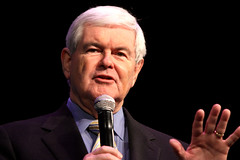
5332285273Newt GingrichNew Speaker of the House, who led the Republicans in an attack on federal programs and spending, outlined in their campaign manifesto "Contract with America". (p. 667)63
5332285274Contract with AmericaRepublican plan headed by Newt Gingrich that focused on scaling back the government, balancing the budget, and cutting taxes. (p. 667)64
5332285275government shutdownsThe confrontations of between Newt Gingrich and President Clinton resulted in two shutdowns of the federal government in late 1995. Many Americans blamed overzealous Republicans in Congress for the shutdown. (p 667)65
5332285276Oklahoma City bombingIn 1995, a federal building in Oklahoma City was bombed by militia-movement extremists. The bombing took 169 lives, the worse act of domestic terrorism in the nation's history until the attack on 9/11. (p. 667)66
5332285277welfare reformThe 1996 budget reform which left Medicare and Social Security benefits intact, limited welfare benefits to five years under the Personal Responsibility and Work Opportunity Act. (p. 667)67
5332285278balanced budgetsThe spending cuts and tax increases during President Clinton's first term, along with record growth in the economy, created this budget in 1998. (p. 667)68
5332285279election of 1996In this presidential election, Democrats Bill Clinton and Al Gore defeated Republicans Bob Dole and Jack Kemp. (p. 668)69
5332285280Clinton impeachmentIn December 1998, the House voted to impeach President Bill Clinton on two counts, perjury and obstruction of justice. Neither impeachment charge was upheld by the Senate. (p. 669)70
5332285281Madeleine K. AlbrightIn 1997, she became the first woman to serve as secretary of state. (p. 669)71
5332285282humanitarian missionsIn 1993, United States soldiers were killed in the civil war in Somalia while on a humanitarian mission. In 1994, President Clinton sent 20,000 troops into Haiti to restore its elected president after a military coup. (p. 669)72
5332285283Northern Ireland accordsIn 1998, the U.S. played a key diplomatic role in negotiating an end to British rule and the armed conflict in Northern Ireland. (p. 669)73
5332285284Yugoslavia breakupSerbian dictator, Slobodan Milosevic carried out a series of armed conflicts to suppress independence movements in the former Yugoslav provinces of Slovenia, Croatia, Bosnia-Herzegovina, and Kosovo. (p. 670)74
5332285285Balkan Wars; Bosnia, KosovoDiplomacy, bombing, and NATO ground troops stopped the bloodshed in Bosnia in 1995, then in Kosovo in 1999. These were the worst battles Europe had seen since World War II. (p. 670)75
5332285286ethnic cleansingHundred of thousands of ethnic and religious minorities were killed in Bosnia and Kosovo by the Serbian dictator Milosevic. (p. 670)76
5332285287nuclear proliferationIn the 1990s there were growing nuclear programs in North Korea, India, and Pakistan. (p. 670)77
5332285288West Bank, Gaza StripIsrael granted home rule to the Palestinians in the Gaza Strip and parts of the West Bank territories, and signed a peace treaty with Jordan in 1994. Israeli-Palestinian peace process slowed down after the assassination of the Israeli Prime Minister Yitzhak Rabin in 1995. (p. 670)78
5332285289European Union (EU); euroIn 2002, the European Union (EU) became a unified market of 15 nations, 12 of which adopted the euro as their currency. The EU grew to include 27 European nations by 2007, including ten former satellites of the USSR. (p. 669)79
5332285290World Trade OrganizationIn 1994, this organization was established to oversee trade agreements, enforce trade rules, and settle disputes. (p. 670)80
5332285291World Bank, G-8This powerful bank made loans to and supervised the economic policies of poorer nations with debt problems. The Group of Eight, made up of the world's largest industrial powers (Canada, France, Germany, Italy, Japan, Russia, United Kingdom, and United States), controlled two-thirds of the world's wealth. (p 670)81
5332285292China, India, BrazilIn the 21st century, these three countries would soon surpass many of the older industrial powers. The growing gap between rich and poor nations of the world caused tensions. (p. 671)82
5332285293effects on jobsWorkers and unions in the richest nations often resented globalization, because they lost their jobs to cheaper labor markets in the developing world. (p. 671)83
5332285294prosperity of 1990sDuring President Clinton's two terms in office the U.S. enjoyed the longest peacetime economic expansion in history, with annual growth rates of more than 4 percent. (p 668)84
5332285295technology boomIn the 1990's national productivity was improved by personal computers, software, Internet, cable, and wireless communications. (p. 668)85
5332285296Internet, e-commerceThe 1990s saw growth in the Internet and in electronic commerce (purchases made online). (p. 668)86
5332285297rise of South and WestThe 2000 census reported the population of the United States was 281.4 million people. The fastest growing regions were the West and the South. Greater populations meant more congressional representatives and electoral votes. (p. 671)87
5332285298Immigration Act of 1986This act attempted to create a fair entry process for immigrants, but failed to stop the problem of illegal entry into the U.S. from Mexico. It was criticized for granting amnesty to undocumented immigrants from Mexico and the Americas. (p. 671)88
5332285299growth of HispanicsIn 2000, the Hispanic population was the fasted growing segment of the population and emerged as the largest minority part in the nation. (p. 671)89
5332285300"graying" AmericaIn 2000, 35 million people were over 65, but the fastest growing segment of the population were those 85 and over. As the baby-boom generation aged, concerns about health care, prescription drugs, senior housing, and Social Security increased. (p. 671)90
5332285301single-parent familiesIn the 1990s there was a decline of traditional family, and a growing number of single-parent families. By 2000, there were 12.8 million single-parent families. (p. 671)91
5332285302distribution of incomeIn 1999, the top fifth of American households received more than half of all income. (p. 672)92
5332285303concentration of wealthAmong industrialized nations, the United States had the largest gap between the lowest and the highest paid workers and the greatest concentration of wealth at the top. (p. 672)93
5332285304debate over freedomFreedom is a main theme in American history, but an essentially contested concept. Through the years it has meant many different things to different people: freedom to enslave others, equal rights for all, liberation from big government and federal regulations, unregulated capitalism, among others. (p. 672)94

ap US history period 3 Flashcards

Terms : Hide Images
7574447203Washington's farewell addressWarns against sectionalism and foreign affairs, wants everyone to stay strong as a nation. Encourages things written by Hamilton0
7574447204Thomas PaineAmerican Revolutionary leader and pamphleteer (born in England) who supported the American colonist's fight for independence and supported the French Revolution (1737-1809)1
7574447205ConstitutionA document which spells out the principles by which a government runs and the fundamental laws that govern a society2
7574447206federalismA system of government in which power is distributed among certain geographical territories rather than concentrated within a central government.3
7574447208French RevolutionThe revolution that began in 1789, overthrew the absolute monarchy of the Bourbons and the system of aristocratic privileges, and ended with Napoleon's overthrow of the Directory and seizure of power in 1799.4
7574447209republican governmentSystem of government in which power is held by the voters and is exercised by elected representatives responsible for promoting the common welfare.5
7574447210legislative branchBranch of government that makes the laws6
7574447211separation of powersConstitutional division of powers among the legislative, executive, and judicial branches, with the legislative branch making law, the executive applying and enforcing the law, and the judiciary interpreting the law7
7574447212ratification processthe ratification of the Constitution required only nine of the thirteen states (not unanimity, like the Articles of Confederation)8
7574447213Seven Year' WarA war between New France and the British. The reason this war started was because New England wasn't allowed to cross the Allegheny mountains and this made them mad. Also there were small fights at the border but other than those two things there countries were supposed to be at peace.9
7574447214loyalistAmerican colonists who remained loyal to Britain and opposed the war for independence.10
7574447215George Washington1st President of the United States; commander-in-chief of the Continental Army during the American Revolution (1732-1799)11
7574447216natural rightsthe idea that all humans are born with rights, which include the right to life, liberty, and property12
7574447217American RevolutionThis political revolution began with the Declaration of Independence in 1776 where American colonists sought to balance the power between government and the people and protect the rights of citizens in a democracy.13
7574447218Northwest OrdinanceEnacted in 1787, it is considered one of the most significant achievements of the Articles of Confederation. It established a system for setting up governments in the western territories so they could eventually join the Union on an equal footing with the original 13 states14
7574447219Albany CongressA conference in the United States Colonial history form June 19 through July 11, 1754 in Albany New York. It advocated a union of the British colonies for their security and defense against French Held by the British Board of Trade to help cement the loyalty of the Iroquois League. After receiving presents, provisions and promises of Redress of grievances. 150 representatives if tribes withdrew without committing themselves to the British cause.15
7574447221Paris Peace, 1763ended the French and Indian War/Seven Years' War between Great Britain and France, as well as their respective allies. In the terms of the treaty, France gave up all its territories in mainland North America, effectively ending any foreign military threat to the British colonies there16
7574447222Pontiac1763 - An Indian uprising after the French and Indian War, led by an Ottowa chief named Pontiac. They opposed British expansion into the western Ohio Valley and began destroying British forts in the area. The attacks ended when Pontiac was killed.17
7574447223Proclamation of 1763A proclamation from the British government which forbade British colonists from settling west of the Appalachian Mountains, and which required any settlers already living west of the mountains to move back east.18
7574447224mercantilismEconomic policy common to many absolute monarchies. Government control of foreign trade is of paramount importance for ensuring the military security of the country. In particular, it demands a positive balance of trade and desires new sources of gold and silver bullion, thus fueling more colonialism.19
7574447225Quartering Act, 1765Was an act enforced by the British on their North American colonies. It required colonist to provide adequate housing and basic necessities like food and drink to British soldiers.20
7574447226Stamp Act, 1765Direct tax imposed on the colonists by Parliament which increased the money colonists paid on printed goods. Purpose was to pay for British soldiers stationed in North America after the French and Indian War. Protests against this tax often turned violent, intimidating the tax collectors, so it was never efficiently collected.21
7574447228Sons/Daughter of LibertyA radical political organization for colonial independence which formed in 1765 after the passage of the Stamp Act. They incited riots and burned the customs houses where the stamped British paper was kept. After the repeal of the Stamp Act, many of the local chapters formed the Committees of Correspondence which continued to promote opposition to British policies towards the colonies. The Sons leaders included Samuel Adams and Paul Revere.22
7574447229Declaratory ActAct passed in 1766 after the repeal of the stamp act; stated that Parliament had authority over the colonies and the right to tax and pass legislation "in all cases whatsoever."23
7574447230Boston MassacreThe first bloodshed of the American Revolution (1770), as British guards at the Boston Customs House opened fire on a crowd killing five Americans24
7574447231Committee Correspondenceshadow governments organized by the Patriot leaders of the Thirteen Colonies on the eve of the American Revolution.25
7574447232Intolerable Actsin response to Boston Tea Party, 4 acts passed in 1774, Port of Boston closed, reduced power of assemblies in colonies, permitted royal officers to be tried elsewhere, provided for quartering of troop's in barns and empty houses26
7574447233First Continental CongressThe First Continental Congress convened on September 5, 1774, to protest the Intolerable Acts. The congress endorsed the Suffolk Resolves, voted for a boycott of British imports, and sent a petition to King George III, conceding to Parliament the power of regulation of commerce but stringently objecting to its arbitrary taxation and unfair judicial system.27
7574447235Second Continental CongressConvened in May 1775, the Congress opposed the drastic move toward complete independence from Britain. In an effort to reach a reconciliation, the Congress offered peace under the conditions that there be a cease-fire in Boston, that the Coercive Acts be repealed, and that negotiations begin immediately. King George III rejected the petition.28
7574447236Lexington and ConcordApril 8, 1775: Gage leads 700 soldiers to confiscate colonial weapons and arrest Adam, and Hancock; April 19, 1775: 70 armed militia face British at Lexington (shot heard around the world); British retreat to Boston, suffer nearly 300 casualties along the way (concord)29
7574447237Common Sense1776: a pamphlet written by Thomas Paine that claimed the colonies had a right to be an independent nation30
7574447238Loyalist and patriotsloyalist: American colonists who remained loyal to Britain and opposed the war for independence. Patriots: American colonists who were determined to fight the British until American independence was won31
7574447239SaratogaA battle that took place in New York where the Continental Army defeated the British. It proved to be the turning point of the war. This battle ultimately had France to openly support the colonies with military forces in addition to the supplies and money already being sent.32
7574447240Treaty of Paris, 1783agreement signed by British and American leaders that stated the United States of America was a free and independent country33
7574447242state constitutionsStates wrote a new constitution to replace their colonial charters after they declared independence. Most called for bicameral legislature and a governor (usually one year term for elected officials). You had to own property or pay a certain amount of tax to vote. Individual liberties protected people (including freedom of religion), but did not separate church and state.34
7574447243Articles of Confederation1st Constitution of the U.S. 1781-1788 (weaknesses-no executive, no judicial, no power to tax, no power to regulate trade)35
7574447244Land Ordinance 1785A law that divided much of the United States into a system of townships to facilitate the sale of land to settlers.36
7574447245Northwest Ordinance 1787A major success of the Articles of Confederation. Set up the framework of a government for the Northwest territory. The Ordinance provided that the Territory would be divided into 3 to 5 states, outlawed slavery in the Territory, and set 60,000 as the minimum population for statehood37
7574447246Shays' RebellionRebellion led by Daniel Shays of farmers in western Massachusetts in 1786-1787, protesting mortgage foreclosures. It highlighted the need for a strong national government just as the call for the Constitutional Convention went out.38
7574447247Virginia Plan"Large state" proposal for the new constitution, calling for proportional representation in both houses of a bicameral Congress. The plan favored larger states and thus prompted smaller states to come back with their own plan for apportioning representation.39
7574447248New Jersey PlanNew Jersey delegate William Paterson's plan of government, in which states got an equal number of representatives in Congress40
7574447249Great Compromise1787; This compromise was between the large and small states of the colonies. The Great Compromise resolved that there would be representation by population in the House of Representatives, and equal representation would exist in the Senate. Each state, regardless of size, would have 2 senators. All tax bills and revenues would originate in the House. This compromise combined the needs of both large and small states and formed a fair and sensible resolution to their problems.41
7574447250Three-fifths CompromiseAgreement that each slave counted as three-fifths of a person in determining representation in the House for representation and taxation purposes (negated by the 13th amendment)42
7574447252Electoral CollegeA certain number of electors from each state proportional to and seemingly representative of that state's population. each elector chooses a candidate believing they are representing their constituency's choice. The candidate who receives a higher proportion of electoral votes within a state receives all the electoral votes for that state.43
7574447253CabinetAdvisory council for the president consisting of the heads of the executive departments, the vice president, and a few other officials selected by the president.44
7574447254Bill of RightsAlthough the Anti-Federalists failed to block the ratification of the Constitution, they did ensure that the Bill of Rights would be created to protect individuals from government interference and possible tyranny. The Bill of Rights, drafted by a group led by James Madison, consisted of the first ten amendments to the Constitution, which guaranteed the civil rights of American citizens.45
7574447256Bank of the United StatesProposed by Alexander Hamilton as the basis of his economic plan. He proposed a powerful private institution, in which the government was the major stockholder. This would be a way to collect and amass the various taxes collected. It would also provide a strong and stable national currency. Jefferson vehemently opposed the bank; he thought it was un-constitutional. nevertheless, it was created. This issue brought about the issue of implied powers. It also helped start political parties, this being one of the major issues of the day.46
7574447257strict/loose interpretationstrict interpretation: whatever is not mentioned specifically in the Constitution cannot be done loose interpretation: A broad way of interpreting the Constitution that allows the Federal Government to take actions that the Constitution doesn't forbid it from taking. Favored by Alexander Hamilton as a way of creating the National Bank.47
7574447258implied powersPowers not specifically mentioned in the constitution48
7574447259Whiskey RebellionIn 1794, farmers in Pennsylvania rebelled against Hamilton's excise tax on whiskey, and several federal officers were killed in the riots caused by their attempts to serve arrest warrants on the offenders. In October, 1794, the army, led by Washington, put down the rebellion. The incident showed that the new government under the Constitution could react swiftly and effectively to such a problem, in contrast to the inability of the government under the Articles of Confederation to deal with Shay's Rebellion.49
7574447260Jay's Treaty, 1794Treaty signed in 1794 between the U.S. And Britain in which Britain sought to improve trade relations and agreed to withdraw from forts in the northwest territory50
7574447261Pinckney's Treaty, 1795Gave Americans free navigation of the Mississippi and trade at New Orleans51
7574447262Farewell Address, 17961796 speech by Washington urging US to maintain neutrality and avoid permanent alliances with European nations52
7574447263XYZ Affair1798 - A commission had been sent to France in 1797 to discuss the disputes that had arisen out of the U.S.'s refusal to honor the Franco-American Treaty of 1778. President Adams had also criticized the French Revolution, so France began to break off relations with the U.S. Adams sent delegates to meet with French foreign minister Talleyrand in the hopes of working things out. Talleyrand's three agents told the American delegates that they could meet with Talleyrand only in exchange for a very large bribe. The Americans did not pay the bribe, and in 1798 Adams made the incident public, substituting the letters "X, Y and Z" for the names of the three French agents in his report to Congress.53

AP US History Period 2 (1607-1754) Flashcards

Important vocabulary of the colonization of North America in the 17th century.

Terms : Hide Images
7391005665Jamestown1st permanent English settlement in North America in 1607.0
7391005666John SmithA captain famous for world travel. As a young man, he took control in Jamestown. He organized the colony and saved many people from death the next winter and coined the phrase "he who shall not work, shall not eat". He also initiated attacks on Natives.1
7391005667John RolfeHe was one of the English settlers at Jamestown (and he married Pocahontas). He discovered how to successfully grow tobacco in Virginia and cure it for export, which made Virginia an economically successful colony. Eventually, he was killed in a Pequot attack.2
7391005668PocohontasAn American Indian princess who saved the life of John Smith and helped form more peaceful relations with the Powhatan when she married John Rolfe but died of smallpox in England on a visit to Rolfe's family. Her remains are still there as the English government refuses to send her remains back to North America.3
7391005669Mayflower Compact1620 - The first agreement for self-government in America. It was signed by the 41 men on the Mayflower and set up a government for the Plymouth colony4
7391005670John WinthropAs governor of Massachusetts Bay Colony, Winthrop (1588-1649) was instrumental in forming the colony's government and shaping its legislative policy. He envisioned the colony, centered in present-day Boston, as a "city upon a hill" from which Puritans would spread religious righteousness throughout the world.5
7391005671PuritansA religious group who wanted to purify the Church of England. They came to America for religious freedom and settled Massachusetts Bay.6
7391005672PilgrimsEnglish Puritans who founded Plymouth colony in 16207
7391005673Massachusetts CharterAllowed Puritans to take a charter with them and establish their own government in the New World.8
7391005674Loss of Massachusetts CharterRevoking of Mass. Charter by King George II due to the colonists refusal to obey by the Navigation Acts leading to anti-British feeling in the New England region.9
7391005675New AmsterdamA settlement established by the Dutch near the mouth of Hudson River and the southern end of Manhattan Island as a trade port for the Dutch trade empire.10
7391005676New YorkIt was founded by the Dutch for trade and furs and became an English Colony in 1664, when the English were determined to end Dutch trade dominance, and took over the colony by invading New Amsterdam without having to fire a shot.11
7391005677Peter StuyvesantThe governor of the Dutch colony of New Amsterdam, hated by the colonists. They surrendered the colony to the English on Sept. 8, 1664.12
7391005678House of Burgesses1619 - The Virginia House of Burgesses formed, the first legislative body in colonial America. It was made up of two representatives from teach town voted on by men who owned property. Later other colonies would adopt the Houses of Burgesses concept creating self-governing bodies in the colonies.13
7391005679Headright systemHeadrights were parcels of land consisting of about 50 acres which were given to colonists who brought indentured servants into America. They were used by the Virginia Company to attract more colonists.14
7391005680Indentured servantsColonists who received free passage to North America in exchange for working without pay for a certain number of years15
7391005681Bacon's Rebellion1676 - Nathaniel Bacon and other western Virginia settlers were angry at Virginia Governor Berkley for trying to appease the Doeg Indians after the Doegs attacked the western settlements. The frontiersmen formed an army, with Bacon as its leader, which defeated the Indians and then marched on Jamestown and burned the city. The rebellion ended suddenly when Bacon died of an illness.16
7391005682King Phillip's WarUnder the leadership of Metacom, or King Phillip, the Wampanoag destroyed colonial towns, the colonists destroyed native farms, leading to the most deadly of Indian Wars. The war was disastrous for the natives leading to few surviving the war, and those that did left New England.17
7391005683royal colonyA colony ruled by governors appointed by a king18
7391005684proprietary colonyEnglish colony in which the king gave land to proprietors in exchange for a yearly payment19
7391005685town meetingsA purely democratic form of government common in the colonies, and the most prevalent form of local government in New England. In general, the town's voting population would meet once a year to elect officers, levy taxes, and pass laws.20
7391005686Salem Witch Trials1629 outbreak of witchcraft accusations in a Puritan village marked by an atmosphere of fear, hysteria, and unfounded accusations in courts with Puritan ministers who served as judges. 19 women were executed.21
7391005687Roger WilliamsA dissenter who clashed with the Massachusetts Puritans over separation of church and state and was banished in 1636, after which he founded the colony of Rhode Island to the south.22
7391005688IntolerantNot willing to accept ways of thinking different from one's own. The expansion of colonies in New England was a direct result of Puritan intolerance as dissenters were exiled and created new settlements.23
7391005689Anne HutchesonOne of the dissenters in Puritan Massachusetts held bible studies at her house and believed in a personal relationship with god. She moved to New Hampshire where she died along with her children from an Indian attack.24
7391005690Sir William BerkeleyThe royal governor of Virginia. Adopted policies that favored large planters and neglected the needs of recent settlers in the "backcountry." One reason was that he had fur trade deals with the natives in the region. His shortcomings led to Bacon's Rebellion25
7391005691William PennEstablished the colony of Pennsylvania as a "holy experiment". Freemen had the right to vote, provided leadership for self- government based on personal virtues and Quaker religious beliefs. His colony was religiously tolerant leading to diversity in the region.26
7391005692James OglethorpeFounded colony of Georgia as a chance for poor immigrants who were in debt to have a second chance at a comfortable life27
7391005693Lord Baltimore1694- He was the founder of Maryland, a colony which offered religious freedom, and a refuge for the persecuted Roman Catholics.28
7391005694Halfway CovenantA Puritan church document; In 1662, the Halfway Covenant allowed partial membership rights to persons not yet converted into the Puritan church; It lessened the difference between the "elect" members of the church from the regular members; Women soon made up a larger portion of Puritan congregations.29
7391005695Dominion of New England1686 - The British government combined the colonies of Massachusetts, Rhode Island, New Hampshire, and Connecticut into a single province headed by a royal governor (Edmund Andros). The Dominion ended in 1692, when the colonists revolted and drove out Governor Andros.30
7391005696Acts of Trade and NavigationThree acts that regulated colonial trade: 1st act: closed the colonies to all trade except that from English ships, and required the colonists to export certain goods, such as tobacco, to only English territories, 2nd act: (1663) demanded that everything being shipped from Europe to the colonies had to pass through England so they could tax the goods. 3rd act: 1673, was a reaction to the general disregard of the first two laws; it forced duties on the coastal trade among the colonies and supplied customs officials to enforce the Navigation Acts.31
7391005697MercantilismAn economic policy under which nations sought to increase their wealth and power by obtaining large amounts of gold and silver and by selling more goods than they bought.32
7391005698Triangular Slave TradeA practice, primarily during the eighteenth century, in which European ships transported slaves from Africa to Caribbean islands, molasses from the Caribbean to Europe, and trade goods from Europe to Africa.33
7391005699Middle PassageA voyage that brought enslaved Africans across the Atlantic Ocean to North America and the West Indies. The conditions on the ships from Africa to the west led to the loss of hundreds of thousands of lives.34
7391005700Social mobilityMovement of individuals or groups from one position in a society's stratification system to another35
7391005701Ben FranklinA colonial businessman and scientist who was an example of American social mobility and individualism. He was a delegate from Pennsylvania in colonial meetings, and proposed the "Albany Plan of the Union" as a way to strengthen the colonies in the French and Indian War. He was a leading figure in the movement toward revolution, and as a diplomat to France to get help during the American Revolution36
7391005702Great Awakening(1730s and 1740s) Religious movement characterized by emotional preaching (Jonathan Edwards & George Whitefield). It established American religious precedents such as camp meetings, revivals, and a "born again" philosophy. The first cultural movement to unite the thirteen colonies. It was associated with the democratization of religion, and a challenge to existing authorities and was an influence leading to the American Revolution.37
7391005703Jonathan EdwardsA leading minister during the Great Awakening, he delivered the famous sermon "Sinners in the Hands of an Angry God" promising that evildoers would pay a price on judgement day.38
7391005704African American CultureSlave communities were rich with music, dance, basket-weaving, and pottery-making. Enslaved Africans brought them the arts and crafts skills of their various tribes.39
7391005705George WhitfieldEnglish preacher who led the Great Awakening by traveling through the colonies40

AP US History Unit 8 Flashcards

Terms : Hide Images
7908300785Yalta ConferenceFDR, Churchill and Stalin met at Yalta. Russia agreed to declare war on Japan after the surrender of Germany and in return FDR and Churchill promised the USSR concession in Manchuria and the territories that it had lost in the Russo-Japanese War0
7908300786Postdam ConferenceThis is the conference where Stalin, Truman, and Churchill came together to decide how Germany would be administered. Their goals were to establish order, settle peace treaty issues, and deal with the effects of WWII1
7908300787Cold WarA conflict that was between the US and the Soviet Union. The nations never directly confronted each other on the battlefield but deadly threats went on for years2
7908300788United NationsAn international organization formed after WWII to promote international peace, security, and cooperation3
7908300789Berlin AirliftAirlift in 1948 that supplied food and fuel to citizens of west Berlin when the Russians closed off land access to Berlin4
7908300790ContainmentAmerican policy of resisting further expansion of communism around the world5
7908300791Truman Doctrine1947, President Truman's policy of providing economic and military aid to any country threatened by communism or totalitarian ideology, mainly helped Greece and Turkey6
7908300792Marshall PlanA United States program of economic aid for the reconstruction of Europe (1948-1952)7
7908300793NATONorth Atlantic Treaty Organization8
7908300794Warsaw PactAn alliance between the Soviet Union and other Eastern European nations. This was in response to the NATO9
7908300795Korean WarA conflict between UN forces (primarily US and S Korea) against North Korea, and later China; Gen. Douglas Macarthur led UN forces and was later replaced by Gen. Ridgeway; Resulted in Korea remaining divided at the 38th parallel10
7908300796Douglas MacArthurAmerican general, who commanded allied troops in the Pacific during World War II11
7908300797HUACHouse Un-American Activities Committee12
7908300798Joseph McCarthyWisconsin senator claimed to have list of communists in American gov't, but no credible evidence; took advantage of fears of communism post WWII to become incredibly influential; "McCarthyism" was the fearful accusation of any dissenters of being communists13
7908300799Executive Order 9981Establishes equality of treatment and opportunity in the Armed Services for people of all race, religions, or national origins14
7908300800Taft-Hartley ActAct that provides balance of power between union and management by designating certain union activities as unfair labor practices; also known as Labor-Management Relations Act (LMRA)15
7908300801GI BillLaw passed in 1944 to help returning veterans buy homes and pay for higher educations16
7908300802Truman's Fair DealRecommended that all Americans have health insurance that the minimum wage be increased and that by law all Americans be guaranteed equal rights17
7908300803SunbeltA region of the United States generally considered to stretch across the South and Southwest that has seen substantial population growth in recent decades, partly fueled by a surge in retiring baby boomers who migrate domestically, as well as the influx of immigrants, both legal and illegal18
7908300804SuburbsResidential areas surrounding a city19
7908300805LevittownIn 1947, William Levitt used mass production techniques to build inexpensive homes in suburban New York to help relieve the postwar housing shortage. Became a symbol of the movement to the suburbs in the years after WWII20
7908300806Baby BoomA cohort of individuals born in the United States between 1946 and 1964, which was just after World War II in a time of relative peace and prosperity. These conditions allowed for better education and job opportunities, encouraging high rates of both marriage and fertility21
7908300807The Feminine MystiqueWritten by Betty Friedan, journalist and mother of three children; described the problems of middle-class American women and the fact that women were being denied equality with men; said that women were kept from reaching their full human capacities22
7908300808McDonald'sFirst fast food franchise in the US. It was started by two brothers and purchased by Ray Kroc23
7908300809Elvis PresleyUnited States rock singer whose many hit records and flamboyant style greatly influenced American popular music24
7908300810Dwight D. EisenhowerAmerican President and General who began in North Africa and became the Commander of Allied forces in Europe25
7908300811Checkers SpeechGiven by Richard Nixon on September 23, 1952, when he was the Republican candidate for the Vice Presidency. Said to have saved his career from a campaign contributions scandal26
7908300812Montgomery Bus BoycottIn 1955, after Rosa Parks was arrested for refusing to give up her seat on a city bus, Dr. Martin L. King led a boycott of city busses. After 11 months the Supreme Court ruled that segregation of public transportation was illegal27
7908300813Brown v. Board of EducationThe Supreme Court overruled Plessy v. Ferguson, declared that racially segregated facilities are inherently unequal and ordered all public schools desegregated28
7908300814Earl WarrenChief Justice during the 1950's and 1960's who used a loose interpretation to expand rights for both African-Americans and those accused of crimes29
7908300815Student Nonviolent Coordinating CommitteeStudents whose purpose was coordinate a nonviolent attack on segregation and other forms of racism30
7908300816Little Rock NineGovernor Faubus sent the Arkansas National Guard to prevent nine Black students from entering Little Rock Central High School. Eisenhower sent in U.S. paratroopers to ensure the students could attend class31
7908300817Greensboro Sit-InsBlack students politely order food from restaurant, not served, sat in place for days, gathering supporters32
7908300818Federal Highway Act of 1956Measure that provided federal funding to build a nationwide system of interstate and defense highways33
7908300819Suez CrisisJuly 26, 1956, Nasser (leader of Egypt) nationalized the Suez Canal, Oct. 29, British, French and Israeli forces attacked Egypt. UN forced British to withdraw; made it clear Britain was no longer a world power34
7908300820SputnikFirst artificial Earth satellite, it was launched by Moscow in 1957 and sparked U.S. fears of Soviet dominance in technology and outer space35
7908300821John F Kennedy35th President of the United States; only president to have won a Pulitzer Prize36
7908300822Election of 1960Brought about the era of political television. Between Kennedy and Nixon. Issues centered around the Cold War and economy. Kennedy argued that the nation faces serious threats from the soviets. Nixon countered that the US was on the right track under the current administration. Kennedy won by a narrow margin.37
7908300823Military-Industrial ComplexEisenhower first coined this phrase when he warned American against it in his last State of the Union Address. He feared that the combined lobbying efforts of the armed services and industries that contracted with the military would lead to excessive Congressional spending38
7908300824Beat GenerationGroup highlighted by writers and artist who stressed spontaneity and spirituality instead of apathy and conformity39
7908300825"New Frontier"Kennedy's plan, supports civil rights, pushes for a space program, wans to cut taxes, and increase spending for defense and military40
7908300826Peace CorpsFederal program established to send volunteers to help developing nations41
7908300827NASANational Aeronautics and Space Administration42
7908300828Apollo MissionsDesigned to land humans on the Moon and bring them safely back to earth43
7908300829Berlin WallA wall separating East and West Berlin built by East Germany in 1961 to keep citizens from escaping to the West44
7908300830Bay of PigsIn April 1961, a group of Cuban exiles organized and supported by the U.S. Central Intelligence Agency landed on the southern coast of Cuba in an effort to overthrow Fidel Castro. When the invasion ended in disaster, President Kennedy took full responsibility for the failure45
7908300831Cuban Missile Crisis1962 crisis that arose between the United States and the Soviet Union over a Soviet attempt to deploy nuclear missiles in Cuba46
7908300832Freedom RidersGroup of civil rights workers who took bus trips through southern states in 1961 to protest illegal bus segregation47
7908300833Freedom Summer (1964)Effort by civil rights groups in Mississippi to register black voters during the summer of 196448
7908300834March on WashingtonMarch in 1963, led by MLK, I have a dream49
7908300835James MeredithCivil rights advocate who spurred a riot at the University of Mississippi. The riot was caused by angry whites who did not want Meredith to register at the university. The result was forced government action, showing that segregation was no longer government policy.50
7908300836Assassination of JFKOn November 22, 1963, Kennedy arrived in Dallas with his wife, Jacqueline. As the president and the First Lady rode through the streets in an open car, several shots rang out. Kennedy slumped against his wife. The car sped to a hospital, but the president was dead51
7908300837Lyndon B. JohnsonBecame president after Kennedy's assassination and reelected in 1964; Democrat; signed the Civil Rights Act of 1964 into law, promoted his "Great Society" plan, part of which included the "war on poverty", Medicare and Medicaid established; Vietnam52
7908300838Civil Rights Act of 1964A federal law that authorized federal action against segregation in public accommodations, public facilities, and employment53
7908300839Affirmative ActionA policy designed to redress past discrimination against women and minority groups through measures to improve their economic and educational opportunities54
7908300840Great SocietyPresident Johnson's version of the Democratic reform program55
7908300841Barry GoldwaterAn American senator for Arizona who ran against Johnson for president. His extreme conservatism scared many into voting for Johnson56
7908300842LiberalismA belief that government can and should achieve justice and equality of opportunity57
7908300843ConservatismA belief that limited government insures order competitive markets and personal opportunity58
7908300844Voting Rights Act of 1965A law designed to help end formal and informal barriers to African American suffrage. Under the law, hundreds of thousands of African Americans were registered and the number of African American elected officials increased dramatically59
7908300845Black PowerA slogan used to reflect solidarity and racial consciousness, used by Malcolm X. It meant that equality could not be given, but had to be seized by a powerful, organized Black community60
7908300846Black PanthersA black political organization that was against peaceful protest and for violence if needed. The organization marked a shift in policy of the black movement, favoring militant ideals rather than peaceful protest61
7908300847Malcolm XBlack Muslim who argued for separation, not integration. He changed his views, but was assassinated in 196562
7908300848Stockily CarmichaelLeader of the black power movement63
7908300849Vietnam WarA prolonged war (1954-1975) between the communist armies of North Vietnam who were supported by the Chinese and the non-communist armies of South Vietnam who were supported by the United States64
7908300850George WallaceFour time governor of Alabama. Most famous for his pro-segregation attitude and as a symbol for states' rights65
7908300851Richard Nixon37th President; Republican; Ended Vietnam War; Recognized China/ Watergate scandal; First president to resign66
7908300852VietnamizationPresident Richard Nixons strategy for ending U.S involvement in the vietnam war, involving a gradual withdrawl of American troops and replacement of them with South Vietnamese forces67
7908300853Silent MajorityA phrase used to describe people, whatever their economic status, who uphold traditional values, especially against the counterculture of the 1960s68
7908300854Kent State MassacreProtests to the war that lead to National Guard being called in and shot students because they burned the ROTC building69
7908300855Pentagon PapersA 7,000-page top-secret United States government report on the history of the internal planning and policy-making process within the government itself concerning the Vietnam War70
7908300856DétenteA policy of reducing Cold War tensions that was adopted by the United States during the presidency of Richard Nixon71
7908300857Gideon v. WainwrightA landmark case in United States Supreme Court history. In the case, the Supreme Court unanimously ruled that state courts are required under the Sixth Amendment of the Constitution to provide counsel in criminal cases for defendants unable to afford their own attorneys72
7908300858Miranda v. ArizonaSupreme Court held that criminal suspects must be informed of their right to consult with an attorney and of their right against self-incrimination prior to questioning by police73
7908300859Environmental Protection AgencyAn independent federal agency established to coordinate programs aimed at reducing pollution and protecting the environment (EPA)74
7908300860Silent SpringA book written by Rachel Carson to voice the concerns of environmentalists. Launched the environmentalist movement by pointing out the effects of civilization development75
7908300861War Powers ActA resolution of Congress that stated the President can only send troops into action abroad by authorization of Congress or if America is already under attack or serious threat76
7908300862"Stagflation"A period of falling output and rising prices77
7908300863Watergate ScandalA scandal involving an illegal break-in at the Democratic National Committee offices in 1972 by members of President Nixon's reelection campaign staff. Before Congress could vote to impeach Nixon for his participation in covering up the break-in, Nixon resigned from the presidency78
7908300864Gerald R FordNixon's vice president after Agnew resigned, he became the only president never to be elected. Taking office after Nixon resigned, he pardoned Nixon for all federal crimes that he committed or may have committed79
7908300865Equal Rights AmendmentConstitutional amendment passed by Congress but never ratified that would have banned discrimination on the basis of gender80
7908300866Roe v. WadeLegalized abortion on the basis of a woman's right to privacy81
7908300867University of California v. BakkeA case involving an affirmative action program at a California medical school82
7908300868Phyllis SchlaflyAnti-feminist who led the campaign to defeat the ERA claiming it would undermine the American family83
7908300869"New Right"Outspoken conservative movement of the 1980s that emphaszed such "social issues" as opposition to abortion, the Equal Rights Amendment, pornography, homosexuality, and affirmative action84
7908300870Jimmy Carter39th President, with Vice President Walter Mondale. He secured energy programs, set the framework for Egypt-Israel treaty, and sought to base foreign policy on human rights85
7908300871Malaise SpeechOn July 15, 1979, Carter gave this nationally-televised address in which he identified what he believed to be a "crisis of confidence" among the American people86
7908300872SALT AgreementsStrategic Arms Limitations Treaties; worked to reduce arms during the Cold War87
7908300873Iran Hostage CrisisBeginning November 4, 1979; anti American Muslims stormed the U.S. embassy in Tehran and took hostages, lasted two years88
7908300874Ronald Reagan40th President,"Great Communicator" Republican, conservative economic policies, replaced liberal Democrats in upper house with conservative Democrats or "boll weevils" , at reelection time, jesse jackson first black presdiential candidate, Geraldine Ferraro as VP running mate (first woman)89
7908300875Supply-side economicsAn economic theory, advocated by President Reagan, holding that too much income goes to taxes and too little money is available for purchasing. The solution is to cut taxes and return purchasing power to consumers90
7908300876SDIStrategic Defensive Initiative91
7908300877Iran-Contra AffairAmericans kidnapped in Beirut by Iranian govt, so deal, scandal including arms sales to the Middle East in order to send money to help the Contras in Nicaragua even though Congress had objected, Poindexter and North involved92
7908300878Glasnost and PerestroikaThe weakening of the Soviet Union in the late 1980s was encouraged by these policies93
7908300879"Moral Majority"A movement begun in the early 1980's among religious conservatives that supported primarily conservative Republicans opposed to abortion, communism and liberalism94
7908300880George HW BushPresident during the Gulf War, ability to quickly bring the war to a conclusion while suffering relatively few casualties resulted in the second-highest approval rating of any president, 89%95
7908300881Operation Desert StormThe United States and its allies defeated Iraq in a ground war that lasted 100 hours (1991)96
7908300882Americans With Disabilities ActPassed by Congress in 1991, this act banned discrimination against the disabled in employment and mandated easy access to all public and commerical buildings97

US AP History Period 1: 1491-1607 Flashcards

Terms : Hide Images
7278067911A land bridge from AsiaHow early Americans reached North and South America0
7278067912Nomadic; following food and herdsThe lifestyle that encouraged Indians to cross the land bridge1
7278067913Mayan, Inca and AztecsThe most complex Indian communities living in South America2
7278067914MaizeThis crop transformed nomadic hunter-gatherer societies into settled farm communities3
7278067915Silk, Spices, Oils/PerfumesItems desired from Persia & China4
7278067916God, Gold & Glory3 motives for Spanish Exploration5
7278067917HispaniolaThe area in which Columbus landed6
7278067918Treaty of TordesillasThe agreement settling the dispute between Spain & Portugal for land in the Americas.7
7278067919Semi-permanent settlementsMost people in the Americas lived in this type of settlement by the time of Christopher Columbus.8
7278067920Anasazi; PuebloTribes that settled in the Southwest; had culture based on farming & irrigation systems with permanent buildings9
7278067921Northwest IndiansLived in permanent longhouses that had a rich diet based on hunting & fishing10
7278067922Great Plains IndiansTribe that was nomadic OR farmers/traders; hunted buffalo, raised maize, beans & squash11
7278067923What did the Treaty of Tordesillas say?Divided the trade routes to Asia: Spain gets the route across the Atlantic and Portugal gets the route around Africa. Also, Spain got a lot of land in the New World and Portugal got present-day Brazil.12
7278067924CortesConquered the Aztecs13
7278067925PizzaroConquered the Incas14
7278067926Bartolome de las CasasMan who stood up for the rights on the natives.15
7278067927RenaissanceTime period that allowed for the invention of gunpowder, the compass and advanced shipbuilding and mapmaking16
7278067928Vasco de GamaFirst European to reach India using the route around South Africa's Cape of Good Hope.17
7278067929John CabotFirst explorer sent by England to the New World; explored the North American coast18
7278067930Christopher ColumbusExplorer who won the backing of Queen Isabella & King Ferdinand of Spain to sail west from Europe to the "Indies."19
7278067931Ferdinand MagellanExplorer who is credited with the 1st circumnavigation of the earth20
7278067932Henry HudsonWhile searching for the northwest passage, this explorer sailed up a a broad river to give the Dutch claim21
7278067933Columbian ExchangeExchange of plants, animals, and diseases (beans, corn, potatoes, tomatoes & tobacco) between Old World and New World after the time of Columbus.22
7278067934Corn, beans, squash (3 sister farming)3 crops from the Americas ended up being staple crops in Europe?23
7278067935HorsesAnimal introduced by the Spanish that changed the lifestyle of the Native American24
7278067936Smallpox, malaria, yellow fever, influenzaDiseases from the Old World and went to the New World25
7278067937SyphillisDisease from the New World to the Old World26
7278067938Valladolid DebateThe argument between Bartolome de Las Casas and Juan Gines de Sepulveda over treatment of Indians by the Spanish.27
7278067939EncomiendaA grant of land made by Spain to a settler in the Americas, including the right to use Native Americans as laborers on it; essentially set up slavery for Native Americans28
7278067940Atlantic slave tradeLasted from 16th century until the 19th century. Trade of African peoples from Western Africa to the Americas. 98% of Africans were sent to the Caribbean, South and Central America.29
7278067941IroquoisA later native group to the eastern woodlands. They blended agriculture and hunting living in common villages constructed from the trees and bark of the forests30
7278067942CherokeeAre a Native American people historically settled in the Southeastern United States (principally Georgia, the Carolinas and Eastern Tennessee). Linguistically, they are part of the Iroquoian-language family.31
7278067943InuitA member of a people inhabiting the Arctic (northern Canada or Greenland or Alaska or eastern Siberia)32
7278067944MayaMesoamerican civilization concentrated in Mexico's Yucatan Peninsula and in Guatemala and Honduras but never unified into a single empire. Major contributions were in mathematics, astronomy, and development of the calendar.33
7278067945Aztec(1200-1521) 1300, they settled in the valley of Mexico. Grew corn. Engaged in frequent warfare to conquer others of the region. Worshipped many gods (polytheistic). Believed the sun god needed human blood to continue his journeys across the sky.34
7278067946IncaTheir empire stretched from what is today Ecuador to central Chili in the Andes Mountain region of South America. Called the Children of the Sun.35
7278067947TenochtitlanCapital of the Aztec Empire, located on an island in Lake Texcoco. Its population was about 150,000 on the eve of Spanish conquest. Mexico City was constructed on its ruins.36
7278067948NomadEarly, simplistic man that migrated across the land bridge.37
7278067949Martin LutherBroke away from the Catholic Church because of his 95 problems with the Catholic Church.38
7278067950King Henry VIIIBroke away from the Catholic Church because of his disagreement with his inability to get divorced; which eventually led to civil unrest in his country.39
7278067951New FranceEstablished in Canada and along the Mississippi River, focused on fur trade.40
7278067952AnimismBelief that non-human things possess a spiritual essence41
7278067953MestizoPeople with mixed Indian & European heritage42
7278067954MulattoPeople of mixed white and black ancestry43
7278067955Pope's Rebellion/Pueblo Revolt1680 conflict that lead to death of hundreds of Spanish colonists and destruction of Catholic churches in the area44
7278067956Cultural autonomyConflicts between Natives and Europeans were for the Natives to maintain this45
7278067957MercantilismEconomic system in which the colonies exist to enrich the Mother country; attempt to export to colonies more than they import46

AP US History - US Presidents Flashcards

Terms : Hide Images
6766363629George Washington1789-1797 Federalist Whiskey Rebellion; Judiciary Act; Farewell Address0
6766363630John Adams1797-1801 Federalist XYZ Affair; Alien and Sedition Acts1
6766363631Thomas Jefferson1801-1809 Democratic-Republican Marbury v. Madison; Louisiana Purchase; Embargo of 1807 (shut down America's import and export business)2
6766363632James Madison1809-1817 Democratic-Republican War of 1812(Treaty of Ghent); First Protective Tariff, American System, Hartford Convention3
6766363633James Monroe1817-1825 Democratic-Republican Era of Good Feeling (ends with Panic of 1819) Missouri Compromise of 1820; Monroe Doctrine, Adam-Onis Treaty (Florida from Spain), Missouri Compromise, 2nd Great Awakening4
6766363634John Quincy Adams1825-1829 Democratic-Republican "Corrupt Bargain"; "Tariff of Abominations", no more congressional caucuses, 2nd Great Awakening5
6766363635Andrew Jackson1829-1837 Democrat (supporters of Jackson); Jacksonian democracy, spoils system, "pet banks", states rights but no nullification, Nullification Crisis; Bank War; Indian Removal Act, Specie Circular-> Panic of 18376
6766363636Martin Van Buren1837-1841 Democrat Trail of Tears; continued Specie Circular; Panic of 18377
6766363637William Henry Harrison1841 Whig "Tippecanoe and Tyler too!"; First Whig President, died a month after office8
6766363638John Tyler1841-1845 Whig "His Accidency"; advocated fr state's rights-> "president without a party", Webster-Ashburton Treaty9
6766363639James Polk1845-1849 Democrat Texas annexation; Mexican-American War, settled Oregon Territory, Gold Rush10
6766363640Zachary Taylor1849-1850 Whig Mexican War hero and staunch Unionist11
6766363641Millard Fillmore1850-1853 Whig Compromise of 185012
6766363642Franklin Pierce1853-1857 Democrat Kansas-Nebraska Act; Gadsden Purchase13
6766363643James Buchanan1857-1861 Democrat Dred Scott decision; Harpers Ferry raid14
6766363644Abraham Lincoln1861-1865 Republican Secession and Civil War; Emancipation Proclamation, 13th Amendment15
6766363645Andrew Johnson1865-1869 Democrat 13th and 14th amendments; Radical Reconstruction; Impeachment16
6766363646Ulysses Grant1869-1877 Republican 15th amendment; Panic of 187317
6766363647Rutherford Hayes1877-1881 Republican Compromise of 1877; labor unions and strikes18
6766363648James Garfield1881, Republican Brief resurgence of presidential authority; Increase in American naval power; Purge corruption in the Post Office19
6766363649Chester Arthur1881-1885 Republican Standard Oil trust created Edison lights up New York City20
6766363650Grover Cleveland1885-1889 (1st term), 1893-1897 (2nd term) Democrat Interstate Commerce Act; Dawes Act; Panic of 1893; Pullman Strike21
6766363651Benjamin Harrison1889-1893 Republican Sherman Anti-Trust Act; Closure of the frontier22
6766363652William McKinley1897-1901 Republican Spanish-American War; Open Door policy23
6766363653Theodore Roosevelt1901-1909 Republican Progressivism; Square Deal; Big Stick Diplomacy24
6766363654William Howard Taft1909-1913 Republican Dollar diplomacy NAACP founded25
6766363655Woodrow Wilson1913-1921 Democrat WWI; League of Nations; 18th and 19th amendments; Segregation of federal offices; First Red Scare26
6766363656Warren Harding1921-1923 Republican "Return to normalcy", return to isolationism; Tea Pot Dome scandal; Prohibition27
6766363657Calvin Coolidge1923-1929 Republican Small-government (laissez-faire) conservative28
6766363658Herbert Hoover1929-1933 Republican "American individualism"; Stock Market Crash; Dust Bowl; Hawley-Smoot Tariff29
6766363659Franklin Delano Roosevelt1933-1945 Democrat New Deal; WWII; Japanese Internment; "Fireside Chats"30
6766363660Harry Truman1945-1953 Democrat A-bomb; Marshall Plan; Korean War; United Nations31
6766363661Dwight Eisenhower1953-1961 Republican Brown v. Board of Education; Second Red Scare; Highway Act and suburbanization ("white flight"); Farewell Address warning of the military industrial complex32
6766363662John Kennedy1961-1963 Democrat Camelot; Bay of Pigs; Cuban Missile Crisis; Space program; Peace Corps33
6766363663Lyndon Johnson1963-1969 Democrat Civil and Voting Rights acts; Gulf of Tonkin Resolution; Great Society34
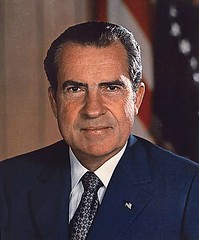
6766363664Richard Nixon1969-1974 Republican Environmental Protection Act; China visit; Moon Landing; Watergate35
6766363665Gerald Ford1974-1977 Republican Pardoning of Nixon; OPEC crisis36
6766363666Jimmy Carter1977-1981 Democrat stagflation / energy crisis; Iran hostage crisis; Camp David Accords37
6766363667Ronald Reagan1981-1989 Republican Conservative revolution; Iran-Contra scandal38
6766363668George H. W. Bush1989-1993 Republican Persian Gulf War39
6766363669Bill Clinton1993-2001 Democrat NAFTA; Lewinsky scandal and impreachment40
6766363670George W. Bush2001-2008 Republican War on terrorism; Patriot Act; Tax cuts; "No Child Left Behind"41
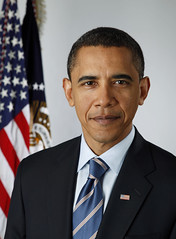
6766363671Barack Obama2008-2017 Democrat Affordable Care Act42
6766363672Donald Trump2017-? Republican "Make America Great Again"43

Pages

Subscribe to CourseNotes RSS

Need Help?

We hope your visit has been a productive one. If you're having any problems, or would like to give some feedback, we'd love to hear from you.

For general help, questions, and suggestions, try our dedicated support forums.

If you need to contact the Course-Notes.Org web experience team, please use our contact form.

Need Notes?

While we strive to provide the most comprehensive notes for as many high school textbooks as possible, there are certainly going to be some that we miss. Drop us a note and let us know which textbooks you need. Be sure to include which edition of the textbook you are using! If we see enough demand, we'll do whatever we can to get those notes up on the site for you!