| 4764626284 | What is an atom? | smallest unit of matter that retains it properties | | 0 |
| 4764628909 | What composes an atom? | neutrons, protons, electron | | 1 |
| 4764629748 | What is a proton? | a positively charged particle inside of the nucleus | | 2 |
| 4764630601 | What is an electron? | a negatively charged particle surrounding the nucleus | | 3 |
| 4764632432 | What does an electron form around the nucleus? | an electron cloud | | 4 |
| 4764633023 | What is a neutron? | neutral particle that form the nucleus of the atom | | 5 |
| 4764634208 | What is an atomic number? | The number of protons inside of the nucleus | | 6 |
| 4764635415 | What does the atomic number tells us about the electrons? | The electrons are the same number as the protons | | 7 |
| 4764636220 | How do you calculate atomic mass? | sum of the protons and the neutrons in the nucleus | | 8 |
| 4764637657 | What is a compound? | substance made up of 2 or more components in a fixed ratio | | 9 |
| 4764638843 | What is an element? | substance that can't be broken down by a chemical reaction | | 10 |
| 4764640845 | The most abundant elements in living things are: | oxygen, nitrogen, carbon, hydrogen | | 11 |
| 4764642032 | What are some examples of biologically important trace elements? | iron (vertebrates) and iodine (thyroid gland) | | 12 |
| 4764642846 | What are isotopes? What makes them different from each other? | different atomic forms of the same element; they have the same protons but not the same number of neutrons creating different masses | | 13 |
| 4764644885 | Name the 3 main types of bonds in order from most strong to least strong? | covalent, ionic, hydrogen | | 14 |
| 4764646635 | What is a covalent bond? | sharing of a pair of valence electrons by 2 atoms | | 15 |
| 4764646636 | What is a single bond? | a type of covalent bond that only shares one pair of electrons | | 16 |
| 4764648572 | What is a double bond? | a type of covalent bond that only shares two pairs of electrons | | 17 |
| 4764649767 | What is a non-polar covalent bond? | a bond where electrons are shared equally | | 18 |
| 4764650459 | What is a polar-covalent bond? | a bond where electrons are unequally distrbuted | | 19 |
| 4764651132 | What is an ionic bond? | tranferring of electrons to from bonds that take place between cations and anions | | 20 |
| 4764652985 | What is an cation? | a positively charged ion | | 21 |
| 4764653669 | What is an anion? | a negatively charged ion | | 22 |
| 4764655106 | What is a hydrogen bond? | noncovalent attraction between a hydrogen and an electronegative atom | | 23 |
| 4764657088 | Why is the periodic table set up the way it is? | it is organized by number of valence electrons in the outer shell; they share common properties | | 24 |
| 4764658188 | What are Van der Waals interactions? | individually weak attractions that occur only when atoms and molecules are close together | | 25 |
| 4764661634 | In what type of molecules can you see Van der Waals interactions? | VERY large molecules that can be broken apart easily | | 26 |
| 4764663029 | What's an example of a Van der Waals interactions that cannot be broken apart easily? | a Gecko sticking to a wall | | 27 |
| 4764664490 | How does a molecule's shape affects its function? | it determines the polarity of the molecule, determines what chemical reactions can take place and what bonds it may form | | 28 |
| 4764666346 | The linear shape does what to the molecule: | make it nonpolar | | 29 |
| 4764666921 | The bent shape does what to the molecule: | make it polar | | 30 |
| 4764669229 | The trigonal plane shape does what to the molecule: | make it polar | | 31 |
| 4764671374 | The tetrahedral shape does what to the molecule: | make it nonpolar | | 32 |
| 4764672009 | How does a reaction work? | making and breaking of chemical bonds between molecules or ions to reach chemical equilibrium | | 33 |
| 4764673114 | How do you read a chemical equation? | |  | 34 |
| 4764677847 | Organisms exchange matter to do what 3 things: | grow, reproduce and maintain order | | 35 |
| 4764679798 | What determines water's properties? | polarity and hydrogen bonds | | 36 |
| 4764680641 | What is fitness? | the ability to support life | | 37 |
| 4764682568 | What bond holds a hydrogen molecule together? | polar covalent bonds; WITHIN a water molecules | | 38 |
| 4764683477 | What is a polar molecule? | a molecule with unequal distribution of charge; in the case of water, oxygen is more electronegative so it "hogs" all the electrons | | 39 |
| 4764686334 | What bond holds hydrogen molecules to each other? | hydrogen bonds | | 40 |
| 4764687595 | What type of substances do hydrogen bonds happen to? | polar and ionic | | 41 |
| 4764688518 | What are the 4 emergent properties of water? | cohesion, high specific heat, insulation of bodies of water due to floating ice, and important solvent | | 42 |
| 4764689601 | What is cohesion? | linking of like water molecules | | 43 |
| 4764691358 | What does cohesive behavior describe? | the attraction to itself and other things | | 44 |
| 4764693378 | What is the cause of cohesion? | hydrogen bonds | | 45 |
| 4764693886 | What is adhesion? What do those substances HAVE to be? | clinging of water molecules to another substance; have to be polar | | 46 |
| 4764695516 | Why are cohesion and adhesion important? | they allow photosynthesis by taking a huge role in the transpiration in plants | | 47 |
| 4764697273 | What is surface tension? | measure of how hard it is to break the surface of a liquid | | 48 |
| 4764697986 | What is this related to? | cohesion | | 49 |
| 4764699326 | When can a bug or an object stand in the surface of water? | when the push of the water upwards > the push of the object into the water | | 50 |
| 4764701927 | What is specific heat? | heat required to raise or lower the temperature of 1 g of an object by 1 C | | 51 |
| 4764704837 | Describe what water High Specific Heat determines: | water gains and loses heat very slowly relative to other materials | | 52 |
| 4764706767 | What does water's HSH to for the environment? | keeps Earth's oceans temp stable to supports life in oceans and helps regulate planet's temp | | 53 |
| 4764708553 | What causes water's HSH? | hydrogen bonds; heat is absorbed when hydrogen bonds break and released when they form | | 54 |
| 4764711066 | Ice is denser than water. True or False? | false | | 55 |
| 4764712956 | What does the ice floating on top to for that body of water? | keeps large bodies of water from freezing solid, moderating temp; it disperses heat and protects wildlife | | 56 |
| 4764715694 | What type of substances will dissolve in water | polar and ionic | | 57 |
| 4764716843 | What does hydrophilic mean? | it "likes" water meaning it can dissolve | | 58 |
| 4764718974 | What types of bonds are hydrophilic? | polar covalent and ionic bonds | | 59 |
| 4764719932 | What does hydrophobic mean? | it "dislikes" meaning it can't dissolve | | 60 |
| 4764720828 | What types of bonds are hydrophobic? | non polar covalent bonds | | 61 |
| 4764722746 | Why is water an important solvent? | it allows for the distribution of nutrients | | 62 |
| 4764724631 | What is a hydration shell? | ion in a dissolved ionic compound is surrounded by a sphere of water molecules | | 63 |
| 4764726742 | Why is water a versatile solvent? | its polarity | | 64 |
| 4764728167 | What causes these emergent properties? | oxygen is more electronegative than hydrogen; it is a polar substance | | 65 |
| 4764729620 | Disassociation of water leads to: | acids and bases | | 66 |
| 4764735057 | What forms an acid? | excess H+ | | 67 |
| 4764735058 | What forms an base? | excess OH- | | 68 |
| 4764737615 | What is a buffer? | solutions that accept or donate a H+ | | 69 |
| 4764738159 | What is an example of a buffer? | carbonic acid | | 70 |
| 4764738846 | Why is carbonic acid important? | regulates pH changes in blood (7.4) an ocean (6.4) | | 71 |
| 4764740919 | Enzymes have to have what 2 specific things to function: | shape and pH | | 72 |
| 4785707323 | All ________ are__________;not all __________are_________ | enzymes, proteins; proteins, enzymes | | 73 |
| 4764742033 | What is denaturing? | when you distort an enzyme's shape or pH and is no longer functional | | 74 |
| 4764743493 | What is the conformation of an enzyme? | its shape | | 75 |
| 4764745711 | Small changes in enzymes to not affect the functionality. True or false? | false | | 76 |
| 4764747466 | Carbon moves through the environment to build: | lipids, carbohydrates, nucleic acid and proteins | | 77 |
| 4764750740 | What is carbon used in? | storage and cell formation | | 78 |
| 4764752368 | What does nitrogen build? | proteins and nucleic acids | | 79 |
| 4764752813 | What is phosphorus used for? | DNA and in certain lipids | | 80 |
| 4764756577 | In an environment, atoms... | cycle | | 81 |
| 4764757946 | What is vitalism? | idea that organic compounds are only in organisms; disproved when chemists synthesized these compounds | | 82 |
| 4764759375 | What is mechanism? | view that all natural phenomena are governed by physical/chemical laws (once you figure out how to make it work, you can replicate inside or outside the human body; emergent properties mess with this a little bit) | | 83 |
| 4764761071 | Who showed the abiotic synthesis of organisms? | Stanley Miller | | 84 |
| 4764762335 | What is abiotic synthesis? | taking something that is not alive and creating an organism from it | | 85 |
| 4764763400 | What does this idea support? | that abiotic synthesis of organic compounds could have been the origin of life (near a volcano) | | 86 |
| 4764765535 | Carbon is unparalleled in its ability to: | form large, complex and diverse molecules | | 87 |
| 4764796873 | 3 examples of molecules formed by carbon: | proteins, DNA, carbohydrates | | 88 |
| 4764797582 | What are organic compounds? | these contain hydrogen atoms as well as carbon atoms held together in a nonpolar covalent bond | | 89 |
| 4764799874 | Why is carbon so special? (4 things) | has 4 valence electrons to form up up to 4 covalent bonds; bonds can be single, double, or triple; can form large molecules; be ring-shaped or branched | | 90 |
| 4764817552 | What are functional groups? | components of organic molecules most commonly involved in chemical reactions | | 91 |
| 4764819174 | What gives the functional groups its unique properties? | their number and arrangement | | 92 |
| 4764820332 | What are the 7 functional groups? | hydroxyl, carbonyl, carboxyl, amine, sulfhydryl, phosphate, methyl | | 93 |
| 4764822921 | Significance of the hydroxyl group: | (OH-) form hydrogen bonds and make things POLAR and allows things to dissolve | | 94 |
| 4764825533 | Significance of the carbonyl group: | (CO) | | 95 |
| 4764826349 | Significance of the carboxyl group: | (COOH) make things acid by giving away a proton | | 96 |
| 4764827087 | Significance of the amine group: | (NH2): amino acids (bases) and has a carboxyl group | | 97 |
| 4764827919 | Significance of the sulfhydryl group: | (SH) in proteins they form disulfide bridges (strong covalent bond) to strengthen the structure of a protein | | 98 |
| 4764830030 | Significance of the phosphate group: | (PO4): POLAR, examples are ATP and DNA | | 99 |
| 4764831173 | Significance of the methyl group: | (CH3) fatty acids ends in this group | | 100 |
| 4764833273 | What does the image on the back of this flashcard represent? | hydroxyl |  | 101 |
| 4764839508 | What does the image on the back of this flashcard represent?? | carboxyl |  | 102 |
| 4764841188 | What does the image on the back of this flashcard represent??? | amine |  | 103 |
| 4764842702 | What does the image on the back of this flashcard represent???? | phosphate |  | 104 |
| 4764843963 | What does the image on the back of this flashcard represent????? | Sulfhydryl |  | 105 |
| 4764847122 | What is ATP? | (adenosine triphosphate) is the primary energy-transferring molecule in the cell | | 106 |
| 4768010775 | What determines the properties of a molecule? | sub-components and biological sequence of molecules | | 107 |
| 4768013621 | What is derived from a monomer's assembly? | structure and function | | 108 |
| 4768014277 | What other factor affects functionality? | directionality | | 109 |
| 4768015745 | Most macromolecules are... | polymers | | 110 |
| 4768016258 | What are polymers? | large chains of repeating chains of subunits called monomers | | 111 |
| 4768017828 | What is starch composed of? | glucose monomers | | 112 |
| 4768019582 | What creates polymers and what does it remove? | synthesis reactions (condensation and dehydration) and they remove water | | 113 |
| 4768020417 | What is hydrolysis? | split large molecules and add water | | 114 |
| 4775477880 | What are carbohydrates used for? | fueling and building material | | 115 |
| 4775479529 | 3 groups of carbohydrates: | monosaccharides, disaccharides, polysaccharides | | 116 |
| 4775482739 | What is a monosaccharide? | simple sugars; single monomers | | 117 |
| 4775483976 | Examples of monosaccharide: | glucose, fructose, galactose | | 118 |
| 4775484731 | What is a disaccharide? | complex sugars; two monomers joined | | 119 |
| 4775486260 | Examples of disaccharide: | sucrose, lactose, maltose | | 120 |
| 4775488199 | What is a polysaccharide? | complex sugars; polymers with many units; monomers of polymer is monosaccharide | | 121 |
| 4775489657 | Examples of polysaccharide: | starch, cellulose, glycogen | | 122 |
| 4775492109 | What kind of ratio do all carbohydrates have? | CH20 | | 123 |
| 4779713775 | Is a monosaccharide a carbohydrate? | yes | | 124 |
| 4779724522 | Components of sucrose: | glucose and fructose | | 125 |
| 4779725302 | Components of lactose: | glucose and galactose | | 126 |
| 4779725303 | Components of maltose: | glucose and glucose | | 127 |
| 4779729646 | Glucose is a _______ linkage | 1:4 | | 128 |
| 4779734083 | Components of starch and glycogen: | glucose monomers linked together | | 129 |
| 4779735052 | What is the difference between the structure of a starch and a glycogen? | starch is straight; glycogen is branched | | 130 |
| 4779736011 | What makes starch straight? | 1:4 linkages of glucose | | 131 |
| 4779736796 | What makes glycogen branched? | 1:6 linkages of glucose | | 132 |
| 4779747422 | 2 main functions of carbohydrates: | energy storage (short-term) and structural support | | 133 |
| 4779749764 | Starch is_________________ | short-term energy storage carbohydrate for plants | | 134 |
| 4779751304 | Glycogen is_________________ | short-term energy storage carbohydrate for animals (muscle and liver cells) | | 135 |
| 4779752120 | Fats are_________________ | long-term energy storage for animals | | 136 |
| 4779756194 | Cellulose is_________________ | major component of plant cell wall | | 137 |
| 4779757022 | Chitin is________________ | the exoskeleton of arthropods and cell walls of fungi | | 138 |
| 4779772971 | What makes cellulose different from starch? | different two ring forms of glucose (alpha and beta) | | 139 |
| 4779777112 | What is the form of cellulose? | beta glucose | | 140 |
| 4779777866 | What is the form of starch? | alpha glucose | | 141 |
| 4779778592 | What does beta glucose do to the form of the cell? | makes them straight | | 142 |
| 4779779498 | What does alpha glucose do to the form of the cell? | makes a spiral or helix | | 143 |
| 4779792764 | Why is it that starch and cellulose can't be digested both? | enzymes that digest (break apart) starch by hydrolysis can't hydrolyze beta linkages in cellulose | | 144 |
| 4779796045 | What does cellulose end up as in the human digestive tract? | as insoluble fiber | | 145 |
| 4779797139 | How can herbivores digest cellulose? | some microbes use enzymes to digest cellulose; herbivores (cows and termites) have symbiotic relations with these microbes | | 146 |
| 4779818573 | All _____ are _____ but not all _____ are _____ | fats, lipids, lipids, fats | | 147 |
| 4779826475 | All lipids are: | non polar and hydrophobic | | 148 |
| 4779828938 | What makes a lipid hydrophobic? | has a long hydrocarbon chains with no oxygen bonded to it | | 149 |
| 4779834992 | Are lipids polymers? | No, they have compounds | | 150 |
| 4779837746 | What type of group do they have? | carboxyl | | 151 |
| 4779847260 | What is the basic structure of all fatty acids? | triglycerides (3 carbon chain) (glycerol) | | 152 |
| 4779849034 | Examples: | waxes, oils, fats, steroids | | 153 |
| 4779850987 | What are the 2 types of fatty acids? | saturated and unsaturated | | 154 |
| 4779852660 | What makes a saturated fatty acid different from a unsaturated fatty acid? | saturated fatty acids don't have any carbon to carbon double bonds while unsaturated do (sometimes multiple) | | 155 |
| 4779854571 | At room temp, saturated fats are: | solid | | 156 |
| 4779855589 | At room temp, unsaturated fats are: | liquid | | 157 |
| 4779856579 | What are saturated fatty acids linked to? | cardiovascular diseases | | 158 |
| 4779858249 | What produces saturated fatty acids? | animals | | 159 |
| 4779858374 | What produces unsaturated fatty acids? | mostly plants | | 160 |
| 4779859874 | Examples of saturated fatty acids: | butter and lard | | 161 |
| 4779868649 | Examples of unsaturated fatty acids: | corn oil and olive oil | | 162 |
| 4779869642 | Major functions of lipids: | long-term energy storage, protection and insulation of organs, phospholipids, steroids | | 163 |
| 4779874091 | Where in the protection and insulation of lipids stored in? | adipose cells | | 164 |
| 4779875309 | What happens when phospholipids are added to water? | they self-assemble into a bilayer arrangement with hydrophobic tails pointing to the interior and hydrophilic outside | | 165 |
| 4779887519 | Examples of steroids: | cholesterol, estrogen, and testosterone | | 166 |
| 4779890426 | Why is cholesterol important? | common component of animal cell membrane | | 167 |
| 4780928618 | What are proteins? | Polymers made of amino acids monomers | | 168 |
| 4780929801 | 4 characteristics of amino acids: | alpha central carbon, carboxyl and amine group, R group (side chain), one hydrogen atom | | 169 |
| 4780932746 | What link amino acids? | peptide bonds that are formed by dehydration synthesis | | 170 |
| 4780933866 | Function depends on what 2 things: | order and number of amino acids | | 171 |
| 4780935949 | How many levels of protein structures? | 4 | | 172 |
| 4780937082 | What describes primary structure? | order that the amino acids are bonded together | | 173 |
| 4784526415 | What bonds primary structure? | peptide bonds | | 174 |
| 4784527549 | What are primary structures based on? | R groups that DNA code for | | 175 |
| 4780938460 | What describes secondary structure? | how a polypeptide chain will fold because of H bonding | | 176 |
| 4784533268 | Forms of secondary structure: | alpha helix and beta pleated sheet | | 177 |
| 4784530732 | How does an alpha helix secondary structure look like? | coiled | | 178 |
| 4784531968 | How does an beta pleated sheet secondary structure look like? | accordion | | 179 |
| 4780941867 | What does tertiary structure give the protein? | complex globular shape | | 180 |
| 4784539892 | What causes tertiary structure? | bending and grouping of R groups | | 181 |
| 4784536691 | What type of polypeptide form does a tertiary structure have to be? | fully folded | | 182 |
| 4780944334 | What do interactions of R groups cause? | difference in bending and grouping | | 183 |
| 4784542660 | Hardest structure to break apart: | primary | | 184 |
| 4784543709 | Why is primary structure harder to break apart? | because of the strong convalent bonds that keep them together | | 185 |
| 4780946838 | Examples of interactions of R groups: | hydrophobic interactions
van der wals interactions
hydrogen bonds
disulfide bridges | | 186 |
| 4780948374 | What is quaternary structure? | association of two or more polypeptide chains into a large protein | | 187 |
| 4780949765 | Example of a quaternary structure: | hemoglobin 4 polypeptide chains | | 188 |
| 4780951386 | Protein shape is crucial to_________________ | function | | 189 |
| 4784523532 | Does a quaternary structure function without the other? | No | | 190 |
| 4780952683 | What diseases can a misshapen protein cause? | sickle cell anemia | | 191 |
| 4780953990 | What do the sequence of amino acids determine? | protein's 3D shape | | 192 |
| 4780955382 | What are chaperonins? What do they create? | proteins that assist in proper folding of proteins; an isolated environment | | 193 |
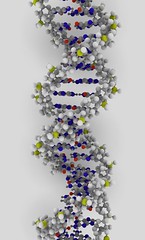
| 4780957131 | 2 types of nucleic acids: | DNA (deoxyribose nucleic acid) and RNA (ribose nucleic acid) | | 194 |
| 4780958796 | What are DNA and RNA composed of? | nucleotide monomers | | 195 |
| 4780960107 | What are the nucleotides? | nitrogen base (adenine, guanine, thymine, cytosine, urasil)
pentose sugar (5)
phosphate group | | 196 |
| 4784577673 | How does one bond and read a nucleic acid? | always bond a phosphate to a sugar and read it by the but of the sugar up; 3:5 | | 197 |
| 4780962197 | DNA deals with.... | heredity | | 198 |
| 4780963118 | Nucleotides in DNA and their pairs: | A-T, G-C | | 199 |
| 4780964378 | RNA deals with.... | a lot of different uses, protein-building | | 200 |
| 4780965736 | Nucleotides in RNA and their pairs: | A-U G-C | | 201 |