AP Notes, Outlines, Study Guides, Vocabulary, Practice Exams and more!

AP US History: American Pageant Chapter 6 Flashcards

Terms : Hide Images
7185681825George WashingtonVirginian, patriot, general, and president. Lived at Mount Vernon. Led the Revolutionary Army in the fight for independence. First President of the United States.0
7185681826Samuel de ChamplainSamuel de Champlain was a French explorer who sailed to the West Indies, Mexico, and Panama. He wrote many books telling of his trips to Mexico City and Niagara Falls. His greatest accomplishment was his exploration of the St. Lawrence River and his latter settlement of Quebec.1
7185681827Robert de La SalleRobert de La Salle was responsible for naming Louisiana. He was the first European to float down the Mississippi river to the tip from Canada and upon seeing the beautiful river valley named Louisiana after his king Louis XIV in 1682.2
7185681828William PittEnglish statesman who brought the Seven Years' War to an end (1708-1778)3
7185681829Antoine CadillacFrenchman who founded Detroit in 1701 to thwart English settlers making a play for the Ohio Valley.4
7185681830James WolfeHe was the British general whose success in the Battle of Quebec won Canada for the British Empire. Even though the battle was only fifteen minutes, Wolfe was killed in the line of duty. This was a decisive battle in the French and Indian War.5
7185681831Edward BraddockEdward Braddock was a British commander during the French and Indian War. He attempted to capture Fort Duquesne in 1755. He was defeated by the French and the Indians. At this battle, Braddock was mortally wounded.6
7185681832PontiacIndian Chief; led post war flare-up in the Ohio River Valley and Great Lakes Region in 1763; his actions led to the Proclamation of 1763; the Proclamation angered the colonists.7
7185681833Edict of Nantes1598 - Granted the Huguenots liberty of conscience and worship.8
7185681834QuebecFirst permanent French settlement in North America, founded by Samuel de Champlain9
7185681835HuguenotsThe Huguenots were a groups of French Protestants that lived from about 1560 to 1629. Protestantism was introduced into France between 1520 and 1523, and the principles were accepted by many members of the nobility, the intellectual classes, and the middle class. At first the new religious group was royally protected, but toward the end of the reign of King Francis I they were persecuted. Nevertheless, they continued to grow.10
7185681836Ohio River ValleyThe point of contention that sparked the French and Indian War. Both the French and British claimed it. They wanted the area because the rivers allowed for transportation.11
7185681837French and Indian WarWas a war fought by French and English on American soil over control of the Ohio River Valley-- English defeated French in1763. Historical Significance: established England as number one world power and began to gradually change attitudes of the colonists toward England for the worse.12
7185681838InvincibilityProclamation of 1763 New France13
7185681839CajunA descendant of French pioneers, chiefly in Louisiana, who in 1755 chose to leave Acadia rather than live under the British Crown.14
7185681840Iroquoisany member of the warlike North American Indian peoples formerly living in New York state15
7185681841AcadiansFrench settlers who would not pledge their loyalties to the British and were driven from their homes; cajuns of Louisiana are descendants of these people16
7185681842War of Spanish SuccessionThis was the war between France and Spain in order to unite the two states under one ruler, Phillip V17
7185681843Albany CongressA conference in the United States Colonial history form June 19 through July 11, 1754 in Albany New York. It advocated a union of the British colonies for their security and defense against French Held by the British Board of Trade to help cement the loyalty of the Iroquois League. After receiving presents, provisions and promises of Redress of grievances. 150 representatives if tribes withdrew without committing themselves to the British cause.18
7185681844Battle of Quebecturning point of war when Quebec surrendered to the French in 175919
7185681845JesuitsAlso known as the Society of Jesus; founded by Ignatius Loyola (1491-1556) as a teaching and missionary order to resist the spread of Protestantism.20
7185681846New FranceFrench colony in North America, with a capital in Quebec, founded 1608. New France fell to the British in 1763. (p. 489)21
7185681847Proclamation of 1763This was an English law enacted after gaining territory from the French at the end of the French and Indian War. It forbade the colonists from settling beyond the Appalachian Mountains. The Colonists were no longer proud to be British citizens after the enactment. This caused the first major revolt against the British.22

AP US History Presidents Flashcards

Terms : Hide Images
52839295191. George Washington1789-1797 None Farewell Address: warned against permanent foreign entanglements0
52839295202. John Adams1797-1801 Federalist Alien and Sedition Acts1
52839295213. Thomas Jefferson1801-1809 Republican Embargo Act2
52839295224. James Madison1809-1817 Republican War of 18123
52839295235. James Monroe1817-1825 Republican Era of Good Feelings4
52839295246. John Quincy Adams1825-1829 National Republican Corrupt Bargain (ironic because he was honest)5
52839295257. Andrew Jackson1829-1837 Democrat Bank War- Second Bank of the US6
52839295268. Martin Van Buren1837-1841 Democrat Divorce Bill7
52839295279. William H. Harrison1841 Whig First Whig President, died of pneumonia after giving a really long inaugural address in cold8
528392952810. John Tyler1841-1845 Whig Webster-Ashburton Treaty9
528392952911. James Knox Polk1845-1849 Democrat Mexican War10
528392953012. Zachary Taylor1849-1850 Whig opposed Compromise of 1850, died11
528392953113. Millard Fillmore1850-1853 Whig Compromise of 185012
528392953214. Franklin Pierce1853-1857 Democrat Kansas-Nebraska Act13
528392953315. James Buchanan1857-1861 Democrat voted the Homestead Act of 1860 because southern planters and northern industrialists opposed it14
528392953416. Abraham Lincoln1861-1865 Republican Emancipation Proclamation15
528392953517. Andrew Johnson1865-1869 National Union impeached for violating Tenure of Office Act16
528392953618. Ulysses S. Grant1869-1877 Republican Credit Mobilier scandal17
528392953719. Rutherford B. Hayes1877-1881 Republican Compromise of 187718
528392953820. James A. Garfield1881 Republican assassinated by a Stalwart19
528392953921. Chester A. Arthur1881-1885 Republican Pendleton Act20
528392954022. Grover Cleveland1885-1889 Democrat Interstate Commerce Act21
528392954123. Benjamin Harrison1889-1893 Republican Sherman Antitrust Act22
528392954224. Grover Cleveland1893-1897 Democrat Pullman Strike23
528392954325. William McKinley1897-1901 Republican Spanish American War24
528392954426. Theodore Roosevelt1901-1909 Republican Square Deal, AND Big Stick Diplomacy25
528392954527. William Howard Taft1909-1913 Republican Dollar Diplomacy26
528392954628. Woodrow Wilson1913-1921 Democrat League of Nations, "fourteen points"27
528392954729. Warren G. Harding1921-1923 Republican Teapot Dome Scandal28
528392954830. Calvin Coolidge1923-1929 Republican The man who builds a factory builds a temple29
528392954931. Herbert Hoover1929-1933 Republican Rugged Individualism30
528392955032. Franklin Roosevelt1933-1945 Democrat New Deal31
528392955133. Harry S. Truman1945-1953 Democrat Fair Deal32
528392955234. Dwight Eisenhower1953-1961 Republican Farewell Address: warned against too much influence given to the military-industrial complex33
528392955335. John F. Kennedy1961-1963 Democrat New Frontier34
528392955436. Lyndon B. Johnson1963-1969 Democrat Great Society35
528392955537. Richard M. Nixon1969-1974 Republican Detente36
528392955638. Gerald R. Ford1974-1977 Republican End of the Vietnam War37
528392955739. Jimmy Carter1977-1981 Democrat Camp David Accords38
528392955840. Ronald Reagan1981-1989 Republican Iran-Contra39
528392955941. George Bush1989-1993 Republican Persian Gulf War40
528392956042. Bill Clinton1993-2001 Democrat NAFTA41
528392956143. George W. Bush2001-2009 Republican Iraq War42
528392956244. Barack Obama2009-2017 Democrat Health Care Reform43

AP US History Chapter 12 Flashcards

Terms : Hide Images
8466424049coastal tradeThe domestic slave trade with routes along the Atlantic coast that sent thousands of slaves to sugar plantations in Louisiana and cotton plantations in the Mississippi Valley.0
8466424050inland systemThe slave trade system in the interior of the country that fed slaves to the Cotton South.1
8466424051Chattel principleA system of bondage in which a slave has the legal status of property and so can be bought and sold.2
8466424052benevolent mastersSlave owners who considered themselves committed to the welfare of their slaves.3
8466424053republican aristocracyThe Old South gentry that built impressive mansions, adopted the manners and values of the English landed gentry, and feared federal government interference with their slave property.4
8466424054"positive good" arguementAn argument in the 1830's that institution of slavery was a "positive good" because it subsidized an elegant lifestyle for the white elite and provided tutelage for genetically inferior Africans.5
8466424055gang-labor systemA system of work discipline used on southern cotton plantations in the mid-nineteenth century in which white overseers or black drivers supervised gangs of enslaved laborers to achieve greater productivity.6
8466424056slave societyA society in which the institution of slavery affects all aspects of life.7
8466424057AlamoThe mission in San Antonio where in 1836 Mexican forces under Santa Anna besieged and massacred American rebels who were fighting to make Texas independent of Mexico. American adventurers flocked to Texas to join the rebel forces.8
8466424058secret ballotForm of voting that allows the voter to enter a choice in privacy without having to submit a recognizable ballot or to voice the choice out loud to others.9
8466424059black ProtestantismA form of Protestantism that was devised by Christian slaves in the Chesapeake and spread to the Cotton South as result of the domestic slave trade. It emphasized the evangelical message of emotional conversion, ritual baptism, communal spirituality, and the idea that blacks were "children of God" and should be treated accordingly.10
8466424060task systemA system of labor common in the rice-growing regions of South Carolina in which a slave was assigned a daily task to complete and allowed to do as he wished upon its completion.11
8466424061Harriet JacobsSlave whose fear of sexual abuse from her master compelled her to hide in an attic where she could glimpse her children for seven years before she escaped to freedom in the north; wrote "Incidents in the Life of a Slave Girl".12
8466424062James Henry HammondA senator and slave owner form South Carolina who believed in the necessity of slaves in society and that blacks were inferior to the superior whites.13
8466424063Antonio Lopez de Santa AnnaMexican president who resented American encroachment on Texas lands and refused to grant independence to the American settlers in Texas; led brutal attack on the Alamo14
8466424064Stephen F. Austinthis man led 300 American families to settle in the Texas territory on land that his father had acquired15
8466424065Sam HoustonUnited States politician and military leader who fought to gain independence for Texas from Mexico and to make it a part of the United States (1793-1863)16

AP US History - Period 9: 1980-Present Flashcards

Terms : Hide Images
6768660820Reagan RevolutionThe policies of the first Reagan administration; based on *"supply side"* theory of growing the economy; Included: (1) Increased defense spending (2) Reduced social programs (3) Tax cuts0
6768660821Sandra Day O'ConnorFirst female Supreme Court Justice; appointed by Ronald Reagan in 1981.1
6768660822ReagonomicsRonald Reagan's economic program; founded on the belief that a capitalist system free from taxation and government involvement would be most productive, and that the prosperity of a rich upper class would "trickle down" to the poor.2
6768660823"Evil Empire"Ronald Reagan's nickname for the Soviet Union; illustrated an end to detente.3
6768660824Strategic Arms Reduction Talks (1982)Known as START; sought to reduce long-range nuclear missiles.4
6768660826Iran-Contra Affair (1986)Scandal that erupted after the Reagan administration sold weapons to Iran in hopes of freeing American hostages in Lebanon; money from the arms sales was used to aid the Contras (anti-Communist insurgents) in Nicaragua, even though Congress had prohibited this assistance.5
6768660827Strategic Defensive Initiative (1983)A.K.A. "Star Wars"; a satellite defensive system that would theoretically destroy incoming missiles.6
6768660829Mikhail GorbachevHead of the Soviet Union from 1985 to 1991. His liberalization effort improved relations with the West, but he lost power after his reforms led to the collapse of Communist governments in eastern Europe.7
6768660830PerestroikaA political movement within the Communist Party of the Soviet Union during 1980s; widely associated with the Soviet leader Mikhail Gorbachev. Its literal meaning is "restructuring", referring to the restructuring of the Soviet political and economic system.8
6768660831GlasnostThe policy of maximal publicity, openness, and transparency in the activities of all government institutions in the Soviet Union, together with freedom of information, introduced by Mikhail Gorbachev in the second half of the 1980s.9
6768697836tax cuts and deregulationMajor conservative aims during the Reagan and Bush years.10
6768702678North American Free Trade Agreement (1994)A multinational trade zone between the US, Mexico, and Canada in which most tariffs have been removed; Negotiated under Bush and enacted under Clinton.11
6768709505Affordable Care Act (2010)AKA "Obamacare"; Health care and health insurance reform signed into law by President Obama.12
6768813816Dodd-Frank (2010)Wall Street Reform and Consumer Protection Act; Reform and regulation of the financial system after the financial crisis of 2007-2008.13
6768821519Citizens United v. Federal Election Commission (2010)Political spending is a form of protected speech under the 1st amendment; Individuals, corporations, and unions can donate unlimited money to groups that make independent political expenditures.14
6768825144outsourcingSending business operations and industrial processes overseas where operating costs remain relatively low.15
6768855683Microsoft, Wikipedia, Google, Facebook, YouTube, iPodInnovations in computing, digital mobile technology, and the Internet transformed daily life, increased access to information, and led to new social behaviors and networks.16
6768857287Y2K bug (2000)A computer flaw that may have caused problems when dealing with dates beyond December 31, 1999.17
6768867198Wikileaks (founded 2010)The group has released a number of significant documents that have become front-page news items. Early releases included documentation of equipment expenditures and holdings in the Afghanistan war.18
6768869566Keystone Pipeline (commissioned 2010)Proposed pipeline that would transport oil derived from Canadian tar sands to refineries in the southern U.S.19
6768869567"fracking"hydraulic fracturing-using pressurized fluid to create fractures in rock and release natural gas or petroleum; Resulted in the US becoming self-sufficient oil producers.20
6768874154Occupy Wall Street (2011)A series of protests and sit-ins in response to the economic crisis of 2007-08 and rising income inequality.21
6768876320Tea Party movement (2009)22
6768934813Immigration Reform and Control Act (1986)Act that prohibits discrimination against job applicants on the basis of national origin or citizenship; establishes penalties for hiring illegal aliens and requires employers to establish each employee's identity and eligibility to work.23
6768936445No Child Left Behind (2002)Education reform under President George W. Bush.24
6769123507Defense of Marriage Act (1996)Defined marriage for federal purposes as the union of one man and one woman, and allowed states to refuse to recognize same-sex marriages granted under the laws of other states; Declared unconstitutional by the Supreme Court (United States v. Windsor [2013])25
6769126813United States v. Windsor (2013)A landmark civil rights case; Struck down the Defense of Marriage Act (1996) and declared "The federal government must recognize same-sex marriages that have been approved by the states."26
6769155611Gulf War (1990-1991)Code-named Operation Desert Shield and Operation Desert Storm; A war waged by coalition forces from 35 nations led by the United States against Iraq in response to Iraq's invasion and annexation of Kuwait.27
6769174268September 11 attacks (2001)The terrorist attack by Al Qaeda on the World Trade Center and Pentagon.28
6769177417War on TerrorIn the wake of attacks on the World Trade Center and the Pentagon, the United States launched military efforts against terrorism and lengthy, controversial conflicts in Afghanistan and Iraq.29
6769178791Department of Homeland Security (est. 2002)US federal agency created under George W. Bush to coordinate national efforts in the War on Terror.30
6769181974USA Patriot Act (2001)Strengthened federal government's power to conduct surveillance, perform searches, and detain individuals in order to cam bat terrorism; Raised questions about the protection of civil liberties.31
6769181975Guantanamo BaySite in Cuba of a US military base and military prison for detailing terrorists or suspected terrorists without trial; Considered as a major breach of human rights by Amnesty International.32

2017 AP US History Period 5 (1844-1877) Flashcards

Terms : Hide Images
5876170007Popular SovereigntyNotion that the sovereign people of a given territory should decide whether to allow slavery. Seemingly a compromise, it was largely opposed by Northern abolitionists who feared it would promote the spread of slavery to the territories.0
5876170008Fugitive Slave LawPassed as part of the Compromise of 1850, it set high penalties for anyone who aided escaped slaves and compelled all law enforcement officers to participate in retrieving runaways. Strengthened the antislavery cause in the North.1
5876170009Uncle Tom's CabinHarriet Beecher Stowe's widely read novel that dramatized the horrors of slavery. It heightened Northern support for abolitions and escalated the sectional conflict.2
5876170010New York Draft RiotsUprisings during the Civil War (1863), mostly of working-class Irish-Americans, in protest of the draft. Rioters were particularly incensed by the ability of the rich to hire substitutes or purchase exemptions.3
5876170011Emancipation Proclamation1863. Declared all slaves in rebelling states to be free but did not affect slavery in non-rebelling Border States. The Proclamation closed the door on possible compromise with the South and encouraged thousands of Southern slaves to flee to Union lines.4
5876170012Sherman's March to the Sea1864-1865. Union General William Tecumseh Sherman's destructive march through Georgia. An early instance of "total war", purposely targeting infrastructure and civilian property to diminish morale and undercut the Confederate War effort.5
5876170013Freedmans' Bureau1865-1872. Created to aid newly emancipated slaves by providing food, clothing, medical care, education, and legal support. Its achievements were never and depended largely on the quality of local administrators.6
5876170014Black Codes1865-1866. Laws passed throughout the South to restrict the rights of emancipated blacks, particularly with respect to negotiating labor contracts. Increased Norhterners' criticisms of President Andrew Johnson's lenient Reconstruction policies.7
5876170015KKK (Ku Klux Klan)An extremist, paramilitary, right-wing secret society founded in the mid-nineteenth century and revived during the 1920s. It was anti-foreign, anti-black, anti-Jewish, anti-pacifist, anti-Communist, anti-internationalist, anti-evolutionist, and anti-bootlegger, but pro-Anglo-Saxon and pro-Protestant. Its members, cloaked in sheets to conceal their identities, terrorized freedmen and sympathetic whites throughout the South after the Civil War. By the 1890s, Klan-style violence and Democratic legislation succeeded in virtually disenfranchising all Southern blacks.8
5876170016SharecroppingAn agricultural system that emerged after the Civil War in which black and white farmers rented land and residences from a plantation owner in exchange for giving him a certain "share" of each year's crop. Sharecropping was the dominant form of southern agriculture after the Civil War, and landowners manipulated this system to keep tenants in perpetual debt and unable to leave their plantation.9
5876170017Hayes-Tilden ElectionThe South conceded to let Hayes win the presidency because he agreed to pull out the troops.10
5876170018Compromise of 1850Admitted California as a free state, opened New Mexico and Utah to popular sovereignty, ended the slave trade (but not slavery itself) in Washington D.C., and introduced a more stringent fugitive slave law. Widely opposed in both the North and South, it did little to settle the escalating dispute over slavery.11
5876170019Kansas-Nebraska Act1854. Proposed that the issue of slavery be decided by popular sovereignty in the Kansas and Nebraska territories, thus revoking the 1820 Missouri Compromise. Introduced by Stephen Douglass in an effort to bring Nebraska into the Union and pave the way for a northern transcontinental railroad.12
5876170020Homestead Act1862. A federal law that gave settlers 160 acres of land for about $30 if they lived on it for five years and improved it by, for instance, building a house on it. The act helped make land accessible to hundreds of thousands of westward-moving settlers, but many people also found disappointment when their land was infertile or they saw speculators grabbing up the best land.13
5876170021Gettysburg Address1863. Abraham Lincoln's oft-quoted speech, delivered at the dedication of the cemetery at Gettysburg battlefield. In the address, Lincoln framed the war as a means to uphold the values of liberty.14
5876170022Appomattox Court HouseSite (city) where Robert E. Lee surrendered to Ulysses S. Grant in April 1865 after almost a year of brutal fighting throughout Virginia in the "Wilderness Campaign".15
587617002310% Reconstruction Plan1863. Introduced by President Lincoln, it proposed that a state be readmitted to the Union once 10 percent of its voters had pledged loyalty to the United States and promised to honor emancipation of slaves.16
587617002413th, 14th, 15th Amendments (Reconstruction Amendments)13th: Abolished slavery except for criminal punishment. 14th: Gave equal rights and government protection to all men. 15th: Secured suffrage for men.17
5876170025Radical RepublicansMost liberal part of the Republican Party. Desired political, economic, and social equality for African Americans. Wanted harsh punishment for the South after the Civil War. Became much more powerful after Andrew Johnson's impeachment.18
5876170026Election of LincolnAngered many people in the south who owned slaves because he wanted to end slavery. Won the election of 1860 but did not win the popular vote. South Carolina was happy at the outcome of the election because now it had a reason to secede.11 states in the south seceded and made themselves the Confederacy after the election.19
5876170027Abolitionist MovementThe movement to end the practice of slavery within the entirety of the United States.20
5876170028Anaconda PlanUnion war plan by Winfield Scott, called for blockade of southern coast, capture of Richmond, capture of the Mississippi River, and to take an army through heart of south.21
5876170029The American Party (The Know-Nothing Party)(1840s-1850s) This political party carried anti-immigrant sentiments against the Catholic and the Irish and saw some electoral success.22
5876170030Wilmot Proviso(1846) Proposal to prohibit slavery in any land acquired in the Mexican War. Never passed by both houses of Congress but helped fan the flame of sectional tension.23
5876170031Free-Soil Party(1848) Political party dedicated to stopping the expansion of slavery into new territories.24
5876170032Treaty of Guadalupe Hidalgo(1848) The Mexican government gave up the area of Texas and offered to sell the provinces of California and New Mexico as a result of its defeat in the Mexican-American War.25
5876170033Treaty of Fort Laramie(1851) The US government and the Plains Indians came to an agreement stating that the Indians would become confined to the Black Hills reservation in exchange for no more land being taken. In the future, this treaty was violated once gold was discovered in the Black Hills.26
5876170034Gadsden Purchase(1853) Agreement w/ Mexico that gave the US parts of present-day New Mexico & Arizona in exchange for $10 million; all but completed the continental expansion envisioned by those who believed in Manifest Destiny.27
5876170035Ostend Manifesto(1854) A declaration issued from Ostend, Belgium, by the U.S. ministers to England, France, and Spain, stating that the U.S. would be justified in seizing Cuba if Spain did not sell it to the U.S.28
5876170036Bleeding Kansas(1856-1861) A sequence of violent events involving abolitionists and pro-Slavery elements that took place in Kansas-Nebraska Territory. The dispute further strained the relations of the North and South, making civil war imminent.29
5876170037Dred Scott v. Sanford(1857) Supreme Court case that decided US Congress did not have the power to prohibit slavery in federal territories and slaves, as private property, could not be taken away without due process. Invalidated the Missouri Compromise.30
5876170038John Brown's Raid on Harper's Ferry(1859) John Brown led a raid on Harper's Ferry. He hoped to start a rebellion against slaveholders by arming enslaved African Americans. Brown was quickly defeated by citizens and federal troops. Brown became a villain to southerners who now thought northerners would use violence to end slavery as well as a martyr to some northerners who saw Brown as someone who sacrificed himself for the ideal of freedom for all.31
5876170039Election of 1860(1860) The United States presidential election of 1860 set the stage for the American Civil War. Hardly more than a month following Lincoln's victory came declarations of secession by South Carolina and other states, which were rejected as illegal by outgoing President James Buchanan and President-elect Lincoln.32
5876170040The Sand Creek Massacre(1864) US officials force the Cheyenne warriors to give up claims that had been promised to them. In retaliation, Chief Black Kettle led Cheyenne warriors in several raids on mining camps and local settlements. US forces responded by surprising 500 Cheyenne at Sand Creek -massacre left 270 Natives, mostly women and children, dead.33
5876170041Civil Rights Act of 1867(1867) Banned discrimination in public accommodations, prohibited discrimination in any federally assisted program, outlawed discrimination in most employment; enlarged federal powers to protect voting rights and to speed school desegregation.34
5876170042Thirteenth Amendment(1865) The constitutional amendment ratified after the Civil War that forbade slavery and involuntary servitude.35
5876170043Fourteenth Amendment(1868) Provided equal protection of the law to freed slaves. Representation for any state that withheld voting from African Americans would be reduced.36
5876170044Fifteenth Amendment(1870) Prohibited any state from denying citizens the right to vote on the grounds of race, color, or previous condition of servitude.37
5876170045Compromise of 1877(1877) It withdrew federal soldiers from their remaining position in the South, enacted federal legislation that would spur industrialization in the South, appointed Democrats to patronage positions in the south, appointed a Democrat to the president's cabinet, and allowed Rutherford B. Hayes to win the election. Marked the end of reconstruction.38
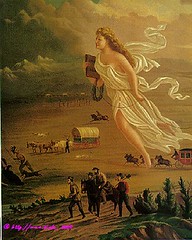
5876170046Manifest DestinyA notion held by a nineteenth-century Americans that the United States was destined to rule the continent, from the Atlantic the Pacific.39
5876170047Louis O'SullivanCoined the term Manifest Destiny in a newspaper article.40
5876170048Texas Annexation1845. Originally refused in 1837, as the U.S. Government believed that the annexation would lead to war with Mexico. Texas remained a sovereign nation. Annexed via a joint resolution through Congress, supported by President-elect Polk, and approved in 1845. Land from the Republic of Texas later became parts of NM, CO, OK, KS, and WY.41
5876170049"Fifty-Four Forty or Fight"The phrase used in James K Polk's 1844 presidential election dealing with the Oregon Territory. Polk's campaign used the phrase as a rallying cry for the United States to obtain all of Oregon Territory, including land claimed by the English, up through Northern Canada.42
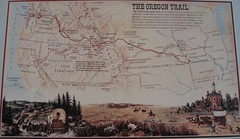
5876170050Oregon Trail2000 mile long path along which thousands of Americans journeyed to the Willamette Valley in the 1840's.43
5876170051Mountain MenFur trappers of the northwest who paved the way for continuous settlement of the great west44
5876170052California Gold Rush1849. Gold discovered in California attracted a rush of people all over the country and world to San Francisco; arrival of the Chinese; increased pressure on federal government to establish a stable government45
5876170053Mexican American War1846 - 1848. President Polk declared war on Mexico over the dispute of land in Texas. At the end, American ended up with 55% of Mexico's land, called the Mexican Cession.46
5876170054Republican Party1854. Established by anti-slavery Whigs and Democrats, "free-soilers" and reformers from the Northwest met and formed party in order to keep slavery out of the territories.47
5876170055Stephen A. DouglasSenator from Illinois who ran for president against Abraham Lincoln and was a leading voice in the debates over slavery and its expansion before the Civil War. Wrote the Kansas-Nebraska Act and the Freeport Doctrine.48
5876170056Freeport DoctrineStated that exclusion of slavery in a territory (where it was legal) could be accomplished by the refusal of the voters to enact any laws that would protect slave property. Stated by Stephen Douglass during the Lincoln-Douglass debates, eventually contributed to his loss in the 1860 presidential election as Democrats believed he had walked back the gains made with the Dred Scott v. Sanford decision.49
5876170057Abraham Lincoln16th President of the United States saved the Union during the Civil War and emancipated the slaves; was assassinated by Booth (1809-1865)50
5876170058secessionFormal withdrawal of states or regions from a nation51
5876170059habeas corpusPetition requiring law enforcement officers to present detained individuals before the court to examine the legality of the arrest. Protects individuals from arbitrary state action. Suspended by Lincoln during the Civil War.52
5876170060sectionalismTerm used to describe the growing differences between the regions of the United States, especially the North and South, leading up to the Civil War.53
5876170061Robert E. LeeConfederate general who had opposed secession but did not believe the Union should be held together by force. Military genius whose aggressiveness made him a fearsome opponent throughout the Civil War.54
5876170062Fort SumterFederal fort in the harbor of Charleston, South Carolina; the confederate attack on the fort marked the start of the Civil War.55
5876170063Battle of AntietamA battle near a sluggish little creek, it proved to be the bloodiest single day battle in American History with over 26,000 lives lost in that single day. Prevented an Confederate invasion of Maryland.56
5876170064Battle of VicksburgGrant besieged the city from May 18 to July 4, 1863, until it surrendered, yielding command of the Mississippi River to the Union effectively splitting the South in two.57
5876170065Battle of GettysburgA large battle in the American Civil War, took place in southern Pennsylvania from July 1 to July 3, 1863. Union General George G. Meade led an army of about 90,000 men to victory against General Robert E. Lee's Confederate army of about 75,000. Proved to be a significant turning point in the war because of the loss of about 1/3 of Lee's army.58
5876170066Ulysses S. GrantAn American general and the eighteenth President of the United States (1869-1877). He achieved international fame as the leading Union general in the American Civil War.59
5876170067William Tecumseh ShermanUnion General who destroyed South during "march to the sea" from Atlanta to Savannah; example of total war and "scorched-earth" military tactics.60
5876170068Thomas "Stonewall" JacksonHe was a confederate general who was known for his fearlessness in leading rapid marches, bold flanking movements, and furious assaults. He earned his nickname at the battle of first bull run for standing courageously against union fire. During the battle of Chancellorsville his own men accidently mortally wounded him.61
5876170069martial lawRule by the army instead of the elected government (such as in the South as a result of the Military Reconstruction Act)62
5876170070emergency powersWide-ranging powers a president may exercise during times of crisis or those powers permitted the president by Congress for a limited time.63
5876170071Radical ReconstructionName given to the period when Congress, which was controlled by Republicans, took over Reconstruction efforts. When southerners balked at some of the more moderate reforms proposed, more radical republicans started to gain more power and pass more legislation.64
5876170072Military Reconstruction Act1867. Divided the South into five districts and placed them under military rule; required Southern States to ratify the 14th amendment; guaranteed freedmen the right to vote in convention to write new state constitutions65
5876170073Freedmen's Bureau1865. Organization (turned government agency) run by the army to care for and protect southern Blacks after the Civil War, sometimes including settling them on confiscated confederate lands.66
5876170074Election of 1876Ended reconstruction because neither candidate had an electoral majority. The Democrat Sam Tilden loses the election to Rutherford B Hayes, Republican, was elected, and then ended reconstruction as he secretly promised.67
5876170075carpetbaggerA northerner who went to the South immediately after the Civil War; especially one who tried to gain political advantage or other advantages from the disorganized situation in southern states (as viewed from the southern perspective).68
5876170076scalawagA derogatory term for southerners who were working with the North to buy up land from desperate southerners; sometimes used in a general way by southerners criticizing other southerners who had northern sympathies.69
5876170077Nat TurnerA black preacher who in 1831 led a slave revolt Virginia that killed 60 whites. 100+ blacks were executed as a result. The rebellion was significant as it worried southern whites that larger slave rebellions were possible and therefore stricter rules were needed.70
5876170078Sojourner TruthA freed black woman who became a leader in the fight for black emancipation and women's rights.71
5876170079Frederick DouglassAn escaped slave who spoke publicly for the abolitionist cause. He wrote his autobiography, depicting the harsh realities of Southern slavery. He also looked to politics to help abolish slavery.72
5876170080Cotton KingdomAreas in the south where cotton farming developed because of the high demand for cotton and soon dominated the economy.73
5876170081Gag ResolutionStrict rule passed by pro-southern Congressmen in 1836 to prohibit all discussion of slavery in the House of Representatives74
5876170082American Colonization SocietyCreated in 1817 and supported by some blacks and whites, its purpose was to transport African Americans back to Africa once they had been freed from slavery. Idea was based on the idea that whites and blacks could not live as equals in America, even if slavery were abolished.75
5876170083James K. PolkDemocratic president after John Tyler who was best known for policies that promoted Manifest Destiny and expansionism.76
5876170084John C. FremontAn American military officer, explorer, the first candidate of the Republican Party for the office of President of the United States (1856), and the first presidential candidate of a major party to run on a platform in opposition to slavery.77
5876170085Bear Flag Revolt(1846) a revolt that took place during the Mexican-American War when 500 Americans (Anglos) in Mexican California took the city of Sonoma, CA in the spirit of Manifest Destiny and declared California to be an independent nation.78
5876170086Liberty PartyA former political party in the United States; formed in 1839 to oppose the practice of slavery; merged with the Free Soil Party in 1848.79
5876170087John C. CalhounSenator who argued for states' rights for the South. He asked for slavery to be left alone, slaves to be returned to the South, and state balance to be kept intact.80
5876170088William H. SewardCongressman of the "Young Guard" who fiercely opposed slavery and argued that Americans should follow a "higher law" (God's law) over the Constitution when it came to the issue of slavery.81
5876170089Henry ClayKnown as the "Great Compromiser"; senator who pushed for compromise between the North and South and worked with Stephen Douglas; major figure in the passing of both the Missouri Compromise (1820) and Compromise of 1850.82
5876170090Underground RailroadSecret system of safe houses along a route that led many slaves to freedom in the North and eventually Canada.83
5876170091"Fire Eaters"Refers to a group of extremist pro-slavery politicians from the South who urged the cessation of southern states.84
5876170092Charles SumnerSenator who spoke out for black freedom and racial equality post-Civil War. Publicly beaten by Preston Brooks for speaking out against the violence in Kansas, an event that marked increasing tensions between the North and South prior to the Civil War.85
5876170093Roger TaneyChief Justice of the Supreme Court who wrote an opinion in the 1857 Dred Scott case that declared the Missouri compromise unconstitutional, thereby legally preventing Congress from prohibiting slavery in new territories (and made Popular Sovereignty illegal).86
5876170094Jefferson DavisPresident of the Confederate States of America prior to and during the Civil War.87
5876170095self-determinationThe ability of a people/government to determine their own course or future using their own free will.88
5876170096Pottawatomie Creek MassacreIn reaction to the sacking of Lawrence (Kansas) by pro-slavery forces, John Brown and a band of abolitionist settlers killed five pro-slavery settlers north of Pottawatomie Creek in Franklin County, Kansas.89
5876170097Lecompton ConstitutionSupported the existence of slavery in the proposed state and protected rights of slaveholders. It was rejected by Kansas, making Kansas an eventual free state (and was a factor in spurring violence there).90
5876170098Lincoln-Douglas DebatesLincoln challenged Stephen Douglas to debates during the senatorial race of 1858 which became a public referendum on the issue of slavery.91
5876170099Clara BartonLaunched the American Red Cross in 1881. An "angel" in the Civil War, she was a hospital nurse that treated the wounded in the field.92
5876170100Border StatesSouthern states that never chose secession and joined the Confederacy during the Civil War (Missouri, Kentucky, Maryland, and Deleware).93
5876170101Andrew Johnson17th President of the United States, A Southerner form Tennessee, as V.P. when Lincoln was killed, he became president. He opposed radical Republicans who passed Reconstruction Acts over his veto. The first U.S. president to be impeached, he survived the Senate removal by only one vote.94
5876170102John Wilkes BoothSoutherner who assasinated Abraham Lincoln on April 14, 186595
5876170103George B. McClellanFirst commander of the Army of the Potomac; well-known for being a master at training an army; was replaced several times by President Lincoln during the Civil War because of his timidness and sometimes outright refusal to send his army into battle.96
5876170104Merrimack (the Virginia) v. MonitorA battle between for first "ironclad" naval vessels, marking a new age in naval warfare.97
5876170105CopperheadsNickname for Northerners who were pro-Confederacy.98
5876170106First Battle of Bull Run (Battle of Manassas)(July 1861) first major conflict of the Civil War. Southern victory led to overconfidence.99
5876170107Thaddeus StevensRadical Republican congressman from Pennsylvania who defended runaway slaves in court for free and insisted on being buried in a black cemetery; hated white Southerners. Leading figure on the Joint Committee on Reconstruction and for the social equality of African Americans.100
5876170108Wade-Davis BillBill pushed by Congress in 1864 that required 50 percent of a state's voters take the oath of allegiance and demanded stronger safe-guards for emancipation than proposed in Lincoln's 10 percent plan. Pocket-vetoed by Lincoln.101
587617010910 Percent PlanLincoln's plan for re-admitting the Southern states into the Union: a state could be reintegrated into the Union when 10 percent of its voters in the presidential election of 1860 had taken an oath of allegiance to the United States and pledged to abide by emancipation.102
5876170110Civil Rights Act (1866)A Reconstruction bill which gave which granted citizenship to African Americans and weakened the poliferation of Black Codes in the South.103
5876170111RedeemersLargely former slave owners who were the bitterest opponents of the Republican program in the South. Staged a major counterrevolution to "redeem" the south by taking back southern state governments. Their foundation rested on the idea of racism and white supremacy.104
5876170112Ku Klux KlanThe "Invisible Empire of the South", founded in Tennessee in 1866, made up of embittered white Southerners who resented the success and ability of Black legislators. They would terrorize, mutilate, and even murder "upstart" blacks or their supporters to "keep them in their place".105
5876170113"Seward's Folly"Refers to the United States' Secretary of State William Seward's decision to purchase the Alaskan territory from Russia in 1867. At the time, Seward's decision to buy the land was regarded as a terrible one by many critics in the United States.106

Moore's AP US History Chapter 1 Flashcards

Terms : Hide Images
4820813679Canadian ShieldFirst part of the North American landmass to emerge above sea level.0
4820813680IncasHighly advanced South American civilization that occupied present day Peru until it was conquered by Spanish forces in 1532. They developed sophisticated agricultural techniques, such as terrace farming, in order to sustain large, complex societies in the Andes Mountains.1
4820813681Aztecs NativeAmerican empire that controlled present day Mexico until 1521, when they were conquered by Spanish Hernan Cortez. The Aztecs maintained control over their vast empire through a system of trade and tribute. They came to be known for their advances in mathematics and writing and their use of human sacrifices in religious ceremonies.2
4820813682Nation-statesThe term commonly describes these societies in which political legitimacy and authority overlay a large degree of cultural commonality.3
4820813683Cahokia (ca. 1100 C.E.)This is a Mississippian (mound builders) settlement near present day St. Louis that was home to as many as 25,000 Native Americans.4
4820813684Three-sister farmingAgricultural system used by North American Indians as early as 1000 C.E.; maize (corn), beans, and squash were grown together to maximize harvests.5
4820813685MiddlemenIn trade, those dealers who operate between the original producers of goods and retail merchant that sell to consumers. After the 11th Century, European exploration was largely driven by a desire to get Asian goods without paying heavy tolls to Muslim middlemen.6
4820813686CaravelSmall vessel with a high deck and three triangular sails. Caravels could sail into the wind, allowing European sailors to explore the western shores of Africa, which had previously been made inaccessible due to prevailing winds on the homeward journey.7
4820813687PlantationLarge scale agricultural enterprise growing commercial crops (crops for sale) and usually employing slave labor. European settlers established plantations in Africa, South America, the Caribbean (West Indies), and the American South.8
4820813688Columbian ExchangeThe transfer of goods, crops, and diseases between New and Old World societies after 1492.9
4820813689Treaty of Tordesillas 1494Signed by Spain and Portugal, it divided the territories of the New World. Spain received most of the territories in the Americas, and Portugal was compensated with titles to lands in Africa and Asia.10
4820813690EncomiendaSpanish government's policy to "commend" or give Indians to certain colonists in return for the promise to Christianize them. This was part of a broader effort to subdue Indian tribes in the West Indies and in North America.11
4820813691Noche triste (June 30, 1520)Called the "sad night" when the Aztecs attacked Hernan Cortez and his forces in the Aztec capital of Tenochtitlan, killing hundreds. Cortez laid siege to the city the following year, beginning the fall of the Aztec empire and bringing three centuries of Spanish rule.12
4820813692CapitalismEconomic system characterized by private property, generally free trade, and open markets. European colonization of the Americas helped bring about Europe's transition to capitalism.13
4820813693MestizosPeople of mixed Indian and European heritage, notably in Mexico.14
4820813694Conquistadores16th Century Spaniards who settles across the Americas, from present day Colorado to Argentina, resulting in the eventual conquest of the Aztec and Incan empires.15
4820813695Battle of Acoma (1599)The battle was fought between Spaniards under Don Juan Onate and the Pueblo Indians in present day New Mexico. The Spanish crushed the Pueblo peoples and established the territory of New Mexico in 1609.16
4820813696Pope's Rebellion (1680)Pueblo Indian rebellion that drove Spanish settlers from New Mexico.17
4820813697Black LegendFalse notion that Spanish conquerors did little but butcher the Indians and steal their gold in the name of Christianity.18
4820813700Christopher ColumbusGenovese (Italian) explorer who stumbled upon the West Indies in 1492 while in search of a new water route to Asia. Columbus19
4820813701Francisco CoronadoSpanish conquistador who ventured from western Mexico through present day Arizona and up to present day Kansas in search of the fabled "city of gold". No gold was discovered.20
4820813702Francisco PizarroSpanish conquistador who crushed the Incas in 1532 and founded the city of Lima, Peru.21
4820813703Bartolome de Las CasasReform minded Spanish missionary who worked to abolish the encomienda system and documented the mistreatment of Indians in the Spanish colonies.22
4820813704Hernan CortezSpanish conquistador who defeated the Aztec empire and claimed Mexico for Spain.23
4820813705Malinche (Dona Marina)Indian slave woman who was an interpreter for Hernan Cortez on his conquest of the Aztecs. She later married one of Cortez's soldiers, who took her with him back to Spain.24
4820813706MoctezumaLast of the Aztec rulers, who saw his powerful empire crumble under the force of the Spanish invasion led by Hernan Cortez.25
4820813707Giovanni Caboto (John Cabot)Italian explorer sent by England's King Henry VII to explore the northeastern coast of North America in 1497 and 1498.26
4820813708Robert de La SalleFrench explorer who led an expedition down the Mississippi River in the 1680s.27
4820813709Father Junipero SerraFranciscan priest who established the chain of missions along the California coast, beginning in San Diego in 1769, with the goal to convert the native peoples to Christianity and civilize them.28

AMSCO AP US History Chapter 12 Flashcards

Terms : Hide Images
5404967656manifest destinyThe belief that the United States had a divine mission to extend its power and civilization across the breadth of North America. (p. 230)0
5404967657TexasThe Republic of Texas was an independent nation, it's annexation was by a joint resolution of Congress, supported by President-elect Polk, was approved in 1845. Land from the Republic of Texas later became parts of New Mexico, Colorado, Oklahoma, Kansas, and Wyoming. (p. 233)1
5404967658Stephen AustinKnown as the Father of Texas, led the second and ultimately successful colonization of the region by bringing 300 families from Missouri. (p. 231)2
5404967659Antonio Lopez de Santa AnnaA Mexican general and dictator, who dominated Mexican politics for a quarter of a century. He was elected president, but didn't serve; instead he overthrew the government and established himself as a dictator. He commanded the Mexican army that stormed The Alamo during the Texas Revolution of 1835 and 1836 and killed all 187 defenders, but he was shortly afterward defeated and captured by Sam Houston's Texans.3
5404967660Sam HoustonUnited States politician and military leader who fought to gain independence for Texas from Mexico and to make it a part of the United States; First president of the Republic of Texas4
5404967661Alamomission and fort that was the site of a siege and battle during the Texas Revolution, which resulted in the massacre of all its defenders; the event helped galvanize the Texas rebels and eventually led to their victory at the Battle of San Jacinto and independence from Mexico.5
5404967662John TylerHe was elected Vice President, then he became the tenth president (1841-1845) when Harrison died. He was responsible for the annexation of Mexico after receiving a mandate from Polk. He opposed many parts of the Whig program for economic recovery. (p. 231)6
5404967663Aroostook WarAn undeclared confrontation in 1838-39 between the United States and Great Britain (lumbermen) over the international boundary between British North America (Canada) and Maine. The dispute resulted in a mutually accepted border between the state of Maine and the provinces of New Brunswick and Quebec.7
5404967664Webster-Ashburton TreatyIn this 1842 treaty US Secretary of State Daniel Webster and British ambassador Lord Alexander Ashburton created a treaty splitting New Brunswick territory into Maine and British Canada. It also settled the boundary of the Minnesota territory. (p. 232)8
5404967665Oregon territoryFor twenty years, the British and the United States agreed to jointly occupy this region. But in the mid-1840s this region became a political issue in the United States, with many expansionists willing to risk war to get all of the territory, including present-day British Columbia (54 40 or fight!). In 1846, Britain and the United States agreed to extend the 49th Parallel, forming the modern border between Canada and the United States. The settlers quickly applied for territorial status, which Congress granted in 1849. The territory was gradually split up, and in 1859, it—with its present borders—became the 33rd state. (p. 232)9
5404967666Fifty-four Forty or FightThe slogan of the supporters of James K. Polk's plan for Oregon. They wanted the border of the territory to be on 54' 40° and were willing to fight Britain about it. Eventually 49 degrees was adopted as the border and there was no violence. (p. 232)10
5404967667James K. PolkThe eleventh U.S. president (1845-1849). Polk was a slave owning southerner dedicated to Democratic party. In 1844, he was a "dark horse" candidate for president. He favored American expansion, especially advocating the annexation of Texas, California, and Oregon. He was a protege of Andrew Jackson. (p. 232)11
5404967668Mexican War (1846-1847)an armed conflict between the United States and Mexico from 1846 to 1848 because U.S. annexation of Texas, which Mexico considered part of its territory despite the 1836 Texas Revolution. Whig Party and anti-slavery elements strongly opposed. The War forced Mexican give Alta California and New Mexico in exchange for $18 million. Mexico accepted the Rio Grande as its national border, and the loss of Texas.12
5404967669Zachary TaylorCommander of the Army of Occupation on the Texas border. He took the Army into the disputed territory between the Nueces and Rio Grande Rivers and built a fort on the north bank of the Rio Grande River. When the Mexican Army tried to capture the fort, his force engaged in is a series of engagements that led to the Mexican War. His victories in the war and defeat of Santa Ana made him a national hero.13
5404967670Stephen KearneyHe was another leader in command during the Mexican War (although had an army smaller than Taylor's). He led a small army that captured Santa Fe successfully. He then went to California to help in the invasion there.14
5404967671John C. FremontOverthrew Mexican rule in northern California (June 1846) and proclaimed California to be an independent republic.15
5404967672California; Bear Flag RepublicIn June 1846 John C. Fremont quickly overthrew Mexican rule in Northern California to create this independent republic. (p. 234)16
5404967673Winfield ScottA general selected to invade central Mexico. The army of 14,000 under his command succeeded in taking the coastal city of Vera Cruz and then captured Mexico City in September 1847. (p. 234)17
5404967674Treaty of Guadalupe HidalgoTreaty that ended the Mexican War in 1848. Under its terms Mexico gave up all claims to Texas north of the Rio Grande and ceded California and the Utah and New Mexico territories to the United States. The United States paid Mexico fifteen million dollars and assumed responsibility for any claims of American citizens against Mexico. (p. 234)18
5404967675Mexican CessionHistorical name for the former Mexican provinces of California and New Mexico that was ceded to the U.S. by Mexico in 1848 under the Treaty of Guadalupe Hidalgo following the Mexican-American War. It leads to slavery debate and breakup of Union. (p 234)19
5404967676Wilmot ProvisoIn 1846, the first year of the Mexican War, this bill would forbid slavery in any of the new territories acquired from Mexico. the bill passed the House twice, but was defeated in the Senate. (p. 234)20
5404967677Ostend ManifestoThe United States offer to purchase Cuba from Spain. When the plan leaked to the press in the United States it provoked an angry reaction from antislavery members of Congress, forcing President Pierce to drop the scheme. (p. 236)21
5404967678Franklin PierceHe was the fourteenth president. (p. 236)22
5404967679Walker ExpeditionAn expedition by a southern adventurer who tried to take Baja California from Mexico in 1853. He took over Nicaragua in 1855 to develop a proslavery empire. His scheme collapsed when he was killed by Honduran authorities. (p. 236)23
5404967680Clayton-Bulwer TreatyAn 1850 treaty between the U.S. and Great Britain agreeing that neither country would try to obtain exclusive rights to a canal across the Isthmus of Panama. (p. 236)24
5404967681Gadsden PurchaseIn 1853 the U.S. acquired land (present day southern New Mexico and Arizona) from Mexico for $10 million. (p. 236)25
5404967682Great American DesertIn the 1850s and 1860s these lands between the Mississippi River and the Pacific Coast, this vast arid territory included the Great Plains, the Rocky Mountains, and the Western Plateau. (p. 236)26
5404967683mountain menThe first non-native people to open the Far West. These fur trappers who spent most of their time in the Rocky Mountains, included James Beckwourth, Jim Bridger, Kit Carson, and Jedediah Smith. (p. 237)27
5404967684overland trailsThe long and arduous trek usually began in St. Joseph or Independence Missouri or in Iowa and followed the river valleys through the Great Plains, months later, the wagon trains would finally reach the foothills of the Rockies or face the hardships of the southwestern deserts. Disease was a much greater threat than Indian attack.28
5404967685mining frontierThe discovery of gold in California in 1848 caused the first flood of newcomers to the West. A series of gold strikes and silver strikes in what became the states of Colorado, Nevada, Idaho, Montana, Arizona, and South Dakota kept a steady flow of hopeful young prospectors pushing into the West. (p. 237)29
5404967686gold rush; silver rushThe gold rush to California (1848-1850) was followed by gold or silver rushes in Colorado, Nevada, the Black Hills of the Dakotas, and other western territories, created a mining boom. (p 237)30
5404967687farming frontierIn the 1830s and 1840s pioneer families moved west to start homesteads and begin farming. Government programs allowed settlers to purchase inexpensive parcels of land. (p. 237)31
5404967688urban frontierWestern cities that arose as a result of railroads, mineral wealth, and farming. They included San Francisco, Denver, and Salt Lake City. (p. 238)32
5404967689Elias HoweThe U.S. inventor of the sewing machine, which moved much of clothing production from the home to factories. (p. 238)33
5404967690Samuel F. B. MorseIn 1844 he invented the electric telegraph which allowed communication over longer distances. (p. 238)34
5404967691federal land grantsIn 1850 the U.S. government gave 2.6 million acres of federal land to build the Illinois Central railroad from Lake Michigan to Gulf of Mexico. (p. 238)35
5404967692industrial technologyAfter 1840 industrialization spread to Northeast, new factories produced shoes, sewing machines, ready-to-wear clothing, firearms, precision tools, and iron products. (p. 238)36
5404967693railroadsThis became America's largest industry, it required immense amounts of capital and labor and gave rise to complex business organizations. Local and state governments gave the industry tax breaks and special loans to finance growth. (p. 238)37
5404967694foreign commerce; exports and importsThe growth in manufactured goods as well as in agriculture products caused a significant growth of exports and imports. Other factors also players a role in the expansion of US trade during this time. (p. 238, 239)38
5404967695Matthew C. Perry; JapanCommodore of the U.S. Navy who was sent by federal government to persuade Japan to open up a port for trade. (p. 239)39
5404967696Panic of 1857Financial crash sharply lowered Midwest farmers prices and cause unemployment in the Northern cities. The South was not affected as much because cotton prices remained high. (p. 239)40

Jens AP US History Period 5 Flashcards

Terms : Hide Images
9048198875Popular SovereigntyNotion that the sovereign people of a given territory should decide whether to allow slavery. Seemingly a compromise, it was largely opposed by Northern abolitionists who feared it would promote the spread of slavery to the territories.0
9048198876Fugitive Slave LawPassed as part of the Compromise of 1850, it set high penalties for anyone who aided escaped slaves and compelled all law enforcement officers to participate in retrieving runaways. Strengthened the antislavery cause in the North.1
9048198877Uncle Tom's CabinHarriet Beecher Stowe's widely read novel that dramatized the horrors of slavery. It heightened Northern support for abolitions and escalated the sectional conflict.2
9048198878New York Draft RiotsUprisings during the Civil War (1863), mostly of working-class Irish-Americans, in protest of the draft. Rioters were particularly incensed by the ability of the rich to hire substitutes or purchase exemptions.3
9048198879Emancipation Proclamation1863. Declared all slaves in rebelling states to be free but did not affect slavery in non-rebelling Border States. The Proclamation closed the door on possible compromise with the South and encouraged thousands of Southern slaves to flee to Union lines.4
9048198880Sherman's March to the Sea1864-1865. Union General William Tecumseh Sherman's destructive march through Georgia. An early instance of "total war", purposely targeting infrastructure and civilian property to diminish morale and undercut the Confederate War effort.5
9048198881Freedmans' Bureau1865-1872. Created to aid newly emancipated slaves by providing food, clothing, medical care, education, and legal support. Its achievements were never and depended largely on the quality of local administrators.6
9048198882Black Codes1865-1866. Laws passed throughout the South to restrict the rights of emancipated blacks, particularly with respect to negotiating labor contracts. Increased Norhterners' criticisms of President Andrew Johnson's lenient Reconstruction policies.7
9048198883KKK (Ku Klux Klan)An extremist, paramilitary, right-wing secret society founded in the mid-nineteenth century and revived during the 1920s. It was anti-foreign, anti-black, anti-Jewish, anti-pacifist, anti-Communist, anti-internationalist, anti-evolutionist, and anti-bootlegger, but pro-Anglo-Saxon and pro-Protestant. Its members, cloaked in sheets to conceal their identities, terrorized freedmen and sympathetic whites throughout the South after the Civil War. By the 1890s, Klan-style violence and Democratic legislation succeeded in virtually disenfranchising all Southern blacks.8
9048198884SharecroppingAn agricultural system that emerged after the Civil War in which black and white farmers rented land and residences from a plantation owner in exchange for giving him a certain "share" of each year's crop. Sharecropping was the dominant form of southern agriculture after the Civil War, and landowners manipulated this system to keep tenants in perpetual debt and unable to leave their plantation.9
9048198885Hayes-Tilden ElectionThe South conceded to let Hayes win the presidency because he agreed to pull out the troops.10
9048198886Compromise of 1850Admitted California as a free state, opened New Mexico and Utah to popular sovereignty, ended the slave trade (but not slavery itself) in Washington D.C., and introduced a more stringent fugitive slave law. Widely opposed in both the North and South, it did little to settle the escalating dispute over slavery.11
9048198887Kansas-Nebraska Act1854. Proposed that the issue of slavery be decided by popular sovereignty in the Kansas and Nebraska territories, thus revoking the 1820 Missouri Compromise. Introduced by Stephen Douglass in an effort to bring Nebraska into the Union and pave the way for a northern transcontinental railroad.12
9048198888Homestead Act1862. A federal law that gave settlers 160 acres of land for about $30 if they lived on it for five years and improved it by, for instance, building a house on it. The act helped make land accessible to hundreds of thousands of westward-moving settlers, but many people also found disappointment when their land was infertile or they saw speculators grabbing up the best land.13
9048198889Gettysburg Address1863. Abraham Lincoln's oft-quoted speech, delivered at the dedication of the cemetery at Gettysburg battlefield. In the address, Lincoln framed the war as a means to uphold the values of liberty.14
9048198890Appomattox Court HouseSite (city) where Robert E. Lee surrendered to Ulysses S. Grant in April 1865 after almost a year of brutal fighting throughout Virginia in the "Wilderness Campaign".15
904819889110% Reconstruction Plan1863. Introduced by President Lincoln, it proposed that a state be readmitted to the Union once 10 percent of its voters had pledged loyalty to the United States and promised to honor emancipation of slaves.16
904819889213th, 14th, 15th Amendments (Reconstruction Amendments)13th: Abolished slavery except for criminal punishment. 14th: Gave equal rights and government protection to all men. 15th: Secured suffrage for men.17
9048198893Radical RepublicansMost liberal part of the Republican Party. Desired political, economic, and social equality for African Americans. Wanted harsh punishment for the South after the Civil War. Became much more powerful after Andrew Johnson's impeachment.18
9048198894Election of LincolnAngered many people in the south who owned slaves because he wanted to end slavery. Won the election of 1860 but did not win the popular vote. South Carolina was happy at the outcome of the election because now it had a reason to secede.11 states in the south seceded and made themselves the Confederacy after the election.19
9048198895Abolitionist MovementThe movement to end the practice of slavery within the entirety of the United States.20
9048198896Anaconda PlanUnion war plan by Winfield Scott, called for blockade of southern coast, capture of Richmond, capture of the Mississippi River, and to take an army through heart of south.21
9048198897The American Party (The Know-Nothing Party)(1840s-1850s) This political party carried anti-immigrant sentiments against the Catholic and the Irish and saw some electoral success.22
9048198898Wilmot Proviso(1846) Proposal to prohibit slavery in any land acquired in the Mexican War. Never passed by both houses of Congress but helped fan the flame of sectional tension.23
9048198899Free-Soil Party(1848) Political party dedicated to stopping the expansion of slavery into new territories.24
9048198900Treaty of Guadalupe Hidalgo(1848) The Mexican government gave up the area of Texas and offered to sell the provinces of California and New Mexico as a result of its defeat in the Mexican-American War.25
9048198901Gadsden Purchase(1853) Agreement w/ Mexico that gave the US parts of present-day New Mexico & Arizona in exchange for $10 million; all but completed the continental expansion envisioned by those who believed in Manifest Destiny.26
9048198902Ostend Manifesto(1854) A declaration issued from Ostend, Belgium, by the U.S. ministers to England, France, and Spain, stating that the U.S. would be justified in seizing Cuba if Spain did not sell it to the U.S.27
9048198903Bleeding Kansas(1856-1861) A sequence of violent events involving abolitionists and pro-Slavery elements that took place in Kansas-Nebraska Territory. The dispute further strained the relations of the North and South, making civil war imminent.28
9048198904Dred Scott v. Sanford(1857) Supreme Court case that decided US Congress did not have the power to prohibit slavery in federal territories and slaves, as private property, could not be taken away without due process. Invalidated the Missouri Compromise.29
9048198905John Brown's Raid on Harper's Ferry(1859) John Brown led a raid on Harper's Ferry. He hoped to start a rebellion against slaveholders by arming enslaved African Americans. Brown was quickly defeated by citizens and federal troops. Brown became a villain to southerners who now thought northerners would use violence to end slavery as well as a martyr to some northerners who saw Brown as someone who sacrificed himself for the ideal of freedom for all.30
9048198906Election of 1860(1860) The United States presidential election of 1860 set the stage for the American Civil War. Hardly more than a month following Lincoln's victory came declarations of secession by South Carolina and other states, which were rejected as illegal by outgoing President James Buchanan and President-elect Lincoln.31
9048198907Civil Rights Act of 1867(1867) Banned discrimination in public accommodations, prohibited discrimination in any federally assisted program, outlawed discrimination in most employment; enlarged federal powers to protect voting rights and to speed school desegregation.32
9048198908Thirteenth Amendment(1865) The constitutional amendment ratified after the Civil War that forbade slavery and involuntary servitude.33
9048198909Fourteenth Amendment(1868) Provided equal protection of the law to freed slaves. Representation for any state that withheld voting from African Americans would be reduced.34
9048198910Fifteenth Amendment(1870) Prohibited any state from denying citizens the right to vote on the grounds of race, color, or previous condition of servitude.35
9048198911Compromise of 1877(1877) It withdrew federal soldiers from their remaining position in the South, enacted federal legislation that would spur industrialization in the South, appointed Democrats to patronage positions in the south, appointed a Democrat to the president's cabinet, and allowed Rutherford B. Hayes to win the election. Marked the end of reconstruction.36
9048198912Manifest DestinyA notion held by a nineteenth-century Americans that the United States was destined to rule the continent, from the Atlantic the Pacific.37
9048198913Louis O'SullivanCoined the term Manifest Destiny in a newspaper article.38
9048198914Texas Annexation1845. Originally refused in 1837, as the U.S. Government believed that the annexation would lead to war with Mexico. Texas remained a sovereign nation. Annexed via a joint resolution through Congress, supported by President-elect Polk, and approved in 1845. Land from the Republic of Texas later became parts of NM, CO, OK, KS, and WY.39
9048198915"Fifty-Four Forty or Fight"The phrase used in James K Polk's 1844 presidential election dealing with the Oregon Territory. Polk's campaign used the phrase as a rallying cry for the United States to obtain all of Oregon Territory, including land claimed by the English, up through Northern Canada.40
9048198916Oregon Trail2000 mile long path along which thousands of Americans journeyed to the Willamette Valley in the 1840's.41
9048198917California Gold Rush1849. Gold discovered in California attracted a rush of people all over the country and world to San Francisco; arrival of the Chinese; increased pressure on federal government to establish a stable government42
9048198918Mexican American War1846 - 1848. President Polk declared war on Mexico over the dispute of land in Texas. At the end, American ended up with 55% of Mexico's land, called the Mexican Cession.43
9048198919Republican Party1854. Established by anti-slavery Whigs and Democrats, "free-soilers" and reformers from the Northwest met and formed party in order to keep slavery out of the territories.44
9048198920Stephen A. DouglasSenator from Illinois who ran for president against Abraham Lincoln and was a leading voice in the debates over slavery and its expansion before the Civil War. Wrote the Kansas-Nebraska Act and the Freeport Doctrine.45
9048198921Freeport DoctrineStated that exclusion of slavery in a territory (where it was legal) could be accomplished by the refusal of the voters to enact any laws that would protect slave property. Stated by Stephen Douglass during the Lincoln-Douglass debates, eventually contributed to his loss in the 1860 presidential election as Democrats believed he had walked back the gains made with the Dred Scott v. Sanford decision.46
9048198922Abraham Lincoln16th President of the United States saved the Union during the Civil War and emancipated the slaves; was assassinated by Booth (1809-1865)47
9048198923secessionFormal withdrawal of states or regions from a nation48
9048198924habeas corpusPetition requiring law enforcement officers to present detained individuals before the court to examine the legality of the arrest. Protects individuals from arbitrary state action. Suspended by Lincoln during the Civil War.49
9048198925sectionalismTerm used to describe the growing differences between the regions of the United States, especially the North and South, leading up to the Civil War.50
9048198926Robert E. LeeConfederate general who had opposed secession but did not believe the Union should be held together by force. Military genius whose aggressiveness made him a fearsome opponent throughout the Civil War.51
9048198927Fort SumterFederal fort in the harbor of Charleston, South Carolina; the confederate attack on the fort marked the start of the Civil War.52
9048198928Battle of AntietamA battle near a sluggish little creek, it proved to be the bloodiest single day battle in American History with over 26,000 lives lost in that single day. Prevented an Confederate invasion of Maryland.53
9048198929Battle of GettysburgA large battle in the American Civil War, took place in southern Pennsylvania from July 1 to July 3, 1863. Union General George G. Meade led an army of about 90,000 men to victory against General Robert E. Lee's Confederate army of about 75,000. Proved to be a significant turning point in the war because of the loss of about 1/3 of Lee's army.54
9048198930Ulysses S. GrantAn American general and the eighteenth President of the United States (1869-1877). He achieved international fame as the leading Union general in the American Civil War.55
9048198931William Tecumseh ShermanUnion General who destroyed South during "march to the sea" from Atlanta to Savannah; example of total war and "scorched-earth" military tactics.56
9048198932Thomas "Stonewall" JacksonHe was a confederate general who was known for his fearlessness in leading rapid marches, bold flanking movements, and furious assaults. He earned his nickname at the battle of first bull run for standing courageously against union fire. During the battle of Chancellorsville his own men accidently mortally wounded him.57
9048198933martial lawRule by the army instead of the elected government (such as in the South as a result of the Military Reconstruction Act)58
9048198934emergency powersWide-ranging powers a president may exercise during times of crisis or those powers permitted the president by Congress for a limited time.59
9048198935Radical ReconstructionName given to the period when Congress, which was controlled by Republicans, took over Reconstruction efforts. When southerners balked at some of the more moderate reforms proposed, more radical republicans started to gain more power and pass more legislation.60
9048198936Military Reconstruction Act1867. Divided the South into five districts and placed them under military rule; required Southern States to ratify the 14th amendment; guaranteed freedmen the right to vote in convention to write new state constitutions61
9048198937Freedmen's Bureau1865. Organization (turned government agency) run by the army to care for and protect southern Blacks after the Civil War, sometimes including settling them on confiscated confederate lands.62
9048198938Election of 1876Ended reconstruction because neither candidate had an electoral majority. The Democrat Sam Tilden loses the election to Rutherford B Hayes, Republican, was elected, and then ended reconstruction as he secretly promised.63
9048198939carpetbaggerA northerner who went to the South immediately after the Civil War; especially one who tried to gain political advantage or other advantages from the disorganized situation in southern states (as viewed from the southern perspective).64
9048198940scalawagA derogatory term for southerners who were working with the North to buy up land from desperate southerners; sometimes used in a general way by southerners criticizing other southerners who had northern sympathies.65
9048198941Gag ResolutionStrict rule passed by pro-southern Congressmen in 1836 to prohibit all discussion of slavery in the House of Representatives66
9048198942James K. PolkDemocratic president after John Tyler who was best known for policies that promoted Manifest Destiny and expansionism.67
9048198943John C. FremontAn American military officer, explorer, the first candidate of the Republican Party for the office of President of the United States (1856), and the first presidential candidate of a major party to run on a platform in opposition to slavery.68
9048198944Bear Flag Revolt(1846) a revolt that took place during the Mexican-American War when 500 Americans (Anglos) in Mexican California took the city of Sonoma, CA in the spirit of Manifest Destiny and declared California to be an independent nation.69
9048198945Liberty PartyA former political party in the United States; formed in 1839 to oppose the practice of slavery; merged with the Free Soil Party in 1848.70
9048198946John C. CalhounSenator who argued for states' rights for the South. He asked for slavery to be left alone, slaves to be returned to the South, and state balance to be kept intact.71
9048198947William H. SewardCongressman of the "Young Guard" who fiercely opposed slavery and argued that Americans should follow a "higher law" (God's law) over the Constitution when it came to the issue of slavery.72
9048198948Henry ClayKnown as the "Great Compromiser"; senator who pushed for compromise between the North and South and worked with Stephen Douglas; major figure in the passing of both the Missouri Compromise (1820) and Compromise of 1850.73
9048198949Underground RailroadSecret system of safe houses along a route that led many slaves to freedom in the North and eventually Canada.74
9048198950"Fire Eaters"Refers to a group of extremist pro-slavery politicians from the South who urged the cessation of southern states.75
9048198951Charles SumnerSenator who spoke out for black freedom and racial equality post-Civil War. Publicly beaten by Preston Brooks for speaking out against the violence in Kansas, an event that marked increasing tensions between the North and South prior to the Civil War.76
9048198952Jefferson DavisPresident of the Confederate States of America prior to and during the Civil War.77
9048198953self-determinationThe ability of a people/government to determine their own course or future using their own free will.78
9048198954Lecompton ConstitutionSupported the existence of slavery in the proposed state and protected rights of slaveholders. It was rejected by Kansas, making Kansas an eventual free state (and was a factor in spurring violence there).79
9048198955Lincoln-Douglas DebatesLincoln challenged Stephen Douglas to debates during the senatorial race of 1858 which became a public referendum on the issue of slavery.80
9048198956Border StatesSouthern states that never chose secession and joined the Confederacy during the Civil War (Missouri, Kentucky, Maryland, and Deleware).81
9048198957Andrew Johnson17th President of the United States, A Southerner form Tennessee, as V.P. when Lincoln was killed, he became president. He opposed radical Republicans who passed Reconstruction Acts over his veto. The first U.S. president to be impeached, he survived the Senate removal by only one vote.82
9048198958George B. McClellanFirst commander of the Army of the Potomac; well-known for being a master at training an army; was replaced several times by President Lincoln during the Civil War because of his timidness and sometimes outright refusal to send his army into battle.83
9048198959CopperheadsNickname for Northerners who were pro-Confederacy.84
9048198960First Battle of Bull Run (Battle of Manassas)(July 1861) first major conflict of the Civil War. Southern victory led to overconfidence.85
9048198961Thaddeus StevensRadical Republican congressman from Pennsylvania who defended runaway slaves in court for free and insisted on being buried in a black cemetery; hated white Southerners. Leading figure on the Joint Committee on Reconstruction and for the social equality of African Americans.86
9048198962Wade-Davis BillBill pushed by Congress in 1864 that required 50 percent of a state's voters take the oath of allegiance and demanded stronger safe-guards for emancipation than proposed in Lincoln's 10 percent plan. Pocket-vetoed by Lincoln.87
904819896310 Percent PlanLincoln's plan for re-admitting the Southern states into the Union: a state could be reintegrated into the Union when 10 percent of its voters in the presidential election of 1860 had taken an oath of allegiance to the United States and pledged to abide by emancipation.88
9048198964Civil Rights Act (1866)A Reconstruction bill which gave which granted citizenship to African Americans and weakened the poliferation of Black Codes in the South.89
9048198965RedeemersLargely former slave owners who were the bitterest opponents of the Republican program in the South. Staged a major counterrevolution to "redeem" the south by taking back southern state governments. Their foundation rested on the idea of racism and white supremacy.90
9048198966Ku Klux KlanThe "Invisible Empire of the South", founded in Tennessee in 1866, made up of embittered white Southerners who resented the success and ability of Black legislators. They would terrorize, mutilate, and even murder "upstart" blacks or their supporters to "keep them in their place".91
9048198967"Seward's Folly"Refers to the United States' Secretary of State William Seward's decision to purchase the Alaskan territory from Russia in 1867. At the time, Seward's decision to buy the land was regarded as a terrible one by many critics in the United States.92

AP US History Chapter 6/Brinkley Flashcards

AMSCO United States History 2015 Edition Chapter 6

Terms : Hide Images
5652494789James Madison1. "Father of the Constitution". 2. solved the questions of sovereignty and limiting power with the separation of power and checks and balances. 3. Contributed to the Federalist papers.0
5652494790Alexander HamiltonOne of the authors of the Federalist Papers. He favored a strong central government. He was appointed by washington as secretary of the treasury. He also desird the creation of a national bank.1
5652494791FederalistsPolitical party that supported the constitution. They supported a centralized & economically sound government. Had the support of Alexander Hamilton, James Madison, John Jay, Ben Franklin and loosely George Washington. better organized than anti-federalists feared disorder, anarchy, chaos, unchecked power of the masses2
5652494792Anti-FederalistPolitical party in opposition to the constitution. They believed the constitution violated the principles of the revolution. They were concerned that the constitution lacked a bill of rights and gave government too much power feared the dangers of concentrated power and that the gov would abuse the citizens' rights like england3
5652494793Bill of RightsThe first ten amendments (changes to the Constitution) were added to protect the rights of individual citizens. Nine dealt with basic rights. The tenth reserved state power for anything not specifically withheld from or delegated to the federal government.4
5652494794Kentucky and Virginia ResolutionsTwo states passed resolutions that argued states had the right to nullify laws passed at the federal level. it was unsuccessful.5
5652494795National bank tariffs; excise tariffsFavored by Federalists in North as way to fund government/protect businesses; opposed by South and farmers6
5652494796Checks and balancesDesigned to keep one branch of government from dominating the other7
5652494797Great CompromiseA compromise made at the constitutional convention of 1787. Stated that their would be a 2 house legislature with one house represented by population and each slave would count as 3/5ths of a person in both taxation and representation. The upper house would have 2 representatives per state regardless of population. population: house of reps equal representation: senate aka Connecticut compromise-- compromise of VA and NJ plan8
5652494798House of RepresentativesRepresentation in the House would be based on population of each state9
5652494799SenateTwo people per state, regardless of size10
56524948003/5ths Compromise3/5's of a state's slave population would be counted for representation and direct taxation11
5652494801Electoral college systemProcess by which a President is elected in the US12
5652494802Legislative branchThe branch of government that makes laws13
5652494803CongressLegislative branch; House and Senate14
5652494804CabinetTerm for chiefs of departments appointed by Washington constitution does not specify how many there should/should not be. first 3 were state (jefferson), treasury (Hamilton), and war (knox)15
5652494805Judiciary ActEstablished a Supreme Court with one chief justice and five associate justices16
5652494806Federal courtsCourts created by the Judiciary Act judiciary act of 1789- gave details to what constitution listed about judicial branch17
5652494807Supreme CourtUltimate court in the US had the power to make final decisions in cases involving constitutionality of state laws18
5652494808Democratic-Republican PartyRival to Federalists; opposed strong central government; led by Jefferson19
5652494809John AdamsIn 1796 he was a Federalist who was elected as the second president.20
5652494810Revolution of 1800Election in which Democratic-Republicans peacefully took power from the Federalists.21
5652494811French RevolutionDemocratic-Republican's felt we were obligated to support the French.22
5652494812Proclamation of NeutralityIn 1793 Washington announced US as neutral in the war between England and France23
5652494813Jay's Treatyestablish American Sovereignty over the entire Northwest Territory and produced a satisfactory commercial relationship with britain.24
5652494814Pinckney TreatySpain agreed to open lower Mississippi River and New Orleans to US trade & conceded to prevent indian attacks across the border of FL.25
5652494815Articles of ConfederationAmerica's original governing document. - Established a very weak central government and strong state governments. This government was favored by those terrified of tyrannical central government.26
5652494816The Virginia PlanA plan for new government with three branches, Executive, Legislative, and Judicial. According to this plan the legislative branch would have 2 houses. The lower house would represent the states based on population, the upper house would be appointed by the lower house. Favored by large states, disliked by small states.27
5652494817The New Jersey PlanA plan proposing a "federal" not "national" government. This plan would have a one house legislature with equal representation for each house but with more ability to tax and regulate commerce. Favored by small states, disliked by large states.28
5652494818Federalist PapersSeries of widely published essays written by Alexander Hamilton, John Jay, and James Madison under the pseudonym Publius. They defended the constitution to the public attempting to get them to want to ratify the constitution29
5652494819First national elections in 1789George Washington elected to the presidency unanimously. John Adams became Vice-President. April 30, 1789 Inauguration.30
5652494820Judiciary Act of 1789An act that provided a Supreme Court with six justices, thirteen district courts and three circuit courts of appeals. The act also gave the Supreme Court final decision in cases involving the constitutionality of state laws.31
5652494821National BankHamilton proposed this to stabilize and unify the American banking system. In 1791 the bank began operations controversial bc constitution did not assigned it so some people argued that it was not legal. Hamilton argued that it was necessary and that the constitution did not specifically prohibit it32
5652494822RepublicansBecause of the rise of the Federalist party headed by Hamilton, it's opposition formed the (Democratic) Republican party. Key figures were Thomas Jefferson and James Madison.33
5652494823Whiskey Rebellion of 1794Farmers in western PA refused to pay the excice tax on whiskey, directly breaking federal law. The also terrorized tax collectors. Washington organized an army of 15,000 and personally led the troops to PA....rebellion quickly ceased.34
5652494824Constitution and the IndiansThe constitution only vaguely mentions indians and leaves their place in the new nation unclear. They are not citizens but are not foreign countries like britain and france.35
5652494825Election of 1796Washington did not run for presidency. The Republican party had Thomas Jefferson. The Federalist party was split between John Adams and Thomas Pinckney. Adams won by three electoral votes.36
5652494826The Alien ActThis act discouraged immigation and encouraged foreigners already in the country to leave. It put new obstacles in the way of citizenship and strengthened the president's hand in dealing with foreigners.37
5652494827The Sedition ActThis act allowed the government to prosecute anyone who committed "libelous or treasonous acts" against the government. Different people thought different things treasonous so the government could basically prosecute anyone who did not agree with them.38
5652494828Judiciary Act 1801Federalists reduced number of supreme court judges and then flooded the court system with federalist judges so that they could maintain control over one branch of government during the republican dominated political era to come.39
5652550540compromise on slaverycongress could not tax exports and could not impose a duty of more than 10 dollars per imported slave and they had no authority to stop the slave trade for 20 years40
5652570530why was the question of sovereignty so difficult to resolve?how could both state and national governments exercise sovereignty at the same time? could not decide where ultimate sovereignty lies decided that sovereignty came from the people this neither state nor national gov was truly sovereign. people were fearful of a tyrannical government, but there also needed to be a powerful national government bc not having one failed in the articles of conferderation41
5652606510federalismpower divided between states and federal government power at all levels of gov flowed ultimately from the people42
5652672114separation of powersdivided power among the branches so that one branch would not be more powerful than the other43
5652848442positives of the national bankrestored public credit bonds of US were selling at home and abroad at brices above their face value speculators reaped huge profits from this^^ manufacturers profited from the tariffs and merchants in seaports benefited from the new banking system44
5652869314negatives of the national bankfarmers had to bear a disproportionate tax burden- pay property taxes and tax on distillers initiated by hamilton. many believed the system served the the interest of wealthy elites bc they controlled the money in the bank (one reason people opposed the bank)45
5652901042why did Thomas J and Madison disagree with federalistsrepublicans (their party) believed that farming and small property owners were crucial to the economy and federalists believed in centralized society and strong, large industries.46
5666341781citizen genetfrench diplomatic representative who went to charleston and tried to convince shipwconers to aid the french when us was trying to remain neutral47
5666367836quasi warUS created a navy to fight french ships forming an ally with britain in the war with france. came to a peaceful end48

Pages

Subscribe to CourseNotes RSS

Need Help?

We hope your visit has been a productive one. If you're having any problems, or would like to give some feedback, we'd love to hear from you.

For general help, questions, and suggestions, try our dedicated support forums.

If you need to contact the Course-Notes.Org web experience team, please use our contact form.

Need Notes?

While we strive to provide the most comprehensive notes for as many high school textbooks as possible, there are certainly going to be some that we miss. Drop us a note and let us know which textbooks you need. Be sure to include which edition of the textbook you are using! If we see enough demand, we'll do whatever we can to get those notes up on the site for you!