

AP LANG VOCAB Flashcards
Terms : Hide Images
| 7277347180 | apostrophe | interrupts the discussion, addresses directly to a person or thing EX: it's |  | 0 |
| 7277350875 | assonance | similar vowel sounds repeated in successive words containing different consonants EX:" That cat sat back" |  | 1 |
| 7277354185 | asyndeton | consists of omitting conjunctions between words, phrases, or clauses EX:" I came, I played, I won" |  | 2 |
| 7277357023 | blank verse (poetry) | a poem with no rhyme, but does have iambic pentameter |  | 3 |
| 7277359777 | cacophony | a harsh, discordant mixture of sounds EX:" the jaws that bite, the claws that catch" |  | 4 |
| 7277361801 | caesura | a break, a pause, usually in the middle of the verse, marked by double vertical lines EX:"to be or not to be- that is the question" |  | 5 |
| 7277369802 | caricature | a picture, description exaggerating the peculiarities or defects a person or thing has |  | 6 |
| 7277375398 | colloquialism | a word or phrase that is not formal or literary, typically used in ordinary conversation EX:"sick dude" |  | 7 |
| 7277379517 | canon | a general law, rule by which something is judged EX: shakesphere | 8 | |
| 7277381645 | conceit | a fanciful expression in writing or speech; an elaborate metaphor EX:"sleeping like a log" |  | 9 |
| 7277385222 | concrete language | identifies things perceived through senses EX: soft, red, loud, bitter | 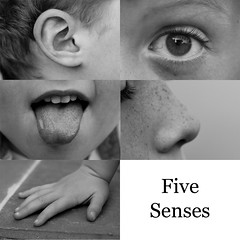 | 10 |
| 7277386769 | connotation | implied by a word apart from the thing which it describes explicitly EX: "you're a dog" |  | 11 |
| 7277389539 | consonance | refers to repetitive sounds produced by consonants within a sentence or phrase EX: "pitter-patter" |  | 12 |
| 7277392283 | deduction | a method of reasoning from the general to the specific EX: "if all humans are mortal, and i am human, than i am mortal" |  | 13 |
| 7277394955 | denoation | literal meaning of a word in contrast to its associated meaning EX: Ben is adventurous | 14 | |
| 7277400658 | diction | style of speaking or writing determine do by the choice of words by the speaker or writer EX: slang |  | 15 |
| 7277403905 | dissonance | use of harsh sounding, unusual, or impolite words in poetry to create a disturbing effect EX: "my 5 year old brother is smarter than you" |  | 16 |
| 7277407626 | dramatic irony | expressed through a works structure: An audiences awareness of the situation EX: in a scary movie, audience knows killers in the house |  | 17 |
| 7277412993 | emotional appeal | a method of persuasion that's designed to create an emotional response EX: dog shelter commercials |  | 18 |
| 7277463429 | aphorism | an observation that contains a general truth EX: "if it aint broke dont fix it" | 19 | |
| 7474395844 | epigraph | A brief quotation found at the beginning of a literary work, reflective of theme. | 20 | |
| 7474411938 | enjambed | the running on of the thought from one line, couplet, or stanza to the next without a syntactical break. | 21 | |
| 7474420290 | epistrophe | Repetition of the same word or group of words at the ends of successive clauses |  | 22 |
| 7474429070 | epithet | A descriptive word or phrase occurring with or in place of the name of a person or thing. An insulting or demeaning word or phrase | 23 | |
| 7474432111 | ethical appeal | Argument that seeks common ground of shared morals or values in the audience (ethos) | 24 | |
| 7474435978 | euphony | pleasant, harmonious sound |  | 25 |
| 7474439409 | exposition | Background information presented in a literary work. Ex: Opening credits in star wars | 26 | |
| 7474443601 | extended metaphor | A metaphor developed at great length, occurring frequently in or throughout a work. Ex: Shakespeare compares juliet to the sun | 27 | |
| 7474451387 | false analogy | An argument using an inappropriate metaphor. To help understand one thing in an argument we compare it to something else that is not at all relevant. the earth is like a watch and, just as a fine watch was made, so also the earth was made. | 28 | |
| 7474454614 | figurative | A word or words that are inaccurate literally but describe by calling to mind sensations or responses that the thing described evokes. Figurative language may be in the form of metaphors or similes, both of which are non-literal comparisons. Shakespeare's "All the world's a stage" is an example of non-literal, figurative language (metaphor, specifically). | 29 | |
| 7474458514 | foreshadowing | A narrative device that hints at coming events; often builds suspense or anxiety in the reader. Ex: a gun is showed in a scene | 30 | |
| 7474464829 | free verse | A poem "free" of regular meter and rhyme. The poem may have irregular line lengths or fragments, and non-conventional uses of grammar, punctuation, and capitalization. It is "free" of conventions, yet very deliberate in its use of words and form ex: thunder rolls from booming clouds | 31 | |
| 7474466542 | genre | A category or type of literature (or of art, music, etc.) characterized by a particular form, style, or content. |  | 32 |
| 7474469360 | hubris | Arrogance | 33 | |
| 7474472841 | humanism | A Renaissance intellectual movement in which thinkers studied classical texts and focused on human potential and achievements ie: DaVinci | 34 | |
| 7474477302 | hyperbole | purposeful exaggeration for effect Ex: im so hungry i can eat a horse |  | 35 |
| 7474480589 | euphemism | An indirect, less offensive way of saying something that is considered unpleasant Ex: Passed away instead of died | 36 | |
| 7474489026 | induction | A method of reasoning by which a rhetor collects a number of instances and forms a generalization that is meant to apply to all instances. | 37 | |
| 7474640298 | anaphora | repetition of the same word at the beginning of successive clauses ex: every week, every day, every class, Ana has homework. | 38 | |
| 7474664565 | ad hominem | making an argument personal | 39 | |
| 7474676381 | allegory | A literary work in which characters, objects, or actions represent abstractions | 40 | |
| 7474685965 | alliteration | reassurance of initial constant sounds | 41 | |
| 7474690572 | allusion | a short or informal reference to a famous person or event. | 42 | |
| 7474700137 | anadiplosis | the last word, first word repetition ex: you teach me anger, anger teaches hate | 43 | |
| 7474717285 | analogy | compares two things which are not alike ex: finding a good guy is like trying to find a needle in a haystack | 44 | |
| 7474751251 | anaphora | A sub-type of parallelism, when the exact repetition of words or phrases at the beginning of successive lines or sentences ex: it rained, it poured | 45 | |
| 7474776571 | anecdote | a short account of an incident in someone's life ex: mother telling child a childhood story | 46 | |
| 7474799535 | annotation | a critical or explanatory note made on a piece of writing ex: annotated bibliography | 47 | |
| 7474811188 | anithesis | Balancing words, phrases, or ideas that are strongly contrasted, often by means of grammatical structure ex: patience is bitter, but it has sweet fruit | 48 | |
| 7626101427 | inference | a conclusion one can draw from the presented details | 49 | |
| 7626110636 | interior monologue | a passage of writing presenting a characters inner thoughts and emotions in a direct manner | 50 | |
| 7626140408 | invective | abusive language | 51 | |
| 7626238169 | inversion | a sentence in which the verb precedes the subject | 52 | |
| 7626243365 | irony | a device that depends on the existence of at least two separate and contrasting levels of meaning embedded in one message. Verbal irony is sarcasm. Dramatic irony is when the audience is more aware of the characters. Situational occurs when the opposite of what is expected happens. | 53 | |
| 7626261579 | jargon | specialized technical technology; a characteristic language of a particular group | 54 | |
| 7626267363 | lampoon | to ridicule with satire | 55 | |
| 7626276867 | logical fallacy | a mistake in reasoning. Occur in arguments that fail to make concrete, logical claims for support. Ex: Ad Hominem | 56 | |
| 7626311958 | lyrical | expressing deep personal emotions or observations | 57 | |
| 7626322961 | metaphor | a figure of speech in which an expression is used to refer to something that it does not literally denote in order to suggest a similarity | 58 | |
| 7626330944 | meter | a regular pattern of stressed and unstressed syllables in a line of poetry | 59 | |
| 7626335454 | metonymy | a figure of speech in which one word or phrase is substituted for another with which it is closely associated Ex: Crown for royalty | 60 | |
| 7626346834 | mode | the major types of written discourse:Persuasive, expository, narrative; descriptive | 61 | |
| 7626354289 | mood | feeling or atmosphere that a writer creates for the reader | 62 | |
| 7626358381 | moral | a lesson a work of literature is teaching | 63 | |
| 7626361737 | motif | a recurring element, such as an image, theme, or type of incident | 64 | |
| 7626366906 | narration | a method of informing that explains something by recounting events | 65 | |
| 7626373219 | non sequitur | (logic) a conclusion that does not follow the premises | 66 |
AP Stats-Chapter 1 Flashcards
Terms : Hide Images
| 5794272945 | Individuals | the objects described by a set of data, may be people, animals or things | 0 | |
| 5794274294 | variable | any characteristic of an individual | 1 | |
| 5794274650 | categorical variable | places an individual into one of several groups or categories | 2 | |
| 5794275077 | quantitative variable | take numerical values for which it makes sense to find an average | 3 | |
| 5794275470 | distribution of a variable | tells us what values the variable takes and how often it takes these values | 4 | |
| 5794279365 | pie charts | displays categorical data, best used when you want to emphasize each category's relation to the whole | 5 | |
| 5794280536 | bar graphs | displays categorical data, easiest to create and read | 6 | |
| 5794284669 | two-way table | organizes data about two categorical variables measured for the same set of individuals, aka contingency table | 7 | |
| 5794292378 | marginal distribution | in a two-way table, the distribution of either variable alone; the counts or percentages are the totals found in the margins (last row or column) of the table | 8 | |
| 5794296268 | conditional distribution | Describes the values of one variable among individuals who have a specific value of another variable. | 9 | |
| 5794298848 | side-by-side bar graph | displays conditional distributions, sometimes a segmented bar graph is used | 10 | |
| 5794304956 | association | Relationship between or among variables. | 11 | |
| 5794308795 | dot plot | simplest display of quantitative data plotting dots along a horizontal axis, best used for small data sets | 12 | |
| 5794318886 | SOCS | describe a distribution using shape, outlier, center, spread | 13 | |
| 5794320823 | Symmetric | the shape of a distribution if the right and left sides are approximately mirror images of each other | 14 | |
| 5794323368 | Skewed | the shape of a distribution if the right (or left) side of the graph is much longer than the other side | 15 | |
| 5794330175 | Unimodal | describes the center of a distribution with a single peak | 16 | |
| 5794331571 | Bimodal | describes the center of a distribution with two clear peaks | 17 | |
| 5794337794 | stemplot | display of quantitative data giving a quick picture of the shape of distribution while including the actual numerical values in the graph, best used for small data sets | 18 | |
| 5794342472 | histogram | display of quantitative data using equal width bars to represent "classes" of data and the frequency (count) or relative frequency (percent) of individuals in each class, not be confused with a bar graph | 19 | |
| 5794363501 | mean | arithmetic average, not resistant to outliers | 20 | |
| 5794365513 | x-bar | sample mean | 21 | |
| 5794366043 | mu | population mean | 22 | |
| 5794367049 | median | midpoint of the distribution when data values are in order of size, from smallest to largest, resistant to outliers | 23 | |
| 5794373158 | range | describes the spread, largest value in data set minus the smallest value in data set, not resistant to outliers | 24 | |
| 5794374368 | IQR | describes the spread, quartile 3 minus quartile 1, resistant to outliers | 25 | |
| 5794377470 | Outlier rule | if an observation is more than 1.5xIQR above Q3 or less than 1.5xIQR below Q1 | 26 | |
| 5794379574 | Five number summary | smallest observation, Q1, median,Q3, largest observation | 27 | |
| 5794380966 | boxplot | distribution of a five number summary | 28 | |
| 5794383023 | standard deviation | describes the spread, measures the typical distance of the values in a distribution from the mean, not resistant to outliers | 29 | |
| 5794388817 | variance | describes the spread, standard deviation squared, not resistant to outliers | 30 | |
| 5794399491 | mean and standard deviations | best used when describing roughly symmetric distributions without outliers, most useful for Normal distributions | 31 | |
| 5794401117 | median and IQR | best used when describing skewed distributions | 32 |
AP Biology Protein Synthesis Flashcards
Terms : Hide Images
| 9605713472 | Transcription | Process that converts DNA Nucleic Acid language into RNA Nucleic Acid language. | 0 | |
| 9605713473 | RNA Structure | • Ribose sugar. • Nitrogen bases: Uracil, Adenine, Cytosine, Guanine. • Single stranded. | 1 | |
| 9605713474 | Types of RNA | • mRNA • tRNA • rRNA • siRNA | 2 | |
| 9605713475 | Template Strand | Transcribed DNA strand; the strand of DNA that is temporarily paired with the RNA. | 3 | |
| 9605713476 | Coding Strand | Untranscribed DNA strand; same sequence as RNA. | 4 | |
| 9605713477 | Transcription Bubble | Where DNA unzips for transcription to begin. | 5 | |
| 9605713478 | RNA Polymerase I | Only transcribes rRNA genes; makes ribosomes. | 6 | |
| 9605713479 | RNA Polymerase II | Transcribes genes into mRNA. Enzyme which reads genes responsible for most of mRNA | 7 | |
| 9605713481 | Promoter Region | Binding site before beginning of gene; for RNA Polymerase and transcription factors. | 8 | |
| 9605713482 | TATA Box Binding Site | A DNA sequence in eukaryotic promoters crucial in forming the transcription initiation complex. | 9 | |
| 9605713483 | Enhancer Region | Binding site far upstream of gene. Turns transcription on HIGH. | 10 | |
| 9605713484 | Initiation Complex | Transcription factors bind to promoter region. Trigger the binding of RNA Polymerase to DNA. | 11 | |
| 9605713485 | Exons | The real gene; expressed/coding DNA. | 12 | |
| 9605713486 | Introns | The junk genetic material; INbetween sequence. | 13 | |
| 9605713487 | mRNA Splicing | Post-transcriptional processing; edits out introns. | 14 | |
| 9605713488 | Pre-mRNA | Primary transcript of the process. | 15 | |
| 9605713489 | Mature mRNA | The final product of mRNA splicing. | 16 | |
| 9605713490 | snRNPs | Small nuclear RNA; proteins. Responsible for splicing RNA. | 17 | |
| 9605713491 | Spliceosome | Several snRNPs. Recognize splice site sequence. "Cut and paste" gene. | 18 | |
| 9605713492 | Alternative Splicing | Alternative mRNAs produced from same gene; different segments treated as exons. | 19 | |
| 9605713493 | Post-Transcriptional Processing | Need to protect mRNA on its trip from nucleus to cytoplasm; enzymes in cytoplasm attack mRNA. | 20 | |
| 9605713494 | mRNA Caps | 5' GTP Cap and Poly-A Tail; longer tail, mRNA lasts longer: produces more protein. |  | 21 |
| 9605713495 | Reading Frame | Reading mRNA nucleotides in the correct groupings. If a single base is added or lost, it throws off the entire reading frame. | 22 | |
| 9605713496 | Translation | From nucleic acid language to amino acid language. | 23 | |
| 9605713497 | Codon | A sequence of three nucleotides in mRNA that codes for a specific amino acid. | 24 | |
| 9605713498 | Start Codons | AUG and Methionine. | 25 | |
| 9605713499 | Stop Codons | UGA, UAA, and UAG. | 26 | |
| 9605713500 | Anti-Codon | Group of three bases on a tRNA molecule that are complementary to an mRNA codon. | 27 | |
| 9605713501 | tRNA | Transfer RNA: follows its complementary codon, carries a specific attached amino acid. | 28 | |
| 9605713502 | Ribosomes | Facilitate coupling of tRNA anticodon to mRNA codon. Organelle/enzyme hybrid. | 29 | |
| 9605713503 | Structure of Ribosomes | Ribosomal RNA (rRNA) and proteins. Large and small subunits. | 30 | |
| 9605713504 | A Site | Holds tRNA carrying next amino acid to be added to chain. | 31 | |
| 9605713505 | P Site | Holds tRNA carrying growing polypeptide chain. | 32 | |
| 9605713506 | E Site | Exit site. Empty tRNA leaves ribosome from exit side. | 33 | |
| 9605713507 | Initiation | Brings together mRNA, ribosome subunits, initiator tRNA. | 34 | |
| 9605713508 | Elongation | Adding amino acids based on codon sequence. | 35 | |
| 9605713509 | Termination | End codon. | 36 | |
| 9605713510 | Protein Synthesis in Prokaryotes | Translation and transcription coupled, translation begins before transcription is completed. | 37 |
APUSH: Colonial America Flashcards
Terms : Hide Images
| 7635668005 | Jamestown | First permanent English settlement in the New World. | 0 | |
| 7846690057 | Act for the Encouragement of Trade | Part of the Navigation Acts, passed by the British Parliament to control colonial trade and enforce mercantilism. | 1 | |
| 7846909818 | Proclamation of 1763 | British attempt to prevent colonial settlement west of the Appalachian Mountains after Pontiac's Rebellion. Intended to prevent future conflicts with American Indians. However, the colonial perception was the Crown chose the interests of American Indians over loyal British subjects who owned land west of the Appalachians. | 2 | |
| 7846926033 | Stamp Act | Parliament's first direct tax on the colonies, aimed at raising revenue. Resulted in widespread resentment and boycotts. | 3 | |
| 7847606081 | Coercive Acts | Passed by Parliament in response to the Boston Tea Party. Consisted of four parts: 1. The Boston Port Act - closed Boston Harbor until the tea was paid for. 2. The Massachusetts Government Act - limited town hall meetings, and positions in the Massachusetts Assembly were appointed by the Crown instead of public elections. 3. The Administration of Justice Act - tried British officials accused of crimes in the colonies in England instead of America. 4. The Quartering Act - required the housing of British troops in colonial homes instead of boarding houses. | 4 | |
| 7848474304 | Declaration of Independence | Written by Thomas Jefferson and heavily influenced by John Locke's theories on life, liberty , and property. This document listed grievances against the Crown, and accused King George III of abusing his authority and proclaimed the independence of the 13 colonies . | 5 | |
| 7975555926 | British Identity | British North America Colonists identified as British; establishing English laws and customs. | 6 | |
| 7975561499 | American Identity | By 1776, patriots embraced a political identity distinct from the British Empire. The Declaration of Independence was a break from what the Americans thought were the shackles of British tyranny. | 7 |
Flashcards
All AP Terms List Flashcards
Terms : Hide Images
| 7343484472 | Abstract | Not related to the concrete properties of an object; pertaining to ideas, concepts, or qualities, as opposed to physical attributes | 0 | |
| 7343484473 | Appeals to Emotion | Rhetorical arguments in which the speaker attempts to affect the listener's personal feelings | 1 | |
| 7343484474 | Audience | The person(s) reached by a piece of writing | 2 | |
| 7343484475 | Chiasmus | Figure of speech by which the order of the terms in the first of parallel clauses is reversed in the second (e.g., "Fair is foul, and foul is fair") | 3 | |
| 7343484476 | Contradiction | A direct opposition between things compared; inconsistency | 4 | |
| 7343484477 | Devices | A particular word pattern or combination of words used in a literary work to evoke a desired effect or arouse a desired reaction in the reader | 5 | |
| 7343484478 | Epitaph | A piece of writing in praise of a deceased person | 6 | |
| 7343484479 | Inference | The process of arriving at a conclusion from a hint, implication, or suggestion | 7 | |
| 7343484480 | Zeugma | Grammatically correct linkage of one subject with two or more verbs or a verb with two or more direct objects. The linking shows a relationship between ideas more clearly. For example: Bob exceeded at sports; Jim at academics; Mark at eating. OR "You held your breath and the door for me." | 8 | |
| 7343484481 | Anadiplosis | Repetition of the last word of one clause at the beginning of the next clause | 9 | |
| 7343484482 | Appeals to Logic | Rhetorical arguments in which the speaker attempts to persuade the listener through the use of deductive reasoning | 10 | |
| 7343484483 | Begging the Question | To sidestep or evade the real problem | 11 | |
| 7343484484 | Claim | An assertion of something as fact; to demand as a right or as a due; a statement that you want your audience to believe | 12 | |
| 7343484485 | Convention | An accepted manner, model, or tradition; a common way of looking at or examining something | 13 | |
| 7343484486 | Diction | An author's choice of words to convey a tone or effect | 14 | |
| 7343484487 | Eulogy | A speech or writing in praise of a person or thing; an oration in honor of a deceased person, typically given at a funeral or memorial | 15 | |
| 7343484488 | Litote | Form of understatement in which the negative of the contrary is used to achieve (e.g., Saying "You're not terrible" to express that you did a wonderful job) | 16 | |
| 7343484489 | Synecdoche | A figure of speech in which a part signifies the whole, such as "head of cattle" or "hands on deck" | 17 | |
| 7343484490 | Epistrophe | The repetition of a word or words as the end of two or more successive verses, clauses, or sentences (e.g., "When I was a child, I spoke as a child, I understood as a child, I thought as a child.") | 18 | |
| 7343484491 | Expletive | A single word or short phrase intended to emphasize surrounding words; commonly separated by commas (e.g., in fact, of course, after all, certainly) | 19 | |
| 7343484492 | Isocolon | Parallel structure in which the parallel elements are similar not only in grammatical structure, but also in length (e.g., "An envious heart makes a treacherous ear" or "Many will enter. Few will win.") | 20 | |
| 7343484493 | Rhetoric | The language of a work and its style; the art of using language effectively | 21 | |
| 7343484494 | Ambiguity | Use of language in which multiple meanings are possible | 22 | |
| 7343484495 | Appeals to Authority | Rhetorical arguments in which the speaker claims to be an expert or relies on information provided by experts | 23 | |
| 7343484496 | Antithesis | The juxtaposition of sharply contrasting ideas in balanced or parallel words or phrases | 24 | |
| 7343484497 | Explication | The interpretation or analysis of a text | 25 | |
| 7343484498 | Inductive | Conclusion or type of reasoning whereby observation or information about a part of a class is applied to the class as a whole | 26 | |
| 7343484499 | Juxtaposition | Placing of two items side by side to create a certain effect, reveal an attitude, or accomplish some other purpose | 27 | |
| 7343484500 | Rhetorical Device | Particular use of word patterns and styles used to clarify, make associations, and focus the writing | 28 | |
| 7343484501 | Syllogism | A form of deduction; an extremely subtle, sophisticated, or deceptive argument | 29 | |
| 7343484502 | Tone | The attitude a literary work takes towards its subject and theme; it reflects the author's attitude | 30 | |
| 7343484503 | Speaker | The person (not necessarily the author) who is the voice of the work | 31 | |
| 7343484504 | Thesis Statement | Focus statement of an essay; premise statement upon which the point of view or discussion in the essay is based | 32 | |
| 7343484505 | Cumulative Sentences | Begins with a standard pattern and adds multiple details AFTER it; the details can take the form of subordinate clauses or different kinds of phrases | 33 | |
| 7343484506 | Periodic Sentences | A sentence that BEGINS with multiple details and holds off a standard sentence pattern, or at least its predicate, until the end | 34 | |
| 7343484507 | Inverted Syntax | The typical English sentence pattern has the subject before the verb. In this type of sentence, the verb is placed before the subject. | 35 | |
| 7343484508 | Trope | The use of a word in a figurative sense with a decided change or extension in its literal meaning; a shift in the typical meaning of a word (e.g., "I put down my weapon of choice at the end of my test--a dull #2 lead pencil") | 36 | |
| 7343484509 | Deductive | The reasoning process by which a conclusion is drawn from a set of premises and contains no more facts than these premises | 37 | |
| 7343484510 | Euphemism | Substitution of a milder or less direct expression for one that is harsh or blunt (e.g., using "passed away" for "dead") | 38 | |
| 7343484511 | Paradox | A statement that seems contradictory, but is actually true | 39 | |
| 7343484512 | Syntax | The way words are put together to form phrases, clauses, and sentences. It is sentence structure and how it influences the way a reader perceives a piece of writing | 40 | |
| 7343484513 | Analytical Writing | A style of writing in which the subject is broken into its components and the components are subjected to detailed scrutiny | 41 | |
| 7343484514 | Apology | A formal written defense of something you believe in strongly | 42 | |
| 7343484515 | Colloquial | Ordinary language; the vernacular. For example, depending on where in the United States you live, a sandwich is called a sub, a grinder, or a hero. | 43 | |
| 7343484516 | Delayed Sentence | A sentence that withholds its main idea until the end. For example, Just as he bent to tie his shoe, a car hit him. | 44 | |
| 7343484517 | Evidence | An indication or a sign | 45 | |
| 7343484518 | Hyperbole | An overstatement characterized by exaggerated language | 46 | |
| 7343484519 | Metonymy | A figure of speech that uses the name of one thing to name or designate something, as in, "The White House announced today..." | 47 | |
| 7343484520 | Propaganda | Information or rumor deliberately spread to help or harm a person, group, or institution | 48 | |
| 7343484521 | Parallelism | Recurrent syntactical similarity where several parts of a sentence or several sentences equal in importance (e.g., "I have always searched for, but never found, the perfect painting for that wall.") | 49 | |
| 7343484522 | Allusion | A figure of speech which makes brief, even casual, reference to a historical or literary figure, event, or object to create a resonance in the reader or to apply a symbolic meaning to the character or object | 50 | |
| 7343484523 | Anaphora | The regular repetition of the same word or phrase at the beginning of successive phrases or clauses ("We shall fight in the trenches. We shall fight in sky. We shall fight...") | 51 | |
| 7343484524 | Asyndeton | The practice of omitting conjunctions between words, phrases, or clauses. In a list, it gives a more extemporaneous effect and suggests the list may be incomplete ("He was brave, fearless, afraid of nothing." OR "...and that government of the people, by the people, for the people shall not perish from the earth.") | 52 | |
| 7343484525 | Discourse | A formal discussion of a subject | 53 |
Flashcards
AP Stats Review Flashcards
Terms : Hide Images
| 6335406914 | A statistic that is the defined as the 75th percentile | Q3 | 0 | |
| 6335413187 | Cluster sample | Separating the population into heterogeneous groups and sampling an entire cluster. | 1 | |
| 6335413188 | Stratified sample | Separating the population into homogeneous groups and sampling a small portion of each group. | 2 | |
| 6335417304 | non response bias | Not being able to reach individuals who were randomly chosen to be in your sample | 3 | |
| 6335420424 | bias | A method of sampling that consistently over- or underestimates the value you want to estimate | 4 | |
| 6335422129 | voluntary response bias | Obtaining a sample by putting out a general invitation and using whoever chooses to respond | 5 | |
| 6335424689 | How to increase power | increase alpha, sample size and effect size | 6 | |
| 6335427350 | How to decrease bias | no can do | 7 | |
| 6335430238 | How to decrease variability | increase sample size | 8 | |
| 6335439685 | Left skewed distribution | insert image of histogram | 9 | |
| 6335441931 | Right skewed distribution | insert image of boxplot | 10 | |
| 6335448241 | Type I error | incorrectly rejecting the null | 11 | |
| 6335450003 | Type II error | incorrectly not finding evidence for Ha | 12 | |
| 6335450004 | Power | correctly rejecting the null hypothesis | 13 | |
| 6335471792 | The median of the first half of the data | Q1 | 14 | |
| 6335494151 | mutually exclusive events | Events that have no common outcomes; cannot occur together | 15 | |
| 6335494152 | conditional probability | Probability that one event occurs knowing another one already occurred | 16 | |
| 6335494153 | Independent events | The occurrence of one event does not change the probability of the other event | 17 | |
| 6335510258 | sample proportion |  | 18 | |
| 6335512442 | population proportion |  | 19 | |
| 6335514265 | sample mean |  | 20 | |
| 6335514266 | population mean |  | 21 | |
| 6335518830 | The 10% rule allows us to | calculate the standard deviation of the sampling distribution | 22 | |
| 6335523585 | The Large Counts condition allows us to conclude | the shape of the sampling distribution of p hat is approximately normal | 23 | |
| 6335526983 | The Central Limit Theorem allows us to conclude | the sampling distribution of x bar is approximately normal when the sample size is at least 30. | 24 | |
| 6335540241 | Chi-Square for homogeneity answers this question... | Is the specified distribution of the variable correct? | 25 | |
| 6335540242 | Chi Square for independence answers this question.... | Is the distribution of the variable the same for all the populations? | 26 | |
| 6335544989 | Chi Square goodness of fit answers this question ... | Is there an association between the two variables? | 27 | |
| 6335578842 | Degrees of freedom for a t-test | n - 1 | 28 | |
| 6335587125 | Degrees of Freedom for chi-square goodness of fit test | number of categories - 1 | 29 | |
| 6335597956 | Degrees of freedom for chi-square test for homogeneity | (number of rows - 1)(number of columns - 1) | 30 | |
| 6335610881 | How to describe a graphical display of one variable quantitative data | Shape Outliers Center Spread | 31 | |
| 6335615496 | How to display one variable quantitative data | boxplot stemplot histogram dotplot | 32 | |
| 6335620073 | How to display two variable quantitative data | scatterplot | 33 | |
| 6335627663 | When the p-value < alpha | yey! We found convincing evidence for Ha | 34 | |
| 6335633204 | When the p-value is > alpha | we're sad because we didn't find evidence of what we are looking for. | 35 | |
| 6335644349 | Experiment | imposes a treatment on subject and measures variables of interest | 36 | |
| 6335644350 | Observational Study | measures variables of interest with no influence on subject | 37 | |
| 6335673440 | What happens to the standard deviation of a random variable when you add a constant? | Nada | 38 | |
| 6335673441 | What happens to the mean of a random variable when you multiply by a constant. | It increases/decreases by a factor of that constant. | 39 | |
| 6386129125 | How to describe a graphical display of two variable quantitative data | Direction Outliers Form Strength | 40 | |
| 6386132171 | How to display categorical data | Bar graph Pie Chart | 41 |
AP Biology Evolution Flashcards
Terms : Hide Images
| 9596036848 | Carolus Linnaeus | -physician and botanist who sought to classify life's diversity -binomial nomenclature (Homo sapien) -nested classification system, placing similar species into general characters | 0 | |
| 9596036849 | Fossils | -darwin drew from these (the remains or traces of organisms from the past) | 1 | |
| 9596036850 | Strata | -new layers of sediment cover older ones and compress them into layers of rock called strata -strata reveal the pattern of evolution that a species may take | 2 | |
| 9596036851 | Paleontology | -study of fossils, developed by Georges Cuvier 0noted that the older the stratum the more dissimilar fossils were to current life-forms -from one layer to the next, new species appeared while others disappeared -each boundary represented a sudden catastrophic event | 3 | |
| 9596036852 | Charles Lyell | -incorporated Hutton's thinking into his proposal that the same geologic processes are operating today as in the past, and at the same rate | 4 | |
| 9596036853 | Jean-Baptiste Lamarck | -found several lines of descent, a chronological series of older to younger fossils leading to a living species -use and disuse (giraffes' neck) | 5 | |
| 9596036854 | Wallace | -writes a paper with a similar hypothesis to Darwin based on the Malay archipelago | 6 | |
| 9596036855 | Darwin | -HMS beagle, interested in species in the galapagos (turtles, finches) | 7 | |
| 9596036856 | Artificial Selection | -modification of other species over many generations by selecting and breeding individuals with desired traits | 8 | |
| 9596036857 | Darwin's 2 Inferenences | -All species and produce more offspring than their enviorment can support and many of these offspring fail to survive and reproduce -This unequal ability of individuals to survive and reproduce will lead to the accumulation of favorable traits in the population over generations | 9 | |
| 9596036858 | Homology | -similarity resulting from common ancestry | 10 | |
| 9596036859 | Homologous Structures | -represent variations on a structural theme that was present in a common ancestor | 11 | |
| 9596036860 | Vestigal Structures | -remnants of features that served a function in the organism's ancestors | 12 | |
| 9596036861 | Convergent Evolution | -independent evolution of similar features in different lineages -ex: marsupials and sugar glider (same environment) -can occur when similar environmental pressures and natural selection exists | 13 | |
| 9596036862 | Analogous | -species share features b/c of convergent evolution, share similar function but not common ancestry (different structure) | 14 | |
| 9596036863 | Biogeography | -scientific study of the geographic distributions of species | 15 | |
| 9596036864 | Phylogeny | -evolutionary history of a species or group of species | 16 | |
| 9596036865 | Systematics | -discipline focused on classifying organisms and determining their evolutionary realationships | 17 | |
| 9596036866 | Taxonomy | -study of how organisms are named and classifed | 18 | |
| 9596036867 | Order of Classification | Domain, Kingdom, Phylum, Class, Order, Family, Genius, Species | 19 | |
| 9596036868 | Sister Taxa | -groups of organism that share an immediate common ancestor | 20 | |
| 9596036869 | Rooted | -branch point within the tree | 21 | |
| 9596036870 | Polytomy | -branch point from which more than two descendant groups emerge | 22 | |
| 9596036871 | Analogy | -similarity due to convergent evolution | 23 | |
| 9596036872 | Homoplasies | -analogous structures that arose independently | 24 | |
| 9596036873 | Cladistic | -common ancestry is the primary criterion used to classify organisms | 25 | |
| 9596036874 | Clades | -each of which includes an ancestral species of all its descendants | 26 | |
| 9596036875 | Monophyletic | -signifying that it consists of an ancestral species and all its descendants |  | 27 |
| 9596036876 | Paraphyletic | -consists of an ancestral species and some of its descendants |  | 28 |
| 9596036877 | Polyphyletic | -some of its members have different ancestors |  | 29 |
| 9596036878 | Shared Ancestral Character | -character that originated in an ancestor of the taxon | 30 | |
| 9596036879 | Shared Derived Character | -evolutionary novelty unique to a clade | 31 | |
| 9596036880 | Outgroup | -species or group of species from an evolutionary lineage that is known to have diverged before the lineage including the species | 32 | |
| 9596036881 | Maximum Parsimony | -we should first investigate the simplest explanation that is consistent with the facts | 33 | |
| 9596036882 | Molecular Clock | -an approach for measuring the absolute time of evolutionary change based on the observation that some gens and other regions of genomes appear to evolve at constant rates | 34 | |
| 9596036883 | Microevolution | -a change in allele frequencies in a population over generations | 35 | |
| 9596036884 | Genetic Variation | -differences among individuals in the composition of their genes or other DNA sequences | 36 | |
| 9596036885 | Population | -group of individuals of the same species that live in the same area and interbreed creating fertile offspring | 37 | |
| 9596036886 | Gene Pool | -all copies of every type of allele at every locus in all members of the population | 38 | |
| 9596036887 | Hardy-Weinberg Conditions | -no mutations -random mating -no natural selection -very large population size -no gene flow | 39 | |
| 9596036888 | Genetic Drift | -chance events can alter allele allele frequencies to fluctuate from one generation to another (especially in one generation to another) | 40 | |
| 9596036889 | Founder Effect | -when few individuals become isolated from a larger population this smaller group may make a new population whose gene pool differs from the source population | 41 | |
| 9596036890 | Bottleneck Effect | -a severe drop in population results in the over or under representation of certain alleles. | 42 | |
| 9596036891 | Gene Flow | -transfer of allele into or out of a population from the movement of fertile individuals or their gametes | 43 | |
| 9596036892 | Effects of Genetic Drift | -Genetic Drift is significant in small populations -Genetic drift can cause allele frequencies to change at random -Genetic drift can lead to a loss of genetic variation within populations -Genetic drift can cause harmful alleles to become fixed | 44 | |
| 9596036893 | Adaptive Evolution | -NS increases the frequency of allele that provide an advantage and reproduce more | 45 | |
| 9596036894 | Relative Fitness | -contribution an individual makes to the gene pool relative to the contributions of indivdauls | 46 | |
| 9596036895 | Directional Selection | -conditions father shifting traits to one extreme |  | 47 |
| 9596036896 | Disruptive Selection | -conditions favor individuals at both extremes of a phenotypic range |  | 48 |
| 9596036897 | Stabilizing Selection | -reduces variation and gets rid of extreme phenotypes in the population |  | 49 |
| 9596036898 | Sexual Selection | -form of natural selection in which individuals with certain inherited characteristics are more likely than others to obtain maits | 50 | |
| 9596036899 | Sexual Dismorphism | -difference in secondary sexual characteristics between males and females of the same species | 51 | |
| 9596036900 | Intersexual Selection | -individuals of one sex are choosy in selecting mates | 52 | |
| 9596036901 | Neutral Variation | -differences in DNA sequence that do not confer a selective advantage or disadvantage | 53 | |
| 9596036902 | Balancing Selection | -occurs when natural selection amintains two or more forms in a population | 54 | |
| 9596036903 | Heterozygote Selection | -individuals who are heterozygotes at a particular locus have a greater fitness than both kinds of homozygotes | 55 | |
| 9596036904 | Frequency Dependent Selection | -fitness of a phenotype depends on how commen it is | 56 | |
| 9596036905 | Natural Selection Constraints | 1. Selection can only act on existing variation 2. Evolution is limited by historical constraints 3. Adaptations are often compromises 4. Chance, NS and the environment interact | 57 | |
| 9596036906 | Species (according to the biological species concept) | -group of population whose members have the potential to interbreed in nature and have the potential to produce viable, fertile offspring but do not | 58 | |
| 9596036907 | Macroevolution | -broad pattern of evolution above the species level | 59 | |
| 9596036908 | Reproductive Isolation | -existance of biological barriers that impede members of two species from interbreeding and producing viable, fertile offspring | 60 | |
| 9596036909 | Hybrid | -offspring from an interspecific mating | 61 | |
| 9596036910 | Prezygotic Barriers | -block fertilization from occuring | 62 | |
| 9596036911 | Postzygotic Barriers | -contribute to reproductive isolation after the hybrid zygote is formed | 63 | |
| 9596036912 | Prezygotic Barrier Examples | 1. Habtitat Isolation 2. Temporal Isolation (nocturnal) 3. Behavior Isolation (courtship rituals) 4. Mechanical Isolation (snail shells) 5. Genetic Isolation (sperm can't survive in reproductive tract) HTBMG | 64 | |
| 9596036913 | Postzygotic Barrier Examples | 1. Reduced Hybrid Viability (hybrid survivabilty is reduced) 2. Reduced Hybrid Fertility (mule) 3. Hybrid Breakdown (one hybrids mate with one another offspring of the next generation are feeble/sterile) VFB | 65 | |
| 9596036914 | Morphological Species Concept | -characterization of a species by body shape and other structural features | 66 | |
| 9596036915 | Ecological Species Concept | -species in terms of its ecological niche, the sum of how members interact with living and nonliving members of their enviorments | 67 | |
| 9596036916 | Phylogenetic Species Concept | -species is the smallest group of individuals that share a common ancestor | 68 | |
| 9596036917 | Allopatric Speciation + Evidence | -gene flow is interrupted when a population is divided into geographically isolated subpopulations -ex: snapping shrimp 30 species off the isthmus of panama | 69 | |
| 9596036918 | Sympatric Speciation | -speciation occurs in populations that live in the same geographic area | 70 | |
| 9596036919 | Polyploidy | -species may originate from an accident during cell divison resulting in extra chromsomes | 71 | |
| 9596036920 | Autopolypoid | -individual that has more than two chromosome sets that are all derived from the same species | 72 | |
| 9596036921 | Allopolyploid | -various mechanisms can change a sterile hybrid into a fertile polyploid. They can only mate with other allopolyploids not parents |  | 73 |
| 9596036922 | Hybrid Zone | -region in which members of different species meet and mate, producing at least some offspring of mixed ancestry | 74 | |
| 9596036923 | Fusion of Hybrid Zone | -the two species fuse | 75 | |
| 9596036924 | Stability of Hybrid Zone | -continued production of a hybrid individual | 76 | |
| 9596036925 | Reinforcement of Hybrid Zone | -strengthening or reproductive barriers--hybrids cease to be made | 77 | |
| 9596036926 | Punctuated Equilibria | -Eldrege and Gould coined this to descibed these patterns in the fossil record: perioids of apparent stastis (moment of stability) punctuated by suddenc hange | 78 | |
| 9596036927 | Radiometric Dating | -based on the decay or radioactive isotopes -radioactive "parent" isotopes decay to "daughter" isotopes at a characteristic rate called a HALF LIFE | 79 | |
| 9596036928 | Geologic Record | -a standard time scale that divides the Earth's history into four eons and further subdivisions EON: Phanerozo(Mesozoic & Jurassic), Proterozoic, Archean, Hadean |  | 80 |
| 9596036929 | Mass Extinction | -large numbers of a species become extinct world wide, caused by disruptive changes to the global enviroment | 81 | |
| 9596036930 | Adaptive Radiations | -periods of evolutionary change in which groups of organisms form many new species whose adaptations allow them to fill different ecological roles or niches in their communities | 82 | |
| 9596036931 | Heterochromy | -evolutionary change in the rate or timing of developmental events (Fetus-->Adult Skull) | 83 | |
| 9596036932 | Homeotic Genes | -master regulatory genes -determine basic features like the location of wings and legs on a bird -Hox genes provide information as to the positional information in an embryo | 84 | |
| 9596036933 | Hypothesis for creation of Earth's First Life | 1. Abiotic synthesis of small organic molecules, monomers 2. Joining of these small molecules into macromolecules like proteins and nucleic acids, polymers 3. Packaging of these molecules into protobiont cells- droplets with membranes that maintained an internal chemsitry different than their surrondings 4. Origin of self-replicating molecules that made inheritance possible | 85 | |
| 9596036934 | Ribozyme | -RNA can perform many enzyme like, catalytic functions | 86 | |
| 9596036935 | Endosymbiosis | A process in which a unicellular organism (the "host") engulfs another cell, which lives within the host cell and ultimately becomes an organelle in the host cell; also refers to the hypothesis that mitochondria and plastids were formerly small prokaryotes that began living within larger cells. | 87 |
Pages

Need Help?
We hope your visit has been a productive one. If you're having any problems, or would like to give some feedback, we'd love to hear from you.
For general help, questions, and suggestions, try our dedicated support forums.
If you need to contact the Course-Notes.Org web experience team, please use our contact form.
Need Notes?
While we strive to provide the most comprehensive notes for as many high school textbooks as possible, there are certainly going to be some that we miss. Drop us a note and let us know which textbooks you need. Be sure to include which edition of the textbook you are using! If we see enough demand, we'll do whatever we can to get those notes up on the site for you!
