

AP Human Geography: Language Flashcards
Terms : Hide Images
| 5973307271 | standard language | a system of communication through the use of speech, a collection of sounds understood by a group of people to have the same meaning | 0 | |
| 5973307272 | dialect | forms of a single language that vary | 1 | |
| 5973312306 | isogloss | the boundary lines between areas of different dialects | 2 | |
| 5973312307 | language family | set of languages with the same roots from the same language | 3 | |
| 5973314562 | Indo-European | a language family that 50% of the world speaks; consists of Romance, Germanic, Slavic, and other language groups | 4 | |
| 5973314563 | extinct languages | language that no longer has any native speakers | 5 | |
| 5973319340 | Renfrew hypothesis | hypothesis developed by British scholar Colin Renfrew wherein he proposed that three areas in and near the first agricultural hearth, the Fertile Crescent, gave rise to three language families: Europe's Indo-European languages (from Anatolia (present-day Turkey); North African and Arabian languages (from the western arc of the Fertile Crescent); and the languages in present-day Iran, Afghanistan, Pakistan, and India (from the eastern arc of the Fertile Crescent) | 6 | |
| 5973319341 | conquest theory | one major theory of how Proto-Indo-European diffused into Europe which holds that the early speakers of Proto-Indo-European spread westward on horseback, overpowering earlier inhabitants and beginning the diffusion and differentiation of Indo-European tongues | 7 | |
| 5973323768 | dispersal hypothesis | hypothesis which holds that the Indo-European languages that arose from Proto-Indo-European were first carried eastward into Southwest Asia, next around the Caspian Sea, and then across the Russian-Ukrainian plains and on into the Balkans | 8 | |
| 5973323769 | Romance languages | languages derived from Latin; Spanish, French, Italian, Portugeuse, and Romanian | 9 | |
| 5973326970 | Germanic Languages | English, German, Danish, Norwegian, and Swedish, etc. | 10 | |
| 5973328663 | Slavic languages | Russian, Polish, Czech, Slovak, Ukrainian, Slovenian, Serbo-Croatian, and Bulgarian, etc. | 11 | |
| 5973328664 | lingua granca | most common language; currently English | 12 | |
| 5973328665 | pidgin | a language created by two seperate groups used specifically for trade and business | 13 | |
| 5973330465 | creole | a pidgin that had become a native language | 14 | |
| 5973333104 | monolingual state | countries in which only one language is spoken | 15 | |
| 5973333105 | multilingual state | countries in which more than one language is spoken | 16 | |
| 5973346909 | toponym | a place name | 17 |
AP Flashcards
Terms : Hide Images
| 5768664337 | Carthage | A major empire in the western Mediterranean; fought the Punic wars with Rome for Mediterranean dominance; defeated and destroyed by the Romans | 0 | |
| 5768674589 | Byzantine | Eastern half of the Roman Empire; survived until 1453; retained Mediterranean, especially Hellenistic culture. | 1 | |
| 5768697155 | Justinian | Most famous Byzantine emperor who simplified Roman laws with Justinian's Code, and built the Hagia Sophia. His reign was a turning point for Christianity: paganism finally lost. He tried to restore territories to the Western Roman Empire but ultimately failed. | 2 | |
| 5768717464 | Republic | The balanced political system of Rome from circa 510 to 47 B.C.E; featured an aristocristicsenate, a panel of magistrates, and popular assemblies. | 3 | |
| 5768728310 | Legalism | The belief that all people except the emperor were morally corrupt, so all people had to be ruled very strictly, and harsh punishments were needed to keep everyone inline. | 4 | |
| 5768750596 | Brahmins | Highest care in the Hindu social hierarchy. Refers to priests. | 5 | |
| 5768756858 | Daoism | Chances philosophy that believes the the world is always changing you should deviate as little as possible from the Dao, or "path" of nature | 6 | |
| 5768766205 | Vedas | Sacred texts in the HIndu religion | 7 | |
| 5768782865 | Siddhartha | Hindu prince whose pursuit of the source of suffering gave rise to the Buddhist religion | 8 | |
| 5768790531 | Lao Zi | Encouraged people to give up worldly desires in favor of nature; he founded Taoism (Daoism) | 9 | |
| 5768802581 | Ashoka | Maurya emperor famous for conquering India by military force and then converting to Buddhism | 10 | |
| 5768814227 | Dar al-Islam | Refers to the land of Islam, or the territories in which Islam and it's religious laws may be freely practiced | 11 | |
| 5768822017 | Umayyad | Clan/tribe that dominated Mecca: later an Islamic dynasty (first Muslim dynasty) | 12 | |
| 5768828445 | Pastoral nomads | Any of the many peoples from the steppes of Asia that herded animals: use of gunpowder ended them. | 13 | |
| 5768840004 | Ali | Cousin and son-in-law of Muhammed; one of the orthodox caliphs; focus for the development of Shi'a Islam | 14 | |
| 5768844406 | Socrates | Athenian philosopher of the late 5th century B.C.E; usually seen as the father of western philosophy | 15 | |
| 5768850287 | Hajj | Pilgrimage to Mecca; one of the Five Pillars of Islam | 16 | |
| 5768854792 | Slavs | Indo-European peoples who ultimately dominated much of Easter Europ; formed regional kingdoms by the 5th century C.E., and formed the cultural base for future Russian people's | 17 | |
| 5768864037 | Hijra | The flight of Muhammed from Mecca to Medina to escape persecution a.d. 622; regarded as the beginning of the Muslim Era | 18 | |
| 5768874947 | Caste system | India's social hierarchy. It was almost impossible to rise above the hierarchical level where you were born. | 19 | |
| 5768881915 | Sui | Dynasty who rest abolished unity in China after the era of Three Kings. Succeeded the Han, and grew from strong rulers in northern China. Famous for building the Grand Canal. | 20 | |
| 5768888777 | Caliph | The successor to Muhammad as head of the Islamic community, religious king | 21 | |
| 5768893500 | Sunni | Followers of the majority interpretation with Islam: included the Umayyads | 22 | |
| 5768897890 | Umma | Community of the faithful within Islam | 23 | |
| 5768903492 | Qur'an | The word of God as revealed through Muhammed; made into the holy book of Islam; "recitations of God" | 24 | |
| 5768908140 | Tribute Sytstem | The traditional Chinese system for managing foreign relations. It established the rules and the means by which foreign people's entered and conducted their relations with China | 25 | |
| 5768917100 | Zoroastrianism | Persian monotheistic religion that saw material existence as a battle between the forces of good and evil | 26 | |
| 5768926447 | The Grand Canal | The 1,100- mile (1,700-kilometer) waterway linking the Yellow and Yangzi Rivers. It was begun in the Han period and completed during the Sui Empire | 27 | |
| 5768936187 | Alexander the Great | Son and successor of King Pbhilip II; conquered Persian Empire and advanced to borders of India; attempted to combine Greerk and Persian culture | 28 | |
| 5768943119 | Mandate of Heaven | The divine source for political legitimacy of Chinese rulers; established by Zhou to justify overthrow of Shang. If a dynasty "holds it" their rule is blessed and legitimized from Heaven. | 29 | |
| 5768950780 | Wudi | Most important Han Emperor. Expanded the Empire in all directions. Created the Civil Service System | 30 | |
| 5768960644 | Bedouins | Nomadic pastoralists of the Arabian peninsula with a culture based on herding camels and goats; most valuable animals were horse, camels, and goats | 31 | |
| 5768968100 | Hinduism | Lacks a unified system of beliefs and ideas, but represents a broad spectrum of beliefs and practices, and is very flexible. Believes in re-incarnation(rebirth), karma (determined how you were reincarnated), dharma, and moksha. | 32 | |
| 5768982150 | Xiongnu | Nomadic pastoral people that formed a confederation on China's norther border, and interacted with the Han dynasty as equals. Theories aboun d that they are the ancestors of future Mongo, Turkic, or Hun people's. | 33 | |
| 5769067359 | Constantine | Roman emperor (321-337 C.E.); established his capital at Constantinople; used Christianity to unify the empire. | 34 | |
| 5769072703 | Charlemagne | Emperor of the Carolingians. Famous military leader, improved life, established order, supported education and culture. Unite all Christianity in the year 800 C.E., was crowned Holy Roman Emperor by the Pope | 35 | |
| 5769081938 | Tang | Considered the golden age of Chinese civilization and ruled for nearly 300 years; China grew under the dynasty to include much of eastern Asia, as well as large parts of Central Asia | 36 | |
| 5769090173 | Jizya | Tax paid by all non-Muslims in Islamic lands (CHristians, Jews, etc) | 37 | |
| 5769095186 | Octavian | Later took the name of Augustus; Julius Caesar's grandnephew and adopted son; defeated conservative senators after Caesar's assassination; became first Roman emperor. | 38 | |
| 5769104590 | Shihuangdi | The first person to unite China under a single heavy handed legalistic rule. Due to this harsh treatment of Chinese people, his dynasty (Qin) lost the Mandate of Heavena den passed it to the Han. Started the Great Wall | 39 | |
| 5769129590 | Abbasids | Dynasty that succeeded the Umayyads in 750; moved the capital from Damascus to Baghdad | 40 | |
| 5769135568 | Hellenism | Culture derived from the Greek civilization that flourished between 800 and 400 B.C.E. | 41 | |
| 5769140428 | Mecca | Arabian commercial center; the home of Muhammed and the future religious center of Islam | 42 | |
| 5769146198 | Axum | An empire in the Ehoiopian highlands; received influences for the Arabian peninsula; converted to Christianity; later part of Ethopia | 43 | |
| 5769154018 | Ka'baa | Revered pre-Islamic shrine in Mecca; incorporated into Muslim worship; most holy place in Islam; Muslims believed that Abraham built it | 44 | |
| 5769159603 | Mahayana | Version of Buddhism popular in China; emphasized Buddha's role as a savior | 45 | |
| 5769163128 | Persian Wars | 5th century B.C. E. Wars between the Persian Empire and Greek city-states; Greek victories allowed Greek civilization to define identity | 46 | |
| 5769172412 | Filial Piety | Confucianism principle that teaches that children should obey and honor their parents as well as other superiors and political authorities | 47 |
AP Literature Terms #1-139 Flashcards
Terms : Hide Images
| 4885951728 | absolute | a word free from limitations or qualifications (ex. best, all, unique, perfect) | 0 | |
| 4885958059 | adage | a familiar proverb or wise saying | 1 | |
| 4885963458 | ad hominem argument | an argument attacking an individual's character rather than his/her position on an issue | 2 | |
| 4885967763 | allegory | a literary work in which characters, objects, or actions represent abstractions | 3 | |
| 4885971303 | alliteration | the repetition of initial sounds in successive or neighboring words | 4 | |
| 4885976957 | allusion | a reference to something literary, mythological, or historical that the author assumes the reader will recognize | 5 | |
| 4885983452 | analogy | a comparison of two different things that are similar in some way | 6 | |
| 4885986541 | anaphora | the repetition of words or phrases at the beginning of consecutive lines or sentences | 7 | |
| 4885992075 | anecdote | a brief narrative that focuses on a particular incident or event | 8 | |
| 4885994231 | antecedent | the word, phrase, or clause to which a pronoun refers | 9 | |
| 4886001705 | antithesis | a statement in which two opposing ideas are balanced | 10 | |
| 4886005141 | aphorism | a concise statement that expresses succinctly a general truth or idea, often using rhyme or balance | 11 | |
| 4886022495 | apostrophe | a figure of speech in which one directly addresses an absent or imaginary person, or some abstraction | 12 | |
| 4886027148 | archetype | a detail, image, or character type that occurs frequently in literature and myth and is thought to appeal in a universal way to the unconscious and to evoke a response | 13 | |
| 4886033699 | argument | a statement of the meaning or main point of a literary work | 14 | |
| 4900926878 | asyndeton | a construction in which elements are presented in a series without conjunctions | 15 | |
| 4900932004 | balanced sentence | a sentence in which words, phrases, or clauses are set off against each other to emphasize a contrast | 16 | |
| 4900935926 | bathos | insincere or overly sentimental quality of writing/speech intended to evoke pity | 17 | |
| 4900942013 | chiasmus | a statement consisting of two parallel parts in which the second part is structurally reversed ("Susan walked in, and out rushed Mary") | 18 | |
| 4900953167 | cliche | an expression that has been overused to the extent that its freshness has worn off | 19 | |
| 4900960423 | climax | the point of highest interest in a literary work | 20 | |
| 4900962783 | colloquialism | informal words or expressions not usually acceptable in formal writing | 21 | |
| 4900966911 | complex sentence | a sentence with one independent clause and at least one dependent clause | 22 | |
| 4900970945 | compound sentence | a sentence with two or more coordinate independent clauses, often joined by one or more conjunctions | 23 | |
| 4900977993 | conceit | a fanciful, particularly clever extended metaphor | 24 | |
| 4900983297 | concrete details | details that relate to or describe actual, specific things or events | 25 | |
| 4900986374 | connotation | the implied or associative meaning of a word | 26 | |
| 4900989595 | cumulative sentence | a sentence in which the main independent clause is elaborated by the successive addition of modifying clauses or phrases | 27 | |
| 4900995970 | declarative sentence | a sentence that makes a statement or declaration | 28 | |
| 4900999475 | deductive reasoning | reasoning in which a conclusion is reached by stating a general principle and then applying that principle to a specific case (The sun rises every morning; therefore, the sun will rise on Tuesday morning.) | 29 | |
| 4951803936 | denotation | the literal meaning of a word | 30 | |
| 4951803975 | dialect | a variety of speech characterized by its own particular grammar or pronunciation, often associated with a particular geographical location | 31 | |
| 4951812479 | dialogue | conversation between two or more people | 32 | |
| 4951815438 | diction | the word choice made by a writer | 33 | |
| 4951817984 | didactic | having the primary purpose of teaching or instructing | 34 | |
| 4951823406 | dilemma | a situation that requires a person to decide between two equally attractive or equally unattractive alternatives | 35 | |
| 4951831351 | dissonance | harsh, inharmonious, or discordant sounds | 36 | |
| 4951834549 | elegy | a formal poem presenting a meditation on death or another solemn theme | 37 | |
| 4951838978 | ellipsis | the omission of a word or phrase which is grammatically necessary but can be deduced from the context ("Some people prefer cats; others, dogs") | 38 | |
| 4951868451 | epic | a long narrative poem written in elevated style which presents the adventures of characters of high position and episodes that are important to the history of a race or nation | 39 | |
| 4951888528 | epigram | a brief, pithy, and often paradoxical saying | 40 | |
| 4951892261 | epigraph | a saying or statement on the title page of a work or used as a heading for the chapter or other section of a work | 41 | |
| 4951940351 | epiphany | a moment of sudden revelation or insight | 42 | |
| 4951942567 | epitaph | an inscription on a tombstone or burial place | 43 | |
| 4951952020 | epithet | a term used to point out a characteristic of a person- Homeric epithets are often compound adjectives ("swift-footed Achilles") that become an almost formulaic part of a name- can be abusive or offensive but are not so by definition (for example, athletes may be proud of their given epithets ex. "The Rocket") | 44 | |
| 5064327044 | eulogy | a formal speech praising a person who has died | 45 | |
| 5064329102 | euphemism | an indirect, less offensive way of saying something that is considered unpleasant | 46 | |
| 5064332870 | exclamatory sentence | a sentence expressing strong feeling, usually punctuated with an exclamation mark | 47 | |
| 5064337281 | expletive | an interjection to lend emphasis; sometimes, a profanity | 48 | |
| 5064340665 | fable | a brief story that leads to a moral, often using animals or characters | 49 | |
| 5064353821 | fantasy | a story that concerns an unreal world or contains unreal characters; a fantasy may be merely whimsical, or it may present a serious point | 50 | |
| 5064359764 | figurative language | language employing one or more figures of speech (simile, metaphor, imagery, etc) | 51 | |
| 5064363886 | flashback | the insertion of an earlier event into the normal chronological order of a narrative | 52 | |
| 5064366871 | flat character | a character who embodies a single quality and who does not develop in the course of a story | 53 | |
| 5064371506 | foreshadowing | the presentation of material in such a way that the reader is prepared for what is to come later in the work | 54 | |
| 5064375708 | frame device | a story within a story- an example is Chaucer's Canterbury Tales, in which the primary tales are told within the "frame story" of the pilgrimage to Canterbury | 55 | |
| 5064381696 | genre | a major category or type of literature | 56 | |
| 5064383404 | homily | a sermon, or a moralistic lecture | 57 | |
| 5064385578 | hubris | excessive pride or arrogance that results in the downfall of the protagonist of a tragedy | 58 | |
| 5064389509 | hyperbole | intentional exaggeration to create an effect | 59 | |
| 5192899915 | hypothetical question | a question that raises a hypothesis, conjecture, or supposition | 60 | |
| 5192991994 | idiom | an expression in a given language that cannot be understood from the literal meaning of the words in the expression; or, a regional speech or dialect | 61 | |
| 5193120473 | imagery | the use of figures of speech to create vivid images that appeal to one of the senses | 62 | |
| 5193125810 | implication | a suggestion an author or speaker makes (implies) without stating it directly (note: the author/sender implies; the reader/audience infers | 63 | |
| 5193133728 | inductive reasoning | deriving general principles from particular facts or instances ("Every cat I have ever seen has four legs; cats are four-legged animals") | 64 | |
| 5193147068 | inference | a conclusion one draws (infers) based on premises or evidence | 65 | |
| 5193149864 | invective | an intensely vehement, highly emotional verbal attack | 66 | |
| 5193159979 | irony | the use of words to convey the opposite of their literal meaning; or, incongruity between what is expected and what actually occurs | 67 | |
| 5193166514 | jargon | the specialized language or vocabulary of a particular group or profession | 68 | |
| 5193172169 | juxtaposition | placing two elements side by side to present a comparison or contrast | 69 | |
| 5193175282 | legend | a narrative handed down from the past, containing historical elements and usually supernatural elements | 70 | |
| 5193181490 | limerick | light verse consisting of five lines of regular rhythm in which the first, second, and fifth lines (each consisting of three feet) rhyme, and the second and third lines (each consisting of two feet) rhyme | 71 | |
| 5193197704 | limited narrator | a narrator who presents the story as it is seen and understood by a single character and restricts information to what is seen, heard, thought, or felt by that one character | 72 | |
| 5193206104 | literary lisense | deviating from normal rules or methods in order to achieve a certain effect (intentional sentence fragments, for example) | 73 | |
| 5193213578 | litotes | a type of understatement in which an idea is expressed by negating its opposite (describing a particularly horrific scene by saying, "It was not a pretty picture") | 74 | |
| 5208408449 | malapropism | the mistaken substitution of one word for another word that sounds similar ("The doctor wrote a subscription.") | 75 | |
| 5208414713 | maxim | a concise statement, often offering advice; an adage | 76 | |
| 5208417856 | metaphor | a direct comparison of two different things | 77 | |
| 5208420593 | metonymy | substituting the name of one object for another object closely associated with it ("The pen [writing] is mightier than the sword [war/fighting].") | 78 | |
| 5208431851 | mood | the emotional atmosphere of a work | 79 | |
| 5208433689 | motif | a standard theme, element, or dramatic situation that recurs in various works | 80 | |
| 5208437211 | motivation | a character's incentive or reason for behaving in a certain manner; that which impels a character to act | 81 | |
| 5208442975 | myth | a traditional story presenting supernatural characters and episodes that help explain natural events | 82 | |
| 5208447788 | narrative | a story or narrated account | 83 | |
| 5208449535 | narrator | the one who tells a story; may be first or third person, limited or omniscient | 84 | |
| 5208455107 | non sequitur | an inference that does not follow logically from the premises (literally "does not follow") | 85 | |
| 5208462246 | omniscient narrator | a narrator who is able to know, see, and tell all, including the inner thoughts and feelings of the characters | 86 | |
| 5208467209 | onomatopoeia | a word formed from the imitation of natural sounds | 87 | |
| 5208469939 | oxymoron | an expression in which two words that contradict each other are joined | 88 | |
| 5208475775 | parable | a simple story that illustrates a moral or religious lesson | 89 | |
| 5345212584 | paradox | an apparently contradictory statement that actually contains some truth | 90 | |
| 5345213660 | parallelism | the use of corresponding grammatical or syntactical forms | 91 | |
| 5345214508 | paraphrase | a restatement of a text in a different form or in different words, often for the purpose of clarity | 92 | |
| 5345216325 | parody | a humorous imitation of a serious work | 93 | |
| 5345217434 | parenthetical | a comment that interrupts the immediate subject, often to qualify or explain | 94 | |
| 5345219280 | pathos | the quality in a work that prompts the reader to feel pity | 95 | |
| 5345220388 | pedantic | characterized by an excessive display of learning or scholarship | 96 | |
| 5345221423 | personification | endowing non-human objects or creatures with human qualities or characteristics | 97 | |
| 5345223184 | philippic | a strong verbal denunciation- the term comes from the orations of Demosthenes against Philip of Macedonia in the 4th century | 98 | |
| 5345225650 | plot | the action of a narrative or drama | 99 | |
| 5345226402 | point of view | the vantage point from which a story is told | 100 | |
| 5345227204 | polysyndeton | the use, for rhetorical effect, of more conjunctions than is necessary or natural | 101 | |
| 5345229910 | pun | a play on words- often achieved through the use of words with similar sounds but different meanings | 102 | |
| 5345232028 | resolution | the falling action of a narrative, the events following the climax | 103 | |
| 5345233046 | rhetoric | the art of presenting ideas in a clear, effective, and persuasive manner | 104 | |
| 5420819538 | rhetorical question | a question asked merely for rhetorical effect and not requiring an answer | 105 | |
| 5420821002 | rhetorical devices | literary techniques used to heighten the effectiveness of expression | 106 | |
| 5420822247 | riddle | a question regarding thought to answer or understand; a puzzle or conundrum | 107 | |
| 5420823821 | romantic | a term describing a character or literary work that reflects the characteristics of Romanticism, the literary movement beginning in the late 18th century that stressed emotion, imagination, and individualism | 108 | |
| 5420827073 | round character | a character who demonstrates some complexity and who develops or changes in the course of a work | 109 | |
| 5420829122 | sarcasm | harsh, cutting language or tone intended to ridicule | 110 | |
| 5420841758 | satire | the use of humor to emphasize human weakness or imperfections in social institutions | 111 | |
| 5420842795 | scapegoat | a person or group that bears the blame for another | 112 | |
| 5420843808 | scene | a real or fictional episode; a division of an act in a play | 113 | |
| 5420844897 | setting | the time, place, and environment in which action takes place | 114 | |
| 5420846148 | simile | a comparison of two things using "like," "as," or other specifically comparative words | 115 | |
| 5420847608 | simple sentence | a sentence consisting of one independent clause and no dependent clause | 116 | |
| 5420848704 | solecism | nonstandard grammatical usage; a violation of grammatical rules | 117 | |
| 5420850801 | structure | the arrangement or framework of a sentence, paragraph, or entire work | 118 | |
| 5420851948 | style | the choices a writer makes; the combination of distinctive features of a literary work | 119 | |
| 5461676586 | surrealism | an artistic movement emphasizing the imagination and characterized by incongruous juxtapositions and lack of conscious control | 120 | |
| 5461683731 | syllepsis | a construction in which one word is used in two different senses ("After he threw the ball, he threw a fit.") | 121 | |
| 5461691544 | syllogism | a three-part deductive argument in which a conclusion is based on a major premise and a minor premise ("All men are mortal; Socrates is a man; therefore, Socrates is a mortal.") | 122 | |
| 5461702024 | symbol | an object that is used to represent something else | 123 | |
| 5461704833 | synecdoche | using one part of an object to represent the entire object (for example, referring to a car simply as "wheels") | 124 | |
| 5461713133 | synesthesia (or synaesthesia) | describing one kind of sensation in terms of another ("a loud color," "a sweet sound") | 125 | |
| 5461730180 | syntax | the manner in which words are arranged into sentences | 126 | |
| 5461733229 | tautology | needless repetition which adds no meaning or understanding ("widow woman" or "free gift") | 127 | |
| 5461740700 | theme | a central idea of a work | 128 | |
| 5461740849 | thesis | the primary position taken by a writer or speaker | 129 | |
| 5461745600 | tone | the attitude of a writer, usually implied, toward the subject or audience | 130 | |
| 5461750014 | topic | the subject treated in a paragraph or work | 131 | |
| 5461753494 | tragedy | a work in which the protagonist, a person of high degree, is engaged in a significant struggle and which ends in ruin or destruction | 132 | |
| 5461760952 | trilogy | a work in three parts, each of which is a complete work itself | 133 | |
| 5461765744 | trite | overused and hackneyed | 134 | |
| 5461767645 | turning point | the point in a work in which a very significant change occurs | 135 | |
| 5461770347 | understatement | the deliberate representation of something as lesser in magnitude than it actually is; a deliberate under-emphasis | 136 | |
| 5461776523 | usage | the customary way language or its elements are used | 137 | |
| 5461780630 | vernacular | the everyday speech of a particular country or region, often involving nonstandard usage | 138 |
AP Language Flashcards
Terms : Hide Images
| 8835754572 | Allegory | The device of using character and/or story elements symbolically to represent an abstraction in addition to the literal meaning. In some allegories, for example, an author may intend the characters to personify an abstraction lie hope or freedom. The allegorical meaning usually deals with moral truth or a generalization about human existence. A story, poem, or picture that can be interpreted to reveal a hidden meaning, typically a moral or political one. |  | 0 |
| 8835754573 | Alliteration | The repetition of sounds, especially initial consonants in tow or more neighboring words (as in "she sells sea shells). Although the term is not used frequently in the multiple-choice section, you can look for alliteration in any essay passage. The repetition can reinforce meaning, unify ideas, supply a musical sound, and/or echo the sense of the passage. |  | 1 |
| 8835754574 | Allusion | A direct or indirect reference to something which is presumably commonly known, such as an event, book, myth, place, or work of art. Allusions can be historical, literary, religious, topical, or mythical. There are many more possibilities, and a work may simultaneously use multiple layers of allusion. |  | 2 |
| 8835754575 | Ambiguity (am-bi-gyoo-i-tee) | The multiple meanings, either intentional or unintentional, of a word, phrase, sentence, or passage. |  | 3 |
| 8835754576 | Analogy | A similarity or comparison between two different things or the relationship between them. An analogy can explain something unfamiliar by associating it with or pointing out its similarity to something more familiar. Analogies can also make writing more vivid, imaginative, or intellectually engaging. Ex. He that voluntarily continues ignorance is guilty of all the crimes which ignorance produces, as to him |  | 4 |
| 8835754577 | Anaphora (uh-naf-er-uh) | One of the devices of repetition, in which the same expression (word or words) is repeated at the beginning of two or more lines, clauses, or sentences. |  | 5 |
| 8835754578 | Anecdote | A short narrative detailing particulars of an interesting episode or event. The term most frequently refers to an incident in the life of a person |  | 6 |
| 8835754579 | Antecedent (an-tuh-seed-nt) | The word, phrase, or clause referred to by a pronoun. The AP Language exam occasionally asks for the antecedent of a given pronoun in a long, complex sentence or in a group of sentences. |  | 7 |
| 8835754580 | Antithesis (an-tih-theh-sis) | Figure of balance in which two contrasting ideas are intentionally juxtaposed, usually through parallel structure; a contrasting of opposing ideas in adjacent phrases, clauses, or sentences. Antithesis creates a definite and systematic relationship between ideas. |  | 8 |
| 8835754581 | Aphorism | A terse statement of know authorship which expresses a general truth or a moral principle. (If the authorship is unknown, the statement is generally considered to be a folk proverb.) An aphorism can be a memorable summation of the author's point. |  | 9 |
| 8835754582 | Apostrophe | A figure of speech that directly addresses an absent or imaginary person or a personified abstraction, such as liberty or love. It is an address to someone or something that cannot answer. The effect is to give vent to or display intense emotion, which can no longer be held back: |  | 10 |
| 8835754583 | Asyndeton (uh-sin-di-tuhn) | consists of omitting conjunctions between words, phrases, or clauses. This can give the effect of unpremeditated multiplicity, of an extemporaneous rather than a labored account. Asyndetic lists can be more emphatic than if a final conjunction were used. |  | 11 |
| 8835754584 | Atmosphere | The emotional mood created by the entirety of a literary work, established partly by the setting and partly by the author's choice of objects that are described. Even such elements as description of the weather can contribute to the atmosphere. Frequently atmosphere forshadows events. Perhaps it can create a mood. |  | 12 |
| 8835754585 | Chiasmus (kahy-az-muhs) | (From the Greek word for "criss-cross," a designation baed on the Greek letter "chi," written X). Chiasmus is a figure of speech in which two successive phrases or clauses are parallel in syntax, but reverse the order of the analogous words. |  | 13 |
| 8835754586 | Clause | a grammatical unit that contains both a subject and a verb. An independent, or main, clause expresses a complete thought and can sand alone as a sentence. A dependent, or subordinate clause cannot stand alone as a sentence and must be accompanied by an independent clause. The point that you want to consider is the question of what or why the author subordinates one element to the other. You should also become aware of making effective use of subordination in your own writing. |  | 14 |
| 8835754587 | Colloquial/colloquialism (kuj-loh-kwee-uhl) | The use of slang or informalities in speech or writing. Not generally acceptable for formal writing, colloquialisms give a work a conversational, familiar tone. Colloquial expressions in writing include local or regional dialects. |  | 15 |
| 8835754588 | Coherence | A principle demanding that the parts of any composition be arranged so that the meaning of the whole may be immediately clear and intelligible. Words, phrases, clauses within the sentence; and sentences, paragraphs, and chpters in larger pieces of writing are the unit that by their progressive and logical arrangement, make for coherence. |  | 16 |
| 8835754589 | Conceit | A fanciful expression, usually in the form of an extended metaphor or surprising analogy between seemingly dissimilar objects. A conceit displays intellectual cleverness as a result of the unusual comparison being made. |  | 17 |
| 8835754590 | Connotation | - The nonliteral, associative meaning of a word; the implied, suggested meaning. Connotations may involve ideas, emotions, or attitudes. |  | 18 |
| 8835754591 | Denotation | The strict, literal, dictionary definition of a word, devoid of any emotion attitude, or color. |  | 19 |
| 8835754592 | Diacope | repetition of a word or phrase after an intervening word or phrase: word/phrase X, . . ., word/phrase X. |  | 20 |
| 8835754593 | Diction | Related to style, diction refers to the writer's word choices, especially with regard to their correctness, clearness, or effectiveness. For the AP exam, you should be able to describe an author's diction (for example, formal or informal, ornate or plain) and understand the ways in which diction can complement the author's purpose. Diction, combined with syntax, figurative language, literary devices, etc., creates an author's style. |  | 21 |
| 8835754594 | Didactic (dahy-dak-tik) | From the Greek, didactic literally means "teaching." Didactic works have the primary aim of teaching or instructing, especially the teaching of moral or ethical principles. |  | 22 |
| 8835754595 | Enumeratio | Figure of amplification in which a subject is divided into constituent parts or details, and may include a listing of causes, effects, problems, solutions, conditions, and consequences; the listing or detailing of the parts of something. |  | 23 |
| 8835754596 | Expletive (ek-spli-tiv) | Figure of emphasis in which a single word or short phrase, usually interrupting normal speech, is used to lend emphasis to the words on either side of the expletive. |  | 24 |
| 8835754597 | Euphemism (yoo-fuh-miz-uhm) | From the Greek for "good speech," euphemisms are a more agreeable or less offensive substitute for a generally unpleasant word or concept. The euphemism may be sued to adhere to standards of social or political correctness or to add humor or ironic understatement. |  | 25 |
| 8835754598 | Exposition | In essays, one of the four chief types of composition, the others being argumentation, description, and narration. The purpose of exposition is to explain something. In drama, the exposition is the introductory material, which creates the tone, gives the setting, and introduces the characters and conflict. |  | 26 |
| 8835754599 | Extended metaphor | A metaphor developed at great length, occurring frequently in or throughout the work. |  | 27 |
| 8835754600 | Figurative language | - Writing or speech that is not intended to carry literal meaning and is usually meant to be imaginative and vivid. |  | 28 |
| 8835754601 | Figure of speech | A device used to produce figurate language. Many compare dissimilar things. Figures of speech include apostrophe, hyperbole, irony, metaphor, metonymy, oxymoron, paradox, personification, simile, synecdoche, and understatement. |  | 29 |
| 8835754602 | Generic conventions | This term describes traditions for each genre. These conventions help to define each genre; for example, they differentiate an essay and journalistic writing or an autobiography and political writing. On the AP language exam, try to distinguish the unique features of a writer's work from those dictated by convention. |  | 30 |
| 8835754603 | Genre | The major category into which a literary work fits. The basic divisions of literature are prose, poetry, and drama. However, genre is a flexible term; within these broad boundaries exist many subdivisions that are often called genres themselves. For example, prose can be divided into fiction (novels and short stories) or nonfiction (essays, biographies, autobiographies, etc). Poetry can be divided into lyric, dramatic, narrative, epic, etc. Drama can be divided into tragedy, comedy, melodrama, farce, etc. ON the AP language exam, expect the majority of the passages to be from the following genres: autobiography, biography, diaries, criticism, essays, and journalistic, political, scientific, and nature writing. |  | 31 |
| 8835754604 | Homily (hom-uh-lee) | This term literally means "sermon," but more informally, it can include any serious talk, speech, or lecture involving moral or spiritual advice. |  | 32 |
| 8835754605 | Hyperbole (hahy-pur-buh-lee) | A figure of speech using deliberate exaggeration or overstatement. Hyperboles often have a comic effect; however, a serious effect is also possible. Often, hyperbole produces irony. |  | 33 |
| 8835754606 | Hypophora | Figure of reasoning in which one or more questions is/are asked and then answered, often at length, by one and the same speaker; raising and responding to one's own question(s). A common usage is to ask the question at the beginning of a paragraph and then use the paragraph to answer it. You can use hypophora to raise questions which you think the reader obviously has on his/her mind and would like to see formulated and answered. |  | 34 |
| 8835754607 | Imagery | The sensory details or figurative language used to describe, arouse emotion, or represent abstractions. On a physical level, imager y uses terms related to the five senses; we refer to visual, auditory, tactile, gustatory, or olfactory imagery. On a broader and deeper level, however, one image can represent more than one thing. For example, a rose may present visual imagery while also representing the color in a woman's cheeks and/or symbolizing some degree of perfection (It is the highest flower on the Great Chain of Being). An author may use complex imagery while simultaneously employing other figure s of speech, especially metaphor and simile. In addition, this term can apply to the total of all the images in a work. ON the AP exam, pay attention to how an author creates imagery and to the effect of this imagery. |  | 35 |
| 8835754608 | Inference/infer | To draw a reasonable conclusion from the information presented. When a multiple-choice question asks for an inference to be drawn from a passage, the most direct, most reasonable inference is the safest answer choice. If an inference is implausible, it's unlikely to be the correct answer. Note that if the answer choice is directly stated, it is not inferred and is wrong. You must be careful to note the connotation - negative or positive - of the choices. |  | 36 |
| 8835754609 | Invective | an emotionally violent, verbal denunciation or attach using strong, abusive language. | 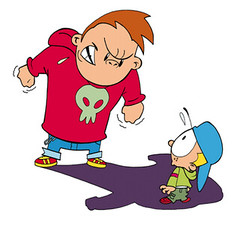 | 37 |
| 8835754610 | Irony/ironic | The contrast between what is stated explicitly and what is really meant. The difference between what appears to be and what actually is true. In general, there are three major types of irony used in language; (1) In a verbal irony, the words literally state the opposite of the writer's (or speaker's) true meaning. (2) In situational irony, events turn out the opposite of what was expected. What the characters and the readers think ought to happen. (3) In dramatic irony, facts or events are unknown to a character in a play or piece of fiction, but know to the reader, audience, or other characters in the work. Irony is used for many reasons, but frequently, it's used to create poignancy or humor. |  | 38 |
| 8835754611 | Juxtaposition (juhk-stuh-puh-zish-uhn) | When two words, phrases, images, ideas are placed close together or side by side for comparison or contrast. |  | 39 |
| 8835754612 | Litotes (lahy-toh-teez) | From the Greek word "simple" or "plain." Litotes is a figure of thought in which a point is affirmed by negating its opposite. It is a special form of understatement, where the surface denial serves, through ironic contrast, to reinforce the underlying assertion. |  | 40 |
| 8835754613 | Loose sentence | a type of sentence in which the main idea (independent clause) comes first, followed by wdependent grammatical units such as phrases and clauses. If a period were placed at the end of the independent clause, the clause would be a complete sentence. A work containing many loose sentences often seems informal, relaxed, and conversational. Generally loose sentences create loose style. |  | 41 |
| 8835754614 | Metaphor | A figure of speech using implied comparison of seemingly unlike things or the substitution of one for the other, suggesting some similarity. Metaphorical language makes writing more vivid, imaginative, thought provoking, and meaningful. |  | 42 |
| 8835754615 | Metonymy (mi-ton-uh-mee) | A term from the Greek meaning "changed label" or "substitute name." Metonymy is a figure of speech in which the name of one object is substituted for that of another closely associated with it. A news release that claims "the White House declared" rather that "the President declared" is using metonymy. The substituted term generally carries a more potent emotional response. |  | 43 |
| 8835754616 | Mood | This term has two distinct technical meanings in English writing. The first meaning is grammatical and eals with verbal units and a speaker's attitude. The indicative mood is used only for factual sentences. For example, "Joe eats too quickly." The subjective mod is used to express conditions contrary to fact. For example, "If I were you, I'd get another job." The imperative mood is used for commands. For example, "Shut the door!" The second meaning of mood is literary, meaning the prevailing atmosphere or emotional aura of a work. Setting, tone, and events can affect the mood. In this usage, mood is similar to tone and atmosphere. |  | 44 |
| 8835754617 | Narrative | The telling of a story or an account of an event or series of events. |  | 45 |
| 8835754618 | Onomatopoeia (on-uh-mat-uh-pee-uh) | A figure of speech in which natural sounds are imitated in the sounds of words. Simple examples include such words as buzz, hiss, hum, crack, whinny, and murmur. If you not eexamples of onomatopoeia in an essay passage, note the effect. |  | 46 |
| 8835754619 | Oxymoron | From the Greek for "pointedly foolish," an oxymoron is a figure of speech wherein the author groups apparently contradictory terms to suggest a paradox. Simple examples include "jumbo shrimp" and "cruel kindness." This term does not usually appear in the multiple-choice questions, but there is a chance that you might find it in an essay. Take note of the effect which the author achieves with this term. |  | 47 |
| 8835754620 | Paradox | A statement that appears to be self-contradictory or opposed to common sense but upon closer inspection contains some degree of truth or validity. |  | 48 |
| 8835754621 | Parallelism | Also referred to as parallel construction or parallel structure, this term comes from Greek roots meaning "beside one another." It refers to the grammatical or rhetorical framing of words, phrases, sentences, or paragraphs to give structural similarity. This can involve, but is not limited to repetition of a grammatical element such as a preposition or verbal phrase. A famous example of parallelism begins Charles Dickens's novel A Tale of Two Cities: "It was the best of times, it was the worst of times, it was the age of wisdom, it was the age of foolishness, it was the epoch of belief, it was the epoch of incredulity . . ." The effects of parallelism are numerous, but frequently they act as an organizing force to attract the reader's attention, add emphasis and organization, or simply provide a musical rhythm. |  | 49 |
| 8835754622 | Parody | A work that closely imitates the style or content of another with the specific aim of comic effect and/or ridicule. As comedy, parody distorts or exaggerated distinctive features of the original. As ridicule, it mimics the work by repeating and borrowing words, phrases, or characteristics in order to illuminate weaknesses in the original. Well-written parody offers enlightenment about the original, but poorly written parody offers only ineffectual imitation. Usually an audience must grasp literary allusion and understand the work being parodied in order to fully appreciate the nuances of the newer work. Occasionally, however, parodies take on a life of their own and don't require knowledge of the original |  | 50 |
| 8835754623 | Pedantic (puh-dan-tik) | An adjective that describes words, phrases, or general tone that is overly scholarly, academic, or bookish. |  | 51 |
| 8835754624 | Periodic sentence | A sentence that presents its central meaning in a main clause at the end. This independent clause is preceded by a phrase or clause that cannot stand alone. For example: "Ecstatic with my AP score, I let out a loud, joyful shout!" The effect of a periodic sentence is to add emphasis and structural variety. It is also a much stronger sentence than the loose sentence. |  | 52 |
| 8835754625 | Personification | A figure of speech in which the author presents or describes concepts, animals, or inanimate objects by endowing them with human attributes or emotions. Personification is used to make these abstractions, animal, or objects appear more vivid to the reader. |  | 53 |
| 8835754626 | Polysyndeton (paulee-sin-dih-tawn) | Figure of addition and emphasis which intentionally employs a series of conjunctions (FANBOYS: for, and, nor, but, or, yet, so) not normally found in successive words, phrases or clauses; the deliberate and excessive use of conjunctions in successive words or clauses. The effect is a feeling of multiplicity, energetic enumeration, and building up - a persistence or intensity. |  | 54 |
| 8835754627 | Predicate adjective | One type of subject complement is an adjective, group of adjectives, or adjective clause that follows a linking verb. It is an the predicate of the sentence, and modifies, or describes, the subject. |  | 55 |
| 8835754628 | Predicate nominative | A second type of subject complement - a noun, group of nouns, or noun clause that names the subject. It, like the predicate adjective, follows a linking verb and is located in the predicate of the sentence. |  | 56 |
| 8835754629 | Prose | One of the major divisions of genre, prose refers to fiction and non-fiction, including all its forms. In prose the printer determines the length of the line; in poetry, the poet determines the length of the line |  | 57 |
| 8835754630 | Repetition | The duplication, either exact or approximate, of any element of language, such as a sound, word, phrase, clause, sentence, or grammatical pattern. |  | 58 |
| 8835754631 | Rhetoric | From the Greek for "orator," this term describes the principles governing the art of writing effectively, eloquently, and persuasively. | 59 | |
| 8835754632 | Rhetorical modes | This flexible term describes the variety, the conventions, and purposes of the major kinds of writing. The four most common rhetorical modes and their purposes are as follows: (1) The purpose of exposition (or expository writing) is to explain and analyze information by presenting an idea, relevant evidence, and appropriate discussion. The AP language exam essay questions are frequently expository topics. (2) The purpose of argumentation is to prove the validity of an idea, or point of view, by presenting sound reasoning, discussion, and argument that thoroughly convince the reader. Persuasive writing is a type of argumentation having an additional aim of urging some form of action. (3) The purpose of description is to re-create, invent, or visually present a person, place, event or action so that the reader can picture that being described. Sometimes an author engages all five senses in description; good descriptive writing can be sensuous and picturesque. Descriptive writing may be straightforward and objective or highly emotional and subjective. (4) The purpose of narration is to tell a story or narrate an event or series of events. This writing mode frequently uses the tools of descriptive writing. These four modes are sometimes referred to as mode of discourse. |  | 60 |
| 8835754633 | Rhetorical Question [erotesis] | - differs from hypophora in that it is not answered by the writer because its answer is obvious or obviously desired, and usually just a yes or no answer would suffice. It is used for effect, emphasis, or provocation, or for drawing a conclusionary statement from the fact at hand. |  | 61 |
| 8835754634 | Sarcasm | From the Greek meaning "to tear flesh," sarcasm involves bitter, caustic language that is meant to hurt or ridicule someone or something. It may use irony is a device, but not all ironic statements are sarcastic, that is, intended to ridicule. When well done, sarcasm can be witty and insightful; when done poorly, it's simply cruel |  | 62 |
| 8835754635 | Satire | A work that targets human vices and follies or social institutions and conventions for reform or ridicule. Regardless of whether or not the work aims to reform human behavior, satire is best seen as a style of writing rather than a purpose for writing. It can be recognized by the many devices used effectively the satirist: irony, wit, parody, caricature, hyperbole, understatement, and sarcasm. The effects of satire are varied, depending on the writer's goal, but good satire, often humorous, is thought provoking and insightful about the human condition. |  | 63 |
| 8835754636 | Semantics | The branch of linguistics that studies the meaning of words, their historical and psychological development, their connotations, and their relation to one another |  | 64 |
| 8835754637 | Style | The consideration of style has two purposes: (1) An evaluation of the sum of the choices an author makes in blending diction, syntax, figurative language, and other literary devices. Some authors' styles are so idiosyncratic that we can quickly recognize works by the same author (or a writer emulating that author's style)/ Compare, for example, Jonathan's Swift to George Orwell or William Faulkner to Ernest Hemingway. We can analyze and describe an author's personal style and make judgments on how appropriate it is to the author's purpose. Styles can be called flowery, explicit, succinct, rambling, bombastic, commonplace, incisive, or laconic, to name only a few examples. (2) Classification of authors to a group and comparison of an author to similar authors. By means of such classification and comparison, we can see how an author's style reflects and helps to define a historical period, such as the Renaissance of the Victorian period, or a literary movement, such as the romantic, transcendental or realist movement. | | 65 |
| 8835754638 | Subject complement | The word (with any accompanying phrases) or clauses that follows a linking verb and complements, or completes, the subject of the sentence by either (1) renaming it or (2) describing it. The former is the technically a predicate nominative, the latter a predicate adjective. Multiple-choice questions. |  | 66 |
| 8835754639 | Subordinate clause | Like all clauses, this word group contains both a subject and a verb (plus any accompanying phrases or modifiers), but unlike the independent clause, the subordinate clause cannot stand alone; it does not express a complete thought. Also called a dependent clause, the subordinate clause depends on a main clause, sometimes called an independent clause, to complete its meaning. Easily recognized key words and phrases usually begin these clauses 0 for example: although, because, unless, if even though, since, as soon as, while who, when , where, how and that. |  | 67 |
| 8835754640 | Syllogism (sil- uh-jiz-uhm) | From the Greek for "reckoning together, " a syllogism (or syllogistic-reasoning or syllogistic logic is a deductive system of formal logic that presents two premises (the firs one called "major" and the second, "minor") that inevitably lead to a sound conclusion. A frequently cited example proceeds as follows; |  | 68 |
| 8835754641 | Symbol/symbolism | Generally, anything that represents itself and stands for something else. Usually a symbol is something concrete - such as object, action, character, or scene - that represents something more abstract. However, symbols, and symbolism can be much more complex. One system classifies symbols in three categories: (1) Natural symbols are objects and occurrences from nature to represent ideas commonly associated with them (dawn symbolizing hope or a new beginning, a rose symbolizing love, a tree symbolizing knowledge). (2) Conventional symbols are those that have been invested with meaning by a group (religious symbols such as a cross or Star of David; national symbols, such as a flag or an eagle; or group symbols, such as a skull an crossbones for pirates or the scales of justice for lawyers). (3) Literary symbols are sometimes also conventional in the sense that they are found in a variety of works and are generally recognized. However, a work's symbols may be more complicated as is the whale in Moby Dick and the jungle in Heart of Darkness. On the AP exam, try to determine what abstraction an object is a symbol for and to what extent it is successful in representing that abstraction. |  | 69 |
| 8835754642 | Synecdoche (si-nek-duh-kee) | is a type of metaphor in which the part stands for the whole, the whole for a part, the genus for the species, the species for the genus, the material for the thing made, or in short, any portion , section, or main quality for the whole or the thing itself (or vice versa). |  | 70 |
| 8835754643 | Syntax | The way an author chooses to join words into phrases, clauses, and sentences. Syntax is similar to diction, but you can differentiate them by thinking of syntax as the groups of words, while diction refers to the individual words. In the multiple-choice section, expect to be asked some questions about how an author manipulates syntax. In the essay section, you will need to analyze how syntax produces effects. |  | 71 |
| 8835754644 | Theme | The central idea or message of a work, the insight it offers into life. Usually theme is unstated in fictional works, but in nonfiction, the theme may be directly stated, especially in exposityr or argumentative writing. |  | 72 |
| 8835754645 | Thesis | In expository writing, the thesis statement is the sentence or a group of sentences that directly expresses the author's opinion, purpose, meaning, or position. Expository writing is usually judged by analyzing how accurately, effectively, and thoroughly a writer has proved the thesis. |  | 73 |
| 8835754646 | Tone | Similar to mood, tone describes the author's attitude toward his material, the audience, or both. Tone is easier to determine in spoken language than in written language. Considering how a work would sound if ti were read aloud can help in identifying an author's tone. Some words describing tone are playful, serious, businesslike, sarcastic, humorous, formal, ornate, sardonic, and somber |  | 74 |
| 8835754647 | Transition | A word or phrase that links different ideas. Used especially, although not exclusively, in expository and argumentative writing, transitions effectively signal a shift from one idea to another. A few commonly used transitional words or phrases are furthermore, consequently, nevertheless, for example, in addition, likewise, similarly and on the contrary. More sophisticated writers use more subtle means of transition. We will discuss these methods later. |  | 75 |
| 8835754648 | Understatement | The ironic minimizing of fact, understatement presents something as less significant than it is. The effect can frequently be humorous and emphatic. Understatement is the opposite of hyperbole. | 76 | |
| 8835754649 | Undertone | An attitude that may lie under the ostensible tone of the piece. Under a cheery surface, for example, a work may have threatening undertones. William Blake's "The Chimney Sweeper" from the Songs of Innocence has a grim undertone. |  | 77 |
| 8835754650 | Wit | In modern usage, intellectually amazing language that surprises and delights. A witty statement is humorous, while suggesting the speaker's verbal power in creating ingenious and perceptive remarks. Wit usually uses terse language that makes a pointed statement. Historically, wit originally meant basic understanding. Its meaning evolved to include speed of understanding, and finally (in the early seventeenth century), it grew to mean quick perception including creative fancy and a quick tongue to articulate an answer that demanded the same quick perception. |  | 78 |
AP Literature Vocabulary #17 Roots Flashcards
Terms : Hide Images
| 8813410177 | sci *scientific:* proceeding in a systematic and methodical way | know | 0 | |
| 8813411849 | scrib / script *manuscript:* a book or other text written by hand, especially one written before the invention of printing | write | 1 | |
| 8813413187 | sec / sect *dissect:* to separate the parts of animal or plant specimens for scientific study | cut | 2 | |
| 8813413197 | sequ / secu *sequence:* the order in which things are arranged | follow | 3 | |
| 8813413897 | simil *similar:* sharing some qualities, but no identical | same | 4 | |
| 8813415930 | son *sonar:* a system that determines the position of unseen underwater objects by transmitting sound waves | sound | 5 | |
| 8813416746 | soph *sophomore:* somebody in the second year of a project or program | wisdom, knowledge | 6 | |
| 8813417413 | spec / spic *speculate:* to think over possibilities | look, see | 7 | |
| 8813418964 | -sis *analysis:* examination of something in detail to understand it better or draw conclusions from it | act, state, condition of | 8 | |
| 8813420025 | syn / sym / syl/ sys *syllable:* slightest bit of something that is spoken or written | with, together | 9 |
AP Lit Spring Study List Flashcards
Terms : Hide Images
| 4091059742 | zeugma | A figure of speech in which a word applies to two others in different senses (e.g., John and his license expired last week ) or to two others of which it semantically suits only one (e.g., with weeping eyes and hearts ). |  | 0 |
| 4091062869 | metonomy | A figure of speech in which one word or phrase is substituted for another with which it is closely associated (such as "crown" for "royalty"). |  | 1 |
| 4091064195 | synedoche | Figure of speech in which a part of something is meant to represent a whole "all hands on deck" |  | 2 |
| 4091067285 | chiasmus | A statement consisting of two parallel parts in which the second part is structurally reversed ("Susan walked in, and out rushed Mary.") |  | 3 |
| 4091068956 | ceasura | A distinct pause within a line of verse, often near the center. |  | 4 |
| 4091070193 | anaphora | A sub-type of parallelism, when the exact repetition of words or phrases at the beginning of successive lines or sentences. MLK used anaphora in his famous "I Have a Dream" speech (1963). |  | 5 |
| 4091074209 | epistrophe | A device in which the same word is repeated at the end of successive phrases, clauses, or sentences. Example: "I believe we should fight for justice. You believe we should fight for justice. How can we not, then, fight for justice?" |  | 6 |
| 4091075654 | heroic couplet | A couplet consisting of two rhymed lines of iambic pentamenter and written in an elevated style |  | 7 |
| 4091078812 | blank verse | Unrhymed iambic pentameter |  | 8 |
| 4091079791 | Petrarchan sonnet | A sonnet (14 lines of rhyming iambic pentameter) that divides into an octave (8) and sestet (6). There is a "volta," or "turning" of the subject matter between the two. (also called Italian sonnet) |  | 9 |
| 4091091311 | Elizabethan sonnet | A type of sonnet much used by Shakespeare, written in iambic pentameter and consisting of three quatrains and a final couplet with the rhyme scheme abab cdcd efef gg. |  | 10 |
| 4091093015 | villanelle | A nineteen-line lyric poem that relies heavily on repetition. The first and third lines alternate throughout the poem, which is structured in six stanzas --five tercets and a concluding quatrain. Examples include Bishop's "One Art," Roethke's "The Waking," and Thomas's "Do Not Go Gentle into That Good Night." |  | 11 |
| 4091093807 | ballad | A narrative poem written in four-line stanzas, characterized by swift action and narrated in a direct style. |  | 12 |
| 4091094274 | conceit | A fanciful, particularly clever extended metaphor |  | 13 |
| 4091096320 | ode | a lyric poem in the form of an address to a particular subject, often elevated in style or manner and written in varied or irregular meter |  | 14 |
| 4091097373 | apostrophe | A poem that directly addresses an absent or imaginary person or a personified abstraction, such as liberty or love. It is an address to someone or something that cannot answer. |  | 15 |
| 4091111265 | assonance | Repetition of a vowel sound within two or more words in close proximity |  | 16 |
| 4091111735 | consonance | Repetition of a consonant sound within two or more words in close proximity. |  | 17 |
| 4091114005 | paradox | A statement or proposition that seems self-contradictory or absurd but in reality expresses a possible truth. |  | 18 |
| 4091114605 | parallel structure | Repetition of the same pattern of words or phrases within a sentence or passage to show that two or more ideas have the same level of importance. |  | 19 |
| 4091121877 | feminine rhyme | lines rhymed by their final two syllables--running, gunning; properly, the penultimate syllables are stressed and the final syllables are unstressed |  | 20 |
| 4091123183 | frame narrative | a story that encloses one or more separate stories. (the frame is a vehicle for the stories it contains) |  | 21 |
| 4091124431 | epistolary novel | A novel composed wholly or primarily of letters. Unfolds through the written documents passed from person to person. |  | 22 |
| 4091313829 | tetrameter | A verse line having four metrical feet |  | 23 |
| 4091315190 | tone | Attitudes and presuppositions of the author that are revealed by their linguistic choices (diction, syntax, rhetorical devices) | | 24 |
| 4091325464 | litotes | (pronounced almost like "little tee") - a form of understatement that involves making an affirmative point by denying its opposite. Litote is the opposite of hyperbole. Examples: "Not a bad idea," "Not many," "It isn't very serious. I have this tiny little tumor on the brain" (Salinger, Catcher in the Rye). |  | 25 |
| 4091352045 | periodic sentence | A sentence not grammatically complete until it has reached its final phrase; sentence that departs from the usual word order of English sentences by expressing its main thought only at the end |  | 26 |
| 4091354654 | loose sentence | A type of sentence in which the main idea comes first, followed by dependent grammatical units such as phrases and clauses |  | 27 |
| 4091357304 | formal diction | Consists of a dignified, impersonal, and elevated use of language; it follows the rules of syntax exactly and is often characterized by complex words and lofty tone. |  | 28 |
| 4091359434 | allusion | A reference in a literary work to a person, place, or thing in history or another work of literature. |  | 29 |
| 4091363299 | allegory | A story, poem, or picture that can be interpreted to reveal a hidden meaning, typically a moral or political one. |  | 30 |
| 4091463564 | syntax | Arrangement of words in phrases and sentences | | 31 |
| 4091464782 | dependent clause | This clause contains a noun and a verb but is set up with a subordinate conjunction, which makes the clause an incomplete thought. Because the magician's rabbit refused to come out of the hat... |  | 32 |
| 4091466012 | independent clause | A clause that can stand alone as a sentence; it must have a noun and a verb (subject and predicate) |  | 33 |
| 4091467629 | synesthesia | Describing one kind of sensation in terms of another ("a loud color", "a sweet sound") |  | 34 |
| 4091468431 | eye rhyme | occurs when words are spelled the same and look alike but sound differently. ex. move, love / shove, grove / tear, fear |  | 35 |
| 4091474423 | half rhyme | Half rhyme is one of the major poetic devices. It is also called an imperfect rhyme, slant rhyme, near rhyme or oblique rhyme. It can be defined as a rhyme in which the stressed syllables of ending consonants match, however the preceding vowel sounds do not match. |  | 36 |
| 4091505096 | stanza | A fixed number of lines of verse forming a unit of a poem |  | 37 |
| 4091505561 | enjambment | A run-on line of poetry in which logical and grammatical sense carries over from one line into the next. |  | 38 |
| 4091505941 | speaker | the narrator of a poem; not to be confused with the poet who wrote the poem. |  | 39 |
| 4248435056 | anapest | Two unstressed syllables followed by a stressed syllable |  | 40 |
| 4248436803 | trochee | A stressed syllable followed by an unstressed syllable |  | 41 |
| 4248439029 | dactyl | A metrical foot consisting of one accented syllable followed by two unaccented syllables |  | 42 |
| 4253844566 | bildungsroman | A coming of age story |  | 43 |
| 4253852245 | picaresque | involving clever rogues or adventurers especially as in a type of fiction |  | 44 |
| 4293644475 | polysyndeton | Deliberate use of many conjunctions in close succession, especially where some might be omitted. Hemingway and the Bible both use extensively. Ex. "he ran and jumped and laughed for joy" |  | 45 |
AP Language Tone Words Flashcards
Terms : Hide Images
| 4880506854 | Bombastic | high-sounding but with little meaning; inflated |  | 0 |
| 4880506855 | Colloquial | used in ordinary or familiar conversation | | 1 |
| 4880506856 | Esoteric | intended for or likely to be understood by only a small number of people with a specialized knowledge or interest |  | 2 |
| 4880506857 | Euphemistic | a mild or pleasant word or phrase that is used instead of one that is unpleasant or offensive |  | 3 |
| 4880506858 | Grotesque | comically or repulsively ugly or distorted |  | 4 |
| 4880506859 | Idiomatic | using, containing, or denoting expressions that are natural to a native speaker; informal | 5 | |
| 4880506860 | Insipid | lacking vigor or interest |  | 6 |
| 4880506861 | Jargon | special words or expressions that are used by a particular profession or group and are difficult for others to understand |  | 7 |
| 4880506862 | Pedantic | overly concerned with formalities | 8 | |
| 4880506863 | Picturesque | unusual and vivid | 9 | |
| 4880506864 | Pretentious | attempting to impress by affecting greater importance, talent, culture, etc., than is actually possessed |  | 10 |
| 4880506865 | Provincial | lacking refinement | 11 | |
| 4880506866 | Sensuous | relating to or affecting the senses rather than the intellect | 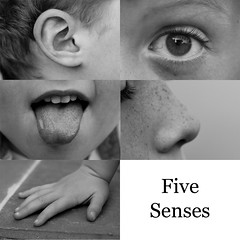 | 12 |
| 4880506867 | Trite | lacking originality or freshness |  | 13 |
| 4880506868 | Amiable | having or displaying a friendly and pleasant manner |  | 14 |
| 4880506869 | Elated | very happy and excited |  | 15 |
| 4880506870 | Exuberant | lively energy and excitement |  | 16 |
| 4880506871 | Jovial | cheerful and friendly |  | 17 |
| 4880506872 | Jubilant | feeling or expressing great happiness and triumph |  | 18 |
| 4880506873 | Reverent | feeling or showing deep and solemn respect |  | 19 |
| 4880506874 | Agitated | feeling or appearing troubled or nervous |  | 20 |
| 4880506875 | Brash | self-assertive in a rude, noisy, or overbearing way |  | 21 |
| 4880506876 | Choleric | bad-tempered or irritable |  | 22 |
| 4880506877 | Coarse | rude, crude, or vulgar | 23 | |
| 4880506878 | Condemnatory | expressing strong disapproval |  | 24 |
| 4880506879 | Disgruntled | angry or dissatisfied |  | 25 |
| 4880506880 | Facetious | treating serious issues with deliberately inappropriate humor |  | 26 |
| 4880506881 | Haughty | arrogantly superior and disdainful |  | 27 |
| 4880506882 | Indignant | anger or annoyance at what is perceived as unfair treatment |  | 28 |
| 4880506883 | Inflammatory | arousing or intended to arouse angry or violent feelings | 29 | |
| 4880506884 | Quarrelsome | ready or likely to argue or disagree |  | 30 |
| 4880506885 | Surly | bad-tempered and unfriendly | 31 | |
| 4880506886 | Testy | easily irritated; impatient and somewhat bad-tempered | 32 | |
| 4880506887 | Contemptuous | feeling or showing deep hatred or disapproval |  | 33 |
| 4880506888 | Droll | Curious or unusual in a way that provokes dry amusement. |  | 34 |
| 4880506889 | Flippant | not showing a serious or respectful attitude |  | 35 |
| 4880506890 | Insolent | showing a rude and arrogant lack of respect |  | 36 |
| 4880506891 | Mock-heroic | imitating the style of heroic literature in order to satirize an unheroic subject | 37 | |
| 4880506892 | Pompous | affectedly and irritatingly grand, solemn, or self-important |  | 38 |
| 4880506893 | Quizzical | indicating mild or amused puzzlement |  | 39 |
| 4880506894 | Ribald | vulgar or indecent in speech |  | 40 |
| 4880506895 | Sardonic | skeptically humorous |  | 41 |
| 4880506896 | Apprehensive | anxious or fearful that something bad or unpleasant will happen |  | 42 |
| 4880506897 | Foreboding | fearful apprehension; a feeling that something bad will happen |  | 43 |
| 4880506898 | Melancholy | sad and pensive | 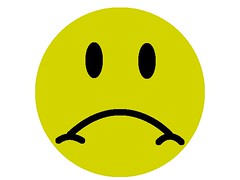 | 44 |
| 4880506899 | Morose | sullen and ill-tempered |  | 45 |
| 4880506900 | Ominous | giving the impression that something bad or unpleasant is going to happen |  | 46 |
| 4880506901 | Poignant | evoking a keen sense of sadness or regret |  | 47 |
| 4880506902 | Resigned | having accepted something unpleasant that one cannot do anything about |  | 48 |
| 4880506903 | Staid | serious, boring, or old-fashioned |  | 49 |
| 4880506904 | Admonitory | giving or conveying a warning or reprimand |  | 50 |
| 4880506905 | Callous | showing or having an insensitive and cruel disregard for others |  | 51 |
| 4880506906 | Candid | truthful and straightforward |  | 52 |
| 4880506907 | Clinical | efficient and unemotional | 53 | |
| 4880506908 | Didactic | intended to teach, particularly in having moral instruction as an ulterior motive |  | 54 |
| 4880506909 | Earnest | serious and sincere | 55 | |
| 4880506910 | Fervent | having or displaying a passionate intensity |  | 56 |
| 4880506911 | Forthright | direct and outspoken; straightforward and honest |  | 57 |
| 4880506912 | Frivolous | carefree and not serious |  | 58 |
| 4880506913 | Histrionic | overly theatrical or melodramatic |  | 59 |
| 4880506914 | Incredulous | unwilling or unable to believe something |  | 60 |
| 4880506915 | Intimate | Closely acquainted, familiar, close | 61 | |
| 4880506916 | Obsequious | too eager to help or obey someone important |  | 62 |
| 4880506917 | Vexed | annoyed, frustrated, or worried |  | 63 |
| 4880506918 | Zealous | feeling or showing strong and energetic support for a person, cause; enthusiastic |  | 64 |
| 4880507714 | Fanciful | Whimsical, dreamy, wistful | 65 | |
| 4880554814 | Exact | Admitting of no deviation, strict, rigid | 66 | |
| 4880587004 | Giddy | Frivolous and lighthearted | 67 | |
| 4880591194 | Macab | Death as a subject, dwelling on gruesome | 68 | |
| 4880599242 | Caustic | Severely critical or sarcastic | 69 | |
| 4880603377 | Disdainful | Scornful, feeling of contempt for anything unworthy | 70 | |
| 4880610111 | Scornful | Expressing contempt | 71 | |
| 4880615556 | Whimsical | Erratic, unpredictable | 72 | |
| 4880617767 | Wry | Devious in corse or purpose, misdirected | 73 | |
| 4880624035 | Inquisitive | Curious, seeking knowledge | 74 | |
| 4880625114 | Meditative | Absorbed by meditation, calm | 75 | |
| 4880627225 | Wistful | Full of yearned but tinged with melancholy | 76 | |
| 4887832693 | Lugubrious | Excessively sad, dramatic | 77 |
Flashcards
Flashcards
Pages

Need Help?
We hope your visit has been a productive one. If you're having any problems, or would like to give some feedback, we'd love to hear from you.
For general help, questions, and suggestions, try our dedicated support forums.
If you need to contact the Course-Notes.Org web experience team, please use our contact form.
Need Notes?
While we strive to provide the most comprehensive notes for as many high school textbooks as possible, there are certainly going to be some that we miss. Drop us a note and let us know which textbooks you need. Be sure to include which edition of the textbook you are using! If we see enough demand, we'll do whatever we can to get those notes up on the site for you!
