

AP Language Vocab Chapter 1 Flashcards
Terms : Hide Images
| 8351002109 | Audience | The listener, viewer, or reader of a text | 0 | |
| 8351002110 | Context | The circumstances, atmosphere, attitudes, and events surrounding a text | 1 | |
| 8351002111 | Ethos | Greek for "character". Speakers appeal to _____ to demonstrate that they are credible and trustworthy to speak on a given topic | 2 | |
| 8351002112 | Logos | Greek for "embodied thought". Speakers appeal to _____, or reason, by offering clear, rational ideas and using specific details, examples, facts, statistics, or expert testimony to back them up | 3 | |
| 8351002114 | Pathos | Greek for "suffering" or "experience". Speakers appeal to ______ to emotionally motivate their audience; might play on the audience's values, desires, and hopes, or fears and prejudices | 4 | |
| 8351002115 | Persona | Greek for "mask". The face or character that a speaker shows to his or her audience | 5 | |
| 8351002116 | Polemic | Greek for "hostile". And aggressive argument that tries to establish the superiority of one opinion over all others. | 6 | |
| 8351002117 | Propaganda | The spread of ideas and information to further a cause | 7 | |
| 8351002118 | Purpose | The goal the speaker wants to achieve | 8 | |
| 8351002119 | Rhetorical appeals | Rhetorical techniques used to persuade an audience by emphasizing what they find most important or compelling. | 9 | |
| 8351002120 | Rhetorical triangle | A diagram that illustrates the interrelationship among the speaker, audience, and subject in determining a text | 10 | |
| 8351002121 | Rhetoric | The communication between a speaker and an audience rationally exchanging opposing viewpoints using an academic voice in order to persuade | 11 | |
| 8351002125 | Speaker | The person or group who creates a text | 12 | |
| 8351002126 | Subject | The topic of a text | 13 |
AP world history Flashcards
Terms : Hide Images
| 4894705187 | Lutherns | Gained salvation through faith alone by literacy (1517) | 0 | |
| 4894705188 | Calvin | Challenged God to being all powerful. Based on predestination | 1 | |
| 4895107737 | Elect | Destined to heaven | 2 | |
| 4895107738 | Reperbate | Destined to hell | 3 | |
| 4895107739 | The English reformation | (1529) Elizabeth 1 (Anglican) , James 1 (Catholic), Charles 1 (Catholic) all discriminated against Protestant faith in some ways | 4 | |
| 4895107740 | Anglican | England church (king in charge) | 5 | |
| 4895107741 | The pilgrams | Separatists | 6 | |
| 4895107742 | Where did the pilgrams land | Holland(1608) Plymouth(1620) | 7 | |
| 4895107743 | What was the name of the compact the pilgrams made? | The mayflower compact (1620) | 8 | |
| 4895107744 | What where the puritans belief and values? | Predestination, hard work, and modesty | 9 | |
| 4895107745 | Congregationalism | The congration (people) have power and elected there minister | 10 | |
| 4895107746 | Puritan value of education | Bible was central to faith(reading), publicly supported the bible, and minister training colleges (Harvard 1636) | 11 | |
| 4895107747 | Massachusetts bay colony (1630) | Was religious haven for puritans, churches and community had liberty to stand alone, and established theocracy | 12 | |
| 4895107748 | John Winthrop | Governor said it was like a "city upon a hill" | 13 | |
| 4895107749 | Anne Hutchenson | (1638) was a minister and preached and preached that only the elect could hold office | 14 | |
| 4895107750 | Roger Williams | (1636) separate church and state | 15 | |
| 4895107751 | How puritans influenced early America | Self government, congregation, community responsibility, value of education, and hard work | 16 | |
| 4895107752 | Democracy in churches =? | Democracy in towns | 17 | |
| 4895107753 | Caused Puritan decline | Population pressure(people moved), general conflict(newer generation questioning older) and commercialization of New England economy | 18 | |
| 4895107754 | The great awakening | Began 1730s in New England. Led by George whitefield and Jonathan Edwards, George tennant, John and Charles Wesley. Had opened air preachers | 19 | |
| 4895107755 | Elements of great awakening | Enthusiasm, democracy, hinerancy | 20 | |
| 4895107756 | Content of message of great awakening | Salvation through faith and prayer, individualism, personal piety, individual revival, and everyone is equal in gods eyes (against terany) | 21 | |
| 4895107757 | Impact of great awakening | Creation of "new light" colleges (Princeton 1746), divisions in denominations, "old" vs "new" debate, religious challenges authority, development of revivalism, and 20 th century ivrvaliam | 22 | |
| 4895107758 | 2nd great awakening | Religious revival amongst Protestants, appealed to women and 2/3 generation sons | 23 | |
| 4895107759 | Charles finney | Burned over district of NY | 24 | |
| 4895107760 | Camp meeting and frontier revivals | Cane ridge KY 1801 | 25 | |
| 4895107761 | Impact most on | Women, natives and slaves | 26 | |
| 4895107762 | Social reform movements of 19th century from 2nd great awakening | Temperance= anti-alcohol, women's rights= equality, abolitionism= abolish slavery, and utopian communities | 27 | |
| 4895107763 | Liberals | Advocate change and freedom, progress | 28 | |
| 4895107764 | Conservation | Minimal change, more social order, and religion | 29 | |
| 4895107765 | Shakers | Abolished family units, celibacy, and full equality between sexes | 30 | |
| 4895107766 | Mormons | Joseph smith(1830) Ny, Ohio, Illinois, and Missouri. Was killed and Brigham young (Utah) | 31 | |
| 4895253933 | Modernists | Interstate science and faith, pro-Darwin, pro technology and progressive. Mostly higher/middle class and higher education and urban | 32 | |
| 4895253934 | Fundamentalists | Literal interpretation of bible, anti-modem and Darwin. Mostly rural, lower class, and lower educated | 33 | |
| 4895253935 | Scopes monkey trial 1925 | 1 high profile church vs state case in us history (it was not a supreme course case) | 34 | |
| 4895253936 | Butler act 1925 | Forbids any story that denies the story to be taught in public schools | 35 | |
| 4895253937 | Outcome of trial | Disgreeted the fundamentalists argument | 36 | |
| 4895253938 | Elderson vs Arkansas (1968) | States can't prohibit teaching evolution in school, | 37 | |
| 4895253939 | Edwards vs aquillard (1987) | Teaching creation violates the 1st amendment | 38 | |
| 4895253940 | Kansas state board of education (1999) | Repeated chanllenges of evolution, all shot down | 39 | |
| 4895253941 | Kitzmiller vs Dover (2005) | Intelligent design is religion and not science | 40 | |
| 4895253942 | Important church and state court decisions | WVA board of education vs barnette (1943), roe v wade abortion debate | 41 | |
| 4895253943 | Roe vs wade (1973) | Legalized abortions nationally in 1st trimester ONLY | 42 | |
| 4895253944 | Modern evangelism | (1970s-present) | 43 |
AP World History Strayer Chapter 6 Vocabulary Flashcards
Terms : Hide Images
| 7682585105 | Meroe | *Definition:* City in southern Nubia that was the center of Nubian civilization. *Significance:* Governed by a female monarch. Gained its wealth through long-distance trade. Declined after Islam invaded. |  | 0 |
| 7682585106 | Axum | *Definition:* Northern Ethiopian city that relied on highly productive agriculture with plow-based farming. *Significance:* A part at Adulis and used taxes to gain revenue from other empires. They didn't rely on hoe and digging stick. |  | 1 |
| 7682585107 | Piye | *Definition:* 8th century BCE, Africa. Paid respect to gods for great victory. *Significance:* Reunified Egypt and conquered ruler and began to govern/lead war. |  | 2 |
| 7682585108 | Niger Valley Civilization | *Definition:* City-based civilization in Niger valley. Noted for its lack of centralized state structure. *Significance:* Led to the uprising of jenne jeno |  | 3 |
| 7682585109 | Maya Civilization | *Definition:* Mesoamerican civilization known for the only fully developed written language of the Pre-columbian Americas. *Significance:* Resembled the competing city-states of Mesopotamia and written language. |  | 4 |
| 7682585110 | Teotihuacan | *Definition:* Largest city of Pre-Columbian America that governed and/or influenced much of the surrounding region ("City of the gods"). *Significance:* Had long-distance trade which enabled them to live a more luxurious life. | 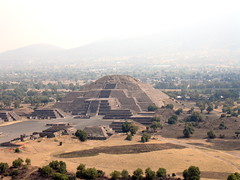 | 5 |
| 7682585111 | Chavin | *Definition:* Andean town that was the center of a large Peruvian religious movement. *Significance:* Religious movement within class system of elites. Decline due to famine and drought. |  | 6 |
| 7682585112 | Moche | *Definition:* Important regional civilization of Peru, governed by warrior-priests. *Significance:* Elites lived luxuriously, prisoners and poor were sacrificed in rituals. | 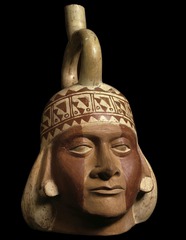 | 7 |
| 7682585113 | Wari and Tiwanaku | *Definition:* Civilizations in Andes Mountains before Inca Empire. *Significance:* Almost opposites, the Wari used irrigation for agriculture and Tiwanaku farmed. The Wari depended on the Tiwanaku. |  | 8 |
| 7682585114 | Bantu Expansion | *Definition:* Gradual migration of Bantu peoples from their homeland. *Significance:* Their ironworking and agricultural techniques gave them an advantage over gathering and hunting peoples. |  | 9 |
| 7682585115 | Chaco Phenomenon | *Definition:* Name given to a major process settlement and social organization among the peoples of Chaco Canyon. *Significance:* Drought caused people to start depending on agriculture which made a large population develop. |  | 10 |
| 7682585116 | Mound Builders/Cahokia | *Definition:* Members of a number of cultures that developed along the Mississippi that built large mounds that they buried people with their stuff under. *Significance:* Buried people with all their things in hopes to make it to the afterlife (only for wealthy people). |  | 11 |
AP World History Unit 1 Flashcards
Foundations
Terms : Hide Images
| 6581709181 | Prehistory vs. history | Prehistory was the period of time before writing had been invented while history is any time after writing had been invented where humans now know exactly what had happened rather than making assumptions | 0 | |
| 6581709182 | Features of civilization | 1: complex institutions 2: advanced technology 3: advanced city 4: written communication 5: specialization of labor | 1 | |
| 6581709183 | Stages of hominid development | - STAGE 1 (4,000,000 BCE - 1,000,000 BCE): Hominids / Australopithecines [had apposable thumbs] / Homo Habilis ["man of skills", found in east Africa, created stone tools] - STAGE 2 (1,600,000 BCE - 30,000 BCE): Homo Erectus ["upright human being", bipedalism, larger and more varied tools, first hominid to migrate from Africa to Europe and Asia, first to use fire - 500,000 BCE] - STAGE 3 (200,000 BCE - 10,000 BCE): Homo Sapiens ["wise human being"] / Neanderthrals (200,000 BCE - 30,000 BCE) [first to bury their dead, made clothes from animal skins, lived in caves and tents] / Cro-Magnons (40,000 BCE - 10,000 BCE) [homo sapiens sapiens = "wise, wise humans", replaced Neanderthrals] | 2 | |
| 6581709184 | "Out of Africa" thesis vs. multiregional thesis | The "Out of Africa" thesis states that Homo sapiens sapiens emerged in Africa and then migrated from there, and is the most widely accepted theory by scientists, while the multiregional thesis states homo sapiens sapiens emerged simutaneously throughtout the world and descended from earlier hominid groups that had already left Africa | 3 | |
| 6581709185 | Paleolithic Era | - "Old Stone Age" - a long period of human development before the development of agriculture | 4 | |
| 6581709186 | Neolithic Era | - "New Stone Age" - 10,000 - 4000 BCE - was marked by the discovery and mastery of agriculture | 5 | |
| 6581709187 | Family units, clans, tribes | A group of people sharing common ancestry | 6 | |
| 6581709188 | Foraging societies | - nomadic - small communities / population - no political system - economic distribution is more equal - acquire their subsistence from the resources around them, without cultivating the earth | 7 | |
| 6581709189 | Nomadic hunters/gatherers | - a group of people who have no fixed home and move according to the seasons from place to place in search of food, water, and grazing land - normally the men would hunt and the women would be the gatherers | 8 | |
| 6581709190 | Ice Age | A cold period marked by episodes of extensive glaciation | 9 | |
| 6581709191 | Civilization | - literally means "living in cities" - contains five features of civilitzation: complex institutions, advanced technology, advanced city, written communcation, and specialization of labor | 10 | |
| 6581709192 | Neolithic Revolution | - began around 8,000 BCE - it was the gradual shift from a nomadic lifestyle of hunting and gathering to a settled, stationary lifestyle with agricultural production and domestication of animals | 11 | |
| 6581709193 | Domestication of plants and animals | - the taming of animals and plants for human use, such as work or as food - this allowed the humans to remain in one place | 12 | |
| 6581709194 | Nomadic pastoralism | - a form of agriculture where livestock are herded either seasonally or continuously in order to find fresh pastures on which to graze - commonly practiced in regions with little arable land | 13 | |
| 6581709195 | Migratory farmers | Farmers that continue to migrate, instead of settling, after using up the land | 14 | |
| 6581709196 | Patrilineal/patrilocal | - patrilineal relates to a social system in which inheritance rights and family descent is traced though the father - patrilocal refers to the pattern where married couples live with or near the husband's parents/family | 15 | |
| 6581709197 | Irrigation systems | Replacement of rainfall with water from another source (like natural ponds, lakes, streams, and wells) in order to grow crops | 16 | |
| 6581709198 | Metalworking | The process of working with metals to create individual parts, assemblies, or large scale structures | 17 | |
| 6581709199 | Ethnocentrism | The tendency to view one's own culture and ethnic group as superior to all other cultures and ethnic groups and as the standard for judging the worth of the others foreign ways | 18 | |
| 6581709200 | Foraging | The act of searching for food and provisions | 19 | |
| 6581709201 | Sedentary agriculture | - farming system in which the farmer remains settled in one place - domestication of plants and animals | 20 | |
| 6581709202 | Shifting cultivation | A form of subsistence agriculture in which people shift activity from one field to another; each field is used for crops for relatively few years and left fallow for a relatively long period | 21 | |
| 6581709203 | Slash-and-burn agriculture | A form of agriculture in which an area of forest is cleared by cutting and burning and is then planted, usually for several seasons, before being left to return to forest | 22 | |
| 6581709204 | Matrilineal | It relates to a social system in which family descent and inheritance rights are traced through the mother | 23 | |
| 6581709205 | Cultural diffusion | A social process resulting in the transfer of beliefs, values, and social activities (like games or sports) from one society to another | 24 | |
| 6581709206 | Independent invention | The development of the same culture trait or pattern in many different culture hearths (that developed independently of each other) as a result of comparable needs and circumstances. | 25 | |
| 6581709207 | Specialization of labor | The specialization of cooperative labour in specific, circumscribed tasks and roles | 26 | |
| 6581709208 | Gender division of labor | - feature of the Stone Age society - due to basic physical differences, various food-gathering tasks and everyday activities tended to be assigned by sex. Although, this did not necessarily mean men's roles were superior to women. But over time, gender division of labor led to inequality of sexes, despite technological advances that have made physical differences less important. | 27 | |
| 6581709209 | Metallurgy and metalworking | - metallurgy: the study of metals and their properties / the science and technology of extracting metals form their ores, refining them, and preparing them for use - metalworking: the process of working with metals to create individual parts, assemblies, or large scale structures | 28 | |
| 6581709210 | Fertile Crescent | an arc of cultivable land characterized by wooded hillsides and alluvial valleys which runs northwestward along the Zagros Mountains of Iran, loops around the northern rim of the Syrian Desert, and extends southward parallel to the eastern shore of the Mediterranean - the Tigris-Euphrates and Jordan river valleys are also conventionally considered part of the Fertile Crescent - the earlist physical traces of farming settlements in the world are located in this region | 29 | |
| 6581709211 | Gilgamesh | - ancient Sumerian king (city-state of Uruk) - ruled: 2700 BCE - credited with having been a demigod of superhuman strength who built a great city wall to defend his people from external threats - the 'Epic of Gilgamesh' is thought to be the first story | 30 | |
| 6581709212 | Hammurabi's Law Code | - established high standards of behavior and stern punishments for violators - relied heavily on the principle of 'lex talionis' (the law of retaliation / an eye for an eye) - there was no way of escaping it.. Hammurabi had statues all over his kingdom with the laws inscribed onto it so that everyone knew what they were | 31 | |
| 6581709213 | Egypt | - ruled by pharohs - agriculture-based society - patriarchal society - built irrigation systems / pyramids as royal tombs - hieroglyphic writing - referred to the area of the ribbon of land bordering the lower third of the Nile - the Red/Mediterranean Sea and hostile deserts discouraged foreign invaders | 32 | |
| 6581709214 | Egyptian Book of the Dead | - a common name for the ancient Egyptian funerary texts - constituted a collection of spells, charms, passwords, numbers and magical formulas for use by the deceased in the afterlife, describing many of the basic tenets of Egyptian mythology. - intended to guide the dead through the various trials that they would encounter before reaching the underworld - knowledge of the appropriate spells was considered essential to achieving happiness after death | 33 | |
| 6581709215 | Pyramids | - monumental architecture typical of Old Kingdom Egypt - used as burial sites for pharaohs - within the pyramid was everything the deceased needed in the after life; including possessions, gold, jewels, and jars containing their vital organs that were removed during mummification - massive structure with a rectangular base and four triangular sides | 34 | |
| 6581709216 | Hieroglyphics | - system of writing in which pictorial symbols represented sounds, syllables, or concepts - used for official and monumental inscriptions in ancient Egypt | 35 | |
| 6581709217 | Indus valley civilization | - first society here was the Harappan - there isn't very much information on it because most Harappan physical remains are now below the water table and scholars can't decipher records - reflected a strong concern for fertility - Aryans migrated here (they had a well-defined social order) - built dams (to prevent flood), city walls, a fortified citadel, and a large granary | 36 | |
| 6581709218 | Early China | - agriculture-based society - written communication - specialized labor - absence of organized religion of official priesthood - society based on family - patriarchal - occasionally women played prominent roles - bronze metallurgy - horse drawn chariots - pottery - East & Central Asia | 37 | |
| 6581709219 | The Celts | The first ethnic group to establish a widespread presence in Europe - society based on close-knit tribal groups - lived north of Danube River - they remain in France, Britain and Spain - 500 BCE: began to migrate - no written language, oral tradition- myths, songs, folktales - conquered by the Romans | 38 | |
| 6581709220 | The Hitties and iron weapons | - Indo-European migrants - introduced iron metallurgy to Mesopotamians | 39 | |
| 6581709221 | The Assyrians and cavalary warfare | - built a powerful and intimidating army by organizing forces into standardized units under command of professional officers appointed because of merit, skill, bravery, rather than noble birth/family connections - supplemented infantry with cavalry forces and light horse-drawn chariots (borrowed from Hittites) | 40 | |
| 6581709222 | The Persian Empire | - Ancient Middle Eastern empire comprising modern day Iran. The Persian Empire dominated the Middle East from the middle of the 6th century BCE to about the end of the 5th century BCE - later conquered by Alexander the Great. | 41 | |
| 6581709223 | The Hebrews and monotheism | - this group was the first and only religion of the time to worship only one god - Yaweh -Abraham is considered to be the father of the Hebrews | 42 | |
| 6581709224 | The Phoenicians and the alphabet | - this group created the alphabet in which many modern languages have evolved from - became one of the most widely used writing systems, spread by Phoenician merchants across the Mediterranean world, where it was assimilated by many other cultures and evolved - began in 1050 BC, and gradually died out during the Hellenistic period as its evolved forms replaced it | 43 | |
| 6581709225 | The Lydians and coinage | - this group invented the coin - Greek city-states adopted coinage from this group and it is still used in modern times | 44 | |
| 6581709226 | Greek city-states | - Ancient Greece was made up of city-states, also known as Polis - they were developed out of the political chaos of the 1100's (BCE) - each Polis was independent and so a range of political institutions developed across the Balkan Peninsula and Aegean Islands - the largest city-states were Athens and Sparta | 45 | |
| 6581709227 | Democracy | A political system in which the supreme power lies in a body of citizens who can elect people to represent them | 46 | |
| 6581709228 | Persian Wars | - conflicts between Greek city-states and the Persian Empire - ranging from the Ionian Revolt (499-494 B.C.E.) through Darius's punitive expedition that failed at Marathon - chronicled by Herodotus. | 47 | |
| 6581709229 | Peloponnesian War | The Delian League, once formed to unite the Greeks against the Persians, was increasingly dominated by the Athenians, who felt free to use its treasury to finance public building projects in their polis; this behavior by the arrogant Athenians caused much resentment among other League members and, with the involvement of Sparta, ultimately resulted in a disastorous civil conflict which is the Peloponnesian War. | 48 | |
| 6581709230 | Alexander the Great | successor of Philip II; attempted to combine Greek and Persian cultures; great leader | 49 | |
| 6581709231 | Hellenistic Era | The time between the death of Alexander the Great in 323 BCE and the expansion of the Roman empire. | 50 | |
| 6581709232 | Homer | Ancient Greek epic poet who is believed to have written the Iliad and the Odyssey | 51 | |
| 6581709233 | Socrates and Plato | - two ancient Greek philosophers who concluded that the mind is separable from the body and continues after the body dies - were rationalists (truth is reached not via our senses but via our thoughts) | 52 | |
| 6581709234 | Aristotle | - Greek philosopher - a pupil of Plato / the tutor of Alexander the Great / the author of works on logic, metaphysics, ethics, natural sciences, politics, and poetics - he profoundly influenced Western thought - disagreed with Plato's theory / promoted a moderate democracy, order, and acceptance of roles / taught geocentrism (earth is center of universe) / defined the four elements | 53 | |
| 6581709235 | Western scientific thought | - scientific method - basis for modern science | 54 | |
| 6581709236 | Roman Republic | The ancient Roman state from 509 BC until Augustus assumed power in 27 BC. was governed by an elected Senate but dissatisfaction with the Senate led to civil wars that culminated in a brief dictatorship by Julius Caesar. | 55 | |
| 6581709237 | Plebians and patricians | Plebians were Roman common people while patricians were Roman aristocrats and wealthy classes | 56 | |
| 6581709238 | Punic Wars | A series of three wars between Rome and Carthage (264-146 B.C.); resulted in the destruction of Carthage and Rome's dominance over the western Mediterranean. | 57 | |
| 6581709239 | Julius Caesar | - Roman military and political leader - He was instrumental in the transformation of the Roman Republic into the Roman Empire - Dictator | 58 | |
| 6581709240 | Roman Empire | The territories ruled by ancient Rome which at one time encompassed most of the Mediterranean world and parts of France, England, and Germany. The empire lasted from 27 BCE to 395 CE. | 59 | |
| 6581709241 | Qin, Han, Tang Dynasties | - First three dynasties of China that we have recordings of. - First of 'centralized' China. | 60 | |
| 6581709242 | Shi Huangdi | - founder of the Qin Dynasty (from 247 BC to 221 BCE), - the first emperor of a unified China | 61 | |
| 6581709243 | Chinese tributary system | Form of conducting diplomatic and political relations with China before the fall of the Qin Dynasty | 62 | |
| 6581709244 | The Silk Road | Ancient trade routes that extended from the Roman empire in the west to China in the east | 63 | |
| 6581709245 | Nara and Heian Japan | Vast division of classical Japanese history, running from 794 to 1185. The Heian period is considered the peak of the Japanese imperial court and noted for its art, especially poetry and literature. Nara: agricultural in nature, centered around villages. Most of the villagers followed the Shinto religion, based around the worship of natural and ancestral spirits. | 64 | |
| 6581709246 | The Fujiwara clan | dominated the Japanese politics of Heian period | 65 | |
| 6581709247 | Lady Murasaki and "The Talke of Genji" | First novel of Japanese literature | 66 | |
| 6581709248 | Central Asia and Mongolia | Historically been closely tied to its nomadic people and the Silk Road. As a result, it has acted as a crossroads for the movement of people, goods, and ideas between Europe, the Middle East, South Asia, and East Asia | 67 | |
| 6581709249 | The Aryan invasion of India | Aryans invaded and destroyed Indus River civilization, settled, moved to Ganges River. | 68 | |
| 6581709250 | Dravidians | One of the main groups of people in India; probably descended from the Indus River culture that flourished at the dawn of Indian civilization over 4,000 yrs. ago | 69 | |
| 6581709251 | Indian caste system | - simple division of society into four castes: Brahmin (Priests/Priestesses), Kshatriya (Warriors), Vaishya (Skilled Workers), Shudra (Unskilled workers), with the "Untouchables" (Dalit) below everyone - arranged in a hierarchy - socially the caste system was more complicated, with many more castes and sub-castes and other divisions (like Jati) | 70 | |
| 6581709252 | Ashoka | - third ruler of the Mauryan Empire in India (r. 270-232 BCE) - he converted to Buddhism - stone edicts (the earliest surviving Indian writing) - built wells, inns, and trees on roads to facilitate trade - grandson of Chanragupta Maurya | 71 | |
| 6581709253 | Constantinople/Byzantine Empire | Made into second capital by Constantine in attempts to help Rome turn its economy around | 72 | |
| 6581709254 | Justinian | - Byzantine emperor in the 6th century CE - reconquered much of the territory previously ruled by Rome - initiated an ambitious building program (he built the Hagia Sofia) - known for issuing most famous compilation of Roman Law | 73 | |
| 6581709255 | Early Medieval Europe "Dark Ages" | A period in history between the last emperor of Rome, 475 A.D., and the Renaissance, about 1450 (15th century). Art production during this period was dominated by the Catholic Church. | 74 | |
| 6581709256 | Feudalism | A political system in which nobles are granted the use of lands that legally belong to their king, in exchange for their loyalty, military service, and protection of the people who live on the land | 75 | |
| 6581709257 | Charlemagne | - became King of the Franks in 768 CE - he built an empire spanning present-day France, Germany, and part of Italy - a close ally of the Church, he was crowned Emperor of the Romans by Pope Leo III in 800 CE after helping the pope defeat rebellious Roman nobles - he also spread Christianity to the conquered peoples on the fringes of his Empire | 76 | |
| 6581709258 | Mohammed and the foundation of Islam | In 610 or earlier, he received the first of many revelations: Allah transmitted to him through the angel Gabriel. Believed in the five pillars: (1) "There is no God but Allah, and Muhammad is his Prophet." (2) Pray facing Mecca five times a day. (3) Fast during the month of Ramadan which enhances community solidarity and allowed the faithful to demonstrate their fervor. (4) The zakat, tithe for charity, strengthened community cohesion. (5) The haji, pilgrimage to the holy city Mecca, to worship Allah at the Ka'ba. | 77 | |
| 6581709259 | Umayyad and Abbasid caliphates | Umayyad: Clan of Quraysh that dominated politics and commercial economy of Mecca; clan later able to establish dynasty as rulers of Islam. Abbasid: Dynasty that succeeded the Umayyads as caliphs within Islam (750 C.E.) A caliph is a political and religious successor to Muhammad. | 78 | |
| 6581709260 | Bantu and their migrations | skilled farmers and herders who moved from West Africa to south and east in search of fertile land when Sahara started drying out; they spread knowledge of farming, ironworking knowledge, and language across African continent from 500 B.C. and A.D. 1500. | 79 | |
| 6581709261 | Nubia | - area south of Egypt - the kingdom of Kush in Nubia invaded and dominated Egypt from 750 to 664 BCE | 80 | |
| 6581709262 | Ghana | - kingdom in West Africa during the fifth thought the thirteenth centuries whose rulers eventually converted to Islam - its power and wealth was based on dominating trans-Saharan trade | 81 | |
| 6581709263 | Olmec | - early Mesoamerican society (1st) - 1200-100 BCE - centered around sites at San Lorenzo, La Venta, Tres Zapotes and that influenced later Maya - the "rubber people" | 82 | |
| 6581709264 | Maya | - brilliant Central American society - 300 - 1100 - known for math, astronomy, and a sophisticated written language | 83 | |
| 6581709265 | Andean societies | - Second millenium BCE - in the central Andes and Pacific coast of South America - semi/urbanized cultures - economic surplus? | 84 | |
| 6581709266 | Mississippian culture | - last of the mound-building cultures of North America - flourished between 800 and 1300 C.E. - featured large towns and ceremonial centers - lacked stone architecture of Central America. | 85 | |
| 6581709267 | Anasazi | - Native American culture flourishing in southern Colorado and Utah and Northern New Mexico and Arizona from about 100 AD - descendents include the present-day Pueblo people - culture includes Basket Maker phase, and later marked by creation of cliff dwellings and expert artisanship - they worshipped in subterranean buildings called kivas | 86 | |
| 6581709268 | Cultural diffusion vs. independent innovation | Cultural diffusion is a social process resulting in the transfer of beliefs, values, and social activities (like games or sports) from one society to another while independent innovation is the development of the same culture trait or pattern in many different culture hearths (the developed independently of each other) as a result of comparable needs and circumstances | 87 | |
| 6581709269 | Aristocracy | - a government in which power is in the hands of a hereditary ruling class or nobility - the wealthiest, most priveliged members of society | 88 | |
| 6581709270 | Parliamentary bodies | Senate and voting bodies? | 89 | |
| 6581709271 | Oligarchy | A government in which only a small group of people hold the power | 90 | |
| 6581709272 | Republics/Democracies | - Republic: state or country that is led by people who do not base their political power on any principle beyond the control of the people living in that state or country. - Democracy: form of government in which policy is decided by the preference of the majority in a decision-making process, usually elections or referendums, open to all or most citizens. | 91 | |
| 6581709273 | Theocracy | - a government thought to be guided by a divine power - controlled by religious leaders | 92 | |
| 6581709274 | Slavery vs. serfdom | - Slavery: the condition of being owned by another person and being made to work without wages - Serfdom: A medieval peasant who was forced to work the land of a lord's manor in exchange for protection. They were little more than slaves. | 93 | |
| 6581709275 | War | state of widespread conflict between states, organisations, or relatively large groups of people, which is characterised by the use of violent, physical force between combatants or upon civilians | 94 | |
| 6581709276 | Trade routes | sequence of pathways and stopping places used for the commercial transport of cargo | 95 | |
| 6581709277 | Polynesian migrations | mariners with canoes who migrated to Hawaii, Samoa, Fiji, Tahiti, New Zealand, Marquesas, and Easter Island | 96 | |
| 6581709278 | Eurasia's great age of migrations | People, mainly from Central Asia, migrated outward. In particular, Europe was flooded by an influx of Germanic and Asiatic invaders that were seen as barbaric invaders but eventually settled there. | 97 | |
| 6581709279 | Polytheism | Belief in more than one God | 98 | |
| 6581709280 | Zoroastiranism | - Persian religion based on the teaching of the 6th century BCE prophet Zarathustra - its emphasis on the duality of good and evil and on the role of individuals in determining their own fate would influence later religions | 99 | |
| 6581709281 | The Ten Commandments | - Hebrew law governing religioius belief and behavior - set forth by God and brought to the people by Moses | 100 | |
| 6581709282 | The Torah | - first five books of the Old Testament (in the bible) - most sacred book in Judaism | 101 | |
| 6581709283 | The Talmud | The collection of ancient rabbinic writings on Jewish law and tradition (the Mishna and the Gemara) that constitute the basis of religious authority in Orthodox Judaism | 102 | |
| 6581709284 | YHWH | The Hebrew name for God, sometimes translated into "I AM" or "the One Who Is" or "The One Who Causes to Be What Is" | 103 | |
| 6581709285 | Abraham | The first patriarch in the Bible. Abraham was asked by God to sacrifice his son, Isaac, and was rewarded for being prepared to do so. He is considered by Jewish people as the father of the Israelites through his son Isaac, and by Muslims as the father of Arab peoples through his son Ishmael. | 104 | |
| 6581709286 | Moses and the Exodus from Egypt - Passover | Passover to celebrate the day the Jews were led out of Egypt and into their land by Moses. | 105 | |
| 6581709287 | David and Solomon | - kingdom period of the Hebrews with the capital in Jerusalem - at this time the Egyptian and Hittite Empires were receding and it allowed for the Hebrews to establish a kingdom - King David ruled Israel from 990 BCE to 968 BCE; and his son Solomon ruled after him until 928 BCE. David enlarged his kingdom and brought it to the peak of political and military power. Solomon "ruled over all the kingdoms west of the Euphrates River from Tiphsah to Gaza; he was at peace with all his neighbors" | 106 | |
| 6581709288 | Jewish Diaspora | The global dispersion of the Jewish people from their ancestral homeland (in modern-day Israel), with a history dating back millennia. | 107 | |
| 6581709289 | Vedism (Rig-Veda) | early Indian religion, heavy emphasis on the 4 Vedas, priests very important-performed complex rituals, sacrifice brought you closer to the gods | 108 | |
| 6581709290 | Hinduism (Upanishads, Mahabharata, Bhagavad-Gita) | Upanishads- later books of the Vedas; contained sophisticated and sublime philosophical ideas (concerning the relations of humans, God, and the universe); sacred writings in Hinduism; utilized by Brahmans to restore religious authority Mahabharata- Massive ancient Indian epic that was developed orally for centuries; it tells of an epic civil war between two family branches. Bhagavad-Gita - the sacred 'song of God' composed about 200 BC and incorporated into the Mahabharata (a Sanskrit epic) | 109 | |
| 6581709291 | Samsara, Karma, Dharma | Samsara- the Hindu cycle of death and rebirth (reincarnation) Karma- the belief that a person's actions determines their destiny in their next incarnation Dharma- a person's religious and moral duties | 110 | |
| 6581709292 | Brahma, Vishnu, Shiva | - Gods of Hinduism: 1: Brahma- god of creation 2: Vishnu- god of protection 3: Shiva- god of destruction | 111 | |
| 6581709293 | Laws of Manu | 200 BCE > 200 CE - support of caste system | 112 | |
| 6581709294 | Buddhism | - founded by Siddhartha Guatama (the Buddha) - originated between 535 and 528 BCE - based on the 4 Noble Truths - no caste system - promoted by King Ashoka (Mauryan Dynasty) | 113 | |
| 6581709295 | Four Noble Truths | - the foundation of Buddhist thought 1: life is pain 2: pain is caused by desire 3: elimination of desire will bring an end to pain 4: living a life based on the Noble Eightfold Path will eliminate desire | 114 | |
| 6581709296 | Eightfold Path | - final truth of the Buddhist Four Noble Truths that called for leading a life of balance and constant contemplation | 115 | |
| 6581709297 | Siddhartha Gautama | - founder of Buddism - born a prince but left his father's wealth to find the cause of human suffering - he wandered the forests of India for 6 years seeking enlightenment - he believed in the Four Noble Truths and the Eightfold Path where you aim to reach nirvana - known as the Buddha | 116 | |
| 6581709298 | Nirvana | - Buddhist concept of a state of spiritual perfection and enlightenment in which distracting passions are eliminated | 117 | |
| 6581709299 | Theravada (Hinayana and Mahayana Buddhism) | In Hinayana, the Buddha is the Teacher and in Mahayana the Buddha is God. | 118 | |
| 6581709300 | Daoism | - Chinese philosophy with origins in the Zhou Dynasty - associated with legendary philosopher Laozi - self-sufficient - created to try and end the period of warring states - "Wu Wei" - SOCIAL and politcal - coexist with nature - go with the flow | 119 | |
| 6581709301 | Tao-te Ching and the I Ching | the philosophical book in verse supposedly written by Lao-tzu | 120 | |
| 6581709302 | Laozi | - the "Old Master" who encouraged people to give up worldly desires in favor of nature - founder of Daoism | 121 | |
| 6581709303 | Confucianism | - philosophy based on the teachings of the Chinese philosopher Kong Fuzi (Confucius) - created to try and end the period of warring states - social and political - 3 principles: Ren, Li, Xiao - focused on education (liberal arts) - junzi - optimistic | 122 | |
| 6581709304 | Analects | - main book of Confucianism - profoundly influenced Chinese political and cultural traditions - after his death, some of his pupils compiled the master's sayings and teachings and it became known as this | 123 | |
| 6581709305 | K'ung Fu-tza (Confucius) | - Western name for the Chinese philosopher Kongzi (551-479 BCE) - his doctrine of duty and public service had a great influence on subsequent Chinese thought and served as a code of conduct for government officials - founder of Confucianism | 124 | |
| 6581709306 | Mandate of Heaven | Chinese religious and political ideology developed by the Zhou, was the prerogative of Heaven, the chief deity, to grant power to the ruler of China. | 125 | |
| 6581709307 | Judeo-Christian tradition | a set of beliefs and ethics held in common by Judaism and Christianity | 126 | |
| 6581709308 | Jesus of Nazareth | - born in Bethlehem and active in Nazareth - his life and teachings are the basis of Christianity - believing him to be the son of God, his disciples proclaimed him the Messiah and savior of humankind | 127 | |
| 6581709309 | The Bible (Old and New Testament) | - holiest book of Christianity - split up in two: the Old Testament and the New Testament | 128 | |
| 6581709310 | Crucifixion and Resurrection (Easter) | - Crucifixion: the son of God, Jesus, died on the cross in which all sins were forgiven / Good Friday - Resurrection: three days after the Crucifixion of Jesus, he rose again / Easter Sunday | 129 | |
| 6581709311 | Peter and Paul | Apostles of Jesus who spread his teachings / Christianity after his death | 130 | |
| 6581709312 | Constantine and the Edict of Milan | The persecution of Christians ended in 313 CE when emperor Constantine issued the Edict of Milan. He granted freedom of religion to all citizens. They also gave back property that was seized from Christians. Constantine was influenced to do this because his mother was a devout Christian | 131 | |
| 6581709313 | Saint Augustine | He worked to reconcile Christianity with Greek and Roman philosophical traditions, especially Platonism, and to articulate Christianity in terms that were familiar and persuasive to the educated classes | 132 | |
| 6581709314 | Eastern Orthodoxy and Roman Catholicism (Great Schism of 1054) | Divided medieval Christianity into Eastern (Greek) and Western (Latin) branches, which later became known as the Eastern Orthodox Church and the Roman Catholic Church | 133 | |
| 6581709315 | Islam (the Qur'an) | - Islam's holy book (Similar to the Bible and Torah) - the transcription of Muhammad's revelations from the angel Gabriel | 134 | |
| 6581709316 | Allah | - God of the monotheistic religion of Islam | 135 | |
| 6581709317 | Mohammed | - 570-632 CE - born in Mecca / died in Medina - founder of Islam - regarded by Muslims as a prophet of God - his teachings make up the Qu'ran, the Muslim holy book - came to beleive that one true God, Allah was speaking to him through the archangle Gabriel and he passed the religion onto others | 136 | |
| 6581709318 | Mecca | - city in western Saudi Arabia - birthplace of the Prophet Muhammad - ritual center of the Islamic religion (holiest city of Islam) | 137 | |
| 6581709319 | The Kaaba | - a cuboidal building in Mecca and is the most sacred site in Islam - focal point for prayer | 138 | |
| 6581709320 | Medina (the Hegira) | - Medina is the second holiest city of Islam, after Mecca - The Hegira was the flight of Mohammed from Mecca to Median which was instrumental to the founding of the religion of Islam | 139 | |
| 6581709321 | Sunni vs. Shiite | - two branches of Islam - Sunni: members acknowledge the first four caliphs as the rightful successors of Muhammad - Shiite: believes that its religious leader should be chosen based on heredity | 140 | |
| 6581709322 | Sufism | A mystic tradition within Islam that teaches that people can find God's love by having a personal relationship with God. | 141 | |
| 6581709323 | Nomadic hunters/gatherers | - a group of people who have no fixed home and move according to the seasons from place to place in search of food, water, and grazing land - normally the men would hunt and the women would be the gatherers | 142 | |
| 6581709324 | Climate changes | Any change in global temperatures and precipitation over time due to natural variability or to human activity. | 143 | |
| 6581709325 | Ice Age | A cold period marked by episodes of extensive glaciation alternating with episodes of relative warmth | 144 | |
| 6581709326 | Civilization | - literally means "living in cities" - contains five features of civilitzation: complex institutions, advanced technology, advanced city, written communcation, and specialization of labor | 145 | |
| 6581709327 | Neolithic Revolution | - began around 8,000 BCE - it was the gradual shift from a nomadic lifestyle of hunting and gathering to a settled, stationary lifestyle with agricultural production and domestication of animals | 146 |
AP Literature and Composition 2016 Flashcards
Terms : Hide Images
| 4125347280 | Alliteration | The repetition of accented consonant sounds at the beginning of words that are close to each other, usually create and effect, rhythm, or emphasis | 0 | |
| 4125352153 | Allusion | A reference in literature or in art to previous literature, history, mythology, pop culture/current events, or the Bible | 1 | |
| 4125353540 | Ambiguity | Quality of being intentionally unclear. Events or situations that are ambiguous (vague) can be interpreted in more than one way. This device is especially beneficial in poetry, as it tend to grace the work with the richness and depth of multiple meanings. | 2 | |
| 4125360672 | Anchronism | An element of the story that is out of its time frame; it is sometimes used to create a humorous or jarring effect. Beware: This can also occur because of careless or poor research on the author's part. | 3 | |
| 4125365410 | Analogy | Clarifies or explains an unfamiliar concept or object, or one that cannot be put into words, by comparing it with one which is familiar. By explaining the abstract in terms of the concrete, an analogy may force the reader to think more critically about the concept. Analogies tend to appear more often in PROSE than poetry. They enliven writing by making it more interesting, entertaining, and understandable. SIMILES and METAPHORS are two specific types of analogies. | 4 | |
| 4125375825 | Analysis | The process of examining the components of a literary work. | 5 | |
| 4125377275 | Anapest | The poetic foot (measure) that follows the pattern unaccented, accented. The poet is usually trying to convey a rollicking, moving rhythm with this pattern. "I am monarch of all I survey." | 6 | |
| 4125386199 | Anecdote | A short and often personal story used to emphasize a point, to develop a character or a theme, or to inject humor. | 7 | |
| 4125387560 | Antagonist | A character who functions as a resisting force to the goals of the protagonist. The antagonist is often the villain, but in a case where the protagonist is evil (for example, in Macbeth), the antagonist may be virtuous/good (for example, Macduff). | 8 | |
| 4125391772 | Antecedent | The word or phrase to which a pronoun refers. It often precedes a pronoun in prose (but NOT necessarily in poetry). | 9 | |
| 4125394641 | Anticlimax | An often disappointing, sudden end to an intense situation. | 10 | |
| 4125396670 | Antihero | A protagonist who carries the action of the literary piece but does not embody the classic characteristics of courage, strength, and nobility. (for example: Holden Caulfield, Catcher in the Rye) | 11 | |
| 4125403061 | Antithesis | A concept that is directly opposed to a previously presented idea. | 12 | |
| 4125409674 | Aphorism | A terse (abrupt) statement that expresses a general truth or moral principle - sometimes considered a folk proverb. Early to bed, early to rise, makes a man healthy, wealthy, and wise. | 13 | |
| 4125414414 | Apostrophe | A rhetorical (not expecting an answer) figure of direct address to a person, object, or abstract entity. John Donne's sonnet, "Death, Be not Proud," or Antony's address to the dead Caesar in Julius Caesar. | 14 | |
| 4125424430 | Apotheosis | Elevating someone to the level of a god. Many people revere (respect) MLK. Helen of Troy is considered the apotheosis of beauty. | 15 | |
| 4125428365 | Archetype | A character, situation, or symbol that is familiar to people from all cultures because it occurs frequently in literature, myth, religion, or folklore. Character: An archetypal gunslinger, having been forced to kill once more, rides off into the sunset, leaving behind a town full of amazed and awestruck citizens. Situation: Just when it looks like the battle will be own by the enemy, reinforcements arrive. Symbol: dove of peace | 16 | |
| 4125465267 | Aside | A short speech or remark made by an actor to the audience rather than to the other characters, who do not hear him or her. Shakespeare's characters often share their thoughts with us in this way. | 17 | |
| 4125481022 | Assonance | The author's feelings toward a topic he or she is writing. Attitude, often used interchangeably with "tone," is usually revealed through word choice. In To Kill a Mockingbird, Harper Lee uses an innocent and unjaded child narrator to express her own attitude toward prejudice. | 18 | |
| 4125490620 | Aubade | A poem or song about lovers who must leave one another in the early hours of the morning. | 19 | |
| 4125491945 | Ballad | A folk song or poem passed down orally that tells a story which may be derived from an actual incident or from legend or folklore. Usually composed in four-line stanzas (quatraines) with the rhyme scheme accb. Ballads often contain a refrain. | 20 | |
| 4125496353 | Blank verse | Unrhymed poetry of iambic pentameter (five feet of two syllables each - stressed and unstressed) - favored technique of Shakespeare. | 21 | |
| 4125500471 | Cacophony | Harsh, discordant sounds, unpleasant to the ear - the sounds of nails scratching a blackboard is cacophonous. Cacophony is used by poets for effect. | 22 | |
| 4125502793 | Carpe diem | Latin for "seize the day" - frequent in the 16th and 17th century court poetry. Expresses the idea that you only go around once, refers | 23 | |
| 4125517199 | Cartharsis | In his Poetics, Aristotle wrote that a tragedy should "arouse pity and fear in such a way as to accomplish a cartharsis of such emotions in the audience." The term refers to an emotional cleansing or feeling of relief. | 24 | |
| 4126363871 | Chiasmus | The opposite of parallel construction - inverting the second of two phrases that would otherwise be in parallel form. "I like the idea; its execution, I don't" "I like the idea; I dont like its execution." (parallel) | 25 | |
| 4126367812 | Colloquial | Of relating to slang or regional dialect, used in familiar everyday conversation. In writing, an informal style that reflects the way people spoke in the distinct time and/or place. | 26 | |
| 4126370814 | Comic Relief | Humor that provides a release of tension and breaks up a more serious episode. | 27 | |
| 4126372512 | Conceit | A far-fetched comparison between two seemingly unlike things - an extended metaphor that gains appeal from its unusual or extraordinary comparison. Donne begs his beloved not to kill the flea that has bitten both of them because their blood is mingled in the flea... (The conceit is that he compares the flea to a marriage-bed and a temple). | 28 | |
| 4126384471 | Connotation | Associations a word calls to mind. House and home have the same dictionary meaning - a place to live. Bu home connotes warmth and security; house does not. The more connotative a piece is, the less objective its interpretation becomes. Careful, close reading often reveals the writer's intent. Examples of very connotative words are light, fire, mother, father, rose, water, home. | 29 | |
| 4126391427 | Consonance | Same consonant sounds in words with different vowel sounds. The following reflect consonance: work, stack, ark, belong, among. | 30 | |
| 4126402004 | Conventional Characters | A character with traits that are expected or traditional. Heroes are expected to be strong, adventurous, and unafraid. Conventional female characters often yearn for a husband, or once married, stay at home and care for their children; conventional men are adventurers. If married, the tend to "wear the pants in the family." Mrs. Bennet in Jane Austen's Pride and Prejudice is a conventional wife and mother who wants her daughters married. | 31 | |
| 4126410980 | Couplet | Two successive rhyming lines of the same number of syllables, with matching cadence. "Hope springs eternal in the human breast: Man never is, but always to be blest." (Alexander Pope, An Essay on Man) | 32 | |
| 4126436201 | Dactyl | Foot of poetry with three syllables, one stressed and two short or unstressed. Think of the waltz rhythm. "Just for handful of silver he left us." Browning | 33 | |
| 4126440348 | Denotation | The dictionary or literal meaning of a word or phrase. Compare to connotation. Thin's denotation is not fat. Skinny and scrawny also refer to some or something that is not fat, but they imply or connote underfed or unattractively thin. | 34 | |
| 4126448847 | denouement | The outcome or clarification at the end of a story or play; the winding down from climax to ending. In The Scarlett Letter the denouement occurs after Dimmesdale's death. | 35 | |
| 4126452945 | deus ex machina | Literally, when the gods intervene at a story's end to resolve a seemingly impossible conflict. Snow White - when prince kisses beautiful princess and awakes her from eternal slumber | 36 | |
| 4126457471 | diction | The deliberate choice of a style of language for a desired effect or tone. Words chosen to achieve a particular effect that is formal, informal, or colloquial. | 37 | |
| 4126461103 | Diadactic | A didactic story, speech, essay or play is one in which the author's primary purpose is to instruct, teach, or moralize. Like Aesop's fables | 38 | |
| 4126463675 | Distortion | An exaggeration or stretching of the truth to achieve a desired effect. | 39 | |
| 4126467149 | Enjambment | In poetry, the running over of a sentence from one verse or stanza into the next without stopping at the end of the first. | 40 | |
| 4126469448 | Epigram | A short, clever poem with a witty turn of thoughts. | 41 | |
| 4126478452 | Epigraph | A brief quotation found at the beginning of a literary work, reflective of the theme. | 42 | |
| 4126479346 | Epiphany | Eureka! A sudden flash of insight. A startling discovery and/or appearance; a dramatic realization. | 43 | |
| 4126481133 | Epistolary novel | A novel in letter form written by one or more of the characters. The novelist can use this technique to present varying first person points of view and does not need a narrator. C.S. Lewis The Screwtape Letters or Alice Walker's The Color Purple | 44 | |
| 4126486565 | Essay | A short composition on a single topic expressing the view or interperation of the writer on that topic. The word comes from the French essayer ("to attempt" "to try"). It is one of the oldest forms of prose. | 45 | |
| 4126492447 | Euphemism | Substitution of a inoffensive word or phrase for another that would be harsh, offensive, or embarrassing. A euphemism makes something sound better than it is but is usually more wordy than the original. "He passed on" rather than "he died." A dishwasher calling herself a "utensil maintenance technician." | 46 | |
| 4126504096 | Euphony | The quality of a pleasant or harmonious sound of a word or group of words as an intended effect. Often achieved through long vowels an some consonants, such as "sh." "The gray sea and the long black land" | 47 | |
| 4126507588 | Farce | A kind of comedy that depends on exaggerated or improbable situations, physical disasters, and sexual innuendo to amuse the audience. Many situation comedies on tv today might be called farces. Shakespeare's Taming of the Shrew | 48 | |
| 4126513559 | Figurative language | Unlike literal expression, figurative language uses figures of speech such as metaphor, simile, metonymy, personification, and hyperbole. Figurative language appeals to one's senses. Most poetry contains figurative language. | 49 | |
| 4126520234 | First person | A character in the story tells the story, using the pronoun I. This is a limited point of view since the narrator can relate only events that he or she sees or is told about. The Great Gatsby - narrator Nick Carraway | 50 | |
| 4126525655 | Flashback | Interruption of a narrative by the introduction of an earlier event or by an image of a past experience. | 51 | |
| 4126532222 | Flat Character | A simple, one-dimensional character who remains the same, and about whom little or nothing is revealed throughout the course of the work. Flat characters may serve as symbols of types of people, similar to stereotypical characters. The Great Gatsby - Tom Buchanan | 52 | |
| 4126538899 | Foil | A character who contrasting personal characteristics draw attention to, enhance, or contrast with those of the main character. A character who, by displaying opposite traits, emphasizes certain aspects of another character. | 53 | |
| 4126542285 | Foreshadowing | Foreshadowing hints at what is to come. It is times noticeable only in hindsight, but usually it is obvious enough to se the reader wondering. The rosebush at the beginning of The Scarlett Letter foreshadows some of the tale. | 54 | |
| 4127312725 | free verse | Poetry that does not have regular rhythm or rhyme. | 55 | |
| 4127423739 | Genre | The category into which a piece of writing can be classified - poetry, prose, drama. Each genre has its own conventions and standards. | 56 | |
| 4127425756 | Heroic Couplet | In poetry a rhymed couplet written in iambic pentameter (five feet, each with one unstressed syllable followed by a stressed syllable). | 57 | |
| 4130144021 | Hubris | Insolence, arrogance, or pride. In Greek tragedy, the protagonist's hubris is usually the tragic fall that leads to his or her downfall. | 58 | |
| 4130147082 | Hyperbole | An extreme exaggeration for literary effect that is not meant to be interpreted literally. | 59 | |
| 4130150080 | Iambic pentameter | A five-foot line made up of an unaccented followed by an accented syllable. It is the most common metric foot in English-language poetry. "When I have fears that I may cease to be Before my pen has gleaned my teeming brain." (Keats, "When I have fears") | 60 | |
| 4130153803 | Imagery | Anything that effects or appeals to the reader's senses: sight, sound, touch, taste, or smell. | 61 | |
| 4130155917 | in media res | In literature, a work that begins in the middle of the story. The Odyssey, Medea, Oedipus Rex all begin in media res. | 62 | |
| 4130158004 | Interior monoloque | A literary technique used in poetry and prose that reveals a character's unspoken thoughts and feelings. An interior monologue may be presented directly by the character, or through a narrator. See also stream of consciousness) | 63 | |
| 4130162149 | Internal Rhyme | A rhyme that is within the line, rather than at the end. The rhyming may also be within two lines, but again, each rhyming word will be within its line, rather than at the beginning or end. Within the line: "A narrow fellow in the grass" (Emily Dickenson) Within two lines: "We had gone back and forth all night on the ferry. It was bare and bright and smelled like a stable --" (Edna St. Vincent Millay) | 64 | |
| 4130168677 | Inversion | A switch in the normal word order, often used for emphasis or for rhyme scheme. Strong he was. | 65 | |
| 4130171063 | Italian (Petrarchan) sonnet | Fourteen line poem divided into two parts (first is eight lines (abbaabba) and the second is six (cdcdcd or cdecde). | 66 | |
| 4130173238 | litotes | Affirmation of an idea using a negative understatement. The opposite of a hyperbole. He was not averse to taking a drink. She is no saint. | 67 | |
| 4130175424 | lyric poem | A fairly short, emotionally expressive poem that expresses the feelings and observations of a single speaker. | 68 | |
| 4130177199 | Metamorphisis | A radical change in a character, either physical or emotional. | 69 | |
| 4130179093 | Metaphor | A figure of speech which compares two dissimilar things, asserting that one thing, not just that one is like another. Compare with analogy and simile. "Life's but a walking shadow." Macbeth | 70 | |
| 4130182663 | Meter | The rhymical pattern of a poem. Just as all words are pronounced with accented (or stressed) syllables and unnacented (or unstressed) syllables, lines of poetry are assigned similar rhythms. English poetry uses five basic metric feet. iamb- unstressed, stressed: before trochee -stressed, unstressed: weather anapest - unstressed, unstressed, stressed: contradict dactyl - stressed, unstressed, unstressed: satisfy spondee - equally stressed: One word spondees are very rare in the English language. | 71 | |
| 4130193160 | Metonymy | A figure of speech that replaces the name of something with a word or phrase closely associated with it. Similar to synecdoche (many authors do not distinguish between the two) "the White House" instead of "the president" or "the presidency" "brass" to mean "military officers" "suits" instead of "supervisors" | 72 | |
| 4130200905 | myth | A story, usually with supernatural significance, that explains the origins of gods, heroes, or natural phenomena. Although myths are fictional stories, they contain deeper truths, particularly about eh nature of humankind. The greek myth of Demeter and Persephone explains the seasons. | 73 | |
| 4130204909 | narrative poems | A poem that tells a story. Paul Revere's Ride by Longfellow | 74 | |
| 4130206875 | Near, Off, or Slant Rhyme | A rhyme based on an imperfect or incomplete correspondence of end syllable sounds. | 75 | |
| 4130210800 | Onomatopeoeia | Words that imitate sounds. | 76 | |
| 4130211889 | Oxymoron | A figure of speech that combines two contradictory words, placed side by side: bitter sweet, wise fool, living death. "Feather of lead, bright somke, cold fire, sick health, Still-waking sleep, that is not what it is!" Romeo and Juliet | 77 | |
| 4130215764 | Parable | A short story illustrating a moral or religious lesson. | 78 | |
| 4130217122 | Paradox | A statement or situation that at first seems impossible or oxymoronic, but which solves itself and reveals meaning. | 79 | |
| 4130220377 | Paralllelism | The repeated use of the same grammatical structure in a sentence or a series of sentences. This device tends to emphasize what is said and thus underscores the meaning. Can also refer to tow or more stories within a literary work that are told simultaneously and that reinforce one another. | 80 | |
| 4130225103 | Parody | A comical imitation of a serious piece with the intent of ridiculing the author or his work. | 81 | |
| 4130226624 | Pastoral | A poem, play, or story that celebrates and idealizes the simple life of shepherds and shepherdesses. This highly conventional form was popular until the late 18th century. The term has also come to refer to an artistic work that portrays rural life in an idyllic or idealistic way. | 82 | |
| 4136355239 | Periodic sentence | A sentence that delivers its point at the end- usually contructed as a subordinate clause followed by a main clause. At the piano she practices her scales. | 83 | |
| 4136360631 | Personification | The attribution of human characteristics to an animal or to an inanimate object. | 84 | |
| 4136364304 | Point of view | Perspective of the speaker or narrator in a literary work. | 85 | |
| 4136367426 | protagonist | The main or principal character in a work - often considered the hero or heroine. | 86 | |
| 4136370998 | pun | Humorous play on words that have several meanings or words that sound the same but have different meanings. | 87 | |
| 4136376872 | Quatrain | four line stanza | 88 | |
| 4136376873 | Refrain | Repetition of a line, stanza, or phrase | 89 | |
| 4136379592 | Repetition | A word or phrase used more than once to emphasize an idea. | 90 | |
| 4136382802 | Rhetorical question | A question with an obvious answer, so no response is expected - used for emphasis or to make a point. | 91 | |
| 4136386567 | Satire | The use of humor to ridicule and expose the shortcomings and failings of society, individuals, and institutions -- often in the hope that change and reform are possible. | 92 | |
| 4136394319 | Sestet | A six line stanza of poetry - also the last six lines of a sonnet. | 93 | |
| 4136397801 | Shift | In writing, a movement from one thought or idea to another - a change. | 94 | |
| 4136400590 | Simile | A comparison of unlike things using the word like or as or so | 95 | |
| 4136402541 | Soliloquy | A character's speech to the audience, in which emotions and ideas are revealed. A monologue is a soliloquy only if the character is alone on stage. Macbeth's famous "Is this a dagger I see before me?" speech | 96 | |
| 4136412645 | Sonnet (English or Shakespearean) | Traditionally, a fourteen line love poem in iambic pentameter, but in contemporary poetry, themes and form vary. A conventional Shakespearian sonnet's prescribed rhyme scheme is abab, cdcd, efef, gg. The final couplet gg sums up or resolves the situation described in the previous lines. | 97 | |
| 4136429121 | Stanza | A grouping of poetic lines - a deliberate arrangement of lines of poetry. | 98 | |
| 4136433186 | Stock character | A stereotypical character, a type. The audience expects the character to have certain characteristics. Similar to conventional character or flat character. | 99 | |
| 4136437571 | Stream of consciousness | A form of writing which replicates the way the human mind works. Ideas are presented in random order, thoughts are often unfinished. (See also interior monologue). William Faulkner The Sound and the Fury Morrison's Beloved | 100 | |
| 4136449453 | Structure | The particular way in which parts of a written work are combined. | 101 | |
| 4136451650 | Style | The way a writer uses language. Takes into account word choice, diction, figures of speech etc. The writer's voice. Hemingway's style is simple straightforward. Fitzgerald is poetic and full of imagery. Virginia Wolf is often abstract. | 102 | |
| 4136461603 | Synecdoche | A figure of speech where one part represents the entire object, or vice versa. All hands on deck Lend me your ears | 103 | |
| 4136465902 | Syntax | The way in which words, phrases, and sentences are ordered or connected. Many of Mark Twains's characters speak in dialect, so their syntax is ungrammatical. | 104 | |
| 4136470832 | Theme | The central idea of a literary work. | 105 | |
| 4136472948 | Tone | Refers to the author's attitude toward the subject, and often sets the mood of the piece. | 106 | |
| 4136476891 | Tongue in cheek | Expressing a thought in a way that appears to be sincere, but is actually joking. | 107 | |
| 4136480652 | Tragic Flaw | Traditionally, a defect in a hero or heroine that leads to his or her downfall. Oedipus' pride Othello's jealousy Hamlet's indecisiveness | 108 | |
| 4136486851 | Transition or seque | The means to get from one portion of a poem or a story to another; for instance, to another setting, to another character's viewpoint, to a later or earlier time period. It is a way of smoothly connecting different parts of a work. Authors often use transitional sentences or phrases to achieve this. Include - "the next day" "thereafter" | 109 |
Flashcards
AP Flashcards
Terms : Hide Images
| 7558473411 | Place | A specific location | 0 | |
| 7558473412 | Region | An area on earth marked by a specific pattern | 1 | |
| 7558473413 | map scale | the relationship between a distance on the map and the actual distance on the ground | 2 | |
| 7558473414 | large scale map | Cities and towns | 3 | |
| 7558473415 | small scale map | World maps or maps of large regions | 4 | |
| 7558473416 | Cartography | The practice of making maps | 5 | |
| 7558473417 | distortion | The act of changing the truth to give people a false idea | 6 | |
| 7558473418 | GIS | A computer system that stores, organizes, analyzes, and displays geographic data. | 7 | |
| 7558473419 | GPS (global positioning system) | A radio navigation system thqt lets anyone in all elements know their location | 8 | |
| 7558473420 | remote sensing | Using satellite to detect and classify objects on earth | 9 | |
| 7558473421 | absolute location | The location of a place based on a fixed point on earth | 10 | |
| 7558473422 | relative location | the regional position or situation of a place relative to the position of other places | 11 | |
| 7558473423 | toponym | A places name derived from a topographical feature | 12 | |
| 7558473424 | Site vs situation | The location and growth if a settlement depended up its site and situation | 13 | |
| 7558473425 | Latitude | Distance north or south of the equator | 14 | |
| 7558473426 | Parallel | Another name for a line of latitude. | 15 | |
| 7558473427 | Equator | an imaginary line drawn around the earth equally distant from both poles | 16 | |
| 7558473428 | Tropic of Capricorn | 23.5 degrees south | 17 | |
| 7558473429 | Tropic of Cancer | 23.5 degrees North | 18 | |
| 7558473430 | Longitude | E/w coordinates | 19 | |
| 7558473431 | Meridians | A circle of constant longitude passing through a given place | 20 | |
| 7558473432 | Prime Meridian | 0 degrees longitude | 21 | |
| 7558473433 | Greenwich Mean Time | the time in that time zone encompassing the prime meridian, or 0 degrees longitude | 22 | |
| 7558473434 | International date line | Passrs through the mid pacific ocean | 23 | |
| 7558473435 | Regions | Has definable characteristics but not always fixed boundaries | 24 | |
| 7558473436 | Formal uniform region | Defined formal by government or other structures | 25 | |
| 7558473437 | Functional nodal region | Area organized around a node or focal pont | 26 | |
| 7558473438 | vernacular region | Defined by subjective perceptions | 27 | |
| 7558473439 | cultural landscape | the visible imprint of human activity and culture on the landscape | 28 | |
| 7558473440 | Culture | The sum total of the knowledge, attitude and habitual behavior patterns share and transmitted by the members of a society | 29 | |
| 7558473441 | Globalization | The increasing interdependence of citizens and nations across the world. | 30 | |
| 7558473442 | Transnational corporation | Incorporated or unincorporated enterprises comprising parent enterprises and their foreign affiliates | 31 | |
| 7558473443 | Globalization of culture | Transmission of ideas, values etc arount the world | 32 | |
| 7558473444 | Space | Defined by doreen massey and pat jess as "social relations streched out" | 33 | |
| 7558473445 | Distribution | the action of sharing something out among a number of recipients. | 34 | |
| 7558473446 | Density | the degree of compactness of a substance. | 35 | |
| 7558473447 | Concentration | the action or power of focusing one's attention or mental effort. | 36 | |
| 7558473448 | Pattern | The design of a spatial distrubution | 37 | |
| 7558473449 | Land Ordinance of 1785 | Where settlers could purchase title to farmland in the undeveloped west | 38 | |
| 7558473450 | connection | A relationship in which a thing is linked with something else | 39 | |
| 7558473451 | Diffusion | The spatial spreading or dissemination of a culture element or some other phenomenon | 40 | |
| 7558473452 | Hearth | The area where an idea or cultural trait originates | 41 | |
| 7558473453 | relocation diffusion | the spread of an idea through physical movement of people from one place to another | 42 | |
| 7558473454 | expansion diffusion | the spread of an innovation or an idea through a population in an area | 43 | |
| 7558473455 | Hierarchical Diffusion | an idea or innovation spreads by passing first among the most connected places or peoples | 44 | |
| 7558473456 | Contagious Diffusion | Controlled spreading of an idea, innovation or some other item through a local population by contact from person to person | 45 | |
| 7558473457 | Stimulus diffusion | Which a cultural adaption is created as a result of the intro of a cultural trait from another place | 46 | |
| 7558473458 | Space time compression | The increasing sons of connectivity that seems to be bringing people closer even though their distances are the same | 47 | |
| 7558473459 | Unequal access | When not everyone has the same amount of access to the internet | 48 | |
| 7558473460 | Uneven development | Persistent differences in levels and rates of economic development between different sectors of the economy | 49 | |
| 7558473461 | Resources | A source or supply or support | 50 | |
| 7558473462 | Renewable vs non renewable resource | Resources that can be regenerated as they are exploited versus resources that are present in quantities because they are not self replenishing or take an extrodinarily long time to replenish | 51 | |
| 7558473463 | sustainablility | The ability to be maintained at a certain rate or level | 52 | |
| 7558473464 | Conservation | The action of conserving something in particular | 53 | |
| 7558473465 | Preservation | The action of preserving something | 54 | |
| 7558473466 | Abiotic | Non-living | 55 | |
| 7558473467 | Biotic | Relating to a resulting from living things especially in their ecological relations | 56 | |
| 7558473468 | Climate | The weather conditions prevailing in an area in general or over longperiod | 57 | |
| 7558473469 | Ecosystem | A biological community of interacting organisms and their physical environment | 58 | |
| 7558473470 | Erosion and depletion of nutrients | Raising nutrients, polluted soil | 59 | |
| 7558473471 | Cultural Ecology | The multiple interactions and relationships between a culture and the natural environment | 60 | |
| 7558473472 | Environmental determinism | The view that the natural environment has a controlling influence over various aspects of human life, including cultural development | 61 | |
| 7558473473 | Possibilism | viewpoint that people, not environments, are the dynamic forces of cultural development | 62 |
AP English Literature Flashcards
Terms : Hide Images
| 6515524127 | Reproof | To give a warning or cautionary advice | 0 | |
| 6515529966 | Hackneyed | A cliche | 1 | |
| 6515554002 | Laconic | To use few words | 2 | |
| 6515649525 | Verisimilitude | The appearance of being true or real | 3 | |
| 6515652154 | Discursive | Text that covers a wide range of subjects | 4 | |
| 6515670492 | Derision | To ridicule | 5 | |
| 6515672099 | Allusion | Making a reference to historical event, myth, popular culture, sports etc. | 6 | |
| 6515677800 | Diction | Author's word choice | 7 | |
| 6515680551 | Imagery | Use of sensory detail to conjure up an image in the mind of the reader | 8 | |
| 6515687594 | Polysyndenton | Listing with the use of conjunctions | 9 | |
| 6515690211 | Asyndenton | Listing without the use of conjunctions | 10 | |
| 6515693032 | Irascible | Easily angered, hot tempered | 11 | |
| 6515698131 | Rapacious | Taken by force; driven by greed | 12 | |
| 6515703569 | Archetype | An original type or model from which others follow | 13 | |
| 6515707899 | Erudite | To be learned; having much knowledge | 14 | |
| 6515712360 | Hyperbole | Exaggeration; used to make a point | 15 | |
| 6515754804 | Denigrate | To speak ill of | 16 | |
| 6515763001 | Ambiguity | Uncertainty or expressing double meaning | 17 | |
| 6515791401 | Pretentious | To claim a special position of distinction without proof | 18 | |
| 6515800149 | Amorphus | Lacking definite form; vague | 19 | |
| 6515819658 | Paradox | A situation or feeling that appears to be contradictory but is actually true | 20 | |
| 6515823023 | Pedantic | A term used to describe writing that borders a lecture | 21 | |
| 6515833011 | Supercilious | Too proud, haughty, disdainful | 22 | |
| 6515838683 | Juxtapose | Place two objects side by side to see how different they are | 23 | |
| 6515856363 | Sanctimonious | To make a hypocritical show of religion or piety/devotion | 24 | |
| 6515877490 | Fecund | Fertile; fruitful in offspring or vegetation | 25 | |
| 6515882890 | Absurdity | Ridiculous to the point of being illogical, unreasonable, or meaningless | 26 | |
| 6515891327 | Frame Story | A Story within a story | 27 | |
| 6515892610 | Synecdoche | When part of an object is used to represent the entire thing or vice versa | 28 | |
| 6515900451 | Loquacious | Very talkative | 29 | |
| 6515905635 | Lugubrious | Extremely sad or gloomy | 30 | |
| 6515920681 | Pernicious | Causing great injury, destruction, or ruin | 31 | |
| 6515943324 | Expository | Writing that describes or discusses something | 32 | |
| 6515948584 | Hubris | Excessive pride arrogance or ambition | 33 | |
| 6515953549 | Intransigent | Refusing to compromise | 34 | |
| 6515957142 | Lithe | Moving with ease; graceful | 35 | |
| 6515961367 | Ubiquitos | present everywhere; or seeming to be | 36 | |
| 6515965928 | Whimsical | Slightly odd or playfully humurous | 37 | |
| 6515969883 | Vehement | expressed with intense feeling | 38 | |
| 6515978341 | Auspicious | Promising success; a good omen | 39 | |
| 6515981655 | Indefatigable | Untiring; not yielding to fatigue | 40 | |
| 6515992443 | Ardent | Passionate; Zealous | 41 | |
| 6515995580 | Ardor | Enthusiasm or passion | 42 | |
| 6516000715 | Diffident | Lacking confidence in oneself; shy | 43 | |
| 6516003030 | Sagacious | To be wise | 44 | |
| 6516007562 | Capricious | Characterized by sudden, unexplainable changes without evident reason | 45 | |
| 6516016253 | Admonition | A cautionary warning or advice; gentle reproof | 46 | |
| 6516020364 | Didactic | Intended to teach; pedantic | 47 | |
| 6516025033 | Smarmy | Excessive flattery; ingratiating | 48 | |
| 6516031365 | Condescending | To deal with people in a patronizingly superior manner | 49 | |
| 6516042043 | Contempt | Openly disrespectful or disobedient | 50 | |
| 6516047223 | Pragmatic | To be practical...only with facts or actual occurences | 51 | |
| 6516056402 | Harbinger | One who foreshadows or indicates what is to come | 52 | |
| 6516061900 | Guile | Craft or artful deceit; trickery | 53 | |
| 6516163914 | Coy | Shy or modest; sometimes considered as flirtatious behavior | 54 | |
| 6516197894 | Despondent | A feeling of depression or hopelessness | 55 | |
| 6516201810 | Insidious | Seemingly Harmless, but actually dangerous | 56 | |
| 6516206199 | Superflous | Unnecessary | 57 | |
| 6516207275 | Pallid | Pale or Sickly looking | 58 | |
| 6516212097 | Raucous | Making a loud or harsh noise | 59 | |
| 6516215265 | Dissonance | Tension or clash resulting from the combination of two disharmonious or unsuitable elements | 60 | |
| 6516222888 | Effusive | An outpouring of emotion or enthusiasm | 61 | |
| 6516231824 | Contentious | Very Argumentative | 62 | |
| 6516236579 | Pompous | Arrogant; Self important | 63 | |
| 6516340551 | Circumspect | careful to consider all circumstances and considerations | 64 | |
| 6516345327 | Euphemism | The substitution of an agreeable or inoffensive term for one that may offend or suggest something unpleasant | 65 | |
| 6516357146 | Flippant | Lacking proper respect or seriousness | 66 | |
| 6516361542 | Antithesis | The complete or exact opposite of something | 67 | |
| 6516365215 | Elegy | Expressing sorrow for something now past | 68 | |
| 6516367140 | Ethereal | Relating to heavens or Spirits | 69 | |
| 6516371790 | Lament | To express sorrow, mourning, regret | 70 | |
| 6516392675 | Explicate | To give a detailed explanation | 71 | |
| 6516393755 | Polemic | Controversial argument, especially one refuting or attacking a specific opinion | 72 | |
| 6516402760 | Infatuation | A foolish or exaggerated passion or attraction | 73 | |
| 6516407430 | Ruckus | A noisy commotion | 74 | |
| 6516409498 | Banal | Commonplace and predictable; trite | 75 | |
| 6516420623 | Impudent | Characterized by offensive boldness; insolent or impertinent | 76 | |
| 6516426245 | Fickle | Characterized by erratic change or instablility, especially with regard to affection | 77 | |
| 6516430090 | Prevail | To be in greater strength or influence; to triumph | 78 | |
| 6516435175 | Melodrama | A play, story, television show, or movie characterized by exaggerated emotions | 79 | |
| 6516440990 | Dilemma | A problem that seems to defy a favorable answer | 80 | |
| 6516445696 | Forlorn | Sad, lonely, or hopeless | 81 | |
| 6516449675 | Propencity | A tendency | 82 | |
| 6516452456 | Delude | To deceive the mind | 83 | |
| 6516466419 | Rectitude | Morally righteous | 84 | |
| 6516468250 | Wry | Dry humor, often with a touch of irony | 85 | |
| 6516471583 | Oxymoron | Two contradictory words | 86 | |
| 6516473489 | Colloquial | Appropriate to the spoken language;dialect;informal conversation | 87 | |
| 6516485640 | Abject | Hopeless | 88 | |
| 6516486755 | Agency | The subject of a poem | 89 | |
| 6516491159 | Allegory | A narrative description having a second meaning beneath the surface | 90 | |
| 6516494615 | Caesura | A pause introduced into the reading of a line by a mark of punctuation | 91 | |
| 6516505763 | Pun | A play on words with similar sounds on a single word with different meanings | 92 | |
| 6516666122 | Litotes | A type of understatement in which an affirmative is expressed by the negation of its contrary | 93 | |
| 6516674357 | Anaphora | Repetition of the same word or phrase at the beginning of several clauses | 94 | |
| 6516678397 | Pastoral | A conventional form of lyric poetry that presents an idealized view of rural life | 95 | |
| 6516742855 | Sestina | Poem that has 6 stanzas of 6 lines each; same 6 words used to end the lines | 96 | |
| 6516750485 | Tercet | 3 line stanza | 97 | |
| 6516753269 | Pentameter | 5 metrical feet | 98 | |
| 6516754944 | Pontificate | Express opinions in a dogmatic (authoritative) way | 99 | |
| 6516774909 | Consonance | Repetition of consonant sounds at the end of words | 100 | |
| 6516778838 | Non-Sequitur | A thought which does not logically follow what was said | 101 | |
| 6516788119 | Mendacious | Lying; Untruthful | 102 | |
| 6516792193 | Garish | Overly decorated | 103 | |
| 6516806711 | Dirge | A slow, sad song; played at funerals | 104 | |
| 6516811289 | Cloistered | Secluded; cut off from the world | 105 | |
| 6516814847 | Chiasmus | The inversion of the second of 2 parallel phrases | 106 | |
| 6516830199 | Heresy | A controversial or unorthodox opinion | 107 | |
| 6516852021 | Idiosyncrasy | A behavior characteristic particular to a group or individual | 108 | |
| 6516859765 | Lampoon | Satire; to ridicule through exaggeration | 109 | |
| 6516866870 | Aphorism | A brief statement of principle | 110 | |
| 6516870588 | Profound | Very intense; showing great insight/intelligence | 111 | |
| 6516888335 | Compel | Force someone to do something | 112 | |
| 6516890095 | Inscrutable | Difficult to understabd | 113 | |
| 6516891382 | Parsimonious | Cheap; reluctant to spend money | 114 | |
| 6517914111 | Audacious | Daring, Bold, Rash | 115 | |
| 6517914986 | Obstinate | Stubborn, inflexible | 116 | |
| 6517915363 | Fervent | fanatical, ardent | 117 | |
| 6517916110 | Acerbic | Bitter, Caustic | 118 | |
| 6517917148 | Sardonic | Mocking, scornful, derisive | 119 | |
| 6517919167 | Callous | Pitiless, heartless, uncaring | 120 | |
| 6517920325 | Catharsis | Release of emotion | 121 | |
| 6517921168 | Jargon | Specialized language or vocabulary of a group or profession | 122 | |
| 6517922432 | Aside | Remark or passage by a character in a play that is intended to be heard by the audience only | 123 | |
| 6517924815 | Homily | Lecture or sermon | 124 | |
| 6517925490 | Scapegoat | Person or group that bears the blame for another | 125 | |
| 6517926069 | Clandestine | Done in secret | 126 | |
| 6517926865 | Soliloquy | Act of speaking thoughts aloud when by oneself regardless of any hearers especially by a character in a play | 127 | |
| 6517929311 | Morose | sad, gloomy | 128 | |
| 6517930058 | Mollify | to pacify; soften | 129 | |
| 6517930623 | Raconteur | a good story teller or conversationalist | 130 | |
| 6517931327 | Dilettante | someone who takes up a practice or hobby in a superficial way | 131 | |
| 6517933575 | Faux | Fake; a reproduction | 132 | |
| 6517933853 | Patina | A thin or superficial layer on something; change in color due to age or use | 133 | |
| 6517936045 | Quotidian | Commonplace; done daily | 134 | |
| 6517936983 | Vehement | expressed with intense feeling | 135 | |
| 6517939728 | Abhorrent | objectionable, detestable | 136 | |
| 6517940397 | Fawning | flattering, submissive | 137 | |
| 6517940795 | Cerebral | Intellectual, analytical | 138 | |
| 6517942438 | Vacillate | to go back and forth while making a decision | 139 | |
| 6517942988 | Zealot | someone who believes passionately about something; a fanatic | 140 | |
| 6517944387 | Cajole | to persuade with flattery or gentle urging | 141 | |
| 6517944838 | Effete | marked by over indulgence or decadence; weak | 142 | |
| 6517946034 | Ephemeral | short lived; temporary | 143 | |
| 6517946686 | Chutzpah | boldness as exhibited by supreme confidence; boldness bordering on rudeness | 144 | |
| 6517948866 | Ennui | Boredom or weariness, lack of excitement about life | 145 | |
| 6517950644 | Dystopia | idea of a repressive and controlled society existing under the guise of a utopian society | 146 | |
| 6517952438 | Meticulous | extremely attentive to detail | 147 | |
| 6517954840 | Coup d'etat | Overthrow of an established order | 148 | |
| 6517956141 | Skeptic | Person who questions dogma or traditional beliefs | 149 | |
| 6517958484 | Conundrum | confusing or difficult question/ puzzle | 150 | |
| 6517959920 | Venerate | to honor | 151 | |
| 6517960411 | Iconoplast | a person who attacks cherished beliefs or traditions | 152 | |
| 6517962881 | Venial | Easily forgivable | 153 | |
| 6517966727 | Trite | Commonplace, plain, hackneyed | 154 | |
| 6517967373 | Gauche | crude, low class | 155 | |
| 6517968259 | Bourgeois | Having to do with the middle class; marked by a concern for material interests | 156 | |
| 6517969874 | Hedonist | Person who pursues pleasure | 157 | |
| 6517970168 | Fraught | filled with | 158 | |
| 6517971407 | Meter | regularized rhythm mased on a pattern of accented/ non-accented syllables | 159 | |
| 6517972500 | Foot | Basic unit used in measurement of verse | 160 | |
| 6517972919 | Iambic | metrical foot consisting of 1 unaccented syllable followed by an accented | 161 | |
| 6517974125 | trochee | opposite of iambic | 162 | |
| 6517975955 | anapest | 2 unaccented followed by 1 accented syllable | 163 | |
| 6517977358 | Dactyl | 1 accented followed by 2 unaccented | 164 | |
| 6517978980 | Spondee | 2 syllables equally accented or almost equally | 165 | |
| 6517980351 | dimeter | metrical line consisting of 2 feet | 166 | |
| 6517982341 | trimeter | line containing 3 feet | 167 | |
| 6517984930 | tetrameter | line containing 4 feet | 168 | |
| 6517985398 | pentameter | line containing 5 feet | 169 | |
| 6517987000 | hexameter | line containing 6 feet | 170 | |
| 6517987562 | heptameter | line consisting of 7 feet | 171 | |
| 6517988268 | octameter | line containing 8 feet | 172 | |
| 6517990602 | Ode | A formal, ceremonious, completely organized form of poetry that honors or celebrates something | 173 | |
| 6517993020 | Apostrophe | Figure of speech in which a character or speaker directly addresses an abstract concept, an object or person that isn't present | 174 | |
| 6517995799 | Cinquain | 5 line stanza | 175 | |
| 6517996437 | Heroic couplet | 2 rhymed lines of iambic pentameter | 176 | |
| 6517997490 | Villanelle | 5 tercets followed by a quatrain (abaa) | 177 | |
| 6518000488 | Elegy | poem that honors someone who died or a time or way of life that has gone away | 178 | |
| 6518002834 | Enjambment | Running on of thought from one line, couplet, or stanza without punctuation | 179 | |
| 6518005660 | Lyric Poem | poem that emphasizes emotion of speaker | 180 | |
| 6518006765 | Agency | subject of a poem, or line in a poem | 181 | |
| 6518007954 | Heroic Quatrain | Quatrain using Iambic Pentameter | 182 | |
| 6518009217 | Ottava Rima | 8 line stanza using iambic pentameter (abababcc) | 183 | |
| 6518011057 | Draconian | unjustly harsh or severe | 184 | |
| 6518011788 | Primordial | existing at the beginning of time | 185 | |
| 6518014314 | Maxim | general rule or principle | 186 | |
| 6518014573 | Malevolent | Having a harmful or evil effect | 187 | |
| 6518015225 | Blank Verse | Poetry written in unrhymed iambic pentameter | 188 | |
| 6518017906 | End stopped line | line of poetry that ends in a pause | 189 | |
| 6518019376 | Dramatic Monologue | Poem in which a single person, clearly not the poet utters a speech that makes up the entire poem | 190 | |
| 6518020866 | Free Verse | Poem that refrains from consistent meter patterns, rhyme, or any other musical pattern | 191 | |
| 6518022495 | Narrative poem | poem that tells a story | 192 | |
| 6518023977 | Speech Act | poem's manner of expression (what is poem doing) | 193 | |
| 6518026304 | Sycophant | Fawning flatter | 194 | |
| 6518027316 | Dichotomy | a division between two things that are or are represented as being opposed | 195 | |
| 6518028999 | Quandry | a dilemma | 196 | |
| 6518029360 | Maelstrom | A violent or turbulent situation | 197 | |
| 6518029783 | Redolent | Exuding fragrance | 198 | |
| 6518030677 | Idyllic | Simple and carefree | 199 | |
| 6518032392 | Paean | An expression of joyful praise | 200 | |
| 6518033077 | Pariah | a social outcast;an untouchable | 201 | |
| 6518034437 | Galvanize | to arouse awareness or action; to spur | 202 | |
| 6518036372 | Charlatan | A quack or fraud | 203 | |
| 6518036920 | Dogmatic | Arrogant or stubborn about beliefs | 204 | |
| 6518038810 | Visage | face or facial appearance | 205 | |
| 6518039769 | Vitriolic | Bitterly Scathing | 206 | |
| 6518040642 | Malaise | General feeling of depression or unease | 207 | |
| 6518042700 | Vituperative | containing or characterized by verbal abuse | 208 | |
| 6518043608 | Anathema | somebody or someone that is greatly disliked and is therefore shunned | 209 | |
| 6518045524 | Plaintive | sad sounding or expressing sadness | 210 | |
| 6518045806 | Subversive | designed to overthrow a government or institution | 211 | |
| 6518047575 | Extol | to praise | 212 | |
| 6518048117 | Pithy | brief and to the point | 213 | |
| 6518049211 | Harangue | to address someone loudly and forcefully | 214 | |
| 6518052920 | Wanton | Unrestrained | 215 | |
| 6518053766 | Jocular | Joking, humorous, or playful | 216 | |
| 6518054856 | Sinecure | A position requiring little work but giving the holder special status or pay | 217 | |
| 6518056311 | Assonance | Repetition of vowel sounds to create internal rhyming with phrases or sentence | 218 | |
| 6518058938 | Metonymy | figure of speech in which a thing or concept is referred to by the name of something closely associated with it | 219 | |
| 6518059878 | Tawdry | cheap; shameful | 220 | |
| 6518060200 | Blithe | happy or joyful | 221 | |
| 6518061284 | Antediluvian | old or antiquated | 222 | |
| 6518062688 | Pathetic Fallacy | Attributing human emotion to inanimate objects or animals | 223 | |
| 6518064046 | Synesthesia | Condition in which one type of stimulation evokes the sensation of another | 224 |
Apes Flashcards
Terms : Hide Images
| 4747914400 | Ionizing radiation | Particles, x-rays, or gamma rays with energy that can cause ionization through which it passes | 0 | |
| 4747914401 | High quality energy | Organized and concentrated energy that can perform useful work | 1 | |
| 4747914402 | Low quality energy | Disorganized, dispersed energy | 2 | |
| 4747914403 | First law of thermodynamics | Energy is neither created nor destroyed, but may be converted from one form to another | 3 | |
| 4747914404 | Second law of thermodynamics | When energy is changed from one form to another, some useful energy is turned into heat | 4 | |
| 4747914405 | Natural radioactive decay | Unstable radioisotopes decay releasing gamma rays, alpha particles and beta particles | 5 | |
| 4747914406 | Half life | The time it takes for half of the radioactive isotope to decay | 6 | |
| 4747914407 | Nuclear fission | Nuclei of isotopes split apart when struck by neutrons | 7 | |
| 4747914408 | Nuclear fussion | Two isotopes of light elements forced together at high temperature until they fuse to form to form a heavier nucleus | 8 | |
| 4747914409 | Ore | A rock that contains a large enough concentration of a mineral making it profitable to mine | 9 | |
| 4747914410 | Mineral reserve | Resources known to be economically feasible for extraction | 10 | |
| 4747914411 | Best solutions to energy shortage | Conservation, increase efficiency, explore alternative energy options | 11 | |
| 4747914412 | Surface mining | Cheaper and can remove more minerals, less dangerous for workers | 12 | |
| 4747914413 | Humus | Organic, dark material remaining after decomposition by microorganisms | 13 | |
| 4747914414 | Leaching | Removal of dissolved materials from soil by water moving downwards | 14 | |
| 4747914415 | Eluviation | Deposit of leached material in lower soil layers | 15 | |
| 4747914416 | Loam | Perfect agricultural soil with optimal portions of sand, soil, clay | 16 | |
| 4747914417 | Solutions to soil erosion problems | Reducing volume and flow of runoff water, improving soil structure, and protecting the surface to increase its resistance to erosion | 17 | |
| 4747914418 | Parts of the water cycle | Evaporation, transpiration, runoff, condensation, precipitation, infiltration | 18 | |
| 4747914419 | Aquifer | Any water bearing layer in the ground | 19 | |
| 4747914420 | Salt water intrusion | Over pumping of groundwater causing salt water to move into the aquifer | 20 | |
| 4747914421 | What happens during an El Niño | Upwelling decreases, disrupting food chains, increased rainfall, less hurricanes | 21 | |
| 4747914422 | Nitrogen fixation | Atmospheric nitrogen converted into ammonia by bacteria | 22 | |
| 4747914423 | Ammonification | Decomposers convert organic waste into ammonia | 23 | |
| 4747914424 | Nitrification | Ammonia is converted into nitrate ions | 24 | |
| 4747914425 | Assimilation | Inorganic nitrogen converted into organic molecules such as DNA, and proteins | 25 | |
| 4747914426 | Denitrification | Bacteria convert nitrate and nitrite back into gas | 26 | |
| 4747914427 | Excess phosphorus is added to aquatic ecosystems by | Runoff of animal wastes, fertilizer, discharge of sewage | 27 | |
| 4747914428 | Photosynthesis | Plants convert atmospheric carbon into complex glucose | 28 | |
| 4747914429 | Aerobic respiration | Oxygen consuming producers, consumers and decomposers break down complex organic compounds and convert carbon back into carbon dioxide | 29 | |
| 4747914430 | Largest reservoirs of carbon | Carbonate rocks and oceans | 30 | |
| 4747914431 | Biotic/abiotic | Living and nonliving components of an ecosystem | 31 | |
| 4747914432 | Producer/autotroph | Photosynthetic or chemosynthetic life | 32 | |
| 4747914433 | Major trophic levels | Primary consumers, secondary consumers, tertiary consumers, and primary producers | 33 | |
| 4747914434 | Energy flow in food webs | Predators expand energy to catch prey | 34 | |
| 4747914435 | Why is only 10% transferred | Usable energy is lost as heat | 35 | |
| 4747914436 | Primary succesion | Development of communities in a lifeless area not previously inhabited by life or those in which the soil profile is totally destroyed | 36 | |
| 4747914437 | Secondary succesion | Life progress where the soil remains | 37 | |
| 4747914438 | Mutualism | Symbiotic relationship where both partners benefit | 38 | |
| 4747914439 | Commensalism | Symbiotic relationship where one partner benefits and the other is unaffected | 39 | |
| 4747914440 | Parasitism | Relationship in which one partner obtains nutrients at the other's expense | 40 | |
| 4747914441 | Niche | A shallow recess | 41 | |
| 4747914442 | Biome | Large distance terrestrial region having similar climate, soil, plants, and animals | 42 | |
| 4747914443 | Carrying capacity | The number of individuals that can be sustained in an area | 43 | |
| 4747914444 | R- strategist | Reproduce early in life | 44 | |
| 4747914445 | K- strategist | Reproduce late in life | 45 | |
| 4747914446 | Natural selection | The process where organisms better adapted to their environment survive and produce more offspring | 46 | |
| 4747914447 | Thomas malthus | Said human population cannot continue to increase exponentially, there will be war famine and disease | 47 | |
| 4747914448 | Rule of 70 | 70 divided by growth rate of variable | 48 | |
| 4747914449 | Replacement level fertility | The number of children a couple must have in order to replace themselves | 49 | |
| 4747914450 | World population size | 7.4 billion | 50 | |
| 4747914451 | Preindustrial stage | Birth and death rates high, population grows slowly | 51 | |
| 4747914452 | Transitional stage | Death rates drop, birth rates still high, population grows quickly | 52 | |
| 4747914453 | Industrial stage | Low death rates, declining birth rates, declining population growth | 53 | |
| 4747914454 | Postindustrial stage | Low birth and death rates, population growth low | 54 | |
| 4747914455 | Age structure diagrams | Broad base=rapid growth, narrow base=negative growth, uniform shape=zero growth | 55 | |
| 4747914456 | Baby boomers | A person born in the years of world war 2, when there's was an increase in birth rate | 56 | |
| 4747914457 | 1st and 2nd most populous countries | China, india | 57 | |
| 4747914458 | Most important thing affecting population growth | Status of women in society | 58 | |
| 4747914459 | How China enforced its one-child policy | Was enforced in 1980 to curb runaway population growth | 59 | |
| 4747914460 | Ways to decrease birth rate | Family planning, contraception, economic rewards and penalties | 60 | |
| 4747914461 | Percent water on earth by type | 97.5% saltwater 2.5% fresh water (only 1% usable) | 61 | |
| 4747914462 | Point vs. no point sources | Point sources can be easily identified, non point are difficult to pinpoint | 62 | |
| 4747914463 | Biological oxygen demand(BOD) | Amount of dissolved oxygen needed by aerobic decomposers to break down organic materials | 63 | |
| 4747914464 | Eutrophication | Rapid algal growth caused by an excess of nitrates and phosphates in water | 64 | |
| 4747914465 | Primary air pollutants | CO, CO2, Sulfates, Sulfites, Nitrates, Nitrites, hydrocarbons, and particulates | 65 | |
| 4747914466 | Secondary air pollutants | Ozone, oxygen, acid rain | 66 | |
| 4747914467 | Particulate matter (source-effect-reduction) | Burning fossil fuels-reduces visibility and respiratory problems- filtering, alternate energy | 67 | |
| 4747914468 | Allelopathy | The chemical inhibition of one plant by another | 68 | |
| 4747914469 | Nitrogen oxides as pollution | Fossil combustion processes, forms other air pollutants | 69 | |
| 4747914470 | Ozone layer | Layer in earths stratosphere at an altitude of about 6.2 miles containing a high concentration of ozone | 70 | |
| 4747914471 | Photochemical smog | Formed by chemical reactions involving sunlight | 71 | |
| 4747914472 | Acid deposition | Caused by sulfuric and nitric acids, resulting in lower pH of surface water | 72 | |
| 4747914473 | Greenhouse gases | Trap outgoing infrared energy, causing earth to warm | 73 | |
| 4747914474 | Effect of global warming | Rising sea levels, extreme weather, drought, famine, extinction | 74 | |
| 4747914475 | Ozone depletion is caused by | Chlorofluorocarbons are released into the atmosphere. | 75 | |
| 4747914476 | Effects of ozone depletion | Increased UV,skin cancer, cataracts, decreased plant growth | 76 | |
| 4747914477 | Municipal solid waste | Waste type consisting of everyday items that are thrown away by the public | 77 | |
| 4747914478 | Sanitary landfill problems and solutions | Methane gas- collect gas and use as fuel Garbage- compact and reduce | 78 | |
| 4747914479 | Waste incineration advantages | Volume of waste reduced by 90% and waste heat can be used | 79 | |
| 4747914480 | Waste incineration disadvantages | Toxic emissions | 80 | |
| 4747914481 | Keystone species | Species whose role In an ecosystem are more important than others | 81 | |
| 4747914482 | Indicator species | Species that serve as early warnings that an ecosystem is being damaged | 82 | |
| 4747914483 | Advantages of pesticides | Saves lives from insect transmitted disease, increases food supply, and increases farmer profit margin | 83 | |
| 4747914484 | Disadvantages of pesticides | Genetic resistance, ecosystem imbalance, pesticide treadmill, persistence, bioaccumulation, and biological magnification | 84 | |
| 4747914485 | Biological pest control | Method of controlling pests and diseases in agriculture that relies on natural predation rather then introduces chemicals | 85 | |
| 4747914486 | Explanation of how electricity is generated by a heat source | Using steam from water to turn a turbine | 86 | |
| 4747914487 | How petroleum forms | Microscopic aquatic organisms in sediments converted by heat and pressure into a mixture of hydrocarbons | 87 | |
| 4747914488 | Pros of petroleum | Relatively cheap, easily transported, high quality energy | 88 | |
| 4747914489 | Cons of petroleum | Reserves will be depleted soon, pollution during drilling, transport and refining | 89 | |
| 4747914490 | Types of coal | Peat, lignite, subituminous, bituminous, anthracite | 90 | |
| 4747914491 | Major parts of a nuclear reactor | Core, control rods, steam generator, turbine, containment building | 91 | |
| 4747914492 | Two most serious nuclear accidents | Chernobyl, Ukraine (1986) and Three Mile Island PA (1979) | 92 | |
| 4747914493 | Alternate energy sources | Wind, solar, waves, biomass, geothermal, fuel cells | 93 | |
| 4747914494 | LD50 | The dosage of a chemical needed to kill 50% of organisms in a test population | 94 | |
| 4747914495 | Mutagen, teratogen, carcinogen | Cause hereditary changes through mutations, cause fetus deformities and cancer | 95 | |
| 4747914496 | Multiple use US public land | Forest and recourse land, logging, mining, livestock, farming, etc. | 96 | |
| 4747914497 | Moderately restricted use land | Wildlife refuges, allows hunting, mining, logging, and grazing | 97 | |
| 4747914498 | Restricted use lands | National parks, allows only camping, hiking, and fishing | 98 | |
| 4747914499 | Volcanoes' contribution to the greenhouse effect | Emit around 300 million tonnes of CO2 per year | 99 |
Pages

Need Help?
We hope your visit has been a productive one. If you're having any problems, or would like to give some feedback, we'd love to hear from you.
For general help, questions, and suggestions, try our dedicated support forums.
If you need to contact the Course-Notes.Org web experience team, please use our contact form.
Need Notes?
While we strive to provide the most comprehensive notes for as many high school textbooks as possible, there are certainly going to be some that we miss. Drop us a note and let us know which textbooks you need. Be sure to include which edition of the textbook you are using! If we see enough demand, we'll do whatever we can to get those notes up on the site for you!
