AP Language and Composition Terms Flashcards
Terms : Hide Images
| 4329094409 | Ad Hominem | An argument based on the failings of an adversary rather than on the merits of the case; a logical fallacy that involves a personal attack. | 0 | |
| 4329098459 | Adjective | The part of speech (or word class) that modifies a noun or a pronoun. | 1 | |
| 4329103486 | Adverb | The part of speech (or word class) that modifies a verb, adjective, or other adverb | 2 | |
| 4329105542 | Allegory | Extending a metaphor so that objects, persons, and actions in a text are equated with meanings that lie outside the text. | 3 | |
| 4329107621 | Alliteration | The repetition of an initial consonant sound. | 4 | |
| 4329109275 | Allusion | A brief, usually indirect reference to a person, place, or event--real or fictional. | 5 | |
| 4329112915 | Ambiguity | The presence of two or more possible meanings in any passage. | 6 | |
| 4329116598 | Analogy | Reasoning or arguing from parallel cases. | 7 | |
| 4329118586 | Anaphora | The repetition of the same word or phrase at the beginning of successive clauses or verses. | 8 | |
| 4329120732 | Antecedent | The noun or noun phrase referred to by a pronoun. | 9 | |
| 4329123092 | Antithesis | The juxtaposition of contrasting ideas in balanced phrases. | 10 | |
| 4329126396 | Aphorism | (1) A tersely phrased statement of a truth or opinion. (2) A brief statement of a principle | 11 | |
| 4329129244 | Apostrophe | A rhetorical term for breaking off discourse to address some absent person or thing. | 12 | |
| 4329131732 | Appeal to Authority | A fallacy in which a speaker or writer seeks to persuade not by giving evidence but by appealing to the respect people have for a famous person or institution. | 13 | |
| 4329134509 | Asyndeton | The omission of conjunctions between words, phrases, or clauses (opposite of polysyndeton). | 14 | |
| 4329136497 | Character | An individual (usually a person) in a narrative (usually a work of fiction or creative nonfiction). | 15 | |
| 4329138051 | Chiasmus | A verbal pattern in which the second half of an expression is balanced against the first but with the parts reversed. | 16 | |
| 4329141800 | Circular Argument | An argument that commits the logical fallacy of assuming what it is attempting to prove. | 17 | |
| 4329143576 | Claim | An arguable statement, which may be a claim of fact, value, or policy. | 18 | |
| 4329145466 | Clause | A group of words that contains a subject and a predicate. | 19 | |
| 4329146640 | Climax | Mounting by degrees through words or sentences of increasing weight and in parallel construction with an emphasis on the high point or culmination of a series of events. | 20 | |
| 4329149861 | Colloquial | Characteristic of writing that seeks the effect of informal spoken language as distinct from formal or literary English. | 21 | |
| 4329152039 | Comparison | A rhetorical strategy in which a writer examines similarities and/or differences between two people, places, ideas, or objects. | 22 | |
| 4329154835 | Complement | A word or word group that completes the predicate in a sentence. | 23 | |
| 4329162206 | Concession | An argumentative strategy by which a speaker or writer acknowledges the validity of an opponent's point. | 24 | |
| 4329163851 | Confirmation | The main part of a text in which logical arguments in support of a position are elaborated. | 25 | |
| 4329166060 | Conjunction | The part of speech (or word class) that serves to connect words, phrases, clauses, or sentences. | 26 | |
| 4329169521 | Connotaion | The emotional implications and associations that a word may carry. | 27 | |
| 4329171965 | Coordination | The grammatical connection of two or more ideas to give them equal emphasis and importance. Contrast with subordination. | 28 | |
| 4329176123 | Deduction | A method of reasoning in which a conclusion follows necessarily from the stated premises. | 29 | |
| 4329177993 | Denotation | The direct or dictionary meaning of a word, in contrast to its figurative or associated meanings. | 30 | |
| 4329179791 | Dialect | A regional or social variety of a language distinguished by pronunciation, grammar, and/or vocabulary. | 31 | |
| 4329181723 | Diction | (1) The choice and use of words in speech or writing. (2) A way of speaking, usually assessed in terms of prevailing standards of pronunciation and elocution. | 32 | |
| 4329183794 | Didactic | Intended or inclined to teach or instruct, often excessively. | 33 | |
| 4329189734 | Encomium | A tribute or eulogy in prose or verse glorifying people, objects, ideas, or events. | 34 | |
| 4329192315 | Epiphora | The repetition of a word or phrase at the end of several clauses. (Also known as epistrophe.) | 35 | |
| 4329196154 | Epitaph | (1) A short inscription in prose or verse on a tombstone or monument. (2) A statement or speech commemorating someone who has died: a funeral oration. | 36 | |
| 4329198288 | Ethos | A persuasive appeal based on the projected character of the speaker or narrator. | 37 | |
| 4329201066 | Eulogy | A formal expression of praise for someone who has recently died. | 38 | |
| 4329202657 | Euphemism | The substitution of an inoffensive term for one considered offensively explicit. | 39 | |
| 4329204373 | Exposition | A statement or type of composition intended to give information about (or an explanation of) an issue, subject, method, or idea. | 40 | |
| 4329206271 | Extended Metaphor | A comparison between two unlike things that continues throughout a series of sentences in a paragraph or lines in a poem. | 41 | |
| 4329208114 | Fallacy | An error in reasoning that renders an argument invalid. | 42 | |
| 4329210355 | False Dilemma | A fallacy of oversimplification that offers a limited number of options (usually two) when in fact more options are available. | 43 | |
| 4329212958 | Figurative Language | Language in which figures of speech (such as metaphors, similes, and hyperbole) freely occur. | 44 | |
| 4329214983 | Figures of Speech | The various uses of language that depart from customary construction, order, or significance. | 45 | |
| 4329231217 | Flashback | A shift in a narrative to an earlier event that interrupts the normal chronological development of a story. | 46 | |
| 4329233843 | Genre | A category of artistic composition, as in film or literature, marked by a distinctive style, form, or content. | 47 | |
| 4329235266 | Hasty Generalization | A fallacy in which a conclusion is not logically justified by sufficient or unbiased evidence. | 48 | |
| 4329238282 | Hyperbole | A figure of speech in which exaggeration is used for emphasis or effect; an extravagant statement. | 49 | |
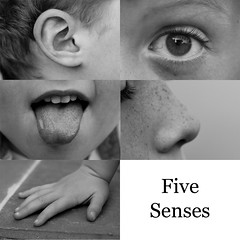
| 4329240915 | Imagry | Vivid descriptive language that appeals to one or more of the senses. | 50 | |
| 4329288121 | Induction | A method of reasoning by which a rhetor collects a number of instances and forms a generalization that is meant to apply to all instances. | 51 | |
| 4329291637 | Invective | Denunciatory or abusive language; discourse that casts blame on somebody or something. | 52 | |
| 4329301440 | Irony | The use of words to convey the opposite of their literal meaning. A statement or situation where the meaning is directly contradicted by the appearance or presentation of the idea. | 53 | |
| 4329303917 | Isocolon | A succession of phrases of approximately equal length and corresponding structure. | 54 | |
| 4329308032 | Jargon | The specialized language of a professional, occupational, or other group, often meaningless to outsiders. | 55 | |
| 4329309657 | Litotes | A figure of speech consisting of an understatement in which an affirmative is expressed by negating its opposite. | 56 | |
| 4329311509 | Loose Sentence | A sentence structure in which a main clause is followed by subordinate phrases and clauses. Contrast with periodic sentence. | 57 | |
| 4329314688 | Metaphor | A figure of speech in which an implied comparison is made between two unlike things that actually have something important in common. | 58 | |
| 4329348469 | Metonymy | A figure of speech in which one word or phrase is substituted for another with which it is closely associated (such as "crown" for "royalty"). | 59 | |
| 4329360681 | Noun | The part of speech (or word class) that is used to name a person, place, thing, quality, or action. | 60 | |
| 4329375150 | Onomatopoeia | The formation or use of words that imitate the sounds associated with the objects or actions they refer to. | 61 | |
| 4329380573 | Oxymoron | A figure of speech in which incongruous or contradictory terms appear side by side. | 62 | |
| 4329382732 | Paradox | A statement that appears to contradict itself. | 63 | |
| 4329382799 | Parallelism | The similarity of structure in a pair or series of related words, phrases, or clauses. | 64 | |
| 4329384679 | Parody | A literary or artistic work that imitates the characteristic style of an author or a work for comic effect or ridicule. | 65 | |
| 4329387100 | Pathos | The means of persuasion that appeals to the audience's emotions. | 66 | |
| 4329389014 | Periodic Sentence | A long and frequently involved sentence, marked by suspended syntax, in which the sense is not completed until the final word--usually with an emphatic climax. | 67 | |
| 4329390909 | Personification | A figure of speech in which an inanimate object or abstraction is endowed with human qualities or abilities. | 68 | |
| 4329392554 | Point of View | The perspective from which a speaker or writer tells a story or presents information. | 69 | |
| 4329394218 | Predicate | One of the two main parts of a sentence or clause, modifying the subject and including the verb, objects, or phrases governed by the verb. | 70 | |
| 4329397205 | Pronoun | A word (a part of speech or word class) that takes the place of a noun. | 71 | |
| 4329397206 | Prose | Ordinary writing (both fiction and nonfiction) as distinguished from verse. | 72 | |
| 4329400971 | Refutation | The part of an argument wherein a speaker or writer anticipates and counters opposing points of view. | 73 | |
| 4329402400 | Repetition | An instance of using a word, phrase, or clause more than once in a short passage--dwelling on a point. | 74 | |
| 4329404512 | Rhetoric | The study and practice of effective communication. | 75 | |
| 4329406648 | Rhetorical Question | A question asked merely for effect with no answer expected. | 76 | |
| 4329408886 | Running Style | Sentence style that appears to follow the mind as it worries a problem through, mimicking the "rambling, associative syntax of conversation"--the opposite of periodic sentence style. | 77 | |
| 4329411944 | Sarcasm | A mocking, often ironic or satirical remark. | 78 | |
| 4329413990 | Satire | A text or performance that uses irony, derision, or wit to expose or attack human vice, foolishness, or stupidity. | 79 | |
| 4329416001 | Simile | A figure of speech in which two fundamentally unlike things are explicitly compared, usually in a phrase introduced by "like" or "as." | 80 | |
| 4329417976 | Style | Narrowly interpreted as those figures that ornament speech or writing; broadly, as representing a manifestation of the person speaking or writing. | 81 | |
| 4330208619 | Subject | The part of a sentence or clause that indicates what it is about. | 82 | |
| 4330211299 | Syllogism | A form of deductive reasoning consisting of a major premise, a minor premise, and a conclusion. | 83 | |
| 4330213750 | Subordination | Words, phrases, and clauses that make one element of a sentence dependent on (or subordinate to) another. Contrast with coordination. | 84 | |
| 4330304290 | Symbol | A person, place, action, or thing that (by association, resemblance, or convention) represents something other than itself. | 85 | |
| 4330306660 | Synecdoche | A figure of speech in which a part is used to represent the whole or the whole for a part. | 86 | |
| 4330310754 | Syntax | (1) The study of the rules that govern the way words combine to form phrases, clauses, and sentences. (2) The arrangement of words in a sentence. | 87 | |
| 4330316092 | Thesis | The main idea of an essay or report, often written as a single declarative sentence. | 88 | |
| 4330318314 | Tone | A writer's attitude toward the subject and audience. Tone is primarily conveyed through diction, point of view, syntax, and level of formality. | 89 | |
| 4330322584 | Transition | The connection between two parts of a piece of writing, contributing to coherence. | 90 | |
| 4330325540 | Understatement | A figure of speech in which a writer deliberately makes a situation seem less important or serious than it is. | 91 | |
| 4330327565 | Verb | The part of speech (or word class) that describes an action or occurrence or indicates a state of being. | 92 | |
| 4330331069 | Voice | (1) The quality of a verb that indicates whether its subject acts (active voice) or is acted upon (passive voice). (2) The distinctive style or manner of expression of an author or narrator. | 93 | |
| 4330334707 | Zeugma | The use of a word to modify or govern two or more words although its use may be grammatically or logically correct with only one. | 94 | |
| 4330399578 | Appeal to Ignorance | A fallacy that uses an opponent's inability to disprove a conclusion as proof of the conclusion's correctness. | 95 | |
| 4330402085 | Argument | A course of reasoning aimed at demonstrating truth or falsehood. | 96 | |
| 4330405992 | Assonance | The identity or similarity in sound between internal vowels in neighboring words. | 97 | |
| 4330431529 | Mode of Discourse | The way in which information is presented in a text. The four traditional modes are narration, description, exposition, and argument. | 98 | |
| 4330435106 | Mood | (1) The quality of a verb that conveys the writer's attitude toward a subject. (2) The emotion evoked by a text. | 99 | |
| 4330437949 | Narrative | A rhetorical strategy that recounts a sequence of events, usually in chronological order. | 100 |