

AP World History: Ancient World Flashcards
First set of words in the AP World History book by the Princeton Review.
Terms : Hide Images
| 6590231951 | Agriculture | The deliberate effort to modify a portion of Earth's surface through the cultivation of crops and the raising of livestock for sustenance or economic gain. | 0 | |
| 6590231952 | Agrarian | pertaining to land or its cultivation; Ex. agrarian reform, agrarian society | 1 | |
| 6590231953 | Bands/ Clans | extended family groups that generally lived together | 2 | |
| 6590231954 | Barbarian | without civilizing influences | 3 | |
| 6590231955 | Bureaucracy | system of managing government through departments run by appointed officials (not elected) | 4 | |
| 6590231956 | Civilization | a society in an advanced state of social development (e.g., with complex legal and political and religious organizations) | 5 | |
| 6590231957 | City-States | different sections of land owned by the same country but ruled by different rulers (e.g. Greece) | 6 | |
| 6590231958 | Classical | of or characteristic of a form or system felt to be of first significance before modern times | 7 | |
| 6590231959 | Domestication | process of changing plants or animals to make them more useful to humans | 8 | |
| 6590231960 | Economy | system by which goods and services are produced and distributed to meet people's needs | 9 | |
| 6590231961 | Egalitarian | a person who believes in the equality of all people | 10 | |
| 6590231962 | Emperor | supreme ruler of an empire | 11 | |
| 6590231963 | Empire | many territories, countries, or peoples controlled by one government (also just any territory ruled by an emperor) | 12 | |
| 6590231964 | Feudalism | a political system and a social system where by a powerful lord would offer "protection" in return for "service" | 13 | |
| 6590231965 | Foraging | the process of scavenging for food | 14 | |
| 6590231966 | Hierarchy | a series of ordered groupings of people or things within a system | 15 | |
| 6590231967 | Hierarchical | Of, relating to, or arranged in a hierarchy | 16 | |
| 6590231968 | Hunter-Gatherer | A hunter-gatherer society is one whose primary subsistence method involves the direct procurement of edible plants and animals from the wild, foraging and hunting without significant recourse to the domestication of either plants nor animals | 17 | |
| 6590231969 | Irrigation | supplying dry land with water by means of ditches, sprinklers, etc. | 18 | |
| 6590231970 | Monarchy | a government in which power is in the hands of a single person who usually inherits their power | 19 | |
| 6590231971 | Monotheism | belief in a single God | 20 | |
| 6590231972 | Neolithic | The New Stone Age from circa 8500 to 4500 BCE: The period of the Stone Age associated with the ancient Agricultural Revolution(s) | 21 | |
| 6590231973 | Nomadic | (of groups of people) tending to travel and change settlements frequently | 22 | |
| 6590231974 | Pastoral | relating to shepherds or herdsmen or devoted to raising sheep or cattle (e.g. pastoral peoples) | 23 | |
| 6590231975 | Paleolithic | The Old Stone Age from circa 750,00 to 500,000 years BCE to 8,500 years BCE: The period of the Stone Age associated with the evolution of humans and the development of minor tools | 24 | |
| 6590231976 | Philosophy | the rational investigation of questions about existence, knowledge, and ethics | 25 | |
| 6590231977 | Polytheism | belief in multiple Gods | 26 | |
| 6590231978 | River Valley | the fertile land surrounding a river- the first civilizations arose near them | 27 | |
| 6590231979 | Sedentary | remaining in one place | 28 | |
| 6590231980 | Settlement | the act of colonizing or a small group of people in a sedentary position | 29 | |
| 6590231981 | Subsistence | the necessities of life, the resources of survival | 30 | |
| 6590231982 | Surplus | a quantity much larger than is needed | 31 | |
| 6590231983 | Sustenance | the act of sustaining life by food or providing a means of subsistence | 32 | |
| 6590231984 | Theocracy | government run by religious leaders | 33 | |
| 6590231985 | Traditional | consisting of or derived from tradition; customary practices | 34 | |
| 6590231986 | Urbanization | the social process whereby cities grow and societies become more urban | 35 | |
| 6590231987 | Vassals | lesser lords who pledged their service and loyalty to a greater lord -- in a military capacity | 36 | |
| 6590231988 | Alexander the Great | king of Macedon, conqueror of Greece, Egypt, and Persia; founder of Alexandria (356-323 BC) |  | 37 |
| 6590231989 | Analects of Confucius | "something that is repeated" - a collection of Confucius' famous sayings | 38 | |
| 6590231990 | Bronze Age | a period between the Stone and Iron ages, characterized by the manufacture and use of bronze tools and weapons |  | 39 |
| 6590231991 | Calendar | a system of timekeeping that defines the beginning and length and divisions of the year | 40 | |
| 6590231992 | Code of Hammurabi | the set of laws drawn up by Babylonian king Hammurabi dating to the 18th century BC, the earliest legal code known in its entirety |  | 41 |
| 6590231993 | Cuneiform | One of the first written languages known: A system of writing in which wedge-shaped symbols represented words or syllables. It originated in Mesopotamia and was used initially for Sumerian and Akkadian but later was adapted to represent other languages of western Asia. | 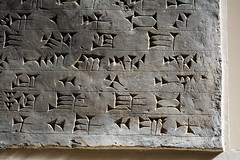 | 42 |
| 6590231994 | Democracy | a political system in which the supreme power lies in a body of citizens who can elect people to represent them | 43 | |
| 6590231995 | Eight Fold Path | Eight steps to end suffering and attain enlightenment according to Buddhist tradition. | 44 | |
| 6590231996 | Four Noble Truths | as taught by the Buddha, the four basic beliefs that form the foundation of Buddhism | 45 | |
| 6590231997 | Gothic Migrations | The Migration period, also called the Barbarian Invasions or German: Völkerwanderung (wandering of the peoples), was a period of human migration that occurred roughly between the years 300 to 700 CE in Europe, marking the transition from Late Antiquity to the Early Middle Ages. These movements were catalyzed by profound changes within both the Roman Empire and the so-called 'barbarian frontier'. Migrating peoples during this period included the Goths, Vandals, Bulgars, Alans, Suebi, Frisians, and Franks, among other Germanic and Slavic tribes. | 46 | |
| 6590231998 | Great Wall | a fortification 1,500 miles long built across northern China in the 3rd century BC | 47 | |
| 6590231999 | Han Dynasty | imperial dynasty that ruled China (most of the time from 206 BC to AD 220) and expanded its boundaries and developed its bureaucracy |  | 48 |
| 6590232000 | Hellenism | The ideals and principles that spread from Greece through much of the ancient world. Much of its influence such as philosophy, athletics, and architecture penetrated the Middle East. |  | 49 |
| 6590232001 | The Huns | Fierce warriors from Central Asia- First invaded southeastern Europe and then launched raids on nearby kingdoms | 50 | |
| 6590232002 | Indian Ocean Trade | connected to Europe, Africa, and China.; worlds richest maritime trading network and an area of rapid Muslim expansion. |  | 51 |
| 6590232003 | Iron Age | the period following the Bronze Age; characterized by rapid spread of iron tools and weapons | 52 | |
| 6590232004 | Jewish Diaspora | A "scattering" of the Jewish people | 53 | |
| 6590232005 | Legalism | In Chinese history, Legalism was one of the main philosophic currents during the Warring States Period- A philosophy of focusing on the text of written law to the exclusion of the intent of law, elevating strict adherence to law over justice, mercy and common sense |  | 54 |
| 6590232006 | Pax Romana | A period of peace and prosperity throughout the Roman Empire, lasting from 27 B.C. to A.D. 180. | 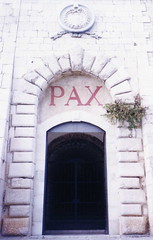 | 55 |
| 6590232007 | Pyramids | Huge stone tombs with four triangle-shaped walls that met in a point on top |  | 56 |
| 6590232008 | Roman Republic | The period from 507 to 31 B.C.E., during which Rome was largely governed by the aristocratic Roman Senate. | 57 | |
| 6590232009 | Roman Senate | a council of wealthy and powerful Romans that advised the city's leaders | 58 | |
| 6590232010 | Shang Civilization | China's first dynasty almost 2000 BCE | 59 | |
| 6590232011 | Shi Huang Di | harsh ruler who united China for the first time and used legalism in ruling (Qin China) |  | 60 |
| 6590232012 | Siddhartha Gautama | founder of Buddhism; born a prince; left his father's wealth to find the cause of human suffering; also know as Buddha |  | 61 |
| 6590232013 | Silk Road Trade | The most famous of the trading routes established by pastoral nomads connecting the Chinese, Indian, Persian, and Mediterranean civilizations; transmitted goods and ideas among civilization. |  | 62 |
| 6590232014 | The Torah | the most sacred text of Judaism | 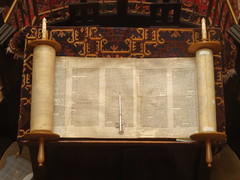 | 63 |
| 6590232015 | The Vedas of Hinduism | Aryan hymns originally transmitted orally but written down in sacred books from the 6th century B.C.E. |  | 64 |
| 6590232016 | Ziggurats | a temple or tomb of the ancient Assyrians, Sumerians, or Babylonians, having the form of a terraced pyramid of successively receding stories |  | 65 |
| 6590232017 | Christianity | Monotheistic religion born out of Judaism, preached by Jesus of Nazareth and later codified by his disciples. Persecuted by Romans early on; however, gained support under Constantine in the Rome. |  | 66 |
| 6590232018 | Buddhism | originally preached by Siddhartha and codified by his disciples into the sutras. Rejected Vedic rituals and the caste system. Spread throughout SE Asia and China and split into Mahayana(Buddha as a God, local gods tacked on as Bodhisativas) and Theravada(original, strict non-theistic version). | 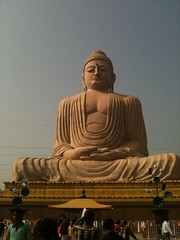 | 67 |
| 6590232019 | Asoka | Third ruler of the Mauryan Empire in India (r. 270-232 B.C.E.). He converted to Buddhism and broadcast his precepts on inscribed stones and pillars, the earliest surviving Indian writing. |  | 68 |
| 6590232020 | Hinduism | Term for a wide variety of beliefs and ritual practices that have developed in the Indian subcontinent since antiquity. It has roots in ancient Vedic, Buddhist, and south Indian religious concepts and practices. |  | 69 |
| 6590232021 | Trans Saharan | route across the sahara desert. Major trade route that traded for gold and salt, created caravan routes, economic benefit for controlling dessert, camels played a huge role in the trading |  | 70 |
| 6590232022 | Monsoons | Major winds in the Indian Ocean that blew into India for half the year, and blew away from India for the other half. Helped facilitate trade in the Indian Ocean. |  | 71 |
| 6590232023 | Sumerians | people who dominated Southern Mesopotamia through the end of the 3rd Millennium BCE. Responsible for the creation of irrigation technology, cuneiform, and religious conceptions. |  | 72 |
| 6590232024 | Indo-Europeans | Groups of people who came from the area north of the Caucasus mountains, which are between the Black and Caspian seas. Herded multiple animals. Rode into battle on chariots. The Indo-European language of Sanskrit, by the Aryans, are the basis of many languages today. Often accepted and adapted aspects of technology, religions, and social order of those with whom they came in contact. |  | 73 |
| 6590232025 | Before agriculture, men and women are believed to have a greater degree of equality. But after the rise of agriculture, most human societies became ________ as a result of greater male strength. | Patriarchal |  | 74 |
| 6590232026 | caste system | a set of rigid social categories that determined not only a person's occupation and economic potential, but also his or her position in society, there was virtually no social mobility |  | 75 |
| 6590232027 | Paleolithic | (Old Stone Age) a long period of human development before the development of agriculture |  | 76 |
| 6590232028 | Carthage | This city has existed for nearly 3,000 years, developing from a Phoenician colony of the 1st millennium BC into the capital of the Carthaginian Empire. Controlled commerce in the Mediterranean prior to the rise of Roman Power. The expanding Roman Republic took control of many of its outposts after the two Punic Wars. |  | 77 |
| 6590232029 | Hellenization | The spread of Greek language and culture (Hellenism) throughout the Mediterranean, starting with t he conquests of Alexander the Great. Upon Alexander's death at the age of thirty-three (323 B.C.E.), his realm was divided among his leading generals. During their reigns and those of their successors, Hellenism (i.e., Greek culture) continued to flourish in major urban centers around the eastern Mediterranean (less so in rural areas). People traveling to different areas could communicate with people of other kingdoms through Greek. More than at any time in previous history, the eastern Mediterranean that emerged in Alexander's wake experienced a form of cultural unity and cosmopolitanism (a "cosmopolite" is a "citizen of the world," as opposed to a person who belongs to only one locality). The Roman Empire arose in the context of the Hellenistic world and took full advantage of its unity, promoting the use of Greek language, accepting aspects of Greek culture, and even taking over features of the Greek religion, to the point that the Greek and Roman gods came to be thought of as the same, only with different names. This complex unity achieved culturally through Hellenization and politically through the conquests of Rome is summed up by the term Greco-Roman world. | 78 | |
| 6590232030 | Daoism | Chinese religion that believes the world is always changing and is devoid of absolute morality or meaning. They accept the world as they find it, avoid futile struggles, and deviate as little as possible from 'the way' or 'path' of nature. |  | 79 |
| 6590232031 | Bureaucrat | government official | 80 |
AP Language Vocab Flashcards
Terms : Hide Images
| 3024092196 | Abstract | Not concrete | 0 | |
| 3024096191 | Ad Hominem Argument | An argument attacking an individual's character rather than his or her position on an issue | 1 | |
| 3024097994 | Adynaton | hyperbole taken to such extreme lengths insinuating a complete impossibility. | 2 | |
| 3024110050 | Allegory | A literary work in which characters, objects, or actions represent abstractions | 3 | |
| 3024110051 | Alliteration | Repetition of consonant sounds | 4 | |
| 3024110052 | Allusion | A direct or indirect reference to something which is presumably commonly known, such as an event, book, myth, place, or work of art. Allusions can be historical, literary, religious, topical, or mythical. There are many more possibilities, and a work may simultaneously use multiple layers of allusion. | 5 | |
| 3024111837 | Ambiguity | An event or situation that may be interpreted in more than one way. | 6 | |
| 3024111838 | Anaphora | A rhetorical figure of repetition in which the same word or phrase is repeated in (and usually at the beginning of) successive lines, clauses, or sentences. | 7 | |
| 3024111839 | Analogy | A comparison of two different things that are similar in some way | 8 | |
| 3024114122 | Analytical Reading | reading actively, paying close attention to both the content and the structure of the text | 9 | |
| 3024114123 | Antecedent | The word, phrase, or clause referred to by a pronoun. | 10 | |
| 3024114124 | Antithesis | Direct opposite | 11 | |
| 3024115588 | Aphorism | Pithy statement of basic truth | 12 | |
| 3024115589 | Apostrophe | A figure of speech that directly addresses an absent or imaginary person or a personified abstraction, such as liberty or love. | 13 | |
| 3024118881 | Apotheiosis | Where a character is deified in a literature piece | 14 | |
| 3024118882 | Appositive | A word or phrase that renames a nearby noun or pronoun. | 15 | |
| 3024121443 | Appropriateness | Diction | 16 | |
| 3024121444 | Argument | A statement put forth and supported by evidence | 17 | |
| 3024121445 | Assertion | Thesis put forward | 18 | |
| 3024123305 | Assonance | Repetition of a vowel sound within two or more words in close proximity | 19 | |
| 3024123306 | Assumption | A belief or statement taken for granted without proof. | 20 | |
| 3024123307 | Asyndeton | A construction in which elements are presented in a series without conjunctions | 21 | |
| 3024125039 | Atmosphere | The emotional nod created by the entirety of a literary work, established partly by the setting and partly by the author's choice of objects that are described. Even such elements as a description of the weather can contribute to the atmosphere. Frequently atmosphere foreshadows events. Perhaps it can create a mood. | 22 | |
| 3024125040 | Attitude | Tone | 23 | |
| 3024125041 | Audience | One's listener or readership; those to whom a speech or piece of writing is addressed. | 24 | |
| 3024125042 | Bathos | insincere or overly sentimental quality of writing/speech intended to evoke pity | 25 | |
| 3024128852 | Beginning | Introduction in literature | 26 | |
| 3024131103 | Cause and Effect Analysis | one of the types of exposition, answers the question "why?", explains the reasons for an occurrence or the consequences of an action | 27 | |
| 3024131104 | Chiasmus | A statement consisting of two parallel parts in which the second part is structurally reversed | 28 | |
| 3024131105 | Claim | An assertion, usually supported by evidence | 29 | |
| 3024134666 | Classification | Assignment of objects or people to categories on the basis of shared characteristics. | 30 | |
| 3024134667 | Cliche | A worn-out idea or overused expression | 31 | |
| 3024134668 | Coherence | A principle demanding that the parts of any composition be arranged so that the meaning of the whole may be immediately clear and intelligible. | 32 | |
| 3024136970 | Colloquial Expressions | Words and phrases used in everyday speech but avoided in formal writing | 33 | |
| 3024138565 | Comparison and Contrast | A mode of discourse in which two or more things are compared and contrasted. Comparison often refers to similarities, contrast to differences. | 34 | |
| 3024138566 | Conclusions | Summing up of an argument or text | 35 | |
| 3024138567 | Concrete | specific | 36 | |
| 3024140357 | Connotation | All the meanings, associations, or emotions that a word suggests | 37 | |
| 3024140358 | Denotation | The dictionary definition of a word | 38 | |
| 3024140359 | Controlling Ideas | Thesis | 39 | |
| 3024142184 | Contrast | The state of being noticeably different from something else when put or considered together. | 40 | |
| 3024142185 | Cumulative Sentence | An independent clause followed by subordinate clauses or phrases that supply additional detail. | 41 | |
| 3024146830 | Deduction | reasoning down from principles | 42 | |
| 3024146831 | Definition | Statement of the meaning of a word | 43 | |
| 3024146832 | Description | A rhetorical mode based in the five senses. It aims to re-create, invent, or present something so that the reader can experience it. | 44 | |
| 3024148437 | Dialogue | Conversation between characters | 45 | |
| 3024148438 | Diction | A writer's or speaker's choice of words | 46 | |
| 3024148439 | Division | Broken into subunits and catagories | 47 | |
| 3024150072 | Dominant Impression | the single quality, mood, or atmosphere the writer wishes to emphasize | 48 | |
| 3024150073 | Draft | Versions of Writing | 49 | |
| 3149333780 | Editing | Purpose- correcting spelling, grammar, punctuation, mechanics, etc. Strategies- peer editing groups; proof reading; computer programs for spelling, etc.; programmed materials; and mini lessons. | 50 | |
| 3149369862 | Elegiac | Expressing sorrow or lamentation | 51 | |
| 3149333781 | Emphasis | Special importance, value, or prominence given to something. | 52 | |
| 3149335470 | Endings | Conclusion | 53 | |
| 3149335471 | Essay | a short piece of writing on a particular subject. | 54 | |
| 3149335472 | Ethos | The characteristic spirit or ideal that informs a work. | 55 | |
| 3149335473 | Euphemisn | Mild or pleasant sounding expression used do soften something. | 56 | |
| 3149335474 | Evaluation | Evaluating a piece of writing. | 57 | |
| 3149337322 | Evidence | Data on which a judgement was established. | 58 | |
| 3149337323 | Examples | Illustrate larger ideas. | 59 | |
| 3149337324 | Exemplification | Exposition that takes a generalization and makes it more vivid. | 60 | |
| 3149339149 | Exposition | One of four types or prose. To clarify and inform. | 61 | |
| 3149339150 | Fact | Information with verified certainty. | 62 | |
| 3149339151 | Fallacy | 63 | ||
| 3149339152 | Figures of Speech | Brief comparisons like simile, metaphor, and personification. | 64 | |
| 3149339153 | Fiction | Works of fiction are not real. | 65 | |
| 3149341321 | Figurative Languange | Imaginative comparison. | 66 | |
| 3149341322 | Focus | The limitation that a writer gives his/her subject. | 67 | |
| 3149341323 | Foreshadowing | Purposeful thing placed in a work. | 68 | |
| 3149342788 | General | 69 | ||
| 3149342789 | Grammar | Set or rules to specify how a given language is used effectively. | 70 | |
| 3149342790 | Hyperbole | Exaggeration. | 71 | |
| 3149342791 | Ibid | ibidem (in the same place) | 72 | |
| 3149342792 | Idiom | "catch cold, hold a job, make up your mind, give them a hand." Word/phrase habitually with a particular meaning in a language. | 73 | |
| 3149342793 | Illustration | 74 | ||
| 3149344176 | Image | Mental picture in a piece. | 75 | |
| 3149344177 | Induction | Process of reasoning to a conclusion. | 76 | |
| 3149344178 | introductions | 77 | ||
| 3149345723 | Irony | Irony occurs when a situation produces an outcome that is the opposite of what is expected. | 78 | |
| 3149345724 | Jargon | The special language of a trade or profession. | 79 | |
| 3149349596 | Juxtaposition | When two contrasting things - ideas words or sentence elements - are placed next to each other for comparison, a juxtaposition occurs. | 80 | |
| 3321649355 | Logical Fallacies | An error in reasoning that renders an argument invalid. | 81 | |
| 3321649356 | Logical Reasoning | Process of reasoning form a stated premise to a necessary conclusion. | 82 | |
| 3321650133 | Logos | An appeal based on logic or reason | 83 | |
| 3321650864 | Loose Sentence | A complex sentence in which the main clause comes first and the subordinate clause follows | 84 | |
| 3321650865 | Malapropism | a word humorously misused | 85 | |
| 3321650866 | Metaphor | A comparison that establishes a figurative identity between objects being compared. | 86 | |
| 3321651438 | Metonymy | A figure of speech in which one word or phrase is substituted for another with which it is closely associated (such as "crown" for "royalty"). | 87 | |
| 3321651439 | Mood | Feeling or atmosphere that a writer creates for the reader | 88 | |
| 3321651440 | Narration | writing that tells a story | 89 | |
| 3321652260 | Objective | Factual, related to reality or physical objects; not influenced by emotions, unbiased | 90 | |
| 3321652261 | Subjective | Existing in the mind or relating to one's own thoughts, opinions, emotions, etc.; personal, individual, based on feelings | 91 | |
| 3321653330 | Onomatopoeia | A word that imitates the sound it represents. | 92 | |
| 3321653331 | Opinion | Belief or conclusion not sub substantiated by actual fact. | 93 | |
| 3321653332 | Organization | Proses are organized in certain ways. | 94 | |
| 3321654256 | Overview | Brief summary of the whole work. | 95 | |
| 3321654257 | Oxymoron | A figure of speech that combines opposite or contradictory terms in a brief phrase. | 96 | |
| 3321654258 | Pacing | Speed of a story's action. | 97 | |
| 3321654915 | Paradox | A statement or proposition that seems self-contradictory or absurd but in reality expresses a possible truth. | 98 | |
| 3321654916 | Paragraph | A section of a piece of writing, dealing with one topic. | 99 | |
| 3321655465 | Parallelism | Phrases or sentences of a similar construction/meaning placed side by side, balancing each other | 100 | |
| 3321655466 | Parody | A work that closely imitates the style or content of another with the specific aim of comic effect and/or ridicule. | 101 | |
| 3321655467 | Pathos | Appeal to emotion | 102 | |
| 3321656098 | Periodic Sentence | A sentence structure where the main independent clause concludes the sentence often with the effect of a build up followed by a punch line. | 103 | |
| 3321676401 | Person | A grammatical term that describes the relationship of a writer of a speaker to an audi | 104 | |
| 3321676402 | Persona | The character created by the voice and narration of the speaker of a text. The term, "persona" implies a fictional representation or an act of disguise. | 105 | |
| 3321676403 | Personifiation | giving non living things living characteristics | 106 | |
| 3321677319 | Point of View | The perspective from which a story is told | 107 | |
| 3321677320 | Polysyndeton | Deliberate use of many conjunctions | 108 | |
| 3321677321 | Prewriting | FIRST STEP IN WRITING PROCESS WHERE STUDENT CHOOSES A TOPIC, IDENTIFIES A PURPOSE (WHETHER TO INSTRUCT, ENTERTAIN AND/OR PERSUADE), DECIDES ON A FORMAT, CONSIDERS THE INTENDED AUDIENCE, AND GENERATED IDEAS. | 109 | |
| 3321678056 | Process Analysis | A method of paragraph or essay development by which a writer explains step by step how something is done or how to do something. | 110 | |
| 3321678057 | Publication | Shares work with public. | 111 | |
| 3321678768 | Pun | A play on words | 112 | |
| 3321682819 | Purpose | What the writer wants to accomplish. | 113 |
AP Language Flashcards
Terms needed for success on the AP Language and Composition Exam
Terms : Hide Images
| 6801179937 | Personification | The assigning of human qualities to inanimate objects or concepts. An example: Wordsworth's "the sea that bares her bosom to the moon." | 0 | |
| 6801179938 | Ambiguity | The uncertainty or indefinite to a subject with more than one interpertation | 1 | |
| 6801179939 | Oxymoron | From the Greek for "pointedly foolish," ___ is a figure of speech wherein the author groups apparently contradictory terms. Simple examples include "jumbo shrimp" and "cruel kindness." | 2 | |
| 6801179940 | Sarcasm | from the Greek meaning "to tear flesh," ___ involves bitter, caustic language that is meant to hurt or ridicule someone or something. It may use irony as a device. | 3 | |
| 6801179942 | Hyperbole | a figure of speech using deliberate exaggeration or overstatement | 4 | |
| 6801179943 | Logical Fallacies | an error in reasoning that renders an argument invalid | 5 | |
| 6801179944 | Either/Thinking | to see an issue as having only two sides. | 6 | |
| 6801179945 | Non sequitur | a conclusion that does not follow from established premises or evidence | 7 | |
| 6801179946 | Paradox | A statement that appears to be self-contradictory or opposed to common sense but upon closer inspection contains some degree of truth or validity. | 8 | |
| 6801179947 | Onomatopoeia | a figure of speech in which natural sounds are imitated in the sounds of words. Simple examples include such words as buzz, hiss, hum. | 9 | |
| 6801179949 | Metaphor | a direct comparison between dissimilar things. "Your eyes are stars" is an example. | 10 | |
| 6801179950 | Symbol | generally, anything that represents, stands for, something else. Usually, a ___ is something concrete—such as an object, action, character, or scene—that represents something more abstract. | 11 | |
| 6801179951 | Begging the question | Assuming in a premise that which needs to be proven. | 12 | |
| 6801179952 | Understatement | the opposite of exaggeration. It is a technique for developing irony and/or humor where one writes or says less than intended. | 13 | |
| 6801179953 | False analogy | Assuming ina premises that needs to be proven | 14 | |
| 6801179954 | Imagery | The sensory details or figurative language used to describe, arouse emotion, or represent abstractions. On a physical level, __ uses terms related to the five senses; we refer to visual, auditory, tactile, gustatory, or olfactory. For example, a rose may present visual __ while also representing the color in a woman's cheeks. | 15 | |
| 6801179955 | Figure of Speech | A device used to produce figurative language. Many compare dissimilar things. Examples are apostrophe, hyperbole, irony, metaphor, metonomy, oxymoron, paradox, personification, simile, synecdoche, and understatement. | 16 | |
| 6801179956 | Irony | The contrast between what is stated explicitly and what is really meant. The difference between what appears to be and what actually is true. | 17 | |
| 6801179957 | Satire | A work that targets human vices and follies or social institutions and convention for reform or ridicule. Regardless of whether or not the work aims to reform humans or their society, ___ is best seen as a style of writing rather than a purpose for writing. The effect of __, often humorous, is thought provoking and insightful about the human condition. | 18 | |
| 6801179958 | Alliteration | The repetition of initial consonant sounds, such as "Peter Piper picked a peck of pickled peppers." | 19 | |
| 6801179959 | Narrative | The telling of a story or an account of an event or series of events. | 20 | |
| 6801179960 | Ethos | an appeal based on the character of the speaker. An __-driven document relies on the reputation of the author. | 21 | |
| 6801179961 | Situational Irony | a type of irony in which events turn out the opposite of what was expected. | 22 | |
| 6801179962 | Pathos | an appeal based on emotion. | 23 | |
| 6801179963 | Logos | an appeal based on logic or reason | 24 | |
| 6801179964 | Anecdote | A story or brief episode told by the writer or a character to illustrate a point. | 25 | |
| 6801179965 | Abstract Language | Language describing ideas and qualities rather than observable or specific things, people, or places. | 26 | |
| 6801179966 | Denotation | the literal or dictionary meaning of a word | 27 | |
| 6801179967 | Parody | A work that closely imitates the style or content of another with the specific aim of comic effect and/or ridicule. | 28 | |
| 6801179968 | Connotation | the interpretive level or a word based on its associated images rather than its literal meaning. | 29 | |
| 6801179969 | Repetition | The duplication, either exact or approximate, or any element of language, such as sound, word, phrase, clause, sentence, or grammatical pattern. | 30 | |
| 6801179970 | Syntax | The grammatical structure of prose and poetry. | 31 | |
| 6801179971 | Argument | A single assertion or a series of assertions presented and defended by the writer | 32 | |
| 6801179972 | Allusion | A reference contained in a work | 33 | |
| 6801179973 | Parallelism | refers to the grammatical or rhetorical framing of words, phrases, sentences, or paragraphs to give structural similarity. | 34 | |
| 6801179974 | Analogy | a literary device employed to serve as a basis for comparison. It is assumed that what applies to the parallel situation also applies to the original circumstance. In other words, it is the comparison between two different items. | 35 | |
| 6801179975 | Figurative Language | Writing or speech that is not intended to carry literal meaning and is usually meant to be imaginative and vivid. | 36 | |
| 6801179976 | Description | The purpose of this rhetorical mode is to re-create, invent, or visually present a person, place, event, or action so that the reader can picture that being described. Sometimes an author engages all five senses. | 37 | |
| 6801179977 | Argumentation | The purpose of this rhetorical mode is to prove the validity of an idea, or point of view, by presenting sound reasoning, discussion, and argument that thoroughly convince the reader. | 38 | |
| 6801179978 | Narration | The purpose of this type of rhetorical mode is to tell the story or narrate an event or series of events. | 39 | |
| 6801179979 | Colloquial | the use of slang in writing, often to create local color and to provide an informal tone. Huckleberry Finn in written in a __ style. | 40 | |
| 6801179980 | Antecedent | the word, phrase, or clause to which a pronoun refers. | 41 | |
| 6801179981 | Style | an evaluation of the sum of the choices an author makes in blending diction, syntax, figurative language, and other literary devices. | 42 | |
| 6801179982 | Thesis | The sentence or group of sentences that directly expresses the author's opinion, purpose, meaning, or proposition. | 43 | |
| 6801179983 | Dialect | the recreation of regional spoken language, such as a Southern one. Twain uses this in Huckleberry Finn. | 44 | |
| 6801179984 | Asyndeton | Commas used (with no conjunction) to separate a series of words. The parts are emphasized equally when the conjunction is omitted; in addition, the use of commas with no intervening conjunction speeds up the flow of the sentence. X, Y, Z as opposed to X, Y, and Z. | 45 | |
| 6801179985 | Wit | In modern usage, intellectually amusing language that surprises and delights. Usually uses terse language that makes a pointed statement. | 46 | |
| 6801179986 | Mood | This term has two distinct technical meanings in English writing. The first meaning is grammatical and deals with verbal units and a speaker's attitude. The second meaning is literary, meaning the prevailing atmosphere or emotional aura of a work. | 47 | |
| 6801179987 | Diction | the author's choice of words that creates tone, attitude, and style, as well as meaning | 48 | |
| 6801179988 | Tone | A writer's attitude toward his or her subject matter revealed through diction, figurative language, and organization on the sentence and global levels. | 49 | |
| 6801179989 | Juxtaposition | Placement of two things closely together to emphasize comparisons or contrasts | 50 |
Flashcards
AP Literature unit 2 Flashcards
Terms : Hide Images
| 2958542172 | Animadversion | An unfavorable or censorious comment | 0 | |
| 2958542190 | Avid | showing great enthusiasm for or interest in | 1 | |
| 2958545075 | Brackish | slightly salt; having a salty or briny flavor | 2 | |
| 2958545076 | Celerity | swiftness; speed | 3 | |
| 2958548711 | Covenant | an agreement, usually formal, between two or more persons to do or not do something specified | 4 | |
| 2958548712 | Devious | departing from the most direct way; circuitous; indirect | 5 | |
| 2958550382 | Gambit | any maneuver by which one seeks to gain an advantage | 6 | |
| 2958550383 | Histrionic | of or relating to actors or acting. | 7 | |
| 2958553147 | Hoyden | a boisterous, bold, and carefree girl; a tomboy | 8 | |
| 2958553148 | Invidious | calculated to create ill will or resentment or give offense; hateful | 9 | |
| 2958554851 | Maelstrom | a large, powerful, or violent whirlpool | 10 | |
| 2958554879 | Myopic | unable or unwilling to act prudently; shortsighted | 11 | |
| 2958556534 | Overt | open to view or knowledge; not concealed or secret | 12 | |
| 2958556535 | Pejorative | having a disparaging, derogatory, or belittling effect or force | 13 | |
| 2958558390 | Propound | to put forward or offer for consideration, acceptance, or adoption; set forth; propose | 14 | |
| 2958558391 | Propriety | conformity to established standards of good or proper behavior or manners | 15 | |
| 2958562873 | Sacrilege | the violation or profanation of anything sacred or held sacred | 16 | |
| 2958562874 | Summarily | in a prompt or direct manner; immediately; straightaway | 17 | |
| 2958562875 | Suppliant | a person making a humble plea to someone in power or authority. | 18 | |
| 2958564440 | Talisman | a stone, ring, or other object, engraved with figures or characters supposed to possess occult powers and worn as an amulet or charm. | 19 | |
| 2958566783 | Tremulous | characterized by trembling, as from fear, nervousness, or weakness | 20 | |
| 2958576265 | Undulate | to move with a sinuous or wavelike motion; display a smooth rising-and-falling or side-to-side alternation of movement: | 21 |
Exploring Psychology 9th edition Chapter 15 Flashcards
Terms : Hide Images
| 4331993258 | psychotherapy | Treatment involving psychological techniques; consists of interactions between a trained therapist and someone seeking to overcome psychological difficulties or achieve personal growth | 0 | |
| 4331993259 | biomedical therapy | Prescribed medications or procedures that act directly on the person's physiology. | 1 | |
| 4331993260 | eclectic approach | An approach to psychotherapy that, depending on the client's problems, uses techniques from various forms of therapy | 2 | |
| 4331993261 | psychoanalysis | Sigmund Freud's therapeutic technique. Freud believed the patient's free associations, resistances, dreams, and transferences- and the therapist's interpretations of them- released the previously repressed feelings, allowing the patient to gain self insight | 3 | |
| 4331993262 | resistance | In psychoanalysis, the blocking from consciousness of anxiety-laden material | 4 | |
| 4331993263 | interpretation | In psychoanalysis, the analyst's noting supposed dream meanings, resistances, and other significant behaviors and events in order to promote insight. | 5 | |
| 4331993264 | transference | In psychoanalysis, the patient's transfer to the analyst of emotions linked with other relationships (such as love or hatred for a parent). | 6 | |
| 4331993265 | psychodynamic therapy | therapy deriving from the psychoanalytic tradition that views individuals as responding to unconscious forces and childhood experiences, and that seeks to enhance self-insight | 7 | |
| 4331993266 | insight therapies | A variety of therapies which aim to improve psychological functioning by increasing the client's awareness of underlying motives and defenses | 8 | |
| 4331993267 | client-centered therapy | A humanistic therapy, developed by Carl Rogers, in which the therapist uses techniques such as active listening within a genuine, accepting, empathic environment to facilitate clients' growth. (also called person-centered therapy) | 9 | |
| 4331993268 | active listening | Empathic listening in which the listener echoes, restates, and clarifies. A feature of Rogers' client-centered therapy. | 10 | |
| 4331993269 | unconditional positive regard | a caring, accepting, nonjudgmental attitude, which Carl Rogers believed to be conducive to developing self-awareness and self-acceptance. | 11 | |
| 4331993270 | behavior therapy | therapy that applies learning principles to the elimination of unwanted behaviors | 12 | |
| 4331993271 | counterconditioning | behavior therapy procedures that use classical conditioning to evoke new responses to stimuli that are triggering unwanted behaviors; include exposure therapies and aversive conditioning | 13 | |
| 4331993272 | exposure therapies | Behavioral techniques, such as systematic desensitization and virtual reality exposure therapy, that treat anxieties by exposing people (in imagination or actuality) to the things they fear and avoid. | 14 | |
| 4331993273 | systematic desensitization | A type of exposure therapy that associates a pleasant relaxed state with gradually increasing anxiety-triggering stimuli. Commonly used to treat phobias. | 15 | |
| 4331993274 | virtual reality exposure therapy | an anxiety treatment that progressively exposes people to electronic simulations of their greatest fears, such as airplane flying, spiders, or public speaking | 16 | |
| 4331993275 | aversive conditioning | A type of counterconditioning that associates an unpleasant state (such as nausea) with an unwanted behavior (such as drinking alcohol) | 17 | |
| 4331993276 | token economy | An operant conditioning procedure in which people earn a token of some sort for exhibiting a desired behavior and can later exchange the tokens for various privileges or treats. | 18 | |
| 4331993277 | cognitive therapy | therapy that teaches people new, more adaptive ways of thinking and acting; based on the assumption that thoughts intervene between events and our emotional reactions | 19 | |
| 4331993278 | cognitive-behavioral therapy | A popular integrative therapy that combines cognitive therapy (changing self-defeating thinking) with behavior therapy (changing behavior) | 20 | |
| 4331993279 | group therapy | therapy conducted with groups rather than individuals, permitting therapeutic benefits from group interaction | 21 | |
| 4331993280 | family therapy | therapy that treats the family as a system. views an individual's unwanted behaviors as influenced by or directed at other family members | 22 | |
| 4331993281 | evidence-based practice | Clinical decision-making that integrates the best available research with clinical expertise and patient characteristics and preferences. | 23 | |
| 4331993282 | psychopharmacology | the study of the effects of drugs on mind and behavior | 24 | |
| 4331993283 | antipsychotic drugs | Drugs used to treat schizophrenia and other forms of severe thought disorder | 25 | |
| 4331993284 | antianxiety drugs | Drugs used to control anxiety and agitation | 26 | |
| 4331993285 | antidepressant drugs | Drugs used to treat depression and some anxiety disorders. Different types work by altering the availability of various neurotransmitters | 27 | |
| 4331993286 | electroconvulsive therapy (ECT) | a biomedical therapy for severely depressed patients in which a brief electric current is sent through the brain of an anesthetized patient | 28 | |
| 4331993287 | repetitive transcranial magnetic stimulation (rTMS) | The application of repeated pulses of magnetic energy to the brain; used to stimulate or suppress brain activity. | 29 | |
| 4331993288 | psychosurgery | surgery that removes or destroys brain tissue in an effort to change behavior | 30 | |
| 4331993289 | lobotomy | A psychosurgical procedure once used to calm uncontrollably emotional or violent patients. The procedure cut the nerves connecting the frontal lobes to the emotion-controlling centers of the inner brain. | 31 | |
| 4331993290 | resilience | the personal strength that helps most people cope with stress and recover from adversity and even trauma | 32 |
Myers Exploring Psychology 9th Edition Chapter 14 Flashcards
Terms : Hide Images
| 3421299714 | Psych disorder | A significant dysfunction in a person's thoughts, feelings, and behaviors | 0 | |
| 3421299715 | Dysfunction | Impaired or abnormal function and behavior | 1 | |
| 3421299716 | Distress | Extreme anxiety, sorrow, or pain | 2 | |
| 3421299717 | Deviance | Departing from usual or accepted standards | 3 | |
| 3421299718 | Medical model | The concept that diseases, in this case psych disorders, have physical causes that can be diagnosed, treated, and in most cases cured, often through treatment in a hospital | 4 | |
| 3421299719 | DSM-IV-TR | The APA's Diagnostic and Statistical Manual of Mental Disorders, 4th Ed, with an updated "text revision"; a widely used system for classifying psych disorders | 5 | |
| 3421299720 | Anxiety disorders | Psych disorders characterized by distressing, persistent anxiety or maladaptive behaviors that reduce anxiety | 6 | |
| 3421299721 | GAD | An anxiety disorder in which a person is continually tense, apprehensive, and in a state of autonomic nervous system arousal | 7 | |
| 3421299722 | Panic disorder | An anxiety disorder marked by unpredictable, minutes-long episodes of intense dread in which a person experiences terror and accompanying chest pain, choking, or other frightening sensations | 8 | |
| 3421299723 | Phobia | An anxiety disorder marked by a persistent, irrational fear and avoidance of a specific object, activity, or situation | 9 | |
| 3421299724 | OCD | An anxiety disorder characterized by unwanted repetitive thoughts (obsessions), actions (compulsions), or both | 10 | |
| 3421299725 | PTSD | An anxiety disorder characterized by haunting memories, nightmares, social withdrawal, jumpy anxiety, and/or insomnia that lingers for 4 weeks or more after a traumatic experience | 11 | |
| 3421299726 | Survivor resiliency | Ability to recover after severe stress | 12 | |
| 3421299727 | Mood disorders | Psych disorders characterized by emotional extremes | 13 | |
| 3421299728 | SAD | Depression associated with autumn and winter and thought to be caused by lack of light | 14 | |
| 3421299729 | Major depressive disorder | A mood disorder in which a person experiences, in the absence of drugs or another medical condition, 2 or more weeks of significantly depressed moods or diminished interest or pleasure in most activities, along with at least 4 other symptoms | 15 | |
| 3421299730 | Bipolar disorder | A mood disorder in which a person alternates between the hopelessness and lethargy of depression and the overexcited state of mania | 16 | |
| 3421299731 | Mania | A hyperactive, wildly optimistic state in which dangerously poor judgement is common | 17 | |
| 3421299732 | Schizophrenia | A group of severe disorders characterized by disorganized and delusional thinking, disturbed perceptions, and inappropriate emotions and behaviors | 18 | |
| 3421299733 | Psychosis | A psych disorder in which a person loses contact with reality, experiencing irrational ideas and distorted perceptions | 19 | |
| 3421299734 | Positive symptoms | The presence of inappropriate behaviors | 20 | |
| 3421299735 | Negative symptoms | The absence of appropriate behaviors | 21 | |
| 3421299736 | Delusions | False beliefs, often of persecution or grandeur, that may accompany psychotic disorders | 22 | |
| 3421299737 | Word salad | Jumbled ideas that make no sense to others | 23 | |
| 3421299738 | Selective attention | Giving undivided attention to one set of sensory stimuli while filtering out others | 24 | |
| 3421299739 | Hallucinations | Sensory experiences without sensory stimulation | 25 | |
| 3421299740 | Flat effect | Emotionless state of no apparent feeling | 26 | |
| 3421299741 | Catatonia | A condition in which a person remains motionless for hours | 27 | |
| 3421299742 | Chronic or process schizophrenia | Slow-developed schizophrenia | 28 | |
| 3421299743 | Acute or reactive schizophrenia | Rapidly-developed schizophrenia | 29 | |
| 3421299744 | Dissociative disorders | Disorders in which conscious awareness becomes separated from previous memories, thoughts, and feelings | 30 | |
| 3421299745 | DID | A rare dissociative disorder in which a person exhibits 2 or more distinct and alternating personalities | 31 | |
| 3421299746 | Anorexia nervosa | An eating disorder in which a person (usually an adolescent female) maintains a starvation diet despite being significantly (15% or more) underweight | 32 | |
| 3421299747 | Bulimia nervosa | An eating disorder in which a person alternates binge eating (usually of high-calorie foods) with purging (by vomiting or laxative use) or fasting | 33 | |
| 3421299748 | Binge-eating disorder | Significant binge-eating episodes, followed by distress, disgust, or guilt, but without the compensatory purging or fasting that marks bulimia nervosa | 34 | |
| 3421299749 | Personality disorders | Psych disorders characterized by inflexible and enduring behavior patterns that impair social functioning | 35 | |
| 3421299750 | Avoidant pd | A personality disorder characterized by feeling of extreme social inhibition, inadequacy, and sensitivity to negative criticism and rejection | 36 | |
| 3421299751 | Schizoid pd | A personality disorder in which a person avoids social activities, preferring their own company | 37 | |
| 3421299752 | Histrionic pd | A personality disorder characterized by a long-standing pattern of attention seeking behavior and extreme emotionality | 38 | |
| 3421299753 | Narcissistic pd | A personality disorder in which a person has an inflated sense of self-importance | 39 | |
| 3421299754 | Antisocial pd | A personality disorder in which a person (usually a man) exhibits a lack of conscience for wrongdoing, even toward friends and family members; may be aggressive and ruthless or a clever con artist | 40 |
Exploring Psychology (9th Edition) - Chapter 13 Vocab Flashcards
Myers 9th Edition.
Terms : Hide Images
| 2808084728 | Social Psychology | The scientific study of how we think about, influence, and relate to one another. | 0 | |
| 2808084729 | Attribution Theory | The theory that we explain someone's behavior by crediting either the situation or the person's disposition. | 1 | |
| 2808084730 | Fundamental Attribution Error | The tendency for observers, when analyzing another's behavior, to underestimate the impact of the situation and to overestimate the impact of personal disposition. Ex. I see him speeding and am more likely to think he's reckless than he's having an emergency | 2 | |
| 2808084734 | Foot-in-the-door phenomenon | The tendency for people who have first agreed to a small request to comply later with a larger request. | 3 | |
| 2808084736 | Cognitive Dissonance Theory | The theory that we act to reduce the discomfort (dissonance) we feel when two of our thoughts (cognitions) are inconsistent. For example, when we become aware that our attitudes and our actions clash, we can reduce the resulting dissonance by changing our attitudes. | 4 | |
| 2808084737 | Culture | The enduring behaviors, ideas, attitudes, values, and traditions shared by a group of people and transmitted from one generation to the next. | 5 | |
| 2808084738 | Norm | An understood rule for accepted and expected behavior. Norms prescribe "proper" behavior. | 6 | |
| 2808084739 | Conformity | Adjusting our behavior or thinking to coincide with a group standard. Yielding to real or imagined social pressure. | 7 | |
| 2808084744 | Social facilitation | Improved performance on simple or well-learned tasks in the presence of others. | 8 | |
| 2808084745 | Social loafing | The tendency for people in a group to exert less effort when pooling their efforts toward attaining a common goal than when individually accountable. | 9 | |
| 2808084746 | Deindividuation | The loss of self-awareness and self-restraint occurring in group situations that foster arousal and anonymity. | 10 | |
| 2808084747 | Group polarization | The enhancement of a group's prevailing inclinations through discussion within the group. | 11 | |
| 2808084748 | Prejudice | An unjustifiable and usually negative attitude toward a group and its members. Generally involves stereotyped beliefs, negative feelings, and a predisposition to discriminatory action. | 12 | |
| 2808084749 | Stereotype | A generalized (sometimes accurate but often overgeneralized) belief about a group of people. | 13 | |
| 2808084750 | Discrimination | action that treats members of a group unfairly Ex. No women are allowed in our club. | 14 | |
| 2808084751 | Just-world phenomenon | The tendency for people to believe the world is just and that people therefore get what they deserve and deserve what they get. | 15 | |
| 2808084752 | Scapegoat theory | The theory that prejudice offers and outlet for anger by providing someone to blame. | 16 | |
| 2808084753 | Aggression | Any physical or verbal behavior intended to hurt or destroy. | 17 | |
| 2808084755 | 5 Factors of interpersonal attraction | 1. Proximity 2. Personal Attractiveness 3. Similarity 4. Exchange 5. Intimacy | 18 | |
| 2808084756 | Altruism | Unselfish regard for the welfare of others. | 19 | |
| 2808084757 | Bystander effect | The tendency for any given bystander to be less likely to give aid if other bystanders are present. | 20 | |
| 2808986825 | Attributions | Inferences (explanations) we make about causes of behavior. Ex. Why was she late for dinner | 21 | |
| 2809043580 | Internal Attributions | Situational factors and environmental constraints that explain behavior Ex. I see him speeding and am more likely to think he's reckless than he's having an emergency | 22 | |
| 2809001677 | External Attributions | Situational factors and environmental constraints that explain behavior Ex. There was a lot of traffic | 23 | |
| 2809006597 | Self-serving bias | Tendency to make the fundamental attribution error particularly when comparing ourselves to others (them personal attributions, us situational) Ex. He speeds: he's reckless; I speed: I have a good reason (I'm late, it's an emergency) | 24 | |
| 2809013770 | Stereotypes | Beliefs that people have certain characteristics because of membership in a particular group Ex. He must be good at math because he's asian; she's cheap because she's jewish | 25 | |
| 2809017797 | Attitudes | Feelings, often influenced by our beliefs Ex. I like Planned Parenthood because I believe it provides good services | 26 | |
| 2809023608 | Roles | A set of expectations about one's social position; how to behave | 27 | |
| 2809024985 | Zimbardo's Prison Study (1972) | Men played role of prisoners or guards. Role-playing led to degrading behaviors among "guards" and the study had to be stopped | 28 | |
| 2809026502 | Asch's Conformity Study | 37% of students conformed all the time; 75% conformed at least once | 29 | |
| 2809030549 | Factors increasing conformity | As group size increases, conformity increases; feeling incompetent or insecure; group is homogeneous and cohesive admiring group; being observed by group members; collectivistic culture | 30 | |
| 2809032205 | Normative influences | conform for fear of negative social reaction Ex. Dressing like everyone in the group so you're not the "odd man out" | 31 | |
| 2809035511 | Informational influence | Looking to others in an ambiguous situation when you think others know more than you Ex. Following what other students are doing in a classroom on your first day of school | 32 | |
| 2809037689 | Obedience | Following direct order of authority figure Ex. "you must do it." O | 33 | |
| 2809040651 | Milgram's Obedience Experiment | 65% of subjects administered all 30 shocks | 34 | |
| 2809045977 | Factors that increase obedience | Authority figure, authority in the room | 35 | |
| 2809047794 | Lessons learned from Milgram | Social influence can "make" people do things they won't ordinarily do; good people can do bad things | 36 | |
| 2809050680 | Foot-In-the-Door Theory | People comply to small things first then step-by-step to bigger one's. If your put on hold and you wait for 15 minutes and you don't know how much longer you have to wait, you will anyways because you've already waited 15 minutes. | 37 | |
| 2809053621 | Cognitie Dissonance | Discomfort that arises when our attitude is different from our behavior; we tend to change attitude, NOT behavior | 38 | |
| 2809056582 | Implicit racial associations | Much of our thinking is unconscious, automatic and out of sight Ex. prejudice is often a knee-jerk reaction rather than a decision | 39 | |
| 2809060706 | Modern discrimination/prejudice (indirect) | Less blatant; private beliefs expressed when you feel "justified" or "safe" Ex. resenting minorities, discomfort in group of another race | 40 | |
| 2809061707 | Causes of prejudice | fundamental attribution error, belief in "just world," relative deprivation Ex. competition, threats to social identity | 41 | |
| 2809064052 | Just World Phenomenon | Belief that the world is just, so if bad things happen to someone, they must deserve it | 42 | |
| 2809065543 | Social identity | self esteem is related to social identity (which is tied to group membership) | 43 | |
| 2809067178 | Sherif's Robbers' Cave Experiment | Created prejudice, hostility and aggression by introducing competition between 2 groups | 44 | |
| 2809069131 | In-Group favoritism | "us," we favor our own group Ex. we see us as being made up of individuals | 45 | |
| 2809069752 | Out-group bias | "them," Ex. we see them as all alike | 46 | |
| 2809430803 | Biological causes of aggression | testosterone; genetics: predisposition toward aggressiveness; brain: severe brain injury, stimulation of amygdala. | 47 | |
| 2809433518 | Frustration-aggression principle | frustration creates anger which generates aggression | 48 | |
| 2809434792 | Instinct theory | people have instinct for aggression | 49 | |
| 2809436716 | Weapon effect | mere presence of weapon increases aggressiveness | 50 | |
| 2809437753 | Social/cultural influences on aggresssion | positive & negative reinforcement, observation, modeling, rejection, relative deprivation Ex. I hit you and get what I want; I see dad hit mom; I see violence on TV | 51 | |
| 2809439373 | Attraction and proximity | geographic closeness Ex. closeness breeds liking | 52 | |
| 2809440396 | Mere exposure effect | just seeing something increase our liking of it; repeated exposure to new stimuli increases liking (if initial reaction is positive) | 53 | |
| 2809442499 | Similarity | we are attracted to people who are similar in education, religion, values, goals, personality, interests, etc | 54 | |
| 2809443883 | Triangular theory of love | love is made up of any combination of three factors: intimacy, passion and commitment | 55 | |
| 2809444547 | Passion | arousal, intense positive absorption; depends on uncertainty, novelty, etc | 56 | |
| 2809446534 | Companionate love | deep affection and attachment; combo of intimacy and commitment | 57 | |
| 2809447448 | Empty love | love with only commitment, no passion or intimacy | 58 | |
| 2809447997 | Reciprocity principle | if you give me something or do something, i should "return the favor" | 59 | |
| 2809450092 | Superordinate goals | shared goals that override differences among people and require cooperation from both sides | 60 | |
| 2809452418 | Door-In-The-Face | ask for something big and then return with smaller requests | 61 | |
| 2810202119 | Group facilitation | talking to "like-minded" people about our attitudes causes our attitudes to become more extreme | 62 | |
| 2810207181 | Groupthink | the tendency for groups to all think alike in order to maintain group harmony,please the leader, etc | 63 | |
| 2810211549 | Social trap | when personal interest and collective well-being conflict | 64 | |
| 2810219732 | Contact, cooperation, communication, conciliation | four C's of conflict resolution | 65 | |
| 2810221678 | Mirror image perceptions | When both sides of conflict see themselves as good and the other side as bad | 66 |
Exploring Psychology 9th Edition Chapter 12 Flashcards
Exploring Psychology 9th Edition by David G. Meyers. Terms for chapter 12: Personality.
Terms : Hide Images
| 3986424113 | Personality | An individual's characteristic pattern of thinking, feeling, and acting. | 0 | |
| 3986424114 | Psychodynamic Theories | View personality with a focus on the unconscious and the importance of childhood experiences. | 1 | |
| 3986424115 | Unconscious | According to Freud, a reservoir of mostly unacceptable thoughts, wishes, feelings, and memories. According to contemporary psychologists, information processing of which we are unaware. | 2 | |
| 3986424116 | Free Association | In psychoanalysis, a method of exploring the unconscious in which the person relaxes and says whatever comes to mind, no matter how trivial or embarrassing. | 3 | |
| 3986424117 | Id | A reservoir of unconscious psychic energy that, according to Freud, strives to satisfy basic sexual and aggressive drives. The id operates on the pleasure principle, demanding immediate gratification. | 4 | |
| 3986424118 | Ego | The largely conscious, "executive" part of personality that, according to Freud, mediates among the demands of the id, superego, and reality. The ego operates on the reality principle, satisfying the id's desires in ways that will realistically bring pleasure rather than pain. | 5 | |
| 3986424119 | Superego | The part of personality that, according to Freud, represents internalized ideals and provides standards for judgement (the conscience) and for future aspirations. | 6 | |
| 3986424120 | Psychosexual Stages | The childhood stages of development (oral, anal, phallic, latency, genital) during which, according to Freud, the id's pleasure-seeking energies focus on distinct erogenous zones. | 7 | |
| 3986424121 | Oedipus Complex | According to Freud, a boy's sexual desires toward his mother and feelings of jealousy and hatred for the rival father. | 8 | |
| 3986424122 | Identification | The process by which, according to Freud, children incorporate their parents' values into their developing superegos. | 9 | |
| 3986424123 | Fixation | According to Freud, a lingering focus of pleasure-seeking energies at an earlier psychosexual stage, in which conflicts were unresolved. | 10 | |
| 3986424124 | Defense Mechanisms | In psychoanalytic theory, the ego's protective methods of reducing anxiety by unconsciously distorting reality. | 11 | |
| 3986424125 | Repression | In psychoanalytic theory, the basic defense mechanism that banishes from consciousness anxiety-arousing thoughts, feelings, and memories. | 12 | |
| 3986424126 | Collective Unconsciousness | Carl Jung's concept of a shared, inherited reservoir of memory traces from our species' history. | 13 | |
| 3986424127 | Projective Test | A personality test, such as the Rorschach, that provides ambiguous stimuli designed to trigger projection of one's inner dynamics. | 14 | |
| 3986424128 | Rorschach Inkblot Test | The most widely used projective test, a set of 10 inkblots, designed by Hermann Rorschach; seeks to identify people's inner feelings by analyzing their interpretations of the blots. | 15 | |
| 3986424129 | Humanistic Theories | View personality with a focus on the potential for healthy personal growth. | 16 | |
| 3986424130 | Self-Actualization | According to Maslow, one of the ultimate psychological needs that arises after basic physical and psychological needs are met and self-esteem is achieved; the motivation to fulfill one's potential. | 17 | |
| 3986424131 | Unconditional Positive Regard | According to Rogers, an attitude of total acceptance toward another person. | 18 | |
| 3986424132 | Self-Concept | All our thoughts and feelings about ourselves, in answer to the question, "Who am I?" | 19 | |
| 3986424133 | Trait | A characteristic pattern of behavior or a disposition to feel and act, as assessed by self-report inventories and peer reports. | 20 | |
| 3986424134 | Personality Inventory | A questionnaire (often with true-false or agree-disagree items) on which people respond to items designed to gauge a wide range of feelings and behaviors; used to assess selected personality traits. | 21 | |
| 3986424135 | Minnesota Multiphasic Personality Inventory (MMPI) | The most widely researched and clinically used of all personality tests. Originally developed to identify emotional disorders (still considered its most appropriate use), this test is now used for many other screening purposes. | 22 | |
| 3986424136 | Empirically Derived Test | A test (such as the MMPI) developed by testing a pool of items and then selecting those that discriminate between groups. | 23 | |
| 3986424137 | Social-Cognitive Perspective | Views behavior as influenced by the interaction between people's traits (including their thinking) and their social context. | 24 | |
| 3986424138 | Reciprocal Determinism | Interacting influences of behavior, internal cognition, and environment. | 25 | |
| 3986424139 | Self | In contemporary psychology, assumed to be the center of personality, the organizer of our thoughts, feelings, and actions. | 26 | |
| 3986424140 | Spotlight Effect | Overestimating others' noticing and evaluating our appearance, performance, and blunders (as if we presume a spotlight shines on us). | 27 | |
| 3986424141 | Self-esteem | One's feelings of high or low self-worth. | 28 | |
| 3986424142 | Self-efficacy | One's sense of competence and effectiveness. | 29 | |
| 3986424143 | Self-serving Bias | A readiness to perceive oneself favorably. | 30 | |
| 3986424144 | Narcissism | Excessive self-love and self-absorption. | 31 | |
| 3986424145 | Individualism | Giving priority to one's own goals over group goals and defining one's identity in terms of personal attributes rather than group identifications. | 32 | |
| 3986424146 | Collectivism | Giving priority to the goals of one's group (often one's extended family or work group) and defining one's identity accordingly. | 33 | |
| 3986427341 | Psychoanalysis | Freud's theory of personality that attributes thought and actions to unconscious motives and conflicts; the techniques used in treating psychological disorders by seeking to expose and interpret unconscious tensions | 34 | |
| 3986489632 | Pleasure Principle | what the id operates on; it seeks immediate gratification | 35 | |
| 3986491039 | Reality Principle | what the ego operates on; seeks to gratify id's impulses in realistic ways that will bring long-term pleasure | 36 | |
| 3986499618 | Oral Stage 0-18 mo | pleasure centers on the mouth-sucking, biting, chewing | 37 | |
| 3986505242 | Anal Stage 18-36 mo | pleasure focuses on bowel and bladder elimination; coping with demands for control | 38 | |
| 3986509621 | Phallic Stage 3-6 yr | pleasure zone is the genitals; coping with incestuous sexual feelings | 39 | |
| 3986512022 | Latency 6-puberty | a phase of dormant sexual feelings | 40 | |
| 3986514767 | Genital puberty-on | maturation of sexual interests | 41 | |
| 3986518296 | Erogenous zones | pleasure-sensitive areas | 42 | |
| 3986519794 | Electra complex | girls parallel to Oedipus Complex | 43 | |
| 3986528742 | unconsciously | all defense mechanisms function indirectly and ____ | 44 | |
| 3986534697 | Regression | retreating to a more infantile psychosexual stage, where some psychic energy remains fixated | 45 | |
| 3986537046 | Reaction formation | Switching unacceptable impulses into their opposites | 46 | |
| 3986541093 | Projection | Disguising one's own threatening impulses by attributing them to others | 47 | |
| 3986545817 | Rationalization | Offering self-justifying explanations in place of the real, more threatening unconscious reasons for one's actions | 48 | |
| 3986549158 | Displacement | Shifting sexual or aggressive impulses toward a more acceptable or less threatening object or person | 49 | |
| 3986552057 | Denial | Refusing to believe or even perceive painful realities | 50 | |
| 3986562967 | False Consensus Effect | tendency to overestimate the extent to which others share our beliefs and behaviors | 51 | |
| 3988700507 | Factor analysis | statistical procedure used to identify clusters of test items that tap basic components of a trait | 52 | |
| 3988738202 | The "Big Five" Personality Factors | Conscientiousness, agreeableness, neuroticism, openness, extraversion | 53 |
Pages

Need Help?
We hope your visit has been a productive one. If you're having any problems, or would like to give some feedback, we'd love to hear from you.
For general help, questions, and suggestions, try our dedicated support forums.
If you need to contact the Course-Notes.Org web experience team, please use our contact form.
Need Notes?
While we strive to provide the most comprehensive notes for as many high school textbooks as possible, there are certainly going to be some that we miss. Drop us a note and let us know which textbooks you need. Be sure to include which edition of the textbook you are using! If we see enough demand, we'll do whatever we can to get those notes up on the site for you!
