AP Notes, Outlines, Study Guides, Vocabulary, Practice Exams and more!

APWH1 Chapter 3 Vocabulary Flashcards

Terms : Hide Images
7923809883Alexander the GreatAlexander III of Macedon (356-323 B.C.E.), conqueror of the Persian Empire and part of northwest India.0
7923814649AshokaThe most famous ruler of the Mauryan empire (r. 268-232 B.C.E.), who converted to Buddhism and tried to rule peacefully and with tolerance. (pron. ah-SHOKE-uh)1
7923821004Athenian democracyA radical form of direct democracy in which much of the free male population of Athens had the franchise and officeholders were chosen by lot.2
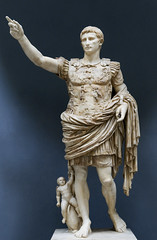
7923829873Caesar AugustusThe great-nephew and adopted son of Julius Caesar who emerged as sole ruler of the Roman state at the end of an extended period of civil war (r. 31 B.C.E.-14 C.E.).3
7923838030Greco-Persian WarsTwo major Persian invasions of Greece, in 490 B.C.E. and 480 B.C.E., in which the Persians were defeated on both land and sea.4
7923843818Han dynastyDynasty that ruled China from 206 B.C.E. to 220 C.E., creating a durable state based on Shihuangdi's state-building achievement. (pron. hahn)5
7923848963Hellenistic eraThe period from 323 to 30 B.C.E. in which Greek culture spread widely in Eurasia and North Africa in the kingdoms ruled by Alexander's political successors.6
7923855731Mauryan EmpireA major empire (322-185 B.C.E.) that encompassed most of India.7
7923860546pax RomanaThe "Roman peace," a term typically used to denote the stability and prosperity of the early Roman Empire, especially in the first and second centuries C.E. (pron. pox roh-MAHN-uh)8
7923869088Persian EmpireA major empire that expanded from the Iranian plateau to incorporate the Middle East from Egypt to India; flourished from around 550 to 330 B.C.E.9
7923877043Qin ShihuangdiLiterally "first emperor from the Qin"; Shihuangdi (r. 221-210 B.C.E.) forcibly reunited China and established a strong and repressive state. (pron. chihn shee-HWANG-dee)10
7923884667Trung TracVietnamese woman from an aristocratic military family who led an ultimately unsuccessful revolt against China around 40 C.E. following the execution of her husband.11

AP World History Countries & Capitals Flashcards

Terms : Hide Images
6893253654AfghanistanKabul0
6893253655ArgentinaBuenos Aires1
6893253656AustraliaCanberra2
6893253657BrazilBrasília3
6893253658CambodiaPhnom Penh4
6893253659ChinaBeijing5
6893253660CubaHavana6
6893253661EgyptCairo7
6893253662FranceParis8
6893253663GermanyBerlin9
6893253664IndiaNew Delhi10
6893253665IraqBaghdad11
6893253666IsraelJerusalem12
6893253667JapanTokyo13
6893253668MexicoMexico City14
6893253669NigeriaAbuja15
6893253670North KoreaPyongyang16
6893253671PakistanIslamabad17
6893253672RussiaMoscow18
6893253673Saudi ArabiaRiyadh19
6893253674SyriaDemascus20
6893253675TurkeyAnkara21
6893253676United KingdomLondon22
6893253677VenezuelaCaracas23
6893253678ZimbabweHarare24

Chapter 16 AP World History Flashcards

Terms : Hide Images
9136867713DENIS DIDEROTchief editor of the Encyclopedia0
9136869794THOMAS HOBBESauthor of Leviathan1
9136871609CRITIQUE OF PURE REASONdescribed by Schopenhauer as "the greatest work in German literature"2
9136878404AUGSBERG CONFESSIONSdocument from the German princes stating their conversion to Lutheranism3
9136960797PETRARCHcredited with inventing the sonnet4
9136964986EDWARD VIonly son of Henry VIII5
9136964987TWOnumber of wives actually beheaded by Henry VIII6
9136967905MARY Ionly Catholic child of Henry VIII7
9136970163ELIZABETH Ithe last Tudor monarch8
9136972105CATHERINE PARRlast, and perhaps, best queen of Henry VIII9
913697441495 THESESthe list of Luther's complaints against the Catholic Church10
9136976501COUNCIL OF TRENTgroup attempting to stem the tide of the Reformation11
9136979505ZWINGLYestablished a short-lived theocracy in Zurich, Switzerland. Protestant12
9136985590JOHN CALVINintroduced the concept of predestination to Christianity13
9136987163CRAMNERgranted an annulment of the marriage of Henry VIII and Katherine of Aragon14
9136988998ROUSSEAUbelieved science divorced people from nature15
9136991532VOLTAIREin his writing, often used humor as a weapon16
9136993328DAVID HUMEbelieved all knowledge came from the senses17
9136995162WOLLSTONECRAFTsaid women could contribute to society if afforded equal education18
9136997232MARIE THERESE GEOFFRINhosted many salons19
9137002144HENRY VIIIthe Act of Supremacy made him the head of the Anglican Church20
9137004072JOHN WYCLIFFEfirst to translate the Bible into English21
9137004085JOHN KNOXbrought Presbyterianism to Scotland22
9137007061WANG YANGMINtaught a virtuous life can be attained through introspection23
9137009632ABD AL-WAHHABfought syncretism in Islam24
9137012806GALILEOdiscovered the craters of the moon25
9137015362KEPLERmathematically proved the heliocentric model26
9137020210VESALIUSthe Father of Modern Anatomy27
9137022241LEEUWENHOEKdiscovered single-celled organisms28
9137024555EMILIE DU CHATELETnoted physicist who translated the Principia into French29
9137026594COGITO ERGO SUMDescartes' proof that he that the only thing one can know for sure is one's existence, in the language in which it was written30
9137029132SOCIAL CONTRACTHobbes' idea that the people give certain rights to an absolute ruler in exchange for law and order31
9137032246RENE DESCARTESHe proposed relying more on mathematics and logic than on observation. Cogito Ergo Sum32
9137037336VODOUblended Christian religion in HAITI33
9137061816SIKHISMcombination of Hinduism and Islam34
9137071513SCHOPENHAUERsaid Kant's book was most important book in German history35
9137075702SANTERIAblended Christian religion in CUBA36
9137084503NEWTONLaws of motion, wrote "The Principia"37
9137087335MONTESQUIEUWrote "The Spirit of Laws", advocated 3 branches of government38
9137091052MIRABAIBhakti poet39
9137096658LINNAEUScreated binomial nomenclature40
9137101083LOCKEself-gov., natural rights: life, liberty, property41
9137111660KANTWrote "Critique of Pure Reason", wanted to separate religion and science42
9137118922BACHmusicial composer of Baroque43
9137136669COPERNICUSknown for heliocentric model44
9137140291PTOLEMYgeocentric model45

AP World History Chapter 28 Flashcards

Terms : Hide Images
6326646903At the Congress of Vienna, Russia formed the Holy Alliance with ________.Prussia and Austria0
6326646904The Decembrist uprising was led by ________.Army officers1
6326646905The Russian tsar from 1825 to 1855 was ________.Nicholas I2
6326646906The Crimean War pitted ________ against France, Britain, and the Ottoman Empire.Russia3
6326646907Russia's serfs were emancipated in what decade?1860s4
6326646908Zemstvoes were Russian ________.Local councils5
6326646909Sergei Witte undertook ________ in Russia in the 1890s.Economic reforms6
6326646910The ________ were Russian activist intellectuals.Intelligentsia7
6326646911Mikhail Bakunin was a Russian ________ leader.Anarchist8
6326646912Which of these groups was led by V.I. Ulyanov (Lenin)?Bolsheviks9
6326646913The Bolsheviks were Russian ________.Marxists10
6326646914Which of these led directly to the Russian Revolution of 1905?The Russo-Japanese War11
6326646915The Duma was Russia's ________.Parliament12
6326646916The focus of the Stolypin reforms was Russia's ________.Peasantry13
6326646917Which of these were more successful, entrepreneurial peasants?Kulaks14
6326646918The terakoya were Japanese ________.Schools15
6326646919By 1859, ________ percent of Japanese men and ________ percent of Japanese women were literate, respectively.40; 1516
6326646920Dutch Studies encouraged learning from ________.The West17
6326646921In 1853, a(n) ________ fleet arrived near Tokyo, using military force to open Japan to foreign traders.US18
6326646922The ________ period of Japanese history began in 1868.Meiji19
6326646923Iwasaki Yataro founded ________ in the late 1800s.Mitsubishi20
6326646924The Japanese parliament was called the ________.Diet21
6326646925Zaibatsus were ________ in Japan.Industrial conglomerations22
6326646926The Sino-Japanese War was a ________ struggle.Territorial23
6326646927The Russo-Japanese War of 1904 led to ________.An easy Japanese victory24
6326646928The Holy Alliance was representative of the ________ in Europe following the Congress of Vienna.Conservative political order25
6326646929In European politics in the 1800s, Russia ________.Played a new dominant role26
6326646930According to Map 28.1, "Russian Expansion, 1815-1914," the general direction of Russian expansion in this period was ________.To the south27
6326646931French and British intervention in the Crimean War was intended to stop Russian expansion and also to ________.Prevent damage to the Ottoman Empire28
6326646932Which of these common patterns of the late 1800s and early 1900s was seen in Russia following the Crimean War?Defeat leading to military modernization29
6326646933The long-term goal of the emancipation of Russia's serfs was ________.Economic reform30
6326646934Reforms undertaken by Alexander II in Russia can be characterized as ________.Having the appearance of liberal reform31
6326646935Industrialization in Russia can be characterized as industrialization ________.Without capitalism or urbanization32
6326646936In implementing Marxism in Russia, Lenin was working without what key element of Marx's model?An urban proletariat33
6326646937Which of these modern patterns was seen in the Russo-Japanese War?The defeat of a large force by a smaller army from an industrialized nation34
6326646938Looking at Map 28.2, "The Russo-Japanese War," what appears to have been Japan's ultimate goal?Mainland territory35
6326646939Which of these were the representatives of conservatism in Russia?Tsars and nobles36
6326646940Around 1850, the Japanese government consisted of ________.Shogun rule with a figurehead emperor37
6326646941Proponents of Dutch Studies and proponents of national studies in Japan in the 1800s differed over ________.Whether Japan could learn from other nations38
6326646942In "The Separate Paths of Japan and China," the authors argue that Japan had the advantage of ________.Being able to imitate39
6326646943Which of these resulted from the Meiji restoration?Direct imperial rule40
6326646944Which of these models of industrialization was followed in Japan?Close cooperation between industrialists and government41
6326646945Which of these was a key challenge to industrialization in Japan?The lack of key resources42
6326646946In the Meiji period, women's roles in Japan can be characterized as ________.Changing but basically traditional43
6326646947Comparing Maps 28.2 and 28.3, what territory did Japan lose between 1905 and 1914?Manchuria44
6326646948The Sino-Japanese War ________ the traditional relationship between Japan and China.Reversed45
6326646949In the Meiji period, which of these was a key Confucian value that supported industrialization and other achievements?Duty46
6326646950Like the opponents of Abdul Hamid, the Decembrist uprising was ________.Led by military officers47
6326646951Which of these Russians had the same relationship with reform as Alexander II?Catherine the Great48
6326646952Compared to the Ottoman Empire in the same period, Meiji Japan experienced more ________ change.Social49

Period 1: AP World History Flashcards

Terms : Hide Images
7259403911Paleolithic Age2000000 to 10000BCE0
7259405885Neolithic Age10000 to 4000BCE1
7259415778Aryan Migration1500BCE2
7259416958Zhou Dynasty1045 to 400BCE3
7259418134China River Valley Civilization6500BCE4
7259418664Egyptian Old Kingdom2660 to 2160BCE5
7259424793Egyptian Middle Kingdom2040 to 1786BCE6
7259426413Egyptian New Kingdom1570 to 1070BCE7
7259427334Babylonian Empire1900 to 1500BCE8
7259428652Sumerian Empire5000 to 2300BCE9
7259431339Phoenician Empire3000 to 1000BCE10
7259433036Olmec Civilization1200 to 400BCE11
7259433912Founding of Judaismc.2000BCE12
7259435530Founding of Hinduismc.2500BCE13
7259534378Neolithic Age Revolution14
7259549540Olmec Empire15
7259550457Phoenician Empire Area16
7259550991Egyptian Civilization17
7259552355Chinese River Valley Civilization18
7259553444Indus River Valley Civilization19
7259555073Neolithic Revolution10000BCE20
7259555811Bronze Age4000 to 1200BCE21

AP World History Vocabulary List #2 Flashcards

Terms : Hide Images
5620964348AbdicateTo relinquish or to give up ruling power0
5620965508AbrogateTo officially cancel, abolish or revoke1
5620967446AgnosticA person who believes it is impossible to know of God's existence or of anything beyond the physical universe2
5620971714AttritionA gradual wearing down in the strength or numbers of an enemy through sustained attack3
5620973878EcclesiasticalRelating to a church or religious organization4
5620975287HegemonyDominant control, power, or influence5
5620976557HuburisArrogant conceit, confidence, and pride6
5620978236IconoclastOne who attacks traditional beliefs, ideas, or institutions7
5620980217LatentSomething that exists but is not yet achieved or recognized8
5620982034MachinationA clever plot or scheme9
5620982849PlausibleCredible, believable, having an appearance of truth10
5620984064PolarizeTo separate into groups that have extremely opposing viewpoints11
5620987162SecularNot related to religion or a church; worldly12
5620990395SeditionAn attempt to stir up or support revolution13
5620992400SpeciousDeliberately misleading in appearance; appearing to be true and logical but false14
5620992401TenableCapable of being defended15
5620995358TenuousWeak, flimsy, shaky, precarious16
5620995936ViableCapable of working or surviving successfully17
5620995937VirulentExtremely harmful or deadly18
5620996592VolitileLikely to change rapidly and unpreictably with a possibility of explosive violence19

AP World History Chapter 11 Flashcards

Mediterranean Society: The Roman Phase

Terms : Hide Images
7404175677CarthageNorthern African kingdom, main rival to early Roman expansion, that was defeated by Rome in the Punic Wars.0
7404175678Cult of IsisA popular Roman religion of salvation in which an afterlife was promised to followers.1
7404175679EssenesJewish sect that looked for the arrival of a savior; they were similar in some of their core beliefs to the early Christians.2
7404175680EtruscansNorthern Italian society that initially dominated the Romans; the Etruscans helped convey Greek concepts to the expanding Romans.3
7404175681LatifundiaHuge state-run and slave-worked farms in ancient Rome.4
7404175682MithraismMystery religion based on worship of the sun god Mithras; it became popular among the Romans because of its promise of salvation. underground chambers were used to conduct secret rituals involving the slaughter of bulls; followers were mostly military men5
7404175683Pater familiasRoman term for the "father of the family," a theoretical implication that gave the male head of the family almost unlimited authority.6
7404175684PatriarchySystem of social organization in which males dominate the family and where public institutions, descent, and succession are traced through the male line.7
7404175685Paul of TarsusA Jew from Asia Minor that played the most influential role in the spread of Christianity. Paul never met Jesus but he had a vision one day of speaking to him. Executed because spreading of Christianity was a threat to the government.8
7404175686Pax RomanaRoman Peace, a term that relates to the period of political stability, cultural brilliance, and economic prosperity beginning with unification under Augustus and lasting through the first two centuries C.E.9
7404175687PlebiansRoman common people.10
7404175688RemusFounder of Rome, killed by his brother Romulus11
7404175689Roman republicThe period from 507 to 31 B.C.E., during which Rome was largely governed by the aristocratic Roman Senate. (p. 148)12
7404175690StoicsHellenistic philosophers who encouraged their followers to lead active, virtuous lives and to aid others.13
7404175692Patriciana member of the noble families who controlled all power in the early years of the Roman Republic14
7404175693Plebeianan ordinary citizen in the ancient Roman Republic15
7404175694Punic Warwar between Rome and Carthage; Romans sent an army to Sicily and Carthage considered this an act of war, and both sides fought over Sicily; Carthage paid Rome and gave them Sicily; Rome then encouraged one of Carthage's Spanish empires to revolt against Carthage; Rome then defeated Carthage16
7404175695Gracchi brothersbrothers who tried to reform the Roman Empire by giving back Latifundias to the small farmers but were assassinated17
7404175696Lucius Cornelius Sullahe was a strong general that utilized a new system for military recruitment. The council of plebeians tried to switch power over to Marius but a civil war broke out. He ended up winning and seized Rome..18
7404175697Gaius MariusA Roman general appointed be the Senate to capture Jugurtha of Northern Africa. He reformed the military into a much more efficient system, making sure that all soldiers were professionals that had no family and all soldiers were paid directly by their commanders, a key part of Caesar's rise to power later on.19
7404175698Julius CaesarMade dictator for life in 45 BCE, after conquering Gaul, assassinated in 44 BCE by the Senate because they were afraid of his power20
7404175699Mark AntonyPart of the second triumvirate, he opposed Octavian in the East/West power split, and controlled the Asian regions. He married Cleopatra and together they lost the war with the West after losing the battle of Actium. He committed suicide.21
7404175700Augustus Caesarthe adopted son of ceaser. the first emporer of rome. he often ignored the senate to got control but once he did he respected the senate. he was careful to not act to much like a king. the people were giving him more power because he gave them peace and prosperity.22
7404175706consulUnder the Roman Republic, one of the two magistrates holding supreme civil and military authority. Nominated by the Senate and elected by citizens in the Comitia Centuriata, the consuls held office for one year and each had power of veto over the other.23
7404175707tribunesAn officer of ancient Rome elected by the plebeians to protect their rights from arbitrary acts of the patrician magistrates.24
7404175708twelve tablesthe earliest written collection of Roman laws, drawn up by patricians about 450B.C., that became the foundation of Roman law25
7404175712SpartacusSlave, trained as a gladiator, who led a rebellion against the roman army for slave freedom- he was killed after two years.26
7404175713Stoicisman indifference to pleasure or pain27
7404175714CiceroCicero was a stoic philosopher; his letters and treatises emphasized the individual's duty to live in accordance with nature and reason - speaks at Caesar's triumphal parade. He later dies at the order of Antony, Octavius, and Lepidus.28
7404175715Dead Sea ScrollsAncient scrolls containing the oldest known manuscripts of the books of the Old Testament in Hebrew. They were unearthed near Qumran on the Dead Sea between 1947 and 1953.29
7404175716Jesus of NazarethJewish teacher who preached reforms in Judaism. His followers believed him to be the Messiah and savior sent by God to redeem humanity. Over time, his disciples spread Jesus' message of compassion and forgiveness throughout the Roman Empire.30
7404175717Coliseumgiant stadium in rome that was built in 80 ce. Provided public entertainment. Gladiator fight, mock naval battles, and martyring Christians all took place in the coliseum31
7404175718Roman SenateA council whose members were the heads of wealthy, landowning families. Originally an advisory body to the early kings, in the era of the Roman Republic the Senate effectively governed the Roman state and the growing empire.32
7404175719Judaismthe monotheistic religion of the Jews having its spiritual and ethical principles embodied chiefly in the Torah and in the Talmud33
7404175720Christianitya monotheistic system of beliefs and practices based on the Old Testament and the teachings of Jesus as embodied in the New Testament and emphasizing the role of Jesus as savior34
7404175724Roman ForumPolitical center of the Roman Empire; ideal place for dramatic public speeches; town square35
7404175725Gaulsgroup of people sacked the city of Rome and left it in ruins 390 bc, came from what is now known as france36
7404175726Gladiatorstrained fighters, usually slaves, who fought in arenas as entertainment37

AP World History Period 2 Flashcards

Terms : Hide Images
7875176737Alexander the GreatAlexander III of Macedon (356-323 B.C.E.), conqueror of the Persian Empire and part of northwest India.0
7875176738AshokaThe most famous ruler of the Mauryan Empire (r. 268-232 B.C.E.), who converted to Buddhism and tried to rule peacefully and with tolerance.1
7875176739Caesar AugustusThe great-nephew and adopted son of Julius Caesar who emerged as sole ruler of the Roman state at the end of an extended period of civil war (r. 31 B.C.E.-14 C.E.).2
7875176740Cyrus (the Great)Founder of the Persian Empire (r. 557-530 B.C.E.); a ruler noted for his conquests, religious tolerance, and political moderation.3
7875176741Darius IGreat king of Persia (r. 522-486 B.C.E.) following the upheavals after Cyrus's death; completed the establishment of the Persian Empire.4
7875176742Gupta EmpireAn empire of India (320-550 C.E.).5
7875176743Han dynastyChinese dynasty that restored unity in China softened legalist policies. Begun in 202 B.C. by Liu Bang, the Han ruled China for more than 400 years.6
7875176744Hellenistic eraThe period from 323 to 30 B.C.E. in which Greek culture spread widely in Eurasia in the kingdoms ruled by Alexander's political successors.7
7875176745hopliteA heavily armed Greek infantryman. Over time, the ability to afford a military wares and to fight for the city came to define Greek citizenship.8
7875176746Mandate of HeavenThe ideological underpinning of Chinese emperors, this was the belief that a ruler held authority by command of divine force as long as he ruled morally and benevolently.9
7875176747Mauryan EmpireA major empire (322-185 B.C.E.) that encompassed most of India.10
7875176748PatriciansWealthy, privileged Romans who dominated early Roman society.11
7875176749Pax RomanaThe "Roman peace," a term typically used to denote the stability and prosperity of the early Roman Empire, especially in the first and second centuries C.E.12
7875176750Peloponnesian WarGreat war between Athens (and allies) and Sparta (and allies), lasting from 431 to 404 B.C.E. The conflict ended in the defeat of Athens and the closing of Athens's Golden Age.13
7875176751PersepolisThe capital and greatest palace-city of the Persian Empire, destroyed by Alexander the Great.14
7875176752Persian EmpireA major empire that expanded from the Iranian plateau to incorporate the Middle East from Egypt to India; flourished from around 550 to 330 B.C.E.15
7875176753PlebiansPoorer, less privileged Romans who gradually won a role in Roman politics.16
7875176754Qin DynastyA short-lived (221-206 B.C.E.) but highly influential Chinese dynasty that succeeded in reuniting China at the end of the Warring States period.17
7875176755Qin ShihuangdiLiterally "first emperor" (r. 221-210 B.C.E.) forcibly reunited China and established a strong and repressive state.18
7875176756SolonAthenian statesman and lawmaker (fl. 594-560 B.C.E.) whose reforms led the Athenians toward democracy.19
7875176757WudiHan emperor (r. 141-86 B.C.E.) who began the Chinese civil service system by establishing an academy to train imperial bureaucrats.20
7875176758AristotleA Greek polymath philosopher (384-322 B.C.E.); student of Plato and teacher of Alexander the Great.21
7875176759Bhagavad GitaA great Hindu epic text, part of the much larger Mahabharata, which affirms the performance of caste duties as a path to religious liberation.22
7875176760BrahmanThe "World Soul" or final reality in upanishadic Hindu belief.23
7875176761BrahminsThe priestly caste of India.24
7875176762BuddhismThe cultural/religious tradition first enunciated by Siddhartha Gautama25
7875176763ConfucianismThe Chinese philosophy first enunciated by Confucius, advocating the moral example of superiors as the key element of social order.26
7875176764ConfuciusThe founder of Confucianism (551-479 B.C.E.); an aristocrat of northern China who proved to be the greatest influence on Chinese culture in its history.27
7875176765ConstantineRoman emperor (r. 306-337 C.E.) whose conversion to Christianity paved the way for the triumph of Christianity in Europe.28
7875176766DaoismA Chinese philosophy/popular religion that advocates simplicity and understanding of the world of nature, founded by the legendary figure Laozi.29
7875176767Filial pietyThe honoring of one's ancestors and parents, a key element of Confucianism.30
7875176768Greek rationalismA secularizing system of scientific and philosophic thought that developed in classical Greece in the period 600 to 300 B.C.E.; it emphasized the power of education and human reason to understand the world in nonreligious terms.31
7875176769HinduismA word derived from outsiders to describe the vast diversity of indigenous Indian religious traditions.32
7875176770HippocratesA very influential Greek medical theorist (ca. 460-ca. 370 B.C.E.); regarded as the father of medicine.33
7875176771Jesus of NazarethThe prophet/god of Christianity(ca. 4 B.C.E.-ca. 30 C.E.).34
7875176772KarmaIn Hinduism, the determining factor of the level at which the individual is reincarnated, based on purity of action and fulfillment of duty in the prior existence.35
7875176773LaoziA legendary Chinese philosopher of the sixth century B.C.E.; regarded as the founder of Daoism.36
7875176774LegalismA Chinese philosophy distinguished by an adherence to clear laws with vigorous punishments.37
7875176775MokshaIn Hindu belief, liberation from separate existence and union with Brahman.38
7875176776NirvanaThe end goal of Buddhism, in which individual identity is "extinguished" into a state of serenity and great compassion.39
7875176777Siddhartha Gautama (the Buddha)The Indian prince turned ascetic (ca. 566-ca. 486 B.C.E.) who founded Buddhism.40
7875176778SocratesThe first great Greek philosopher to turn rationalism toward questions of human existence (469-399 B.C.E.).41
7875176779Theravada"The Teaching of the Elders," the early form of Buddhism according to which the Buddha as a wise teacher but not divine and which emphasizes practices rather than beliefs.42
7875176780UpanishadsIndian mystical and philosophical works, written between 800 and 400 B.C.E.43
7875176781VedasThe earliest religious texts of India, a collection of ancient poems, hymns, and rituals that were transmitted orally before being written down ca. 600 B.C.E.44
7875176782Yin and YangExpression of the Chinese belief in the unity of opposites.45
7875176783ZarathustraA Persian prophet, traditionally dated to the sixth or seventh century B.C.E. (but perhaps much older), who founded Zoroastrianism.46
7875176784ZoroastrianismPersian monotheistic religion founded by the prophet Zarathustra.47
7875176785caste as varna and jatiThe system of social organization in India that has evolved over millennia; it is based on an original division of the populace into four inherited classes, with the addition of thousands of social distinctions based on occupation, which became the main cell of social life in India.48
7875176786dharmaIn Indian belief, performance of the duties appropriate to an individual's caste; good performance will lead to rebirth in a higher caste.49
7875176787helotsThe dependent, semi-enslaved class of ancient Sparta whose social discontent prompted the militarization of Spartan society.50
7875176788KshatriyaThe Indian social class of warriors and rulers.51
7875176789latifundiaHuge estates operated by slave labor that flourished in parts of the Roman Empire52
7875176790PericlesA prominent and influential statesman of ancient Athens (ca. 495-429 B.C.E.); presided over Athens's Golden Age.53
7875176791scholar-gentry classA term used to describe members of China's landowning families, reflecting their wealth from the land and the privilege that they derived as government officials.54
7875176792SudraThe lowest Indian social class of varna; regarded as servants of their social betters; eventually included peasant farmers55
7875176793the "three submissions"In Chinese Confucian thought, the notion that a woman is permanently subordinate to male control: first that of her father, then of her husband, and finally of her son.56
7875176794UntouchablesAn Indian social class that emerged below the Sudras and whose members performed the most unclean and polluting work.57
7875176795VaisyaThe Indian social class that was originally defined as farmers but eventually comprised merchants.58
7875176796AxumClassical-era kingdom of East Africa, in present-day Eritrea and northern Ethiopia; flourished from 100 to 600 C.E. and adopted Christianity.59
7875176797Bantu expansionGradual migration of peoples from their homeland in what is now southern Nigeria and the Cameroons into most of eastern and southern Africa, a process that began around 3000 B.C.E. and continued for several millennia. The agricultural techniques and ironworking technology of these farmers gave them an advantage over the gathering and hunting peoples they encountered.60
7875176798Silk RoadTrade route stretching from China into Europe.61

Pages

Subscribe to CourseNotes RSS

Need Help?

We hope your visit has been a productive one. If you're having any problems, or would like to give some feedback, we'd love to hear from you.

For general help, questions, and suggestions, try our dedicated support forums.

If you need to contact the Course-Notes.Org web experience team, please use our contact form.

Need Notes?

While we strive to provide the most comprehensive notes for as many high school textbooks as possible, there are certainly going to be some that we miss. Drop us a note and let us know which textbooks you need. Be sure to include which edition of the textbook you are using! If we see enough demand, we'll do whatever we can to get those notes up on the site for you!