

AP BIO VOCAB Flashcards
Terms : Hide Images
| 5613875349 | variation | Any difference between individuals of the same species. | 0 | |
| 5613877511 | biodiversity | The number of species within a specific habitat. | 1 | |
| 5613877512 | species | A group of similar organisms that can breed and produce fertile offspring. | 2 | |
| 5613877513 | population | A group of individuals that belong to the same species and live in the same area | 3 | |
| 5613880429 | homologous | Structures in different species that are similar because of common ancestry. | 4 | |
| 5613880430 | analogous | Comparable | 5 | |
| 5613883173 | relative fitness | The contribution an individual makes to the gene pool of the next generation, relative to the contributions of other individuals in the population. | 6 | |
| 5613883174 | gene pool | All the genes, including all the different alleles for each gene, that are present in a population at any one time | 7 | |
| 5613885482 | gene | A segment of DNA on a chromosome that codes for a specific trait A discrete unit of hereditary information consisting of a specific nucleotide sequence in DNA (or RNA, in some viruses). | 8 | |
| 5613885483 | loci | Point on the chromosome where the gene is found | 9 | |
| 5613885484 | adaptation | A trait that helps an organism survive and reproduce | 10 | |
| 5613888262 | genetic drift | A change in the allele frequency of a population as a result of chance events rather than natural selection. | 11 | |
| 5613888263 | gene flow | Movement of alleles into or out of a population due to the migration of individuals to or from the population | 12 | |
| 5613890997 | bottleneck effect | A change in allele frequency following a dramatic reduction in the size of a population | 13 | |
| 5613890998 | founder effect | Change in allele frequencies as a result of the migration of a small subgroup of a population | 14 | |
| 5613894068 | natural selection | A process in which individuals that have certain inherited traits tend to survive and reproduce at higher rates than other individuals because of those traits. | 15 | |
| 5613894069 | sexual selection | A form of natural selection in which individuals with certain inherited characteristics are more likely than other individuals to obtain mates. when individuals select mates based on heritable traits | 16 | |
| 5613896266 | directional selection | Form of natural selection in which the entire curve moves; occurs when individuals at one end of a distribution curve have higher fitness than individuals in the middle or at the other end of the curve Natural selection in which individuals at one end of the phenotypic range survive or reproduce more successfully than do other individuals. | 17 | |
| 5613896267 | disruptive selection | form of natural selection in which a single curve splits into two; occurs when individuals at the upper and lower ends of a distribution curve have higher fitness than individuals near the middle natural selection in which individuals at the upper and lower ends of the curve have higher fitness than individuals near the middle of the curve | 18 | |
| 5613899119 | stabilizing selection | Natural selection that favors intermediate variants by acting against extreme phenotypes When individuals near the center of the curve have higher fitness than individuals at either end | 19 | |
| 5613899120 | balancing selection | natural selection that maintains two or more phenotypic forms in a population | 20 | |
| 5613905221 | heterozygote advantage | Greater reproductive success of heterozygous individuals compared to homozygotes; tends to preserve variation in gene pools. | 21 | |
| 5613908380 | frequency dependent selection | the more frequent an allele, the more it will be selected against Fitness of trait dependent upon its frequency in population | 22 | |
| 5618705046 | phylogeny | Evolutionary history of a species | 23 | |
| 5618708921 | systematics | A scientific discipline focused on classifying organisms and determining their evolutionary relationships. | 24 | |
| 5618712103 | taxonomy | Discipline of classifying organisms and assigning each organism a universally accepted name | 25 | |
| 5618719691 | phylogenetic tree | A family tree that shows the evolutionary relationships thought to exist among groups of organisms | 26 | |
| 5618726114 | Carolus Linnaeus | Father of Taxonomy | 27 | |
| 5618733505 | DKPCOFGS | Domain / Kingdom / Phylum / Class / Order / Family / Genus / Species | 28 | |
| 5618748152 | taxon | a taxonomic group of any rank, such as a species, family, or class | 29 | |
| 5618763889 | sister taxon | Any taxa derived from a common ancestral node 2 phylogenetic groups that are each other's closest relatives | 30 | |
| 5618771632 | branch point | represents the divergence of two species | 31 | |
| 5618774626 | rooted tree | includes a branch to represent the last common ancestor of all taxa in the tree | 32 | |
| 5618777356 | basal tree | originates early from common ancestor. Near root. diverges early | 33 | |
| 5618787987 | polytomy | a branch point from which more than two descendant groups emerge, indicates that the evolutionary relationships among the descendant taxa are not yet clear. | 34 | |
| 5618790321 | homology | Similarity resulting from common ancestry. | 35 | |
| 5618795227 | analogy | A comparison of two different things that are similar in some way | 36 | |
| 5618798409 | convergent evolution | Evolution toward similar characteristics in unrelated species | 37 | |
| 5618802903 | divergent evolution | when two or more species sharing a common ancestor become more different over time | 38 | |
| 5618806551 | homoplasies | Analogous structures that have evolved independently. | 39 | |
| 5618809820 | cladistics | classification based on common ancestry | 40 | |
| 5618809821 | clade | A group of species that includes an ancestral species and all its descendants. | 41 | |
| 5618812866 | monophyletic | ALL descendants came from one common ancestor | 42 | |
| 5633014807 | paraphyletic | contains common ancestor but only some descendants (most similar) | 43 | |
| 5633022072 | polphyletic | contains group of species with different common ancestors | 44 | |
| 5633024585 | outgroup | "them" - those perceived as different or apart from our ingroup | 45 | |
| 5633027062 | ingroup | "Us" - people with whom one shares a common identity | 46 | |
| 5633030483 | maximum parsimony | "Occam's Razor." A principle that states that when considering multiple explanations for an observation, one should first investigate the simplest explanation that is consistent with the facts. | 47 | |
| 5633034045 | morphology | study of form | 48 | |
| 5633036342 | fossil | A trace of an ancient organism that has been preserved in rock. | 49 | |
| 5633039591 | molecular | Model that uses DNA comparisons to estimate the length of time that two species have been evolving independently | 50 | |
| 5633042527 | archaea | Domain of unicellular prokaryotes that have cell walls that do not contain peptidoglycan | 51 | |
| 5633060329 | bacteria | (microbiology) single-celled or noncellular spherical or spiral or rod-shaped organisms lacking chlorophyll that reproduce by fission | 52 | |
| 5633063774 | horizontal gene transfer | The transfer of genes from one genome to another through mechanisms such as transposable elements, plasmid exchange, viral activity, and perhaps, fusions of different organisms. | 53 | |
| 5633078118 | mutation | A change in a gene or chromosome. | 54 | |
| 5633080282 | point mutation | Gene mutation involving changes in one or a few nucleotides. | 55 | |
| 5633080283 | gamete | Sex cell | 56 | |
| 5633087079 | silent mutation | A mutation that changes a single nucleotide, but does not change the amino acid created. | 57 | |
| 5633094109 | wild type | An individual with the normal phenotype. | 58 | |
| 5633130445 | mutant | an animal that has undergone mutation An organism genetically different from its parent | 59 | |
| 5633136276 | nonsense mutations | A mutation that changes an amino acid codon to one of three stop codons, resulting in a shorter and usually nonfunctional protein. | 60 | |
| 5633142432 | missense mutations | Most common type of mutation, a base pair mutation in which the new codon makes sense in that it still codes for an amino acid although it might not be the correct one | 61 | |
| 5633154474 | insertion | a type of mutation resulting from the addition of extra nucleotides in a DNA sequence or chromosome | 62 | |
| 5633165357 | deletion | A change to a chromosome in which a fragment of the chromosome is removed. | 63 | |
| 5633177658 | frame shift mutation | a mutation involving the addition or loss of nucleotides; every codon beyond the gene is effected | 64 | |
| 5633180612 | mutagens | physical and chemical agents that interact with DNA to cause mutations | 65 | |
| 5633182826 | carcinogens | Cancer causing agents | 66 | |
| 5633185714 | histone | protein molecule around which DNA is tightly coiled in chromatin | 67 | |
| 5633195372 | histone acetylation | The attachment of acetyl groups to certain amino acids of histone proteins. Relaxes DNA coiling, allowing for transcription | 68 | |
| 5633197665 | methylation | A chemical modification of DNA that does not affect the nucleotide sequence of a gene but makes that gene less likely to be expressed. | 69 | |
| 5633202451 | control elements | segments of noncoding DNA in eukaryotic genes that help regulate transcription by binding to certain proteins. | 70 | |
| 5633207834 | transcription factors | Collection of proteins that mediate the binding of RNA polymerase and the initiation of transcription. | 71 | |
| 5633211338 | proximal | Nearer to the trunk of the body | 72 | |
| 5633213988 | distal | Farther from the trunk of the body | 73 | |
| 5633271994 | enhancers | A DNA sequence that recognizes certain transcription factors that can stimulate transcription of nearby genes. | 74 | |
| 5633278959 | repressor | A protein that suppresses the transcription of a gene. | 75 | |
| 5633284078 | primary transcript | An initial RNA transcript; also called pre-mRNA. | 76 | |
| 5633290370 | regulatory proteins | regulate the cell cycle both inside and outside the cell | 77 | |
| 5633294990 | selective degradation | The cell limits the longevity (or life span) of proteins. | 78 | |
| 5687039143 | Ubiquitin | A protein that attaches itself to faulty or misfolded proteins and thus targets them for destruction by proteasomes | 79 | |
| 5687084401 | repressible operon | normally on, but can be inhibited; normally anabolic, building an essential organic molecule | 80 | |
| 5687087404 | operon | A unit of genetic function common in bacteria and phages, consisting of coordinately regulated clusters of genes with related functions. | 81 | |
| 5687087405 | promoter | A specific nucleotide sequence in DNA that binds RNA polymerase and indicates where to start transcribing RNA. | 82 | |
| 5687087406 | regulator | An organism that uses energy to control its internal environment | 83 | |
| 5687093388 | corepresser | cooperates with represser protein to switch an operon off | 84 | |
| 5687093389 | inducible operon | An operon under positive control. It is usually "off" but can be turned "on". | 85 | |
| 5687093390 | inducer | A specific small molecule that inactivates the represser in an operon. | 86 | |
| 5687093391 | inducible enzymes | 87 | ||
| 5687097087 | catabolic pathways | 88 | ||
| 5687099816 | repressible enzymes | 89 | ||
| 5687105100 | anabolic pathways | 90 | ||
| 5687105101 | mRNA | A type of RNA, synthesized from DNA, that attaches to ribosomes in the cytoplasm and specifies the primary structure of a protein; also called messenger RNA. | 91 | |
| 5687105102 | tRNA | An RNA molecule that functions as an interpreter between nucleic acid and protein language by picking up specific amino acids and recognizing the appropriate codons in the mRNA |  | 92 |
| 5687108059 | rRNA | Ribosomal RNA | 93 | |
| 5687108060 | codon | A specific sequence of three adjacent bases on a strand of DNA or RNA that provides genetic code information for a particular amino acid |  | 94 |
| 5687108061 | anticodon | group of three bases on a tRNA molecule that are complementary to an mRNA codon |  | 95 |
| 5687111075 | transcription | (genetics) the organic process whereby the DNA sequence in a gene is copied into mRNA | 96 | |
| 5687111076 | translation | 97 | ||
| 5687111077 | ribosome | Cytoplasmic organelles at which proteins are synthesized. | 98 | |
| 5687114198 | protein | 99 | ||
| 5687114199 | polypeptide | 100 | ||
| 5687115274 | amino acid | Building blocks of protein | 101 | |
| 5687115275 | enzyme | A type of protein that speeds up a chemical reaction in a living thing | 102 | |
| 5687118144 | template | 103 | ||
| 5687126416 | RNA polymerase | 104 | ||
| 5687126418 | TATA box | 105 | ||
| 5687126419 | pre-mRNA | 106 | ||
| 5687131935 | G nucleotide 5' cap | 107 | ||
| 5687131936 | poly-A-tail | 108 | ||
| 5687132281 | introns | 109 | ||
| 5687134350 | exons | 110 | ||
| 5687134351 | RNA splicing | 111 | ||
| 5687136403 | splicesomes | 112 | ||
| 5687136404 | P site | 113 | ||
| 5687136405 | A site | 114 | ||
| 5687137482 | E site | 115 | ||
| 5687143020 | C terminus | 116 | ||
| 5687143197 | start codon AUG | 117 | ||
| 5687143198 | GTP | 118 | ||
| 5687143199 | robozymes | 119 | ||
| 5687147854 | nucleiod | 120 | ||
| 5687147855 | nucleosome | 121 | ||
| 5687151850 | heterochromatin | 122 | ||
| 5687153338 | euchromatin | 123 | ||
| 5687154763 | purine | 124 | ||
| 5687161007 | pyrimidine | 125 | ||
| 5687161008 | rosalind franklin | 126 | ||
| 5687161009 | chargaff's rules | 127 | ||
| 5687161010 | double helix | Structure of DNA | 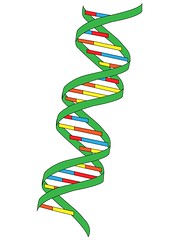 | 128 |
| 5687161011 | semiconservative replication | 129 | ||
| 5687161012 | x-ray chromatography | 130 | ||
| 5687161013 | origins of replication | 131 | ||
| 5687161014 | replication fork | 132 | ||
| 5687161015 | helicase | 133 | ||
| 5687173823 | topoisomerase | 134 | ||
| 5687173824 | primer | 135 | ||
| 5687173825 | DNA polymerase | 136 | ||
| 5687176763 | leading strand | 137 | ||
| 5687176764 | lagging strand | 138 | ||
| 5687180047 | okazaki fragments | 139 | ||
| 5687180048 | ligase | 140 | ||
| 5687180049 | telomeres | 141 | ||
| 5687194023 | restriction enzyme | 142 | ||
| 5687194024 | genetic engineering | 143 | ||
| 5687203327 | plasmid | 144 | ||
| 5687203328 | RFLPs | 145 | ||
| 5687203329 | sticky ends | 146 | ||
| 5687203330 | PCR | 147 | ||
| 5687207979 | gel electrophoresis | 148 | ||
| 5687207980 | gene cloning | 149 | ||
| 5687211327 | cloning vector | 150 | ||
| 5687211328 | genomics | 151 | ||
| 5687214716 | DNA microarray assays | 152 | ||
| 5687218109 | transformation | 153 | ||
| 5687219807 | recombinant DNA | 154 | ||
| 5687219808 | fruit flies | 155 | ||
| 5687223099 | E. coli | 156 | ||
| 5687223100 | DNA | 157 | ||
| 5687223101 | chromosome | A threadlike, gene-carrying structure found in the nucleus. | 158 | |
| 5687227086 | chromatin | Clusters of DNA, RNA, and proteins in the nucleus of a cell | 159 | |
| 5687227087 | chromatid | one of two identical "sister" parts of a duplicated chromosome | 160 | |
| 5687227088 | centromere | Area where the chromatids of a chromosome are attached |  | 161 |
| 5687230953 | genetics | The scientific study of heredity | 162 | |
| 5687230954 | heredity | Passing of traits from parents to offspring | 163 | |
| 5687230955 | trait | A characteristic that an organism can pass on to its offspring through its genes. | 164 | |
| 5687230956 | mendel | 165 | ||
| 5687232168 | cyclins | A group of proteins whose function is to regulate the progression of a cell through the cell cycle and whose concentrations rise and fall throughout the cell cycle | 166 | |
| 5687232577 | spindles | 167 | ||
| 5687235210 | sister chromatids | 168 | ||
| 5687235211 | kinetochores | 169 | ||
| 5687238229 | haploid | 170 | ||
| 5687238230 | diploid | 171 | ||
| 5687238231 | somatic | 172 | ||
| 5687241012 | zygote | 173 | ||
| 5687241013 | mitosis | A process of nuclear division in eukaryotic cells conventionally divided into five stages: prophase, prometaphase, metaphase, anaphase, and telophase. Mitosis conserves chromosome number by equally allocating replicated chromosomes to each of the daughter nuclei. |  | 174 |
| 5687241014 | meiosis | Cell division that produces reproductive cells in sexually reproducing organisms |  | 175 |
| 5687241015 | fertilization | 176 | ||
| 5687247359 | synaptonemal complex | 177 | ||
| 5687247360 | crossing over | Process in which homologous chromosomes exchange portions of their chromatids during meiosis. | 178 | |
| 5687248024 | alternation of generations | 179 | ||
| 5687251147 | sporophyte | 180 | ||
| 5687255976 | gametophyte | 181 | ||
| 5687255977 | chiasmata | 182 | ||
| 5687256505 | genes | DNA segments that serve as the key functional units in hereditary transmission. | 183 | |
| 5687261903 | allele | An alternative form of a gene. | 184 | |
| 5687261904 | genotype | 185 | ||
| 5687261905 | phenotype | 186 | ||
| 5687261906 | dominant | 187 | ||
| 5687266370 | recessive | 188 | ||
| 5687266371 | homozygous | 189 | ||
| 5687267846 | heterozygous | 190 | ||
| 5687271775 | monohybrid cross | 191 | ||
| 5687275597 | dihybrid cross | 192 | ||
| 5687275598 | codominance | 193 | ||
| 5687275599 | incomplete dominance | 194 | ||
| 5687279570 | sex-linked traits | 195 | ||
| 5687279571 | locus | 196 | ||
| 5687279572 | autosome | 197 | ||
| 5687283899 | sex chromosomes | 198 | ||
| 5687283900 | karyotype | 199 | ||
| 5687283901 | pedigree | 200 | ||
| 5687289104 | law of segregation | 201 | ||
| 5687291968 | variation (genetic) | 202 | ||
| 5687295772 | law of independent assessment | 203 | ||
| 5687295773 | p generation | 204 | ||
| 5687299132 | F1 generation | 205 | ||
| 5687299133 | F2 generation | 206 | ||
| 5687299134 | test cross | 207 | ||
| 5687299891 | energy | 208 | ||
| 5687302733 | potential energy | 209 | ||
| 5687302734 | chemical energy | 210 | ||
| 5687306692 | kinetic energy | 211 | ||
| 5687306693 | heat | 212 | ||
| 5687306694 | membrane protein | 213 | ||
| 5687310059 | diffusion | 214 | ||
| 5687310060 | osmosis | 215 | ||
| 5687310945 | concentration | 216 | ||
| 5687314732 | tonicity | 217 | ||
| 5687314733 | isotonic | 218 | ||
| 5687315683 | hypertonic | 219 | ||
| 5687317824 | hypotonic | 220 | ||
| 5687317825 | signal transduction | 221 | ||
| 5687318253 | reception | 222 | ||
| 5690604036 | transduction | 223 | ||
| 5690607107 | response | 224 | ||
| 5690607108 | ligand | 225 | ||
| 5690612091 | g-coupled protein receptors | 226 | ||
| 5690616102 | intracellular receptor proteins | 227 | ||
| 5690616229 | protein kinases | 228 | ||
| 5690622295 | phosphorlyation | 229 | ||
| 5690622296 | cell theory | 230 | ||
| 5690625199 | electron microscope | 231 | ||
| 5690625200 | cytosol | 232 | ||
| 5690627768 | cytoplasm | 233 | ||
| 5698247094 | prokaryotic cell | 234 | ||
| 5698247095 | eukaryotic cell | 235 | ||
| 5698250851 | phospholipid | 236 | ||
| 5698250852 | plasma membrane | 237 | ||
| 5698250918 | metabolism | 238 | ||
| 5698253402 | organelle | 239 | ||
| 5698256823 | endomembrane system | 240 | ||
| 5698261179 | rough enoplasmic reticulum | 241 | ||
| 5698261180 | smooth endoplasmic reticulum | 242 | ||
| 5698263994 | glycoprotein | 243 | ||
| 5698263995 | golgi apparatus | 244 | ||
| 5698266250 | lysosome | 245 | ||
| 5698266251 | vacuoles | 246 | ||
| 5698270989 | peroxisomes | 247 | ||
| 5698270990 | ctyskeleton | 248 | ||
| 5698274237 | anchorage | 249 | ||
| 5698276959 | motor proteins | 250 | ||
| 5698276960 | microtubules | 251 | ||
| 5698279547 | microfilaments | 252 | ||
| 5698279548 | actin | 253 | ||
| 5698279549 | myosin | 254 | ||
| 5698282585 | intermediate filaments | 255 | ||
| 5698282586 | vesicles | 256 | ||
| 5698296425 | ribosomal RNA | 257 | ||
| 5698296426 | synthesis | 258 | ||
| 5698301676 | covalent bond | 259 | ||
| 5698301677 | hydrolysis | 260 | ||
| 5698303511 | element | 261 | ||
| 5698303512 | osmolarity | 262 | ||
| 5698305489 | hydrogen bond | 263 | ||
| 5698305490 | dehydration synthesis | 264 | ||
| 5698314465 | compound | 265 | ||
| 5698314466 | ionic bond | 266 | ||
| 5698317513 | polar / hydrophilic | 267 | ||
| 5698322395 | valence electrons | 268 | ||
| 5698331496 | nonpolar / hydrophobic | 269 | ||
| 5698331497 | electronegativity | 270 | ||
| 5698334361 | peptide bond | 271 | ||
| 5698339537 | receptor | 272 | ||
| 5698339538 | apoptosis | 273 | ||
| 5698347148 | hormone | 274 | ||
| 5698347149 | synapse | 275 | ||
| 5698349327 | negative feedback | 276 | ||
| 5698349328 | positive feedback | 277 | ||
| 5698351952 | homeostasis | 278 | ||
| 5698351953 | neurotransmitter | 279 | ||
| 5698356744 | endothermic / regulator | 280 | ||
| 5698359814 | ectothermic / conformer | 281 | ||
| 5698359815 | osmoregularity | 282 | ||
| 5698361894 | second messangers | 283 | ||
| 5698361895 | filtration | 284 | ||
| 5698363817 | reabsorption | 285 | ||
| 5698363818 | secretion | 286 | ||
| 5698369476 | carbohydrate | 287 | ||
| 5698373381 | lipid | 288 | ||
| 5698373382 | nucleic acid | 289 | ||
| 5698379123 | catabolic | 290 | ||
| 5698379124 | anabolic | 291 | ||
| 5698383835 | entropy | 292 | ||
| 5698385919 | exergonic | 293 | ||
| 5698385920 | endergonic | 294 | ||
| 5698388291 | ATP | 295 | ||
| 5698388292 | activation energy | 296 | ||
| 5698392677 | substrate | 297 | ||
| 5698392678 | reactant | 298 | ||
| 5698521180 | product | 299 | ||
| 5698655725 | cellular respiration | 300 | ||
| 5698655726 | glycolysis | 301 |
AP Bio - Genetics Flashcards
Terms : Hide Images
| 5979418599 | Apoptosis | Programmed cell death to remove cells that have become harmful to the organism or are no longer needed. |  | 0 |
| 5979443438 | Allele | One of two or more alternative states of a gene. |  | 1 |
| 5979443439 | Bacteriophage | A virus that infects bacterial cells |  | 2 |
| 5979461386 | Chromatid | One of the two daughter strands of a duplicated chromosome; held together by a centromere |  | 3 |
| 5979461387 | Cytokinesis | Division of the cytoplasm of a cell after nuclear division; last part of the cell cycle. |  | 4 |
| 5979461388 | Crossing over | During meiosis I, an exchange of pieces of genetic material between homologous chromosomes; causes genetic recombination |  | 5 |
| 5979461389 | Codominance | When two or more alleles are equally represented in a heterozygote; example AB blood type. |  | 6 |
| 5979467530 | Codon | Three consecutive nucleotides that code for a specific amino acid |  | 7 |
| 5979467531 | Conjugation | Transfer of DNA from one unicellular organism to another |  | 8 |
| 5979467532 | CRISPR | A segment of bacterial DNA containing repeating nucleotide sequences that can be used in genetic engineering to alter an organism's DNA |  | 9 |
| 5979571963 | Diploid | Having two sets of chromosomes (2n); characteristic of non-gamete cells |  | 10 |
| 5979571964 | DNA Polymerase | Enzymes that synthesize DNA; only synthesize in the 5' to 3' direction |  | 11 |
| 5979789065 | DNA methylation | Addition of a methyl group (CH3) to the DNA strand resulting in a change in gene expression |  | 12 |
| 5979571965 | Epigenetics | The study of changes in an organism caused by gene expression rather than changes to the genetic code |  | 13 |
| 5979573580 | Epistasis | Interaction in which one gene modifies the phenotype of another. |  | 14 |
| 5979573581 | Frameshift Mutation | A mutation in which a nucleotide is added or deleted from DNA, creating a downstreaming effect on other codons. |  | 15 |
| 5979624593 | Gamete | A haploid reproductive cell (sperm/egg) |  | 16 |
| 5979624594 | Genotype | The genetic constitution that causes a trait or set of traits |  | 17 |
| 5979624595 | Gel Electrophoresis | A laboratory method that separates DNA, RNA, or proteins based on molecular size; used to show genetic relationships between organisms |  | 18 |
| 5979628523 | Haploid | Having only one set of chromosomes (n); such as in sex cells | | 19 |
| 5979628524 | Heterozygous | Having two different alleles of the same gene (ex. Tt) |  | 20 |
| 5979639261 | Homozygous | Having two identical alleles for a given gene (ex. TT or tt) |  | 21 |
| 5979681543 | Homologous Chromosomes | Two of the same chromosome found in a diploid cell, one being derived from each parent |  | 22 |
| 5979784212 | Interphase | The period between two mitotic divisions during which the cell grows and DNA replicates |  | 23 |
| 5979784213 | Incomplete Dominance | When two alleles are expressed to create a phenotype that blends both traits. |  | 24 |
| 5979871695 | Missense Mutation | A mutation in which one base is substituted, causing a change in one amino acid |  | 25 |
| 5979871696 | Mitosis | Division of somatic cells to create two identical daughter nuclei |  | 26 |
| 5979871697 | Meiosis | Division of gametes to create four unique, haploid cells |  | 27 |
| 5979873076 | Nondisjunction | When sister chromatids fail to separate during meiosis, resulting in cells that have one too many or one too few chromosomes; can cause Down Syndrome |  | 28 |
| 5979875410 | Nucleotide | The building block of nucleic acids (DNA and RNA); composed of a phosphate, a 5-carbon sugar, and a nitrogen base (A,T,C,or G). |  | 29 |
| 5979962087 | Okazaki Fragment | A short segment of DNA produced by the discontinuous replication of DNA in the 5' to 3' direction |  | 30 |
| 5979962088 | Operon | A cluster of genes transcribed together to create a single mRNA molecule |  | 31 |
| 5979962089 | Operator | A site on DNA that a repressor can bind to to prevent transcription of mRNA |  | 32 |
| 5979962090 | Phenotype | The physical appearance or functional expression of a trait |  | 33 |
| 5979964043 | Pleiotropy | When one allele has more than one effect on the production of a phenotype |  | 34 |
| 5979964044 | Promoter | A DNA sequence that RNA polymerase attaches to in order to begin transcription of a gene |  | 35 |
| 5979967590 | Point Mutation | A change in one nucleotide in a DNA molecule; can be missense (changes amino acid); nonsense (codes for Stop codon), or silent (no change in amino acid) |  | 36 |
| 5979970221 | Plasmid | A small circular fragment of bacterial DNA that can self-replicate independent of chromosomal DNA |  | 37 |
| 5979973120 | Prion | Infectious proteins that cause cell death; cause of Mad Cow disease |  | 38 |
| 5979973121 | PCR | A process which uses DNA polymerase to create millions of copies of a desired DNA sequence. |  | 39 |
| 5980117009 | RFLP's | Fragments of DNA with varying lengths that have been cut by restriction enzymes and can be separated by size during gel electrophoresis |  | 40 |
| 5980117010 | Restriction Enzymes | An enzyme that cuts DNA at a specific sequence of nucleotides |  | 41 |
| 5980119679 | Recombinant DNA | Fragments of DNA from two different species, spliced together through genetic engineering. |  | 42 |
| 5980123104 | Regulator Gene | A gene that controls the expression of other genes |  | 43 |
| 5980123105 | Repressor | A protein that regulates DNA transcription by preventing RNA polymerase from attaching to the operator |  | 44 |
| 5980188004 | RNA Primer | A short sequence of RNA nucleotides used as the starting point for replication by DNA polymerase |  | 45 |
| 5980194060 | RNA Polymerase | An enzyme that synthesizes mRNA molecules based on a DNA template |  | 46 |
| 5980199088 | Retrovirus | A virus containing RNA instead of DNA, and an enzyme (reverse transcriptase), that uses the infected cell's machinery to build DNA |  | 47 |
| 5980188005 | Somatic Cell | Body cells; any cell of a multicellular organism except for gametes |  | 48 |
| 5980188006 | Semiconservative Replication | Each parent strand of DNA is paired with a strand of new DNA during replication. |  | 49 |
| 5980241763 | Transduction | The transfer of genetic material from one organism to another by way of a virus/vector |  | 50 |
| 5980241764 | Translation | The assembly of a protein from amino acids coded for by mRNA codons |  | 51 |
| 5980241765 | Transformation | The uptake of DNA from the environment; occurs in some bacterial species |  | 52 |
| 5980241766 | Transcription | Synthesis of an mRNA molecule based on a DNA template |  | 53 |
| 5980244034 | Telomere | A specialized region of DNA that caps each end of a chromosome |  | 54 |
APES Atmosphere Flashcards
Terms : Hide Images
| 10448200487 | What is the order of the layers starting at Lithosphere? | Lithosphere, Asthenosphere, Mesosphere, Outer core, Inner core | 0 | |
| 10448217543 | Describe the Lithosphere | The brittle outermost layer of the planet that is approximately 100 km thick. Lower part of the lithosphere (physical layer) is the upper portion of the mantle (chemical layer). | 1 | |
| 10448218085 | Describe the Asthenosphere | The outer part of the mantle, composed of semi-molten rock | 2 | |
| 10448218086 | Describe the Mesosphere | It is directly above the stratosphere. The temperature decreases when you go up. Meso means middle. Rock in this layer flows more slowly than in the asthenosphere. | 3 | |
| 10448218602 | Describe the Outer Core | Liquid layer composed of nickel and iron | 4 | |
| 10448218603 | Describe the Inner Core | Dense solid layer made of nickel and iron | 5 | |
| 10448221556 | They are 3 different processes...what are they? | Tectonic Cycle - The build up and break down in the lithosphere. Rock Cycle - Constant formation and breakdown of rock. Slowest of all Earth's cycles. Soil formation - Mix of geologic and organic components. | 6 | |
| 10449157114 | Where are the convection currents located? | Mantle Counter clockwise are going against each other Clockwise is pulling them apart | 7 | |
| 10449161183 | Hot Spots | Island form from...crust moves over hot spots, molds, moves and creates an island Volcanos are not active if they are not on these | 8 | |
| 10449167132 | Who proposed Pangaea in 1912? | Alfred Wegener - it fit well under water | 9 | |
| 10449169558 | There are five peaces of evidence that the earth was Pangaea...what are they? | Fossil similarities, Glacier Scars,Rock layering pattern, Coal deposits,Erosion | 10 | |
| 10449173030 | Plate tectonics definition | The theory that states that Earth's lithosphere is divided into plates, most of which are in constant motion | 11 | |
| 10449181800 | Fossil similarity evidence | Similar types of rocks/fossils in different continents. Would not make sense if they were in different geographical locations. | 12 | |
| 10449181801 | Glacier Scars | In different continents that are similar | 13 | |
| 10449183032 | Rock layering | Match perfectly in different continents that wouldn't make sense alone | 14 | |
| 10449185267 | Coal desposits | Coal found usually in warm tropical climates were found in arctic regions | 15 | |
| 10449186009 | Erosion | Same in different parts of the world The break down of rock | 16 | |
| 10449199926 | 3 different types of plate boundaries | Divergent, Convergent, Transform | 17 | |
| 10449202643 | They can be ----- or ----- plate boundaries. They can combine as well sometimes. | Continental and/or Oceanic | 18 | |
| 10449207648 | Oceanic crust and lithosphere, are very ---- and ----compared to the continental crust | Dense and Thin | 19 | |
| 10449212701 | Oceanic crust is located --- the continental crust due to its ---- | Below and Density | 20 | |
| 10449215453 | All about Divergent boundaries | They spread apart They create Rift Vallies No volcanic activity Example is the Mid-Atlantic Ridge - newest crust Happens mostly in the ocean Lava fills gaps it makes -which makes new crust Seafloor spreading is also an example Newest crust on earth | 21 | |
| 10449219846 | What type of Convergent boundaries are there? | Continent - Continent Continent - Ocean Ocean - Ocean | 22 | |
| 10449238976 | Continent - Continent | Smash together Mountain ranges are an example No volcanic activity You can find these in Mountain Everest (Rare to find continental plates on land) (Made of lighter materials like silicon dioxide.) | 23 | |
| 10449240392 | Continent - Ocean | Ocean goes below the continental crust Ocean trenches are the result of this Ocean goes underneath and melts into molten lava Volcanic activity Ex: Andes Mountain | 24 | |
| 10449241320 | Ocean - Ocean | Smash together Creates TRENCHES Volcanic activity Found in Canada (Lie primarily below the ocean. The crust is dense and rich with iron.) | 25 | |
| 10449220592 | All about Transform boundaries | Slide past each other Earthquakes happen likes this Make faults and earthquakes (can happen in any boundary put most frequently in transform boundaries) Volcanic activity Found in CALIFORNIA | 26 | |
| 10449268972 | Richter Scale | Increase by a factor of 10 - 6.1 and 7.1 are very different - 10 times as powerful Measures Earthquake magnitude | 27 | |
| 10449280162 | Subduction Zone | Where one plate is being pushed underneath the other | 28 | |
| 10449282243 | Faults | A fracture in rock across which there is movement | 29 | |
| 10449283795 | Epicenter | Point on surface directly above where the earthquake occured | 30 | |
| 10449302764 | Consequences of plate movement - VOLCANOS | As a plate moves over a hot spot, rising magma forms a volcano. 85% occur along plate boundaries. Others occur near hot spots. May eject cinders, ash, dust, rock, or lava into the air. | 31 | |
| 10449306653 | Earthquakes | Occur when the rocks of the lithosphere rupture unexpectedly along a fault. | 32 | |
| 10449319812 | Fault zone | Large expanses of rock where movement has occurred | 33 | |
| 10449344349 | The sun's energy interacts with the atmosphere and the oceans, providing Earth's ---- and ----. | Climate and Weather | 34 | |
| 10449347066 | Composition of Air and Air Pressure | Air contains Nitrogen (78%); Oxygen (21%); Argon (1%); Carbon Dioxide (0.03%); and other gases Water vapor and other contaminants are not included in the composition listed above, yet they play a great effect in temperature in climate and weather. | 35 | |
| 10449352816 | Order of layers starting at Trophosphere | Troposphere, Stratosphere, OZONE LAYER, Mesosphere, Thermosphere, Exosphere | 36 | |
| 10449395795 | About the layers of the Atmopshere | Weather occurs in the troposphere which is the thinest layer. Warm (Troposphere) - Cold (Stratosphere) - Ozone layer gets warmer - Gets colder (Mesosphere) - Then drastically warmer due to being close to the sun (Thermosphere) Ozone layer - O and O find another O and it keeps happening Things prevent oxygen from bonding such as chloroform carbon. Good ozone is in the stratosphere and the bad ozone is in the troposphere. | 37 | |
| 10449406255 | Troposphere | All weather occurs Gasses are dense and trap the sun's heat (absorbed or reflected (albedo) off the surface) - maintains heat (greenhouse effect) Temperatures decrease with altitude 16oC → -60oC The air is warmed by heat radiating from Earth's surface, the evaporation of water vapor, and water vapor condensing back to Earth. | 38 | |
| 10449412066 | Stratosphere | Where planes fly Look at ozone layer - traps harmful UV rays - eye damage and skin cancer The tropopause (the dividing line between the troposphere and the stratosphere) occurs where the temperature no longer decreases. Contains the ozone layer (O3) that reduces the amount of harmful ultraviolet radiation. Contains 9% of the Atmospheric gases | 39 | |
| 10449429764 | Mesosphere | The stratopause (between the stratosphere and mesosphere) occurs where the temperature stops increasing. Does not trap a lot of heat Coldest layer of the Atmosphere There are very few gas molecules, so the pressure is 1/1000th of that at Earth's surface. | 40 | |
| 10449437004 | Thermosphere | The mesopause (between the mesosphere and thermosphere) occurs where the temperature stops going down. Closest layer to outer space Extreme heat in the top layer (gets the first of the sun's rays) NORTHERN LIGHTS happen here | 41 | |
| 10453940153 | Montreal Protocol | (1987) phase-out of ozone depleting substances | 42 | |
| 10453945699 | Climate and seasons are due to the... | Tilt of our axes as we revolve around the sun | 43 | |
| 10453946312 | Coriolis effect | The effect of Earth's rotation on the direction of winds and currents. - Affect prevailing winds Right = North Left = South | 44 | |
| 10457406718 | Convection Currents | They are under the earth and in the ocean...the rising of heat and sinking of cold air | 45 | |
| 10457408900 | Increase --- --- the closer we get to the Earth | Air density | 46 | |
| 10457411247 | Hadly Cell Ferrell Cell Polar Cell (Angles latitude in parcipitation) | 0 - 30 degrees latitude 30 - 60 degrees latitude 60 -90 degrees latitude | 47 | |
| 10461051335 | Rain shadow effect - What are the steps? | 1) Moist, warm air blows onshore 2) As air rises over mountains, to cools, causing moisture to condense and fall as precipitation 3) Dry air descends and warms, promoting evaporation. Up - Rainy windward slope...Down - Dry leeward slope |  | 48 |
| 10461056486 | North America is affected by El Nino by... | Floods the Americas, but causes droughts in other countries. | 49 | |
| 10461059330 | ENSO | El Nino Southern Oscillation | 50 | |
| 10461061119 | El Nino is naturally occurring humans do not affect it TRUE OR FALSE | True - Dry get wet and wet places become dry. California floods and places like Florida gets dry. La Nina is the opposite. | 51 | |
| 10461061692 | Permafrost | Permanently frozen layer of soil beneath the surface of the ground - supposed to be PERMANENTLY FROZEN | 52 | |
| 10461062023 | Prevailing Winds | Global winds that blow constantly from the same direction | 53 | |
| 10470113259 | Unequal heating | Caused by albedo or reflection of sun off the atmosphere. About the atmosphere and what distance it has to go through equator is closer to the sun so it has a shorter distance to travel. | 54 | |
| 10539081295 | Deep ocean currents or Density currents | The deeper, salter, colder water moves underneath the surface current in different patterns | 55 | |
| 10539082659 | Ocean currents | A movement of ocean water that follows a regular pattern | 56 | |
| 10539084114 | Surface currents | Develop from friction between the ocean and the wind that blows across the surface | 57 | |
| 10539084844 | Gyre | A circular motion of water in each of the major ocean basins | 58 | |
| 10539087022 | Climate is affected when cold and warm currents go to different places in the world TRUE or FALSE | True | 59 | |
| 10539088018 | Hydrosphere | The portion of the Earth that is composed of water | 60 | |
| 10539089380 | 70% of the earth is water | 97% is Ocean water 3% is fresh water Only .0071% as usable freshwater at the surface (We use mroe than avaliable) | 61 | |
| 10539093400 | H20 Cycle - Water cycle | Transpiration is when the plants soak up some of the water. | 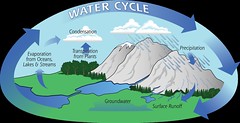 | 62 |
| 10539096336 | Groundwater | Water stored beneath the earth's surface | 63 | |
| 10539097765 | Porosity | The amount of air space between the rock and the soil Lot of space = more porosity Not much space = low porosity | 64 | |
| 10539099281 | Permeability | A material's ability to allow fluids to pass | 65 | |
| 10539105943 | Impermeable layers | Water can flow through very easily; soil has very small pores spaces; ex: clay | 66 | |
| 10539106994 | Zone of Saturation | - Area where groundwater fills up all pores in the soil - The zone of aeration is above the Zone of saturation - The water table is the boundary between these two zones (goes up and down) | 67 | |
| 10539108909 | Well has to go into the water table, can cause a --- --- --- (the water table moves) | Cone of depression | 68 | |
| 10539111347 | Groundwater is not really renewable because we use more faster than it --- | Renews | 69 | |
| 10539114495 | Groundwater depletion | Groundwater subsidence (sinking) can occur if water is used faster than it is replenished | 70 | |
| 10539115625 | Wetlands - land consisting of marshes, bogs or swamps; saturated land - permanent or semi-permanent | - Only 4 states have more wetlands then NC - Organisms live in wetlands, some migrate there - provide a home - Full of plants, soaking wet, water comes from rain storms and is muddy - Filters water - Help control floods, and soak up water - Water sticks to water, plants slow water down with roots of plants - Wetlands are made when a stream runs through the forest floor - Makes estuaries when lakes mixes with ocean water and creates wetlands | 71 | |
| 10539116791 | Human use: Conflicts, and how people use it, agriculture, production of products, etc. OF WATER | Soil Erosion - Know about Desertification - The process by which fertile land becomes desert, typically as a result of drought, deforestation, or inappropriate agriculture. Salinization - The process of increasing salt content. Waterlogging - Saturate with water; make (something) waterlogged. KNOW THIS | 72 | |
| 10539123737 | Soil | - Lots of time to form - soil is broken down rocks -- Weathering - Physical - Anything that breaks a rock apart - Chemical - Erosion -- Things affecting soil - Time , topography, organisms, climate, parent material - Composition - Can take 50 - 100 years -- Climate - Need non-freezing temps to encourage decomposition plus climate determines vegetation which provides the organic matter for soil | 73 | |
| 10539127379 | Horizon (soil wise) | Organic (O)(close to black in color) - Topsoil (A) - Subsoil (B) - Parent Rock © | 74 | |
| 10539130086 | Soil Conservation, What can we do to maintain soil? | - Replenish organic material - Crop Rotation - Reduce man-made or natural erosion from plowing (agriculture) - Use animal poop | 75 | |
| 10539133711 | Parent Material | - The type of rocks naturally found in an area - Quartz sand based rocks create nutrient depleted soil that is not good for farming - Soil with calcium carbonate parent material will have plenty of calcium, a high pH and be good for farming | 76 | |
| 10539136268 | Climate | Need non-freezing temps to encourage decomposition plus climate determines vegetation which provides the organic matter for soil | 77 | |
| 10539137848 | Topography | - Geographical features of the area -- Steep slopes will constantly erode leading to poor soil - River deltas have seasonal flooding that deposit nutrients and silt which lead to good soil - Organisms help churn soil mixing nutrients evenly plus they aid in decomposition and nutrient cycling | 78 |
Test 2 AP Language and Composition Glossary of Literary and Rhetorical Devices Flashcards
Terms : Hide Images
| 7238517485 | Imagery | Word or words that create a picture in the reader's mind. Usually this involves the five senses. | 0 | |
| 7238517486 | Invective | A long, emotionally violent, attack using strong, abusive language. | 1 | |
| 7238517487 | Irony | When the opposite of what you expect to happen does. | 2 | |
| 7238517488 | Verbal irony | When you say something and mean the opposite/something different. | 3 | |
| 7238517489 | Dramatic irony | When the audience of a drama, play, movie, etc. knows something that the character doesn't and would be surprised to find out. | 4 | |
| 7238517490 | Situational irony | Found in the plot (or story line) of a book, story, or movie. Sometimes it makes you laugh because it's funny how things turn out. | 5 | |
| 7238517491 | Juxtaposition | Placing things side by side for the purposes of comparison. Authors often use this device of ideas or examples in order to make a point. | 6 | |
| 7238517492 | Mood | The atmosphere created by the literature and accomplished through word choice (diction). | 7 | |
| 7238517493 | Motif | A recurring idea in a piece of literature. | 8 | |
| 7238517494 | Oxymoron | When apparently contradictory terms are grouped together and suggest a paradox. | 9 | |
| 7238517495 | Pacing | The speed or tempo of an author's writing. Writers can use a variety of devices to achieve this style. | 10 | |
| 7238517496 | Paradox | A seemingly contradictory situation which is actually true. | 11 | |
| 7238517497 | Parallelism | Sentence construction which places equal grammatical constructions near each other, or repeats identical grammatical patterns. It is used to add emphasis, organization, or sometimes pacing to writing. | 12 | |
| 7238517498 | Anaphora | Repetition of a word, phrase, or clause at the beginning of two or more sentences or clauses in a row. This is a deliberate form of repetition and helps make the writer's point more coherent. | 13 | |
| 7238517499 | Chiasmus | When the same words are used twice in succession, but the second time, the order of the words is reversed. Also called antimetabole. | 14 | |
| 7238517500 | Antithesis | Two opposite or contrasting words, phrases, or clauses, or even ideas, with parallel structure. | 15 | |
| 7238517501 | Zeugma (Syllepsis) | When a single word governs or modifies two or more other words, and the meaning of the first word must change for each of the other words it governs or modifies. | 16 | |
| 7238517502 | Parenthetical Idea | Parentheses are used to set off an idea from the rest of the sentence. It is almost considered an aside...a whisper, and should be used sparingly for effect, rather than repeatedly. | 17 | |
| 7238517503 | Parody | An exaggerated imitation of a serious work for humorous purposes. It borrows words or phrases from an original, and pokes fun at it. This is also a form of allusion, since it is referencing a previous text, event, etc. | 18 | |
| 7238517504 | Persona | The fictional mask or narrator that tells a story. Do not confuse with alter-ego. | 19 | |
| 7238517505 | Poetic device | A device used in poetry to manipulate the sound of words, sentences or lines. | 20 | |
| 7238517506 | Alliteration | The repetition of the same consonant sound at the beginning of words. | 21 | |
| 7238517507 | Assonance | The repetition of identical or similar vowel sounds. "From the molten-golden notes" | 22 | |
| 7238517508 | Consonance | The repetition of the same consonant sound at the end of words or within words. | 23 | |
| 7238517509 | Onomatopoeia | The use of a word which imitates or suggests the sound that the thing makes. | 24 | |
| 7238517510 | Internal rhyme | When a line of poetry contains a rhyme within a single line. | 25 | |
| 7238517511 | Slant rhyme | When a poet creates a rhyme, but the two words do not rhyme exactly - they are merely similar. | 26 | |
| 7238517512 | End rhyme | When the last word of two different lines of poetry rhyme. | 27 | |
| 7238517513 | Rhyme Scheme | The pattern of a poem's end rhymes. | 28 | |
| 7238517514 | Stressed and unstressed syllables | In every word of more than one syllable, one of the syllables is stressed, or said with more force than the other syllable(s). | 29 |
AP Literature Flashcards
Terms : Hide Images
| 11266994560 | Allegory | A narrative or description having a second or symbolic meaning beneath the surface one | 0 | |
| 11266997708 | Allusion | A reference, explicit or implicit, to something in previous literature or history | 1 | |
| 11267000371 | Anecdote | A short account of an interesting or humorous incident | 2 | |
| 11267004226 | Artistic unity | That condition of a successful literary work whereby all its elements work together for the achievement of its central purpose | 3 | |
| 11267010876 | Cacophony | A harsh, discordant, unpleasant-sounding choice and arrangement of sounds | 4 | |
| 11267014029 | Euphony | A smooth, pleasant-sounding choice and arrangement of sounds | 5 | |
| 11267017014 | Genre | A type or class, as poetry, drama, etc. | 6 | |
| 11267019201 | Imagery | The representation through language of sensory experience | 7 | |
| 11267021967 | Mood | The pervading impression of a work | 8 | |
| 11267025349 | Moral | A rule of conduct or maxim for living expressed or implied as the "point" of a literary work. Compare Theme | 9 |
AP Literature Flashcards
Terms : Hide Images
| 10741670498 | derisive | tauntingly; expressing ridicule | 0 | |
| 10741674592 | euphemism | an inoffensive expression that is substituted for one that is considered offensive | 1 | |
| 10741681905 | motif | a recurrent element in a literary or artistic work | 2 | |
| 10741687490 | anaphora | the repetition of a word or phrase at the beginning of successive clauses | 3 | |
| 10741691685 | oxymoron | conjoining contradictory terms | 4 | |
| 10741699358 | syntax | basic rules to form sentences | 5 | |
| 10741702562 | effusive | full of enthusiasm | 6 | |
| 10741705458 | elated | in high spirits; proud and joyful | 7 | |
| 10741718279 | ebullient | extremely joyous and delighted | 8 | |
| 10741726217 | ethereal | light, airy, delicate | 9 | |
| 10741729632 | complacent | contented to a fault with oneself | 10 | |
| 10741732877 | sanguine | optimistic and cheerful | 11 | |
| 10741738883 | reverent | feeling or showing deep respect | 12 | |
| 10741741708 | vexed | troubled with petty annoyances | 13 | |
| 10741747470 | indignant | angered at something unjust or wrong | 14 | |
| 10741751623 | truculent | fierce and cruel | 15 | |
| 10741754686 | intransigent | uncompromising, stubborn | 16 | |
| 10741759372 | condemnatory | expressing strong disapproval | 17 | |
| 10741759373 | inflammatory | causing excitement or anger | 18 | |
| 10741763901 | strident | loud and harsh | 19 | |
| 10741766183 | obstreperous | noisy, unruly | 20 | |
| 10741772979 | guileful | deceitful, tricky | 21 | |
| 10741775955 | pugnacious | eager to fight | 22 | |
| 10741778169 | nefarious | extremely wicked | 23 | |
| 10741778170 | vitriolic | bitter, sarcastic | 24 | |
| 10741783272 | contumacious | disobedient, rebellious | 25 | |
| 10741787260 | hubristic | excessively proud or self-confident | 26 | |
| 10741787261 | haughty | arrogantly superior and disdainful | 27 | |
| 10741789486 | belligerent | hostile and aggressive | 28 | |
| 10741792914 | condescending | patronizing, superior | 29 | |
| 10845182890 | irony | contrast between expectation and reality | 30 | |
| 10845190097 | satiric | ridiculing to show weakness in order to make a point | 31 | |
| 10845208414 | Juvenalian | harsh, biting satire | 32 | |
| 10845225275 | Horation | playful and humorous satire | 33 | |
| 10845228648 | wry | humorously sarcastic or mocking | 34 | |
| 10845233219 | contemptuous | insulting or scornful | 35 | |
| 10845242131 | bantering | playful teasing | 36 | |
| 10845245363 | flippant | lacking respect or seriousness | 37 | |
| 10845250796 | patronizing | condescending, superior | 38 | |
| 10845261066 | droll | amusingly odd | 39 | |
| 10845267793 | ribald | humorously vulgar | 40 | |
| 10845272025 | pretentious | pompous, self-important | 41 | |
| 10845280757 | malicious | spiteful, harmful | 42 | |
| 10845289376 | acidulous | sour in taste or manner | 43 | |
| 10845294185 | allusion | a reference to another work of literature, person, or event | 44 |
Ap literature Flashcards
Terms : Hide Images
| 10703017988 | Alliteration | Repetition of initial consonant sounds, and starts with the same letter | 0 | |
| 10703017989 | Allusion | A reference to a well-known person, place, event, literary work, or object | 1 | |
| 10703429734 | Canon | A body of books narratives and others texts considered important | 2 | |
| 10703429735 | Allegory | a story, poem, or picture that can be interpreted to reveal a hidden meaning, typically a moral or political one. | 3 | |
| 10703429736 | Epic | A long narrative poem telling of a hero's deeds of a persons courage/ bravery | 4 | |
| 10703429737 | epic hero | a brave and noble character in an epic poem, admired for great achievements or affected by grand events | 5 | |
| 10703429738 | Kenning | a compound expression in Old English and Old Norse poetry with metaphorical meaning | 6 | |
| 10703429739 | Litotes | Understatement using double negatives, a understatement | 7 | |
| 10703429740 | Foil | A character who acts as a contrast to another character, protagonist (the bad guy) | 8 | |
| 10703429741 | Hyperbole | Unreal exaggeration to emphasize a real situation | 9 | |
| 10703429742 | Personification | A figure of speech in which an object or animal is given human feelings, thoughts, or attitudes | 10 | |
| 10703429743 | Simile | A comparison using "like" or "as" | 11 | |
| 10703429744 | Metaphor | a figure of speech in which a word or phrase is applied to an object or action to which it is not literally applicable. | 12 | |
| 10703429745 | Caesura | A natural pause or break in a line of poetry, usually near the middle of the line. | 13 | |
| 10703429746 | Didacticism | teaching or intending to teach a moral lesson. | 14 | |
| 10703429747 | dichotomy | two-part division | 15 |
AP Biology - Macromolecules Flashcards
Terms : Hide Images
| 10758081638 | monosaccharide | C6H12O6 simple sugar; glucose, galactose, and fructose |  | 0 |
| 10758081639 | disaccharide | two monosaccharides joined together; C12H22O1; maltose, lactose, and sucrose |  | 1 |
| 10758081640 | dehydration synthesis | condensation; joining compounds together with water released |  | 2 |
| 10758081641 | hydrolysis | breakdown of a compound by adding water |  | 3 |
| 10758081642 | polysaccharide | polymers of carbohydrates |  | 4 |
| 10758081643 | cellulose | structural polysaccharide that makes up plant cell walls |  | 5 |
| 10758081644 | starch | storage polysaccharide found in plants |  | 6 |
| 10758081645 | fatty acid | hydrocarbon chain with a carboxyl group at one end; majority portion in lipids |  | 7 |
| 10758081646 | saturated fat | fat without double bonds |  | 8 |
| 10758081647 | unsaturated fat | fat with double bonds |  | 9 |
| 10758081648 | peptide bond | bond creating amino acid chains or polymers |  | 10 |
| 10758081649 | functional group | components of organic molecules most often involved in chemical reactions | 11 | |
| 10758081650 | cohesion | capacity to resist tension to rupture |  | 12 |
| 10758081651 | polymer | long molecule consisting of many similar or identical monomers linked together |  | 13 |
| 10758081652 | monomer | building block for polymers; only made by producers | | 14 |
| 10758081653 | hydrocarbon | organic molecule consisting of only hydrogen and carbon |  | 15 |
| 10758081654 | macromolecule | giant molecule formed by the joining of smaller molecules |  | 16 |
| 10758081655 | glycosodic linkage | covalent bond formed between two monosaccharides by a dehydration synthesis reaction | 17 | |
| 10758081656 | carboxyl | oxygen double bonded to a carbon atom that is bonded to a hydroxyl group |  | 18 |
| 10758081657 | amine | nitrogen bonded to two hydrogens and to the carbon skeleton |  | 19 |
| 10758081658 | phosphate | phosphorous bonded to four oxygens, two have negative charges, one is bonded to the carbon skeleton; phospholipid |  | 20 |
| 10758081659 | nonpolar | electrons shared equally |  | 21 |
| 10758081660 | polar | electrons shared unequally |  | 22 |
| 10758081661 | cohesion | water's capacity to resist tension to rupture |  | 23 |
| 10758081662 | adhesion | attraction between different kinds of molecules |  | 24 |
| 10758081663 | surface tension | measure of how difficult it is to stretch or break the surface of a liquid |  | 25 |
| 10758081664 | evaporative cooling / heat of vaporization | property of a liquid where the surface becomes cooler during evaporation due to the loss of molecules |  | 26 |
| 10758081665 | hydroxyl | hydrogen bonded to oxygen bonded to an organic molecule's carbon skeleton; alcohol; polar |  | 27 |
AP World History Unit 2 Flashcards
Terms : Hide Images
| 11262137639 | Caste System | a class structure that is determined by birth. Loosely, it means that in some societies, if your parents are poor, you're going to be poor, too. Same goes for being rich | 0 | |
| 11262137640 | Patriarchy | A male dominated society |  | 1 |
| 11262137641 | Matriarchal | A female dominated society |  | 2 |
| 11262137642 | Mandate of Heaven | an ancient Chinese belief and philosophical idea that tiān (heaven) granted emperors the right to rule based on their ability to govern well and fairly. |  | 3 |
| 11262137643 | Silk Road | an ancient network of trade and cultural transmission routes that were central to cultural interaction through regions of the Asian continent connecting the West and East by merchants, pilgrims, monks, soldiers, nomads, and urban dwellers from China and India to the Mediterranean Sea | 4 | |
| 11262137644 | Social Heirarchy | how individuals and groups are arranged in a relatively linear ladder |  | 5 |
| 11262137645 | Reincarnation | the rebirth of a soul in a new body. | 6 | |
| 11262137646 | Assimilation | The process by which a person or persons acquire the social and psychological characteristics of a group |  | 7 |
| 11262137647 | Monotheistic | The belief in only one god | 8 | |
| 11262137648 | Eightfold Path | the path to nirvana, comprising eight aspects in which an aspirant must become practiced: right views, intention, speech, action, livelihood, effort, mindfulness, and concentration. | 9 | |
| 11262137649 | Zoroanstrianism | one of the world's oldest monotheistic religions. It was founded by the Prophet Zoroaster in ancient Iran approximately 3500 years ago. | 10 | |
| 11262137650 | Greek Philosophy | the rational investigation of questions about existence and knowledge and ethics |  | 11 |
| 11262137651 | Polytheistic | The belief in many gods | 12 | |
| 11262137652 | Legalism | strict adherence, or the principle of strict adherence, to law or prescription, especially to the letter rather than the spirit. | 13 | |
| 11262137653 | Confucianism | a system of philosophical and ethical teachings founded by Confucius and developed by Mencius. | 14 | |
| 11262137654 | Buddhism | is a nontheistic religion or philosophy (Sanskrit: dharma; Pali: धम्म dhamma) that encompasses a variety of traditions, beliefs and spiritual practices largely based on teachings attributed to Gautama Buddha, commonly known as the Buddha ("the awakened one"). | 15 | |
| 11262137655 | Islam | the religion of the Muslims, a monotheistic faith regarded as revealed through Muhammad as the Prophet of Allah. | 16 | |
| 11262137656 | Judaism | an ancient monotheistic religion, with the Torah as its foundational text (part of the larger text known as the Tanakh or Hebrew Bible), and supplemental oral tradition represented by later texts such as the Midrash and the Talmud. | 17 | |
| 11262137657 | Christianity | the religion based on the person and teachings of Jesus of Nazareth, or its beliefs and practices. | 18 | |
| 11262137658 | Daoism | a philosophical, ethical or religious tradition of Chinese origin, or faith of Chinese exemplification, that emphasizes living in harmony with the Tao. | 19 | |
| 11262137659 | Han Dynasty | an empire in ancient China, that lasted from 206 b.c.e- 24 c.e. | 20 | |
| 11262137660 | Persia | an empire located in modern day Iran but stretched as far as Egypt and Iraq. | 21 | |
| 11262137661 | Gupta | an empire located in northern India that lasted from 320-550 c.e. | 22 | |
| 11262137662 | Ancient Egypt | an empire that lasted for 3000 years | 23 | |
| 11262137663 | Roman empire | located in modern day Italy but expanded to outlying countries throughout its reign, it lasted from 201 b.c.e- 476 c.e. | 24 | |
| 11262137664 | Maya | located in modern day central america, it lasted from 1800 b.c.e- 250 c.e. | 25 | |
| 11262137665 | State | A body of people living in a defined territory who have a government with the power to make and enforce law without the consent of any higher authority | 26 | |
| 11262137666 | Empire | an extensive group of states or countries under a single supreme authority. | 27 | |
| 11262137667 | Hebrew Scriptures | Torah, Old Testament | 28 | |
| 11262137668 | Assyrian Empire | this empire covered much of what is now Mesopotamia, Syria, Palestine, Egypt, and Anatolia; its height was during the seventh and eighth centuries BCE. | 29 | |
| 11262137669 | Babylonian Empire | Empire in Mesopotamia which was formed by Hammurabi, the sixth ruler of the invading Amorites. | 30 | |
| 11262137670 | Roman Empire | Existed from 27 BCE to about 400 CE. Conquiered entire Mediterranean coast and most of Europe. Ruled by an emperor. Eventually oversaw the rise and spread of Christianity. | 31 | |
| 11262137671 | Sanskrit Scriptures | An ancient Indic language of India, in which the Hindu scriptures and classical Indian epic poems are written and from which many northern Indian languages are derived. | 32 | |
| 11262137672 | Vedic Religions | Core beliefs in sanskrit scriptures; Hinduism; influence of Indo-European traditions in the development of the social and political roles of a caste system; importance of multiple manifestations of Brahma to promote teachings about reincarnation. | 33 | |
| 11262137673 | Hinduism | A religion and philosophy developed in ancient India, characterized by a belief in reincarnation and a supreme being who takes many forms | 34 | |
| 11262137674 | Mauryan Empire | (321-185 BCE) This was the first centralized empire of India whose founder was Chandragupta Maurya. | 35 | |
| 11262137675 | Ashoka | Leader of the Mauryan dynasty of India who conquered most of India but eventually gave up violence and converted to Buddhism. | 36 | |
| 11262137676 | Siddhartha Gautama (The Buddha) | Means "Enlightened One." He is said to have renounced his worldly possessions and taught of a way to overcome suffering. | 37 | |
| 11262137677 | Emperor Constantine | Founded Constantinople; best known for being the first Christian Roman Emperor; issued the Edit of Milan in 313, granting religious toleration throughout the empire. | 38 | |
| 11262137715 | Buddha |  | 39 | |
| 11262137716 | Shiva |  | 40 | |
| 11262137717 | Brahma |  | 41 | |
| 11262137718 | Vishnu |  | 42 | |
| 11262137719 | Darius I |  | 43 | |
| 11262137720 | Alexander the Great |  | 44 | |
| 11262137721 | Parthenon |  | 45 | |
| 11262137722 | Agora at Corinth |  | 46 | |
| 11262137723 | Hoplite Armor |  | 47 | |
| 11262137678 | Gupta Empire | (320-550 CE) The decentralized empire that emerged after the Mauryan Empire, and whose founder is Chandra Gupta. | 48 | |
| 11262137724 | Roman Columns |  | 49 | |
| 11262137725 | Greek Columns |  | 50 | |
| 11262137726 | Pantheon |  | 51 | |
| 11262137727 | Aqueduct |  | 52 | |
| 11262137728 | Colosseum |  | 53 | |
| 11262137729 | Circus Maximus |  | 54 | |
| 11262137679 | Christianity Rho Chi Symbol (Emperor Constantine) | Religion? |  | 55 |
| 11262137730 | Indian Ocean Maritime System |  | 56 | |
| 11262137731 | Silk Road |  | 57 | |
| 11262137732 | Trans-Saharan Trade Route |  | 58 | |
| 11262137680 | filial piety | In Confucian thought, one of the virtues to be cultivated, a love and respect for one's parents and ancestors. | 59 | |
| 11262137681 | monasticism | A way of life in which men and women withdraw from the rest of the world in order to devote themselves to their faith | 60 | |
| 11262137682 | shamanism | The practice of identifying special individuals (shamans) who will interact with spirits for the benefit of the community. Characteristic of the Korean kingdoms of the early medieval period and of early societies of Central Asia. | 61 | |
| 11262137683 | animism | Belief that objects, such as plants and stones, or natural events, like thunderstorms and earthquakes, have a discrete spirit and conscious life. | 62 | |
| 11262137684 | ancestor veneration | Veneration of the dead or ancestor reverence is based on the beliefs that the dead have a continued existence, and may possess the ability to influence the fortune of the living, the worship of deceased ancestors | 63 | |
| 11262137685 | syncretic religion | Combines two religious traditions into something distinctly new, while containing traits of both | 64 | |
| 11262137686 | Persian Empire | Greatest empire in the world up to 500 BCE. Spoke an Indo-European language. A multi-ethnic and multi-religious empire. Fell to Alexander the Great. | 65 | |
| 11262137687 | Qin Dynasty | the Chinese dynasty (from 246 BC to 206 BC) that established the first centralized imperial government and built much of the Great Wall | 66 | |
| 11262137688 | Han Dynasty | (202 BC - 220 AD) dynasty started by Lui Bang; a great and long-lasting rule, it discarded the harsh policies of the Qin dynasty and adopted Confucian principles; rulers chose officials who passed the civil service exams rather than birth; it was a time of prosperity | 67 | |
| 11262137689 | Phoenicia | Semitic-speaking Canaanites living on the coast of modern Lebanon and Syria in the first millennium B.C.E. Famous for developing the first alphabet, which was adopted by the Greeks. | 68 | |
| 11262137690 | Hellenistic | Of or influenced by the Greek Empire. A type of culture typically referred to after the conquests of Alexander the Great. | 69 | |
| 11262137691 | Teotihuacan | A large central city in the Mesoamerican region. Located about 25 miles Northeast of present day Mexico City. Exhibited city planning and unprecedented size for its time. Reached its peak around the year 450. | 70 | |
| 11262137692 | Moche | civilization of north coast of Peru (200-700 C.E.). An important Andean civilization that built extensive irrigation networks as well as impressive urban centers dominated by brick temples. | 71 | |
| 11262137693 | Chaco | An urban center established by Anasazi located in southern New Mexico. There, they built a walled city with dozens of three-story adobe houses with timbered roofs. Community religious functions were carried out in two large circular chambers called kivas. | 72 | |
| 11262137694 | Cahokia | an ancient settlement of southern Indians, located near present day St. Louis, it served as a trading center for 40,000 at its peak in A.D. 1200. | 73 | |
| 11262137695 | Persepolis | A complex of palaces, reception halls, and treasury buildings erected by the Persian kings Darius I and Xerxes in the Persian homeland. It is believed that the New Year's festival was celebrated here, as well as the coronations, weddings, and funerals of the Persian kings, who were buried in cliff-tombs nearby. | 74 | |
| 11262137696 | Chang'an | Capital of Tang dynasty; population of 2 million, larger than any other city in the world at that time. | 75 | |
| 11262137697 | Pataliputra | The captial of both Muryan and Gupta empires | 76 | |
| 11262137698 | Athens | A democratic Greek polis who accomplished many cultural achievements, and who were constantly at war with Sparta. | 77 | |
| 11262137699 | Carthage | City located in present-day Tunisia, founded by Phoenicians ca. 800 B.C.E. It became a major commercial center and naval power in the western Mediterranean until defeated by the expanding Roman Republic in the third century B.C.E. | 78 | |
| 11262137700 | Alexandria | City on the Mediterranean coast of Egypt founded by Alexander. It became the capital of the Hellenistic kingdom of Ptolemy. It contained the famous Library and the Museum and was a center for leading scientific and literary figures in the classical and postclassical eras. | 79 | |
| 11262137701 | Constantinople | A large and wealthy city that was the imperial capital of the Byzantine empire and later the Ottoman empire, now known as Istanbul | 80 | |
| 11262137702 | Silk Roads | trade routes stretching from China to the Mediterranean, which allowed for the exchange of goods and ideas from China to the Roman Empire | 81 | |
| 11262137703 | Trans-Saharan Caravan Route | Islamic trade in West Africa was conducted by caravans of camels. According to Ibn Battuta, the explorer who accompanied one of the caravans, the average size was a thousand camels per caravan, with some being as large as 12,000. | 82 | |
| 11262137704 | Indian Ocean Sea Lanes | lanes throughout the Indian Ocean connecting East Africa, southern Arabia, the Persian Gulf, India, Southeast Asia, and southern China | 83 | |
| 11262137705 | Mediterranean Sea Lanes | Trade routes that connected the Mediterranean civilizations together. The need for a sea rout for trade in the region. Trade increased and diffusion of cultures occurred | 84 | |
| 11262137706 | Qanat System | a traditional system of gravity-fed irrigation that uses gently sloping tunnels to capture groundwater and direct it to low-lying fields | 85 | |
| 11262137707 | Shaduf | a mechanical device that consists of a long pole balanced on a crossbeam. It has a rope and bucket on one end and a weighted balance on the other. It is used for transferring water from the river to the fields. | 86 | |
| 11262137708 | Jesus of Nazareth | a teacher and prophet born in Bethlehem and active in Nazareth; his life and sermons form the basis for Christianity. | 87 | |
| 11262137709 | Paul of Tarsus | A Pharisaic Jew who persecuted the Early Christian community; later, he had an experience of the Risen Christ and became the "Apostle to the Gentiles" writing numerous letters to the Christian communities. | 88 | |
| 11262137710 | Greco-Roman Philosophy | Ideas that emphasized logic, empirical observation, and nature of political power and hierarchy. | 89 | |
| 11262137711 | Zoroastrianism | What religion? |  | 90 |
| 11262137712 | Christianity | What religion? |  | 91 |
| 11262137713 | corvee labor | unpaid forced labor usually by lower classes, forced upon them by the government | 92 | |
| 11262137714 | tribute | Money paid by one country to another in return for protection | 93 |
Pages

Need Help?
We hope your visit has been a productive one. If you're having any problems, or would like to give some feedback, we'd love to hear from you.
For general help, questions, and suggestions, try our dedicated support forums.
If you need to contact the Course-Notes.Org web experience team, please use our contact form.
Need Notes?
While we strive to provide the most comprehensive notes for as many high school textbooks as possible, there are certainly going to be some that we miss. Drop us a note and let us know which textbooks you need. Be sure to include which edition of the textbook you are using! If we see enough demand, we'll do whatever we can to get those notes up on the site for you!
