AP Notes, Outlines, Study Guides, Vocabulary, Practice Exams and more!

AP Vocab Flashcards

Terms : Hide Images
7833551105esotericconfined to one small group, limited in scope0
7833556347canonicalclassic, famous1
7833564383perfunctoryforced, obligated, disingenuous2
7833566957meticulousdetailed, exact, precise3
7833569253positto claim, to state, to assert4
7833571305digressto go off-topic, to veer on a tangent5
7833582729vociferousloud, boisterous6
7833585977magnanimouskind, generous, giving7
7833598407procureto get, to obtain8
7833603318superfluousexcessive, more than needed9
7833606156attiritiona gradual loss, a leaving or departure10
7833907179nomenclaturea labeling system, a naming of objects11

AP World History Strayer Chapter 10 Vocabulary Flashcards

Terms : Hide Images
11753970468Byzantine Empire*Definition:* Surviving Eastern Roman Empire (on the site of new capital: Constantinople). *Significance:* Eastern Power with Eastern Orthodox Christianity (the power transfer to the East). Where scholars, technology, and more was promoted.0
11753970469Constantinople*Definition:* New capital of eastern half of Roman Empire. *Significance:* Highly defensible and economically important site helped assure city's cultural and strategic importance.1
11753970470Justinian*Definition:* Byzantine Emperor (527 - 565 CE). *Significance:* Short-lived conquest of much of the former Western Roman Empire and codification of Roman law.2
11753970471Caesaropapism*Definition:* Political and religious system in which the secular ruler is also the head of the religious establishment (Byzantine Empire). *Significance:* Allowed the Emperor to be head of state (Caeser) and head of the church (Pope). He was all powerful.3
11753970472Eastern Orthodox Christianity*Definition:* A branch of Christianity that developed in the eastern part of the Roman Empire. *Significance:* The subordinate of the church of political authority (married clergy, beard, and ultimate authority in belief).4
11753970473Icons*Definition:* Holy images venerated in the Eastern Orthodox Church. *Significance:* It caused conflicts between Christian sects. Icons vs no Icons.5
11753970474Prince Vladimir of Kiev*Definition:* Grand Prince of Kiev (978 - 1015 CE). *Significance:* Converted to Orthodox Christianity which led to the incorporation of Russia into the sphere of Eastern Orthodoxy.6
11753970475Kievan Rus*Definition:* State that emerged around the city of Kiev (9th century). *Significance:* A culturally diverse region with Vikings, Finnic, and Baltic peoples. It became part of the Eastern Orthodox.7
11753970476Charlemagne*Definition:* The ruler of the Carolingian Empire (768 - 814 CE). *Significance:* Staged an imperial revival in Western Europe. He was also crowned Holy Emperor by the Pope. He expanded the empire and broke the "dark ages" of Europe.8
11753970477Holy Roman Empire*Definition:* Describes the Germanic-based empire founded by Otto I in 962. *Significance:* The revival of Frankish Empire (Charlemagne emperor). It was a multi-ethnic European super-state.9
11753970478Roman Catholic Church*Definition:* Western European branch of Christianity (separate from the Eastern Orthodox). *Significance:* The religious power in the West with the Pope and Bishops. With the Pope as the authority in matters of doctrine (called for crusades).10
11753970479Western Christendom*Definition:* West European branch of Christianity. *Significance:* It was separate from Eastern Orthodox with a major break that still isn't healed.11
11753970480Crusades*Definition:* "Ventures of the Cross" meaning the holy wars waged by the Western Christendom (1095 until the end of the Middle Ages). *Significance:* Crusaders declared by Pope (only him) and were marked by participants swearing a vow and receiving indulgence in return. (The fight with Isam and the East).12
11753970481European citiesCities in Europe that were mostly developed during the Medieval Period and that retain many of the same characteristics such as extreme density of development with narrow buildings and winding streets, an ornate church that prominently marks the city center, and high walls surrounding the city center that provided defense against attack.13
11753970482system of competing statesThe distinctive organization of Western European political life that developed after the fall of the western Roman Empire in the fifth century C.E. in which the existence of many small, independent states encouraged military and economic competition.14
11753970483Aristotle and classical Greek learningSome works of the Greek philosopher Aristotle (384-322 B.C.E.) had always been known in Western Europe, but beginning in the eleventh century, medieval thought was increasingly shaped by a great recovery of Aristotle's works and a fascination with other Greek authors; this infusion of Greek rationalism into Europe's universities shaped intellectual development for several centuries.15

AP World History Classical China Quiz Flashcards

Chapter 2 Flashcard AP questions

Terms : Hide Images
11259364582One difference between classical civilizations and the river valley civilizations was that in the classical civilizations...Political organizations were more elaborate0
11259364583Put the dynasties in the correct order starting with the oldest firstZhou, qin, han1
11259364584A dynasty in Chinese history was...A family that passed the imperial title from generation to generation2
11259364585The son of Heaven concept was designed to promote all of the following except...Priests control of the state3
11259364586The qin dynasty differed from the Zhou in that...It was more centralized4
11259364587All of the following constituted a function of government in Han china except...Schools for peasant boys5
11259364588Chinese views of nature emphasized...Harmony and balance6
11259364589Which of the following was a Confucian belief ?A good society has a hierarchy of both in family and state7
11259364590Ceremony became an important part of the upper class Chinese life because...The Chinese believed that it would help unify society and prevent greed8
11259364591Daoists would agree with Confucianists on all of the following except...The important of political activity9
11259364592The Chinese government accepted daoism for all of thee following reasons except...Daoists believed that nobles were holier than peasants10
11259364593Chinese art featuredcareful craftsmanship and detail work11
11259364594Which of the following groups was considered low standing in official Chinese social hierarchy ?Merchants12
11259364595One of china's key economic strengths wasHigh levels of the technological innovation13
11259364596Women in Han Chinese society...Sometimes becomes quite powerful in a household14
11259364597True or false wu ti and other Han rulers generated peace throughout Asia by halting Chinese expansionFalse15
11259364598True or false during the Zhou dynasty, china extended its territory into the Middle KingdomTrue16
11259364599Despite China's strong centralized government in the classical era, strong local units never totally disappearedTrue17
11259364600The decline of the Han was due solely to internal domestic unrestFalse18
11259364601The Chinese social structure was composed of 2 classes; the land owning aristocracy and the laboring massesFalse19
11259364602The famous trade route that started in china and connected to India, the Mediterranean and Persia is called...Silk road20
11259364603In the last century of the Zhou, some the China's greatest thinkers including ? Tried different ways to restore order and social harmonyConfucius21
11259364604? The brutal founder of the qin dynasty, consolidated power in china and adopted a different style of political control than the ZhouQin shi Huang di22
11259364605? The most famous of the Han rulers, supported Confucianism and promoted peaceWu ti23
11259364606To run the government efficiently, a trained ?, at its height numbering governments officials, was extensively developed by Han rulersBureaucracy24
11259364607The political philosophy adopted by the qin called ? Countered Confucianism by favoring an authorization state and harsh ruleLegalism25
11259364608Daoism taught harmony with nature no humble living. ? Was daoism most popular figure and credited with its introductionLegalism26
11259364609Art in classical china was most decorative and appeared in many forms including ornate but most popular writing called...Calligraphy, as well as carved jade and ivory, and silk screens27
11259364610The period when the Zhou dynasty disintegrated and before the rise qin is called the and ?Era of the warring states; mandolin and the Zhou dynasty disintegrates and before the rise of the qin28
11259364611? because the when the Zhou dynasty disintegrated andmandolin before and betweenMandolins became the official language of the Zhou dynasty29
11259364612Confucian doctrines (teachings) was recorded in a book called...The analects30

Ap world history map Flashcards

Terms : Hide Images
11820232084Himilayan mountainsThe mountain range that forms the northern boundary of India0
11820247297Indian oceanNear africa and under india1
11820275357Mauryan Empiresouth asia (india)2
11820285401Gupta EmpireIndia3
11820294069Yellow riverChina (the dog mouth)4
11820302590Mandate of HeavenChina5
11820312086shang dynasty6
11820317243Zhou dynasty7
11820325382Mediterranean basinMiddle water in between africa + italy8
11820345016AthensGreece9
11820350663Spartarome10
11820380409Achaemenid empirepersia11
11820385927olmecmesoamerica12
11820401522Mayamesoamerica13
11820422658swiss alpsabove italy14

AP World History Unit 1 Vocab Terms Flashcards

Klaw students, please use this set to review the Vocab.

Terms : Hide Images
7310768829AlphabetsWriting systems in which a symbol represents a sound.0
7310768830ArcheologyThe branch of anthropology that studies prehistoric people and their cultures.1
7310768831Austronesian LanguageThe family of languages spoken in Australia, Formosa, Malaysia, and Polynesia.2
7310768832Bantu LanguagesDescriptive name for languages spoken largely east and south of the present day nation of Nigeria.3
7310768834Bronze MetallurgyCopper and tin combined to make Bronze.4
7310768835ChariotsA strong military unit of the ancient time, combining horseback riding and wheels.5
7310768836City-StateA city with political and economic control over the surrounding countryside.6
7310768837Cultural DiffusionThe spread of cultural elements from one society to another.7
7310768838CuneiformAn ancient wedge-shaped script used in Mesopotamia and Persia.8
7310768839DiasporaThe dispersion of the Jews outside of Israel.9
7310768840DomesticationThe taming of animals for human use, such as work or as food.10
7310768841EmpireA group of countries under a single authority.11
7310768842The Epic of GilgameshA Mesopotamian story that tells about the quest for immortality and the inevitability of death.12
7310768843Fertile CrescentA geographical area of fertile land in the Middle East stretching in a broad semicircle from the Nile to the Tigris and Euphrates.13
7310768844ForagerOne who searches for food by hunting or gathering.14
7310768845FortificationsA defensive wall or other reinforcement built to strengthen against an attack.15
7310768846Hammurabi's CodeA legal code developed by King Hammurabi of Mesopotamia.16
7310768847Hebrew MonotheismHebrew belief in one god that forms the basis for Judaism, Christianity, and Islam17
7310768848HierarchyThe organization of people at different ranks in an administrative body.18
7310768849HieroglyphicsAn ancient Egyptian writing system in which pictures were used to represent ideas and sounds.19
7310768850Indo-European LanguagesA family of several hundred related languages and dialects, including most major languages of Europe, Iran, and northern India.20
7310768851Iron MetallurgyExtraction of iron from its ores.21
7310768852IrrigationSupplying dry land with water by means of ditches or other modes of transporting the water.22
7310768854Neolithic RevolutionThe shift from hunting and gathering to agriculture and pastoralism.23
7310768855NomadicGroups of people tending to travel and change settlements frequently.24
7310768857PastoralismA type of agricultural activity based on nomadic animal husbandry.25
7310768858PatriarchyForm of social organization in which a male is the family head and title is traced through the male line.26
7310768859PictographsPictures that stand for words or ideas.27
7310768860PolytheismBelief in multiple gods.28
7426092297Push/Pull Factorsevents and conditions that either force people to move elsewhere or strongly attract them to do so.29
7310768862PyramidsMonumental architecture typical of Old Kingdom Egypt; used as burial sites for pharaohs.30
7310768863QuipuAn arrangement of knotted strings on a cord, used by the Inca to record numerical information.31
7310768864Rig VedaThe first scripture in Hinduism.32
7310768865SedentaryNot migratory; settled.33
7310768866Social StratificationThe condition of being arranged in social strata or classes within a group.34
7310768868The StateA separate part of an Empire with its on individual government.35
7310768869Urban PlanningDetermining and drawing up plans for the future physical arrangement of a community.36
7310768870Vedic ReligionA symbiosis of gods and humans because humans could only prosper in an oriented cosmos system.37
7310768871ZigguratsSumerian temples made of sun-dried brick.38
7310768872ZoroastrianismDual gods of equal power to form early monotheism; Persian; focused on good vs. evil.39

AP World History Summative Period 3 Flashcards

The terms and definitions for the vocabulary terms in Ways of the World: Chapter 7.

Terms : Hide Images
11765337115American webA term used to describe the network of trade that linked parts of the pre-Columbian Americas; although less intense and complete than the Afro-Eurasian trade networks, this we nonetheless provided a means of exchange for luxury goods and ideas over large areas.0
11765337116Angkor WatThe largest religious structure in the premodern world, construction began on this temple located in modern Cambodia in he early 1100's C.E. It was built to express a Hindu understanding of the cosmos, centered on a mythical Mt. Mu, the home of the gods in Hindu tradition.1
11765337117Black DeathThe name given to the massive epidemic that swept Eurasia in the fourteenth century C.E.; it may have been bubonic plague, anthrax, or a collection of epidemic diseases.2
11765337118Ghana, Mali, SonghayA series of important states that developed in western and central Sudan in the period 500-1600 C.E. in response to the economic opportunities of trans-Saharan trade (especially control of gold production).3
11765337119Great ZimbabweA powerful state in the African interior that apparently emerged from the growing trade in gold to the East African coast; flourished between 1250 and 1350 C.E.4
11765337120Indian Ocean trading networkThe world's largest sea-based exchange before 1500 C.E., Indian Ocean commerce stretched from southern China to eastern Africa and included not only the exchange of luxury and bulk goods but also the exchange of ideas and crops.5
11765337121Thorfinn KarlsfeniA well-born, wealthy merchant and seaman of Norwegian Viking background, Karlsfeni led an unsuccessful expedition to establish a colony on the coast of what is now Newfoundland, Canada, in the early eleventh century C.E.6
11765337122pochtecaProfessional merchants among the Aztecs.7
11765337123Sand RoadsA term used to describe the routes of the trans-Sahara trade in Africa.8
11765337124Silk RoadsLand-based trade roues that linked Eurasia.9
11765337125SrivijayaA Malay kingdom that dominated the Straits of Malacca between 670 and 1025 C.E.; noted for its creation of a native/Indian hybrid culture.10
11765337126Swahili civilizationAn East African civilization that emerged in the eighth century C.E. from a blending of Bantu, Islamic, and other Indian Ocean trade elements.11
11765337127trans-Saharan slave tradeA fairly small-scale trade that developed in the twelfth century C.E., exporting West African slaves captured in raids across the Sahara for sale mostly as household servants.12
11765337128Arabian camelImportant means of transportation for the Silk and Sand Roads13
11765337129Sui DynastyThe short dynasty between the Han and the Tang; built the Grand Canal, strengthened the government, and introduced Buddhism to China14
11765337130Tang Dynasty(618-907 CE) The Chinese dynasty that was much like the Han, who used Confucianism. This dynasty had the equal-field system, a bureaucracy based on merit, and a Confucian education system.15
11765337131Song Dynasty(960-1279 CE) The Chinese dynasty that placed much more emphasis on civil administration, industry, education, and arts other than military.16
11765337132HangzhouCapital of later Song dynasty; located near East China Sea; permitted overseas trading; population exceeded 1 million.17
11765337133GunpowderInvented within China during the 9th century, this substance was became the dominate military technology used to expand European and Asian empires by the 15th century.18
11765337134Economic RevolutionA major economic quickening that took place in China under the Song dynasty (960-1279); marked by rapid population growth, urbanization, economic specialization, the development of an immense network of internal waterways, and a great increase in industrial production and innovation.19
11765337135Foot BindingPractice in Chinese society to mutilate women's feet in order to make them smaller; produced pain and restricted women's movement; made it easier to confine women to the household.20
11765337136Tribute SystemChinese method of dealing with foreign lands and peoples that assumed the subordination of all non-Chinese authorities and required the payment of tribute—produce of value from their countries—to the Chinese emperor (although the Chinese gifts given in return were often much more valuable).21
11765337137Xiongnunomadic raiders from the grasslands north of China during the reign of Han dynasty; emperor Wudi fought against them in the mid-100s BC22
11765337138Khitan/Jurchen peopleA nomadic people who established a state that included parts of northern China (907-1125). (pron. kee-tahn); A nomadic people who established a state that included parts of northern China (1115-1234).23
11765337139Silla Dynasty (Korea)The first ruling dynasty to bring a measure of political unity to the Korean peninsula (688-900 CE)24
11765337140Hangulalphabet that uses symbols to represent the sounds of spoken Korean25
11765337141chu nomA variation of Chinese writing developed in Vietnam that became the basis for an independent national literature; "southern script."26
11765337179Shotuko27
11765337142Jesus SutrasThe product of Nestorian Christians living in China, these sutras articulate the Christian message using Buddhist and Daoist concepts.28
11765337143Nubian ChristianityEmerging in the fifth and sixth centuries in the several kingdoms of Nubia to the south of Egypt, this Christian church thrived for six hundred years but had largely disappeared by 1500 C.E. by which time most of the region's population practiced Islam.29
11765337144Ethiopian ChristianityEmerging in the fourth century with the conversion of the rulers of Axum, this Christian church proved more resilient than other early churches in Africa. Located in the mountainous highlands of modern Eritrea and Ethiopia, it was largely cut off from other parts of Christendom and developed traditions that made it distinctive from other Christian Churches.30
11765337145Byzantine Empire(330-1453) The eastern half of the Roman Empire, which survived after the fall of the Western Empire at the end of the 5th century C.E. Its capital was Constantinople, named after the Emperor Constantine.31
11765337146ConstantinopleA large and wealthy city that was the imperial capital of the Byzantine empire and later the Ottoman empire, now known as Istanbul32
11765337147JustinianByzantine emperor in the 6th century A.D. who reconquered much of the territory previously ruler by Rome, initiated an ambitious building program , including Hagia Sofia, as well as a new legal code33
11765337148CaesaropapismA political-religious system in which the secular ruler is also head of the religious establishment, as in the Byzantine Empire.34
11765337149Eastern Orthodox ChristianityA branch of Christianity that developed in the Byzantine Empire and that did not recognize the Pope as its supreme leader35
11765337150Iconsreligious images used by eastern christians to aid their devotions36
11765337151Kieven Rusor Kievan Russia, was a medieval polity in Europe, from the late 9th to the mid 12th century, when it disintegrated under the pressure of the Mongol invasion of 1237-1240. Ruler was Grand Duke of Kiev. boyars helped govern. very large; a monarchy with Rurik as the first prince; established in 855 c.e.37
11765337152Prince Vladimir of KievGrand prince of Kiev (r. 978-1015 C.E.) whose conversion to Orthodox Christianity led to the incorporation of Russia into the sphere of Eastern Orthodoxy.38
11765337153CharlemagneKing of the Franks (r. 768-814); emperor (r. 800-814). Through a series of military conquests he established the Carolingian Empire, which encompassed all of Gaul and parts of Germany and Italy. Illiterate, though started an intellectual revival.39
11765337154Holy Roman EmpireAn empire established in Europe in the 10th century A.D., originally consisting mainly of lands in what is now Germany and Italy40
11765337155Roman Catholic Churchthe Christian Church based in the Vatican and presided over by a pope and an episcopal hierarchy41
11765337156Western ChristendomWestern European branch of Christianity that gradually defined itself as separate from Eastern Orthodoxy, with a major break in 1054 C.E. that has still not been healed.42
11765337157Cecilia PenifaderAn illiterate peasant woman (1297-1344) from the English village of Brigstock, whose life provides a window into the conditions of ordinary rural people even if her life was more independent and prosperous than most.43
11765337158CrusadesA series of holy wars from 1096-1270 AD undertaken by European Christians to free the Holy Land from Muslim rule.44
11765337159QuranThe holy book of Islam45
11765337160UmmaThe community of all Muslims. A major innovation against the background of seventh-century Arabia, where traditionally kinship rather than faith had determined membership in a community.46
11765337161Pillars of IslamThe five core practices required of Muslims: a profession of faith, regular prayer, charitable giving, fasting during Ramadan, and a pilgrimage to Mecca (if financially and physically possible).47
11765337162HijraThe Migration of Muhammad from Mecca to Medina in A.D. 622, marking the founding of Islam48
11765337163ShariaBody of Islamic law that includes interpretation of the Quran and applies Islamic principles to everyday life49
11765337164JizyaPoll tax that non-Muslims had to pay when living within a Muslim empire50
11765337165Umayyad CaliphateFirst hereditary dynasty of Muslim caliphs (661 to 750). From their capital at Damascus, the Umayyads ruled one of the largest empires in history that extended from Spain to India. Overthrown by the Abbasid Caliphate.51
11765337166Abbasid Caliphate(750-1258 CE) The caliphate, after the Umayyads, who focused more on administration than conquering. Had a bureaucracy that any Muslim could be a part of.52
11765337167UlamaMuslim religious scholars. From the ninth century onward, the primary interpreters of Islamic law and the social core of Muslim urban societies. (p. 238)53
11765337168SufismAn Islamic mystical tradition that desired a personal union with God--divine love through intuition rather than through rational deduction and study of the shari'a. Followed an ascetic routine (denial of physical desire to gain a spiritual goal), dedicating themselves to fasting, prayer, meditation on the Qur'an, and the avoidance of sin.54
11765337169Mullah NasruddinA mullah was a man of some learning, a cleric or leader of a village mosque. Long been an imaginary folk character within the world of Islam and amongst Sufis, gently expressing a skeptical attitude toward the rational mind, sanctimonious posturing, human vanity, and the ego.55
11765337170Al-GhazaliGreat Muslim theologian, legal scholar, and Sufi mystic (1058-1111) who was credited with incorporating Sufism into mainstream Islamic thought.56
11765337171Sikhismthe doctrines of a monotheistic religion founded in northern India in the 16th century by Guru Nanak and combining elements of Hinduism and Islam57
11765337172Ibn BattutaMoroccan Muslim scholar, the most widely traveled individual of his time. He wrote a detailed account of his visits to Islamic lands from China to Spain and western Sudan.58
11765337173TimbuktuCity on the Niger River in the modern country of Mali. It was founded by the Tuareg as a seasonal camp sometime after 1000. As part of the Mali empire, Timbuktu became a major major terminus of the trans-Saharan trade and a center of Islamic learning.59
11765337174Al-AndalusA Muslim-ruled region in what is now Spain, established by the Berbers in the eighth century A.D.60
11765337175Mansa MusaEmperor of the kingdom of Mali in Africa. He made a famous pilgrimage to Mecca and established trade routes to the Middle East.61
11765337176MadrassasFormal colleges for higher institutions in the teaching of Islam as well as in secular subjects founded throughout the Islamic world in beginning in the 11th century62
11765337177House of Widsoma center of learning established in Baghdad in the 800s63
11765337178Ibn SinaThe famous Islamic scientist and philosopher who organized the medical knowledge of the Greeks and Arabs into the Canon of Medicine64

AP World History Strayer Chapter 11 Vocabulary Flashcards

Terms : Hide Images
11824735026Pastoralism*Definition:* Way of life in which people depend on herding of domesticated animals for food. *Significance:* Revolution of domestication, kinship-based groups, women were higher status, a decreased in population, and utilized all land/military strength of Mongols.0
11824735027Modun*Definition:* Great ruler of Xiongnu Empire (210 - 174) and created a centralized, hierarchical system. *Significance:* United and centralized political system and helped create a model for future empires. He had a role in the Chinese and Roman collapse.1
11824735028Xiongnu*Definition:* People of the Mongolian steppe lands north of China who formed a large-scale nomadic empire. *Significance:* Created a huge military confederation and centralized societies. A model for Turkic/Mongol empires.2
11824735029Turks*Definition:* Turkish speakers from Central Asia, originally monads. *Significance:* Created series of nomadic empires, had a lasting impact when they became dominant in the Islamic heartland.3
11824735030Almoravid Empire*Definition:* Islamic religious movement in Africa, sparked by Ibn Yasin after returning from a pilgrimage to Mecca. *Significance:* Occupied much of NorthWest Africa and Southern Spain where it had considerable prosperity with the golden trade. (Formed from expansions and spread of Islam).4
11824735031Temujin/ Chinggis Khan*Definition:* Mongolian emperor whose empire stretched from the Black Sea to Pacific. *Significance:* Universal ruler, hardships as a kid led him to be a powerful ruler. He unified Mongols, expanded the empire, and created the largest land connected empire.5
11824735032Mongol World War*Definition:* Term used to describe military campaigns, massive killings, and empire building done by Chinggis Khan. *Significance:* This contained China, Korea, Central Asia, Russia, the Middle East, and Eastern Europe. It allowed Mongol rule to expand.6
11824735033Yuan Dynasty China*Definition:* Mongol dynasty that ruled China (1271 - 1368). *Significance:* Moved capital of China to present-day Beijing. Showed how Mongols made use of Chinese practices and was a new beginning for China.7
11824735034Khubilai Khan*Definition:* Grandson of Chinggis Khan and Mongol ruler of China ( 1271 - 1294). *Significance: Examples of how Mongols in China made use of Chinese values such as Daoism, Buddhism, Confucianism, and lowering taxes.8
11824735035Hulegu*Definition:* Chinggis Khan's grandson who led the second assault on Persia (1251 - 1258). *Significance:* Became first il-Khan of Persia. He established and cemented Mongol presence in China.9
11824735036Khutulon*Definition:* Girl, whose father was a Mongol ruler, excelled in horse riding, archery, wrestling, and military. *Significance:* She would only marry if they could beat her in wrestling. She eventually chose to marry. She shows the freedom of women under Mongol rule. She's also the reason men wrestle with open chests now.10
11824735037Kipchak Khanate/ Golden Horde*Definition:* Name of conquered Russia. *Significance:* Mongols had little to offer in steppe lands so they ruled from outside and exploited Russia. Moscow was the primary center for Mongol domination. Mongols were never actually in Russia.11
11824735038Black Death/Plague*Definition:* Massive plague pandemic that swept through Eurasia (Bubonic plague) by fleas on rats. *Significance:* Fostered future economic growth for Europe and led to the decline of Mongol network and empire. Europe gained prominence. Lots of people died.12
11824749418Hordea large group or crowd, especially one on the move13

AP World History - Strayer Chapter 6 Flashcards

Terms : Hide Images
7485751876MayaMesoamerican civilization concentrated in Mexico's Yucatan Peninsula and in Guatemala and Honduras but never unified into a single empire. Major contributions were in mathematics, astronomy, and development of the calendar. (Height from 200-900 CE)0
7485751877MocheA civilization of the north coast of Peru (200-700 C.E.). An important Andean civilization that built extensive irrigation networks as well as impressive urban centers dominated by brick temples. Farmed maize, beans, and squash adopted from Mesoamerica.1
7485751878MeroeCapital of a flourishing kingdom in southern Nubia from the 300 BCE to 100 CE. In this period Nubian culture shows more independence from Egypt and the influence of sub-Saharan Africa. Deforestation contributed to its decline.2
7485751879AxumAn African empire located in what is now Eritrea & Ethiopia c. 50 CE that was a naval and trading power; Christianity became the kingdom's religion. Brought down by environmental problems.3
7485751880BantuA major African language family. Collective name of a large group of sub-Saharan African languages and of the peoples speaking these languages. Famous for migrations throughout central and southern Africa.4
7485751881EzanaKing who ruled Axum and converted to Christianity in the fourth century CE about the same time as Constantine. Christianity persists in the region down to today.5
7485751882Jenne-jenoOne of the first urbanized centers in western Africa. A walled community home to approximately 50,000 people at its height. Evidence suggests domestication of agriculture and trade with nearby regions.6
7485751883BatwaForest-dwelling people of Central Africa who adopted some of the ways of their Bantu neighbors while retaining distinctive features of their own culture; also known as "Pygmies."7
7485751884KhoikhoiA people of South Africa who adopted cattle and sheep herding (as well as iron working) as they came in contact with Bantu-speaking people from West Africa.8
7485751885Continuous RevelationA Bantu notion of religious belief in which, contrary to the Bible or the Muslim Quran, the people believed in the possibility of constantly receiving new messages from the world beyond.9
7485751886Mesoamerican AgricultureAgriculture in Central American primarily focused around maize, beans, chili peppers, and squash.10
7485751887Mesoamerican TradeBack as far as the Olmecs, Central America peoples traded things like jade, serpentine, obsidian tools, ceramic pottery, shell ornaments, stingray spines, and turtle shells.11
7485751888Maya WritingThe Mayans wrote on stone, bark paper, and on deerskin.12
7485751889TikalThe largest ancient Mayan city in the northern part of what is today Guatemala; traded items were jade, gold, shells, feathers, and cacao (as well as food like maize, beans, and squash).13
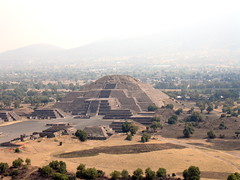
7485751890TeotihuacanThe first major metropolis in Mesoamerica in what is today Mexico; collapsed around 800 CE. It is most remembered for the gigantic "pyramid of the sun".14
7485751891Monte AlbanA major Zapotec city; engaged in diplomacy with Teotihuacan.15
7485751892ChavinThe first major urban civilization in South America (900-250 BCE). Its capital was located high in the Andes Mountains of what is today called Peru.16
7485751893Chavin de HuantarA center for a major religious movement in the Andes c. 900 BCE dedicated to jaguar, crocodie, and snake deities that helped to unify coastal and highland Peru.17
7485751894Lords of SipanA gravesite was discovered of Moche leaders dating to about 290 CE. Archaeologists referred to them as this.18
7485751895TiwanakuName of capital city and empire centered on the region near Lake Titicaca in modern Bolivia (375-1000 C.E.).19
7485751896AnasaziImportant culture of what is now the southwest of the US (700- 1100 C.E.). Centered on Chaco Canyon in New Mexico and Mesa Verde in Colorado; they built multistory residences and worshiped in subterranean buildings called kivas.20
7485751897Pueblo BonitoImportant great house in Chaco canyon; trade networks linked together various pueblos that traded things like buffalo hides, copper, turquoise, seashells, macaw feathers, and coiled baskets.21
7485751898Mound BuildersNative american civilizations of the eastern region of north america that created distinctive earthen works that served as elaborate burial places.22
7485751899CahokiaA commercial center for regional and long-distance trade in North America located near modern St. Louis. Its hinterlands produced staples for urban consumers. In return, its crafts were exported inland by porters and to North American markets in canoes.23

AP World History Strayer Chapter 11 Vocabulary Flashcards

Terms : Hide Images
11824348774Qur'an*Definition:* Islamic sacred book of Muhammad's life and message. *Significance:* The word of God that the Muslims believe and follow.0
11824348775Umma*Definition:* The entire community of Muslims bound together by ties of religion. *Significance:* Goal of creating a just and moral society where all believers are community (equality).1
11824348776Pillars of Islam*Definition:* (1) Allah is the one true God. (2) 5 daily prayers. (3) Charitable. (4) Fast of Ramadan. (5) Hajj. *Significance:* Rules followed every day. The lifestyle to be good and responsible as a Muslim.2
11824348777Hijra*Definition:* Muhammad fled from Mecca to Medina. *Significance:* Other merchants didn't appreciate Muhammed, so he left to Medina (another holy place). He came back to Mecca to reconquer it later.3
11824348778Sharia*Definition:* Islamic law based on teachings of the Qur'an. *Significance:* It's the foundation of Muslim Law and how Muslims live their lives (with the Ulama as the judge).4
11824348779Jizya*Definition:* Poll tax paid by non-Muslims (minority groups) within Muslim empire. *Significance:* Allowed religious freedom through taxes. Christians and Jews were allowed within the empire because Muslims wanted more trading opportunities.5
11824348780Ulama*Definition:* Doctors of Muslim religion and law. *Significance:* Religiously trained scholars and authorities to look to for Qur'an and Muslim faith.6
11824348781Umayyad Caliphate*Definition:* 2nd of the 4 major caliphates (rule/reign of chief Muslim ruler). *Significance:* Construction of Mosques to symbolize imperial power. It was short lived because of the favor of Arabs.7
11824348782Abbasid Caliphate*Definition:* 3rd of the 4 major caliphates. *Significance:* Founded the city of Baghdad, the capital of the "Golden Age" (enlightenment and prosperity).8
11824348783Sufism*Definition:* Mystical system of Sufis, an ascetic Muslim sect. *Significance:* Belief and practice in which Muslims seek to find divine love and knowledge through a direct personal relationship with God. (Response to the materialism of leaders).9
11824348784Al-Ghazali*Definition:* Islamic thinker who was a scholar. He argued for rationale. *Significance:* He believed that rational philosophy alone could never enable believers to know about Allah. They must know in their heart. (Caused Sufism).10
11824348785Ibn Battuta*Definition:* Visited West Africa and criticized the Muslim practices there. *Significance:* Detailed account of visits to Islamic lands, and documented travels. He provided insight.11
11824348786Timbuktu*Definition:* Port city of Mal by the Niger River. *Significance:* Contained library and university. It was the center of Islamic religious and intellectual life.12
11824348787Mansa Musa*Definition:* Ruler of Kingdom of Mali (Muslim) sought to expand kingdom for gold. *Significance:* He showed pride and ignorance of Islamic law. He elevated Mali's status in the Islamic world.13
11824348788al-Andalus*Definition:* Chief site of Islamic encounter with Christian Europe (conquered by Arab and Berber forces). *Significance:* Muslims, Christians, and Jews contributed to culture. A place of harmony and tolerance (75% converted to Islam).14
11824348789Madrassas*Definition:* (11th century) Formal colleges, offered more advanced instructions in Qur'an and sayings of Muhammad. It was the informal teachings with text memorization. *Significance:* Another way Ulama passed on teachings of the faith, and important knowledge of the faith.15
11824348790House of Wisdom*Definition:* Baghdad, the center for research and translation of scientific, medical, and philosophical texts. *Significance:* Islamic ideas circled the world, and Greek information was being translated into Arabic.16
11824348791Ibn Sina*Definition:* Writer in almost all fields of science and philosophy. *Significance:* Set standards for medical practice in Islamic and Christian worlds. Accurately diagnosed many disease and found treatments, and revolutionary writings.17
11824348792AnatoliaThe peninsula between the Mediterranean and the Black Seas that is now occupied by most of Turkey; also called Asia Minor18
11824348793Skihismdoctrines of monotheistic religion founded in northern India in 16th century combining Hindu and Islam elements19

AP World History: Chapter 15 - Global Commerce Flashcards

Terms : Hide Images
5888318043Spanish america produced ___% of world's silver850
5888318631Potosithe early modern era's largest silver mine, mostly worked by Native Americans1
5888321182Japan produced ___% of world's silver152
5888322709most of the world's silver ended up in __________China; the Ming Dynasty changed the tax policy in 1570 so citizens had to pay taxes in silver3
5888326374China's economy1) very strong; center of world economy 2) their products travelled all over the world 3) economy was becoming more commercialized and specialized4
5888328109Japan's economytheir economy grows and they invest their wealth wisely5
5888328758Spain's economywealthy at the time, but Spain did not invest their wealth wisely6
5888330555European merchants in silver tradeacted as middlemen but didn't benefit as much as others7
5888331462Atlantic Slave Trade Unique Characteristics1) more connected to race and skin color 2) connected to 1 type of labor (agriculture) 3) low social status was more extreme8
5888331884Atlantic Slave Trade Beginnings in Africa1) slave trade was held on African soil on African terms 2) controlled mostly by the king9
5888332114Atlantic Slave Trade1) 1500s-late 1800s 2) 18.6 million Africans left Africa 3) 10% of voyages experienced a rebellion10
5888337521___% Africans died in transit1511
5888339134height of slave trade1750-185012
5888339871___% of slaves worked in Brazil or the Caribbeans9013
5925753806Trans-Atlantic trade1) 1492 2) Triangular Trade 3) columbian exchange 4) connected the East and West hemisphere 5) reflected the emergence of a global economy 6) Western Europeans benefit the most14
5925761711columbian exchangethe first 300 years of the Trans Atlantic trade (1450-1750)15
5925781272Columbian exchange from America to Europe1) sugar 2) silver and gold 3) tobacco 4) cotton 5) potatoes 6) corn 7) molasses and rum16
5925788909Columbian exchange from Europe to America1) disease 2) animals 3) Christianity17
5925808020the arrival of Europeans in Indian Ocean trade1) they desired luxury goods from Indian ocean trade (ex: spices) 2) wanted to avoid monopoly by Muslim and Venetian traders 3) stronger European states and stronger economies18
5925830432Portugal's Indian Ocean trade1) 1500 2) established themselves in port cities all around the Indian Ocean 3) attempted military control using military force 4) tried to create a trading post "empire" and impose a cartaz 5) had limited success for a limited amount of time 6) ended up merging in with the rest of the traders19
5925854042cartaza permit issued by Portugal that allowed trade in the Indian Ocean20
5925830433Spain's Indian Ocean trade1) 1550 2) Philippine Islands 3) established colonial rule with small military operations, local alliances, and gifts and favors to chiefs. (very bloodless takeover) 4) attracted the attention of China and other countries; high amounts of migrants poured in from China and Japan, causing conflict when the migrants refused to comply with Spanish rule 5) had a strong economic relationship with China 6) was pretty successful; the Philippines was a colony until the 19th century21
5925830434Dutch's Indian Ocean trade1) 1600 2) Indonesia (small spicy islands) by the Dutch East India Trading Company 3) killed, starved, and enslaved the Native populations and forced them to trade; nearly all Native populations were killed off 4) the island's economy was shattered and they experienced extreme poverty while the Dutch got rich 5) traded nutmeg, mace, and cloves 6) highly commercialized and urbanized; the Dutch had good business skills. Started with luxury goods but later turned towards mass marketing 7) extremely successful22
5925831692Britain's Indian Ocean trade1) 1600 2) India (Bombay, Calcutta, and Madras) 3) weren't as economically and commercially sophisticated as Portugal; couldn't use military force 4) used private charters over many investors (East India Company) 5) bribed local officials to sneak into trade 6) Started with luxury goods but later turned towards mass market goods (cotton, textiles) 7) pretty successful23
5926022572Western European perspective on Fur Trade1) operated in Northern North America (Canada) 2) competitive; multiple European states participated 3) Europeans themselves didn't trap or hunt the animals 3) traded European goods for furs from Native Americans (alcohol, etc.)24
5926022573Russian perspective on Fur Trade1) Siberia; in Russian soil 2) no competition 3) forced fur trade on Natives 4) Russians themselves also hunted and trapped animals25
5926022586Native American perspective on Fur Trade1) Native Americans did most hunting and trapping 2) no forced labor 3) benefitted from European goods at first, but in the long run, dependency on European goods had many negative effects 4) spread of disease was slower because of less direct contact, but soon disease was rampant among Native populations26
5926023737Environmental perspective on Fur Tradenegative; many animals were driven to near extinction because of the fur trade27

Pages

Subscribe to CourseNotes RSS

Need Help?

We hope your visit has been a productive one. If you're having any problems, or would like to give some feedback, we'd love to hear from you.

For general help, questions, and suggestions, try our dedicated support forums.

If you need to contact the Course-Notes.Org web experience team, please use our contact form.

Need Notes?

While we strive to provide the most comprehensive notes for as many high school textbooks as possible, there are certainly going to be some that we miss. Drop us a note and let us know which textbooks you need. Be sure to include which edition of the textbook you are using! If we see enough demand, we'll do whatever we can to get those notes up on the site for you!