

AP Spanish Language and Culture: La Casa Flashcards
Terms : Hide Images
| 6346144219 | alfombra | carpet, rug |  | 0 |
| 6346144220 | almohada | pillow |  | 1 |
| 6346144221 | ascensor | elevator |  | 2 |
| 6346144222 | aspiradora | vacuum cleaner |  | 3 |
| 6346144223 | balcón | balcony |  | 4 |
| 6346144224 | bandeja | tray |  | 5 |
| 6346144225 | baño | bathroom |  | 6 |
| 6346144226 | barrer | to sweep |  | 7 |
| 6346144227 | batidora | blender, mixer |  | 8 |
| 6346144228 | Bombilla | light bulb |  | 9 |
| 6346144229 | calefacción | heating |  | 10 |
| 6346144230 | cazuela, cacerola | pan |  | 11 |
| 6346144231 | césped | lawn |  | 12 |
| 6346144232 | cesto, canasta | basket |  | 13 |
| 6346144233 | chimenea | fireplace, chimney |  | 14 |
| 6346144234 | cocina | kitchen |  | 15 |
| 6346144235 | colchón | mattress |  | 16 |
| 6346144236 | comedor | dining room |  | 17 |
| 6346144237 | cortina | curtain |  | 18 |
| 6346144238 | cubiertos | cutlery |  | 19 |
| 6346144239 | desván | attic |  | 20 |
| 6346144240 | dormitorio, alcoba | bedroom |  | 21 |
| 6346144241 | ducha | shower |  | 22 |
| 6346144242 | entrada | hall, entrance |  | 23 |
| 6346144243 | escalera | staircase, stepladder |  | 24 |
| 6346144244 | escoba | broom |  | 25 |
| 6346144245 | espejo | mirror |  | 26 |
| 6346144246 | estufa, cocina | stove |  | 27 |
| 6346144247 | florero | vase |  | 28 |
| 6346144248 | fregadero | kitchen sink |  | 29 |
| 6346144249 | fregar | to wash the dishes |  | 30 |
| 6346144250 | garaje | garage |  | 31 |
| 6346144251 | grifo | faucet |  | 32 |
| 6346144252 | habitación, cuarto | room |  | 33 |
| 6346144253 | horno | oven |  | 34 |
| 6346144254 | lámpara | lamp |  | 35 |
| 6346144255 | lavamanos | bathroom sink |  | 36 |
| 6346144256 | lavaplatos | dishwasher |  | 37 |
| 6346144257 | lavar | to wash |  | 38 |
| 6346144258 | limpiar | to clean |  | 39 |
| 6346144259 | llave | key |  | 40 |
| 6346144260 | luz | light |  | 41 |
| 6346144261 | manta | blanket |  | 42 |
| 6346144262 | mantel | tablecloth |  | 43 |
| 6346144263 | nevera | icebox, refrigerator |  | 44 |
| 6346144264 | olla | pot |  | 45 |
| 6346144265 | pared | wall |  | 46 |
| 6346144266 | pasillo | hall |  | 47 |
| 6346144267 | persiana | blind |  | 48 |
| 6346144268 | piscina | pool |  | 49 |
| 6346144269 | piso | floor (level/story) |  | 50 |
| 6346144270 | plancha | iron |  | 51 |
| 6346144271 | planchar | to iron |  | 52 |
| 6346144272 | refrigerador | refrigerator | | 53 |
| 6346144273 | sábana | sheet (of a bed) | 54 | |
| 6346144274 | sacudir | to dust |  | 55 |
| 6346144275 | sala | living room | 56 | |
| 6346144276 | sartén | frying pan |  | 57 |
| 6346144277 | sótano | basement, cellar |  | 58 |
| 6346144278 | suelo, piso | floor |  | 59 |
| 6346144279 | techo | ceiling |  | 60 |
| 6346144280 | tejado | roof |  | 61 |
| 6346144281 | teléfono | telephone |  | 62 |
| 6346144282 | timbre | doorbell |  | 63 |
| 6346144283 | toalla | towel |  | 64 |
| 6346144284 | trapear | to mop |  | 65 |
| 6346144285 | vajilla | table service, dinner service | 66 | |
| 6346144286 | ventana | window |  | 67 |
| 6346144287 | vestíbulo | vestibule, hall |  | 68 |
| 6346144288 | lavar | to wash | 69 | |
| 6346144289 | limpiar | 70 |
AP Language Vocab Set 4 Flashcards
Terms : Hide Images
| 4975521112 | Pedantic | Annoying other people by correction small details. | 0 | |
| 4975526362 | Circumlocution | The use of many words to say something that could be said more clearly and directly by using fewer words. | 1 | |
| 4975532821 | Perspicuity | Able to give an account clearly and understandably. | 2 | |
| 4975541465 | Infamy | The state of being well known for some bad quality or deed. | 3 | |
| 4975550470 | Affectation | An unnatural form of behavior that is meant to impress others. | 4 | |
| 4975556317 | Oratorical | Relating to the art or practice of public speaking. | 5 | |
| 4975563106 | Sanguinary | Involving or causing much bloodshed. | 6 | |
| 4975566129 | Slipshod | Characterized by a lack of care, thought, or organization. | 7 | |
| 4975571840 | Fastidious | Very careful about how you do something. | 8 | |
| 4975580449 | Despotism | Exercise of absolute power, especially in a cruel and oppressive way. | 9 |
AP World History Period 1 Flashcards
From Hunting and Gathering to Civilizations, 2.5 million-1000 B.C.E.: Origins
Original from MrsBHatchTEACHER
Terms : Hide Images
| 7328873948 | hunting and gathering | Means of obtaining subsistence by humans before the mastery of sedentary agriculture; normally typical of tribal social organization |  | 0 |
| 7328873949 | civilization | Societies with reliance on sedentary agriculture, ability to produce food surpluses, and existence of nonfarming elites, along with merchant and manufacturing groups | 1 | |
| 7328873950 | neolithic | The New Stone Age between 8000 and 5000 B.C.E.; period in which adaptation of sedentary agriculture occurred; domestication of plants and animals accomplished |  | 2 |
| 7328873951 | nomadic societies | livestock hearding societies that do not have a permanent settlement. normally found on the fringes of civilized (urban) societies; commonly referred to as "barbarian" by civilized societies |  | 3 |
| 7328873952 | culture | Combination of ideas, objects, and patterns of behavior that result from human social interaction |  | 4 |
| 7328873953 | agrarian revolution | Occurred between 8000 and 5000 B.C.E.; transition from hunting and gathering to sedentary agriculture |  | 5 |
| 7328873954 | pastoralism | A nomadic agricultural lifestyle based on herding domesticated animals; tended to produce independent people capable of challenging sedentary agricultural societies |  | 6 |
| 7328873955 | Catal Huyuk | Early urban culture/civiization based on sedentary agriculture; located in modern southern Turkey; larger in population than Jericho, had greater degree of social stratification |  | 7 |
| 7328873956 | Bronze Age | From 4000 to 3000 B.C.E.; increased use of plow, metalworking; development of wheeled vehicles, writing |  | 8 |
| 7328873957 | Mesopotamia | Literally "between the rivers"; the civilization that arose in the alluvial plain of the Tigris-Euphrates river valleys |  | 9 |
| 7328873960 | cuneiform | A form of writing developed by the Sumerians using a wedge-shaped stylus and clay tablets | 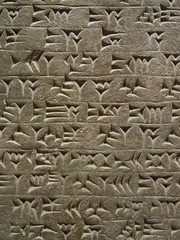 | 10 |
| 7328873961 | city-state | A form of political organization typical of Mesopotamian civilization; consisted of agricultural hinterlands ruled by an urban-based king |  | 11 |
| 7328873962 | ziggurat | a massive tower building usually associated with Mesopotamian temple connections |  | 12 |
| 7328873963 | Babylonian Empire | Unified all of Mesopotamia circa 1800 B.C.E.; collapsed due to foreign invasion circa 1600 B.C.E. |  | 13 |
| 7328873964 | Hammurabi | The most important Babylonian ruler; responsible for codification of the law |  | 14 |
| 7328873965 | Pharaoh | The term used to denote the kings of ancient Egypt; the term, "great house" refers to the palace of the pharaohs |  | 15 |
| 7328873966 | pyramids | Monumental architecture typical of Old Kingdom Egypt; used as burial sites for pharaohs |  | 16 |
| 7328873967 | hieroglyphs | Form of writing developed in ancient Egypt; more pictorial than Mesopotamian cuneiform |  | 17 |
| 7328873968 | Kush | African state that developed along the upper reaches of the Nile circa 1000 B.C.E.; conquered Egypt and ruled it for several centuries | 18 | |
| 7328873969 | monotheism | The exclusive worship of one god; introduced by Jews into Middle Eastern civilization |  | 19 |
| 7328873970 | Phoenicians | Seafaring civilization located on the shores of the eastern Mediterranean; established colonies throughout the Mediterranean |  | 20 |
| 7328873971 | Harappa and Mohenjo Daro | Major urban complexes of Harappan civilization; laid out on planned grid pattern |  | 21 |
| 7328873972 | Aryans | Indo-European nomadic, warlike, pastorialists who replaced Harappan civilization |  | 22 |
| 7328873973 | Huanghe (Yellow) River Basin | Site of the development of sedentary agriculture in China |  | 23 |
| 7328873974 | Shang | 1st Chinese dynasty (after the legendary Xia) |  | 24 |
| 7328873976 | ideographic writing | Pictograph characters grouped together to create new concepts; typical of Chinese writing | 25 | |
| 7328873978 | Paleolithic | The period that ended about 3,000 years after the end of the last Ice Age, it lasted until about 10,000 years ago. (Old Stone Age) The period of the Stone Age associated with the evolution of humans. It predates the Neolithic period. |  | 26 |
| 7328873980 | eglitarian | equality among people (no social levels) | 27 | |
| 7328873981 | tools | Humans developed a wider range of ____ specially adapted to different environments from tropics to tundra | 28 | |
| 7328873982 | Neolithic Revolution | period of change from hunter-gatherer lifesyle to agricultural lifestyles associated with domestication, farming, and settlement |  | 29 |
| 7328873983 | patriarchy | father based/male dominated society |  | 30 |
| 7328873988 | record-keeping systems | ___ arose independently in all early civilization sand subsequently were diffused | 31 | |
| 7328873989 | Nile River | This river flooded regularly. |  | 32 |
| 7328873990 | Tigris River | This river's floods were unpredictable. | 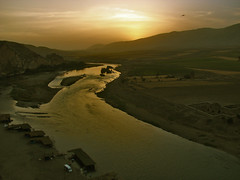 | 33 |
| 7328873991 | Mesopotamian | Unpredictable weather patterns affected the development of the _____ civilization. | 34 | |
| 7328873992 | Egyptian | _______art demonstrated little change for nearly 1000 years. | 35 | |
| 7328873993 | Nubia and Kush | Kingdoms upriver from Egypt. | 36 | |
| 7328873996 | Jericho | One of the earliest cities: located in modern Israel. |  | 37 |
| 7328944470 | Hittites | a member of an ancient people who established a powerful empire in Asia Minor and Syria, dominant from about 1900 to 1200 b.c. | 38 | |
| 7328944471 | Vedic Religion | of or relating to the Aryans who settled in India c1500 b.c., or to their literature or religion. | 39 | |
| 7328948794 | Zoroastrianism | an Iranian religion, founded c600 b.c. by Zoroaster, the principal beliefs of which are in the existence of a supreme deity, Ahura Mazda, and in a cosmic struggle between a spirit of good, Spenta Mainyu, and a spirit of evil, Angra Mainyu. | 40 | |
| 7328951461 | Hebrew Monotheism | the doctrine or belief that there is only one God. | 41 | |
| 7328951462 | Rig Veda | one of the Vedas, a collection of 1028 hymns, dating from not later than the second millennium b.c. | 42 | |
| 7328953696 | Quipia | a device consisting of a cord with knotted strings of various colors attached, used by the ancient Peruvians for recording events, keeping accounts, etc. | 43 |
Flashcards
Flashcards
AP World History Chapter Eight Notecards Flashcards
Terms : Hide Images
| 7643846787 | Mecca | City in western Arabia; birthplace of the Prophet Muhammad and ritual center of the Islamic religion. 8.228 | 0 | |
| 7643847002 | Muhammad | Arab prophet; founder of religion of Islam. 8.228 | 1 | |
| 7643847838 | Muslim | An adherent of the Islamic religion; a person who "submits" (in Arabic, Islam means "submission") to the will of God. 8.230 | 2 | |
| 7643847839 | Islam | Religion expounded by the Prophet Muhammad on the basis of his reception of divine revelations, which were collected after his death into the Quran. In the tradition of Judaism and Christianity, and sharing much of their lore, Islam calls on all people to recognize one creator god—Allah—who rewards or punishes believers after death according to how they led their lives. 8.230 | 3 | |
| 7643848418 | Medina | City in western Arabia to which the Prophet Muhammad and his followers emigrated in 622 to escape persecution in Mecca. 8.230 | 4 | |
| 7643848859 | Umma | The community of all Muslims. A major innovation against the background of seventh-century Arabia, where traditionally kinship rather than faith had determined membership in a community. 8.230 | 5 | |
| 7643848860 | Caliphate | Office established in succession to the Prophet Muhammad, to rule the Islamic empire; also the name of that empire. 8.231 | 6 | |
| 7643849131 | Quran | Book composed of divine revelations made to the Prophet Muhammad between ca. 610 and his death in 632; the sacred text of the religion of Islam. 8.231 | 7 | |
| 7643849436 | Shi'ites | Muslims belonging to the branch of Islam believing that God vests leadership of the community in a descendant of Muhammad's son-in-law Ali. Shi'ism is the state religion of Iran. 8.232 | 8 | |
| 7643849813 | Umayyad Caliphate | First hereditary dynasty of Muslim caliphs (661 to 750). From their capital at Damascus, the Umayyads ruled an empire that extended from Spain to India. Overthrown by the Abbasid Caliphate. 8.232 | 9 | |
| 7643850772 | Sunnis | Muslims belonging to branch of Islam believing that the community should select its own leadership. The majority religion in most Islamic countries. 8.232 | 10 | |
| 7643851192 | Abbasid Caliphate | Descendants of the Prophet Muhammad's uncle, al-Abbas, the Abbasids overthrew the Umayyad Caliphate and ruled an Islamic empire from their capital in Baghdad (founded 762) from 750 to 1258. 8.233 | 11 | |
| 7643851193 | Mamluks | Under the Islamic system of military slavery, Turkic military slaves who formed an important part of the armed forces of the Abbasid Caliphate of the ninth and tenth centuries. Mamluks eventually founded their own state, ruling Egypt and Syria (1250-1517). 8.234 | 12 | |
| 7643851662 | Ghana | First known kingdom in sub-Saharan West Africa between the sixth and thirteenth centuries C.E. Also the modern West African country once known as the Gold Coast. 8.235 | 13 | |
| 7643852520 | Ulama | Muslim religious scholars. From the ninth century onward, the primary interpreters of Islamic law and the social core of Muslim urban societies. 8.237 | 14 | |
| 7643852521 | Hadith | A tradition relating the words or deeds of the Prophet Muhammad; next to the Quran, the most important basis for Islamic law. 8.239 | 15 |
AP World History: Ch. 19 Early Latin America, Pt. 2 Flashcards
Terms : Hide Images
| 5622766809 | Potosí | Largest New World silver mine; located in Bolivia. | 0 | |
| 5622771310 | Huancavelica | Greatest mercury deposit in South America; used in American silver production. | 1 | |
| 5622776898 | haciendas | Rural agricultural and herding estates; produced goods for consumers in America; basis for wealth and power of the local aristocracy. | 2 | |
| 5622781935 | consulado | Merchant guild of Seville with a virtual monopoly over goods shipped to Spanish America; handled much of the silver shipped in return. | 3 | |
| 5622785959 | galleons | Large, heavily armed ships used to carry silver from New World colonies to Spain; basis of convoy system used for transportation of bullion. | 4 | |
| 5622791491 | Treaty of Tordesillas | Concluded in 1494 between Castile and Portugal; clarified spheres of influence and rights of possession; in the New World, Brazil went to Portugal and the rest to Spain. | 5 | |
| 5622794526 | letrados | University-trained lawyers from Spain; basic personnel of the Spanish colonial bureaucratic system. | 6 | |
| 5622798761 | Recopilación | Body of laws collected in 1681 for Spanish New World possessions; bases of law in the Indies. | 7 | |
| 5622801802 | Council of the Indies | Spanish government body that issued all laws and advised king on all issues dealing with the New World colonies. | 8 | |
| 5622805556 | viceroyalties | Major divisions of Spanish New World colonies headed by direct representatives of the king; one based in Lima, the other in Mexico City. | 9 | |
| 5622809415 | viceroys | Senior government officials in Spanish America; ruled as direct representatives of the king over the principal administrative units or viceroyalties. | 10 | |
| 5622813857 | audiencia | Royal courts of appeals established in Spanish New World colonies; staffed by professional magistrates who made and applied laws. | 11 | |
| 5622817408 | Sor Juana Inés de la Cruz | 17th-century author, poet, and musician of New Spain; gave up secular concerns to concentrate on spiritual matters. | 12 | |
| 5622821678 | Pedro Alvares Cabral | Portuguese leader of an expedition to India; landed in Brazil in 1500. | 13 | |
| 5622826633 | captaincies | Areas along the Brazilian coast granted to Portuguese nobles for colonial development. | 14 | |
| 5622833246 | Paulistas | Backwoodsmen from São Paulo, Brazil; penetrated Brazilian interior in search of precious metals during the 17th century. | 15 | |
| 5622839423 | Minas Gerais | Brazilian region where gold was discovered in 1695; a gold rush followed. | 16 | |
| 5622842315 | Rio de Janeiro | Brazilian port used for mines of Minas Gerais; became capital in 1763. | 17 | |
| 5622849174 | sociedad de castas | Spanish American social system based on racial origins; Europeans on top, mixed races in the middle, Indians and African slaves at the bottom. | 18 | |
| 5622853087 | peninsulares | Spanish-born residents of the New World. | 19 | |
| 5622857311 | Creoles | People of European ancestry born in Spanish New World colonies; dominated local economies; ranked socially below peninsulares. | 20 | |
| 5622860655 | amigos del país | Clubs and associations dedicated to reform in Spanish colonies; flourished during the 18th century; called for material improvement rather than political reform. | 21 | |
| 5622866362 | War of the Spanish Succession | (1702-1713); wide-ranging conflict fought between European nations; resulted in the installation of Philip of Anjou as king of Spain. | 22 | |
| 5622872470 | Charles III | Spanish monarch (1759-1788); instituted fiscal, administrative, and military reforms in Spain and its empire. | 23 | |
| 5622875569 | José de Galvez | Spanish Minister of the Indies and chief architect of colonial reform; moved to eliminate creoles from the upper colonial bureaucracy; created intendants for local government. | 24 | |
| 5622879106 | Marquis of Pombal | Prime Minister of Portugal (1755-1776); strengthened royal authority in Brazil, expelled the Jesuits, enacted fiscal reforms, and established monopoly companies to stimulate the colonial economy. | 25 | |
| 5622882995 | Comunero Revolt | A popular revolt against Spanish rule in New Granada in 1781; suppressed as a result of government concessions and divisions among rebels. | 26 | |
| 5622886269 | Tupac Amaru II | Mestizo leader of Indian revolt in Peru; supported by many in the lower social classes; revolt failed because of Creole fears of real social revolution. | 27 | |
| 5626057437 | Mestizo | A person mixed race, especially the offspring of a Spaniard and an American Indian. | 28 |
AP World History Period 5 Flashcards
Terms : Hide Images
| 9648548141 | Scientific Method | a logical procedure for gathering information about the natural world where experimentation and observation are used to test hypotheses | 0 | |
| 9648548142 | Social Contract | the agreement by which people define and limit their individual rights, thus creating an organized society or government (Thomas Hobbes) | 1 | |
| 9648548143 | Natural Rights | the rights that all people are born with - according to John Locke, the rights of life, liberty, and property | 2 | |
| 9648548144 | Enlightened Despot | One of the 18th century European monarchs who were inspired by Enlightenment ideas to rule justly and respect the rights of their subjects (Frederick II of Prussia, Holy Roman Emperor Joseph II of Austria, and Catherine the Great of Russia) | 3 | |
| 9648548145 | Separation of Powers | the assignment of executive, legislative, and judicial powers to different groups of officials in a government ("Power should be a check to power" - Baron Montesquieu) | 4 | |
| 9648548146 | Philosophes | group of social thinkers in France during the Enlightenment | 5 | |
| 9648548147 | Federal system | system of government in which power is divided between a central authority and a number of individual states | 6 | |
| 9648548148 | Checks and balances | measures designed to prevent any one branch of government from dominating the others | 7 | |
| 9648548149 | Old Regime | political and social system that existed in France before the French Revolution (left over from the Middle Ages) | 8 | |
| 9648548150 | estate | one of the three social classes in France before the French Revolution (First Estate=clergy; Second Estate=nobility; Third Estate=rest of the population) | 9 | |
| 9648548151 | bourgeoisie | in social and political theory, the social order dominated by the land-owning class. In the 19th century, the term became associated with the middle class | 10 | |
| 9648548152 | coup d'etat | sudden seizure of political power in a nation | 11 | |
| 9648548153 | plebiscite | a direct vote in which a country's people have the opportunity to approve or reject a proposal | 12 | |
| 9648548154 | Balance of power | a political situation in which no one nation is powerful enough to pose a threat to others | 13 | |
| 9648548155 | legitimacy | hereditary right of a monarch to rule | 14 | |
| 9648548156 | conservatives | in the first half of the 19th century, Europeans who wanted to preserve the traditional monarchies of Europe (mostly wealthy landowners) | 15 | |
| 9648548157 | liberals | in the first half of the 19th century, Europeans who wanted to give more political power to elected parliaments (mostly middle-class business leaders and merchants) | 16 | |
| 9648548158 | radicals | in the first half of the 19th century, those Europeans who favored drastic change to extend democracy to all people | 17 | |
| 9648548159 | socialism | an economic system in which the factors of production are owned by the public and operate for the welfare of all | 18 | |
| 9648548160 | nation-state | an independent nation of people having a common culture and identity (ie: France, Spain) | 19 | |
| 9648548161 | nationalism | the belief that people should be loyal mainly to their nation - that is, to the people with whom they share a culture and history - rather than to a king or empire | 20 | |
| 9648548162 | Zionism | 19th century nationalist movement for the establishment of a Jewish national or religious community in Palestine | 21 | |
| 9648548163 | self-determination | the determining by the people of the form their government shall have, without reference to the wishes of any other nation, especially by people of a territory of former colony | 22 | |
| 9648548164 | Suffrage | the right of voting | 23 | |
| 9648548165 | Universal manhood suffrage | voting for all male citizens | 24 | |
| 9648548166 | Universal suffrage | voting for all citizens regardless of ethnicity, sec, or religion | 25 | |
| 9648548167 | Imperialism | policy in which a strong nation seeks to dominate other countries politically, economically, or socially | 26 | |
| 9648548168 | Cultural imperialism | domination of one culture over another by a deliberate policy or by economic or technological superiority | 27 | |
| 9648548169 | Colonialism | policy by which a nation administers a foreign territory and develops its resources for the benefit of the colonial power | 28 | |
| 9648548170 | Extraterritoriality | the right of foreign residents in a country to live under the laws of their native country and disregard the laws of the host country. In the 19th and 20th century, European and American nationals living in certain areas of Chinese and Ottoman cities were granted this right | 29 | |
| 9648548171 | Annexation | the adding of a region to the territory of an existing political unit | 30 | |
| 9648548172 | Social Darwinism | the application of Charles Darwin's ideas about evolution and "survival of the fittest" to human societies - particularly as justification for imperialist expansion | 31 | |
| 9648548173 | Sphere of Influence | an area in which an outside power claims exclusive investment or trading privileges; includes treaty ports - trade cities opened to foreign residents as a result of forced treaties, in treaty ports foreigners enjoyed extraterritoriality | 32 | |
| 9648548174 | Economic Imperialism | independent but less developed nations controlled by private business interests rather than by other governments | 33 | |
| 9648548175 | Cottage industries | weaving, sewing, carving and other small scale industries that can be done in the home. The laborers, frequently women, are usually independent laborers using raw materials supplied to them by capitalist entrepreneurs | 34 | |
| 9648548176 | Industry | the process of making products by using machinery and factories | 35 | |
| 9648548177 | Labor union | an organization of workers in a particular industry or trade, created to defend the interests of members (working conditions, wages) through strikes or negotiations with employers | 36 | |
| 9648548178 | laissez-faire | an economic doctrine that opposes governmental regulation of or interference in commerce beyond the minimum necessary for a free-enterprise system to operate according to its own economic laws | 37 | |
| 9648548179 | urbanization | the growth of cities and the migration of people into them | 38 | |
| 9648548180 | White Dominions | colonies in which European settlers made up the overwhelming majority of the population; small numbers of native inhabitants were typically reduced by disease and wars of conquest | 39 | |
| 9648548181 | Contested Settler societies | featured large-scale European settlement despite the existence of large, indigenous populations, generally resulted in clashes over land rights, resource control, social status, and differences in culture | 40 | |
| 9648548182 | Protectorate | a country or territory with its own internal government but under the control of an outside power | 41 | |
| 9648548183 | colony | a country or a region governed internally by a foreign power | 42 | |
| 9648548184 | pogrom | an organized campaign of violence against Jewish communities in late 19th century Russia | 43 | |
| 9648548185 | millenarianism | belief in a coming ideal society and especially one created by revolutionary action by a religious, social, or political group/movement | 44 | |
| 9648548186 | caudillo | a Spanish or Latin America military dictator | 45 | |
| 9648548187 | Napoleon Bonaparte | Emperor of France from 1804-1815; took power through a coup d'état. Was a hero of the French Revolution and his legal reform (the Napoleonic code) influenced other legal systems around the world. He is considered to be one of the most superior military commanders of all time | 46 | |
| 9648548188 | Adam Smith | Seen as the founder of Capitalism. Enlightenment thinker and author of The Wealth of Nations in 1776. | 47 | |
| 9648548189 | Prince Klemens von Metternich | Austrian Foreign Minister who led the Congress of Vienna in 1814-1815. Advocated a conservative stance when rebuilding Europe following the Napoleonic Wars | 48 | |
| 9648548190 | Karl Marx | Co-author of The Communist Manifesto - his theories heldd that societies progress through a class struggle between the bourgeoisie and the proletariat (workers) | 49 | |
| 9648548191 | Friedrich Engels | Co-author of The Communist Manifesto - made important contributions to family economics | 50 | |
| 9648548192 | Commodore Matthew Perry | Played a key role in the opening of Japan to the West and the Open Door Policy. He is known as the Father of the Steam Navy in the United States | 51 | |
| 9648548193 | Simon Bolivar | Venezuelan who played a key role in the Latin American struggle for independence from Spain and helped lay the foundations for democratic ideology in much of Latin America | 52 | |
| 9648548194 | Abraham Lincoln | President of the United States during the civil war | 53 | |
| 9648548195 | Porfirio Diaz | President of Mexico from 1876 to 1911. Fought as a rebel during the French intervention and at the Battle of Puebla. Was overthrown during the Mexican Revolution of 1910. | 54 | |
| 9648548196 | Muhammad Ali | Self-declared Khedive of Egypt and Sudan. Regarded as the founder of modern Egypt for his military and industrial reforms | 55 | |
| 9648548197 | Cecil Rhodes | English-born South African businessman responsible for helping claim much of Africa for Great Britain (From Cape Town to Cairo) | 56 | |
| 9648548198 | Queen Victoria | Longest reigning monarch of the United Kingdom of Great Britain and Ireland and named Empress of India during that time | 57 | |
| 9648548199 | King Leopold II | King of Belgium and sole owner of the Congo Free State in Africa, where he used force labor to acquire rubber | 58 | |
| 9648548200 | Alexander II | Russian czar responsible for the emancipation of Russia's serfs in 1861 and attempted other reforms in Russia after their defeat in the Crimean War | 59 | |
| 9648548201 | Baron de Montesquieu | Enlightenment thinker who advocated the separation of powers and checks and balances within a government | 60 | |
| 9648548202 | Robert Boyle | Father of modern chemistry | 61 | |
| 9648548203 | Thomas Jefferson | American founding father, president, and principal author of the Declaration of Independence | 62 | |
| 9648548204 | Jean-Jacques Rousseau | French philosopher whose ideas of the social contract influenced both the American and French Revolutions | 63 | |
| 9648548205 | John Locke | English philosopher who believed all men were born with natural rights and it was the duty of the government to protect those rights. His work influenced the founding fathers of the United States | 64 | |
| 9648548206 | Marie Curie | Polish physicist and chemist responsible for pioneering research on radioactivity. Received two Nobel prizes in science for her research | 65 | |
| 9648548207 | Issac Newton | English mathematician who discovered the laws of motion and universal gravitation. Also shares credit for the creation of calculus | 66 | |
| 9648548208 | Louis Pasteur | French chemist whose experiments supported the germ theory of disease and helped create the first vaccines | 67 | |
| 9648548209 | Voltaire | French Enlightenment thinker and satirist who was a proponent of freedom of religion and expression as well as separation of church and state | 68 | |
| 9648548210 | James Watt | Scottish inventor remembered for his work with the steam engine | 69 | |
| 9648548211 | tabula rasa | blank slate | 70 | |
| 9648548212 | Common Sense | Made Thomas Paine popular in America for advocating liberty from Britain | 71 | |
| 9648548213 | Declaration of Independence | document stating that the thirteen colonies were separate from Great Britain. Expressed the philosophy behind the Patriots' fight against British troops in America | 72 | |
| 9648548214 | Bastille | A former prison that still symbolized the abuses of the monarchy and the corrupt aristocracy | 73 | |
| 9648548215 | Declaration of the Rights of Man | a statement declaring basic human rights | 74 | |
| 9648548216 | Civil Constitution of the Clergy | Abolished special privileges of the Catholic Church in France and put it under state control | 75 | |
| 9648548217 | Committee of Public Safety | Powerful group, led by Maximilien Robespierre, set up to defeat all enemies of the revolution. | 76 | |
| 9648548218 | Declaration of the Rights of Woman and the Female Citizen | Alienated the male dominated leadership of the French Revolution | 77 | |
| 9648548219 | Primogeniture | right of inheritance belongs exclusively to the eldest son | 78 | |
| 9648548220 | Code Napoleon | All citizens were equal and ir provided for trial by jury and freedom of religion | 79 | |
| 9648548221 | Maroons | Escaped slaves | 80 | |
| 9648548222 | Benito Juarez | Indian lawyer from a background of poverty who became Mexico's president and eventually served five terms | 81 | |
| 9648548223 | La Reforma | Liberal revolt which resulted in a new constitution for Mexico in 1854 | 82 | |
| 9648548224 | José de San Martín | Creole in South America who defeated royalists to establish an independent government. "Protector of Peru" | 83 | |
| 9648548225 | Claude Henri de Saint-Simon | Advocated strongly for public works that would provide employment | 84 | |
| 9648548226 | Robert Owen | Established utopian communities at New Lanark in Scotland and New Harmony in the United States, where he insisted on providing some education for child workers | 85 | |
| 9648548227 | Prime Minster Camilo Benso | Count of Cavour of Piedmont-Sardinia; who helped to unify Italy as a constitutional monarchy | 86 | |
| 9648548228 | gauchos | A rough equivalent of the North American cowboy | 87 | |
| 9648548229 | Spinning Jenny | Invented byJames Hargreaves in the 1760s, allowed a weaver to spin more than one thread at a time | 88 | |
| 9648548230 | Water frame | Patented by Richard Arkwright in 1769, used water power to drive the spinning wheel | 89 | |
| 9648548231 | division of labor | The type of arrangement in which each worker specializes in a particular task or job | 90 | |
| 9648548232 | crop rotation | Rotating different crops in and out of a field each year | 91 | |
| 9648548233 | Seed drill | A device that efficiently places seeds in a designated spot in the ground | 92 | |
| 9648548234 | Enclosure movement | Government fenced off the commons in order to give exclusive use of it to people who paid for the privilege or who purchased the land | 93 | |
| 9648548235 | Transcontinental Railroad | Railroad connecting the west and east coasts of the continental US | 94 | |
| 9648548236 | Slum | a district of a city marked by poverty and inferior living conditions | 95 | |
| 9648548237 | Stockholder | Individuals who buy partial ownership directly from the company when it is formed or later through a stock market | 96 | |
| 9648548238 | Captains of industry | Overshadowed the landed aristocracy as the power brokers and leaders of modern society | 97 | |
| 9648548239 | Utilitarianism | Sought the greatest good for the greatest number of people | 98 | |
| 9648548240 | Tanzimat | Reorganization | 99 | |
| 9648548241 | abolitionist movement | An international movement that between approximately 1780 and 1890 succeeded in condemning slavery as morally repugnant and abolishing it in much of the world; the movement was especially prominent in Britain and the United States. |  | 100 |
| 9648548242 | Creoles | Native-born elites in the Spanish colonies. |  | 101 |
| 9648548243 | Declaration of the Rights of Man and Citizen | Document drawn up by the French National Assembly in 1789 that proclaimed the equal rights of all men; the declaration ideologically launched the French Revolution. |  | 102 |
| 9648548244 | Declaration of the Rights of Woman | Short work written by the French feminist Olympe de Gouges in 1791 that was modeled on the Declaration of the Rights of Man and Citizen and that made the argument that the equality proclaimed by the French revolutionaries must also include women. |  | 103 |
| 9648548245 | Estates-General | French representative assembly called into session by Louis XVI to address pressing problems and out of which the French Revolution emerged; the three estates were the clergy, the nobility, and the commoners. |  | 104 |
| 9648548246 | Freetown | West African settlement in what is now Sierra Leone at which British naval commanders freed Africans they rescued from illegal slave ships. |  | 105 |
| 9648548247 | French Revolution | Massive dislocation of French society (1789-1815) that overthrew the monarchy, destroyed most of the French aristocracy, and launched radical reforms of society that were lost again, though only in part, under Napoleon's imperial rule and after the restoration of the monarchy. |  | 106 |
| 9648548248 | gens de couleur libres | Literally, "free people of color"; term used to describe freed slaves and people of mixed racial background in Saint Domingue on the eve of the Haitian Revolution. |  | 107 |
| 9648548249 | Haiti | Name that revolutionaries gave to the former French colony of Saint Domingue; the term means "mountainous" or "rugged" in the Taino language. |  | 108 |
| 9648548250 | Haitian Revolution | The only fully successful slave rebellion in world history; the uprising in the French Caribbean colony of Saint Domingue (later renamed Haiti) was sparked by the French Revolution and led to the establishment of an independent state after a long and bloody war (1791-1804). |  | 109 |
| 9648548251 | Hidalgo-Morelos Revolution | Socially radical peasant insurrection that began in Mexico in 1810 and that was led by the priests | 110 | |
| 9648548252 | Latin American Revolutions | Series of risings in the Spanish colonies of Latin America (1810-1826) that established the independence of new states from Spanish rule but that for the most part retained the privileges of the elites despite efforts at more radical social rebellion by the lower classes. | 111 | |
| 9648548253 | Toussaint L'Ouverture | First leader of the Haitian Revolution, a former slave (1743-1803) who wrote the first constitution of Haiti and served as the first governor of the newly independent state. |  | 112 |
| 9648548254 | Maternal feminism | Movement that claimed that women have value in society not because of an abstract notion of equality but because women have a distinctive and vital role as mothers; its exponents argued that women have the right to intervene in civil and political life because of their duty to watch over the future of their children. |  | 113 |
| 9648548255 | Napoleon Bonaparte | French head of state from 1799 until his abdication in 1814 (and again briefly in 1815); preserved much of the French Revolution under an autocratic system and was responsible for the spread of revolutionary ideals through his conquest of much of Europe. |  | 114 |
| 9648548256 | Nation | A clearly defined territory whose people have a sense of common identity and destiny, thanks to ties of blood, culture, language, or common experience. |  | 115 |
| 9648548257 | Nationalism | The focusing of citizens' loyalty on the notion that they are part of a "nation" with a unique culture, territory, and destiny; first became a prominent element of political culture in the nineteenth century. |  | 116 |
| 9648548258 | North American Revolution | Successful rebellion conducted by the colonists of parts of North America (not Canada) against British rule (1775-1787); a conservative revolution whose success assured property rights but established republican government in place of monarchy. | 117 | |
| 9648548259 | Petit Blancs | The "little" (or poor) white population of Saint Domingue, which played a significant role in the Haitian Revolution. |  | 118 |
| 9648548260 | Seneca Falls Conference | The first organized women's rights conference |  | 119 |
| 9648548261 | Elizabeth Cady Stanton | Leading figure of the early women's rights movement in the United States (1815-1902). |  | 120 |
| 9648548262 | the Terror | Term used to describe the revolutionary violence in France in 1793-1794, when radicals under the leadership of Maximilien Robespierre executed tens of thousands of people deemed enemies of the revolution. |  | 121 |
| 9648548263 | Third Estate | In prerevolutionary France, the term used for the 98 percent of the population that was neither clerical nor noble, and for their representatives at the Estates General; in 1789, it declared itself a National Assembly and launched the French Revolution. |  | 122 |
| 9648548264 | Tupac Amaru | The last Inca emperor; in the 1780s, a Native American rebellion against Spanish control of Peru took place in his name. |  | 123 |
| 9648548265 | Bourgeoisie | Term that Karl Marx used to describe the owners of industrial capital; originally meant "townspeople." |  | 124 |
| 9648548266 | British Royal Society | Association of scientists established in England in 1660 that was dedicated to the promotion of "useful knowledge." |  | 125 |
| 9648548267 | Caste War of Yucatan | Long revolutionary struggle (1847-1901) of the Maya people of Mexico against European and mestizo intruders. |  | 126 |
| 9648548268 | Caudillo | A military strongman who seized control of a government in nineteenth-century Latin America. |  | 127 |
| 9648548269 | Crimean War | Major international conflict (1854-1856) in which British and French forces defeated Russia; the defeat prompted reforms within Russia. |  | 128 |
| 9648548270 | Dependent development | Term used to describe Latin America's economic growth in the nineteenth century, which was largely financed by foreign capital and dependent on European and North American prosperity and decisions. |  | 129 |
| 9648548271 | Porfirio Diaz | Mexican dictator from 1876 to 1911 who was eventually overthrown in a long and bloody revolution. |  | 130 |
| 9648548272 | Duma | The elected representative assembly grudgingly created in Russia by Tsar Nicholas II in response to the 1905 revolution. |  | 131 |
| 9648548273 | Sigmund Freud | Austrian doctor and the father of modern psychoanalysis (1856-1939); his theories about the operation of the human mind and emotions remain influential today |  | 132 |
| 9648548274 | Labour Party | British working-class political party established in the 1890s and dedicated to reforms and a peaceful transition to socialism, in time providing a viable alternative to the revolutionary emphasis of Marxism. |  | 133 |
| 9648548275 | Latin American Export Boom | Large-scale increase in Latin American exports (mostly raw materials and foodstuffs) to industrializing countries in the second half of the nineteenth century, made possible by major improvements in shipping; the boom mostly benefited the upper and middle classes. |  | 134 |
| 9648548276 | Lenin | Pen name of Russian Bolshevik Vladimir Ulyanov (1870-1924), who was the main leader of the Russian Revolution of 1917. |  | 135 |
| 9648548277 | Lower middle class | Social stratum that developed in Britain in the nineteenth century and that consisted of people employed in the service sector as clerks, salespeople, secretaries, police officers, and the like; by 1900, this group comprised about 20 percent of Britain's population. |  | 136 |
| 9648548278 | Karl Marx | German expatriate in England who advocated working-class revolution as the key to creating an ideal communist future. |  | 137 |
| 9648548279 | Mexican Revolution | Long and bloody war (1911-1920) in which Mexican reformers from the middle class joined with workers and peasants to overthrow the dictator Porfirio Díaz and create a new, much more democratic political order. |  | 138 |
| 9648548280 | Middle class values | Belief system that developed in Britain in the nineteenth century; it emphasized thrift, hard work, rigid moral behavior, cleanliness, and "respectability." |  | 139 |
| 9648548281 | Model T | The first automobile affordable enough for a mass market; produced by American industrialist Henry Ford. |  | 140 |
| 9648548282 | Robert Owens | Socialist thinker and wealthy mill owner (1771-1858) who created an ideal industrial community at New Lanark, Scotland. |  | 141 |
| 9648548283 | Peter the Great | Tsar of Russia (r. 1689-1725) who attempted a massive reform of Russian society in an effort to catch up with the states of Western Europe. |  | 142 |
| 9648548284 | Populism | Late-nineteenth-century American political movement that denounced corporate interests of all kinds. |  | 143 |
| 9648548285 | Progressivism | American political movement in the period around 1900 that advocated reform measures to correct the ills of industrialization. |  | 144 |
| 9648548286 | Proletariat | Term that Karl Marx used to describe the industrial working class; originally used in ancient Rome to describe the poorest part of the urban population. |  | 145 |
| 9648548287 | Russian Revolution of 1905 | Spontaneous rebellion that erupted in Russia after the country's defeat at the hands of Japan; the revolution was suppressed, but it forced the government to make substantial reforms. |  | 146 |
| 9648548288 | Socialism in the United States | Fairly minor political movement in the United States, at its height in 1912 gaining 6 percent of the vote for its presidential candidate. |  | 147 |
| 9648548289 | Steam engine | Mechanical device in which the steam from heated water builds up pressure to drive a piston, rather than relying on human or animal muscle power; the introduction of this item allowed a hitherto unimagined increase in productivity and made the Industrial Revolution possible. |  | 148 |
| 9648548290 | Abd al-Hamid II | Ottoman sultan (r. 1876-1909) who accepted a reform constitution but then quickly suppressed it, ruling as a reactionary autocrat for the rest of his long reign. |  | 149 |
| 9648548291 | Boxer Rebellion | Rising of Chinese militia organizations in 1900 in which large numbers of Europeans and Chinese Christians were killed |  | 150 |
| 9648548292 | China 1911 | The collapse of China's imperial order, officially at the hands of organized revolutionaries but for the most part under the weight of the troubles that had overwhelmed the government for the previous half-century. |  | 151 |
| 9648548293 | Daimyo | Feudal lords of Japan who retained substantial autonomy under the Tokugawa shogunate and only lost their social preeminence in the Meiji restoration. |  | 152 |
| 9648548294 | Informal empire | Term commonly used to describe areas that were dominated by Western powers in the nineteenth century but that retained their own governments and a measure of independence, e.g., Latin America and China. |  | 153 |
| 9648548295 | Meiji Restoration | The overthrow of the Tokugawa shogunate of Japan in 1868, restoring power at long last to the emperor |  | 154 |
| 9648548296 | Matthew Perry | U.S. navy commodore who in 1853 presented the ultimatum that led Japan to open itself to more normal relations with the outside world. |  | 155 |
| 9648548297 | Opium Wars | Two wars fought between Western powers and China (1839-1842 and 1856-1858) after China tried to restrict the importation of foreign goods; China lost both wars and was forced to make major concessions. |  | 156 |
| 9648548298 | Russo-Japanese War | Ending in a Japanese victory, this war established Japan as a formidable military competitor in East Asia and precipitated the Russian Revolution of 1905. |  | 157 |
| 9648548299 | Samurai | Armed retainers of the Japanese feudal lords, famed for their martial skills and loyalty; in the Tokugawa shogunate, they gradually became an administrative elite, but they did not lose their special privileges until the Meiji restoration. |  | 158 |
| 9648548300 | Self-strengthening Movement | China's program of internal reform in the 1860s and 1870s, based on vigorous application of Confucian principles and limited borrowing from the West. |  | 159 |
| 9648548301 | Selim III | Ottoman sultan (r. 1789-1807) who attempted significant reforms of his empire, including the implementation of new military and administrative structures. |  | 160 |
| 9648548302 | The Sick Man of Europe | Western Europe's unkind nickname for the Ottoman Empire in the nineteenth and early twentieth centuries, a name based on the sultans' inability to prevent Western takeover of many regions and to deal with internal problems; it fails to recognize serious reform efforts in the Ottoman state during this period. |  | 161 |
| 9648548303 | Social Darwinism | An application of the concept of "survival of the fittest" to human history in the nineteenth century. |  | 162 |
| 9648548304 | Taiping Uprising | Massive Chinese rebellion that devastated much of the country between 1850 and 1864; it was based on the millenarian teachings of Hong Xiuquan. |  | 163 |
| 9648548305 | Tanzimat Reforms | Important reform measures undertaken in the Ottoman Empire beginning in 1839; the term means "reorganization." |  | 164 |
| 9648548306 | Tokugawa Shogunate | Rulers of Japan from 1600 to 1868. |  | 165 |
| 9648548307 | Unequal treaties | Series of nineteenth-century treaties in which China made major concessions to Western powers. |  | 166 |
| 9648548308 | Young Ottomans | Group of would-be reformers in the mid-nineteenth-century Ottoman Empire that included lower-level officials, military officers, and writers; they urged the extension of Westernizing reforms to the political system. |  | 167 |
| 9648548309 | Young Turks | Movement of Turkish military and civilian elites that developed ca. 1900, eventually bringing down the Ottoman Empire |  | 168 |
| 9648548310 | Africanization of Christianity | Process that occurred in non-Muslim Africa, where millions who were converted to Christianity sought to maintain older traditions alongside new Christian ideas; many converts continued using protective charms and medicines and consulting local medicine men, and many continued to believe in their old gods and spirits. |  | 169 |
| 9648548311 | Apartheid | Afrikaans term for the system that developed in South Africa of strictly limiting the social and political integration of whites and blacks. |  | 170 |
| 9648548312 | Cash crop agriculture | Agricultural production, often on a large scale, of crops for sale in the market, rather than for consumption by the farmers themselves. |  | 171 |
| 9648548313 | Colonial racism | A pattern of European racism in their Asian and African colonies that created a great racial divide between themselves and the natives and limited native access to education and the civil service, based especially on pseudo-scientific notions of naturally superior and inferior races. |  | 172 |
| 9648548314 | Colonial tribalism | A European tendency, especially in African colonies, to identify and sometimes invent distinct "tribes" that had often not existed before, reinforcing European notions that African societies were primitive. |  | 173 |
| 9648548315 | Leopold II | his rule as private owner of the Congo Free State during much of that time is typically held up as the worst abuse of Europe's second wave of colonization, resulting as it did in millions of deaths. |  | 174 |
| 9648548316 | Cultivation System | System of forced labor used in the Netherlands East Indies in the nineteenth century; peasants were required to cultivate at least 20 percent of their land in cash crops such as sugar or coffee for sale at low and fixed prices to government contractors, who then earned enormous profits from further sale of the crops. |  | 175 |
| 9648548317 | Indian Rebellion of 1857-1858 | Massive uprising of much of India against British rule; also called the Indian Mutiny or the Sepoy Mutiny from the fact that the rebellion first broke out among Indian troops in British employ. |  | 176 |
| 9648548318 | Informal Empires | Term commonly used to describe areas such as Latin America and China that were dominated by Western powers in the nineteenth century but that retained their own governments and a measure of independence. |  | 177 |
| 9648548319 | Invention of tradition | In many colonial states, a process of forging new ways of belonging and self identification that defined and to some extent mythologized the region's past, especially to create broader terms of belonging than had existed before. |  | 178 |
| 9648548320 | Scramble for Africa | Name used for the process of the European countries' partition of the continent of Africa between themselves in the period 1875-1900. |  | 179 |
| 9648548321 | Western educated elite | The main beneficiaries in Asian and African lands colonized by Western powers; schooled in the imperial power's language and practices, they moved into their country's professional classes but ultimately led anticolonial movements as they grew discouraged by their inability to win equal status to the colonizers. |  | 180 |
AP World History Vocabulary Unit 1 Flashcards
Terms : Hide Images
| 9860794818 | egalitarian | relating to or believing in the principle that all people are equal and deserve equal rights and opportunities. | 0 | |
| 9860800616 | patriarchy | a system of society or government in which men hold the power and women are largely excluded from it. | 1 | |
| 9860821495 | stratified | to arrange in a hierarchical order, especially according to graded status levels. | 2 | |
| 9860833039 | pastoral | (especially of land or a farm) used for or related to the keeping or grazing of sheep or cattle. | 3 | |
| 9860839093 | artisan | a worker in a skilled trade, especially one that involves making things by hand. | 4 | |
| 9860849063 | textile | relating to fabric or weaving | 5 | |
| 9860856501 | civilization | the stage of human social development and organization that is considered most advanced. | 6 | |
| 9860864059 | deity | a god or goddess | 7 | |
| 9860875311 | diffuse | spread or cause to spread over a wide area or among a large number of people. | 8 | |
| 9860883251 | monotheism | the doctrine or belief that there is only one God. | 9 | |
| 9860895924 | hierarchical | of the nature of a hierarchy; arranged in order of rank. | 10 | |
| 9860903564 | fertility | the ability to conceive children or young. | 11 | |
| 9860913866 | divine | of, from, or like God or a god. | 12 | |
| 9860924630 | metallurgy | the technique or science of working or heating metals so as to give them certain desired shapes or properties. | 13 | |
| 9860945202 | polytheism | the belief in or worship of more than one god. | 14 | |
| 9860953959 | flora | the plants of a particular region, habitat, or geological period. | 15 | |
| 9860958446 | fauna | the animals of a particular region, habitat, or geological period. | 16 | |
| 9860969758 | erosion | the process of eroding or being eroded by wind, water, or other natural agents. | 17 | |
| 9860996809 | specialization | the process of concentrating on and becoming expert in a particular subject or skill. | 18 | |
| 9861000501 | elite | a group of persons exercising the major share of authority or influence within a larger group | 19 | |
| 9861017222 | bureaucracy | government by many bureaus, administrators, and petty officials. excessive multiplication of, and concentration of power in, administrative bureaus or administrators. | 20 | |
| 9861044121 | constraint | limitation or restriction. | 21 | |
| 9861059182 | foundational | denoting an underlying basis or principle; fundamental. | 22 | |
| 9861065820 | illustrative | serving as an example or explanation. | 23 | |
| 9861070589 | urban | in, relating to, or characteristic of a city or town. | 24 | |
| 9861123057 | monumental | great in importance, extent, or size. | 25 | |
| 9861129352 | raze | to tear down; demolish; level to the ground | 26 | |
| 9861155087 | accumulate | gather together or acquire an increasing number or quantity of. | 27 | |
| 9861161828 | mobilize | to marshal, bring together, prepare for action, especially of a vigorous nature: | 28 | |
| 9861186027 | surplus | an amount, quantity, etc., greater than needed. | 29 | |
| 9861219378 | regional | relating to or characteristic of a region. | 30 | |
| 9861250474 | disseminate | spread or disperse (something, especially information) widely. | 31 | |
| 9861265117 | mode | a way or manner in which something occurs or is experienced, expressed, or done. | 32 | |
| 9861277530 | kinship | a family, clan, or other group | 33 | |
| 9861281848 | elaborate | involving many carefully arranged parts or details; detailed and complicated in design and planning. | 34 | |
| 9861294093 | hindrance | a thing that provides resistance, delay, or obstruction to something or someone. | 35 | |
| 9861387910 | hunter-forager/hunter-gatherer | is a human living in a society in which most or all food is obtained by foraging (collecting wild plants and pursuing wild animals), in contrast to agricultural societies, which rely mainly on domesticated species. | 36 | |
| 9861407545 | Paleolithic Period | Of or relating to the cultural period of the Stone Age beginning with the earliest chipped stone tools, about 2.4 million years ago, until the beginning of the Mesolithic Period, about 15,000 to 11,500 years ago in western Asia and southern Europe. noun. The Paleolithic Period. Also called Old Stone Age | 37 | |
| 9861454147 | Neolithic Revolution | was the first agricultural revolution. It was a gradual change from nomadic hunting and gathering communities and bands to agriculture and settlement. This period is described as a "revolution" because it changed the way of life for communities that made this change. | 38 | |
| 9861489942 | nomadic | living the life of a wanderer; wandering. | 39 | |
| 9861542149 | merchant | a person who buys and sells goods for profit; dealer; trader. | 40 | |
| 9861583232 | domesticate | to convert (animals, plants, etc.) to human uses. to tame (an animal), especially by breeding, to live as a pet or work animal. to adapt (a plant/crop) so as to be cultivated by and beneficial to human beings. | 41 | |
| 9861650272 | city-state | a city that with its surrounding territory forms an independent state. | 42 | |
| 9861658693 | state | a nation or territory considered as an organized political community under one government. , provided by, or concerned with the civil government of a country. | 43 |
Pages

Need Help?
We hope your visit has been a productive one. If you're having any problems, or would like to give some feedback, we'd love to hear from you.
For general help, questions, and suggestions, try our dedicated support forums.
If you need to contact the Course-Notes.Org web experience team, please use our contact form.
Need Notes?
While we strive to provide the most comprehensive notes for as many high school textbooks as possible, there are certainly going to be some that we miss. Drop us a note and let us know which textbooks you need. Be sure to include which edition of the textbook you are using! If we see enough demand, we'll do whatever we can to get those notes up on the site for you!
