AP Notes, Outlines, Study Guides, Vocabulary, Practice Exams and more!

Chapter 29 ap world history Flashcards

Terms : Hide Images
6638187161Industrializationrefers to a process that transformed agrarian and handi-centered economies into economies distinguished by industry and machine manufacture0
6638187162Technological developmentsMade it possible to produce goods by machines rather than by hand and that harnessed inanimate sources of energy such as COAL and PETROLEUM1
6638187163Organizational changesaccompanied technological developments2
6638187164End of 19th centuryThe factory had become the predominant site of industrial production in Europe, the United States, and Japan.3
6638187165Mid 19th centuryMany giant corporations had joined together to control trade through trusts and cartels4
6638187166High populationencouraged occupational specialization and permitted many individuals to work at tasks other than cultivation5
6638187167Ecological obstaclesSOIL DEPLETION & DEFORESTATION threatened continued population growth and consumption levels.6
6638187168coalplayed a crucial role in the industrialization of Great Britian.7
6638187169wooduntil the 18th century it had served as the primary source of fuel for iron production, home eaing, and cooking.8
6638187170Substitution of coal for woodThe fortunate conjunction of COAL deposits and e skills necessary to extract this fuel encouraged the substitution of coal for wood, thus creating a promisingf ramework for industrialization9
6638187171calicoesinexpensive, brightly printed textiles imported. Cotton cloth became the pricapal fabric of european clothes before the 19th century.10
6638187172British wool producerspersuaded parliament to pass a series of laws to protect the domestic wool industry because they were threatened by the popularity of cotton products.11
6638187173The Calico ActAct of 1720 and 1721 prohibited imports of printed cotton cloth and restricted the sale of calicoes at home.12
6638187174Increase of cotton productionDemand for cotton was so trong that producers had to speed up spinning and weaving to supply growing domestic and foreign markets. to increase production, they turned to inventions that rapidly mechaized the cotton textile industry.13
66381871751730sartisans began to develop labor-saving devices for spinning and weaving cotton, thereby moving away from hand0based techniques derived from wool and linen industries.14
6638187176John Kaya mechanic that invented the flying shuttle. This device speeded up the weaving process and stimulated demand for thread.15
6638187177Samuel CromptonThe most important invention was samuel crompton's "mule," built in 1799. Adapted for steam power by 1790, the mule became the device of choice for spinning cotton.16
6638187178Edmund Cartwright1785 a clergyman without training or experience in either mechanics or textiles, patented a water-driven power loom that inaugurated an era of mechanical weaving.17
66381871791830half a million people worked in cotton business, Britians leading industry, which accounted for 40 percent of exports.18
6638187180James Wattinventor of the most crucial technological break through of the early industrial era, the development of a general-purpose steam engine in 1765, an instrument maker at the University of Glasgow in Scotland.19
6638187181horsepowerWatt's contemporaries used the term horsepower to measure the energy generated by his steam engine, which did the work numerous animals.20
6638187182Henry BessemerBuilt a refined blast furnace known as the Bessemer converter that made it possible to produce steel cheaply and in large quantities.21
6638187183Georgea self educated englishman, built the fisrt steam powered locomotive.22

AP world History study guide Flashcards

Terms : Hide Images
4894578406Greece geographyMountain, and oceans surrounded the city-states but most were able to trade by boat.0
4894606090SpartaWas a military state and isolated from much of Greece. Women were encouraged to participate in many sports to deliver healthy babies.1
4894660077AthensDemocracy; only native born property owners male are citizens. Citizens have ability to make laws. Women were a minority while men dominated.2
4894718838Persian warsWars between Persia and Greece; Greece came victorious which caused Athens to be leader of all Greece; Athens controls league by force; Athens goes to war with Sparta by trying to starve them out. Persia gives funds to Sparta to win in a naval war against Athens.3
4894822095Alexander The GreatConquered from Greece to India until army wanted to stop and Alexander died on the way back. Empire fell apart after death;4
4894879984PtolemyBorn in Alexandria Egypt, he was a writer, mathematician, and astronomer.5
4894962490Long term impact of RomeInfluenced building style; Language;6
4895021874LatifundiaA combination of land put together by Patricians to create a huge estate7
4895074763Roman SlaveryPeople that were in debt , or captured in battle.8
4895099383Greek SlaveryPeople that were in debt; criminals; conquered people; or captured in war9
4895118025Women in classical civilizationsWomen were minority while men dominated the family. The oldest Male in family was the leader.10
4895140765EmpireA large region with a government and a military to defend it. Ability to conquest ; culture11
4895177321Characteristics of Of Classical EmpiresExpansion; Religion; government. They expanded their empire. Religion influenced decisions by leaders and influenced government laws.12
4895250442JudaismFounder Abraham; 3rd century; Israel-Egypt; Torah; Ten commandments13
4895284872ChristiantyFounder Jesus Christ; Israel; Bible; Ten commandments; 2nd monotheistic faith14
4895303679IslamFounder, Porphet Muhammad; Mecca; Arabian Peninsula; Quran; Five Pillars; Allah Muhammad; pray 5x a day; charity to poor15
4895339200PeriodizationSystematic athletic or physical training16
4895352628Relay TradeLatter ports where goods are transported to each station and delivered by a different person each port.17
4895386747goodsAnything that is being traded or bought18
4895394675Spread of ReligionsThrough trade routs and by sea19
4895403683CamelsAn animal that can conserve water and travel long distances20
4895430601Mandate of HeavenAn Idea that the gods have picked an emperor to rule and if there is a major disaster the people will take that as a sign to get rid of the emperor21
4895456595ConfucianismFounded by confucius; in China 550CE and the book Analects22
4895465366DaoismFounded by Lao Tsu and is about nature; Yin Yang23
4895493668Fall of Qin DynastyThey created a good foundation for the Han dynasty. ruled harshly; got of anybody who disagreed with him24
4895526533Warring states periodlasted 250 years and was a period of many families fighting each other to get into power25
4895560799Caste Systemsocial where Bhramin-Untouchables26
4895577307HinduismNo single founder; India; widely practiced by 1500BCE27
4895589415Battle of KalingaAshoka lead an army to battle and the outcome was a massive loss of life and caused him to convert to buddhism28
4895612281KarmaIf you do something good something good will happen to you; vis versa29

AP World History Period 5 Flashcards

Terms : Hide Images
9922169427abolitionist movementAn international movement that between approximately 1780 and 1890 succeeded in condemning slavery as morally repugnant and abolishing it in much of the world; the movement was especially prominent in Britain and the United States.0
9922169428CreolesNative-born elites in the Spanish colonies.1
9922169429Declaration of the Rights of Man and CitizenDocument drawn up by the French National Assembly in 1789 that proclaimed the equal rights of all men; the declaration ideologically launched the French Revolution.2
9922169430Declaration of the Rights of WomanShort work written by the French feminist Olympe de Gouges in 1791 that was modeled on the Declaration of the Rights of Man and Citizen and that made the argument that the equality proclaimed by the French revolutionaries must also include women.3
9922169431Estates-GeneralFrench representative assembly called into session by Louis XVI to address pressing problems and out of which the French Revolution emerged; the three estates were the clergy, the nobility, and the commoners.4
9922169432FreetownWest African settlement in what is now Sierra Leone at which British naval commanders freed Africans they rescued from illegal slave ships.5
9922169433French RevolutionMassive dislocation of French society (1789-1815) that overthrew the monarchy, destroyed most of the French aristocracy, and launched radical reforms of society that were lost again, though only in part, under Napoleon's imperial rule and after the restoration of the monarchy.6
9922169434gens de couleur libresLiterally, "free people of color"; term used to describe freed slaves and people of mixed racial background in Saint Domingue on the eve of the Haitian Revolution.7
9922169435HaitiName that revolutionaries gave to the former French colony of Saint Domingue; the term means "mountainous" or "rugged" in the Taino language.8
9922169436Haitian RevolutionThe only fully successful slave rebellion in world history; the uprising in the French Caribbean colony of Saint Domingue (later renamed Haiti) was sparked by the French Revolution and led to the establishment of an independent state after a long and bloody war (1791-1804).9
9922169437Hidalgo-Morelos RevolutionSocially radical peasant insurrection that began in Mexico in 1810 and that was led by the priests10
9922169438Latin American RevolutionsSeries of risings in the Spanish colonies of Latin America (1810-1826) that established the independence of new states from Spanish rule but that for the most part retained the privileges of the elites despite efforts at more radical social rebellion by the lower classes.11
9922169439Toussaint L'OuvertureFirst leader of the Haitian Revolution, a former slave (1743-1803) who wrote the first constitution of Haiti and served as the first governor of the newly independent state.12
9922169440Maternal feminismMovement that claimed that women have value in society not because of an abstract notion of equality but because women have a distinctive and vital role as mothers; its exponents argued that women have the right to intervene in civil and political life because of their duty to watch over the future of their children.13
9922169441Napoleon BonaparteFrench head of state from 1799 until his abdication in 1814 (and again briefly in 1815); preserved much of the French Revolution under an autocratic system and was responsible for the spread of revolutionary ideals through his conquest of much of Europe.14
9922169442NationA clearly defined territory whose people have a sense of common identity and destiny, thanks to ties of blood, culture, language, or common experience.15
9922169443NationalismThe focusing of citizens' loyalty on the notion that they are part of a "nation" with a unique culture, territory, and destiny; first became a prominent element of political culture in the nineteenth century.16
9922169444North American RevolutionSuccessful rebellion conducted by the colonists of parts of North America (not Canada) against British rule (1775-1787); a conservative revolution whose success assured property rights but established republican government in place of monarchy.17
9922169445Petit BlancsThe "little" (or poor) white population of Saint Domingue, which played a significant role in the Haitian Revolution.18
9922169446Seneca Falls ConferenceThe first organized women's rights conference19
9922169447Elizabeth Cady StantonLeading figure of the early women's rights movement in the United States (1815-1902).20
9922169448the TerrorTerm used to describe the revolutionary violence in France in 1793-1794, when radicals under the leadership of Maximilien Robespierre executed tens of thousands of people deemed enemies of the revolution.21
9922169449Third EstateIn prerevolutionary France, the term used for the 98 percent of the population that was neither clerical nor noble, and for their representatives at the Estates General; in 1789, it declared itself a National Assembly and launched the French Revolution.22
9922169450Tupac AmaruThe last Inca emperor; in the 1780s, a Native American rebellion against Spanish control of Peru took place in his name.23
9922169451BourgeoisieTerm that Karl Marx used to describe the owners of industrial capital; originally meant "townspeople."24
9922169452British Royal SocietyAssociation of scientists established in England in 1660 that was dedicated to the promotion of "useful knowledge."25
9922169453Caste War of YucatanLong revolutionary struggle (1847-1901) of the Maya people of Mexico against European and mestizo intruders.26
9922169454CaudilloA military strongman who seized control of a government in nineteenth-century Latin America.27
9922169455Crimean WarMajor international conflict (1854-1856) in which British and French forces defeated Russia; the defeat prompted reforms within Russia.28
9922169456Dependent developmentTerm used to describe Latin America's economic growth in the nineteenth century, which was largely financed by foreign capital and dependent on European and North American prosperity and decisions.29
9922169457Porfirio DiazMexican dictator from 1876 to 1911 who was eventually overthrown in a long and bloody revolution.30
9922169458DumaThe elected representative assembly grudgingly created in Russia by Tsar Nicholas II in response to the 1905 revolution.31
9922169459Sigmund FreudAustrian doctor and the father of modern psychoanalysis (1856-1939); his theories about the operation of the human mind and emotions remain influential today32
9922169460Labour PartyBritish working-class political party established in the 1890s and dedicated to reforms and a peaceful transition to socialism, in time providing a viable alternative to the revolutionary emphasis of Marxism.33
9922169461Latin American Export BoomLarge-scale increase in Latin American exports (mostly raw materials and foodstuffs) to industrializing countries in the second half of the nineteenth century, made possible by major improvements in shipping; the boom mostly benefited the upper and middle classes.34
9922169462LeninPen name of Russian Bolshevik Vladimir Ulyanov (1870-1924), who was the main leader of the Russian Revolution of 1917.35
9922169463Lower middle classSocial stratum that developed in Britain in the nineteenth century and that consisted of people employed in the service sector as clerks, salespeople, secretaries, police officers, and the like; by 1900, this group comprised about 20 percent of Britain's population.36
9922169464Karl MarxGerman expatriate in England who advocated working-class revolution as the key to creating an ideal communist future.37
9922169465Mexican RevolutionLong and bloody war (1911-1920) in which Mexican reformers from the middle class joined with workers and peasants to overthrow the dictator Porfirio Díaz and create a new, much more democratic political order.38
9922169466Middle class valuesBelief system that developed in Britain in the nineteenth century; it emphasized thrift, hard work, rigid moral behavior, cleanliness, and "respectability."39
9922169467Model TThe first automobile affordable enough for a mass market; produced by American industrialist Henry Ford.40
9922169468Robert OwensSocialist thinker and wealthy mill owner (1771-1858) who created an ideal industrial community at New Lanark, Scotland.41
9922169469Peter the GreatTsar of Russia (r. 1689-1725) who attempted a massive reform of Russian society in an effort to catch up with the states of Western Europe.42
9922169470PopulismLate-nineteenth-century American political movement that denounced corporate interests of all kinds.43
9922169471ProgressivismAmerican political movement in the period around 1900 that advocated reform measures to correct the ills of industrialization.44
9922169472ProletariatTerm that Karl Marx used to describe the industrial working class; originally used in ancient Rome to describe the poorest part of the urban population.45
9922169473Russian Revolution of 1905Spontaneous rebellion that erupted in Russia after the country's defeat at the hands of Japan; the revolution was suppressed, but it forced the government to make substantial reforms.46
9922169474Socialism in the United StatesFairly minor political movement in the United States, at its height in 1912 gaining 6 percent of the vote for its presidential candidate.47
9922169475Steam engineMechanical device in which the steam from heated water builds up pressure to drive a piston, rather than relying on human or animal muscle power; the introduction of this item allowed a hitherto unimagined increase in productivity and made the Industrial Revolution possible.48
9922169476Abd al-Hamid IIOttoman sultan (r. 1876-1909) who accepted a reform constitution but then quickly suppressed it, ruling as a reactionary autocrat for the rest of his long reign.49
9922169477Boxer RebellionRising of Chinese militia organizations in 1900 in which large numbers of Europeans and Chinese Christians were killed50
9922169478China 1911The collapse of China's imperial order, officially at the hands of organized revolutionaries but for the most part under the weight of the troubles that had overwhelmed the government for the previous half-century.51
9922169479DaimyoFeudal lords of Japan who retained substantial autonomy under the Tokugawa shogunate and only lost their social preeminence in the Meiji restoration.52
9922169480Informal empireTerm commonly used to describe areas that were dominated by Western powers in the nineteenth century but that retained their own governments and a measure of independence, e.g., Latin America and China.53
9922169481Meiji RestorationThe overthrow of the Tokugawa shogunate of Japan in 1868, restoring power at long last to the emperor54
9922169482Matthew PerryU.S. navy commodore who in 1853 presented the ultimatum that led Japan to open itself to more normal relations with the outside world.55
9922169483Opium WarsTwo wars fought between Western powers and China (1839-1842 and 1856-1858) after China tried to restrict the importation of foreign goods; China lost both wars and was forced to make major concessions.56
9922169484Russo-Japanese WarEnding in a Japanese victory, this war established Japan as a formidable military competitor in East Asia and precipitated the Russian Revolution of 1905.57
9922169485SamuraiArmed retainers of the Japanese feudal lords, famed for their martial skills and loyalty; in the Tokugawa shogunate, they gradually became an administrative elite, but they did not lose their special privileges until the Meiji restoration.58
9922169486Self-strengthening MovementChina's program of internal reform in the 1860s and 1870s, based on vigorous application of Confucian principles and limited borrowing from the West.59
9922169487Selim IIIOttoman sultan (r. 1789-1807) who attempted significant reforms of his empire, including the implementation of new military and administrative structures.60
9922169488The Sick Man of EuropeWestern Europe's unkind nickname for the Ottoman Empire in the nineteenth and early twentieth centuries, a name based on the sultans' inability to prevent Western takeover of many regions and to deal with internal problems; it fails to recognize serious reform efforts in the Ottoman state during this period.61
9922169489Social DarwinismAn application of the concept of "survival of the fittest" to human history in the nineteenth century.62
9922169490Taiping UprisingMassive Chinese rebellion that devastated much of the country between 1850 and 1864; it was based on the millenarian teachings of Hong Xiuquan.63
9922169491Tanzimat ReformsImportant reform measures undertaken in the Ottoman Empire beginning in 1839; the term means "reorganization."64
9922169492Tokugawa ShogunateRulers of Japan from 1600 to 1868.65
9922169493Unequal treatiesSeries of nineteenth-century treaties in which China made major concessions to Western powers.66
9922169494Young OttomansGroup of would-be reformers in the mid-nineteenth-century Ottoman Empire that included lower-level officials, military officers, and writers; they urged the extension of Westernizing reforms to the political system.67
9922169495Young TurksMovement of Turkish military and civilian elites that developed ca. 1900, eventually bringing down the Ottoman Empire68
9922169496Africanization of ChristianityProcess that occurred in non-Muslim Africa, where millions who were converted to Christianity sought to maintain older traditions alongside new Christian ideas; many converts continued using protective charms and medicines and consulting local medicine men, and many continued to believe in their old gods and spirits.69
9922169497ApartheidAfrikaans term for the system that developed in South Africa of strictly limiting the social and political integration of whites and blacks.70
9922169498Cash crop agricultureAgricultural production, often on a large scale, of crops for sale in the market, rather than for consumption by the farmers themselves.71
9922169499Colonial racismA pattern of European racism in their Asian and African colonies that created a great racial divide between themselves and the natives and limited native access to education and the civil service, based especially on pseudo-scientific notions of naturally superior and inferior races.72
9922169500Colonial tribalismA European tendency, especially in African colonies, to identify and sometimes invent distinct "tribes" that had often not existed before, reinforcing European notions that African societies were primitive.73
9922169501Leopold IIhis rule as private owner of the Congo Free State during much of that time is typically held up as the worst abuse of Europe's second wave of colonization, resulting as it did in millions of deaths.74
9922169502Cultivation SystemSystem of forced labor used in the Netherlands East Indies in the nineteenth century; peasants were required to cultivate at least 20 percent of their land in cash crops such as sugar or coffee for sale at low and fixed prices to government contractors, who then earned enormous profits from further sale of the crops.75
9922169503Indian Rebellion of 1857-1858Massive uprising of much of India against British rule; also called the Indian Mutiny or the Sepoy Mutiny from the fact that the rebellion first broke out among Indian troops in British employ.76
9922169504Informal EmpiresTerm commonly used to describe areas such as Latin America and China that were dominated by Western powers in the nineteenth century but that retained their own governments and a measure of independence.77
9922169505Invention of traditionIn many colonial states, a process of forging new ways of belonging and self identification that defined and to some extent mythologized the region's past, especially to create broader terms of belonging than had existed before.78
9922169506Scramble for AfricaName used for the process of the European countries' partition of the continent of Africa between themselves in the period 1875-1900.79
9922169507Western educated eliteThe main beneficiaries in Asian and African lands colonized by Western powers; schooled in the imperial power's language and practices, they moved into their country's professional classes but ultimately led anticolonial movements as they grew discouraged by their inability to win equal status to the colonizers.80

AP World History Chapter 3 Flashcards

Terms : Hide Images
7097678318Royal RoadSpanned some 1,500 miles across the empire0
7097678319Socratic MethodContinually asking questions to systematically clarify another person's ideas and to identify the core of them1
7097678428Golden MeanEmphasis on moderation2
7097678429empiricismTrusting what one learned from observation and evidence of the senses, rather than emphasizing intuition or religious beliefs3
7097679064syncreticA religion that combines several traditions4
7097679307ZoroastrianismBased on belief in only one god, also the religion believed in a god of darkness and other lesser gods, none of which were to be worshiped5
7097679308qanatAn underground canal first built by the ancient Persians6
7097679309monarchiesA king ruled the state7
7097679768aristocracyNobles ruled8
7097679769oligarchyA few wealthy landowners and merchants ruled9
7097679770tyrantsLeaders who seized power with the people's support10
7097680003democracyAll citizens participated11
7097680349representative democracyCitizens elect leaders to represent them and give those leaders power to make laws and govern12
7097680004direct democracyA government in which all citizens could vote directly on laws and other issues in a large assembly13
7097681082Persian WarsConquered Greek areas rebelled in campaigns14
7097681178Hellenistic PeriodThe time between the death of Alexander the great and the rise of the roman domination15
7097681179hoplitesInfantry members16
7097681180archonsA council of nobles17
7097681185helotsSlaves18
7097681668satrapsA ruler of a province who was responsible to the emperor19
7097681669aristocratsThe rulers of an aristocratic society20
7097681670merchantsPeople who buy and sell goods21
7097682140caravanseraiCombination inns and markets for people traveling the Royal Road by camel caravan22
7097682607Common currencySame currency across the empire23

AP World History - Period 2 Flashcards

Terms : Hide Images
9972132319Ahura MazdaIn Zoroastrianism, the good god who rules the world.0
9972132320Alexander the GreatAlexander III of Macedon (356-323 B.C.E.), conqueror of the Persian Empire and part of northwest India.1
9972132321AryansIndo-European pastoralists who moved into India about the time of the collapse of the Indus Valley civilization; their role in causing this collapse is still debated by historians.2
9972132322AshokaThe most famous ruler of the Mauryan Empire (r. 268-232 B.C.E.), who converted to Buddhism and tried to rule peacefully and with tolerance.3
9972132323Caesar AugustusThe great-nephew and adopted son of Julius Caesar who emerged as sole ruler of the Roman state at the end of an extended period of civil war (r. 31 B.C.E.-14 C.E.).4
9972132324Cyrus (the Great)Founder of the Persian Empire (r. 557-530 B.C.E.); a ruler noted for his conquests, religious tolerance, and political moderation.5
9972132325Darius IGreat king of Persia (r. 522-486 B.C.E.) following the upheavals after Cyrus's death; completed the establishment of the Persian Empire.6
9972132326Greco-Persian WarsTwo major Persian invasions of Greece, in 490 B.C.E. and 480 B.C.E., in which the Persians were defeated on both land and sea.7
9972132327Gupta EmpireAn empire of India (320-550 C.E.).8
9972132328Han dynastyChinese dynasty that restored unity in China softened legalist policies. Begun in 202 B.C. by Liu Bang, the dynasty ruled China for more than 400 years.9
9972132329Hellenistic eraThe period from 323 to 30 B.C.E. in which Greek culture spread widely in Eurasia in the kingdoms ruled by Alexander's political successors.10
9972132330HerodotusGreek historian known as the "father of history" (ca. 484-ca. 425 B.C.E.). His Histories enunciated the Greek view of a fundamental divide between East and West, culminating in the Greco-Persian Wars of 490-480 B.C.E.11
9972132331hopliteA heavily armed Greek infantryman. Over time, the ability to afford a military wares and to fight for the city came to define Greek citizenship.12
9972132332IoniaThe territory of Greek settlements on the coast of Anatolia; the main bone of contention between the Greeks and the Persian Empire.13
9972132333Mandate of HeavenThe ideological underpinning of Chinese emperors, this was the belief that a ruler held authority by command of divine force as long as he ruled morally and benevolently.14
9972132334Battle of MarathonAthenian victory over a Persian invasion in 490 B.C.E.15
9972132335Mauryan EmpireA major empire (322-185 B.C.E.) that encompassed most of India.16
9972132336PatriciansWealthy, privileged Romans who dominated early Roman society.17
9972132337Pax RomanaThe "Roman peace," a term typically used to denote the stability and prosperity of the early Roman Empire, especially in the first and second centuries C.E.18
9972132338Peloponnesian WarGreat war between Athens (and allies) and Sparta (and allies), lasting from 431 to 404 B.C.E. The conflict ended in the defeat of Athens and the closing of Athens's Golden Age.19
9972132339PersepolisThe capital and greatest palace-city of the Persian Empire, destroyed by Alexander the Great.20
9972132340Persian EmpireA major empire that expanded from the Iranian plateau to incorporate the Middle East from Egypt to India; flourished from around 550 to 330 B.C.E.21
9972132341PlebiansPoorer, less privileged Romans who gradually won a role in Roman politics.22
9972132342Punic WarsThree major wars between Rome and Carthage in North Africa, fought between 264 and 146 B.C.E., that culminated in Roman victory and control of the western Mediterranean.23
9972132343Qin DynastyA short-lived (221-206 B.C.E.) but highly influential Chinese dynasty that succeeded in reuniting China at the end of the Warring States period.24
9972132344Qin ShihuangdiLiterally "first emperor" (r. 221-210 B.C.E.) forcibly reunited China and established a strong and repressive state.25
9972132345SolonAthenian statesman and lawmaker (fl. 594-560 B.C.E.) whose reforms led the Athenians toward democracy.26
9972132346WudiHan emperor (r. 141-86 B.C.E.) who began the Chinese civil service system by establishing an academy to train imperial bureaucrats.27
9972132347XiongnuNomadic peoples to the north of the Great Wall of China who were a frequent threat to the stability of the Chinese state.28
9972132348AristotleA Greek polymath philosopher (384-322 B.C.E.); student of Plato and teacher of Alexander the Great.29
9972132349Bhagavad GitaA great Hindu epic text, part of the much larger Mahabharata, which affirms the performance of caste duties as a path to religious liberation.30
9972132350BrahmanThe "World Soul" or final reality in upanishadic Hindu belief.31
9972132351BrahminsThe priestly caste of India.32
9972132352BuddhismThe cultural/religious tradition first enunciated by Siddhartha Gautama33
9972132353ConfucianismThe Chinese philosophy first enunciated by Confucius, advocating the moral example of superiors as the key element of social order.34
9972132354ConfuciusThe founder of Confucianism (551-479 B.C.E.); an aristocrat of northern China who proved to be the greatest influence on Chinese culture in its history.35
9972132355ConstantineRoman emperor (r. 306-337 C.E.) whose conversion to Christianity paved the way for the triumph of Christianity in Europe.36
9972132356DaoismA Chinese philosophy/popular religion that advocates simplicity and understanding of the world of nature, founded by the legendary figure Laozi.37
9972132357Filial pietyThe honoring of one's ancestors and parents, a key element of Confucianism.38
9972132358Greek rationalismA secularizing system of scientific and philosophic thought that developed in classical Greece in the period 600 to 300 B.C.E.; it emphasized the power of education and human reason to understand the world in nonreligious terms.39
9972132359HinduismA word derived from outsiders to describe the vast diversity of indigenous Indian religious traditions.40
9972132360HippocratesA very influential Greek medical theorist (ca. 460-ca. 370 B.C.E.); regarded as the father of medicine.41
9972132361Jesus of NazarethThe prophet/god of Christianity(ca. 4 B.C.E.-ca. 30 C.E.).42
9972132362YahwehA form of the Hebrew name of God used in the Bible. The monotheistic religion developed by the Hebrews, emphasizing a sole personal god with concerns for social justice.43
9972132363KarmaIn Hinduism, the determining factor of the level at which the individual is reincarnated, based on purity of action and fulfillment of duty in the prior existence.44
9972132364LaoziA legendary Chinese philosopher of the sixth century B.C.E.; regarded as the founder of Daoism.45
9972132365LegalismA Chinese philosophy distinguished by an adherence to clear laws with vigorous punishments.46
9972132366MokshaIn Hindu belief, liberation from separate existence and union with Brahman.47
9972132367NirvanaThe end goal of Buddhism, in which individual identity is "extinguished" into a state of serenity and great compassion.48
9972132368PlatoA disciple of Socrates whose Dialogues convey the teachings of his master while going beyond them to express Plato's own philosophy; lived from 429 to 348 B.C.E.49
9972132369PythagorasA major Greek philosopher (ca. 560-ca. 480 B.C.E.) who believed that an unchanging mathematical order underlies the apparent chaos of the world.50
9972132370Siddhartha Gautama (the Buddha)The Indian prince (ca. 566-ca. 486 B.C.E.) who founded Buddhism.51
9972132371SocratesThe first great Greek philosopher to turn rationalism toward questions of human existence (469-399 B.C.E.).52
9972132372UpanishadsIndian mystical and philosophical works, written between 800 and 400 B.C.E.53
9972132373VedasThe earliest religious texts of India, a collection of ancient poems, hymns, and rituals that were transmitted orally before being written down ca. 600 B.C.E.54
9972132374Warring States PeriodPeriod in China from 403 to 221 B.C.E. that was typified by disorder and political chaos.55
9972132375Yin and YangExpression of the Chinese belief in the unity of opposites.56
9972132376ZoroastrianismPersian monotheistic religion founded by the prophet Zarathustra.57
9972132377caste as varna and jatiThe system of social organization in India that has evolved over millennia; it is based on an original division of the populace into four inherited classes, with the addition of thousands of social distinctions based on occupation, which became the main cell of social life in India.58
9972132378dharmaIn Indian belief, performance of the duties appropriate to an individual's caste; good performance will lead to rebirth in a higher caste.59
9972132379helotsThe dependent, semi-enslaved class of ancient Sparta whose social discontent prompted the militarization of Spartan society.60
9972132380KshatriyaThe Indian social class of warriors and rulers.61
9972132381latifundiaHuge estates operated by slave labor that flourished in parts of the Roman Empire62
9972132382PericlesA prominent and influential statesman of ancient Athens (ca. 495-429 B.C.E.); presided over Athens's Golden Age.63
9972132383SudraThe lowest Indian social class of varna; regarded as servants of their social betters; eventually included peasant farmers64
9972132384the "three submissions"In Chinese Confucian thought, the notion that a woman is permanently subordinate to male control: first that of her father, then of her husband, and finally of her son.65
9972132385UntouchablesAn Indian social class that emerged below the Sudras and whose members performed the most unclean and polluting work.66
9972132386VaisyaThe Indian social class that was originally defined as farmers but eventually comprised merchants.67
9972132387Silk RoadTrade route stretching from China into Europe.68

AP World History Period 1 Flashcards

From Hunting and Gathering to Civilizations, 2.5 million-1000 B.C.E.: Origins
Original from MrsBHatchTEACHER

Terms : Hide Images
9972148326hunting and gatheringMeans of obtaining subsistence by humans before the mastery of sedentary agriculture; normally typical of tribal social organization0
9972148327civilizationSocieties with reliance on sedentary agriculture, ability to produce food surpluses, and existence of nonfarming elites, along with merchant and manufacturing groups1
9972148328neolithicThe New Stone Age between 8000 and 5000 B.C.E.; period in which adaptation of sedentary agriculture occurred; domestication of plants and animals accomplished2
9972148329nomadic societieslivestock hearding societies that do not have a permanent settlement. normally found on the fringes of civilized (urban) societies; commonly referred to as "barbarian" by civilized societies3
9972148330cultureCombination of ideas, objects, and patterns of behavior that result from human social interaction4
9972148331agrarian revolutionOccurred between 8000 and 5000 B.C.E.; transition from hunting and gathering to sedentary agriculture5
9972148332pastoralismA nomadic agricultural lifestyle based on herding domesticated animals; tended to produce independent people capable of challenging sedentary agricultural societies6
9972148333Catal HuyukEarly urban culture/civiization based on sedentary agriculture; located in modern southern Turkey; larger in population than Jericho, had greater degree of social stratification7
9972148334Bronze AgeFrom 4000 to 3000 B.C.E.; increased use of plow, metalworking; development of wheeled vehicles, writing8
9972148335MesopotamiaLiterally "between the rivers"; the civilization that arose in the alluvial plain of the Tigris-Euphrates river valleys9
9972148336potter's wheelA technological advance in pottery making; invented circa 6000 B.C.E.; encouraged faster and higher-quality ceramic pottery products10
9972148337SumeriansPeople who migrated into Mesopotamia circa 4000 B.C.E.; created the first civilization within the region; organized area into city-states11
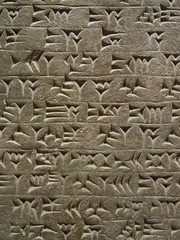
9972148338cuneiformA form of writing developed by the Sumerians using a wedge-shaped stylus and clay tablets12
9972148339city-stateA form of political organization typical of Mesopotamian civilization; consisted of agricultural hinterlands ruled by an urban-based king13
9972148340ziggurata massive tower building usually associated with Mesopotamian temple connections14
9972148341Babylonian EmpireUnified all of Mesopotamia circa 1800 B.C.E.; collapsed due to foreign invasion circa 1600 B.C.E.15
9972148342HammurabiThe most important Babylonian ruler; responsible for codification of the law16
9972148343PharaohThe term used to denote the kings of ancient Egypt; the term, "great house" refers to the palace of the pharaohs17
9972148344pyramidsMonumental architecture typical of Old Kingdom Egypt; used as burial sites for pharaohs18
9972148345hieroglyphsForm of writing developed in ancient Egypt; more pictorial than Mesopotamian cuneiform19
9972148346KushAfrican state that developed along the upper reaches of the Nile circa 1000 B.C.E.; conquered Egypt and ruled it for several centuries20
9972148347monotheismThe exclusive worship of one god; introduced by Jews into Middle Eastern civilization21
9972148348PhoeniciansSeafaring civilization located on the shores of the eastern Mediterranean; established colonies throughout the Mediterranean22
9972148349Harappa and Mohenjo DaroMajor urban complexes of Harappan civilization; laid out on planned grid pattern23
9972148350AryansIndo-European nomadic, warlike, pastorialists who replaced Harappan civilization24
9972148351Huanghe (Yellow) River BasinSite of the development of sedentary agriculture in China25
9972148352Shang1st Chinese dynasty (after the legendary Xia)26
9972148353OraclesShamans or priests in Chinese society who foretold the future through interpreting animal bones cracked by heat; inscriptions on bones led to Chinese writing27
9972148354ideographic writingPictograph characters grouped together to create new concepts; typical of Chinese writing28
9972148355Big GeographyA term that draws attention to the global nature of world history.29
9972148356PaleolithicThe period that ended about 3,000 years after the end of the last Ice Age, it lasted until about 10,000 years ago. (Old Stone Age) The period of the Stone Age associated with the evolution of humans. It predates the Neolithic period.30
9972148357Human migration during Paleolithic eramovement of humans from Africa to Eurasia, Australia, and the Americas31
9972148358eglitarianequality among people (no social levels)32
9972148359toolsHumans developed a wider range of ____ specially adapted to different environments from tropics to tundra33
9972148360Neolithic Revolutionperiod of change from hunter-gatherer lifesyle to agricultural lifestyles associated with domestication, farming, and settlement34
9972148361patriarchyfather based/male dominated society35
9972148362climatic changePermanent agricultural villages emerged first in the lands of the eastern Mediterranean, possibly as a response to what?36
9972148363weaponsPastoralists were often the developers and disseminators of of ____ and forms of transportation that transformed warfare in agrarian civilizations37
9972148364horsesname one mode of new transportation by the pastoralists38
9972148365artElites, both political and religious, promoted ____.39
9972148366record-keeping systems___ arose independently in all early civilization sand subsequently were diffused40
9972148367Nile RiverThis river flooded regularly.41
9972148368Tigris RiverThis river's floods were unpredictable.42
9972148369MesopotamianUnpredictable weather patterns affected the development of the _____ civilization.43
9972148370Egyptian_______art demonstrated little change for nearly 1000 years.44
9972148371Nubia and KushKingdoms upriver from Egypt.45
9972148374Standard of Ur46
9972148375Harappan King or Priest Figure47
9972148372JerichoOne of the earliest cities: located in modern Israel.48
9972148373Catal-HyoukOne of the earliest cities: located in modern Turkey.49

AP World History Period 1 Flashcards

Terms : Hide Images
7366594323AgricultureThe practice of raising crops or livestock on a continual and controlled basis.0
7366594324ArtisanA skilled craftsperson.1
7366594325DomesticationThe taming of animals and plants for human use, such as for labor or food.2
7366594326EurasiaThe large landmass that includes both Europe and Asia.3
7366594327AnimismThe belief that animals, Rivers, and other elements of nature embody spirits.4
7366594328Hunter-foragersPeople who survived by hunting animals and foraging for seeds, nuts, fruits, and edible roots.5
7366594329IrrigationA way of supplying water to an area of land, the people would use water from the rivers to irrigate their crops.6
7366594330MetallurgyThe science of the study of metals.7
7366594331MigrationA movement from one country or region to another.8
7366594332MonotheismThe belief in one God.9
7366594333Paleolithic PeriodOld Stone Age, where humanos used stone tools and weapons.10
7366594334Specialization of laborThe division of labor that aids the development of skills in a particular type of work.11
7366594335SurplusHaving more resources than needed for themselves.12
7366594336TextileItems made of cloth, would be weaved by women and then decorated, usually all at home.13
7366594337UrbanizationAn increase in the percentage and in the number of people living in urban settlements.14
7366594338OvergrazingThe continual eating of grasses or their roots, without allowing them to regrow.15
7366594339OverfarmingLand loosing its fertility unless it is left fallow or it was fertilized usually by spreading of animal manure.16
7366594340ArtifactsObjects made and used by early humans, usually dug up by archaeologists.17
7366594341Homo Sapiens SapiensAlso known as "early modern humans" who became the only hominids on earth- us.18
7366594342Neolithic RevolutionThe switch from nomadic lifestyles to a settled agricultural lifestyle.19
7366594343Bronze AgeThe period in ancient human culture when people began to make and use bronze.20
7366594344CivilizationThe stage of human social development and organization that is considered most advanced.21
7366594345JerichoOne of the oldest first human cities that was built on the West Bank of the Jordan river.22
7366594346Catal HuyukAncient city in present dat Turkey that was founded in 7500 B.C.E. along a river that has since dried up.23
7366594347Nomadic PastoralismPeople moving herds of animals from pasture to pasture.24
7366594348Kinship GroupSeveral related families that moved together in search of food.25
7366594349ClanGroup of families with a common ancestor.26
7366594350TribeA group of people who share a common ancestry, language, name, and way of living.27
7366594351PatriarchalRelating to a society in which men hold the greatest legal and moral authority.28
7366594352MerchantsPeople who buy and sell goods also known as traders.29
7366594353Social StratificationThe division of society into groups arranged in a social hierarchy. Some people accumulated wealth in the form of jewelry and others coveted items by building larger and better decorated houses.30
7366594354Priests and PriestessesPeople who performed religious ceremonies.31
7366594355Tigris and Euphrates RiversFlow south from modern day Turkey through what is now Iraq to empty into the Persian Gulf.32
7366594356MesopotamiaLand between the Tigris and Euphrates Rivers where many ancient civilizations arose from.33
7366594357Fertile CrescentAn arc of fertile land from the Mediterranean Sea to the Persian Gulf .34
7366594358SumeriansGroup of nomadic pastoralists that migrated into Mesopotamia and created a civilization of Sumer that provided the core and the foundation of several other civilizations.35
7366594359ZigguratsTemples built by Sumerians to honor the gods and goddesses they worshipped.36
7366594360DesertificationThe spread of desert like conditions.37
7366594361Indus River ValleyDeveloped near water and became the core and foundation of later civilizations in the region.38
7366594362Environmental DegradationCaused the gradual decline and eventual disappearance of the Harappan and Mohenjo-Daro civilizations by soil eroding.39
7366594363DeforestationThe removal of trees faster than forests can replace themselves.40
7366594364LoessA wind-formed deposit made of fine particles of clay and silt.41
7366594365MesoamericaAn area of ancient civilization in what is now Central America.42
7366594366GlyphsThe first writing system in the Americas that used pictures and symbols of real ojects.43
7366594367BarterTrading system in which people exchange goods directly without using money.44
7366594368PolytheisticBelief in many gods.45
7366594369ZigguratsTemples built by Sumerians to honor the gods and goddesses they worshipped.46
7366594370AstronomyThe study of the moon, stars, and other objects in space.47
7366594371AstrologyTheory of the influence of planets and stars on human events.48
7366594372AbrahamFounder of Judaism.49
7366594373MosesLed the Exodus of the Hebrews from Egypt; received the 10 commandments.50
7366594374Ten CommandmentsLaws given by God to Moses that tell Jews how to behave in their daily lives.51
7366594375Jewish DiasporaThe scattering of the Jewish people outside their homeland beginning about 586 B.C.E.52
7366594376The Huang He and The Chiang JiangWhere Chinas first civilizations developed.53
7366594377MummificationInvolved removing the body's internal organs, drying the body with salts, and packing its insides and wrapping it with chemically treated cloth.54
7366594378HieroglyphicsEgyptian writing that involved using pictures to represent words.55
7366594379PapyrusA type of plant that grew along the Nile River, used its fibers to create a type of paper.56
7366594380VedasA collection of Aryan religious hymns, poems, and songs.57
7366594381Vedic AgeAryans growing awareness of Dravidian beliefs.58
7366594382BrahmaOverarching, universal soul that connects all creatures on Earth.59
7366594383DharmaIn Hindu belief, a person's religious and moral duties.60
7366594384KarmaThe effects that good or bad actions have on a person's soul.61
7366594385MokshaThe Hindu concept of the spirit's 'liberation' from the endless cycle of rebirths.62
7366594386Ancestor VenerationThe believe of making offerings to their ancestors in hope to win their favor.63
7366594387Golden AgeA period in which a society or culture is at its peak.64
7366594388Mandate of HeavenA just rulers power was bestowed by the gods.65
7366594389UpanishadsA foundational text for the set of religious beliefs that later became known as Hinduism.66
7366594390PictographsA graphic symbol that represents an idea, concept, or object, rather than representing a single sound, as letter systems do.67
7366594391ShamansPeople who believed to have special abilities to cure the sick and influence the future.68
7366594392Core and Foundational civilizationsCivilizations that developed ways of life, such as language, religious beliefs, and economic practices, that would heavily influence successor civilizations in their regions.69
7366594393City-StateTypically covered several hundred square miles and were independent each with its own government.70
7366594394KingsSumerian military leaders became more important than priests and ruled over a territory known as a kingdom.71
7366594395CuneiformSumerians created it to keep records which consisted of marks carved onto wet clay tablets.72
7366594396ScribesIndividuals who were charged first with record-keeping and later with the writing of history and myths.73
7366594397The Epic of GilgameshAn epic poem from Mesopotamia, is among the earliest surviving works of literature.74
7366594398EmpireLarge territory that included diverse cultural groups.75
7366594399BabyloniansPersians who took control of Mesopotamia and built a new capital city called Babylon.76
7366594400HammurabiBabylonian king who codified the laws of Sumer and Mesopotamia (died 1750 BC), and created a set of laws called the Code of Hammurabi.77
7366594401Code of HammurabiLaw code introduced when Hammurabi of Babylon took over Sumer in 1760 BC, that dealt with topics such as property rights, wages, contracts, marriage, and various crimes.78
7366594402PhoeniciansMost powerful traders along the Mediterranean, that occupied parts of present day Lebanon, Israel, and Jordan around 3000 B.C.E.79
7366594403CarthageA Phoenician colony on the coast of North Africa, that became a significant outpost in the region.80
7366594404Alphabetic scriptA system of symbols (letters) that represent the sounds of speech, as an alternative to cuneiform around 1000 B.C.E.81
7366594405Sahara and Kalahari DesertsTwo desert zones one in Northern Africa and the other in Southern Africa.82
7366594406Nile RiverThe river in which early kingdoms in Egypt were centered around.83
7366594407King MenesUnited Upper and Lower Egypt into a single kingdom and created the first royal dynasty.84
7366594408Old KingdomA period in Egyptian history that lasted from about 2700 BC to 2200 BC.85
7366594409Middle KingdomA period of order and stability that lasted until about 1750 BC.86
7366594410New KingdomThe period during which Egypt reached the height of its power and glory.87
7366594411PharaohA king of ancient Egypt, considered a god as well as a political and military leader.88
7366594412TheocratsRulers holding both religious and political power.89
7366594413HyksosA group of nomadic invaders from southwest Asia who ruled Egypt from 1640 to 1570 B.C.90
7366594414AkhenatonThe pharaoh that tried to change Egypts religion and called for the worship of a sun god called Aten.91
7366594415Ramses the GreatTook the throne around 1290 B.C.E. who expanded the empire into Southwest Asia and built more temples and erected more statues than any other pharaoh.92
7366594416HittitesHad military advantage over the Egyptians because they were beginning to use iron tools and weapons.93
7366594417Book of the DeadScrolls that served as a guide for the afterlife in ancient Egypt.94
7366594418DravidiansIndigenous peoples of the Indian subcontinent.95
7366594419Xia DynastyLasted for about 400 years, little is known because early Chinese had no writing system.96
7366594420Shang DynastyRuled for 600 years, conquered neighboring peoples and established an empire, wielded tremendous economic and religious power.97
7366594421Zhou DynastyThe longest lasting Chinese dynasty, during which the use of iron was introduced.98
7366594422FeudalismThe network of regional rulers with relationships based on mutual defense agreements.99
7366594423MaizeOne of the first important plants to be grown by the indigenous Americans.100
7366594424Chavin CivilizationExisted from around 1000 to 200 B.C.E, and centered at Chavin de Huantar.101
7366594425OlmecThe foundation or core of Mesoamerica advanced civilizations.102
7366594426AboriginalsPeople in Australia who remained hunter-foragers.103
7366594427Easter IslandDivided into clans, with a chief for each clan and one chief over all clans.104

AP World History - Ch 18 Flashcards

Terms : Hide Images
5988212027What did the Treaty of Kanagawa do?Gave US access to markets but favored the west; Japan opened its doors0
5988212028What was the Meiji Restoration?Revolt of the Japanese nationalists with the leadership of the samurai against the shogun; restoration of Emperor Meiji to power; period of westernization and industrialization of Japan, that led to its emergence as a world power; deliberate strengthening of Japanese traditions and culture - focus on national identity1
5988212029What were the three nations colonized by Japan?Korea and Taiwan from China; Manchuria from Russia2
6000457277What was the result of the Russo-Japanese War?Russia was kicked out of Manchuria and Japan established its own sphere of influence3
5988212030Compare and contrast Europe and Japan's industrialization.Japan's industrialization was much faster because they only had to implement; private incorporations, such as the Mitsubishi, emerged in japan; urabanization increased dramatically and reform movements followed4
5988212031When was the Meiji Restoration?18685
5988212032Which nations gained independence from Ottoman rule?Arabia, Algeria, and Greece6
5988212033How did the millet system contribute to the nationalistic revolts?Different religious groups within the empire looked outward to the coreligionists in other countries for protection7
5988212034Who refferred to the Ottoman EMpire as the "sick man of Europe"?Nicholas I8
5988212035What were the Tanzimat Reforms?Reformed enacted by Sultan Abdul Mecid I and his successor to industrialize and bring education into closer conformity with those of Western Europe; ultimately reversed because sultans did not want to give up too much power, but had already created a new, western-oriented elite9
5988212036Describe the Crimean War.Ottomans, Britain, and France vs. Russia; modern war with new technology that resulted in the deaths of 750,000 people; loss of Russia10
5988212037Who was Nightengale?Woman who made advancements in modern medicine; treated patients in the Crimean War11
5988212038When was the American Civil War?1861-186512
5988212039What were the results of the American Civil War?Union was saved; 13 Amendment that announced the abolition of slavery13
5988212040Who was Otto von Bismarck?Prime Minister of Prussia14
5988212041How did Germany become a nationOtto von Bisarck unified the multitude of small German states into a single German nation under William I15
5988212042What is Zionism?Movement to recreate a Jewish homeland as Jews felt increasingly persecuted; founded by Theodor Herzel pre World War I16
5988212043What was the Franko-Prussian War?War between France and Germany in which Germany took control over Alsace-Lorraine; resulted in defense fortifications along the border on both sides17
5988212044Which nations contributed to the disappearance of Poland?Russia, Austria, and Prussia18
5988212045Describe the loss of Egyptian independence.Muhammad Ali took over Egypt with new industries; in an attempt to westernize Egypt, Egypt asked France to finance the Suez Canal; ultimately, Britain took control over Egypt19
5988212046Why did "the sun never set on the British Empire"?Vast holdings throughout India, Australia, New Zealand, and Africa20
5988212047Where did the French dominate?West Africa, Algeria, and important parts of Southeast Asia21
5988212048What is Social Darwinism?Theory by Spencer who argued that those who were strong deserved their superiority while those who were weak deserved their inferiority22
5988212049How did Britain take control over India?British East India Company slowly took economic, then political control over India. Then, Britain took direct rule of India after crushing the Sepoy Rebellion.23
5988212050Describe the Sepoy Rebellion.It was a rebellion of the native Indians serving in the British army. It was later crushed by the British army.24
5988212051What were significant colonial possessions for the British?Burma, Malaya, and Singapore25
5988212052What dynasty ruled China from 1644-1911?Qing Dynasty governed by Manchus26
5988212053Why did the centuries of paying for Chinese exports with gold and silver come to an end?Britain had an issue in supply for gold and silver and China started to accept opium in place of precious metals; Britain encouraged growth of opium in India27
5988212054Describe the Opium Wars.Fearing for the health of both its people and treasure, China banned the import of opium, which the British rejected. When China tried to confiscate and destroy British stores of opium, British shipboard cannon shelled Chinese ships and port installantions in the harbor at Canton. China was easily defeated due to lack of modern technology, such as modern cannons and steamships. China ceded Hong Kong as a colony and opened five treaty ports. The Second Opiu War resulted in the French and British taking economic control over China.28
5988212055Describe the Taiping Rebellion.It was a revolt of the Chinese people against their government to end the corrupt and inefficient Manchu imperial rule. They were finally defeated with the help of American and European soldiers. This war resulted in the deaths of 20 million people.29
5988212056When and what was the Boxer Rebellion?It was a rebellion in 1890 by a group of Chinese nationalists who burned Christian missions and killed missionaries and their families. They were put down by the foreign coalition of France, Germany, Britain, Japan, and USA.30
6000471818What was the Great Trek?the abandonment of the British Cape Colony by the Dutch settlers; they went on to establish their own control in the north31
6000480154What was the Boer War?competition for new wealth of gold and diamonds found at Witwatersrand that intensified the general hostility between Boers ("farmers" in Dutch) and British into full-scale warfare; British army of 450,000 men defeated the Boer army of 88,00032
6000490045What is Sierra Leone?freetown to serve as haven for freed slaves; mostly black Americans, freed by the British during the American Revolution33
6000495255What is Liberia?American Colonization Society received charter from the USA government in 1816 to find a site on West African coast for repatriation of freed American slaves34
6000499052Who was David Livingstone?adventurer drawn to Africa who promoted freedom for the Africans; intent on establishing missionary stations and providing medical assistance to Africans35
6000505845Who was Henry Morton Stanley?initially hired to find Livingstone; commissioned by Leopold II (King of Belgium) to establish trading stations along the Congo River, beginning the colonization of central Africa; negotiated treaties with hundreds of local chiefs; established a Confederation of Free Negro Republic, which functioned as a kind of slave plantations within Africa, known for its cruel treatment toward its people36
6000522662What was the Berlin Conference?intended to peacefully settle European disputes over territory in Africa; divided up the lands of Africa on paper to European nations37
6000530952What made the "Scramble for Africa" possible?new technology from the Industrial Revolution (machine guns, steamboat, railroads)38
6000538475What was the Maji-Maji revolt?unsuccessful rebellion of the Africans who resisted European rule in German East Africa; crushed by the Germans; 70,000 rebels ended up dead39

AP World History Chapter 3 Flashcards

Terms : Hide Images
7278875844Alexander the GreatAlexander III of Macedonia, conqueror of the Persian Empire and part of northwestern India.0
7278875845AshokaThe most famous ruler of the Mauryan empire; he converted to Buddhism and tried to rule peacefully and with tolerance.1
7278875846Athenian DemocracyA radical form of direct democracy in which much of the free male population of Athens had the franchise and officeholders were chosen by lot.2
7278875847AugustusThe great-nephew and adopted son of Julius Caesar who emerged as sole ruler of the Roman state at the end of an extended period of civil war.3
7278875848Greco Persian WarTwo major Persian invasions of Greece, in which the Persians were defeated on both land and sea each time.4
7278875849Han DynastyDynasty that ruled China, creating a durable state based on Shihuangdi's state-building acheivement.5
7278875850Hellenistic EraThe period in which Greek culture spread widely into Eurasia in the kingdoms ruled by Alexander's political successors.6
7278875851Mauryan EmpireA major empire founded by Chandragupta that encompassed most of India and unified the Indian subcontinent.7
7278875852Pax romanaThe "Roman Peace," a term typically used to denote the stability and prosperity of the early Roman Empire.8
7278875853Persian EmpireA major empire that expanded from the Iranian plateau to incorporate the Middle East from Egypt to India.9
7278875854Qin ShihuangdiFirst emperor from the Qin that forcibly reunited China and established a strong and repressive state.10
7278875855Trung TracThe older of two sisters that lead the Vietnamese Revolution. She lived from 12 - 43 C.E and rather than being captured in war after her troops were badly defeated, legend says she committed suicide in honor of her family.11

AP World History Unit 2 Flashcards

Terms : Hide Images
5085048915Caste Systema class structure that is determined by birth. Loosely, it means that in some societies, if your parents are poor, you're going to be poor, too. Same goes for being rich0
5085048916PatriarchyA male dominated society1
5085048917MatriarchalA female dominated society2
5085048918Mandate of Heavenan ancient Chinese belief and philosophical idea that tiān (heaven) granted emperors the right to rule based on their ability to govern well and fairly.3
5085048919Silk Roadan ancient network of trade and cultural transmission routes that were central to cultural interaction through regions of the Asian continent connecting the West and East by merchants, pilgrims, monks, soldiers, nomads, and urban dwellers from China and India to the Mediterranean Sea4
5085048920Social Heirarchyhow individuals and groups are arranged in a relatively linear ladder5
5085048921Reincarnationthe rebirth of a soul in a new body.6
5085048922AssimilationThe process by which a person or persons acquire the social and psychological characteristics of a group7
5085048923MonotheisticThe belief in only one god8
5085048924Eightfold Paththe path to nirvana, comprising eight aspects in which an aspirant must become practiced: right views, intention, speech, action, livelihood, effort, mindfulness, and concentration.9
5085048925Zoroanstrianismone of the world's oldest monotheistic religions. It was founded by the Prophet Zoroaster in ancient Iran approximately 3500 years ago.10
5085048926Greek Philosophythe rational investigation of questions about existence and knowledge and ethics11
5085048927PolytheisticThe belief in many gods12
5085048928Legalismstrict adherence, or the principle of strict adherence, to law or prescription, especially to the letter rather than the spirit.13
5085048929Confucianisma system of philosophical and ethical teachings founded by Confucius and developed by Mencius.14
5085048930Buddhismis a nontheistic religion or philosophy (Sanskrit: dharma; Pali: धम्म dhamma) that encompasses a variety of traditions, beliefs and spiritual practices largely based on teachings attributed to Gautama Buddha, commonly known as the Buddha ("the awakened one").15
5085048931Islamthe religion of the Muslims, a monotheistic faith regarded as revealed through Muhammad as the Prophet of Allah.16
5085048932Judaisman ancient monotheistic religion, with the Torah as its foundational text (part of the larger text known as the Tanakh or Hebrew Bible), and supplemental oral tradition represented by later texts such as the Midrash and the Talmud.17
5085048933Christianitythe religion based on the person and teachings of Jesus of Nazareth, or its beliefs and practices.18
5085048934Daoisma philosophical, ethical or religious tradition of Chinese origin, or faith of Chinese exemplification, that emphasizes living in harmony with the Tao.19
5085048935Han Dynastyan empire in ancient China, that lasted from 206 b.c.e- 24 c.e.20
5085048936Persiaan empire located in modern day Iran but stretched as far as Egypt and Iraq.21
5085048937Guptaan empire located in northern India that lasted from 320-550 c.e.22
5085048938Ancient Egyptan empire that lasted for 3000 years23
5085048939Roman empirelocated in modern day Italy but expanded to outlying countries throughout its reign, it lasted from 201 b.c.e- 476 c.e.24
5085048940Mayalocated in modern day central america, it lasted from 1800 b.c.e- 250 c.e.25
5085048941StateA body of people living in a defined territory who have a government with the power to make and enforce law without the consent of any higher authority26
5085048942Empirean extensive group of states or countries under a single supreme authority.27
5085048943Hebrew ScripturesTorah, Old Testament28
5085048944Assyrian Empirethis empire covered much of what is now Mesopotamia, Syria, Palestine, Egypt, and Anatolia; its height was during the seventh and eighth centuries BCE.29
5085048945Babylonian EmpireEmpire in Mesopotamia which was formed by Hammurabi, the sixth ruler of the invading Amorites.30
5085048946Roman EmpireExisted from 27 BCE to about 400 CE. Conquiered entire Mediterranean coast and most of Europe. Ruled by an emperor. Eventually oversaw the rise and spread of Christianity.31
5085048947Sanskrit ScripturesAn ancient Indic language of India, in which the Hindu scriptures and classical Indian epic poems are written and from which many northern Indian languages are derived.32
5085048948Vedic ReligionsCore beliefs in sanskrit scriptures; Hinduism; influence of Indo-European traditions in the development of the social and political roles of a caste system; importance of multiple manifestations of Brahma to promote teachings about reincarnation.33
5085048949HinduismA religion and philosophy developed in ancient India, characterized by a belief in reincarnation and a supreme being who takes many forms34
5085048950Mauryan Empire(321-185 BCE) This was the first centralized empire of India whose founder was Chandragupta Maurya.35
5085048951AshokaLeader of the Mauryan dynasty of India who conquered most of India but eventually gave up violence and converted to Buddhism.36
5085048952Siddhartha Gautama (The Buddha)Means "Enlightened One." He is said to have renounced his worldly possessions and taught of a way to overcome suffering.37
5085048953Emperor ConstantineFounded Constantinople; best known for being the first Christian Roman Emperor; issued the Edit of Milan in 313, granting religious toleration throughout the empire.38
5085048954Buddha39
5085048955Shiva40
5085048956Brahma41
5085048957Vishnu42
5085048958Darius I43
5085048959Alexander the Great44
5085048960Parthenon45
5085048961Agora at Corinth46
5085048962Hoplite Armor47
5085048963Gupta Empire(320-550 CE) The decentralized empire that emerged after the Mauryan Empire, and whose founder is Chandra Gupta.48
5085048964Roman Columns49
5085048965Greek Columns50
5085048966Pantheon51
5085048967Aqueduct52
5085048968Colosseum53
5085048969Circus Maximus54
5085048970Christianity Rho Chi Symbol (Emperor Constantine)Religion?55
5085048971Indian Ocean Maritime System56
5085048972Silk Road57
5085048973Trans-Saharan Trade Route58
5085048974filial pietyIn Confucian thought, one of the virtues to be cultivated, a love and respect for one's parents and ancestors.59
5085048975monasticismA way of life in which men and women withdraw from the rest of the world in order to devote themselves to their faith60
5085048976shamanismThe practice of identifying special individuals (shamans) who will interact with spirits for the benefit of the community. Characteristic of the Korean kingdoms of the early medieval period and of early societies of Central Asia.61
5085048977animismBelief that objects, such as plants and stones, or natural events, like thunderstorms and earthquakes, have a discrete spirit and conscious life.62
5085048978ancestor venerationVeneration of the dead or ancestor reverence is based on the beliefs that the dead have a continued existence, and may possess the ability to influence the fortune of the living, the worship of deceased ancestors63
5085048979syncretic religionCombines two religious traditions into something distinctly new, while containing traits of both64
5085048980Persian EmpireGreatest empire in the world up to 500 BCE. Spoke an Indo-European language. A multi-ethnic and multi-religious empire. Fell to Alexander the Great.65
5085048981Qin Dynastythe Chinese dynasty (from 246 BC to 206 BC) that established the first centralized imperial government and built much of the Great Wall66
5085048982Han Dynasty(202 BC - 220 AD) dynasty started by Lui Bang; a great and long-lasting rule, it discarded the harsh policies of the Qin dynasty and adopted Confucian principles; rulers chose officials who passed the civil service exams rather than birth; it was a time of prosperity67
5085048983PhoeniciaSemitic-speaking Canaanites living on the coast of modern Lebanon and Syria in the first millennium B.C.E. Famous for developing the first alphabet, which was adopted by the Greeks.68
5085048984HellenisticOf or influenced by the Greek Empire. A type of culture typically referred to after the conquests of Alexander the Great.69
5085048985TeotihuacanA large central city in the Mesoamerican region. Located about 25 miles Northeast of present day Mexico City. Exhibited city planning and unprecedented size for its time. Reached its peak around the year 450.70
5085048986Mochecivilization of north coast of Peru (200-700 C.E.). An important Andean civilization that built extensive irrigation networks as well as impressive urban centers dominated by brick temples.71
5085048987ChacoAn urban center established by Anasazi located in southern New Mexico. There, they built a walled city with dozens of three-story adobe houses with timbered roofs. Community religious functions were carried out in two large circular chambers called kivas.72
5085048988Cahokiaan ancient settlement of southern Indians, located near present day St. Louis, it served as a trading center for 40,000 at its peak in A.D. 1200.73
5085048989PersepolisA complex of palaces, reception halls, and treasury buildings erected by the Persian kings Darius I and Xerxes in the Persian homeland. It is believed that the New Year's festival was celebrated here, as well as the coronations, weddings, and funerals of the Persian kings, who were buried in cliff-tombs nearby.74
5085048990Chang'anCapital of Tang dynasty; population of 2 million, larger than any other city in the world at that time.75
5085048991PataliputraThe captial of both Muryan and Gupta empires76
5085048992AthensA democratic Greek polis who accomplished many cultural achievements, and who were constantly at war with Sparta.77
5085048993CarthageCity located in present-day Tunisia, founded by Phoenicians ca. 800 B.C.E. It became a major commercial center and naval power in the western Mediterranean until defeated by the expanding Roman Republic in the third century B.C.E.78
5085048994AlexandriaCity on the Mediterranean coast of Egypt founded by Alexander. It became the capital of the Hellenistic kingdom of Ptolemy. It contained the famous Library and the Museum and was a center for leading scientific and literary figures in the classical and postclassical eras.79
5085048995ConstantinopleA large and wealthy city that was the imperial capital of the Byzantine empire and later the Ottoman empire, now known as Istanbul80
5085048996Silk Roadstrade routes stretching from China to the Mediterranean, which allowed for the exchange of goods and ideas from China to the Roman Empire81
5085048997Trans-Saharan Caravan RouteIslamic trade in West Africa was conducted by caravans of camels. According to Ibn Battuta, the explorer who accompanied one of the caravans, the average size was a thousand camels per caravan, with some being as large as 12,000.82
5085048998Indian Ocean Sea Laneslanes throughout the Indian Ocean connecting East Africa, southern Arabia, the Persian Gulf, India, Southeast Asia, and southern China83
5085048999Mediterranean Sea LanesTrade routes that connected the Mediterranean civilizations together. The need for a sea rout for trade in the region. Trade increased and diffusion of cultures occurred84
5085049000Qanat Systema traditional system of gravity-fed irrigation that uses gently sloping tunnels to capture groundwater and direct it to low-lying fields85
5085049001Shadufa mechanical device that consists of a long pole balanced on a crossbeam. It has a rope and bucket on one end and a weighted balance on the other. It is used for transferring water from the river to the fields.86
5085049002Jesus of Nazaretha teacher and prophet born in Bethlehem and active in Nazareth; his life and sermons form the basis for Christianity.87
5085049003Paul of TarsusA Pharisaic Jew who persecuted the Early Christian community; later, he had an experience of the Risen Christ and became the "Apostle to the Gentiles" writing numerous letters to the Christian communities.88
5085049004Greco-Roman PhilosophyIdeas that emphasized logic, empirical observation, and nature of political power and hierarchy.89
5085049005ZoroastrianismWhat religion?90
5085049006ChristianityWhat religion?91
5085049007corvee laborunpaid forced labor usually by lower classes, forced upon them by the government92
5085049008tributeMoney paid by one country to another in return for protection93

Pages

Subscribe to CourseNotes RSS

Need Help?

We hope your visit has been a productive one. If you're having any problems, or would like to give some feedback, we'd love to hear from you.

For general help, questions, and suggestions, try our dedicated support forums.

If you need to contact the Course-Notes.Org web experience team, please use our contact form.

Need Notes?

While we strive to provide the most comprehensive notes for as many high school textbooks as possible, there are certainly going to be some that we miss. Drop us a note and let us know which textbooks you need. Be sure to include which edition of the textbook you are using! If we see enough demand, we'll do whatever we can to get those notes up on the site for you!