

Flashcards
Flashcards
AP World History CH 5 Strayer Flashcards
Society and Inequality in Eurasia/ North Africa
Terms : Hide Images
| 7291902868 | China's Scholar Gentry | The landlord class, well-educated, lived dual lives of urban and rural. Multiple storied houses, finest of silk clothing, gleaming carriages, private orchestras, and high-stakes gambling was all a part of their lives. Lots of land | 0 | |
| 7291902869 | Wang Mang | A high court official of the Han Dynasty who usurped the emperor's throne in 8 c.e. and immediately launched a series of reforms. Firm believer in Confucianism, small-scale peasant farmers represented the backbone of China. Assassinated in 23 c.e. | 1 | |
| 7291902870 | Ge Hong | A Chinese scholar. Born into an aristocratic family, in 283 c.e. Born into Chinese chaos. Worked in order to read books, got hooked on one of the books and decided that he wanted to live a life of royalty. | 2 | |
| 7291902871 | Yellow Turban Rebellion | Wandering bands of peasants began to band together as floods on the yellow river and resulting epidemics compounded the misery of landlessness in poverty. What emerged was a massive peasant uprising known name from the scarf that the peasant wore around their neck | 3 | |
| 7291902872 | Caste as Varna and Jati | Whatever the precise origins of the cast system there in 500 BC the idea that society was forever divided into four classes or varnas was deeply embedded in the Indian thinking. In India as elsewhere, urban based civilization gave rise to specialized occupation any organized in guilds that regulated their own affairs in a particular region. Overtime these occupationally based groups know as jatis, blended with the varna system to create India's unique cast-based society. | 4 | |
| 7291902873 | "Ritual Purity" in Indian Social Practice | The people who were considered holy under Hindu law( the Brahmins) were given priority over everyone else. | 5 | |
| 7291902874 | Greek and Roman slavery | People who were owned by their master, had the possibility of being sold, worked without pay, and had the status of the outsider and they were at the bottom of the social hierarchy . | 6 | |
| 7291902875 | Spartacus | Slave gladiator who led 70 other slaves from a school for gladiators in a desperate bid for freedom. The surprising initials success of their revolt attracted a growing number of rebellious slaves numbering the perhaps 120,000 men, women, and children at the height of the uprising. For two years they lit Italy ablaze. They crucified some captured slave owners and set other to fight one another. | 7 | |
| 7291902876 | The Three "Obediences" | The idea emphasized a woman's subordination first to her father, then her husband and finally to her son. | 8 | |
| 7291902877 | Patriarchy | Societies were men ruled over and even "owned" women. Have been around as long as society has been around. Many say that it began because women did not have the strength to plow fields and do manually intensive labor. | 9 | |
| 7291902878 | Empress Wu | Former high-ranking concubine in the imperial court who came to power amid much palace intrigue and was the only woman ever to China with the title of emperor. (690-705c.e.) | 10 | |
| 7291902879 | Aspasia and Pericles | this couple is notable for their equitable relationship, a rarity in Athens for this era, she was his hetera, a professional, educated, high-class entertainer and sexual companion. | 11 | |
| 7291902880 | Helots | Spartan slaves, people who were conquered because they were immediate neighbors to Sparta. | 12 |
AP World History Chapter 6 Flashcards
Terms : Hide Images
| 7097684287 | tribute | Payments from the conquered to the conqueror |  | 0 |
| 7097684288 | ayllus | Small communities based on the idea of communal work. |  | 1 |
| 7097684289 | Mesoamerica | Mexico and Central America; produced great civilizations |  | 2 |
| 7097684725 | mother civilization | A civilization that has influence on later civilizations |  | 3 |
| 7097684950 | hieroglyphics | a writing system made up of a combination of pictures and sound symbols |  | 4 |
| 7097684951 | Classic Period | Between 250 and 900 C.E. when Mayan civilization reached its height |  | 5 |
| 7097685075 | Obsidian | Hard glass rock |  | 6 |
| 7097685194 | Slash-and-burn agriculture | Cutting down trees and plants in a patch of forest and then burning them |  | 7 |
| 7097685195 | Caracol | An observatory |  | 8 |
| 7097685420 | Chichen Itza | A Mayan city |  | 9 |
| 7097685421 | Mayan | An ancient civilization in Mesoamerica |  | 10 |
| 7097685422 | Maya | The Mayan people |  | 11 |
| 7097685767 | Teotihuacan | Its name comes from a word in the Nahuatl language that may have meant "birthplace of the gods". |  | 12 |
| 7097685874 | Olmec | Foundational civilization that heavily influenced two later groups, the Mayan and Aztec civilizations. |  | 13 |
| 7097685875 | Huaca del Sol | Temple of the Sun |  | 14 |
| 7097686005 | Huaca del Luna | Temple of the Moon |  | 15 |
| 7097686070 | Moche | A civilization in the Andes that followed Chavin | 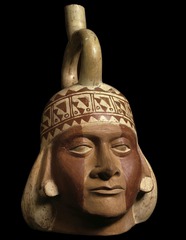 | 16 |
Flashcards
AP World History - Period 3 Flashcards
The Post-Classical World, 500-1450
Terms : Hide Images
| 8069099094 | Bedouin | nomadic pastoralists of the Arabian peninsula with a culture based on herding camels and goats | 0 | |
| 8069099095 | Mecca | Arabian commercial center; dominated by the Quraysh; the home of Muhammad and the future center of Islam | 1 | |
| 8069099096 | Medina | town northeast of Mecca; asked Muhammad to resolve its intergroup differences; Muhammad's flight to Medina, the hijra, in 622 began the Muslim calendar | 2 | |
| 8069099097 | Umayyad | clan of the Quraysh that dominated Mecca; later an Islamic dynasty | 3 | |
| 8069099098 | Muhammad | (570-632); prophet of Allah; originally a merchant of the Quraysh | 4 | |
| 8069099099 | Qur'an | the word of god as revealed through Muhammad; made into the holy book of Islam | 5 | |
| 8069099100 | Umma | community of the faithful within Islam | 6 | |
| 8069099101 | Five Pillars | the obligatory religious duties for all Muslims; confession of faith, prayer, fasting during Ramadan, zakat, and hajj (pilgrimage to Mecca) | 7 | |
| 8069099102 | Caliph | the successor to Muhammad as head of the Islamic community | 8 | |
| 8069099103 | Ali | cousin and son-in-law of Muhammad; one of the orthodox caliphs; focus for the development of shi'ism | 9 | |
| 8069099104 | Abu Bakr | succeeded Muhammad as the first caliph | 10 | |
| 8069099105 | Jihad | Islamic holy war | 11 | |
| 8069099106 | Sunnis | followers of the majority interpretation within Islam; included the Umayyads | 12 | |
| 8069099107 | Shi'a | followers of Ali's interpretation of Islam | 13 | |
| 8069099108 | Abbasids | dynasty that succeeded the Umayyads in 750; their capital was at Baghdad | 14 | |
| 8069099109 | Hadiths | "traditions" of the prophet Muhammad; added to the Qur'an, form the essential writings of Islam | 15 | |
| 8069099110 | Wazir | chief administrative official under the Abbasids | 16 | |
| 8069099111 | Dhows | Arab sailing vessels; equipped with lateen sails; used by Arab merchants | 17 | |
| 8069099112 | Seljuk Turks | nomadic invaders from central Asia; staunch Sunnis; ruled from the 11th c. in the name of the Abbasids | 18 | |
| 8069099113 | Crusades | invasions of western Christians into Muslim lands, especially Palestine; captured Jerusalem and established Christian kingdoms enduring until 1291 | 19 | |
| 8069099114 | Ulama | Islamic religious scholars; pressed for a more conservative and restrictive theology; opposed to non-Islamic thinking | 20 | |
| 8069099115 | Sufis | Islamic mystics; spread Islam to many Afro-Asian regions | 21 | |
| 8069099116 | Mongols | central Asian nomadic peoples; captured Baghdad in 1258 and killed the last Abbasid caliph | 22 | |
| 8069099117 | Chinggis Khan | (1162-1227); Mongol ruler; defeated the Turkish Persian kingdoms | 23 | |
| 8069099118 | Mamluks | Rulers of Egypt; descended from Turkish slaves | 24 | |
| 8069099119 | Shrivijaya | trading empire based on the Malacca straits; its Buddhist government resisted Muslim missionaries; when it fell, southeastern Asia was opened to Islam | 25 | |
| 8069099120 | Malacca | flourishing trading city in Malaya; established a trading empire after the fall of Shrivijaya | 26 | |
| 8069099121 | Mali | state of the Malinke people centered between the Senegal and Niger rivers | 27 | |
| 8069099122 | Mansa | title of the ruler of Mali | 28 | |
| 8069099123 | Ibn Battuta | Arab traveler throughout the Muslim world | 29 | |
| 8069099124 | Sundiata | created a unified state that became the Mali empire; died in 1260 | 30 | |
| 8069099125 | Songhay | successor state to Mali; dominated middle reaches of the Niger valley; capital at Gao | 31 | |
| 8069099126 | East African trading ports | urbanized commercial centers mixing African and Arab cultures; included Mogadishu, Mombasa, Malindi, Kilwas, Pate, and Zanzibar | 32 | |
| 8069099127 | Great Zimbabwe | with massive stone buildings and walls, incorporates the greatest early buildings in sub-Saharan Africa | 33 | |
| 8069099128 | Icons | images of religious figures venerated by Byzantine Christians | 34 | |
| 8069099129 | Iconoclasm | the breaking of images; religious controversy of the 8th c; Byzantine emperor attempted, but failed, to suppress icon veneration | 35 | |
| 8069099130 | Cyril and Methodius | Byzantine missionaries sent to convert eastern Europe and Balkans; responsible for creation of Slavic written script called Cyrillic | 36 | |
| 8069099131 | Kiev | commercial city in Ukraine established by Scandinavians in 9th c; became the center for a kingdom that flourished until 12th c | 37 | |
| 8069099132 | Rurik | legendary Scandinavian, regarded as founder of Kievan Rus' in 855 | 38 | |
| 8069099133 | Vladmir I | ruler of Kiev (980-1015); converted kingdom to Orthodox Christianity | 39 | |
| 8069099134 | Russian Orthodoxy | Russian form of Christianity brought from Byzantine Empire | 40 | |
| 8069099135 | Tatars | Mongols who conquered Russian cities during the 13th c; left Russian church and aristocracy intact | 41 | |
| 8069099136 | Middle Ages | the period in western European history between the fall of Roman Empire and the 15th c | 42 | |
| 8069099137 | Gothic | an architectural style developed during the 13th and 14th c in western Europe; featured pointed arches and flying buttresses as external support on main walls | 43 | |
| 8069099138 | Vikings | seagoing Scandinavian raiders who disrupted coastal areas of Europe from the 8th to 11th c; pushed across the Atlantic to Iceland, Greenland, and North America; formed permanent territories in Normandy and Sicily | 44 | |
| 8069099139 | Manorialism | rural system of reciprocal relations between landlords and their peasant laborers during the Middle Ages; peasants exchanged labor for use of land and protection | 45 | |
| 8069099140 | Serfs | peasant agricultural laborers within the manorial system | 46 | |
| 8069099141 | Three-field system | practice of dividing land into thirds, rotating between two different crops and pasturage-- an improvement making use of manure | 47 | |
| 8069099142 | Carolingians | royal house of Franks from 8th c to 10th c | 48 | |
| 8069099143 | Charles Martel | first Carolingian king of the Franks; defeated Muslims at Tours in 732 | 49 | |
| 8069099144 | Charlemagne | Carolingian monarch who established large empire in France and Germany circa 800 | 50 | |
| 8069099145 | Holy Roman Emperors | political heirs to Charlemagne's empire in northern Italy and Germany; claimed title of emperor but failed to develop centralized monarchy | 51 | |
| 8069099146 | Feudalism | personal relationship during the Middle Ages by which greater lords provided land to lesser lords in return for military service | 52 | |
| 8069099147 | Vassals | members of the military elite who received land or a benefice from a lord in return for military service and loyalty | 53 | |
| 8069099148 | William the Conqueror | invaded England from Normandy in 1066; established tight feudal system and centralized monarchy in England | 54 | |
| 8069099149 | Magna Carta | Great charter issued by King John of England in 1215; represented principle of mutual limits and obligations between rulers and feudal aristocracy, and the supremacy of law | 55 | |
| 8069099150 | Parliaments | bodies representing privileged groups; institutionalized the principle that kings ruled with the advice and consent of their subjects | 56 | |
| 8069099151 | Hundred Years War | conflict between England and France over territory (1337-1453) Established a since of Nationalism with each country. Joan of Arc united the French and promoted French patriotism. | 57 | |
| 8069099152 | Pope Urban II | organized the first Crusade in 1095; appealed to Christians to free the Holy Land from Muslim control | 58 | |
| 8069099153 | Investiture Controversy | the practice of appointment of bishops; Pope Gregory attempted to stop lay investiture, leading to a conflict with the Holy Roman Emperor Henry IV | 59 | |
| 8069099154 | Gregory VII | 11th c pope who attempted to free church from secular control; quarreled with Holy Roman Emperor Henry IV over practice of lay investiture of bishops | 60 | |
| 8069099155 | Thomas Aquinas | creator of one of the great syntheses of medieval learning; taught at University of Paris; author of Summas; believed that through reason it was possible to know much about natural order, moral law, and nature of God | 61 | |
| 8069099156 | Scholasticism | dominant medieval philosophical approach; so-called because of its base in the schools or universities; based on use of logic to resolve theological problems | 62 | |
| 8069099157 | Hanseatic League | an organization of north German and Scandinavian cities for the purpose of establishing a commercial alliance | 63 | |
| 8069099158 | Guilds | associations of workers in the same occupation in a single city; stressed security and mutual control; limited membership, regulated apprenticeships, guaranteed good workmanship; held a privileged place in cities | 64 | |
| 8069099159 | Black Death | bubonic plague that struck Europe in the 14th c; significantly reduced Europe's population; affected social structure; decimated populations in Asia | 65 | |
| 8069099160 | Jinshi | title given students in Post Classical China who passed the most difficult examinations; became eligible for high office | 66 | |
| 8069099161 | Mahayana Buddhism | emphasized salvationist aspects of Chinese Buddhism; popular among the masses in East Asia | 67 | |
| 8069099162 | Wuzong | Tang emperor (841-847); persecuted Buddhist monasteries and reduced influence of Buddhism in favor of Confucianism | 68 | |
| 8069099163 | Southern Song | smaller surviving dynasty (1127-1279); presided over one of the greatest cultural reigns in world history. Fell to the Mongols in 1276 and eventually taken over in 1279. | 69 | |
| 8069099164 | Grand Canal | great canal system begun by Yangdi; joined Yellow River region to the Yangtze basin | 70 | |
| 8069099165 | Junks | Chinese ships equipped with watertight bulkheads, stern-post rudders, compasses, and bamboo fenders; dominant force in Asian seas east of the Malayan peninsula | 71 | |
| 8069099166 | Flying money | Chinese credit instrument that provided vouchers to merchants to be redeemed at the end of a venture; reduced danger of robbery; an early form of currency | 72 | |
| 8069099167 | Footbinding | male imposed practice to mutilate women's feet in order to reduce size; produced pain and restricted movement; helped to confine women to the household; seen a beautiful to the elite. | 73 | |
| 8069099168 | Taika reforms | attempt to remake Japanese monarch into an absolutist Chinese-style emperor; included attempts to create professional bureaucracy and peasant conscript army | 74 | |
| 8069099169 | Bushi | regional warrior leaders in Japan; ruled small kingdoms from fortresses; administered the law, supervised public works projects, and collected revenues; built up private armies | 75 | |
| 8069099170 | Samurai | mounted troops of the bushi; loyal to local lords, not the emperor | 76 | |
| 8069099171 | Seppuku | ritual suicide in Japan; also known as hari-kiri; demonstrated courage and was a means to restore family honor | 77 | |
| 8069099172 | Bakufu | military government established by the Minamoto following Gempei wars; centered at Kamakura; retained emperor, but real power resided in military government and samurai | 78 | |
| 8069099173 | Shoguns | military leaders of the bakufu | 79 | |
| 8069099174 | Daimyos | warlord rulers of small states following Onin war and disruption of Ashikaga shogunate; holding consolidated into unified and bounded mini-states | 80 | |
| 8069099175 | Sinification | extensive adaptation of Chinese culture in other regions | 81 | |
| 8069099176 | Yi | dynasty (1392-1910); succeeded Koryo dynasty after Mongol invasions; restored aristocratic dominance and Chinese influence | 82 | |
| 8069099177 | Chinggis Khan | born in 1170s; elected supreme Mongol ruler (khagan) in 1206; began the Mongols rise to world power; died 1227 | 83 | |
| 8069099178 | Shamanistic religion | Mongol beliefs focused on nature spirits | 84 | |
| 8069099179 | Batu | grandson of Chinggis Khan and ruler of Golden Horde; invaded Russian in 1236 | 85 | |
| 8069099180 | Golden Horde | one of four regional subdivisions of the Mongol Empire after death of Chinggis Khan; conquered and ruled Russua during the 13th and 14th c | 86 | |
| 8069099181 | Ilkhan khanate | one of four regional subdivisions of the Mongol empire after the death of Chinggis Khan; eventually included much of former Abbasid empire | 87 | |
| 8069099182 | Hulegu | grandson of Chinggis Khan and rule of Ilkhan khanate; captured and destroyed Abbasid Baghdad | 88 | |
| 8069099183 | Mamluks | Muslim slave warriors; established dynasty in Egypt; led by Baibars defeated Mongols in 1260 | 89 | |
| 8069099184 | Kubilai Khan | grandson of Chinggis Khan; conquered China; established Yuan dynasty in 1271 | 90 | |
| 8069099185 | Ottoman Empire | Turkish empire established in Asia Minor and eventually extending through the Middle East and the Balkans; conquered Constantinople in 1453 and ended Byzantine Empire | 91 | |
| 8069099186 | Ming Dynasty | replaced Mongal Yuan dynasty in China in 1368; lasted until 1644; initially mounted large trade expeditions to southern Asia and Africa; later concentrated on internal development within China | 92 | |
| 8069099187 | Ethnocentrism | judging foreigners by the standards of one's own group; leads to problems in interpreting world history | 93 | |
| 8069099188 | Kingdom of Mali |  | 94 | |
| 8069099189 | Important continuity in social structure of states and empires 600-1450 | land holding aristocracies, patriarchies, peasant systems still in place | 95 | |
| 8069099190 | Champa Rice | tributary gift from Vietnam to China, led to population increase | 96 | |
| 8069099191 | Diasporic communities | merchant communities that introduced their own cultures into other areas | 97 | |
| 8069099192 | Trans Saharan trade | Dominated my Muslims in 13th century after rise of Islamic caliphates.. |  | 98 |
| 8069099193 | Effect of Muslim conquests | collapse of other empires, mass conversion | 99 | |
| 8069099194 | Tang Dynasty | followed Sui, established tributary states in Vietnam and Korea, influence Japan, Established strong Buddhist and Confucian presence | 100 | |
| 8069099195 | Black Death | plague that originated with Mongols, led to mass population decrease in Europe, later weakened faith in Christian church and increased the power of serfs/peasants. Led partly to fall of Feudal structures in Europe. |  | 101 |
| 8069099196 | Indian Ocean Maritime Trade |  | 102 | |
| 8069099197 | Cities that rose during this time due to increased trade | Novgorod, Constantinople, Timbuktu | 103 | |
| 8069099198 | Timbuktu | trade center of Mali, cosmopolitan city that saw the blending of many different cultures and people | 104 | |
| 8069099199 | Marco Polo | traveler/merchant from Europe who spend 17 years at court of Kublai Khan | 105 | |
| 8069099200 | Ibn Batuta | Mohammedan who described travels to Mecca and Far East | 106 |
AP World History - CHAPTER 23 Flashcards
Terms : Hide Images
| 8791288778 | Louis XIV, France (1638-1715) | -king of France from 1643 to 1715; his long reign was marked by the expansion of French influence in Europe and by the magnificence of his court and the Palace of Versailles (used palace to exert political control; housed 1000's of important people= nobility grew dependent upon King) -epitomized Absolutism in Europe; expanded role of Intendants (bureaucrats that reported directly to the king) |  | 0 |
| 8791288779 | Philip II, Spain (1527-98) | -King of Spain and a devout Catholic.;under his reign, Spain became a world power, he directed explorations around the globe, prompting Spanish colonization -Sused the Inquisition to enforce religious orthodoxy -sent a massive fleet of ships against England in 1588, the Spanish Armada (English won, which weakened Spain and began England's rise to naval dominance) |  | 1 |
| 8791288780 | Ivan the III (the Great) (1440-1505) | -Grand Duke of Moscow, ended Mongol domination of his dukedom, extended territories, subdued nobles, and attained absolute power; made Moscow (the "3rd Rome") the center of a new Russian state with a central government |  | 2 |
| 8791288781 | Ivan the IV (the Terrible) (1530-84) | -defeated the Mongols and added a great deal to the kingdom; known as terrible for his treatment of boyars (the hereditary nobility in Muscovy, possessed less political power than did their counterparts in western Europe) as he abused, killed, and/or transplanted them and then replaced them with others who were loyal to him; creating a centralized government structure -killed his son, wiping out his dynasty which led to the "Time of Troubles": a decade long civil war where boyars attempted to use vacuum of power to reestablish their authority; ended with selection of Michael Romanov as tsar in 1613 |  | 3 |
| 8791288782 | Peter the Great (1672-1725) | -ruled from 1689 to 1725 -Made Russia a military and naval power using European technology; defeated the Swedes, took their Baltic territories, and created a "Window to the West" (St. Petersburg) -Enforced economic, educational, administrative, military, and social reform focused on imitation of western Europe |  | 4 |
| 8791288783 | Catherine the Great (1729-1796) | -German born Russian tsarina in the 18th century; ruled after assassination of her husband; gave appearance of enlightened rule;maintained nobility as service aristocracy by granting them new power over peasantry, entrenching serfdom -continued Peter's Westernization of Russia & economic development, created a new law code, greatly expanded Russia; influenced by French philosophes; promoted education and the Enlightenment among the elite |  | 5 |
| 8791288784 | Henry VIII (1491-1547) | -Tudor monarch of England who ruled with absolute power; infamous for his six wives; Act of Supremacy made him head of Church of England (Anglican); split from Catholic Church due to divorce dispute |  | 6 |
| 8791288785 | Elizabeth I (1533-1603) | -Queen of England, helped make England a world power, promoted exploration & colonization of the Americas -supported the northern Protestant cause as a safeguard against Spain attacking England; reestablished Protestantism in England after "Bloody Mary" |  | 7 |
| 8791288786 | English Civil War | -Conflict from 1640 to 1660; featured religious disputes mixed with constitutional issues concerning the powers of the monarchy; fought between Parliamentary forces and those loyal to Charles I -Charles I forced to sign the Petition of Right, 1628 (challenged the idea of the divine right of kings and declared that even the monarch was subject to the laws of the land); executed in 1649 -Oliver Cromwell led the parliamentary army then established a Puritanical military dictatorship |  | 8 |
| 8791288787 | The Restoration (1660) | -the British monarchy is restored under Charles II, a period of expanding trade and colonization as well as strong opposition to Catholicism |  | 9 |
| 8791288788 | Glorious Revolution (1688) | -revolution against James II that helped bring power to William and Mary; Parliament gained control with no bloodshed -led to the creation of the English Bill of Rights (declared the right and liberties of the people, an early example for later democracies, limited the power of the monarchy) and a Constitutional Monarchy |  | 10 |
| 8791288789 | Machiavelli (1469-1527) | -an Italian humanist; his writing reflected the unstability of Italy, author of The Prince; emphasized realistic discussions of how to seize and maintain power; most important writer on politics in the Renaissance; said that the state existed for its own sake, ruler should be concerned with preservation of power, ends justified means. -had a profound impact on political leaders throughout the modern west |  | 11 |
| 8791288790 | Medici family | -Banking family -Controlled politics & culture of Florence, patrons of the arts -Held power between 1434-1494 |  | 12 |
| 8791288791 | Thirty Years' War (1618-48) | -Religious War in Europe, balance of power and politics takes priority, death rates comparable to those of WWII -Results: Catholic Church weakened, Reduced role of church in European politics; Germany/Spain weakened...FRANCE stronger; destroyed German Economy, agricultural loss - land was destroyed = Inflation created a "new serfdom" in eastern Europe; Germany's separate states will hinder trade and progress for many years, not fully unite until 1870; creation of Modern States and the idea of Balance of Power - ended by Treaty of Westphalia: vaildated the Peace of Augsburg (1555, gave each German prince the right to determine the religion of his state ), split HRE into 300+ Principalities - No ONE central government; ruler of each state could determine its official religion, Netherlands received its independence |  | 13 |
| 8791288792 | Henry IV • Edict of Nantes | -Bourbon king, who ruled with absolute power; Ended Spanish interference and religious wars in France; Converted to Catholicism (did this to compromise and make peace "Paris is worth a mass."), an example of politique [the interest of the state comes first before any religious considerations] -Passed Edict of Nantes in 1598: granted religious rights to Huguenots, not grant religious freedom for all Assassinated by a Catholic |  | 14 |
| 8791288793 | Humanism | -the scholarly interest in the study of classical texts, values and styles of Greece and Rome; Humanism contributed to the promotion of a liberal arts education based on the study of the classics, rhetoric, and history -Humanists emphasized individual accomplishment |  | 15 |
| 8791288794 | John Calvin (1509-64 | -French theologian was the leading French Protestant Reformer, deeply influenced Protestantism elsewhere in Europe and in North America (Puritans); Calvinism had a great impact on the development of the modern world, and included the Hugeunots -Emphasized a strong moral code and believed in predestination (the idea that God decided whether or not a person would be saved as soon as they were born). Calvinists supported constitutional representative government and the separation of church and state. |  | 16 |
| 8791288795 | Johannes Kepler | -astronomer who theorized that the earth moved in an elliptical, not circular, orbit; Wrote 3 laws of planetary motion based on mechanical relationships and accurately predicted movements of planets in a sun-centered universe; Demolished old systems of Aristotle and Ptolemy |  | 17 |
| 8791288796 | Galileo | -Italian astronomer, mathematician, and physicist; his telescopes proved the sun is the center of the solar system, supporting for Copernicanism. -conflict with the Roman Catholic Church who placed him under house arrest, disagreement between the science and church community. |  | 18 |
| 8791288797 | Isaac Newton | -English mathematician and scientist who invented differential calculus and formulated the theory of universal gravitation, a theory about the nature of light, and three laws of motion. His treatise on gravitation, presented in Principia Mathematica (1687), was supposedly inspired by the sight of a falling apple. |  | 19 |
| 8791288798 | Rene Descartes | -French mathematician, philosopher, and scientist who is considered the father of analytic geometry and the founder of modern rationalism. His main works, Meditations on First Philosophy (1641) and Principles of Philosophy (1644), include the famous dictum "I think, therefore I am." |  | 20 |
| 8791288799 | Francis Bacon | -English philosopher, statesman, scientist, jurist, orator and author; influential through his works, especially as philosophical advocate and practitioner of the scientific method during the scientific revolution; introduction of inductive thinking regarding science. |  | 21 |
| 8791288800 | Copernicus (1473-1543) | -Polish astronomer who published "On the Revolutions of the Heavenly Spheres." Refuted the theory of a geocentric universe in favor of a heliocentric one -his findings were published after his death, the Church disagreed with his propositions, and contributed to the start of the Scientific Revolution |  | 22 |
| 8791288801 | Shakespeare (1564-1616) | -English poet and dramatist; considered one of the greatest English writers; contributed to the English language, wrote in the vernacular | 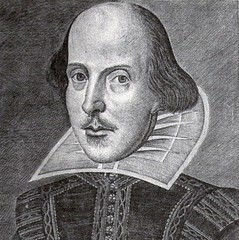 | 23 |
| 8791288802 | Cervantes (1547-1616) | -Spanish writer best remembered for 'Don Quixote' which satirizes chivalry and influenced the development of the novel form; main character did not like how the Middle Ages were ending and people were becoming more materialistic; written the vernacular |  | 24 |
| 8791288803 | John Locke (1632-1704) | -Wrote "Two Treatises on Government" as justification of Glorious Revolution and end of absolutism in England; argued that man is born good and has natural rights to life, liberty, and property; to protect these rights, people enter Social Contract to create government with limited powers. believed the people have the right to revolt if government did not protect these rights -influenced the United States Declaration of Independence and the U.S. Constitution & criticism of absolute monarchy in France -wrote in response to Hobbes |  | 25 |
| 8791288804 | Thomas Hobbes (1588-1679) | -English father of modern political philosophy, who advocated absolute sovereignty as the only kind of government that could resolve problems caused by the selfishness of humans - wrote "Leviathan" and believed people were naturally cruel, greedy, and selfish; believed only a powerful government could keep an orderly society -hought that all people should have equal rights and nobody should have more power over anyone else (except the king) |  | 26 |
| 8791288805 | Catholic Reformation | -internal reform of the Catholic Church thanks especially to the Council of Trent (1545-1563), Catholic leaders clarified doctrine, corrected abuses and corruption (sale of indulgences abolished), and put a new emphasis on education (Jesuit schools expanded scope of church worldwide) and accountability. -No compromise between Catholicism, Protestantism -Ignatius Loyola organized the Jesuits like a military body, with discipline and strict obedience |  | 27 |
| 8791288806 | Protestant Reformation | -transition in Christian faith in Europe, dividing church into two main branches, Catholic and Protestant people saved by faith; initiated by Martin Luther in 1517 with the 95 Theses (95 complaints against the Catholic Church) -Luther opposed the wealth and corruption of the papacy (sale of indulgences: $ for salvation) and believed hat salvation would be granted on the basis of faith alone rather than by works |  | 28 |
| 8791288807 | Michelangelo (1475-1564) | -painter, sculptor, architect, and poet from Florence, a true "Renaissance Man," works include: "The Creation of Man", the ceiling of the Sistine Chapel, and sculptures ("David", "La Pieta") |  | 29 |
| 8791288808 | Brunelleschi | -Florentine architect who was the first great architect of the Italian Renaissance; built first dome over Cathedral of Florence -helped with perspective (approximate representation, on a flat surface, of an image as it is seen by the eye; objects are smaller as their distance from the observer increases |  | 30 |
| 8791288809 | da Vinci (1452-1519) | -painter, sculptor, architect, engineer, and scientist from Florence, experimented with new techniques and perspectives, "The Last Supper" and the "Mona Lisa" -was the archetype of the "Renaissance Man"; major proponent of humanism, "Vetruvian Man" was perhaps his most important contribution to the development of that movement, in addition to providing a depiction of man in conformity with the scientific precision he clearly valued. |  | 31 |
| 8791288810 | Johannes Gutenberg (c. 1395-c. 1468) | -inventor of the printing press (c 1455), which allowed books to be printed quickly and economically; printed several copies of the Bible; his innovation aided the spread of Renaissance and Reformation ideas throughout Europe |  | 32 |
| 8791288811 | Raphael (1483-1520) | -artist of Italy's High Renaissance and one of the greatest influences in the history of Western art; created the large-scale fresco "The School of Athens", as well as other decorative work at the Vatican; his work is often cited for its harmony and balance of composition -influence on other artists came during the late 1600s to the late 1800s during which time his perfect sense of balance and decorum were highly admired. |  | 33 |
| 8791288812 | Martin Luther (1483-1546) | -1517, writes 95 Theses criticizing Roman Catholic church practices, particularly the selling of indulgences (preferential pardons for charitable donors) - his ideas are rapidly reproduced with new printing technology and quickly spread through Europe. -Excommunicated by Pope Leo X in 1520 - Charles V (Holy Roman Emperor) summons him to Diet (assembly) of Worms to force him to recant. He doesn't. -1520s-1530s dissent spread throughout Germany and Switzerland | 34 |
Islam Vocabulary - AP World History Flashcards
Terms : Hide Images
| 7757020685 | Islam | The religion based on the revelations of Muhammad | 0 | |
| 7757020686 | muslims | Followers of Islam, 'submit', 'surrender' | 1 | |
| 7757020687 | Ka'aba | The most important shrine in Mecca containing the sacred rock the 'Black stone' | 2 | |
| 7757020688 | bedouins | Nomadic people of Arabian desert organized by clan, who often fought over scarce resources | 3 | |
| 7757020689 | Allah | The one God of Islam | 4 | |
| 7757020690 | Arab | The original inhabitants of the Arabia Peninsula | 5 | |
| 7757020691 | People of the Book | Jews and Christians, also monotheistic, sharing beliefs and common roots with Muslims | 6 | |
| 7757020692 | Qur'an (Koran | The book containing the sacred word of Allah | 7 | |
| 7757020693 | Muhammad | The founder of Islam | 8 | |
| 7757020694 | Mecca | The birthplace of Muhammad, and where he received his revelations | 9 | |
| 7757020695 | Medina | Muhammad and his followers escaped Mecca and went to this city, marking the beginning of the religion Islam | 10 | |
| 7757020696 | Hijra | Muhammad's flight to Mecca, marking year 1 on the Muslim calendar | 11 | |
| 7757020697 | Hajj | A pilgrimage to Mecca to worship Allah at the Ka'aba | 12 | |
| 7757020698 | Hadith | A collection of stories about and sayings of Muhammad | 13 | |
| 7757020699 | mosque | An Islamic place of worship | 14 | |
| 7757020701 | Abu Bakr | This individual took over after the death of Muhammad, and was a close friend and follower of his | 15 | |
| 7757020702 | 5 Pillars of Faith | The principles of Islam that followers live by | 16 | |
| 7757020703 | Sunni | The majority sect of Islam, who believe that successors to Muhammad can come from the Islamic community | 17 | |
| 7757020704 | Shia | The minority sect of Islam, who believe that successors should be members of Muhammad's family | 18 | |
| 7757020705 | Caliph | Political and religious successor to Muhammad | 19 | |
| 7757020706 | Sharia | Law based on the beliefs in the Qur'an and hadith | 20 | |
| 7757020707 | jihad | Means 'struggle', either in one's personal faith or in defeating non-Muslim areas | 21 | |
| 7757020708 | Umayyad Dynasty | Founded by Muawiya, the successor to Ali, and followers were of the Sunni sect | 22 | |
| 7757020709 | Abbasid Dynasty | Followed the Umayyad Dynasty, and moved their capital from Damascus to Baghdad | 23 | |
| 7757020710 | Baghdad | The great Islamic city and fabled 'city of wealth'. Contained the House of Wisdom, and was a major center of learning | 24 | |
| 7757020712 | hijab | A head covering worn by some Muslim women in public | 25 | |
| 7757020713 | Saladin | Muslim military and political leader, as Sultan led Islamic forces during the Crusades | 26 | |
| 7757020716 | Ummah | The whole community of Muslims bound together by ties of religion | 27 | |
| 7757020717 | jizyah | Taxes on non-Muslim members of society (dhimmis) | 28 | |
| 7757020718 | Mawahli | Non Arab muslims | 29 |
AP World History Chapter 5 Flashcards
Terms : Hide Images
| 5050970590 | Axum | Caused Kush decline; a new power located in what is now Ethiopia. |  | 0 |
| 5050970591 | Ethiopia | Another regional kingdom that Axum ultimately fell to |  | 1 |
| 5050970592 | Silk Roads | A system of ancient caravan routes across Central Asia, along which traders carried silk and other trade goods. |  | 2 |
| 5050970593 | Shintoism | Religion located in Japan and related to Buddhism. Shintoism focuses particularly on nature and ancestor worship. |  | 3 |
| 5050970594 | Olmec Culture | Central America's first civilization (c. 800-400 B.C.E.), which developed agriculture and produced accurate calendars. It powerfully influenced later civilizations in the Americas. |  | 4 |
| 5050970595 | Teotihuacan | the first great city built in the Americas by the Olmecs |  | 5 |
| 5050970596 | Maya | an empire built on the Yucatan Peninsula in Mexico; had a written language; developed complex mathematical and calendar systems | 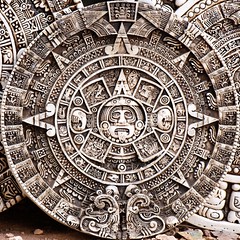 | 6 |
| 5050970597 | Inca | A pre-Columbian civilization in the Andes Mountains. The Inca excelled at engineering, and developed new food crops like potatoes. |  | 7 |
| 5050970598 | Yellow Turbans | Chinese Daoists who launched a revolt in 184 C.E., promising a golden age to be brought about by divine magic. |  | 8 |
| 5050970599 | Sui Dynasty | (589-618 CE) The Chinese dynasty that was like the Qin Dynasty in imposing tight political discipline; this dynasty built the Grand Canal which helped transport the rice in the south to the north. |  | 9 |
| 5050970600 | Tang Dynasty | (618-907 CE) The Chinese dynasty that was much like the Han, who used Confucianism. This dynasty had the equal-field system, a bureaucracy based on merit, and a Confucian education system. |  | 10 |
| 5050970601 | Rajput | Regional princes in western India; emphasized military control of their regions; ruled after the fall of the Guptas |  | 11 |
| 5050970602 | Devi | A mother goddess of which Durga, Kali, etc., are particular forms.;Also called Annapurna, Parvati. the consort of Shiva, identified with Shakti and Kali as a goddess of love, maternity, and death |  | 12 |
| 5050970603 | Islam | A religion based on the teachings of the prophet Mohammed which stresses belief in one god (Allah), Paradise and Hell, and a body of law written in the Quran. Followers are called Muslims. |  | 13 |
| 5050970604 | Allah | Islamic God |  | 14 |
| 5050970605 | Byzantine Empire | (330-1453) The eastern half of the Roman Empire, which survived after the fall of the Western Empire at the end of the 5th century C.E. Its capital was Constantinople, named after the Emperor Constantine. |  | 15 |
| 5050970606 | Justinian | Byzantine emperor in the 6th century A.D. who reconquered much of the territory previously ruler by Rome, initiated an ambitious building program , including Hagia Sofia, as well as a new legal code |  | 16 |
| 5050970607 | Augustine | (Roman Catholic Church) one of the great fathers of the early Christian church |  | 17 |
| 5050970608 | Coptic church | The Egyptian Church; recognized by both Roman Catholic church and Orthodox Church, but independent of both |  | 18 |
| 5050970609 | bodhisattvas | Buddhist holy men who accumulated spiritual merits during their lifetime; Buddhists prayed to them in order to receive some of their holiness | 19 | |
| 5050970610 | Mahayana | An east Asian form of Buddhism |  | 20 |
| 5050970611 | Jesus of Nazareth | (c. AD 1-30) Founder of Christianity, he taught about kindness and love for God. His teachings spread throughout the Roman Empire and the world. |  | 21 |
| 5050970612 | Paul | Follower of Jesus who helped spread Christianity throughout the Roman world. |  | 22 |
| 5050970613 | pope | leader/pope of Rome |  | 23 |
| 5050970614 | Benedict | started a monastery among Italian peasants whom he lured away from the worship the sun god Apollo | 24 |
Pages

Need Help?
We hope your visit has been a productive one. If you're having any problems, or would like to give some feedback, we'd love to hear from you.
For general help, questions, and suggestions, try our dedicated support forums.
If you need to contact the Course-Notes.Org web experience team, please use our contact form.
Need Notes?
While we strive to provide the most comprehensive notes for as many high school textbooks as possible, there are certainly going to be some that we miss. Drop us a note and let us know which textbooks you need. Be sure to include which edition of the textbook you are using! If we see enough demand, we'll do whatever we can to get those notes up on the site for you!
