AP Notes, Outlines, Study Guides, Vocabulary, Practice Exams and more!

AP World History Chapter 10 Flashcards

Terms : Hide Images
8813606636Jesus Sutrasproducts of Nestorian Christians in China. It articulates the Christian message using Buddhist and Daoist concepts.0
8813606637Nubian Christianityseveral kingdoms of Nubia Christian church thrived for 600 years.1
8813611610Ethiopian Christianityconversion of rulers in Axum (highlands of Ethiopia). It was more resilient than other early Christian churches in Africa.2
8813611665Byzantine Empiresurviving Eastern Roman Empire (on the site of new capital: Constantinople).3
8813612691Constantinoplenew capital of eastern half of Roman Empire. It was highly defensible and economically important, and helped assured the cultural and strategic importance of the Byzantine Empire.4
8813612692JustinianByzantine Emperor (527 - 565 CE). He embarked on a short-lived conquest of much of the former Western Roman Empire.5
8813613246caesaropapismpolitical and religious system in which the secular ruler is also the head of the religious establishment (Byzantine Empire).6
8813613247Eastern Orthodox Christianitya branch of Christianity that developed in the eastern part of the Roman Empire.7
8813614438iconsholy images venerated in the Eastern Orthodox Church.8
8813614439Kievan Rusa state that emerged around the city of Kiev (9th century). It is a culturally diverse region with Vikings, Finnic, and Baltic peoples.9
8813614440Prince Vladmir of Kievthe Grand Prince of Kiev (978 - 1015 C.E.) He converted to Orthodox Christianity, which led to the incorporation of Russia into the sphere of Eastern Orthodoxy.10
8813615262Charlemagnethe ruler of the Carolingian Empire (768 - 814 CE).11
8813615263Holy Roman Empiredescribes the Germanic-based empire founded by Otto I in 962.12
8813615264Roman Catholic ChurchWestern European branch of Christianity (separate from the Eastern Orthodox).13
8813616318Western Christendomwest European branch of Christianity.14
8813616319Cecilia Penifaderan illiterate peasant woman from English village. She provided a way to look into the conditions of ordinary rural people.15
8813616996Crusades"Ventures of the Cross" meaning the holy wars waged by the Western Christendom (1095 until the end of the Middle Ages). It was declared by the Pope.16

AP World History Period 2 Flashcards

Terms : Hide Images
8116690960Ahura MazdaIn Zoroastrianism, the good god who rules the world.0
8116690961Alexander the GreatAlexander III of Macedon (356-323 B.C.E.), conqueror of the Persian Empire and part of northwest India.1
8116690962AryansIndo-European pastoralists who moved into India about the time of the collapse of the Indus Valley civilization; their role in causing this collapse is still debated by historians.2
8116690963AshokaThe most famous ruler of the Mauryan Empire (r. 268-232 B.C.E.), who converted to Buddhism and tried to rule peacefully and with tolerance.3
8116690964Athenian democracyA radical form of direct democracy in which much of the free male population of Athens had the franchise and officeholders were chosen by lot.4
8116690965Caesar AugustusThe great-nephew and adopted son of Julius Caesar who emerged as sole ruler of the Roman state at the end of an extended period of civil war (r. 31 B.C.E.-14 C.E.).5
8116690966Cyrus (the Great)Founder of the Persian Empire (r. 557-530 B.C.E.); a ruler noted for his conquests, religious tolerance, and political moderation.6
8116690967Darius IGreat king of Persia (r. 522-486 B.C.E.) following the upheavals after Cyrus's death; completed the establishment of the Persian Empire.7
8116690968Greco-Persian WarsTwo major Persian invasions of Greece, in 490 B.C.E. and 480 B.C.E., in which the Persians were defeated on both land and sea.8
8116690969Gupta EmpireAn empire of India (320-550 C.E.).9
8116690970Han dynastyDynasty that ruled China from 206 B.C.E. to 220 C.E., creating a durable state based on Shihuangdi's state-building achievement.10
8116690971Hellenistic eraThe period from 323 to 30 B.C.E. in which Greek culture spread widely in Eurasia in the kingdoms ruled by Alexander's political successors.11
8116690972HerodotusGreek historian known as the "father of history" (ca. 484-ca. 425 B.C.E.). His Histories enunciated the Greek view of a fundamental divide between East and West, culminating in the Greco-Persian Wars of 490-480 B.C.E.12
8116690973IoniaThe territory of Greek settlements on the coast of Anatolia; the main bone of contention between the Greeks and the Persian Empire.13
8116690974Mandate of HeavenThe ideological underpinning of Chinese emperors, this was the belief that a ruler held authority by command of divine force as long as he ruled morally and benevolently.14
8116690975Mauryan EmpireA major empire (322-185 B.C.E.) that encompassed most of India.15
8116690976Olympic GamesGreek religious festival and athletic competition in honor of Zeus; founded in 776B.C.E. and celebrated every four years.16
8116690977PatriciansWealthy, privileged Romans who dominated early Roman society.17
8116690978Pax RomanaThe "Roman peace," a term typically used to denote the stability and prosperity of the early Roman Empire, especially in the first and second centuries C.E.18
8116690979PersepolisThe capital and greatest palace-city of the Persian Empire, destroyed by Alexander the Great.19
8116690980Persian EmpireA major empire that expanded from the Iranian plateau to incorporate the Middle East from Egypt to India; flourished from around 550 to 330 B.C.E.20
8116690981PlebiansPoorer, less privileged Romans who gradually won a role in Roman politics.21
8116690982Qin DynastyA short-lived (221-206 B.C.E.) but highly influential Chinese dynasty that succeeded in reuniting China at the end of the Warring States period.22
8116690983Qin ShihuangdiLiterally "first emperor" (r. 221-210 B.C.E.) forcibly reunited China and established a strong and repressive state.23
8116690984Civil Service ExamHan emperor (r. 141-86 B.C.E.) began this Chinese system establishing an academy to train imperial bureaucrats.24
8116690985XiongnuNomadic peoples to the north of the Great Wall of China who were a frequent threat to the stability of the Chinese state.25
8116690986Yellow Turban RebellionA major Chinese peasant revolt that began in 184 C.E. and helped cause the fall of the Han dynasty.26
8116690987Ban ZhaoA major female Confucian author of Han dynasty China (45-116 C.E.) whose works give insight into the implication of Confucian thinking for women.27
8116690988bhakti movementAn immensely popular development in Hinduism, advocating intense devotion toward a particular deity.28
8116690989BrahminsThe priestly caste of India.29
8116690990BuddhismThe cultural/religious tradition first enunciated by Siddhartha Gautama30
8116690991ConfucianismThe Chinese philosophy first enunciated by Confucius, advocating the moral example of superiors as the key element of social order.31
8116690992ConstantineRoman emperor (r. 306-337 C.E.) whose conversion to Christianity paved the way for the triumph of Christianity in Europe.32
8116690993DaodejingThe central text of Daoism; translated as The Way and Its Power.33
8116690994DaoismA Chinese philosophy/popular religion that advocates simplicity and understanding of the world of nature, founded by the legendary figure Laozi.34
8116690995Filial pietyThe honoring of one's ancestors and parents, a key element of Confucianism.35
8116690996Greek rationalismA secularizing system of scientific and philosophic thought that developed in classical Greece in the period 600 to 300 B.C.E.; it emphasized the power of education and human reason to understand the world in nonreligious terms.36
8116690997HinduismA word derived from outsiders to describe the vast diversity of indigenous Indian religious traditions.37
8116690998Jesus of NazarethThe prophet/god of Christianity(ca. 4 B.C.E.-ca. 30 C.E.).38
8116690999YahwehThe monotheistic religion developed by the Hebrews, emphasizing a sole personal god (Yahweh) with concerns for social justice.39
8116691000KarmaIn Hinduism, the determining factor of the level at which the individual is reincarnated, based on purity of action and fulfillment of duty in the prior existence.40
8116691001LaoziA legendary Chinese philosopher of the sixth century B.C.E.; regarded as the founder of Daoism.41
8116691002LegalismA Chinese philosophy distinguished by an adherence to clear laws with vigorous punishments.42
8116691003MokshaIn Hindu belief, liberation from separate existence and union with Brahman.43
8116691004NirvanaThe end goal of Buddhism, in which individual identity is "extinguished" into a state of serenity and great compassion.44
8116691005Saint PaulThe first great popularizer of Christianity (10-65 C.E.).45
8116691006Siddhartha Gautama (the Buddha)The Indian prince turned ascetic (ca. 566-ca. 486 B.C.E.) who founded Buddhism.46
8116691007SocratesThe first great Greek philosopher to turn rationalism toward questions of human existence (469-399 B.C.E.).47
8116691008VedasThe earliest religious texts of India, a collection of ancient poems, hymns, and rituals that were transmitted orally before being written down ca. 600 B.C.E.48
8116691009Warring States PeriodPeriod in China from 403 to 221 B.C.E. that was typified by disorder and political chaos.49
8116691010Yin and YangExpression of the Chinese belief in the unity of opposites.50
8116691011ZoroastrianismPersian monotheistic religion founded by the prophet Zarathustra.51
8116691012caste as varna and jatiThe system of social organization in India that has evolved over millennia; it is based on an original division of the populace into four inherited classes, with the addition of thousands of social distinctions based on occupation, which became the main cell of social life in India.52
8116691013dharmaIn Indian belief, performance of the duties appropriate to an individual's caste; good performance will lead to rebirth in a higher caste.53
8116691014karmaIn Indian belief, the force generated by one's behavior in a previous life that decides the level at which an individual will be reborn.54
8116691015scholar-gentry classA term used to describe members of China's landowning families, reflecting their wealth from the land and the privilege that they derived as government officials.55
8116691016UntouchablesAn Indian social class that emerged below the Sudras and whose members performed the most unclean and polluting work.56
8116691017Empress WuThe only female "emperor" in Chinese history (r. 690-705 C.E.); patronized scholarship, worked to elevate the position of women, and provoked a backlash of Confucian misogynist invective.57
8116691018Bantu expansionGradual migration of peoples from their homeland in what is now southern Nigeria and the Cameroons into most of eastern and southern Africa, a process that began around 3000 B.C.E. and continued for several millennia. The agricultural techniques and ironworking technology of thesefarmers gave them an advantage over the gathering and hunting peoples they encountered.58
8116691019ChavinAndean town that was the center of a large Peruvian religious movement from around 900 to 200 B.C.E.59
8116691020Coptic ChristianityThe Egyptian variety of Christianity, distinctive in its belief that Christ has only a single, divine nature.60
8116691021Hopewell CultureNamed from its most important site (in present-day Ohio), this is the most elaborate and widespread of the North American mound building cultures; flourished from 200 B.C.E. to 400 C.E.61
8116691022MayaThe major classical civilization of Mesoamerica; flourished from 250 to 900 C.E.62
8116691023MocheAn important regional civilization of Peru, governed by warrior-priests; flourished from around 100 to 800 C.E.63
8116691024Mound BuildersMembers of any of a number of cultures that developed east of the Mississippi River in what is now the United States and that are distinguished by their large earthen mounds, built during the period 2000 B.C.E.-1250 C.E.64
8116691025NazcaA civilization of southern coastal Peru, the Nazca became famous for their underground irrigation channels and their gigantic and mysterious lines in the desert in the form of monkeys, birds, spiders, and other designs.65
8116691026TeotihuacánThe largest city of pre-Columbian America, with a population between 100,000 and 200,000; seemingly built to a plan in the Valley of Mexico, flourished between 300 and 600 C.E., during which time it governed or influenced much of the surrounding region. The name is an Aztec term meaning "city of the gods."66
8116691027TikalMajor Maya city, with a population of perhaps 50,000 people.67

AP language and composition CH 3 Flashcards

Terms : Hide Images
9114170592Ad HominemLatin for "to the man" this fallacy refers to the specific diversionary tactic of switching the argument from the issue at hand to the character of the other speaker0
9114195748Appeal to False AuthorityThis fallacy occurs when someone who has no expertise to speak on an issue1
9114203805Ad PopulumThis fallacy occurs when evidence boils down to everybody else is, so why not?2
9114211961ArgumentA process of reasoned inquiry; a persuasive discourse resolving in a coherent and considered movement from a claim to a conclusion3
9114224667BackingIn the Toulmin Model, backing consists of further assurances or data without the assumption lacks authority4
9114239055Begging the QuestionA fallacy in which a claim is based on evidence or support that is in doubt5
9114256280Circular ReasoningA fallacy in which the writer repeats the claim as a way to provide evidence6
9114263897ClaimAlso called assertion or proposition, claim states arguments main idea, has to be arguable7
9114270232Claim of FactA claim of fact asserts that something is true or not8
9114275026Claim of ValueA claim of value argues that something is good or bad, right or wrong9
9114281612Claim of PolicyA claim of policy proposes a change10
9114290326Classical OrationFive-Part argument structure used by classical rhetoricians11
9114296676Introduction (exordium)Introduces reader to subject in discussion12
9114302851Narration (narratio)Provides factual information and background material on topic13
9114315371Confirmation (confirmatio)Usually the major part of the text, the confirmation includes the proof needed to make the writer's case14
9114331792Refutation (refutatio)Addresses the counter-argument. It is a bridge between the writer's proof and conclusion15
9114343535Conclusion (peroratio)Brings the essay to a satisfying close16
9114346556Closed ThesisStatement of the main idea of the argument that also previews the major points the writer intends to write17
9114356460DeductionA logical process whereby one reaches a conclusion by starting with a general principle or universal truth18
9114367372Either/Or (false dilemma)A fallacy in which the speaker presents two extreme options as the only possible choices19
9114377315FallacyPotential vulnerabilities or weaknesses in an argument. They often arise from failure to make logical connection between the claim and the evidence used to support it20
9114389011Faulty AnalogyA fallacy that occurs when an analogy compares two things that are not comparable21
9114397811First-Hand EvidenceEvidence based on something the writer knows, whether it's personal experience, observations, or general knowledge22
9114405745Hasty GeneralizationA fallacy in which a faulty conclusion is reached because of inadequate evidence23
9114414191Induction"to lead into" a logical process whereby the writer reasons from particulars to universals, using specific cases in order to conclude24
9114428228Open ThesisA thesis that does not list all of the points the writer covers in an essay25
9114439218Post Hoc Ergo Propter Hoc"after which because of which" it is incorrect to always claim that something is a cause just because it happened earlier26
9114448511QualifierIn Toulmin Model, uses words like; usually, maybe, in most cases, and most likely. To temper the claim making it less absolute27
9114461796Quantitative EvidenceIncludes things that can be measured, cited, counted, or otherwise represented in numbers28
9114471277RebuttalGives a voice to possible objections29
9114473706ReservationExplains the terms and conditions necessitated by the qualifier30
9114482873Rogerian ArgumentBased on the assumption that having full understanding of an opposing position is essential in refute31
9114491054Second-Hand EvidenceEvidence that is accessed through research. Provides factual and historical information, expert opinion, and quantitation data32
9114504824Straw ManA fallacy that occurs when a speaker chooses a deliberately poor or oversimplified example in order to ridicule and refute an idea33
9114515853SyllogismA logical structure that uses the major premise to reach a necessary conclusion34
9114521592Toulmin modelAn approach to analyzing and constructing arguments, created by Stephen Toulmin in his book "The uses of argument"35
9114535644Warrant (assumption)In the Toulmin Model, the warrant expresses the assumption necessarily shared by the speaker and the audience36

AP Language: Vocabulary Set Five Flashcards

Terms : Hide Images
5593763891affront(verb.) to insult especially to the face by behavior or language0
5593767043blasé(adj.) apathetic to pleasure or excitement as a result of excessive indulgence or enjoyment1
5593769555cajole(verb.) to persuade with flattery or gentle urging especially in the face of reluctance; coax2
5593772078choleric(adj.) easily moved to often unreasonable or excessive anger3
5593772079encumber(verb.) weigh down, burden4
5593777541feckless(adj.) weak, ineffective5
5593777542impasse(noun.) a predicament affording no obvious escape6
5593781160indolent(adj.) causing little or no pain7
5593781161lugubrious(adj.) exaggeratedly or affectedly mournful8
5593785261ribald(noun.) one who is crude or offensive9

AP World History Flashcards

Terms : Hide Images
7214296424Calendars arehuman inventions0
7214297018circa meansaround1
7214297968Who was probably the first to make calendarsEgyptians (3,500 years ago)2
7214299764Calendars based on the movement of the moonlunar calendars3
7214300925Calendars based on the movement of earth around the moonsolar calendars4
7214303540Many early calendars link their beginning toan important event5
7214305784The Islamic calendar is alunar calendar6
7214311064What was wrong with the older Roman calendar?it had too many days7
7214312294The modern western calendar is made from theJulian Calendar8
7214315023Caesar borrowed the ideas for the calendar fromEgyptians/Cleopatra9
7214316972The starting point of the Roman calendar wasthe founding of Rome (709 years before the calendar)10
7214319453What religion spiritually conquered the Roman EmpireChristianity11
7214320405What monk rebuilt the Julian calendarDionysus12
7214321637What did the new christian calendar revolve aroundthe birth of Christ13
7214322905Jesus' birth is actually closer to4 BC14
7214323649Romans did not have the concept of ______ in their numberingzero15
7214325433anno domini meansin the year of our lord16
7214329486The first century started with the year ______ and ended at the end of year _____1;10017
72143314011776 is in what century?18th18
72147126435005th19
72147131086017th20
7214713971121st21
7214714568126713th22
7214715694CE stands forcommon era23
7214718973What was wrong with the Dionysius calendarleap year added too much time24
7214723935Who fixed the calendar in 1582 (pope)Gregory XIII25
7215159474What was the solution to fixing the Dionysius calendar?reduce the number of leap years26
7215162365Why did England refuse to add this calendar?they were protestant christians27
7215164182Who still uses the Julian CalendarRussian Orthodox Church28
7215167780Romans originally had ______ months1029
7215169229July is named after ______Julius Caesar30
7215169709August is named after _______Augustus Caesar31
7215173890Who declared sunday the first day of the weekThe first Christian Emperor32
7215175558Sunday worships the ____sun33
7215176768Monday worships the ____moon34
7215177602tuesday is for ___mars (romans)35
7215178527wednesday is for __mercury (woden)36
7215180901thursday is for ____jupiter (thor)37
7215181415friday is for ___venus (freya)38
7215182835saturday is for _____saturn (Sateren's day)39
7215185045The Gregorian calendar is also called theWestern calendar or Christian calendar40
7215187985The calendar years changed from 365.25 days to365.2425 (365 days, 5 hours, 49 minutes, and 12 seconds)41
7215190961The gregorian calendar included a reduction of10 minutes and 48 seconds each year42
7215647678___% of the time humans have existed, people did not farm9543
7215651396In the Paleolithic era they practicedhunting and gathering44
7215653188In the Paleolithic era, they used _____ rather than ______stone;metal45
7215654606In the Neolithic era they introducedagriculture and the domestication of plants and animals46
7215656823Another word for agricultureagrarian47
7215657836Writing doesn't begin until around6,000 years ago48
7215658313Because they didn't have writing, they relied onarchaeology49
7215659901Paleolithic meansold stone age50
7215660690The first migrations of humans came fromAfrica51
7215662302Human migrated to every part of the planet exceptAntartica52
7215667380Around 30,000 years ago, people migrated from Asia across a ____________ where the __________is today.land bridge; Bering Strait53
7215670424Around 13,000 years ago, a descendent people called the __________ emerged in North AmericaClovis Culture54
7215671333The Clovis people used a distinctive projectile point called theClovis point55
7215674441It is thought that they may have hunted _____________ out of existencelarge animals (came in 1500s by Spanish)56
7215675671Pacific migration was done bycanoe57
7215676421Paleolithic societies weresmall58
7215676878first human societies werenomadic and mobile59
7215679467In the Paleolithic societies, success in hunting definedmasculinity60
7215680745Life expectancy in the paleolithic was verylow (35 years on average)61
7215683669In the first human societies, murdering wasmore common62
7215684726___________ was a common belief—rocks, trees, animals, mountains had spirits or soulsanimism63
7215688655In the Paleolithic era, there was an existence of ________ (shows interest in fertility, life and death)Venus figurines64
7215690520Dogs were first domesticated because of discovery ofcemeteries for dogs65
7215692476_____________ led to more people, more settlements, animal-borne diseases, horse drawn chariots, and moreNeolithic Age66
7215693344First to develop agriculture was theFertile Crescent (middle east)67
7215695066In different places, different ______ developedcrops68
7215698189people had more tooth decay, shorter lives, new diseases like smallpox, flu, reductions in diversity of plant life, transformed the natural environment, Stratification of human activity, and perhaps in the long run a lower status for womenresults of intense agriculture69
7215827717The Clovis people are named afterClovis, New Mexico70
7215834875According to the Gregorian calendar, would the year 1800 be a leap year?no71
7215839434According to the Gregorian calendar, would the year 800 be a leap year?yes72
7215842161According to the Gregorian calendar, would the year 3600 be a leap year?yes73
7215854489The calendar of Dionysius still used theRoman leap year system74
7215856920What holiday was majorly affected by the roman calendarEaster75
7215862693Why did the early king of Rome add two more months to the calendar?more taxes76
7215866498Who could've influenced the naming of daysancient jews77
7215879320in South America they grewpotatoes78
7215879321In north america they grewmaize79
7215880377In mesopotamia they grewwheat80

AP World History Early Agriculture Flashcards

Terms : Hide Images
10430624280agriculture(n.) farming (It was a huge step in the progress of civilization when tribes left hunting and gathering and began to develop more sustainable methods of obtaining food, such as agriculture.)0
10430624281bipedalismthe ability to walk upright on two legs1
10430624679Catal Hayuka large neolithic city in modern Turkey; used stone and bone for tools but died out before metal was used, from 6500BCE-5700BCE.2
10430624680cultural diffusionThe spread of ideas, customs, and technologies from one people to another3
10430625283division of laborcharacteristic of civilizations in which different people perform different jobs4
10430625284horticulturethe art or practice of garden cultivation and management.5
10430627525independent inventiondevelopment of the same culture trait or pattern in separate cultures as a result of comparable needs and circumstances6
10430627526Jerichoone of the first Neolithic villages oldest Neolithic community in the West Bank between Israel and Jordan7
10430627870Lucythe first human who left remains of her bones; she lived around 3.5 million years ago.8
10430627871Neolithic craft industriespottery, metallurgy (copper, then bronze), textiles9
10430628310Neolithic RevolutionThe switch from nomadic lifestyles to a settled agricultural lifestyle is this revolution.10
10430628311Paleolithic RevolutionA time in history where humans primarily survived in small groups and were nomadic.11
10430629035pastoralismA type of agricultural activity based on nomadic animal husbandry or the raising of livestock to provide food, clothing, and shelter.12
10430629036polytheismBelief in many gods13
10430629432specializationthe development of skills in a specific kind of work A focus on a particular activity or area of study14
10430629433surplusquantity supplied is greater than quantity demanded15

AP Language Vocab (Lesson 17) Flashcards

Terms : Hide Images
6528806824salientsignificant; conspicuous; standing out from the rest0
6528808543salutaryhealthful; wholesome1
6528809419sang-froidcalmness; composure or cool self-posession2
6528810969sanguinecheerful; optimistic3
6528811927sapientwise; full of knowledge4
6528813589saturninegloomy; sluggish5
6528813590savanta person of extensive learning; an eminent scholar6
6528815991scintillateto sparkle; twinkle; to sparkle intellectually7
6528817927scurrilouscoarsely abusive; vulgar8
6528819097seditionrebellion or resistance against the government9
6528820262seduloushardworking; diligent10
6528821065sentientconscious; capable of feeling or perception11
6528822294sharda fragment12
6528823834shibboletha slogan; a password13
6528823835sibilantmaking a hissing sound14

AP Biology Unit 6.2 - Cellular Respiration and Fermentation Flashcards

Terms : Hide Images
9895788090MetabolismThe sum of all chemical processes that occur in an organism0
9895788091Metabolic PathwaySeries of enzyme-mediated reactions by which cells build, remodel, or break down an organic molecule1
9895788092CatabolismMetabolic pathways that break down molecules, releasing energy.2
9895788093AnabolismMetabolic pathways that construct molecules, requiring energy.3
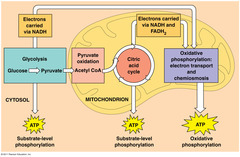
9895788094Anaerobic GlycolysisTransformation of glucose to pyruvate when limited amounts of oxygen (O2) are available; occurs in cytoplasm of cells.4
9895788095Alcoholic FermentationForm of anaerobic respiration (often carried out by yeast) that produces ethanol from pyruvate under low oxygen conditions5
9895788096PyruvateThree-carbon compound that forms as an end product of glycolysis.6
9895788097Lactic Acid FermentationForm of anaerobic respiration (often carried out during strenuous exercise) that produces lactate from pyruvate under low oxygen conditions7
9895788098LactateProduced in muscles when glucose is broken down anaerobically during strenuous muscular activity8
9895788100EthanolAlcohol formed by microbial fermentation of carbohydrates.9
9895788101Facultative AnaerobeOrganism that can survive with or without oxygen10
9895788102Obligate AnaerobeOrganism that cannot live in the presence of oxygen11
9895788103Cellular RespirationOverall pathway in which organic molecules are broken down to release energy for use by the cell12
9895788104MitochondriaPowerhouse of the cell, organelle that is the site of ATP (energy) production13
9895788105CristaeThe folds of the inner membrane of a mitochondrion14
9895788106Intermembrane SpaceThe fluid filled space between the inner and outer mitochondrial membranes15
9895788107MatrixThe inner region of the mitochondrion, where the Krebs cycle occurs16
9895788108Acetyl CoAIn the mitochondria, pyruvate is converted into this molecule, which then enters the Kreb's Cycle17
9895788109Krebs Cycle1st stage of aerobic cell respiration; pyruvate is converted into acetyl CoA, which is broken down into carbon dioxide and ATP; also called the Citric Acid Cycle18
9895788110NADHThe reduced form of NAD+; an electron-carrying molecule that functions in cellular respiration19
9895788111FADH2The reduced form of FAD+; an electron-carrying molecule that functions in cellular respiration20
9895788112Electron Transport ChainSeries of proteins through which electrons are passed to make ATP21
9895788113ChemiosmosisA process for making ATP by ATP Synthase using the energy stored in an electrochemical gradient of hydrogen ions.22
9895788114ATP SynthaseEnzyme that catalyzes the reaction that adds a high-energy phosphate group to ADP to form ATP during chemiosmosis23

AP BIOLOGY Flashcards

Terms : Hide Images
6971454845Active SiteThe part of an enzyme or antibody where the chemical reaction occurs.0
6971454846Active TransportThe movement of materials (ions and molecules) through a cell membrane using energy into a higher concentration1
6971454847AdhesionAn attraction between molecules of different substances2
6971454848Alternation of GenerationA pattern of reproduction occurring in the life cycles of many lower plants and some invertebrates involving alteration between two distinct forms (sexual and asexual)3
6971454849AlveoliTerminal air sacs that constitute the gas exchange surface of the lungs.4
6971454850Amino AcidsBuilding blocks of protein5
6971454851Amniotic eggEggs that contain an amnion to protect the embryo6
6971454852AngiospermA flowering plant which forms seeds inside a protective chamber called an ovary.7
6971454853AntibodiesSpecialized proteins that aid in destroying infectious agents8
6971454854AnticodonA sequence of three nucleotides forming a unit of genetic code in a transfer RNA molecule, corresponding to a complementary codon in messenger RNA9
6971454855Antigena toxin or other foreign substance that induces an immune response in the body, especially the production of antibodies10
6971454856ATP(adenosine triphosphate) molecule that stores and transfers energy in cells11
6971454857AutotrophAn organism that makes its own food12
6971454858AuxinSubstances that in minute amounts regulate or modify the growth of plants, especially root formation, bud growth, and fruit and leaf drop13
6971454859Binary FissionA form of asexual reproduction in which one cell divides to form two identical cells.14
6971454860BiomoleculeOrganic molecule and especially a macromolecule in living organisms15
6971454861BufferA substance that consists of acid and base forms in a solution and that minimizes changes in pH when extraneous acids or bases are added to a solution16
6971454862CapillaryThe attraction of the surface of a liquid to the surface of a solid, which causes the liquid to rise or fall17
6971454863CarbohydrateAny group of organic compounds consisting of carbon, hydrogen, and oxygen, usually in the ratio of 1:2:118
6971454864CatalystSubstance that increases the rate of a chemical reaction without itself undergoing any permanent chemical change19
6971454865Cell CycleCycle of growth and asexual reproduction of a cell, consisting of interphase followed in actively dividing cells by prophase, metaphase, anaphase, and telophase20
6971454866Cell WallA rigid structure that surrounds the cell membrane and provides support to the cell21
6971454867Cellular RespirationThe oxidation of organic compounds that occurs within cells, producing energy for cellular processes22
6971454868CholesterolSteroid present in the plasma membranes of animal cells23
6971454869ChlorophyllA green pigment found in the chloroplasts of plants, responsible for the absorption of light to provide energy for photosynthesis24
6971454870Chloroplasta plastid that contains chlorophyll and in which photosynthesis takes place.25
6971454871ChromatinA material of which the chromosomes of organisms other than bacteria are composed, consists of protein, RNA, and DNA26
6971454872Chromosomesthreadlike structures made of DNA molecules that contain the genes27
6971454873CodonA sequence of the three nucleotides that together form a unit of genetic code in a DNA or RNA molecule28
6971454874CohesionAttraction between molecules of the same substance29
6971454875Controlled variablesA variable in an experiment that will not be changed but observed30
6971454876covelant bondsFormed when electrons are shared between atoms31
6971454877CuticleWaxy layer on many plant leaves and stems, prevents desiccation32
6971454878CytokinesisCytoplasmic division of a cell at the end of mitosis or meiosis, bringing about the separation into two daughter cells33
6971454879Dehydration synthesisprocess in which water is removed to join two small molecules34
6971454880Diploid(genetics) an organism or cell having two sets of chromosomes or twice the haploid number35
6971454881DNA ligaseA linking enzyme essential for DNA replication and recombinant DNA techniques36
6971454882DuodenumFirst part of the small intestine37
6971454883Endoplasmic reticulumA network of membranous tubules within the cytoplasm of a eukaryotic cell, continuous with the nuclear membrane38
6971454884EndosymbiosisSymbiosis in which one of the symbiotic organisms lives inside the other39
6971454885ExonA nucleotide sequence of a gene that codes for an amino acid sequence or a controlled sequence40
6971454886EnzymeA very large protein that acts as a biological catalyst41
6971454887Eukaryotic cellAny organism having as its fundamental structural unit a cell type that contains specialized organelles in the cytoplasm , a membrane-bound nucleus enclosing genetic material organized into chromosomes, and an elaborate system of division by mitosis or meiosis, characteristics of all life forms except bacteria, blue green algae, and other primitive micro organisms.42
6971454888External fertilizationRelease of both sperm and eggs into an external environment, sperm will fertilize the egg outside of the organism, as seen in spawning43
6971454889Facilitated transportProcess in which substances are transported across cell membranes by means of protein carrier molecules44
6971454890FruitA mature ovary of a flower that protects dormant seeds and aids in their dispersal.45
6971454891Gametesreproductive cells46
6971454892GeneA segment of DNA on a chromosome that codes for a specific trait47
6971454893Genetic engineeringthe field of manipulating and changing an organism's DNA48
6971454894global warmingthe increase in the temperature of the earth's atmosphere caused by the greenhouse effect49
6971454895GlycerolColorless, sweet, viscous liquid formed as a byproduct in soap manufacture50
6971454896GlycogenA substance deposited in bodily tissues as a store of carbohydrates, polysaccharide that forms glucose on hydrolysis51
6971454897Gonadsmale and female sex glands52
6971454898HaploidAn organism or cell having only one complete set of chromosomes and a set of unpaired chromosomes53
6971454899Homeostasisrelatively constant internal physical and chemical conditions that organisms maintain54
6971454900Homozygouswhen there are two identical alleles for a trait55
6971454901Hydrogen bondA weak bond between two molecules resulting from an electrostatic attraction between a proton in one molecule and an electronegative atom in the other56
6971454902HydrolysisBreaking down complex molecules by the chemical addition of water57
6971454903HyphaeBranching, threadlike tubes that make up the bodies of multicellular fungi.58
6971454904HypothesisAn educated guess, can be tested59
6971454905Incomplete dominanceSituation in which one allele is not completely dominant over another allele60
6971454906Independent variableThe experimental factor that is manipulated; the variable whose effect is being studied.61
6971454907InnateNatural62
6971454908InsulinA hormone produced in the pancreas by the islets of langerhans that regulate the amount of glucose in the blood63
6971454909IntronSequence of DNA that is not involved in coding for a protein64
6971454910LigandAn ion or molecule that binds to a central metal atom to form a complex, atoms with electron pairs, may be neutral or negative65
6971454911Logistic growth curveS shaped curve that can be used to model functions that increase gradually at first, more rapidly in the middle growth period, and slowly at the end, leveling off at a maximum value after some period of time66
6971454912Marker proteinsExtend across the cell membrane and serve to identify the cell67
6971454913MeiosisA type of cell division that results in four daughter cells each with half the number of chromosomes of the parent cell, as in the production of gametes and plant spores68
6971454914Messenger RNAA form of RNA in which genetic information transcribed from DNA as a sequence of bases is transferred to a ribosome69
6971454915MitochondriaAn organelle found in large numbers in most cells, in which the biochemical processes of respiration and energy production occur, has a double membrane, the inner layer being folded inward to form layers70
6971454916MitosisCell division that results in two daughter cells each having the same number and kind of chromosomes as the parent nucleus, typical of ordinary tissue growth71
6971454917MutationA change in a gene or chromosome.72
6971454918Natural selectionA natural process resulting in the evolution of organisms best adapted to the environment.73
6971454919NephronFunctional unit of the kidney, consisting of a glomerulus and tubule, through which the glomerular filtrate passes before emerging as urine74
6971454920NucleotideA compound consisting of a nucleoside linked to a phosphate group, form the basic structural unit of nucleic acids such as DNA75
6971454921OviductThe tube through which an ovum or egg passes from an ovary76
6971454922PancreasA gland near the stomach that secretes a digestive fluid into the intestine through one or more ducts and also secretes the hormone insulin77
6971454923Passive transportThe transportation of materials across a plasma membrane without using energy.78
6971454924PepsinDigestive enzyme in the stomach that breaks down proteins into polypeptides79
6971454925Photosynthesisthe process by which green plants and some other organisms use sunlight to synthesize foods from carbon dioxide and water. Photosynthesis in plants generally involves the green pigment chlorophyll and generates oxygen as a byproduct.80
6971454926Phloemthe vascular tissue in plants that conducts sugars and other metabolic products downward from the leaves.81
6971454927Pituitary glandthe major endocrine gland. A pea-sized body attached to the base of the brain, the pituitary is important in controlling growth and development and the functioning of the other endocrine glands82
6971454928PlasmaFluid portion of blood83
6971454929Plasma membranea microscopic membrane of lipids and proteins that forms the external boundary of the cytoplasm of a cell or encloses a vacuole, and that regulates the passage of molecules in and out of the cytoplasm84
6971454930Polar bondA type of covalent bond between two atoms in which electrons are shared unequally, resulting in a bond in which one atom has a slightly negative charge and the other a slightly positive charge85
6971454931PopulationA group of individuals that belong to the same species and live in the same area86
6971454932Primary productivityrate at which energy is converted by photosynthetic and chemosynthetic autotrophs to organic substances87
6971454933ProkaryotesA microscopic single-celled organism which has neither a distinct nucleus with a membrane nor other specialized organelles88
6971454934ProteinA molecule composed of polymers of amino acids joined together by peptide bonds89
6971454935ProtistaA kingdom consisting of unicellular or simple multicellular organisms that possess nuclei and cannot be classified as animals, plants, or fungi90
6971454936ReplicationCopying process by which a cell duplicates its DNA91
6971454937Restriction enzymeEnzyme that cuts DNA at a specific sequence of nucleotides92
6971454938RibosomeA sphere-shaped structure within the cytoplasm of a cell that is composed of RNA and protein and is the site of protein synthesis93
6971454939Rootpart of a plant that grows downward and holds the plant in place, absorbs water and minerals from the soil, and often stores food94
6971454940RNA polymerasean enzyme that synthesizes the formation of RNA from a DNA template during transcription95
6971454941Sex chromosomeThe sperm and egg of living things96
6971454942SpeciesA group of similar organisms that can breed and produce fertile offspring.97
6971454943Spindle fibersform a protein structure that divides the genetic material in a cell98
6971454944StomataSmall openings on the underside of a leaf through which oxygen and carbon dioxide can move99
6971456382Symbiosisa close, long-term interaction between two different species100
6971456383Taxongroup or level of organization into which organisms are classified101
6971456384Transcriptionprocess by which the information in a strand of DNA is copied into a new molecule of messenger RNA102
6971456385Transfer RNAtype of RNA molecule that helps decode a messenger RNA sequence into a protein103
6971456386Translationprocess in which ribosomes in a cell's cytoplasm create proteins, following transcription of DNA to RNA in the cell's nucleus104
6971456387Transpirationprocess where plants absorb water through the roots and then give off water vapor through pores in their leaves105
6971456388Uterusorgan in which the baby develops and is protected until birth106
6971456389Xylema compound tissue in vascular plants that helps provide support and that conducts water and nutrients upward from the roots, consisting of tracheids, vessels, parenchyma cells, and woody fibers107
6971456390ZygoteThe cell formed by the union of a male sex cell (a sperm) and a female sex cell (an ovum)108

AP BIology DNA Replication Flashcards

Terms : Hide Images
6222654260DNA Replicationthe process by which a DNA molecule is copied; also called DNA synthesis0
6222654261Double helixtwo strands1
6222654262Antiparallelsubunits run in opposite directions2
6222654263Nitrogenous bases of DnaA, T, C, G3
6222654264PurinesA and G Nitrogenous bases with two organic rings4
6222654265PyrimidinesC and T Nitrogenous base with a single organic ring5
6222654266Semiconservative Modelthe two strands of the parental molecule separate and each functions as a template for synthesis of a new complementary strand- most common6
6222654267Origins of Replicationshort stretches of DNA having a specific sequence of nucleotides7
6222654268Replication Forka Y shaped region where the parental strands of DNA are being unwound8
6222654269Helicasesenzymes that untwist the double helix at the replication forks, separating the two parental strands and make them available as template strands9
6222654270Single Strand Binding ProteinsBind to the unpaired DNA strands keeping them from repairing10
6222654271TopoisomeraseThe untwisting of double helix causes tighter twisting and strain ahead of replication fork Relieve this strain by breaking swiveling, and rejoining DNA strands11
6222654272PrimaseSynthesizes the primer Starts a complementary RNA chain from a single RNA nucleotide, adding more RNA nucleotides one at a time, using the parental DNA strand as a template12
6222654273DNA polymerasesEnzyme that catalyze the synthesis of new DNA by adding nucleotides to a preexisting chain13
6222654274Leading strandStrand that continuously adds nucleotides to the new complementary strand as the fork progresses DNA pol III14
6222654275Lagging StrandThe strand that DNA pol III works away from the replication fork Synthesized discontinuosly as a series of segments15
6222654276Okazaki fragmentsSeries of segments that are 1000-2000 nucleotides long16
6222654277DNA Ligasejoins the sugar phosphate backbones of all the Okazaki fragments into a continuous DNA strand17
6222654278DNA pol IIISynthesizes new DNA strands by adding nucleotides to an RNA primer or a pre-existing DNA strand18
6222654279DNA pol IRemoves RNA nucleotides of primer from 5' end and replaces them with DNA nucleotides19
6222654280NucleaseDNA cutting enzyme that cuts out the damaged parts of the strand and fills the space with nucleotides using the undamaged strand as a template20
6222654281TelomeresSpecial nucleotide sequences at the ends of chromosomes TTAGGG is repeated between 100-1000 times Prevent the staggered ends of daughter molecule from activitating cell's system for monitoring DNA damage21
6222654282HistonesProteins that are responsible for the first level of DNA packing in chromatin22
6222654283Chromatincomplex of DNA and protein23

Pages

Subscribe to CourseNotes RSS

Need Help?

We hope your visit has been a productive one. If you're having any problems, or would like to give some feedback, we'd love to hear from you.

For general help, questions, and suggestions, try our dedicated support forums.

If you need to contact the Course-Notes.Org web experience team, please use our contact form.

Need Notes?

While we strive to provide the most comprehensive notes for as many high school textbooks as possible, there are certainly going to be some that we miss. Drop us a note and let us know which textbooks you need. Be sure to include which edition of the textbook you are using! If we see enough demand, we'll do whatever we can to get those notes up on the site for you!