AP Notes, Outlines, Study Guides, Vocabulary, Practice Exams and more!

AP Economics Unit 1 Flashcards

Unit 1 AP Economics

Terms : Hide Images
4863650642The study of the economic behavior of individuals and specific markets.Microeconomics0
4863650643A statement based on opinion or what should be.Normative Statement1
4863650644difference in value from the next best optionOpportunity Cost2
4863650645A statement that can be proven or disproven by facts.Positive Statement3
4863650646households purchase goods and services from firms provide revenue for businessProduct Market4
4863650647An economic model used to illustrate limited resources and trade-offs.Production Possibilities Curve (PPC)5
4863650648The payment for entrepreneurial ability; the revenue from sales minus the cost of resources.Profit6
4863650649Organizational skills, motivation, and risk taking needed to produce.Entrepreneurship7
4863650650Any place where consumers and producers meet to exchange.Market8
4863650651Incremental, one more, or the next one.Marginal9
4863650652The study of the economic behavior of entire economies.Macroeconomics10
4863650653Natural resource or material used to produce (may be refined).Land11
4863650654The physical and mental effort used to produce.Labor12
4863650655The study of how people make decisions among trade-offs, or- how they use their limited resources to satisfy their unlimited wants.Economics13
4863650656Organizing production into separate tasks.Division of Labor14
4863650658All things being constant.Ceteris Paribus15
4863650659Assuming that because two things are correlated that one caused the other.Causation Fallacy16
4863650660Equipment and tools used to produce.Capital17
4863650661Any choice forgone because of a decision.Trade-Off18
4863650663Focusing effort into one task.Specialization19
4863650665The idea that products and resources are limited.Scarcity20
4863650666Inputs needed for production.Resource (FOP)21
4863650667measure of changes from one unit to the nextMarginal Analysis22
4863650668firms purchase resource from business provide incomes for householdsResource Market23
4863650669the amount of resources dedicated to somethingAllocation24
4863650670Circular Flow (picture) -factor market = resource market25
4863650671assumption that people make decisions optimally using all informationRationality Assumption26
4863650672-means of production owned by individual -based on consumer spending -competition -rapid growth/declineMarket Economy27
4863650673-tradition -slow to change -basic wants and needsTraditional Economy28
4863650674-gov't controls production -production based on plans/quota -usually military or capital -people work for good of nationCommand Economy29
4863650675goods that are ultimately consumed (not part of the production of a good)Consumption Goods30
4863650676economy equal for all parties, even it that hurts part of pop. a littleSocialism31
4863650677utility gained from consuming the next unitMarginal Utility32
4863650680rewards that changes behaviorIncentives33
4863650681people act to make themselves betterSelf-Intrest34
4863650682-benefits gained from something -utilsUtility35
4863650683products that satisfy wants indirectlyCapital Goods36
4863650684production of good/service most wanted by society MB=MCAllocative Efficiency37
4863650685total satisfaction gained from consuming multiple itemsTotal Utility38
4863650687having to give up one product to produce 1 more unit of the otherLaw if Increasing Opportunity Costs39
4863650689training/education of workers to increase productivityHuman Capital40
4863650690money used to buy physical capitalFinancial Capital41
4863650691Land Labor Capital Entrepreneur4 Factors of Production42
4863650692letting things that their own course without interferencelaissez-faire43
4863650693shows all possible combos of total outputs that can be madeProduction Possibility Curve44
4863650694satisfaction a consumer gets from purchasing one more unit; will lessen with each additional unit bought consume while MU>/=MCLaw of Diminishing Marginal Utility45
4863650695Why is the PPC bowed outwards?Resources are scarce so you cannot always produce items on a one to one scale46
4863650696Economic Growth (ways to push the PPC out)-increase in resources -increase in workforce -tech innovations47
4863650698idea that decisions should be made on what maximizes utility fir largest # of peopleUtilitarianism48

AP Euro Final Review Flashcards

Terms : Hide Images
5644259361100 Years WarWar between England and France from 1337 to 1453. Finally France won. It was started by Edward III of England to claim the French throne. It brought about new styles of warfare.0
5644259362Black DeathThe common name for a major outbreak of plague that spread across Asia, North Africa, and Europe in the mid-fourteenth century, carrying off vast numbers of persons.1
5644265189Renaissance (Origins/Definitions)A period of intense artistic and intellectual activity, said to be a 'rebirth' of Greco-Roman culture. Usually divided into an Italian Renaissance, from roughly the mid-fourteenth to mid-fifteenth century, and a Northern Renaissance 1400-1600.2
5644265190Donatello(1386-1466) Italian sculptor renowned as a pioneer of the Renaissance style with his natural, lifelike figures, such as the bronze statue David.3
5644265191Michelangelo(1475-1564) AItalian sculptor, painter, poet, engineer, and architect. Famous works include the mural on the ceiling of the Sistine Chapel, and the sculpture of the biblical character David.4
5644268956Leonardo da VinciItalian painter, engineer, musician, and scientist. The most versatile genius of the Renaissance, Leonardo filled notebooks with engineering and scientific observations that were in some cases centuries ahead of their time. As a painter Leonardo is best known for The Last Supper (c. 1495) and Mona Lisa (c. 1503).5
5644271975MachiavelliRenaissance writer; formerly a politician, wrote The Prince, a work on ethics and government, describing how rulers maintain power by methods that ignore right or wrong; accepted the philosophy that "the end justifies the means."6
5644274226Northern RenaissanceAn extension of the Italian Renaissance to the nations Germany, Flanders, France, and England; it took on a more religious nature than the Italian Renaissance7
5644277792Erasmus/Christian Humanism8
5644277793Martin Luther & Protestant ReformationA German monk who became one of the most famous critics of the Roman Catholic Church. In 1517, he wrote 95 theses, or statements of belief attacking the church practices. He led the Protestant Reformation.9
5644281441IndulgencesSelling of forgiveness by the Catholic Church. It was common practice when the church needed to raise money. The practice led to the Reformation.10
5644281442Diet of WormsAssembly of the estates of the empire, called by Holy Roman Emperor Charles V in 1521. Luther was ordered to recant but he refused. Charles V declared Luther an outlaw.11
5644283600Peace of Augsburg (1555)-Ended religious warfare between Germany and the Holy Roman Empire -Lutheranism = acceptable religion -German princes chose religion for their state12
5644283601John Calvin(1509-1564) French theologian. Developed Calvinism13
5644287890Henry VIII & AnglicanismBroke England from Catholic Church due to marital issues with Pope. Founded Anglicanism14
5644289925Elizabeth I(1533-1603) Queen of England and Ireland between 1558 and 1603. She was an absolute monarch who brought religious toleration for Catholics and Anglicans15
5644289926PuritansProtestant sect in England hoping to "purify" the Anglican church of Roman Catholic traces in practice and organization.16
5644289927HuguenotsFrench Calvinists. Later massacred in 157217
5644292037Counter ReformationReform movement within the Roman Catholic Church in 16th-century Europe in response to the Protestant Reformation.18
5647085772Ignatius Loyola & JesuitsLeader of militant Catholics. Served as military for church19
5644301436Council of Trent (1545-1563)A meeting of Roman Catholic leaders, called by Pope Paul III to rule on doctrines criticized by the Protestant reformers (Indulgences...)20
5647112728Role of Bible (Protestants vs Catholics)Protestant - Individual interpretation Catholic - Strict Papal interpretation21
5644378902Transubstantiation vs ConsubstantiationTrans- Bread & Wine --> Body and Blood Cons- Bread & Wine = symbolic Large argument, led to reformation22
5647118655Wars of Religion (1560-1648)Wars that were strongly influenced by the religious change of the period and the conflict and rivalry that it produced. Ended generally positive result for Protestants, with treaties granting them recognition, independence or privileges.23
5644381777St. Bartholomew's Day Massacre (August 24, 1572 )Massacre of around 3,000 Huguenots in Paris24
5644381778Edict of NantesHenry IV grants granted liberty of conscience and public worship to the Huguenots25
5644384436"Bloody" MaryOldest daughter of Henry VIII. Queen of England from 1553-58. Known for her ruthless, deadly suppression of the Anglicanism in attempting to re-Catholicize England. Married Spain's Philip II.26
564439073130 Years War(1618-1648) This Bourbon vs. Hapsburg War resulted from a conflict between the Protestant Union and the Catholic League in the Holy Roman Empire.27
5644390732Dante(1265-1321) Italian poet and Renaissance writer. His greatest work is The Divine Comedy.28
5644390733Petrarch(1304-1374) Father of the Renaissance. First two centuries of the Roman Empire = peak of human civilization.29
5644393097Boccaccio(1313-1375) Wrote the Decameron which tells about ambitious merchants, portrays a sensual, and worldly society.30
5644393098Raphael(1483-1520) Worked in Florence and Rome. Well-known for Madonnas (humanized portrayals of the Virgin Mary with the baby Jesus). Painted frescoes in Vatican Palace. The School of Athens & The Triumph of Religion - reflect artist's strong interest in classical antiquity and Christian religion.31
5644393099Lorenzo VallaRenaissance Humanist who used his knowledge of Latin to show that the Donation of Constantine was a forgery. Contributed to the continual decline of the prestige of the Church with educated people.32
5644396806Jan van Eyck(1390-1441) Flemish painter who was a founder of the Flemish school of painting and who pioneered modern techniques of oil painting.33
5644396807Albrecht DürerFamous Northern Renaissance artist, he often used woodcutting along with Italian Renaissance techniques like proportion, perspective and modeling. (Knight Death, and Devil; Four Apostles).34
5644396949Thomas MoreEnglish statesman who opposed Henry VIII's divorce from Catherine of Aragon and was imprisoned and beheaded, He was a English humanist that contributed to the world today by revealing the complexities of man. He wrote UTOPIA, a book that represented a revolutionary view of society.35
5644400664Babylonian CaptivityThe period when all popes were French and resided in Avignon, France, starting with Clement V. This angered Italians and led to the Great Schism.36
5644402665Spread of LutheranismConversion of German states, outside of Germany and Scandinavia there was no conversion but ideas. Spread through conflict.37
5644402666Charles VHoly Roman Emperor and Carlos I of Spain, tried to keep Europe religiously united. Inherited Spain, the Netherlands, Southern Italy, Austria, and much of the Holy Roman Empire . Sought to stop Protestantism and increase the power of Catholicism. He allied with the pope to stamp out heresy and maintain religious unity in Europe.38
5644402667ZwingliLeader of Swiss Reformation. Disagreed on Luther's idea of Transubstantiation39
5644404939AnabaptistsA Radical Protestant sect. Believed only adults could make a free choice regarding religion. Also advocated pacifism, separation of church and state, and democratic church organization.40
5644404940John KnowAuthor of A Separate Peace41
5644404941Act of SupremacyDeclared the king (Henry VIII) the supreme head of the Church of England in 1534. Creation of Anglicanism.42
5644408055Frances XavierA Roman Catholic missionary and co-founder of the Society of Jesus. He was a student of Ignatius Loyola and one of the first seven Jesuits. He was influential in the spreading of Christianity to parts of the world like India and Japan.43
5644408056Henry of NavarrePolitical leader of the Huguenots and a member of the Bourbon dynasty, succeeded to the throne as Henry IV. He realized that as a Protestant he would never be accepted by Catholic France, so he converted to Catholicism. When he became king in 1594, the fighting in France finally came to an end.44
5644411237Revolt of the NetherlandsThe people of the Spanish Netherlands attacked against their diminishing privilege, unfair taxes, and endangered Calvinism45
5644411238Mary Queen of ScottsCatholic queen of Scotland who tried to make England more Catholic; Elizabeth repealed Catholic Laws from her reign; executed, but her death caused the English conflict with Spain.46
5644428982Bohemian Period (30 Years War)(1618-1625) First Period of Thirty Years' War in which Protestants revolted against Catholic Leaders but were put down by Ferdinand's Army with help of Frederick V.47
5644432575Danish Period (30 Years War)(1625-1629) Ferdinand (catholic) invaded north Germany which made Protestants fear. Danish King Christian IV led German defense with an alliance of Protestants but was defeated. Ferdinand recovers all secularized church lands and establishes strong, central Hapsburg presence.48
5644432576Swedish Period (30 Years War)(1630-1635) Swedish Gustavus Adolphus funded France and United Provinces and invaded Germany to defend Protestantism. Swedish stopped Hapsburgs at Battle of Breitenfeld. Gustavus was killed in battle.49
5644435071Treaty of Westphalia (30 Years War) !Hook!(1648) Ended Thirty Years War. Territorial treaty that set foundation for political boundaries France set as political power of Europe.50
5644435072Growth of State/ExplorationExpansion of nations into empires. Colonies formed in Americas, Asia and Africa.51
5644438140English Civil WarConflict from 1640 to 1660; featured religious disputes mixed with constitutional issues concerning the powers of the monarchy; ended with restoration of the monarchy in 1660 following execution of previous king52
5644438141Oliver CromwellEnglish military, political, and religious figure who led the Parliamentarian victory in the English Civil War (1642-1649) and called for the execution of Charles I. As lord protector of England (1653-1658) he ruled as a virtual dictator (Lord Protector).53
5646603080Cardinal Richelieu(1585-1642) Minister to Louis XIII. 3 point plan (1. Break the power of the nobility, 2. Humble the House of Austria, 3. Control the Protestants) helped to send France on the road to absolute monarchy.54
5646603081AbsolutismA form of government in which the ruler is an absolute dictator not restricted by any sort of constitution.55
5646606150Motives for ExplorationGod = spread religion, converting non-Christians, morally justified other motives Glory = fame (Renaissance state of mind) Gold = trade56
5646606151Vasco da GamaPortuguese explorer. In 1497-1498 he led the first naval expedition from Europe to sail to India, opening an important commercial sea route.57
5646619441Christopher Columbus(1451-1506) Italian navigator funded by Spain who discovered the New World in the service of Spain while looking for a route to China.58
5646619442Ferdinand MagellanPortuguese navigator who led the Spanish expedition of 1519-1522 that was the first to sail around the world.59
5646624349Hernando Cortes(1485-1547) Spanish conquistador who defeated the Aztecs and conquered Mexico.60
5646632753Treaty of TordesillasA 1494 agreement between Portugal and Spain, decided by Pope Alexander VI, declaring that newly discovered lands to the west of an imaginary line in the Atlantic Ocean would belong to Spain and newly discovered lands to the east of the line would belong to Portugal.61
5646632754Scientific RevolutionThe intellectual movement in Europe, initially associated with planetary motion and other aspects of physics. Occurred in the 16th and 17th centuries that laid the groundwork for modern science.62
5646635465Copernicus & On the Revolutions of the Heavenly Spheres1473-1543. Polish astronomer who was the first to formulate a scientifically based heliocentric cosmology that displaced the earth from the center of the universe. This theory is considered the epiphany that began the Scientific Revolution. Book talks in detail about model and was banned by Catholic church.63
5646660347Galileo(1564-1642) An Italian astronomer who provided more evidence for ethnocentrism. Invented a new telescope, studied the sky, and published what he discovered. Made church unhappy, put under house arrest for life.64
5646660348Francis Bacon(1561-1626) English politician & writer. Formalized the scientific method.65
5646662137Rene Descartes17th century French philosopher (Father of Modern Rationalism) 1st principle "i think therefore i am"66
5646664470William Shakespeare(1564 - 1616) English poet and playwright considered one of the greatest writers of the English language. Works include Julius Caesar, Macbeth, Romeo and Juliet, and Hamlet.67
5646664471Cervantes(1547-1616) Spanish writer best remembered for 'Don Quixote' which satirizes chivalry and influenced the development of the novel form.68
5646667074Baroque Art & MusicArtistic style in 17th century Italy that used exaggerated motion and clear, easily interpreted detail to produce drama, tension, exuberance, and grandeur.69
5646667075MerchantilismThe belief that money equals power, sell more than buy, more export than import. Use of colonies to benefit "mother country."70
5646670046Stuart KingsJames I of England was a descendant of Mary Queen of Scots executed by queen Elizabeth. Absolute monarchists. 1st Stuart (James I) introduced the idea of the divine right of kings in England.71
5646673432Levelers, Quakers, RantersLevelers - a political movement during the English Civil War (1642-1651) that emphasized popular sovereignty, extended suffrage, equality before the law, and religious tolerance Quakers - Christian group of religious movements generally known as the Religious Society of Friends. Pacifists who avoid creeds and hierarchical structures. Ranters - group of common people who denied the authority of churches, of scripture, of the current ministry and of services, instead calling on men to listen to the divine within them72
5646673433Gustavus Adolphus(1594-1632) Swedish Lutheran king who won victories for the German Protestants in the Thirty Years' War and lost his life in one of the battles73
5646676076Cardinal MazarinSuccessor of Cardinal Richelieu and his bad attempts to increase royal revenue and the state lead to the Fronde; ran the government while Louis VIII was still a child.74
5646676077Prince Henry the Navigator(1394-1460) Prince of Portugal who established an observatory and school of navigation at Sagres and directed voyages that spurred the growth of Portugal's colonial empire.75
5646679032Bartholomew DiasPortuguese navigator that discovered the Cape of Good Hope (Southern tip of Africa)76
5646679033John CabotItalian explorer who led the English expedition in 1497 that discovered the mainland of North America and explored the coast from Nova Scotia to Newfoundland (ca. 1450-1498)77
5646679034Tycho Brahe(1546-1601) Established himself as Europe's leading astronomer, collected a mass of data, believed that all planets revolved around the sun and that system revolved around the earth-moon system.78
5646682215Johannes KeplerGerman astronomer who used mathematics to prove that the planets move in elliptical orbits around the sun79
5646682216William HarveyDiscovered the circulation of blood and the role of the heart in propelling it. Developed an accurate theory of how the heart and circulatory system operated.80
5646687438Blaise PascalFrench mathematician81
5646690719John MiltonWrote Paradise Lost82
5646693165Treaty of Utrecht(1713)The treaty that ended the War of Spanish Succession and stopped Louis XIV's attempts to gain more land for France, defending the balance of power.83
5646693166Maria TheresaThis was the queen of Austria as a result of the Pragmatic Sanction. She limited the papacy's political influence in Austria, strengthened her central bureaucracy and cautiously reduced the power that nobles had over their serfs.84
5646696016Frederick the Great(1712-1786), King of Prussia from 1740 to 1786. Enlightened despot who enlarged Prussia by gaining land from Austria when Maria Theresa became Empress. He gave religious and philosophical toleration to all subjects, abolished torture and made the laws simpler85
56466983197 Years' War(1756-1763) Britain and Prussia vs France, Austria, Russia. Connected with French Indian war86
5646698320Treaty of Paris (1763)Ended French and Indian War. French Lost Canada & land east of the Mississippi --> British. New Orleans and west of Mississippi --> Spain87
5646700606Sir Isaac Newton1643-1727. English physicist, mathematician, astronomer, natural philosopher, alchemist, and theologian. Published work in 1687 describing universal gravitation, and the three laws of motion, laying the groundwork for classical mechanics.88
5646700607EnlightenmentA philosophical movement in eighteenth-century Europe that fostered the belief that one could reform society by discovering rational laws that governed social behavior and were just as scientific as the laws of physics.89
5646700608John LockeEnglish philosopher who advocated the idea of a "social contract" in which government powers are derived from the consent of the governed and in which the government serves the people; also said people have natural rights to life, liberty and property.90
5646704507Jacques RousseauFrench philosopher who believed that society should be based on a genuine social contract by which people surrender some of the individual rights to rule themselves as a society. He said the government, to be moral, must rest on the rational consent of the governed.91
5646726736Louis XIV(1638-1715) Known as the Sun King, he was an absolute monarch that completely controlled France. One of his greatest accomplishments was the building of the palace at Versailles.92
5646739395Palace of VersaillesA royal palace built in the 17th century for Louis XIV southwest of Paris near the city of Versailles93
5646742292Joseph IIThis was the ruler of the Habsburgs that controlled the Catholic Church closely, granted religious toleration and civic rights to Protestants and Jews, and abolished serfdom94
5646742293Louis XVIKing of France (r.1774-1792 CE). In 1789 he summoned the Estates-General, but he did not grant the reforms that were demanded and revolution followed. Louis and his queen, Marie Antoinette, were executed in 1793 (French Revolution).95
5646745413Short/Long ParliamentShort - English parliament that lasted from April 1640 to May 1640. Charles I was forced to call the Short Parliament primarily to obtain money to finance his military struggle with Scotland in the Bishops' Wars. Long - English parliament summoned by Charles I that was in control from 1640 until 166096
5646745414Glorious RevolutionFollowing the English Civil War, this event involve the British Parliament once again overthrowing their monarch in 1688-1689. James II was expelled and William and Mary were made king and queen. Marks the point at which Parliament made the monarchy powerless, gave themselves all the power, and wrote a bill of Rights. The whole thing was relatively peaceful and thus glorious.97
5646750945English Bill of RightsKing William and Queen Mary accepted this document in 1689. It guaranteed certain rights to English citizens and declared that elections for Parliament would happen frequently. By accepting this document, they supported a limited monarchy, a system in which they shared their power with Parliament and the people.98
5646752829Peter the Great(1672-1725) Russian tsar (r. 1689-1725). He enthusiastically introduced Western languages and technologies to the Russian elite, moving the capital from Moscow to the new city of St. Petersburg.99
5646752830St. PetersburgNew Russian capital (was Moscow) NB invaded100
5646754545Ottoman EmpireIslamic state founded by Osman in northwestern Anatolia. After the fall of the Byzantine Empire, the Ottoman Empire was based at Istanbul (formerly Constantinople) from 1453-1922. It encompassed lands in the Middle East, North Africa, the Caucasus, and eastern Europe.101
5646757086Baroque Architecture/Art/Musicexpressed the triumph of the Catholic church and the absolute state. Characterized by new explorations of form, light and shadow and dramatic intensity, blend of secular and religious forces.102
5646757087French RevolutionThe revolution that began in 1789, overthrew the absolute monarchy of the Bourbons and the system of aristocratic privileges, and ended with Napoleon's overthrow of the Directory and seizure of power in 1799.103
5646763318Laissez-fairePolicy that government should interfere as little as possible in the nation's economy.104
5646771402Causes of French Revolution1) The economic and financial crisis that led to the calling of the Estates General. 2) The political incompetence of Louis XV and XVI. 3) The unfair taxation between the three estates105
5646771403Estates GeneralFrance's traditional national assembly with representatives of the three estates, or classes, in French society: the clergy, nobility, and commoners. The calling of the Estates General in 1789 led to the French Revolution.106
5646773724National AssemblyFrench Revolutionary assembly (1789-1791). Called first as the Estates General, the three estates came together and demanded radical change. It passed the Declaration of the Rights of Man in 1789.107
5646776636Girondins/JacobsA moderate republican faction active in the French Revolution from 1791 to 1793. The Girondin Party favored a policy of extending the French Revolution beyond France's borders.108
5646781707Treaty of Paris (1783)This treaty ended the Revolutionary War, recognized the independence of the American colonies, and granted the colonies the territory from the southern border of Canada to the northern border of Florida, and from the Atlantic coast to the Mississippi River.109
5646781708Jean Baptiste ColbertAn economic adviser to Louis XIV; he supported mercantilism and tried to make France economically self-sufficient. Brought prosperity to France.110
5646787868John MacadamImproved transport by building better roads.111
5646787869James Watt(1736-1819)Scottish engineer and inventor whose improvements in the steam engine led to its wide use in industry.112
5646791143Immanuel KantGreatest German philosopher of Enlightenment-separated science and morality into separate branches of knowledge-science could describe nature, it could not provide a guide for morality. Wrote Critique of Pure Reason.113
5646791144Louis XV(1710-1774) King of France from age of 5 to death. He damaged the power of France, weakened the treasury, discredited the absolute monarchy, and made it more vulnerable to distrust and destruction. Actions led to French Revolution 15 years after his death.114
5646793990Austrian HapsburgsHouse that created a new empire in eastern and southeastern Europe.115
5646793991The ProtectorateThis was the name of the military dictatorship that England took on during the reign of Oliver Cromwell.116
5646797732James IIFinal Stuart ruler; he was forced to abdicate in favor of William and Mary, who agreed to the Bill of Rights, guaranteeing parliamentary supremacy (1685-1688)117
5646800348Great Northern WarRussia vs. Sweden. Russia had Poland, Denmark and Saxony as allies. Treaty of Nystad is where Russia gained Latvia and Estonia and thus gained its Window on the West in the Baltic Sea.118
5646803288Suleiman the MagnificentThe most illustrious sultan of the Ottoman Empire (r. 1520-1566); also known as 'The Lawgiver.' He significantly expanded the empire in the Balkans and eastern Mediterranean.119
5646805804RococoVery elaborate and ornate (in decorating or metaphorically, as in speech and writing); relating to a highly ornate style of art and architecture in 18th-century France.120
5646809138Civil Constitution of ClergyA document, issued by the National Assembly in July 1790, that broke ties with the Catholic Church and established a national church system in France with a process for the election of regional bishops. The document angered the pope and church officials and turned many French Catholics against the revolutionaries.121
5646811589Committee for Public SafetyLed by Robespierre and the Jacobin party, it closed churches and promoted the "cult of reason" and said that women could divorce their husbands and inherit their property. It oversaw the reign of terror and the 40,000 executions and imprisonments.122
5646811590The TerrorTerm used to describe the revolutionary violence in France in 1793-1794, when radicals under the leadership of Maximilian Robespierre executed tens of thousands of people deemed enemies of the revolution.123
5646811591Abbe SieyesWrote an essay called "What is the 3rd estate" Argued that lower classes were more important than the nobles and the government should be responsible to the people.124
5646814766NapoleonOverthrew French Directory in 1799 and became emperor of the French in 1804. Failed to defeat Great Britain and abdicated in 1814. Returned to power briefly in 1815 but was defeated and died in exile.125
5646817967NB's Militarism126
5646817968NB's Reforms127
5646821349Congress of Vienna(1815) Following Napoleon's exile, this meeting of European rulers in Austria established a system by which the balance of power would be maintained, liberal revolutions would be repressed, as would imperial expansion, and the creation of new countries in Europe.128
5646821350TalleyrandFrench statesman and diplomat noted for his capacity for political survival, who held high office during the French Revolution, under Napoleon, at the restoration of the Bourbon monarchy, and under King Louis-Philippe. At Congress of Vienna129
5646824143Industrial RevolutionSocial and economic change that began in England in the 1760s when the industrial geography of England changed significantly and later diffused to other parts of western Europe. In this period of rapid socioeconomic change, machines replaced human labor and new sources of inanimate energy were tapped. Coal was the leading energy source fueling the industrial revolution in England's textile-focused industrial explosion.130
5646836640Reasons of Ind. in England ????131
5646840631Socialization Effects of IndustrializationPeople run on strict schedule. Migrations from rural to industrial cities.132
5646840632Romanticism19th-century western European artistic and literary movement; held that emotion and impression, not reason, were the keys to the mysteries of human experience and nature; sought to portray passions, not calm reflection.133
5646840633NationalismA sense of unity binding the people of a state together; devotion to the interests of a particular country or nation, an identification with the state and an acceptance of national goals.134
5646842323SocialismA theory or system of social organization that advocates the vesting of the ownership and control of the means of production and distribution, of capital, land, etc., in the community as a whole.135
5646842324Corn LawsRepealed in 1846. They had imposed a tariff on imported grain and were a symbolic protection of aristocratic landholdings.136
5646842325Revolutions of 1830The French Revolution of 1830 occurred because Louis XVIII only granted a small percentage of people the right to vote and Charles X attack of Algeria and as a result, he censored the press and limited the voting rights of the wealthy.137
5646845807Revolutions of 1848Democratic and nationalist revolutions that swept across Europe during a time after the Congress of Vienna when conservative monarchs were trying to maintain their power. The monarchy in France was overthrown. In Germany, Austria, Italy, and Hungary the revolutions failed.138
5646845808The Directory1785-1799. Five man group. Passed a new constitution in 1795 that was much more conservative. Corrupt and did not help the poor, but remained in power because of military strength. By 1797 it was a dictatorship.139
5646845809WaterlooThe site of Napoleon's defeat by British and Prussian armies in 1815, which ended his last bid for power.140
5646847653MetternichAustrian foreign minister who basically controlled the Congress of Vienna. Wanted to promote peace, conservatism, and the repression of liberal nationalism throughout Europe.141
5646847654LiberalismA political ideology that emphasizes the civil rights of citizens, representative government, and the protection of private property. This ideology, derived from the Enlightenment, was especially popular among the property-owning middle classes.142
5646847655Adam SmithScottish moral philosopher and a pioneer of political economics. Seen today as the father of Capitalism. Wrote On the Wealth of Nations (1776) One of the key figures of the Scottish Enlightenment.143
5646847656UtopianismThe goal to create an ideal society based on cooperation and economic self-sufficiency.144
5646865845Peterloo Massacre1819, Calvary attacked a crowd of protesters (working-class men protesting about the rising prices of bread and corn laws) at St. Peter's Fields in Manchester. This led Parliament to become more repressive and begin to restrict such meetings.145
5646868883Louis KossuthHungarian statesman who led his people in revolt against the Hapsburg Empire during 1848-1849, Leader of the Hungarians, demanded national autonomy with full liberties and universal suffrage in 1848.146

AP Vocabulary #3 Flashcards

Terms : Hide Images
5226984336akinadj. 1: related by blood: descended from a common ancestor or prototype 2: essentially similar, related, or compatible0
5226987790plightn. an unfortunate, difficult, or precarious situation; a predicament or dilemma1
5226994673admonishv. 1. to speak to (someone) in a way that expresses disapproval or criticism 2. to tell or urge (someone) to do something2
5226999122epistlen. 1. a letter; especially a formal or elegant letter 2. a composition in the form of a letter3
5227007089nefariousadj. flagrantly wicked or impious4
5227011499adulationn. excessively admiring behavior; excessive flattery or admiration5
5227018156censuren. disapproval; severe criticism; official expression of disapproval or condemnation, e.g. of a legislator by the legislature.6
5227021171dissemblev. to put on a false appearance in order to conceal facts, feelings, or intentions; hedge, evade, quibble, beat around the bush, stall, dither...7
5227025056dissimulatv. to disguise or hide true feelings, thoughts, or intentions8
5227027863drolladj. oddly amusing, funny, comic, witty, humorous9
5227031830expectoratev. to cough up and spit out phlegm, clearing bronchial passages10
5227035682palpatev. to examine a part of the body by feeling with the hands and fingers11
5227037489peremptoryadj. 1. expecting to be obeyed and unwilling to tolerate disobedience, dictatorial 2. communicating urgency, command, or instruction 3. (in Law) ending, or not open to, discussion, debate, or further action12
5227042480pusillanimousadj. showing a contemptible lack of boldness and resolve, cowardly, timid, faint-hearted, lily-livered, spineless...13
5227056088surfeitn. an excessive number or quantity of something, especially so much of it that people become sickened, repelled, or bored by it 2. overindulgence, or a bout of overindulgence, in something, especially food or drink.14
5227058949palpitatev. to beat in an irregular or unusually rapid way, either because of a medical condition or because of exertion, fear, or anxiety.15
5227068836analogya comparison between two situations, usually one familiar and the other less so, so that the features of the more familiar situation help to explain the less familiar one.16
5227075825argumentthe process by a writer tries to persuade a reader to adopt a particular point of view.17
5227078716paraphrasea statement that says something that another person has said or written in a different way18
5227083659satiren. 1. a way of using humor to show that someone or something is foolish, weak, bad, etc. 2. humor that shows the weaknesses or bad qualities of a person, government, society, etc. 3. : a book, movie, etc., that uses satire19
5227087378summarizeto tell (information) again using fewer words20

AP Environmental Science Review Flashcards

Terms from APES for the exam

Terms : Hide Images
10054856819First Law of ThermodynamicsEnergy is neither created nor destroyed, but may be converted from one form to another.0
10054856820Second Law of ThermodynamicsWhen energy is changed from one form to another, some useful energy is always degraded into lower quality energy (usually heat).1
10054856821Nuclear Fissionnuclei of isotopes split apart when struck by neutrons.2
10054856822Leachingremoval of dissolved materials from soil by water moving downwards through soil.3
10054856823Soil Conservation Methodsconservation tillage, crop rotation, contour plowing, organic fertilizers.4
10054856824Soil Salinizationin arid regions, water evaporates leaving salts behind. (ex. Fertile crescent, southwestern US)5
10054856825Hydrologic Cycle Componentsevaporation, transpiration, runoff, condensation, precipitation, and infiltration.6
10054856884Watershedall of the land that drains into a body of water7
10054856826Aquiferany water-bearing layer in the ground.8
10054856827Salt Water Intrusionnear the coast, overpumping of groundwater causes saltwater to move into the aquifer.9
10054856828La Nina"Normal" year, easterly trade winds and ocean currents pool warm water in the western Pacific, allowing upwelling of nutrient rich water off the West coast of South America.10
10054856829Nitrogen Fixationbecause atmospheric N cannot be used directly by plants, it must first be converted into ammonia by bacteria.11
10054856885Ammonificationdecomposers covert organic waste into ammonia.12
10054856830Nitrificationammonia is converted to nitrate ions (NO -).13
10054856831Assimilationinorganic N is converted into organic molecules such as DNA/amino acids & proteins.14
10054856832Denitrificationbacteria convert ammonia back into N.15
10054856833Phosphorusdoes not exist as a gas; released by weathering of phosphate rocks, it is a major limiting factor for plant growth. Phosphorus cycle is slow, and not atmospheric.16
10054856911Soil Profile17
10054856834Photosynthesisplants convert CO2 (atmospheric C) into complex carbohydrates (glucose C6H12O6).18
10054856835Aerobic Respirationoxygen consuming producers, consumers & decomposers break down complex organic compounds & convert C back into CO2.19
10054856836Bioticliving components of an ecosystem.20
10054856886Abioticnonliving components of an ecosystem21
10054856837Producer/Autotrophorganisms that make their own food—photosynthetic life.22
10054856838Trophic Levelsproducers → primary consumer → secondary consumer → tertiary consumer.23
10054856839Energy Flow through Food Webs10% of the usable energy is transferred to the next trophic level. Reason: usable energy lost as heat (2nd law), not all biomass is digested & absorbed, predators expend energy to catch prey.24
10054856840Primary successiondevelopment of communities in a lifeless area not previously inhabited by life (ex. lava).25
10054856887Secondary successionlife progresses where soil remains (ex. clear-cut forest, old farm).26
10054856841Mutualismsymbiotic relationship where both organisms benefit (e.g. clownfish and anemone)27
10054856842Commensalismsymbiotic relationship where one organism benefits & the other is unaffected (e.g. epiphytic plants, such as many orchids, that grow on trees)28
10054856843Parasitismrelationship in which one organism (the parasite) obtains nutrients at the expense of the host (e.g. mosquitoes and humans)29
10054856844Carrying Capacitythe number of individuals that can be sustained in an area.30
10054856845r-strategistreproductive strategy in which organisms reproduce early, bear many small, unprotected offspring (ex. insects, mice).31
10054856846K-strategistreproductive strategy in which organisms reproduce late, bear few, cared for offspring (ex. humans, elephants).32
10054856847Natural Selectionorganisms that possess favorable adaptations (through mutations) pass them onto the next generation.33
10054856848Thomas MalthusThe human population is kept in check by war, famine & disease. Did not foresee technological advancements like medicine.34
10054856849Doubling Time(rule of 70) doubling time equals 70 divided by average growth rate. (ex. a population growing at 5% annually doubles in 70 ÷ 5 = 14 years)35
10054856850Replacement Level Fertilitythe number of children a couple must bear to replace themselves (2.1 developed, 2.7 developing).36
10054856851World Populationslightly over 7.4 billion.37
10054856888Demographic Transition Modelpreindustrial, transitional, industrial, and postindustrial stages38
10054856852Preindustrial stagebirth & death rates high, population grows slowly, infant mortality high.39
10054856853Transitional stageAid from other countries and increase in industrialization lowers death rates (infant mortality). Birth rates high (from of the amount of people in the reproductive stage).40
10054856889Industrial stagedecline in birth rate, population growth slows.41
10054856854Postindustrial stagelow birth & death rates.42
10054856855Age Structure Diagramsbroad base → rapid growth; narrow base → negative growth (NPG); uniform shape → zero growth (ZPG)43
10054856890Most populous nations1)China 2)India 3)US 4)Indonesia44
10054856856Low Economic/Social Status of WomenMost important factor keeping population growth rates high.45
10054856857Methods to Decrease Birth RatesFamily planning, contraception, economic rewards & penalties.46
10054856858Composition of Water on Earth97.5% seawater, 2.5% freshwater. 0.023% readily available freshwater for use.47
10054856891Aquaculturefarming aquatic species, commonly salmon, shrimp, tilapia, oysters.48
10054856859Point Sourcefrom specific location such as pipe or smokestack49
10054856860Non-Point Sourcefrom over an area such as agricultural (farm) runoff, traffic.50
10054856861Eutrophicationrapid algal growth caused by an excess of nitrogen & phosphorus.51
10054856862Keystone Speciesspecies whose role in an ecosystem is important for the ecosystem to sustain itself (manatee, alligator, sea otter, etc)52
10054856863Indicator Speciesspecies that serve as early warnings that an ecosystem is being damaged (amphibians).53
10054856864Pesticide Consgenetic resistance, ecosystem imbalance, pesticide treadmill, persistence, bioaccumulation, and biological magnification.54
10054856892Genetically Modified Organisms (GMOs)new organisms created by altering the genetic material (DNA) of existing organisms; usually in an attempt to remove undesirable or create desirable characteristics in the new organism.55
10054856893Electricity Generationsteam, from water boiled by fossils fuels or nuclear energy, or falling water is used to turn a turbine and generate a generator.56
10054856894Coal Formationprehistoric plants buried undecomposed in oxygen-depleted water of swamps/bogs converted by heat and pressure.57
10054856865Nuclear Reactorconsists of a core, control rods, moderator, steam generator, turbine, containment building.58
10054856895Alternate Energy Sourceswind, solar, waves, biomass, geothermal, fuel cells59
10054856896Tropospherefirst layer of atmosphere 0-10 miles above the Earth's surface. Contains weather, greenhouse gases (bad ozone)60
10054856897Stratospheresecond layer of atmosphere 10-30 miles above the Earth's surface. Contains protective ozone layer (good ozone)61
10054856898Temperature Inversiona warm layer of air above a cooler layer traps pollutants close to the Earth's surface.62
10054856899Divergent plate boundariestectonic plates spreading apart, new crust being formed (Mid Ocean Ridge)63
10054856900Convergent plate boundariestectonic plates with the oldest crustal material on Earth moving together, one moving under another. Mineral deposits and volcanoes are most abundant at convergent plate boundaries (Volcanic arc like Japan)64
10054856901Transform Faulttectonic plates sliding past one another (San Andreas Fault Line)65
10054856902Most Endangered specieshave a small range, require large territory, have long generations, have very specialized niche, or live on an island66
10054856866Biomelarge distinct terrestrial region having similar climate, soil, plants & animals.67
10054856867Tropical Rain Forestscharacterized by the greatest diversity of species, believed to include many undiscovered species. Occur near the equator. Soils tend to be low in nutrients. Distinct seasonality: winter is absent, and only two seasons are present (rainy and dry).68
10054856868Temperate Forestsoccur in eastern North America, Japan, northeastern Asia, and western and central Europe. Dominated by tall deciduous trees. Well-defined seasons include a distinct winter. Logged extensively, only scattered remnants of original temperate forests remain.69
10054856869Boreal Forests or Taigarepresent the largest terrestrial biome. Dominated by needleleaf, coniferous trees. Found in the cold climates of Eurasia and North America: two-thirds in Siberia with the rest in Scandinavia, Alaska, and Canada. Seasons are divided into short, moist, and moderately warm summers and long, cold, and dry winters. Extensive logging may soon cause their disappearance.70
10054856870Temperate Shrub Landsoccurs along the coast of Southern California and the Mediterranean region. Characterized by areas of Chaparral-miniature woodlands dominated by dense stands of shrubs.71
10054856871Savannasgrassland with scattered individual trees. Cover almost half the surface of Africa and large areas of Australia, South America, and India. Warm or hot climates where the annual rainfall is 20-50 inches per year. The rainfall is concentrated in six or eight months of the year, followed by a long period of drought when fires can occur.72
10054856872Temperate Grasslandsdominated by grasses, trees and large shrubs are absent. Temperatures vary more from summer to winter, and the amount of rainfall is less than in savannas. Temperate grasslands have hot summers and cold winters. Occur in South Africa, Hungary, Argentina, the steppes of the former Soviet Union, and the plains and prairies of central North America.73
10054856873Desertscovers about one fifth of the Earth's surface and occur where rainfall is less than 50 cm/year. Most deserts occur at low latitudes, have a considerable amount of specialized vegetation, as well as specialized animals. Soils have abundant nutrients, need only water to become productive, and have little or no organic matter. Common disturbances include occasional fires or cold weather, and sudden, infrequent, but intense rains that cause flooding.74
10054856874Tundratreeless plains that are the coldest of all the biomes. Occur in the arctic and Antarctica. Dominated by lichens, mosses, sedges, and dwarfed shrubs Characterized by extremely cold climate, permanently frozen ground (permafrost) low biotic diversity, simple vegetation structure, limitation of drainage, short season of growth and reproduction.75
10054856875Wetlandsareas of standing water that support aquatic plants including marshes, swamps, and bogs. Reduce flooding. Species diversity is very high.76
10054856876Fresh Waterdefined as having a low salt concentration (less than 1%). Plants and animals are adjusted to the low salt content and would not be able to survive in areas of high salt concentration (i.e., ocean). There are different types of freshwater regions: ponds and lakes, streams and rivers, and estuaries.77
10054856877Oceansthe largest of all the ecosystems. The ocean regions are separated into separate zones: intertidal, pelagic, abyssal, and benthic. All four zones have a great diversity of species.78
10054856878Safe Drinking Water Actset maximum contaminant levels for pollutants that may have adverse effects on human health.79
10054856879Clean Water ActAim: to make all US waterways safe for fishing and swimming. set maximum permissible amounts of water pollutants that can be discharged into waterways. Require the repairment of damaged wetlands.80
10054856880Clean Air ActNAAQ set air quality standards. Set emission standards for cars, and limits for release of air pollutants.81
10054856881Montreal Protocolphase out of ozone depleting substances.82
10054856882Endangered Species Actidentifies threatened and endangered species in the US, and puts their protection ahead of economic considerations.83
10054856883Federal Insecticide, Fungicide, and Rodenticide Act (FIFRA)regulates the use and effectiveness of pesticides84
10054856903Herbicidea toxic chemical that kills plants85
10054856904Insecticidea toxic chemical that kills insects86
10054856905Rodenticidea toxic chemical that kills rodents87
10054856906Fungicidea toxic chemical that kills fungi88
10054856907Nicheorganism's job in the ecosystem of which it lives89
10054856908Invasive Speciesintroduced into an ecosystem and out-compete native species90
10054856909NOx, SO2, Pb, PM, O3, CO6 criteria air pollutants91
10054856910Top 4 indoor air pollutants in DEVELOPED countriesTobacco smoke, Formaldehyde, Radon Gas, Fine and Ultrafine Particulate Matter92

AP BIology DNA Replication Flashcards

Terms : Hide Images
9350084864DNA Replicationthe process by which a DNA molecule is copied; also called DNA synthesis0
9350084865Transformationa change in genotype and phenotype due to the assimilation of external DNA by a cell transforming substance- DNA1
9350084866BacteriophagesViruses that infect bacteria Bacteria eaters2
9350084867Virusinfects a cell and takes over the cell's metabolic machinery3
9350084868Hershey and ChaseConcluded that phage DNA entered bacterial host cells, but phage proteins did not, so DNA functions as the genetic material4
9350084869GriffithConcluded that nonpathogenic bacteria transformed into pathogenic bacteria by an unknown, heritable substance from the dead S cells that enabled the R cells to make capsules5
9350084870Chargaff's Lawthe base compostion of DNA varies between species and for each species, the percentages of A and T bases are roughly equal to the percentages of the G and C bases6
9350084871Rosalind Franklinaccomplished X-ray crystallographer that discovered the double helix of DNA7
9350084872Watson and CrickCame up with the structural model of DNA8
9350084873Double helixtwo strands9
9350084874Antiparallelsubunits run in opposite directions10
9350084875Nitrogenous bases of DnaA, T, C, G11
9350084876PurinesA and G Nitrogenous bases with two organic rings12
9350084877PyrimidinesC and T Nitrogenous base with a single organic ring13
9350084878Conservative modeltwo parental strands reassociate after acting as templates for new strands thus restoring the parental double helix14
9350084879Semiconservative Modelthe two strands of the parental molecule separate and each functions as a template for synthesis of a new complementary strand- most common15
9350084880Origins of Replicationshort stretches of DNA having a specific sequence of nucleotides16
9350084881Replication Forka Y shaped region where the parental strands of DNA are being unwound17
9350084882Helicasesenzymes that untwist the double helix at the replication forks, separating the two parental strands and make them available as template strands18
9350084883Single Strand Binding ProteinsBind to the unpaired DNA strands keeping them from repairing19
9350084884TopoisomeraseThe untwisting of double helix causes tighter twisting and strain ahead of replication fork Relieve this strain by breaking swiveling, and rejoining DNA strands20
9350084885PrimerThe initial nucleotide chain that is produced during DNA synthesis is actually a short stretch of RNA21
9350084886PrimaseSynthesizes the primer Starts a complementary RNA chain from a single RNA nucleotide, adding more RNA nucleotides one at a time, using the parental DNA strand as a template22
9350084887DNA polymerasesEnzyme that catalyze the synthesis of new DNA by adding nucleotides to a preexisting chain23
9350084888Leading strandStrand that continuously adds nucleotides to the new complementary strand as the fork progresses DNA pol III24
9350084889Lagging StrandThe strand that DNA pol III works away from the replication fork Synthesized discontinuosly as a series of segments25
9350084890Okazaki fragmentsSeries of segments that are 1000-2000 nucleotides long26
9350084891DNA Ligasejoins the sugar phosphate backbones of all the Okazaki fragments into a continuous DNA strand27
9350084892DNA pol IIISynthesizes new DNA strands by adding nucleotides to an RNA primer or a pre-existing DNA strand28
9350084893DNA pol IRemoves RNA nucleotides of primer from 5' end and replaces them with DNA nucleotides29
9350084894Mismatch repairOther enzymes remove and replace incorrectly paired nucleotides that have resulted from replication errors30
9350084895NucleaseDNA cutting enzyme that cuts out the damaged parts of the strand and fills the space with nucleotides using the undamaged strand as a template31
9350084896Nucleotide excision repairDNA repair system where teams of enzymes detect and repair the DNA, the nuclease cuts out the damaged DNA and removes it, fills in the missing nucleotides and the DNA ligase seals the free end of the new DNA to the old DNA making the strand complete32
9350084897TelomeresSpecial nucleotide sequences at the ends of chromosomes TTAGGG is repeated between 100-1000 times Prevent the staggered ends of daughter molecule from activitating cell's system for monitoring DNA damage33
9350084898TelomeraseEnzyme that catalyzes the lengthening of telomeres in eukaryotic germ cells and restores the original length and compensating for the shortening that occurs during DNA replication34
9350084899HistonesProteins that are responsible for the first level of DNA packing in chromatin35
9350084900Nucleosomethe basic unit of DNA packing36
9350084901Chromatincomplex of DNA and protein37

AP Psychology Important People Flashcards

Important people in AP PSychology

Terms : Hide Images
10118115187Sigmund Freud1856-1939; Field: psychoanalytic, personality; Contributions: id/ego/superego, reality and pleasure principles, ego ideal, defense mechanisms (expanded by Anna Freud), psychoanalysis, transference0
10118115188Anna Freud1895-1982; Field: psychoanalysis; Contributions: focused on child psychoanalysis, fully developed defense mechanisms, emphasized importance of the ego and its constant struggle1
10118115189Carl Jung1875-1961; Field: neo-Freudian, analytic psychology; Contributions: people had conscious and unconscious awareness; archetypes; collective unconscious; libido is all types of energy, not just sexual; Studies: dream studies/interpretation2
10118115190Erik Erikson1902-1994; Field: neo-Freudian, humanistic; Contributions: created an 8-stage theory to show how people evolve through the life span. Each stage is marked by a psychological crisis that involves confronting "Who am I?"3
10118115191Lawrence Köhlberg1927-1987; Field: cognition, moral development; Contributions: created a theory of moral development that has 3 levels; focuses on moral reasoning rather than overt behavior4
10118115192Carol Gilligan1936-pres; Field: cognition; Contributions: maintained that Köhlberg's work was developed by only observing boys and overlooked potential differences between the habitual moral judgments of boys and girls; girls focus more on relationships than laws and principles5
10118115193William James1842-1910; Field: functionalism; Contributions: studied how humans use perception to function in our environment; Studies: Pragmatism, The Meaning of Truth6
10118115194William Wundt1832-1920; Field: structuralism, voluntarism; Contributions: introspection, basic units of experience; Studies: 1st psychological laboratory in world at University of Leipzig7
10118115195BF Skinner1904-1990; Field: behavioral; Contributions: created techniques to manipulate the consequences of an organism's behavior in order to observe the effects of subsequent behavior; Studies: Skinner box8
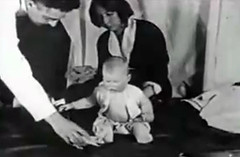
10118115196John B Watson1878-1958; Field: behaviorism; Contributions: generalization-inductive reasoning, emphasis on external behaviors of people and their reactions on a given situation; Studies: Little Albert9
10118115197Jean Piaget1896-1980; Field: cognition; Contributions: created a 4-stage theory of cognitive development, said that two basic processes work in tandem to achieve cognitive growth (assimilation and accommodation)10
10118115198Harry Harlow1905-1981; Field: development; Contributions: realized that touch is preferred in development; Studies: Rhesus monkeys, studied attachment of infant monkeys (wire mothers v. cloth mothers)11
10118115199Carl Rogers1902-1987; Field: humanistic; Contributions: founded person-centered therapy, theory that emphasizes the unique quality of humans especially their freedom and potential for personal growth, unconditional positive regard, fully functioning person12
10118115200Abraham Maslow1908-1970; Field: humanism; Contributions: hierarchy of needs-needs at a lower level dominate an individual's motivation as long as they are unsatisfied, self-actualization, transcendence13
10118115201Karen Horney1885-1952; Field: neo-Freudian, psychodynamic; Contributions: criticized Freud, stated that personality is molded by current fears and impulses, rather than being determined solely by childhood experiences and instincts, neurotic trends14
10118115202Alfred Adler1870-1937; Field: neo-Freudian, psychodynamic; Contributions: basic mistakes, style of life, inferiority/superiority complexes, childhood influences personality formation; Studies: Birth Order15
10118115203Gordon Allport1897-1967; Field: trait theory of personality; Contributions: list of 11,000 traits, 3 levels of traits-cardinal, central, and secondary16
10118115204Hermann Rorschach1884-1922; Field: personality, psychoanalysis; Contributions: developed one of the first projective tests, the Inkblot test which consists of 10 standardized inkblots where the subject tells a story, the observer then derives aspects of the personality from the subject's commentary17
10118115205Solomon Asch1907-1996; Field: social psychology; Contributions: studied conformity, found that individuals would conform even if they knew it was wrong; Studies: conformity, opinions and social pressures18
10118115206Stanley Schachter1922-present; Field: emotion; Contributions: stated that in order to experience emotions a person must be physically aroused and know the emotion before you experience it19
10118115207Stanley Milgram1933-1984; Field: social psychology; Contributions: wanted to see how the German soldiers in WWII fell to obedience, wanted to see how far individuals would go to be obedient; Studies: Shock Study20
10118115208Philip Zimbardo1933-present; Field: social psychology; Contributions: proved that peoples behavior depends to a large extent on the roles they are asked to play; Studies: Stanford Prison Study-studied power of social roles to influence people's behavior21
10118115209Elizabeth Kübler-Ross1926-2004; Field: development; Contributions: 5 stages the terminally ill go through when facing death (1. death, 2. anger/resentment, 3. bargaining with God, 4. depression, 5. acceptance)22
10118115210Elizabeth Loftus1944-present; Field: memory; Contributions: expert in eyewitness testimony (false memories or misinformation effect); Studies: Reconstruction of Auto. Destruction, Jane Doe Case (repressed memories of Nicole Taus' sex abuse)23
10118115211Robert Sternberg1949-present; Field: intelligence; Contributions: devised the Triarchic Theory of Intelligence (academic problem-solving, practical, and creative)24
10118115212Albert Bandura1925-present; Field: sociocultural; Contributions: pioneer in observational learning, stated that people profit from the mistakes/successes of others; Studies: Bobo Dolls-adults demonstrated 'appropriate' play with dolls, children mimicked play25
10118115213Raymond Cattell1905-1998; Field: intelligence; Contributions: fluid & crystal intelligence; 3 domains of personality sphere (personality, ability, & motivation), 16 Personality Factors (personality test)26
10118115214Aaron Beck1921-present; Field: cognitive; Contributions: father of Cognitive Therapy, created Beck Scales-depression inventory, hopelessness scale, suicidal ideation, anxiety inventory, and youth inventories27
10118115215Noam Chomsky1928-present; Field: language; Contributions: disagreed with Skinner about language acquisition, stated there is an infinite # of sentences in a language, humans have an inborn native ability to develop language28
10118115216Edward Thorndike1874-1949; Field: behaviorism; Contributions: Law of Effect-relationship between behavior and consequence; Studies: Law of Effect with cats29
10118115217HJ Eysenck1916-1997; Field: personality; Contributions: asserted that personality is largely determined by genes, used introversion/extroversion30
10118115218Mary Ainsworth1913-1999; Field: development; Contributions: compared effects of maternal separation, devised patterns of attachment; Studies: The Strange Situation-observation of parent/child attachment31
10118115219Kenneth Clark1914-2005; Field: social psychology; Contributions: research evidence of internalized racism caused by stigmatization; Studies: Doll experiments-black children chose white dolls32
10118115220Lev Vygotsky1896-1934; Field: child development; Contributions: investigated how culture & interpersonal communication guide development, zone of proximal development; play research33
10118115221Martin Seligman1942-present; Field: learning; Contributions: Positive Psychology, learned helplessness; Studies: Dogs demonstrating learned helplessness34
10118115222Howard Gardner1943-present; Field: intelligence; Contributions: devised the theory of multiple intelligences (logical-mathematic, spatial, bodily-kinesthetic, intrapersonal, linguistic, musical, interpersonal, naturalistic)35
10118115223Kurt Lewin1890-1947; Field: social psychology; Contributions: German refugee who escaped Nazis, proved the democratic style of leadership is the most productive; Studies: Leadership syles-studied effects of 3 leadership styles on children completing activities36
10118115224Ivan Pavlov1891-1951; Field: Gastroenterology; Contributions: developed foundation for classical conditioning, discovered that a UCS naturally elicits a reflexive behavior; Studies: dog salivation37
10118115225Hermann Ebbinghaus1850-1909; Field: memory; Contributions: 1st to conduct studies on forgetting: first, a rapid loss followed by a gradual declining rate of loss; Studies: memory-series of meaningless syllables/words38
10118115226Benjamin Whorf1897-1941; Field: language; Contributions: his hypothesis is that language determines the way we think39
10118115227Robert Rosenthal1933-present; Field: social psychology; Contributions: focus on nonverbal communication, self-fulfilling prophecies; Studies: Pygmalion Effect-effect of teacher's expectations on students40
10118115228Judith Langloisdates ?; Field: developmental; Contributions: social development & processing, effects of appearance on behavior, origin of social stereotypes, sex/love/intimacy, facial expression41
10118115229David Rosenhandates?; Field: social psychology; Contributions: proved that once you are diagnosed with a disorder, your care would not be very good in a mental health setting; Studies: Hospital experiment-checked into hospital to check diagnosis42
10118115230Daniel Goleman1946-present; Field: intelligence; Contributions: emotional intelligence43
10118115231Charles Spearman1863-1945; Field: intelligence; Contributions: found that specific mental talents were highly correlated, concluded that all cognitive abilities showed a common core which he labeled 'g' (general ability)44
10118115232Albert Ellis1913-2007; Field: cognitive-behavioral; Contributions: Rational-Emotive Therapy (RET), focuses on altering client's patterns of irrational thinking to reduce maladaptive behavior and emotions45
10118115233Harry Stack Sullivan1892-1949; Field: psychoanalysis; Contributions: groundwork for enmeshed relationships, developed the Self-System-a configuration of personality traits46
10118115234Robert Yerkes187601956; Field: intelligence, comparative; Contributions: social behavior of gorillas/chimps, Yerkes-Dodson law-level of arousal as related to performance47
10118115235Alfred Binet1857-1911; Field: testing; Contributions: general IQ tests, designed test to identify slow learners in need of remediation-not applicable in the U.S. because too culture-bound (French)48
10118115236Little Albertca. 1920; Field: behaviorism; Contributions: subject in John Watson's experiment, proved classical conditioning principles: Studies: Little Albert-generalization of fear49
10118115237Karl Wernicke1848-1905; Field: perception; Contributions: area of left temporal lobe involved language understanding; Studies: person damaged in this area uses correct words but they do not make sense50
10118115238Ernst Weber1795-1878; Field: perception; Contributions: just-noticeable-difference (JND) that eventually becomes Weber's law; Studies: 1st study on JND51
10118115239Gustav Fechner1801-1887; Field: perception; Contributions: stated that the magnitude of a sensory experience is proportionate to the # of JND's that the stimulus causing the experiences above the absolute threshold52
10118115240Mary Cover-Jones1896-1987; Field: learning; Contributions: systematic desensitization, maintained that fear could be unlearned53
10118115241Robert Zajonc1923-present; Field: motivation; Contributions: believes that we invent explanations to label feelings54
10118115242Henry Murray1893-1988; Field: intelligence, testing; Contributions: devised the Thematic Apperception Test (TAT) with Christina Morgan, stated that the need to achieve varied in strength in different people and influenced their tendency to approach and evaluate their own performances55
10118115243Paul Ekman1934-present; Field: emotion; Contributions: found that facial expressions are universal56
10118115244Clark Hull1884-1952; Field: motivation; Contributions: maintains that the goal of all motivated behavior is the reduction or alleviation of a drive state, mechanism through which reinforcement operates57
10118115245David McClelland1917-1998; Field: intelligence, testing; Contributions: devised a way to measure Murray's theory (TAT), developed scoring system for TAT's use in assessing achievement motivation, not the TAT58
10118115246Francis Galton1822-1911; Field: differential psychology AKA "London School" of Experimental Psychology; Contributions: behavioral genetics, maintains that personality & ability depend almost entirely on genetic inheritance; Studies: Twin Studies-compare identical & fraternal twins, Hereditary Genius-used bell curve for normal distribution, & "Law of Errors"-differences in intellectual ability59
10118115247Charles Darwin1809-1882; Field: geology, biology; Contributions: transmutation of species, natural selection, evolution by common descent; Studies: "The Origin of Species" catalogs his voyage on the Beagle60
10118115248Lewis Terman1877-1956; Field: testing; Contributions: revised Binet's IQ test and established norms for American children61
10118115249Phineas Gage1823-1860; Field: neurobiology; Contributions: 1st person to have a frontal lobotomy (by accident), his accident gave information on the brain and which parts are involved with emotional reasoning62
10118115250William Sheldon1898-1977; Field: personality; Contributions: theory that linked personality to physique on the grounds that both are governed by genetic endowment: endomorphic (large), mesomorphic (average), and ectomorphic (skinny)63
10118115251David Weschler1896-1981; Field: testing; Contributions: established an intelligence test especially for adults (WAIS)64
10118115252Walter B. Cannon1871-1945; Field: motivation; Contributions: believed that gastric activity as in empty stomach, was the sole basis for hunger; Studies: inserted balloons in stomachs65

AP World Religions Flashcards

World Religions
Eastern

Terms : Hide Images
6715025364atmanThe eternal self, which the Upanishads identify with Brahman; often lowercase: the eternal Self or soul on an individual that is reincarnated from one body to the next and is ultimately identified with Atman.0
6715025365BrahmanThe eternal essence of reality and the source of the universe, beyond the reach of human perception and thought.1
6715025366Brahminthe highest of the four classes of the caste system, traditionally made up of priests.2
6715025367DharmaEthical duty based on the divine order of reality; in Hinduism, one of the four goals of life.3
6715025368Four Noble TruthsThe central teachings of Buddhism; to live is to suffer; suffering is caused by desire; the cessation of suffering can be achieved; the solution is the Noble Eightfold Path.4
6715025369kshatriyathe second of four classes of the caste system, traditionally made up of warrior and administrators.5
6715025370karma"action" - the moral law of cause and effect of actions; determines the nature of one's rebirth.6
6715025371lamaA Tibetan Buddhist teacher; a title of honor often given to all Tibetan monks.7
6715025372mokshaliberation or release of the individual self, atman, from the bondage of samsara, salvation; one of the four goals of life.8
6715025373nirvana"blowing out" - the ultimate goal of all Buddhists, the extinction of desire and any sense of individual selfhood, resulting in liberation from samsara and its limiting conditions.9
6715025374reincarnationin Hinduism and Buddhism, the process by which a soul is reborn continuously until it achieves perfect understanding10
6715025375VedasA collection of 1,017 Sanskrit hymns composed about 1500 BCE or earlier; Hinduism's oldest sacred text.11
6715025376samsaraThe wheel of rebirth or reincarnation; the this-worldly realm in which rebirth occurs.12
6715025377shudrathe lowest of the four classes of the caste system, traditionally made up of servants and laborers.13
6715025378the Dharmathe teachings of the Buddha; one of the three jewels14
6715025379Theravada"the way of the Elders" - Prevalent form of Buddhism in Cambodia, Myanmar (formerly Burma), Sri Lanka, and Thailand; focuses on the earliest texts and emphasizes monastic lifestyle.15
6715025380Upanishadsa collection of over two hundred texts composed between 900 and 200 BC that provide philosophical commentary on the vedas16
6715025381Vaishyathe third of the four classes of the caste system, traditionally made up of producers, such as farmers, merchants, and artisans.17
6715025382yogaA system of Hindu philosophy and one approach within the Path of Knowledge, which seeks to free the eternal self from the bondage of personhood. Also refers genrally to physical and psychological techniques for spiritual advancement.18
6715025383BrahmaHindu god called the Creator. Brahma is the first member of the triad that includes Vishnu the Preserver and Shiva the Destroyer.19
6715025384Dalai LamaThe spiritual leader of Vajrayana (Tibetan) Buddhism, believed to be an incarnation of the bodhisattva Avalokiteshvara.20
6715025385KrishnaPopular avatar of Vishnu. In the Bhagavad Gita, he advises Arjuna on the battlefield.21
6715025386ShivaHindu god called the Destroyer. Shiva is the third member of the triad that includes Brahma the Creator and Vishnu the Preserver.22
6715025387Siddhartha Gautamafounder of Buddism; born a prince; left his father's wealth to find the cause of human suffering; also know as Buddha. Considered an avatar of Vishnu by some.23
6715025388VishnuHindu god called the Preserver. Vishnu is the second member of the triad that includes Brahma the Creator and Shiva the Destroyer. Has many different avatars and manifestations.24
6715025389Siddhartha GautamaFounder of Buddhism.25
6715025390AryansGroup from central Asia who conquered India and solidified the caste system within Hinduism.26
6715025391Caste SystemSocial hierarchy that was created within Hinduism.27
6715025392Filial PietyRespect for parents28
6715025393AuthoritarianOne who favors the principle that individuals should obey a powerful authority rather than exercise individual freedom29
6715025394ConfucianismMoral order in society30
6715025395LegalismRule by harsh law and order31
6715025396DaoismFreedom for individual and less gov't to avoid uniformity and conformity32
6715025397Confucianism RelationshipSubordinate person should learn from Superior person in the relationship33
6715025398Confucius' Rules for the Government- Do not have strict laws -Have leaders be good role models for morals and behavior -King should inspire good behavior and not scare people into good behavior34
6715025399Where the teaching of Confucianism spread.Korea, Japan and Vietnam35
6715025400The AntalectsA Book that Confucian teachings were put into36
6715025401Zoroastrianismfounded by the prophet Zoroaster, considered to be one of the original monotheistic religion37
6715025402Qin DynastyUsed Legalism to organize their empire/government38
6715025403AbrahamGuided the original Jews to their homeland in Canaan, and considered the founder of Judaism.39
6715025404MonotheisticBelief in 1 God40
6715025405YahwehJewish name for God.41
6715025406Ten CommandmentsThe basis of religious law of Judaism (and Christianity). Given to Moses by God.42
6715025407TorahHoly book for Jews43
6715025408Diaspora"spreading out" Word meaning the scattering of Jewish people due to Jewish states being conquered.44
6715025409Empires that conquered the Jewish KingdomAssyrian, Babylonian, Roman45
6715025410Parablesshort stories that Jesus used that had simple moral lessons to communicate ideas46
6715025411Peterestablished Chrsitianity in Rome by allowing non-Jews to convert.47
6715025412Paulset up churches in Asia Minor and Greece48
6715025413Emperor ConstantineSigned the Edict of Milan that granted freedom of religions to the Roman empire.49
6715025414Emperor TheodosiusMade Christianity the official religion of the Roman Empire50
6715025415MuhammadFounder of Islam51
67150254165 Pillars of Faith1. Declaration of Faith 2. Alms Giving to the Poor 3. Fasting during Ramadan 4. Pilgrimage to Mecca (Hajj) 5. Pray 5 times per day52
6715025417MeccaHoliest city for Muslims. Hajj begins here.53
6715025418AllahMuslim name for God.54
6715025419Qur'anHoly book for Muslims55
6715025420ShariaIslamic system of Law that guides behavior.56
6715025421Sunni MuslimsBelieve the leader of the Islamic faith does NOT need to be a descendant of Muhammad.57
6715025422Shi'ite MuslimsBelieve the leader of the Islamic faith DOES need to be a descendant of Muhammad.58
6715025423IslamReligion founded in 600 CE in modern day Saudi Arabia.59

AP Psychology - Chapter 4 Flashcards

Terms : Hide Images
5535378488Development Psychologya branch of psychology that studies physical, cognitive, and social change throughout the life span0
5535378489Zygotethe fertilized egg; it enters a 2 week period of rapid cell division and develops into an embryo1
5535378490Embryothe developing human organism from about 2 weeks after fertilization through the second month2
5535378491Fetusthe developing human organism from 9 weeks after conception to birth3
5535378492Teratogensagents, such as chemicals and viruses, that can cause harm to the embryo or fetus during prenatal development4
5535378493Fetal Alcohol Syndrome (FAS)physical and cognitive abnormalities in children caused by a pregnant woman's heavy drinking. In severe cases, symptoms include noticeable facial misproportions5
5535378494Rooting Reflexa baby's tendency, when touched on the cheek, to turn toward the touch, open the mouth, and search for the nipple6
5535378495Habituationdecreasing responsiveness with repeated stimulation. As infants gain familiarity with repeated exposure to a visual stimulus, their interest wanes and they look away sooner7
5535378496Maturationbiological growth processes that enable orderly changes in behavior, relatively uninfluenced by experience8
5535378497Schemaa concept or framework that organizes and interprets information9
5535378498Assimilationinterpreting one's new experience in terms of one's existing schemas10
5535378499Accomodationadapting one's current understandings (schemas) to incorporate new information11
5535378500Cognitionall the mental activities associated with thinking, knowing, remembering, and communicating12
5535378501Sensorimotor Stagein Piaget's theory, the stage (from birth to about 2 years of age) during which infants know the world mostly in terms of their sensory impressions and motor activities13
5535378502Object Permanencethe awareness that things continue to exist even when not percieved14
5535378503Preoperational Stagein Piaget's theory, the stage (from about 2 to 6 or 7 years of age) during which a child learns to use language but does not yet comprehend the mental operations of concrete logic15
5535378504Conservationthe principle (which Piaget believed to be a part of concrete operational reasoning) that properties such as mass, volume, and number remain the same despite changes in the forms of objects16
5535378505Egocentrismin Piaget's theory, the preoperational child's difficulty taking other's points of view17
5535378506Theory of Mindpeople's ideas about their own and others' mental states -- their feelings, perceptions, and thoughts -- and the behavior these might predict18
5535378507Autisma disorder that appears in childhood and is marked by deficient communication, social interaction, and understanding of others' states of minds19
5535378508Concrete Operational Stagein Piaget's theory, the stage of cognitive development (from about 6 or 7 to 11 years of age) during which children gain the mental operations that enable them to think logically about concrete events20
5535378509Formal Operational Stagein Piaget's theory, the stage of cognitive development (normally beginning about age 12) during which people begin to think logically about abstract concepts21
5535378510Stranger Anxietythe fear of strangers that infants commonly display, beginning by about 8 months of age22
5535378511Attachmentan emotional tie with another person; shown in young children by their seeking closeness to the caregiver and showing distress on separation23
5535378512Critical Periodan optimal period shortly after birth when an organism's exposure to certain stimuli or experiences produces proper development24
5535378513Imprintingthe process by which certain animals form attachments during a critical period very early in life25
5535378514Basic Trustaccording to Erik Erikson, a sense that the world is predictable and trustworthy; said to be formed during infancy by appropriate experiences with responsive caregivers26
5535378515Self-Concepta sense of one's identity and personal worth27
5535378516Adolescencethe transition period from childhood to adulthood, extending from puberty to independence28
5535378517Pubertythe period of sexual maturation, during which a person becomes capable of reproducing29
5535378518Primary Sex Characteristicsthe body structures (ovaries, testes, and external genitalia) that make sexual reproduction possible30
5535378519Secondary Sex Characteristicsnon-reproductive sexual characteristics, such as female breasts and hips, male voice quality, and body hair31
5535378520Menarchethe first menstrual period32
5535378521Identityone's sense of self; according to Erikson, the adolescent's task is to solidify a sense of self by testing and integrating various roles33
5535378522Intimacyin Erikson's theory, the ability to form close, loving relationships; a primary development task in late adolescence and early adulthood34
5535378523Menopausethe time of natural cessation of menstruation; also refers to the biological changes a woman experiences as her ability to reproduce declines35
5535378524Alzheimer's Diseasea progressive and irreversible brain disorder characterized by gradual deterioration of memory, reasoning, language, and finally physical functioning36
5535378525Cross-Sectional Studya study in which people of different ages are compared with one another37
5535378526Longitudinal StudyResearch in which the same people are restudied and retested over a long period of time38
5535378527Crystallized Intelligenceone's accumulated knowledge and verbal skills; tends to increase with age39
5535378528Fluid Intelligenceone's ability to reason speedily and abstractly; tends to decrease during late adulthood40
5535378529Social Clockthe culturally preferred timing of social events such as marriage, parenthood, and retirement41

AP Bio Flashcards

Terms : Hide Images
4815862285Organic ChemistryThe study of all compounds that contain carbon atoms.0
4816129686Properties Of Organic Molecules Depends On:1. Arrangement of carbon skeleton 2. Chemical (Functional) groups attached to the molecule1
4815865000CarbonHas 4 valence electrons, the most versatile of all elements, two inner and 4 outer electrons.2
4815944167HydrocarbonsLong chains of H and C3
4815953090IsomersCompounds with the same number of atoms of the same elements but have different structures.4
4815957685Structural IsomersThey are made of the same number of atoms of the same elements but are arranged differently. i.e: pentane5
4815959982Cis-Trans IsomersThe ends of the molecule(s) are flipped. Cis-isomers are unflipped, trans-isomers are flipped.6
4815961150EnantiomersThey are mirror images of each other. i.e: methamphetamine7
4815970916What is larger, monomers or polymers?Polymers8
4815971925What are the 4 types of macromolecules?Carbohydrates, lipids, nucleic acids, proteins9
4815981021Dehydration SynthesisWater is formed and released when a monomer abandons its H and OH and becomes linked to a larger polymer.10
4815989770HydrolysisWater is used to separate a monomer from a polymer. i.e: Occurs in digestion11
4815991996What elements are present in carbohydrates?C, H, and O with a usual ratio of 1:2:112
4815993128Carbohydrates purposes and functions:They are the main energy source of energy in living things, get energy from the breakdown of sugars, and is used for structural purposes in plant/animal cells.13
4815994149What are carbohydrates' monomers?Sugar, single molecule = monosaccharide14
4815995612What are carbohydrates' polymers?Polysaccharides15
4815996454What are the functional groups of carbohydrates?Carbonyls and hydroxyls16
4815998217CarbonylCarbon double bonded to oxygen17
4816008267HydroxylsHydroxides acting as the functional groups of carbohydrates.18
4815997226KetoseCarbonyls within a carbon chain19
4815999007AldoseCarbonyls at the end of a carbon chain20
4816010605Alpha-GlucoseCis-isomer glucoses21
4816011677Beta-GlucoseTrans-isomer glucoses22
4816034016Glycosidic LinkagesCovalent bonds between two monosaccharides via dehydration synthesis.23
4816035330Key characteristics of starchThey store energy for plants, they are stored in plastids, and can be hydrolyzed to form glucose used for cellular respiration.24
4816036222Key characteristics of glycogenThey store energy for animals, they are stored in the liver and muscle cells, and can be hydrolyzed to form glucose for cellular respiration.25
4816038276Key characteristics of celluloseThey make up cell walls and use all beta-glucose molecules26
4816039799What elements are present in lipids?C and H27
4816041707What are the functions of lipids?To store energy and act as waterproof coverings. i.e: cell membranes28
4816044265What are the building blocks of lipids?Glycerol and fatty acids29
4816045308Are lipids polar or nonpolar? Hydrophilic or hydrophobic?Nonpolar and hyrophobic30
4816051234What are two unique things about saturated lipids?They have the maximum number of H-bonded to the C of the molecule and therefore has no double bonds. They are generally solid at room temperature. i.e: butter31
4816052468What are two unique things about unsaturated lipids?They have at least one double bond of carbon and are generally liquid at room temperature. i.e: peanut oil, canola oil, vegetable oil, etc.32
4816059525What are the characteristics of phospholipids?They make up cell membranes, have both polar and nonpolar regions, and the polar (hydrophilic) regions can interact with water33
4816062562What are the characteristics of steroids?They are lipids that have 4 fused rings attached to a carbon skeleton, are nonpolar (hydrophobic) and are insoluble in water.34
4816064270What elements are present in nucleic acids?C,H,O,P, and N35
4816104181What is the function of nucleic acids?To store and transmit genetic information36
4816104891What are the monomers of nucleic acids?Nucleotides. i.e: Cytosine, Guanine, Thymine and Adenine and Uracil in RNA37
4816107178What are the polymers of nucleic acids?DNA or RNA38
4816108458What makes up a nucleotide?Phosphate group, a nitrogen base, and a 5-carbon sugar39
4816110306What elements are present in proteins?C,H,O, and N and have four organizational groups40
4816111156What are the functions of proteins?To control reaction rates, some form bones and muscles, to transport substances, and to make hormones41
4816114749What are the monomers of proteins?Amino Acids42
4816115489What are the polymers of proteins?Polypeptides43
4816116694What is the primary structure of a protein?The specific amino acid sequence44
4816117715What is the secondary structure of a protein?The making of an alpha helix or beta pleated sheet depending on where the hydrogen bonding between the peptide backbones are.45
4816118707What is the tertiary structure of a protein?The final 3D shape, results from various bonding between the R-Groups, R-Groups form H-Bonds, disulfide bridges, and ionic bonds.46
4816121372What is the quaternary structure of a protein?The final shape either fibrous or globular. It results in the clustering of multiple peptide chains47
4816123115What is denaturing?When the bonds of a protein break because conditions are not ideal, this changes its shape and affects its ability to function properly.48

Pages

Subscribe to CourseNotes RSS

Need Help?

We hope your visit has been a productive one. If you're having any problems, or would like to give some feedback, we'd love to hear from you.

For general help, questions, and suggestions, try our dedicated support forums.

If you need to contact the Course-Notes.Org web experience team, please use our contact form.

Need Notes?

While we strive to provide the most comprehensive notes for as many high school textbooks as possible, there are certainly going to be some that we miss. Drop us a note and let us know which textbooks you need. Be sure to include which edition of the textbook you are using! If we see enough demand, we'll do whatever we can to get those notes up on the site for you!