AP Notes, Outlines, Study Guides, Vocabulary, Practice Exams and more!

AP World History Flashcards

Terms : Hide Images
3572602491How did the spread of Christianity affect the polytheistic religions already extant in northern Europe a.) All traces of those earlier religions were eradicated b.) Conversion produced a religious amalagm of Christianity and beliefs in magic and supernatural spirits c.) Many areas of Europe retained purely polytheistic religionsb.) Conversion produced a religious amalagm of Christianity and beliefs in magic and supernatural spirits0
3572602492Following the fall of Rome, where was the center of the postclassical West? a.) In the former Roman colony of Spain b.) In Italy, particularly Rome c.) In the central plain of northern Europec.) In the central plain of northern Europe1
3572602493Manorialism was the system that... a.) Described economic and political relations between landlords and their peasant laborers. b.) secular authorities utilized to name bishops c.) defined relationships between members of the military elitea.) Described economic and political relations between landlords and their peasant laborers.2
3572602494Which of the following statements concerning the manorial system is NOT true? a.) Its obligations bore heavily on serfs c.) Agricultural productivity was low e.) It was technologically sophisticatede.) It was technologically sophisticated3
3572602495Vassals were... a.) grants of land given to lesser members of the military elite in return for military service b.) agricultural laborers c.) members of the military elite who received land in return for military servicec.) members of the military elite who received land in return for military service4
3572602496Clovis was the Frankish king responsible for the... a.) defeat of the Muslims b.) conversion of his people to Christianity c.) creation of a substantial empireb.) conversion of his people to Christianity5
3572602497What monk was responsible for the creation of a set of rules for Western monasteries in the 6th century? a.) Basil b.) Bernard of Clairvaux c.) Benedict of Nursiac.) Benedict of Nursia6
3572602498What Frankish monarch was able to establish a substantial empire in 800? a.) Clovis b.) Charles Martel c.) Pepin lll d.) Charlemagned.) Charlemagne7
3572602499The imperial title formerly held by the Carolingians was later claimed by: a.) France c.) England e.) The Holy Roman Empiree.) The Holy Roman Empire8
3572602500What institutions were responsible for the regulation of apprenticeship, guarantee of good workmanship, and admission to various trades? a.) Church c.) Feudal monarchies e.) Guildse.) Guilds9
3572602501Which of the following does NOT REPRESENT a difference between the spread of civilization in eastern and western Europe? a.) Civilization spread northward in the case of eastern Europe, but to the south in western Europe b.) The forms of Christianity adopted in eastern and western Europe differed. c.) Eastern Europe maintained important features of the late Roman Empire directly, whereas Western leaders turned to much more selective borrowinga.) Civilization spread northward in the case of eastern Europe, but to the south in western Europe10
3572602502The capital of the Byzantine Empire was. a.) Rome b) Nicaea c.) Constantinoplec.) Constantinople11
3572602503The Byzantine Empire began a.) in the 1st century C.E., during the reign of Augustus b.) in the 5th century C.E., with the fall of Rome c.) In the 4th century C.E., with the founding of Constantinoplec.) In the 4th century C.E., with the founding of Constantinople12
3572602504Which of the following represents Justinian's greatest achievements? a.) The rebuilding of Rome c.) The conquest of Gaul e.) systematizing of the Roman legal codee.) systematizing of the Roman legal code13
3572602505What people provided the most serious challenge to Byzantine authority in the Balkan peninsula? a.) The Magyars c.) The Russians e.) The Bulgarse.) The Bulgars14
3572602506The military force of the Byzantine Empire was... a.) recruited almost entirely from "barbarians outside the empire's frontiers c.) recruited from peasants of the empire in return for grants of heritable land e.) highly disciplined due to year-round trainingc.) recruited from peasants of the empire in return for grants of heritable land15
3572602507Which of the following statements concerning urbanization in the Byzantine Empire is NOT accurate? a.) Like China, the Byzantine Empire was heavily urbanized with many cities numbering more than 100,000 b.) Constantinople controlled the economy and grew to enormous size c.) Constantinople was the social center of the empirea.) Like China, the Byzantine Empire was heavily urbanized with many cities numbering more than 100,00016
3572602508Images of religious objects venerated as part of the religious practices of the Orthodox church were called... a.) mosaics b.) icons c.) idolsb.) icons17
3572602509Cyril and Methodiuswere responsible for what accomplishment? a.) The ending of the iconoclastic controversy b.) The creation of a written script for the slavic language c.) The recapturing of much of the territory of the Roman Empireb.) The creation of a written script for the slavic language18
3572602510When did the Mongos conquer Kievan Russiac.) 123719
3572602511Which of the following regions was NOT affected by Islam in the millenium after 600 A.D. a.) Sub-Saharan Africa b.) Europe c.) South Americac.) South America20
3572602512Which of the following cultures found in the Arabian Peninsula was most significant in shaping the development of Islam? a.) bedouin b.) medieval c.) urbana.) bedouin21
3572602513Which of the following statements most accurately describes the status of bedouin society prior to Islam? a.) women in pre-Islamic bedouin culture enjoyed greater freedom and higher status that those in the Byzantine and Persian Empire b.) Descent in bedouin tribes was strictly patrilineal c.) Women were permitted to take more than one husbanda.) women in pre-Islamic bedouin culture enjoyed greater freedom and higher status that those in the Byzantine and Persian Empire22
3572602514Which of the following statements concerning the ethical system of early Islam is NOT correct? a.) A tax for charity was obligatory in the new faith b.) It recognized the truth of similar ethical ideas in Judaism and Christianity c.) The teaching of the Prophet and the Quran were not formally incorporated into a body of lawc.) The teaching of the Prophet and the Quran were not formally incorporated into a body of law23
3572602515Which of the following is NOT among the "five pillars" a.) charity b.) hajj c.) pilgrimage to Medinac.) pilgrimage to Medina24
3572602516Which of the following was NOT a reason for the decline of the Abbasid dynasty by the 9th century A.D. a.) disputes over succession b.) collapse of the cities c.) the retention of regional identities by the populationb.) collapse of the cities25
3572602517Why were the practices of seclusion and veiling seen as essential in Islamic society a.) veiling discouraged contacts between Muslim women b.) Veiling was seen as a means of halting the practice of concubinage c.) women were believed to be possessed of insationable lust from which men had to be protectedc.) women were believed to be possessed of insationable lust from which men had to be protected26
3572602518In what year was Jerusalem captured by Christian Crusaders1099 A.D.27
3572602519What accounts for the success of the First Crusade a.) the power of the Byzantine Empire b.) Muslim political fragmentation and the element of surpriseb.) Muslim political fragmentation and the element of surprise28
3572602520What was the impact of the Crusades on Islam a.) There was minimal western impact on Islam b.) Islam fell into decline and was eclipsed by the Mongolsa.) There was minimal western impact on Islam29
3572602521What was the impact of the Crusades on the Christian West a.) Christians adopted military techniques, words, scientific learnings b.) There was no Muslim influence on the Christian Westa.) Christians adopted military techniques, words, scientific learnings30
3572602522What group captured Baghdad in 1258?Mongols31
3572602523What groups in India were most likely to convert to Islam? Buddhist and low-caste HindusBuddhist and low-caste Hindus32
3572602524In general, how did Islam spread in Southeast Asia? a.) Islam was carried to Southeast Asia from China b.) Port cities were points of dissemination to other links in trading networksb.) Port cities were points of dissemination to other links in trading networks33
3572602525What was one of the major differences between African civilizations and other post-classical societies? a.) African civilizations were based on European models b.) African civilizations were built somewhat less clearly on prior precedent than was the case in other post-classical societiesb.) African civilizations were built somewhat less clearly on prior precedent than was the case in other post-classical societies34
3572602526Which of the following statements concerning political and religious universality in Africa is most accurate? e.) neither universal states nor universal religion characterized Africa, but both Christianity and Islam did find adherents in Africa.e.) neither universal states nor universal religion characterized Africa, but both Christianity and Islam did find adherents in Africa.35
3572602527What was the most important Christian kingdom in Africa?Ethiopia36
3572602528How did the expansion of Islam aid in the creation of international trade on the East African coastline? c.) Islam expanded to India and Southeast Asia providing a religious bond of trust between those regions and the converted rulers of the cities of East Africa.c.) Islam expanded to India and Southeast Asia providing a religious bond of trust between those regions and the converted rulers of the cities of East Africa.37
3572602529To what extent did Islam successfully penetrate the populations of East Africa? c.) Islam penetrated very little into the imperior among the hunters, pastoralists, and farmers, and even the areas near the areas near the trading towns remained relatively unaffectedc.) Islam penetrated very little into the imperior among the hunters, pastoralists, and farmers, and even the areas near the areas near the trading towns remained relatively unaffected38
3572602530Compared to Hinduism, Christianity is more likely to... a.) believe that women are morally superior to men b.) see humans as superior to the rest of natureb.) see humans as superior to the rest of nature39
3572602531Which territory was ALWAYS a part of Byzantine Empire?Balkan Peninsula40
3572602532The significance of the Byzantine Empire included all of the following EXCEPT? b.) the empires conquest of the Ottoman Empire and its inclusion of all Middle East c.) development of Orthodox Christianityb.) the empires conquest of the Ottoman Empire and its inclusion of all Middle East41
3572602533What was the most important "stepchild" of the Byzantine civilization? a.) Russia b.) Middle Easta.) Russia42
3572602534Which of the following does NOT represent a similarity between the spread of civilization in eastern and western Europe? a.) Northern political units rapidly dominated the political sophistication of civilization areas in Asia and North Africa b.) Animism gave way to monotheisma.) Northern political units rapidly dominated the political sophistication of civilization areas in Asia and North Africa43
3572602535Which of the following represents a difference between the spread of civilization in eastern and western Europe? c.) They produced different versions of Christianity, culturally as well as organizationally seperatec.) They produced different versions of Christianity, culturally as well as organizationally separate44
3572602536Which of the following was NOT one of Justinian's contributions to the Byzantine Empire? a.) systematizing of the Roman legal code b.) the reconquest of Gaulb.) the reconquest of Gaul45
3572602537Byzantine cultural life centered on the secular traditions of... b.) hellenism e.) norse legendsb.) hellenism46
3572602538What were the primary exports of the Byzantine Empire?Luxury products such as silk, cloth and carpets47
3572602539In 11th century, what group of people seized most of the Asiatic provinces of the Byzantine Empire?Seljuk Turks48
3572602540Which region was converted to Orthodox Christianity?Russia49
3572602541The kingdom in Kiev in southern Russia was established by traders from what region?Scandinavia50
3572602542The first king of Kievan Russia was...Rurik51
3572602543What was the extent of western European influence in Kievan RussiaRussia's religious culture and social and economic patterns developed separately from western Europe's52
3572602544The post-classical period in western history between the fall of the Roman Empire and the fifteenth century is referred to as theMiddle Ages53
3572602545Which of the following statements concerning the intellectual activity of the medieval west prior to the eight century is most accurate?With the few literate people concentrated in monastries, little was achieved other than copying older manuscripts54
3572602546Agricultural laborers under the jurisdiction of aristocratic landowners were called?Serfs55
3572602547Which of the following statements concerning the agricultural laborers in the Medieval West is NOT true?They were slaves56
3572602548The moldboard was...A technological innovation - a plow that allowed deeper turning of the soil57
3572602549Relationships between members of the military elite based on a reciprocal exchange at land form military service and loyalty were called?Feudalism58
3572602550What Frankish king was responsible for the conversions of his people to Christianity in order to gain a vague domination over the Franks?Clovis59
3572602551What dynasty took over the Frankish monarchy in 8th century?Carolingian60
3572602552During the 11th century, what new architectual style featuring pointed arches and flying buttresses became dominant in western Europe?Gothic61
3572602553In what year did Pope Urban II call for the first crusade?109562

AP World History: Mespotamia Flashcards

Terms : Hide Images
6587474223MespotamiaAncient river valley civilization that was found around 3500 B.C.E0
6587487021CuneiformWhat ancient writings did the Mesopotamian create?1
6587494450Egypt and the IndusWho did the Mesopotamian mainly trade?2
6587499179Epic of GilgameshWhat religious text did the Mesopotamian make?3
6587516561Advanced astronomy, math based on 60What advancements did Mesopotamian?4
6587536095Pessimistic, due to unpredictable floodsHow did the environment effect the Mesopotamian religious view?5
6587560624Yes, they were polytheistic with cruel godsDid Mesopotamian believe in more than 1 god?6
6587566753Powerful, but not divneHow were their kings treated?7
6587571202No, they were decentralized city state with warrior kingsWere the Mesopotamian unified?8
6587574506Hammurabi's CodeWhat code of law was created?9
6587581460Due to constant wars among city states there was little political stabilityWhat was the political stability like?10
6587586302farmers, metallurgists, merchants, craftsmen, politics, and preistsWhat types of jobs were there?11
6587594198hierarchyWhat were their social classes like?12
6587598213marriage contracts, women forced to be veiled women were less equal in upper classes.How were women treated?13

AP World History: Ancient World Flashcards

First set of words in the AP World History book by the Princeton Review.

Terms : Hide Images
8427158057AgricultureThe deliberate effort to modify a portion of Earth's surface through the cultivation of crops and the raising of livestock for sustenance or economic gain.0
8427158058Agrarianpertaining to land or its cultivation; Ex. agrarian reform, agrarian society1
8427158059Bands/ Clansextended family groups that generally lived together2
8427158060Barbarianwithout civilizing influences3
8427158061Bureaucracysystem of managing government through departments run by appointed officials (not elected)4
8427158062Civilizationa society in an advanced state of social development (e.g., with complex legal and political and religious organizations)5
8427158063City-Statesdifferent sections of land owned by the same country but ruled by different rulers (e.g. Greece)6
8427158064Classicalof or characteristic of a form or system felt to be of first significance before modern times7
8427158065Domesticationprocess of changing plants or animals to make them more useful to humans8
8427158066Economysystem by which goods and services are produced and distributed to meet people's needs9
8427158067Egalitariana person who believes in the equality of all people10
8427158068Emperorsupreme ruler of an empire11
8427158069Empiremany territories, countries, or peoples controlled by one government (also just any territory ruled by an emperor)12
8427158070Feudalisma political system and a social system where by a powerful lord would offer "protection" in return for "service"13
8427158071Foragingthe process of scavenging for food14
8427158072Hierarchya series of ordered groupings of people or things within a system15
8427158073HierarchicalOf, relating to, or arranged in a hierarchy16
8427158074Hunter-GathererA hunter-gatherer society is one whose primary subsistence method involves the direct procurement of edible plants and animals from the wild, foraging and hunting without significant recourse to the domestication of either plants nor animals17
8427158075Irrigationsupplying dry land with water by means of ditches, sprinklers, etc.18
8427158076Monarchya government in which power is in the hands of a single person who usually inherits their power19
8427158077Monotheismbelief in a single God20
8427158078NeolithicThe New Stone Age from circa 8500 to 4500 BCE: The period of the Stone Age associated with the ancient Agricultural Revolution(s)21
8427158079Nomadic(of groups of people) tending to travel and change settlements frequently22
8427158080Pastoralrelating to shepherds or herdsmen or devoted to raising sheep or cattle (e.g. pastoral peoples)23
8427158081PaleolithicThe Old Stone Age from circa 750,00 to 500,000 years BCE to 8,500 years BCE: The period of the Stone Age associated with the evolution of humans and the development of minor tools24
8427158082Philosophythe rational investigation of questions about existence, knowledge, and ethics25
8427158083Polytheismbelief in multiple Gods26
8427158084River Valleythe fertile land surrounding a river- the first civilizations arose near them27
8427158085Sedentaryremaining in one place28
8427158086Settlementthe act of colonizing or a small group of people in a sedentary position29
8427158087Subsistencethe necessities of life, the resources of survival30
8427158088Surplusa quantity much larger than is needed31
8427158089Sustenancethe act of sustaining life by food or providing a means of subsistence32
8427158090Theocracygovernment run by religious leaders33
8427158091Traditionalconsisting of or derived from tradition; customary practices34
8427158092Urbanizationthe social process whereby cities grow and societies become more urban35
8427158093Vassalslesser lords who pledged their service and loyalty to a greater lord -- in a military capacity36
8427158094Alexander the Greatking of Macedon, conqueror of Greece, Egypt, and Persia; founder of Alexandria (356-323 BC)37
8427158095Analects of Confucius"something that is repeated" - a collection of Confucius' famous sayings38
8427158096Bronze Agea period between the Stone and Iron ages, characterized by the manufacture and use of bronze tools and weapons39
8427158097Calendara system of timekeeping that defines the beginning and length and divisions of the year40
8427158098Code of Hammurabithe set of laws drawn up by Babylonian king Hammurabi dating to the 18th century BC, the earliest legal code known in its entirety41
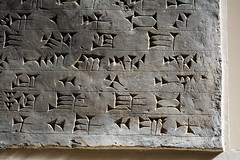
8427158099CuneiformOne of the first written languages known: A system of writing in which wedge-shaped symbols represented words or syllables. It originated in Mesopotamia and was used initially for Sumerian and Akkadian but later was adapted to represent other languages of western Asia.42
8427158100Democracya political system in which the supreme power lies in a body of citizens who can elect people to represent them43
8427158101Eight Fold PathEight steps to end suffering and attain enlightenment according to Buddhist tradition.44
8427158102Four Noble Truthsas taught by the Buddha, the four basic beliefs that form the foundation of Buddhism45
8427158103Gothic MigrationsThe Migration period, also called the Barbarian Invasions or German: Völkerwanderung (wandering of the peoples), was a period of human migration that occurred roughly between the years 300 to 700 CE in Europe, marking the transition from Late Antiquity to the Early Middle Ages. These movements were catalyzed by profound changes within both the Roman Empire and the so-called 'barbarian frontier'. Migrating peoples during this period included the Goths, Vandals, Bulgars, Alans, Suebi, Frisians, and Franks, among other Germanic and Slavic tribes.46
8427158104Great Walla fortification 1,500 miles long built across northern China in the 3rd century BC47
8427158105Han Dynastyimperial dynasty that ruled China (most of the time from 206 BC to AD 220) and expanded its boundaries and developed its bureaucracy48
8427158106HellenismThe ideals and principles that spread from Greece through much of the ancient world. Much of its influence such as philosophy, athletics, and architecture penetrated the Middle East.49
8427158107The HunsFierce warriors from Central Asia- First invaded southeastern Europe and then launched raids on nearby kingdoms50
8427158108Indian Ocean Tradeconnected to Europe, Africa, and China.; worlds richest maritime trading network and an area of rapid Muslim expansion.51
8427158109Iron Agethe period following the Bronze Age; characterized by rapid spread of iron tools and weapons52
8427158110Jewish DiasporaA "scattering" of the Jewish people53
8427158111LegalismIn Chinese history, Legalism was one of the main philosophic currents during the Warring States Period- A philosophy of focusing on the text of written law to the exclusion of the intent of law, elevating strict adherence to law over justice, mercy and common sense54
8427158112Pax RomanaA period of peace and prosperity throughout the Roman Empire, lasting from 27 B.C. to A.D. 180.55
8427158113PyramidsHuge stone tombs with four triangle-shaped walls that met in a point on top56
8427158114Roman RepublicThe period from 507 to 31 B.C.E., during which Rome was largely governed by the aristocratic Roman Senate.57
8427158115Roman Senatea council of wealthy and powerful Romans that advised the city's leaders58
8427158116Shang CivilizationChina's first dynasty almost 2000 BCE59
8427158117Shi Huang Diharsh ruler who united China for the first time and used legalism in ruling (Qin China)60
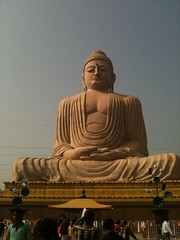
8427158118Siddhartha Gautamafounder of Buddhism; born a prince; left his father's wealth to find the cause of human suffering; also know as Buddha61
8427158119Silk Road TradeThe most famous of the trading routes established by pastoral nomads connecting the Chinese, Indian, Persian, and Mediterranean civilizations; transmitted goods and ideas among civilization.62
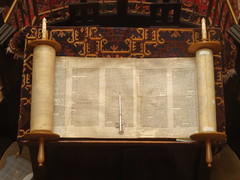
8427158120The Torahthe most sacred text of Judaism63
8427158121The Vedas of HinduismAryan hymns originally transmitted orally but written down in sacred books from the 6th century B.C.E.64
8427158122Zigguratsa temple or tomb of the ancient Assyrians, Sumerians, or Babylonians, having the form of a terraced pyramid of successively receding stories65
8427158123ChristianityMonotheistic religion born out of Judaism, preached by Jesus of Nazareth and later codified by his disciples. Persecuted by Romans early on; however, gained support under Constantine in the Rome.66
8427158124Buddhismoriginally preached by Siddhartha and codified by his disciples into the sutras. Rejected Vedic rituals and the caste system. Spread throughout SE Asia and China and split into Mahayana(Buddha as a God, local gods tacked on as Bodhisativas) and Theravada(original, strict non-theistic version).67
8427158125AsokaThird ruler of the Mauryan Empire in India (r. 270-232 B.C.E.). He converted to Buddhism and broadcast his precepts on inscribed stones and pillars, the earliest surviving Indian writing.68
8427158126HinduismTerm for a wide variety of beliefs and ritual practices that have developed in the Indian subcontinent since antiquity. It has roots in ancient Vedic, Buddhist, and south Indian religious concepts and practices.69
8427158127Trans Saharanroute across the sahara desert. Major trade route that traded for gold and salt, created caravan routes, economic benefit for controlling dessert, camels played a huge role in the trading70
8427158128MonsoonsMajor winds in the Indian Ocean that blew into India for half the year, and blew away from India for the other half. Helped facilitate trade in the Indian Ocean.71
8427158129Sumerianspeople who dominated Southern Mesopotamia through the end of the 3rd Millennium BCE. Responsible for the creation of irrigation technology, cuneiform, and religious conceptions.72
8427158130Indo-EuropeansGroups of people who came from the area north of the Caucasus mountains, which are between the Black and Caspian seas. Herded multiple animals. Rode into battle on chariots. The Indo-European language of Sanskrit, by the Aryans, are the basis of many languages today. Often accepted and adapted aspects of technology, religions, and social order of those with whom they came in contact.73
8427158131Before agriculture, men and women are believed to have a greater degree of equality. But after the rise of agriculture, most human societies became ________ as a result of greater male strength.Patriarchal74
8427158132caste systema set of rigid social categories that determined not only a person's occupation and economic potential, but also his or her position in society, there was virtually no social mobility75
8427158133Paleolithic(Old Stone Age) a long period of human development before the development of agriculture76
8427158134CarthageThis city has existed for nearly 3,000 years, developing from a Phoenician colony of the 1st millennium BC into the capital of the Carthaginian Empire. Controlled commerce in the Mediterranean prior to the rise of Roman Power. The expanding Roman Republic took control of many of its outposts after the two Punic Wars.77
8427158135HellenizationThe spread of Greek language and culture (Hellenism) throughout the Mediterranean, starting with t he conquests of Alexander the Great. Upon Alexander's death at the age of thirty-three (323 B.C.E.), his realm was divided among his leading generals. During their reigns and those of their successors, Hellenism (i.e., Greek culture) continued to flourish in major urban centers around the eastern Mediterranean (less so in rural areas). People traveling to different areas could communicate with people of other kingdoms through Greek. More than at any time in previous history, the eastern Mediterranean that emerged in Alexander's wake experienced a form of cultural unity and cosmopolitanism (a "cosmopolite" is a "citizen of the world," as opposed to a person who belongs to only one locality). The Roman Empire arose in the context of the Hellenistic world and took full advantage of its unity, promoting the use of Greek language, accepting aspects of Greek culture, and even taking over features of the Greek religion, to the point that the Greek and Roman gods came to be thought of as the same, only with different names. This complex unity achieved culturally through Hellenization and politically through the conquests of Rome is summed up by the term Greco-Roman world.78
8427158136DaoismChinese religion that believes the world is always changing and is devoid of absolute morality or meaning. They accept the world as they find it, avoid futile struggles, and deviate as little as possible from 'the way' or 'path' of nature.79
8427158137Bureaucratgovernment official80

Pre-Ap World History Flashcards

Terms : Hide Images
5720751363CharlemagneFounder of empire thats now France, Germany. loved battle and a successful conqueror0
5720751364VikingsScandinavian peoples whose sailors raided Europe from 700s through the 1100s1
5720751365Feudal ContractExchange of pledges between lords and vassals2
5720751366FiefAn estate granted by a powerful lord3
5720751367KnightA European noble who served as a mounted warrior4
5720751368SerfA peasant bound to the lords land5
5720751369Black DeathAn Epidemic or the bubonic plague that raged through Europe in the 1300s6
5720751370HumanismAn intellectual movement that focused on educations and the classics7
5720751371HumanitiesStudy of subjects such as grammar,rhetoric poetry and history8
5720751372PatronA person who provides financial support for the arts9
5720751373PerspectiveArtistic technique used to give paintings and drawings a 3D effect10
5720751374VernacularEveryday language of ordinary people11
5720751375Leonardo Da vinciItalian Artist, Ideal Renaissance man due to his talents, Mona Lisa and the Last supper12
5720751376MichelangeloItalian Painter, Known for sculptures and engineering, architecture and poems13
5720751377RaphaelRenaissance painter who blended Christian and classic styles, one of the Madonna and school of Athens14
5720751378CastiglioneItalian courtier, diplomat and writer, Book of Courtier-advice of manners, etc.15
5720751379MachiavelliRenaissance political philosopher, statesman and writer. The Prince-guide for rulers keeping power16
5720751380GutenbergInvented the printing press and was the first to complete edition of the Christian Bible17
5720751381Albrecht DurerTraveled to Italy to study works of other Italian artists and applied them to his own, went to spread renaissance to Northern Europe18
5720751382ErasmusDutch Humanist l who used knowledge to produce Greek edition of New Testament.19
5720751383Sir Thomas MoreEnglish Humanist that pressed for social and economic reforms, wrote utopia20
5720751384UtopianIdealistic or visionary, used to describe perfect society21
5720751385Shakespherebest poet and play-writer in renaissance literature22
5720751386IndulgenceA type of pardon that lessened the time of punishment a soul faced for the sins committed during a persons lifetime23
572075138795 thesesArguments against indulgences24
5720751388Martin LutherChanged church teachings with the 95 theses, led to excommunication and development of Lutherism25
5720751389Charles VItaly-Roman emperor who summoned Luther to diet of worms26
5720751390DietAssembly of legislature27
5720751391John CalvinInfluenced by Erasmus, joined Protestant reformation, interpretation of Christian doctrine is called calvinism28
5720751392PredestinationCalvinist belief of god determined who would gain salvation29
5720751393TheocracyGovernment run by religious leaders30
5720751394King Henry VIIIBreak with the Catholic Church was political; desired an annulment then used wealth to gain support31
5720751395Divine rightIdea that a rulers authority came directly from god32
5720751396Absolute monarchyA ruler has complete authority over the government and lives with those who he/she governs33
5720751397HuguenotsFrench Protestants of the 1500s-1600s34
5720751398Edict of NantesGranted the Huguenots religious toleration and other freedoms35
5720751399Cardinal RichelluConsidered as one of the greatest politicians in history, played important role in France history36
5720751400Louis XIVServed as King of France and is considered as symbol of absolute monarchy37
5720751401VersaillesA time where thinkers produced new ideas about government and basic rights38
5720751402EnlightenmentA time where thinkers produced new ideas about government and basic human rights39
5720751403John LockeProlific writer on political philosophy,proposed people are born with certain natural rights that can't be taken away40
5720751404Thomas HobbesAn influential political philosopher known as leviathan41
5720751405Social contractAn agreement where people gave up their freedom to a powerful government in order to avoid chaos42
5720751406Natural rightsRights that belongs to all humans from birth such as life , liberty and property43
5720751407PhilosophersFrench thinkers who desired reform in society during the enlightenment44
5720751408MontesquieuStudied governments of Europe and disagreed with absolute monarchy, wrote Persian letters that made fun of French government45
5720751409VoltaireImpassioned poet, historian, essayist and wrote with cutting sarcasm and wit, wrote about political and religious freedom46
5720751410RousseauRevolutionized thought in politics and ethics, impact on how parents educated their children, influenced people's taste in music and arts. Society placed influences on people's behavior47
5720751411Adam SmithKnown for "inquiry into the nature and causes of the wealth of nations", arguments for free markets has helped shape productive economies around the world48
5720751412Laissez-Fairepolicy allowing business to operate with little or no government interference49
5720751413Free MarketMarket regulated by the natural laws of supply and demand50
5720751414Free enterprise systemCommerce and business compete for profit with little or no government interference51
5720751415CensorshipRestriction on access to ideas and information52
5720751416SalonsInformational social gatherings at which writers, artists, philosophers and others exchanged ideas53
5720751417Enlightened despotsAbsolute ruler who used their power to bring political and social change54
5720751418Joseph IIMost radial enlightenment despots, abolished serfdom and encouraged of the press55
5720751419Ancient RegimeOld order system of government in pre-revolutionary France, everyone belonged to one of 3 estates56
5720751420EstatesSocial classes (3 of them)57
5720751421BourgeoiseMiddle class, included bankers, merchants, lawyers, manufacturers etc.58
5720751422Deficit spendingGovernment spends more money then it takes in59
5720751423Louis XVIKing of pre-revolutionary France, failed to support his ministers, agreed to summon estates-general, branded as a traitor and was executed60
5720751424Jacques NeckerWas a director of the French treasury before the revolution and attempted to reform the countries finances, finance expert61
5720751425Estates-GeneralLegislative body made up of made up of the representatives of the three estates in pre-revolutionary France62
5720751426CahiersNotebook used in pre-revolutionary to record grievances63
5720751427Tennis Court OathFamous oath made on a tennis court by the third estate. (Don't do anything till a new constitution is creates)64
5720751428BastilleFortress in Paris used a prison; French Revolution began when Parisians invaded it65
5720751429FactionA group of clique within a larger group that has different ideas and opinions66
5720751430Marquis De lafayetteA French noble, fought with the Americans in the revolutionary war67
5720751431Marie Antionettecareless ways, conducts and various scandals helped harm the monarchy. Wife of Louis XVI68
5720751432EmigreA person who flees his or her country for political reasons69
5720751433Sans-CullotesMembers of working class who made French Revolution more radical70
5720751434JacobinsMembers of a radical political club during the French Revolution71
5720751435SuffrageThe right to vote72
5720751436Maximilian RobespierreElected to estates-general, became members of jacobins, committee of public safety, started the reign of terror73
5720751437Reign or TerrorTime period during the French Revolution when people in France were arrested not supporting the Revolution and were executed74
5720751438GuillotineDevice used during the reign of terror to execute thousands by beheading75
5721114608NapoleonMilitary genius who was elected consul for life, elected himself as leader for France76
5721114609NationalismA strong feeling of pride and devotion to ones country77
5721114610Plebiscitea ballot in which voters have a direct say on an issue78
5721114611Napoleonic Rule79
5721114612Napoleonic Wars80
5721114613Contextual System81
5721114614Guerrilla Warfare82
5721114615Abdicated83
5721114616Congress of Vienna84
5721114617Legitmacy85
5721114618Concert of Europe86
5721114619Capital87
5721114620Enterprise88
5721114621Entrepreneur89
5721114622Free market90
5721114623Socialism91
5721114624Means if production92
5721114625Robert owen93
5721114626Karl marx94
5721114627Communism95
5721114628Proletariat96
5721114629Social demcracy97
5721114630Otto van Bismarck98
5721114631Chancellor99
5721114632Realpolitik100
5721114633Kaiser101
5721114634Reichkulterkampf102
5721114635Social Welfare103
5721114636Francis Joseph104
5721114637Dual Monarchy105
5721114638Imperalism106
5721114639Protecterate107
5721114640Sphere of Influence108
5721114641Sati109
5721114642Sepoys110
5721114643Viceroy111
5721114644Ram Mohun Roy112
5721114645Trade Surplus113
5721114646Trade Deficit114
5721114647Opium war115
5721114648Indemnity116
5721114649Extraterritoriality117
5721114650Taiping Rebellion118
5721114651Sino-Japanese War119
5721114652Open door policy120
5721114653Boxer uprising121
5721114654Sun Yixian122
5721114655Matthew Perry123
5721114656Meiji Restoration124
5721114657Zaibatsu125
5721114658Homogenous society126
5721114659First Sino-Japanese127
5721114660Russo-Japanese war128

AP World History Midterm Flashcards

Terms : Hide Images
5669950876Indus River Valley CiviliazationLocated in Pakistan. a center of agriculture/site of a first civilization in India near the Ganges River. Harappan "Indus River Valley people" and Monhenjo-Daro civilization; highly advanced & organized: sewer system, grid streets, uniform building construction0
5669953606Mohenjo Darro/ Harappa2600-1500 BCE. 2 of the greatest cities of the Indus Valley Civilization in Pakistan. Mohenjo-Daro was the administrative center and probably the most developed city in the world. Harappa had a writing system, centers for people to gather, and social/economic structure.1
5669955274Code of Hammurabithe set of laws drawn up by Babylonian king Hammurabi dating to the 18th century BC, the earliest legal code known in its entirety2
5669955275Pelopenesian Warbetween Athens and Sparta (Peloponnesian league and delian league). A plague and defeat at Syracuse weakens Athens, but Sparta doesn't destroy them out of respect. This made sparta more vulnerable to outside aggression.3
5669959175Qin shihuingandiruler of china -unified china and developed a bureaucry -equipped the army with iron weapons - ienforced legalism named himself shihuangdi which means "first emperor" -extended boundaries to Vietnam and Korea -scholars who opposed shihuangdi were executed and their books burned -started the creation of the great wall of china to keep the barbarians out4
5669959176Roman RepublicThe period from 507 to 31 B.C.E., during which Rome was largely governed by the aristocratic Roman Senate.5
5669962641Mauryan Empire-INDIAN EMPIRE -not as long lasting as the Greeks, Chinese, or Persian empires -50 million people -large army force -used spies to find out information on neighboring empires -many industries: weaving, spinning, mining, shipbuilding, and armaments.6
5669962642Rig VedaAny of the oldest and most authoritative Hindu sacred texts, composed in Sanskrit and gathered into four collections.7
5669966756Siddartha Guatama-he is the Buddha -prince from a small north Indian state. -he sought to find a cure to the grieving and sickness and death throughout life. -the struggle could only be stopped by achieving nirvana which is ultimate enlightenment.8
5669968839Bhagavad Gitahindu text that affirms the performance of the caste duties as a process to religious liberation.9
5669968840Wang Mang-Chinese official -court official who took over -he ruled during the 8th century CE -Confucius thinker10
5669971818Caste System11
5669975405Emperess Wu-reigned in 690-705 -only woman to ever rule during history of china -she elevated the importance of women during that time.12
5669975406Maya Civillization-mesoamerican civilization -major classical civilization -created math, engineering landscape, vast system of city states -disappeared quickly due to climate change and warfare13
5669978912Silk RoadsThe most famous of the trading routes established by pastoral nomads connecting the Chinese, Indian, Persian, and Mediterranean civilizations; transmitted goods and ideas among civilization.14
5669978913Sea Roads15
5669982970Sand Roads16
5669982971ProchtecaProfessional merchants among the Aztecs17
5669985294Tribute SystemChinese method of dealing with foreign lands and people's that assumed the subordination of all non-Chinese authorities and required the payment of tribute to the Chinese emperor18
5669987516Five Pillars of Islam19
5675673294Olmecs(1400 B.C.E. to 500 B.C.E.) earliest known Mexican civilization,lived in rainforests along the Gulf of Mexico, developed calendar and constructed public buildings and temples, carried on trade with other groups.20
5675673295Epic of GilgameshThe Epic of Gilgamesh is an epic poem from Ancient Mesopotamia and is among the earliest known works of literary fiction.21
5675676327Greco Persian Wars-started with bumping boundaries during both expansion periods in history. -Persians were bigger empire and set out to punish the Greeks for their revolts when Persia took over the settlements on the coast of Greece. -Greeks beat the Persians on land and sea22
5675676328Alexander the Great-ruler of Greece -son of Phillip 2 -unified Greece to help defeat Persia once and for all -conducted one of the greatest ,military feats of the time -Alexander was the "king of Asia" -anointed pharaoh of Egypt at age 2423
5675679320Han Dynastyimperial dynasty that ruled China from 206 BC to 221 and expanded its boundaries and developed its bureaucracy, dynasty that overthrew the Qin, established centralized government, civil service system, Silk Road24
5675679321Roman EmpireLocated in modern day italy. Existed from 27 BCE to about 400 CE. Conquered entire Mediterranean coast and most of Europe. Ruled by an emperor. Eventually oversaw the rise and spread of Christianity.25
5675682439Ashoka-Mauryan emperor -left edicts and thinkings on pillars throughout town -conversion to Buddhism -govern in accord with the religious values and morals and teachings of Hinduism and buddhism26
5675682440Upanishads-compiled by anonymous thinkers and philosophers around 800-400 in Indian culture -mystical and highly philosophical works that sought to probe the inner meaning of the sacrifices prescribed in the Vedas.27
5675687333Theravada and Mahayana BuddhismTheravada was the teachings of the elders and portrayed the Buddha as a wise teacher but not divine unlike Mahayana"the great vehicle" which was more popular and viewed the Buddha as a god.28
5675687334ZoroastrianismPersian monotheistic religion founded by the prophet Zarathustra.29
5675692150Yellow Turban Movementpeasants wore yellow scarves around their heads during revolts against the government near the Yellow River, it looked forward to the thought of "the Great Peace" - a golden age of complete equal and social harmony, and common ownership of property.30
5675692151Spartacusa roman slave gladiator that led a slave revolt in 73 BCE.He led a revolt that took off and for two years, they lived in reversed roles, they were executing slave owners.31
5675694829Axum-first Christian kingdom -in present day Ethiopia -very wealthy and a big trade city32
5675694830Teotihuacan-city in Mayan -mesoamerican -most urban city of its time -very influential on trade routes -city was located around trade33
5675698221Black Deaththe epidemic form of bubonic plague experienced during the Middle Ages when it killed nearly half the people of western Europe34
5675698222Swahili CivilizationAn East African civilization that emerged from blending of Bantu and Islamic and other Indian Ocean trade elements35
5675701398GhanaA series of important states that developed in the western and central Sudan, in response to the economic opportunities of trans-Saharan trade36
5675701399Tong Dynasty618-907 CE. Much like the Han using Confucianism. had the equal field system, a bureaucracy based on merit and a Confucianism education system. Trained strong armies of almost a million troops to fight off nomadic powers from Asia. Made story cultural influence over Korea and Vietnam.37
5675705068XiongnuA confederation of nomadic peoples living beyond the northwest frontier of ancient China. Chinese rulers tried a variety of defenses and stratagems to ward off these 'barbarians,' as they called them, and dispersed them in 1st Century. (168)38
5675705069Sunniwhile they hold Ali in high esteem, they did not believe that power should be given to the bloodline of Mohammad. They claimed that rulers should be chosen from the broad base of the people.39
5675705070Shiathe branch of Islam whose members acknowledge Ali and his descendants as the rightful successors of Muhammad40
5675717155Suffia mystical Muslim group that believed they could draw closer to God through prayer, fasting, and a simple life41
5675984477Songprospered under emperor taizu, but fell to the jurchen and mongols. developed the printing process (moveable type) which led to an increase in literacy. used the civil service exams. expanded transportation, paper money, and letters of credit. iron production way increased, and invented steel. population rose a lot.42

AP World History Flashcards

Terms : Hide Images
2660964072Abateverb (used with object), abated, abating. 1. to reduce in amount, degree, intensity, etc.; lessen; diminish: to abate a tax; to abate one's enthusiasm. 2. Law. to put an end to or suppress (a nuisance). to suspend or extinguish (an action). to annul (a writ). 3. to deduct or subtract: to abate part of the cost. 4. to omit: to abate all mention of names. 5. to remove, as in stone carving, or hammer down, as in metalwork, (a portion of a surface) in order to produce a figure or pattern in low relief. verb (used without object), abated, abating. 6. to diminish in intensity, violence, amount, etc.: The storm has abated. The pain in his shoulder finally abated. 7. Law. to end; become null and void.0
2660965785Absolutismnoun 1. the principle or the exercise of complete and unrestricted power in government. 2. any theory holding that values, principles, etc., are absolute and not relative, dependent, or changeable.1
2660966441Adjacentadjective 1. lying near, close, or contiguous; adjoining; neighboring: a motel adjacent to the highway. 2. just before, after, or facing: a map on an adjacent page.2
2660968477Agrarianadjective 1. relating to land, land tenure, or the division of landed property: agrarian laws. 2. pertaining to the advancement of agricultural groups: an agrarian movement. 3. composed of or pertaining to farmers: an agrarian co-op. 4. rural; agricultural. 5. growing in fields; wild: an agrarian plant. noun 6. a person who favors the equal division of landed property and the advancement of agricultural groups.3
2660969572Agriculturenoun 1. the science, art, or occupation concerned with cultivating land, raising crops, and feeding, breeding, and raising livestock; farming. 2. the production of crops, livestock, or poultry.4
2660975187Anthropomorphicadjective 1. ascribing human form or attributes to a being or thing not human, especially to a deity. 2. resembling or made to resemble a human form: an anthropomorphic carving.5
2660976724Aristocracynoun, plural aristocracies. 1. a class of persons holding exceptional rank and privileges, especially the hereditary nobility. 2. a government or state ruled by an aristocracy, elite, or privileged upper class. 3. government by those considered to be the best or most able people in the state. 4. a governing body composed of those considered to be the best or most able people in the state. 5. any class or group considered to be superior, as through education, ability, wealth, or social prestige.6
2660977719Avaricenoun 1. insatiable greed for riches; inordinate, miserly desire to gain and hoard wealth.7
2660978616Biasnoun 1. a particular tendency, trend, inclination, feeling, or opinion, especially one that is preconceived or unreasoned: illegal bias against older job applicants; the magazine's bias toward art rather than photography; our strong bias in favor of the idea. 2. unreasonably hostile feelings or opinions about a social group; prejudice: accusations of racial bias. 3. an oblique or diagonal line of direction, especially across a woven fabric. 4. Statistics. a systematic as opposed to a random distortion of a statistic as a result of sampling procedure. 5. Lawn Bowling. a slight bulge or greater weight on one side of the ball or bowl. the curved course made by such a ball when rolled. 6. Electronics. the application of a steady voltage or current to an active device, as a diode or transistor, to produce a desired mode of operation. 7. a high-frequency alternating current applied to the recording head of a tape recorder during recording in order to reduce distortion. adjective 8. cut, set, folded, etc., diagonally: This material requires a bias cut. adverb 9. in a diagonal manner; obliquely; slantingly: to cut material bias. verb (used with object), biased, biasing or (especially British) biassed, biassing. 10. to cause to hold or exhibit a particular bias; to influence, especially unfairly: a tearful plea designed to bias the jury; a survey biased toward highly educated people. 11. Electronics. to apply a steady voltage or current to (the input of an active device). Idioms 12. on the bias, in the diagonal direction of the cloth. out of line; slanting.8
2660984280Bureaucracynoun, plural bureaucracies. 1. government by many bureaus, administrators, and petty officials. 2. the body of officials and administrators, especially of a government or government department. 3. excessive multiplication of, and concentration of power in, administrative bureaus or administrators. 4. administration characterized by excessive red tape and routine.9
2660985280Capitalnoun 1. the city or town that is the official seat of government in a country, state, etc.: Tokyo is the capital of Japan. 2. a city regarded as being of special eminence in some field of activity: New York is the dance capital of the world. 3. capital letter. 4. the wealth, whether in money or property, owned or employed in business by an individual, firm, corporation, etc. 5. an accumulated stock of such wealth. 6. any form of wealth employed or capable of being employed in the production of more wealth. 7. Accounting. assets remaining after deduction of liabilities; the net worth of a business. the ownership interest in a business. Expand adjective 10. pertaining to financial capital: capital stock. 11. principal; highly important: This guide offers suggestions of capital interest to travelers. 12. chief, especially as being the official seat of government of a country, state, etc.: the capital city of France. 13. excellent or first-rate: a capital hotel; a capital fellow. 14. capital letter. 15. involving the loss of life: capital punishment. 16. punishable by death: a capital crime; a capital offender.10
2660986567Capitulateverb (used without object), capitulated, capitulating. 1. to surrender unconditionally or on stipulated terms. 2. to give up resistance: He finally capitulated and agreed to do the job my way.11
2660987938Centralizedverb (used with object), centralized, centralizing. 1. to draw to or gather about a center. 2. to bring under one control, especially in government: to centralize budgeting in one agency. verb (used without object), centralized, centralizing. 3. to come together at or to form a center.12
2660989916Chiefdomnoun 1. the rank or office of a chief. 2. the territory or people over which a chief rules.13
2660990814city-statenoun 1. a sovereign state consisting of an autonomous city with its dependencies.14
2660990815Civilitationnoun 1. an advanced state of human society, in which a high level of culture, science, industry, and government has been reached. 2. those people or nations that have reached such a state. 3. any type of culture, society, etc., of a specific place, time, or group: Greek civilization. 4. the act or process of civilizing, as by bringing out of a savage, uneducated, or unrefined state, or of being civilized : Rome's civilization of barbaric tribes was admirable. 5. cultural refinement; refinement of thought and cultural appreciation: The letters of Madame de Sévigné reveal her wit and civilization. 6. cities or populated areas in general, as opposed to unpopulated or wilderness areas: The plane crashed in the jungle, hundreds of miles from civilization. 7. modern comforts and conveniences, as made possible by science and technology: After a week in the woods, without television or even running water, the campers looked forward to civilization again.15
2660992758Clergynoun, plural clergies. 1. the group or body of ordained persons in a religion, as distinguished from the laity.16
2660993741Colonialismnoun 1. the control or governing influence of a nation over a dependent country, territory, or people. 2. the system or policy by which a nation maintains or advocates such control or influence. 3. the state or condition of being colonial. 4. an idea, custom, or practice peculiar to a colony.17
2660993742colonynoun, plural colonies. 1. a group of people who leave their native country to form in a new land a settlement subject to, or connected with, the parent nation. 2. the country or district settled or colonized : Many Western nations are former European colonies. 3. any people or territory separated from but subject to a ruling power. 4. the Colonies, those British colonies that formed the original 13 states of the United States: New Hampshire, Massachusetts, Rhode Island, Connecticut, New York, New Jersey, Pennsylvania, Delaware, Maryland, Virginia, North Carolina, South Carolina, and Georgia. 5. a number of people coming from the same country, or speaking the same language, residing in a foreign country or city, or a particular section of it; enclave: the Polish colony in Israel; the American colony in Paris. 6. any group of individuals having similar interests, occupations, etc., usually living in a particular locality; community: a colony of artists. 7. the district, quarter, or dwellings inhabited by any such number or group: The Greek island is now an artists' colony.18
2660995049Culturenoun 1. the quality in a person or society that arises from a concern for what is regarded as excellent in arts, letters, manners, scholarly pursuits, etc. 2. that which is excellent in the arts, manners, etc. 3. a particular form or stage of civilization, as that of a certain nation or period: Greek culture. 4. development or improvement of the mind by education or training. 5. the behaviors and beliefs characteristic of a particular social, ethnic, or age group: the youth culture; the drug culture. 6. Anthropology. the sum total of ways of living built up by a group of human beings and transmitted from one generation to another. 7. Biology. the cultivation of microorganisms, as bacteria, or of tissues, for scientific study, medicinal use, etc. the product or growth resulting from such cultivation. Expand verb (used with object), cultured, culturing. 11. to subject to culture; cultivate. 12. Biology. to grow (microorganisms, tissues, etc.) in or on a controlled or defined medium. to introduce (living material) into a culture medium.19
2660996891Deforestationverb (used with object) 1. to divest or clear of forests or trees: Poor planning deforested the area in ten years.20
2660996892Demographynoun 1. the science of vital and social statistics, as of the births, deaths, diseases, marriages, etc., of populations.21
2660998094Deriveverb (used with object), derived, deriving. 1. to receive or obtain from a source or origin (usually followed by from). 2. to trace from a source or origin. 3. to reach or obtain by reasoning; deduce; infer. 4. Chemistry. to produce or obtain (a substance) from another. verb (used without object), derived, deriving. 5. to come from a source or origin; originate (often followed by from).22
2660998766Diasporanoun 1. (usually initial capital letter) the scattering of the Jews to countries outside of Palestine after the Babylonian captivity. 2. (often initial capital letter) the body of Jews living in countries outside Israel. 3. (often initial capital letter) such countries collectively: the return of the Jews from the Diaspora. 4. any group migration or flight from a country or region. Synonyms: dispersion, dissemination, migration, displacement, scattering. Antonyms: return. 5. any group that has been dispersed outside its traditional homeland, especially involuntarily, as Africans during the trans-Atlantic slave trade. 6. any religious group living as a minority among people of the prevailing religion. 7. the spread or dissemination of something originally confined to a local, homogeneous group, as a language or cultural institution: the diaspora of English as a global language.23
2661001448Divineadjective, diviner, divinest. 1. of or relating to a god, especially the Supreme Being. 2. addressed, appropriated, or devoted to God or a god; religious; sacred: divine worship. 3. proceeding from God or a god: divine laws; divine guidance. 4. godlike; characteristic of or befitting a deity: divine magnanimity. 5. heavenly; celestial: the divine kingdom. 6. extremely good; unusually lovely: He has the most divine tenor voice. 7. being a god; being God: Zeus, Hera, and other divine beings in Greek mythology. Expand noun 10. a theologian; scholar in religion. 11. a priest or member of the clergy. 12. the Divine. God. (sometimes lowercase) the spiritual aspect of humans; the group of attributes and qualities of humankind regarded as godly or godlike. verb (used with object), divined, divining. 13. to discover or declare (something obscure or in the future) by divination; prophesy. 14. to discover (water, metal, etc.) by means of a divining rod. 15. to perceive by intuition or insight; conjecture: She divined personal details about her customers based on their clothing and accents. It was not difficult to divine his true intent. 16. Archaic. to portend. verb (used without object), divined, divining. 17. to use or practice divination; prophesy. 18. to have perception by intuition or insight; conjecture.24
2661001449Dynastynoun, plural dynasties. 1. a sequence of rulers from the same family, stock, or group: the Ming dynasty. 2. the rule of such a sequence. 3. a series of members of a family who are distinguished for their success, wealth, etc.25
2661003292Economicadjective 1. pertaining to the production, distribution, and use of income, wealth, and commodities. 2. of or relating to the science of economics. 3. pertaining to an economy, or system of organization or operation, especially of the process of production. 4. involving or pertaining to one's personal resources of money: to give up a large house for economic reasons. 5. pertaining to use as a resource in the economy : economic entomology; economic botany. 6. affecting or apt to affect the welfare of material resources: weevils and other economic pests. 7. economical.26
2661006626Edictnoun 1. a decree issued by a sovereign or other authority. Synonyms: dictum, pronouncement. 2. any authoritative proclamation or command.27
2661007580Egalitarianadjective 1. asserting, resulting from, or characterized by belief in the equality of all people, especially in political, economic, or social life. noun 2. a person who adheres to egalitarian beliefs.28
2661007581Empirenoun 1. a group of nations or peoples ruled over by an emperor, empress, or other powerful sovereign or government: usually a territory of greater extent than a kingdom, as the former British Empire, French Empire, Russian Empire, Byzantine Empire, or Roman Empire. 2. a government under an emperor or empress. 3. (often initial capital letter) the historical period during which a nation is under such a government: a history of the second French empire. 4. supreme power in governing; imperial power; sovereignty: Austria's failure of empire in central Europe. 5. supreme control; absolute sway: passion's empire over the mind. 6. a powerful and important enterprise or holding of large scope that is controlled by a single person, family, or group of associates: The family's shipping empire was founded 50 years ago. 7. (initial capital letter) a variety of apple somewhat resembling the McIntosh. adjective 8. (initial capital letter) characteristic of or developed during the first French Empire, 1804-15. 9. (usually initial capital letter) (of women's attire and coiffures) of the style that prevailed during the first French Empire, in clothing being characterized especially by décolletage and a high waistline, coming just below the bust, from which the skirt hangs straight and loose. 10. (often initial capital letter) noting or pertaining to the style of architecture, furnishings, and decoration prevailing in France and imitated to a greater or lesser extent in various other countries, c1800-30: characterized by the use of delicate but elaborate ornamentation imitated from Greek and Roman examples or containing classical allusions, as animal forms for the legs of furniture, bas-reliefs of classical figures, motifs of wreaths, torches, caryatids, lyres, and urns and by the occasional use of military and Egyptian motifs and, under the Napoleonic Empire itself, of symbols alluding to Napoleon I, as bees or the letter N.29
2661015665Encroachverb (used without object) 1. to advance beyond proper, established, or usual limits; make gradual inroads: A dictatorship of the majority is encroaching on the rights of the individual. 2. to trespass upon the property, domain, or rights of another, especially stealthily or by gradual advances.30
2661016183Epidemicadjective 1. Also, epidemical. (of a disease) affecting many persons at the same time, and spreading from person to person in a locality where the disease is not permanently prevalent. 2. extremely prevalent; widespread. noun 3. a temporary prevalence of a disease. 4. a rapid spread or increase in the occurrence of something: an epidemic of riots.31
2661019999Equitableadjective 1. characterized by equity or fairness; just and right; fair; reasonable: equitable treatment of all citizens. 2. Law. pertaining to or valid in equity. pertaining to the system of equity, as distinguished from the common law.32

AP World History Chapter 3 Test Review Flashcards

Terms : Hide Images
937258344The Indian caste system served to an extent as a political institution byenforcing rules about social behavior0
937258345Confucian and Hindu values bothhelped justify and preserve social inequality1
937258346The Aryan conquerors brought conquerors brought to Indiadistinctive religious ideas2
937258347Compared to China, Indian social and economic structuregave a stronger role to merchants3
937258348In the classical period, both China and Indiashowed considerable tolerance for different religions4
937258349Hinduism urged thatall living creatures participated in the divine essence5
937258350Buddhism differed from Hinduism by not believingin the caste system6
937258351"Nirvana" meantfull union with the divine essence7
937258352The Mauryan dynasty differed from the Gupta Dynasty in thatit ruled a larger territory8
937258353In contrast to China, the social values that developed in classical Indiaencouraged greater emotional spontanety9
937258354Hindu ethics involvedemphasis on an individidual carrying out on the obligations of life10
937258355Which of the following was a Confucian beliefA good society has a hierarchy both in family and state11
937258356Compared to China, Indiahad greater contact with other societies and civilizations12
937258357Nalanda became famous forits university that attracted students from all over Asia13
937258358Indians trading network involved direct contact with all of the following EXCEPTRussia14
937258359India's political traditionStressed the importance of regional and local units15
937258360What four changes were caused by the development of agriculture1) Population increased 2) More complex social patterns 3) Relationships between men and women differed 4) Concept of cities introduced16
937258361(Review) The Neolithic Revolution occurred first inThe Middle East17
937258362(Review) Daoists would agree with COnfucianist on all of the following EXCEPTThe importance of political activity18
937258363(Review) Chinese views of nature emphasizedharmony and balance19
937258364(Review) Ceremony became an important part of upper class Chinese life becausethe Chinese believed that it would help unify society and prevent greed20
937258365(Review) The Chinese government accepted Daoism for all of the following reasons EXCEPTDaoists believed that nobles were holier than peasants21
937258366(Review) The Qin dynasty differed from the Zhou becauseit was more centralized22
937258367(Review) Hunting and gathering societiesOrganize rather small groups into political units23
937258368(Review) The Paleolithic age refers toThe period in which simple stone tools were developed24
937258369(Review) A characteristic of the human species before the rise of civilization wasThe ability to spread various geographic settings and climate zones25
937258370The development of agriculture caused important changes in all of the following EXCEPTThe tendency to believe in many Gods26
937258371Why was India invaded more than China1) No military culture 2) Political traditions of small regional states 3) Much regional diversity 4) Geography27

AP World History Unit 2 Vocabulary Flashcards

Terms : Hide Images
470612606Cyrus the Great(c. 576 or 590-529 B.C.E.); founded Persian Empire by 550 B.C.E.; successor state to Mesopotamian empires; died in Egypt; people are free to worship their own god as long as they recognize him as emperor0
470612607ZoroastrianismPersian religion that saw material existence as a battle between the forces of good and evil; stressed the importance of moral choice; a last judgment decided the eternal fate of each person; Zoroaster → the prophet; good = light, bad = darkness;1
470612608Hellenismculture derived from the Greek civilization that flourished between 800 and 400 B.C.E.2
470612609Hellenistic cultureculture associated with the spread of Greek influence and intermixture with other cultures as a result of Macedonian conquests.3
470612610Iliad and OdysseyGreek epic poems attributed to Homer; defined relations of gods and humans that shaped Greek mythology4
470612611Poliscity-state form of government typical of Greek political organization from 800 to 400 B.C.E.; means city5
470612612SocratesAthenian philosopher of late 5th century B.C.E.; condemned to death for "corrupting" minds of Athenian young; usually seen as the father of western philosophy; people should teach by asking questions; did not approve of democracy (Athens was a democracy); took poisoned hemlock as suicide6
470612613Direct democracyliterally, rule of the people—in Athens it meant all free male citizens; all decisions emanated from the popular assembly without intermediation of elected representatives: "demos" means people; "cratos" means power; republic is a type of government where you vote for leaders/desicions7
470612614PericlesAthenian political leader during 5th century B.C.E.; guided development of Athenian Empire; made funeral oration; great democratic thinker (would have opposed Socrates)8
470612615Olympic gamesone of the pan-Hellenic rituals observed by all Greek city states; involved athletic competitions and ritual celebrations; only for men (in honor of Zeus)9
470612616Persian Wars5th century B.C.E. wars between the Persian Empire and Greek city-states; Greek victories allowed Greek civilization to define identity.10
470612617Peloponnesian Warwar from 431 to 404 B.C.E. between Athens and Sparta for domination in Greece; the Spartans won but failed to achieve political unification in Greece.11
470612618Macedonkingdom of northern Greece; originally loosely organized under kings; became centralized under Philip II; conquered Greek city-states.12
470612619Philip IIruled Macedon from 359 to 336 B.C.E.; founder of centralized kingdom; conquered Greece; assassinated by his wife (she issued an order)13
470612620Alexander the Great(r. 336-323 B.C.E.); son and successor of Philip II; conquered Persian Empire and advanced to borders of India; attempted to combine Greek and Persian culture; taught by Aristotle14
470612621AlexandriaEgyptian city; founded 334 B.C.E. by Alexander the Great15
470612622AristotleGreek philosopher; teacher of Alexander; taught that knowledge was based upon observation of phenomena in material world.16
470612623StoicsHellenistic philosophers; they emphasized inner moral independence cultivated by strict discipline of the body and personal bravery; Stoicism - name of the philosophy17
470612624SophoclesGreek writer of tragedies; author of Oedipus Rex; "rex" means king18
470612625Doric, Ionic, Corinthianthree distinct styles of Hellenic architecture; listed in order of increasing ornate quality; Greeks preferred Doric while Romans preferred Corinthian19
470612626Consulstwo chief executives (co-presidents) of the Roman republic; elected annually by the assembly dominated by the aristocracy.20
470612627Carthagefounded by the Phoenicians in Tunisia; became a major empire in the western Mediterranean; fought the Punic wars with Rome for Mediterranean dominance; defeated and destroyed by the Romans.21
470612628Punic Warsthree wars (264-146 B.C.E.) between Rome and the Carthaginians; saw the transformation of Rome from a land to a sea power.22
470612629HannibalCarthaginian general during the second Punic War; invaded Italy but failed to conquer Rome.23
470612630Republicthe balanced political system of Rome from circa 510 to 47 B.C.E.; featured an aristocratic senate, a panel of magistrates, and popular assemblies.24
470612631Julius Caesargeneral responsible for the conquest of Gaul; brought army back to Rome and overthrew republic; assassinated in B.C.E.by conservative senators.25
470612632Octavianlater took name of Augustus; Julius Caesar's grandnephew and adopted son; defeated conservative senators after Caesar's assassination; became first Roman emperor.26
470612633Ciceroconservative senator and Stoic philosopher; one of the great orators of his day.27
470612634Vergila great Roman epic poet during the Golden Age of Latin literature; author of the Aeneid.28
470612635Axuma state in the Ethiopian highlands; received influences from the Arabian peninsula; converted to Christianity; later part of Ethiopia29
470612636Shintoreligion of the early Japanese court; included the worship of numerous gods and spirits associated with the natural world.30
470612637Pastoral nomadsany of the many peoples, from the steppes of Asia that herded animals; migrants (Mongols); use of gunpowder ended them31
470612638Celtsearly migrants into western Europe; organized into small regional kingdoms; had mixed agricultural and hunting economies.32
470612639Germanspeoples from beyond the northern borders of the Roman Empire; had mixed agricultural and pastoral economies; moved into the Roman Empire in the 4th and 5th centuries C.E.33
470612640SlavsIndo-European peoples who ultimately dominated much of eastern Europe; formed regional kingdoms by the 5th century C.E.34
470612641Olmeccultural tradition that arose at San Lorenzo and La Venta in Mexico circa 1200 B.C.E.; featured irrigated agriculture, urbanism, elaborate religion, beginnings of calendrical and writing systems.35
470612642Polynesiaislands contained in a rough triangle with its points at Hawaii, New Zealand, and Easter Island.36
470612643Yellow TurbansChinese Daoists who launched a revolt in 184 C.E, promising a golden age to be brought about by divine magic.37
470612644Suidynasty succeeding the Han; grew from strong rulers in northern China; reunited China.38
470612645Tangdynasty succeeding the Sui in 618 C.E39
470612646Rajputregional military princes in India following the collapse of the Gupta Empire.40
470612647Devimother goddess within Hinduism; devotion to her spread widely after the collapse of the Gupta and encouraged new emotionalism in religious ritual.41
470612648DiocletianRoman emperor (284-305 C.E); restored later empire by improved administration and tax collection.42
470612649ConstantineRoman emperor (321-337 C.E); established his capital at Constantinople; used Christianity to unify the empire.43
470612650Byzantine Empireeastern half of the Roman Empire; survived until 1453; retained Mediterranean, especially Hellenistic culture.44
470612651Mahayanaversion of Buddhism popular in China; emphasized Buddha's role as a savior.45
470612652BodhisattvasBuddhist holy men who refused advance toward nirvana to receive prayers of the living to help them reach holiness.46
470612653Saintsholy men and women in Christianity; their merit could be tapped by ordinary Christians.47
470612654PopeBishop of Rome; head of the Catholic church in western Europe.48
470612655AugustineNorth African Christian theologian; made major contributions in incorporating elements of classical philosophy into Christianity.49
470612656Benedictfounder of monasticism in the former western half of the Roman Empire; established the Benedictine rule in the 6th century.50
470612657Bedouinnomadic pastoralists of the Arabian peninsula with a culture based on herding camels and goats; most valuable animals were horses, camels, and goats51
470612658Shaykhsleaders of tribes and clans within bedouin society; usually possessed large herds, several wives, and many children; today, they would be multi-millionaires52
470612659MeccaArabian commercial center; dominated by the Quraysh; the home of Muhammad and the future religious center of Islam53
470612660Medinatown northeast of Mecca; asked Muhammad to resolve its intergroup differences; Muhammad's flight to this town is called the hijra, in 622 AD, began the Muslim calendar; means "town"54
470612661Umayyadclan/tribe that dominated Mecca; later an Islamic dynasty (first Muslim dynasty)55
470612662Muhammad(570-632); prophet of Allah; originally a merchant of the Quraysh; "the seal of the prophets"56
470612663Khadijahthe wife of Muhammad; first Muslim, or disciple of Muhammad57
470612664Ka'barevered pre-Islamic shrine in Mecca; incorporated into Muslim worship; most holy place in Islam; Muslims believed that Abraham built it; "Black Box"58
470612665Qur'anthe word of god as revealed through Muhammad; made into the holy book of Islam; "recitations of God"59
470612666Ummacommunity of the faithful within Islam60
470612667Zakattax for charity obligatory for all Muslims; like "tithe"61
470612668Five pillarsthe obligatory religious duties for all Muslims: confession of faith, prayer (five times a day), fasting during Ramadan, zakat, and hajj (pilgrimage to Mecca)62
470612669Caliphthe successor to Muhammad as head of the Islamic community; religious king63
470612670Alicousin and son-in-law of Muhammad; one of the orthodox caliphs; focus for the development of shi'ism (branch of Islam)64
470612671Abu Bakrsucceeded Muhammad as the first caliph65
470612672JihadIslamic holy war66
470612673Siffinbattle fought in 657 between Ali and the Umayyads; led to negotiations that fragmented Ali's party67
470612674Copts, NestoriansChristian sects of Egypt and Syria; gave their support to the Arabic Muslims68
470612675Sunnisfollowers of the majority interpretation within Islam; included the Umayyads69
470612676Shi'afollowers of Ali's interpretation of Islam; 10% live in Iraq and Iran70
470612677Mawalinon-Arab converts to Islam71
470612678Jizyahead tax paid by all non-Muslims in Islamic lands (Christians, Jews, etc.)72
470612679Dhimmis"the people of the book," Jews, Christians; later extended to Zoroastrians and Hindus73
470612680Abbasidsdynasty that succeeded the Umayyads in 750; their capital was at Baghdad74
470612681Hadiths"traditions" of the prophet Muhammad; added to the Qur'an, form the essential writings of Islam; not as important as the Qur'an75
470612682BaghdadAbbasid capital, close to the old Persian capital of Ctesiphon76
470612683Wazirchief administrative official under the Abbasids; Vizier → like prime minister of England, but in Muslim culture77
470612684DhowsArab sailing vessels; equipped with lateen sails; used by Arab merchants; Columbus uses this design later in his ships78

AP World History Flashcards

Terms : Hide Images
7283995562Catal HuyukImportant Neolithic settlement in Anatolia (7250-6150 BCE)0
7283995563Catal Huyukone of the largest neolithic villages ever discovered1
7283995564Catal Huyukan archaeological site in what is now south-central Turkey. Along with Jericho, it's considered one of the oldest cities in the world, dating from almost 7500 BC2
7283995565Australopithecus"Southern ape," oldest nown ancestor of humans; it lived from around 4 million down to around 1 million years ago, and it could walk on hind legs, freeing up hands for use of simple tools3
7283995566Australopithecusa fossil bipedal primate with both apelike and human characteristics, found in Pliocene and lower Pleistocene deposits ( c. 4 million to 1 million years old) in Africa.4
7283995567Homo erectus"Upright - wlaking human," whioch existed from 2 million to 200 thousand years ago; used cleavers and hand axes and learned how to contol fire5
7283995568Homo erectusupright human6
7283995569Homo erectusan extinct species of the human lineage, formerly known as Pithecanthropus erectus, having upright stature and a well-evolved postcranial skeleton, but with a smallish brain, low forehead, and protruding face7
7283995570Homo sapiens"Consciously thinking human," which first appeared around 250,000 years ago and used sophisticated tools8
7283995571Homo sapiensThe biological species to which modern human beings belong.9
7283995572Homo sapiens(italics) the species of bipedal primates to which modern humans belong, characterized by a brain capacity averaging 1400 cc (85 cubic in.) and by dependence upon language and the creation and utilization of complex tools.10
7283995573NeandertalEarly humans (100,000 to 35,000 years ago) who were prevalent during the Paleolithic period11
7283995574Neanderthala member of an extinct subspecies of powerful, physically robust humans, Homo sapiens neanderthalensis, that inhabited Europe and western and central Asia c100,000-40,000 b.c.12
7283995575MonotheismBelief in only one god, a rare concept in the ancient world13
7283995576Monotheismthe doctrine or belief that there is only one God14
7283995577Paleolithic eraOld Stone Age, a long period of human development before the development of agriculture15
7283995578Paleolithic EraOld Stone Age16
7283995579Paleolithic EraThe cultural period of the Stone Age that began about 2.5 to 2 million years ago, marked by the earliest use of tools made of chipped stone17
7283995580Neolithic eraNew Stone Age (10,000 - 4000 B.C.E.), which was marked by the discovery and mastery of agriculture18
7283995581Neolithic EraNew Stone Age19
7283995582Neolithic EraThe period of human culture that began around 10,000 years ago in the Middle East and later in other parts of the world. It is characterized by the beginning of farming, the domestication of animals, the development of crafts such as pottery and weaving, and the making of polished stone tools20
7283995583AssyriansSouthwest Asian people who built an empire that recahed its height during the eighth and seventh centuries BCE; it was known for a powerful army and a well - structured state21
7283995584AssyriansThe people of Assyria who destroyed Israel's Northern Kingdom in 722 BC.22
7283995585AssyriansSemitic-speaking people who exploited the use of iron weapons to establish an empire23
7283995586UrukAncient Mesopotamian city from the fourth millennium BCE that was allegedly the home of the fabled Gilgamesh24
7283995587Urukan ancient Sumerian city in S Iraq, near the Euphrates, important before 2000 b.c.: exclusive archaeological excavations, notably of a ziggurat and of tablets with very early Sumerian script25
7283995588UrukThe largest city of ancient Mesopotamia26
7283995589UrukA large Sumerian city-state in Mesopotamia.27
7283995590ZigguratsMesopotamian temples28
7283995591Zigguratstemples built by Sumerians to honor the gods and goddesses they worshipped29
7283995592ZigguratsPyramid-shaped brick towers30
7283995593HammurabiBabylonian king who created the sophisticated law code called Hammurabi's Code31
7283995594HammurabiRuler of Babylon; created Hammurabi's code32
7283995595HammurabiBabylonian king who created the laws of Sumer and Mesopotamia (died 1750 BC)33
7283995596Hammurabi18th century b.c. or earlier, king of Babylonia34
7283995597YahwehGod of the monotheistic reliigon of Judaism that influenced later Christianity and Islam35
7283995598YahwehHebrew name for God36
7283995599Yahweh"I am who I am"37
7283995600NebuchadnezzarKing of Babylon 605-562 B.C. He rebuilt the city with msassive walls, a huge temple, and a ziggurat, and extendefd his rule over neighboring countries. In 586 B.C., he captured and destroyed jerusalem and deported many Israelites in what is known as the Babylonian captivity38
7283995601NebuchadnezzarChaldean king who rebuilt Babylon39
7283995602NebuchadnezzarAlso, Nebuchadrezzar [neb-uh-kuh d-rez-er, neb-yoo-] (Show IPA). a king of Babylonia, 604?-561? b.c., and conqueror of Jerusalem. II Kings 24, 2540
7283995603SumeriansEarliest Mesopotamian society41
7283995604SumeriansThe name of the first culture in the world to develop cities.42
7283995605Sumeriansancient people who lived in the geographic region of Sumer43
7283995606Sumeriansthe creators of the first Mesopotamian civilization44
7283995607Sumeriansa member of the indigenous non-Semitic people of ancient Babylonia45

Pages

Subscribe to CourseNotes RSS

Need Help?

We hope your visit has been a productive one. If you're having any problems, or would like to give some feedback, we'd love to hear from you.

For general help, questions, and suggestions, try our dedicated support forums.

If you need to contact the Course-Notes.Org web experience team, please use our contact form.

Need Notes?

While we strive to provide the most comprehensive notes for as many high school textbooks as possible, there are certainly going to be some that we miss. Drop us a note and let us know which textbooks you need. Be sure to include which edition of the textbook you are using! If we see enough demand, we'll do whatever we can to get those notes up on the site for you!