

AP Government Chapter 13 Flashcards
Terms : Hide Images
| 8662895622 | Bicameral Legislature | A lawmaking body made up of two chambers or parts. | 0 | |
| 8662895623 | Filibuster | An attempt to defeat a bill in the Senate by talking indefinitely, thus preventing the Senate from taking action to the bill | 1 | |
| 8662895624 | Marginal District | Political districts in which candidates elected to the House of Representatives win in close elections, typically by less than 55% of the vote. | 2 | |
| 8662895625 | Franking Privilege | The ability of members to mail letters to their constituents free of charge by substituting their facsimile signature for postage. | 3 | |
| 8662895626 | Conservative Coaliton | Alliance between Republicans and conservative Democrats | 4 | |
| 8662895627 | Majority Leader | The legislative leader elected by party members holding the majority of seats in the House or the Senate. Senate Majority Leader: Mitch McConnell (aka Turtle Man) (R) KY. House Majority Leader: Kevin McCarthy (R) CA. |  | 5 |
| 8662895628 | Minority Leader | Legislative leader elected by minority party members. Representative of lesser party | 6 | |
| 8662895629 | Party Whip | A senator or representative who helps the party leader stay informed about what party members are thinking. A party leader who makes certain that party members are present for a vote and vote the way the party wishes. | 7 | |
| 8662895630 | Political Polarization | A vote in which a majority of Democratic legislators oppose a majority of Republican legislators. | 8 | |
| 8662895631 | Congressional Caucus | A group of Congress members that meet to pursue common legislative objectives. | 9 | |
| 8662895632 | Standing Committee | Permanently established legislative committees that consider and are responsible for legislation within a certain subject area. | 10 | |
| 8662895633 | Select Committee | Congressional committees appointed for a limited time and purpose. | 11 | |
| 8662895634 | Joint Committee | Committees on which both senators and representatives serve. | 12 | |
| 8662895635 | Conference Committee | A joint committee appointed to resolve differences in the Senate and House versions of the same bill. | 13 | |
| 8662895638 | Safe District | Districts in which incumbents win by margins of 55% or more. | 14 | |
| 8662895640 | Joint Resolution | Formal expression of congressional opinion. Must be approved by both houses and president. A law | 15 | |
| 8662895643 | Simple Resolution | An expression of opinion either in the House or Senate to settle procedural matters in either body. | 16 | |
| 8662895644 | Concurrent Resolution | An expression of opinion without the force of law that requires the approval of both the House and the Senate, but not the president. | 17 | |
| 8662895645 | Discharge Petition | A device by which any member of the House, after a committee has had the bill for thirty days, may petition to have brought to the floor. | 18 | |
| 8662895646 | Closed Rule | An order from the House Rules Committee that sets a time limit on debate; forbids a bill from being amended on the floor. | 19 | |
| 8662895647 | Open Rule | An order from the House Rules Committee that permits a bill to be amended on the floor. | 20 | |
| 8662895648 | Quorum | The minimum number of members who must be present for business to be conducted in Congress. | 21 | |
| 8662895649 | Rider | A provision added to a piece of legislation that is not germane to the bill's purpose. | 22 | |
| 8662895650 | Cloture Rule | A rule used by the Senate to end or limit debate. Can break filibuster by 3/5 of the vote. Nuclear option | 23 | |
| 8662895654 | Pork Barrel Legislation | Legislation that gives tangible benefits to constituents in several districts or states in the hope of winning their votes in return. | 24 | |
| 8662895655 | President Pro Tem | Presides over the Senate when the vice president is absent. | 25 | |
| 8662895656 | War Powers Act | Allows Congress to limit the president's use of military forces. The president must tell Congress within 48 hours if he sends armed forces anywhere, and Congress must give approval for them to stay there for more than 90 days (passed shortly after Nixon's resignation). | 26 | |
| 8662895657 | Party Polarization | Votes of one party oppose most of the other | 27 | |
| 8662895658 | Speaker | Presiding officer of the H.O.R. and the leader of his party in the house | 28 | |
| 8662895662 | Divided Government | One party controls the White House and another controls one or both houses | 29 | |
| 8662895663 | Unified Government | Same party controls the White House and both houses | 30 | |
| 8662895664 | Earmarks | "Hidden" congressional provisions that direct the federal government to fund specific projects or exempt some from paying certain federal taxes/ fees | 31 |
Unit 3 AP Government Flashcards
Terms : Hide Images
| 8792803811 | Linkage institutions | organizations that translate inputs from the public into outputs from the policymakers | 0 | |
| 8792803812 | 4 key linkage institutions | parties, interest groups, media | 1 | |
| 8792803813 | 3 Indirect linkage institutions | parties, interest groups, media | 2 | |
| 8792803814 | Party competition | battle between Democrats and Republicans for control of public office, this creates a democracy because it creates a choice | 3 | |
| 8792803815 | Goal of Parties | Endorse candidates for public office, WIN | 4 | |
| 8792803816 | Three parts of a party | party in : the electorate, as an organization, the government | 5 | |
| 8792803817 | Party in the electorate | people in general public, voters who identify with a party | 6 | |
| 8792803818 | Party as an organization | people who work for the party, leaders, campaign officials | 7 | |
| 8792803819 | Party in the government | elected officials who identify as a party, e.g. president | 8 | |
| 8792803820 | Tasks of linkage institutions | pick policymakers, run/coordinate campaigns, give cues to voters, articulate policies, coordinate policymaking | 9 | |
| 8792803821 | The Downs Model | based on the rational choice theory | 10 | |
| 8792803822 | Rational Choice Theory | assumes that parties and political actors have goals that are more important to the party than ideology | 11 | |
| 8792803823 | Characteristics of the Party in the Electorate | no memberships, upsurge of independence lately | 12 | |
| 8792803824 | Party Identification | self-proclaimed preference for one party, influences voter choice | 13 | |
| 8792803825 | Ticket Splitting | voting for both parties on a ballot | 14 | |
| 8792803826 | Straight Ticket Voting | voting one party on a ballot | 15 | |
| 8792803827 | Divided Government | different party in Congress compared to the President | 16 | |
| 8792803828 | Likely Republican voters | higher income/affluence, college grads, older voters, protestants, suburban areas, smaller cities, southeast | 17 | |
| 8792803829 | Likely Democratic Voters | lower income, lower education, women , younger voters, Catholics (changing), Jews, Asians, African Americans, large cities, northeast and west coast | 18 | |
| 8792803830 | Party Organizations | party activists who keep party running between elections and make party rules, decentralized and fragmented | 19 | |
| 8792803831 | Party Machines | party organization that depends on material inducements such as patronage | 20 | |
| 8792803832 | patronage | pass laws that helped the ones that voted and elected | 21 | |
| 8792803833 | 50 State Party System | national parties are loose aggregation of state parties, each state party system is different, great discretion in regulation of activities | 22 | |
| 8792803834 | National Convention | Prepare, every four years, write party platform, nominate candidates for Pres and VPres | 23 | |
| 8792803835 | National Committee | reps from state and territories, keeps party operating between conventions | 24 | |
| 8792803836 | National Chairsperson | chosen by national party committee, day to day activities of national party | 25 | |
| 8792803837 | Congressional Campaign Committee | work to re-elect party incumbents, win more elections | 26 | |
| 8792803838 | Officeholders | those who identify with party and hold elective/appointed offices in all three branches and levels of government | 27 | |
| 8792803839 | How does Party Control matter? | try to turn campaign promises into policies, has weakened due to less party dependent, voters attracted to different parties by their performance and policies, parties translate platform policies into public policy well | 28 | |
| 8792803840 | Party Era | period of one party consistently dominating over the other | 29 | |
| 8792803841 | Critical elections | new issues appeared that divided the electorate and party coalitions underwent realignment | 30 | |
| 8792803842 | Coalition | set of individuals or groups supporting the party | 31 | |
| 8792803843 | Party Era 1796-1824 | The first party system | 32 | |
| 8792803844 | Party Era 1828-1856 | Jackson and the Democrats vs the Whigs | 33 | |
| 8792803845 | Party Era 1860-1928 | The Republican Era | 34 | |
| 8792803846 | Party Era 1932-1964 | The New Deal Coalition | 35 | |
| 8792803847 | Party Era 1968-Present | The Era of Divided Government | 36 | |
| 8792803848 | Reasons for 2 Party system | historical, force of tradition, electoral system ,american ideological consensus | 37 | |
| 8792803849 | 3 Main Types of 3rd Parties | promote certain cause, splinter parties, extensions of popular individual with presidential aspirations | 38 | |
| 8792803850 | Parties that promote certain causes | controversial single issue, extreme ideological position | 39 | |
| 8792803851 | Splinter parties | offshoots of a major party | 40 | |
| 8792803852 | Parties that are an extension of a popular individual with presidential aspirations | Ross Perot 1992, 1996 | 41 | |
| 8792803853 | Importance of 3rd Parties | can tip college vote, brought new groups into electorate, safety valves for popular discontent, brought new issues to the political agenda, innovator | 42 | |
| 8792803854 | Consequences of the 2 party system | Moderation of political conflict, winner take all system, proportional representation problems | 43 | |
| 8792803855 | Interest Group | organization of people with similar policy goals that tries to influence the political process to achieve those goals | 44 | |
| 8792803856 | What do interest groups try to influence? | Every branch and every level of government | 45 | |
| 8792803857 | What distinguishes interest groups from political parties? | Multiplicity of policy arenas | 46 | |
| 8792803858 | 3 Theories of Interest group politics | Pluralist, elite, hyperpluralist | 47 | |
| 8792803859 | Pluralist theory in interest groups | interest group activity brings representation to all: groups compete and counterbalance one another | 48 | |
| 8792803860 | Elite theory in interest groups | a few groups (mostly wealthy) have most of the power | 49 | |
| 8792803861 | Hyperpluralist theory in interest groups | too many groups are getting too much of what they want, resulting in government policy that is contradictory/lacking in direction | 50 | |
| 8792803862 | Interest group liberalism | government's excessive deference to groups | 51 | |
| 8792803863 | Subgovernments | iron triangles | 52 | |
| 8792803864 | Iron triangles | composed of key interest groups interested in a particular policy, the government agency in charge of administering the policy, and the members of congressional committees/subcommittees handling the policy | 53 | |
| 8792803865 | Arrangement of Iron triangle |  | 54 | |
| 8792803866 | Policy paralysis | hard choices about national policy don't get made because government tries to favor all groups | 55 | |
| 8792803867 | Factors that influence success of interest groups | size, intensity, financial resources | 56 | |
| 8792803868 | Organizational advantage of smaller interest group | potential group vs actual group; collective good | 57 | |
| 8792803869 | Potential group | all people who might be group members because they share common interest; interested and care | 58 | |
| 8792803870 | Actual group | those in potential group who choose to join- groups vary in degree to which they enroll potential members | 59 | |
| 8792803871 | Collective group | something of value that cannot be withheld from a potential group member; members of potential group share in the benefits that members of the actual group work to secure | 60 | |
| 8792803872 | Free-rider problem | when potential members decide not to join, but sit back and let others do the work from which they will still benefit | 61 | |
| 8792803873 | Olsen's law of large group | the bigger the group, the more serious the free-rider problem | 62 | |
| 8792803874 | Selective benefits | primary way for large potential groups to overcome Olsen's law; goods a group can restrict to those who pay yearly dues | 63 | |
| 8792803875 | Intensity | more feelings toward something; increased work toward something | 64 | |
| 8792803876 | Single issue group | has narrow interest, dislikes compromise, and single-mindedly pursues its goal at the expense of other goals | 65 | |
| 8792803877 | Interest group goal | to shape policy | 66 | |
| 8792803878 | Strategies of interest group to reach goal | lobbying, electioneering, litigation, appeal to public for widespread support | 67 | |
| 8792803879 | Lobbying | interest groups that directly influence | 68 | |
| 8792803880 | Lobbyist | political persuaders who are reps of organized groups | 69 | |
| 8792803881 | 2 types of lobbyists | regular (paid employees of corp/ union/ association) and those for hire on a temporary basis | 70 | |
| 8792803882 | How do lobbyists help congresspeople | source of info, help with political strategy, formulate campaign strategy, source of ideas and innovation | 71 | |
| 8792803883 | Electioneering | getting support, votes and money | 72 | |
| 8792803884 | Political Action Committees (PACs) | provide a means for groups to participate in electioneering | 73 | |
| 8792803885 | Litigation | taking it to the courts | 74 | |
| 8792803886 | Environmental legislation | written provisions allowing ordinary citizens to sue for enforcement | 75 | |
| 8792803887 | Amicus curiae briefs | "Friend of the court"; written arguments submitted to the courts in support of one side of a case | 76 | |
| 8792803888 | Class action lawsuits | enables group of similarly situated plaintiffs to combine similar grievances into a single unit | 77 | |
| 8792803889 | 4 main policy areas | economic issues, environmental issues, equality issues, interest of all consumers issues | 78 | |
| 8792803890 | Economic groups | concerned with wages, prices and profits | 79 | |
| 8792803891 | Labor groups | union workers in a specific group | 80 | |
| 8792803892 | Business groups | support the right to work laws | 81 | |
| 8792803893 | Right to work laws | outlaw union membership as condition of employment | 82 | |
| 8792803894 | Taft-Hartley Act of 1947 | permits states to adopt right to work laws | 83 | |
| 8792803895 | Equality interests | equal rights for women and minorities | 84 | |
| 8792803896 | The only guarantee for equal protection of women in constitution | 19th Amendment | 85 | |
| 8792803897 | Primary goal of equality interest groups | passage of the ERA (equal rights amendment) | 86 | |
| 8792803898 | Public interest lobbies | represent groups that champion causes or ideas in the public interest | 87 | |
| 8792803899 | Consumer Product Safety Commission of 1973 | regulate all consumer products and ban dangerous ones | 88 | |
| 8792803900 | Madison's solution to problem in Federalist 10 | create an open system in which many groups would be able to participate; groups with opposing interests would counterbalance each other | 89 | |
| 8792803901 | High tech politics | behavior of citizens, policymakers, and the political agenda are shaped by technology | 90 | |
| 8792803902 | Mass media | reaches out and profoundly influence not only the elites but the masses | 91 | |
| 8792803903 | 30 second presidency | 30 second sound bits/commercials on tv; highlight and headlines | 92 | |
| 8792803904 | Investigative journalism | use of detective like reporting methods to unearth scandals | 93 | |
| 8792803905 | Federal Communications Commission | regulates the use of airwaves | 94 | |
| 8792803906 | Narrowcasting | stations target narrow audiences; bias | 95 | |
| 8792803907 | Reporting the news | a business in America in which profits shape how journalists decide what is newsworthy, where they get their information from, and how they present it | 96 | |
| 8792803908 | Trial balloons | info leaked to see what political reaction would be | 97 | |
| 8792803909 | New Era of journalism | journalists assume politicians have something to hide and politicians assume reporters are out to embarrass them | 98 | |
| 8792803910 | Political neutrality | limiting an expression of views in the workplace | 99 | |
| 8792803911 | Talking head | shot of person's face talking directly to camera | 100 | |
| 8792803912 | Political Activists | depend heavily on the media to get their ideas placed on the government agenda | 101 | |
| 8792803913 | Policy entrepreneurs | invest political capital in an issue | 102 | |
| 8792803914 | Media | key linkage institution between people and policymakers | 103 | |
| 8792803915 | Watchdog function | helps keep government small; expose scandals and intrigues people | 104 | |
| 8792803916 | Gate keeper | what is news and for how long; sets and swings political agenda | 105 | |
| 8792803917 | Agenda setter | activists depend on media to get ideas on political agenda | 106 | |
| 8792803918 | Scorekeeper | who is winning/losing and by how much; horserace | 107 | |
| 8792803919 | Media functions | gate keeper, agenda setter, scorekeeper, watchdog | 108 |
AP World Chapter 13 Flashcards
Terms : Hide Images
| 9192334164 | Aztec Empire | Major state that developed in what is now Mexico in the 14th and 15th centuries; dominated by the semi-nomadic Mexica, who had migrated into the region from northern Mexico |  | 0 |
| 9192334165 | Benin | Territorial state that emerged by the 15th century in the region that is now southern Nigeria; ruled by a warrior king who consolidated his state through widespread conquest |  | 1 |
| 9192334166 | chosen women | Among the Incas, girls who were removed from their homes at a young age, trained in Inca ideology, and set to producing corn beer and textiles; they later were given as wives to distinguished men or sent to serve as priestesses. |  | 2 |
| 9192334167 | Christopher Columbus | Genoese mariner (1451-1506) commissioned by Spain to search for a new trading route to Asia; in 1492 he found America instead. |  | 3 |
| 9192334168 | seizure of Constantinople | Constantinople, the capital and almost the only outpost left of the Byzantine Empire, fell to the army of the Ottoman sultan Mehmed II "the Conqueror" in 1453, an even that marked the end of Christian Byzantium. |  | 4 |
| 9192334169 | firestick farming | A manipulation of their environment by the Paleolithic peoples of Australia that involved controlled burns to clear underbrush. |  | 5 |
| 9192334170 | Fulbe | West Africa's largest pastoral society, whose members gradually adopted Islam and took on religious leadership role that led to the creation of a number of new states |  | 6 |
| 9192334171 | Vasco da Gama | Portuguese explorer (ca. 1460-1524) whose 1497-1498 voyage was the first European venture to reach India by circling the tip of South Africa |  | 7 |
| 9192334172 | Huitzilopochtli | Patron deity of the Aztec empire, associated with the sun |  | 8 |
| 9192334173 | Hundred Years' War | Major conflict between France and England (1337-1453) over rival claims to territory in France; the two states' need to finance the war helped encourage their administrative development. |  | 9 |
| 9192334174 | Igbo | People whose lands were east of the Niger River in what is now southern Nigeria in West Africa; they build a complex society that rejected kingship and centralized statehood and relied on other institutions to provide social coherence |  | 10 |
| 9192334175 | Inca Empire | The Western Hemisphere's largest imperial state in the 15th and early 16th centuries; built by a relatively small community of Quechua-speaking people (the Inca), the empire stretched some 2,500 miles along the Andes Mountains, which run nearly the entire length of the west coast of South America, and contained perhaps 10 million subjects. |  | 11 |
| 9192334176 | Iroquois League of Five Nations | Confederation of five Iroquois peoples in what is now New York State; the loose alliance was based on the Great Law of Peace, an agreement to settle disputes peacefully through a council of clan leaders. |  | 12 |
| 9192334177 | Malacca | Muslim port city that came to prominence on the waterway between Sumatra and Malaya in the 15th century CE; it was the springboard for the spread of a syncretic form of Islam throughout the region |  | 13 |
| 9192334178 | Mexica | Semi-nomadic people of northern Mexico who by 1325 had established themselves on a small in Lake Texcoco, where they built their capital city, Tenochtitlan; the Mexica were the central architects of the Aztec Empire |  | 14 |
| 9192334179 | Ming Dynasty | Chinese dynasty (1368-1644) that succeeded the Yuan dynasty of the Mongols; noted for its return to traditional Chinese ways and restoration of the land after the destructiveness of the Mongols |  | 15 |
| 9192334180 | Mughal Empire | One of the most successful empires of India, a state founded by an Islamized Turkic group that invaded India in 1526; the Mughals rule was noted for their efforts to create partnerships between Hindus and Muslims |  | 16 |
| 9192334181 | Nezahualcoyotl | A poet and king of the city-state of Texcoco, which was part of the Aztec Empire (1402-1472) |  | 17 |
| 9192334182 | Ottoman Empire | Major Islamic state centered on Anatolia that came to include the Balkans, the Near East and much of North Africa |  | 18 |
| 9192334183 | Paleolithic persistence | The continuance of gathering and hunting societies in substantial areas of the world despite millennia of agricultural advance. |  | 19 |
| 9192334184 | pochteca | Professional merchants in the Aztec Empire whose wealth often elevated them to elite status. |  | 20 |
| 9192334185 | European Renaissance | A "rebirth" of classical learning that is most often associated with the cultural blossoming of Italy in the period 1350-1500 and that included not just a rediscovery of Greek learning but also major developments in art , as well as growing secularism in society. | 21 | |
| 9192334186 | Safavid Empire | Major Turkic empire of Persia founded in the early 16th century, notable for its efforts to convert its populace to Shia Islam |  | 22 |
| 9192334187 | Songhay Empire | Major Islamic state of West Africa that formed in the second half of the 15th century |  | 23 |
| 9192334188 | Tenochtitlan | The metropolitan capital of the Aztec Empire, with a population of 150,000-200,00 people. |  | 24 |
| 9192334189 | Timbuktu | Great city of West Africa, noted in the 14th-16th centuries as a center of Islamic scholarship. |  | 25 |
| 9192334190 | Timur | Turkic warrior (1336-1405) also known as Tamerlane whose efforts to restore the Mongol Empire devastated much of Persia, Russia, and India. His biggest rival though was the Islamized Golden Horde. He is the great great grandfather of Babur who later founds the Mughal Empire. | 26 | |
| 9192334191 | Triple Alliance | 1428 agreement between the Mexica and two other nearby city-states that launched the Aztec Empire | 27 | |
| 9192334192 | Yongle | Chinese emperor (r. 1402-1422) during the Ming dynasty who was a key figure in the restoration of China to greatness and who commissioned an enormous feet to spread awareness of Chinese superiority to much of Asia and eastern Africa |  | 28 |
| 9192334193 | Zheng he | Great Chinese admiral (1371-1433) who commanded a fleet of more than 300 ships in a series of voyages of contact and exploration that began in 1405. |  | 29 |
| 9192334194 | Yoruba | A West African people who formed several kingdoms in what is now Benin and Southern Nigeria |  | 30 |
| 9192334195 | Ewuare | Benin Oba who strengthened the army and pushed Benin's borders as far as the Niger River in the east; westward into Yoruba country and south to the Gulf of Guinea | 31 | |
| 9192334196 | Iroquois-Speaking people | People that lived in agricultural village societies. Included the Onondaga, Seneca, Cayuga, Oneida, and the Mohawk |  | 32 |
| 9192334197 | Great Law of Peace | Oral constitution of the Iroquois Confederacy, which was later recorded in writing. The Iroquois nations adopted this constitution as a means to live together as equals and included some democratic ideals. In some ways, the Iroquois created a model for the US Constitution | 33 | |
| 9192334198 | Temple of Heaven | A famous temple in China adjacent to the Forbidden City. Rulers performed Confucian-based rituals there. |  | 34 |
| 9192334199 | Civil Service Examination System | Exams that Chinese bureaucrats passed to serve in state-based organizations, based on Confucian concepts and Han origins |  | 35 |
| 9192334200 | Eunuchs | Castrated men that served in important government positions in China. |  | 36 |
| 9192334201 | Ceylon | An island in the Indian Ocean off the southeastern coast of India; now known as Sri Lanka |  | 37 |
| 9192334202 | Leonardo da Vinci | Italian painter, engineer, musician and scientist. The most versatile genius of the Renaissance. Leonardo filled notebooks with engineering and scientific observations that were in some cases centuries ahead of their time. As a painter da Vinci is best known for "The Last Supper" (c. 1495) and "Mona Lisa" (c. 1503) |  | 38 |
| 9192334203 | Michelangelo | (1475-1564) An Italian sculptor, painter, poet, engineer, and architect. Famous works include the mural on the ceiling of the Sistine Chapel, and the sculpture of the biblical character David. |  | 39 |
| 9192334204 | Raphael Sanzio | Italian Renaissance artist who painted the Madonna and Child and the School of Athens. |  | 40 |
| 9192334205 | Niccolo Machiavelli | (1469-1527) Wrote "The Prince" which contained a secular method of ruling a country. "The end justifies the means." |  | 41 |
| 9192334206 | Henry the Navigator | (1394-1460) Portuguese prince who promoted the study of navigation and directed voyages of exploration down the western coast of Africa. |  | 42 |
| 9192334207 | John Cabot | English explorer who claimed Newfoundland for England while looking for the Northwest Passage |  | 43 |
| 9192334208 | Anatolia | A large peninsula at the western edge of Asia; also called Asia Minor |  | 44 |
| 9192334209 | Janissaries | Infantry, originally of slave origin, armed with firearms and constituting the elite of the Ottoman army from the 15th century until the corps was abolished in 1826. |  | 45 |
| 9192334210 | Sonni Ali | West African Monarch who ruled the Songhai from 1464-1492. Known by all as one of the great military commanders, he is remembered in some stories as a wise and tolerant ruler, and a cruel dictator in others. Also remembered for having a 400 ship river based navy that controlled the trade along the entire Niger River |  | 46 |
| 9192334211 | Leo Africanus | Moroccan captured by pirates and given to Pope Leo X who converted him to a Christian and sent him to Africa to gather accounts; published his book in 1526; traveled through the Songhai kingdom; was impressed by Timbuktu, economic growth; food supply; food trade from southern Savanna to Timbuktu | 47 | |
| 9192334212 | Lake Texcoco | Lake where the capital city of the ancient Aztecs Tenochtitlan was built |  | 48 |
| 9192334213 | Florentine Codex | A document that is a major source of information on Aztec history and culture; compiled soon after the Spanish conquest of the Aztecs, complied by Fray Bernardino de Shagun in the 1550s based on interviews, main source in Nahuatl about the events of the Spanish conquest. |  | 49 |
| 9192334214 | Quetzalcoatl | Aztec nature god, feathered serpent, his disappearance and promised return coincided with the arrival of Cortes |  | 50 |
| 9192334215 | Quechua | The language of the Inca Empire, now spoken in the Andes highlands (about 7 million people speak this language.) | 51 | |
| 9192334216 | Viracocha | The father of the Inti; the supreme creator and storm god of the Inca pantheon. |  | 52 |
| 9192334217 | Quipus | A system of knotted cords of different sizes and colors used by the Incas for keeping records. |  | 53 |
| 9192334218 | Cuzco | The capital city of the Incan Empire, located in present-day Peru |  | 54 |
| 9192334219 | Mita | In the Inca Empire, the requirement that all able-bodied subjects work for the state a certain number of days each year. |  | 55 |
| 9192334220 | Machu Pichu | A city built by the Inca people on a mountaintop in the Andes Mountains in present-day Peru. Means "great peak | 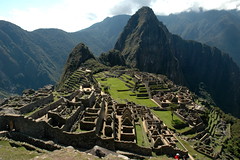 | 56 |
| 9192334221 | Malinche | Also known as Dona Marina, was a Nahua woman from the Tlaxcalan tribe that played a role int he Spanish conquest of the Aztec Empire by acting as an interpreter. |  | 57 |
Flashcards
AP Psych Unit 12 Flashcards
Terms : Hide Images
| 8728551674 | psychopathology | patterns of thinking, feeling, and behaving that are maladaptive, disruptive, or uncomfortable for those who are affected or for those with whom they come in contact |  | 0 |
| 8728551675 | impaired functioning | difficulty in fulfilling appropriate and expected family, social, and work-related roles | 1 | |
| 8728551676 | biopsychosocial model | a view of mental disorders as caused by a combination of interacting biological, psychological, and sociocultural factors |  | 2 |
| 8728551677 | neurobiological model | a modern name for the medical model, in which psychological disorders are seen as reflecting disturbances in the anatomy and chemistry of the brain and in other biological processes | 3 | |
| 8728551678 | psychological model | a view in which mental disorder is seen as arising from psychological processes | 4 | |
| 8728551679 | sociocultural model | a way of looking at mental disorders in relation to gender, age, ethnicity, and other social and cultural factors | 5 | |
| 8728551680 | anxiety disorder | a condition in which intense feelings of apprehension are long-standing and disruptive |  | 6 |
| 8728551681 | phobia | an anxiety disorder involving strong, irrational fear of an object or situation that does not objectively justify such a reaction | 7 | |
| 8728551682 | specific phobia | an anxiety disorder involving fear and avoidance of heights, animals, and other specific stimuli and situations |  | 8 |
| 8728551683 | post-traumatic stress disorder | a pattern of adverse reactions following a traumatic and threatening event | 9 | |
| 8728551684 | social phobia | an anxiety disorder involving strong, irrational fears relating to social situations | 10 | |
| 8728551685 | agoraphobia | an anxiety disorder involving strong fear of being alone or away from the security of home | 11 | |
| 8728551686 | generalized anxiety disorder | a condition that involves relatively mild but long-lasting anxiety that is focused on any particular object or situation; also called free-floating anxiety | 12 | |
| 8728551687 | panic disorder | an anxiety disorder involving sudden panic attacks | 13 | |
| 8728551688 | panic attacks | attacks marked by intense heart palpitations, pressure or pain in the chest, dizziness or unsteadiness, sweating, and a feeling of faintness | 14 | |
| 8728551689 | obsessive-compulsive disorder (OCD) | an anxiety disorder involving repetitive thoughts and urges to perform certain rituals | 15 | |
| 8728551690 | obsessions | persistent, upsetting, and unwanted thoughts | 16 | |
| 8728551691 | compulsions | ritualistic, repetitive behaviors | 17 | |
| 8728551692 | somatoform disorders | psychological problems in which there are symptoms of a physical disorder without a physical cause |  | 18 |
| 8728551693 | conversion disorder | a somatoform disorder in which a person displays blindness, deafness, or other symptoms of sensory or motor failure without a physical cause | 19 | |
| 8728551694 | hypochondriasis | a somatoform disorder involving strong, unjustified fear of physical illness | 20 | |
| 8728551695 | somatization disorder | somatoform disorders in which there are numerous physical complaints without verifiable physical illness | 21 | |
| 8728551696 | pain disorder | a somatoform disorder marked by complaints of sever pain with no physical cause | 22 | |
| 8728551697 | dissociative disorders | rare conditions that involve sudden and usually temporary disruptions in a person's memory, consciousness, or identity | 23 | |
| 8728551698 | dissociative fugue | a dissociative disorder involving sudden loss of memory and the assumption of a new identity in a new locale | 24 | |
| 8728551699 | dissociative amnesia | a dissociative disorder marked by a sudden loss of memory |  | 25 |
| 8728551700 | dissociative identity disorder (DID) | a dissociative disorder in which a person reports having more than one identity; also called multiple personality disorder |  | 26 |
| 8728551701 | mood disorder | conditions in which a person experiences extreme moods, such as depression or mania; also called affective disorder | 27 | |
| 8728551702 | major depressive disorder | a mood disorder in which a person feels sad and hopeless for weeks or months | 28 | |
| 8728551703 | delusions | false beliefs, such as those experienced by people suffering from schizophrenia or extreme depression | 29 | |
| 8728551704 | dysthymic disorder | a mood disorder involving a pattern of comparatively mild depression that lasts for at least two years |  | 30 |
| 8728551705 | mania | an elated, very active emotional state | 31 | |
| 8728551706 | bipolar I disorder | a mood disorder in which a person alternates between deep depression and mania; also called manic depression | 32 | |
| 8728551707 | bipolar II disorder | a mood disorder in which a person alternates between major depressive episodes and hypomania episodes |  | 33 |
| 8728551708 | hypomania | less severe manic phases | 34 | |
| 8728551709 | cyclothymic disorder | a less severe form of bipolar I disorder |  | 35 |
| 8728551710 | seasonal affective disorder (SAD) | during months of shorter daylight, patients experience severe depression, accompanied by irritability and excessive sleeping |  | 36 |
| 8728551711 | schizophrenia | a severe and disabling pattern of disturbed thinking emotion, perception, and behavior |  | 37 |
| 8728551712 | neologisms | "new words" that have meaning only to the person speaking them | 38 | |
| 8728551713 | loose associations | the tendency for one thought to be logically unconnected, or slightly related, to the next | 39 | |
| 8728551714 | clang associations | associations based on double meanings or on the way words sound | 40 | |
| 8728551715 | hallucinations | a symptom of disorder in which people perceive voices or other stimuli when there are no stimuli present |  | 41 |
| 8728551716 | positive symptoms | schizophrenic symptoms such as disorganized thoughts, hallucinations, and delusions | 42 | |
| 8728551717 | negative symptoms | schizophrenic symptoms such as absence of pleasure, lack of speech, and flat effect |  | 43 |
| 8728551718 | paranoid schizophrenia | a form of schizophrenia characterized by delusions (of persecution or grandeur or jealousy); symptoms may include anger and anxiety and aloofness and doubts about gender identity; unlike other types of schizophrenia the patients are usually presentable and (if delusions are not acted on) may function in an apparently normal manner | 44 | |
| 8728551719 | disorganized schizophrenia | a form of schizophrenia characterized by severe disintegration of personality including erratic speech and childish mannerisms and bizarre behavior; usually becomes evident during puberty; the most common diagnostic category in mental institutions | 45 | |
| 8728551720 | catatonic schizophrenia | a form of schizophrenia characterized by a tendency to remain in a fixed stuporous state for long periods; the catatonia may give way to short periods of extreme excitement | 46 | |
| 8728551721 | undifferentiated schizophrenia | a form of schizophrenia characterized by having positive and negative symptoms of schizophrenia but do not meet the specific criteria for the paranoid, disorganized, or catatonic subtypes |  | 47 |
| 8728551722 | residual schizophrenia | a form of schizophrenia manifested by individuals with symptoms of schizophrenia who, after a psychotic schizophrenic episode, are no longer psychotic |  | 48 |
| 8728551723 | personality disorders | long-standing, inflexible ways of behaving that create a variety of problems | 49 | |
| 8728551724 | paranoid personality disorder | a personality disorder characterized by suspiciousness and distrust of others, all of whom are assumed to be hostile | 50 | |
| 8728551725 | schizoid personality disorder | a personality disorder characterized by detachment from social relationships; restricted range of emotion |  | 51 |
| 8728551726 | schizotypal personality disorder | a personality disorder characterized by detachment from, and great discomfort in, social relationships; odd perceptions, thoughts, beliefs, and behaviors | 52 | |
| 8728551727 | dependent personality disorder | a personality disorder characterized by helplessness; excessive need to be taken care of; submissive and clinging behavior; difficulty in making decisions |  | 53 |
| 8728551728 | obsessive-compulsive personality disorder | a personality disorder characterized by preoccupation with orderliness, perfection, and control |  | 54 |
| 8728551729 | avoidant personality disorder | a personality disorder characterized by inhibition in social situations; feelings of inadequacy; oversensitivity to criticism |  | 55 |
| 8728551730 | histrionic personality disorder | a personality disorder characterized by excessive emotionality and preoccupation with being the center of attention; emotional shallowness; overly dramatic behavior | 56 | |
| 8728551731 | narcissistic personality disorder | a personality disorder characterized by exaggerated ideas of self-importance and achievements; preoccupation with fantasies of success; arrogance | 57 | |
| 8728551732 | borderline personality disorder | a personality disorder characterized by lack of stability in interpersonal relationships, self-image, and emotion; impulsivity; angry outbursts; intense fear of abandonment; recurring suicidal gestures |  | 58 |
| 8728551733 | antisocial personality disorder | a personality disorder characterized by shameless disregard for, and violation of, other people's rights | 59 | |
| 8728551734 | odd-eccentric cluster | often referred to as cluster A, which includes paranoid, schizoid, and schizotypal personality disorders | 60 | |
| 8728551735 | dramatic-erratic cluster | often referred to as cluster B, which includes histrionic, narcissistic, borderline, and antisocial personality disorders | 61 | |
| 8728551736 | anxious-fearful cluster | often referred to as cluster C, which includes dependent, obsessive-compulsive, and avoidant personality disorders |  | 62 |
| 8728551737 | attention deficit hyperactivity disorder (ADHD) | patients diagnosed with this disorder are impulsive and unable to concentrate on an activity as well as other children their age can | 63 | |
| 8728551738 | substance-related disorders | the use of psychoactive drugs for months or years in ways that harm the user or others |  | 64 |
| 8728551739 | addiction | development of a physical need for a psychoactive drug; also called physiological dependence | 65 | |
| 8728551740 | alcoholism | a pattern of drinking that may lead to addiction and almost always causes severe social, physical, and other problems | 66 | |
| 8728551741 | DSM-IV | Diagnostic and Statistical Manual; resource for diagnosing disorders, uses a 5 axis system |  | 67 |
| 8728551742 | Philippe Pinel | In 1795 Pinel assumed the responsibility for the mental patients at l'Hôpital de la Salpêtrière, where he continued his policy of nonrestraint and brought about many significant and far-reaching reforms in the care and treatment of mental patients. Humane treatment under the watchful eye of trained and compassionate personnel in the institution made possible the recovery of many otherwise doomed patients. Pinel also introduced the practice of keeping case histories, which proved a valuable source of information in later efforts to understand insanity. |  | 68 |
| 8728551743 | David Rosenhan | Rosenhan believed that there are seven main features of abnormality: Suffering; maladaptiveness; vividness and unconventionality; unpredictability and loss of control; irrationality and incomprehensibility; observer discomfort; and violation of moral and ideal standards. |  | 69 |
| 8728551744 | Martin Seligman | an American psychologist and author of self-help books. His theory of "learned helplessness" is widely respected among scientific psychologists.[1] He is the director of the Positive Psychology Center at the University of Pennsylvania | 70 | |
| 8728551745 | Diathesis-stress approach | Disorders are a result of predisposed, bioloogical factors triggered by the environment. | 71 |
Flashcards
Flashcards
AP Euro Period 3 Flashcards
Terms : Hide Images
| 9203610194 | Why was it hard for the working class to participate in British government prior to mid-1800s | There are restrictions on public office because you must have 200 acres to vote. Also those in parliament have no salary meaning that only the independently wealthy can become politicians | 0 | |
| 9203610195 | House of Lords | the upper house of the British parliament consisting of the aristocracy. They can veto legislation | 1 | |
| 9203610196 | Corn Laws 1815 | The Corn laws stopped foreign imports of corn which increased the price of Britich corn. This affected the poor massivly because they had to pay much more. | 2 | |
| 9203610197 | Irish Potato Famine | Because of the corn laws, the Irish can only afford to farm potatoes which causes Ireland's population to double so that 1/3 of the population is dependent on the potato by 1841. However, a potato blight soon comes that can wipe out an entire crop in 48 hours. This leads to the starvation of around one million people. The Irish government begs the British government to repeal the corn laws so the people can afford to eat. Millions of Irish immigrate to the US however they are faced with oppression and violence | 3 | |
| 9203610198 | Robert Peel | Britain's conservative prime minister from 1834 to 1835, and from 1841 to 1846. Peel oversaw the repeal of the Corn Laws in 1846, partially due to the ongoing Irish Famine. | 4 | |
| 9203610199 | Opium Wars | The British Empire pushes opium onto the Chinese so 30% of the country becomes addicted. The Chines governments threatens to cut off trade with Britain so England goes to war in order to open up Chinese ports. England wins and gains Hong Kong and Beijing as British lands. Now British law applies to these places. | 5 | |
| 9203610200 | Bobbies | First professional police force created under Robert Peel. They are from the working class and are paid very well with huge benefits so they are very loyal. They deter crime using night sticks. They are well liked | 6 | |
| 9203610201 | 1832 Reform Bill (GB) | This allows some members of the upper middle class to vote by lowering the property right requirement to vote, also abolished rotten boroughs | 7 | |
| 9203610202 | Chartism | A program of political reforms sponsored by British workers in the late 1830s. Chartist demands included universal manhood suffrage, secret ballots, equal electoral districts, and salaries for members of the House of Commons. | 8 | |
| 9203610203 | London Working Man's Association | A group of labor unions that wrote the People's Charter which advocated for Universal male suffrage, no child labor, 10 hour working day, 6 day workweek, salaries for parliamentary positions, and no pregnant women working | 9 | |
| 9203610204 | Mines Act of 1842 | English law prohibiting underground work for all women and girls as well as for boys under ten. | 10 | |
| 9203610205 | Ten hours Act of 1847 | restricts the working hours of women and children in British factories to effectively 10 hours per day. | 11 | |
| 9203610206 | 1833 Factory Act | Children under 9 could not work in textile mills. | 12 | |
| 9203610207 | Child Labor Laws | Laws passed over many decades, beginning in the 1830s, by state and federal governments, forbidding the employment of children and young teenagers, except at certain carefully specified jobs. | 13 | |
| 9203610208 | 2nd Industrial Revolution | Complex technological processes allow for an explosion of technological improvements. New technologies allow Belgium, France and Germany to catch up to British production. Continental railroad systems are implemented which enhances continental trade and industry. | 14 | |
| 9203610209 | Bessemer Process | This is the use of air pockets to create a cheaper and more durable steel. This is so effective that the amount of steel produced in England jumps from 125,00 tons in 1860 to 32 million tons in 1913 | 15 | |
| 9203610211 | Electricity | The first public power plant was created in 1881 which means that production increased because people could work by electric light. Also allows the working class to have a nightlife in relative safety | 16 | |
| 9203610212 | Daimler | Internal combustion engine that is attached to a carriage in order to create the 1st car | 17 | |
| 9203610214 | Urban Planning | The second industrial revolution allows for a physical space of class because people can now travel by electric street car. | 18 | |
| 9203610215 | Electric Street Car | This allows the middle class to live outside the city and create suburbs. | 19 | |
| 9203610216 | Psychology | People look for meaningful experiences and value in psychology to replace a decline in religious ideology. | 20 | |
| 9203610217 | Global Community | During this time, new inventions that come out of the military such as the automobile, airplane, telephone and radio connect the world. The Atlantic Cable allows England to communicate with its colonies and airplanes cut the time of travel in half, however only the wealthiest can travel by air | 21 | |
| 9203610218 | Public Education Act 1870 | Set the framework for schooling of all children between the ages of 5 and 12 in England | 22 | |
| 9203610219 | Public Education in Britain and France | In Britain, public education was set up as a way to satisfy the working class and prevent revolution. In France, it was set up as a way to indoctrinate people about the wonderful French Revolution | 23 | |
| 9203610220 | Petite Bourgeoisie | A new social class that emerges during this time which consists of highly educated professionals that are not paid well, for example, teachers, nurses, accountants and clerks. They have a little bit of money to spend. lower middle class which aspire to become the high middle class | 24 | |
| 9203610221 | Institutionalization of the Middle Class | Once the middle class gains the right to vote, they move to protect those rights and not help other gain that right. They become supporters of the establishment, for example they are the #1 class to work in government | 25 | |
| 9203610223 | Organized Sports | Appear for the first time as a leisure activity. Government invest in these activities for men as an extension of nationalism and as military training as a way to keep young men fit | 26 | |
| 9203610224 | Leisure Time | Thanks to the invention of the weekend, the working class is guaranteed a day and a half off. It is now harder to tell class by clothing due to department stores so distinctions are made through jewelry and technology. Drinking is also on the decline | 27 | |
| 9203610225 | Georges Seurat | Sunday Afternoon on the Island of La Grande Jatte.. Uses pointilism, shows people of all social classes engaging in Leisure time |  | 28 |
| 9203610226 | Private Education | Public education is terrible due to low funding so for the first time, we see parents sacrifice for children to receive private education that is much better | 29 | |
| 9203610227 | Declining Birth Rate | Medicine and contraceptive methods improve during this time so women can choose to have less children. Due to this, a huge shift appears in the way that children are viewed, it is now normal for money to go to the kids | 30 | |
| 9203610228 | Upper Class Panic | The upper class invest in unconventional and abstract art and dining as a way to define themselves apart from the lower classes. They say that only the refined mind can understand and appreciate it | 31 | |
| 9203610229 | Great Cholera Epidemics of the 1830s and 1840s | Huge cholera outbreaks kill 10,000s of people in London with no discernible pattern | 32 | |
| 9203610231 | Themes River | During this time, it is basically an open sewer because of chemical runoff. It reeks poisonous gasses and spontaneously combusts | 33 | |
| 9203610233 | Edwin Chadwick | Report on the Sanitary Condition of the Laboring Population. This was a public health official in England who wrote reports on the poor living conditions of the cities and believed that poverty was caused by illnesses. | 34 | |
| 9203610235 | Public Health Act 1848 | In England, First piece of western legislation to regulate the health standards of businesses. Gives the government to shut down unhealthy businesses | 35 | |
| 9203610236 | 1858 Medical Act | Requires that doctors be certified in order to practice medicine | 36 | |
| 9203610237 | Louis Pastuer | Frenchman who uses his discovery of the bacterial theory to promote his idea of the pasteurization of milk | 37 | |
| 9203610238 | British Public Housing | These are used very controversially by the British government in order to control diseases. Supplementary to the family's income | 38 | |
| 9203610240 | Revisionist Marxist | Developed by Eduard Bernstein and it says that a Marxist revolution will not happen however, societies will increasingly move towards communism. | 39 | |
| 9203610241 | Contagious Diseases Act | This allowed police officers to arrest any woman they suspected to be a prostitute. They were then permitted to give that woman an examination to prevent the spread of STDs. This is state-sponsered sexual assault | 40 | |
| 9203610242 | Emiline Pankhurst | A suffragette who says that men only respond to violence so the suffragette movement must become increasingly violent | 41 | |
| 9203610244 | Cult of Domesticity | This is a movement amongst middle class women 1. Virtue: Code for virginity. Cannot express sexual desire 2. Motherhood: You are a servant to your children and husband 3. Religion: The strong religious figure in the family 4. Charity: Women form savior societies 5. Refuge and Privacy: Create the home as a safe place for your husband and children to relax 6. Moderated Sexuality: Results in the total and complete objectification of women | 42 | |
| 9203610248 | Agricultural Revolution | A time when new inventions such as the seed drill and the steel plow made farming easier and faster. The production of food rose dramatically | 43 | |
| 9203610249 | Seed Drill | This allows commercial farms to know exactly how many seeds need to be planted | 44 | |
| 9203610251 | Enclosure Acts | in favor of wealthy landowners, fenced off large amounts of farmland that had once been common property, impoverished many farmers and forced them to move into the city. This allows for commercial farming | 45 | |
| 9203610252 | Protection of Intellectual Property | Britain did not allow any of their machines or mechanics of those machines to leave the island until 1840 Rights to keep trade secrets confidential and to have employees bring business to their employer first. | 46 | |
| 9203610253 | Credit Mobile | A French investment bank for building railroads | 47 | |
| 9203610254 | Realism | Reflection on the way people are starting to perceive the world around them. Focused on the realistic portrayal of the everyday laborer. Human action is governed by natural law | 48 | |
| 9203610255 | Courbet | "The stone breakers" French painter noted for his realistic depiction of everyday scenes (1819-1877) |  | 49 |
| 9203610256 | Emile Zola | "Germinal" Journalist who writes a fictional book that is 100% based on the conditions he experienced living for months with a mining family. He questions the theory that the poor class work less than the higher class families because he sees how hard these lower class people work. Realism | 50 | |
| 9203610257 | Charles Dickens | "Oliver" His work is very popular and sympathetic to the poor because he had been poor at one time. Realism | 51 | |
| 9203610258 | Impressionism | An artistic movement that sought to capture a momentary feel, or impression, of the piece they were drawing | 52 | |
| 9203610259 | Edouard Manet | This artist, although trained within the academic tradition, is considered a predecessor of Impressionism. His Luncheon on the Grass (1863) sent a wave of shock through the Parisian artistic circle - because of its subject matter and innovative approach to painting. |  | 53 |
| 9203610260 | Claude Monet | a French painter who used a impressionism called "super-realism," capture overall impression of the thing they were painting |  | 54 |
| 9203610262 | Thomas Malthus | "Essay on Population", says that poverty exists because the population increased at a geometric rate while the food supply increased arithmetically. Believed that poverty was a ivine punishment for humankind's lust | 55 | |
| 9203610263 | Malthesian Poor Houses | It is seen as a place of punishment as the food is rotten and they use dirty sheets. The point of these houses is to teach the poor how to become rich | 56 | |
| 9203610265 | James Hargreaves | This was the man who created the spinning jenny which began the actual Industrial Revolution and the beginning of machines doing a man's work | 57 | |
| 9203610267 | iron law of wages | wages would always remain at the subsistence level for the workers because of population growth. | 58 | |
| 9203610268 | Jeremy Bentham | British philosopher and economist who advocated for "utilitarianism" which is the greatest good for the greatest number of people. | 59 | |
| 9203610269 | John Stuart Mill | Proposes woman's right to vote and paying women an equal wage. Also proposes inheritance tax in order to equal the playing field. | 60 | |
| 9203610270 | Utopian Socialists | Early nineteenth-century socialists who hoped to replace the overly competitive capitalist structure with planned communities guided by a spirit of cooperation. Leading French utopian socialists such as Charles Fourier and Louis Blanc believed that property should be communally owned. | 61 | |
| 9203610271 | Louis Blanc | Much more practical socialist, believed that the government should regulate workshops and factories to guarantee full employment | 62 | |
| 9203610272 | Robert Owen | Utopian socialist who tries out a new business model in which workers are provided with a school, basic housing needs and a living wage. He is extremely successful and becomes very rich | 63 | |
| 9203610273 | Karl Marx | 19th century philosopher, political economist, sociologist, humanist, political theorist, and revolutionary. Often recognized as the father of communism. Analysis of history led to his belief that communism would replace capitalism as it replaced feudalism. Believed in a classless society. | 64 | |
| 9203610274 | Charles Darwin | English scientist whose theory of evolution through natural selection was first published in 'On The Origin of the Species" in 1859. | 65 | |
| 9203610277 | Social Darwinism | This uses the principles of natural selection to explain and justify racial structures in society (slavery and colonialism). Created categories for race for the first time | 66 | |
| 9203610279 | Max Planck | German physicist who developed quantum theory and was awarded the Nobel Prize for physics in 1918. | 67 | |
| 9203610281 | Sigmund Frued | The un-seen reasons behind our reactions all have to do with sex. Everything is sex. It also used imprinting in his psychology which led him to get the results he wanted. Created his theory of the Id, Ego, and Super Ego | 68 | |
| 9203610282 | Albert Einstein | German physicist who developed the theory of relativity, which states that time, space, and mass are relative to each other and not fixed. | 69 | |
| 9203610283 | Madame Curie | discovered the power of radium | 70 | |
| 9203610284 | Neils Bohr | Electrons move in a circular orbit at fixec distances from the nucleus, an electron can gain or lose energy by changing its orbit | 71 | |
| 9203610287 | Positivism | Developed by August Comte. This says that science and logic will someday replace the need for theological views | 72 | |
| 9203610288 | Pope Pius IX | Writes the Syllabus of Errors which is a book listing things such as public education and woman's suffrage that he doesn't like | 73 | |
| 9203610289 | Expressionism | art movement of early 20th century that emphasized subjective feelings above objective observations and focused on conveying emotions | 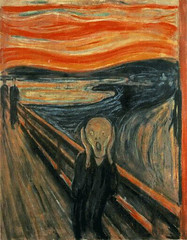 | 74 |
| 9203610291 | Pointillism | A method for applying paint in small dabs of pure color, which create optical mixtures in the eye when seen from several feet away. | | 75 |
| 9203610293 | Picasso | A Spanish painter best known for co-founding the Cubist movement and for the wide variety of styles embodied in his work. "Guernica" |  | 76 |
| 9203610294 | Vincent van Gogh | The Starry Night. Focused on emotions and imaginations by using bold colors and images |  | 77 |
| 9203610295 | Proletariat | Marx's term for the exploited class, the mass of workers who do not own the means of production | 78 | |
| 9203610296 | Crystal Palace | Building erected in Hyde Park, London, for the Great Exhibition of 1851. Made of iron and glass, like a gigantic greenhouse, it was a symbol of the industrial age. | 79 | |
| 9203610298 | Congress of Vienna | Following Napoleon's exile, this meeting of European rulers in Austria established a system by which the balance of power would be maintained, liberal revolutions would be repressed, as would imperial expansion, and the creation of new countries in Europe. | 80 | |
| 9203610299 | Principle of Legitimacy | This is a goal of the Congress of Vienna Monarchs from the royal families who had rules before Napoleon would be restored to their positions of power in order to keep peace and stability in Europe. Because of this, most nations in France go back to their pre-napolean leaders such as the Bourbon Family | 81 | |
| 9203610300 | Principle of Compensation | This is a goal of the Congress of Vienna Those who won the Napoleonic Wars should receive a reward in land Because of this Many of he winning countries win land for example Russia wins Finland | 82 | |
| 9203610301 | Nationalism | A strong feeling of pride in and devotion to one's country. The goal of the Congress of Vienna is to surpress this because it destroys nations due to the huge number of subsets of people in European countries | 83 | |
| 9203610302 | Liberalism | Loves the free market with little tax revenue. In favor of a constitutional government in order to protect their wealth. They believe in laissez faire economics and Malthusian theory | 84 | |
| 9203610303 | Conservatism | those who went to the Congress of Vienna were politically inclined this way. The believed in a traditional monarchy with a national church and an economy controlled by the nobility. They hate nationalism and liberalism. | 85 | |
| 9203610304 | Confederation of the Rhine | This consists of 37 German states and was created during the Congress of Vienna. It is created in order to prevent Prussia from growing to large | 86 | |
| 9203610305 | Age of Supremacy | Great Britain wins control over South Africa which means that it is now a global power with control over the Pacific, Atlantic and Indian Oceans | 87 | |
| 9203610306 | Concert of Europe | This term is used to refer to the Congress of Vienna because it created peace for 100 years and had no punishment on the French which helped decrease tension | 88 | |
| 9203610307 | 1848 Revolutions | "When France sneezes, Europe catches a cold;" the French uprising against the increasingly oppressive Louis-Philippe sparked a wave of revolt (German states, Austria, Russia, Poland, Italy) by the liberal middle and lower classes against conservative governments; overall they failed because of internal class and ethnic divisions among the revolutionaries | 89 | |
| 9203610308 | Age of Metternich | The period from the fall of Napoleon in 1815 to the Revolutions of 1848. Because of his immense influence on European politics in these years, they are named after Klemens Von Metternich, chancellor of Habsburg Austria. He was the prototype of conservatism as a leadership style for European ministers. | 90 | |
| 9203610309 | Klemens von Metternich | This was Austria's foreign minister who wanted a balance of power in an international equilibrium of political and military forces that would discourage aggression. He had the most influence in the Congress of Vienna | 91 | |
| 9203610310 | Romanticism | Focus on the unseen supernatural and human emotion. Embracing folklore and a separation from sciences. It is the cultural foundation for Nationalism | 92 | |
| 9203610311 | Grimm Brothers | collected and published local German fairy tales, work is example of Romantic German nationalism. Considered ultimate nationalistic writings because they remove all non-german fairy tales | 93 | |
| 9203610312 | Beethoven | French, purely Romantic composer, transformed the art of music. Used music to convey his feelings of what was going on in the world around him, such as the many French revolutions of that time | 94 | |
| 9203610313 | Mary Shelly | (Frankenstein) Very popular, uses romantic and Christian themes | 95 | |
| 9203610314 | Wagner | Ring of the Nebula, he embraces nationalism and pushes an agenda. Likes the nordic myths and transforms them into German myth in order to represent the the powerful race of German. Creates sutble anti-sematic views that Germans can identify with | 96 | |
| 9203610318 | Delacroix | Lady Liberty Leading Her People, focus on the common man, very dramatic and emotional |  | 97 |
| 9203610319 | Goya | Third of May, Jesus sacrifices himself in the Spanish resistance against Napoleon |  | 98 |
| 9203610320 | J.G. Fichte | German intellectual. A traditional Nationalist. Believes that there is an inate dominance in certain cultural groups which leads to the birth of Eugenics | 99 | |
| 9203610321 | Herder | German Intellectual. His theory of Cultural Identity is that you are related to someone else due to a cultural value that you hold. | 100 | |
| 9203610322 | Hegel | German Intellectual. Suggests that opinions can blend together to create an idealistic view on politics. Nationalism depends on people coming together to synthesize ideology |  | 101 |
| 9203610323 | Pan-Slavism | The ultimate expression of Slavic Nationalism. This is the belief that it is Russian duty to protect any people who speak languages slightly similar to Russian. Allowed Russia to invade countries in order to "protect their Slavic brothers and sisters" | 102 | |
| 9203610324 | The Crimean War | France & Great Britain vs. Russia, most of the fighting was in the Crimean region, utter military incompetence, destroyed the Concert of Europe. Russia invaded Turkey in order to gain Constantanople. Britain and France join together because they have been loaning money to the Ottoman Empire and eventually defeat Russia. This is the beginning of ultra-partisan Nationalism and allyships based off of financial intrests. | 103 | |
| 9203610325 | Florence Nightingale | Advocates the Red Cross to help soldiers on both sides of the war. She starts sterilization which decreases death from infection. | 104 | |
| 9203610326 | Cavour | Prime Minister of Sardinia-Piedmont who wants to unify Italy. Architect of Italian unification in 1858; formed an alliance with France to attack Austrian control of northern Italy; resulted in creation of constitutional monarchy under Piedmonteste king. | 105 | |
| 9203610327 | Unification of Italy | Austria owns massive parts of the Austrian peninsula. So, Cavour makes a secret alliance with Napoleon III by promising him parts of Italy so he protects them against an aggravated attack from Austria. The Northern city states agree to unify with Sardinia. In the South Giribaldi helps by unifying Southern States. However, Rome is left un-unified due to conflicts with the Catholic Church. This unification creates class issues with Northern Italy being industrialized and wealthy and Southern Italy being rural and poor | 106 | |
| 9203610328 | Garibaldi | He is supported by Cavour to liberate southern Italy, starting with Sicily | 107 | |
| 9203610330 | Greek War of Independence | First successful Nationalism war Greece, (with help form Britain, France, and Russia) won independence from the Ottoman Empire | 108 | |
| 9203610331 | July Revolution | The July Revolution (also called the Revolution of 1830) saw the overthrow of Charles X by radical liberal bourgousie and the ascension of Louis-Philippe to the French throne. | 109 | |
| 9203610332 | Decembrist Revolt | The 1825 plot by liberals (upper-class intelligentsia) in Russia to set up a constitutional monarchy or a republic. The plot failed, but the ideals remained | 110 | |
| 9203610333 | German Dualism | The idea that Prussia and Austria were competing over control of Germany | 111 | |
| 9203610334 | Otto von Bismarck | Was appointed to Prussian Chancellor by William I. He is personally conservative and hates liberalism and socialism but will do whatever he needs in order to win. He wants to unify the german confederation with Prussia through weakening Austria and stressing German nationalism | 112 | |
| 9203610335 | Frankfurt Conference | To unify all of Germany (failed) | 113 | |
| 9203610336 | Zollverein | The name of the free trade zone that German states created prior to their unification. | 114 | |
| 9203610337 | German Confederation | Consisted of 38 sovereign states recognized by the Vienna settlement, and was dominated by Austria and Prussia, the confederation had little power and needed the consent of all 38 states to take action. | 115 | |
| 9203610339 | The Austro-Prussian War | It lasted only seven weeks. Austria lost miserably to Prussia who had the advantage of railroads to mass troops. This success lead the Prussians to be less upset about Bismarck ignoring parliaments rejection of the military budget. Austria's loses were minimal and they only had to withdraw from German affairs. | 116 | |
| 9203610340 | North German Confederation | Result of end of Austria-Prussian War, Austria doesn't get involved in German affairs, North German Confederation made under rulership of Prussia. Major step towards German unification. | 117 | |
| 9203610341 | The Franco-Prussian War | Significant conflict pitting France against Prussia and its allies. The conflict emerged from tensions regarding the German unification. Ends in French defeat. | 118 | |
| 9203610342 | Treaty of Frankfurt | The end of the Franco-Prussian War, which ceded the territories of Alsace and most of Lorraine to Germany. France also had to pay reparations. Leads to Wilhelm I of Prussia being names king in Versailles, and France's government transitioning to the Third Republic. Creates fierce animosity between French and Germans. | 119 | |
| 9203610343 | kulturekampf | Struggle for culture, Bismarck's term for creating German unity by suppressing Catholics and Socialists. | 120 | |
| 9203610344 | Dual Monarchy | After Austria's defeat by Prussia in 1866, hungarians demanded more freedom. Austria responded in 1867 by forming this monarchy, also called the Austria-Hungary, in which hungarians shared power with Austrians. Under this system, Austria's emperor is also the king of Hungary. They only work together in rimes of war and commerce | 121 | |
| 9203610345 | Napoleon III | He is elected President and then declares himself the emperor of France. In the first half of his reign, he is extremely authoritarian with secret police and censorship. However, in the second half, he becomes much more socialist with redesigning Paris, instating hospitals, distribution free medicine and giving workers the right to strike and organize. His foreign policies, however, lead to his downfall | 122 | |
| 9203610346 | Baron Hausmann | German urban planner who redesigns Paris. He gives homes running water, widens streets, instates a sewer system, dramatically increases the number of parks and trees, and rebuilds thousands of old buildings (even though this makes 100,00 people homeless). | 123 | |
| 9203610347 | Maximillian Affair | Napoleon wants to assert himself over to Americas so he tries to take Mexico as a colony for France for no reason. he sends his cousin, Maximillian to declare himself king over the Mexicans and they execute him. | 124 | |
| 9203610348 | The Third Republic | A parliamentary republican democracy that was created following the collapse of the Empire of Napoleon III in the Franco-Prussian War. It survived until the invasion of France by the German Third Reich in 1940. It got rid of Universal Male Suffrage and its National Assembly was made up mostly of Monarchists which led to conflict | 125 | |
| 9203610350 | 1875 Constitution | France. This was created after the 1871 Civil War which was between monarchists and the working class which reinstated the monarchy | 126 | |
| 9203610351 | Marshal MacMahon Crisis | The Speaker of the House is trying to pass legislation but the House will not pas it so he does a new election to get new people in the House. However, people freak out so he steps down | 127 | |
| 9203610353 | Dreyfus Affair | A Jewish army officer is convicted of treason by a military court and goes to jail for 20 years. Then, new evidence is found that shows that Major Esterhazy is the guilty party. However, the French army refuses to open the case again. This divides the nation and creates a crisis. The Army, anti-semites, monarchists and catholics feel Dreyfus is guilty. Liberals, Republicans and anti-Catholics believe he is innocent and is only blamed because of Anti-Semitism. Eventually the case is reopened and is found guilty again by the French Army but the French President pardons Dreyfus anyway and cuts all ties the French government has with the Catholic Church by separating church and state. This case is the first movement where Anti-semitism is openly embraced | 128 | |
| 9203610354 | Emile Zola | Wrote "J'Accuse" a paper in Dreyfus' favor, realist writer, violently criticized social situation, strict determinist, famous for animalistic view of working class life, sympathized with socialism | 129 | |
| 9203610355 | Social Welfare State | Government institutions and laws that guarantee all citizens a decent standard of living | 130 | |
| 9203610356 | The Victorian Age | The term is used to describe late nineteenth century society, with its rigid moral standards and its sharply differentiated roles for men and women and for middle-class and working-class people. This period is characterized with Political Stability Material Prosperity (height of the British Empire) Strict Moral Code Power struggle between monarchy and Prime Minister | 131 | |
| 9203610357 | Opium Wars | Wars between Britain and the Qing Empire, caused by the Qing government's refusal to let Britain import Opium. China lost and Britain and most other European powers were able to develop a strong trade presence throughout China against their wishes. | 132 | |
| 9203610358 | Benjamin Disraeli | Conservative, Aristocratic, Jewish Prime Minister in England. Leader of the British Tory Party who engineered the Reform Bill of 1867, which extended the franchise to the working class. Added the Suez Canal to English overseas holdings. Also gave Queen Victoria the title of Emperess of India which backfires as the British believe they are a democratic empire. He strengthens the public health act and gives the working class the right to strike | 133 | |
| 9203610359 | Suez Canal | Egypt faces sever financial issues so the British buy the canal via hostile takeover. This upsets the French and makes the British very happy | 134 | |
| 9203610360 | Reform Bill of 1867 | This gives working class the right to vote. Disraeli believes that this will make them vote conservative because they gave them their suffrage. This does end up destroying the Liberal and Malthusian party in England. | 135 | |
| 9203610361 | William Gladstone Jr | Realizes the Liberal (Whig) Party must soften to stay in power. However, his social legislation is too little too late for the Liberal Party as he is the last great Liberal Prime Minister. He legalized labor unions, introduced secret ballots and free public education | 136 | |
| 9203610362 | Civil Service Reform Bill | This means that a person must pass a test in order to gain a governmental position. It makes the empire much more efficent | 137 | |
| 9203610363 | Education Act | Provides free education for grades 1-4 and makes it a requirement for children to attend | 138 | |
| 9203610364 | 1884 Reform Bill | Gave farmers the right to vote, which essentially extended the right to vote to all male citizens. | 139 | |
| 9203610365 | National Insurance Act 1911 | Provided sickness and unemployment benefits to workers in Britain | 140 | |
| 9203610366 | Labour Party | The British party that replaced the Liberals in the early twentieth century and championed greater social equality for the working classes through the efforts of labor unions | 141 | |
| 9203610368 | Alexander II | The only Progressive Czar. He emancipated Serfs, levied local taxes, operated elementary schools, built roads and bridges, trial by jury, equality before the law. The first political parties in Russia form | 142 | |
| 9203610369 | Mirs | Nobles were forced to give up some of their land. In return they were compensated. The serfs ere given this land and they paid for 50 years with no interest rates in order to own the land | 143 | |
| 9203610370 | Alexander III | Takes away the constitution of Russia and freedom before the law. Instates Pogroms and the Trans-Siberian Railroad | 144 | |
| 9203610371 | Pogroms | These were created by Alexander III as ghettos for Jews. This causes mass migration throughout Europe sparking Anti-sematism | 145 | |
| 9203610372 | Trans-Siberian Railroad | Constructed during the 1870s and 1880s to connect European Russia with the Pacific; increased the Russian role in Asia | 146 | |
| 9203610373 | The Congress of Berlin | Bismarck gives slavic nations sovereignty which means Russia can no longer justify its interference. Bismarck gives Serbia a small land-locked country even though they believe they should get the entire Balkan Peninsula. | 147 | |
| 9203610374 | William II | He dismisses Bismarck because he does not like establishment. He does not renew the Reinsurance Treaty and begins to build up its navy which starts an arms race with Britain even though Queen Victoria is his grandmother. France gives him a part of Morocco and he slaughters 100,000 German-Africans to teach them to be obedient. | 148 | |
| 9203610375 | Imperialism | A policy in which a strong nation seeks to dominate other countries politically, socially, and economically. | 149 | |
| 9203610376 | White Man's Burden | Became the moral justification for European and American imperialism, the idea that many European countries had a duty to spread their religion and culture to those less civilized | 150 | |
| 9203610377 | Rudyard Kipling | British writer who wrote of "the white man's burden" and justified imperialism | 151 | |
| 9203610378 | Boer Wars | The Boer Wars was the name given to the South African Wars of 1880-1 and 1899-1902, that were fought between the British and the descendants of the Dutch settlers (Boers) in Africa. After the first Boer War William Gladstone granted the Boers self-government in the Transvaal. | 152 | |
| 9203610379 | King Leopold II of Belgium | The king of Belgium who colonized the Congo and sent expeditions into central Africa. He was an extremely cruel and brutal impearialist | 153 | |
| 9203610380 | Sepoy Mutiny | Ultimately unsuccessful, The Muslim and Hindu people rebelled against the disrespect from the British imperialist soldiers. The British East India Company's rule over India ended and Britain became the official ruler of India | 154 | |
| 9203610381 | The Boxer Rebellion | A violent anti-foreigner movement in China between 1899 and 1901. European forces intervened and defeated the uprising. | 155 | |
| 9203610383 | Fashoda Crisis | A World War almost starts between French and British over portions of Africa they want to own. However, the French decide to avert because they are very weak and so they get Morrocco | 156 | |
| 9203610384 | The Conference of Berlin | Bismarck divides up Africa using superficial lines with no basis in actual nationality. Sets up modern global structure | 157 | |
| 9203610385 | Heart of Darkness | Heart of Darkness was a fiction book written by Joseph Conrad in which he describes the journey of the main character up the Congo river . The book itself is important because it helped shed light on the racist vies Europeans had on Africa. Through the main character, Africans are portrayed as primitive barbaric human beings who are uncivilized. The book also helped European powers justify the notion of the white man's burden allowing them to exploit Africa and masking their justification behind the idea of civilizing the African people. | 158 | |
| 9203610386 | J.A. Hobson | In his Imperialism, he contends that the rush to acquire colonies was due to the economic needs of unregulated capitalism. Argued that imperial possessions did not pay off economically for the country as a whole, but rather for the concentrated, wealthy elite. Suggested that the quest for empire diverted attention away from domestic reforms, such as fixing the gap between rich and poor. | 159 | |
| 9203610387 | Giuseppe Mazzini | Italian nationalist whose writings spurred the movement for a unified and independent Italy | 160 | |
| 9203610388 | Carlsbad Decrees | Repressive laws in the German States limiting freedom of speech and dissemination of liberal ideas in the universities | 161 | |
| 9203610389 | Prague Conference | Called by Czechs in response to the all-German Frankfurt Conference; developed the notion of Austroslavism (Slavic groups within empire would remain part of empire but also set up autonomous national governments) | 162 | |
| 9203610390 | Liberalism | A political ideology that emphasizes the civil rights of citizens, representative government, and the protection of private property. This ideology, derived from the Enlightenment, was especially popular among the property-owning middle classes. | 163 | |
| 9203610391 | Socialism | A political and economic theory of social organization that advocates that the means of production, distribution, and exchange should be owned or regulated by the community as a whole. | 164 | |
| 9203610392 | Anarchism | Many groups including the socialists and Marxists of the 19th century often opposed the idea of a state. They believed society would function better without a government and that governments do nothing but promote exploitation | 165 |
AP Biology Review Flashcards
Terms : Hide Images
| 7300940571 | Dehydration | connecting monomers together by the removal of water |  | 0 |
| 7300940572 | Hydrolysis | disassembling polymers by the addition of water |  | 1 |
| 7300940573 | Disaccharides | glucose + glucose = maltose / glucose + fructose = sucrose / glucose + galactose = lactose |  | 2 |
| 7300940574 | Polysaccharides | Plants: starch (energy) and cellulose (structure) Animals: glycogen (energy) and chitin (structure) |  | 3 |
| 7300940575 | *Lipids | hydrophobic (very non-polar), consist of long hydrocarbon chains | 4 | |
| 7300940576 | Fats | consist of glycerol and 3 fatty acids, store long term energy, saturated = no double bond in hydrocarbon tails (no kink), unsaturated = double bond (kink) |  | 5 |
| 7300940577 | Phospholipids | consist of phosphate head, glycerol, and 2 fatty acid tails, tail is hydrophobic, head is hydrophillic |  | 6 |
| 7300940578 | Protein structure and organization | composed of an amino group, a carboxyl group, hydrogen, and an R group, joined by peptide bonds and folded numerous times; 1) Primary (linear sequence) 2) Secondary (helix or pleat) 3) Tertiary 4) Quaternary (globular) |  | 7 |
| 7300940579 | Protein functions (8) | 1) enzymes 2) antibodies 3) storage proteins 4) transport proteins 5) hormones 6) receptor proteins 7) motor proteins 8) structural proteins | 8 | |
| 7300940580 | *Nucleic Acids | DNA (A+T, G+C) carries genetic info, RNA (A+U, G+C) manufactures proteins | 9 | |
| 7300940581 | Nuclear Envelope | double membrane enclosing the nucleus (where genetic info is stored) perforated with pores, continuous with ER |  | 10 |
| 7300940582 | Chromatin | uncondensed DNA that forms chromosomes during cell division | 11 | |
| 7300940583 | Nucleolus | nonmembranous structure involved in production of ribosomes, a nucleus has one or more of these |  | 12 |
| 7300940584 | Rough ER | covered in ribosomes, secretes and transports proteins produced by ribosomes |  | 13 |
| 7300940585 | Smooth ER | metabollic processes (synthesis of lipids, metabolism of carbs, detoxification of drugs and poisons) | 14 | |
| 7300940586 | Golgi | stores, transports, and secretes cell products |  | 15 |
| 7300940587 | Cytoskeleton | supports cell, maintains its shape, aids in movement of cell products | 16 | |
| 7300940588 | Centrosomes (2 centrioles) | only in animal cells, microtubules used for cell division |  | 17 |
| 7300940589 | Lysosomes | only in animal cells, digestive organelles |  | 18 |
| 7300940590 | Flagella | only in animal cells, cluster of microtubules for motility |  | 19 |
| 7300940591 | Extracellular Matrix | only in animal cells, made of proteins that provide support for cells and relay information for communication between the environment and the cell |  | 20 |
| 7300940592 | Central Vacuole | only in plant cells, stores water and sugar, breaks down waste, and used as a mechanism for plant growth (when it swells) | 21 | |
| 7300940593 | Prokaryotic vs. Eukaryotic | nucleoid / nucleus; only ribosomes / complex membrane-bound organelles; both have same genetic coding, sugars, and amino acids | 22 | |
| 7300940594 | Phospholipid Bilayer | tails of phospholipids are loosely packed and are in constant motion; membrane contains integral and peripheral proteins, cholestrol, and glycopreotins and glycolipids; cholesterol makes the membrane less permeable to water and other substances; non-polar and small polar molecules can pass through unadied | 23 | |
| 7300940595 | Passive trasport | movement of molecules without requirement of energy: 1) diffusion 2) osmosis (across a membrane) 3) facilitated diffusion (helped by transport proteins) | 24 | |
| 7300940596 | Active transport | movement of molecules that requires energy: 1) sodium-potassium pumps 2) exocytosis 3) endocytosis (phagocytosis, pinocytosis) | 25 | |
| 7300940597 | Membrane Potential | voltage across a membrane due to difference in positive and negative ions, electrons move from high to low concentration (ex. sodium-potassium pumps in neurons) |  | 26 |
| 7300940598 | Electrochemical Gradient | diffusion gradient resulting in combination of membrane potential and concentration gradient | 27 | |
| 7300940599 | Hypertonic | solution with higher concentration of solutes, animal/plant cell in this solution would become shiveled/plasmolyzed |  | 28 |
| 7300940600 | Hypotonic | solution with lower concentration of solutes, animal/plant cell in this solution would lyse/become turgid |  | 29 |
| 7300940601 | Isotonic | equal levels of solute concentration, plant cell in this solution would become flaccid |  | 30 |
| 7300940602 | When ΔG is negative... | ...the reaction is exergonic (loss of free energy). | 31 | |
| 7300940603 | When ΔG is positive... | ...the reaction is endergonic (gain of free energy). | 32 | |
| 7300940604 | *Enzymes | proteins that are biological catalysts, lower the activation energy required to start a chemical reaction (reactants at unstable transition state) can be used over and over | 33 | |
| 7300940605 | Substrate | the substance that an enzyme acts upon | 34 | |
| 7300940606 | Active Site | region of enzyme that binds to the substrate | 35 | |
| 7300940607 | Induced fit | change in the shape of an enzyme's active site induced by the substrate, helps to break down the substrate | 36 | |
| 7300940608 | The higher the substrate concentration... | ...the faster the reaction until the enzyme becomes saturated. |  | 37 |
| 7300940609 | Denaturation | the unraveling of an enzyme due to high temperatures or incompatible pH | 38 | |
| 7300940610 | Cofactors | nonprotein molecules that are required for proper enzyme function, cofactors made of organic molecules are called coenzymes |  | 39 |
| 7300940611 | Enzyme inhibition may be irreversible if... | ...the inhibitor attaches by covalent bonds (poisons, toxins) | 40 | |
| 7300940612 | Competitive Inhibitors | resemble a substrate and block enzymes' active sites, can be overcome with higher concentration of substrate |  | 41 |
| 7300940613 | Noncompetitive Inhibitors | bind to a portion of the enzyme and change the shape of the active site so that it cannot match with substrates, used for regulating metabolic reactions |  | 42 |
| 7300940614 | Feedback Inhibition | the product of a metabolic pathway switches off the enzyme that created it earlier in the process |  | 43 |
| 7300940615 | Oxidation | loss of electrons (OIL) | 44 | |
| 7300940616 | Reduction | gain of electrons (RIG) | 45 | |
| 7300940617 | Oxidative Phosphorylation | ATP synthesis powered by redox reactions that transfer electrons to oxygen | 46 | |
| 7300940618 | Electron Acceptors | Cellular respiration: NAD+ and FAD (to NADH and FADH2) Photosynthesis: NADP+ (to NADPH) | 47 | |
| 7300940619 | Glycolysis | Input: glucose, 2 ATP Output: 2 pyruvic acid, 4 ATP (net 2), 2 NADH |  | 48 |
| 7300940620 | Conversion Reaction before Kreb's | Input: 2 pyruvate Output: 2 acetyl (w/ CoA), 2 NADH, 2 CO2 |  | 49 |
| 7300940621 | Krebs Cycle | Input: 2 acetyl ➝ citric acid Output: 2 ATP, 6 NADH, 2 FADH2, 4 CO2 (after 2 turns of the cycle) |  | 50 |
| 7300940622 | Electron Transport Chain | Input: NADH, FADH2, O2 (to accept e-) Output: 34-38 ATP, H2O |  | 51 |
| 7300940623 | Alcohol Fermentation | Input: glucose, 2 ATP, 2 NADH Output: 2 NAD+, 2 ethanol, 2 CO2, 4 ATP (net 2) |  | 52 |
| 7300940624 | Lactic Acid Fermentation | Input: glucose, 2 ATP, 2 NADH Output: 2 NAD+, 2 lactate, 4 ATP (net 2) |  | 53 |
| 7300940625 | Photosynthetic Equation |  | 54 | |
| 7300940626 | Chloroplast structure | Exciting chlorophyll: chlorophyll in thylakoids absorb light, which excites electrons to produce potential energy |  | 55 |
| 7300940627 | Light Reactions | Input: H2O (2 e-), light energy, NADP+ Output: O2, ATP, NADPH |  | 56 |
| 7300940628 | Calvin Cycle | Input: 6 CO2 (fixed to RuBP by Rubisco), ATP, NADPH Output: 2 G3P = 1 glucose |  | 57 |
| 7300940629 | Watson and Crick | built the first accurate 3D DNA model | 58 | |
| 7300940630 | Leading Strand vs. Lagging Strand | works toward replication fork / works away from replication fork; both always move in the 5' ➝ 3' direction | 59 | |
| 7300940631 | Steps of DNA Replication | 1) helicase separates the DNA strands 2) SSB proteins prevent DNA from reanneling 3) primase creates RNA primer 4) DNA polymerase extends DNA strand from the primer 5) DNA polymerase I (RNase H) removes the primers 6) ligase joins the okazaki fragments of the lagging strand |  | 60 |
| 7300940632 | 3 types of RNA | 1) mRNA messenger 2) tRNA transfer amino acids (20 kinds) 3) rRNA ribosomes | 61 | |
| 7300940633 | Transcription | 1) Initiation: promoter site (TATA) is recognized 2) Elongation: RNA polymerase adds ribonucleotides in the 5' ➝ 3' direction 3) Termination: RNA strand separates, RNA polymerase recognizes termination sequence (AAUAAA) |  | 62 |
| 7300940634 | RNA processing/splicing | splicesomes remove introns and put together exons, 5' cap and PolyA tail are added |  | 63 |
| 7300940635 | Codon vs. Anticodon | codon = nucleotide sequence on mRNA anticodon = nucleotide sequence on tRNA | 64 | |
| 7300940636 | Translation | 1) Initiation: 5' cap attaches to ribosome which accepts an initiator tRNA at the P site (*AUG will always be 1st codon) 2) Elongation: codon/anticodon recognition and formation of peptide bond between A site amino acid and P site amino acid chain 3) translocation of the ribosome down the mRNA strand 4) Termination: ribosome will recognize stop codon and release the protein |  | 65 |
| 7300940637 | DNA mutations | base-pair substitution; insertion/deletion; frameshift: 1) missense = different protein 2) nonsense = codes for a stop signal prematurely 3) silent = no harmful change | 66 | |
| 7300940638 | Prokaryotic cell division | binary fission: splits in 2, exact copies, quick and efficient with few mutations, but reduces amount of genetic variation | 67 | |
| 7300940639 | Somatic cell vs. Gamete | any body cell except gametes / reproductive cells (sperm, egg) | 68 | |
| 7300940640 | Interphase | (90% of cell's life) G1: 1st growth, normal metabolic activity (goes into G0 phase if it is not ready for next phase); S: synthesis, DNA replication; G2: 2nd growth, prepares for mitosis | 69 | |
| 7300940641 | Mitosis | 1) Prophase: chromatin condenses into chromosomes, nucleus disappears 2) Metaphase: chromosomes line up at equator, kinetechore microtubules attach 3) Anaphase: sister chromatids move to opposite poles of the cell 4) Telophase and Cytokinesis: daughter cells separate, nucleus reforms, chromosomes decondense |  | 70 |
| 7300940642 | Cyclin-dependent Kinases (Cdks) | a regulatory protein that depends upon the presence of cyclin to complete its function, MPF is a Cdk that triggers a cell's passage into the M phase |  | 71 |
| 7300940643 | Meiosis I | 1) Prophase I: homologous chromosomes pair up and synapsis occurs, crossing over segments of the chromosomes (chiasma) to create more genetic variation 2) Metaphase I: homologous chromosomes line up at the equator 3) Anaphase: homologous chromosomes move to opposite poles of the cell. 4) Telophase I... |  | 72 |
| 7300940644 | Meiosis II | Prophase II - Telophase II act exactly like mitosis except that the resultant number of daughter cells is 4 instead of 2, each with their own unique combination of genetic information |  | 73 |
| 7300940645 | 4 mechanisms that contribute to genetic variation | 1) Mutation 2) Independent Assortment: homologous chromosomes align randomly on one side of the equator or another 3) Crossing Over 4) Random Fertilization: a zygote can be any combination of a sperm and egg (64 trillion different combinations in humans) | 74 | |
| 7300940646 | Testcross | breed a homozygous recessive individual with an individual with a dominant phenotype but an unknown genotype to determine whether or not the individual is homozygous or heterozygous | 75 | |
| 7300940647 | Dyhybrid heterozygous cross ratio | 9:3:3:1 | 76 | |
| 7300940648 | Incomplete Dominance | heterozygous offspring have an intermediate phenotype of the parents, 1:2:1 ratio (ex. pink flower from red and white flowers) |  | 77 |
| 7300940649 | Codominance | both alleles manifest themselves separately in an organism's phenotype (ex. roan cattle) |  | 78 |
| 7300940650 | Multiple alleles | a trait controlled by two or more alleles (ex. blood type, eye color) |  | 79 |
| 7300940651 | Blood Types | A: A antigen, B antibody B: B antigen, A antibody AB: A and B antigen, no antibodies (universal recipient) O: no antigens, A and B antibodies (universal donor) | 80 | |
| 7300940652 | Polygenic Inheritance | the additive effect of 2 or more independently assorted genes on phenotype (ex. human skin pigment) |  | 81 |
| 7300940653 | Linked genes phenotypic ratio | two large numbers (wild and mutant) and two much smaller numbers (recombinant phenotypes) | 82 | |
| 7300940654 | Genetic Map (Linkage/Cytological Map) | ordered list of the genetic loci along a particular chromosome, recombinant frequencies can be used to construct it (smaller the percentage = closer together) | 83 | |
| 7300940655 | X Inactivation | in females during embryonic development, one of the two X chromosomes in a cell becomes inactive (Barr body) (ex. calico cats) | 84 | |
| 7300940656 | Nondisjucntion | homologous chromosomes fail to separate during meiosis I or II | 85 | |
| 7300940657 | Aneuploidy | one or more chromosomes are present in extra copies or are deficient in number; Trisomic = 3 copies instead of 2, Monosomic = 1 copy instead of 2 |  | 86 |
| 7300940658 | Polyploidy | when there is a whole extra set of chromosomes (ex. oversized fruits); Triploidy = 3 sets, Tetraploidy = 4 sets |  | 87 |
| 7300940659 | 4 alterations to gene structure | 1) Deletion: removal of chromosomal segment 2) Duplication: repetition of a segment 3) Inversion: reversal of a segment within a chromosome 4) Translocation: movement of a segment from one chromosome to another, non-homologous one | 88 | |
| 7300940660 | 3 stages in cell cummunication | 1) Reception: cell detects a signal via connection of a ligand to a receptor protein 2) Transduction: the receptor protein converts the signal to a form that can cause a chemical response 3) Response: transduced signal triggers a specific cellular response |  | 89 |
| 7300940661 | Types of cell signaling (4) | synaptic, paracrine, hormonal |  | 90 |
| 7300940662 | Examples of cell signaling | G-protein coupled receptor, ligand-gated ion channels, steroid hormones (dissolved across plasma membrane, intracellular receptor) |  | 91 |
| 7300940663 | Second Messengers and Phosphorylation cascade | second messengers and kinases spread throughout a cell that help amplify a cellular signal by a series of phosphorylation reactions (addition of phosphate) |  | 92 |
| 7300940664 | Virus structure | nonliving, can't rproduce on their own; Capsid: protein coat that encloses the viral genome; Envelope: membrane that surrounds some viral capsids; Phage: protein encapsulated virus that attacks bacteria | 93 | |
| 7300940665 | Lytic Cycle | 1) virus attaches to host cell 2) phage DNA enters cell and the cell's DNA degrades (*restriction enzymes in bacteria could destroy them) 3) synthesis of viral genomes and proteins 4) assembly of phages within cell 5) release of viruses, destroys cell |  | 94 |
| 7300940666 | Lysogenic Cycle | the virus inserts its DNA into a host cell, and its DNA integrates with the DNA of the host, allows it to be replicated without being attacked for long periods of time before entering the lytic cycle |  | 95 |
| 7300940667 | Retrovirus | RNA virus that transcribes its RNA into DNA to insert into host cells (ex. HIV) | 96 | |
| 7300940668 | Provirus | a viral genome that is permanently inserted into a host genome | 97 | |
| 7300940669 | Viral Transduction | contributes to bacterial genetic variation |  | 98 |
| 7300940670 | Repressible Operon | trp operon - usually on, can be repressed. Repressor protein produced in inactive shape |  | 99 |
| 7300940671 | Inducible Operon | lac operon - usually off, can be turned on. Repressor protein produced in active shape. |  | 100 |
| 7300940672 | cAMP and CAP regulated Operon | when CAP is inactive, transcription continues at a much less efficient rate even in the presence of lactose |  | 101 |
| 7300940673 | Histone Acetylation | the loosening of chromatin structure (euchromatin), promotes transcription | 102 | |
| 7300940674 | Histone Methylation | the condensing of chromatin structure (heterochromatin), prevents transcription | 103 | |
| 7300940675 | Transcription Factors and Enhancers | RNA polymerase requires the assistance of transcription factor proteins and enhancers or activators to successfully transcribe RNA | 104 | |
| 7300940676 | Epigenetic Inheritance | inheritance of traits not directly related to nucleotide sequence (ex. fat, sickly, yellow rats were fed a methylated diet, resulted in offspring that were normal-sized, healthy, and brown) | 105 | |
| 7300940677 | 5 Evidences for Evolution | 1) Biogeography 2) Fossil Record 3) Comparative Anatomy 4) Comparative Embryology 5) Molecular Biology | 106 | |
| 7300940678 | 4 conditions for Hardy-Weinberg Equilibrium (not evolving) | 1) very large population 2) isolation from other populations 3) no mutations 4) no natural selection | 107 | |
| 7300940679 | Microevolution vs. Macroevolution | change in the gene pool of a population over several generations / large scale changes in a population that leads to the evolution of a new species | 108 | |
| 7300940680 | 4 causes of Microevolution | 1) genetic drift 2) gene flow 4) natural selection | 109 | |
| 7300940681 | Genetic Drift | random change in gene frequency of a small breeding population: 1) Founder Effect = small population of organisms colonizes a new area, 2) Bottleneck Effect = sudden decrease in population size due to disaster | 110 | |
| 7300940682 | Gene Flow | loss/addition of alleles from a population due to imigration/emigration | 111 | |
| 7300940683 | Nonrandom Mating | selection of mates for specific phenotypes: 1) Assortative Mating = when individuals select partners with simple phenotypic characters, 2) Inbreeding = more recessive traits likely to come together | 112 | |
| 7300940684 | 3 Modes of Natural Selection | 1) Stabilizing: favors intermediate, 2) Directional: favors one extreme phenotype, 3) Diversifying: favors both extremes |  | 113 |
| 7300940685 | Heterozygote Advantage | heterozygotes for a trait are more likely to survive (ex. carriers of sickle cell anemia are immune to malaria) | 114 | |
| 7300940686 | Biological Species Concept | population whose members can create viable, fertile offspring (Problems: doesn't apply to extinct animals or asexually reproducing organisms) | 115 | |
| 7300940687 | Prezygotic Reproductive Barriers | 1) Habitat Isolation 2) Behavioral Isolation (differing behaviors for attracting mates) 3) Temporal Isolation (mate at different times) 4) Mechanical Isolation 5) Gametic Isolation (unable to fertilize egg) | 116 | |
| 7300940688 | Postzygotic Reproductive Barriers | 1) Reduced Hybrid Viability (disruption in embryonic stage) 2) Reduced Hybrid Fertility 3) Hybrid Breakdown (F1 is fertile, F2 is sterile or weak) | 117 | |
| 7300940689 | Allopatric Speciation | when populations become geographically isolated from the rest of the species and has the potential to develop a new species (ex. Adaptive Radiation: many diversely adapted species from common ancestor, Darwin's finches) |  | 118 |
| 7300940690 | Sympatric Speciation | members of a population develop gametic differences that prevent them from reproducing with the parental type (polyploidy, not as common) |  | 119 |
| 7300940691 | Punctuated Equilibrium vs. Gradualism | evolution occurs in short spurts of rapid change / each new species will evolve gradually over long spans of time |  | 120 |
| 7300940692 | Convergent Evolution | different organisms that occupy similar environments come to resemble one another (ex. dolphins and sharks) | 121 | |
| 7300940693 | Endosymbiosis | Origin of mitochondria and chloroplasts. Evidence: They have their own DNA and ribosomes, double membrane structure, grow and reproduce on their own within the cell |  | 122 |
| 7300940694 | Phylogeny | evolutionary history of a species or group of related species | 123 | |
| 7300940695 | Taxonomic groups from broad to narrow (8) | Domain, Kingdom, Phylum, Class, Order, Family, Genus, Species |  | 124 |
| 7300940696 | 3 mechanisms in which bacteria transfer genetic materials | 1) Transformation: prokaryote takes up DNA from its environment 2) Transduction: viruses transfer genes between prokaryotes 3) Conjugation: genes are directly transferred from one prokaryote to another over a temporary "mating bridge" | 125 | |
| 7300940697 | Types of Symbiotic Relationships | Mutualism (+, +), Commensalism (+, 0), Parasitism, (+, -) | 126 | |
| 7300940698 | Factors that influence Transpiration Rate | Temperature: higher temperature, faster rate; Humidity: higher humidity, slower rate; Sunlight: more sun, faster rate; Wind: more wind, faster rate | 127 | |
| 7300940699 | Lines of Immune Defense | 1st Line) skin oil and sweat, mucous; 2nd Line) nonspecific phagocytes and cytotoxic immune cells; 3rd Line) specific immune system | 128 | |
| 7300940700 | Primary and Secondary Immune Response |  | 129 | |
| 7300940701 | Active vs. Passive Immunity | depends on the response of a person's own immune system (artificial = vaccines) / immunity passed from one organism to another | 130 | |
| 7300940702 | B cells vs. T cells (maturation) | mature in bone marrow / mature in thymus | 131 | |
| 7300940703 | Humoral vs. Cell-Mediated Immune Responses |  | 132 | |
| 7300940704 | Non-steroid hormone vs. Steroid hormone | travels in bloodstream, binds to receptor on cell surface / travels in bloodstream, binds to receptor inside the cell |  | 133 |
| 7300940705 | Endotherms vs. Ectotherms | warmed by heat generated by metabolism (mammals, birds) / generate little metabolic heat, warmed by environment |  | 134 |
| 7300940706 | Niche | a position/role taken by a kind of organism within its community | 135 | |
| 7300940707 | Resource Partitioning | division of environmental resources by coexisting species |  | 136 |
| 7300940708 | Per capita Growth Rate | birth - death / total population | 137 | |
| 7300940709 | Exponential vs. Logistic Growth | in logistic growth, carrying capacity will limit the population's size |  | 138 |
| 7300940710 | Density-dependent Regulation | Density-independent: natural disasters, human impact, etc. |  | 139 |
| 7300940711 | Keystone Species | species that exerts strong control on community structure not by numerical might but by their pivotal ecological roles or niches |  | 140 |
| 7300940712 | Energy Pyramid | each energy level receives only 10% of the pervious level's energy |  | 141 |
| 7300940713 | Gross Primary Production vs. Net Primary Production | total amount of energy from light converted to chemical energy to organic molecules / GPP - energy used by primary producers for "autotrophic respiration" | 142 | |
| 7300940714 | Carbon Cycle | Connect photosynthesis (fixation) to cellular respiration (CO2 release) |  | 143 |
| 7300940715 | Plasmids | a small, circular, double-stranded DNA molecule that carries accessory genes separate from those of a bacterial chromosome |  | 144 |
| 7300940716 | Recombinant DNA | a DNA vector made in vitro with segments from different sources |  | 145 |
| 7300940717 | Restriction Enzyme | an enzyme that recognizes and cuts DNA molecules at specific nucleotide sequences (restriction sites), can then be used to create recombinant DNA |  | 146 |
| 7300940718 | Gel Electrophoresis | analyzing fragments of DNA (RFLPs) by their length and charge to determine genetic fingerprints and other genetic information |  | 147 |
Pages

Need Help?
We hope your visit has been a productive one. If you're having any problems, or would like to give some feedback, we'd love to hear from you.
For general help, questions, and suggestions, try our dedicated support forums.
If you need to contact the Course-Notes.Org web experience team, please use our contact form.
Need Notes?
While we strive to provide the most comprehensive notes for as many high school textbooks as possible, there are certainly going to be some that we miss. Drop us a note and let us know which textbooks you need. Be sure to include which edition of the textbook you are using! If we see enough demand, we'll do whatever we can to get those notes up on the site for you!
