AP Notes, Outlines, Study Guides, Vocabulary, Practice Exams and more!

Chapter 28 Campbell Biology Flashcards

Terms : Hide Images
15875582571Protistunicellular eukaryotic nucleus membrane bound organelles cytoskeleton some have contractile vacuoles. lack of multicellularity0
15875582572Mixotrophuse both photosynthesis and heterotrophic nutrition1
15875582573endosymbiosis- relationship between two spores in which one organism lives inside the cell or cells of another organism (host) - mitochondria and plastids are derived from prokaryotes that were engulfed by the ancestors of eukaryotic cells - the ancestral host cell may have been an archaean or a "protoeukaryote," from a lineage related to, but diverged from archaeal ancestors2
15875582574Excavatadiplomonads parabasalids euglenozoans - characterized by its cytoskeleton - some members have an excavated feeding groove3
15875582575SAR Clade•diverse monophyletic supergroup named for the first letters of its three major clades: •Stramenopiles, •Alveolates, and •Rhizarians •This group is one of the most controversial of the four supergroups4
15875582576Archaeplastidared algae chlorophytes charophytes land plants5
15875582577Diplomonads-Have reduced mitochondria called mitosomes -Derive energy from anaerobic biochemical pathways •Obligate fermenters -Have two equal-sized nuclei and multiple flagella -Are often parasites, for example, Giardia intestinalis -Cysts ingested from feces contaminated drinking water -Sulfurous, mucousy, gassy stools6
15875582578Parabasalids•Flagella attached to parabasal body in cytoplasm •Have reduced mitochondria called hydrogenosomes that generate some energy anaerobically •Include Trichomonas vaginalis, the pathogen that causes yeast-like infections in human females7
15875582579Euglenozoans•diverse clade that includes predatory heterotrophs, photosynthetic autotrophs, mixotrophs, and parasites •The main feature distinguishing them as a clade is a spiral or crystalline rod inside their flagella •This clade includes the kinetoplastids and euglenids8
15875582580Kinetoplastids•have a single mitochondrion with an organized mass of DNA called a kinetoplast •Free-living species are consumers of prokaryotes in freshwater, marine, and moist terrestrial ecosystems •Kinetoplastids in the genus Trypanosoma cause sleeping sickness in humans •Trypanosoma bruceii can cross blood-brain barrier •Another pathogenic trypanosome causes Chagas' disease T. cruzii •Persistent evasion of immune system due to antigenic variation9
15875582581Euglenids•have one or two flagella that emerge from a pocket at one end of the cell •Autotrophic species -Chloroplasts derived from a green algae -3 membranes lack nucleomorph •Heterotrophic species lack chloroplasts •Some species, Euglena, can be both autotrophic and heterotrophic •Mixotrophic10
15875582582Diatoms•unicellular algae with a unique two-part, glass-like wall of silicon dioxide •Diatoms are a major component of phytoplankton and are highly diverse •Oceanic diatoms responsible for 20-25% of Global Carbon fixation and oxygen synthesis •Fossilized diatom walls compose much of the sediments known as diatomaceous earth •Store energy as oil droplets •Crude oil deposits formed on floors of ancient shallow seas11
15875582583Golden Algaecolor results from carotenoids biflagellated photosynthetic some mixotrophic most unicellular12
15875582584Brown Algae•the largest and most complex algae •2,200 species mostly marine •All are multicellular, and most are marine •Brown algae include many species commonly called "seaweeds" Giant seaweeds called kelps live in deep parts of the ocean •Brown algal seaweeds have plantlike structures: the rootlike holdfast, which anchors the alga, and a stemlike stipe, which supports the leaflike blades •Similarities between algae and plants are examples of __________________________ structures13
15875582585Alternation of Generationalternation of multicellular haploid and diploid forms14
15875582586Heteromorphicsporophytes and gametophytes are structurally different15
15875582587Isomorphicsporophytes and gametophytes look similar but differ in chromosome number16
15875582588Alveolates•have membrane-enclosed sacs (alveoli) just under the plasma membrane •The alveolates include -Dinoflagellates -Apicomplexans -Ciliates17
15875582589Dinoflagellates•have two flagella and each cell is reinforced by cellulose plates •They are abundant components of both marine and freshwater phytoplankton •They are a diverse group of aquatic phototrophs, mixotrophs, and heterotrophs •Toxic "red tides" are caused by dinoflagellate blooms18
15875582590Apicomplexans•parasites of animals, and some cause serious human diseases •They spread through their host as infectious cells called sporozoites •One end, the apex, contains a complex of organelles specialized for penetrating host cells and tissues •Most have sexual and asexual stages that require two or more different host species for completion19
15875582591Ciliates•a large varied group of protists, are named for their use of cilia to move and feed •They have large macronuclei and small micronuclei •Genetic variation results from conjugation, in which two individuals exchange haploid micronuclei •Conjugation is a sexual process, and is separate from reproduction, which generally occurs by binary fission20
15875582592Rhizarians•Many species in this clade are amoebas •Amoebas are protists that move and feed by pseudopodia, extensions of the cytoskeleton under the cell surface •These amoebas differ from amoebas in other clades by having threadlike pseudopodia •These include radiolarians, forams, and cercozoans21
15875582593Radiolarians•have delicate, intricately symmetrical intenal skeletons that are generally made of silica. • The pseudopodia of these mostly marine protists radiate from a central body and are reinforced by bundles of microtubules. • The microtubules are covered by a thin layer of cytoplasm, which engulfs smaller microorganisms that become attached to the pseudopodia. •Cytoplasmic streaming then carrier the captured prey into the main part of the cell.22
15875582594Foramiferans•named for their porous shells called tests. Consisting of organic material hardened with calcium carbonate. •The pseudopodia that extend through the pores function is swimming, test formation, and feeding. • Many forams also derive nourishment from the photosynthesis of symbiotic algae that live within the tests. •Forams are found in both the ocean and freshwater. •90% of all identified species of forams are known from fossils. •Foram fossils are excellent markers for correlating the ages of sedimentary rocks in different parts of the world. •Researchers are also studying these fossils to obtain information about climate change and its effects on the oceans and their life.23
15875582595Cercozoansamoeboid and flagellated feed using pseudopodia marine/freshwater/soil heterotrophs/parasites24
15875582596Red Algae•7,000 species •90% marine •Chlorophyll a & d plus •Phycoerythrin (Red pigment) •Phycocyanin (blue pigment) •The color varies from greenish-red in shallow water to dark red or almost black in deep water •usually multicellular; the largest are seaweeds •the most abundant large algae in coastal waters of the tropics •Survive at depths where only blue light penetrates25
15875582597Green Algae•named for their grass-green chloroplasts •8,000 species 90% freshwater •Plants are descended from the green algae •are a paraphyletic group...why? •The two main groups are the charophytes and the chlorophytes •Charophytes are most closely related to land plants •Other chlorophytes live in damp soil, as symbionts in lichens, or in environments exposed to intense visible and ultraviolet radiation •Larger size and greater complexity evolved in chlorophytes by 1.The formation of colonies from individual cells 2.The formation of true multicellular bodies by cell division and differentiation (e.g., Ulva) 3.The repeated division of nuclei with no cytoplasmic division (e.g., Caulerpa)26
15876594675photoautotrophscontain chloroplasts, photosynthesize; algae27
15876598339chemoheterotrophsabsorb organic molecules or ingest larger food particles; protozoans28
15876896073Plastid Evolution: Primary Endosymbiosis•Mitochondria evolved once by endosymbiosis of an alpha proteobacterium •The plastid lineage evolved later from a photosynthetic cyanobacterium that was engulfed by a heterotrophic eukaryote -Chloroplasts contain 70s ribosomes -Plastid DNA relict reduced bacterial chromosome -Endosymbiont gene transfer to nuclear genome •The plastid-bearing lineage of protists evolved into red and green algae -Chloroplasts have 2 membranes29
15876896074Secondary Endosymbiosis (c) and (d)•On several occasions during eukaryotic evolution, red and green algae underwent secondary endosymbiosis, in which they were ingested by a heterotrophic eukaryote -For example, chlorarachniophytes likely evolved when a heterotrophic eukaryote engulfed a green alga -The engulfed cell contains a vestigial nucleus called a nucleomorph -Surrounded by 3 or 4 membranes30
15908456337Termite microfauna•Termites cannot digest cellulose •Symbiotic inhabitants of Termite guts containing endosymbiotic bacteria that digest cellulose •Hindgut symbionts -Protozoa -Trichonympha shaerica -Cannot digest cellulose •Protozoal Endosymbionts -Bacteria -Digest cellulose •Ectosymbionts -Spirochetes as flagella31
15908485122Stramenopiles•clade includes some of the most important photosynthetic organisms on Earth •Most have a "hairy" flagellum paired with a "smooth" flagellum •Stramenopiles include diatoms, golden algae, and brown algae32
15908495511CA Dungeness Crab Season Delayed by Toxic Domoic Acid Levels•Domoic acid is a neurotoxin •Safe levels 20-300 ppm •This year 190 ppm •Pseudo-nitzschia •Accumulates in crab •In humans causes nausea, dizziness, short term memory loss within 1-24 hours •Amnesic Shellfish Poisoning •Commercial Dungeness Fishery $60 million per year •Crab industry currently suing Chevron for loss of earnings due to global warming33
15908506038Life cycle of Laminaria34
15908509950Oomycota•Water molds •Stramenopiles •Zoospores have flagella distinguishing them from fungi •Cellulose cell wall •Plant Parasites •Phythophtora infestans -Potato Blight -Irish Potato Famine •Phythophtora ramorum -Sudden Oak Death35
15908523339Algal Phyla36
15908530643Malaria•The apicomplexan Plasmodium is the parasite that causes malaria •Plasmodium requires both mosquitoes and humans to complete its life cycle •Approximately 900,000 people die each year from malaria •Efforts are ongoing to develop vaccines that target this pathogen •Range of Anopheles mosquitoes predicted to expand due to Global Warming37
15908536094Life Cycle of Plasmodium38
15908590852Algae•Unicellular or multicellular photoautotrophs •No true tissues •Protists NOT plants •Polyphyletic: •Archaeplastida -Red and Green •Green algae ancestors of land plants •Excavata -Genus Euglena •SAR Clade -Brown algae, diatoms, dinoflagellates39
15908599548Red algae and green algae are the closest relatives of land plants•Plastids arose when a heterotrophic protist acquired a cyanobacterial endosymbiont •The photosynthetic descendants of this ancient protist evolved into red algae and green algae •Land plants are descended from the green algae Chlorophyta •Archaeplastida is the supergroup that includes red algae, green algae, and land plants40
15908607526Rhodophyta•Calcified corraline algae form reefs •Gelidium -Source of agar •Carrageenan -Commercial thickeners vegan alternative to gelatin -Ice cream, beauty products •Porphyra -nori41
15908621563Algal Life Cycle•Asexual Reproduction -Fragmentation •Multicellular algae -Cell division •Unicellular algae •Sexual reproduction •Alteration of generation42
15908624660Unikonts include protists that are closely related to fungi and animals•The supergroup Unikonta includes animals, fungi, and some protists •This group includes two clades: the amoebozoans and the opisthokonts (animals and choanoflagellates, and fungi, and related nucleariids) •Superkingdom based upon molecular evidence; myosin proteins, genes, and genomes. •Amoebozoans are amoeba that have lobe- or tube-shaped, rather than threadlike, pseudopodia •They include slime molds, tubulinids, and entamoebas43
15908628667The Root of the Eukaryotic Tree•Which SuperGroup of Eukaryotes is the most primitive? •Alexandra Stechmann and Tom Cavalier-Smith (2002) •Studied genes for 2 enzymes in prokaryotes and eukaryotes: •DHFR (DiHydroFolate Reductase) and TS (Thymidylate Synthase) •Genes separate in prokaryotes (ancestral condition) and Unikonts, but fused (derived trait) in other Eukaryotic Supergroups •Suggests Unikonts branched off before gene fusion event44
15908636750Gratuitous Slime Mold GIFS•Formerly miss-classified as fungi •Absorptive decomposers •Mycetozoan group of the Amoebozoa •Form stalked spore dispersing structures45
15908639463Plasmodial Slime Molds•Fuligo septica •Dogs Vomit Slime Mold •One plasma membrane with many nucleii a super cell or plasmodium (lower case) •Differentiates into a fruiting body that produces haploid spores by meiosis •Spores are either flagellated or amoeboid fuse forming diploid zygotes46
15908642130Cellular Slime Molds•Dictostelid Social Amoeba •Primarily exist as haploid unicellular individual amoebas feeding on bacteria •Divide by mitosis asexual reproduction •Sexual reproduction two haploid amoeba fuse forming a zygote •Aggregate into a multicellular mass when stimulated by a chemical signal when food scarce •Migrate and form stalk asexual spores produced47
15908644767Tubulinids•Large cells 200um •Forms tentacle-like pseudopodia both for feeding and motility •Heterotrophs feeding on bacteria and other protists •Amoeba proteus48
15908647691Entamoebas•Internal parasites or commensals of animals •Anaerobic lack mitochondria •Trophozoite feeding stage •Transmission via cysts •Feces contaminated water •Amoebic dysentry •Entamoeba histolytica49
15908651194Geoffrey Tandy Cryptogamist•A cryptogamist is an expert in non-flowering, spore producing plants, including seaweeds •Tandy mistakenly hired as a cyrptogramist, and expert in codes to Bletchly Park where British Intelligence tried to break the German Enigma Code •In 1941 a German U-boat was torpedoed and code books were salvaged. •Tandy was able to use his algae preservation skills to dry and preserve the soden pages to they could be deciphered50
15908653438Photosynthetic Protists•Many protists are important producers that obtain energy from the sun •In aquatic environments, photosynthetic protists and prokaryotes are the main producers •Globally algae responsible for 30% of photosynthesis, prokaryotes contribute 20% •Land plants only responsible for 50% of global photosynthesis •In aquatic environments, photosynthetic protists are limited by nutrients •These populations can explode when limiting nutrients are added51
15908655847Global Warming and Phytoplankton•Biomass of photosynthetic protists has declined as sea surface temperature has increased •Growth of phytoplankton communities relies on nutrients delivered from the ocean bottom through the process of upwelling •Warm surface water acts as a barrier to upwelling •If sea surface temperature continues to warm due to global warming, this could have large effects on -Marine ecosystems -Fishery yields -The global carbon cycle52

Campbell Biology - Chapter 27 Flashcards

Terms : Hide Images
13117265963peptidoglycanA polymer composed of modified sugars cross-linked by short polypeptides. This molecular fabric makes up the cell wall0
13117265964Generalized prokaryotic structureDoes not have a nuclear membrane Cell Wall maintains cell shape, protects the cell, prevents from bursting in hypotonic environments Contains: Fimbriae Sex Phili Flagella Capsul Cell Wall Circular Chromosomes1
13117265965Capsules (bacteria)A dense and well-defined sticky layer of polysaccharide or protein that surrounds the cell wall of many prokaryotes. enables prokaryotes to: 1) adhere to their substrate or to other individuals in a colony, 2) protect against dehydration, or 3) inhibit immune system response2
13117265966Archaea cell wallsContain polysacchardies and proteins, lacking peptidoglycan3
13117265967Archaea cell walls lackpeptidoglycan4
13117265968Gram stain (Bacteria)A technique that allows scientists to categorize many bacterial species according to differences in cell wall composition.5
13117265969Gram-positive (Bacteria)These bacteria tend to have simpler walls with a relatively large amount of peptidoglycan and absorbs more Gram stain.6
13117265970Gram-negativeThese bacteria tend to have less peptidoglycan, are more structurally complex, with an outer membrane that contains lipopolysaccharides (carbohydrates bonded to lipids) and repels Gram stain. Generally more resiliant to antibacterials and outer membrane is more toxic to humans.7
13117265971FimbriaeHairlike appendages on prokaryotes that allow it to stick to substrates8
13117265972endosporeA resistant cell created by certain bacteria that allows it to withstand harsh conditions.9
13117265973(sex) piliAppendages that pull two cells together prior to DNA transfer (conjugation) from one cell to the other; tend to be longer and less numerous than fimbriae.10
13117265974taxis (mobility)A directed movement toward or away from a stimulus, from the Greek "taxis", to arrange.11
13117265975Prokaryote vs eukaryotic flagellaProkaryote flagella are 1/10th the width, are not covered by extension of the plasma membrane. Are composed of different proteins. Arose independently of each other.12
13117265976Prokaryotic FlagellumA hairlike structure, found in prokaryotes, that propels the cell or organism through a whiplike action. Consists of a motor, hook and filament.13
13117265977plasmidsSmaller rings of independently replicating DNA molecules that only carry a few genes, found in prokaryotic cells, in addition to its single chromosome.14
13117266026Aerobic vs photosynthetic prokaryotes15
13117265978Three factors of genetic diversity in prokaryotes1) rapid reproduction, 2) mutation, 3) genetic recombination16
13117265979rapid reproduction and mutation1) Prokaryotes reproduce by binary fission, and offspring cells are generally identical 2) Mutation rates during binary fission are low, but because of rapid reproduction, mutations can accumulate rapidly in a population 3) High diversity from mutations allows for rapid evolution17
13117265980Genetic Recombination in Prokaryotes1) transformation, 2) transduction, 3) conjugation18
13117265981transformationThe genotype and possibly phenotype of a prokaryotic cell are altered by the uptake of foreign DNA from its surroundings.19
13117265982transductionPhages carry prokaryotic genes from one host cell to another.20
13117265983conjugationDNA is transferred between two prokaryotic cells (usually of the same species) that are temporarily joined. In bacteria, the DNA transfer is always one-way: One cell donates the DNA, and the other receives it.21
13117265984F+ factorFertility factor allows bacteria to donate portions of genome22
13117265985R plasmidA bacterial plasmid that carries genes for enzymes that destroy particular antibiotics, thus making the bacterium resistant to the antibiotics.23
13117265986phototrophs, chemotrophs, autotrophs, heterotrophsPhototrophs collect energy from light energy Chemotrophs collect energy from chemicals via oxidative reactions24
13117265987autotrophsorganisms that make their own food (such as photo or chemo) -- require CO2 as a carbon source25
13117265988HeterotrophAn organism that cannot make its own food and gets food by consuming other living things.26
13117265989Prokaryote Metabolisms include:- obligate aerobes - obligate anaerobes - Facultative anaerobes27
13117265990Obligate aerobesProkaryotes that must use oxygen for cellular respiration, and cannot grow without it.28
13117265991Obligate anaerobesProkaryotes that are poisoned by oxygen, and live by fermentation or anaerobic respiration.29
13117265992Facultative anaerobesProkaryotes that use oxygen if it is present but can also carry out fermentation or anaerobic respiration in an anaerobic environment.30
13117265993Nitrogen fixationProkaryotes can metabolize nitrogen (N2 or NH3). Converting them into amino acids and other organic molecules. Nitrogen-fixing cyanobacteria are most self-sufficient organisms, only need CO2, N2, water and minerals to grow.31
131172659945 major bacteria groups1. Proteobacteria 2. Chlamydias (Parasitic in animal cells) 3. Spirochetes (Helica heterotrophs) 4. Cyanobacteria (photoautotrophs that generate O2 "Blue Green Algae") 5. Gram-Positive Bacteria32
13117265995ProteobacteriaA diverse clade of gram-negative bacteria that includes five subgroups known as alpha, beta, gamma, delta, and epsilon.33
13117265996Proteobacteria AlphaClosely associated with eukaryotic hosts. Mitochondria may have evolved from this. Can fix atmospheric N2 (turns into ammonia NH3).34
13117265997Proteobacteria DeltaCan attack other bacteria, drilling into its prey by using digestive enzymes and spinning at 100 Revolutions per second. (RPS)35
13117265998Differences between bacteria and archaea1. have different cellular compositions (plasma membrane and cell wall, esp.). No peptidoglycan in Archaea but peptidoglycan is present in Bacteria ("differing chemicals in membranes and walls") 2. They have different niches in which to grow. Archaea-like extreme environments 3. Archaea are thought to be the more ancient of the two36
13117265999Major Nutritional ModesPhotoautotroph (obtain energy from light) Chemoautotroph (obtain energy from chemicals) Photoheterotroph Chemoheterotroph37
13117266000Metabolic cooperationcooperation between prokaryotes allows them to use resources they could not use individually38
13117266001Prokaryotes and Chemical RecyclingSoil bacteria: 1-100 million in one gram of soil. Break down organic matter. Some fix nitrogen. Some produce Antibiotics.39
13117266002heterocytesspecialized cell that carries out only nitrogen fixation,40
13117266003metagenomicsthe study of genetic material recovered directly from environmental samples41
13117266004Extremophiles (Archaea)Prokaryotes that survive in extreme conditions,42
13117266005Comparison of the three domains of lifeEukarya vs Bacteria/Archaea43
13117266006Extreme halophilesProkaryotes that live in highly saline environments,44
13117266007Extreme thermophilesProkaryotes that live in very hot environments,45
13117266008decomposersProkaryotes that break down dead organisms as well as waste products, thereby unlocking supplies of carbon, nitrogen, and other elements.46
13117266009symbiosisAn ecological relationship in which two species live in close contact with each other.47
13117266010hostThe larger organism in a symbiotic relationship.48
13117266011mutualismAn ecological interaction between two species in which both benefit.49
13117266012Commensalism (symbiotic relationship)An ecological interaction in which one species benefits while the other is not harmed or helped in any significant way.50
13117266013parasitism (symbiotic relationship)An ecological relationship in which one species harms another species.51
13117266014parasite (symbiotic relationship)The species that harms the other species by eating its cell contents, tissues, or body fluids of its host.52
13117266015pathogensParasites that cause disease.53
13117266016exotoxinsProteins secreted by certain bacteria and other organisms which cause disease.54
13117266017Endotoxinslipopolysaccharide components of the outer membrane of gram-negative bacteria Are relased only when th bacteria die and their cell walls break down55
13117266018Bacteria that are photosynthetic have abundant?Internal Membranes56
13117266019Bacterial flagella have a very complex structure composed of 42 distinct proteins. What is the most likely explanation for the evolution of these complex structures?Exaptation57
13117266020exaptationshaping of a useful feature of an organism by natural selection to perform one function and the later reshaping of it by different selection pressures to perform a new function58
13117266021What general process allows genetic recombination among prokaryotes?Horizontal Gene Transfers59
13117266022Bacteria that use light for their energy source and CO2 for their carbon source are called __________.Photoautotrophs60
13117266023Photoautotrophs vs photoheterotrophs?Photoautotrophs: Bacteria that use sunlight as their energy source and carbon dioxide (as part of photosynthesis) as their carbon source. These bacteria thus obtain all their nourishment through photosynthesis Photoheterotrophs: Bacteria that use sunlight as their energy source and organic compounds from the environment as their carbon source.61
13117266024Prokaryotes are completely indispensable to which chemical cycle?Nitrogen62
13117266027Ewald (TED Talk)63

Campbell Biology - Chapter 26 Flashcards

Terms : Hide Images
11305873225phylogenythe evolution history of a species or group of related species0
11305873226systematicsa scientific discipline focused on classifying organisms and determining their evolutionary relationships1
11305873227taxonomya scientific discipline concerned with naming and classifying the diverse forms of life2
11305873228binomialthe two-part, latinized format for naming a species, consisting of the genus and specific epithet3
11305873255Linean classification4
11305873229Taxona named taxonomic unit at any given level of classification5
11305873230phylogenetic treea hypothetic branching diagram that represents a hypothesis about the evolutionary history of a group of organisms6
11305873231Phylocodeproposed system of classification of organisms based on evolutionary relationships: only groups that include a common ancestor and all of its descendants are named7
11305873232branch pointsthe representation on a phylogenetic tree of the divergence of two or more taxa from a common ancestor8
11305873233rooteddescribing a phylogenetic tree that contains a branch point representing the most recent common ancestor of all taxa in the tree9
11305873234basal taxonin a specified group of organisms, a taxon whose evolutionary lineage diverged early in the history of the group10
11305873235polytomyin a phylogenetic tree, a branch point from which more than two descendant taxa emerge. A polytomy indicates that the evolutionary relationships between the descendant taxa are not yet clear11
11305873236analogysimilarity between two species that is due to convergent evolution rather than to descent from a common ancestor with the same trait12
11305873237homoplasiesa similar structure or molecular sequence that has evolved independently in two species13
11305873238molecular systematicsa scientific discipline that uses nucleic acids or other molecules to infer evolutionary relationships between different species14
11305873239cladisticsan approach to systematics in which organisms are placed into groups based primarily on common descent15
11305873240cladesa monophyletic group of species that includes an ancestral species and all of its descendants16
11305873241monophyleticpertaining to a group of taxa that consists of a common ancestor and all of its descendants. a monophyletic taxon is equivalent to a clade17
11305873242paraphyleticpertaining to a group of taxa that consists of a common ancestor and some, but not all, of its descendants18
11305873243polyphyleticpertaining to a group of taxa derived from two or more different ancestors19
11305873244shared ancestral charactera character, shared by members of a particular clade, that originated in an ancestor that is not a member of that clade20
11305873245shared derived characteran evolutionary novelty that is unique to a particular clade21
11305873246outgroupa species or group of species from an evolutionary lineage that is known to have diverged before the lineage that contains the group of species being studied. it is selected so that its members are closely to the group of species being studied, but not as closely related as any study-group members are to each other22
11305873247ingroupa species or group of species whose evolutionary relationships we seek to determine23
11305873248maximum parsimonya principle that states that when considering multiple explanations for an observation, one should first investigate the simplest explanation that is consistent with the facts24
11305873249maximum likelihoodas applied to molecular systematics, a principle that states that when considering multiple phylogenetic hypotheses, one should take into account the hypothesis that reflects the most likely sequence of evolutionary events, given certain rules about how DNA changes over time25
11305873250orthologous geneswidespread homologous genes that are found in different species because of speciation26
11305873251paralogous geneshomologous genes that are found in the same genome as a result of gene duplication27
11305873252molecular clocka method for estimating the time required for a given amount of evolutionary change, based on the observation that some regions of genomes evolve at constant rates28
11305873253neutral theorythe hypothesis that much evolutionary change in genes and proteins has no effect on fitness and therefore is not influenced by natural selection29
11305873254horizontal gene transferthe transfer of genes from one genome to another through mechanisms such as transposable elements, plasmid exchange, viral activity, and perhaps fusions of different organisms30
11305904573morphology vs common ancestorsdifference between linean classification and phylogeny31
11305909255sister taxaGroups of organisms that share an immediate common ancestor and hence are each other's closest relatives.32
11305917834patterns of descent not phenotypic similarityphylogenetic trees show ____ not ____33
11305927757fossil evidence and a degree of complexity not molecularityhomology can be distinguished from analogy by34
11305934463a phylogenyidentified homologous characters can infer35
11305961999differentiate between shared derived and shared ancestral charactersthe ingroup and outgroup are used to36
11305973023phylogenetic bracketingallows us to predict features of an ancestor from features of its descendants37
11305977683genomean organisms evolutionary history is documented in its38
11305991395gene duplicationincreases the number of genes in the genome, providing more opportunities for evolutionary changes39
11306000601gene familiesrepeated gene duplications result in40
11306037387they last shared a common ancestorIn orthologous genes, nucleotide substitutions are proportional to the time since.....41
11306045599the genes became duplicatedin paralogous genes, nucleotide substitutions are proportional to the time since.....42
11306050116branches whose dates are known from the fossil recordmolecular clocks are calibrated against43
11306070611differences in clock rate of genesa function of the importance of the gene and how critical the specific animo acid is to protein function44
11306099402problem with the molecular clockdoesnt run as smoothly as expected if mutations were neutral, irregularities result from natural selection, estimates older than the fossil record are very uncertain45
11306114781Monera, Protista, Fungi, Plantae, Animalia5 kingdoms46
11306136691Bacteria, Archaea, Eukarya3 domains47
11306141130rRNAthe tree of life is based largely on48
11306154984HGTexplains disparities between gene trees and a key role in evolution of prokaryotes and eukaryotes49

Campbell Biology Chapter 44 Flashcards

Osmoregulation and Excretion

Terms : Hide Images
10484056354osmoregulationmethod by which organisms regulate solute concentrations and balance the gain and loss of water.0
10484056355excretionexcretion, the process that rids the body of nitrogenous metabolites and other metabolic waste products1
10484056356osmolaritysolute concentration expressed as molarity2
10484056357osmoconformeran organism that allows its internal concentration of salts to change in order to match the external concentration of salts in the surrounding water3
10484056358osmoregulatoran animal that must adjust its internal osmolarity, since its body fluids are not isoosmotic with the outside environment.4
10484056359anhydrobiosisthe ability to survive in a dormant state when an organism's habitat dries up5
10484056360transport epitheliaspecialized cells that regulate solute movement6
10484056361Secretory tubuleseach tubule is lined by transport epithelium surrounded by capillaries and drains into central duct7
10484056362countercurrent exchangethe opposite flow of adjacent fluids that maximizes transfer rates; for example, blood in the gills flows in the opposite direction in which water passes over the gills, maximizing oxygen uptake and carbon dioxide loss.8
10484056363ammoniaa small, very toxic molecule (NH3) produced by nitrogen fixation or as a metabolic waste product of protein and nucleic acid metabolism.9
10484056364ureawaste product formed in the liver, filtered out of the blood by the kidneys, and excreted in urine10
10484056365uric acidland snails, insects, birds, and many reptiles excrete it; is 1,000 times less soluble in water than either ammonia or urea. It can be excreted in a pastelike form with very little loss of water.11
10484056366filtratefluid that passes from the blood through the capillary walls of the glomeruli of the kidney12
10484056367filtrationprocess by which fluid from the blood filters into Bowman's capsule in the kidneys13
10484056368reabsorptionprocess in the kidney that puts useful substances (water, glucose, amino acids) back into the blood14
10484056369secretionadding toxins and other solutes from the body fluids to the filtrate15
10484056370protonephridiaan excretory system, such as the flame bulb system of flatworms, consisting of a network of tubules lacking internal openings16
10484056371Malpighian tubulesthe excretory organs of insects and other terrestrial arthropods.17
10484056372metanephridiaexcretory tubes, mini kidneys, in each segment of annelids18
10484056373kidneysorgans that filter nitrogen wastes from blood to make urine19
10484056374urinary bladdersaclike organ in which urine is stored before being excreted20
10484056375renal cortexouter region of the kidney21
10484056376renal medullainner portion of the kidney22
10484056377renal pelvisa structure shaped like a funnel in the outlet of the kidney into which urine is discharged before passing into the urethra23
10484056378nephronsfiltering units of the kidney that remove wastes from the blood and produce urine24
10484056379cortical nephronsnephrons that are mostly located entirely within the cortex25
10484056380juxtamedullary nephronsnephrons with well-developed loops of Henle that extend deeply into the renal medulla26
10484056381glomerulussmall network of capillaries encased in the upper end of a nephron; where the filtration of blood takes place27
10484056382atrial natriuretic peptidehormone secreted by the heart when there is an increase in blood flow which increases sodium excretion28
10484056383aldosterone"salt-retaining hormone" which promotes the retention of Na+ by the kidneys. na+ retention promotes water retention, which promotes a higher blood volume and pressure29
10484056384angiotensin IIincreases blood pressure by stimulating kidneys to reabsorb more water and by releasing aldosterone30
10484056385juxtaglomerular apparatusin the nephron, the complex of cells from the distal tubule and the afferent arteriole which helps regulate blood pressure by secreting renin in response to blood pressure changes in the kidney; located near the glomerulus31
10484056386renin-angiotensinaldosterone systema second regulatory mechanism that helps maintain homeostasis by acting on the kidney32
10484056387antidiuretic hormonehormone secreted by the posterior pituitary gland (trade name Pitressin) and also by nerve endings in the hypothalamus33
10484056388countercurrent multiplier systemscountercurrent system in which energy is expended in active transport to facilitate exchange of materials and create concentration gradients34
10484056389collecting ductthe location in the kidney where processed filtrate, called urine, is collected from the renal tubules35
10484056390distal tubulebetween the loop of Henle and the collecting duct; selective reabsorption and secretion occur here, most notably to regulate reabsorption of water and sodium36
10484056391ascending limb of the loop of Henlehelps to make the interstitial fluid hypertonic relative to the filtrate. this allows water to be pulled out of filtrate through osmosis.37
10484056392descending limb of the loop of Henlereabsorption of water continues through channels formed by aquaporin proteins38
10484056393aquaporina transport protein in the plasma membrane of a plant or animal cell that specifically facilitates the diffusion of water across the membrane (osmosis).39
10484056394proximal tubulefirst section of the renal tubule that the blood flows through; reabsorption of water, ions, and all organic nutrients40
10484056395vasa rectathe capillaries that surround the tubules of the nephron. The vasa recta reclaims reabsorbed substances, such as water and sodium ions.41
10484056396peritubular capillariesThe network of tiny blood vessels that surrounds the proximal and distal tubules in the kidney42
10484056397loop of Henlesection of the nephron tubule that conserves water and minimizes the volume of urine43
10484056398Bowman's capsulecup-shaped structure of the nephron of a kidney which encloses the glomerulus and where filtration takes place.44

Campbell Biology Chapter 42 Flashcards

Terms : Hide Images
15376791392Gastrovascular CavityFunctions in both digestion and distribution of substances throughout the body0
15376791393Rate of diffusionProportional to the square of the distance1
15376791394HeartMuscular pump2
15376791395Open and Closed Circulatory SystemsBoth systems have three basic components: A circulatory fluid (blood or hemolymph) A set of tubes (blood vessels) A muscular pump (the heart)3
15376791396Open Circulatory SystemHemolymph bathes the organs directly. No distinction between blood and interstitial fluid.4
15376791397Closed Circulatory SystemBlood is confined to vessels and is distinct from the interstitial fluid. Closed systems are more efficient at transporting circulatory fluids to tissues and cells.5
15376791398Cardiovascular System3 main types of blood vessels: arteries, veins, and capillaries.6
15376791399ArteriesBlood from heart to organs7
15376791400ArteriolesSmall arteries that connect capillaries to arteries.8
15376791401VenulesSmall veins that connect capillaries to veins ( blood back to heart).9
15376791402Capillary bedsNetwork of capillaries10
15376791403Vertebrate HeartsContain 2 or more chambers: Atrium and Ventricle11
15376791404AtriumBlood enters through the atrium.12
15376791405VentricleBlood is pumped out through the ventricle.13
15376791406Single CirculationBlood leaving the heart passes through two capillary beds before returning. Found in bony fishes, rays and sharks.14
15376791407Double CirculationOxygen-poor and oxygen-rich blood are pumped separately from the right and left sides of the heart. Found in reptiles, amphibians and mammals.15
15376791408Pulmonary CircuitDeoxygenated blood leaves the heart, goes to the lungs, and then re-enters the heart.16
15376791409Pulmocutaneous CircuitDeoxygenated blood leaves the heart, goes to the lungs and skin and then re-enters the heart. ( pulmonary circuit if only lungs)17
15376791410Systemic CircuitPart of the cardiovascular system which carries oxygenated blood away from the heart to the body, and returns deoxygenated blood back to the heart.18
15376791411Amphibian Hearts3 Chambered Heart: 2 atria, 1 ventricle19
15376791412Reptile HeartsTurtles, snakes, and lizards have a 3-chambered heart: 2 atria and 1 ventricle. Crocodilians have an additional septum which divides the ventricle.20
15376791413Mammal and Bird HeartsEndotherms have a 4-chambered heart with 2 atria and 2 ventricles.21
15376791483Mammalian Circulation22
15376791484Mammalian Heart23
15376791414Cardiac CycleThe rhythmic cycle in which the heart contracts and relaxes.24
15376791415SystolePhase of the cardiac cycle for contraction or pumping of the heart.25
15376791416DiastolePhase of the cardiac cycle for relaxation, or filling of the heart.26
15376791417Cardiac outputVolume of blood each ventricle pumps per minute27
15376791418Heart rateRate of contraction28
15376791419Stroke volumeThe volume of blood pumped from a ventricle of the heart in one beat29
15376791420Atrioventricular ValvesSeparate each atrium and ventricle to prevent back flow of blood into the heart.30
15376791421Semilunar ValvesControl blood flow to the aorta and the pulmonary artery31
15376791422"lup dup""Lup" sound of blood recoiling against AV valves. "Dup" sound of blood recoiling against Semilunar valves.32
15376791423Heart MurmurCaused by back flow of blood through a defective valve.33
15376791424Sinoatrial NodePacemaker; sets the rate and timing at which cardiac muscle cells contract.34
15376791425Atrioventricular NodeImpulses are delayed and then travel to the Purkinje fibers that make the ventricles contract.35
15376791426ElectrocardiogramRecords impulses that travel during the cardiac cycle. (ECG or EKG)36
15376791427EndotheliumThe epithelial layer that lines blood vessels. Capillaries have endothelium and a basement membrane. Arteries and veins have an endothelium, smooth muscle, and connective tissue37
15376791428Basal laminaExtra cellular layer surrounding capillaries38
15376791485Arteries and Veins39
15376791429Systolic PressureThe pressure in the arteries during ventricular systole.40
15376791430Diastolic PressureThe pressure in the arteries during diastole.41
15376791431PulseThe rhythmic bulging of artery walls with each heartbeat.42
15376791432VasoconstrictionThe contraction of smooth muscle in arteriole walls.43
15376791433VasodilationThe relaxation of smooth muscles in the arterioles.44
15376791434Blood PressureGenerally measured using an artery in the arm at the same height as the heart. (120/80). Systole/ diastole45
15376791435precapillary sphincterssmooth muscle cells that guard the entrance to capillaries46
15376791436Lymphatic SystemReturns fluid that leaks out in the capillary beds. The lymphatic system drains into veins in the neck47
15376791437LymphFluid lost by capillaries, similar to interstitial fluid48
15376791438Lymph NodesOrgans that filter lymph and play an important role in the body's defense.49
15376791439PlasmaLiquid matrix of blood. 45% of the blood volume. Blood plasma is 90% water.50
15376791440ErythrocytesRed blood cells. Erythrocytes transport oxygen. Contains hemoglobin.51
15376791441LeukocytesWhite blood cells. Monocytes, neutrophils, basophils, eosinophils, and lymphocytes.52
15376791442Leukocytes in DefensePhagocytizing bacteria and debris or by producing antibodies.53
15376791443PlateletsFragments of cells that are involved in clotting.54
15376791444HemoglobinAn iron-containing protein in red blood cells that reversibly binds oxygen.55
15376791445Sickle cell diseaseAbnormal form of hemoglobin polymerizes into aggregates56
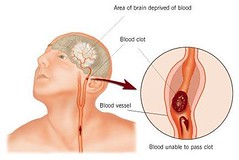
15376791446Blood ClottingFibrinogen converts into fibrin forming the clot.57
15376791447Erythropoietinstimulates generation of more erythrocytes58
15376791448Anemiaa lower than normal number of erythrocytes in the blood59
15376791449ThrombusBlood clot formed within a blood vessel.60
15376791450Cardiovascular DiseaseAccounts for more than half the deaths in the United States.61
15376791451AtherosclerosisThe buildup of plaque deposits within arteries.62
15376791452Heart AttackThe death of cardiac muscle tissue resulting from blockage of one or more coronary arteries. Myocardial infarction63
15376791453StrokeThe death of nervous tissue in the brain, usually resulting from rupture or blockage of arteries in the head.64
15376791454Low-density LipoproteinsAssociated with plaque formation; "bad cholesterol".65
15376791455High-density LipoproteinsReduce the deposition of cholesterol; "good cholesterol".66
15376791456HypertensionHigh blood pressure, promotes atherosclerosis and increases the risk of heart attack and stroke.67
15376791457Gas ExchangeSupplies oxygen for cellular respiration and disposes of carbon dioxide.68
15376791458Partial PressurePressure exerted by a particular gas in a mixture of gases.69
15376791459Respiratory MediaIn a given volume, there is less oxygen available in water than in air.70
15376791460Respiratory SurfacesGas exchange across respiratory surfaces takes place by diffusion. Respiratory surfaces may include: the outer surface, skin, gills, trachea, and lungs.71
15376791461VentilationMoves the respiratory medium over the respiratory surface.72
15376791462Countercurrent ExchangeUsed by fish; blood flows in the opposite direction to water passing over the gills73
15376791463Tracheal SystemUsed by insects; consists of tiny branching tubes that penetrate the body. Tracheal tubes supply oxygen directly to the cells.74
15376791464Lungsrespiratory organs75
15376791465Larynxupper part of the respiratory tract76
15376791466Tracheawindpipe77
15376791467Bronchitwo short branches located at the lower end of the trachea that carry air into the lungs.78
15376791468Bronchiolessmallest branches of the bronchi79
15376791469AlveoliTerminal air sacs that constitute the gas exchange surface of the lungs.80
15376791470SurfacantsSecretions that cover alveoli. Keeps alveoli from collapsing in on themselves.81
15376791471Positive Pressure BreathingUsed by amphibians; Gulping of air forces air down the trachea.82
15376791472Negative Pressure BreathingUsed by mammals; pulls air into the lungs via diaphragm83
15376791473Tidal VolumeThe volume of air inhaled with each breath.84
15376791474vital capacitytidal volume during maximal inhalation and exhalation85
15376791475residual volumeAmount of air remaining in the lungs after a forced exhalation86
15376791476Respiration in BirdsAir passes through the lungs in one direction only. Every exhalation completely renews the air in the lungs.87
15376791477Respiratory PigmentsProteins that transport oxygen, greatly increase the amount of oxygen that blood can carry.88
15376791478HemocyaninUsed by arthropods and some mollusks; respiratory pigments utilizing copper as the oxygen-binding component.89
15376791479HemoglobinRespiratory pigment utilizing iron as the oxygen-binding component. A single hemoglobin molecule can carry four molecules of O2. Hemoglobin also helps transport CO2 and assists in buffering90
15376791480Bohr shiftCO2 produced during cellular respiration lowers blood pH and decreases the affinity of hemoglobin for O2.91
15376791481breathing control centersMedulla oblongata92
15376791482MyglobinOxygen storing protein93

Campbell Biology Chapter 41 Flashcards

Animal Nutrition

Terms : Hide Images
9318602128essential nutrientssubstances the body requires for normal growth and health but cannot manufacture in sufficient amounts: they must be obtained in the diet.0
9318602129absorptionthe process of absorbing nutrients into the body after digestion1
9318602130Eliminationthe bodily process of discharging waste matter2
9318602131ingestionthe process of taking food into the body through the mouth (as by eating)3
9318602132digestionthe organic process by which food is converted into substances that can be absorbed into the body4
9318602133alimentary canaldigestive tube that extends from the mouth to the anus5
9318602134peristalsisthe process of wave-like muscle contractions of the alimentary tract that moves food along6
9318602135sphinctersringlike valves of muscular layer of the digestive tube that close off the tube like drawstrings, regulating the passage of material between chambers of the canal7
9318602136oral cavitycavity that receives food for digestion8
9318602137salivary glandsthree pairs of exocrine glands in the mouth that secrete saliva; the parotid, submandibular (submaxillary), and sublingual glands9
9318602138amylaseenzyme in saliva that breaks the chemical bonds in starches10
9318602139mucusprotective secretion of the mucous membranes11
9318602140pharynxthroat; passageway for food to the esophagus and air to the larynx12
9318602141esophagusthe passage between the pharynx and the stomach13
9318602142bolusA term used to describe food after it has been chewed and mixed with saliva14
9318602143stomachan enlarged and muscular saclike organ of the alimentary canal15
9318602144gastric juicedigestive secretions of the stomach glands consisting chiefly of hydrochloric acid and mucin and the enzymes pepsin and rennin and lipase16
9318602145chymea semiliquid mass of partially digested food that passes from the stomach through the pyloric sphincter into the duodenum17
9318602146pepsinogenprecursor of pepsin, The inactive form of pepsin that is first secreted by specialized (chief) cells located in gastric pits of the stomach.18
9318602147proteaseany enzyme that catalyzes the splitting of proteins into smaller peptide fractions and amino acids by a process known as proteolysis19
9318602148pepsinan enzyme produced in the stomach that splits proteins into peptones20
9318602149small intestinedigestive organ in which most chemical digestion takes place, the longest part of the alimentary canal21
9318602150liverorgan that makes bile to break down fats; also filters poisons and drugs out of the blood, storage function22
9318602151gallbladdera muscular sac attached to the liver that secretes bile and stores it until needed for digestion23
9318602152duodenumfirst part of small intestines, most digestion takes place, chemicals released from liver, gall bladder, and pancreas24
9318602153pancreasgland that secretes pancreatic juice into the duodenum, where it mixes with bile to digest food25
9318602154bilea substance produced by the liver that breaks up fat particles26
9318602155villiTiny finger-shaped structures that cover the inner surface of the small intestine and provide a large surface area through which digested food is absorbed27
9318602156microvilliTiny hair-like projections of the cytoplasmic membrane located only in the small intestine to facilitate absorption by increasing surface area.28
9318602157hepatic portal veinA vein connecting the capillary bed of the intestines with the capillary bed of the liver. This allows amino acids and gluocse absorbed from the intestines to be delivered first to the liver for processing before being transported throughout the circulatory system.29
9318602158lactealany of the lymphatic vessels that convey chyle from the small intestine to the thoracic duct30
9318602159colonportions of the large intestine extending from the cecum to the rectum; identified by direction or shape31
9318602160cecumthe cavity in which the large intestine begins and into which the ileum opens32
9318602161large intestinethe last section of the digestive system, where water is absorbed from food and the remaining material is eliminated from the body33
9318602162rectumThe last part of the digestive tract, through which stools are eliminated34
9318602163fecesundigested food material and other waste products that exit the body through the anus35
9318602164appendixA small, fingerlike extension of the vertebrate cecum; contains a mass of white blood cells that contribute to immunity.36
9318602165Essential amino acids, essential fatty acids, vitamins, minerals4 classes of essential nutrients37
9318602166Bulk, suspension/filter, substrate, fluid4 main feeding mechanisms of animals38
9318602167alimentary canal, accessory glandsIn mammals, the digestive system consists of the _______and various _______that secrete digestive juices through ducts into the canal.39
93186021683 pairs of Salivary glands, gallbladder, liver, pancreas4 accessory glands in human digestive system.40
9318602169Mucus, amylase, buffer3 components of saliva.41
9318602170antimicrobial agentsAdditional components of saliva include buffers, which help prevent tooth decay by neutralizing and __________ (e.g. lysozyme), protect against bacteria that enter the mouth with food.42
9318602171pharynx, esophagus, trachea, stomach, lungs, epiglottis, larynxThe __________, or throat region, opens to two passageways: the __________ and the __________ (windpipe). The esophagus connects to the __________, whereas the trachea leads to the __________. When you swallow, a flap of cartilage called the __________ covers the glottis—the vocal cords and the opening between them. Guided by the movements of the __________, the upper part of the respiratory tract, this swallowing reflex directs each bolus into the entrance of the esophagus43
9318602172gastric juice, chymeThe stomach secretes a digestive fluid called __________, and mixes this secretion with the food through a churning action. This mixture of ingested food and digestive juice is called __________.44
9318602173hydrochloric acid (HCl), protease, pepsinTwo components of gastric juice carry out chemical digestion. One is _________,which disrupts the extracellular matrix that binds cells together in meat and plant material. The exposed bonds are attacked by the second component of gastric juice—a _____, or protein-digesting enzyme, called _______. Unlike most enzymes, this enzyme works best in a strongly acidic environment. By breaking peptide bonds, it cleaves proteins into smaller polypeptides45
9318602174Parietal cells, lumen, chief cellsFurther digestion to individual amino acids occurs in the small intestine. _______secrete hydrogen and chloride ions, which form HCl. Using an ATP-driven pump, these cells expel hydrogen ions into the _______. There, the hydrogen ions combine with chloride ions that diffuse into the lumen through specific membrane channels of the parietal cells. Meanwhile, _______release pepsin into the lumen in an inactive form called pepsinogen. HCl converts pepsinogen to active pepsin by clipping off a small portion of the molecule and exposing its active site. Through these processes, both HCl and pepsin form in the lumen of the stomach, not within the cells of the gastric glands.46
9318602175gallbladderBile is stored and concentrated in here47
9318602176epithelial lining, duodenum, jejunum, ileumThe _______of the duodenum is the source of several digestive enzymes. Some are secreted into the lumen of the duodenum, whereas others are bound to the surface of epithelial cells. While enzymatic hydrolysis proceeds, peristalsis moves the mixture of chyme and digestive juices along the small intestine. Most digestion is completed in the _______. The remaining regions of the small intestine, called the _______ and _______, function mainly in the absorption of nutrients and water.48
9318602177brush borderThe many side-byside microvilli give cells of the intestinal epithelium a brushlike appearance—reflected in the name _______.49
9318602178colon, cecum, rectumComponents of the large intestine50
9318602179lactealIn exiting the intestine, chylomicrons are first transported from an epithelial cell into a _______, a vessel at the core of each villus.51
9318602180diarrhea, constipationIf the lining of the colon is irritated—by a viral or bacterial infection, for instance—less water than normal may be reabsorbed, resulting in ________. The opposite problem, ________, occurs when the feces move along the colon too slowly.52
9318602181deer, sheep, cattleexamples of ruminants53
9318602182Ghrelin, PYY, leptin, insulinhormones that trigger feelings of hunger and suppress appetite54
9318602183Dipeptidase, carboxypeptidase, aminopeptidase, disaccharidase, phosphatase5 small intestine digestive epithelium enzymes55
9318602184gastrin, secretin, CCK (cholecystokinin)3 hormones that control digestion56
9318602185enteric division, endocrine systemA branch of the nervous system called the _________, which is dedicated to the digestive organs, regulates these events as well as peristalsis in the small and large intestines. The ________also plays a critical role in controlling digestion.57
9318602186Overnourishment___________, the consumption of more calories than the body needs for normal metabolism, causes obesity, the excessive accumulation of fat.58

Pages

Subscribe to CourseNotes RSS

Need Help?

We hope your visit has been a productive one. If you're having any problems, or would like to give some feedback, we'd love to hear from you.

For general help, questions, and suggestions, try our dedicated support forums.

If you need to contact the Course-Notes.Org web experience team, please use our contact form.

Need Notes?

While we strive to provide the most comprehensive notes for as many high school textbooks as possible, there are certainly going to be some that we miss. Drop us a note and let us know which textbooks you need. Be sure to include which edition of the textbook you are using! If we see enough demand, we'll do whatever we can to get those notes up on the site for you!