AP Government Court Cases Flashcards
Terms : Hide Images
| 9080902835 | Engel v Vitale | First Amendment/Establishment Clause - Government-directed prayer in public schools violates the Establishment Clause of the First Amendment, even if the prayer is denominationally neutral and students may remain silent or be excused from the classroom during its recitation. |  | 0 |
| 9080902836 | Lemon v Kurtzman | Parochial schools must be private schools. They cannot be publicly funded via state law. Lemon Test: 1. The statute must have a secular legislative purpose. (Also known as the Purpose Prong) 2. The principal or primary effect of the statute must not advance nor inhibit religion. (Also known as the Effect Prong) 3. The statute must not result in an "excessive government entanglement" with religion. (Also known as the Entanglement Prong) |  | 1 |
| 9080902837 | Reynolds v U.S. | First Amendment/Free Exercise Clause - the statute can punish criminal activity without regard to religious belief. The First Amendment protected religious belief, but it did not protect religious practices that were judged to be criminal such as bigamy. Those who practice polygamy could no more be exempt from the law than those who may wish to practice human sacrifice as part of their religious belief. |  | 2 |
| 9080902838 | Baker v. Carr | 1962 in Tennessee, federal government has the ability to intervene in a state's redistricting to ensure fairness because redistricting is not just a political question |  | 3 |
| 9080902839 | NY Times v. U.S. | First Amendment/Freedom of the Press - New York Times and Washington Post could print the Pentagon Papers without risk of government censorship or punishment | 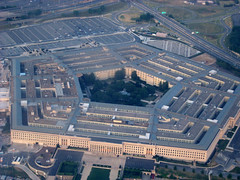 | 4 |
| 9080902840 | Hazelwood v. Kuhlmeier | First Amendment/Freedom of the Press - school newspaper articles withheld from publication, court ruled schools can exercise editorial concern over the content of student speech so long as they related to school concerns. |  | 5 |
| 9080902841 | Schenck v. U.S. | First Amendment/Freedom of Speech/non-protected - The circulars urged "Do not submit to intimidation" but advised only peaceful action such as petitioning to repeal the Conscription Act. Schenck was charged with conspiracy to violate the Espionage Act by attempting to cause insubordination in the military and to obstruct recruitment. During wartime, utterances tolerable in peacetime can be punished. Clear and present danger test. |  | 6 |
| 9080902842 | Gitlow v. New York | First Amendment/Freedom of Speech/non-protected - the government may suppress or punish speech that directly advocates the unlawful overthrow of the government and it upheld the constitutionality of the state statute at issue, which made it a crime to advocate the duty, need, or appropriateness of overthrowing government by force or violence, selective incorporation of 14th amendment. |  | 7 |
| 9080902843 | Buckley v. Valeo | First Amendment/Freedom of Speech/protected - campaign finance - upheld federal limits on campaign spending and identified spending money to influence elections is a form of free speech |  | 8 |
| 9080902844 | Tinker v. Des Moines | First Amendment/Freedom of Speech/symbolic speech - students' wearing of armbands in support of Vietnam truce did not interrupt school activities, pure speech |  | 9 |
| 9080902845 | U.S. v. Lopez | Second Amendment - gun laws about schools not related to interstate commerce and not under federal authority |  | 10 |
| 9080902846 | Mapp v. Ohio | Fourth Amendment/Exclusionary Rule - evidence taken in unreasonable searches and seizures may not be used in court. |  | 11 |
| 9080902847 | NJ v. TLO | Fourth Amendment/reasonable suspicion, schools have the ability to search students as they must maintain a safe school environment |  | 12 |
| 9080902848 | Miranda v. Arizona | Fifth and Sixth Amendment - unless the accused is notified of the reason for their arrest, the ability to consult with an attorney, the ability to not self-incriminate their testimony is not permissible in court. |  | 13 |
| 9080902849 | Korematsu v. U.S. | Fifth and Sixth Amendment - internment of Japanese-Americans during WWII was Constitutional, justified during times of emergency and peril |  | 14 |
| 9080902850 | Griswold v. Connecticut | Ninth Amendment - state ban on use of contraceptives violates the right of marital privacy |  | 15 |
| 9080902851 | Roe v. Wade | Ninth & Fourteenth Amendments/privacy Abortion is a private matter |  | 16 |
| 9080902852 | Plessy v. Ferguson | Fourteenth Amendment/Separate is Equal - ruled that railway cars provided were essentially equal so no violation of equal protection. |  | 17 |
| 9080902853 | Brown v. Board of Education | Fourteenth Amendment/Separate not Equal - Integration of Schools - racial segregation violates the equal protection clause |  | 18 |
| 9080902854 | Regents of California v. Bakke | Fourteenth Amendment/Upheld Affirmative Action - race may be one of several factors in college admission policies. |  | 19 |
| 9080902855 | Marbury v. Madison | Establishes the Supreme Court as having the power of Judicial Review/interpret the Constitution |  | 20 |
| 9080902856 | McCulloch v. Maryland | Implied powers under the Necessary and Proper Clause - Creation of the bank was implied based upon the enumerated power of Congress to tax. State of Maryland could not tax federal bank due to Supremacy Clause |  | 21 |
| 9080902857 | Gibbons v. Ogden | Supreme Court of the United States held that the power to regulate interstate commerce, granted to Congress by the Commerce Clause of the United States Constitution, encompassed the power to regulate navigation |  | 22 |
| 9080902858 | Shaw v. Reno | 1993 case in NC with majority-minority districts, court ruled it was an example of racial gerrymandering and thus these districts were unconstitutional. The case was a problem of reverse discrimination. (Redistricting cannot be based on race!) |  | 23 |
| 9080902859 | New York times v. Sullivan | 1964 - public official may not win a libel suit unless they can prove the statement was made knowing to be false or with reckless disregard of its truth |  | 24 |
| 9080902860 | Clinton v. New York | 1998, line item veto act struck down because constitution doesn't grant the president the power to veto specific items in spending - article 1 section 7 would be changed - violates procedure for passing a statute and changes veto power ABOLISHED LINE ITEM VETO |  | 25 |
| 9080902861 | Texas v. Johnson | A 1989 case in which the Supreme Court struck down a law banning the burning of the American flag on the grounds that such action was symbolic speech protected by the First Amendment. |  | 26 |
| 9080902862 | Kelo v. New London (CT) | "Eminent Domain" may be used to take private property for the public good even if this means giving it to private developers |  | 27 |
| 9080902863 | Barron v. Baltimore | Ruled that the Bill of Rights cannot be applied to the states. (Before selective incorporation and the 14th amendment) |  | 28 |
| 9080902864 | Gideon v. Wainwright | A landmark case in United States Supreme Court history. In the case, the Supreme Court unanimously ruled that state courts are required under the Sixth Amendment of the Constitution to provide counsel in criminal cases for defendants unable to afford their own attorneys. |  | 29 |
| 9080902865 | Loving v. Virginia | This is the court case that declared all laws against interracial marriage unconstitutional |  | 30 |
| 9080902866 | Obergefell v. Hodges | Upholds same sex marriage via 14th amendment equal protection clause |  | 31 |