

AP World History - Period 3 Flashcards
The Post-Classical World, 500-1450
Terms : Hide Images
| 7747409587 | Dhows | Arab sailing vessels; equipped with lateen sails; used by Arab merchants | 0 | |
| 7747409588 | Seljuk Turks | nomadic invaders from central Asia; staunch Sunnis; ruled from the 11th c. in the name of the Abbasids | 1 | |
| 7747409589 | Mongols | central Asian nomadic peoples; captured Baghdad in 1258 and killed the last Abbasid caliph | 2 | |
| 7747409590 | Chinggis Khan | (1162-1227); Mongol ruler; defeated the Turkish Persian kingdoms | 3 | |
| 7747409591 | Kublai Khan | Ruler of the Yuan Dynasty who unsuccessfully attempted to invade Japan twice | 4 | |
| 7747409592 | Shrivijaya | trading empire based on the Malacca straits; its Buddhist government resisted Muslim missionaries; when it fell, southeastern Asia was opened to Islam | 5 | |
| 7747409593 | Malacca | flourishing trading city in Malaya; established a trading empire after the fall of Shrivijaya | 6 | |
| 7747409594 | Mali | A kingdom founded along the Niger River. It grew wealthy from its deposits of gold along with its taxation of trade through the region. Its most important city was Timbuktu | 7 | |
| 7747409595 | Ibn Battuta | Muslim scholar from Morocco who traveled to North Africa, the Horn of Africa, West Africa, Middle East, India, Central Asia, Southeast Asia and China. | 8 | |
| 7747409601 | Mansa Musa | African King who made a pilgrimage to Mecca and caused inflation by passing out gold along his route. He built mosques and spread Islam from his kingcom | 9 | |
| 7747409596 | Songhay | successor state to Mali; dominated middle reaches of the Niger valley; capital at Gao | 10 | |
| 7747409597 | Zimbawe | powerful East AFrican kingdom that grew wealthy from trade with Swahili city-states and Indian Ocean traders. It was known for its large stone wall used for defensive purposes. | 11 | |
| 7747409602 | Swahili | A synchretic language that developed along Africa's East coast from a combination of Arabic and Bantu. | 12 | |
| 7747409603 | Griot | African religious leaders that passed histories down through generations through oral story-telling and songs. | 13 | |
| 7747409598 | Tatars | Mongols who conquered Russian cities during the 13th c; left Russian church and aristocracy intact | 14 | |
| 7747409599 | Trung Sisters | leaders of a rebellion in Vietnam against Chinese rule in 39 CE; demonstrates importance of women in Vietnamese society | 15 | |
| 7747409600 | Golden Horde | one of four regional subdivisions of the Mongol Empire after death of Chinggis Khan; conquered and ruled Russia during the 13th and 14th c | 16 | |
| 7747409604 | Silk Road Trade system |  | 17 | |
| 7747409605 | Sand roads |  | 18 | |
| 7747409606 | Indian Ocean Maritime Trade |  | 19 | |
| 7747409607 | Inca and Rome both had | extensive road systems | 20 | |
| 7747409608 | Bantu Migrations |  | 21 | |
| 7747409609 | terraced farming | A similarity in the Tong and Inca empires. Designed to solve the problem of growing food in mountainous regions. | 22 | |
| 7747409610 | Marco Polo | traveler/merchant from Italy who spend 17 years at court of Kublai Khan and wrote an exaggerated account of his journey in his book "Travels." | 23 | |
| 7747409611 | Chinampas | Raised fields constructed in lakes by Aztecs to increase agricultural yields. | 24 | |
| 7747409612 | Quipus | Inca system of record keeping using knots in several strands of strings worn around the waist | 25 | |
| 7747409613 | Chichen Itza | Large Mayan temple complex which included a ceremonial ball court. | 26 | |
| 7747409614 | Pax Mongolica | Allowed for renewed opening of trade routes in Central Asia | 27 | |
| 7747409615 | Dhow |  | 28 | |
| 7747409616 | longship |  | 29 |
AP World History Midterm Review Flashcards
Terms : Hide Images
| 8442364693 | Where did the idea of the first city state come from? | Sumeria | 0 | |
| 8442364694 | The Indus River is located in what modern-day country? | Pakistan | 1 | |
| 8442364695 | What is the name of a Sumerian temple? | Ziggurat | 2 | |
| 8442364696 | What was the first form of writing? | Cuneiform | 3 | |
| 8442364697 | Which is true of hunting and gathering shortly after the development of agriculture? | People tended to somewhat rely on the old techniques | 4 | |
| 8442364698 | Hierarchy and patriarchy were found in both agrarian and _____________ societies | Pastoralist | 5 | |
| 8442364699 | The above structure, (picture of big, temple looking building), is most closely associated with... | Urban planning in Sumeria | 6 | |
| 8442364700 | In the first civilizations, how were monumental construction projects most connected to the process of state/empire building and political consolidation? | Monumental buildings promoted the government by displaying its power and wealth | 7 | |
| 8442364701 | What was the significance of Hammurabi's Code? | It was the first organized law code designed to create social order | 8 | |
| 8442364702 | What major social changes occurred causing the major religions/philosophies to come about in roughly the same period? | The emergence of new states/empires | 9 | |
| 8442364703 | In the above painting, Confucius is presenting a baby Buddha to the Daoist teacher Laozi. This picture is an example of: | Coexistences of various belief systems in China | 10 | |
| 8442364704 | Moksha:_____________::_______________:Buddhism | Hinduism, Nirvana | 11 | |
| 8442364705 | In what religions did the notion of a single supreme diety (monotheism) first develop? | Judaism and Zoroastrianism | 12 | |
| 8442364706 | Passage given: "When a prince's personal conduct..." Question: Who among the following would object the strongest to the political ideology expressed above? | Legalist | 13 | |
| 8442364707 | Buddhism spread primarily _____________ from India by _____________. | East, trade and missionaries | 14 | |
| 8442364708 | What group of people developed Judaism? | Hebrews | 15 | |
| 8442364709 | What is Siddartha Guatama known for? | Founding Buddhism | 16 | |
| 8442364710 | Confucianism, Daoism, and Legalism were all attempts to ______________ in China. | Establish order | 17 | |
| 8442364711 | Which economic development between 8000 BCE & 600 BCE resulted in the most profound transformation of social structures? | Large agriculture surplus because of metal tools | 18 | |
| 8442364712 | Some people say that women were the first farmers. Which of the following is the best evidence? | Women know about seeds, plants, and growth processes | 19 | |
| 8442364713 | What technological innovation contributed the most to the military in Egypt, Anatolia, & Mesopotamia? | Chariots and compound bows | 20 | |
| 8442364714 | Passage Given: excerpt from Code of Hammurabi What does the law reinforce about Babylonian civilization? | Social hierarchies | 21 | |
| 8442364715 | Passage Given: excerpt from Code of Hammurabi What can you infer from the passage? | Agriculture was a strong focus | 22 | |
| 8442364716 | Consequences of the Neolithic Revolution included all but... | Disappearance of hunting and gathering | 23 | |
| 8442364717 | Changes caused by the Neolithic Revolution led to... | Establishment of farming communities which led to the development of the first cities | 24 | |
| 8442364718 | The Vedas are the writings of the ancient_______ in India | Brahman priests | 25 | |
| 8442364719 | What happened to the borders during Ashoka's reign? | They expanded | 26 | |
| 8442364720 | What dynasty's official ideology was Confucianism? | Han | 27 | |
| 8442364721 | What does the image (yin yang) best represent? | The daost view of opposites leading to harmony | 28 | |
| 8442364722 | _____________:Confucius::Daodesing:_______________ | Analects, Laozi | 29 | |
| 8442364723 | What was Confucius' idea of a "superior man"? | Any man with outstanding moral character | 30 | |
| 8442364724 | How did the Buddhist challenge the Hindus? | The rejection of Brahmin religious authority/caste system | 31 | |
| 8442364725 | What is the basic principle of Confucianism? | Superiors/leaders must live morally | 32 | |
| 8442364726 | What is filial piety best defined as? | Respect for elders | 33 | |
| 8442364727 | Early belief systems generally reinforced _________ while also offering new rules & status to some men and women. | Existing social structures | 34 | |
| 8442364728 | When looking at effects of Neolithic Revolution on social structures, which source is the most useful? | Ancient law codes | 35 | |
| 8442364729 | Map Given Question: What does the map show? | Agricultural regions of early civilizations | 36 | |
| 8442364730 | What is an example of economic effect on human societies as a result of the Neolithic Revolution? | The specialization of labor | 37 | |
| 8442364731 | What fundamental changes allowed hunters & gatherers to have more stable food supply? | Domestication of animals | 38 | |
| 8442364732 | Distinguish the Neolithic Age from Paleolithic Age? | Advent of agriculture | 39 | |
| 8442364733 | All of the following are causes of cultural diffusion except... | Culture | 40 | |
| 8442364734 | Which of the early civilizations weren't located on Africa/Asia? | Chavin | 41 | |
| 8442364735 | True concerning Christians and Buddhists in the early period of decelopment | Shift in some followers towards a monastic life | 42 | |
| 8442364736 | Mycenean:___________::_____________:Ancient Rome | Ancient Greece,Etruscoun | 43 | |
| 8442364737 | Ashoka & Constantine: What is the most striking difference between relation of each of their religions to the empires they governed? | Constantine's religion was the official religion of the empire, Ashoka's religion regressed minority after death | 44 | |
| 8442364738 | In the Han Dynasty, which group rose to the top of the social structure? | Scholars | 45 | |
| 8442364739 | Which religion practiced monasticism? | Christianity and Buddhism | 46 | |
| 8442364740 | Before Alexander the Great, what was the greatest source of unity in Greek civilization? | Common cultural basis | 47 | |
| 8442364741 | Which of the following took place at roughly the same time? | Fall of Han, rise of Gupta, Roman Empire | 48 | |
| 8442364742 | Which was not a demographic/social change that occurred during the Bronze Age shortly after the Neolithic Revolution? | Increased equality among social classes | 49 | |
| 8442364743 | What economic development between 9000 BCE-600 BCE resulted in the most profound transformation of Social Structures? | Large agricultural surpluses resulting from metal tools | 50 | |
| 8442364744 | Daoism influenced Chinese culture in all of the following areas except ________. | Governmental adminstration | 51 | |
| 8442364745 | Passage Given: "When a prince's personal conduct is correct his government is effective without issuing of orders..." Question:Ideas expressed in the quotation below became an essential feature of state building in which government? | Han | 52 | |
| 8442364746 | What non-codified belief system created a common cultural link between rural peasants & educated urban elites during the Han dynasty? | Ancestor veneration | 53 | |
| 8442364747 | The first converts to Christianity derived primarily from... | Lower classes | 54 | |
| 8442364748 | The Hindu concept of Samsara is best described by which statement? | A belief that one's soul is reborn many times until its pure enough to escape the cycle of rebirth | 55 | |
| 8442364749 | Drawing Given: painting of man looking out at mountains Question: The work of art above reflects values of what Asian belief system? | Daoism | 56 | |
| 8442364750 | All of the following were city states n Mesopotamia except... | Mohenjo-daro | 57 | |
| 8442364751 | Graph Given: about world population growing over the years Question: The trend shown on the graph above is best explained by... | The widespread diffusion of agricultural practices | 58 | |
| 8442364752 | Map Given: map of Africa Question:Which of the following statements about early human migration patterns is supported by the map above? | Earliest archalogical evidence for modern humans in Africa | 59 | |
| 8442364753 | What aided the rise of Hittites to become an early empire? | Inventor and use of iron | 60 | |
| 8442364754 | What best explains how the division of labor in human societies changed during the Neolithic Revolution? | Men tended to hunt while women were responsible for gathering edible plants. With the advent of agriculture, men became responsible for harvesting crops/women focused on child-bearing | 61 | |
| 8442364755 | What is a major difference between the early Hebrew and Vedic religions? | Hebrew was monotheistic, while Vedic was polytheistic | 62 | |
| 8442364756 | Moving up the social class structure increases things such as... | Influence | 63 | |
| 8442364757 | Compared to early Hebrew law, Babylonian law... | Provided more leniency | 64 | |
| 8442364758 | What explanation of Christianity's spread during Roman Empire is most compatible to which phenomenon during the same time period? | Spread of Buddhism in China during the Han Dynasty's decline | 65 | |
| 8442364759 | All of the following groups conquered & dispersed various Jewish states during 600 BCE-600 CE except the... | Mauryans | 66 | |
| 8442364760 | Which of the following is most associated with Southeast Asian trade? | Srivijaya | 67 | |
| 8442364761 | Each of these are technological advancements of the Chinese during the Song Dynasty except... | The camel saddle | 68 | |
| 8442364762 | What was the name of the city that linked spice islands into the Indian Ocean? | Malacca | 69 | |
| 8442364763 | This is one change to the Social Class Structure in Europe that did not cause a peasant uprising... | Conscription acts forced on unsupportive peasants | 70 | |
| 8442364764 | Most European peasant revolts led to what? | Military victories for the nobility, but legal changes caused change to help peasants | 71 | |
| 8442364765 | In order to supply food, in Tenochtitlan, the Aztecs did what? | Built floating agricultural islands on the lake (chinampas) | 72 | |
| 8442364766 | How were the classicial civilizations in South Asia & China different from the Mediterranean? | Asian civilizations formed a cultural-social synthesis that endured beyond the political dynasties of their classical age | 73 | |
| 8442364767 | Salt was dominate in what trade network? | Trans-Saharan | 74 | |
| 8442364768 | Which of these is true of the Silk Road between 600 BCE-600 CE? | The volume of trade increased & decreased based on the stability & vitality of the major classical empires | 75 | |
| 8442364769 | China used silk to acquire ___________. In order to defend itself against northern invaders. | Horses | 76 | |
| 8442364770 | Camels were used in Trans-Saharan, but also in... | Central Asia | 77 | |
| 8442364771 | What was the duty of an emperor according to Confucian philosophy? | To act virtuously in order to act as an example for his subjects | 78 | |
| 8442364772 | Which of the following is NOT associated with the collapse of all imperial governments between 200 CE-600 CE? | Weakening and disintegration of major belief systems | 79 | |
| 8442364773 | A primary cause to the collapse of the Gupta Empire can be credited to... | Weakness of a decentralized state facing external threats | 80 | |
| 8442364774 | Which development most significantly increased the volume of Mediterranean trade? | Carthage and its territories falling into Roman lands | 81 | |
| 8442364775 | Two religions that diffused the greatest by Afro-Eurasian trade networks were... | Christianity and Buddhism | 82 | |
| 8442364776 | Monsoons are seasonal winds that come in 6-month intervals , these primarily affect trade where? | In the Indian Ocean trade network | 83 | |
| 8442364777 | The sail on the Daow, which was first used in the Mediterranean then in the Indian Ocean, is called a... | Lateen | 84 | |
| 8442364778 | Rock and pillar edicts aided in the spread of which of the following? | Buddhism | 85 | |
| 8442364779 | What major social changes occurred causing major religions/philosophies to come about in roughly the same time period? | All of the above: iron technology led to higher productivity/deadlier war, increased commerce led to cultural diffusion, emergence of new empires | 86 | |
| 8442364780 | Which of the following best describes classical India between the Mauryan & Gupta empires? | Regionalism | 87 | |
| 8442364781 | Which of the following was not an example of environmental damage done by wealthy landowners due to excessive mobilization of resources? | Water pollution | 88 | |
| 8442364782 | Map Given: map of Europe and Asia Question: The map above portrays the example of... | Alexander the Great | 89 | |
| 8442364783 | China during the Han Dynasty and India during the Gupta Empire were in their "golden ages" because of... | Economic prosperity, improved science/technology, increased development of artistic forms | 90 | |
| 8442364784 | Quote Given: Edicts Question: Emperor Ashoka's main purpose behind the above edicts was to... | Demonstrate a concern that justice should be fair | 91 | |
| 8442364785 | One of the factors that contributed in the collapse of the Western Roman Empire was... | The decline of Rome's population due to the spread of disease | 92 | |
| 8442364786 | Before 600 CE, the Han, Persian, and Roman Empires extended military power by... | Developing supply lines, infrastructure, defensive walls/roads | 93 | |
| 8442364787 | Which civilization spread through systematic commercial colonization? | The Greeks | 94 | |
| 8442364788 | What 2 cities are most alike in terms of bureaucratic adminstration? | Rome and Han | 95 | |
| 8442364789 | What was the primary source of soldiers in the Rome Army? | Conquered people | 96 | |
| 8442364790 | Which network of trade was influenced by climate/weather? | The Indian Ocean trade network | 97 | |
| 8442364791 | Map Given: Map of Europe Question: Between 1176 CE & 1050 CE all factors caused the spread of Christianity, however the map empathizes... | Efforts of monks and missionaries | 98 | |
| 8442364792 | All of the following spread as a result to Bantu migration except... | Improved navigation technology | 99 | |
| 8442364793 | Map Given: Map of India Question: The collapse of the Gupta Empire was largely due to the... | Attack of the White Huns | 100 | |
| 8442364794 | Early belief systems generally reinforced ___________ while also offering new roles & status to some men & women. | Existing social structures | 101 | |
| 8442364795 | Who was the group credited with disrupting the Romans, Guptas, & Han was the... | Huns | 102 | |
| 8442364796 | What was the non-codified belief system that created a common cultural link between rural peasants & educated urban cities during China's Han Dynasty? | Ancestor veneration | 103 | |
| 8442364797 | The mandatory public service required in the Ince Empire was called... | Mita | 104 | |
| 8442364798 | All of the following areas utilized free peasant agriculture except... | West Africa | 105 | |
| 8442364799 | The result of an increased demand for luxury items in Europe was... | It created more industrial outputs in China, India, and Persia | 106 | |
| 8442364800 | The dominant form of labor organization shown in this example of Medieval Manor was... | Free peasant agriculture | 107 | |
| 8442364801 | Under the Sui, Tang Dynasties in China... | Gave state support | 108 | |
| 8442364802 | Knight:Western Europe::______:_______ | Samurai, Japan | 109 | |
| 8442364803 | The dominant economic system during the European Middle Ages was called... | Feudalism | 110 | |
| 8442364804 | _________ was the capital of Song Dynasty China, as well as serving as one of the two terminuses for the Grand Canal | Hangzou | 111 | |
| 8442364805 | What is false concerning Afro-Eurasian trade? | Trade almost always occurred over land | 112 | |
| 8442364806 | Mongols:___________::____________: Caliphates | Khanates, Islamic Empires | 113 | |
| 8442364807 | All but _______ is one of the five pillars of Islam | Memorization of the Quran | 114 | |
| 8442364808 | What was the primary reason for the splitting of the Sunni and Shia Muslims? | Disagreement concerning who should succeed Muhammed | 115 | |
| 8442364809 | The Asian Steppes are located where? | In Central Asia | 116 | |
| 8442364810 | Who was the first Christian emperor of Rome? | Constantine | 117 | |
| 8442364811 | What are chinampas? | Floating plant beds invented by Aztecs | 118 | |
| 8442364812 | New governments such as ________ was found in Western Europe/Japan were decentralized | Feudalism | 119 | |
| 8442364813 | Who was most responsible for spreading Black Death in 13-14th centuries? | The Mongols | 120 | |
| 8442364814 | Picture Given" Muslim Event Question: This picture represents the central event of a... | Muslim Hajj | 121 | |
| 8442364815 | What did the camel saddle, daow ship, the stirrup & the lateen sail have in common? | All of them were devised to overcome environmental barriers to trade | 122 | |
| 8442364816 | Internal trade in the Sui Dynasty was greatly stimulated by the... | Construction of the Grand Canal | 123 | |
| 8442364817 | The spread of knowledge of Chinese farming techniques is an example of how... | Improvements in the printing process led to the spread of knowledge and new technologies | 124 | |
| 8442364818 | Factors that led to an increase in agriculture along with new farming techniques were... | Diffusion of fast-ripening rice from Vietnam | 125 | |
| 8442364819 | Han, Persian, and Gupta Empires shared what characteristic? | Sophisticated bureaucracies that aided political administartion | 126 | |
| 8442364820 | Quote Given: "Slaves were vital to central economy..." Question: The above description of slaves in the classical period describes what? | Roman slaves | 127 | |
| 8442364821 | Confucianism, Daoism, and Legalism were all attempts to... | Establish order | 128 | |
| 8442364822 | Which religion practiced monsaticism? | Christianity and Buddhism | 129 | |
| 8442364823 | Over the course of the Han Dynasty, which group rose to the top of social/political hierarchy? | Scholars | 130 | |
| 8442364824 | Changes in the Neolithic Revolution led to... | The establishment of farming communities which led to the first cities | 131 | |
| 8442364825 | Rebellion by northern tribes dissatisfied Mongol rule, followed by famine in the South, prompted ___________ to launch rebellion for the fall of the Yuan Dynasty in 1368 | The Red Turban Society | 132 | |
| 8442364826 | Neo-Confucianism became an international movement and spread to where? | Japan, Korea, Vietnam | 133 | |
| 8442364827 | Given Quote: peasant revolt in England 1381 Question: What role did religions play in the Peasant Revolt discussed in the passage above? | Peasants used religious beliefs to justify their resistance | 134 | |
| 8442364828 | After the collapse of the Western Roman Empire, The Catholic Church... | Increased its power and role | 135 | |
| 8442364829 | Quanat system was developed as a result of... | The spread of certain crops from South Asia to the Middle East that required greater amounts of water than many native plant types | 136 | |
| 8442364830 | Roman architecture was heavily influenced by and had similarities to... | Greek architecture | 137 | |
| 8442364831 | Both Roman & Gupta experience difficulty in... | Maintaining political control over vast areas | 138 | |
| 8442364832 | All of the following were contributing factors to the fall of the Han & Roman Empires except... | The decrease in the democratic process | 139 | |
| 8442364833 | Map Given: Asia Question: The map above shows areas controlled by the... | Han Dynasty | 140 | |
| 8442364834 | In spite of customs and traditions honoring motherhood, most imperial societies of the classical period were... | Patriarchies | 141 | |
| 8442364835 | Which of the following events led directly to the spread of Buddhist missionaries to Southeast Asia, Central Asia, South India, and the Mediterranean? | The conversion of Ashoka | 142 | |
| 8442364836 | Map Given: Asia Question: What is the primary belief system spread on trade routes in this time period? | Buddhism | 143 | |
| 8442364837 | Map Given: Asia Question: The routes pictured above were the direct cause of which exchanges? | Cotton cultivation from South Asia to Persia | 144 | |
| 8442364838 | What social problems experienced both by Rome & Han in its final decades? | Farmers protested their loss of land to the aristocracy | 145 | |
| 8442364839 | Picture Given: Alex's Routes Question: Which of the following was NOT a long term effect of the camp. of Alex of Macedonia pictured above? | Hellenistic culture became a permanent feature of Persia and Central Asia | 146 | |
| 8442364840 | Which developments most LIMITED the spread of Christianity outside Europe? | The development/spread of Islam throughout Middle East and North Africa | 147 | |
| 8442364841 | Although patriarchy was dominant in most areas, places such as West Africa and __________ tended to be more matriarchal | Southeast Asia | 148 | |
| 8442364842 | What labor organization was primarily used by the Aztecs? | Slave/unfree | 149 | |
| 8442364843 | Decreased invasions, more reliable transport, warmer temperatures and increased availability of labor all led to what? | Urban revival | 150 | |
| 8442364844 | Increased agriculture and industrial productivity resulted in what? | All of the above: Increased population, increased urban and trade | 151 | |
| 8442364845 | Of the following types of labor organization, which was most likely to be found in Asian Steppes? | Nomadic Pastoralism | 152 | |
| 8442364846 | Quote Given: Foot-binding passage Question: The above practice described was used during the _______ Dynasty | Song | 153 | |
| 8442364847 | As opposed to the relativity of Christianity and Buddhism, Islam was expanded primarily by... | Military conquest | 154 | |
| 8442364848 | To assist with navigation, the ________ created ___________. | Arabs, Astrolabe | 155 | |
| 8442364849 | Which is true of the Song Dynasty in China? | printing with movable type was developed during the dynasty | 156 | |
| 8442364850 | What was the group most associated with the fall of the Song Dynasty? | The Mongols | 157 | |
| 8442364851 | Sogdian diasporic communities were located primarily in... | Central Asia | 158 | |
| 8442364852 | Which was a former Russian city that was a vital artery for the Hanseatic League? | Novgorod | 159 | |
| 8442364853 | Which is false concerning Indian Ocean trade up to 810? | Slave trade was the primary focus | 160 | |
| 8442364854 | The introduction of the ________ had the greatest impact on Trans-Saharan trade in the early centuries. | Camel | 161 | |
| 8442364855 | Muslim writer who traveled throughout Islam and would report what he saw... | Ibn Battuta | 162 | |
| 8442364856 | Picture Given: Temple-looking building Question: The above building was built by the _________ empire in the capital city of ____________. | Byzantine, Constantinople | 163 | |
| 8442364857 | In the 9th century CE, the Tang Dynasty was weakened by conflicts between who? | Buddhism and Confucianism | 164 | |
| 8442364858 | In 1054... | The Catholic Church split creating Orthodox faith | 165 | |
| 8442364859 | Which groups were treated as "people of the book" in lands under Islamic Rule? | Christians and Jews | 166 | |
| 8442364860 | What was the center of commerce/trade in the northern Adriatic Sea and eventually the Mediterranean Sea region in 1000 CE> | Venice | 167 | |
| 8442364861 | What is the economic theory that trade generates wealth and is stimulated by the accumulation of profitable balances? | Mercantilism | 168 | |
| 8442364862 | Which of the following described the Mongol Empire's role in Trans-Eurasian trade? | Reestablished Silk Roads between Asia and Europe | 169 | |
| 8442364863 | Innovations in land-based trade had what long term effect on Eurasia? | Increase in production and movement of luxury items | 170 | |
| 8442364864 | Which of the following accurately compares trade cities with trade centers in East Asia? | Cities in Northern Europe led to independently formed organizations to protect trade, East Asian commerce benefitted from centralized government | 171 | |
| 8442364865 | What was the clearest effect of the growth in agricultural productivity? | Massive population increase | 172 | |
| 8442364866 | Christianity was accepted/spread mostly through the ________ & _________ empires in 476 CE. | Roman and Byzantine | 173 |
Chapter 12 AP World History Vocab Flashcards
Terms : Hide Images
| 8608665652 | Han Wudi | The Martial Emperor of Han Added the regions south of the Chang Jiang Political | 0 | |
| 8608665653 | Missionaries | People who work to spread their religious beliefs Cultural | 1 | |
| 8608668274 | Manichaeism | Religion that competed with Christianity Influenced by Zoroastrianism Cultural | 2 | |
| 8608668275 | Smallpox | A disease that causes a high fever and often death Interaction with Environment | 3 | |
| 8608669673 | Constantinople | Capital of the Byzantine empire Political | 4 | |
| 8608669674 | Attila | Leader of the Huns who put pressure on the Roman Empire's borders during the 5th century Political | 5 | |
| 8608671233 | St. Augustine | Early christian leader who writes the book City of God that instructs how Christians are to be Cultural | 6 | |
| 8608671234 | Monsoon Winds | These carried ships on the Indian Ocean between India and Africa Interaction with Environment | 7 | |
| 8608674836 | Expatriate Merchants | Workers from another country residing within the country on a temporary or permanent basis Economical | 8 | |
| 8608677090 | Syncretic/Syncretism | Cultures and religions that have combined and have borrowed traits and traditions from others Cultural | 9 | |
| 8608677091 | Dioclatian | Roman emperor who divided the empire into a West and an East section Political | 10 | |
| 8608678751 | Visigoths | The western branches of the nomadic tribes of Germanic people These tribes flourished and spread throughout the late Roman Empire Political | 11 | |
| 8608681056 | Bishop of Rome | Original title of the Pope Cultural | 12 | |
| 8608681057 | Measles | A disease causing fever and a red rash on the skin Interaction with Environment | 13 | |
| 8608682244 | Madagascar | Huge island nation off the southeast coast of Africa Political | 14 | |
| 8608683675 | Nestorians | A Christian sect found in Asia Tended to support Islamic invasions of this area in preference to Byzantine rule Cut off from Europe by Muslim invasions Cultural | 15 | |
| 8608686102 | Bubonic Plague | A deadly contagious disease caused by bacteria and spread by fleas Interaction with Environment | 16 | |
| 8608688074 | Constantine | Emperor of Rome who adopted the Christian faith Stopped the persecution of Christians Political and Cultural | 17 | |
| 8608690348 | Huns | Nomadic people of central Asia Political | 18 | |
| 8608691716 | 476 CE | Fall of western Roman Empire Political | 19 | |
| 8609363389 | Mani | Sacred objects Can be used as an aid in prayer Cultural | 20 |
AP World History Chapter 16 Flashcards
Terms : Hide Images
| 8843388148 | Bhakti | Hindu devotional movement that flourished int he early modern era, emphasizing music, dance, poetry, and rituals as means by which to achieve direct union with the divine |  | 0 |
| 8843388149 | Catholic Counter-Reformation | An internal reform of the Catholic Church in the 16th century, thanks especially to the work of the Council of Trent (1545-1563), Catholic leaders clarified doctrine, corrected abuses and corruption, and put a new emphasis on education and accountability |  | 1 |
| 8843388150 | Condorcet and the idea of progress | The Marquis of Condorcet (1743-1794) was a French philosopher and political scientist who argue that human affairs were moving into an era of near-infinite improvability with slavery, racism, tyranny, and other human trials swept away by the triumph of reason. |  | 2 |
| 8843388151 | Nicolaus Copernicus | Polish mathematician and astronomer (1473-1543) who was the first to argue for the existence of a heliocentric cosmos. |  | 3 |
| 8843388152 | Council of Trent | The main instrument of the Catholic Counter-Reformation (1454-1563) at which the Catholic Church clarified doctrine and corrected abuses. |  | 4 |
| 8843388153 | Charles Darwin | Highly influential English biologist continues to be seen by many as a threat to revealed religious truth. | 5 | |
| 8843388154 | Deism | Belief in a divine being who created the cosmos but who does not intervene directly in human affairs. |  | 6 |
| 8843388155 | Edict of Nantes | 1598 edict issued by French king Henry IV that granted considerable religious toleration to French Protestants and ended the French Wars of Religion |  | 7 |
| 8843388156 | European Enlightenment | European intellectual movement of the 18th century that applied the lessons of the scientific revolution to human affairs and was noted for its commitment to open-mindedness and inquiry and the belief that knowledge could transform human society. | 8 | |
| 8843388157 | Sigmund Freud | Austrian doctor and the father of modern psychoanalysis (1856-1939); his theories about the operation of the human mind and emotions remains influential today. | 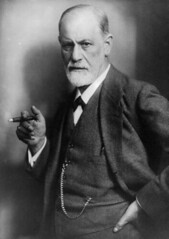 | 9 |
| 8843388158 | Galileo Galilei | Italian astronomer (1564-1642) who further developed the ideas of Copernicus and whose work was eventually suppressed by the Catholic Church |  | 10 |
| 8843388159 | Huacas | Local gods of the Andes |  | 11 |
| 8843388160 | Huguenots | The Protestant minority in France |  | 12 |
| 8843388161 | Jesuits in China | Series of Jesuit missionaries in the late 16th and 17th centuries who, inspired by the work of Matteo Ricci, made extraordinary efforts to understand and become a part of Chinese culture in their efforts to convert the Chinese elite, although with limited success |  | 13 |
| 8843388162 | Kaozheng | Literally, "research based on evidence"; Chinese intellectual movement whose practitioners emphasized the importance of evidence and analysis, applied especially to historical documents | 14 | |
| 8843388163 | Martin Luther | German priest and theologian (1483-1546) who inaugurated the Protestant Reformation movement in Europe |  | 15 |
| 8843388164 | Karl Marx | German philosopher (1818-1883) whose view of human history as a class struggle formed the basis of socialism |  | 16 |
| 8843388165 | Mirabai | One of India's most beloved bhakti poets (1498-1546), she helped break down the barriers of caste and tradition. |  | 17 |
| 8843388166 | Guru Nanak | The founder of Sikhism (1469-1539) |  | 18 |
| 8843388167 | Isaac Newton | English natural scientist (1643-1727) whose formulation of the laws of motion and mechanics is regarded as the culmination of the Scientific Revolution |  | 19 |
| 8843388168 | Ninety-five Theses | List of ninety-five debating points about the abuses of the church, posted by Martin Luther on the door of a church in Wittenberg in 1517; the Church's strong reaction eventually drove Luther to separate from Catholic Christianity. |  | 20 |
| 8843388169 | Protestant Reformation | Massive schism within Christianity that had its formal beginning in 1517 with the German priest Martin Luther; while the leaders of the movement claimed that they sought to "reform" a Church that had fallen from biblical practice, in reality the movement was radically innovative in its challenge to Church authority and its endorsement of salvation "by faith alone" | 21 | |
| 8843388170 | Matteo Ricci | The most famous Jesuit missionary in China in the early modern period; active in China from 1582-1610 |  | 22 |
| 8843388171 | Scientific Revolution | Great European intellectual and cultural transformation that was based on the principles of the scientific method. |  | 23 |
| 8843388172 | Sikhism | Religious tradition of northern India founded by Guru Nanak ca. 1500, combines elements of Hinduism and Islam and proclaims the brotherhood of all humans and the equality of men and women |  | 24 |
| 8843388173 | Society of Jesus | AKA Jesuits; The Catholic religious society was founded to encourage the renewal of Catholicism through education and preaching; it soon became a leading Catholic missionary order beyond the boards of Europe. |  | 25 |
| 8843388174 | Taki Onqoy | Literally, "dancing sickness"; a religious revival movement in central Peru in the 1560s whose members preached the imminent destruction of Christianity and of the Europeans in favor of a renewed Andean golden age |  | 26 |
| 8843388175 | Thirty Years' War | Highly destructive war (1618-1648) that eventually included most of Europe; fought for the most part between Protestants and Catholics, the conflict ended with the Peace of Westphalia (1648) |  | 27 |
| 8843388176 | Voltaire | Pen name of the French philosopher Francois-Marie Arouet (1694-1778) whose work is often taken as a model of Enlightenment questioning of traditional values and attitudes; noted for his deism and his criticism of traditional religion |  | 28 |
| 8843388177 | Wahhabi Islam | Major Islamic movement led by the Muslim theologian Abd al-Wahhab (1703-1792) that advocated an austere lifestyle and strict adherence to the sharia. | 29 | |
| 8843388178 | Wang Yangmin | Prominent Chinese philosopher (147201529) who argued that it was possible to achieve a virtuous life by introspection , without the extensive education of traditional Confucianism |  | 30 |
Chapter 20 AP World History Flashcards
Terms : Hide Images
| 6087193832 | How did the emergence of Germany as a new nation-state affect the European political scene after 1870? | Germany's arrival disrupted the established order | 0 | |
| 6087196312 | Which of the following explains how an assassination in Austria-Hungary triggered World War I? | The triple alliance and the triple entente | 1 | |
| 6087203918 | Which of the following was a term of the Treaty of Versailles? | Germany was to accept sole responsibility for the cause of WWI | 2 | |
| 6087205751 | The new states that had been carved out of which empire were governed as mandates of the League of Nations after World War I? | The Ottoman Empire | 3 | |
| 6087207889 | What happened to the German territory in China after World War I ended? | Japan Claimed It | 4 | |
| 6087212084 | Which of the following describes the position of the United States after World War I? | It became Europe's main creditor. | 5 | |
| 6087218440 | Which of the following characterized European and American culture in the 1920s? | A new consumerism | 6 | |
| 6087218441 | Which of the following represents a response among many Latin American countries to the global repercussions of the Great Depression? | Import substitution industrialization | 7 | |
| 6087221919 | The set of reforms packaged as the New Deal was based on the belief that | Government actions and spending programs could correct the market | 8 | |
| 6087221966 | Which of the following was a factor in causing the Great Depression? | Speculation on the stock market | 9 | |
| 6087225034 | Which of the following describes popular attitudes in Europe toward the prospect of war in the summer of 1914? | Widespread enthusiasm | 10 | |
| 6087229074 | Which country was least affected by the Great Depression? | The Soviet Union | 11 | |
| 6098404044 | Which of the following did Japan, Italy, and Germany share in the 1930s? | Aggressive ambition for conquest & empire building | 12 | |
| 6098404147 | What drew Japan, Germany, and Italy into a political alliance by 1936-1937? | Hostility towards the Soviet Union | 13 | |
| 6098407623 | What effect did World War II have on communism? | It enabled communist parties in Eastern Europe and China to assume power | 14 | |
| 6098407624 | In contrast to what transpired during World War I, Germany during World War II was able to | conquer France quickly | 15 | |
| 6098411038 | What effect did the U.S. Marshall Plan have on European economies? | It promoted economic growth and widespread prosperity in Western Europe. | 16 | |
| 6098411191 | Which of the following was a more prominent feature of World War II than World War I? | The blurring of the line between civilian and military targets | 17 | |
| 6098413758 | Which of the following appealed to fascists? | Nationalism | 18 | |
| 6098416414 | Japanese politics and society during the 1920s suggested that Japan favored | democratic politics and Western culture | 19 | |
| 6098419460 | Which of the following resulted from Japan's attack on Pearl Harbor? | The wars in Asia and Europe merged into a single global war. | 20 | |
| 6098421952 | What happened to Europe's empires in Asia and Africa after the end of World War II? | European empires collapsed as colonies achieved independence. | 21 | |
| 6098422099 | Which of the following committed the United States to the defense of Europe against the Soviet Union after World War II? | The North Atlantic Treaty Organization | 22 | |
| 6098425684 | How did the American occupation of Japan after World War II affect the Japanese economy? | It promoted rapid economic growth and generated economic prosperity. | 23 | |
| 6098425726 | Which of the following contributed to Western European recovery after the devastation of World War II? | The ability of Western European countries to integrate their economies | 24 | |
| 6098429783 | Which of the following strained Japan's relations with Western powers in the early 1940s? | Japanese military operations in Indochina, Malaya, and Burma | 25 | |
| 6098429784 | Which of the following was a distinctive and central feature of the German expression of fascism? | An insistence on a racial revolution | 26 | |
| 6098433990 | Which of the following was a reason for the popularity of the Nazi Party once it seized power in the 1930s? | Its success in bringing Germany out of the Great Depression | 27 |
AP World History- Period 6 Flashcards
Original from MrsBHatchTEACHER
Terms : Hide Images
| 9936607644 | African National Congress | ANC; South African political party formed in 1912; strongly opposed to apartheid | 0 | |
| 9936607645 | apartheid | "separateness"; a series of laws initiated by the Afrikaner National Party in South Africa which was designed to divide South African society by skin color and ethnicity; this system also reserved South Africa's resources for whites |  | 1 |
| 9936607646 | Ayatollah Ruholla Khomeini | lived from 1900 to 1989; religious leader of the Islamic Republic of Iran | 2 | |
| 9936607647 | Big Bang theory | theory which suggests that at some moment all matter in the universe was contained in a single point, which is considered the beginning of the universe | 3 | |
| 9936607648 | Vladimir Lenin | born Vladimir Ilyich Ulyanov; lived from 1870 to 1924; the leader of the Russian Soviet Federative Socialist Republic and premier of the Soviet Union |  | 4 |
| 9936607649 | Central Powers | one of the two warring factions in World War I; composed of Germany, Austria-Hungary, the Ottoman Empire and Bulgaria; also known as the Quadruple Alliance | 5 | |
| 9936607650 | Charles de Gaulle | lived from 1890 to 1970; French general and statesman who led French forces in World War II; served as the president of France from 1959 to 1969 |  | 6 |
| 9936607651 | Che Guevara | lived from 1928 to 1967; Argentine marxist revolutionary who was a major figure in the Cuban Revolution |  | 7 |
| 9936607652 | Chiang Kai-shek | lived from 1887 to 1975; Chinese military officer who was leader of the Guomindang; fled to Taiwan after the Chinese Communist Party came to power in China |  | 8 |
| 9936607653 | Chinese Revolution | prolonged communist movement in China and lasted from 1946 to 1950; resulted in the communist takeover of mainland China |  | 9 |
| 9936607654 | Cold War | a sustained state of political and military tension between members of NATO and members of the Warsaw Pact; dissolution of the Soviet Union was the end of this "conflict" | 10 | |
| 9936607655 | collectivization | also known as collective farming and communal farming; system in which the holdings of several farmers are run collectively as a unit; imposed by the government in the Soviet Union | 11 | |
| 9936607656 | command economy | a.k.a planned economy; the economic system in which decisions regarding production and investment are embodied in a plan formulated by a central authority, usually by a public body such as a government agency | 12 | |
| 9936607657 | containment | the United States policy to prevent the spread of communism abroad during the Cold War; a response to a series of moves by the Soviet Union to enlarge communist influence in Eastern Europe, China, Korea, Africa, and Vietnam | 13 | |
| 9936607658 | Cuban missile crisis | a 13-day confrontation in October 1962 between the Soviet Union and the United States; Soviet missiles moved to Cuban soil in an agreement by Fidel Castro and Nikita Khrushchev; U.S. responds by blockading Cuba; Khrushchev and U.S. President John F. Kennedy reach an agreement in which the Soviets would remove their missiles from Cuba in return for an American promise not to invade Cuba |  | 14 |
| 9936607659 | cultural imperialism | the practice of promoting or imposing one's culture on another, usually between powerful societies and less-powerful ones | 15 | |
| 9936607660 | Cultural Revolution | also known as the Great Proletarian Cultural Revolution; launched by Mao in the late 1960's; aimed to combat the capitalist tendencies he believed had penetrated even the highest ranks of the communist party itself; involved new policies to bring health care and education to the countryside and reinvigorate earlier efforts at rural industrialization under local control | 16 | |
| 9936607661 | decolonization | the process of the dissolution of colonial territories and the establishment of independent nations | 17 | |
| 9936607662 | Deng Xiaoping | lived from 1904 to 1997; successor to Mao Zedong; reformist who sought to incorporate The People's Republic of China into the world economy; dismantled collectivized farming, state enterprises given greater authority, welcomed foreign investment; crushed democracy movement in Beijing's Tiananmen Square |  | 18 |
| 9936607663 | environmentalism | ideology which regards the environmental concerns | 19 | |
| 9936607664 | European Economic Community | EEC; also known as the Common Market; founded in 1957; originally consisted of Italy, France, West Germany, Belgium, the Netherlands, and Luxembourg; expanded membership to almost all of Europe, including former communist states; renamed the European Union in 1994 | 20 | |
| 9936607665 | Fascism | political ideology which was intensely nationalistic; celebrated action and placed faith in charismatic leaders; and condemned individualism, liberalism, feminism, parliamentary democracy, and communism; adopted by Italy, Germany, and Japan in the years following World War I | 21 | |
| 9936607666 | Five Year Plan | a planned economy in which a committee came together to determine rations | 22 | |
| 9936607667 | fundamentalism | ideology which demands strict adherence to orthodox theological doctrines | 23 | |
| 9936607668 | Gamel Abdel Nasser | lived from 1918 to 1970; second President of Egypt from 1956 to 1970; planned the overthrow of the monarchy and sought to nationalize the Suez Canal | 24 | |
| 9936607669 | UN General Assembly | one of the six principal organs of the United Nations and the only one in which all member nations have equal representation; oversee the budget of the United Nations, appoint the non-permanent members to the Security Council, receive reports from other parts of the United Nations and make recommendations in the form of General Assembly Resolutions |  | 25 |
| 9936607670 | genocide | the systematic destruction of all or part of a racial, ethnic, religious or national group | 26 | |
| 9936607671 | Getulio Vargas | lived from 1882 to 1954; ruled Brazil from 1930 to 1945; discrediting of established export elites during the Great Depression leads to his dictatorship; supported the military; took steps to modernize Brazil's urban industrial sector | 27 | |
| 9936607672 | global warming | term which refers to the continuing rise in the average temperature of Earth's climate system; viewed as a result of human emissions of greenhouse gases | 28 | |
| 9936607673 | globalization of democracy | the spread of democracy throughout the world | 29 | |
| 9936607674 | Great Depression | economic depression as a result of the crash of the American stock market; lasted from 1929 until World War II; causes drop in world trade, loss of investment, and businesses unable to make profit; countries or colonies tied to exporting one or two products hardhit as the West consumed less; conditions resulting in the Great Depression led to widespread unemployment and social tensions | 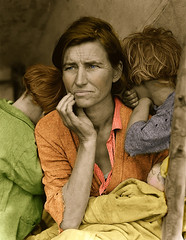 | 30 |
| 9936607675 | Great Leap Forward | lasted from 1958 to 1960; marked Mao's response to distortions of Chinese socialism; promoted smallscale industrialization in rural areas; tried to foster widespread and practical technological education for all rather than relying on a small elite of highly trained technical experts; envisioned an immediate transition to full communism in the "people's communes" rather than waiting for industrial development to provide the material basis for that transition; massive famine which followed temporarily discredited Mao's radicalism | 31 | |
| 9936607676 | Great Purges | also known as the Terror; period of immense paranoia in the Soviet Union of the late 1930's in which communist members accused each other being corrupted by capitalist ideals; enveloped tens of thousands of prominent communists, including all of Lenin's top associates, and millions more of ordinary peoples; based on suspicious associations in the past, denunciations by colleagues, connections to foreign countries, or bad luck; such people were arrested in the middle of the night, then tried and sentenced to either death or long harsh years in remote labor camps known as gulags; close to 1 million peoples executed between 1936 and 1941; additional 4 to 5 million people sent to the gulag, where they were forced to work in horrendous conditions and died in appalling numbers | 32 | |
| 9936607677 | Green Revolution | a series of research, and development, and technology transfer initiatives, occurring between the 1940s and the late 1960s, that increased agriculture production worldwide, particularly in the developing world | 33 | |
| 9936607678 | Adolf Hitler | lived from 1889 to 1945; leader of the Nazi party in Germany; chancellor of Germany from 1933 to 1945; dictator of Nazi Germany from 1934 to 1945 |  | 34 |
| 9936607679 | Ho Chi Minh | lived from 1890 to 1969; Vietnamese communist revolutionary leader; was prime minister (from 1945 to 1955) and president (from 1945 to 1969) of the Democratic Republic of Vietnam |  | 35 |
| 9936607680 | Holocaust | the mass murder of approximately six million Jews during World War II; a program of systematic state-sponsored murder by Nazi Germany; led by Adolf Hitler and the Nazi Party | 36 | |
| 9936607681 | International Monetary Fund | IMF; established in 1944 by the Bretton Woods Conference in New Hampshire; sought to promote market economies, free trade, and high growth rates | 37 | |
| 9936607682 | Indian National Congress | INC; organization established in 1885; gave expression to the idea of India as a single nation; played a major role in India's independence movement from British colonial rule | 38 | |
| 9936607683 | Iranian Cultural Revolution | lasted from 1980 to 198; a period following the Iranian Revolution where intellectuals of Iran were purged of Western and non-Islamic influences to bring it in line with Shia Islam; closed universities between 1980 and 1983, banned many books, and purged thousands of students and lecturers from schools | 39 | |
| 9936607684 | iron curtain | the heavily fortified border between Eastern and Western Europe | 40 | |
| 9936607685 | Islamic renewal | also referred to as Islamic revival; refers to a renewing of the Islamic religion throughout the Islamic world, that began roughly sometime in 1970s; sought greater religious piety and a growing adoption of Islamic culture | 41 | |
| 9936607686 | Jawaharlal Nehru | lived from 1889 to 1964; first Prime Minister of India and was a leading figure in the independence movement against British rule over India |  | 42 |
| 9936607687 | League of Arab States | a regional organization of Arab countries in and around North Africa, the Horn of Africa, and Southwest Asia; formed in Cairo in 1945 with six members: Egypt, Iraq, Transjordan (Jordan), Lebanon, Saudi Arabia and Syria; currently has 22 members | 43 | |
| 9936607688 | League of Nations | international peacekeeping organization founded as a result of the First World World; proposed by US president Woodrow Wilson; committed to the principle of "collective security" and intended to avoid the repetition of war | 44 | |
| 9936607689 | Mahatma Gandhi | lived from 1869 to 1948; leader of the Indian nationalist movement during British control over India; used nonviolent civil disobedience, such as hunger strikes |  | 45 |
| 9936607690 | Mao Zedong | lived from 1893 to 1976; Chinese communist revolutionary and leader of the People's Republic of China from its establishment 1949 to his death in 1976 |  | 46 |
| 9936607691 | Marshall Plan | plan which sought to rebuild and reshape devastated European economies; funneled Europe some $12 billion with numerous advisers and technicians; motivated by combination of humanitarian concern, a desire to prevent a new depression by creating overseas customers for American goods, and interest in undermining the growing appeal of European communist parties; required European nations to cooperate with one another |  | 47 |
| 9936607692 | Mikhail Gorbachev | born in 1931; last general secretary of the Soviet Union (1985 to 1991); passed reforms such as perestroika and policies such as glasnost which led to the dissolution of the Soviet Union |  | 48 |
| 9936607693 | military-industrial complex | the policy and monetary relationships which exist between legislators, national armed forces, and the military industrial base that supports them; include political contributions, political approval for military spending, lobbying to support bureaucracies, and oversight of the industry; most often used in reference to the system behind the military of the United States | 49 | |
| 9936607694 | Muhammad Ali Jinnah | lived from 1876 to 1948; founder of Pakistan and the leader of the All-India Muslim League until Pakistan's independence |  | 50 |
| 9936607695 | Munich Conference | a conference in Munich which permitted Nazi Germany's annexation of portions of Czechoslovakia along German borders mainly inhabited by German speakers; territory now known as "Sudetenland"; widely regarded as a failed act of appeasement toward Germany; agreement was signed in the early hours of 30 September 1938; agreement was signed by Germany, France, the United Kingdom, and Italy; Czechoslovakia not invited to the conference | 51 | |
| 9936607696 | Benito Mussolini | lived from 1883 to 1945; leader of the Italian National Fascist Party; prime minister of Italy from 1922 to 1943 |  | 52 |
| 9936607697 | Mustafa Kemal Ataturk | lived from 1881 to 1938; founder and the first President of the Republic of Turkey; passed a series of reforms to transform the former Ottoman Empire into a modern, secular, and democratic nation | 53 | |
| 9936607698 | North American Free Trade Agreement | NAFTA; regional alliance founded in 1993 and consists of Canada, Mexico, and the United States; the world's second largest free-trade zone | 54 | |
| 9936607699 | North Atlantic Treaty Organization | NATO; a military alliance based on the North Atlantic Treaty which was signed in 1949; alliance in which its member states agree to mutual defense in response to an attack by any external party; consists of 28 member states across North America and Europe |  | 55 |
| 9936607700 | Nazi Germany | a.k.a the Third Reich; lasted from 1933 to 1945; Germany under the leadership of Adolf Hitler and the Nazi Party | 56 | |
| 9936607701 | Nelson Mandela | lived from 1918 to 2013; South African anti-apartheid revolutionary and politician; President of South Africa from 1994 to 1999; served as President of the African National Congress from 1991 to 1997 |  | 57 |
| 9936607702 | New Deal | a series of reforms proposed by United States President Woodrow Wilson; lasted from 1933 to 1942; experimental combination of reforms seeking to restart economic growth and prevent similar failures in the future; reflected the thinking of British economist John Maynard Keynes; argued that government actions and spending programs could moderate recessions and depressions; consisted of immediate programs of public spending (for dams, highways, bridges, and parks) and long-term reforms, such as the Social Security system, minimum wage, and various relief and welfare programs | 58 | |
| 9936607703 | non-governmental organization | NGO; an organization that is neither a part of a government nor a conventional for-profit business | 59 | |
| 9936607704 | Nikita Khrushchev | lived from 1894 to 1971; leader of the Soviet Union from 1953 to 1964; responsible for the de-Stalinization of the Soviet Union and backing of the Soviet space program |  | 60 |
| 9936607705 | Osama bin Laden | lived from 1957 to 2011; Islamic militant who was the leader of the terrorist group al-Qaeda; mastermind behind the 9/11 attacks; played a key role in the US-backed effort to aid mujahideen who fought Soviet forces in Afghanistan |  | 61 |
| 9936607706 | al-Qaeda | "the base"; terrorist organization formerly headed by Osama bin Laden; behind the 9/11 attacks | 62 | |
| 9936607707 | Palestinian Liberation Organization | PLO; an organization founded in 1964 with the purpose of creating an independent State of Palestine | 63 | |
| 9936607708 | Pan-Arabism | an ideology proposing the unification of the countries of North Africa and West Asia from the Atlantic Ocean to the Arabian Sea, referred to as the Arab World | 64 | |
| 9936607709 | Pan-Africanism | an ideology which encourages the unity of Africans worldwide | 65 | |
| 9936607710 | HIV/AIDS epidemic | epidemic which was first discovered in 1981 among homosexual men and intravenous drug users in New York and San Francisco; eventually became widespread around the world, particularly sub-Saharan Africa; virus attacks and destroys the immune system, which causes a fatal disorder in the immune system; spread through sexual contact with an infected person, contact with contaminated blood, and transmission from mother to child during pregnancy and breastfeeding | 66 | |
| 9936607711 | ebola epidemic | an epidemic caused by the Ebola virus; symptoms include fever, throat and muscle pains, headaches, nausea, vomiting and diarrhea, and decreased functioning of the liver and kidneys; an 2014 outbreak in West Africa has led to a reported 142 deaths | 67 | |
| 9936607712 | influenza epidemic | an epidemic caused by the H1N1 influenza virus; lasted from 1918 to 1920; resulted in 50 to 100 million deaths, ranking it one of the most deadliest natural disasters in human history | 68 | |
| 9936607713 | perestroika | an economic program launched by Soviet leader Mikhail Gorbachev which freed state enterprises from government regulation, permitted small-scale private businesses, offered opportunities for private farming, and welcomed foreign investment in joint enterprises | 69 | |
| 9936607714 | glasnost | a Soviet policy established by Mikhail Gorbachev which permitted cultural and intellectual freedoms | 70 | |
| 9936607715 | post-modernism | a late 20th Century movement in the arts, architecture, and criticism; includes skeptical interpretations of culture, literature, art, philosophy, history, economics, architecture, fiction, and literary criticism | 71 | |
| 9936607716 | Potsdam Conference | a conference which was held from July 17 to August 2, 1945; participants include the Soviet Union, the United Kingdom, and the United States; gathered to decide how to punish Nazi Germany, sought to establish a post-war order, address peace treaty issues, and counter the effects of World War II | 72 | |
| 9936607717 | Prague Spring | a period of political liberalization in Czechoslovakia during the era of Soviet domination; began on January 5, 1968, when reformist Alexander Dubček was elected First Secretary of the Communist Party of Czechoslovakia, and continued until August 21 when the Soviet Union and other members of the Warsaw Pact invaded the country to halt the reforms | 73 | |
| 9936607718 | 1917 Russian Revolution | a collective term for the series of revolutions in 1917 which ousted Tsar Nicholas II and the tsarist autocracy and replaced it with the communist Bolshiveks | 74 | |
| 9936607719 | second-wave feminism | a period of feminist activity that first began in the United States in the early 1960s and eventually spread throughout the Western world; later became a worldwide movement that was strong in Europe and parts of Asia, such as Turkey and Israel; focused on sexuality, family, the workplace, reproductive rights, and various legal and de facto inequalities | 75 | |
| 9936607720 | UN Security Council | one of the six principal organs of the United Nations; in charge of the maintenance of international peace and security; this body is able to establish peacekeeping operations, establish international sanctions, and authorize military action through resolutions; the only UN body with the authority to issue binding resolutions to member states | 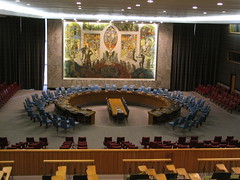 | 76 |
| 9936607721 | space race | lasted from 1955 to 1972; a competition between the Soviet Union and the United States for supremacy in spaceflight capability; pioneered advancements such as artificial satellites, as well as manned and unmanned missions into outer space | 77 | |
| 9936607722 | sphere of influence | a concept in which a state or organization has a level of cultural, economic, military, or political exclusivity, accommodating to the interests of powers outside the sphere; examples include European "semi-colony" of China | 78 | |
| 9936607723 | Joseph Stalin | lived from 1878 to 1953; the leader of the Soviet Union from 1922 to 1952; implemented a highly centralized command economy, which resulted in the transformation of Russian society from agrarian to industrialized; imprisoned millions in labor camps and deported many to remote areas; issued the Great Purges, in which hundreds of thousands, including many prominent communists, were executed |  | 79 |
| 9936607724 | theory of relativity | theory which is composed of special relativity and general relativity; proposed by Albert Einstein; proposes that measurements of various quantities are relative to the velocities of observers, space and time should be considered together and in relation to each other (Spacetime), and the speed of light is constant | 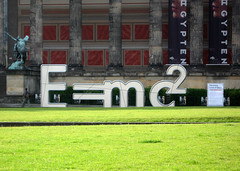 | 80 |
| 9936607725 | Third World | term which describes the countries that did not align with the Soviet Union or the United States | 81 | |
| 9936607726 | total war | war which requires the mobilization of each country's entire populations | 82 | |
| 9936607727 | transnational corporations | a.k.a multi-national corporation; an organization that owns or controls production or services facilities in one or more countries other than its home country | 83 | |
| 9936607728 | Treaty of Versailles | treaty which formally concluded the World War I in 1919; established the conditions for a World War II; Germany losses colonial empire and 15% of its European territory, required to pay heavy reparations to the winners, had its military forces severely restricted, and had to accept sole responsibility for the war; immense German resentment created from the treaty |  | 84 |
| 9936607729 | trench warfare | type of warfare using occupied fighting lines consisting largely of trenches, in which troops are significantly protected from the enemy's small arms fire and are substantially sheltered from artillery; resulted in enormous casualties while gaining or losing a few yards of ground during World War I |  | 85 |
| 9936607730 | Truman Doctrine | an international relations policy set by the U.S. President Harry Truman in a speech on March 12, 1947; stated that the U.S. would support Greece and Turkey with economic and military aid to prevent them from falling into the Soviet sphere; often referred to as the beginning of the US policy of containment |  | 86 |
| 9936607731 | United Nations | organization established in 1945 as a successor to the League of Nations; attempts to find solutions to global problems and deal with virtually any matter of concern to humanity |  | 87 |
| 9936607732 | Vietnam War | war which occurred in Vietnam, Laos, and Cambodia from 1956 to 1975; U.S. entered the war to prevent South Vietnam from becoming communist, as a result of its containment policy; Soviet Union backed Northern Vietnamese forces in an attempt to spread communism to Southeast Asia; resulted in the unification of Vietnam under a communist government and the spread of communism to Cambodia and Laos |  | 88 |
| 9936607733 | Weimar Republic | the federal republic and semi-presidential representative democracy established in 1919 in Germany to replace the imperial form of government after World War I; lasted until the Nazi Party rose to power in 1933; faced numerous problems, including hyperinflation, political extremists and continuing contentious relationships with the victors of World War I | 89 | |
| 9936607734 | Winston Churchill | lived from 1874 to 1965; British politician; Prime Minister of the United Kingdom from 1940 to 1945 and from 1951 to 1955 |  | 90 |
| 9936607735 | weapon of mass destruction | WMD; a weapon which has the capability to kill large numbers of people and decimate large swaths of land | 91 | |
| 9936607736 | Woodrow Wilson | lived from 1856 to 1924; 28th President of the United States (1913-1921); leader of the Progressive Movement; famous for his Fourteen Points, which sought to avoid another worldwide conflict |  | 92 |
| 9936607737 | Fourteen Points | a statement given on January 8, 1918 by United States President Woodrow Wilson declaring that World War I was being fought for a moral cause and called for postwar peace in Europe | 93 | |
| 9936607738 | World Bank | a United Nations international financial institution that provides loans to developing countries for capital programs; its primary goal is to reduce poverty | 94 | |
| 9936607739 | World War I | war which lasted from 1914 to 1918; also known as the Great War; pitted the Allies (United Kingdom, France, Russia, Italy, Japan, and the United States) and the Central Powers (Germany, Austria-Hungary, the Ottoman Empire, and Bulgaria); resulted in an Allied victory and Treaty of Versailles, which set the stage for another world war |  | 95 |
| 9936607740 | World War II | war which lasted from 1939 to 1945; pitted the Allied Powers (Soviet Union, United Kingdom, United States, China and France) against the Axis Powers (Germany, Japan, and Italy); resulted in an Allied victory, the creation of the United Nations, and set the stage for the Cold War |  | 96 |
| 9936607741 | World Trade Organization | WTO; established in 1994 by the 123 members of GATT; took over GATT activities in 1995; developed into a forum for settling international trade disputes | 97 | |
| 9936607742 | Yalta Conference | conference which lasted from February 4 to February 11, 1945; meeting attended by President Franklin D. Roosevelt, Prime Minister Winston Churchill and Premier Joseph Stalin for the purpose of discussing Europe's post-war reorganization; convened in the Livadia Palace near Yalta in Crimea |  | 98 |
| 9936607743 | Zionist Movement | the national movement of Jews and Jewish culture that supports the creation of a Jewish homeland in the territory defined as the Land of Israel |  | 99 |
| 9936607744 | Brazilian Solution | Combination of dictatorship, violent repression, and gov't promotion of industrialization in South American countries | 100 | |
| 9936607745 | Universal Declaration of Human Rights | A 1946 United Nations covenant binding signatory nations to the observance of specified rights. | 101 | |
| 9936607746 | nongovernmental organizations | Organizations that are not established or associated with any specific organizations. They may be recognized, however, they run on their own. Examples are Green Peace and Amnesty International. | 102 | |
| 9936607747 | Tiananmen Square | Site in Beijing where Chinese students and workers gathered to demand greater political openness in 1989. The demonstration was crushed by Chinese military with great loss of life. | 103 | |
| 9936607748 | keiretsu | Japanese business groups after the post-WWII dismantling of the zaibatsu. They are Alliances of corporations each often centered around a bank. They dominate the post-WWII Japanese economy. | 104 | |
| 9936607749 | Salvador Allende | The first Marxist politician elected president in the Americas. He was elected president of Chile in 1970 and overthrown by a US-backed military coup in 1973. | 105 | |
| 9936607750 | NATO | An international organization created in 1949 by the North Atlantic Treaty for purposes of collective security. | 106 | |
| 9936607751 | Warsaw Pact | An alliance between the Soviet Union and other Eastern European nations. This was in response to the NATO | 107 |
Flashcards
AP World History Chapter 1 Flashcards
Terms : Hide Images
| 7097668149 | Paleolithic Period | Began 2.5 million years ago and ended about 10,000 years ago in 8000 B.C.E. Often called the stone age, because humans used stone tools and weapons. |  | 0 |
| 7097668150 | Neolithic Revolution | A set of dramatic changes in how people lived based on the development of agriculture |  | 1 |
| 7097668519 | monotheism | To worship one god |  | 2 |
| 7097668520 | Bronze Age | A time period between 3300 and 2300 B.C.E. in which bronze became the primary metal used. |  | 3 |
| 7097668835 | Specialization of labor | Allowing people to focus on limited tasks |  | 4 |
| 7097668836 | hunter-forager | People who survived by hunting animals and foraging for seeds, nuts, fruits, and edible roots |  | 5 |
| 7097669234 | Nomadic pastoralism | Moving animals from one grazing land to another. |  | 6 |
| 7097669235 | patriarchal | A society dominated by men. |  | 7 |
| 7097669508 | artisans | People who made objects that were needed by others. |  | 8 |
| 7097669509 | merchants | People who buy and sell goods for a living |  | 9 |
| 7097669510 | Social stratification | Categorizing people by their wealth and belongings. |  | 10 |
| 7097670336 | Kinship group | Several related families that moved together in search of food |  | 11 |
| 7097670337 | clan | A larger group of relatives |  | 12 |
| 7097670516 | tribe | Combination of multiple clans |  | 13 |
| 7097670517 | artifacts | Objects made by people in the past. |  | 14 |
| 7097671506 | Homo sapiens sapiens | Modern Humans |  | 15 |
| 7097671639 | textiles | Items made of cloth |  | 16 |
| 7097671640 | Jericho | One of the first cities which was built on the west bank of the Jordan River. |  | 17 |
| 7097672303 | Catal Huyuk | An ancient city in present day Turkey, on a river that has dried up. |  | 18 |
| 7097672304 | Overfarming | The loss of soil fertility because the farm land has been used to much |  | 19 |
| 7097672305 | Overgrazing | The continual eating of grasses or their roots, without allowing the grass to regrow. |  | 20 |
AP World History Emerging Empires: Assyria, Persia, Israel, Minoan, Zhou Flashcards
Terms : Hide Images
| 7280911633 | King Tiglath-Pileser I | Assyrian king under whom the Assyrians rose to power from 1360 BC to 1074 BC. conquering all of Mesopotamia and expanded the empire to include much of the Middle East including Egypt, Babylonia, Israel, and Cypress. | 0 | |
| 7280911634 | warrior society | The Assyrians were perhaps most famous for their fearsome army. Fighting was a part of life. It was how they survived. They were known throughout the land as cruel and ruthless. | 1 | |
| 7280911635 | Sargon II | One of the several rulers who ruled Assyria at its height from 744 BC to 612 BC. | 2 | |
| 7280911636 | Ashurbanipal | The last great Assyrian king. | 3 | |
| 7280911637 | Library at Nineveh | Housed the stories of Gilgamesh, the Code of Hammurabi, and more. Much of our knowledge of the Ancient civilizations of Mesopotamia comes from the remains of this. | 4 | |
| 7280911638 | Cyrus the Great | First conquered the Median Empire in 550 BC and then went on to conquer the Lydians and the Babylonians, and founded the Persian Empire. | 5 | |
| 7280911639 | Persian Leniency | Under Cyrus the Great, the Persians allowed the peoples they conquered to continue their lives and cultures. They could keep their customs and religion as long as they paid their taxes and obeyed the Persian rulers. | 6 | |
| 7280911640 | Satrap | In order to maintain control of the large empire, each area had a local ruler. The local ruler was like a governor of the area. | 7 | |
| 7280911641 | Zoroastrianism | Although each culture was allowed to keep their own religion, the Persians followed the teaching of the a particular prophet. This religion believed in one main god. | 8 | |
| 7280911642 | Ahura Mazda | The main god of Zoroastrianism. | 9 | |
| 7280911643 | King Darius | Persian king who wanted to conquer the Greeks who he felt were causing rebellions within his empire | 10 | |
| 7280911644 | Canaan | The Ancient Israelites settled this land sometime between 1300 and 1200 BC. | 11 | |
| 7280911645 | Abraham | Israel traced their descent to a nomadic clan chief who had migrated to Canaan from Mesopotamia. | 12 | |
| 7280911646 | monotheism | the Israelites brought with them a unique cultural facet. For the first time in history, as far as we know, a religion had appeared which concerned the worship of only one god. | 13 | |
| 7280911647 | The Ten Commandments | The Israelite religion was not just unique at that time in recognizing a single god. It also promoted an ethical system which required high standards of behavior from the people. In short, they were required to treat each other. | 14 | |
| 7280911648 | Minoans | The first civilization to appear on European soil. | 15 | |
| 7280911649 | Crete | One of the primary locations of the Minoans. | 16 | |
| 7280911650 | Knossos | The largest and most sophisticated palace, a multi-storied complex of stone buildings impressive by any standards. | 17 | |
| 7280911651 | bull-jumping | An activity pursued by the Minoans the was representative of their culture and religion. | 18 | |
| 7280911652 | Zhou Dynasty | Ruled China from 1122 BC to 256 BC. | 19 | |
| 7280911653 | principalities | Zhou kingdom were divided into principalities, each under a prince who was, in fact or in theory, related to the Zhou royal family. | 20 | |
| 7280911654 | Bureaucracy | More successful princes changed the way they governed their territories--professional "government" officials ran the affairs of state for the emperors. | 21 | |
| 7280911655 | Confucius | One of the greatest Chinese philosophers. | 22 |
Pages

Need Help?
We hope your visit has been a productive one. If you're having any problems, or would like to give some feedback, we'd love to hear from you.
For general help, questions, and suggestions, try our dedicated support forums.
If you need to contact the Course-Notes.Org web experience team, please use our contact form.
Need Notes?
While we strive to provide the most comprehensive notes for as many high school textbooks as possible, there are certainly going to be some that we miss. Drop us a note and let us know which textbooks you need. Be sure to include which edition of the textbook you are using! If we see enough demand, we'll do whatever we can to get those notes up on the site for you!
