AP Notes, Outlines, Study Guides, Vocabulary, Practice Exams and more!

Classical Conditioning Practice 2 Flashcards

One time, while you were getting a cavity filled, the dentist hit a nerve, which caused you a lot of pain. Now, every time you see that dentist, you become anxious and experience a pain in your tooth.

Terms : Hide Images
1813689886UCSdrill hitting a nerve0
1813689887UCRpain in tooth1
1813689888CSdentist2
1813689889CRfeeling anxious when you see the dentist3

BIOSPHERE Flashcards

Terms : Hide Images
2256911662Cycles and Patterns in the Biosphereboundaries hard to pin down, most of organisms exist at the interface between the atmosphere and lithosphere, native plants widespread in sparsely populated areas of world, however much of the vegetation in populated areas has been removed, and much that persists has been modified by human introduction0
2258876577Geographic Approach to Study of Organismsstudy of the distribution patterns of living organisms and how these patterns change over time -geographers look for and explain patterns in biosphere, one of the most significant components of these patterns is biodiversity -declining biodiversity in a location is often an indication that the overall health of the natural is in decline1
2258880323Biogeographynumber of different kinds of organisms present in a location (high, low) -interested in the relationships between different organisms in a location, and in the relationships between those organisms and the surrounding environment2
2258881966Biotatotal complex of plant and animal life3
2258882770Flora/Faunabasic subdivision of biota separates flora from fauna, our primary focus is terrestrial biota vs oceanic4
2258888358Biomeslarge, recognizable assemblages of plants and animals living in a functional relationship with the environment -most appropriate scale for understanding world distribution patterns -collection of plants and animals over a large area that have broadly similar adaptations and relationships with the environment and climate -usually identified and names on the basis of its dominant vegetation5
2258888973Ecosystemused to describe all the organisms in an area and their interaction with the immediate environment -an association of plants and animals along with the surrounding nonliving environment and all the interactions in which the organisms take part6
2258894106Biogeochemical Cyclesweb of life comprises a great variety of organisms coexisting in a diversity of ecosystems, organisms survive sustained by flows of energy water and nutrients -flows are different in different parts of the world, in different seasons of year, and under various local circumstances -biogeochemical cycles: flow of energy, hydrologic cycle, carbon cycle, oxygen cycle, mineral cycles -if the biosphere is to function properly its chemical substances must be recycled continually through these cycles -for some components this conversion can be accomplished in less than a decade, for others it may require hundreds of millions of years7
2258901187Flow of energy-sun is the basic energy source on which all life depends -solar energy drives life processes in the biosphere through photosynthesis -open system because some energy from the sun is lost8
2258909111Photosynthesislight energy and carbon dioxide and water = carbs and oxygen -energy is stored as sugar (carbs). chlorophyll traps light energy to make food -chlorophyll is found within organelles in leaf cells called chloroplasts -chlorophyll absorbs certain wavelengths of visible light, while prominently reflecting green light -photochemical reaction takes CO2 from air and combines with water to form the energy rich carbohydrate compounds we know as sugars while also releasing molecular oxygen -in this process, energy from sunlight is stored as chemical energy in the sugars -sun gives chlorophyll energy and plant converts it to CO2 which enters through the stomata, oxygen is released into the air, water comes up through the roots -leaves absorb the sun energy9
2258911007Respirationcarbs and oxygen = carbon dioxide and water and energy (heat). takes place in mitochondria. animal takes in glucose and oxygen and creates energy -stored energy in carbohydrates in oxidized, releasing water, carbon dioxide and heat energy -oxygen is taken in from the air, organism takes in carbs (glucose), mitochondria breaks down the carbs and releases carbon dioxide into the air and water vapor as well as energy released into the cell10
2258921797Net Primary Productivity-varies widely from environment to environment around the world -land: highest within tropics where both high precipitation and high insolation are available for plant growth, diminishes poleward -ocean: strongly influenced by nutrient content of water, off west coasts of continents in midlatitudes, upwelling cold, nutrient-rich water -plant growth depensd on a surplus of carbohydrate production11
2258926288Net photosynthesisthe difference between the amount of carbohydrate produced in photosynthesis and that lost in plant respiration12
2258927788Annual net primary productivitydescribes the net photosynthesis of a plant community over a period of one year (units of grams of carbon per square meter per year) -biomass: measure of the amount of chemical energy stored in a plant community and is reflected in the dry weight of organic material13
2258947302Hydrologic Cycleevery living thing depends on water supply, water dissolves nutrients and carries them to all parts of the organism, two ways water is found in biosphere: in residence- chemically bound to plant and animal tissue, in transit- part of transpiration/respiration14
2258950770Carbon Cycle-one of basic elements of life/part of all living things -transfer of carbon from CO2 to living matter and back to CO2 -relatively rapid process -fossil fuels increase CO2 -complex of interlocking cycles in which carbon moves constantly from inorganic reservoir to living system and back again15
2258961948Oxygen Cycle-building block in most organic molecules -released into atmosphere through photosynthesis, taken up by living organisms in respiration, or react chemically with rocks -occurs in many chemical forms and is released into atmosphere in variety of ways16
2258965832Nitrogen Cycle/nitrogen fixation-for vast majority of living organisms, atmospheric nitrogen is usable only after it has been converted to nitrogen components (nitrates) than can be used by plants. this is called nitrogen fixation -it is nitrogen-fixing bacteria living in the soil and associated plant root nodules that provides most of the usable nitrogen for earth's biosphere17
2258971661Dentrification-other bacteria convert some of the nitrates to nitrogen gas, and the gas becomes part of the atmosphere -Synthetic manufacture of nitrogeneous fertilizers and widespread introduction of nitrogen-fixing crops (alfalfa, clover, soybeans) have significantly changed balance between fixation and dentrification. Short-term result has been an excessive accumulation of nitrogen compounds in many lakes and streams. This buildup of nitrogen depletes the oxygen supply of water and upsets the natural balance.18
2258976978Food Chain-direct passage from one organism to another of nutrients -more accurate to think of this energy transfer process as a web with interconnected parts or links -fundamental unit- producers (autotrophs), self feeders -producers eaten by consumers (heterotrophs) -decomposers begin the food pyramid again -energy is inefficiently consumed between different food pyramid levels -pollutants in the food chain (biological amplification, chemical pesticides and heavy metals, irrigation-related issues)19
2258979321Herbivoresprimary consumers20
2258979774CarnivoresSecondary consumers21
2259018541How many kilograms of plankton does it take to produce 25 kilograms of invertebrates?(25 kg invert) x (100 kg plankton/100 kg invert) = 250 kg plankton22
2259020227How many kg invert does it take to produce 5 kg of fish?(5 kg fish) x (100 kg invert/10 kg fish) = 50 kg invert23
2260868272Biological Factors and Natural Distributions-natural distribution of any species or group of organisms is determined by several primarily biological factors -four basic conditions are: evolutionary development, migration and dispersal, reproductive success (pollution die-off and extinction), and plant succession EMRA- Elena makes real plants24
2260888778Evolutionary Development-survival of the fittest -where did the genus (closely related organism group) evolve? -some localized -several scattered localities of the same genus -example: contrast in apparent origin of two important groups of plants -acacias: an extensive genus of shrubs and low-growing trees represented by numerous species found in low-latitude portions of every continent that extends into the tropics or subtropics. evolves prior to separation of continents and are now present throughout southern hemisphere -eucalyptus is a genus of trees native only to australia and a few islands. evolved after australian continent was isolated and only occurs naturally in australia25
2260904074Migration and dispersal-organisms have always moved from one place to another: animals possess active mechanisms for locomotion and plants move through seed dispersal (wind, water, and animals are principal natural mechanism) -distribution pattern of organisms results from natural migration or dispersal from the original developmental center -Example - Coconut Palms Originated in southeastern Asia and adjacent Melanesian islands. Now extraordinarily widespread along the coasts of tropical continents and islands all over the world Dispersion? Come about because the coconut (large, hard-shelled seeds of the plant) can float in the ocean for months or years without losing their fertility.26
2260917550Reproductive Success-key factor in continued survival of any biotic population -ability of organisms to reproduce affects distribution -factors resulting in poor reproductive success (heavy predation, food supply failure, changing environmental conditions, climate change) -range of a species can be diminished by the dying out of some or all of the population27
2260921860Extinction-species is extinct over the entire world, eliminated forever from landscape -example: american bison. once nearly exterminated, now occur in large numbers in areas of suitable habitat. under natural conditions they have a high level of reproductive success -range diminution -small areal changes -mass extinction28
2260932487Plant Succession-most localized examples of species change over time -one vegetation type replaced naturally by another -occur after catastrophic events -primary succession- pioneer community -secondary succession -extinction versus succession29
2285488261Physical Factors in Geographic Dispersaltemperature, availability of water, other climatic factors, distribution of soils, and landforms... TAODL30
2285503105Biotic factorscompetition for resources such as food and light, ammensalism in which growth of one species is inhibited by another, predation for any case in which individuals of one species feed on another species, mutualism in which individuals of two species interact to their mutual benefit31
2260938448Environmental Factors-survival of plants and animals depends on a set of environmental factors -specific influence varies from species to species 1) influence of climate 2) edaphic influences 3) Topographic influences 4) Wildfire IETW32
22609478901) Influence of climateLight (green plants need light to survive, light changes shapes of plants, photoperiodism- stimulates seasonal plant behavior) Moisture (distribution of biota governed more by moisture than any other factor besides light, biota evolution dictated by adaptation to moistue conditions) Temperature (different species can survive in different temperatures, plants have limited cold temperature tolerance. animals) Wind (effects generally limited, principle negative effect of wind is that it causes excessive drying by increasing evaporation from exposed surfaces. strong winds can be destructive to biota. positive- sometimes aid in dispersal of biota by carrying pollen, seeds, lightweight organisms, flying creatures)33
22609650112) Edaphic Influence-soil characteristics (known as edaphic factors) influence biota distribution -soil is a major component of the habitat of any vegetation, and its characteristics significantly affect rooting capabilities and nutrient supply -significant characteristics include: soil texture, soil structure, human content, chemical composition, abundant soil organisms34
22609855013) Topographic Influences-in global distribution of plants and animals, general topographic characteristics are the most important factor affecting distribution -plants and animals in a plains region vastly different from a mountainous region -slope and drainage35
22609890464) WildfiresMost environmental factors that effect the distribution of plants and animals are passive, and their influences are slow and gradual. Occasionally abrupt and catastrophic events play a significant role. Events such as floods, earthquakes, volcanic eruptions, landslides, insect infestations, and drought Result in complete or partial devastation of plant life and death or driving away of animals Can be helpful for regrowth and maintaining of plant type36
2260992625Terrestrial Flora and Faunaturn our attention to investigating the geographic distribution of plants and animals37
2260994795Ecotonetransition zone of completion in which the typical species of one biome intermingles with those of another38
2270899644ECOSYSTEMan association of plants and animals along with the surrounding nonliving environment and all the interactions in which the organisms take part39
2270902372biomemost appropriate scale for understanding world distribution patterns, biome is a collection of plants and animals over a large area that have broadly similar adaptations and relationships with the environment and climate -usually identified and named on basis of its dominant vegetation -Biome is defined as any large, recognizable assemblage of plants and animals in functional interaction with its environment.40
2261011392Characteristics of Plants-plants endure seasonal fluctuations or perish and leave behind (perennials come back every year/annuals) -whether or not a plant loses its leaves (evergreen doesn't lose its leaves/deciduous) -leaf shape (broadleaf/needleleaf)41
2261013961Evergreensheds its leaves on a sporadic or successive basis, but always appears to be fully leaved42
2261014858Deciduousexperiences an annual period in which all leaves die and fall43
2261016216Broadleafleaves that are flat and expansive in shape44
2261017267Needleleafadorned with thin silvers of tough, leathery, waxy needles45
2261018319Environmental Adaptations-tolerance limits govern plant survival, distribution, and dispersal -plants have evolved a variety of protective mechanisms to shield against harsh environmental conditions and to enlarge their tolerance limits -xerophytic adaptations/hygrophytic adaptations46
2261022418Xerophytic adaptationsStructurally adapted to withstand protracted dry conditions Roots modified in shape or size to enable them to seek widely for moisture (taproots, thin hairlike rootlets) Fleshy, spongy structure to store moisture (succulents) Leaf modification (hard and waxy to inhibit water loss, white and shiny to reflect insolation, tiny leaves or no leaves at all)47
2261028046Hygrophytics adaptationsParticularly suited to wet environment Extensive root systems to anchor in soft ground Widened, flaring trunk near ground to provide better support48
2261029273Vertical Zonation-mountainous areas often have a distinct pattern of vertical zonation in vegetation patterns -largely due to the effects of elevation on temperature and precipitation -elevation latitude relationship (elevation latitude graph for the southern hemisphere is different from the northern hemisphere, reason for this discrepancy is not completely understood)49
2261032821Local Variations-exposure to sunlight, valley-bottom location50
2261035463Characteristics of animals-invertebrates: animals without backbones (90% of animal species -vertebrates -environmental adaptations (physiological- fox ears, behavioral- hibernation, reproductive- marsupials)51
2261039530World's terrestrial biomes1) Tropical Rainforest 2) tropical deciduous forest 3) tropical scrub 4) tropical savanna 5) desert 6) mediterranean woodland and shrub 7) midlatitude grassland 8) midlatitude deciduous forest 9) boreal forest 10) tundra52
2282702956Tropical Rainforest-found around the band of the equator -lots of animal/plant species -low latitude -vegetation is dominated by tall, closely spaced evergreen trees, is a teeming arena of life that is home to a great number and diversity of both plant and animal species -solar radiation is high year-round -sunlight is captured by tall trees -leaf litter that falls to the rainforest floor is rapidly decomposed in this warm, humid environment -many epiphytes actually draw nutrients and water from leaf litter trapped in hollows in the trunk or branches of large trees -tall, closely spaced evergreen trees -soils are ultisols and oxisols53
2285603977Monsoon rainforestsincluded in this biome even though they differ somewhat from tropical rainforests -established in areas with a dry season, where pronounced many trees deciduous, vegetation lower and less dense54
2285607468Tropical Savannaencompasses a transitional environment between the tropical rainforest and the desert, consisting of tropical grassland with widely spaced trees -periodic burning plays a significant role in limiting tree growth -thorn forests predominate -africa, south america, northern australia, india -thorn forests -deciduous trees -alfisols and ultisols -transitional environment between tropical rainforest and desert, developed because of seasonally wet and dry climates -periodic burning55
2285624867Desert Biomecharacterized by sparse vegetation or even its complete absence -many of these plants complete their entire life cycle during a single growing season -arid/semiarid climate -drought resistant plants, many plants ephemeral completing entire life cycle during single growing season -perennial plants dormant much of year -aridisols and entisols -water/infertile soil56
2285646299Temperate Grassland-generally occurs over large areas of continental interiors -highly susceptible to human influence -tall grass prairie of the midwestern US exists only in scattered remnants, even in the dry short-grass steppes of the western great plains -mollisols -perennial and sod-forming grasses -grazing animals -climate is most important57
2285664865Temperate ForestTemperate Deciduous Forest -Biome occurs in the eastern US, Europe, and eastern China mainly in humid temperate climates with no dry season -outstanding characteristic is similarity of plants -large human population Temperate Evergreen Forest -Biomes are found on western coasts in temperate latitudes where abundant precipitation is the norm -soils varied -needle leaf forests58
2285696699Mediterranean Scrubhot dry summers and cool moist winters, vegetation of this biome consists of widely spaced evergreen or deciduous trees -mediterranean regions are among the world's most densely populated and most intensively cultivated -alfisols and mollisols, steep hillsides inceptisols and entisols -spaced evergreen or deciduous -thick waxy leaves well adapted to long hot dry summers -wildfires common59
2285702807Northern coniferous forest biome-called north america boreal forest, russia taiga or snowforest -humid cold climates -spodosols characteristic soil, except in cold northern reaches where permafrost is present/gelisols form -trees are dense near southern margins where summer longer/warmer, short and more openly spaced near northern margins -harsh climate, slow plant growth -large herbivorous mammals -birds are numerous60
2285717739Tundra Biomethe most continuous of all the biomes, and it occurs almost unbroken along the poleward margins of the northern continents -only cold-tolerant plants can survive -fauna is varied considering the small biomass available -shallow pools of water at the surface become the home of large insects -cold polar climate, short summers/shallow pools of water become home of insect populations -gelisols -net primary productivity almost as low as in deserts61
2285727707Animal rangefocus is usually on the animal's spatial distribution- the area in which it occurs62
2285731757habitatparticular environment it normally occupies within its geographic range63
2285732889ecological nicheenvironmental space within which an organism operates most effeciently or to which it is most effectively adapted64
2285740990natural selectiongenetic information from each parent joins in such a way as to combine a small degree of randomness with a high degree of specification65
2285743092Mutationscontinually add to the random component, inheritable changes in the DNA of a gene66
2285745979Wallace's Linelay between Borneo and Sulawesi and between the first and second islands east of java67
2285747223Zoogeographic realmsbroad regions of the world in which animals tend to share common evolutionary origins. often coincide with natural barriers to animal migration68
2285752415Convergent evolutionholds that organisms in widely separated biogeographic realms, though descended from diverse ancestors, develop similar adaptations to similar ecological niches69
2285754844Ecological zoogeographyfocuses on animals' interactions with their physical environment and other animal or plant species70
2297215752Summary-vegetation changes with latitude and altitude -temperature decreases with increasing latitude and altitude -triangle in book71

APUSH Ch 29 Civil Rights, Vietnam, and the Ordeal of Liberalism Flashcards

Terms : Hide Images
2872998261Bay of PigsIn April 1961, a group of Cuban exiles organized and supported by the U.S. Central Intelligence Agency landed on the southern coast of Cuba in an effort to overthrow Fidel Castro. When the invasion ended in disaster, President Kennedy took full responsibility for the failure.0
2872999082Black PowerA slogan used to reflect solidarity and racial consciousness, used by Malcolm X. It meant that equality could not be given, but had to be seized by a powerful, organized Black community.1
2873003679Community Action ProgramInvited local communities to establish community action agencies (CAA's) to be funded through the office of economic opportunity; allowed poor to run antipoverty programs in their own neighborhoods.2
2873005257Congress of Racial Equality(CORE) Civil rights organization started in 1944 and best known for its "freedom rides," bus journeys challenging racial segregation in the South in 1961.3
2873007235Cuban Missile Crisis(JFK) , , an international crisis in October 1962, the closest approach to nuclear war at any time between the U.S. and the USSR. When the U.S. discovered Soviet nuclear missiles on Cuba, President John F. Kennedy demanded their removal and announced a naval blockade of the island; the Soviet leader Khrushchev acceded to the U.S. demands a week later, on condition that US doesn't invade Cuba4
2873010168Dien Bien PhuIn 1954, Vietminh rebels besieged a French garrison at Dien Bien Phu, deep in the interior of northern Vietnam. In May, after the United States refused to intervene, Dien Bien Phu fell to the communists.5
2873010834Freedom RidersGroup of civil rights workers who took bus trips through southern states in 1961 to protest illegal bus segregation6
2873011834Freedom Summera campaign in the United States launched in June 1964 to attempt to register as many African American voters as possible in Mississippi, which up to that time had almost totally excluded black voters. The project was organized by the Council of Federated Organizations (COFO), a coalition of four established civil rights organizations: the National Association for the Advancement of Colored People (NAACP), the Congress of Racial Equality (CORE), the Southern Christian Leadership Conference (SCLC) and the Student Nonviolent Coordinating Committee (SNCC), with SNCC playing the lead role.7
2873012527George WallaceRacist gov. of Alabama in 1962 ("segregation now, segregation tomorrow, segregation forever"); runs for pres. In 1968 on American Independent Party ticket of racism and law and order, loses to Nixon; runs in 1972 but gets shot8
2873013629Great SocietyPresident Johnson called his version of the Democratic reform program the Great Society. In 1965, Congress passed many Great Society measures, including Medicare, civil rights legislation, and federal aid to education.9
2873014481Gulf of Tonkin ResolutionThe Gulf of Tonkin Resolution was a joint resolution of the U.S. Congress passed on August 7, 1964 in direct response to a minor naval engagement known as the Gulf of Tonkin Incident. It is of historical significance because it gave U.S. President Lyndon B. Johnson authorization, without a formal declaration of war by Congress, for the use of military force in Southeast Asia.10
2873016121Ho Chi Minh1950s and 60s; communist leader of North Vietnam; used geurilla warfare to fight anti-comunist, American-funded attacks under the Truman Doctrine; brilliant strategy drew out war and made it unwinnable11
2873017273Ho Chi Minh TrailA network of jungle paths winding from North Vietnam through Laos and Cambodia into South Vietnam, used as a military route by North Vietnam to supply the Vietcong during the Vietnam War.12
2873018022Immigration Act of 1963Abolished the national-origins quotas and providing for the admission each year of 170,000 immigrants from the Eastern Hemisphere and 120,000 from the Western Hemisphere13
2873020925Malcolm X1952; renamed himself X to signify the loss of his African heritage; converted to Nation of Islam in jail in the 50s, became Black Muslims' most dynamic street orator and recruiter; his beliefs were the basis of a lot of the Black Power movement built on seperationist and nationalist impulses to achieve true independence and equality14
2873022028March on WashingtonIn August 1963, civil rights leaders organized a massive rally in Washington to urge passage of President Kennedy's civil rights bill. The high point came when MLK Jr., gave his "I Have a Dream" speech to more than 200,000 marchers in front of the Lincoln Memorial.15
2873022670MedicaidA federal and state assistance program that pays for health care services for people who cannot afford them.16
2873023971MedicareA program added to the Social Security system in 1965 that provides hospitalization insurance for the elderly and permits older Americans to purchase inexpensive coverage for doctor fees and other health expenses.17
2873024880New FrontierKennedy's plan, supports civil rights, pushes for a space program, wans to cut taxes, and increase spending for defense and military18
2873029001Ngo Dinh DiemAmerican ally in South Vietnam from 1954 to 1963; his repressive regime caused the Communist Viet Cong to thrive in the South and required increasing American military aid to stop a Communist takeover. he was killed in a coup in 1963.19
2873029648Richard Nixon1968 and 1972; Republican; Vietnam: advocated "Vietnamization" (replace US troops with Vietnamese), but also bombed Cambodia/Laos, created a "credibility gap," Paris Peace Accords ended direct US involvement; economy-took US off gold standard (currency valued by strength of economy); created the Environmental Protection Agency, was president during first moon landing; SALT I and new policy of detente between US and Soviet Union; Watergate scandal: became first and only president to resign20
2873031752Robert F. KennedyHe ran for President in 1968; stirred a response from workers, African Americans, Hispanics, and younger Americans; would have captured Democratic nomination but was assassinated by Sirhan Sirhan after victory speech during the California primary in June 1968.21
2873038949Student Nonviolent Coordinating CommitteeInvolved in the American Civil Rights Movement formed by students whose purpose was coordinate a nonviolent attack on segregation and other forms of racism.22
2873039650Tet Offensive1968; National Liberation Front and North Vietnamese forces launched a huge attack on the Vietnamese New Year (Tet), which was defeated after a month of fighting and many thousands of casualties; major defeat for communism, but Americans reacted sharply, with declining approval of LBJ and more anti-war sentiment23
2873040667Viet CongA Communist-led army and guerrilla force in South Vietnam that fought its government and was supported by North Vietnam.24

MES AP Macro-economics -Terms (Complete) Flashcards

Terms : Hide Images
271757528Opportunity Costthe value of the next best alternative that is not chosen.0
271757530Theorya simplification of relationships whose purpose is to explain how those relationships work.1
271757531Correlationwhen two variables move together.2
271757539Factors of Production or InputsLabor, machinery, buildings, and natural resources used to make inputs.3
271757540Outputsgoods and services that consumers want to acquire.4
271757542Open economyan economy in which exports and imports constitute a large share of GDP.5
271757543Closed economyan economy in which exports and imports constitute a small share of GDP.6
271757544Recessiona period of time during which the total output of the economy falls.7
271757546Progressive taxa tax in which the ratio of tax to income rises as income rises.8
271757547Mixed economyan economy with some public influence over the workings of free markets. There may also be some public ownership mixed in with private property.9
271757553Production Possibilities Frontiershows the different combinations of various goods can be produced, given the available resources and existing technology.10
271757554Law of Increasing Costsas the production of a good expands the opportunity cost of producing another unit generally increases.11
271757555Efficiencyusing all available resources to produce the maximum amount of output permitted by the current technology.12
271757557Division of Laborbreaking up a task into a number of smaller, more specialized tasks so that each worker can become more adept at a particular job.13
271757558Comparative Advantagea country produces a particular good less inefficiently as compared with the other country.14
271757559Market Systema form of economic organization in which resource allocation decisions are left to individual producers and consumers acting in their own best interests without central direction.15
271757560Invisible Handa phrase coined by Adam Smith to describe how, by pursuing their own self-interests, people in a market system seem to be "led by an invisible hand" to promote societal well-being as a whole.16
271757561Quantity Demandedthe number of units that consumers want to buy over a specified period of time.17
271757562Demand Schedulea table showing how the quantity demanded of some product during a specified period of time changes as the price of that product changes, holding all other determinants of quantity demanded constant.18
271757563Demand Curvea graphical depiction of a demand schedule. It shows how the quantity demanded of some product during a specified period of time will change as the price of that product changes, holding all other determinants of quantity demanded constant.19
271757564Shift in a Demand Curveoccurs when any variable other than price changes. If consumers want to buy more at any and all given prices than they wanted previously, the demand curve shifts to the right (or outward). If they desire less at any given price, the demand curve shifts to the left (or inward).20
271757565Quantity Suppliedthe number of units that sellers want to sell over a specified period of time.21
271757566Supply Schedulea table showing how the quantity supplied of some product during a specified period of time changes as the price of that product changes, holding all other determinants of quantity supplied constant.22
271757567Supply Curvea graphical depiction of a supply schedule. It shows how the quantity supplied of some product during a specified period of time will change as the price of that product changes, holding all other determinants of quantity supplied constant.23
271757569Shortagean excess of quantity demanded over quantity supplied. When there is a shortage, buyers cannot purchase the quantities they desire.24
271757570Surplusan excess of quantity supplied over quantity demanded. When there is a surplus, sellers cannot sell the quantities they desire to supply.25
271757571Equilibriuma situation in which there are no inherent forces that produce change. Changes away from an equilibrium position will occur only as a result of "outside events" that disturb the status quo.26
271757572Law of Supply and Demandin a free market the forces of supply and demand generally push the price toward the level at which quantity supplied and quantity demanded are equal.27
271757573Price Ceilinga legal maximum price that may be charged for a commodity.28
271757574Price Floora legal minimum price that may be charged for a commodity29
271757575Aggregationcombining many individual markets into one overall market.30
271757576Aggregate Demand Curveshows the quantity of domestic product that is demanded at each possible value of the price level.31
271757577Aggregate Supply Curveshows32
271757578Inflationa sustained increase in the general price level.33
271757580Gross Domestic Product (GDP)the sum of the money values of all final goods and services produced in the domestic economy and sold on organized markets during a specified period of time, usually a year.34
271757581Nominal GDPis calculated by valuing all outputs at current prices.35
271757582Real GDPis calculated by valuing outputs of different years at common prices.36
271757583Final Goods and Servicesthose that are purchased by their ultimate users.37
271757584Intermediate Gooda good purchased for resale or for use in producing another good.38
271757585Real GDP per capitathe ratio of real GDP divided by the population.39
271757586Deflationa sustained decrease in the general price level.40
271757587Fiscal policyThe government's plan for spending and taxation. It may be used to steer aggregate demand in the desired direction.41
271757588Stagflationinflation that occurs while the economy is growing slowly or having a recession.42
271757589Monetary policyActions taken by the Federal Reserve to influence aggregate demand by changing interest rates.43
271757590Stabilization Policygovernment programs designed to prevent or shorten recessions and to counteract inflation.44
271757593Growth policygovernment policies intended to make the economy grow faster in the long run.45
271757594Labor Productivitythe amount of output a worker turns out in an hour (or a week, or a year) of labor.46
271757595Potential GDPthe real GDP the economy could produce if the labor force and other resources were fully employed.47
271757596Labor Forcethe number of people holding or seeking jobs.48
271757597Production functionshows the volume of output that can be produced in the economy from the given inputs (such as labor and capital), given available technology.49
271757598Unemployment Ratethe number of unemployed people expressed as a percentage of the labor force.50
271757599Discouraged Workeran unemployed person who gives up looking for work and is therefore no longer counted as part of the labor force.51
271757600Frictional Unemploymentunemployment that is due to normal turnover in the labor market. It includes people who are temporarily between jobs because they are moving or changing occupations, or for similar reasons.52
271757601Structural Unemploymentworkers who have lost their jobs because they have been displaced by automation, because their skills are no longer in demand, or for similar reasons.53
271757602Cyclical Unemploymentthe portion of unemployment that is attributable to a decline in the economy's total production.54
271757603Full employmenta situation in which everyone who is willing and able to work can find a job. At full employment, the measured unemployment rate is still positive.55
271757604Unemployment insurancea government program that replaces some of the wages lost by eligible workers who lose their jobs.56
271757605Purchasing Powerthe volume of goods and services that a given sum of money will buy.57
271757606Real Wage Ratethe wage rate adjusted for inflation.58
271757607Relative Pricethe price of one good in terms of another good rather than in terms of dollars.59
271757608Real Rate of Interestthe percentage increase in purchasing power that the borrower pays to the lender for the privilege of borrowing.60
271757609Nominal Rate of Interestthe percentage by which the money the borrower pays back exceeds the money that he borrowed, making no adjustment for any fall in purchasing power of this money that results from inflation.61
271757610Index Numberexpresses the cost of a market basket of goods relative to the cost of the same basket in a base period.62
271757611Consumer Price Index (CPI)measured by pricing items representative of a typical urban household budget.63
271757612Deflatingthe process of finding the real value of some monetary magnitude by dividing by some appropriate price index.64
271757613GDP Deflatorthe price index used to deflate GDP.65
271757614Human Capitalthe amount of skill embodied in the workforce.66
271757615Convergence Hypothesisnations with low levels of productivity tend to have high productivity growth rates so that international productivity differences shrink over time.67
271757616Capitala nation's supply of plant, equipment, and software.68
271757617Investmentthe flow of resources into the production of new capital.69
271757618Capital Formationthe process of building up the capital stock.70
271757619Property Rightslaws and conventions that assign owners the rights to use their property as they see fit while they own it.71
271757623Research and Developmentactivities aimed at inventing new products or processes, or improving old ones.72
271757626Foreign direct investmentpurchase or construction of real business assets—such as factories, offices, and machinery—in a foreign country.73
271757627Multinational corporationscorporations (generally large) which do business in many different countries.74
271757628Aggregate Demandthe total amount that all consumers, business firms, and government agencies are willing to spend on final goods and services.75
271757629Consumer Expenditure (C)the total amount spent by consumers on newly produced goods and services (excluding purchases of new homes, which are considered investment goods).76
271757630Investment Spending (I)the sum of the expenditures of business firms on new plant and equipment and households on new homes. Financial "investments" are not included, nor are resales of existing physical assets.77
271757631Government Purchases (G)the goods and services purchased by all levels of government.78
271757632Net Exports (X - IM)the difference between U.S. exports and U.S. imports. It indicates the difference between what we sell to foreigners and what we buy from them.79
271757633National Incomethe sum of the incomes that all individuals in the economy earned in the forms of wages, interest, rents, and profits. It excludes government transfer payments and is calculated before any deductions are taken for income taxes.80
271757634Disposable Income (DI)the sum of the incomes of all the individuals in the economy after all taxes have been deducted and all transfer payments have been added.81
271757635Transfer Paymentssums of money that the government gives certain individuals as outright grants rather than as payments for services rendered to employers.82
271757637Consumption Functionshows the relationship between total consumer expenditures and total disposable income in the economy, holding all other determinants of consumer spending constant.83
271757638Marginal Propensity to Consume (MPC)the ratio of changes in consumption relative to changes in disposable income that produce the change in consumption. On a graph, it appears as the slope of the consumption function.84
271757641Expenditure Scheduleshows the relationship between national income (GDP) and total spending.85
271757642Induced Investmentthe part of investment spending that rises when GDP rises and falls when GDP falls.86
271757643Income-Expenditure (or 45° line) Diagramplots total real expenditure (on the vertical axis) against real income (on the horizontal axis). The 45° line marks off points where income and expenditure are equal.87
271757644Recessionary Gapthe amount by which the equilibrium level of real GDP falls short of potential GDP.88
271757645Inflationary Gapthe amount by which equilibrium real GDP exceeds the full-employment level of GDP.89
271757647Multiplierthe ratio of the change in equilibrium GDP (Y) divided by the original change in spending.90
271757650Aggregate Supply Curveshows for each possible price level the quantity of goods and services that all the nation's businesses are willing to produce during a specified period of time, holding all other determinants of aggregate quantity supplied constant.91
271757651Productivitythe amount of output produced by a unit of input.92
271757652Aggregate EquilibriumThe combination of real GDP and the price level when the economy is at equilibrium, jointly determined by aggregate demand and aggregate supply.93
271757653Inflation and the MultiplierThe effect of changes in prices on the size of the multiplier.94
271757659Automatic Stabilizera feature of the economy that reduces its sensitivity to shocks, such as sharp increases or decreases in spending.95
3700597402Taxationthere are three types of taxation: progressive, recessive, and proportional.96

Medical Surgical nursing (neurological diagnostic procedures ch.3) Flashcards

Terms : Hide Images
2545266226What is a cerebral angiogram?provides visualization of the cerebral blood vessels.0
2545275926What is digital subtraction angiography?substracts the bones and tissues from the images, providing x-ray with only the vessels apparent.The procedure is performed within the department, because x-ray images provide documentation of blood vessel integrity.1
2545294344What is cerebral angiogram used for?To assess blood flow to and within the brain, To identify aneurysms To define vascularity of tumors (for surgery). Also used in therapy to inject medications that treat blood clots or to administer chemotherapy.2
2545312658How is impaired blood flow translated in the angiogram?blockages in the arteries or veins in the head and neck3
2545321420What is indicated to open blockage in arteries and veins of the head and neck?Surgical procedure4
2545330528Why are risks to the fetus versus the benefits of the information obtained prior to cerebral angiogram for a pregnant women?Radiation may endanger the fetus5
2545336948What are nursing actions for patient going for an angiogram?1. Pt is NPO 4-8hr before procedure 2. check for allergy to shellfish or iodine (if yes, different contrast used) 3. check for history of bleeding 4. ensure that no jewelry are worn 5. give a mild sedative prior to procedure 6. monitor VS continuously during the procedure6
2545349660What does the nurse teach the patient going for a cerebral angiogram?Tell client to not move during the procedure, and to keep the head immobilized.7
2545361159Where is the catheter inserted during the cerebral angiogram?Catheter is placed into an artery usually the groin or the neck, dye is injected, x-rays images are taken. Catheter is removed once pictures are taken.8
2545377642What are postprocedure nursing actions for a cerebral angiogram?closely monitor the site to assure that clotting occurs restrict movements for 8-12 hr to prevent rebleeding at the catheter site.9
2581017664What are complications related to a cerebral angiogram?Risk for bleeding at the entry site10
2581024407What should the nurse do if bleeding occur?Reinforce dressings without removing, apply pressure and notify the prescriber.11
2581028949What is a CT scan?A Ct scan provides cross-sectional images of the cranial cavity. Sometimes a contrast media is used to enhance the images.12
2581047289When is a CT scan indicated?to identify tumors and infarctions to detect abnormalities to monitor response to treatment to guide needles use for biopsies13
2581054412How are findings of the CT scan interpreted?A surgical procedure may be indicated if a tumor or vascular abnormality is identified.14
2581059386What are Preprocedure for a CT scan?1. If client is pregnant risk need to be outweigh 2. If contrast media is used and or sedation, tell patient to remain NPO 4-8hr before the procedure; check for allergy to shellfish or iodine, which would require the use of a different contrast media;check renal function (BUN), because contrast media is excreted by the kidneys. 3. Place a pillow in the small of the client's back to prevent back pain because patient must be supine for procedure. 4. secure client's head to prevent unnecessary movement during the procedure 5. Ensure that client is not wearing jewelry.15
2581091883What are intraprocedure for a CT scan?client must remain supine with the head stabilized during the procedure, although painless, a sedative may be provided for a CT scan.16
2581096247What are postprocedure nursing actions for a CT scan?1. No follow up care is necessary 2. if contrast media was used, monitor site to assure that clotting has occured. 3. if client was sedated, monitor until stable17
2581101566What is an EEG?An EEG is a non invasive procedure that assesses the electrical activity of the brain and is used to determine if there are abnormalities in brain wave patterns.18
2581106593When is an EEG indicated?to identify and determine seizure activity to detect sleep disorders and behavioral changes19
2581138130How are findings interpreted in the EEG?Location of abnormal wave patterns may indicate site of brain that is stimulating seizure activity.20
2581143164What are nursing actions preprocedure for an EEG?1. review medications with the provider to determine if they should be discontinued prior to the test 2. instruct client to withhold caffeine the day of the test 3. instruct client to wash hair before the test and not use oil or sprays on the hair 4. instruct client to wash hair after the test to remove electrode glue 5. if prescribed, instruct the client to induce sleep deprivation the night before the procedure by awakening at 2 am-3 am and stay awake for the rest of the night 6. instruct the client to withhold medications that are CNS stimulants or CNS depressants and antiepileptic medications, if instructed by provider. 7. inform client that they may be asked to take deep breaths and/ or will be exposed to flashes of light during the procedure. 8. Reassure client that test is not painful21
2581196755What are intraprocedure for an EEG?The test takes about 1 hour and there is no risks associated with it Small electrodes are placed on scalp and connected to a brain wave machine or computer while client rest in a chair or lying in bed. Sedation may be given by IV to induce sleep electrical signals produced by the brain are recorded by the machine or computer in the form of wavy lines which documents brain activity notations are made when stimuli are presented or when sleep occurs. (flashes of light or pictures may be used to assess client's response to stimuli)22
2581221326What are postprocedure nursing actions for an EEG?Instruct client that normal activities can be resumed.23
2581225608What is GCS (Glasgow Coma Scale)?assessment that focuses on neurologic function to determine level of consciousness and monitor response to treatment.24
2581274469How is the GCS reported?As a number, which allows providers to immediately determine if neurologic changes have occurred.25
2581281590When is GCS indicated?to determine changes in the level of consciousness for clients with head injuries, space occupying lesions, cerebral infarctions, and encephalitis.26
2581290265How are findings in the GCS interpreted?The GCS score correlate with the degree or level of coma The best score is 15 = no injury < 8 is severe head injury or coma 9 to 12 is moderate head injury > 13 is minor trauma27
2581306148Explain the GCS procedure?GCS is calculated by using appropriate stimuli (a painful one may be necessary) and client's response in 3 areas is assessed: eye opening, verbal response, motor response Eye opening: Total score 4 to 1 4= spontaneous eye opening 3= eye open when client hears a voice 2= eyes open when client is subject to pain 1= eyes do not open Verbal response: Total score 5 to 1 5= conversation is coherent 4= conversation is incoherent and disoriented 3= words are spoken but inappropriately 2= sounds are made, but no words 1= vocalization does not occur Motor response: Total score 6 to 1 6= follows command 5= local reaction to pain 4= general withdrawal to pain 3= decorticate posture (adduction of arms, flexion of elbows and wrists present) 2=decerebrate posture (abduction of arms, extensionof elbows and wrists present)28
2581376780How can a GCS be reported sometimes?In critical situations, where head injury is present and close monitoring is required, subscale results may also be documented. A GCS may be reported as a single number, indicating the sum of the subscales (3 to 15), or as 3 numbers, one from each subscale result, and the total (E3 V3 M4=GCS 13. This allows provider to determine specific neurologic function.29
2581392231What is a lumbar puncture (Spinal tap)?A lumbar puncture is a procedure in which a small amount of cerebrospinal fluid is withdrawn from the spinal canal and then analyzed to determine its constituents.30
2581398428When is a lumbar puncture indicated?to detect presence of certain diseases like in multiple sclerosis, syphillis, infection and malignancies to administer medication or chemotherapy directly to spinal fluid31
2581405913How are lumbar puncture findings interpreted?Presence of red or white blood cells in CSF indicates an intracranial bleed or other vascular pathological process in the brain. Elevated CSF readings can also indicate increased intracranial pressure32
2581414667What are preprocedure for a lumbar puncture?Risks should be outweigh with patient before procedure -lumbar puncture has severe complications specially if done with presence of increased intracranial pressure (brain herniation) - lumbar punctures for clients with bleeding disorders or those taking anticoagulants may result in bleeding that compresses the spinal cord33
2581428887What are nursing actions for the lumbar puncture procedure?make sure the client is not wearing jewelry only hospital gown tell patient to void prior to the procedure position client to stretch the spinal canal (like a cannonball while on one side) or over an overbed table if sitting is preferred.34
2581591127What are intraprocedures for the lumbar puncture?area of the needle insertion is cleansed and a local anesthesia is injected. not a painful procedure; should be little need for pain or relaxing med other than the local anesthesia needle is inserted and the CSF is withdrawn, after which needle is withdrawn a manometer may be used to determine the opening pressure of the spinal cord,which is useful if increased pressure is a consideration35
2581618413What are postprocedure for the lumbar puncture?CSF is sent to pathology Monitor puncture site Have client lie for several hours to ensure that the site clots Once stable, advice client to resume activities36
2581626229What are some complications of CSF leakage?If clotting does not occur, CSF may leak, resulting in a headache and increasing the potential for infection37
2581631979What is an MRI Scan?An MRI scan provides cross-sectional images of the cranial cavity. A contrast media may be used to enhance images. MRI images are obtained using magnets compared to CT scans, thus radiation is avoided making it safer from pregnant women.38
2581654334What clients should avoid MRI?clients with pacemakers clients with surgical clips clients with IV access ports (shielding may be done to prevent injury)39
2581675540What is equipment must be used to monitor patient while having an MRI?MRI approved equipment to monitor vital signs provide ventilation/oxygen assistance40
2581682248When is MRI indicated?used to detect abnormalities monitor response to treatment guide needles used for biopsies41
2581690166What are MRIs capable of?discriminating soft tissue from tumor or bone (so more effective to determine tumor size and blood vessel location)42
2581698017How are findings of the MRI interpreted?detailed 3 dimensional pictures provide location and size of cranial pathology, such as tumors, arteriovenous malformations, other vascular disorders.43
2581713396What are nursing actions preprocedure for an MRI?Ensure that client is not wearing jewelry If client is to be sedated, NPO 4-8hr prior to procedure determine if client is claustrophobic and explain the tight space and noise providers and family members who are in proximity while patient is being scanned should remove jewelry, pagers, phones to prevent damage to themselves or the magnet place a pillow in the small of the client back to prevent back pain because patient will be supine during the test secure client head to prevent unnecessary movement.44
2581731545What are intraprocedure for the MRIClient must stay supine with the head stabilized The scan is noisy and earplugs or sedation may be provided45
2581739156What are postprocedure nursing actions for the MRI?No follow up care is required if contrast media was injected, monitor the site to assure that it had clotted if client was sedated, monitor until stable`46
2581746861What is a PET and SPECT Scans?They are nuclear medicine procedures that produce 3 dimensional images of the head. These images can be static (depicting vessels) or functional (depicting brain activity)47
2581755678What is done during a PET and SPECT scan?A glucose based tracer is injected into the blood stream which initiates regional metabolic activity and thus documented by the PET/SPECT scanner48
2581762035What may be done after a PET/SPECT scan?a CT scan because it may provide information regarding brain activity and pathological location49
2581766849When is a PET/SPECT scan indicated?to capture regional metabolic activity and is most useful in determining tumor activity and /or response to treatment. to determine the presence of dementia, indicated by the inability of the brain to respond to the tracer.50
2581779159How are finding of the PET/SPECT interpreted?PET/SPECT scans are able to determine the areas of the brain that are and aren't functioning. This tool can help provide diagnostic evidence of dementia.51
2581789464What are preprocedure for the PET/SPECT scan?PET/SPECT scans use radiation, thus the risk/benefit consequences for a pregnant mus be discussed. check for a history of diabetes mellitus because if client is diabetic, his medications may need to be altered to prevent hyperglycemia or hypoglycemia before and after the procedure.52
2581804452What are intraprocedure for the PET/SPECT scan?While the pictures are being obtained, client must remain flat with the head restrained. Procedure is not painful and sedation is rarely used.53
2581811633What are nursing actions for the PET/SPECT scan procedure?No follow up care after a PET/SPECT tracer glucose is short acting (< 2hr), broken down in the body, it is not excreted.54
2581817175What is an X-Ray?An x-ray uses electromagnetic radiation to capture images of the internal structures of an individual55
2581822743How are the structure images on x-rays?A structure's image is light or dark relative to the amount of radiation the tissue absorbs. The image is recorded on a radiograph, which is black and white image that is held to a light for visualization. Some are digital and immediately available. Interpretations are made by a radiologist.56
2581833815When are x rays indicated?to diagnose possible skull or spinal fractures to determine cause of paralysis or paresthesia and increasing neurological deficits.57
2581838857How are findings of x rays interpreted?x rays of the skull, spine, can reveal fractures, curvatures, bone erosion, dislocation, possible soft tissue calcification all of which can damage the nervous system.58
2581849640What are nursing actions for the preprocedure of x-rays?no special x-ray preprocedure protocol if contrast is not used. x rays are first diagnostic tool used after an injury to rule out cervical spine fracture in head trauma. They are done without any special preparation. However, pregnancy must be determined, jewelry must be removed, clothing should not cover the area to be x-rayed. explain to patient that the amount of radiation used in contemporary x ray machines is relatively very small.59
2581860374How are intraprocedure of x-ray done?instruct client to remain still during the procedure60
2581874510What are nursing actions for the post procedure of x-rays?no postprocedure care is required, just tell client when result will be available61
2581885975A nurse is caring for a client scheduled for a cerebral angiogram with contrast dye. Which of the following client responses should the nurse communicate to the provider? (select all that apply)1. I may be pregnant. 2. I take coumadin 3. I am on an antihypertensive 4. I am allergic to shellfish 5. I am allergic to latex Answer: 1,2,4 Rationale:the provider should be notified of clients who are or could be pregnant due to the risks to the fetus secondary to exposure of radiation. Allergies to shellfish or iodine are also contraindications to contrast dye. A client taking warfarin (Coumadin) should also be reported to the provider due to the potential for bleeding postprocedure. There are no contraindications to contrast dye in clients who are on antihypertensives or are allergic to latex.62
2581945966A nurse is providing education to a client who is to undergo and electroencephalogram (EEG) the next day. Which of the following should the nurse include?1. Do not wash hair the morning of the procedure 2. You will be given an analgesic prior to the test 3. The procedure will take approximately 15 min 4. You will need to lie flat for 4 hr after the procedure Answer: 2 Rationlale: This test is non invasive and does not cause any pain. There is no indication for pain medication prior to the test. The client may be given sedation for IV infusion to induce sleep. The client should be instructed to wash hair prior to the procedure. An EEG usually takes approximately 1 hour and there are no activity restrictions post procedure.63
2581989268A nurse is collecting data from a client who was admitted to the medical surgical unit 12 hours ago after falling off a ladder and hitting his head. The client is drowsy, but responds to verbal commands, and opens his eyes when the nurse calls his name. He is oriented to time, place, and person. The nurse should document that the client's GCS score is which of the following?1. 15 2. 14 3. 13 4. 12 Answer: 14 Rationale: The client's GCS score is 14. Eye opening response is 3 (secondary to voice); verbal response is 5 (coherent and oriented to conversation); motor response is 6 (follow commands) 3+5+6=1464

AP Economics Review: Equations Flashcards

Terms : Hide Images
168457117optimal decision-makingMB=MC0
168457118Opportunity cost from a PPCGood X: slope of PPC Good Y: Inverse slope of PPC1
168457119Market EquilibriumQd=Qs2
168457120SurplusQs-Qd3
168457121Total WelfareConsumer surplus+Producer surplus4
168457122Price elasticity of demandEd=(%∆ in quantity demanded of good X)(%∆ in price of good X)5
168457123Percentage change%∆=100 x (new value-old value)/old value6
168457124Total revenueprice x quantity demanded7
168457125Income elasticityE1=(%∆ Qd good X)/(%∆ income)8
168457126Cross-price elasticityEx,y=(%∆ Qd good X)/(%∆ price good Y)9
168457127Price Elasticity of SupplyEs=(%∆ in quantity supplied of good X)/(%∆ in the price of good X)10
169037175Marginal UtilityMU=∆TU/∆Q11
169037176Utility Maximizing RuleMUx/Px=MUy/Py12
169037177Accounting ProfitTR-explicit costs13
169037178Economic ProfitTR-explicit costs-implicit costs14
169037179Marginal Product of LaborMP=∆ in TP/∆ in labor15
169037180Average Product of LaborAP=TP/L16
169037181Total CostsTC=TVC+TFC17
169037182Marginal CostsMC=∆TVC/∆Q18
169037183Average Fixed CostAFC=TFC/Q19
169044692Average Variable CostAVC=TVC/Q20
169044693Average Total CostATC=TC/Q=AFC+AVC21
169044694Marginal Cost and Marginal Product of LaborMC=w/MP22
169044695Average Variable Cost and Average Product of LaborAVC=w/AP23
169044696Profit Maximization PointMB=MC or MR=MC24
169044697Demand for Firm's Product (Perfectly Competitive Market)MR=D=AR=P25
169044698ProfitTR-TC26
169044699Break-Even PointP=ATC27
169044700Shutdown PointP28
169044701Allocative EfficiencyProduct output q where P=MR=MC29
169044702Excess Capcity in Monopolistic CompetitionQatc-Qmc30
169044703Perfectly Competitive Long-Run EquilibriumMR=D=AR=P=MC=ATC31
169044704Monopoly Long-Run EquilibriumPm>MR=MC32
169044705Marginal Revenue Product∆TR/∆ # of Resources33

Campbell Biology: Ninth Edition - Chapter 9: Cellular Respiration and Fermentation Flashcards

Vocabulary: aerobic respiration, anaerobic respiration, fermentation, oxidation, reduction, reducing agent, oxidizing agent, redox reaction, electron transport chain, NAD (nicotinamide adenine dinucleotide), glycolysis, Kreb cycle (citric acid cycle), oxidative phosphorylation, substrate-level phosphorylation, chemiosmosis, ATP synthase, cytochromes, proton-motive force, obligate aerobe, obligate anaerobe, facultative anaerobe, beta oxidation, biosynthesis
Objectives: After attending lectures and studying the chapter, the student should be able to:
1. Define cellular respiration.
a. State which organisms undergo cellular respiration.
b. Distinguish between the site of cellular respiration in prokaryotic cells and in eukaryotic cells.
c. Distinguish between the terms aerobic and anaerobic.
d. Write the general chemical equation for aerobic cellular respiration.
e. Write the general chemical equation for lactic acid fermentation and state which organisms can undergo this process.
f. Write the general chemical equation for alcohol fermentation and state which organisms can undergo this process.
2. Relating to cellular energy:
a. Explain the chemical energy relationship between glucose and ATP.
b. Explain the chemical energy role of ATP in driving cellular reactions.
c. Describe the structure of ATP, ADP, and AMP.
d.Explain why ATP is considered the "energy currency" of the cell and glucose is not.
e. State how many ATPs are produced from 1 glucose molecule during:
* aerobic cellular respiration in prokaryotic cells
* aerobic cellular respiration in eukaryotic cells
* fermentation
3. Describe the making of ATP through substrate-level phosphorylation.
4. Relating to oxidative phosphorylation (electron transport chain + chemiosmosis):
a. Define oxidation and reduction and describe the redox reactions of an electron transport chain.
b.

Terms : Hide Images
851098187Explain concept 9.1: Catabolic pathways yield energy by oxidizing organic fuelsCatabolic pathways are a set of metabolic pathways that breaks down molecules into smaller units to release energy0
851098188Compare and contrast aerobic and anaerobic respirationBoth processes include glycolysis, the citric acid cycle, and oxidated phosphorylation. In aerobic respiration the final electron acceptor is molecular oxygen O2; in anaerobic respiration the final electron Accceptor is a different substance.1
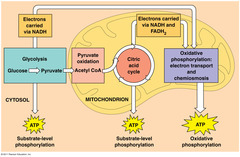
851098189Describe the difference between the two processes in cellular respiration that produce ATP: oxidative phosphorylation and substrate-level phosphorylationMost of the ATP produced in cellular respiration come from oxidative phosphorylation, in which the energy released from redox reactions in an electron transport chain is used to produce ATP. In substrate level phosphorylation, an enzyme dirctly transfers a phosphate group to ADP fro an intermediate substrate. All ATP production in glycolysis occurs by substrate-level phosphorylation, this form of ATP production also occurs at one step in the citric acid cycle.2
851098191Explain concept 9.2: Glycolysis harvests chemical energy by oxidizing glucose to pyruvate...3
851098192During the redox reaction in glycolysis, which molecule acts as the oxidizing agent? Which molecule acts as the reducing agent?NAD+ acts as the oxidizing agent in step 6, accepting electrons from glyceraldehyde 3-phosphate, which thus acts as the reducing agent4
851098195During the redox reaction in glycolysis, Which molecule acts as the reducing agent?glyceraldehyde 3-phosphate, which acts as the reducing agent5
851098196What is the source of energy for the formation of ATP and NADH in glycolysis?The oxidation of the three carbon sugar glyceraldehyde 3-phosphate, yields energy. In this oxidation, electrons and H+ are transferred to NAD+, forming NADH, and a phosphate group is attached to the oxidized substrate. ATP is then formed b y substrate level phosphorylation when this phosphate group is transferred to ADP6
851098213Explain concept 9.3: After pyruvate is oxidized, the citric acid cycle completes the energy yielding oxidation of organic molecules...7
851098214Name the molecules that conserve most of the energy from the citric acid cycle's redox reactions. How is this energy converted to a form that can be used to make ATP?NADH and FADH2; they will donate electrons to the electron transport chain8
851098215What processes in your cells produce the CO2 that you exhaleCO2 is released from the pyruvate that is the end product of glycoloysis, and CO2 is also released during the citric acid cycle9
851098217What molecular products indicate the complete oxidation of glucose during cellular respiration?...10
851098218Explain concept 9.4: During oxidative phosphorylation, chemiosmosis couples electron transport to ATP synthesis...11
851098219What effect would an absence of O2 have on the process shown in figure 9.15?...12
851098220Briefly explain the mechanism by which ATP synthase produces ATP. List three locations in which ATP synthases are found....13
851098221Explain concept 9.5: Fermentation and anaerobic respiration enable cells to produce ATP without the use of oxygen...14
851098226Consider the NADH formed during glycolysis. What is the final acceptor for its electrons during fermentation?...15
851098227Consider the NADH formed during glycolysis. What is the final acceptor for its electrons during aerobic respiration?...16
851098230Which process yields more ATP, fermentation, or anaerobic respiration?...17
851098233Explain concept 9.6: Glycolysis and the citric acid cycle connect to many other metabolic pathways...18
851098234Compare the structure of a fat with that of a carbohydrate, what features of their structure make fat a much better fuel?...19
851098235Under what circumstances might your body synthesize fat molecules...20
851098236Describe how catabolic pathways of glycolysis and the citric acid cycle intersect with anabolic pathways in the metabolism of a cell....21
851098238As it pertains to cellular respiration, state which organisms undergo cellular respiration....22
851098239As it pertains to cellular respiration, distinguish between the site of cellular respiration in prokaryotic cells and in eukaryotic cells.ATP synthases are found in the inner mitochondrial membranes of eukaryotic cells and in the plasma membranes of prokaryotes.23
851098240As it pertains to cellular respiration, distinguish between the terms aerobic and anaerobic....24
851098241As it pertains to cellular respiration, write the general chemical equation for aerobic cellular respiration....25
851098242As it pertains to cellular respiration, write the general chemical equation for lactic acid fermentation and state which organisms can undergo this process....26
851098243As it pertains to cellular respiration, write the general chemical equation for alcohol fermentation and state which organisms can undergo this process....27
851098257Relating to cellular energy: explain the chemical energy relationship between glucose and ATP....28
851098259Relating to cellular energy: explain the chemical energy role of ATP in driving cellular reactions....29
851098261Relating to cellular energy: describe the structure of ATP, ADP, and AMP....30
851098262Relating to cellular energy: explain why ATP is considered the "energy currency" of the cell and glucose is not....31
851098264Relating to cellular energy: state how many ATPs are produced from 1 glucose molecule during aerobic cellular respiration in prokaryotic cells...32
851098268Relating to cellular energy: state how many ATPs are produced from 1 glucose molecule during aerobic cellular respiration in eukaryotic cells...33
851098273Relating to cellular energy: state how many ATPs are produced from 1 glucose molecule during fermentation...34
851098275Describe the making of ATP through substrate-level phosphorylation....35
851098277Describe how organic molecules other than glucose (specifically proteins, fats, and nucleic acids) can be a source of energy by being broken down and used during glycolysis, the transition reaction, or the Krebs cycle....36
851098279Relating to oxidative phosphorylation (electron transport chain + chemiosmosis): define oxidation and reduction and describe the redox reactions of an electron transport chain....37
851098285Relating to oxidative phosphorylation (electron transport chain + chemiosmosis): relate the redox reactions of an electron transport chain to the active transport of hydrogen ions (H+) across a membrane....38
851098286Relating to oxidative phosphorylation (electron transport chain + chemiosmosis): relate the active transport of H+ ions across a membrane to the formation of an electrochemical gradient....39
851098287Relating to oxidative phosphorylation (electron transport chain + chemiosmosis): relate the electrochemical gradient to the facilitated diffusion of H+ ions across a membrane....40
851098289Relating to oxidative phosphorylation (electron transport chain + chemiosmosis): relate facilitated diffusion of H+ ions through the ATP synthase protein channel to the making of ATP....41
851098290Relating to aerobic cellular respiration: describe the molecules ATP and NADH and distinguish between the different energy-storing roles of each....42
851098291Relating to aerobic cellular respiration: describe the process of glycolysis, including the major molecules involved and the energy-storing molecules produced....43
851098296Relating to aerobic cellular respiration: describe the process of the transition reaction, including the major molecules involved and the energy-storing molecules produced....44
851098300Relating to aerobic cellular respiration: describe the process of the Krebs cycle, including the major molecules involved and the energy-storing molecules produced, and explain why the Krebs cycle is considered a cycle....45
851098301Relating to aerobic cellular respiration: describe the roles of NADH, FADH2, and O2 in the electron transport chain part of oxidative phosphorylation...46
851098305Relating to aerobic cellular respiration: show the relationship between the electron transport chain, active transport, and facilitated diffusion in the oxidative phosphorylation process of making ATP....47
851098307Relating to aerobic cellular respiration: state the specific locations of glycolysis, the transition reaction, the Krebs cycle, and the oxidative-phosphorylation process in eukaryotic cells....48
851098308Relating to aerobic cellular respiration: state the specific locations of glycolysis, the transition reaction, the Krebs cycle, and the oxidative-phosphorylation process in prokaryotic cells....49
851098316Relating to aerobic cellular respiration: state the number of ATPs produced during glycolysis, the transition reaction, the Krebs cycle, and the oxidative-phosphorylation process....50
851098318Relating to aerobic cellular respiration: explain why aerobic cellular respiration results in 36 ATPs per glucose in eukaryotic cells and 38 ATPs per glucose in prokaryotic cells....51
851098319Relating to aerobic cellular respiration: relate glycolysis to lactic acid fermentation and alcohol fermentation....52
851098323FermentationPartial degradation of sugars or other organic fuel that occurs without the use of oxygen53
851098325Aerobic RespirationCatabolic pathway in which oxygen is consumed as a reactant along with the organic fuel54
851098326Cellular RespirationIncludes both aerobic and anaerobic processes55
851098327Redox ReactionsA chemical reaction involving the complete or partial transfer of one or more electrons from one reactant to another; short for reduction-oxidation reaction56
851098328OxidationThe complete or partial loss of electrons from a substance involved in a redox reaction57
851098329ReductionThe complete or partial addition of electrons to a substance involved in a redox reaction58
851098360Reducing AgentThe electron donor in a redox reaction59
851098361Oxidizing AgentThe electron receptor in a redox reaction60
851098366NAD+Nicotinamide adenine dinucleotide, a coenzyme that cycles easily between oxidized (NAD+) and reduced (NADH) states, thus acting as an electron carrier.61
851098372Electron Transport ChainA sequence of electron carrier molecules (membrane proteins) that shuttle electrons down a series of redox reactions that release energy used to make ATP62
851098373GlycolysisA series of reactions that ultimately splits glucose into pyruvate. Occurs in almost all living cells, serving as the starting point for fermentation or cellular respiration63
851098374The Citric Acid CycleA chemical cycle involving eight steps taht completes the metabolic breakdown of glucose molecules begun in glycolysis by oxidyzing acetyl CoA (derived from pyruvate) to carbon diozide; occcurs within the mitochondrion in eukaryotic cells and in the cytosol of prokaryotes; together with pyruvate oxidation, the second majoy stage in cellular respiration.64
851098375Oxidative PhosphorylationThe production of ATP using energy derived from the redox reactions of an electron transport chain; the third major stage of cellular respiration65
851098406Substrate-level phosphorylationThe enzyme catalyzed formation of ATP by direct transfer of a phosphate group to ADP from an intermediate substrate in catabolism66
851098407Acetyl CoAAcetyl coenzyme A; the entry compound for the citric acid cycle in cellular respiration, formed from a fragment of pyruvate attached to a coenzyme.67
851098411CytochromesAn iron-containing protein that is a component of electron transport chains in the mitochondria and chloroplasts of eukaryotic cells and the plasma membranes of prokaryotic cells68
851098413ATP SynthaseA complex of several membrane proteins that functions in chemiosmosis with adjacent electron transport chains, using the energy of a hydrogen ion (proton) concentration gradient to make ATP. ATP synthases are found in the inner mitochondrial membranes of eukaryotic cells and in the plasma membranes of prokaryotes.69
851098415ChemiosmosisAn energy coupling mechanism that uses energy stored in the form of a hydrogen ion gradient across a membrane to drive cellular work; such as the synthesis of ATP. Under aerobic conditions, most ATP synthesis in cells occurs by chemiosmosis.70
851098417Protonmotive ForceThe potential energy stored in the form of a proton electrochemical gradient, generated by the pumping of hydrogen ions (H+) across a biological membrane during chemiosmosis.71
851098418Alcohol FermentationGlycolysis followed by the reduction pyruvate to ethyl alcohol, regenerating NAD+ and releasing carbon dioxide72
851098424Lactic Acid FermentationGlycolysis followed by the reduction of pyruvate to lactate, regenerating NAD+ with no release of of carbon dioxide.73
851098426Obligate AnaerobesAn organism that only carries out fermentation or anaerobic respiration. cannot use oxygen and may be poisoned by it74
851098446Facultative AnaerobesAn organism that makes ATP by aerobic respiration if oxygen is present but that switches to anaerobic respiration or fermentation if oxygen is not present75
851098448Beta OxidationA metabolic sequence that breaks fatty acids down to two-carbon fragments that enter the citric acid cycle as acetyl CoA76
851098449In cellular respiration, where does Glycolysis occur?In the cytosol77
851098450What is pyruvate?- The end product of glycolysis -The first step in cellular respiration - Stands in the junction between anaerobic and aerobic pathways78
851098451The Citric Acid Cycle also known as the Krebs cycle serves what purpose?...79
851098453OIL RIGOxidation is Loss of Electrons (OIL) RIG (Reduction is a Gain of Electrons)80
851098454Which process or processes return carbon to the atmosphere?Cellular Respiration81
851098455What are the 4 major steps of cellular respiration?1.Glycolysis- (occurs in the cytosol) 2. Pyruvate Oxidation - Formation of Acetyl Co-enzyme A (occurs in the mitochondrion) 3. TCA/Kreb's Cycle/ Citric Acid Cycle 4. Oxidative phosphorylation - Electron Transport Chain and Chemiosmosis - (occurs in the inner membrane of the mitochondrion)82
851098456In the Cellular Respiration Process, which coenzymes is an electron carrier?NADH and FADH283
851098489How many ATP are produced by the citric acid cycle for each molecule of glucose?284
851098492What is the correct sequence of steps as energy is extracted from glucose during cellular respiration.glycolysis → acetyl CoA → citric acid cycle → electron transport chain85
851098516What is the correct general equation for cellular respiration?C6H12O6 + 6 O2 → 6 CO2 + 6 H2O + ATP energy86
851098517What is the correct basic equation for cellular respiration?Glucose + 6 Oxygen leads to 6 Carbon Dioxide +6 Water + 1 ATP87
851098788Which of the part of the cellular respiration process takes place in the cytosol of a eukaryotic cell?Glycolysis88
851098790In what organelle would you find acetyl CoA formation, the citric acid cycle, and the electron transport chain?The Mitochondrion89
851098791How would you describe glycolysis?This process splits glucose in half and produces 2 ATPs for each glucose.90
851098792How would you describe the citric acid cycleThis process produces some ATP and carbon dioxide in the mitochondrion.91
851098806How would you describe the electron transport chain?This process uses energy captured from electrons flowing to oxygen to produce most of the ATPs in cellular respiration92
851098818Which part of a eukaryotic cell is involved in cellular respiration?Mitochondria93
851098819Glucose and _______ are consumed during cellular respirationOxygen94
851098820In a eukaryotic cell, most of the ATP derived from glucose during cellular respiration is produced by ...The Electron Transport Chain95
851098821How much does a single glucose molecule produce in glycoloysis alone?a single glucose molecule in glycolysis produces a total of: 2 molecules of pyruvic acid, 2 molecules of ATP, 2 molecules of NADH and 2 molecules of water96
851098822The immediate energy source that drives ATP synthesis by ATP synthase during oxidative phosphorylation is theH+ concentration across the membrane holding ATP synthase.97
851098827Which metabolic pathway is common to both fermentation and cellular respiration of a glucose molecule?glycolysis98
851098828In mitochondria, exergonic redox reactionsprovide the energy that establishes the proton gradient.99
851098830The final electron acceptor of the electron transport chain that functions in aerobic oxidative phosphorylation isoxygen.100
851098831What is the oxidizing agent in the following reaction? Pyruvate + NADH + H+ S Lactate + NAD+pyruvate101
851098833When electrons flow along the electron transport chains of mitochondria, which of the following changes occurs? ATP synthase pumps protons by active transport. The pH of the matrix increases.The pH of the matrix increases.102
851098834Most CO2 from catabolism is released duringthe citric acid cycle.103
851098835A molecule becomes more oxidized when it _Loses an electron. During oxidation, an electron is removed.104
851098836In the overall process of glycolysis and cellular respiration, _____ is oxidized and _____ is reduced.glucose ... oxygen In cellular respiration, electrons and hydrogen are removed from glucose and added to oxygen.105
851098837Most of the ATP produced in cellular respiration comes from which of the following processes?...106
851098838Which of the following is a correct description of the events of cellular respiration and the sequence of events in cellular respiration? (eText Concept 9.1) oxidation of glucose to pyruvate; reduction of pyruvate; TCA cycle; oxidative phosphorylation glycolysis; oxidative phosphorylation; TCA cycle; oxidation of pyruvate. oxidation of glucose to pyruvate; oxidation of pyruvate; oxidation of acetyl-coA; oxidative phosphorylation oxidation of pyruvate; TCA cycle; oxidation of glucose to pyruvate; oxidative phosphorylation glycolysis; reduction of pyruvate; TCA cycle; oxidative phosphorylation1. oxidation of glucose to pyruvate; 2. oxidation of pyruvate; 3. oxidation of acetyl-coA; 4. oxidative phosphorylation107
851098839Oxygen gas (O2) is one of the strongest oxidizing agents known. The explanation for this is that _____. (eText Concept 9.1) oxygen gas contains a double bond oxygen acts as the final electron acceptor in cellular respiration the oxygen atom is very electronegative oxygen is so abundant in the atmosphere oxygen gas is composed of two atoms of oxygenThe oxygen atom is very electronegative. The high electronegativity of the oxygen atom is the reason that oxygen is such a good oxidizing agent (why it can oxidize so many compounds).108
851098840The function of cellular respiration is to _____. (eText Concept 9.1) reduce CO2 produce carbohydrates extract CO2 from the atmosphere synthesize macromolecules from monomers extract usable energy from glucoseExtract usable energy from glucose. The most prevalent and efficient catabolic pathway is cellular respiration, in which oxygen is consumed as a reactant, along with the organic fuel (frequently glucose).109
851098842During the reaction C6H12O6 + 6 O2 → 6 CO2 + 6 H2O, which compound is reduced as a result of the reaction? (eText Concept 9.1) carbon dioxide oxygen water glucose both glucose and carbon dioxideoxygen110
851098844Each ATP molecule contains about 1% of the amount of chemical energy available from the complete oxidation of a single glucose molecule. Cellular respiration produces about 32 ATP from one glucose molecule. What happens to the rest of the energy in glucose? (eText Concept 9.1) It is converted to starch. It is converted to heat. It is released as carbon dioxide and water It is stored as fat. It is used to make water from hydrogen ions and oxygen.It is converted to heat.111
851098845A small amount of ATP is made in glycolysis by which of the following processes? (eText Concept 9.1) transfer of electrons and hydrogen atoms to NAD+ transport of electrons through a series of carriers attachment of a free inorganic phosphate (Pi) group to ADP to make ATP transfer of a phosphate group from a fragment of glucose to ADP by substrate-level phosphorylation harnessing energy from the sunTransfer of a phosphate group from a fragment of glucose to ADP by substrate-level phosphorylation112
851098846Where do the reactions of glycolysis occur in a eukaryotic cell? (eText Concept 9.1) the cytosol across the inner membrane of the mitochondrion the matrix of the mitochondrion in the intermembrane space of the mitochondrion the inner membrane of the mitochondrionGlycolysis occurs in the cytosol.113
851098847Most of the NADH that delivers electrons to the electron transport chain comes from which of the following processes? (eText Concept 9.3) substrate-level phosphorylation the citric acid cycle glycolysis anabolic pathways oxidative phosphorylationThe citric acid cycle Both NADH and FADH2 are produced during the citric acid cycle.114
851098848In preparing pyruvate to enter the citric acid cycle, which of the following steps occurs? (eText Concept 9.3) Pyruvate is oxidized and decarboxylated, and the removed electrons are used to reduce an NAD+ to an NADH. Pyruvate is reduced and decarboxylated, and the resulting electrons oxidize an NAD+ to an NADH Pyruvate is oxidized and decarboxylated, and the resulting electrons are donated to NADH to produce NAD+. Pyruvate is reduced to acetyl-coA, which involves the reduction of pyruvate, the addition of a carbon dioxide from the environment, and its reduction by NADH. Pyruvate is ionized directly to acetyl-coA.Pyruvate is oxidized and decarboxylated, and the removed electrons are used to reduce an NAD+ to an NADH.115
851098872Why is the citric acid cycle called a cycle? (eText Concept 9.3)The four-carbon acid that accepts the acetyl CoA in the first step of the cycle is regenerated by the last step of the cycle.116
851098873In the citric acid cycle, for each pyruvate that enters the cycle, one ATP, three NADH, and one FADH2 are produced. For each glucose molecule that enters glycolysis, how many ATP, NADH, and FADH2 are produced in the citric acid cycle? (eText Concept 9.3)two ATP, six NADH, two FADH2117
851098876Where do the reactions of the citric acid cycle occur in eukaryotic cells?The matrix of the mitochondrion The citric acid cycle, which takes place in the mitochondrial matrix, completes the degradation of glucose.118
851098884How many molecules of ATP are gained by substrate-level phosphorylation from the complete breakdown of a single molecule of glucose in the presence of oxygen? (eText Concept 9.3)Four There is a net gain of two ATP from glycolysis and one per each molecule of acetyl CoA oxidized in the citric acid cycle for a total of four per glucose.119
851098885What is the major (but not the only) energy accomplishment of the citric acid cycle? (eText Concept 9.3)The formation of NADH and FADH2 Each turn of the citric acid cycle releases carbon dioxide, forms one ATP by oxidative phosphorylation, and passes electrons to three NAD+ and one FAD.120
851098886After completion of the citric acid cycle, most of the usable energy from the original glucose molecule is in the form of _____.NADH The citric acid cycle produces three NADH per turn of the cycle.121
851098888Which of the following accompanies the conversion of pyruvate to acetyl CoA before the citric acid cycle? (eText Concept 9.3) regeneration of NAD+ removal of coenzyme A release of CO2 and synthesis of NADH formation of CO2 and synthesis of ATP release of CO2 and release of coenzyme Arelease of CO2 and synthesis of NADH122
851098889If significant amounts of materials are removed from the citric acid cycle to produce amino acids for protein synthesis, which of the following will result? (eText Concept 9.6) Less ATP will be produced by the cell. Less CO2 will be produced by the cell. The four-carbon compound that combines with acetyl CoA will have to be made by some other process. The first two answers are correct. The first three answers are correct.The first three answers are correct.123
851098890A gram of fat oxidized by respiration produces approximately twice as much ATP as a gram of carbohydrate. Which of the following best explains this observation? (eText Concept 9.6) Fats are better electron donors to oxygen than are sugars. Fats do not form true macromolecules as sugars do. Fats are closely related to lipid molecules, the basic building blocks of cellular membranes. Fats are less soluble in water than sugars. Fats are produced when cells take in more food than they need.Fats are better electron donors to oxygen than are sugars. Correct. Fats contain more hydrogen and less oxygen than sugars—it is the transfer of electrons from good donors such as hydrogen atoms to good acceptors such as oxygen that provides the energy in respiration.124
851098892When protein molecules are used as fuel for cellular respiration, _____ are produced as waste. (eText Concept 9.6) ethanol and CO2 molecules of lactate fatty acids amino groups sugar moleculesamino groups The amino group is a residual product of amino acid catabolism.125
851098894Of the metabolic pathways listed below, which is the only pathway found in all organisms? (eText Concept 9.5) the electron transport chain cellular respiration fermentation the citric acid cycle glycolysisglycolysis Ancient prokaryotes probably used glycolysis to make ATP long before oxygen was present in Earth's atmosphere. Glycolysis is the most widespread metabolic pathway.126
851098897If muscle cells in the human body consume O2 faster than it can be supplied, which of the following is likely to result? (eText Concept 9.5) The muscle cells will have more trouble making enough ATP to meet their energy requirements. The cells will not be able to carry out oxidative phosphorylation. The cells will consume glucose at an increased rate. Only the first two answers are correct. The first three answers are correct.The first three answers are correct. The muscle cells will have more trouble making enough ATP to meet their energy requirements. The cells will not be able to carry out oxidative phosphorylation. The cells will consume glucose at an increased rate.127
851098898In brewing beer, maltose (a disaccharide of glucose) is _____.the substrate for alcoholic fermentation128
851098900In glycolysis in the absence of oxygen, cells need a way to regenerate which compound? (eText Concept 9.5)NAD+129
851098901Sports physiologists at an Olympic training center wanted to monitor athletes to determine at what point their muscles were functioning anaerobically. They could do this by checking for a buildup of which of the following compounds? (eText Concept 9.5)lactate. In humans, muscle cells switch to lactate fermentation after becoming anaerobic.130
851098902Fermentation is essentially glycolysis plus an extra step in which pyruvate is reduced to form lactate or alcohol and carbon dioxide. This last step _____. (eText Concept 9.5)enables the cell to recycle the reduced NADH to oxidized NAD+131
851098903During respiration in eukaryotic cells, the electron transport chain is located in or on the _____. (eText Concept 9.4)inner membrane of the mitochondrion132
851098904Which of the following is the source of the energy that produces the chemiosmotic gradient in mitochondria? (eText Concept 9.4)Electrons moving down the electron transport chain133
851098905Which of the following best describes the electron transport chain? (eText Concept 9.4) Acetyl CoA is fully oxidized to CO2. Glucose is broken down to a three-carbon compound in preparation for the citric acid cycle. Electrons are passed from one carrier to another, releasing a little energy at each step. Hydrogen atoms are added to CO2 to make an energy-rich compound. Electrons are pumped across a membrane by active transport.Electrons are passed from one carrier to another, releasing a little energy at each step.134
851098906During aerobic respiration, molecular oxygen (O2) is used for which of the following purposes? (eText Concept 9.4) at the end of glycolysis to oxidize pyruvate at the end of the electron transport chain to accept electrons and form H2O between glycolysis and the citric acid cycle to split a carbon from pyruvate, producing CO2 as a source of O2 in every reaction that produces CO2 at the end of the citric acid cycle to regenerate citric acidat the end of the electron transport chain to accept electrons and form H2O135
851098907Word Roots: aero-air (aerobic: chemical reaction using oxygen)136
731926985Word Roots: an-not (anaerobic: chemical reaction not using oxygen)137
731926986Word Roots: chemi-chemical (chemiosmosis: the production of ATP using the energy of hydrogen ion gradients across membranes to phosphorylate ADP)138
731926987Word Roots: glyco-sweet;139
731926996Word Roots: -lysissplit (glycolysis: the splitting of glucose into pyruvate)140

AP Economics Rapid Review Flashcards

Terms : Hide Images
169156382Economicsthe study of how people. firms, and societies use their scarce productive resources to best satisfy their unlimited material wants0
169156383Resourcescalled factors of production, these are commonly grouped into the four categories of land, labor, capital, and entrepreneurship1
169156384Scarcitythe imbalance between limited productive resources and unlimited human wants.Because economic resources are scarce, the goods and services a society can produce are also scarce2
169156385Trade-offsscarce resources imply that individuals, firms, and governments are constantly faced with difficult choices that involve benefits and costs3
169156386Opportunity costthe value of the sacrifice made to pursue a course of action4
169156387Marginalthe next unit or increment of an action5
169156388Marginal benefit (MB)the additional benefit received from the consumption of the unit of a good or service6
169156389Marginal Cost (MC)the additional cost incurred from the consumption of the next unit of a good or service7
169156390Marginal analysismaking decisions based upon weighing the marginal benefits and costs of that action. The rational decision maker chooses an action if MB is greater than or equal to MC8
169156391Production possibilitiesdifferent quantities of goods that an economy can produce with a given amount of scarce resources. Graphically, the trade-off between the production of two goods is portrayed as a PPC9
169156392Law of increasing coststhe more of a good that is produced, the greater the opportunity cost of producing the next unit of that good10
169156393Absolute advantageexists if a producer can produce more of a good than all other producers11
169156394Comparative advantagea producer has this if he can produce a good at a lower opportunity cost than all other producers12
169156395Specializationwhen firms focus on production of goods for which they have comparative advantage13
169156396Productive efficiencyproduction of maximum outout for a given level of technology and resources. All the points on the PPC are productively efficient14
169156397Allocative efficiencyproduction of the combination of goods and services that provides the most net benefit to society. The optimal quantity of a good is achieved when the MB=MC of the next unit. This only occurs at one point on the PPC15
169156398Economic growthoccurs when an economy's production possibilities increase. This can be a result of more resources, better resources, or new technology16
169156399Market Economy (Capitalism)an economic system based upon the fundamentals of private property, freedom, self-interest, an prices.17
169082352Law of DemandHolding all else equal, when the price of a good rises, consumers decrease their quantity demanded for that product18
169082353All else equalto predict how a change in on variable affects a second, we hold all other variables constant. This is also referred to as the "ceterus paribus" assumption.19
169082354Absolute (or money) pricesthe price of a good measured in units of currency20
169082355Relative pricesthe number of units of any other good Y that must be sacrificed to acquire the first good X. Only relative prices matter21
169082356Substitution Effectthe change in quantity demanded resulting from a change in the price of one good relative to the price of other goods.22
169082357Income effectthe change in quantity demanded that results from a change in the consumer's purchasing power (or real income)23
169082358Demand schedulea table showing quantity demanded for a good at various prices24
169082359Demand curvea graphical depiction of a demand schedule. The demand curve is downward sloping, reflecting the Law of Demand25
169082360Determinants of demandconsumer income, price of substitute good, price of complementary good, tastes and preferences, expectations, number of buyers26
169082361Normal goodsa good for which higher income increases demand27
169082362Inferior goodsa good for which higher income decreases demand28
169082363Substitute goodstwo goods are these if they provide essentially the same utility to the consumer29
169082364Complementary goodstwo goods are these if they provide more utility when consumed together than when consumed separately30
169082365Law of supplyholding all else equal, when the price of a good rises, suppliers increase their quantity supplied for that good31
169082366Supply schedulea table showing quantity supplied for a good at various prices32
169082367Supply curvea graphical depiction of the supply schedule. The supply curve is upward sloping to reflect to Law of Supply33
169082368Determinants of Supplycost of input, taxes and subsidies, technology, price of production of other goods, expectations, number of firms34
169082369Market equilibriumexists at the only price where the quantity supplied equals the quantity demanded. Or it is the only quantity where the price consumers are willing to pay is exactly the price producers are willing to accept.35
169082370Shortagealso known as excess demand, this exists at a market price when the quantity demanded exceeds the quantity supplied. The price rises to eliminate this36
169082371Disequilibriumany price where quantity demanded is not equal to quantity supplied37
169082372Surplusalso known as excess supply, this exists at a market price when the quantity supplied exceeds quantity demanded. The price falls to eliminate this38
169114123Total welfarethe sum of consumer surplus and producer surplus. The free market equilibrium provides maximum combined gain to society39
169114124Consumer surplusthe difference between you willingness to pay and the price you actually pay. It is the area below the demand curve and above the price40
169114125Producer surplusthe difference between the price received and the marginal cost of producing the good. It is the area above the supply curve and under the price41
169156400Elasticitymeasures the sensitivity or responsiveness of a choice to a change in an external factor42
169156401Price elasticity of demandmeasures the sensitivity of consumer quantity demanded for good X when the price of good X changes43
169191439Price elasticity formulaEd=(%∆Qd)(%∆P) Ignore negative sign44
169191441Price elastic demandEd>1 or the (%∆Qd)>(%∆P) consumers are price sensitive45
169191443Price inelastic demandEd<1 or the (%∆Qd)<(%∆P) consumers are not price sensitive46
169191445Unit elastic demandEd=1 meaning the (%∆Qd)=(%∆P)47
169191447Perfectly inelasticEd=0 in this special case, the demand curve is vertical and there is absolutely no response to price change48
169191449Perfectly elasticEd=∞ in this special case, the demand for curve is horizontal meaning consumers have and instantaneous and infinite response to price change49
169191451Slope and elasticitythe more vertical a good's demand curve, the more inelastic the demand for that good. The more horizontal the demand curve, the more elastic.50
169191453Determinants of elasticityif a good has more readily available substitutes it is likely that consumers are more price elastic for that good. If a high proportion of a consumer's income is devoted to a particular good, consumers are generally more price elastic for that good. When consumers have more time to adjust to a price change, their response is usually more elastic51
169191455Total revenueTR=P*Qd52
169191458Total revenue testtotal revenue rises with a price increase if demand is price inelastic and falls with a price increase if demand is elastic53
169191460Elasticity and demand curvesat the midpoint of a linear demand curve, Ed=1. Above the midpoint demand is elastic and below the midpoint it is inelastic54
169191462Income elasticitya measure of how sensitive consumption of good X is to a chance in the consumer's income55
169191464Income elasticity formulaEi=(%∆Qd good X)(%∆ Income)56
169191466Luxurya good for which the income elasticity is greater than 157
169191468Necessitya good for which the income elasticity is above zero, but less than one58
169191470Values of income elasticityIf Ei >0, the good is normal and a luxury. If 1>Ei>0 the good is normal and income inelastic (necessity). If Ei<0 the good is inferior59
169191472Cross-price elasticity of demanda measure of how sensitive consumption of good X is to a change in the price of good Y60
169191474Cross-price elasticity formulaExy=(%∆Qd)(%∆ price Y)61
169191476Values of cross-price elasticity of demandif Exy>0, goods X and Y are substitutes. If Exy<0 goods X and Y are complementary goods62
169191478Price elasticity of supplymeasures the sensitivity of quantity supplied for good X when the price of good X changes63
169191480Price elasticity of supply formulaEs=(%∆Qs)(%∆P)64
169191482Excise taxa per unit tax on production results in a vertical shift in the supply curve by the amount of the tax65
169191484Incidence of taxthe proportion of the tax paid by consumers in the form of a highest price for the taxed good is greater if demand for the good is inelastic and supply is elastic66
169191486Dead weight lossthe lost net benefit to society caused by a movement awat from the competitive market equilibrium. Policies like excise taxes create lost welfare to society67
169191488Subsidyhas the opposite effect of an excise tax, as it lowers the marginal cost of production, resulting in a downward vertical shift in the supply curve for good X.68
169191489Price floora legal minimum price below which the product cannot be sold. If a floor is installed at some level above equilibrium price, it creates a permanent surplus69
169191490Price ceilinga legal maximum price above which the product cannot be sold. If a ceiling is installed at a level below the equilibrium price,, it creates a permanent shortage70
169191491Utilityhappiness, benefit, satisfaction, or enjoyment gained from consumption71
169191492Total utilitytotal happiness received from consumption of a number of units of a good72
169191493Marginal utilitythe incremental happiness received, or lost, when the consumer increases consumption of a good by one unit73
169191494Utilsa unit of measurement often used to quantify utility a.k.a "happy points"74
169191495Law of diminishing marginal utilityin a given time period, the marginal utility from consumption of more and more of that item falls75
169191496Constrained utility maximizationfor a one-good case. Constrained by prices and income, a consumer stops consuming a good when the price paid for the next unit is equal to the marginal benefit received76
169191497Utility maximizing rulthe consumer maximizes utility when they choose amounts of goods X and Y, with their limited income, so that the marginal utility per dollar spend is equal for both goods. MUx/Px=MUy/Py77
169191498Horizontal summationthe process of adding, at each price, the individual quantities demanded to find the market demand curve for a good78

AP World History Chapters 35 & 36 Flashcards

Terms : Hide Images
2410236147In what way did China and Vietnam differ from the other nations of the Third World?The traditional patterns of civilization in China and Vietnam collapsed, whereas most colonized peoples managed to retain much of their pre-colonial cultures.0
2410236148Who headed the American occupation government of Japan?General Douglas MacArthur1
2410236149Americans introduced the following reforms BUTOutlawing labor unions; Giving women the vote2
2410236150What party monopolized Japanese government into 1990s?Liberal Democratic Party3
2410236151In what year did the American occupation of Japan come to an end?19524
2410236152In what way was the restoration of an independent Korea complicated?Korea was divided into zones controlled by the U.S. and the Soviet Union.5
2410236153Who was the political leader of Soviet-dominated People's Democratic Republic of Korea?Kim Il-Sung6
2410236154The first leader of the US-dominated Republic of Korea was?Syngman Rhee7
2410236155In what year did the conflict between North and South Korea come to temporary conclusion with the signing of an armistice?19538
2410236156Who commanded the United Nations troops who participated in the Korean conflict on behalf of the Republic of Korea?General Douglas MacArthur9
2410236157Describe the situation in Korea following the Korean War.Korea remained divided with relatively authoritarian governments in both halves of the divided nation.10
2410236158What Chinese leader established an autocratic government on Taiwan in 1948?Chiang Kai Shek11
2410236159Which of the following economic powers of the Pacific Rim remained a European colony long after World War II?Hong Kong12
2410236160Which nation retained a large British naval base until 1971?Singapore13
2410236161Describe the Japanese political system after 1955?It was led by the Liberal Democratic Party with no experience with shifts in party administration and emphasis laid in conservative stability.14
2413837289What was the only weakness of the leadership of the Liberal Democratic Party in Japan in the 1980s?Liberal Democrats were bonded with corruption.15
2413842480What Western label was applied to the close coordination of Japanese government and business for promotion of economic growth and export expansion?Japan, Incorporated.16
2413845190Which of the following was NOT a feature of government involvement in Japanese industry?Granting huge military contracts17
2413852235Describe the development of Japanese culture in the postwar era.Aside from interior decoration and film, Japanese contributions to world culture were negligible.18
2413861118Which of the following was NOT a factor in the amazing economic growth of Japan following the 1950s?A rapidly growing military-industrial complex19
2413869286What did Japan's distinctive economic culture after the 1950s NOT include?The Zaibatsu system20
2413881362Which of the following represents a significant difference between Japanese and Western women in the later 20th century?The Japanese feminist movement was confined to a small number of intellectuals.21
2413890315In the 1980s the Japanese government invested considerable money in teachingEating with chopsticks22
2413897432What nation other than Japan in the Pacific Rim was the most obvious example of the spread of new economic dynamism?South Korea23
2413902412What leadership was typical of South Korea between 1960 and the late 1980s?Liberal Democratic; Military24
2413904558Which of the following statements most accurately describes Korean economic growth after 1950?Korea was able by the 1970s to compete successfully in the areas of steel, automobiles, and cheap consumer goods.25
2413909849Which of the following companies exemplifies the economic growth and political influence of Korean corporations?Hyundai; Daewoo26
2413912933In 1978, how did the United States government change its relationship with China?Severed its diplomatic ties with Taiwan and recognized the legitimacy of the communist government of mainland China.27
2413924744Who is Taiwan's greatest trade partner?Japan28
2413927665In what way was the Chinese Communist takeover of China different than that of the Bolshevik Revolution?The Chinese Communists claimed a unified country and did not experience years of civil war and foreign intervention29
2413944842Which of the following statements concerning Chinese foreign policy during the 1950s and 1960s is NOT accurate?China was able to achieve a close alliance with the emerging Third World government in India as a means of uniting the major powers of Asia.30
2413951200Which of the following statements concerning Chinese domestic policies during the 1950s and 1960s is most accurate?With the introduction of the first five-year plan in 1953, the Communist leadership turned away from the peasantry31
2413955805Mao's 1958 program of pushing industrialization through small-scale projects integrated into the peasant communes was calledthe Great Leap Forward32
2413966472China responded to to its population problem in the mid 1960s bylimiting urban couples to two children and rural couples to one.33
2413969526By 1960, why did Mao lose his position as State Chairman?It was because of the general and catastrophic failure of the Great Leap Forward.34
2413979041Which of the following "pragmatists" came to power following Mao's fall in 1960?Zhou Enlai35
2413982082Which of the following principles was NOT part of the Chinese Communist party attitudes towards women?Women proved themselves during World War II.36
2413990360Mao's last campaign, launched in 1965, wasthe Cultural Revolution37
2413993342The "Gang of Four" wereJiang Qing and three allies who contested for power with the "pragmatists" on behalf of the aging Mao.38
2414011420During the 1980s, all of the following were typical of Chinese government EXCEPTdemocratic reform39
2414013894The French intervened in the eighteenth century Vietnamese rebellion and supportedNguyen Anh40
2414019408The outcome of the 18th century Vietnamese Rebellion wasthe unification of the country under a single emperor at Hue.41
2414022314By what decade did the French manage to achieve control of all of Vietnam?1890s42
2414026967In what way was the early nationalist organization in Vietnam similar to other Third World nations?It was composed of a Western-educated middle class.43
2414030528The Communist-dominated nationalist movement in Vietnam during World War II wasthe Viet Minh44
2414031861The Vietnamese nationalists in 1954 decisively defeated the French at what battle?The Battle of Dien Bien Phu45
2414035456How many states admitted into the UN between the 1960s and 1980s?Over a hundred new states46
2414044479What role did working class and rural men and women play in the global network?Rural poor drawn into sweat shop labor and thus into the global economy47
2414049578Length of cold war (until context shifted after 1985)?30 years48
2414050720What factor did NOT play a role in the demise of communism?Reassertion of eastern European initiative49
2414053256What was the name of the strategic arms treaty negotiated between the superpowers in 1979?SALT II50
2414054600What was NOT a change in Chinese policy in the late 1970s?The decision to relax political controls51
2414058033How did the US protest against the Soviet invasion of Afghanistan in 1979?boycotted the 1980s Moscow Winter52
2414060420Who was the Russian leader who significantly altered policies after 1985?Mikhail Gorbachev53
2414067716What is perestroika?economic restructuring and more leeway for private ownership.54
2414071181In what country did violence lead to the overthrow of communist leader?Romania55
2414072597What was NOT a factor leading to the stagnation of industrial production in the Soviet Union?Shortage of raw resources and materials56
2414075958What was NOT a reform of Mikhail Gorbachev?the dividing of the Soviet Union into its original states.57
2414082382What was the name of the new parliament encouraged by Gorbachev in 1988?the Congress of People's Deputies58
2414083893In which country did the Communist Party rename itself Socialist?Hungary59
2414085540Which country pushed for economic liberation -- held back by the Soviet Union?Bulgaria60
2414087914What was the country that installed a non-communist government in 1988?Hungary61
2414089231The German reunification occurred in what year?198862
2414090441Name the minority nationality regions in the former Yugoslavia.Muria63
2414091594Name the Baltic states.Lithuania, Latvia, Estonia64
2414100795Boris Yeltsin emerged as head of what major Soviet Republic in 1991?Russia65
2414101208What did the former Soviet Union become?Common wealth of independent states66
2414102638What was NOT a concern of the former Soviet Union?Invasion by the West67
2414109863Who took over after Yeltsin as leader of Russia?Putin68
2414112691What was the trend in the world following the end of the Cold War?The spread of multiparty democracy69
2414119353Which country did NOT experience democratic restructuring in the mid 1970s?Germany70
2414120252Which Latin American countries did NOT adapt to democracy in the 1990s?Cuba71
2414122429What is the heaviest populated country of Africa?Nigeria72
2414123722What country remained a superpower after the end of the Cold War?the United States73
2414124944What country was excluded from the UN Human Rights Commission in 2001?the United States74
2414127630What countries were identified by the United States as a potential nuclear threat?North Korea, Iran, Iraq75
2414131235The Persian Gulf War of 1991 was a response to what?Kuwait76
2414131724What is the common currency of the EU?Euro77
2414132858IN what year did the terrorist attacks on New York's World Trade Center occur?September 11, 200178
2414134999What countries did NAFTA join?Canada, the United States, and Mexico79
2414137289The Second Persian Gulf War in 2003 led to the invasion of what country?Iraq80
2414138178Czechoslovakia is now split into what two nations?Czech Republic and Slovakia81
2414139107Where has the Russian military put down revolts in the 1990s?Chechnya82
2414140342What is globalization?The increased interconnectedness of all parts of the world83
2414142338Generalizations regarding the globalization of the Earth?Human homogeneity: very similar fashion, lifestyle ideas, foods, technology, etc etc84
2414143010what was the most important technological innovation regarding global communications?The cellular phone.85
2414144695Where is VW "Bug" produced?Germany86
2414146840IN 2000, what percentage of American households did not have English as the primary language?25%87
2414148143What company was the most striking international cultural influence since 1970s?McDonald's88
2414148612What was the role of All Saint's Day in Northern Mexico?It was displaced by Halloween.89

N104 (Psych) - Mood disorders, personality disorders, complimentary therapies, substance abuse, violence/abuse, child/adolescence psych (Exam 2) Flashcards

Mood disorders, personality disorders, complimentary therapies, substance abuse, violence/abuse, child/adolescence psych

Terms : Hide Images
787733921Mood disorders are characterized by changes in...Mood that range from extreme elation and agitation to extreme depression, serious potential for suicide0
787733922Euthymia"Normal" mood1
787733923DepressionAn overwhelming state of sadness, loss of interest or pleasure, feelings of guilt, disturbed sleep patterns and appetite, low energy and an inability to concentrate2
787733924ManiaPrimarily characterized by an abnormal and persistently elevated, expansive or irritable mood3
787733925Depressive disorders- Characterized by a loss of interest in life (anhedonia) - Types: Major Depressive Disorder, Seasonal Affective Disorder (SAD), Dysthymic Disorder, Schizoaffective Disorder, Premenstral Dysthymic Disorder, Depressive Disorder with Post Partum Onset4
787733926Major Depressive Disorder- Characterized by changes in several aspects of an individual's life, depressed mood or loss of interest or pleasure in usual activities - At least 2 weeks, no history of manic behavior, and symptoms that cannot be attributed to use of substances or a general medical condition - Can include psychotic features (hallucinations, delusions)5
787733927Seasonal Affective Disorder- Depressive disorder that occurs in relation to the season (generally winter) - Characterized by hypersomnia, fatigue, weight gain, irritability and interpersonal difficulties - Seasonal differences in the amount of daylight is thought to disrupt melatonin production, circadian rhythms and/or ability to process dopamine and norepinephrine - Melatonin influences sleep-wake cycle and circadian rhythms (sedative effects)6
787733928Dysthymic Disorder- Characterized by a chronic depression syndrome that is usually present for many years (to Dx for at least 2 years) - Clinical manifestations are less severe than those of a major depressive disorder, few physiologic symptoms - Mood disturbance is hard to distinguish from the individual's usual pattern of functioning, minimal or occupational impairment7
787733929Schizoaffective DisorderPsychotic disorder whereby the clinical manifestations of the psychotic disorder, schizophrenia, co-exist with those of a mood disorder (depression, mania, or mixed)8
787733930Premenstrual Dysthymic Disorder- Markedly depressed mood, excessive anxiety, mood swings, and decreased interest in activities during the week prior to menses and subsiding shortly after the onset of menstruation - Symptoms begin toward last week of luteal phase (day 7-day 10) and are absent in the week following menses (hormones are increased)9
787733931Depressive Disorder with Post Partum Onset- Onset within 4 weeks of delivery - Important to distinguish this from the "baby blues" - Pervasive, can turn into post-partum psychosis, if not treated - Gets worse after first child10
787733932Etiology of depression (Biologic theories):- Genetic factors - Biochemical factors (Deficiency/dysregulation in norepinephrine, serotonin, dopamine) - Neuroendocrine factors (Increased levels of cortisol secretion)11
787733933Etiology of depression (Psychosocial factors):- Psychoanalytic theory (Freud): Depression is related to loss (actual/symbolic) - Cognitive theory (Beck): Model of depression points to errors of logical thinking as causative factors for depression (Negative expectations: environment, self, future), automatic thoughts are rapid, unthinking responses based on unique assumptions about ourselves and the world - Learned helplessness (Seligman): Stressful events that are experienced as uncontrollable result in the development of helplessness, apathy, powerlessness, and depression12
787751085Etiology of depression (Psychodynamic influences and life events)- Psychosocial theory that explains depression from an environmental and life events perspective (stress), which is combined with a biological 'vulnerability' - Trauma may result in long-term hyperactivity of the CNS corticotrophin-releasing factor and norepinephrine systems with a consequent neurotoxic effect13
787751086Nursing assessment (depression)Clinical manifestations of depression can be described as alterations in four spheres of human functioning (Affect, behavior, cognitive, physiologic)14
787751087Affect (nursing assessment of depression)- Behavioral expression of emotion; feelings of being sad, anxious, helpless, hopeless - Facial expressions convey sadness, show little or no emotion, speaks in monotone, may only respond with a yes or no - Frequent sighing is common - Often no eye contact, bout of weeping or patients cannot cry - Patient looks older than stated age - See the world via gray-colored glasses15
787751088Behavior (nursing assessment of depression)- Manner in which an individual acts, tearful, regression, restless, agitation, withdrawal, psychomotor retardation, decreased interest in hygiene/grooming - Patient may speak slowly (their mind is 'slowed') - In extreme depression, the patient may be mute16
787793033Cognitive (nursing assessment of depression)- Thinking skills, including logic, awareness, memory, intellect, language, reasoning/judgment - Preoccupation with loss, obsessive/repetitive thoughts, difficulty concentrating, delusions, misinterpreting reality - When depressed, a patient is unable to think clearly, has poor judgment, unable to make decisions, memory and concentration is poor, may have delusional thinking17
787793034Physiological (nursing assessment of depression)- Concerning body functions: anorexia/overeating, insomnia/hypersomnia, somatic complaints, fatigue, anergia - Somatic concerns: headaches, pain, vague body aches, changes in physiologic functioning are called "vegetative signs of depression" (alterations in activities which support physical life and growth - Individuals with depressive disorders may express any of the following: anergia, anhedonia, anxiety/guilt, feeling worthless, feeling helpless, feeling hopeless18
787793035Suicide Assessment- All individuals who describe depressive symptoms are at risk for suicide - Assess via direct questioning - Ask about suicidal ideation, history of suicide attempts and /or of a specific plan - If the individual has a plan, do they have the means to 'carry out' the plan - It's important to differentiate between a 'vaguely formed thought' and a plan - The more organized the plan, the more concern for self -injury - For patients with suicidal ideation, sometimes they don't really think ahead and may not want to really hurt /kill self - they just want the pain to stop - Assess for any medical illness/substance use/abuse19
787793036Therapeutic modalities for depression (Psychotherapy)- Cognitive-Behavioral Therapy (Ellis): decreases depressive thought patterns, helps the individual address negative cognitive processing, negative thoughts about: oneself, world, future - Cognitive-Behavioral Therapy: increases positive reinforcement from others and environment via effective social and coping skills - Interpersonal Theory (Sullivan): reduce depressive s/sx, emphasis on relationships and social functioning20
790957290Therapeutic modalities for depression (Phototherapy)- Light therapy is effective because of the influence of light on melatonin - Exposure to light suppresses the nocturnal secretion of melatonin, which has a therapeutic effect on individuals with SAD21
790957291Therapeutic modalities for depression (Exercise)- Exercise can have a profound effect on stress reduction - Can manage the transient syndrome of mild depression22
790957292Therapeutic modalities for depression (ECT)- Electroconvulsive Therapy - Treatment for depression in which a grand mal seizure is induced by passing an electrical current via electrodes that are applied to the temples - A muscle relaxant minimizes seizure activity and prevents damage to long bones and cervical vertebrae - Indications: There is a need for a rapid, definitive response when a patient is suicidal or homicidal, patient is in extreme agitation or stupor, patient develops a life-threatening illness because of refusal of food/fluids, history of poor response to medication - Considered for tx only after a trial of therapy with antidepressant medication has been ineffective and thought to be effective because it increases the circulating levels of serotonin, norepinephine and dopamine23
790957293ECT pre-procedure- Informed consent - NPO after midnight (or 4 hours before treatment) - Prep as for the OR, no dentures, jewelry, contacts, etc - IM Atropine or Robinul to dry secretions and protect against vagal bradycardia24
790957294ECT procedure- Electrodes are attached to the temples - BP, cardiac and EEG monitor in place - Mouth guard - 100% oxygen - Use of short-acting anesthetic and muscle relaxant (IV)25
790957295ECT post-procedure- Individual responds slowly after treatment; may not remember the event - In PACU for 1 to 3 hours - Reorient, some short-term memory may be affected, but will return - Monitor virtual signs/secretions26
790957296Nursing interventions for depressed patients- Convey caring, empathy, potential for change - Spend time with patient, even in silence is not a 'waste of time' - Instilling hope is a key tool for recovery - Utilize counseling and communication strategies - Assess need for self-care; offer support when appropriate - Monitor & intervene to maintain adequate nutrition, hydration and elimination - Provide adequate balance of rest, sleep and activity - Involve individual's support system - Teach about medications and therapies - Continuously assess for the possibility of suicidal thoughts and ideation throughout course of recovery **Remember: High risk for suicide when antidepressants begin to take effect; individual now has the physical and emotional energy to carry out a plan27
7909572975 categories of antidepressant medications1.) TCA's (tricyclics) 2.) SSRI's (selective serotonin re-uptake inhibitors) 3.) SNRI's (selective norepinephrine re-uptake inhibitors) 4.) Atypical 5.) MAOI's (monoamine oxidase inhibitors)28
790957298TCA's action and examples- Tricyclic antidepressants 1.) Block the reuptake of norepinephrine and serotonin to a lesser degree (Therefore, there is increased levels of norepinpehine and serotonin in the synapse) - Elevates mood, increases mood, activity, and alertness, decrease preoccupation and morbidity, improve appetite, regulate sleep patterrns 2.) Block the muscarinic receptors that bind to acetylcholine (Leads to typical anticholinergic effects: blurred vision, dry mouth, tachycardia, constipation) 3.) Block histamine-1 receptors in brain (Leads to drowsiness, sedation, weight gain) - Strong binding at adrenergic receptors results in dizziness, hypotension and tachycardia - Ex: amitriptyline (Elavil), imipramine (Tofranil), nortriptyline (Pamelor)29
790957299TCA's side/adverse effects- Anticholinergic action - Blockage of Histamine 1 receptors - Alpha-adrenergic action - Cardiovascular (dysrhythmias, tachycardia, and MI)30
790957300TCA's patient teaching- May take 1 to 3 weeks; 4 to 6 weeks for full effect - Drowsiness, dizziness and hypotension generally subside after the first few weeks - Caution about working around machines, driving, crossing street, related to altered reflexes, drowsiness /dizziness - No alcohol - it can block the effect of the medication - Dispense at bedtime to reduce experience of side effects during the day - Do not stop taking med abruptly31
790978413SSRI's action and examples- Selective serotonin reuptake inhibitors 1.) Block the neuronal uptake of serotonin (This increases the availability of serotonin in the synapses) - As a group, they have less ability to block the muscarinic and histamine -1 receptors than the TCA's - Faster onset than TCA's and fewer adverse reactions - Also used for treatment of OCD and panic disorder - Ex: fluoxetine (Prozac), sertraline (Zoloft), paproxetine (Paxil), citalopram (Celexa)32
790978414SSRI's side/adverse effects- May induce agitation, anxiety, sleep disturbance, tremor, sexual dysfunction or tension headache, dry mouth, sweating, weight gain, mild nausea or loose bowel movements - Serious adverse effect: Serotonin Syndrome33
790978415Serotonin Syndrome- Adverse of effect of SSRIs (rare and life-threatening event) - Thought to be related to over-activation of the serotonin receptors, either for too high a dose or in combination with other drugs - S/sx: abdominal pain, sweating, fever, tachycardia, elevated BP, altered mental state (delirium), muscle spasms, irritability, hostility and mood change, hyperprexia, cardiovascular shock or death34
790978416SSRI's patient teaching- Drowsiness, irritability, insomnia - Take dose early in the day (esp. Prozac) - Teach about decreased libido - Do not take any OTC medications or herbal preparations without consulting a physician - Individuals with a tendency toward mania should not take SSRI's - Do not discontinue abruptly - Report any unusual 'reaction' to physician immediately35
790984303SNRI's action and examples- Selective Norepinephrine Reuptake Inhibitors - Increase both serotonin and norepinephrine - Fewer adverse reactions than other classes of antidepressants - Ex: enlafaxine (Effexor), desvenlafaxine (Pristiq), duloxetine (Cymbalta), trazodone (Desyrel) - Cymbalta can be used for depression and diabetic peripheral neuropathy36
800623195Atypicals for Mood Disorders- mirtqazapine (Remeron): potentiates effects of norepi and serotonin, offers both antianxiety & antidepressant effects, antiemetic effect - buPROPion (Wellbutrin): works with dopamine, serotonin, norepinephrine, tx for depression37
800623196MAOIs action and examples- Monoamine oxidase inhibitors - Prevent destruction of monamines by inhibiting action of MAO (monoamine oxidase) - MAO can no longer break down tyramine with MAOIs, so tyramine blood levels increase - High tyramine levels can lead to high blood pressure, a hypertensive crisis, then CVA and death - Ex: phenelzine (Nardil), tranylcypromise (Parnate), selegiline transdermal (Emsam)38
800623197Foods high in tyramineFermented, smoked, aged foods, foods with yeast, beer, wine, chocolate, Ginseng, medications (cough meds)39
800623198Side effects of MAOIs- Common: hypotension, sedation/weakness/fatigue, muscle cramps, changes in cardiac rhythm, urinary hesitancy/constipation, weight gain, sexual dysfunction - Serious: hypertensive crisis (medical emergency, s/sx: severe occipital headache, marked increase in BP, palpitations/chest pain, nuchal rigidity, nausea/vomiting, fever/sweating40
800623199Treatment of hypertensive crisis (caused by MAOIs)- Discontinue med - Do not lie pt. down (increases bp in head) - IV Thorazine (blocks norepi) - IV Regitine (Phentolamine- induces hypotension) - External cooling measures to control hyperpyrexia41
800623200Bipolar disorders- Mood disorders where pt. experiences moods that alternate between depression and elation - Bipolar I disorder: occurrence of one or more manic, depressed and /or mixed episodes - Bipolar II disorder: characterized by the occurrence of one or more hypomanic episodes along with one or more major depressive episodes42
800623201Mania (bipolar disorders)- Disorder where the predominant mood is elevated, expansive or irritable, motor activity is frenzied and excessive - Psychotic features may or may not be present - Characterized by: flight of ideas, grandiosity, hyperactivity, sexual over activity, excessive spending, pressured speech, decreased food and fluid intake, significant impairment in social/occupational functioning43
800623202Hypomania (bipolar disorders)- 'Mild' form of mania - Excessive hyperactivity, however it is not severe enough to cause marked impairment in social /occupational functioning, nor to require hospitalization44
800623203Cyclothymic disorder (bipolar disorders)- Chronic mood disorder involving both hypomania and dysthymic mood swings - Delusions are not present - Does not require hospitalization - Social, occupational or interpersonal functioning is not grossly impaired45
800623204Guidelines for nursing interventions for patients with acute mania- Assess if they are a danger to self/others - Firm, calm approach and short, concise explanations - Structured environment, decrease stimuli, provide structure solitary activities - High cal fluids and finger foods, monitor sleep patterns - Teach about meds and strategies - Usually mood stabilizing agent + antipsychotic46
800623205Mood stabilizing agents (Psychopharmacology for bipolar disorders)- Lithium Eskalith, Lithobid - Lithium stabilizes electric activity of neurons, interacts with Na and K at cell membrane to stabilize electrical activity, decreases the excitatory neurotransmitter glutamate to exert an antimaniac effect - Narrow therapeutic margin (0.8 - 1.4 meq/L), blood levels should be monitored on a regular basis47
800623206Lithium side effects- Expected side effects (<0.4 to 1.0 mEq/L): fine hand tremor, polyuria and mild thirst, mild nausea & general discomfort - Early side effects (<1.5 mEq/L): N/V/D, thirst/polyuria, lethargy, slurred speech, muscle weakness, fine hand tremor - Advanced signs of toxicity: Coarse hand tremor /incoordination, persistent GI upset, mental confusion /sedation, muscle hyperirritability, EEG changes - Severe signs of toxicity: Ataxia /clonic movements /seizures, confusion, large amount of dilute urine, blurred vision, hypotension, stupor /coma - Levels >2.5 mEq/L: seizures, oliguria, death - NO KNOWN ANTIDOTE FOR LITHIUM POISONING48
800623207Lithium nursing guidelines/patient teaching- Help prevent relapse, blood serum levels are monitored closely - Lithium is not addictive, maintain normal diet and normal salt and fluid intake (2500 mL to 3000 mL /day), decreases sodium reabsorption by the renal tubules, which can cause sodium depletion - Low sodium decreases renal excretion, lithium accumulates in the blood and clan lead to toxicity - Withhold drug if excessive diarrhea, vomiting or diaphoresis occurs - Dehydration can raise Lithium levels: Call physician - Lithium is irritating to gastric mucosa, take with meals - Periodic monitoring of renal and thyroid function is indicated with long-term therapy49
800666913Anti-epileptic medications examples (Psychopharmacology for bipolar disorders)Valproic acid (Depakote), clonazepam (Klonopin), carbamazepine (Tergretol), lamotrigine (Lamictal), gabapentin (Neurontin), topiramate (Topamax), oxcarbazepine (Trileptal)50
800666914Anti-epileptic medications action (Psychopharmacology for bipolar disorders)- Many of these medications act by increasing levels of GABA - Tegratol, Lamectal and Trileptal act by affecting the sodium channels in neurons - Neuroton acts by stabilizing neuronal membranes - Topamax acts by blocking sodium channels in neurons and enhancing GABA51
800666915Anti-epileptic medications side effects- Sedation, tremor, mild GI upset - Serious adverse effects: Tegretol (agranulocytosis), depakote (hepatitis), lamicatal (Steven-Johnson syndrome)52
800666916Suicidal ideation- An individual is thinking about self-harm - 'Un-intentional' suicidal ideation: Individual's desire to cause self -harm or self-destruction which is not in their awareness (high-risk behaviors)53
800666917SAD PERSONS- Assessment tools to ascertain risk factors for potential suicide behaviors - Individuals are assigned 1 point for each applicable character - The total point score correlates with an action scale that assists the health care provider to make a decision regarding hospitalization54
800732899Personality disorders occur when these traits become:- Inflexible, maladaptive, the cause of significant functional impairment or subjective distress - People with personality disorders are not often treated in acute care settings in cases in which the personality disorder in their primary psychiatric disorder55
800732900MMPI- Minnesota Multiphasic Inventory - Evaluates personality56
800732901Splitting behavior- Used primarily by clients with Borderline Personality Disorder - Client labels one person "all good" and the others "all bad". - Best to have personality disorder patients assigned to one nurse/contact per shift57
800732902Cluster A personality disorders- Odd or eccentric behaviors - Paranoid personality disorder, schizoid personality disorder, schizotypal personality disorder58
800732903Paranoid personality disorder- Cluster A personality disorder - A pervasive distrust and suspiciousness of others such that others' motives are interpreted as malevolent; condition begins by early adulthood and presents in a variety of contexts - Clinical picture: Constantly on guard, hypervigilant, ready for any real or imagined threat, trusts no one, constantly tests the honesty of others, insensitive to the feelings of others, oversensitive, tends to misinterpret minute cues, magnifies and distorts cues in the environment, does not accept responsibility for his or her own behavior, attributes shortcomings to others59
800732904Schizoid personality disorder- Cluster A personality disorder - Characterized primarily by a profound defect in the ability to form personal relationships, failure to respond to others in a meaningful emotional way - Clinical picture: Indifferent to others, aloof, emotionally cold, no close friends; prefer to be alone. In the presence of others, clients appear shy, anxious, or uneasy, inappropriately serious about everything and have difficulty acting in a light-hearted manner60
800732905Schizotypal personality disorder- Cluster A personality disorder - A graver form of the pathologically less severe schizoid personality pattern - Clinical picture: Clients are aloof and isolated, behave in a bland and apathetic manner, live in a fantasy world, everyday world manifests (Magical thinking, ideas of reference, delusions, depersonalization, superstitiousness, withdrawal into the self), exhibit bizarre speech pattern, when under stress, may decompensate and demonstrate psychotic symptoms, demonstrates bland, inappropriate affect61
800732906Cluster B personality disorder- Dramatic, emotional, or erratic behaviors - Antisocial personality disorder, Borderline personality disorder, Histrionic personality disorder, Narcissistic personality disorder62
800732907Antisocial personality disorder- Cluster B personality disorder - A pattern of: socially irresponsible, exploitative, guiltless behavior that reflects a disregard for the rights of others - Clinical picture: Fails to sustain consistent employment, fails to conform to the law, exploits and manipulates others for personal gain, fails to develop stable relationships, lacks remorse, unable to delay gratification - Risk for other-directed violence related to rage reactions, negative role-modeling, inability to tolerate frustration - Defensive coping related to dysfunctional family system - Chronic low self-esteem related to repeated negative feedback resulting in diminished self-worth63
800732908Borderline personality disorder- Cluster B personality disorder - Characterized by a pattern of intense and chaotic relationships with affective instability, clients have fluctuating and extreme attitudes regarding other people, clients are highly impulsive - Most common form of personality disorder, emotionally unstable, directly and indirectly self-destructive: often self-mutilate, lacks a clear sense of identity - Make contract with patient not to self-mutilate! Suicide contract also! - Risk for self-mutilation related to parental emotional deprivation - Risk for suicide related to unresolved grief - Risk for other-directed violence related to underlying rage64
800732909Histrionic personality disorder- Cluster B personality disorder - Personality is: excitable, emotional, colorful, dramatic : Actors & Actresses, extroverted in behavior - Clinical picture: Self-dramatizing, attention-seeking, overly gregarious seductive: Love you immediately, manipulative, exhibitionistic, highly distractible, have difficulty paying attention to detail, are easily influenced by others, have difficulty forming close relationships: have many friends, but have no true friends, strong need for approval; feel dejected and anxious if they don't get it65
800732910Narcissistic personality disorder- Cluster B personality disorder - Characterized by an exaggerated sense of self-worth, lack empathy, believe they have the inalienable right to receive special consideration. - Clinical picture: Clients are overly self-centered, exploit others in an effort to fulfill their own desires, mood, which is often grounded in grandiosity, is usually optimistic until you do them wrong! - Clients are relaxed, cheerful, and care-free. Until you do them wrong!66
800732911Cluster C personality disorders- Behaviors that are described as anxious or fearful - Avoidant personality disorder, Dependent personality disorder, Obsessive-compulsive personality disorder67
800732912Avoidant personality disorder- Cluster C personality disorder - Characterized by: extreme sensitivity to rejection and social withdrawal - Clinical picture: Awkward and uncomfortable in social situations, desire close relationships but avoid them because of their fear of being rejected, perceived as timid, withdrawn, or cold and strange, often lonely and feel unwanted, view others as critical and betraying68
800732913Dependent personality disorder- Cluster C personality disorder - Characterized by a pervasive and excessive need to be taken care of that leads to submissive and clinging behavior and fears of separation - Clinical picture: notable lack of self-confidence that is often apparent in their posture, voice, mannerisms, Typically passive and acquiescent to desires of others, overly generous and thoughtful, while underplaying their own attractiveness and achievements, low self-worth and easily hurt by criticism and disapproval, assume passive and submissive roles in relationships, avoid positions of responsibility and become anxious when forced into them.69
800732914Obsessive compulsive personality disorder- Cluster C personality disorder - Characterized by inflexibility about the way in which things must be done. - Devotion to productivity at the exclusion of personal pleasure. - Clinical picture: Especially concerned with matters of organization and efficiency, tend to be rigid and unbending, clients are polite and formal, clients are rank-conscious (ingratiating with authority figures). - Appear to be very calm and controlled. Underneath there is a great deal of: ambivalence, conflict. hostility70
801596431Alternative medicine- Interventions that differ from traditional or conventional biomedical treatment - Used INSTEAD of conventional treatment71
801596432Complementary medicineAn intervention that is used in conjunction with traditional or conventional medicine72
801596433Integrative care- The blending of conventional and complimentary and alternative medicine (CAM) - also described as "holistic," incorporates the entire person (biological, psychological, social, spiritual) - 5 basic principles: 1.) body has ability to heal itself 2.) health and healing are related to mind, body, and spirit 3.) basic good health practices build the foundation for healing 4.) healing practices are individualized 5.) people are responsible for their own healing73
801596434Complementary vs. conventional medicine- Conventional: concerned with structure, function and connections or communication between material elements that compose the body, views all human beings as very similiar (biologically), disease is deviation from what is considered to be a normal biologic state - Complementary/alternative: views person-body as consisting of multiple, integrated elements that incorporate both materialistic & nonmaterialistic (physical, spiritual, energetic, and social bodies)74
801596435Classification of CAM/5 domains1.) Alternative medical systems (TCM- traditional chinese medicine, acupressure, acupuncture, chinese herbology, cupping, tai chi, qi gong & ayurveda, homeopathy, naturopathy) 2.) Mind-body interventions (relaxation breathing, prayer, meditation, biofeedback, imagery, humor, hypnosis, journaling, yoga) 3.) Biologically-based therapies (herbal therapy, nutraceuticals, nutritional therapy, aromatherapy) 4.) Manipulative & body-based methods (chiropractic, acupresure, reflexology, hydrotherapy, light & color therapies, alternate nostril breathing, colonics) 5.) Energy therapies (therapeutic touch, healing touch, reiki, magnet therapy) Others: pet therapy, psychosocial therapy, interpersonal therapy, reality therapy, relaxation therapy, assertiveness training, cognitive therapy75
801596436Etiological implications of abuse- Areas of brain affected: temporal lobe, limbic system, amygaloid nucleus - Neurotransmitters (norepi, dopamine, serotonin) - Brain tumors, brain trauma, encephalitis - Unmet needs for satisfaction/security - Children learn by imitating their role models - Product of one's culture and social culture76
801596437Battering- Pattern of behavior used to establishpower/control over another through fear and intimidation, often including threat or use of violence - This happens when one person believes they are entitled to control another77
801596438Domestic violenceOngoing, debilitating experience of physical, psychological, and/or sexual abuse in the home, associated with increased isolation from the outside world and limited personal freedom and accessibility to resources78
801596439Profile of the victim (domestic violence)- Battered women (any age/race/religious/religious/cultural/educational/socioeconomic group, married/single) - Housewives or executives - Low self-esteem & believe in feminine sex role stereotypes - Accept blame for batterer's actions - Can be isolated from family/friends79
801596440Profile of the victimizer (domestic violence)- Low self-esteem - "Dual personality: one to partner (pathologically jealous), one to rest of world - Possessive & sees spouse as possession, threatened when spouse shows independence or tries to share herself and her time with others - Small children ignored until they gey older - Keeps trying to isolate her and make her dependent - POWER AND CONTROL THROUGH INTIMIDATION80
801596441Cycle of battering (3 distinct phases)1.) Phase 1: tension-building phase (may last few weeks to months to years) 2.) Phase 2: acute battering incident (shortest phase, up to 24 hours) 3.) Phase 3: honeymoon phase (can last shortly or for a long time)81
801596442Physical abuse (child)- Any nonaccidental injury - An physical injury: punching, beating, kicking, biting, burning, shaking, throwing, stabbing, choking, hitting, or otherwise hurting a child82
801596443Signs of physical abuse (child)- Unexplained burns, bites, bruises, broken bones, black eyes, fading bruises/other marks noticeable after an absence from school - Seems frightened of parents & protests or cries when it is time to go home - Shrink at the approach of adults - Reports injury by a parent or other adult caregiver83
801596444Signs of emotional abuse (child)- Pattern of behavior on part of parent/caregiver that results in serious impairment of the child's social, emotional, or intellectual functioning (belittling child, rejecting child, ignoring child, blaming child for things he/she didn't do, isolating child from normal social experiences, using harsh/inconsistent discipline) - Behavioral indicators (Shows extremes in behavior: overly compliant or demanding, extremely passive or aggressive, acts like adult or infantile, delayed physical or emotional development, attempted suicide, lack of attachment to child)84
801607977Signs of emotional abuse (adult/abuser)- Constantly blames, belittles, berates child - Unconcerned about child or refuses offers of help for child's problems - Overly rejects child85
801607978Indicators of physical/emotional neglect (child)- Frequent school absences - Begs or steals food or money - Lacks needed medical or dental care, immunizations, or glasses - Consistently dirty & has severe body odor - Lacks sufficient clothing for weather - Abuses alcohol or other drugs - States there is no one home to provide care86
801607979Indicators of sexual abuse (child)- Difficulty walking/sitting - Suddenly refuses to change for gym or participate in any physical activities - Reports nightmares or bedwetting - Experiences sudden change in appetite - Demonstrates bizarre, sophisticated, or unusual sexual knowledge or behavior - Pregnant or contract venereal disease before 14 - Runs away - Reports sexual abuse by parent or another adult caregiver87
801630927Rape- Act of aggression, not passion - Identified by use of force and executed against person's will - NO IS NO - Acquaintance rape - Date rape: Rapist known to victim, can be first date or dating for months, college campuses common, many go unreported - Marital rape - Statutory rape: Unlawful intercourse between man older than 16 and a woman under age of consent88
801675268Substance abuseCharacterized by a pattern of repeated use of substances that is maladaptive in that significant adverse consequences occur89
801675269Substance dependenceDefined as a maladaptive pattern of substance use leading to clinically significant impairment or distress90
801675270ToleranceNeeding increased amounts of a substance to achieve the desired effect91
801675271Substance intoxicationRefers to a reversible syndrome of maladaptive physiological and behavioral changes that are due to the effects of a substance on an individual's central nervous system92
801675272Substance withdrawalRefers to the development of maladaptive physiological, behavioral and cognitive changes that are the result of reducing or stopping the heavy and regular use of a substance93
801675273Impaired health professionals- Impairment of a health care professional is the inability or impending inability to practice according to accepted standards as a result of substance use, abuse or dependency - Impaired nurse s/sx (Volunteers to work additional hours, frequently leaves the unit, spends a lot of time in the bathroom, during their shift, their patients may complain that their pain is unrelieved even when receiving medications, inaccurate drug counts, increased incidents of vial 'breakage')94
801696818Codependency- Involved being preoccupied with controlling another person's behavior - Seen when a family member both rescues and blames the substance abuser95
801696819Enabling- Helping a chemically dependent individual avoid experiencing the consequences of their substance abuse96
801696820Blackout vs. Passing out- Blackout: form of amnesia for events that occurred during drinking period, no recollection of events/conversations next day - Passing out: loss of consciousness - Both can be related to an individual's use of alcohol or another substance97
801696821BAL- Blood alcohol level - Intoxication occurs at 0.10% - Drunk driving limit is 0.08%98
801728991Confabulation'Making up' of info to fill in the memory blanks, NOT lying99
801696822Alcohol- Mechanism of action: CNS depressant - Potentates GABA activity and decreases glutamate activity - One positive answer to CAGE assessment is a strong indication of alcohol problem (Cut down, annoy anyone with problem, guilty about drinking, eye opener first thing in the morning)100
801728992Side effects of alcohol withdrawal1.) Minor: can occur within 6-12 hours after last ingestion, s/sx can last 48-72 hours - Hangover s/sx: nausea, vomiting, headache, sweating/thirst, irritability, vasomotor instability, gastritis, fatigue, restlessness, the 'shakes' 2.) Major: appear within 2-3 days, s/sx can last 3-5 days - Wernicke's encephalopathy (advanced CNS problem, lack of vitamin B1/thiamine, paralysis of ocular muscles & confusion) can lead to Korsakoff's psychosis (confusion, loss of recent memory and confabulation) - Delirium Tremens (DTs): severe sudden mental &/or neurologic changes, severe memory disturbance, agitation, anorexia, and hallucinations101
801728993Treatment of alcohol withdrawal1.) IVF 2.) Mg sulfate (decrease irritability caused by low Mg levels and to prevent seizures) 3.) Administer vitamins, especially Thiamine (Vit. B1), helps prevent Wernicke's encephalopathy 4.) Benzos (Librium or Serax) to help prevent DTs 5.) Seizures may be treated with IV diazepam (Valium) &/or phenyton (Dilantin)102
801745452Treatment for alcohol abuse1.) AA 2.) Meds: disulfiram (Antabuse - prevents relapse, can be deadly if consumed with alcohol), naltrexone (ReVia - decreases alcohol craving), acamprosate (Campral - helps to decrease alcohol craving), buprenorphine hydrochloride (treatment for outpatient detox)103
801756909Sedatives/Hypnotics/Anxiolytics examples- Barbituates (Seconal, Nembutal, Amytal, Phenobarbital, Quaaludes) - Non-barbituates (Dalmane, Restoril, Halicon) - Benzodiazepines (Valium, Xanax, Librium, Ativan) - Club/"designer" drugs (Rohypnol, Gama hydroxbutryic acid- GHB) - Alter balance of neurotransmitters, enhance the action of GABA, decrease impulse transmission, depress the activity of brain, nerve, muscle and cardiac tissue, CNS depressants104
801763651Effects of barbituates/anxiolytics- A feeling of euphoria, yet in a relaxed state, disinhibition of sexual/aggressive impulses, impaired judgement/attention memory - Combined with alcohol can lead to unconsciousness, seizure, coma, and death - Respiratory depression - Barbituates: Seconal, Nembutal, Amytal, Phenobarbital, Quaaludes105
801763652Effects of 'designer' drugs- Fast acting benzos that cause anterograde amnesia, memory loss of events occurring while under the influence of the drugs - produce euphoria and disinhibition of impulses106
803835046Designer drugs withdrawal clinical manifestations:- Depends on dosage and half life of the drug - Respiratory depression - Tachycardia/orthostatic hypotension - Nausea/vomiting/malaise - Anxiety/psychomotor agitation - Insomnia/hallucinations - Seizure (especially with barbituates)107
803835047Treatment of designer drugs withdrawal:- Treated symptomatically - Antidote for benzos is flumazenil (Romazicon) - Maintain airway, seizure precautions, IV fluids, dialysis - Substitution therapy for CNS depressant withdrawal is common with a long-acting barbituate, Phenobarbital108
803835048Opiods- Morphine, Heroin, Codeine, Dilaudid, Percodan, Methadon, Fentanyl - Action: endorphins, enkephalins, and dynorhins are the naturally occurring substances that stimulate opiate receptors in the brain, provide pain relief and pleasant 'feelings,' regulate body temperature, respiration, endocrine, and GI activity, external opiates attach to those same opiate receptors, general effect is CNS depressant109
803835049Effects of Opiates- Rush/thrill followed by a high (sense of calmness) followed by dysphoria as well as impairment of attention, judgment, and memory - Sedation, respiration depression, pupil constriction, anticholinergic effects110
803835050Opiate withdrawal clinical manifestations- Begin 6-10 hours after last dose, craving for the drug, respiratory depression - Nausea/vomiting/diarrhea - Severe muscle aches (especially abdominal pain) - Rhinorrhea/lacrimation, crawling skin sensation, pinpoint pupils, coma/death111
803835051Treatment of opiate withdrawal- Naloxone (Narcan) a narcotic antagonist to reverse respiratory depression and coma - Reversal is rapid112
803835052CNS stimulantsCaffeine, nicotine, cocaine, amphetamines and 4-methylene-dioxyamphetamine (MDMA)113
803835053Effects of CNS stimulantsPsychomotor agitation, euphoria, impaired judgment, hypervigilance, hallucinations, delusions, tachycardia, hypertension, fever, dilated pupils114
803835054CNS stimulant withdrawal clinical manifestationsPeak 2-4 days after last ingestion, depression/anxiety, paranoia/suidical ideation, either insomnia/hypersomnia115
803835055Treatment of CNS stimulant withdrawal- Chlorpromazine (Thorazine)- decreases physiological effect - Diazepam (Valium)- decreases the tachycardia and helps to prevent seizures - Other options include phenobarbital - Imipramine (Tofranil) for the severe depression which is common116
803835056Inhalants and action- Solvents (gasoline, lighter fluid, paint, glue) - Propellant gases (butane, propane, nitrous oxide) - Substances displace oxygen and cause tachycardia, decreases the ability of oxygen to bind to RBC, act as CNS depressant117
803835057Effects of inhalantsCauses euphoria, light headedness and excitement, both central and peripheral nervous system damage, generalized weakness, cerebellar atrophy118
803835058Hallucinogens- Lyseric acid diethylamide (LSD): aka acid, Mescaline (peyote, a mushroom), PCP (angel dust), Ketamine, MDMA - Action: affect dopamine, serotonin, norepinephrine, and opioid receptors in the brain, distort perception of reality, visual sensory perception and induce hallucinations119
803835059Effects of hallucinogens- Dizziness, insomnia, euphoria, heightened response to color, texture, sounds, all feelings are magnified (love, lust, hate, anger) - A sensation of 'slowed' time, increased HR & BP, decreased respiratory rate, can lead to violent and out of control behavior - "Bad" trip: individual is in a psychotic state and terrified by perceptual changes - Flashbacks: occur spontaneously when the individual is drug-free, "reliving" of the experiences the individual "felt" while under the influence the drug120
803835060Treatment of hallucinogens withdrawal- Speak slowly, clearly in soft voice - Reality orientation, medication for anxiety or agitation/violent behavior121
803835061Cannabis- Marijuana and hashish - Action: derives from hempl plant, contains THC - THC acts on the CNS and cardiovascular system - THC stored in the fatty tissues - especially the brain and reproductive systems122
803835062Effects of cannabis- Produces significant analgesic effect - Can be seen on an EEG, diffuse impairment for up to 2 months after last use - Causes neurocognitive deficits in attention, learning, memory and intellectual functioning, euphoria, relaxed inhibitions, depersonalization, heightened sensory perception, sensation of 'slowed' time - Tachycardia/orthostatic hypotension, increased appetite, lowers testosterone levels in males, chemicals accumulate in ovaries - Withdrawal s/sx: restlessness, insomnia, hypersomnia, paranoia, psychosis123
8039592903 patterns of temperament (children & adolescents)1.) Easy: positive mood, regular patterns of eating and sleeping, positive approach to new situations and low emotional intensity 2.) Difficult: irregular sleep and eating patterns, negative response to new stimuli, slow adaptation, negative mood and high emotional intensity 3.) Slow-to-warm-up: negative, mildly emotional response to new situations that is expressed with intensity and initially slow adaptation but evolves into a positive response124
803959291ResilienceTerm used to denote the relationship between a child's constitutional endowment and success negotiating stressful environmental factors125
803959292Anxiety disorders in children1.) Separation anxiety disorder 2.) Obsessive compulsive disorder 3.) PTSD126
803959293Separation anxiety disorder- Child's fear and anxiety around separation becomes developmentally inappropriate - Excessively anxious when separated from /or anticipating separation from their home or parental figure - Interferes with social, academic, occupational or other areas of functioning - May develop after a significant stress127
803959294Autism spectrum disorders- Characterized by neuro-developmental delays and are typically diagnosed in childhood - Autism and Asperger syndrome are often considered one diagnosis on a continuum128
803959295Autistic disorder- Marked by impairment in reciprocal social interaction, verbal and non verbal communication with restrictive and repetitive activities and interests - Characterized by: impaired social interaction, impaired communication, a restricted repertoire of activity and interests - Distinguinishing characteristics: lack of responsiveness to others, withdrawal from social contact, gross impairment in communication, bizarre response to the environment129
803959296Issues of children with autistic disorder1.) Deficits in social behavior 2.) Problems with communication 3.) Impairment in understanding speech 4.) Impairment in speech development 5.) Unusual patterns of behavior 6.) Unusual responses to sensory experiences 7.) Disturbances of mobility130
803959297Pharmacologic intervention for autistic disorder1.) risperidone (Risperdal) 2.) clomipramine (Anafranil) 3.) desipramine (Norpramin)131
803959298Asperger's disorder- Later onset than autism and no significant delay in cognitive or language development - Characterized by sustained impairment in social interaction marked by: inappropriate initiation of social interactions, inability to respond to usual social cures, tendency to be concrete in their interpretation of language, can also display stereotypic behavior, highly restricted areas of interest132
803959299ADHD- Attention Deficit-Hyperactivity Disorder - Persistent pattern of inattention and /or hyperactivity /impulsivity - Manifestations of hyperactivity and impulsivity decline with age, difficulty paying attention during tasks (especially those requiring sustained attention), difficulty listening, even with prompts and redirection, difficulty in organizing tasks, pays no attention to social cues, talks excessively133
803959300ADHD psychopharmacology1.) CNS stimulants (enhance dopamine and norepinephrine, improve attention and focus, decreases impulsive actions) 2.) Dextroamphetamine/amphetamine composite (Adderall) 3.) Methylphenidate (Ritalin Concerta) 4.) Dexmethylphenidate (Focalin) 5.) Atomoxetine (Strattera) 6.) Bupropion (Wellbutrin) 7.) Imipramine (Tofranil)134
803959301Atomoxetine (Strattera)- ADHD medications - Not a Central Nervous System Stimulant (SNRI) - Most effects result from release of norepinephrine - This medication is specifically for ADHD - It increases attention span - Adverse reactions include: mood swings /suicidal ideation, dizziness/fatigue /insomnia, hypotension, nausea/vomiting, anorexia, decreased libido135
803959302Oppositional Defiant Disorder- Recurrent and hostile pattern of behavior toward authority figures - Disruptive, argumentative, hostile and irritable, social problems with peers and adults - does NOT include physical aggression, destructive behavior, being deceitful, theft or serious violation of rules136
803959303Conduct DisorderCentral feature of this disorder is repetitive and persistent behavior in which the basic rights of others are violated, i.e. physical aggression toward others or animals, cruelty, theft, arson137
803959304Cult- Ethical group which follows a dominant leader - Accepts their claims, doctrine and dogma - Obeys a set of commands - contribute to deviant behavior and perpetration of violent acts138
803959305Characteristics of a cult- Follows a living leader - The leader is usually a dominant paternal figure - Members of the cult make absolute claims about the leader's knowledge, character and /or abilities - Membership is contingent on the complete acceptance of the leader's claims of divinity, infallibility, etc. - Members have complete loyalty and allegiance to the leader - There is total dependence on the group139
803959306Who Joins a Cult?- Most potential cult members are adolescents or young adults - Some are struggling to establish their own identity - Individuals are drawn to the cult because it holds out the false promise of emotional well-being - Cults offer a sense of direction for which some are searching140

Pages

Subscribe to CourseNotes RSS

Need Help?

We hope your visit has been a productive one. If you're having any problems, or would like to give some feedback, we'd love to hear from you.

For general help, questions, and suggestions, try our dedicated support forums.

If you need to contact the Course-Notes.Org web experience team, please use our contact form.

Need Notes?

While we strive to provide the most comprehensive notes for as many high school textbooks as possible, there are certainly going to be some that we miss. Drop us a note and let us know which textbooks you need. Be sure to include which edition of the textbook you are using! If we see enough demand, we'll do whatever we can to get those notes up on the site for you!