AP Notes, Outlines, Study Guides, Vocabulary, Practice Exams and more!

Pre-AP Biology Final Review Flashcards

Wilkins-Baker Biology STAAR EOC cards

Terms : Hide Images
9989725929Biomoleculesorganic molecules which combine to form living organisms; includes carbohydrates, lipids, proteins and nucleic acids0
9989725930carbohydrates1. made up of:carbon,hydrogen and oxygen 2. combined in 1:2:1 ratio 3. include simple and complex sugars; 4. Functions: store energy, cell wall structure, & provide sugars for DNA and RNA; 5. monomer - monosaccharaide ; 6. polymer - polysaccharide1
9989725931lipids1. biomolecule composed of carbon, hydrogen and oxygen; 2. includes fats,oils, waxes and steroids; 3. important component of cell membranes2
9989725932proteins1. biomolecule composed of nitrogen, carbon, hydrogen and oxygen; 2. monomer amino acids; 3. enzyme is an example 4. functions: regulation, catalyze chemical reactions, cell signaling, structure, transport3
9989725933nucleic acids1. biomolecule made up of CHONP 2. monomer: nucleotides; 3. nucleotides contain a phosphate sugar and nitrogen base; 4. Polymers include DNA and RNA4
9989725934monomersingle unit ; small piece of biomolecule5
9989725935polymermulti piece unit; made up of smaller monomers6
9989725937dehydration synthesisA chemical reaction that builds up molecules by losing water molecules7
9989725938hydrolysisThe process of splitting a compound into fragments with the addition of water; a kind of reaction that is used to break down polymers into simpler units, e.g. starch into glucose.8
9989725939organic moleculeAn organic compound always contains carbon; Examples : carbohydrates, lipids, proteins and nucleic acids.9
9989725940prokaryotican organism whose cell generally lacks a true nucleus Examples: bacterial cells10
9989725941eukaryoticorganism possessing a membrane-bound nucleus ; animals, plants, fungi, and protists11
9989725942homeostasisThe tendency of an organism or a cell to regulate its internal conditions, usually by a system of feedback controls or feedback loops, so as to stabilize health and functioning, regardless of the outside changing conditions ex: sweating when hot12
9989783218Positive feedback loopAn escalating cycle which does not stop without intervention ex: childbirth13
9989789769negative feedback loopA feedback loop that causes a system to change in the opposite direction from which it is moving example: body temperature14
9989725943energy conversion organelles1. Chloroplasts - Only in plant cells, these organelles convert solar energy to chemical energy that the cell can use. 2. Mitochondria - The energy center of the cell. Changes food energy into chemical energy the cell can use.15
9989983988PhotosynthesisPlants use the sun's energy to convert water and carbon dioxide into sugars16
9989988221Photosynthesis Equation17
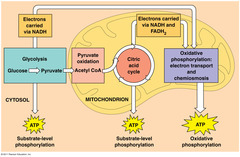
9989992653Cellular Respirationprocess of producing ATP by breaking down carbon-based molecules when oxygen is present; 34-36 ATP are produced when oxygen is present18
9989999165cellular respiration equation19
9990054227Where does cellular respiration take place?Mitochondria20
9990058301Aerobic RespirationRespiration that requires oxygen21
9990060025Anaerobic RespirationRespiration that does not require oxygen22
9989725944transport of molecules organellesmovement of nutrients & wastes must occur within the cell; 1. lysosomes digest wastes; 2. vacuoles stores & removes wastes; 3. cell membrane controls movement of materials in and out of cell; 4. endoplasmic reticulum transports materials inside of cell23
9990029713Passive transportThe movement of substances across a cell membrane without the use of energy by the cell24
9990015570DiffusionMovement of molecules from an area of higher concentration to an area of lower concentration.25
9990020964facilitated diffusionMovement of specific molecules across cell membranes through protein channels26
9990019031OsmosisDiffusion of water through a selectively permeable membrane27
9990031121Active TransportMovement of particles from low to high concentration across the membrane that requires energy (ATP).28
9989725945synthesis of molecules organellesorganelles within a cell must make molecules ; 1. ribosomes make proteins; 2. golgi body repackages proteins for different uses;29
9989725946virusA submicroscopic infectious agent that is unable to grow or reproduce outside a host cell. It is non-cellular but consisting of a core of DNA or RNA surrounded by a protein coat.30
9989725947lytic infectionviral infection which immediately makes host sick by destroying cells31
9989725948lysogenic infectionviral disease which remain dormant for a time and causes no symptoms32
9989725949human immunodeficiency virusHIV caused AIDS or Aquired Immune Deficiency by destroying a special white blood cell known as a Helper T cell33
9989725950influenzaviral disease caused by airborne transmission; vaccines must be taken annually to lower probability of contacting the "flu"34
9989725951deoxyribonucleic aciddouble-stranded nucleic acid found in the nucleus which provides instruction for making proteins; provides hereditary information35
9989725952ribonucleic acidsingle stranded nucleic acid made during transcription to provide template for making proteins at ribosome during translation36
9989725953cell cyclecomponents include interphase, mitosis and cytokinesis37
9989725954interphasepart of the cell cycle; resting stage of cell and preparation for mitosis; includes G 1 (duplication of organelles) S phase(replication of DNA) and G 2 (checking of replication)38
9989725955mitosispart of cell cycle; division of the nucleus; includes prophase, metaphase, anaphase and telophase39
9989725956cytokinesispart of cell cycle; division of cytoplasm and organelles except nucleus40
9989725957cell differentiationspecialization of cells for a particular function41
9989725958canceruncontrolled cell division; creates tumors and interferes with normal cell function42
9989725959NucleotideA subunit (monomer) of nucleic acids like DNA and RNA. Composed of a sugar, phosphate, and nitrogenous base.43
9989725961DeoxyriboseA monosaccharide (sugar) found in each nucleotide in DNA.44
9989725962Nitrogen BasesAdenine, Thymine, Cytosine, and Guanine in DNA. Adenine, Uracil, Cytosine, and Guanine in RNA.45
9989725963Genetic CodeThe code found in DNA that matches codons in mRNA to amino acids on tRNA.46
9989725964GenomeAn organism's complete set of genetic information (DNA).47
9989920671Protein SynthesisForming proteins based on information in DNA and carried out by RNA48
9989725965TranscriptionThe process where a copy of mRNA is made from one gene in DNA; occurs in nucleus49
9989725966TranslationThe process of making a protein, where tRNA matches amino acids to codons in the mRNA; occurs in ribosome50
9989725968Meiosiscell division creating sex cells with half the amount of DNA51
9989725969Monohybrid crosspunnett square showing results of genetic cross of one trait52
9989725970Dominantallele with genetic trait always expressed53
9989725971homozygousalleles with the same genetic information54
9989835563HeterozygousAn organism that has two different alleles for a trait55
9989725972Non-Mendelian Inheritancegenetic inheritance pattern different from dominant hides recessive trait such as codominance, imcomplete dominance56
9989725973Incomplete Dominancegenetic inheritance pattern where phenotype of offspring are a blend between two separate parental phenotypes57
9989725974Genetic Mutationchanges in organism's DNA sequence;58
9989725975Deletionchanges in genetic code with removal of nucleotides59
9989725976Insertionchanges in genetic code with addition of nucleotides60
9989725977Inversionchanges in genetic code with nucleotides in opposite order61
9989725978GeneA unit of heredity; A portion of DNA that codes for a trait.62
9989725979Punnett Squaregraphic organizer showing results of a genetic cross63
9989725980Dihybrid crosspunnett square showing results of genetic cross of two traits64
9989725981Mendelian Inheritancegenetic inheritance pattern when dominant trait always masks or hides phenotype of recessice trait65
9989725982RecessiveGenetic trait which only expresses phenotype when in homozygous state; hides when dominant allel is present66
9989725985Co-dominancegenetic inheritance pattern in which two dominant alleles are expressed in phenotype67
9989725986DNA fingerprintingcreating a gel electrophoresis of DNA nucleotides to determine similarities in banding patterns68
9989725987Genetic Modificationchanging of the DNA sequence to alter protein synthesis69
9989725988Chromosomal Analysiskaryotype; picture of chromosomes to determine mutations such as nondisjunction70
9989725989Sex CellsHaploid cells created by meiosis; gametes71
9989725990Independent AssortmentMendel principle states different pairs of genes are passed to offsrping separately to form new gene combinations72
9989725991Crossing Overexchange of DNA from separate chromosomes during meiosis73
9989725992SegregationMendel principle that gene pairs separate during meiosis so each parent passes down one form of gene to offspring.74
9989725993Common Ancestorthe most recent ancestral form or species from which two different species evolved75
9989725994Fossil RecordA term used by paleontologists to refer to the total number of fossils that have been discovered, as well as to the information derived from them76
9989725996Anatomical Homologiesmorphological(form or structure) or physiological (function) similarities between different species of plants or animals77
9989725998Developmental HomologiesStudying the embryological development of living things provides clues to the evolution of present-day organisms78
9989725999Natural Selectionthe process by which forms of life having traits that better enable them to adapt to specific environmental pressures79
9989726001Diversitydegree of variation of life forms within a given ecosystem, biome, or an entire planet80
9989726006Mutationa permanent change in the DNA sequence of a gene's which alters the amino acid sequence of the protein encoded by the gene81
9989726007Recombinationchange in genetic sequence which increases variation among organisms82
9989726009Taxonomyclassfy living organisms into groups; Domain,Kingdom,Phylum,Class,Order,Family,Genus,Species83
9989726010Archaea Kingdomprokaryotic kingdom of bacteria able to live in harsh enviroments which are hot,salty or acidic84
9989726011Eubacteria Kingdomprokaryotic kingdom of bacteria with majority of organisms are beneficial and only a few are harmful85
9989726012Protist Kingdomeukaryotic kingdom of mostly one celled organism divided into 3 groups: animal like, plant like, and fungus like86
9989726013Fungi Kingdomeukaryotic kingdom of heterotrophic decomposers with cell walls made of chitin87
9989726014Plant Kingdomeukaryotic kingdom of autotrophic, multicellular stationary organisms which undergo photosynthesis88
9989726015Animal Kingdomeukaryotic kingdom of heterotrophic, multicellular mobile organisms.89
9989726017ReactantsElements and compounds on left side of chemical equation which enter a chemical reaction90
9989726018ProductsElements and compounds on right side of chemical equation which exit a chemical reaction91
9989726019Internal Feedback MechanismsChemical signals which communicate within a body system to help an organism maintain homeostasis92
9989726020Ecological Successionhow an area changes over time from an area that is uninhabitable to one that is able to support a healthy ecosystem93
9989726022Populationa group of organisms of the same species that live in the same area and interbreed94
9989726023Communitya group of different populations (different species) that live in the same area95
9989726024Biotic Factora living thing in an ecosystem; ex. plant, animal, bacteria96
9989726025Abiotic Factora nonliving thing in an ecosystem; ex: water, rocks, earth97
9989726027Limiting Factorsany factor that limits the size of a population by restricting its numbers, reproduction, or distribution98
9989726028Carrying Capacitythe maximum population a habitat can sustain99
9989726029Predationa relationship between two species where one species hunts (predator) and eats the other species (prey)100
9989726030Competitiona relationship between two species where they both require the same resource (food, water, shelter, space) and must compete for it101
9989726031Parasitisma relationship between two species where one species is helped and the other species is harmed102
9989726032Commensalisma relationship between two species where one species is helped and the other species is not affected103
9989726033Mutualisma relationship between two species where both species are helped104
9989726034Autotrophan organism that can use photosynthesis to make its own food: "self-feeding"105
9989726035Heterotrophan organism that cannot use photosynthesis to make its own food and must eat other organisms to survive: "other-feeding"106
9989726036Trophic Levelthe position a species occupies in a food chain; ex. producer, primary consumer, secondary consumer107
9989726037Food Chaina sequence of organisms that shows how energy is transferred from plants, to plant eaters, to meat eaters and so on108
9989726038Food Weba combination of several food chains within an ecosystem109
9989726039Ecological Pyramida graphic representation of the amount of biomass present in each trophic level of a food chain; producers are always on the bottom, then primary consumers, then secondary consumers and so on110
9989726040Microorganismsliving things that can only be seen with a microscope; ex. bacteria, protists111
9989726042Resource Baseamount of total available food, water , shelter and space; toal amount of biotic and abiotic factors available for organims112
9989726043Carbon Cyclethe cyclic movement of carbon atoms between living things (organic carbon) and their environment (inorganic carbon)113
9989726044Nitrogen Cyclethe cyclic movement of nitrogen atoms between living things (organic nitrogen) and their environment (inorganic nitrogen)114
9989726045Cell WallA structure that surrounds the cell membrane and provides support to the cell.115
9989726046Cell MembraneA protective layer that covers the cell's surface and controls what moves in and out of the cell.116
9989726047CytoplasmThe fluid, jelly-like substance that fills the cell.117
9989726048NucleusA large organelle in a eukaryotic cell that contains the cell's DNA/chromosomes/genetic material.118
9989726049ChloroplastOrganelles in plant cells that trap sunlight; organelle in which photosynthesis takes place.119
9989726050ChromosomeStructures in the nucleus of eukaryotic cells made of DNA.120
9989726051RibosomeAn organelle that makes proteins.121
9989726052LysosomeThe organelle that digests food particles, wastes, cell parts, and foreign invaders.122
9989726053MitochondriaThe organelles that that break down food/sugar to release energy.123
9989726054Endoplasmic ReticulumThe organelle that transports proteins around the cell.124
9989726055Golgi BodyThe organelle that packages proteins before they leave the cell.125
9989726056VacuoleThe organelle that stores water and other materials.126
9989726057NucleolusThe dark area of the nucleus which stores materials that will be used to make ribosomes.127
9989726080antiparallelHaving two strands that run parallel to each other, but one is upside down.128
9989726086What are unborn pigs called?Fetal Pigs129
9989726087How is their age (length of gestation) determined?By measuring the length of the pig130
9989726058How long does full gestation take?17 weeks131
9989726059anteriorforward132
9989726060caudalpertaining to the tail133
9989726061dorsaltoward the backbone134
9989726062ventraltoward the belly135
9989726063lateraltoward the side136
9989726064distalfarthest from the reference area137
9989726065cranialhead area138
9989726066cervicalneck area139
9989726067thoracicupper trunk140
9989726068abdominalmiddle trunk141
9989726069Is a pig a biped or quadruped? Explainquadruped; 4 legs142
9989726070Are pigs herbivores, carnivores, or omnivores? Explainomnivores; they eat everything143
9989726071What is another name for the chest region of the pig?thorax144
9989726072What is another name for the "belly" region of the pig?abdomen145
9989726073Why is the fetal pig a good specimen to dissect?it has similar anatomy to the human146
9989726074What is the function of the umbilical cord?to give fetal pig nourishment147
9989726088What is the long, external fold of the ear?Pinnae148
9989726089fetal pig digestive system149

AP Biology Functional Groups Flashcards

Terms : Hide Images
7745232115is the hydroxyl group polar or nonpolar?polar0
7745232116hydroxyl group1
7745232117is the carbonyl group polar or nonpolar?polar2
7745232118carbonyl group3
7745232119is the carboxyl group polar or nonpolar?polar4
7745232120carboxyl group5
7745232121which functional group is acidic?carboxyl group6
7745232122is the amino group polar or nonpolar?polar7
7745232123which functional group is basic?amino group8
7745232124amino group9
7745232125is the sulfhydryl group polar or nonpolar?polar10
7745232126sulfhydryl group11
7745232127is the phosphate group polar or nonpolar?polar12
7745232128phosphate group13
7745232129is the methyl group polar or nonpolar?nonpolar14
7745232130which functional group is responsible for gene expression?methyl group15
7745232131methyl group16
7745232132which functional group is used for protein structure?sulfhydryl group17
7745232133which functional group is a component of ATP?phosphate group18
7745232134which functional group determines the 2 groups of sugar?carbonyl group19
7745232135ketonewhen the carbonyl group is within the carbon skeleton20
7745232136aldehydewhen the carbonyl group in a molecule is attached to the end of the carbon skeleton21
7745232137which functional group is either a ketone or an aldehyde?carbonyl group22
7745232138which functional group forms alcohols?hydroxyl group23

AP Biology Chapter 20: Biotechnology Flashcards

Terms : Hide Images
6326844756Recombinant DNADNA produced by combining DNA from different sources0
6326844757BiotechnologyA form of technology that uses living organisms, usually genes, to modify products, to make or modify plants and animals, or to develop other microorganisms for specific purposes.1
6326844758PlasmidsSmall rings of DNA found naturally in some bacterial cells in addition to the main bacterial chromosome. Can contain genes for antibiotic resistance, or other "contingency" functions.2
6326844759Gene CloningThe production of multiple copies of a gene.3
6326844760Restriction enzymesEnzyme that cuts DNA at a specific sequence of nucleotides4
6326844761Sticky endA single-stranded end of a double-stranded DNA restriction fragment.5
6326844762DNA LigaseA linking enzyme essential for DNA replication; catalyzes the covalent bonding of the 3' end of a new DNA fragment to the 5' end of a growing chain.6
6326844763Cloning vectorDNA molecules that can carry foreign DNA into a host cell and replicate there.7
6326844764Complimentary DNA (cDNA)is made from mRNA by reverse transcriptase8
6326844765polymerase chain reaction (PCR)A method of producing thousands of copies of DNA segment using the enzyme DNA polymerase9
6326844766gel electrophoresisProcedure used to separate and analyze DNA fragments by placing a mixture of DNA fragments at one end of a porous gel and applying an electrical voltage to the gel10
6326844767southern blottingA hybridization technique that enables researchers to determine the presence of certain nucleotide sequences in a sample of DNA.11
6326844768reverse transcriptase- PCRAn enzyme encoded by some certain viruses (retroviruses) that uses RNA as a template for DNA synthesis.12
6326844769Genetic profileAn individual's unique set of genetic markers, detected most often today by PCR or, previously, by electrophoresis and nucleic acid probes.13

05 Viruses and Bacteria AP Biology Flashcards

Terms : Hide Images
7689632988virusa tiny disease-causing particle that consists of genetic material and a protein coat0
7689642681bacteriophageA virus that infects bacteria1
7689656142capsidThe protein shell that encloses a viral genome. It may be rod-shaped, polyhedral, or more complex in shape.2
7689787475episomeA genetic element that can exist either as a plasmid or as part of the bacterial chromosome.3
7689791416F factorA piece of DNA that confers the ability form a sex pili.4
7689800301F plasmidThe plasmid form of the F factor.5
7689805369HIV (human immunodeficiency virus)The infectious agent that causes AIDS. HIV is a retrovirus.6
7689815325host rangeThe limited range of host cells that each type of virus can infect and parasitize.7
7689815364lysogenic cycleA phage replication cycle in which the viral genome becomes incorporated into the bacterial host chromosome as a prophage and does not kill the host.8
7689819098lytic cycleA type of viral (phage) replication cycle resulting in the release of new phages by lysis (and death) of the host cell.9
7689821851nucleoidA dense region of DNA in a prokaryotic cell.10
7689854370plasmidA small ring of DNA that carries accessory genes separate from those of a bacterial chromosome; also found in some eukaryotes, such as yeast.11
7689863150prophageA phage genome that has been inserted into a specific site on the bacterial chromosome.12
7689867163provirusViral DNA that inserts into a host genome.13
7689872125R plasmidA bacterial plasmid carrying genes that confer resistance to certain antibiotics.14
7689879366retrovirusAn RNA virus that reproduces by transcribing its RNA into DNA and then inserting the DNA into a cellular chromosome; an important class of cancer-causing viruses.15
7689884464reverse transcriptaseAn enzyme encoded by some certain viruses (retroviruses) that uses RNA as a template for DNA synthesis.16
7689888434temperate phageA phage that is capable of reproducing by either the lytic or lysogenic cycle.17
7689894645viral envelopeA membrane that cloaks the capsid that in turn encloses a viral genome.18
7689906229taxisa directed movement toward or away from a stimulus19
7689913909endosporeprokaryotic cell with a thick, protective wall surrounding its DNA; water is removed, metabolism halts; very durable20
7689931468transformationA change in genotype and phenotype due to the assimilation of external DNA by a cell.21
7689934464transductionphages carry prokaryotic genes from one host cell to another22
7689934465conjugationIn bacteria, the direct transfer of DNA between two cells that are temporarily joined.23
7689939041binary fissionA form of asexual reproduction in which one cell divides to form two identical cells.24
7689941487horizontal gene transfermovement of genes among individuals from different species25
7689955396genetic recombinationthe combining of DNA from two sources (transformation, transduction, conjugation)26
7689984093obligate aerobesrequire oxygen27
7689984115obligate anaerobescarry out fermentation or anaerobic respiration and cannot survive in the presence of O228
7689989126facultative anaerobescan live with or without oxygen29
7689989127heterocyctsspecialized nitrogen fixing cyanobacteria that live with photosynthetic cyanobacteria; they exchange nitrogen/sugar30
7689993963biofilmsa surface coating colony of prokaryotic that engage in metabolic cooperation31
7689993964extremophilesArchaea that live in extreme environments.32
7689997860extreme halophileslive in highly saline environments33
7689997861extreme thermophilesMicroorganisms that thrive in hot environments (often 60-80 degrees C).34
7690003661methanogensArchaea that release methane, a greenhouse gas.35
7690003662exotoxinstoxic substances that bacteria secrete into their environment36
7690006691endotoxinsreleased only when bacteria die and their cell walls break down37
7690006856bioremediationThe use of living organisms to detoxify and restore polluted and degraded ecosystems38

AP Biology (Campbell) Chapter 12 Flashcards

Terms : Hide Images
6895225862anaphasefourth stage of mitosis, in which the chromatids of each chromosome have separated and the daughter chromosomes are moving to the poles of the cell0
6895225863anchorage dependencethe requirement that to divide, a cell must be attached to the substratum1
6895225864astera radial array of short microtubules that extends from each centrosome toward the plasma membrane in a cell undergoing mitosis2
6895225865benign tumora mass of abnormal cells that remains at the site of origin3
6895225866binary fissionthe type of cell division by which prokaryotes reproduce; each dividing daughter cell receives a copy of the single parental chromosome4
6895225867cell cyclean ordered sequence of events in the life of a eukaryotic cell, from its origin in the division of a parent cell until its own division into two; composed of M, G1, S, G25
6895225868cell cycle control systema cyclically operating set of molecules in the cell that triggers and coordinates key events in the cell cycle6
6895225869cell divisionreproduction of a cell7
6895225870cell platea double membrane across the midline of a dividing plant cell, between which the new cell wall form during cytokinesis8
6895225871centromerethe centralized region joining two chromatids9
6895225872centrosomematerial present in the cytoplasm of all eukaryotic cells, important during cell division; the microtubule organizing center10
6895225873checkpointa critical control point in the cell cycle where stop and go-ahead signals regulate the cycle11
6895225874chromatincomplex of DNA and proteins that makes up a eukaryotic chromosome; when a cell is not diving chromatin exists as a mass of very long, thin fibers that are not visible with a light microscope12
6895225875chromosomea threadlike, gene-carrying structure found in the nucleus; each chromosome consists of one very long DNA molecule and associated proteins13
6895225876cleavagethe process of cytokinesis in animal cells, characterized by pinching of the plasma membrane. Also, the succession of rapid cell divisions without growth during early embryonic development that converts the zygote into ball of cells14
6895225877cleavage furrowthe first sign of cleavage in an animal cell;a shallow groove in the cell surface near the old metaphase plate15
6895225878cyclina regulatory protein whose concentration fluctuates cyclically16
6895225879cyclin-dependent kinase (Cdk)a protein kinase that is only active when attached to a particular cyclin17
6895225880cytokinesisthe division of the cytoplasm to form two separate daughter cells immediately following mitosis18
6895225881density-dependent inhibitionthe phenomenon observed in normal animal cells that causes them to stop dividing when they come into contact with one another19
6895225882G0 phasea nondividing state in which a cell has left the cell cycle20
6895225883G1 phaseThe first gap, or growth phase, of the cell cycle, consisting of the portion of interphase before DNA synthesis begins.21
6895225884G2 phasethe second growth phase of the cell cycle, consisting of the portion of interphase after DNA synthesis occur22
6895225885gametea haploid cell, such as an egg or sperm. Gametes unite during sexual reproduction to form a diploid cell23
6895225886genomethe complete set of genes or genetic material present in a cell or organism.24
6895225887growth factora protein that must be present in the extracellular environment for growth and normal development of certain types of cells; a local regulator that acts on nearby cells to stimulate cell proliferation and differentiation25
6895225888interphasethe period in the cell cycle when the cell is not dividing. During interphase, cellular metabolic activity is high, chromosomes and organelles are duplicated, and cell size may increase. 90% of the cell cycle26
6895225889M phasemitotic phase; the phase of the cell cycle that includes mitosis and cytokinesis27
6895225890malignant tumora cancerous tumor that is invasive enough to impair the functions of one or more organs28
6895225891meiosisa two-stage type of cell division in sexually reproducing organisms that results in cells with half the chromosome number of the original cell29
6895225892metaphasethe third stage of mitosis, in which the spindle is complete and the chromosomes, attached to the microtubules at their kinetochores, are all aligned at the metaphase plate30
6895225893metastasisthe spread of cancer cells to locations distant from their original site31
6895225894mitosisa process of nuclear division in eukaryotic cells conventionally divided into 5 stages; prophase, prometaphase, metaphase, anaphase, and telophase. Mitosis conserves chromosome number by equally allocating replicated chromosomes to each of the daughter nuclei32
6895225895mitotic (M) phasethe phase of the cell cycle that includes mitosis and cytokinesis33
6895225896mitotic spindlean assemblage of microtubules and associated proteins that is involved in the movements of chromosomes during mitosis34
6895225897MPFmaturation-promoting factor (M-phase promoting factor); a protein complex required for a cell to progress from late interphase to mitosis. The active form consists of cyclin and a protein kinase35
6895225898prophasethe first stage of mitosis, in which the chromatin is condensing and the mitotic spindle begin to form, but the nucleu and nucleolus are still intact36
6895225899S phasethe synthesis phase of the cell cycle; the portion of interphase during which DNA is replicated37
6895225900sister chromatidsreplicated forms of chromosomes joined together by the centromere and eventually separating during mitosis or meiosis II38
6895225901somatic cellany cell in multicellular organisms except a sperm or egg cell39
6895225902telophasethe fifth and final stage of mitosis, in which daughter cells are forming and cytokinesis has typically begun40

AP Biology Evolution Test Prep #2 Flashcards

This set covers the most essential topics related to the biological process of natural selection as covered in AP Biology.

Terms : Hide Images
8825886285Gene PoolAll alleles in a population.0
8825886286AlleleA specific form of a gene at a given locus on a chromosome.1
8825886287Hardy-Weinberg EquilibriumTheoretically, the gene pool should remain static as long as none of the conditions of _______________ are violated.2
8825886288Large population size, random mating, lack of mutations, lack of migration, no selectionThe five conditions of Hardy-Weinberg Equilibrium.3
8825886289Natural SelectionThe biological process by which organisms thrive or die off based on having preferential or non-preferential genotypes, either through natural or human-induced means.4
8825886290Differential Reproductive SuccessThe concept that organisms with higher fitness will reproduce more, and therefore be considered more successful than organisms with lower fitness.5
8825886291FitnessAbility of an organism to survive and reproduce in its environment6
8825886292AdaptationA trait of an organism that is maintained and acquired through the means of natural selection.7
8825886293Charles DarwinNatural selection is commonly believed to have been first discovered by _______________.8
8825886294MutationA change in the genetic material not caused by recombination9
8825886295The equation p² + 2pq + q²=1 is the equation for ______________, with p and q representing the frequencies of the __________ and __________ alleles respectively.Hardy-Weinberg Equilibrium, dominant, recessive.10
8825886296PopulationA group of individuals of a single species that live and interbreed in a particular geographic area at the same time.11
8825886297Gene flowMovement of alleles into or out of a population due to the migration of individuals to or from the population12
8825886298Genetic driftA change in the allele frequency of a population as a result of chance events rather than natural selection.13
8825886299Population BottleneckThe result of an event that causes a population to become extremely small; may cause genetic drift that results in changed allele frequencies and loss of genetic variability14
8825886300Founder effectGenetic drift that occurs when a few individuals become isolated from a larger population and form a new population whose gene pool composition is not reflective of that of the original population.15
8825886301Sexual selectionA form of natural selection in which individuals with certain inherited characteristics are more likely than other individuals to obtain mates.16
8825886302qualitative traitsTraits that are controlled by 1 or 2 gene17
8825886303quantitative traitsTraits that show continuous variation because they are influenced by multiple alleles at more than one locus. (i.e.: height, intelligence, athleticism)18
8825886304Stabilizing selectionNatural selection that favors intermediate variants by acting against extreme phenotypes19
8825886305Directional selectionForm of natural selection in which the entire curve moves; occurs when individuals at one end of a distribution curve have higher fitness than individuals in the middle or at the other end of the curve20
8825886306Disruptive selectionNatural selection in which individuals on both extremes of a phenotypic range survive or reproduce more successfully than do individuals with intermediate phenotypes.21
8825886307Heterozygote advantageGreater reproductive success of heterozygous individuals compared to homozygotes; tends to preserve variation in gene pools.22
8825886308purifying selectionNatural selection that removes deleterious variants of a DNA or protein sequence, thus reducing genetic diversity23
8825886309positive selectionProcess in which advantageous genetic variants quickly increase in frequency in a population24
8825886310phylogenyEvolutionary history of a species or group of species.25
8825886311phylogenetic treediagram showing evolutionary relationships of organisms with a common ancestor26
8825886312lineagedirect descent from an ancestor; derivation27
8825886313ancestralCharacteristics that define a group of organisms that are due to shared ancestry28
8825886314nodea split in a phylogenetic tree when one lineage diverges into two.29
8825886315taxonA classification of organisms into groups based on similarities of structure or origin30
8825886316cladeA group of species that includes an ancestral species and all its descendants.31
8825886317homologousStructures in different species that are similar because of common ancestry.32
8825886318derived traitNew feature that had not appeared in common ancestors33
8825886319vertebrateAn animal with a backbone34
8825886320convergent evolutionThe process by which unrelated species become more similar as they adapt to the same kind of environment35
8825886321morphologyForm and structure of an organism or any of its parts36
8825886322notochorda flexible, supportive rod running longitudinally through the dorsum ventral to the nerve cord; found in lower chordates and in the embryos of vertebrates37
8825886323amnioteTetrapods that produce an amniotic egg containing specialized membranes that protect the embryo: mammals, birds, and reptiles38
8825886324chordateThe phylum whose members have a notochord, a nerve cord, and slits in their throat area at some point in their lives.39
8825886325tetrapodA vertebrate possessing two pairs of limbs, such as amphibians, reptiles, birds, and mammals40
8825886326bilateral symmetrybody plan in which a single imaginary line can divide the body into left and right sides that are mirror images of one another41
8825886327angiospermFlowering plants that produce seeds in fruit42
8825886328gymnosperma plant that has seeds unprotected by an ovary or fruit. Conifers, cycads, and ginkgo.43
8825886329paleontologyThe study of fossils44
8825886330binomial nomenclatureA system for giving each organism a two-word scientific name that consists of the genus name followed by the species name45
8825886331phylathe second largest taxonomic category in the animal kingdom In classification, the taxonomic category above class and below kingdom.46
8825886332domainA taxonomic category above the kingdom level. The three domains are Archaea, Bacteria, and Eukarya.47
8825886333speciesA group of similar organisms that can breed and produce fertile offspring.48
8825886334speciationFormation of a new species49
8825886335reproductive isolationSeparation of species or populations so that they cannot interbreed and produce fertile offspring50
8825886336gamete incompatibilityoccurs when sperm from one species cannot fertilize egges of another51
8825886337allopatric speciationThe formation of new species in populations that are geographically isolated from one another.52
8825886338sympatric speciationThe process through which new species evolve from a single ancestral species while inhabiting the same geographic region.53
8825886339prezygotic isolating mechanismsPrevents reproduction by making fertilization unlikely through geographical, ecological, behavioral, or other differences.54
8825886340postzygotic isolating mechanismsFactor that prevents a hybrid zygote from developing, or prevents hybrid offspring from reproducing; operates after fertilization55
8825886341sympatryCondition in which two or more populations live in the same geographic area, or close enough to permit interbreeding.56
8825886342geographic isolationForm of reproductive isolation in which two populations are separated by geographic barriers such as rivers, mountains, or bodies of water, leading to the formation of two separate subspecies57
8825886343Mechanical isolationpre-zygotic barrier to reproduction; incompatibility of structures involved in delivering or transferring of gametes58
8825886344Temporal isolationIsolation between populations due to barriers related to time, such as differences in mating periods or differences in the time of day that individuals are most active59
8825886345Behavioral isolationForm of reproductive isolation in which two populations have differences in courtship rituals or other types of behavior that prevent them from interbreeding60
8825886346Habitat isolationSeparation of two or more organisms of the same species living in the same area but in separate habitats, such as in the water and on land61
8825886347Gametic isolationA prezygotic reproductive barrier where the sperm of one species may not be able to fertilize the eggs of another species62
8825886348half-lifeLength of time required for half of the radioactive atoms in a sample to decay63
8825886349Radiometric datingThe process of measuring the absolute age of geologic material by measuring the concentrations of radioactive isotopes and their decay products64
8825886350Continental driftThe gradual movement of the continents across the earth's surface through geological time.65
8825886351evolutionA change in the frequency of an allele within a population over generations.66
8825886352Miller-Urey ExperimentConsidered the classic experiment on the origin of life; this experiment performed in the 1950's tested and confirmed the hypothesis that conditions on the primitive Earth favored chemical reactions that synthesized organic molecules from inorganic precursors.67
8825886353RNA world hypothesisHypothesis that describes how the Earth may have been filled with RNA-based life before it became filled with the DNA-based life we see today.68
8825886354vestigial structureRemnant of a structure that may have had an important function in a species' ancestors, but has no clear function in the modern species.69
8825886355Stanley MillerScientist. Performed an experiment that produced amino acids under possible primitive earth conditions70
8825886356reduced hybrid viabilityPost-zygotic barrier when the genes of different parent species interact in ways that impair the hybrid's development or survival71
8825886357Domain, Kingdom, Phylum, Class, Family, Order, Genus, Species8 levels of classification72
8825886358analogous structureStructures, such as a bat's wing and a fly's wing, that have the same function, but the similarity is superficial and reflects an adaptation to similar environments, not a common ancestry73
8825886359lobe-finned fisha fish that has fins whose fleshy bases look like limbs74

AP Biology Chapter 48 Flashcards

Terms : Hide Images
9231063780Nervous System- Coordinates and controls bodily functions with nerves and electrical impulses - Composed of different types of nerve cells called neurons - Brain provides integrative power that underlies the complex behavior of vertebrates - The spinal cord integrates simple responses to certain kinds of stimuli and conveys information to and from the brain0
9231063781Information Processing- Sensory input, integration, motor output1
9231063782Central Nervous System- Integrates and processes information from the body2
9231063783Peripheral Nervous System- Transmits information to and from the Central Nervous System - Contains sensory and motor division3
9231063784Sensory Nervous System- Sends signals to the Central Nervous System from receptors4
9231063785Motor Nervous System- Sends signals away from the Central Nervous System to the parts of the body - Can be separated into the Somatic Nervous system and the Autonomic Nervous System5
9231063786Somatic Nervous System- Carries signals to skeletal muscles and is voluntarily controlled6
9231063787Autonomic Nervous System: Involuntarily regulates the internal environment : Carries signals to cardiac muscle, smooth muscle, and glands : Divides into the Parasympathetic and Sympathetic divisions7
9231063788Sympathetic Division: "Fight or flight" response : Brings the body into a state of arousal8
9231063789Parasympathetic Division: Promotes a return to self-maintenance functions and resting and digesting : Brings the body from a state of arousal back to normal9
9231063790Sensory Neurons: Transmit information from sensory receptors to the Central Nervous System : Detects external stimuli and internal conditions10
9231063791Interneurons: Integrate the information in the Central Nervous System : This can be in the spinal cord or connect up to the brain11
9231063792Motor Neurons: Transmit information away from the Central Nervous System : Neurons communicate with effector organ (muscles and glands)12
9231063793Reflex Arc: Body's automatic response to a stimuli : Pathway includes-receptor, sensory neuron, interneuron, motor neuron, effector organ : Much faster response compared to the typical stimulus-response transmission pathways ->does not involve the integration of the brain ->does not require conscious control13
9231063794Neuron14
9231063795Cell Body: Contains the organelles15
9231063796Dendrites: Highly branched extensions that receive signals from other neurons16
9231063797Axon: Cytoplasmic extension that transmits signals to other cells at synapses : May be covered with Schwann cells17
9231063798Schwann Cells: A fatty cell wrapped around the axon to form the myelin sheath18
9231063799Myelin Sheath: A fatty covering on the axon that insulates it and speeds up the conducting process19
9231063800Nodes of Ranvier: Space between the Schwann cells on the axon20
9231063801Axon terminals: Contains the vesicles of neurotransmitters21
9231063802Glia Cells: Essential for the structural integrity of the nervous system and for the normal funciotning of neurons22
9231063803Resting Membrane Potential: The electrical potential difference that polarizes the membranes of neurons : The inside of the cell is negative (K+) relative to the outside, which is more positive (Na+) : When a neuron is not transmitting a signal : -70 mV : Depends on the ionic gradients that exist across the membrane ->Ion pumps and ion channels maintain this potential : The diffusion of potassium and sodium through these channels leads to a separation of charges across the membrane, producing the resting potential23
9231063804Why is the charge -70 mV?: Because there are more potassium (K+) channels open compared to sodium (Na+) and there are negative proteins inside the cell24
9231063805Action Potential: Gated ion channels open or close in response to the binding of a specific ligand or a voltage change ->Changes the membrane potential : Two different responses, both graded potentials (because the change in potential varies with the strength of the stimulus) ->Hyperpolarization ->Depolarization25
9231063806Hyperpolarization: An increase in the magnitude of the membrane potential (larger negative difference from inside to outside)26
9231063807Depolarization: A reduction in the magnitude of the membrane potential (move towards a positive difference from outside to inside) : A stimulus strong enough to produce a depolarization that reaches the threshold will trigger and action potential27
9231063808Threshold: Membrane voltage amount needed to cause an action potential : -55 mV28
9231063809Action Potential Steps: A brief all-or-none depolarization of a neuron's plasma membrane that carries information along axons : Depolarization, Action Potential, Repolarization29
9231063810Action Potential Steps: Depolarization: Membrane sodium (Na+) channels open which allows sodium to diffuse into the cell : This causes the charge on the neuron membrane to change to positive inside and negative outside30
9231063811Action Potential Steps: Action Potential: Propagation of the signal is continued depolarization down the axon31
9231063812Action Potential Steps: Repolarization: As the action potential subsides, K+ channels open, and potassium flows out of the cell whcih changes the charge again on the membrane : Na/K pump restores the ion concentration differences with the use of ATP ->Returns to the resting membrane​ potential : A refractory period follows the action potential during which a second action potential cannot be initiated​32
9231063813Conduction of Action Potentials: An action potential can travel long distances by regenerating itself along the axon : The opening of Na+ channels triggers the opening of even more channels : The speed of an action potential increases with the diameter of an axon33
9231063814Saltatory Conduction: A process when action potentials in myelinated axons jump between the nodes of Ranvier : Allows the signal to travel faster down the axon34
9231063815Synapse: Electrical-electrical current flows directly from one cell to another via gap junction : Chemical-a presynaptic neuron releases chemical neurotransmitters, which are stored in the synaptic terminal ->Neurotransmitters will travel through the synaptic cleft to bind the post-synaptic neuron : Calcium forces the neurotransmitters across the gap35
9231063816Direct Synaptic Transmission: Involves the binding of neurotransmitters to ligand-gated ion channels : Causes the ion channels to open, generating a postsynaptic potential (either excitatory or inhibitory) : After its release, the neurotransmitter diffuses out of the synaptic cleft (either taken backup or degraded by enzymes)36
9231063817Neurotransmitters: Chemical messengers that act on cells to create a response : Can produce different effects in different types of cells : Acetylcholine, epinephrine and norepinephrine, dopamine and serotonin, GABA37
9231063818Acetylcholine: Stimulates muscle contractions38
9231063819Epinephrine and Norepinephrine: Fight or flight response39
9231063820Dopamine and Serotonin: Excitatory responses40
9231063821GABA: Represses neuron activity especially during fear or anxiety when neurons are overstimulated41
9231063822Gray Matter: No myelin sheath : Located outside in brain and inside in spinal cord42
9231063823White Matter: Has a myelin sheath : Located on outside in spinal cord and inside in brain43
9231063824Brainstem: Midbrain-contains centers for passing, ascending, and descending signals : Pons-controls breathing : Medulla oblongata-controls heart rate, breathing, swallowing, and vomiting44
9231063825Cerebellum: Important for coordination and balance : Also involved in earning and rememebering motor skills45
9231063826Diencephalon: Epithalamus-includes pineal gland (releases melatonin for sleep) : Thalamus-sends sensory and motor information to the cerebrum : Hypothalamus-regulates homeostasis (the four F's-feeding, fighting, fleeing, and reproducing)46
9231063827Cerebrum: Centers for planning and learning : Analyzes sensory information47
9231063828Limbic System- Attach emotional "feelings" to survival-related functions48

AP Biology - Chapter 10 (photosynthesis) Flashcards

Photosynthesis

Terms : Hide Images
5338648096photosynthesis (definition)process of harnessing light energy to build carbohydrates in autotrophs (ex. plants, cyanobacteria)0
5338648097photosynthesis (equation)6 CO2 + 6 H2O + light energy --> C6H12O6 + 6 O21
5338648098autotrophorganism that CAN capture energy from sunlight or chemicals and use it to produce its own food (producer)2
5338648099heterotrophorganism that CANNOT produce its own food and therefore obtains it by consuming other living things (consumer)3
5338648100anabolicWhat kind of a process is photosynthesis?4
5338648101catabolicWhat kind of a process is cellular respiration?5
5338648102light-dependent reactions1st step of photosynthesis during which light energy is captured and used to synthesize ATP and NADPH6
5338648103light-independent reactions2nd step of photosynthesis during which CO2 is incorporated into a sugar molecule using ATP and NADPH produced during the first step7
5338648104thylakoid membranes of chloroplastslocation of light-dependent reactions8
5338648105stroma of chloroplastslocation of light-independent reactions9
5338648106G3Pcarbon product of the light-independent reactions10
5338648107photon(1) quantum (discrete quantity) of electromagnetic radiation (light energy) with both wave and particle properties11
5338648108inverseWhat is the relationship between wavelength and energy?12
5338648109reflected, transmitted, or absorbedWhen a photon strikes a substance it can be _____________________13
5338648110pigmentssubstances that can absorb, reflect, or transmit light14
5338648111absorption spectrumgraph of a pigment's ability to absorb various wavelengths of light15
5338648112action spectrumgraph of a plant's photosynthesis rate at different wavelengths of light16
5338648113violet, blue and redWhich wavelengths of the visible light spectrum do chlorophylls ABSORB?17
5338648114green and yellowWhich wavelengths of the visible light spectrum do chlorophylls REFLECT?18
5338648115carotenoidsaccessory pigments in chloroplasts that broaden the spectrum of colors used in photosynthesis (absorb green/blue but reflect red/yellow/orange)19
5338648116mesophyll(C) ground tissue of a leaf, sandwiched between upper and lower epidermis that specializes in photosynthesis20
5338648117chlorophyll bpigment, green/olive, in chloroplast21
5338648118chlorophyll apigment, blue/green, in chloroplast22
5338648119excited state(7) when absorbed photon energy causes electron to move away from nucleus23
5338648120photosystems(6) photosynthetic pigments embedded with protein complexes in the thylakoid membrane24
5338648121parts of photosystems(3+4) reaction-center complex and light harvesting complex25
5338648122reaction-center complex(4) centrally located proteins associated with a special pair of chlorophyll a molecules and a primary electron acceptor26
5338648123light harvesting complex(3) proteins associated with pigment molecules that capture light energy and transfers it to center of a photosystem27
5338648124photosystem II (PS II)1st of two light harvesting units in thylakoid membrane that passes excited electrons to reaction-center chlorophyll28
5338648125primary electron acceptor(2) electrons from the reaction-center in thylakoid membranes are transferred to this molecule29
5338648126watersplitting this molecule replaces electrons which are excited and passed to primary electron acceptor in PSII30
5338648127O2released as a byproduct of splitting water31
5338648128photosystem I (PS I)2nd of two light-capturing units in thylakoid membranes that replaces its electrons by those from the 1st complex and results in production of NADPH32
5338648129proton-motive forcecreated by pumping hydrogen ions from stroma to thylakoid space during electron transport chain between PS II and PS I33
5338648130ATP synthaseenzyme that synthesies ATP by utilizing a proton-motive force34
5338648131Calvin cycle, dark reactions, and carbon fixationother names for light independent reactions35
53386481323 steps of light independent reaction1. carbon fixation 2. reduction 3. regeneration of RuBP36
5338648133reductionstep in Calvin cycle that produces sugar G3P37
5338648134carbon dioxidemolecule reduced in Calvin cycle to produce sugar38
5338648135thylakoids(C) flattened membranous sacs inside chloroplasts that contain systems which convert light energy to chemical energy39
5338648136absorbedenergy is ____________ in photosynthesis40
5338648137releasedenergy is _____________ in cellular respiration41
5338648138glucose and oxygenreactants of cellular respiration42
5338648139carbon dioxide and waterreactants of photosynthesis43
5338648140glucosesource of electrons used in ETC of cellular respiration44
5338648141intermembrane spacesite of proton gradient built up in cellular respiration45
5338648142thylakoid spacesite of proton gradient built up in photosynthesis46
5338648143NAD+ and FADhigh energy electron carrier(s) before reduction in cellular respiration (after they drop off electrons at ETC)47
5338648144NADH and FADH2high energy electron carrier(s) after reduction in cellular respiration (after they pick up electrons from Kreb's cycle)48
5338648145NADP+high energy electron carrier(s ) before reduction in photosynthesis (after they drop off electrons for Calvin cycle)49
5338648146NADPHhigh energy electron carrier(s ) after reduction in photosynthesis (after they pick up electrons from ETC)50
5338648147ATPenergy product(s) from ETC in cellular respiration51
5338648148ATP and NADPHenergy product(s) from ETC in photosynthesis52
5338648149glucose, NADH and FADH2reactant(s) oxidized in cellular respiration53
5338648150H2Oreactant(s) oxidized in photosynthesis (source of electrons)54
5338648151cyclic electron flowlight dependent reactions using only photosystem I to pump protons and generate excess ATP (not NADPH)55
5338648152linear electron flowlight dependent reactions involving both photosystems; electrons from H2O are used to reduce NADP to NADPH56
5338648153rubiscoenzyme with affinity for both CO2 and O2 that catalyzes first step of Calvin cycle by adding CO2 to ribulose bisphosphate (RuBP)57
5338648154PEP carboxylaseenzyme with great affinity for CO2 (gas) adds it to phosphoenolpyruvate (PEP) to form oxaloacetate (4-carbon solid) prior to photosynthesis58
5338648155stomatapore-like openings on underside of leaves that allow gases (CO2 and O2) and water to diffuse in and out59
5338648156bundle-sheath cellstightly packed around the veins of a leaf (site of Calvin cycle in C4 plants)60
5338648157photorespirationoccurs on hot, dry days when stomata close, O2 accumulates and Rubisco fixes O2 rather than CO2, using up ATP, O2 and sugars61
5338648158C3 plantsdo not separately fix CO2 and use Rubisco in Calvin Cycle62
5338648159C4 plantsspatially separate carbon fixation (mesophyll cells) from Calvin Cycle (bundle-sheath cells); use PEP carboxylase instead of Rubisco to fix CO263
5338648160CAM plantstemporally separate carbon fixation (day) and Calvin Cycle (night); use PEP carboxylase instead of Rubisco to fix CO264

AP Biology Chapter 14/15: Genetics Flashcards

Terms : Hide Images
8061240996why did Mendel work with peas?they are available in many varieties, short generation time, large number of offspring, and mendel could strictly control mating between plants0
8061240997charactera heritable feature that varies among individuals (flower color)1
8061240998traiteach variant for a character (purple flower color)2
8061240999how do pea plants usually mate?self-pollination3
8061241000how did mendel achieve cross pollination?by removing immature stamens of a plant before they produced pollen and then dusted pollen from another plant on the altered flowers4
8061241001true breeding plantsthose that produce offspring of the same variety when they self pollunate5
8061241002hybridizationthe crossing of two true breeding varieties6
8061241003P generationthe parent individuals from which offspring are derived in studies of inheritance7
8061241004F1 generationthe first hybrid offspring in a series of genetic crosses8
8061241005F2 generationoffspring resulting from allowing the F1 hybrids to self-pollunate9
8061241006mendel's two fundamental principles of hereditylaw of segregation and law of independent assortment10
8061241007allelesalternative versions of genes11
8061241008what are the three mendelian concepts?:1. alleles account for variation in inherited characteristics 2.for each character, an organism gets two alleles one from each parent 3.the dominant allele determines an organisms appearance while the recessive has no effect12
8061241009law of segregationthe two alleles in a pair separate into different gametes during gamete formation13
8061241010law of segregation in chromosomesthe distribution of the two members of a homologous pair of chromosomes to different gametes in meiosis14
8061241011how are homozygous different from heterozygous?unlike homozygous, heterozygous are not true breeding because they produce gametes with different alleles15
8061241012testcrossbreeding an organism of unknown genotype with a recessive homozygote to reveal the genotype of that organism16
8061241013monohybridsindividuals heterozygous for one character17
8061241014dihybridsindividuals heterozygous for two characters18
8061241015law of independent assortmenteach pair of alleles assorts independently of each other pair during gamete formation19
8061241016incomplete dominancea phenotype somewhere between those of the two parental varieties (pink)20
8061241017codominancewhen the two alleles are both equally expressed in the phenotype21
8061241018how is an allele dominant?dominant and recessive alleles coexist but do not interact at all it is the pathway from genotype to phenotype that dominance and recessiveness come into play22
8061241019Tay-Sachs diseasewhen the brain cells of a child cannot metabolize certain lipids because an enzyme doesn't work, accumulation of these lipids causes problems23
8061241020pleiotropygenes with multiple phenotypic effects24
8061241021what are two situations where two or more genes are involved in determining a particular phenotype?epistasis and polygenic inheritance25
8061241022epistasisa gene at one locus alters the phenotypic expression of a gene at a second locus26
8061241023polygenic inheritancean effect of two or more genes on a single phenotypic character seen in quantitative characters or those that range27
8061241024multifactorialreferring to a phenotypic character that is influenced by multiple genes and environmental factors28
8061241025what does an allele that codes for a genetic disorder do?it codes either for a malfunctioning protein or for no protein at all29
8061241026what type of mating is more likely to result in offspring homozygous for a recessive trait?people with recent common ancestors30
8061241027cystic fibrosisa recessive allele genetic disorder for a chloride channel protein, characterized by excessive mucus and vulnerability to infection31
8061241028sickle cell diseasea recessive allele genetic disorder that results in the substitution of a single amino acid in a globin polypeptide that is part of a hemoglobin protein, characterized by deformed red blood cells with numerous symptoms32
8061241029how do all lethal alleles arise?mutation in cells that produce sperm or eggs33
8061241030huntingtons diseasea dominant allele genetic disorder, characterized by uncontrollable body movements and degeneration of the nervous system34
8061241031some diseases are not simple mendelian disorders, rather...multifactorial and the hereditary component is polygenic35
8061241032amniocentesisa technique of prenatal diagnosis in which amniotic fluid is analyzed to detect certain genetic and congenital defects in the fetus36
8061241033chorionic villus samplingacquiring a tiny sample of tissue from the placenta which have the same genotype as the individual and can be karyotyped37
8061241034what are imaging techniques used to see major anatomical abnormalities in a fetus?ultrasound (sound waves to produce a fetus image) fetoscopy (a tube to transmit light is inserted into uterus)38
8061241035Mendel's heritable factorsgenes located on chromosomes39
8061241036chromosome theory of inheritancestates that genes are located on specific spots on chromosomes and the chromosomes undergo segregation and independent assortment40
8061241037What animal did Thomas Hunt Morgan choose to study and why?the fruit fly Drosophila melanogaster because they produce hundreds of offspring, their generation span is 2 weeks, they only have four pairs of chromosomes41
8061241038wild typephenotype for a character most commonly observed in natural populations42
8061241039mutant phenotypestraits that are alternatives to the wild type43
8061241040what did morgan's work support?the chromosome theory of inheritance, specifically that a specific gene is carried on a specific chromosome44
8061241041homologous regions on X and Y chromosomesshort segments at either end of the Y chromosome are the only regions that are homologous with corresponding regions of the X45
8061241042egg and sperm containing chromosomesegg= contains one X chromosome sperm= half contains an X and half contain a Y chromosome46
8061241043sex-linked genea gene located on either sex chromosome47
8061241044fathers can pass sex linked alleles to: mothers can pass sex linked alleles to::only daughters :sons or daughters48
8061241045Duchenne muscular dystrophya sex linked recessive genetic disease, characterized by progressive weakening and a loss of muscle tissue49
8061241046Hemophiliaa sex linked recessive disorder defined by the absence of one or more of the proteins required for blood clotting50
8061241047why do females not make double the amount of proteins encoded by genes on the X chromosome than males do?one X chromosome in each cell in females becomes almost completely inactivated during embryonic development51
8061241048Barr bodythe inactive X in each cell of a female condenses into a compact object called this which lies along the inside of the nuclear envelope52
8061241049linked genesgenes located on the same chromosome that tend to be inherited together in genetic crosses53
8061241050genetic recombinationthe production of offspring with combinations of traits that differ from those found in either parent54
8061241051how do you conclude that genes are on the same chromosome?a higher proportion of parental types than would be expected of independent assortment (more than 50%)55
8061241052parental typesan offspring with a phenotype that matches one of the parental phenotypes56
8061241053recombinant types or recombinantsan offspring whose phenotype differs from that of the parents57
8061241054crossing overaccounts for the recombination of linked genes58
8061241055genetic mapan ordered list of the genetic loci along a particular chromosome59
8061241056what did Sturtevant discover?the farther apart two genes are on a chromosome the higher the probability that a crossover will occur between them and therefore the higher the recombination frequency60
8061241057linkage mapa genetic map based on recombination frequencies61
8061241058map units/ centimorgansthe units Sturtevant used to express the distances between genes (equal to 1% recombination frequency)62
8061241059cytogenetic maplocates genes with respect to chromosomal features63
8061241060nondisjunctionwhen the members of a pair of homologous chromosomes do not move apart properly during meiosis 1 or sister chromatids fail to separate during meiosis 2, this results in one gamete receiving two of the same type of chromosomes and another receiving none64
8061241061aneuploidya chromosomal abnormality in which one or more chromosomes are present in extra copies or are deficient in number65
8061241062monosomicreferring to a cell that has only one copy of a particular chromosome instead of the normal two66
8061241063trisomicreferring to a diploid cell that has three copies of a particular chromosome instead of the normal two67
8061241064polyploidya chromosomal alteration in which the organism possesses more than two complete chromosome sets, it is the result of an accident of cell division68
8061241065errors in meiosis or damaging agents such as radiation can cause breakage of a chromosome which can lead to what four types of changes in chromosome structure?-deletion -duplication -inversion -translocation69
8061241066deletionoccurs when a chromosomal fragment is lost thus the chromosome is missing genes70
8061241067duplicationif a deleted fragment becomes attached as an extra segment to a sister chromatid or a nonsister chromatid carrying different alleles for certain genes71
8061241068inversiona chromosomal fragment may also reattach to the original chromosome but in the reverse orientation72
8061241069translocationnonhomolgous chromosomes exchange fragments73
8061241070syndromegenetic disorders caused by aneuploidy that can be diagnosed before birth by fetal testing74
8061241071Down syndromea human genetic disease caused by the presence of an extra chromosome 21, characterized by mental retardation and heart and respiratory defects75
8061241072nondisjunction of sex chromosomes produces a variety of aneuploid conditions:-Klinefelter syndrome= extra x chromosome (male sex organs but female characteristics) -extra Y chromosome in males (taller than average) -extra X chromosome in females (normal in phenotype) -Turner syndrome=one x (phenotypically female but sex organs do not mature)76
8061241073deletion in human chromosomescause severe problems such as cri du chat77
8061241074translocations in human chromosomesimplicated certain cancers such as chronic myelogenous leukemia (translocation in white blood cells with the philadelphia chromosome)78
8061241075genomic imprintingwhen the expression of an allele in offspring depends on whether the allele is inherited from the male or female parent79
8061241076how are the imprints transmitted to all the body cells after occurring during the formation of gametes?during development so either the maternal or paternal allele of a given imprinted gene is expressed in every cell of that organism80
8061241077in a given species, the imprinted genes..are always imprinted in the same way81
8061241078what exactly is a genomic imprint?a methyl group added to cytosine nucleotides of one of the alleles either silencing it or activating it82
8061241079where are genes located?-nuclear chromosomes -extranuclear or cytoplasmic genes in the mitochondria and chloroplasts83
8061241080extranuclear or cytoplasmic genesare not distributed to offspring according to the same rules that direct the distribution of nuclear chromosomes during meiosis (do not display mendelian inheritance)84

04 Cell Structure AP Biology Flashcards

Terms : Hide Images
7653678030organelleA tiny cell structure that carries out a specific function within the cell0
7653692934membrane bound organelleorganelles with membranes around them1
7653696012cytosolPart of the cytoplasm that is not held by any of the organelles2
7653698379cytoplasmThe region of the cell between the cell membrane and the nucleus.3
7653700399eukaryotic cellcell that has a nucleus and other membrane-bound organelles4
7653702536prokaryotic cellcell that does not have a nucleus or other membrane-bound organelles.5
7653703678plasma membraneA selectively-permeable phospholipid bilayer forming the boundary of the cells6
7653704551nuclear envelopeA double membrane that surrounds the nucleus in the cell7
7653706460nuclear laminaA netlike array of protein filaments lining the inner surface of the nuclear envelope; it helps maintain the shape of the nucleus.8
7653708379chromosomeA molecule of DNA. In Eukaryotoes, it consists of one very long DNA molecule and associated proteins.9
7653709244chromatinThe DNA and proteins in the nucleus of a cell10
7653719799nucleolusStructure found in the nucleus of cells where ribosomes are made11
7653723529endomembrane systemA network of membranes inside and around a eukaryotic cell, related either through direct physical contact or by the transfer of membranous vesicles.12
7653724624vesicleSmall membrane-bound sac that functions in moving products into, out of, and within a cell.13
7653726284smooth ERSynthesis of lipids, phospholipids and steroid hormones; specialized in liver cells to help detoxify drugs and poisons;14
7653729341rough ERnetwork of interconnected membranous sacs in a eukaryotic cell's cytoplasm; covered with ribosomes that make membrane proteins and secretory proteins.15
7653729960endoplasmic reticuluman interconnected network of thin folded membranes16
7653731514glycoproteinA protein with one or more carbohydrates covalently attached to it.17
7653732676transport vesiclesVesicles in transit from one part of the cell to another.18
7653734637Golgi apparatusStack of membranes in the cell that modifies, sorts, and packages proteins from the endoplasmic reticulum.19
7653735121lysosomeA cell organelle that contains digestive enzymes.20
7653737876contractile vacuolesA membranous sac that helps move excess water out of the cell.21
7653738853mitochondriaThe organelles in which nutrients are converted to ATP.22
7653741303chloroplastsOrganelles that capture the energy from sunlight and convert it into chemical energy in a process called photosynthesis.23
7653742965chlorophyllA green pigment found in photosynthetic bacteria and in the chloroplasts of plants and algae24
7653745489plastidOrganelles in plants that are surrounded by a double membrane and contain their own DNA25
7653749402peroxisomeorganelle that breaks down H2O2 and contains catalase26
7653753081cristaeInfoldings of the inner membrane of a mitochondrion that houses the electon transport chain and the enzyme catalyzing the synthesis of ATP.27
7653754459thylakoidsMembranous structures within a chloroplast that serve as the site for light harvesting in photosynthesis.28
7653755404stromaThe fluid of the chloroplast surrounding the thylakoid membrane; involved in the synthesis of organic molecules from carbon dioxide and water.29
7653757228cytoskeletonNetwork of protein filaments within cells that helps the cell maintain its shape and is involved in many forms of cell movement.30
7653758688cytoplasmic streamingThe motion of cytoplasm in a cell that results in a coordinated movement of the cell's contents.31
7653760084cell wallStrong layer around the cell membrane in plants, algae, fungi, some protists and most bacteria.32
7653775806ribosomeorganelle at which proteins are synthesized (found in prokaryotes and eukaryotes)33
7653778334nucleoidA non-membrane-bounded region in a prokaryotic cell where the DNA is concentrated34
7653781590synthesisTo make35
7653783055secreteto produce a chemical substance in a cell and release it from the cell36
7653785038motileAble to move37
7653786864ciliaHairlike projections that extend from the plasma membrane and are used for locomotion38
7653787855flagellaA long, whip-like filament that helps in cell motility.39
7653802662vacuolefluid-filled sac used for the storage of materials needed by a cell (in plants it is large)40
7653805883centriolestructure in an animal cell that helps to organize cell division41
7653810082bacteriaA single-celled, microscopic prokaryotic organism42
7716124904Tight junctionAlmost impermeable junction that encircles the cell; helps prevent molecules from passing through the extracellular space between adjacent cells43
7716128913DesmosomeAnchoring junction scattered along the sides of cells to prevent their separation; abundant in tissues like skin and heart muscle subjected to great mechanical stress44
7716130634Gap junctionA communicating junction between neighboring cells; allows ions to pass between cells; present in electrically excitable tissues like cardiac muscle.45

Pages

Subscribe to CourseNotes RSS

Need Help?

We hope your visit has been a productive one. If you're having any problems, or would like to give some feedback, we'd love to hear from you.

For general help, questions, and suggestions, try our dedicated support forums.

If you need to contact the Course-Notes.Org web experience team, please use our contact form.

Need Notes?

While we strive to provide the most comprehensive notes for as many high school textbooks as possible, there are certainly going to be some that we miss. Drop us a note and let us know which textbooks you need. Be sure to include which edition of the textbook you are using! If we see enough demand, we'll do whatever we can to get those notes up on the site for you!