AP Notes, Outlines, Study Guides, Vocabulary, Practice Exams and more!

AMSCO AP US History Chapter 24 Flashcards

AMSCO United States History 2015 Edition, Chapter 24 The Great Depression and the New Deal, 1929-1939

Terms : Hide Images
9017097212stock market crashA boom stock market of 1928 led to a sell off starting in October 1929. Within three years the stock market would decline to one-ninth of its peak. (p. 497)0
9017097213Black TuesdayOn October 29, 1929, millions of panicky investors sold, as the bottom fell out of the stock market. (p. 497)1
9017097214Dow Jones indexThe Wall Street stock market index. In September 1929 the index was at a high of 381, in three months it fell to 198. Three years later, the index would finally hit bottom at 41, less than one-ninth of the peak. (p. 497)2
9017097215buying on marginThis purchase method allowed people to borrow most of the cost of the stock, making down payments as low as 10 percent. Investors depended on the price of the stock increasing so they could repay their loans. (p. 497)3
9017097216uneven income distributionWages had risen relatively little compared to the large increases in productivity and corporate profits. Economic success was not shared by all, as the top 5 percent of the richest Americans received over 33 percent of all income. (p. 497)4
9017097217excessive debtConsumers and businesses believed the economic boom was permanent so they increased borrowing, which later led to loan defaults and bank failures. (p. 498)5
9017097218overproductionBusiness growth, aided by increased productivity and use of credit, had produced a volume of goods that workers with stagnant wages could not continue to purchase. (p. 498)6
9017097219Federal ReserveDuring the Great Depression, the Federal Reserve followed a tight money policy. Instead of trying to stabilize banks, the money supply and prices, they tried to preserve the gold standard. (p. 498)7
9017097220postwar EuropeEurope had not recovered from World War I and the U.S. insistence on loan repayment and tariffs weaken Europe and contributed to the Worldwide depression. (p. 498)8
9017097221debts and high tariffsLeading up to the Great Depression, the United States insisted on full World War I loan repayments and high tariffs on imports. This weakened Europe and contributed to the worldwide depression. (p. 498)9
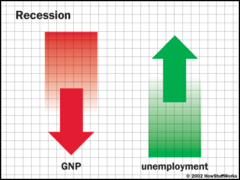
9017097222Gross National ProductThe value of all the goods and services produced by a nation in one year. In 1929, the United States Gross National Product was $104 billion, but it dropped to $56 billion in 1932. (p. 498)10
9017097223unemploymentBy 1933 25% of the workforce, not including farmers, did not have employment. (p. 498)11
9017097224bank failuresDuring the Great Depression 20 percent of all banks failed. (p. 498)12
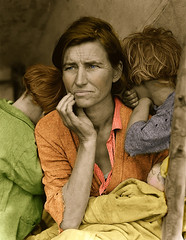
9017097225poverty and homelessDuring the Great Depression poverty and homelessness increased. (p. 499)13
9017097226Herbert HooverHe was President of the United States at the time of the stock market crash. He thought that prosperity would soon return. He was slow to call for legislative action and he thought public relief should come from the state and local governments, not the federal government. (p. 500)14
9017097227self-reliancePresident Herbert Hoover did not ask Congress for legislative action on the economy until the summer of 1930. He was concerned that government assistance to individuals would destroy their self-reliance. (p. 500)15
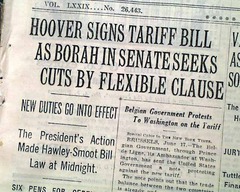
9017097228Hawley-Smoot TariffIn June 1930, President Hoover signed into law the highest tariff rates in history, ranging from 31 to 49 percent. In retaliation, European countries enacted their own tariffs. This reduced trade for all nations and worsened the worldwide depression. (p. 500)16
9017097229debt moratoriumSuspension on the payment of international debts. In 1931, President Hoover proposed a suspension of international debt payments. (p. 500)17
9017097230Farm BoardIt was authorized to help farmers stabilize prices by temporarily holding surplus grain and cotton in storage. (p. 500)18
9017097231Reconstruction Finance CorporationIn 1932, Congress funded this government-owned corporation as a measure for propping up faltering railroads, banks, life insurance companies, and other financial institutions. President Hoover thought that emergency loans would stabilize key business and the benefits would "trickle down" to smaller businesses and ultimately bring recovery. (p. 501)19
9017097232Twentieth AmendmentAlso known as the lame-duck amendment, this amendment shortened the period between the presidential election and inauguration. The new president's term would start on January 20. (p. 502)20
9017097233bonus marchThousands of unemployed World War I veterans marched to Washington, D.C. and set up encampments to demand immediately payment of the bonuses promised to them at a later date. The Army, led by General Douglas MacArthur broke up the encampment. (p. 501)21
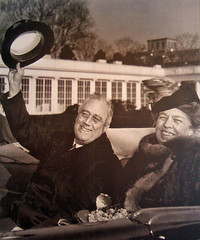
9017097234Franklin D. RooseveltThis Democratic candidate won the 1932 presidential election. As a candidate, he promised a "new deal" for the American people, the repeal of Prohibition, aid for the unemployed, and cuts in government spending. (p. 502)22
9017097235Eleanor RooseveltShe was the most active first lady in history, writing a newspaper column, giving speeches, and traveling the country. She served as the president's social conscience and influenced him to support minorities. (p. 502)23
9017097236New DealFranklin D. Roosevelt's plan to help people at the bottom of the economic pyramid. (p. 503)24
9017097237relief, recovery, reformThe New Deal included the three R's: relief for people out of work, recovery for business and the economy, and reform of American economic institutions. (p. 503)25
9017097238Brain TrustFor advice on economic matters, Roosevelt turned to a group of university professors. (p. 503)26
9017097239Frances PerkinsRoosevelt's secretary of labor, she was the first woman to serve in a president's cabinet. (p. 503)27
9017097240Hundred DaysOn March 4, 1933, Franklin Roosevelt started his term and called Congress into a one hundred day session. They passed into law all of Roosevelt's legislation. (p. 503)28
9017097241repeal of ProhibitionIn 1933, the 21st Amendment was passed. It repealed the 18th Amendment. This ended Prohibition. (p. 503)29
9017097242bank holidayPresident Franklin Roosevelt ordered the banks to be closed on March 6, 1933. He made a radio address explaining that the banks would be reopened after allowing enough time for the government to reorganize them on a sound basis. (p. 503)30
9017097243fireside chatsPresident Franklin Roosevelt spoke on the radio to the American people. (p. 504)31
9017097244Federal Deposit Insurance CorporationThis agency guaranteed individual bank deposits. (p. 504)32
9017097245Public Works AdministrationDirected by Secretary of the Interior Harold Ickes, it allotted money to state and local governments for building roads, bridges, dams, and other public works. (p. 504)33
9017097246Harold IckesPresident Franklin D. Roosevelt's secretary of the interior. (p. 504)34
9017097247Civilian Conservation CorpThis organization employed young men for projects on federal lands and paid their families small monthly sums. (p. 504)35
9017097248Tennessee Valley AuthorityA government corporation that hired thousands of people in the Tennessee Valley, to build dams, operate electric power plants, control flooding, and erosion, and manufacture fertilizer. (p. 505)36
9017097249National Recovery AdministrationDirected by Hugh Johnson, this agency attempted to guarantee reasonable profits for business and fair wages and hours for labor. The complex program operated with limited success for two years before the Supreme Court declared it unconstitutional. (p. 505)37
9017097250Schechter v. U.S.In 1935, the Supreme Court declared the National Recovery Administration (NRA) unconstitutional. (p. 505)38
9017097251Securities and Exchange CommissionThis agency was created to regulate the stock market and to place strict limits on the kind of speculative practices that led to the 1929 stock crash. (p. 505)39
9017097252Federal Housing AdministrationIt insured bank loans for building new houses and repairing old ones. (p. 505)40
9017097253Works Progress AdministrationThis agency created in 1935, part of the Second New Deal, it was much more ambitious than earlier efforts. Between 1935 and 1940 up to 3.4 million people were hired to construct bridges, roads, airports, and public buildings. Artists, writers, actors, and photographers were also employed. (p. 506)41
9017097254Harry HopkinsHe headed the Works Progress Administration (WPA) in the 1930s. (p. 506)42
9017097255National Labor Relations (Wagner) ActA 1935 act that guaranteed a worker's right to join a union and a union's right to bargain collectively. It outlawed business practices that were unfair to labor. (p. 507)43
9017097256Social Security ActIn 1935, this act created a federal insurance program based on the automatic collection of taxes from employees and employers throughout people's working careers. Monthly payments would be made to retired people over the age of 65. (p. 507)44
9017097257election of 1936Franklin D. Roosevelt easily defeated the Republican nominee, Alf Landon. (p. 507)45
9017097258New Deal coalitionFrom the 1930s to 1960s, this political coalition consisted of the Solid South, white ethnic groups in cities, midwestern farmers, labor unions, and liberals. (p. 508)46
9017097259John Maynard KeynesBritish economist, whose theory said that in difficult times government needed to spend well above its tax revenues in order to stimulate economic growth. After the 1937 recession, Roosevelt adopted this strategy, which was successful. (p. 511)47
9017097260recession of 1937In the winter of 1937 the economy went into recession again. The new Social Security tax had reduced consumer spending and at the same time Roosevelt had cut back government spending in hopes of balancing the budget. (p. 511)48
9017097261Father Charles CoughlinA Catholic priest who founded the National Union for Social Justice, which called for issuing inflated currency and nationalizing all banks. His radio program attacks on the New Deal were anti-Semitic and Fascist. (p. 508)49
9017097262Francis TownsendHe proposed a simple plan for guaranteeing a secure income for the elderly. He proposed that a 2 percent federal sales tax be used to create a special fund from which every retired person over the age of 60 would receive $200 a month thus stimulating the economy. (p. 509)50
9017097263Huey LongHe proposed a "Share Our Wealth" program that promised a minimum annual income of $5000 for every American family to be paid for by taxing the wealthy. In 1935 he challenged Roosevelt's leadership of the Democratic party by becoming a candidate for president but was soon assassinated. (p. 509)51
9017097264Supreme CourtIn 1935, they declared two of President Roosevelt's recovery programs unconstitutional. (p. 509)52
9017097265reorganization planPresident Franklin Roosevelt proposed a plan that allowed the president to appoint a new Supreme Court justice for each current justice over the age of 70. Congress refused to pass this legislation. (p. 509)53
9017097266conservative coalitionRepublicans and many Democrats were outraged by President Franklin Roosevelt's plan to reorganize the Supreme Court. (p. 509)54
9017097267Congress of Industrial OrganizationsThis labor union concentrated on organizing unskilled workers in the automobile, steel, and southern textile industries. (p. 510)55
9017097268John L. LewisHe was President of the United Mine Workers Union and Leader of the Congress of Industrial Organizations. (p. 510)56
9017097269sit-down strikeIn 1937 workers at the General Motors plant in Flint, Michigan insisted on the right to join a union by sitting down at the assembly line. (p. 510)57
9017097270Fair Labor Standards ActIn 1938 this act established a minimum wage, a maximum standard workweek with extra pay for overtime, and child labor restrictions. (p. 511)58
9017097271minimum wageEstablish minimum pay for workers, initially set at 40 cents per hour. (p. 511)59
9017097272depression mentalityMillions of people who lived through the Great Depression developed an attitude of insecurity and economic concern that remained throughout their lives. (p. 512)60
9017097273drought, dust bowl, OkiesA severe drought in the early 1930s and poor farming practices led to the Oklahoma dust bowl. High winds away large amounts of topsoil. (p. 512)61
9017097274John Steinbeck, "The Grapes of Wrath"A novelist that wrote about hardships in his classic study of economic heartbreak in 1939, "The Grapes of Wrath". (p. 512)62
9017097275Marian AndersonAn African American singer who had been refused the use of Constitution Hall, she performed a special concert at the Lincoln Memorial. (p. 513)63
9017097276Mary McLeod BethuneOne of the African Americans that was appointed to middle-level positions in federal government. She was a leader of efforts for improving education and economic opportunities for women. (p. 513)64
9017097277Fair Employment Practices CommitteeIt was set up to assist minorities in gaining jobs in defense industries. (p. 513)65
9017097278A. Phillip RandolphHead of Railroad Porters Union who threatened a march on Washington D.C. to demand equal job opportunities for African Americans. (p. 513)66
9017097279Indian Reorganization (Wheeler-Howard) ActIn 1934 Congress repealed the Dawes Act of 1887 and replaced it with this act which returned lands to the control of tribes and supported preservation of Indian cultures. (p. 513)67
9017097280Mexican deportationDiscrimination in the New Deal programs and competition for jobs forced thousands of Mexican Americans to return to Mexico. (p. 513)68

AP US History Period 5 (1844-1877) (B) Flashcards

Terms : Hide Images
9872560267California Gold Rush1849 (San Francisco 49ers) Gold discovered in California attracted a rush of people all over the country and world to San Francisco; arrival of the Chinese; increased pressure on federal government to establish a stable government0
9872560268popular sovereigntyA belief that ultimate power resides in the people.1
9872560269Kansas Nebraska Act1854 - Created Nebraska and Kansas as states and gave the people in those territories the right to chose to be a free or slave state through popular sovereignty.2
9872560270Free "Soiler"People who opposed expansion of slavery into western territories3
9872560271Republican Party1854 - anti-slavery Whigs and Democrats, Free "Soilers" and reformers from the Northwest met and formed party in order to keep slavery out of the territories4
9872560272Abraham Lincoln16th President of the United States saved the Union during the Civil War and emancipated the slaves; was assassinated by Booth (1809-1865)5
9872560273secessionFormal withdrawal of states or regions from a nation6
9872560274Dred Scott DecisionA Missouri slave sued for his freedom, claiming that his four year stay in the northern portion of the Louisiana Territory made free land by the Missouri Compromise had made him a free man. The U.S, Supreme Court decided he couldn't sue in federal court because he was property, not a citizen.7
9872560275Uncle Tom's CabinWritten by Harriet Beecher Stowe in 1853 that highly influenced England's view on the American Deep South and slavery. A novel promoting abolition. intensified sectional conflict.8
9872560276SectionalismLoyalty to a region9
9872560277John Brown's RaidBegan when he and his men took over the arsenal in Harpers Ferry, Virginia, in hopes of starting a slave rebellion.10
9872560278Robert E LeeConfederate general who had opposed secession but did not believe the Union should be held together by force11
9872560279Fort SumterFederal fort in the harbor of Charleston, South Carolina; the confederate attack on the fort marked the start of the Civil War12
9872560280AntietamThe bloodiest single day battle in American History with over 26,000 lives lost in that single day.13
9872560282GettysburgThe war's most famous battle because of its large size, high cost in lives, location in a northern state, and for President Abraham Lincoln's Address.14
9872560283Appomattox CourthouseApril 1865., the Virginia town where Robert E. Lee surrendered to Ulysses S. Grant in 1865, ending the Civil War15
9872560284Ulysses S Grantan American general and the eighteenth President of the United States (1869-1877). He achieved international fame as the leading Union general in the American Civil War.16
9872560286habeas corpusConstitutional protection against unlawful imprisonment17
9872560287Presidential ReconstructionPresident's idea of reconstruction : all states had to end slavery, states had to declare that their secession was illegal, and men had to pledge their loyalty to the U.S.18

AP US History Terms (1151 - 1200) Flashcards

Terms : Hide Images
60206423901151. Sacco and Vanzetti caseNicola Sacco and Bartolomeo Vanzetti were Italian immigrants charged with murdering a guard and robbing a shoe factory in Braintree, Mass. The trial lasted from 1920-1927. Convicted on circumstantial evidence, many believed they had been framed for the crime because of their anarchist and pro-union activities.0
60206423921152. Leopold and Loeb caseNathan Leopold and Richard Loeb were convicted of killing a young boy, Bobby Franks, in Chicago just to see if they could get away with it. Defended by Clarence Darrow, they got life imprisonment. Both geniuses, they had decided to commit the perfect murder. The first use of the insanity defense in court.1
60206423941153. Billy Sunday (1863-1935)Baseball player and preacher, his baseball background helped him become the most popular evangelist minister of the time. Part of the Fundamentalist revival of the 1920's.2
60206423951154. Scopes trial, Clarence Darrow, William Jennings Bryan1925 - Prosecution of Dayton, Tennessee school teacher, John Scopes, for violation of the Butler Act, a Tennessee law forbidding public schools from teaching about evolution. Former Democratic presidential candidate, William Jennings Bryan, prosecuted the case, and the famous criminal attorney, Clarence Darrow, defended Scopes. Scopes was convicted and fined $100, but the trial started a shift of public opinion away from Fundamentalism.3
60206423971155. Henry Ford, the Model T, Alfred P. Sloan1913 - Ford developed the mass-produced Model-T car, which sold at an affordable price. It pioneered the use of the assembly line. Also greatly increased his workers wages and instituted many modern concepts of regular work hours and job benefits. Sloan, an American industrialist, helped found project.4
60206423991156. Cecil B. DeMille (1881-1959)Motion picture producer and director, he was famous for Biblical films and epic movies.5
60206424011157. The Jazz Singer1927 - The first movie with sound, this "talkie" was about the life of famous jazz singer, Al Jolson.6
60206424031158. Rudolph Valentino (1895-1926), Charlie ChaplinValentino, a romantic leading man, was one of the most popular dramatic stars of silent films. Chaplin was a popular star of silent slap-stick comedies.7
60206424051159. New Woman, Flappers1920's - Women started wearing short skirts and bobbed hair, and had more sexual freedom. They began to abandon traditional female roles and take jobs usually reserved for men.8
60206424071160. Harlem Renaissance, Langston Hughes (1902-1967)Hughes was a gifted writer who wrote humorous poems, stories, essays and poetry. Harlem was a center for black writers, musicians, and intellectuals.9
60206424091161. James Weldon Johnson (1871-1938)American poet and part of the Harlem Renaissance, he was influenced by jazz music.10
60206424111162. Marcus Garvey (1887-1940), Universal Negro Improvement AssociationBlack leader who advocated "black nationalism," and financial independence for Blacks, he started the "Back to Africa" movement. He believed Blacks would not get justice in mostly white nations.11
60206424131163. Charles Lindbergh (1902-1974), Spirit of St. LouisLindbergh flew his airplane, the Spirit of St. Louis, across the Atlantic in the first transatlantic solo flight.12
60206424151164. Babe Ruth, Jack Dempsey1920's sports heroes, Ruth set the baseball record of 60 home runs in one season and Dempsey was the heavyweight boxing champion.13
60206424171165. Twenty-One DemandsName for Japan's demands to the U.S., including its threat to close China to European and American trade. Resolved by the 1917 Lansing-Ishii Agreement, a treaty which tried to settle differences between the U.S. and Japan.14
60206424191166. Lansing-Ishii Agreement, 1917Lessened the tension in the feuds between the U.S. and Japan by recognizing Japan's sphere of influence in China in exchange for Japan's continued recognition of the Open Door policy in China.15
60206424211167. Versailles Conference, Versailles TreatyThe Palace of Versailles was the site of the signing of the peace treaty that ended WW I on June 28, 1919. Victorious Allies imposed punitive reparations on Germany.16
60206424231168. Washington Disarmament Conference, 1921-1922The U.S. and nine other countries discussed limits on naval armaments. They felt that a naval arms race had contributed to the start of WW I. They created quotas for different classes of ships that could be built by each country based on its economic power and size of existing navies.17
60206424251169. Five Powers Treaty, Four Powers Treaty, Nine Powers TreatyFive Powers Treaty: Signed as part of the Washington Naval Conference, U.S., Great Britain, Japan, France, and Italy set a ten year suspension of construction of large ships and set quotas for the number of ships each country could build. Four Powers Treaty: U.S., Japan, Britain, and France agreed to respect each others possessions in the Pacific. Nine Powers Treaty: Reaffirmed the Open Door Policy in China.18
60206424271170. 5-3-1 rationTonnage ratio of the construction of large ships, it meant that Britain could only have 1 ship for every 3 ships in Japan, and Japan could only have 3 ships for every 5 ships in the U.S. Britain, U.S. and Japan agreed to dismantle some existing vessels to meet the ratio.19
60206424291171. World CourtThe judicial arm of the League of Nations, supported by several presidents.20
60206424311172. ReparationsAs part of the Treaty of Versailles, Germany was ordered to pay fines to the Allies to repay the costs of the war. Opposed by the U.S., it quickly lead to a severe depression in Germany.21
60206424331173. Dawes Plan, Young PlanPost-WW I depression in Germany left it unable to pay reparation and Germany defaulted on its payments in 1923. In 1924, U.S. Vice President Charles Dawes formulated a plan to allow Germany to make its reparation payments in annual installments. This plan was renegotiated and modified in 1929 by U.S. financier Owen Young.22
60206424351174. Kellogg-Briand Pact, 1928"Pact of Paris" or "Treaty for the Renunciation of War," it made war illegal as a tool of national policy, allowing only defensive war. The Treaty was generally believed to be useless.23
60206424371175. Causes of the depressionMuch debt, stock prices spiralling up, over-production and under-consuming - the stock market crashed. Germany's default on reparations caused European bank failures, which spread to the U.S.24
60206424391176. Depression as an international eventEurope owed money. Germany had to pay, but did not have the money.25
60206424411177. Fordney-McCumber Tariff, 1922Pushed by Congress in 1922, it raised tariff rates.26
60206424431178. Hawley-Smoot Tariff, 1930Congressional compromise serving special interest, it raised duties on agricultural and manufactured imports. It may have contributed to the spread of the international depression.27
60206424451179. Reconstruction Finance Corporation, RFCCreated in 1932 to make loans to banks, insurance companies, and railroads, it was intended to provide emergency funds to help businesses overcome the effects of the Depression. It was later used to finance wartime projects during WW II.28
60206424471180. Bonus Army1932 - Facing the financial crisis of the Depression, WW I veterans tried to pressure Congress to pay them their retirement bonuses early. Congress considered a bill authorizing immediate assurance of $2.4 billion, but it was not approved. Angry veterans marched on Washington, D.C., and Hoover called in the army to get the veterans out of there.29
60206424491181. "Hooverville"Name given to the makeshift shanty towns built in vacant lots during the Depression.30
60206424511182. Clark Memorandum1928 - Under Secretary of State Reuben Clark, 286 pages were added to the Roosevelt Corollary of 1904.31
60206424531183. London Naval Conference1909 - International Naval Conference held in London to adopt an international code of conduct for naval warfare.32
60206424551184. Hoover MoratoriumJune 30, 1931 - Acting on President Hoover's advice, the Allies suspended Germany's reparation payments for one year.33
60206424571185. Manchuria, Hoover-Stimson Doctrine1932 - Japan's seizure of Manchuria brought this pronouncement by Hoover's Secretary of State, Henry Stimson, that the U.S. would not recognize any changes to China's territory, nor any impairment of China's sovereignty.34
60206424591186. Mexico's nationalization of oil1938 - Mexico nationalized oil fields along the Gulf of Mexico which had been owned by investors from the U.S., Britain, and the Netherlands because the companies refused to raise the wages of their Mexican employees.35
60206424611187. Ambassador MorrowDwight Whitney Morrow served as the U.S. Ambassador to Mexico from 1927 to 1930, during the Mexican-American diplomatic crisis.36
60206424631188. Good Neighbor PolicyFranklin Roosevelt described his foreign policy as that of a "good neighbor." The phrase came to be used to describe the U.S. attitude toward the countries of Latin America. Under Roosevelt's "Good Neighbor Policy," the U.S. took the lead in promoting good will among these nations.37
60206424651189. Norris-LaGuardia (Anti-Injunction) Act, 1932Liberal Republicans, Feorelo LaGuardia and George Norris cosponsored the Norris-LaGuardia Federal Anti-Injunction Act, which protected the rights of striking workers, by severely restricting the federal courts' power to issue injunctions against strikes and other union activities.38
60206424671190. Election of 1932: candidates, issuesDemocrat Franklin D. Roosevelt, beat the Republican, Herbert Hoover, who was running for reelection. FDR promised relief for the unemployed, help for farmers, and a balanced budget.39
60206424691191. Twentieth AmendmentWritten by George Norris and also called the "Lame Duck Amendment," it changed the inauguration date from March 4 to January 20 for president and vice president, and to January 3 for senators and representatives. It also said Congress must assemble at least once a year.40
60206424711192. Wickersham CommissionNational Law Enforcement Commission, so named after its chair, George Wickersham, it was a national commission on law observance and enforcement created by Hoover in 1929. Its 1930 report recommended the repeal of Prohibition.41
60206424731193. Twenty-First AmendmentPassed February, 1933 to repeal the 18th Amendment (Prohibition). Congress legalized light beer. Took effect December, 1933. Based on recommendation of the Wickersham Commission that Prohibition had lead to a vast increase in crime.42
60206424751194. "Bank Holiday"March 11, 1933 - Roosevelt closed all banks and forbade the export of gold or redemption of currency in gold.43
60206424771195. Hundred DaysMarch 9, 1933 - At Roosevelt's request, Congress began a special session to review recovery and reform laws submitted by the President for Congressional approval. It actually lasted only 99 days.44
60206424791196. "Relief, recovery, reform"The first step in FDR's relief program was to establish the Civilian Conservation Corps in April, 1933. The chief measure designed to promote recovery was the National Industrial Recovery Act. The New Deal acts most often classified as reform measures were those designed to guarantee the rights of labor and limit the powers of businesses.45
60206424811197. Brain trustMany of the advisers who helped Roosevelt during his presidential candidacy continued to aid him after he entered the White House. A newspaperman once described the group as "Roosevelt's Brain Trust." They were more influential than the Cabinet.46
60206424831198. Emergency Banking Relief Act, 1933March 6, 1933 - FDR ordered a bank holiday. Many banks were failing because they had too little capital, made too many planning errors, and had poor management. The Emergency Banking Relief Act provided for government inspection, which restored public confidence in the banks.47
60206424851199. Glass-Steagall Banking Reform Act, 1933Created the Federal Deposit Insurance Corporation, which insures the accounts of depositors of its member banks. It outlawed banks investing in the stock market.48
60206424871200. Gold Clause Act, 1935It voided any clause in past or future contracts requiring payment in gold. It was enacted to help enforce 1933 legislation discontinuing the gold standard and outlawing circulation of gold coin.49

AP US History timeline Flashcards

important dates in U.S. history 1607-1947

Terms : Hide Images
100399351111607the settlement of Jamestown; the beginning of colonization in what would become the US0
100399351121619the first Africans arrive in Virginia; the start of racism and boom of the slave industry1
100399351131620signing of the MAyflower Compact; the first document resembling constitution2
100399351141636Harvard college established3
100399351151639the first colonial constitution signed in Connecticut4
100399351161647Massachusetts passes 1st compulsory schooling law; education in the US5
100399351171649Maryland Toleration act passed; allowed freedom of worship6
100399351181676Bacon's Rebellion; American and Native American conflict7
100399351191735Great Awakening led by Jonathan Edwards; American dependency on religion8
100399351201754Albany Conference and beginning of French and Indian War; attempted to unite colonies and British troops in America9
100399351211763Treaty of Paris and Proclamation of 1763; ended the war and French colonists left, British colonists could not expand beyond the Appalachian mountains10
100399351221765Quartering Act & Stamp Act; food and quartering for british troops and stamped paper certifying payment of tax; US antagonizing Britain, Stamp Act congress- established intercolonial unity11
100399351231767Townshend Act- light import taxes- led to more antagonism of G.B.12
100399351241770Boston Massacre- harmed eleven civilians in an anti-redcoat incident13
100399351251776British set fire to Norfolk, Thomas Paine publishes Common Sense- the beginning of US fight to independence14
100399351261777Burgoyne surrenders to Horatio Gates at Saratoga- American victory15
100399351271778French made open alliance with Americans; American victory16
100399351281781Cornwallis surrenders to G. Washington, Rochambeau, & de Grasse- US victory17
100399351291783treaty of paris, US independence18
100399351301781articles of confederation ratified by all 13 colonies19
100399351311786Shay's Rebellion- shows the weakness of articles of confederation20
100399351321787Constitutional convention, G.W. elected (missing Rhode Island) the forming of American Gov.21
100399351331789George Washington elected unanimously- first president22
100399351341790D.C. created on the Potomac river23
100399351351791James Madison wrote Bill of Rights & passed them (Hamilton creates Bank of the United States) formation of modern government24
100399351361793two political groups created- Jeffersonian Democratic-Republicans and Hamilton Federalists; the appearance of political parties25
100399351371797Washington leaves office- set the precedent of only two terms26
100399351381808Marbury v. Madison sets the precedent that the Supreme court has the ability to interpret the constitution27
100399351391807Embargo Act- tried to get France and G.B. to repect America by preventing the exportation of goods28
100399351401812war of 1812 which tried to get freedom of the sea etc., but considered poorly fought because of American disunity29
100399351411814The burning of D.C.- americans still fighting for independence30
100399351421820land Act of 1820 gave west cheap land, expansion into the west31
100399351431823Monroe doctrine- nonintervention and non-colonialisation American dominance in the Americas32
100399351441828Calhouns attepmt to nullify jackson's tariff of 1828; the nation becomes divided again33
100399351451832Tarrif of 1832 lowered tariff of 1828 from 45% to 10%34
100399351461833Force Bill which allowed the president to use navy and army to collect tariffs and such if necessary35
100399351471846the establishment of an independent treasury; keeping gov. separate from banks36
100399351481849regular steamboat service to california starts- uniting US and manifest destiny37
100399351491850compromise of 1850 and fugitive slave law- sectionalism growing the balance weakening38
100399351501852Franklin Pierce dark horse president, Democrats win because Whigs are divided39
100399351511854the opening of Tokyo by Perry, international trade and relations40
100399351521857Lecompton Constitution Kansas applying for statehood, allowing people to vote for slavery, more sectionalism41
100399351531858Abraham Lincoln runs against Senator Douglas42
100399351541859John Brown tries to sieze federal arsenal at harpers ferry; creation of a martyr for abolitionism43
100399351551860Lincoln wins presidency with only 40% of the vote, angering the south44
100399351561861the creation of the confederate states of America, America splits up45
100399351571863federal draft law passed; forced people to join army to fight for the war effort46
100399351581865the war ends after Grant burns Richmond47
100399351591867The Reconstruction Act passed in order to rebuild south and enforce state reentrance laws48
100399351601877compromise of 1877 ended reconstruction and racism began to run rampant again49
10039935161end of the 19th centuryera of good feelings; corrupt leaders lack of transparency ran rampant rise of yellow journalism and becoming world powers50
10039935162WWIwar to end war, Germany breaks the sussex pledge and declares unrestricted submarine warfare, the zimmerman note is intercepted and US enters the war, the fourteen points- steps towards peace,51
100399351631919the beginning of the first red scare, the decline of labor unions, americans fear communism52
100399351641920'sgangsters, hollywood, new immigrants law, and the radio revolution, KKK; lots of culture, lots of racism53
100399351651950'sEisenhower era, focused on the family life, more white-collar workers than ever before, rampant racism, rock and roll, Brown V. Board of Education of Topeka54
100399351661941Pearl Harbor, Japan attacks military base in Hawaii, US enters WWII55
100399351671945allies finally take rome, americans reach rhine river and german surrender, manhattan project, Japan surrenders56
100399351681950cold war and the second red scare, the threat of nuclear war, relations with russia and the domino theory57
100399351691953CIA coup in Iran to protect supplies in middle east; US intervening in foreign affairs and coups58
100399351701954French ask for help from Americans in Vietnam; Military embarrassment in asia after korea59
100399351711973bombing of cambodia ended, domino theory if one falls the rest will fall60
100399351721816the end of the federalist party; change of parties in the US, nationalism61
100399351731824the establishment of the AMerican system the birth of the whigs62
100399351741936the return of progressivism and new deal ends as WW2 approaches63

AP US History Flashcards

Vocabulary Ch. 2-3

Terms : Hide Images
7279908650Joint stock companya company whose stock is owned jointly by the shareholders0
7279908651Virginia CompanyFirst joint stock company in the colonies; founded Jamestown; promised gold, conversion of Indian to Christianity, and passage to the Indies1
7279908652John SmithEnglish explorer, who helped found the colony at Jamestown, Virginia; leader of Jamestown2
7279908653John RolfeHusband of Pocahontas; father of the tobacco industry3
7279908654Maryland Act of TolerationToleration to all Christians; decreed the death penalty for those who denied the divinity of Jesus (Jews & atheists)4
7279908655Barbados Slave CodeCode that defined a slaves' legal status & masters' prerogatives; gave masters control over their laborers5
7279908656The CarolinasCharles II gave land to nobles, who helped him regain power; North and South Carolina were created6
7279908657Anne HutchinsonPuritan dissenter who was banished from Massachusetts7
7279908658Roger WilliamsPuritan minister, who left Massachusetts, and established Rhode Island8
7279908659PredestinationCalvin's religious theory that God has already planned out a person's life9
7279908660New England ConfederationNew England colonies of Plymouth, Mass Bay, Connecticut and New Haven formed a military alliance; limited powers to act on boundary disputes10
7279908661Dominion of New EnglandBritish government combined the colonies of Massachusetts, Rhode Island, New Hampshire, and Connecticut into a single province headed by a royal governor11
7279908662Mayflower CompactThe first agreement for self-government in America; set up a government in Massachusetts12
7279908663King Philip's WarA series of battles between the colonists and the Wompanowogs, led by King Philip; War began when the Massachusetts government tried to assert court jurisdiction over local Indians.13
7286740491Fundamental OrdersFirst written constitution, establishing a representative government consisting of a legislature elected by a popular vote and a governor chosen by that legislature14

AP US History - US Presidents (COFFEY) Flashcards

Terms : Hide Images
7478175159George Washington1789-1797 Federalist Whiskey Rebellion; Judiciary Act; Farewell Address0
7478175160John Adams1797-1801 Federalist XYZ Affair; Alien and Sedition Acts1
7478175161Thomas Jefferson1801-1809 Democratic-Republican Marbury v. Madison; Louisiana Purchase; Embargo of 18072
7478175162James Madison1809-1817 Democratic-Republican War of 1812; First Protective Tariff3
7478175163James Monroe1817-1825 Democratic-Republican Missouri Compromise of 1820; Monroe Doctrine4
7478175164John Quincy Adams1825-1829 Democratic-Republican "Corrupt Bargain"; "Tariff of Abominations"5
7478175165Andrew Jackson1829-1837 Democrat Nullification Crisis; Bank War; Indian Removal Act6
7478175166Martin Van Buren1837-1841 Democrat Trail of Tears; Specie Circular; Panic of 18377
7478175167William Henry Harrison1841 Whig "Tippecanoe and Tyler too!"; First Whig President8
7478175168John Tyler1841-1845 Whig "His Accidency"; Webster-Ashburton Treaty9
7478175169James Polk1845-1849 Democrat Texas annexation; Mexican War10
7478175170Zachary Taylor1849-1850 Whig Mexican War hero and staunch Unionist11
7478175171Millard Fillmore1850-1853 Whig Compromise of 185012
7478175172Franklin Pierce1853-1857 Democrat Kansas-Nebraska Act; Gadsden Purchase13
7478175173James Buchanan1857-1861 Democrat Dred Scott decision; Harpers Ferry raid14
7478175174Abraham Lincoln1861-1865 Republican Secession and Civil War; Emancipation Proclamation15
7478175175Andrew Johnson1865-1869 Democrat 13th and 14th amendments; Radical Reconstruction; Impeachment16
7478175176Ulysses Grant1869-1877 Republican 15th amendment; Panic of 187317
7478175177Rutherford Hayes1877-1881 Republican Compromise of 1877; labor unions and strikes18
7478175178James Garfield1881, Republican Brief resurgence of presidential authority; Increase in American naval power; Purge corruption in the Post Office19
7478175179Chester Arthur1881-1885 Republican Standard Oil trust created Edison lights up New York City20
7478175180Grover Cleveland1885-1889 (1st term), 1893-1897 (2nd term) Democrat Interstate Commerce Act; Dawes Act; Panic of 1893; Pullman Strike21
7478175181Benjamin Harrison1889-1893 Republican Sherman Anti-Trust Act; Closure of the frontier22
7478175182William McKinley1897-1901 Republican Spanish-American War; Open Door policy23
7478175183Theodore Roosevelt1901-1909 Republican Progressivism; Square Deal; Big Stick Diplomacy24
7478175184William Howard Taft1909-1913 Republican Dollar diplomacy NAACP founded25
7478175185Woodrow Wilson1913-1921 Democrat WWI; League of Nations; 18th and 19th amendments; Segregation of federal offices; First Red Scare26
7478175186Warren Harding1921-1923 Republican "Return to normalcy", return to isolationism; Tea Pot Dome scandal; Prohibition27
7478175187Calvin Coolidge1923-1929 Republican Small-government (laissez-faire) conservative28
7478175188Herbert Hoover1929-1933 Republican "American individualism"; Stock Market Crash; Dust Bowl; Hawley-Smoot Tariff29
7478175189Franklin Delano Roosevelt1933-1945 Democrat New Deal; WWII; Japanese Internment; "Fireside Chats"30
7478175190Harry Truman1945-1953 Democrat A-bomb; Marshall Plan; Korean War; United Nations31
7478175191Dwight Eisenhower1953-1961 Republican Brown v. Board of Education; Second Red Scare; Highway Act and suburbanization ("white flight"); Farewell Address warning of the military industrial complex32
7478175192John Kennedy1961-1963 Democrat Camelot; Bay of Pigs; Cuban Missile Crisis; Space program; Peace Corps33
7478175193Lyndon Johnson1963-1969 Democrat Civil and Voting Rights acts; Gulf of Tonkin Resolution; Great Society34
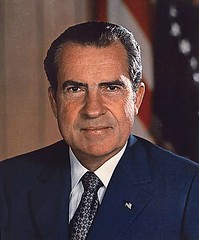
7478175194Richard Nixon1969-1974 Republican Environmental Protection Act; China visit; Moon Landing; Watergate35
7478175195Gerald Ford1974-1977 Republican Pardoning of Nixon; OPEC crisis36
7478175196Jimmy Carter1977-1981 Democrat stagflation / energy crisis; Iran hostage crisis; Camp David Accords37
7478175197Ronald Reagan1981-1989 Republican Conservative revolution; Iran-Contra scandal38
7478175198George H. W. Bush1989-1993 Republican Persian Gulf War39
7478175199Bill Clinton1993-2001 Democrat NAFTA; Lewinsky scandal and impreachment40
7478175200George W. Bush2001-2008 Republican War on terrorism; Patriot Act; Tax cuts; "No Child Left Behind"41
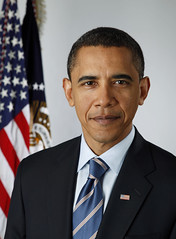
7478175201Barack Obama2008-2017 Democrat Affordable Care Act42
7478175202Donald Trump2017-? Republican "Make America Great Again"43

AP US History - US Presidents Flashcards

Terms : Hide Images
9437442545George Washington1789-1797 Federalist Whiskey Rebellion; Judiciary Act; Farewell Address0
9437442546John Adams1797-1801 Federalist XYZ Affair; Alien and Sedition Acts1
9437442547Thomas Jefferson1801-1809 Democratic-Republican Marbury v. Madison; Louisiana Purchase; Embargo of 18072
9437442548James Madison1809-1817 Democratic-Republican War of 1812; First Protective Tariff3
9437442549James Monroe1817-1825 Democratic-Republican Missouri Compromise of 1820; Monroe Doctrine4
9437442550John Quincy Adams1825-1829 Democratic-Republican "Corrupt Bargain"; "Tariff of Abominations"5
9437442551Andrew Jackson1829-1837 Democrat Nullification Crisis; Bank War; Indian Removal Act6
9437442552Martin Van Buren1837-1841 Democrat Trail of Tears; Specie Circular; Panic of 18377
9437442553William Henry Harrison1841 Whig "Tippecanoe and Tyler too!"; First Whig President8
9437442554John Tyler1841-1845 Whig "His Accidency"; Webster-Ashburton Treaty9
9437442555James Polk1845-1849 Democrat Texas annexation; Mexican War10
9437442556Zachary Taylor1849-1850 Whig Mexican War hero and staunch Unionist11
9437442557Millard Fillmore1850-1853 Whig Compromise of 185012
9437442558Franklin Pierce1853-1857 Democrat Kansas-Nebraska Act; Gadsden Purchase13
9437442559James Buchanan1857-1861 Democrat Dred Scott decision; Harpers Ferry raid14
9437442560Abraham Lincoln1861-1865 Republican Secession and Civil War; Emancipation Proclamation15
9437442561Andrew Johnson1865-1869 Democrat 13th and 14th amendments; Radical Reconstruction; Impeachment16
9437442562Ulysses Grant1869-1877 Republican 15th amendment; Panic of 187317
9437442563Rutherford Hayes1877-1881 Republican Compromise of 1877; labor unions and strikes18
9437442564James Garfield1881, Republican Brief resurgence of presidential authority; Increase in American naval power; Purge corruption in the Post Office19
9437442565Chester Arthur1881-1885 Republican Standard Oil trust created Edison lights up New York City20
9437442566Grover Cleveland1885-1889 (1st term), 1893-1897 (2nd term) Democrat Interstate Commerce Act; Dawes Act; Panic of 1893; Pullman Strike21
9437442567Benjamin Harrison1889-1893 Republican Sherman Anti-Trust Act; Closure of the frontier22
9437442568William McKinley1897-1901 Republican Spanish-American War; Open Door policy23
9437442569Theodore Roosevelt1901-1909 Republican Progressivism; Square Deal; Big Stick Diplomacy24
9437442570William Howard Taft1909-1913 Republican Dollar diplomacy NAACP founded25
9437442571Woodrow Wilson1913-1921 Democrat WWI; League of Nations; 18th and 19th amendments; Segregation of federal offices; First Red Scare26
9437442572Warren Harding1921-1923 Republican "Return to normalcy", return to isolationism; Tea Pot Dome scandal; Prohibition27
9437442573Calvin Coolidge1923-1929 Republican Small-government (laissez-faire) conservative28
9437442574Herbert Hoover1929-1933 Republican "American individualism"; Stock Market Crash; Dust Bowl; Hawley-Smoot Tariff29
9437442575Franklin Delano Roosevelt1933-1945 Democrat New Deal; WWII; Japanese Internment; "Fireside Chats"30
9437442576Harry Truman1945-1953 Democrat A-bomb; Marshall Plan; Korean War; United Nations31
9437442577Dwight Eisenhower1953-1961 Republican Brown v. Board of Education; Second Red Scare; Highway Act and suburbanization ("white flight"); Farewell Address warning of the military industrial complex32
9437442578John Kennedy1961-1963 Democrat Camelot; Bay of Pigs; Cuban Missile Crisis; Space program; Peace Corps33
9437442579Lyndon Johnson1963-1969 Democrat Civil and Voting Rights acts; Gulf of Tonkin Resolution; Great Society34
9437442580Richard Nixon1969-1974 Republican Environmental Protection Act; China visit; Moon Landing; Watergate35
9437442581Gerald Ford1974-1977 Republican Pardoning of Nixon; OPEC crisis36
9437442582Jimmy Carter1977-1981 Democrat stagflation / energy crisis; Iran hostage crisis; Camp David Accords37
9437442583Ronald Reagan1981-1989 Republican Conservative revolution; Iran-Contra scandal38
9437442584George H. W. Bush1989-1993 Republican Persian Gulf War39
9437442585Bill Clinton1993-2001 Democrat NAFTA; Lewinsky scandal and impreachment40
9437442586George W. Bush2001-2008 Republican War on terrorism; Patriot Act; Tax cuts; "No Child Left Behind"41
9437442587Barack Obama2008-2017 Democrat Affordable Care Act42
9437442588Donald Trump2017-? Republican "Make America Great Again"43

AP US History - US Presidents Flashcards

Terms : Hide Images
9005431371George Washington1789-1797 Federalist Whiskey Rebellion; Judiciary Act; Farewell Address0
9005431372John Adams1797-1801 Federalist XYZ Affair; Alien and Sedition Acts1
9005431373Thomas Jefferson1801-1809 Democratic-Republican Marbury v. Madison; Louisiana Purchase; Embargo of 18072
9005431374James Madison1809-1817 Democratic-Republican War of 1812; First Protective Tariff3
9005431375James Monroe1817-1825 Democratic-Republican Missouri Compromise of 1820; Monroe Doctrine4
9005431376John Quincy Adams1825-1829 Democratic-Republican "Corrupt Bargain"; "Tariff of Abominations"5
9005431377Andrew Jackson1829-1837 Democrat Nullification Crisis; Bank War; Indian Removal Act6
9005431378Martin Van Buren1837-1841 Democrat Trail of Tears; Specie Circular; Panic of 18377
9005431379William Henry Harrison1841 Whig "Tippecanoe and Tyler too!"; First Whig President8
9005431380John Tyler1841-1845 Whig "His Accidency"; Webster-Ashburton Treaty9
9005431381James Polk1845-1849 Democrat Texas annexation; Mexican War10
9005431382Zachary Taylor1849-1850 Whig Mexican War hero and staunch Unionist11
9005431383Millard Fillmore1850-1853 Whig Compromise of 185012
9005431384Franklin Pierce1853-1857 Democrat Kansas-Nebraska Act; Gadsden Purchase13
9005431385James Buchanan1857-1861 Democrat Dred Scott decision; Harpers Ferry raid14
9005431386Abraham Lincoln1861-1865 Republican Secession and Civil War; Emancipation Proclamation15
9005431387Andrew Johnson1865-1869 Democrat 13th and 14th amendments; Radical Reconstruction; Impeachment16
9005431388Ulysses Grant1869-1877 Republican 15th amendment; Panic of 187317
9005431389Rutherford Hayes1877-1881 Republican Compromise of 1877; labor unions and strikes18
9005431390James Garfield1881, Republican Brief resurgence of presidential authority; Increase in American naval power; Purge corruption in the Post Office19
9005431391Chester Arthur1881-1885 Republican Standard Oil trust created Edison lights up New York City20
9005431392Grover Cleveland1885-1889 (1st term), 1893-1897 (2nd term) Democrat Interstate Commerce Act; Dawes Act; Panic of 1893; Pullman Strike21
9005431393Benjamin Harrison1889-1893 Republican Sherman Anti-Trust Act; Closure of the frontier22
9005431394William McKinley1897-1901 Republican Spanish-American War; Open Door policy23
9005431395Theodore Roosevelt1901-1909 Republican Progressivism; Square Deal; Big Stick Diplomacy24
9005431396William Howard Taft1909-1913 Republican Dollar diplomacy NAACP founded25
9005431397Woodrow Wilson1913-1921 Democrat WWI; League of Nations; 18th and 19th amendments; Segregation of federal offices; First Red Scare26
9005431398Warren Harding1921-1923 Republican "Return to normalcy", return to isolationism; Tea Pot Dome scandal; Prohibition27
9005431399Calvin Coolidge1923-1929 Republican Small-government (laissez-faire) conservative28
9005431400Herbert Hoover1929-1933 Republican "American individualism"; Stock Market Crash; Dust Bowl; Hawley-Smoot Tariff29
9005431401Franklin Delano Roosevelt1933-1945 Democrat New Deal; WWII; Japanese Internment; "Fireside Chats"30
9005431402Harry Truman1945-1953 Democrat A-bomb; Marshall Plan; Korean War; United Nations31
9005431403Dwight Eisenhower1953-1961 Republican Brown v. Board of Education; Second Red Scare; Highway Act and suburbanization ("white flight"); Farewell Address warning of the military industrial complex32
9005431404John Kennedy1961-1963 Democrat Camelot; Bay of Pigs; Cuban Missile Crisis; Space program; Peace Corps33
9005431405Lyndon Johnson1963-1969 Democrat Civil and Voting Rights acts; Gulf of Tonkin Resolution; Great Society34
9005431406Richard Nixon1969-1974 Republican Environmental Protection Act; China visit; Moon Landing; Watergate35
9005431407Gerald Ford1974-1977 Republican Pardoning of Nixon; OPEC crisis36
9005431408Jimmy Carter1977-1981 Democrat stagflation / energy crisis; Iran hostage crisis; Camp David Accords37
9005431409Ronald Reagan1981-1989 Republican Conservative revolution; Iran-Contra scandal38
9005431410George H. W. Bush1989-1993 Republican Persian Gulf War39
9005431411Bill Clinton1993-2001 Democrat NAFTA; Lewinsky scandal and impreachment40
9005431412George W. Bush2001-2008 Republican War on terrorism; Patriot Act; Tax cuts; "No Child Left Behind"41
9005431413Barack Obama2008-2017 Democrat Affordable Care Act42
9005431414Donald Trump2017-? Republican "Make America Great Again"43

AP US History People to Know Chapter 28 Flashcards

Terms : Hide Images
6042431987Hiram W. Johnson (1866-1945)Elected Republican Governor of California in 1910, He oversaw numerous progressive reforms, including the passage of woman suffrage at the state level. In 1917 he entered the Senate, where he proved an isolationist in foreign affairs. He is famous for declaring that "the first casualty when war comes, is truth."0
6042431988Florence Kelley (1859-1932)A tireless crusader for women's and labor rights, She was Illinois's first chief factory inspector and a leader of the National Consumer's League, an organization dedicated to improving working conditions for women and children. She also went on to help found the NAACP.1
6042431989Robert M. ("Fighting Bob") La Follette (1855-1925)Hailing from Wisconsin, He was one of the most militant of the progressive Republican leaders. He served in the Senate and in the Wisconsin governor's seat, and was a perennial contender for the presidency, keeping the spirit of progressivism alive into the 1920s.2
6042431990Henry Demarest Lloyd (1847-1903)A muckraking journalist and reform leader whose book, Wealth Against Commonweath (1894), excoriated the sins of the Standard Oil Company. He became one of the leading intellectuals behind the progressive movement, influencing such figures as Clarence Darrow, Florence Kelley, and John Dewey.3
6042431991John Muir (1838-1914)This noted naturalist split with conservationists like Gifford Pinchot by trying to protect natural "temples" like the Hetch Hetchy Valley from development. In 1892 he founded the Sierra Club, which is now one of the most influential conservation organizations in the United States. His writings and philosophy shaped the formation of the modern environmental movement.4
6042431992Gifford Pinchot (1865-1946)A friend of Theodore Roosevelt, He was the head of the federal Division of Forestry and a noted conservationist who wanted to protect, but also use, the nation's natural resources, like forests and rivers. In 1922 he won election to the Pennsylvania governor's mansion, on the Republican ticket.5
6042431993Jacob A. Riis (1849-1914)Danish-born police reporter and pioneering photographer who exposed the ills of tenement living in his 1890 book illustrated with powerful photographs, How the Other Half Lives. His work led to the establishment of "model tenements" in New York City.6
6042431994Thorstein Veblen (18577-1929)An eccentric Norwegian-American economist who savagely attacked "predatory wealth" and "conspicuous consumption" in his most important book, The Theory of the Leisure Class (1899).7
6042431995Frances E. Willard (1838-1898)This pious leader of the Woman's Christian Temperance Union wished to eliminate the sale of alcohol and thereby "make the world more homelike." Her ecumenical "do everything" reform sensibility encouraged some women to take the leap toward more radical causes like woman suffrage, while allowing more conservative women to stick comfortably with temperance work.8

AP US History - 1960's Study Questions Flashcards

Terms : Hide Images
5709447303Election of 1960John F Kennedy - 43, Roman Catholic, Massachusetts Senator Richard Nixon - Vice President for Eisenhower0
5709456814What helped JFK win the election?1st televised presidential debate1
5709476278Bay of Pigs InvasionFailed attempt by CIA and Cuban exiles to overthrow Fidel Castro2
5709491952Cuban Missile Crisis started by what country?Soviet Union and Nikita Khrushchev3
5709499142Cuban Missile Crisis almost started what?Nuclear War4
5709507330US prepared what to prevent Cuban Missile Crisis?Blockade Cuba 100,000 troops waiting in Florida to invade Cuba5
5709516394Cuban Missile Crisis agreementsSoviets remove Cuban missiles America not to invade Cuba America remove missiles in Turkey6
5709526957Berlin Wall put up why?Stop flow of refugees from East to West Berlin7
5709534217AIMAmerican Indian Movement; protecting Natives' rights & defense against police brutality8
5709547539Hippie Era CharacteristicsIllegal Drugs (marijuana & LSD) Rock n Roll Music Sexual Licenses Eastern Religions9
5709934516Woodstockfamous hippie concert10
5709938238Countercultureanti-society, non-conformists hippies/flower children11
5709554202Musicians/Bands of 60sJimi Hendrix Janis Joplin The Beatles The Beach Boys Bob Dylan12
5709568137TV Shows of 60sMission:Impossible Addams Family Beverly Hillbillies Dick van Dyke Show13
5709572949Mapp V Ohioevidence seized illegally could not be used in court or exclusionary rule14
5709577816Gideon v Wainwrightprovided free attorney to those who can't afford it15
5709626808Escobedo v Illinoisright to lawyer present during police questioning16
5709626809Miranda v Arizonasuspect must be read rights before questioning17
5709629779Roe v Waderight to an abortion during 1st 3 months of pregnancy18
5709661429John F Kennedy1961-1963 Democrat Jackie JFK19
5709665674Kennedy FactsPresidency Nickname - Camelot Only Catholic President Youngest Elected at 43 Many Affairs - famously Marilyn Monroe20
5709675969Kennedy EventsBay of Pigs Cuban Missile Crisis New Frontier NASA Berlin Wall Vietnam Civil Rights Robert Kennedy - Attorney General Peace Corps Warren Commission21
5709695820Kennedy Quote"Ask not what your country can do for you. Ask what you can do for your country"22
5709686759Kennedy AssassinationDallas, Texas 11/22/63 shot by Lee Harvey Oswald23
5709752713Lincoln and Kennedy SimilaritesBoth: -shot in head -shot on Friday -sat by wives when shot -had VP's named Johnson Lincoln rode in Kennedy Carriage to Ford's Theater Kennedy rode in a Lincoln Continental24
5709717119Lyndon B Johnson1963-1969 Democrat Claudia/Lady Bird LBJ25
5709722853LBJ EventsCivil Rights Act of 1964 Voting Rights Act of 1965 Civil Rights Act of 1968 24th Amendment Space Program continued VISTA Great Society War on Poverty Vietnam26
5710260062Medicare & MedicaidMedicare - helps elderly over 65 Medicaid - poor citizens under 6527
5710264753HUD(Housing and Urban Developement) New cabinet office for helping cities like building low rent housing to replace ghettos28
5710283574Operation Headstartpreschool for children in poor families -to give them a headstart in being better students29
5710293452Job Corpshelps high school dropouts get jobs30
5709736500Election of 1964LBJ v Barry Goldwater (R) - won by landslide and known as Landslide Lyndon31
5709914231MLK Assassinationon 1968 in Memphis, TN by James Earl Ray32
5709920077Robert Kennedy Assassinationon 1968 in Los Angeles, CA by Sirhan Sirhan33
5709929421Election of 1968Hubert Humphrey - Democrat - LBJ's VP Richard Nixon - Republican Main issue - Vietnam34
5710026435Why did Nixon win Election?promise to end Vietnam35
5710082924Freedom Riders were part of...?CORE (Congress On Racial Equality)36
5710086092March on Washingtoncivil right supporters on a protest march in DC televised in America MLK gave his I Have A Dream speech37
57101491241st Sit In Occurred where?Greensboro, NC38
571015753324th Amendmentoutlaws poll taxes39
5710161604Civil Rights Act of 1964no jim crow laws/outlaws discrimination40
5710161605Voting Rights Act of 1965outlawed literary test41
5710174163Civil Rights Act of 1968federal law for fair housing42
5710180235Black Muslimsbelieved: -blacks seperate from whites -blacks proud of their own & have their own religion meet violence with violence by any means necessary43
5710203337Black Power Movementwanted pride in black race44
5710214174Black Panthersblacks control their own communities and use violence to end white control in black communities45
5710224517Race RiotsWhat: blacks burning and smashing city blocks of poor housing and old stores Why: because angry and tried for civil rights46
5710248263Watts RiotsWhat: 6 days of fights, fires, etc. Why: want civil rights now47

Pages

Subscribe to CourseNotes RSS

Need Help?

We hope your visit has been a productive one. If you're having any problems, or would like to give some feedback, we'd love to hear from you.

For general help, questions, and suggestions, try our dedicated support forums.

If you need to contact the Course-Notes.Org web experience team, please use our contact form.

Need Notes?

While we strive to provide the most comprehensive notes for as many high school textbooks as possible, there are certainly going to be some that we miss. Drop us a note and let us know which textbooks you need. Be sure to include which edition of the textbook you are using! If we see enough demand, we'll do whatever we can to get those notes up on the site for you!