AP Notes, Outlines, Study Guides, Vocabulary, Practice Exams and more!

AP Biology: Chemistry of Life Flashcards

Terms : Hide Images
8064477229Element(s)___ are substances that cannot be broken down into simpler substances by chemical means0
8064477230Oxygen, Carbon, Hydrogen, Nitrogenalthough there are 92 natural elements, 96% of the mass of all organisms is made up of just four; name them in the order in which they are most present1
8064477231Trace (Elements)the other elements that compose 4% of the mass of all organisms are known as ___ because they are only required in very small quantities2
8064477232Compound(s)when two or more DIFFERENT types of atoms are combined in a fixed ratio, they form a chemical ___3
8064477233Bond(s)chemical ___ hold compounds together4
8064477234Ionica(n) ___ bond is formed between two atoms when one or more electrons are transferred from one atom to the other; the atoms then attract each other due the electrostatic force5
8064477235Covalenta(n) ___ bond is formed when atoms share electrons6
8064477236Polara(n) ___ covalent bond is one in which electrons are NOT shared equally; this results in slightly charged regions on the compound7
8064477237Nonpolara(n) ___ covalent bond is one in which electrons are shared equally8
8064477238Polarwater, H₂O, is a (polar / nonpolar) molecule9
8064477239Hydrogen (Bonds)___ are WEAK chemical bonds that form when a hydrogen atom (that is covalently bonded to one electronegative atom) is also attracted to another electronegative atom10
8064477240Hydrogen (Bonds)water molecules "stick" to each other by means of ___11
8064477241Hydrogen (Bonds)because of ___, water can "stick" to polar substances and dissolve them; water is known as the universal solvent12
8064477242Cohesivewater is said to exhibit (cohesive / adhesive) forces because its molecules have a strong tendency to "stick" to each other13
8064477243Adhesivewater is said to exhibit (cohesive / adhesive) forces because its molecules have a strong tendency to "stick" to other substances14
8064477244Highwater has a (high / low) surface tension because of the cohesiveness of its molecules15
8064477245Highwater has a (high / low) heat capacity due to hydrogen bonds16
8064477246Acida solution is considered a(n) ___ if contains a lot of hydrogen ions (H⁺)17
8064477247Basea solution is considered a(n) ___ if contains a lot of hydroxide ions (OH⁻)18
8064477248Alkaline(s)bases are also referred to as ___19
8064477249pH (also pOH)acidity and alkalinity are measured using ___, a scale numbered from 1 to 14 where 1 is extremely acidic, 7 is neutral, and 14 is extremely basic20
8064477250Organicmost of the chemical compounds in living organisms contain a carbon skeleton, and these molecules are said to be ____ because they contain carbon in that particular way21
8064477251Inorganic (Compounds)molecules that do not contain carbon atoms are called ___22
8064477252Carbohydrate(s)organic compounds that contain carbon, hydrogen, and oxygen are called ___; they all contain these elements in a 1:2:1 ratio, respectively23
8064477253Protein(s)once a polypeptide chain twists and folds on itself, if forms a three dimensional structure called a(n) ___24
8064477254Lipid(s)like carbohydrates, ___ consist of carbon, hydrogen, and oxygen atoms, but not in a 1:2:1 ratio25
8064477255Nucleic Acid(s)___ are organic molecules that are made up of simple units called nucleotides26
8064477256Sugar"saccharide" means ___27
8064477257Monosaccharide(s)the simplest carbohydrates, composed of a single carbon ring, are called ___28
8064477258Glucose___ is the most abundant monosaccharide; it is a six carbon sugar with the chemical formula C₆H₁₂O₆29
8064477259Fructose___ is a common monosaccharide found in fruits30
8064477260Disaccharide(s)when TWO monosaccharides are chemically linked by dehydration synthesis, they are now collectively referred to as a(n) ___31
8064477261Glycosidic (Bonds)the bond between two glucose molecules, like that of the disaccharide maltose, are called ___32
8064477262Dehydration Synthesisthe process by which two molecules are synthesized into one by the release of a water molecule is called ___33
8064477263Hydrolysisthe process by which one molecule is separated into two by the addition of a water molecule is called ___34
8064477264Oligosaccharide(s)more than two but not many linked monosaccharides are referred to as a(n) ___35
8064477265Polysaccharide(s)many linked units of monosaccharides are called a(n) ___36
8064477266Polymer(s)a molecule with repeating subunits is called a(n) ___37
8064477267Monomer(s)the repeating subunits of a polymer are called ___38
8064477268Glycogenanimals store α glucose as the polysaccharide ___ in the liver and muscles39
8064477269Starchplants store α glucose as the polysaccharide ___ in structures called plastids40
8064477270Celluloseplants use β glucose as the polysaccharide ___, a major component of cell walls in plants41
8064477271Chitinβ glucose can be stored as the polysaccharide ___, which serves as a structural component of cell walls in fungus and the exoskeletons of arthropods42
8064477272Cannotcellulose (can / cannot) be digested by humans because of the 1-4 glycosidic linkages between the β glucose molecules43
8064477273Amino Acid(s)___ are the monomers of proteins; they contain carbon, hydrogen, oxygen, and nitrogen; there are 20 different kinds; each is composed of an amino group, a carboxyl group, and hydrogen, and an R group44
8064477274Functional (Groups)___ are distinctive groups of atoms that play a large role in determining chemical behavior of the compound they are a part of45
8064477275Peptide (Bonds)___ are the bonds between amino acids46
8064477276Polypeptide(s)if a group of amino acids are joined together in a "string," the resulting organic compound is called a(n) ___47
8064477277Lipid(s)fats, oils, phospholipids, and steroids are types of ___48
8064477278Triglyceride(s)___, also known as fats, consist of three fatty acid "tails" and a glycerol molecule49
8064477279Ester (Linkage)the linkage between a glycerol molecule and three fatty acids is called a(n) ___50
8064477280Saturatedfatty acids are said to be ___ if they contain only single covalent bonds51
8064477281Unsaturatedfatty acids are said to be ___ if they contain any double covalent bonds52
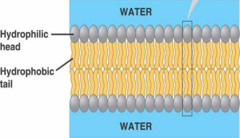
8064477282Phospholipid(s)___ consist of a glycerol molecule, two fatty acid "tails", and a phosphate "head"53
8064477283Phospholipid(s)___ compose the majority of the membranes of cells54
8064477284Hydrophobicthe fatty acid "tails" of phospholipids are (hydrophobic / hydrophilic)55
8064477285Hydrophilicthe phosphate "heads" of phospholipids are (hydrophobic / hydrophilic)56
8064477286Amphipathica molecule is ___ if it has both hydrophobic and hydrophilic regions57
8064477287Steroid(s)all ___ have a basic structure of four linked carbon rings; this type of lipid includes cholesterol, vitamin D, and a variety of hormones58
8064477288Nucleotide(s)___ are the monomers of nucleic acids, and they are composed of phosphate group, a five carbon sugar, and a nitrogenous base59
8064477289DNA (Deoxyribonucleic Acid)___ is a nucleic acid that contains the sugar deoxyribose; this nucleic acid is important because it contains genes that code for protein synthesis60
8064477290RNA (Ribonucleic Acid)___ is a nucleic acid that contains the sugar ribose; this nucleic acid is important because it provides a means of communication between DNA and the ribosomes which carry out protein synthesis61
8064477291Heterotroph (Hypothesis)the ___ is the hypothesis that the earliest forms of life arose from nonliving matter in the primitive oceans of Earth62

Command Terms in AP Biology Flashcards

Terms : Hide Images
6945918953AnalyzeInterpret Data sets or statements made based on evidence in order to reach a conclusion0
6945918954ApplyUse a biological concept, theory, principle,or mathematical equation in a different context1
6945918955CalculateUse math and mathematical concepts to find a relationship2
6945918956ConnectFind a relationship between two or more pieces of evidence3
6945918957ConstructBuild or devise a representation of a biological concept4
6945918958ConvertTransform a data set into graphical form5
6945918959CreateBuild or devise a representation of a biological concept6
6945918960DescribeUse details to provide an accurate account of a situation7
6945918961DesignProduce an experimental plan that may or may not be used to collect data8
6945918962DrawSketch, Illustrate, or represent an idea or data in graphic form9
6945918963EvaluateExamine evidence provided and data collected10
6945918964ExplainProvide details and reasons in order to clarify something11
6945918965JustifySupport a statement with sufficient evidence12
6945918966ModelStimulate or represent a biological process or concept13
6945918967PoseAsk questions about an idea or biological concept14
6945918968PredictTell what you expect will happen15
6945918969RefineClarify assertions or models about what a biological concept by using evidence16
6945918970RepresentUse a graph, diagram, or model to illustrate a biological concept17
6945918971SolveUse math to find answers to a question or to illustrate a relationship between variables18
6945918972Use DataEmploy date sets to construct explanations and to provide evidence19

AP Biology - Stem Cells Flashcards

Terms : Hide Images
7866246192What are stem cells?Unspecialized cells capable of renewing themselves through continued cell division - can give rise to differentiated cells0
7866144086What are the three general properties of stem cells?They are capable of dividing and renewing themselves for long periods They are unspecialized They can give rise to specialized cell types1
7865921104Embryonic stem cellCells that are derived from embryos, are capable of dividing without differentiating for a prolonged period.2
7866406635Where are ES cells harvested from? Explain.Inner cell mass of blastocyst >once cleavage of embryo begins, this sphere of cells with flattened cavity formed ~in utero, 7 days after fertilization and before implants into endometrium3
7866355819Cell determinationwhere cell becomes committed to a developmental pathway, but has not yet differentiated (related to differential inheritance of cytoplasmic factors and interaction btw neighboring cells)4
7866379729Induction, which can lead to differentiation, is what? It is mediated by?Induction, which can lead to differentiation, is interaction btw neighboring embryological cells; mediated by signaling molecules that trigger transduction pathways!5
7865911837Differentiation?The process by which cells become specialized. During the development of an organism, cells differentiate into many types of cells. >related to differences in which gene are expressed6
7865916580Somatic stem cellA cell found in many organs and tissues e.g. bone marrow, skin, brain; that can differentiate and self-renew. Most usually limited to cell types in the organ of origin.7
7866275993-ability of a stem cell to become different types of cells -decreases with differentiationpotency8
7865945155Totipotenta stem cell can become any type of cell even extra embryonic membranes e.g. cells from very early cleavage stage...remember, when mammalian embryo splits naturally, identical twins result fyi- possible to produce totipotent cells9
7865946651Pluripotenta stem cell can become any type of cell IN the human body ...but not supporting structures like placenta, chorion, or amnion which are needed for development10
7865963261Multipotenta stem cell can become many cell types but not all11
7866048547self renewalability of stem cells to replicate themselves by dividing into the same non-specialized cell type over long time depending on the specific type of stem cell. (If used for therapy, want beneficial effect of stem cells to last long time in patient.)12
7866132842Induced pluripotent stem cell (IPSC)Type of pluripotent stem cell, similar to an embryonic stem cell, formed by the introduction of certain embryonic genes into a somatic cell. -cell from the body that is reprogrammed --introduce a gene so cell "forgets what it is" and reverts back to a embryonic-like state13
7866291114What happens to pluripotent ES cells after harvested from [inner cell mass of] blastocyst?grown in culture14
7867007691technique that combines enucleated egg and nucleus of somatic cell to make an embryo; can be used for therapeutic or reproductive (cloning) purposes, but the initial stage is same for bothSomatic cell nuclear transfer (SCNT)15

AP Biology Objective 1 Flashcards

Terms : Hide Images
7225716496BiosphereThe entire portion of Earth inhabited by life; the sum of all the planet's ecosystems.0
7225716497CellA basic unit of living matter separated from its environment by a plasma membrane; the fundamental structural unit of life.1
7225716498CommunityAn assemblage of all the organisms living together and potentially interacting in a particular area.2
7225716499Controlled ExperimentA component of the process of science whereby a scientist carries out two parallel tests, an experimental test and a control test. The experimental test differs from the control by one factor, the variable.3
7225716501EcosystemAll the organisms in a given area, along with the nonliving (abiotic) factors with which they interact; a biological community and its physical environment.4
7225716502Emergent PropertiesNew properties that emerge with each step upward in the hierarchy of life, owing to the arrangement and interactions of parts as complexity increases.5
7225716505EvolutionDescent with modification; the idea that living species are descendants of ancestral species that were different from present-day ones; also the genetic changes in a population over generations.6
7225716506GeneA discrete unit of hereditary information consisting of a specific nucleotide sequence in DNA (or RNA, in some viruses). Most of the genes of a eukaryote are located in its chromosomal DNA; a few are carried by the DNA of mitochondria and chloroplasts.7
7225716507Hypothesis(plural, hypotheses) A tentative explanation a scientist proposes for a specific phenomenon that has been observed.8
7225716508Natural SelectionA process in which organisms with certain inherited characteristics are more likely to survive and reproduce than are organisms with other characteristics.9
7225716509OrganA structure consisting of several tissues adapted as a group to perform specific functions.10
7225716510Organ SystemA group of organs that work together in performing vital body functions.11
7225716511OrganelleA membrane-enclosed structure with a specialized function within a cell.12
7225716512OrganismAn individual living thing, such as a bacterium, fungus, protist, plant, or animal.13
7225716513PopulationA group of individuals belonging to one species and living in the same geographic area.14
7225716514ProducerAn organism that makes organic food molecules from CO2, H2O, and other inorganic raw materials: a plant, alga, or autotrophic bacterium.15
7225716516TheoryA widely accepted explanatory idea that is broad in scope and supported by a large body of evidence.16
7225716517TissueAn integrated group of cells with a common function, structure, or both.17

AP Biology Chapter 19 Flashcards

Viruses

Terms : Hide Images
6320779255VirusAn infectious particle incapable of replicating outside of a cell, consisting of an RNA or DNA genome surrounded by a protein coat (capsid) and, for some viruses, a membranous envelope.0
6320779256CapsidThe protein shell that encloses a viral genome. It may be rod-shaped (helical), polyhedral(icosahedral), or more complex in shape.1
6321065189capsomeresprotein subunits that make up capsids2
6320779257Viral EnvelopesA membrane, derived from membranes of the host cell, that cloaks the capsid, which in turn encloses a viral genome; contain host cell phospholipids and membrane proteins; contain viral proteins and glycoproteins3
6320779258Bacteriophage (Phage)-viruses that infect bacteria -capsids w/ elongated icosahedral heads w/ DNA -protein tail piece w/ fibers by which phages attach to bacterium attached to head4
6320779259Host Rangelimited number of species whose cells can be infected by a particular virus5
6320779260Viral Reproduction Cycle1. virus binds to host cell and enters uncoated, releasing viral DNA and capsid proteins 2. viral genome encodes proteins to have host reprogram cell to copy viral nucleic acid and replicate viral genome 3. meanwhile, host enzymes transcribe viral genome into viral mRNA, which host ribosomes use to make more capsid proteins 4. viral genomes and capsid proteins self-assemble into new virus particles, which exit cell to infect other cells and spread viral infection6
6322242656Lytic cycleA type of phage replicative cycle resulting in the release of new phages by lysis (and death) of the host cell.7
6320779261Lytic Cycle process-phage reproductive cycle that culminates in death of host cell 1. Attachment: page uses tail fibers to bind to specific receptor sites on surface bacteria 2. Entry of phage DNA and degradation of host DNA: sheath of tail contracts, injecting the phage DNA into cell and leaving empty capsid outside -> cells DNA hydrolyzed 3. Synthesis of viral genomes and proteins: phage DNA directs production of phage proteins and copies of phage genome w/ host enzymes 4. Assembly: 3 separate sets of proteins self-assemble to form phage heads, tails, and tail fibers; genome packaged in capsid as head forms 5. Release: phage directs production of enzyme that damages bacterial cell wall -> fluid enters -> cell swells and bursts, releasing 100-200 phage particles8
6320779262Virulent Phagea phage that replicates only by a lytic cycle9
6320784336Restriction EnzymesAn endonuclease (type of enzyme) that recognizes and cuts DNA molecules foreign to a bacterium (such as phage genomes). The enzyme cuts at specific nucleotide sequences (restriction sites).10
6322770527Lysogenic cycleAllows replication of the phage genome without destroying the host11
6320779263Lysogenic Cycle processphage reproductive cycle w/ replication of phage genome w/o destroying host 1. phage DNA incorporated on site of bacterial chromosome -> prophage 2. bacterium reproduces normally, copying prophage and transmitting it to daughter cells 3. many cell divisions -> large population of infected bacteria12
6320779264Temperate Phagephage capable of using both modes of reproduction in bacteria through replication via the lytic or lysogenic cycle.13
6320779265Prophagephage genome that has been inserted into a specific site on a bacterial chromosome.14
6320779266Reproductive Cycle of Lipid Enveloped RNA Virus1. glycoproteins on viral envelope bind to specific receptor molecules on host cell, promoting viral entry into cell 2. capsid and viral genome enter cell-digestion of capsid by cellular enzymes releases viral genome 3. viral genome functions as template for synthesis of complementary RNA strands by viral envelope 4. new copies of viral genome RNA made using complementary RNA strands as templates 5. complementary RNA strands also function as mRNA, translated into capsid proteins (in cytosol) and glycoproteins for viral envelope (ER, Golgi) 6. vesicles transport envelope glycoproteins to plasma membrane 7. capsid assembles around each viral genome molecule 8. each new virus buds from cell, envelope studded w/ viral glycoproteins embedded in membrane derived from host cell15
6320779267Retrovirus (Class VI)An RNA virus that replicates by transcribing its RNA into DNA and then inserting the DNA into a cellular chromosome; an important class of cancer-causing viruses.16
6320779268Reverse TranscriptaseAn enzyme encoded by certain viruses (retroviruses) that uses RNA as a template for DNA synthesis.17
6320779269HIVThe infectious agent that causes AIDS. HIV is a retrovirus.18
6320779270AIDSThe symptoms and signs present during the late stages of HIV infection, defined by a specified reduction in the number of T cells and the appearance of characteristic secondary infections.19
6320779271HIV Reproductive Cycle1. envelope glycoproteins enable virus to bind to specific receptors on certain white blood cells 2. virus fuses w/ cell's plasma membrane-capsid proteins removed, releasing viral proteins and RNA 3. reverse transcriptase catalyzes synthesis of DNA strand complementary to viral RNA 4. reverse transcriptase catalyzes synthesis of second DNA strand complementary to first 5. double stranded DNA incorporated as provirus -> permanent resident of cell 6. proviral genes transcribed into RNA molecules-serves as genomes for next viral generation and as mRNAs for translation into viral protein 7. viral proteins include capsid proteins, reverse transcriptase, and envelope glycoproteins 8. vesicles transport glycoproteins to cell's plasma membrane 9. capsids assemble around viral genomes and reverse transcriptase molecules 10. new viruses bud off host cells20
6336305874ProvirusA viral genome that is permanently inserted into a host genome21
6320779272Vaccineharmless variant or derivative of a pathogen that stimulates a host's immune system to mount defenses against harmful purposes22
6320779273Emerging Virusesviruses that are new to medical scientists/suddenly appear b/c: 1. mutation of existing viruses -> new strains of disease -> epidemics 2. dissemination of viral disease from small, isolated human population-can be due to technological and social factors (radiation, travel, blood transfusion, sexual promiscuity, drugs, etc...) 3. spread of existing virus from other animals23
6320779274Epidemichuge outbreak of disease24
6320779275Pandemicglobal epidemic25
6356927823Horizontal transmissionviral disease in plants spread from an external source through the plant's epidermis (= damgage via wind, herbivores, or injury)26
6356939442Vertical transmissionviral disease in plants spread by inheritance from a parent, can occur asexually and sexually27
6320779276Viroida plant pathogen consisting of a molecule of naked, circular RNA a few hundred nucleotides long; replicates in host plant cells using host enzymes instead of encoding proteins cause errors in regulatory system that control plant growth -> stunted growth, abnormal development28
6320779277Prionan infectious agent that is a misfolded version of a normal cellular protein appears to increase in number by converting correctly folded versions of the protein to more prions, causes many degenerative brain diseases of many animals, mostly transmitted w/ food-incubation 10+ years, virtually indestructible29

Chapter 4 - AP Biology Flashcards

Terms : Hide Images
7288591075Organic ChemistryThe study of carbon compounds0
7288591076HydrocarbonsAn organic molecule consisting only of carbon and hydrogen.1
7288591077IsomerOne of several organic compounds with the same molecular formula but different structures and therefore different properties.2
7288591078Structural IsomerCompounds with the same molecular formula but different covalent arrangement of atoms.3
7288591079Geometric (cis-trans) IsomerIsomers with the same covalent partnerships but different spatial arrangements of atoms around a carbon=carbon double bond.4
7288591080EnantiomerMolecules that are mirror images of each other.5
7288591081Functional GroupsA specific configuration of atoms commonly attached to the carbon skeletons of organic molecules and usually involved in chemical reactions.6
7288591082Hydroxyl GroupA chemical group consisting of an oxygen atom joined to a hydrogen atom. Molecules possessing this group are soluble in water and are called alcohols.7
7288591083Amino GroupA chemical group consisting of a nitrogen atom bonded to two hydrogen atoms can act as a base in solution, accepting a hydrogen ion and acquiring a charge of 1⁺8
7288591084Carboxyl GroupA chemical group consisting of a single carbon atom double-bonded to an oxygen atom and also bonded to a hydroxyl group9
7288591085Phosphate GroupA chemical group consisting of a phosphate atom bonded to four oxygen atoms; important in energy transfer.10
7288591086Sulfhydryl GroupA chemical group consisting of a sulfur atom bonded to a hydrogen atom.11
7288591087AlcoholOrganic compounds containing hydroxyl groups12
7288591088Carbonyl GroupA functional group present in aldehydes and ketones consisting of a carbon atom double bonded to an oxygen atom.13
7288591089AldehydeAn organic molecule with a carbonyl group located at the end of the carbon chain.14
7288591090KetoneAn organic molecule with a carbonyl group located in the middle of the carbon chain.15
7288591091Carboxylic AcidAn organic compound containing a carboxyl group.16
7288591092AmineAn organic compound containing an amino group.17
7288591093ThiolAn organic compound containing a sulfhydryl group.18
7288591094Adenosine Triphosphate (ATP)An adenine-containing nucleoside triphosphate that releases free energy when its phosphate bonds are hydrolyzed. This energy is used to drive reactions in cells.19

AP Biology : Chapter 48 : Neurons, Synapses, and Signalling Flashcards

Terms : Hide Images
9602102851gangliasimple cluster of nerve cells0
9602102852Sensory Neuronstransmit information from sensors that detect external stimuli using all different senses1
9602102853motor neuronstransmit signals to muscle cells causing them to contract2
9602102854Central nervous system (CNS)In many animals, the neurons that carry out integration are organized in this, which includes the brain and a longitudinal nerve cord.3
9602102855peripheral nervous system (PNS)the neurons that carry information into and out of the central nervous system constitute this.4
9602102856dendritesa typical neuron has many of these, they are highly branched extensions that RECEIVE signals from other neurons.5
9602102857Axona neuron has a single one of these, which is an extension that TRANSMITS signals to other cells. Often much longer than dendrites.6
9602102858Axon hillockthe cone-shaped region of an axon where it joins the cell body. this is typically a region where the signals that travel down the axon are generated.7
9602102859synapsea junction that each branched end of an axon transmits information to8
9602102878synaptic terminal9
9602102860gliacells that support neurons, through insulation, nourishment, etc. Ex. Schwann cells (forms myelin sheath)10
9602102861membrane potentiala voltage (difference in electrical charge). All cells have this.11
9602102862resting potentialthe membrane potential of a resting neuron-one that isn't sending signals-typically between -60 and -80 mV (millivolts)12
9602102863ion channelspores formed by clusters of specialized proteins that span the membrane13
9602102864equilibrium potentialthe magnitude of the membrane voltage at equilibrium for a particular ion is called that ion's what?14
9602102865gated ion channelsion channels that open or close in response to stimuli15
9602102866hyperpolarizationincrease in the magnitude of the membrane potential is called this, which results from any stimulus that increases either the outflow of positive ions or the inflow of negative ions16
9602102867depolarizationthis happens when the opening of some other types of ion channels makes the inside of the membrane less negative. Often involves gate sodium channels17
9602102868voltage-gated ion channelsopen or close in response to a change in the membrane potential.18
9602102869action potentialnerve impulses/signals that carry information along an axon19
9602102870refractory periodthe "downtime" following an action potential when a second action potential cannot be initiated. This interval sets a limit on the maximum frequency that action potentials can be generated20
9602102871Saltatory conductionwhen the action potential appears to jump along the axon from node to node.21
9602102872Myelin sheatha layer of electrical insulation that surrounds vertebrate axons22
9602102873Nodes of ranviera gap in the myelin sheath of a nerve, between adjacent Schwann cells (g in picture)23
9602102874nerve net(in invertebrates such as coelenterates and flatworms) a diffuse network of neurons that conducts impulses in all directions from a point of stimulus.24
9602102875Sodium potassium pumppumps sodium out of cells while pumping potassium into cells, both against their concentration gradients.25
9602102876sodium channelpotassium-selective pores26
9602102877potassium channelpotassium-selective pores27

Chapter 7 AP Biology- membrane structure and function Flashcards

Terms : Hide Images
5941594903structure of plasma membraneselectively permeable, made up of fat molecules called phospholipids 3 carbon glycerol backbone, 2 fatty acids (saturated or unsaturated(kinked) and a negatively charged phosphate group0
5941594904ampipathichave nonpolar hydrophobic region and polar hydrophillic region1
5941594905when temperature changesas temperatures cool, membranes switch from fluid state to solid state, temp at which membrane solidifies depends on types of lipids rich in unsaturated fatty acids are more fluid than those rich in saturated fatty acids to work properly need to be as fluid as salad oil2
5941594906cholesterol effects on membranesteriod cholesterol has different effects on membrane at different temperatures, at warm cholesterol restrains movement of phospholipids, at cool it maintains fluidity by preventing tight packing3
5941594907phosphate headface water on inside and outside of cell4
5941594908glycoproteinsproteins within cell membrane with carbohydrate (sugar) attached to them5
5941594909peripheral proteinsbound to surface of membrane6
5941594910integral proteinspenetrate hydrophobic core, span membrane= transmembrane proteins hydrophobic regions of integral protein constist of one or more stretches of nonpolar amino acids, often coiled into alpha helices7
5941594911cell to cell recognitioncells ability to distinguish one type of neighboring cell from another8
5941594912membrane carbohydratesinteract with surface molecules of other cells facilitating cell-cell recognition membrane carbohydrates may be covalently bonded to lipids (glycolipids) or proteins (glycoproteins)9
5941594913six functions of membrane proteinstransport, enzymatic activity, signal transduction, cell-cell recognition, intercellular joining, attachment to cytoskeleton and extracellular matrix (ECM)10
5941594914things that cannot cross membranecharged particles, large polar molecules (nucleotides, amino acids, carbohydrates)11
5941594915things that can cross membranelipids, nonpolar molecules, small polar uncharged molecules water12
5941594916waterwater(exception, occurs slowly and in small quantities) integral transport proteins responsible for rapid transport of water, aquaporins13
5941594917diffusionmovement of particles from where they are more concentrated to where they are less concentrated molecules will continue to spread out until equil. is reached14
5941594918concentration gradientdifference in concentration of molecules across a distance movement down C gradient is passive, does not require energy moving up is active because you need energy to make happen15
5941594919osmosispassive process, movement of water across membrane or con. gradient16
5941594920water in = water outisotonic solution17
5941594921water out > water inhypotonic soltuoin, cell placed in pure water18
5941594922water in > water outhypertonic solution, cell placed in salt water solution19
5941594923simple diffusionenergy not required to move particles across membrane water, CO2 and O220
5941594924facilitated diffusionsmall polar molecules and ions move down their concentration gradient integral membrane transport proteins allow for passage of particles from one side to another21
5941594925Active TransportRequires ATP, molecules move from region of low concentration to high22
5941594926channel protiensprovide corridors that allow molecule or ion to cross membrane23
5941594927carrier protienundergo subtle change in shape that translocates solute binding site across membrane24
5941594928Na+/K+ ATPase pumpmembrane protein (enzyme) reponsible for transporting sodium and potassion ions across the membrane25
5941594929electrochemical gradientconsists of the concentration and electrical force of particles present on both sides of cell membrane, charged particles (ions) move down their electrochemical gradients (unless they have active transport) membrane proteins like Na+/K+ can generate and maintain an electrochemical gradient by pumping an unequal number of ions across membrane all cells have negative membrane potential- defined as an unequal distribution of charged particles on both sides of membrane, more negative particles on inside of membrane than on outside this drives diffusion of ions across membrane: a chemical force (ions concentration gradient) and an electrical force (effecf of membrane potential on ions movement)26
5941594930membrane potentialvoltage difference across membrane, voltage created by differences in distribution of - and + ions across membrane27
5941594931electrogenic pumptransport protien that generates voltage across membrane, sodium potassium pump is major electrogenic pump of animal cells, proton pump is main pump of plants, these pumps help store energy that can be used for cellular work28
5941594932cotransportlinks the energy generated by pumping across their concentration gradient (active trasnport) with movement of another particle up its concentration gradient often 1st particle required for transport of 2nd particle symport and anitport are examples29
5941594933endocytosis (and 3 types)transport of large particles into cell through transport vesicles 1. phagocytosis 2. pinocytosis 3. receptor mediated30
5941594934phagocytosiscell engulfs particle by wrapping pseudophoia around it and packaging it within membrane enclosed sac large enough to be classified as a vacuole. The particle is digested after vacuole fused with lysosome containing enzymes31
5941594935pinocytosiscell gulps droplets of extracellular fluid into tiny vesicles, not the fluid itself that is needed by the cell but the molecules dissolved in the droplet because any and all included solutes are taken into the cell its non specific in substances it transports32
5941594936receptor mediatedregulated form of endocytosis, membrane proteins bind to specific molecules (ligands) present in extracellular fluid, ligand binding initiaites an endocytotic event that moves the material into the cell33
5941594937exocytosistransport of particles out of cell through transport veiscles34
5941594938water potentialΨ =Ψ p+Ψ s dont worry about Ψ p at normal atmospheric pressure water will always move from an area of high water potential (more pure water) to low water potential and solute concentration are inversely related can be zero + or - adding solute to a solvent lowers the water potential of solution water potential of pure water (open to atmosphere) is 035
5941594939as solute concentration increases Ψ does whatdecreases36
5941594940pressure potential Ψ pin plant cell, pressure excerted by the rigid cell walll that limits further water uptake37
5941594941Ψ s solute potentialeffect of solute concentration, pure water at atmospheric pressure has solute potential of 0, as solute is added value of Ψ s becomes more negative this causes water potential to decrese as well38
5941594942Ψ s= equation-iCRT i= dissociation constant (typically 1 but always consider chemical structure of the molecule) C= concentration of solute R= 0.0821 L-atm/mol-K Temperature= degrees celcius + 273 for K39
5941594943if a flaccid cell is placed into an environment with higher solute concentration if a flaccid cell is placed into solution with lower solute concentrationcell will lose water and become plasmolyzed cell will gain water and become turgid40
5941594944osmoregulationcontrol of solute concentrations and water balance41

AP Biology- Chapter 25 Flashcards

Terms : Hide Images
5114491166Fossil Record shows macroevolutionary changes including:1) emergence of terrestrial vertebrates 2) origins of photosynthesis 3) long-term impacts of mass extinctions0
5114491167Possible order of Formation on Earth:1) Abiotic synthesis of small organic molecules 2) Joining of small molecules into macromolecules 3) Packaging of molecules into "protobionts" 4) Origin of self-replicating molecules1
5114491168Synthesis of Organic Compounds:1) Early earth formed~ 4.6 bya 2) Early atmosphere~ water vapor; chemicals released by volcanic eruptions2
5114491169Abiotic Synthesis of Macromolecules:1) small organic form polymers (polymerize) when they are concentrated on hot sand, clay, or rock 2) polymers formed this way are a complex mix of linked and cross-linked amino acid 3) possible that such polymers may have acted as weak catalysts for a variety of reactions on earth3
5114491170Protobionts:1) aggregates of abiotically produced molecules surrounded by membrane or membrane-like structure 2) exhibit simple reproduction and metabolism 3) maintain an internal chemical environment different from external environment 4) could have formed spontaneously from abiotically produced organic compounds4
5114491171Self-Replicating Molecules:1) First genetic material- probably RNA 2) Combining early protobionts with self-replicating, catalytic RNA= first life? 3) Steps toward Natural Selection: double stranded DNA, RNA taking on modern role as intermediates5
51144911721920's: A.I. OParin & J.B.S. Haldane1) hypothesized early atmosphere= reducing environment 2) AKA electron-adding 3) necessary for forming organic molecules6
51144911731953: Stanley Miller & Harold Urey1) Tested Oparin-Haldane Hypothesis 2) Showed that synthesis of organic molecules in a reducing atmosphere is possible7
5114491174Liposomes1) small membrane-bound droplets 2) lipids (or other organic compounds) + water8
5114491175RibozymesRNA molecules that can catalyze reactions like proteins; some can make complementary copies of short stretches of their own sequences or other short pieces of RNA9
5114491176Fossil Records1) reveals major changes in the history of life 2) richest source of fossils are in sedimentary rock 3) biased in favor of species: existed for long time, abundant and widespread, hard parts10
5114491177Relative Age of Fossils:determined from rock layer (sedimentary strata) that it appears in11
5114491178Absolute Age= Radioactive Dating"Parent" isotope decays into a "daughter" isotope at a constant rate12
5114491179Half-Life1) time required for half the parent isotope to decay 2) different for each radioactive isotope13
5114491180Radiocarbon Dating1) C-14: decays into C-12; present in known concentrations in all living things 2) Death= no new C-14 incorperated 3) Time since death can be determined 4) Half-Life= 5,730 years 5) Can be used to date fossils/organic material up to 75,000 years old14
5114491181If Fossils older than 75,000 years, ?other isotopes with longer half-lives used (plutonium, uranium, potassium, argon)15
5114491182Magnetism of rocks provide with dating info:1) iron particles in rocks align with Earth's magnetic field when the rock forms 2) magnetic field has reversed multiple times, but rocks stay aligned the same way16
5114491183Tetrapods:mammals, reptiles, amphibians17
5114491184Mammal evolution has been traced based on ________ modifications, from ancestral _________ (group of reptiles)gradual; synapsids18
5114491185Geologic Record1) divided into Archean, Proterozoic, Phanerozoic eons 2) split further into eras, periods and epochs 3) major boundaries bet. geological divisions correspond to extinction events in fossil record19
5114491186Key Events in Life's History:1) First Single-Celled Organisms 2) Photosynthesis and Oxygen Revolution 3) First Eukaryotes 4) Origin of Multicellularity 5) Colonization of Land20
5114491187(1) First Single-Celled Organisms: Stromatolites1) rock-like structure composed of many layers of bacteria and sediment 2) 3.5 bya 3) sole inhabitants of Earth from 3.5-2.1 bya21
5114491188(2) Photosynthesis and Oxygen Revolution:1) most atmospheric oxygen (O2) is of biological origin 2) O2 produced by photosynthesis reacted with dissolved iron --> iron formation (rust-like) 3) 2.7 bya --> O2 began accumulating in atmosphere and rusting iron-rich terrestrial rocks22
5114491189(2) "Oxygen Revolution"1) 2.7-2.2 bya 2) posed challenge for life 3) led to cellular respiration developing 4) allowed organisms to exploit new ecosystem23
5114491190(3) First Eukaryotesoldest eukaryotic fossils= 2.1 bya24
5114491191(3) Endosymbiotic Theoryproposes that mitochondria and plastids (chloroplasts and related organelles) were originally small prokaryotes living within larger prokaryotic host cells25
5114491192(3) Endosymbiont:1) cell that lives within a host cell 2) undigested prey or internal parasites 3) developed mutualistic relationship --> eventually single organism26
5114491193(3) Serial Endosymbiosismitochondria first, then some descendants gained chloroplasts27
5114491194(3) Mitochondria and Plastids1) have similarities in their inner membrane structure and function 2) independent replication of these organelles (division similar to some pro.) 3) transcribe and translate own DNA 4) contain their own ribosomes (more similar to pro. ribo.)28
5114491195(4) Origin of Multicellularity1) DNA comparisons have been used to estimate date of first common ancestor of multicellular eukaryotes (1.5 bya) 2) oldest known multicellular fossil= small algae (1.2 bya)29
5114491196(4) "Snowball Earth" Hypothesis1) periods of extreme glaciation (in a glacier) 2) confined life to equitorial region region or deep-sea regions from 750-580 mya 3) Thaw of snowball corresponds to first major diversification of multicellular eukaryotes (565 mya) 4) Edicaran Biota: larger, more diverse soft-bodied organisms (565-535 mya)30
5114491197(4) Cambrian Explosion (AKA Cambrian Period)1) sudden appearance of representatives of all modern phyla in the fossil record 2) 535-525 mya 3) first evidence of predator-prey interactions 4) many animal phyla appeared before Cambrian (had a long fuse) 5) 700 million- 1 billion years ago 6) DNA and Chinese Fossil evidence31
5114491198(5) Colonization of Land1) First began 500 mya 2) plants & fungus likely colonized together (many mutual relationships & first land plants would have needed a vascular system; no roots/leaves) 3) Tetrapods evolved from lobe-finned fishes (365 mya) 4) Tetrapods & Arthropods are most widespread & diverse land animals32
5114491199Continental Drift1) earth's continents moves slowly over underlying hot mantle 2) oceanic and continental plates can collide, separate, or slide past each other 3) Interactions bet. plates cause the formation of mountains & islands, & earthquakes 4) breakup of pangea led to allopatric speciation 5) current distributation of fossils reflects continental drift33
5114491200Supercontinent Pangea (250 mya)1) less shallow water 2) colder and drier inland climate 3) changes in climate as continents moved toward and away from the poles 4) changes in ocean circulation patterns --> global cooling34
5114491201Mass Extincton1) dramatic increase of the rate of extinction 2) most species that have ever lived are now extinct35
5114491202"The Big Five"in each one, more than 50% of Earth's species became extinct36
5114491203End-Permian Extinction1) Less than 5 mya, 96% of marine animal species extinct 2) possible cause: volcanism --> global warming; decrease in oceanic oxygen37
5114491204Cretaceous Extinction1) 65.5 mya; 50% marine species; many terrestrial plants and animals, including most dinosaurs 2) iridium in sedimentary rocks suggests meteorite impact~ 65 mya 3) Chiczulub crater off Mexican coast= evidence meteorite (dates to the same time)38
5114491205Sixth mass extinction?1) current rate of extinction has been estimated by some scientists to be 100X-1000X the typical background rate 2) some say it caused by human actions39
5114491206Consequences of mass extinction:1) alter ecological communities & available niches 2) can take 5-100 my for diversity to recover 3) can pave the way for adaptive radiations40
5114491207Adaptative Radiationsevolution of diversity adapted species from a common ancestor upon introduction to new environmental opprotunites41
5114491208Worldwide adaptive radiations:1) mammals underwent adaptive radiation after extinction of terrestrial dinosaurs 2) other notable radiations include: Photosynthetic prokaryotes, large predators in cambrian, land plants, Insects, Tetrapods42
5114491209Regional adaptive radiations:can occur when organisms colonize new environments with little competition43
5114491210Heterochrony1) can have significant impact on body shape 2) Ex: contrasting shapes of human and chimpanzee skulls are the result of small changes in relative 3) can alter the timing of reproductive development relative to the development of non reproductive organs44
5114491211Paedomorphosis1) rate of reproductive development accelerates compared with somatic development 2) sexually mature species may retain body features that were juvenile structures in ancestral species45
5114491212Changes in Spatial Patternsubstantial evolutionary change can also result from alterations in genes that control the placement and organization of body parts (Homeotic Genes)46
5114491213Evolution of Development1) Tremendous increase in diversity during the Cambrian explosion is a puzzle 2) Developmental genes may play an especially important role 3) Changes developmental genes can result in new morphological forms47
5114491214Changes in Gene Regulation1) Ex: three-spine sticklebacks in lakes have fewer spines than their marine relatives 2) Same gene sequence, different gene expression48
5114491215Evolution is like tinkering-process in which new forms arise by the slight modification of existing forms49
5114491216Complex structures usually evolve in many _______ stages from previously __________ structures. (apparently happened independently)small; existing50
5114491217Some structures evolve in one context but become co-opted for a different ___________.function51

Pages

Subscribe to CourseNotes RSS

Need Help?

We hope your visit has been a productive one. If you're having any problems, or would like to give some feedback, we'd love to hear from you.

For general help, questions, and suggestions, try our dedicated support forums.

If you need to contact the Course-Notes.Org web experience team, please use our contact form.

Need Notes?

While we strive to provide the most comprehensive notes for as many high school textbooks as possible, there are certainly going to be some that we miss. Drop us a note and let us know which textbooks you need. Be sure to include which edition of the textbook you are using! If we see enough demand, we'll do whatever we can to get those notes up on the site for you!