AP Notes, Outlines, Study Guides, Vocabulary, Practice Exams and more!

Ap Biology Chapter 55 Flashcards

Terms : Hide Images
5712355276EcosystemConsists of all the organisms living in a community, as well as the abiotic factors with which they interact0
5712375435Law of conservation of massStates that matter cannot be created or destroyed1
5712388447DetritivoresDecomposers that consume nonliving organic matter2
5712401896Primary productionIn an ecosystem is the amount of light energy converted to chemical energy by autotrophs during a given time period3
5712420794Gross primary productionTotal primary production4
5712426182Net primary productionGPP minus energy used by primary producers for respiration5
5712440073Standing cropThe total biomass of photosynthesis autotrophs at a given time6
5712454880Limiting nutrientThe element that must be added for production to increase in an area7
5712471194EutrophicationA process by which nutrients, particularly phosphorus and nitrogen, become highly concentrated in a body of water, leading to increased growth of organisms such as algae or cyanobacteria.8
5712483979Actual evapotranspirationThe water annually transpired by plants and evaporated from a landscape9
5712497961Secondary productionAn ecosystem is the amount of chemical energy in food converted to new biomass during a given period of time10
5712514999Productions efficiencyThe fraction of energy stored in food that is not used for respiration11
5712525457Trophic efficiencyThe percentage of production transferred from one trophic level to the next 5%-20%12
5712542322Turnover timeA ratio of the standing crop biomass to production13
5712558114Biogeochemical cyclesNutrient circuits in ecosystems involve biotic and abiotic components14
5712573411Green world hypothesisProposes several factors that keep herbivores in check15
5712640467Hubbard Brook Experiment ForestHas been used to study nutrient cycling in a forest ecosystem since 196316
5712654423Critical loadThe amount that plants absorb without damaging the ecosystem17

AP Biology Unit 2 Vocabulary Flashcards

Terms : Hide Images
7371379306aquawater0
7371379307phageat1
7371383092amphidual2
7371384303porismall opening3
7371386083cotogether4
7371386990transacross5
7371388392genicproducing6
7371389507hyperexceeding7
7371390770hypolower8
7371392593tonustension9
7371394003pinodrink10
7371395285allodifferent11
7371396815anaup12
7371397777catadown13
7371407699facilitated diffusiondiffusion through transport proteins in the plasma membrane14
7371408570diffusionpassive movement of molecules from an area of high concentration to an area of low concentration15
7371411917osmosisdiffusion of water across a selectively permeable membrane16
7371424452concentration gradienta region along which the density of a chemical substance increases or decreases17
7371426767fluid mosaic modela plasma membrane is a mosaic of protein molecules drifting in a fluid phospholipid bilayer18
7371431500first law of thermodynamicsenergy can be transferred or transformed, but it cannot be created or destroyed19
7371492912second law of thermodynamicsevery energy transfer or transformation increases the entropy (disorder) of the universe (transformation of usable energy to heat)20
7371494552liganda molecule that binds specifically to another molecule, usually a larger one21
7371496791catabolic pathwaya metabolic pathway that releases energy by breaking down complex molecules into smaller ones22
7371498439anabolic pathwaya metabolic pathway that consumes energy to synthesize a complex molecule from simpler molecules23
7371503078tonicitythe ability of a solution surrounding a cell to cause that cell to gain or lose water24
7371504308isotonica solution that causes no net movement of water into or out of a cell25
7371506812hypertonica solution that will cause a cell to lose water26
7371508406hypotonica solution that will cause a cell to take up water27
7371510313plasmolysiswhen a cell shrinks in hypertonic solution28
7371512107cytolysiswhen a cell bursts in a hypotonic solution29
7371513643exergonic reactiona spontaneous chemical reaction that releases free energy30
7371524134endergonic reactiona nonspontaneous chemical reaction that absorbs free energy31
7371525154phosphorylationthe addition of a phosphate group (ADP is phosphorylated into ATP)32
7371526433activation energythe amount of energy that reactants must absorb before a chemical reaction will start33
7371665151substrate enters active site of enzyme34
7371670959enzyme/ substrate complex forms35
7371673714substrate is converted to productsimage 336
7371694374products leave the active site of the enzymepicture 537
7371750556exocytosismoving molecules out of the cell through the fusion of vesicles with the plasma membrane38
7371752513endocytosisthe uptake of molecules through the formation of vesicles from the plasma membrane39
7371765449phagocytosisendocytosis involving large particles or molecules40
7371769062pinocytosisendocytosis involving fluid with dissolved solutes41
7371770684enthalpythe total heat in a system42
7371770719entropya measure of disorder43
7371775115allosteric regulationthe binding of a regulatory molecule to a protein at one site that affects the function of a protein at another site44
7371776993feedback inhibition/loopa method of metabolic control in which the end product of a metabolic pathway acts as an inhibitor of an enzyme in that pathway45
7371782542glycoproteinprotein with carbohydrate attached46
7371794691glycoprotein47
7371797598glycolipidlipid with carbohydrate attached48
7371799165glycolipid49
7371826510peripheral membrane proteinblue thing?50
7371834921integral membrane proteinyellow things?51
7371839546cytoskeletal filamentswavy things outside membrane52
7371854756cholesterolyellow things?53
7371858731protein channelpurple thing?54
7371864637phospholipid bilayer55
7371872304sodium-potassium pumptransport protein that actively transports sodium out of the cell and potassium into the cell56
7371874005electrogenic pumpactive transport protein that generates voltage across a membrane while pumping ions57
7371875883proton pumpactive transport protein that uses ATP to move hydrogen ions out of a cell against the concentration gradient58
7371878938cotransportcoupling of the "downhill" diffusion of one substance to the "uphill" transport of another against its concentration gradient59
7371880788aquaporinschannel protein that is used in osmosis60
7371882609membrane potentialdifference in electrical charge across a cell's plasma membrane due to the differential distribution of ions61
7441910991turgor pressurepressure of water on the plasma membrane in plant cells62
7441929078active transportfrom low concentration to high concentration, opposite concentration gradient, requires energy63
7441933129passive transportmovement of ions and other atomic or molecular substances across cell membranes without need of energy input64
7668102507aeroair65
7668105937annot66
7668108631autoself67
7668108632chemichemical68
7668110458chlorogreen69
7668112324heteroother70
7668112325mesomiddle71
7668114014photolight72
7668114015phyllleaf73
7668116263trophfood74
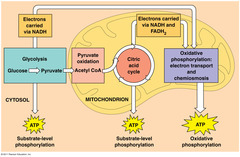
7668119352fermentationprocess of breaking down glucose (through glycolysis) into ethyl alcohol or lactic acid; produces limited ATP due to the lack of oxygen75
7668121107aerobic respirationcatabolic pathway where glucose is broken down completely into carbon dioxide and water in the presence of oxygen; produces 30-32 ATP76
7668124189redox reactionschemical reaction involving the transfer of electrons from one reactant to another77
7668126366chemiosmosisusing a hydrogen ion gradient to drive the production of ATP78
7668130238facultative anaerobesorganism that produces ATP through aerobic respiration, and switches to fermentation when oxygen is not present79
7668134373obligate anaerobesorganisms that only carry out fermentation; some may be poisoned by the presence of oxygen80
7668136223mesophyllleaf cells specialized for photosynthesis81
7668147800stomatamicroscopic pore surrounded by guard cells on the underside of leaves and stems; used in gas exchange82
7668149430chlorophylla green pigment found in membranes within chloroplasts of plants and algae, and in the membranes of some prokaryotes83
7668151578carbon fixationincorporation of carbon dioxide into an organic compound; done by autotrophs84
7668153228carotenoidsan accessory pigment (yellow or orange) that absorbs light of different wavelengths that chlorophyll cannot85
7668158108photosystemlight capturing unit in the thylakoid that contains chlorophyll in its reaction center86
7668162905cristaeinfolding of the inner membrane of the mitochondrion; where oxidative phosphorylation takes place87
7668166790matrixspace inside the inner membrane; where the citric acid cycle takes place88
7668166791stromadense fluid inside the chloroplast surrounding the thylakoids; where the light independent reactions take place89
7668170239thylakoidflattened membrane stack inside a chloroplast; where the light dependent reactions take place, including photophosphorylation90
7668173971intermembrane spacesmall space to quickly accumulate protons (C)91
7668186015inner membranecontains ETC and ATP synthase for oxidative phosphorylation (B)92
7668200548matrix of a mitochondriahas appropriate enzymes and a suitable pH for the krebs cycle (blue)93
7668217498cristaehighly folded so as to increase SA:Volume ratio94
7668238145outer membrane of a mitochondriacontains transport proteins for shuttling pyruvates in mitochondrion95
7668256812double membraneevidence for endosymbiosis, independent origin96
7668276499stromahas appropriate enzymes and a suitable pH for the Calvin Cycle97
7668288349thylakoidhas ETC and ATP synthase for phosphorylation98
7668288350granumflat membrane sacs increase SA:Volume ratio and small internal volumes quickly accumulate ions99
7668290812lamellaconnects and separates thylakoid stacks (grana)100
7668335736oxidationlosses electrons, becomes more positive, loses H or gains O, NADH to NAD+, H2) to O2, photophosphorylation101
7668354364reductiongains electrons, becomes less positive, gains H or loses O, NAD+ to NADH, O2 to H2O, oxidative phosphorylation102
7668373443oxidationcomplete or partial loss of electrons from a substance in a redox reaction103
7668373444reductioncomplete or partial transfer of electrons to a substance in a redox reaction104
7668379405oxidative phosphorylationthe production of ATP using energy from the redox reactions of an electron transport chain coupled with chemiosmosis105
7668382405substrate-level phosphorylationdirect transfer of a phosphate group from an intermediate substrate to ADP106
7668384829photophosphorylationprocess of generating ATP from ADP and phosphate during the light reactions of photosynthsis107

AP BIOLOGY(Genetics) Flashcards

Terms : Hide Images
8517291381bacteriaphagesviruses that infect bacteria0
8517302338NucleotidesThe monomer of nucleic acids (Nitrogenous bases)1
8517303554Nitrogenous basesAdenine, cytosine, guanine, thymine2
8517308593covalent bondsthe bonds that hold together nucleotides3
8517310942sugar groups5 carbon atoms (carbon atoms are bonded with hydrogen atoms)4
8517309480Phosphate groupshas a p atom and 4 oxygen atoms5
8517315168Pyrimindines(single ringed base) Cytosine, and Thymine6
8517316018Purines(double ringed base) Adenine, and Guanine "Pure as Gold"7
8615293696cell divisionthe way cell undergo reproduction.8
8615312744Prokaryotesthey reproduce through asexual reproduction.9
8615318388EukaryotesUndergoes sexual reproduction.10
8615320134sexual reproductionrequires the fusion of gametes (sperm and egg) with the use of reproductive organs such as the testes and ovaries. Each gamete has exactly half the necessary chromosomes to make for a specific eukaryotic offspring.(I.E humans, 23 chromosomes egg, 23 chromosomes sperm.)11
8615363679Gametessperm( male sex cell) and egg or ovum (female sex cell)12
8615380688Asexual Reproductionthe creation of a genetically identical offspring and it requires only one parent.13
8615440650Mitosismaintains cell population in multicellular organisms and is responsible for asexual reproduction.14
8615446257Binary FissionHow mitosis works within asexual reproduction Steps to binary fission 1) Duplication of chromosomes and the separation of copies 2)Continued elongation of the cell and movement of the copies 3)Division into two daughter cells (sister chromatids separate15
8615492154Chromatinentire complex consisting of equal amounts of RNA and protein16
8615504330Sister Chromatidjoined copies of an original chromosome they are attached together by proteins in a region known as the centromere.17
861562917718

AP Biology Chapter 19 Flashcards

Terms : Hide Images
4987647204Evolution- Descent with modification. - Process consists of the mechanisms that produce the observed pattern of change.0
4987647205Aristotle- Believed life forms can be arranged on the scala naturae, increasing in complexity. - Believed that organisms were fixed.1
4987647206Lamarck1. Use & disuse- parts of the body that are used extensively become larger and stronger, while those that are not used deteriorate. - Ex. A giraffe stretching its neck to reach leaves on higher branches. 2. Inheritance of acquired characteristics- An organism can pass down these modifications to its offspring. - Evolution occurs because organisms have an innate drive to become more complex.2
4987647207Darwin- Voyage around the world on the HMS Beagle - He observed geologic change and concluded that physical evidence did not support the traditional view that the earth was only a few thousand years old. - He found that organisms on the Galapagos Islands were similar to those on the South American mainland.3
4987647208Natural Selection- The process in which individuals that have certain inherited traits tend to survive and reproduce at higher rates that other individuals because of those traits. - Can amplify or diminish only heritable traits that differ among the individuals in a population.4
4987647209Descent with modification- Unity of life- All organisms are descended from a common ancestor. - Descendents acquired diverse adaptations because of living in different environments. - Life= tree with branches from a common trunk, each fork represents most recent c. ancestor.5
4987647210Thomas Malthus- Human suffering- disease, famine, and war resulted from the human population's potential to increase faster than food supplies and other resources.6
4987647211Survival of the fittest- Organisms that are best adapted to their environment will have offspring and pass down their traits.7
4987647212Homology- Similarity resulting from common ancestry.8
4987647213Homologous structures- Structures that represent variations on a structural theme in a group of animas that was present in their common ancestor. - Ex. Arms, forelegs, flippers and wings of different mammals.9
4987647214Vestigial Structures- Remnants of features that served a function in the organism's ancestors. - Ex. some snake skeletons retain vestiges of the pelvis and leg bones of walking ancestors.10
4987647215Comparative biochemistry- All forms of life use the same genetic language of DNA and RNA- genetic code is essentially universal. - Likely that all species descended from common ancestors that used this code.11
4987647216The Fossil Record- Documents the pattern of evolution- past organisms differed from present-day organisms & shows that many species have become extinct. - Shows that descent with modification produced increasingly large differences among related groups of organisms, ultimately resulting in the diversity of life.12
4987647217Biogeography- The scientific study of the geographic distributions of species.13

AP Biology (Campbell) Chapter 9 - Cellular Respiration Flashcards

Cellular Respiration and Fermentation

Terms : Hide Images
6285623292Fermentationanaerobic process that produces little ATP, includes glycolysis, and restores NAD+0
6285623293Aerobic Respirationthe catabolic pathway which requires oxygen and occurs in cytoplasm and mitochondria1
6285623294Anaerobic Respirationthe catabolic pathway which does not require oxygen and occurs only in the cytoplasm2
6285623295Oxidationloss of electrons from atoms of a substance3
6285623296Reductionaddition of electrons to atoms of a substance4
6285623297Reducing Agentelectron donor in a redox reaction5
6285623298Oxidizing Agentelectron acceptor in a redox reaction6
6285623299NAD+electron carrier used in cellular respiration to transfer electrons from Kreb's cycle to ETC7
6285623300Electron Transport Chain (ETC)(1) transfer of electrons from glucose via NADH/FADH2 to transmembrane proteins and subsequently using their high energy to pump protons to intermembrane space in mitochondria or thylakoid space in chloroplasts8
6285623301Citric Acid (Kreb's) Cycle(B) 2nd step of cellular respiration that breaks down AcetylCoA to 2 carbon dioxide, 1 ATP, 3NADH, and 1 FADH2 molecules in mitochondrial matrix (aerobic)9
6285623302Glycolysis(A) 1st step of cellular respiration that splits glucose into 2 molecules of pyruvic acid and 2 ATPs (anaerobic, catabolic/exergonic)10
6285623303Pi (not π)inorganic phosphate11
6285623304Oxidative Phosphorylation(3) synthesis of ATP from ADP and Pi at ATP synthase using energy from glucose electrons which are ultimately transferred to oxygen (final electron acceptor) using ETC in mitochondrial (aerobic)12
6285623305Substrate Level Phosphorylationsynthesis of ATP by transferring a phosphate group directly to ADP using an enzyme13
6285623306Chemiosmosis(3) movement of protons down their concentration gradient coupled to ATP synthesis14
6285623307Proton Motive Forcepotential energy stored in form of an electrochemical gradient generated by pumping hydrogen ions across membranes during ETC15
6285623308Alcohol Fermentationconversion of pyruvate to carbon dioxide and 2-carbon compound in absence of oxygen to regenerate NAD+ needed for glycolysis (in yeast)16
6285623309Lactic Acid Fermentationconversion of pyruvate to 3-carbon compound in absence of oxygen to regenerate NAD+ needed for glycolysis (in our muscles)17
6285623310Obligate Anaerobesorganisms that can only survive WITHOUT oxygen18
6285623311Redoxelectron transfer reactions that occur together and in which one chemical is oxidized and the other reduced19
6285623312Formation of acetyl CoAmetabolic link between glycolysis and aerobic respiration20
6285623313Cellular Respirationexergonic process that includes 3 steps and releases energy (ATP) by breaking down glucose and other molecules in presence of oxygen21
6285623314Cytochromesiron-containing proteins that play key role in electron transport chains in mitochondria, chloroplasts, and cell membranes of prokaryotes22
6285623315ATP Synthaseenzyme in mitochondrial cristae and chloroplast thylakoids that uses energy of proton gradient to add a phosphate group to ADP and so form ATP23
6285623316Facultative Anaerobesorganisms that can survive with OR without oxygen24
6285623317Kinases/Phosphatasesenzymes that transfer phosphate groups25

AP Biology Chapter 5 Flashcards

Terms : Hide Images
4782541464Fluid Mosaic Model0
4782544212phospholipid bilayerproteins embedded in it, some have carbs attached; can all move laterally1
4782556418saturated lipidsmore fluid at warm, tend to freeze at cold (solid)2
4782556419unsaturated lipidsmore fluid at cold due to the kinks (double bonds), prevents freezing3
4782566383cholesterolb/w lipids, prevents tight packing, only in animals, prevents from moving laterally4
4782574210emergent propertiesNew properties that arise with each step upward in the hierarchy of life, owing to the arrangement and interactions of parts as complexity increases.5
4782579323amphipathichave hydrophilic and hydrophobic regions6
4783282266integral proteinspenetrate through membrane7
4783284176peripheral proteinsinside cell, not part of membrane structure8
4783287500Carbohydrates:cell-to-cell recognition, glycoproteins and glycolipids9
4783289643semi-permeablemolecule needs to move through the hydrophobic core of membrane to cross the membrane (easy for small hydrophobic molecules e.g. non-polar, CO2, O2, hydrocarbons) (hard for ions, polar, hydrophilic)10
4783293514passive transportmove down the concentration gradient, no energy needed11
4783295811Diffusionmove from high concentration to low concentration12
4783298198Osmosismovement of WATER, moves toward higher SOLUTE concentration, water will move from hypotonic solution to hypertonic solution13
4783300199hypotonic solutionlow conc of solutes, high conc of free water molecules14
4783301968hypertonic solutionhigh conc of solutes, low conc of free water molecules15
4783304521isotonic solutionequal conc of solutes16
4783308820Animal Cells need to be in isotonicburst if in hypotonic, shrivel if in hypertonic17
4783309995Plant cells need to be in hypotonicthe roots need oxygen for cell respiration, so too much water can make them suffocate; hypotonic--> turgid/firm; isontonic--> flaccid/wilted; hypertonic--> plasmolysis/shrinks18
4783318343Contractile VacuoleParamecium - lives in fresh water (hypotonic) so he is a hypertonic, needs a way to not explode from intaking so much water - vacuoles contract and water comes through, fills up, and leaves through canals and gets shot out19
4783328244Facilitated Diffusionpassive, via transport proteins in the membrane (very specific for what they transport)20
4783337516Channel Proteinstunnel for molecules to go through21
4783337822Carrier Proteinschanges shape as it moves the molecules across the membrane22
4783340417Active Transportmove up the concentration gradient, energy needed (ATP), transport protein needed23
4783345400Example of active transport: sodium- potassium pumpcreates a membrane potential, electrogenic-creates a voltage gradient across a membrane or a difference in positive and negative charges (salty banana) inside of cell is more negative because 2 potassium going in and 3 sodium going out24
4783354913membrane potentialvoltage across the membrane, difference in positive and negative between inside and outside25
4783356982electrogenic pumphelps create and maintain the membrane potential26
4783363504electrochemical gradient (for passive transport)combination of concentration gradient and electrochemical gradient (pos/neg), molecules always diffuse down their electrochemical gradient; depends between each circumstance, could have different pulls and concentrations each time27
4786111280cotransportthe positive will tend to go towards the cell becasue the inside is negative; membrane protein that moves 2 solutes - e.g. the proton pump pumps in protons and sucrose28
4786121992exocytosistransports large molecules outside of the cell via a transport vesicle, energy needed, vesicles migrate to plasma membrane and the vesicles spit out the contents outside of the cell29
4786138757endocytosistransports large molecules into the cell, plasma membrane forms vesicles, requires energy Phagocytosis: taking in particles (eating) Pinocytosis: taking in liquids Receptor-Mediated Endocytosis: taking in specific molecules that attach to receptors on the cell membrane (e.g. cholesterol)30
4786161414Reception of Signal by Target Cell- specific binding - target cells: will have certain receptors in them - ligand (chemical signal binding to a receptor molecule) - most are cell membrane proteins31
4786176197Transduction of Signalreceptor shape is changed by the action of binding of the chemical signal - binding causes changes to occur in the cell that bring about a response32
4786179666Responsespecific cellular response is triggered33
4786183115G-Protein-Coupled Receptors- plasma membrane proteins with receptors on them - cell signaling pathway - signaling molecule comes from outside of the cell, chemical signal binds to the G Protein receptor, receptor changes shape and binds to G Protein - binding causes G Protein to exchange GDP for GTP (active) - G Protein moves along inside of the plasma membrane and binds to another membrane protein, and enzyme, and activates it - signals the enzyme and then backs off, enzyme sends a cellular response34
4786271592Ion Channel Receptors- uses no ATP because it moves from high conc to low conc - have a "gate" that can open and close the channel - when ligand binds, the channel opens or closes allowing the flow or stopping the flow of ions - binds signal to receptor35
4786297040Intracellular Receptors- lipid hormones (only these can get through plasma membrane) - inside the cell in the cytosol or in the nucleus - binds to the receptor inside the cell, they both go together into the nucleus and bind to the DNA which makes RNA and proteins36
4787203887Signal Transduction Pathways- involves lots of P switching, or moving of molecules that act as messengers - protein phosphorylation cascade (keeps going over and over again) - increases number of activated proteins - P comes off the ATP and activates the next protein (chain)37
4787207662kinaseadd phosphate to the reaction38
4787211033phosphataseremove phosphate39
4787226976Second Messengers- tiny non-protein molecules or ions that spread throughout the cell - cyclic AMP (cAMP) is converted from ATP and becomes a second messenger, activates other proteins to cause the response - can spread the signal through the cell more quickly because they are small and lots of them40
4787241391Cellular Responses- signal is cell-specific - depends on proteins (receptors, relay proteins, enzymes etc) to carry out the response - different cell types have different proteins because they have turned on or off different sets of genes - must end the signal or turn off the response so the cell can be ready to accept a new signal (e.g. takes phosphates away, GTP goes off and GDP comes back on, etc.)41

AP Biology: Chapter 43 Flashcards

Terms : Hide Images
6417806184IMMUNE SYSTEMThe defensive lines of your body used to fight off pathogens.0
6417818428INNATE IMMUNITYDefense that is active immediately upon infection, unaffected by whether the pathogen has been encountered before.1
6417823902ADAPTIVE IMMUNITYIncredibly specific cells in the body (called T cells and B cells) have special weapons designed for specific pathogens. When a pathogen is encountered, the final defense against it is the specific T cell with receptors aligned to that pathogen's antigens multiplying and destroying the pathogen. After the first encounter, memory cells will be active to much more quickly and more powerfully respond to the pathogen. This means a second encounter may mean you don't even get sick.2
6419625160LYSOZYMEAn enzyme that breaks down bacterial cell walls.3
6419626147PHAGOCYTOSISThe process of one cell consuming another.4
6419633496TOLL-LIKE RECEPTORThese receptors are similar to Toll receptors in insects as their target pathogens are defined by a certain characteristic. (ex. TLR3 is the receptor for double-stranded RNA)5
6419645241NEUTROPHILThese cells go through phagocytosis. They circulate in the blood, being attracted by signals from infected tissue. They engulf and destroy the infection.6
6419649758MACROPHAGEThese cells are called "big eaters" because they eat practically anything. They usually reside in pathogen-prone areas like the spleen, though some may travel throughout the body.7
6419663067DENDRITIC CELLThese phagocytes reside in areas that contact the environment (mainly skin). They also stimulate adaptive immunity.8
6419668781EOSINOPHILThese phagocytes are not necessarily cell destroyers, but they release destructive enzymes that combat multicellular invaders like parasitic worms.9
6419672905NATURAL KILLER CELLThese cells patrol the body, detecting abnormal surface proteins on virus and cancer cells. They are not phagocytes as they do not eat pathogens; instead, they force the cells to go through apoptosis (programmed cell death) by releasing perforin.10
6419682247INTERFERONCells that have been infected by viruses secrete interferons, proteins that cause surrounding uninfected cells to limit the spread of the virus.11
6419723104COMPLEMENT SYSTEMConsisting of about 30 proteins in blood plasma, this system can destroy large numbers of pathogens using a biochemical cascade of reactions that can cause lysis of invading cells.12
6419733114INFLAMMATORY RESPONSEPain and swelling caused by signaling molecules alerting your immune system to an infection or injury.13
6419737107HISTAMINEA signaling molecule that causes blood vessels to dilate and become more permeable.14
6419741858MAST CELLCells that store histamine in their vesicles.15
6419743281CYTOKINESignaling molecules that enhance the immune response. They increase blood flow to the site of infection/injury.16
6419749928LYMPHOCYTEA type of white blood cell that includes T and B cells.17
6419753480THYMUSAn organ in the thoracic cavity above the heart.18
6419756626T CELLLymphocytes that travel from the bone marrow to the thymus to mature.19
6419760646B CELLLymphocytes that remain in the bone marrow to mature.20
6419768081ANTIGENAny substance that elicits a response from a T cell or B cell.21
6419770484ANTIGEN RECEPTORWhen a specific B/T cell binds to its specific pathogen via an antigen receptor, recognition occurs and the immune system mounts its final response.22
6419782490EPITOPEThe small portion of an antigen that binds to a antigen receptor.23
6419787611B CELL ANTIGEN RECEPTORA Y-shaped molecule that consists of four polypeptide chains: 2 heavy chains and 2 light chains.24
6419799214ANTIBODYSimilar to the B cell antigen receptors, they are secreted instead of attached to the cell. These antibodies clump viruses or bacteria together, restricting their movement.25
6419816563MAJOR HISTOCOMPATIBILITY COMPLEX (MHC) MOLECULEThe protein that presents the antigen fragment on the surface of a cell.26
6419840997EFFECTOR CELLShort-lived cells created as clones of T cells and B cells that fight the pathogen. These include plasma cells from B cells and memory T cells.27

Evolution AP Biology Vocabulary Part 1 Flashcards

A review of all the vocabulary

Terms : Hide Images
5096222083natural selectionA population can change over time if individuals with more fit traits leave more offspring than less fit individuals.0
5096222084evolutionary adaptationAn accumulation of inherited characteristics that enhance organisms' ability to survive and reproduce in specific environments.1
5096222085artificial selectionHumans modifying species for desired traits through selective breeding.2
5096222086decent with modificationDarwin's way of referring to evolution.3
5096222087fitnessIndividuals whose inherited traits confer an advantage have a better chance of surviving in a given environment and will leave more offspring.4
5096222088homologySimilarity resulting from common ancestry.5
5096222089homologous structuresSame structure, different function. Comes from common ancestor.6
5096222091vestigial structuresAre little or no importance to organism, but remain from an ancestor.7
5096222092biogeographyGeographic distribution of species.8
5096222093microevolutionChange in genetic makeup of a population from generation to generation.9
5096222094macroevolutionEvolutionary change above the species level.10
5096222095populationGroup of individuals of the same species living in the same area.11
5096222096population geneticsStudy of allele frequency distribution and change under the influence of evolutionary processes.12
5096222097gene poolAll the genes in a given population at a given time.13
5096222098allele frequencyProportion of an allele in a gene pool.14
5096222100mutationChanges in the nucleotide sequence in DNA.15
5096222101sexual recombinationCrossing over and shuffling of genes during meiosis.16
5096222102genetic driftChange in allele frequencies due to chance.17
5096222103bottleneck effectWhen a population has been dramatically reduced, and the gene pool is no longer reflective of the original population's.18
5096222104founder effectWhen a small number of individuals colonize a new area; the new gene pool is not reflective of original population.19
5096222105gene flowWhen a population gains or loses alleles., movement of alleles into or out of a population due to the migration of individuals to or from the population.20
5096222106genetic variationHeritable variations in a population.21
5096222107discrete characteristicsCharacteristics that are classified on an either-or basis, determined by a single gene locus.22
5096222108quantitative characteristicsCharacteristics that vary along a continuum, usually due to influence of two or more genes.23
5096222109geographic variationDifference in variation between population subgroups in different areas.24
5096222111relative fitnessFitness of a particular genotype.25
5096222112directional selectionShift toward a favorable variation.26
5096222113disruptive selectionShift toward the extremes.27
5096222114stabilizing selectionShift that favors the mean.28
5096222115heterozygous advantageMaintains recessive alleles in a population,29
5096222116sexual selectionNatural selection for mating success.30

AP Biology: Chapter 3 take 2 Flashcards

Terms : Hide Images
4891621390adenosine triphosphate (ATP)an adenine-containing nucleoside triphosphate that releases free energy when its phosphate bonds are hydrolyzed. This energy is used to drive endergonic reactions in cells0
4891621391amino groupa chemical group consisting of a nitrogen atom bonded to two hydrogen atoms; can act as a base in solution, accepting of a hydrogen ion and acquiring a charge of 1+1
4891621392carbonyl groupa chemical group present in aldehydes and ketones and consisting of a carbon atom double-bonded to an oxygen atom2
4891621393carboxyl groupa chemical group present in organic acids and consisting of a single carbon atom double-bonded to an oxygen atom and also bonded to a hydroxyl group3
4891621394enantiomerchiral molecules that are mirror images of one another4
4891621395functional groupa specific configuration of atoms commonly attached to the carbon skeletons of organic molecules and involved in chemical reactions5
4891621396cis trans isomermolecules that are locked into their spatial positions with respect to one another due to a double bond or a ring structure6
4891621397hydrocarbonan organic molecule consisting of only carbon and hydrogen7
4891621398hydroxyl groupa chemical group consisting of an oxygen atom joined to a hydrogen atom; molecules possessing this group are soluble in water and are called alcohols8
4891621399isomerare compounds with the same chemical formula but different structures9
4891621400organic chemistrythe branch of chemistry, originally limited to substances found only in living organisms, dealing with the compounds of carbon10
4891621401phosphate groupa chemical group consisting of a phosphorus atom bonded to four oxygen atoms; important in energy transfer11
4891621402structural isomeran isomer in which the atoms are arranged in a completely different order12
4891621403sulfhydryl groupa chemical group consisting of a sulfur atom bonded to a hydrogen atom13
4891621404alpha (a) helixa coiled region consisting one form of the secondary structure of proteins, arising from a specific pattern of hydrogen bonding between atoms of the polypeptide backbone14
4891621405amino acidan organic molecule possessing both a carboxyl and an amino group15
4891621406antiparallelreferring to the arrangement of the sugar-phosphate backbones in a DNA double helix16
4891621407beta (b) pleated sheetone form of the secondary structure of proteins in which the polypeptide chain folds back and forth17
4891621408carbohydratea sugar or one of its dimers or polymers18
4891621409catalysta chemical agent that selectively increases the rate of a reaction without being consumed by the reaction19
4891621410cellulosea structural polysaccharide of plant cell walls, consisting of glucose monomers joined by beta glycosidic linkages20
4891621412chitina structural polysaccharide consisting of amino sugar monomers, found in many fungal cell walls and in the exoskeletons of all arthropods21
4891621413cholesterola steroid that forms an essential component of animal cell membranes and acts as a precursor molecule for the synthesis of other biologically important steriods22
4891621414condensation reactioncondensation is a chemical reaction in which one molecule is formed and one small molecule is lost23
4891621415dehydration reactiona chemical reaction in which two molecules become covalently bonded to each other with the removal of a water molecule24
4891621416denaturation in proteinsa process in which a protein loses its native shape due to the disruption of weak chemical bonds and interactions, thereby becoming biologically inactive25
4891621417denaturation in DNAthe separation of the two strands of the double helix26
4891621418deoxyribonucleic acid (DNA)a nucleic acid molecule, usually a double-stranded helix, in which each polynucleotide strand consists of nucleotide monomers with a deoxyribose sugar and the nitrogenous bases A, C, G, and T27
4891621419deoxyribosethe sugar component of DNA nucleotides, having one fewer hydroxyl group than ribose28
4891621420disaccharidea double sugar consisting of two monosaccharides joined by glycosidic linkage formed by a dehydration reaction29
4891621421disulfide bridgea strong covalent bond formed when the sulfur of one cysteine monomer bonds to the sulfur of another cysteine monomer30
4891621422double helixthe form of native DNA31
4891621423enzymea macromolecule serving as a catalyst32
4891621424fata lipid consisting of three fatty aids linked to one glycerol molecule33
4891621425fatty acida carboxylic acid with a long carbon chain34
4891621426genea discrete unit of hereditary information consisting of a specific nucleotide sequence in DNA35
4891621427glycogenan extensively branched glucose storage polysaccharide found in the liver and muscle of animals36
4891621428glycosidic linkagea covalent bond formed between two monosaccharides by a dehydration reaction37
4891621429hydrolysisa chemical reaction that breaks bonds between two molecules by the addition of water38
4891621430hydrophobic interactiona type of weak chemical interaction caused when molecules that do not mix with water coalesce to exclude water39
4891621431lipidany of a group of large biological molecules40
4891621432macromoleculea giant molecule formed by the joining of smaller molecules, usually by a dehydration reaction41
4891621433monomerthe subunit that serves as the building block of a polymer42
4891621434monosaccharidethe simplest carbohydrate, active alone or serving as a monomer for disaccharides and polysaccharides43
4891621435nucleic acida polymer consisting of many nucleotide monomers44
4891621436nucleotidethe building block of a nucleic acid, consisting of a five-carbon sugar covalently bonded to a nitrogenous base and one or more phosphate groups45
4891621437peptide bondthe covalent bond between the carboxyl group on one amino acids and the amino group on another, formed by a dehydration reaction46
4891621438phospholipida lipid made up of glycerol joined by two fatty acids and a phosphate group47
4891621439polymera long molecule consisting of many similar or identical monomers linked together by covalent bonds48
4891621440polynucleotidea polymer consisting of many nucleotide monomers in a chain49
4891621441polypeptidea polymer of many amino acids linked together by peptide bonds50
4891621442polysaccharidea polymer of many monosaccharides, formed by dehydration reactions51
4891621443primary structurethe level of protein structure referring to the specific linear sequence of amino acids52
4891621444proteina biologically functional molecule consisting of one or more polypeptides folded and coiled into a specific three-dimensional structure53
4891621447quaternary structurethe particular shape of a complex, aggregate protein, defined by the characteristic three-dimensional arrangement of its constituent subunits, each a polypeptide54
4891621448ribonucleic acid (RNA)a type of nucleic acid consisting of a polynucleotide made up of nucleotide monomers with a ribose sugar and the nitrogenous bases A, C, G, and U55
4891621449ribosethe sugar component of RNA nucleotides56
4891621450saturated fatty acida fatty acid in which all carbons in the hydrocarbon tail are connected by single bonds57
4891621451secondary structureregions of repetitive coiling or folding of the polypeptide backbone of a protein due to hydrogen bonding between constituents of the backbone58
4891621452starcha storage polysaccharide in plants, consisting entirely of glucose monomers joined by alpha glycosidic linkages59
4891621453steroida type of lipid characterized by a carbon skeleton consisting of four fused rings with various chemical groups60
4891621454tertiary structurethe overall shape of a protein molecule due to interactions of amino acid side chains61
4891621455triacylglycerola lipid consisting of three fatty acids linked to62
4891621456unsaturated fatty acida fatty acid that has one or more double bonds between carbons in the hydrocarbon tail63
4891621457X-ray crystallographya technique used to study the three dimensional structure of molecules64

AP Biology Chapter 6: A Tour of the Cell Flashcards

Terms : Hide Images
7310070778Light microscopeVisible light is passed through the specimen and then through glass lenses. The lenses reflect the light in such a way that the image of the specimen is magnified as it is projected into the eye or camera.0
7310070779OrganellesThe membrane-enclosed structures within eukaryotic cells.1
7310070780Electron Microscope2 types, SEM and TEM.2
7310070781Transmission Electron MicroscopeUsed to study the internal structure of cells. This microscope profiles a thin section of specimen. The specimen has ben stained with atoms of heavy metals, enhancing electron density of some parts of the cell.3
7310070782Scanning Electron MicroscopeUsed for detailed study of the topography of a specimen. This microscope produces a 3-D image of the specimen.4
7310070783Cell FractionationBroken cells are placed in a tube that is spun in a centrifuge. The force causes large cell components to settle at the bottom of the tube, forming a pellet.5
7310070784CytosolSemifluid, jellylike substance in which subcellular components are suspended.6
7310070785Eukaryotic Cellmost of the DNA is bound in an organelle called the nucleus, which is bounded by a double membrane.7
7310070786Prokaryotic cellDNA is concentrated in the nucleoid8
7310070787CytoplasmEukaryotic cells: region between nucleus and plasma membrane9
7310070788Plasma Membranea selective barrier that allows passage of enough oxygen, nutrients, and wastes to service the entire cell; membrane enclosing the cell10
7310070789FlagellumA long, hairlike structure that grows out of a cell and enables the cell to move. It is composed of a cluster of microtubules within an extension of the plasma membrane.11
7310070790CentrosomeA region where the cells microtubules are initiated; contains a pair of centrioles12
7310070791CytoskeletonA network of fibers that holds the cell together, helps the cell to keep its shape, and aids in movement13
7310070792MicrofilamentsLong, thin fibers that function in the movement and support of the cell14
7310070793Intermediate filamentsCytoskeletal filaments with a diameter in between that of the microtubule and the microfilament. Intermediate filaments are composed of many different proteins and tend to play structural roles in cells.15
7310070794MicrotubulesHollow rods constructed from a globular protein called tubulin16
7310070795MicrovilliProjections that increase the cell's surface area17
7310070796PeroxisomeOrganelle with various specialized metabolic functions; produces hydrogen peroxide as a by-product, then converts it to water.18
7310070797MitochondrionOrganelle where cellular respiration occurs and most ATP is generated; contains its own genes19
7310070798LysosomeDigestive organelle where macromolecules are hydrolyzed20
7310070799Golgi Apparatusactive in synthesis, modification, sorting, and secretion of cell products21
7310070800Endoplasmic ReticulumNetwork of membranous sacs and tubes; active in membrane synthesis and other synthetic and metabolic processes; has rough (ribosome studded) and smooth regions22
7310070801Rough ERstudded with ribosomes on outer surface of the membrane and appears rough through the electron microscope;23
7310070802Smooth ERouter surface lacks ribosomes; synthesis of lipids, metabolism of carbohydrates, detoxification of drugs and poisons, and storage of calcium ions.24
7310070803NucleusContains most of the genes in the eukaryotic cell25
7310070804Nuclear EnvelopeDouble membrane enclosing the nucleus; perforated by pores; continuous with ER26
7310070805Nucleolusnonmembranous structure involved in production of ribosomes; a nucleus has one or more nucleoli27
7310070806Chromationmaterial consisting of DNA and proteins; visible in a dividing cell as individual condensed chromosomes28
7310070807Central VacuoleProminent organelle in older plant cells; functions include storage, breakdown of waste products, hydrolysis of macromolecules; enlargement of vacuole is a major mechanism of plant growth.29
7310070808ChloroplastPhotosynthetic organelle; converts energy of sunlight to chemical energy stored in sugar molecules30
7310070809Plasmodesmatachannels through cell walls that connect the cytoplasms of adjacent cells31
7310070810Cell Wallouter layer that maintains cell's shape and protects cell from mechanical damage; made of cellulose, other polysaccharides, and protein32
7310070811Nuclear laminanetlike array of protein filaments that maintains the shape of the nucleus by mechanically supporting the nuclear envelope.33
7310070812Chromosomesstructures that carry genetic information34
7310070813Endomembrane Systemincludes nuclear envelope, endoplasmic reticulum, Golgi apparatus, lysosmoes, vesicles, vacuoles, plasma membrane; carries out protein synthesis, protein transport into membranes and organelles or out of the cell, metabolism and movement of lipids, detoxification of poisons;35
7310070814Phagocytosisengulfing smaller organisms or food particles36
7310070815Food Vacuolesformed by phagocytosis37
7310070816Contractile vacuolespump excess water out of cell38
7310070817CristaeThe infoldings of the inner membrane of a mitochondrion.39
7310070818Mitochondrial MatrixThe second compartment in closed by inner membrane40
7310070819ThylakoidsFlattened, interconnected sacs41
7310070820Granumstaked thylakoids like poker chips42
7310070821StromaFluid outside thylakoids43
7310070822PlastidsThe family of closely related plant organelles which the chloroplast is part of44
7310070823Motor proteinsProteins that change the cell's location and the parts of the cell45
7310070824Basal BodyThe microtubule assembly of a cilium or flagellum46
7310070825DyneinsLarge motor proteins attached to outer microtubule doblet47
7310070826ActinWhat microfilaments are built from48
7310070827Primary Cell WallRelatively thin and flexible wall49
7310070828Middle lamellathin layer rich in pectins50
7310070829Pectina sticky polysaccharide51
7310070830Secondary Cell Wallstrong durable matrix52
7310070831ProteoglycansCollagen fiber network53
7310070832Fibronectinan ECM glycoprotein54
7310070833Integrinssurface receptor proteins that are built into the plasma memberane55
7310070834Endosymbiont TheoryAn early ancestor of eukaryotic cells engulfed an oxygen-using non-photosynthetic prokaryotic cell. Eventually, the engulfed cell formed a relationship with the host cell in which it was enclosed, becoming endosymbiont. Over the course of evolution, the host cell and its endosymbiont merged into a single organism; (eukaryotic cell with mitochondrion); (eukaryotic cell with chloroplast).56
7310070835RibosomesComplexes that make proteins; free in cytosol or bound to rough ER or nucular envelope57
7310070836Parts of Prokaryotic CellsPili, Cytoplasm, Flagella (some cells), Plasma Membrane Ribosome (very small),Nucleoid Region,Cell Wall (not of cellulose)58
7310070837Chlorellaphotosynthetic only; does not ingest food, contain cilia for movement, reproduces quickly, unicellular.59
7310070838Evidence for Endosymbiosis theory1. Mitochondria and chloroplasts contain circular DNA (similar to bacterial DNA) 2. Mitochondria, chloroplasts and nuclei have double membranes 3. Mitochondria and chloroplasts are about the same size as bacteria cells 4. Infolding is known to occur in prokaryotic cells and probably gave rise to endoplasmic reticulum 5. Mitochondria are analagous in structure and function to purple bacteria as chloroplasts are to green/photosynthetic bacteria60
7310070839Cell Surface:Volume Ratio and Cell Size1. Surface area:volume ratio falls with increasing cell size i.e. volume grows faster than surface area 2. Smaller cells are able to exchange materials between cytoplasm and environment because more of cells interior has access to external environment. 3. More chemical rxs can happen in bigger cells because there is more cytoplasm but less exchange of material61
7310070840Animal and Plant CellsBoth contain:Cytoplasm, Plasma membrane, Organelles. Plants: Composed of Cellulose, Site of photo., Large, fluid filled, No centrosome, Starch. Animals: No cell wall, No chloroplast, No central vac., centrosome, Glycogen.62
7310070841Tissuesgroups of cells working together to perform a function i.e. heart muscle tissue, brain cells63
7310070842Organsgroup of tissues working together i.e. heart, brain64
7310070843Genesmall piece of DNA that codes for a protein65
7310070844Totipotencythe potential of each cell to specialize in any number of differential ways66
7310070845GlycoproteinA macromolecule consisting of one or more polypeptides linked to short chains67
7310070846RibosomeA cell organelle consisting of RNA. Constructed at the nucleus. Site of protein synthesis.68
7310070847Stem cellsCells that are capable of differentiating and turning into a number of different types of cells. Two types; Embryonic - cells from the blastocyst. Somatic - body cell stem cells69
7310070848Uses of stem cellsReplace damaged or diseased tissue from diseases such as multiple sclerosis or Alzheimer's. Treatment of Stargardt's disease, retinal cells can be made from embryonic stem cells70
7310070849Stargardt's Diseasean inherited condition in which the cells in the center of the retina are gradually destroyed causing blindness.71
7310070850Ethical Issues in Stem Cell ResearchEarly research focused on embryonic stem cells, but these can only be obtained from discarded embryos from in vitro fertilization. Somatic stem cells less controversial because no "death" of organism involved.72

Pages

Subscribe to CourseNotes RSS

Need Help?

We hope your visit has been a productive one. If you're having any problems, or would like to give some feedback, we'd love to hear from you.

For general help, questions, and suggestions, try our dedicated support forums.

If you need to contact the Course-Notes.Org web experience team, please use our contact form.

Need Notes?

While we strive to provide the most comprehensive notes for as many high school textbooks as possible, there are certainly going to be some that we miss. Drop us a note and let us know which textbooks you need. Be sure to include which edition of the textbook you are using! If we see enough demand, we'll do whatever we can to get those notes up on the site for you!