AP Notes, Outlines, Study Guides, Vocabulary, Practice Exams and more!

AP Biology Natural SelectionJM Flashcards

This set covers the most essential topics related to the biological process of natural selection as covered in AP Biology.

Terms : Hide Images
5953700368EvolutionThe biological process by which the gene pool of an organism is changed.0
5953700369Gene PoolThe amalgamation of all alleles in a population.1
5953700370AlleleA variation of a gene.2
5953700371Hardy-Weinberg EquilibriumTheoretically, the gene pool should remain static as long as none of the conditions of _______________ are violated.3
5953700372Large population size, random mating, lack of mutations, lack of migration, no selectionThe five conditions of Hardy-Weinberg Equilibrium.4
5953700373Natural SelectionThe biological process by which organisms thrive or die off based on having preferential or non-preferential genotypes, either through natural or human-induced means.5
5953700374GenotypeA specific organism's collection of genes.6
5953700375Differential Reproductive SuccessThe concept that organisms with higher fitness will reproduce more, and therefore be considered more successful than organisms with lower fitness.7
5953700376FitnessHow suited or preferential an organism's genotype is to its natural environment.8
5953700377EnvironmentThe surroundings/conditions in which a biotic organism exists.9
5953700378AdaptationA trait of an organism that is maintained and acquired through the means of natural selection.10
5953700379Charles DarwinNatural selection is commonly believed to have been first discovered by _______________.11
5953700380MutationA permanent modification of the DNA sequence which composes a gene, altering the sequence in reference to the gene pool of a species.12
5953700381MigrationA seasonal movement of an entire population of animals from one region to another.13
5953700382The equation p² + 2pq + q²=1 is the equation for ______________, with p and q representing the frequencies of the __________ and __________ alleles respectively.Hardy-Weinberg Equilibrium, dominant, recessive.14

AP Biology Chapter 3 Flashcards

AP Biology Mader 11th ed. Chapter 3

Terms : Hide Images
4891568603ADP (adenosine diphosphate):nucleotide with two phosphate groups that can accept another phosphate group and become ATP0
4891568604Amino acid:organic molecule composed of an amino group and an acid group; covalently bonds to produce peptide molecules.1
4891568605ATP (adenosine triphosphate):nucleotide with three phosphate groups. The breakdown of ATP into ADP + P makes energy available for energy-requiring processes in cells.2
4891568606Biomolecule:organic molecules such as proteins, nucleic acids, carbohydrates, and fats.3
4891568607Carbohydrate:class of organic compounds that typically contain carbon, hydrogen, and oxygen in a 1:2:1 ratio; includes the monosaccharides, disaccharides, and polysaccharides.4
4891568608Cellulose:a polysaccharide that is the major complex carbohydrate in plant cell walls, and chitin.5
4891568610Chitin:strong but flexible nitrogenous polysaccharides found in the exoskeleton of arthropods and in the cell walls of fungi6
4891568613Dehydration reaction:chemical reaction in which a water molecule is released during the formation of a covalent bond.7
4891568614Denatured:loss of protein's or enzyme's normal shape so that it no longer functions; usually caused by a less than optimal pH and temperature.8
4891568616Disaccharide:sugar that contains two monosaccharide units; e.g. maltose9
4891568617DNA (deoxyribonucleic acid)nucleic acid polymer produced from covalent bonding of nucleotide monomers that contain the sugar deoxyribose; the genetic material of nearly all organisms10
4891568618Enzyme:organic catalyst, usually a protein, that speeds a reaction in cells due to its particular shape11
4891568619Fat:organic molecule that contains glycerol and three fatty acids; energy storage molecule12
4891568620Fatty acid:molecule that contains a hydrocarbon chain and ends with an acid group13
4891568622Functional group:specific cluster of atoms attached to the carbon skeleton of organic molecules that enters into reactions and behaves in a predictable way14
4891568624Glucose:six-carbon monosaccharide; used as an energy source during cellular respiration and as a monomer of the structural polysaccharides.15
4891568625Glycerol:three-carbon carbohydrate with three hydroxyl groups attached; a component of fats and oils16
4891568626Glycogen:storage polysaccharide found in animals; composed of glucose molecules joined in a linear fashion but having numerous branches17
4891568629Hydrolysis reaction:splitting of a chemical bond by the addition of water, with the H+ going to one molecule and the OH- going to the other.18
4891568630Hydrophilic:type of molecule, often polar, that interacts with water by dissolving in water and/or by forming hydrogen bonds with water molecules. "Water loving"19
4891568631Hydrophobic:type of molecule, that is typically nonpolar, and therefore does not interact easily with water. "afraid of water"20
4891568633Isomer:molecules with the same molecular formula but different structure, and therefore a different shape.21
4891568634Lipid:class of organic compounds that tends to be soluble in nonpolar solvents; includes fats and oils22
4891568635Monomer:small molecule that is a subunit of a polymer -e.g., glucose is a monomer of starch23
4891568636Monosaccharide:simple sugar; a carbohydrate that cannot be broken down by hydrolysis ---e.g., glucose; also any monomer of the polysaccharides24
4891568639Oil:triglyceride, usually of plant origin, that is composed of glycerol and three fatty acids and is liquid in consistency due to many unsaturated bonds in the hydrocarbon chains of the fatty acids.25
4891568641Organic molecule:molecule that always contains carbon and hydrogen, and often contains oxygen as well; organic molecules are associated with living things.26
4891568643Peptide:two or more amino acids joined together by covalent bonding27
4891568644Peptide bond:type of covalent bond that joins two amino acids28
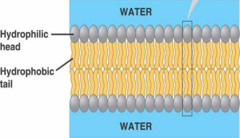
4891568646Phospholipid:molecule that forms the bilayer of the cell's membranes; has a polar, hydrophilic head bonded to two nonpolar, hydrophobic tails.29
4891568647Polymer:macromolecule consisting of a covalently bonded monomers; for example, a polypeptide is a polymer of monomers called amino acids.30
4891568648Polypeptide:polymer of many amino acids linked by peptide bonds.31
4891568649Polysaccharide:polymer made from carbohydrate monomers; the polysaccharides starch and glycogen are polymers of glucose monomers32
4891568651Protein:polymer of amino acids; often consisting of one or more polypeptides and having a complex three dimensional shape33
4891568654Saturated fatty acid:fatty acid molecule that lacks double bonds between the carbons of its hydrocarbon chain. Th chain bears the maximum number of hydrogens possible.34
4891568655Starch:storage polysaccharide found in plants that is composed of glucose molecules joined in a linear fashion with a few side chains35
4891568656Steroid:type of lipid molecule having a complex of four carbon rings -e.g., cholesterol, estrogen, progesterone, and testosterone.36
4891568658Triglyceride:neutral fat composed of glycerol and three fatty acids; typically involved in energy storage37
4891568659Unsaturated fatty acid:fatty acid molecule that contains double bonds between some carbons of its hydrocarbon chain; thus contains fewer hydrogens than a saturated hydrocarbon chain38

AP Biology Chapter 24 Vocabulary Flashcards

Terms : Hide Images
7593860412speciationan evolutionary process in which one species splits into two or more species0
7593860413biological species conceptdefinition of a species as a population or group of populations whose members have the potential to interbreed in nature and produce viable, fertile offspring, but do not produce viable, fertile offspring with members of such groups1
7593860414microevolutionevolutionary change below the species level; change in the allele frequencies in a population over generations2
7593860415micraevolutionevolutionary change above the species level, including the origin of new group of organisms or a shift in the broad pattern of evolutionary change over a long period of time3
7593860416gene flowthe transfer of alleles from one population to another, resulting from the movement of fertile individuals to their gametes4
7593860417phenotypethe physical and physiological traits of an organism, which are determined by its genetic makeup5
7593860418speciesa population or group of populations whose members have the potential to interbreed in nature and produce viable, fertile offspring, but do not produce viable, fertile offspring with members of other such groups6
7593860419reproductive isolationthe existence of biological factors that impede members of two species from producing viable, fertile offspring7
7593860420polyploida species that originates from an accident during cell division8
7593860421autoployploidan individual that has more than two chromosome sets that are all derived from a single species9
7593860422allopolyploida changed sterile hybrid through various mechanisms through generations into a fertile polypoid10
7593860423habitat differentiationthe sympatric speciation caused by an environmental barrier11
7593860424sexual selectionnatural selection arising through preference by one sex for certain characteristics in individuals of the other sex12
7593860425hybridsoffspring that results from two different species or two true-breeding varieties of the same species13
7593860426prezygotic barriersa reproductive barrier that impedes mating between species or hinders fertilization if interspecific mating is attempted14
7593860427habitat isolationtwo species that occupy different habits within the same area may encounter each other rarely, if at all, even through they are not isolated by obvious physical barriers, such as mountain ranges15
7593860428temporal isolationspecies that breed during different times of the day, different seasons, or different years cannot mix their gametes16
7593860429behavior isolationcourtship rituals that attract mates and other behaviors unique to a species are effective reproductive barriers, even between closely related species. Such behavioral rituals enable mate recognition - a way to identify potential mates of the same species17
7593860430mechanical isolationmating is attempted, but morphological differences prevent its successful completion18
7593860431gametic isolationsperm of one species may not be able to fertilize the eggs of another species. For instance, sperm may not be able to survive in the reproductive tract of females of other species, or biochemical mechanisms may prevent the sperm from penetrating the membrane surrounding the other species' eggs19
7593860432postzygotic barriersa reproductive barrier that prevents hybrid zygotes produced by two different species from developing into viable, fertile adults20
7593860433reduced hybrid viabilitythe genes of different parent species may interact in ways that impair the hybrid's development or survival in its environment21
7593860434reduced hybrid fertilityeven if hybrids are vigorous, they may be sterile. if the chromosomes of the two parent species differ in number or structure, meiosis in the hybrids may fail to produce normal gametes. since the infertile hybrids cannot produce offspring when they mate with either parent species, genes cannot flow freely between the species22
7593860435hybrid breakdownsome first generation hybrids are viable and fertile, but when they mate with one another or with either parent species, offspring of the next generation are feeble and sterile.23
7593860436morphological species concepta definition of species in terms of measurable anatomical criteria24
7593860437ecological species concepta definition of species composition of a community following a disturbance; the establishment of a community in an area virtually barren of life25
7593860438phylogenetic species concepta definition of species as the smallest group of individuals that share a common ancestor, forming one branch on the tree of life26
7593860439allopatric speciationthe formation of new species in populations that are geographically isolated from one another27
7593860440sympatric speciationthe formation of new species in populations that live in the same geographic area28
7593860441hybrid zonea geographic region in which members of different species meet and mate, producing at least some offspring of mixed ancestry29
7593860442punctuated equilibriumin the fossil record, long periods of apparent stasis, in which a species undergoes little or no morphological change, interrupted by relatively brief periods of sudden change30
7593860443graduated equilibriumin the fossil record, long periods of apparent stasis, in which a species undergoes little or no morphological change, interrupted by relatively long periods of sudden change31

BRVGS AP Biology - Unit 3 - Biochemistry Flashcards

Terms : Hide Images
5255678595polarityMolecules having uneven distribution of charges0
5255682044hydroxyl groupA functional group consisting of a hydrogen atom joined to an oxygen atom by a polar covalent bond. Molecules possessing this group are soluble in water (polar)1
5255688060amino groupA functional group that consists of a nitrogen atom bonded to two hydrogen atoms. Found in amino acids.2
5255692459phosphate groupA functional group consisting of a phosphorus atom covalently bonded to four oxygen atoms. Found in nucleic acids and ATP (among other things)3
5255832646hydrophilicAttracted to water; polar4
5255840537hydrophobicHaving an aversion to water; nonpolar5
5255856793condensationA reaction in which two molecules become covalently bonded to each other through the loss of a small molecule, usually water; also called dehydration reaction.6
5255861752hydrolysisBreaking down complex molecules by the chemical addition of water7
5255944621carbohydrateCompound containing carbon, hydrogen, and oxygen in the approximate ratio of CH2O (e.g., sugars, starches, and cellulose); main source of energy in living things8
5255962023starchA storage polysaccharide in plants consisting entirely of glucose.9
5255966245glycogenAn extensively branched glucose storage polysaccharide found in the liver and muscle of animals; the animal equivalent of starch.10
5255969372celluloseA large polysaccharide composed of many glucose monomers linked into cable-like fibrils that provide structural support in plant cell walls.11
5255953871lipidEnergy-rich organic compounds, such as fats, oils, and waxes, that are made of carbon, hydrogen, and oxygen.12
5255981473saturated fatA lipid made from fatty acids that have no double bonds between carbon atoms; solid at room temperature13
5255985365unsaturated fatA lipid that has fewer hydrogen atoms because double bonds exist among some of the carbon atoms; liquid at room temperature14
52969900331st Law of ThermodynamicsEnergy can neither be created nor destroyed15
52970108072nd Law of ThermodynamicsEntropy (disorder) will increase in a system over time16
5297013137endergonic/endothermic reactionReaction that absorbs free energy/heat from its surroundings.17
5297014184exergonic/exothermic reactionReaction that releases free energy/heat.18
5297014805catabolic reactionComplex molecules are broken down to simpler ones and energy is released; i.e. hydrolysis reactions19
5297101209anabolic reactionBuilding a large macromolecule from smaller subunits, requiring energy; i.e. condensation/dehydration reactions20
5297227170metabolismAll of the chemical reactions that occur within an organism21
5297229606nucleic acidsMacromolecules containing hydrogen, oxygen, nitrogen, carbon, and phosphorus; used as genetic information22
5298245399purinesBases with a double-ring structure; adenine and guanine23
5298246593pyrimidinesBases with a single-ring structure; thymine, cytosine, and uracil24
5318940534antiparallelThe opposite arrangement of the sugar-phosphate backbones in a DNA double helix.25
5297234856proteinA macromolecule that contains carbon, hydrogen, oxygen, and nitrogen; performs a variety of structural and regulatory functions for cells26
5297269654primary structurethe basic sequence of amino acids27
5297269655secondary structureThe folding of the backbone of a protein due to hydrogen bond formation between amino acids; forms alpha helices and beta pleated sheets28
5297271006tertiary structureStructure of a protein molecule due to interactions of side chains involved in hydrophobic interactions, ionic bonds, hydrogen bonds, and disulfide bridges; consists of multiple secondary structures29
5297269656quaternary structureThe protein shape resulting from the association of two or more polypeptide subunits. i.e. hemoglobin has four smaller subunits30
5297240425enzymesCatalysts for chemical reactions in living things; lower the activation energy of a reaction31
5297245028substrateA specific reactant acted upon by an enzyme32
5297248505active siteThe part of an enzyme where the substrate binds and a chemical reaction occurs.33
5297250783competitive inhibitorA substance that reduces the activity of an enzyme by entering the active site in place of the substrate whose structure it mimics.34
5297252032allosteric regulationWhen a protein's function at one site is affected by the binding of a regulatory molecule to a separate site.35
5297253505coenzymean ORGANIC compound that is necessary for the functioning of an enzyme36
5297260046cofactorany general compound that is needed for an enzyme to function37

AP Biology Chapter 7 Flashcards

Terms : Hide Images
5140416036Cell Division- The reproduction of cells. - The continuity of life is based on this. - The division of one prokaryotic cell reproduces an entire organism (same with a unicellular eukaryote). - Cell division enables multicellular eukaryotes to develop from a single cell, and then later functions in renewal and repair of cells.0
5140416037Cell Cycle- The life of a cell from the time it is first formed from a dividing parent cell until its own division into two daughter cells.1
5140416038Genome- A genome is a cells endowment of DNA (genetic information). - A prokaryotic genome is often a single DNA molecule and eukaryotic genomes usually consist of a number of DNA molecules. - Before a cell can divide to form genetically identical daughter cells, all of this DNA must be copied, and then the two copies must be separated so that each daughter cell ends up with a complete genome.2
5140416039Chromosomes- DNA is packaged into these structures. - Each eukaryotic chromosome has a long linear DNA molecule associated with many proteins which maintain the structure of the chromosome and help control the activity of the genes.3
5140416040Chromatin- The entire complex of DNA and proteins that is the building material of chromosomes.4
5140416041Somatic cells- All body cells except the reproductive cells. - The nuclei of human somatic cells each contain 46 chromosomes, made up of 2 sets of 23 (one set inherited from each parent). - The # of these cells in other species varies.5
5140416042Gametes- Reproductive cells (sperm and eggs) - These cells have one set of 23 chromosomes in humans.6
5140416043Sister Chromatids- Joined copies of an original chromosome. - After DNA has been replicated each chromosome has 2 of these. - The 2 chromatids are initially attached by protein complexes called chohesins (this attachment is called sister chromatid cohesion).7
5140416044Centromere- Each sister chromatid has one of these - A centromere is a region that contains specific DNA sequences where the chromatid is attached most closely to its sister chromatid. - The part of a chromatid on either side of the centromere is referred to as an arm of the chromatid.8
5140416045Chromosome duplication and distribution during cell division1. Before a chromosome is duplicated it is normally a long thin chromatin fiber containing one DNA molecule and associated proteins. 2. Once duplicated, a chromosome consists of 2 sister chromatids connected by sister chromatid cohesion. Each chromatid contains a copy of the DNA molecule. 3. Molecular and mechanical processes separate the sister chromatids into 2 chromosomes and distribute them to two daughter cells.9
5140416046Mitosis- The division of the genetic material in the nucleus usually followed immediately by cytokinesis.10
5140416047Cytokinesis- The division of the cytoplasm.11
5140416048Chromosome number (human life cycle)- ou inherit 46 chromosomes 23 from each parent which are combine din the nucleus of a cell when a sperm unites with an egg forming a zygote (fertilized egg). - The same process then continues to generate new cells to replace dead and damaged somatic cells.12
5140416049Meiosis- A variation of cell division that produces gametes (eggs or sperm) and creates nonidentical daughter cells that only have on set of chromosomes. - Occurs only in the gonads (ovaries or testes) - Reduces the chromosome number from 46 (2 sets) to 23 (1 set). - Fertilization fuses 2 gametes together and returns the chromosome number to 46 and mitosis conserves that number in every somatic cell nucleus of the new individual.13
5140416050Mitotic phase- Phase of the cell cycle that includes both mitosis and cytokinesis (usually the shortest phase). - This alternates with a longer stage, interphase. - Mitosis is broken down into 5 stages: prophase, pro metaphase, metaphase, anaphase and telophase. - It then overlaps with cytokinesis completing the mitotic phase.14
5140416051Interphase- Accounts for about 90% of the cycle. - This divided into sub phases: G1 phase ("first gap"), the S phase ("synthesis") and the G2 phase ("second gap"). - During these sub phases, a cell grows by producing proteins and cytoplasmic organelles. - Chromosomes are duplicated only during the S phase. - A cell grows (G1), continues to grow as it copies its chromosomes (S), grows more as it completes preparations for cell division (G2) and divides (M).15
5140416052Mitotic spindle- Many events in mitosis depend on this structure which begins to for in the cytoplasm during prophase. - Consists of fibers made of microtubules and associated proteins. - Mitotic spindle assembles by using material (microtubules) from the cytoskeleton which partially disassembles.16
5140416053Centrosome- A subcellular region containing material that functions throughout the cell cycle to organize the cell's microtubules. - Centrioles are located at the center of the centrosome but they are not essential since, if they are destroyed, a spindle fiber still forms during mitosis.17
5140416054Aster- A radial array of short microtubules that extends from each centrosome.18
5140416055Kinetochore- A structure made up of proteins that have assembled on specific sections of chromosomal DNA at each centromere. - Each of the 2 sister chromatids of duplicated chromosome has a kinetochore. - During pro metaphase some spindle microtubules attach to kinetochores forming kinetochore microtubules.19
5140416056Metaphase plate- A region where the centromeres of all the duplicated chromosomes lie between the spindle's two poles in metaphase.20
5140416057Separase- The enzyme that cleaves sister chromatids of each chromosome during anaphase. - Once separated the chromatids become chromosomes.21
5140416058Motor Proteins- In anaphase, motor proteins might walk the chromosomes along the microtubules which depolymerize at their kinetochore ends after the motor proteins have passed. ("paceman" mechanism) - Other researches have proposed that chromosomes re "reeled in" by motor proteins at the spindle poles and that the microtubules depolymerize after they pass by these motor proteins. - Its widely agreed that both mechanisms are used.22
5140416059Cleavage- In animal cells, cytokinesis occurs by this process.23
5140416060Cleavage furrow- A shallow groove in the cell surface near the old metaphase plate. - A contractile ring of actin microfilaments on the cytoplasmic side of the furrow interact with myosin molecules causing the ring to contract. - This causes the cleavage furrow to deepen until the parent cell is pinched in two cells.24
5140416061Cell plate- A structure formed in plant cells. - During telophase, vesicles derived from the Golgi apparatus move along microtubules to the middle cells where they coalesce and produce this structure. - The cell plate enlarges until its surrounding membrane fuses with the plasma membrane along the perimeter of the cell producing two daughter cells.25
5140416062Binary fission- The process where prokaryotes (bacteria and archaea) reproduce and single-celled eukaryotes reproduce asexually. - The process in eukaryotes involves mitosis, while the process in prokaryotes does not.26
5140416063Origin of replication- A specific place on a chromosome. - By studying origins of replications have found that the two origins of replication end up at opposite ends of the cell or in some other specific location. - Scientists are still unsure of how bacterial chromosomes move and how their specific location is established.27
5140416064E. Coli Replication- In E. coli the process of cell division is initiated when the DNA of the bacterial chromosomes begins to replicate at the origin of replication. - One origin moves toward the opposite end of the cell as the chromosome replicates. - When the replication is complete, and the bacterium is twice its initial size, the plasma membrane pinches dividing the E. coli into 2 daughter cells.28
5140416065Evolution of Mitosis- We can hypothesize that mitosis evolved from simpler prokaryotic cell reproduction since some proteins involved in bacterial binary fission are similar to eukaryotic proteins in mitosis. - Possible intermediate stages in the evolution of mitosis might be found in dinoflagellates, diatoms and some yeasts. - In these types of nuclear division, the nuclear envelope remains intact in contrast to what happens in most eukaryotic cells.29
5140416066Dinoflagellates- In these unicellular eukaryotes, chromosomes attach to the nuclear envelope, which remains intact during cell division. - Microtubules pass through the nucleus inside cytoplasmic tunnels, reinforcing the spatial orientation of the nucleus, which then divides in a process similar to bacterial binary fission.30
5140416067Diatoms & some yeasts- The nuclear envelope maintains intact during cell division. - The microtubules from a spindle within the nucleus and separate the chromosomes. - The nucleus then splits into two daughter nuclei.31
5140416068Regulation of the Eukaryotic Cell cycle- Different cells divide at different rates. - Human skin cells divide frequently throughout life, while liver cells maintain the ability to divide but keep it in reserve until an appropriate need arises32
5140416069Evidence for Cytoplasmic Signals- Evidence for the hypothesis that the cell cycle is driven by specific signaling molecules present in the cytoplasm came from experiments with mammalian cells grown in culture. - 2 cells in different phases of the cell cycle were fused to form a single cell with 2 nuclei. - If one was in the S phase and the other was in G1, the G1 nucleus immediately entered the S phase (as if it was stimulated by singling molecules present in the cytoplasm of the first cell).33
5140416070Cel cycle Control System- A cyclically operating set of molecules in the cell that both triggers and coordinates key events in the cell cycle. - It proceeds on its own but is regulated at certain checkpoints by both internal and external signals. - Cell cycle is regulated by a set of regulatory proteins and protein complexes including kinases and cyclins.34
5140416071Checkpoint- A control point where stop and go-ahead signals can regulate the cycle. - Transmitted within the cell by signal transduction pathways. - These signals report whether crucial cellular processes that should have occurred by that point have been completed correctly and thus wether or not the cell cycle should proceed. - Three major checkpoints are found in the G1, G2 and M phases.35
5140416072G0 phase- If the checkpoint at the G1 phase does not receive a go-ahead signal a cell will exit the cycle and switch to the G0 phase. - Most cells of the human body are actually in this phase such as mature nerve cells and muscle cells.36
5140416073M phase checkpoint- Anaphase does not begin until all the chromosomes are properly attached to the spindle at the metaphase plate. - As long as some kinetochores are unattached to spindle microtubules, the sister chromatids remain together and delay anaphase. - The appropriate regulatory protein complex only becomes activated when kinetochores of all the chromosomes are properly attached to the spindle. - Once activated, the complex activates the enzyme separase which separates sister chromatids. - This ensures that daughter cells have the correct number of chromosomes. - This is an internal signal that regulates the cell cycle.37
5140416074Growth Factor- A protein release by certain cells that stimulates other cells to divide. - Most types of mammalian cells divide in culture only if the growth medium includes specific growth factors. - This is an example of an external signal that regulates the cycle cycle.38
5140416075Platelet-Derived Growth Factors (PDGF)- Made by blood cell fragments called platelets. - Required for the division of cultured fibroblasts (connective tissue cell). - When PDGF binds to PDGF receptors on fibroblast membranes, a signal transduction pathway is triggered that allows the cells to pass the G1 checkpoint and divide. - When an injury occurs in an anima's body, platelets release PDGF in the vicinity and the proliferation of fibroblasts helps heal the wound.39
5140416076Density-Dependent Inhibition- A phenomenon in which crowded cells stop dividing. - Cultured cells normally divide until they form a single layer of cells on the inner surface of a culture container and stop dividing. - If cells are removed, other cells divide until the space is filled. - The binding of a cell-surface protein to its counterpart on an adjoining cell sends a cell division-inhibiting signal to both cells which stops them from continuing the cell cycle.40
5140416077Anchorage dependance- Most cells must attach to external surface before they can divide. - Studies suggest that anchorage is signaled to the cell control system via pathways involving plasma membrane proteins and elements of the cytoskeleton linked to them.41
5140416078Cancer Cells- Cancer cells do not respond to signals that regulate the cell cycle and excessively divide & invade other tissues. - They do not stop dividing when growth factors are depleted. - One hypothesis is that they do not need growth factors in their culture medium to grow/divide. - Another possibility is an abnormal cell cycle control system. - When cancer cells stop dividing they do so at random points in the cycle. - Cancer cells also can go on dividing if they have a continual supply of nutrients.42
5140416079Transformation- The process that converts a normal cell to a cancer cell. - The body's immune system normally recognizes a transformed cell as an insurgent and destroys it. - However, it a cell does not destroy it, it may proliferate and form a tumor (a mass of abnormal cells within otherwise normal tissue)43
5140416080Benign Tumor- An abnormal mass of cells that remains at its original site in the body.44
5140416081Malignant tumor- An abnormal tissue mass that can spread into neighboring tissue and to other parts of the body; a cancerous tumor. - Cells of malignant tumors may have unusual #s of chromosomes, their metabolism may be disabled, and they may stop functioning correctly.45
5140416082Metastasis- The spread of cancer cells to locations distant from their original site - Changes on the cell surface can also cause cancer cells to lose attachments to neighboring cells and the extracellular matrix allowing them to spread into nearby tissue. - They may also secrete signaling molecules that cause blood vessels to grow toward the tumor and tumor cells may separate and enter blood & lymph vessels traveling to other parts of the body.46
5140416083Treating cancer cells- High-energy radiation may be used which damages DNA in cancer cells. - Chemotherapy can be used to treat known metazoic tumors in which drugs that are toxic to actively dividing cells are administered through the circulatory system. - The drug Taxol freezes the mitotic spindle and stops divine cells from proceeding past metaphase. - Side of chemotherapy arise from the drugs' effect on normal cells.47

GWHS AP Biology - Chapter 23: Evolution of Populations Flashcards

Terms : Hide Images
8585810741MicroevolutionEvolutionary change below the species level0
8585810742Genetic VariationDifferences among individuals in the composition of their genes or other segments1
8585810743Gene PoolConsists of all copies of every type of allele at every locus in all members of a population2
8585810744Hardy-Weinberg EquilibriumThe state of a population in which frequencies of alleles and genotype remain constant from generation to generation3
8585810745Adaptive EvolutionEvolution that results in a better match between organisms and their envir4
8585810746Genetic DriftA process in which change events cause unpredictable fluctuations in allele frequencies from one generation to the next5
8585810747Founder EffectGenetic drift that occurs when a few individuals become isolated from a larger population and form a new population whose gene pool composition is not reflective of that of the original populatio6
8585810748Bottleneck EffectGenetic drift that occurs when the size of a population is reduced7
8585810749Relative FitnessThe contribution an individual makes to the gene pool of the next generation relative to the contributions of others8
8585810750Directional SelectionOccurs when conditions favor individuals exhibiting one extreme of a phenotypic range, thereby shifting a populations frequency curve for the phenotypic character in one direction to the other9
8585810751Stabilizing SelectionActs against both extreme phenotypes and favors intermediate variants10
8585810752Disruptive SelectionOccurs when conditions favor individuals at both extremes of a phenotypic range over individuals with intermediate phenotypes11
8585810753Sexual SelectionNatural selection for mating success12
8585810754Sexual DimorphismA difference in secondary sexual characteristics between male and females of the same species13
8585810757Heterozygote AdvantageWhen individuals are heterozygous at a particular locus have greater fitness than do both kinds of homozygotes14
8585810758Frequency-dependent selectionThe fitness of a phenotype depends on how common it is in the population15
8585810759Population geneticsThe study of how populations change genetically over time16
8585810761PopulationA localized group of that are capable of interbreeding and producing fertile offspring17
8585810762MutationsChanges in the nucleotide sequence of DNA18
8585810763DuplicationAn abbreviation in a chromosome structure due to fusion with a fragment from a homologous chromosome, such that a portion of a chromosome is duplicated19
8585810764Gene flowGenetic additions to and/ or subtraction a from a population resulting from the movement of fertile individuals or gametes20
8585810765Geographic variationDifferences between the gene pools of desperate populations or population subgroups21
8585810766ClineA graded change in a trait alon a geopgraphic axis22

AP Biology: Cell Communication- Chapter 11 Flashcards

Cell Communication
Vocabulary: signal transduction pathway, quorum sensing, hormones, protein kinase, protein phosphatase, G proteins, cyclic AMP, first messengers, second messengers, signal amplification, apoptosis, paracrine signaling, synaptic signaling, hormonal signaling
1. Know the three stages of Cell Signaling:
a. Reception - receptors in the plasma membrane, intracellular receptors
b. Transduction - signal transduction pathways, phosphorylation and dephosporylation, second messengers
c. Response - nuclear and cytoplasmic responses; protein synthesis, ion channels, cell shape
2. Describe the relationship between signal molecules and cell surface receptors, and give examples of each.
3. Describe G-protein-linked receptors and receptor tyrosine kinases, and explain the role of each in receiving chemical signals and initiating signal transduction pathways.
4. Describe a signal transduction pathway and explain how this multi-step process can amplify the signal and lead to a cellular response.
5. Understand that different kinds of cells have different collections of proteins (p.221) and how this affects the response of a particular cell to a specific signaling molecule.
6. Define apoptosis and describe its importance and function(s) in an organism.

Terms : Hide Images
5739622996amplificationThe strengthening of stimulus energy during transduction.0
5739622997apoptosisA program of controlled cell suicide, which is brought about by signals that trigger the activation of a cascade of suicide proteins in the cell destined to die.1
5739622998cytoplasmThe contents of the cell, exclusive of the nucleus and bounded by the plasma membrane.2
5739622999diacylglycerol (DAG)A second messenger produced by the cleavage of a certain kind of phospholipid in the plasma membrane.3
5739623000epinephrinewater soluble ligand molecule; A catecholamine that, when secreted by the adrenal medulla, mediates "fight-or-flight" responses to short-term stresses; also released by some neurons as a neurotransmitter; also known as adrenaline.4
5739623001G proteinA GTP-binding protein that relays signals from a plasma membrane signal receptor, known as a G protein-coupled receptor, to other signal transduction proteins inside the cell.5
5739623002gap junctionA type of intercellular junction in animals that allows the passage of materials between cells.6
5739623003glycogenAn extensively branched glucose storage polysaccharide found in the liver and muscle of animals; the animal equivalent of starch.7
5739623004growth factor(1) A protein that must be present in the extracellular environment (culture medium or animal body) for the growth and normal development of certain types of cells. (2) A local regulator that acts on nearby cells to stimulate cell proliferation and differentiation.8
5739623005inositol trisphosphate (IP3)A second messenger that functions as an intermediate between certain nonsteroid hormones and a third messenger, a rise in cytoplasmic Ca2+ concentration.9
5739623006ligandA molecule that binds specifically to another molecule; often first step in cell communication. Water soluble ligands typically do not enter cell. Lipid soluble ligands (such as steroids) do enter the cell.10
5739623007ligand-gated ion channelA protein pore in cellular membranes that opens or closes in response to A signaling chemical (its ligand), allowing or blocking the flow of specific ions.11
5739623008local regulatorA secreted molecule that influences cells near where it is secreted. Used in paracrine and synaptic signaling.12
5739623010protein kinaseAn enzyme that transfers phosphate groups from ATP to a protein, thus phosphorylating the protein.13
5739623011protein phosphataseAn enzyme that removes phosphate groups from (dephosphorylates) proteins, often functioning to reverse the effect of a protein kinase.14
5739623012receptor tyrosine kinaseA receptor protein in the plasma membrane, the cytoplasmic (intracellular) part of which can catalyze the transfer of a phosphate group from ATP to a tyrosine on another protein. Receptor tyrosine kinases often respond to the binding of a signaling molecule by dimerizing and then phosphorylating a tyrosine on the cytoplasmic portion of the other receptor in the dimer. The phosphorylated tyrosines on the receptors then activate other signal transduction proteins within the cell.15
5739623013scaffolding proteinA type of large relay protein to which several other relay proteins are simultaneously attached, increasing the efficiency of signal transduction.16
5739623014second messengerA small, nonprotein, water-soluble molecule or ion, such as a calcium ion (Ca2+) or cyclic AMP, that relays a signal to a cell's interior in response to a signaling molecule bound by a signal receptor protein.17
5739623015signal transductionThe linkage of a mechanical, chemical, or electromagnetic stimulus to a specific cellular response.18
5739623016signal transduction pathwayA series of steps linking a mechanical or chemical stimulus to a specific cellular response. There are four types that we studied: g-protein linked reception; hormonal reception; receptor tyrosine kinase reception; pathways using second messengers (cAMP; calcium ions).19
5739623017testosteroneA steroid hormone required for development of the male reproductive system, spermatogenesis, and male secondary sex characteristics; the major androgen in mammals. Pathway illustrates the mechanism for all steroid hormones.20
5739623018transcription factorA regulatory protein that binds to DNA and affects transcription of specific genes. The hormone-receptor complex becomes a transcription factor in the steroid transduction pathway.21
5739623019yeastSingle-celled fungus that reproduces asexually by binary fission or by the pinching of small buds off a parent cell; some species exhibit cell fusion between different mating types.22
5739623020three stages of cell communicationreception - receptor responds to binding of ligand molecule; transduction - translation and amplification of message; response - activation of cellular response23
5739623021g-linked protein receptorreceives message for g-linked protein signaling pathway. Consists of seven alpha helices that span the plasma membrane. Changes shape when ligand molecule binds.24
5739623022signal transduction pathwayThe process by which a signal on a cell's surface is converted into a specific cellular response.25
5739623023local regulatorsThese regulators influence cells in the vicinity of them.26
5739623024hormonesCirculating chemical signals that are formed in specialized cells, travel in body fluids, and act on specific target cells.27
5739623025ligandA molecule that specifically binds to another molecule, often a larger one.28
5739623026protein kinaseThe enzyme that transfers phosphate groups from ATP to protein.29
5739623027adenylyl cyclaseConverts ATP to cyclic AMP in response to an extracellular signal.30
5739623030receptionThe target cell's detection of a signal molecule coming from outside the cell.31
5739623031transductionThe binding of the signal molecule changes the receptor protein in some way.32
5739623032responseThe transduced signal finally triggers a specific cellular response.33
5739623033G-protein-linked receptorA plasma membrane receptor that works with the help of a G-protein.34
5739623034receptor tyrosine kinaseA receptor with enzymatic activity that can trigger more than one signal transduction pathway at once, helping the cell regulate and coordinate many aspects of cell growth and reproduction.35
5739623035ligand-gated ion channelType of membrane receptor that has a region that can act as a "gate" when the receptor changes shape.36
5744780695quorum sensingthe regulation of gene expression in response to fluctuations in cell-population density37
5744787937biofilmsaggregations of bacteria that often form recognizable structures containing regions of specialized functions (ie. fruiting bodies)38
5744798667paracrine signalinga form of cell- to-cell communication in which a cell produces a signal to induce changes in nearby cells, altering the behavior or differentiation of those cells.39
5744801168autocrine signalingform of cell signaling in which a cell secretes a hormone or chemical messenger that binds to a receptor on the same cell leading to changes in the cell40
5744804207juxtacrine signalingType of cell to cell signalling in multicellular organisms that requires close contact (AKA contact-dependent signalling)41
5744809077synaptic signallingType of signalling that occurs over a very short distance called a synapse such as between 2 neurons.42
5744816881DimerThis is formed when two receptor polypeptides associate closely with each other43
5744825813cAMPCommon second messenger which is a derivative of ATP and used for intracellular signal transduction in many different organisms44

AP Biology Mid-Term Flashcards

Terms : Hide Images
10088320526Protein CompositionAmino Acids0
10088320527Lipid CompositionGlycerol + Fatty Acid1
10088320528Carbohydrate MonomerMonosaccharide2
10088320529Nucleic Acid MonomerNucleotide3
10088320596Nucleotide4
10088320597Amino Acid5
10088320598Monosacharide6
10088320599saturated fatty acid7
10088320600unsaturated fatty acid8
10088320601primary protein structure9
10088320602secondary protein structure10
10088320603tertiary protein structure11
10088320604quaternary protein structure12
10088320605exergonic reaction13
10088320606endergonic reaction14
10088320607photosynthesis15
10088320608cellular respiration16
10088320609gibbs free energy17
10088320530prokaryotic organismsbacteria18
10088320531eukaryotic organismsprotists, plants, fungi19
10088320532prokaryotic cellhas no nucleus20
10088320533eukaryotic cellhas nucleus21
10088320534chloroplastsite of glucose production22
10088320535mitochondriasite of ATP production23
10088320536high entropy to low entropyCO2 and H2O to glucose24
10088320537low entropy to high entropyglucose to ATP25
10088320538enthalpymeasure of the total amount of energy26
10088320539competitive enzyme inhibitorjoins to the active site (mistakenly)27
10088320540non-competitive enzyme inhibitorjoins to the allosteric site28
10088320541Rough ERSite of protein folding29
10088320542Smooth ERSite of lipid synthesis30
10088320543RibosomesFree-floating or attached; site of protein synthesis31
10088320544golgi bodySite of protein modification, packaging and shipment32
10088320545Cell Wallfound in plant cells and some bacterial cells; add structure and protection33
10088320546cell membranesemi-permeable barrier; made of phospholipds34
10088320547lysosomecontains digestive enzymes for cellular clean-up35
10088320548cytoskeletonmade of protein rods/fibers that span the cytoplasm, allowing for cell movement and maintaining structure/shape36
10088320549flagellalong whip-like tails that allow for cellular motility37
10088320550cilianumerous, hair-like projections that wave back and forth allowing for cellular motility38
10088320551cationhas lost electrons39
10088320552anionhas gained electrons40
10088320553organic compoundscarbon and hydrogen41
10088320554covalent bondsfound in organic compounds42
10088320555ionic bondsassociated with inorganic compounds; transfer of electrons43
10088320556photona packet of light/radiant energy from the sun44
10088320557single species in an areapopulation45
10088320558collection of species in an areacommunity46
10088320559biotic + abioticecosytem47
10088320560tissuecollection of similar cells (in structure and function)48
10088320561electronsresponsible for atomic bonding49
10088320562valence elctronsfound in outermost energy shell50
10088320563octet ruleatoms will gain, lose, or share electrons to achieve valence stability51
10088320564strongest type of chemical bondcovalent52
10088320610Hydroxyl Group53
10088320611Carboxyl Group54
10088320612Carbonyl Group55
10088320613Amino Group56
10088320614Phosphate Group57
10088320565Accounts the differences in the 20 amino acidsR Group58
10088320566responsible for polarityunequal pull of electrons (due to unequal protons)59
10088320567non-polarequal share of electrons60
10088320568molecules that do NOT interact with waternon-polar61
10088320569Determines the physical and chemical properties of organic moleculesfunctional groups62
10088320570two sugarsdisaccharide63
10088320571multiple sugarspolysaccharide64
10088320572AcidsHigh H+ Concentration when dissolved in water65
10088320573BasesHigh OH- Concentration when dissolved in water66
10088320574pH of 7equal concentrations of H+ of OH- ions67
10088320615hydrolysis68
10088320616dehydration synthesis69
10088320575peptide bondshold amino acids together70
10088320576adhesionwater molecules sticking to other polar substances71
10088320577cohesionresponsible for puddling of water72
10088320578hydrogen bondsweak bonds73
10088320579cis facelocation where proteins enter golgi apparatus74
10088320580trans facelocation where proteins exit golgi apparatus75
10088320581chromatinform of DNA within the nucleus (when cell is NOT dividing)76
10088320617asexual reproduction77
10088320582where protein folding takes placeRough ER78
10088320583hydrophilicpolar79
10088320584hydrophobicnonpolar80
10088320618catabolic reaction81
10088320619anabolic reaction82
10088320620first law of thermodynamics83
10088320585Proteinshemoglobin, actin, keratin84
10088320586nucleic acidsATP, DNA, RNA85
10088320587carbohydratesglycogen, cellulose, starch86
10088320588induced fitplaces strain on the substrate, weakening bonds87
10088320589enzyme-substrate complexbinding of substrate to enzyme at the active site88
10088320590cause enzymes to denaturehigh temp and varied pH89
10088320591cell wallonly in plant cells; responsible for keeping plants turgid90
10088320592cytosolmostly water with dissolved ions, etc.; suspends organelles within the cell91
10088320593the organelle that lysosomes are derived from in the endomembrane systemgolgi apparatus92
10088320594positive feedback mechanismmoves the body away from homeostasis; amplifies the stimulus93
10088320595negative feedbackstimulus is nullified over time94

AP Biology Chapter 16 Flashcards

Terms : Hide Images
5714680223DNA replicationThe process by which a DNA molecule is copied; also called DNA synthesis0
5714680224transformation(1) The conversion of a normal animal cell to a cancerous cell. (2) A change in genotype and phenotype due to the assimilation of external DNA by a cell. When the external DNA is from a member of a different species, transformation results in horizontal gene transfer1
5714680225bacteriophageA virus that infects bacteria; also called a phage2
5714680226virusAn infectious particle incapable of replicating outside of a cell, consisting of an RNA or DNA genome surrounded by a protein coat (capsid) and, for some viruses, a membranous envelope3
5714680227A and T=30, C and G=20percentage breakdown of human DNA4
5714680228double helixThe form of native DNA, referring to its two adjacent antiparallel polynucleotide strands wound around an imaginary axis into a spiral shape.5
5714680229antiparallelReferring to the arrangement of the sugar-phosphate backbones in a DNA double helix (they run in opposite 5' S 3' directions)6
57146802303.4 nm and 10 nucleotideslength between 2 nucleotides and # of nucleotides per turn7
57146802312 hydrogen bondsadenine forms8
57146802323 hydrogen bondsguanine forms9
57146802332 nmdiameter of the double helix10
5714680234semiconservative modelType of DNA replication in which the replicated double helix consists of one old strand, derived from the parental molecule, and one newly made strand11
5714680235conservative modelthe two parental strands somehow come back together after the process12
5714680236dispersive modelall four strands of DNA following replication have a mixture of old and new DNA13
5714680237origin of replicationSite where the replication of a DNA molecule begins, consisting of a specific sequence of nucleotides14
5714680238replication forkA Y-shaped region on a replicating DNA molecule where the parental strands are being unwound and new strands are being synthesized.15
5714680239helicaseAn enzyme that untwists the double helix of DNA at replication forks, separating the two strands and making them available as template strands.16
5714680240single-strand binding proteinA protein that binds to the unpaired DNA strands during DNA replication, stabilizing them and holding them apart while they serve as templates for the synthesis of complementary strands of DNA17
5714680241topoisomeraseA protein that breaks, swivels, and rejoins DNA strands. During DNA replication, ________ helps to relieve strain in the double helix ahead of the replication fork18
5714680242primerA short stretch of RNA with a free 3' end, bound by complementary base pairing to the template strand and elongated with DNA nucleotides during DNA replication19
5714680243primaseAn enzyme that joins RNA nucleotides to make a primer during DNA replication, using the parental DNA strand as a template20
5714680244DNA polymeraseAn enzyme that catalyzes the elongation of new DNA (for example, at a replication fork) by the addition of nucleotides to the 3' end of an existing chain. There are several different ________; ________ III and _______ I play major roles in DNA replication in E. coli.21
5714680245500 nucleotides per second and 50/secondrate of elongation in bacteria and humans respectively22
5714680246nucleoside triphosphatea nucleoside (a sugar and base) with three phosphate groups. where each added nucleotide comes from23
5714680247leading strandThe new complementary DNA strand synthesized continuously along the template strand toward the replication fork in the mandatory 5' S 3' direction24
5714680248lagging strandA discontinuously synthesized DNA strand that elongates by means of Okazaki fragments, each synthesized in a 5' S 3' direction away from the replication fork25
5714680249okazaki fragmentA short segment of DNA synthesized away from the replication fork on a template strand during DNA replication. Many such segments are joined together to make up the lagging strand of newly synthesized DNA. about 1000-2000 nucleotides in bacteria and 100-200 in eukaryotes26
5714680250sliding clampDNA pol III is closely associated with this. it encircles the newly synthesized double helix like a doughnut. it moves DNA pol III along the DNA template strand27
5714680251overview of lagging strand28
5714680252DNA polymerase IIIadds nucleotides to the primer in the 3' direction29
5714680253DNA polymerase Iin the lagging strand, replaces RNA primer nucleotides with DNA nuceleotides30
5714680254DNA ligaseA linking enzyme essential for DNA replication; catalyzes the covalent bonding of the 3' end of one DNA fragment (such as an Okazaki fragment) to the 5' end of another DNA fragment (such as a growing DNA chain)31
57146802551) all the proteins are part of one complex 2) the template is likely moved through the complex2 ways its not like a train32
57146802561/10^10 and 1/10^5completed error rate and error rate33
5714680257mismatch repairThe cellular process that uses specific enzymes to remove and replace incorrectly paired nucleotides34
5714680258nucleaseAn enzyme that cuts DNA or RNA, either removing one or a few bases or hydrolyzing the DNA or RNA completely into its component nucleotides35
5714680259nucleotide excision repairA repair system that removes and then correctly replaces a damaged segment (usually DNA pol I) of DNA using the undamaged strand as a guide36
5714680260thymine dimersthe covalent linking of thymine bases that are adjacent on a DNA strand. causes the DNA to buckle and interfere with DNA replication37
5714680261telomeresThe tandemly repetitive DNA at the end of a eukaryotic chromosome's DNA molecule. ________ protect the organism's genes from being eroded during successive rounds of replication. repeating TTAGGG sequence between 100 and 1000 times38
5714680262telomeraseAn enzyme that catalyzes the lengthening of telomeres in eukaryotic germ cells39
5714680263negativecharge of the backbone40
5714680264histonesresponsible for the first level of DNA packing in chromatin41
5714680265H2A, H2B, H3, H4four common types of histone42
5714680266nucleosomethe "bead" on the string. the basic unit of DNA packing. 10 nm in length43
5714680267linker DNAthe DNA between nucleosomes44
5714680268histone tailthe amino end that extends outwards from each histone45
5714680269H1a fifth histone involved in nucleosome packing46
571468027030-nm fiberuses H1 histone that packs the nucleosome into thicker fibers47
5714680271looped domainsthe 30 nm fibers loop into these that attach to a scaffold of proteins, thus making a 300 nm fiber48
5714680272scaffoldrich in topoisomerase and H1 molecules49
5714680273metaphase chromosomein a mitotic chromosome, the looped domains themselves coil and fold in a manner further compacting into a 700 nm chromatid50
5714680274nucleoidA non-membrane-bounded region in a prokaryotic cell where the DNA is concentrated51
5714680275chromatinThe complex of DNA and proteins that makes up eukaryotic chromosomes. When the cell is not dividing, chromatin exists in its dispersed form, as a mass of very long, thin fibers that are not visible with a light microscope52
5714680276heterochromatinEukaryotic chromatin that remains highly compacted during interphase and is generally not transcribed53
5714680277euchromatinThe less condensed form of eukaryotic chromatin that is available for transcription54
5714680278depurinationtype of DNA damage in which a purine base is removed55
5714680279deaminationtype of DNA damage in which an amine group is removed from a molecule56
5714680280uner tan syndromePersons affected by this syndrome walk with a quadrupedal locomotion and are afflicted with primitive speech and severe mental retardation57
5714680281photolyaseDNA repair enzymes that repair damage caused by exposure to ultraviolet light58
5714680282phosphodiester bondthe bond between two nucleotides59
5714680283major groovethe bigger of the distances between base pairs60

Pages

Subscribe to CourseNotes RSS

Need Help?

We hope your visit has been a productive one. If you're having any problems, or would like to give some feedback, we'd love to hear from you.

For general help, questions, and suggestions, try our dedicated support forums.

If you need to contact the Course-Notes.Org web experience team, please use our contact form.

Need Notes?

While we strive to provide the most comprehensive notes for as many high school textbooks as possible, there are certainly going to be some that we miss. Drop us a note and let us know which textbooks you need. Be sure to include which edition of the textbook you are using! If we see enough demand, we'll do whatever we can to get those notes up on the site for you!